❌

Reading view

“One Big Club”: Trump Reveals He Had the Power to Prosecute Obama, Clinton, and Biden—And Chose Not To

President Donald Trump stunned his own supporters this week by announcing he has deliberately chosen not to pursue prosecution of Barack Obama, Hillary Clinton, and Joe Biden—the very figures his movement has spent years demanding be brought [...]

The post “One Big Club”: Trump Reveals He Had the Power to Prosecute Obama, Clinton, and Biden—And Chose Not To appeared first on The People's Voice.

  •  

BBC Admits White Staff Are Lowest-Paid Employees — ‘Black Disabled Lesbians’ Awarded Highest Salaries

Forget merit. Forget experience. At the BBC, the fastest route to a pay rise is apparently checking every diversity box — except “white.” Thanks to the BBC’s diversity madness, being white now costs you money [...]

The post BBC Admits White Staff Are Lowest-Paid Employees — ‘Black Disabled Lesbians’ Awarded Highest Salaries appeared first on The People's Voice.

  •  

New York Declares War on the Amish—$2,000 Fines for Every Healthy Unvaccinated Child, Every Day

For nearly two centuries, the Amish have lived quietly in upstate New York, educating their children in one-room schoolhouses and keeping the modern world at arm’s length. Today, that way of life is colliding head-on [...]

The post New York Declares War on the Amish—$2,000 Fines for Every Healthy Unvaccinated Child, Every Day appeared first on The People's Voice.

  •  

Trump messed with Texas. Now an army of pissed-off Texans are fighting his border wall

Photo of Texas landowners protesting on foot and on horseback in front of the State Capitol building in Austin, Texas, on August 30, 2026. Protestors are holding signs that say, “Landowners Against Border Wall.” Photo courtesy of No Big Bend Wall.
https://www.spreaker.com/show/2952221/episodes/feed

President Trump has renewed his efforts to “Build the Wall” in areas along the US-Mexico Border that don’t currently have border barriers—including the Big Bend region of West Texas. Invading people’s private properties and upending their local economies and shared ecosystem with a border wall residents say they don’t want or need, the Trump administration continues to dole out billions of taxpayer dollars to flood Texas border towns like Terlingua, Sanderson, and Marfa with troops and federal agents—and to pay construction contractors with ties to the Trump family.

In this episode of Working People, we speak with a panel of residents living near Big Bend National Park and Big Bend Ranch State Park who have banded together with their neighbors to fight back against the federally funded destruction of their homes. Panelists include: Yolanda Alvarado, a fifth-generation cattle rancher and the regional director for Conserve Big Bend: No Big Bend Wall; Crystal Allbright, a longtime resident and bicycle shop owner in Terlingua; Sara Ryza, a longtime resident, small-business owner, and proprietor of the Desert Air Motel in Sanderson, Texas; Scott Whitener, a longtime resident of Marfa, Texas, and a former superintendent on the Big Bend Ranch State Park; and Sharron Reed Gavin, a retiree and longtime resident of Terlingua.

Additional links/info:

Featured Music:

  • Jules Taylor, Working People Theme Song

Credits:

  • Audio Post-Production: Jules Taylor
Transcript

The following is a rushed transcript and may contain errors. It will be updated.

Maximillian Alvarez:

Alright. Welcome everyone to Working People, a podcast about the lives, jobs, dreams, and struggles of the working class today. My name is Maximillian Alvarez.

Jules Taylor:

And I’m Jules Taylor.

Maximillian Alvarez:

And today we are going to Terlingua in West Texas, right on the US-Mexico border and right next to Big Bend National Park. As the Texas Tribune reports, “Since President Trump returned to office in January of 2025, his administration has renewed efforts to erect border barriers in parts of the US-Mexico border that don’t currently have any. That includes the Big Bend region in far West Texas, home to the Big Bend National Park and Big Bend Ranch State Park, both of which the Trump administration has targeted for border security infrastructure. Historically, the region has recorded the fewest illegal crossings along the entire Southwest border, but the Trump administration has awarded billions of dollars worth of contracts to build some form of infrastructure to deter illegal border crossings, while telling concerned West Texas residents that they will not build a border wall or fence in the national park.

Local residents, environmentalists, and a bipartisan group of elected officials, including sheriffs and county judges, have still asked the administration to stop all construction.”

Jules Taylor:

According to the website of the community advocacy group, No Big Bend Wall, 2.1 billion in contracts have already been awarded for wall construction in Presidio and Hudspeth counties. Over 500 private landowners stand to lose access to the Rio Grande due to the proposed border wall. Construction is planned for Texas gems, including Big Bend National Park and Big Bend Ranch State Park, and the Department of Homeland Security is waiving 31 federal laws, including National Environmental Policy Act, National Historic Preservation Act, Native American Graves Protection and Reparations Act, and Wild and Scenic Rivers Act.

Maximillian Alvarez:

So to talk about what the hell is happening on the US-Mexico border, we are really grateful to be joined on the show today by a panel of folks who are on the front lines of this story and who are joining us from in or near Terlingua, Texas. Thank you all so much for joining us. Please introduce yourselves to our listeners.

Yolanda Alvarado:

I’m Yolanda Alvarado. I’m a fifth generation cattle rancher and the regional director for Conserve Big Bend: No Big Bend Wall.

Crystal Allbright:

Hi, I’m Crystal Allbright. I live in Terlingua, Texas. I’ve lived here 36 years. My husband and I own a bicycle shop and have outdoor gear as well as art. We’ve operated the river for 29 years, but we’ve phased that out for now. I’ve visited the area since I was a young child and love it very much.

Sara Ryza:

I’m Sara Ryza and I have the Desert Air Motel in Sanderson, Texas. It’s a renovated 1960 motel in Sanderson, which is a gateway town into Big Bend. So while the national park and the state park are kind of the anchor places that bring people into the region, they’re going through gateway towns to the region and into the park. And so a big part of this area is tourism and there are a lot of independently owned small businesses that are concerned about what all of this is going to do in the short and long term for tourism.

Scott Whitener:

My name’s Scott Whitener. I was a former superintendent on the Big Bend Ranch State Park along the river corridor located along the river road, which is just along the Rio Grande and covered about 50,000 acres of the front country of the state park side. I have been going to the Big Bend for 30 years. My wife fell in love with me there, I think, to check and see if that’s still true. But I currently live in Marfa, which is in Presidio County. I also am a property owner in three of the six counties in the affected area in the Big Bend sector. And yeah, this is near and dear to my heart, my family’s heart, and it will remain that way.

Sharron Reed Gavin:

My name is Sharron Reed Gavin and I also live in Terlingua with my husband. We moved there in 2013 full-time. We had both loved the Big Bend independently of knowing one another. My first time to go there, and this is before most of y’all were born, but was 1976 and went with some friends with the canoe and we wanted to do the river. And there weren’t such things as desert sports really at the time, but we found some good folks like Crystal and her husband who would help us get down to the river and go on it for a while. But I have six grandchildren and that’s why this is so important to me, also for my neighbors and all that love the Big Bend. There’s not a lot being done to save it by our elected officials, but I think all of our voices matter.

All of these people are working so hard at their real jobs and on top of it, especially what Yolanda and Sarah are doing with No Big Bend Wall. It’s just all of these people are doing full-time jobs and doing a full-time job with no Big Bend wall, and I just appreciate them.

Maximillian Alvarez:

Well, and we genuinely appreciate all of you for being here and talking to us about this. I’m just incredibly sorry that you and your community are going through this, that our country is going through this. It’s like every week it’s another horror show, but I really want to zero in on what you were just talking about, Sharon. I’ve never had the pleasure of going to see Big Bend or being in this part of the country. I really hope to correct that soon. But this is, from what I’ve seen, one of the most just beautiful places on God’s green earth. But for those of us who are not from there and for folks who are listening who have never been there, I want to ask if y’all can describe what our listeners can’t see for themselves. Tell us more about this area and what it’s like to live and work there.

Yolanda Alvarado:

Yeah, so I’m not directly near Big Bend National Park. My family ranches in the Big Bend region and that starts from Hudspeth County and it goes all the way to Valverde County. But we have ranches in Hudspeth and Presidio and near Jeff Davis. And we’ve been out here for hundreds of years and it’s really just quite desolate. You could see four hundreds of miles just desert and no one around. It’s a really serene environment and it’s also really harsh to be in the desert. It’s filled with rural communities. No communities are huge out here. We have very few ambulances, small schools. My children go to a school with 35 students from kindergarten to high school. So it’s just a really small time, small town, rural environment. And we throw on tourism and people going to the National Park and passing through these small areas. So even though we are small in size or small landowners, it still feels big.

It still feels connected to the rest of America because we still have all these visitors and people coming through.

Sara Ryza:

It also feels like time slows down here. You can relax and it’s kind of the call of the desert. You wouldn’t expect that you would love it so much if you weren’t originally thought of yourself as a desert person, but it’s also, it’s very gritty. There’s a grit to the people that live and work here and a lot of the business owners have several businesses. We also have a liquor store and also we’re part of this bigger region, but we’re also our own little communities. And in Sanderson, it’s Terrell County that’s getting vehicle barriers going through our county, which is only 20 miles to the border to the river, but that’s all private land. So we’re connected geographically to the river where we are, but also to the region through the tourism. It’s all really interconnected.

Crystal Allbright:

Yeah, I agree with both Yolanda and Sarah. It’s very remote and fairly isolated, but we all are connected. In the national park, I like to describe it as three biomes. There’s the mountains, the Chisos mountains, and then there’s the open expanse of the desert, and then there’s the river corridor that connects us all. So if you start at Yolanda’s Ranch and drive the Chispa Road all the way through Presidio and to Terlingua and then up through Alpine and then Marfa, you can make a big loop. You can do Fort Davis and Sanderson. And so we’re all connected. This has brought us together in so many ways from learning about each other’s businesses and lives as well as participating in the community meetings, whether it’s a town hall or a commissioner’s meeting or a groundwater meeting. We’re all working together to learn ways that we can delay the construction, which we prefer to call destruction of this area that we love.

Scott Whitener:

We all have to continue agreeing with each other because everybody else before me said it way better than I think I will. But at the same time, a few days ago I put it into perspective. I looked at all the population in all of our six counties that are affected right now in the Big Bend sector, and there’s like 23,000 people. You know how many square miles there is in those six counties? 23,000 square miles. Think about that. That’s a one person per square mile. Could you imagine being anywhere that allows you to have that type of expanse? We are all connected by this region, honestly. We all know what each other are doing because we love it out here. We love one another and it’s trampling on our freedoms, it’s trampling on what we love, and this government overreach is, it’s destroying our way of life, but we’re not going to let it.

And I’ll continue to say that, but at the same time, it’s made this community bigger, better, stronger. And I can’t say enough about the people, the place, the sunrises, the sunsets, the mountains, the open expanse, the plains. This is a special place, and if you haven’t been down here, you don’t have to come because like Austin used to say, “Hey, come for the fun, but don’t move here, please.” We do love the visitors. We love having people down here, but you live out here for a reason and we share this place with one another because it’s not any of ours, but it sure is ours to share.

Sharron Reed Gavin:

And the only thing I would add to that is you asked what it would look like to people who haven’t been here and everybody’s kind of hit that nail on the head, but it really is something that you can’t understand until you see it in person. And my favorite other place in the world is the north rim of the Grand Canyon, and I promise they have nothing on us, absolutely nothing. But we also, the beauty is here, but there’s archeological sites, there’s historical sites. They’re not paying any mind to those. They even started working on one of those sites and were interrupted. Yolanda, I can’t remember if it was by you or somebody else out near you, but the scale of the destruction and the history and the things that we absolutely cannot replace, it’s mind-boggling. And then everybody said this too about how we are all working together and we may be different and love our isolation, but boy, you step on this anthill and you’ve got a lot to contend with.

The thing that makes me feel really good about it though is this group isn’t going away. These people across the country who have banded together to fight this wall, they’re here to stay. They’re here to stay and the people are going to make their voices heard, and I think just at the end of the day, get this to stop.

Scott Whitener:

I don’t work for the state park system anymore, which is why I can be on this podcast and talk as much shit as I want. Pardon my French. But I actually work for an animal rescue. We rescue dogs out of shelters one tail at a time. We cover an area about the size of South Carolina, even bigger than our six sexers. So we save a lot of shelter animals and abandoned animals, and probably that’s what 40 to 50 to 60 hours of my week is. And then the other waking hours is fighting this.

Crystal Allbright:

I said earlier that my husband and I have a bicycle shop and we worked in the river outfitting business. We work six to seven days a week all day long. And again, using that time, especially when people come through the shop, we have displays about what’s going on in the area and we encourage people to voice their opinions about what’s going on and contact representatives. We use our space to show photographs of some of the destruction as well as to help raise money for these organizations that are working so hard to stay on top of what’s going on.

Yolanda Alvarado:

Yeah. I’m a cattle rancher, as I mentioned. I manage all my family’s ranches, and so I work every day outside in the desert. I work with mother nature. I work with the animals with droughts, with floods, the rain, any type of environmental issue you can think of a hundred and plus degrees outside or freezing outside. So my everyday working life and what it has been for the past almost 10 years has just been me and the desert, me and the animals, and that is my job. And carrying my family’s legacy, it has been my responsibility to be a steward of the land and continue that and teach my children how to take care and live out here, take care of the desert, the ranches and the animals, what it means, what you can use the plants for. So yeah, that’s basically what I do all day.

And then now I am fighting the border wall as the regional director, spending a lot of my time behind a computer now, but here we are.

Sharron Reed Gavin:

Yeah, I’ll say one thing. None of these folks work nine to five. I mean, I’m retired and that’s very fortunate because I have some more time to help on the no wall fight, but none of these people work nine to five. I can’t even imagine the number of miles that Yolanda drives or Scott used to do when he was with the state park or Crystal on their river trips. It’s mind-boggling. I do know where Crystal lives, and you have to love it out here to drive from where she lives into Terrlingo. It may be like seven miles, but it can take you up to 30, 40 minutes. So these people are working before and after work and during the working hours.

Jules Taylor:

National borders everywhere in the world are deeply political constructs with complicated histories, and the US-Mexico border is no different. I mean, it’s been a political talking point our entire lives. Can you talk to us about what it’s like to live somewhere that is so regularly charged by political narrative and policy battles and tell us why that’s different now?

Yolanda Alvarado:

Well, historically, the river down here in this part in the Big Bend sector, it’s been so isolated and desolate that we don’t have many crossings here, as you mentioned. So for many years up until almost recently, and still actually today, the communities on the river are on both sides. So you see Presidio and Ohinaga sharing a river, you see Bokias, we are one community. So politically, not until the first border wall came through, it wasn’t something that we even thought about for us and my family and the ranchers because we’ve always just been safe out there. We’ve been alone and we’ve been one community with the other side of the border that was Pilates, Mexico. And it wasn’t until, I guess, Bush, he built a fail billion dollar wall that’s actually on my aunt’s property. And that’s when we started seeing, for us anyways, in this region, it being more politically charged.

And even then at that time, I don’t believe anyone looked at the Big Bend region close to the National Park and said, “We need a wall here.” So I personally felt a little separated from what was going on in other places. I mean, me and my family never thought in a hundred years they would try to put a wall where we are because it just doesn’t make sense at all. It’s like you go down there, I even took the border patrol agents, the head director, infrastructure project directors of the Border Wall Project, and they said, “Yolanda, I see what you’re talking about because that’s how ridiculous it looks in person when you get off of a map.” We did see when Kersey Nome was a Homeland Security Director, we started seeing Stryker military vehicles, the army lining the border. Still today, I’m passed by Army people.

Our border’s completely militarized now. So it was a very isolated, safe place. And now I have to worry about running into a Stryker military vehicle hitting me on the way to the ranch. And most of the time I find them napping in their trucks because it’s so quiet and they don’t have anything to do. I see them on just, there’s actually a weightlifting area where they’re bored and they’re lifting weights because there’s no emergency on the border, yet our military’s deployed in our own homes, in our own backyards, filling up all the hotel rooms in these small rural communities already causing damage to tourism. So it’s been interesting watching it in real time. I was sitting on our back porch less than half a mile from Mexico on the Rio Grande reading that we were in a state of emergency and within the week we had military driving in and showing up at our property.

I even had military personnel drive through our gate in the middle of the night because they were just messing around, driving really fast. So it’s been a really interesting experience watching it in real time, not on the news saying like, “Oh, we have an emergency. Oh, there’s the military. Now we’re getting a wall.” It’s been really crazy and at the very least, such a disturbance to our peace or what was peaceful.

Scott Whitener:

This should make every taxpayer mad, and I’m only going to put it into perspective. I won’t put names under the bus. I live in Marfa, which everybody poo-poos Marfa just because it’s fun to do it anyway, and I get it. We’re a little art community, everybody’s a little bougie, whatever. I live in an old train warehouse, which it’s fun. Anyway, but I go down the street and I have the US military staying at a place that costs $285 a night minimum, and they’ve been staying there full-time since February of 2026. They use the pool, they use the weight room, all the things that people in this community can’t afford to use. Our US military is occupying that hotel and they’re not paying hotel taxes, they’re not helping the community, and they’re showing up to the pool and drinking at the bars. And it’s like, what are they defending?

And when we ask them, “What are you doing here?” They said, “We’re here to help this place. We’re here to defend you guys.” And I’m like, “Defend me from what? Art critics?” I mean, certainly it should make any taxpayer mad of what’s being wasted down here. These guys cruise around all day, all night and do nothing. And I’m not dogging the military, I’m dogging the decision. And it’s going on all over this region and it’s despicable.

Maximillian Alvarez:

I mean, it’s going on all over the country, right? I go to Washington DC this week and there are a bunch of board national guardsmen just walking around. It’s like, what the hell are we doing?

Yolanda Alvarado:

Really an insult on, I think, our military service also. My sister’s in the Air Force, and I mean, it’s insulting to even separate them from their families, deploy them in the United States, separate them from their families. They’re off on a mission, but it’s really there’s no mission down here. There’s nothing going on. But yeah, millions and millions, if not billions of our taxpayer dollars are going towards this. So I’m glad you said that, Scott.

Sara Ryza:

Yeah. It feels like an upside down world where before it was like, yeah, we’re safe. We didn’t even think about our safety, but people that don’t live here, that don’t work here, they’re talking about how it’s a scary place. We have to put up physical barriers. And so it’s created a narrative that is not what reality was. And now in addition to people thinking that we need a wall, well, now people think that, well, if they needed a wall, then it probably wasn’t safe. So why am I going to visit there? There’s so many other national parks, so many other places that people could go on a trip, and it’s really messing up our tourism and the economy that drives on the tourism. And while contractors coming in, the military coming in, that’s not an investment in our communities and in this long-term economic development.

Anybody that thinks that might be good that it could bring in money to our towns or to our county, that’s just a very shortsighted view and it hurts us in the long run.

Sharron Reed Gavin:

And when you were talking about being politically charged, I mean, it all goes back to the false pretense that we need a wall because of the border crisis down here. It’s all bogus. There is no border crisis. The border crisis right now are the construction workers or as Crystal said, the destruction workers. But yeah, I think that’s really important. This isn’t needed. It’s all about our president rewarding the people that are funding him for his political office, and it’s not doing this community any good whatsoever. It’s harming it significantly. One of our Texas state senators has a bill called the Fed Act, which is supposed to protect landowners specifically in West Texas from federal overreach, yet he hasn’t said a word about the overreach that’s happening here. So yeah, I better stop because it really makes me mad.

Maximillian Alvarez:

Well, I mean, I was going to ask y’all to, let’s get more mad, right? Because I mean, Jules and I have also been talking to fellow Texans who are dealing with data centers in their damn backyards now, all over the place. It feels like local control is just being ripped away and people are just having, whether it’s a border wall, whether it’s a data center or some other polluting piece of crap in their community, we get no say in it and they’re just steamrolling everybody. Because I wanted to sort of ask y’all, if you could speak to the non-Texans who are listening to this, right? We all know that there’s a, speaking of narratives, there’s a narrative in this country that makes a lot of people assume that Texans would be for this, that Texans would be shooting their guns into the air and say, “Yeah, let’s build a big border wall.” What do you want to say to people who think that about you?

Sharron Reed Gavin:

Come down and see for yourself. It’s nothing like the narrative that you’re hearing. Nothing at all.

Yolanda Alvarado:

Yeah. I mean, the data center border wall is so correlated. It’s the same fight that everybody’s been starting to fight across the country. So the only difference is that say it’s Boise, Idaho, and the only difference is the president saying there’s only rapists and murderers coming to Boise, Idaho. We need a wall around it and not a data center. It’s the same correlation. So we were just painted this black. We were already painted black, and that’s why people are not really opening their eyes to the issue, but it is exactly like you said, it’s just like having a data center show up in your community and taking your natural resources, jobs, all of the above. So to speak to the greater America, one thing I’ve been saying is that they declared a national emergency to waive laws to do this project. Who’s to say they’re not going to do it in Boise, Idaho?

Who’s to say they’re not going to say, “Oh, we see this emergency here. Let’s deploy the army and build and do whatever we want to these Americans. Forget American sovereignty, forget whatever existed.” It’s disgusting, the overreach. So I think everyone in America should be upset about what they’re doing to abuse this power to take advantage of American citizens, Texans. It’s not right.

Maximillian Alvarez:

Weren’t we raised to hate this stuff? Didn’t we all learn in school that this is exactly the kind of thing that as good red-blooded Americans we should despise and fight against? And you got ICE agents in unmarked vehicles wearing masks, driving all over people’s property, being peaceful protestors. I mean, just the violation of rights and property and everything, it’s mind-boggling.

Sara Ryza:

Right. In Terrell County, there’s a $2.6 billion contract over the Big Bend five project, which bans all of Terrell County, some of Brewster, some of Valverde. It’s not the 30-foot wall. It’s four and six-foot tall steel bollards that’s the vehicle barrier system to stop vehicles from crossing. This is on the other side of canyons, the river, the wild and scenic river right there. It’s canyons. And so they’re putting this vehicle barrier up saying it’s to stop vehicles, but vehicles aren’t crossing and people can go under it. So it’s not stopping people. It just doesn’t make sense and it’s a waste of taxpayer money and it just does not make any sense. But it’s back to this narrative that if somebody says that we need it, then I guess half the country’s going to believe it.

Crystal Allbright:

Just my take on it is my life here has spent a lot of time on the river and never had a bad experience. Usually people were hungry, starving, needed water, but just the thought of losing access to our river, the river we share with Mexico, it is appalling to me that we wouldn’t have access. We want border security, but we were already secure before. And a lot of that was because there’s several villages along the river. Prior to nine eleven, it was an open border and you could go across and have lunch at the villages and people would share news about what was going on. If there was something bad going on, we would learn from the people that lived there. And then after nine eleven, the border was shut and then we were cut off from our friends. We still get together once a year on Mother’s Day and we go to the river and bands play on each side.

They take turns, a band in Mexico and a band in the United States and they take turns playing and the families come together and we eat, we sing, we laugh, we dance, and we get to do that one day a year. And to have the idea that they’re going to come in with whether it’s vehicle barriers or walls, it just cuts us off more from friends and family that live in Mexico. I just agree with the sheriffs and the border patrol that can talk to us that they’re doing a good job already and that just more the technology that they can use to detect people crossing and being able to get to them, they could use more drones and maybe a helicopter that sure doesn’t cost $7.46 billion, which is how much they’re trying to spend on 517 miles of riverfront in Texas. And just the whole idea of landowners along the river, farmers, ranchers losing access to the water, again, we’re all saying it doesn’t make sense and we think we’re pretty logical people.

So I just want them to slow down, think about what they’re doing and start believing in the rule of law again.

Yolanda Alvarado:

Yeah. Speaking on the border security we have, as a rancher, I got a new four-wheeler. I was chasing cows near the border in the middle of nowhere. And border patrol knows me. They know my truck, they know pretty much what I do, but this was new to them. They were there within 10, 15 minutes, found me in the middle of nowhere and was like, “Oh, it’s just you, Yolanda. All right, have a good day.” That is a response time already. And I was going really fast on that four-wheeler. So just the idea of them being able to come in and take land away from landowners to ruin this entire region when we already have a very secure border. I mean, if you look at CBP, the Customs and Border Patrol Instagram right now, they just posted a video that says the border is secure. Even they’re admitting it at this point.

It’s comical, but they’re getting away with this at a national level because again, for me, and I’ve said this from the beginning, I’m very vocal about it. I think it’s a very racist agenda. It’s very anti-Latino. It’s very anti-brown. That’s why we can see ICE getting away with kidnapping people, murdering them in the street because they’ve pushed this anti-Latino narrative for a long time now since Clinton era, Bush did it and even Obama did it and it’s getting worse and worse. So people are turning a blind eye to it and it’s really frustrating because just as Crystal described, it’s not what it seems like here. We are communities, we are families, we are one on the river, and it’s really deserving to watch in real time of how people are being treated just for this agenda. And honestly, in the very end, it’s just so people can make some money at top.

It’s for these large contract deals. It’s to sell beds to detention centers. It’s all of the above. And we are just a byproduct of this huge anti-Latino showboat.

Sharron Reed Gavin:

Sometimes people will ask if they haven’t been down here on some of these chats and all, is it safe down there? Do you feel safe down there? I said, “We feel perfectly safe. We haven’t locked our door in 13 years. We don’t even know where the key is.” But then I also say, “I feel a lot safer here than I do going to Dallas or I do going to DC or some other place. This place is safe.” And if you took the amount, and Yolanda, you can probably correct me, but somebody did a calculation of the amount they’re paying, the seven however many billion dollars versus the number of people who have crossed, it comes out to something like $500,000 a person or $50,000 a person. I’m not a mathematician, but it’s ridiculous that that’s where our taxpayers’ money is going.

Yolanda Alvarado:

Yeah, it’s definitely the higher number. I believe it’s more over a million a person per apprehension, but it is $14 million a mile to build this border wall in our region. That’s our taxpayer dollar. So my family’s property, we’re going to have, I believe, a new fence, a 30-foot bollard wall that’s costing taxpayers. On our property alone, rough math, almost a hundred million dollars just on our property. That’s our new fence. So the cows aren’t going to go to Mexico anymore, but it is actually ridiculous what is happening and how much money’s being spent.

Sara Ryza:

Isn’t it 17 million per mile, right? Is that right? I think that’s the number, 17 million per mile. And the entire county budget for Terrell County is less, just less than 2.5 million for the entire year for the entire county, but they’re spending 17 million per mile.

Jules Taylor:

The last time I was there in Terlingua, I realized that water is scarce as a resource. It’s something that y’all could use more of. Sometimes power would go out or power did not seem like it was necessarily in all places. So when y’all talk about these huge numbers going on in terms of… I just think about how better that could be used within your communities to make better the lives of the people who choose to live there. And instead it goes to this godawful cause that helps no one hurts everyone who lives there and is completely unnecessary and ridiculous. And if you just were to look at the landscape of where they are intending to place it, like you mentioned, Yolanda, it doesn’t make sense, like vehicle barriers on the other sides of canyons. I mean, it just all sounds like a giant shit show, and I’m sorry that everyone’s having to live through this and deal with it.

And in terms of how the community of Terlingua is, man, I remember being there last year, there’s the Boathouse and there’s a Starlight Theater and there’s DB’s Rustic Iron. And I was reading somewhere in the Texas Tribune, there are actual signs that all these businesses have put up where if you are working with the contractors, we don’t want your business here, please take it elsewhere and you’re not welcome. And I just think it’s incredible the way that the businesses and the people who live out there have sort of been galvanized by this entire ordeal. As a wrap up question here, where do things stand now, like upcoming events? What can people, listeners do to get involved and what’s the current status now? Because I understand that the actual construction was paused and I think I remember reading today the pause ceased or something. Can we get an update on where things stand at this point and how listeners can help?

Sara Ryza:

It’s really easy to get mad and it’s nonsense, but the way that we’ve come together has been really great. We’re stronger than we thought we ever needed to be. We didn’t know we were going to need to be this strong, but the businesses, there’s a business network, we come together, we’ve talked about all of this. And the thing that has helped us, I know you want an update on the construction, but what we’re working on is fighting for tourism. That’s helped kind of shift the narrative because yes, we’re fighting against the wall and all of that, but we’re also fighting for something. Crystal reminds us all the time we’re fighting for what we love. The businesses are fighting for tourism. So the thing that people can do is to keep coming, keep coming to Big Bend, support the local businesses, come to the parks, even watch what’s going on if construction resumes.

But there’s a big tourism campaign called Big Love for Big Bend that reminds people that when you come to Big Bend, you’re supporting these businesses and these independently owned restaurants, gas station, grocery stores, motels. So that’s in addition to writing representatives and a lot of other things that they can do, a really huge thing would be to keep visiting Big Bend.

Yolanda Alvarado:

We just took a trip to Washington DC. We talked to lawmakers. We were trying to wrap our minds around what are they saying? What are they doing? And the biggest thing that stuck out was all of them have said they’ve received phone calls, they’ve heard from their constituents, and it’s huge no matter where you are outside of Texas to keep calling your representatives and let them know that putting a wall or any infrastructure in Big Bend will hurt you as well and it’s not needed and that’s not where you want to spend your taxpayer dollars. And we’re working on some bills and things there to hopefully halt that. And on top of that, our coalition, Conserve Big Bend, we started a landowner coalition and we have almost over half of the landowners on the border in our coalition who is against the wall. And we just filed a lawsuit a couple weeks ago against the federal government.

So it’s landowners versus DHS and we’re taking it all the way to the top. It was filed in DC and we’re hoping to see another TRO there and hopefully we can halt construction. We are challenging the waivers, letting them know that they can’t just come in and claim a national security and take away all of our rights. So yeah, aside from other small events we’re working on, that and donating to all the people who are working hard, it’s not just No Big Bend Wall, but there’s so many people in Terlingua all over. Anyone who even shares an Instagram post or Facebook post and talks about what is happening helps us. This is all really good and really helpful.

Crystal Allbright:

There’s another hearing tomorrow in El Paso. So some of the people originally scheduled for this podcast are in El Paso with the lawyers getting ready for that tomorrow and hopefully that will pause it again. We have not seen construction resume, but there are people watching for that. I think they’re just still waiting, but they’re still not talking to us. That’s been a big thing. The lack of transparency has been really aggravating. If they would just talk to us and we could give them ideas on alternatives for what’s going on, that would help. In Terlingua from February, we started having rallies on Saturdays and this Saturday is our 32nd rally. People come from all over and join us. We’ve had people from New York and California and Florida, Atlanta, all over Texas come and join us. And then in the big cities on Sundays like Houston, Dallas, they’re having rallies there as well.

So the moment they started bulldozing at Santa Elena Canyon, finally the news broke out to a bigger audience, even though we had been chipping away at that for six months. So more people are aware, but we just keep spreading the word.

Scott Whitener:

Yeah. And being able to attend the ones in Terlingua are at the rally at the Y is always special. That kicked it all off. And the bigger point here, and that was amazing, and what’s happened after that has been even more amazing. But if you’re talking about how can people help right now, not only attending those rallies at the Y, but what we’ve been doing, and everybody on this call and everybody’s in El Paso, I talked about how big this area is. The people on this call and the other people, our constituents out here have been driving to county meetings, city councils, groundwater meetings. You go to every single one of those, and I think every American should be paying attention to what’s going on down here. I know people are objecting to AI data centers, but looking at the gas, paying $4.50 a gallon, we’ve got people that are retirees thriving on social security, people that are part-time workers, part-time, anything, seasonal workers, because this is all tourism.

People are showing up to these county meetings and holding the people we put in office, holding them to account to do what we ask them to do because it’s bullshit. I’m sorry, you can bleep that one out. I mean, it’s bullshit. I keep saying it. It’s

Maximillian Alvarez:

All right, man. Go for it. Let it fly.

Scott Whitener:

It’s bullshit that they keep going and they’re not listening to… We have the county commissioners probably scared to object to anything when we show up with 150 people that drove from all over the place. Like last week, I mean, we are calling people out that have been sitting in a La-Z-Boy enjoying their county judge position, their commissioner position, their city council mayor, people that just thought this was going to be easy and they can just check the box and say, “Hey, yeah, y’all go ahead and we’re just going to go bulldozer here because nobody lives out here because like I said, 23,000 square miles with 23,000 people.” Oh yeah, this isn’t like a city full of liberal dims or something that are going to object to everything. It’s us and we’re pissed and we’re going to keep showing up. And that’s what everybody, not only in the state of Texas, but definitely in the Big Bend region is doing it on their own.

And they’re out and my wife’s in El Paso, which is two and a half hours away right now. People in Terlingue in El Paso right now, which is five hours for them. People just need to show up and I think the gig is up. I mean, I’m done. I mean, I’m done with this crap.

Maximillian Alvarez:

All right, gang, that’s going to wrap things up for us today. Before we go, I do want to give you an update on this story that occurred after we recorded the conversation that you just heard. As Martha Piskowski reported on October 6th in Mother Jones, “Federal Judge Kathleen Cardone granted a preliminary injunction Friday to halt construction on the border wall in Texas’s expansive Big Bend sector, including the national and state parks. Cardone read a brief order from the bench after hearing more than four hours of testimony from conservation groups and residents of the Big Bend region, known internationally for its dark night skies, abundant biodiversity, and rugged river canyons. Cardone said that the plaintiffs are likely to succeed on the merits in at least one of their claims and to suffer irreparable harm if construction continues. Her ruling stops border barrier construction in the entire Big Bend sector until the federal government complies with all applicable laws.

The ruling applies to all of Big Bend National Park, Big Bend Ranch State Park, and the border along the Rio Grande in the rest of the sector. The injunction will remain in place while the court considers the lawsuit, which was filed in April.” So the struggle is still very much not over, but that is huge news and that is a huge win. I want to thank our guests in and around Terlingua, Texas, near Big Bend National Park, Yolanda Alvarado, Crystal Albright, Sarah Riza, Scott Whitener, and Sharon Reed Gavin. And if you want to learn more about what our guests are doing out there in West Texas and you want to connect with them, please use the links that we provided in the show notes for this episode. And Jules, I actually wanted to ask if you could give our listeners the scoop on an event that is happening in Terlingua this month that you are a part of.

Jules Taylor:

Yes. This month from October 15th to 18th, I will be taking part in the TerrLingua Music Bash. I believe there’s about 40 different artists spread across half a dozen or so venues, which are different businesses there in Big Bend. It’s all a benefit for school that’s out there. I mean, it’s all a really good cause. My friend John Whipple puts it on and it’s all free admission. So if you’re anywhere near TerrLingua on the 15th through the 18th, come hang out. There’s also a Day of the Dead costume parade that we’re going to do, which is also really super cool. But yeah, I can’t wait to be back out in Big Bend. I can’t wait to be back out in Terrlingua. It’s just a fantastic place and you can’t really describe how wonderful it is until you go there and then you’re just kind of at a loss for words.

When folks say you have to be there yourself to experience it and it has nothing on the north side of the Grand Canyon, I’m like, “Yeah, I’ve been there. I’ve been to the Grand Canyon too. This Big Bend is where I want to go every October for this music bash, and this will be my second year going.”

Maximillian Alvarez:

You heard it here first, folks. Our Texas co-hosts and guests say Grand Canyon ain’t shit. So thank you so, so much again to all of our incredible guests, and thank you to Jules for helping us put this incredible panel together. And of course, I want to thank you all for listening, and I want to thank you for caring about this. We do this work for you, but we cannot do it without you. Working People is brought to you in partnership with In These Times Magazine and the Real News Network. The show is produced by the great Jules Taylor and is a proud member of the Labor Radio Podcast Network. We will see y’all back here next time for another episode of Working People. And in the meantime, go explore all the great work that we’re doing at the Real News Network, where we do grassroots reporting that lifts up the voices and stories from the front lines of struggle across the US and around the world.

Subscribe to our YouTube channel. Check out our great podcasts like Under the Shadow and the Mark Steiner Show, and connect with us on social media and get updates on our reporting there and help us do more work like this by going to therealnews.com/donate and becoming a supporter today. I promise you guys, it really makes a difference. I’m Maximillian Alvarez.

Jules Taylor:

And I’m Jules Taylor.

Maximillian Alvarez:

Take care of yourselves. Take care of each other. Solidarity forever.

  •  

EU disowns Vilnius event that warned of US political interference, but France maintains support

An annual conference on foreign information manipulation opened in Vilnius this week with a sensitive question on its agenda: Can the United States be considered a threat to Europe’s information space?

And the question caused a diplomatic incident.

EU DisinfoLab’s annual #Disinfo2026 conference, held in Vilnius on 7 and 8 October, brings together researchers, journalists, civil society groups, technology specialists and policymakers working on “foreign information manipulation and interference”, known as FIMI in EU jargon.

The programme was to look at moving beyond analysis of disinformation to practical responses, including disruption, deterrence, and litigation. 

But shortly before the conference several of its government supporters withdrew their official backing.

The Lithuanian Ministry of Foreign Affairs, Global Affairs Canada (GAC), and the European External Action Service (EEAS) all disappeared from the conference’s list of sponsors.

The dispute centred on a panel entitled “USA as a FIMI threat: acknowledge, adapt, push back”.

According to the published programme, the session asked how the European counter-disinformation community could build resilience without Washington and what solidarity should look like in a fractured transatlantic relationship. 

Reuters reported that the US State Department had lobbied Canada and European allies over their support for the conference.

Three US officials familiar with the matter and correspondence reviewed said American officials had contacted counterparts in Lithuania, Canada and France.

And the US diplomats persuaded the Canadian and Lithuanian foreign ministries to distance themselves.

This article continues, but the full version is available only to EUobserver.com subscribers. Visit account.euobserver.com/membership

  •  

India’s rate hike a loud warning shot for Modinomics

It’s not often that events in Mumbai reverberate through global markets. But the Reserve Bank of India’s first interest rate hike in almost four years speaks volumes about the chaotic state of play. The inflation slamming Asia’s third-biggest economy and the rupee’s drop to record lows left RBI Governor Sanjay Malhotra with no choice but […]

To continue reading, please log in to your AT+ Premium account. Not yet a member? Please signup for AT+ Premium monthly membership, AT+ Premium yearly membership or AT+ Premium Access membership.

The post India’s rate hike a loud warning shot for Modinomics appeared first on Asia Times.

  •  

Trump sons-backed firms bank $6 billion plus in Pentagon deals

An analysis published on Wednesday by ABC News estimated that companies backed financially by Donald Trump Jr. and Eric Trump have so far scored more than $6 billion in contracts from the US Department of Defense. As ABC documented, many of the investments into the defense firms come through 1789 Capital, a venture capital firm […]

The post Trump sons-backed firms bank $6 billion plus in Pentagon deals appeared first on Asia Times.

  •  

Fighting big money in politics: California’s Community News Act

California Gov. Gavin Newsom signs the Community NEWS Act on Sept. 30, 2026. Photo via Office of Gov. Gavin Newsom

This article originally appeared on Dean Baker’s Patreon. It is reprinted here with permission.

Virtually everyone who is not a billionaire, or owned by one, agrees that we have to limit the ability of the rich to buy elections. While the Republican Party has taken “policy for sale” politics to a new level, there are plenty of Democrats who have been happy to support obviously awful policy in exchange for contributions from the AI industry, the pharmaceutical industry, the crypto industry, and Wall Street more generally. It costs a lot of money to run a competitive campaign and it’s hard to raise that from small contributions, so there will always be a temptation to bend policy positions to get some serious money.

While most people favor limits on campaign contributions, the current Supreme Court has made this very difficult. They have ruled that campaign contributions are speech and therefore any effort to limit campaign contributions is an unconstitutional restriction on speech.

There are some promising alternative paths that focus on making small donors matter. Seattle has a system of “democracy vouchers” that give every voter in local elections a modest sum that they can contribute to a candidate(s) of their choice. To qualify to get the vouchers, candidates must agree to limits on spending and large contributions.

Super-matches are a comparable system. Under this system, small dollar contributions can be matched up to 8 to 1, which means that even a $50 contribution can make a difference to a campaign. New York City, along with several other cities, have gone this route.

While these paths for amplifying the voice of ordinary people are promising, it will take much more to match the power of the billionaires. It is important to realize they exercise their political power in ways other than campaign contributions, primarily through their ownership of the media.

The importance of billionaire ownership goes far beyond the constant stream of lies and right-wing propaganda from Fox News. Last year, the very Trumpy Ellison family took control of CBS and immediately began to shift its news to the right. They are now taking control of CNN through the merger of Paramount and Warner Brothers. They also got control over TikTok, after Trump wrestled it away from a Chinese company for them.

Trumper Mark Zuckerberg owns Facebook and Instagram and is not shy about banning political material he doesn’t like. And Elon Musk bought Twitter, explicitly to advance his right-wing agenda. The rest of the media landscape doesn’t look much better. The rich and very rich own the countries’ newspapers and broadcast outlets, and most of these people lean right, even if they have not yet joined the Trump Reich.  

And let’s just be clear. The idea that the campaign ads bought by the rich can influence votes, but not the material that people see between the ads, is beyond absurd. Even if we banned all political contributions from rich people and corporations, the rich could still control elections by showing us nothing but their propaganda on television, in newspapers, and on social media.

This is why the Community News Act that Governor Gavin Newsom just signed is so important. The measure provides $20,000 each for up to five journalists per news outlet covering local news. This subsidy can keep newspapers and news sites across the state in business and help to support new ones that might start up. It is similar to other programs that have been started in Illinois, New York, and New Mexico.

This might seem like small change in a world with multi-billion dollar media empires, but it is not realistic to imagine matching the super-rich dollar for dollar; the goal is to sustain reality-based reporting that people can rely upon. (Repealing Section 230 protection for the mega-platforms like Facebook and X would be a big step towards leveling the playing field.) And support for local news reporting is likely to also lead to better national and international reporting, both by training more reporters and also increasing the comfort level with public funding, perhaps opening the door for a national system.

To be clear, there are no political conditions attached to this funding. Conservative news outlets are as eligible for this subsidy as more liberal ones. The point is to support local journalism, not to favor a particular political perspective.

To my view, this system is not ideal. I prefer support coming through an individual refundable tax credit to support local news. This would allow people to have a more direct attachment to the news outlets being supported with public money. Ideally, this would give them a sense of ownership that many feel towards other community organizations.

But whether or not this is the best approach, there is no doubt that the California bill, along with the ones already passed in other states, are big steps forward. It will help to reverse the collapse of local news reporting, which is giving corruption free rein in many areas. We need to build on the positive and make it better, rather than reject a plan because it may not be ideal. Progressive opponents of California’s wealth tax initiative may want to give that point some thought.

  •  

Ex-agent says CIA is planting pro-Bolsonaro stories to influence election

A man wearing a mask depicting US President Donald Trump attends a rally of Brazilian right-wing presidential candidate Flavio Bolsonaro in Goiania, Brazil, on September 27, 2026. Photo by Sergio Lima / AFP via Getty Images

This story originally appeared in Panamerican Dispatch on Oct. 07, 2026, and is shared here with permission.

The CIA is allegedly working behind the scenes in Brazil’s election, planting stories to favor Flávio Bolsonaro and build a positive narrative about the senator.

The claims come from John Kiriakou, a former CIA agent who has become something of a celebrity in recent years. Earlier this week, he took to social media to flag what he called “credible” evidence of the spy agency’s involvement in Brazil’s election.

On Tuesday, Kiriakou gave more details on his podcast.

“I heard a rumor from a former CIA colleague of mine this past weekend that the agency is actively working behind the scenes to support Bolsonaro,” he said.

“And the way they’re doing it is by planting pro-Bolsonaro stories in both the Brazilian press and the international press,” he claimed.

He offered no evidence and was careful to say he doesn’t know whether this account is true. But he argued that it fits the agency’s pattern of behavior over the years.

“There’s a long history of CIA involvement in elections abroad, controlling the media narrative,” he said.

He noted that much of the Brazilian press has swung behind Bolsonaro.

“This is despite the fact that Jair Bolsonaro’s presidency was one mistake after another,” he said.

The former agent pointed to the former president’s 27 year prison sentence, calling his conduct “incredibly corrupt.”

Kiriakou said the runoff projections don’t favor Luiz Inácio Lula da Silva and suggested the right has already secured one of its biggest wins in Brazilian history.

“Lula is likely to lose the election, and I think the younger Bolsonaro will end up pardoning his father,” he predicted.

He also noted that Donald Trump has already endorsed Flávio Bolsonaro’s candidacy, acknowledging that doing so could be a “violation of international rules.”

Earlier in the week, Kiriakou wrote on social media that he met with Lula three years ago. On Tuesday, he explained that a Lula aide had reached out so the two could discuss government transparency.

According to the former agent, one topic in that conversation was police violence under Jair Bolsonaro’s government. He said he suggested that Lula confront that issue directly, and that doing so had led police to turn against Lula.

Who Is This Former Agent?

In 2013, Kiriakou pleaded guilty to revealing the identity of an undercover agent, the first case of its kind in 27 years. He had worked for the CIA from 1990 to 2004 and was sentenced to 30 months in federal prison as part of a plea deal.

He admitted to disclosing to a reporter the identity of an undercover officer who had taken part in harsh interrogations of alleged Al Qaeda members held at secret CIA detention sites.

Kiriakou first drew national attention in 2007, during the George W. Bush administration, when he told ABC News in an interview that waterboarding, a technique that simulates drowning, had been used on a Guantánamo detainee named Abu Zubaydah.

Then CIA Director David Petraeus issued a statement praising the plea deal with Kiriakou, even though four other charges against him were dropped. The case “represents an important victory for our agency, for our intelligence community and for our country,” Petraeus said.

It was the first time in 27 years that someone had been found guilty of revealing the identity of an undercover agent.

This article first ran in ICL Notícias, was translated by Panamerican Dispatch, and can be read in its original Portuguese here.

  •  

Why Oxygen Forensics US tech CEO selling software to Europe agencies was arrested

US prosecutors say an American forensic tool concealed its Russian owners and its development in Russia.

Used by numerous security agencies in Europe, Oxygen Forensics helps investigators worldwide access data from mobile phones and computers.

Many bodies are now suspending use of the software following recent revelations.

The Slovak interior ministry bought the software in 2018 when links to Russia were not yet publicly known, then renewed the license multiple times. Now, the ministry said IT department officials are investigating the issue.

The tool was also sold to other government bodies across Europe.

Russian ownership via Cyprus

In the US, Virginia-based Oxygen Forensics CEO Lee Reiber was arrested at the end of September, along with Oleg Davydov, one of the Russian owners.

The company was headquartered in the US state of Virginia, appearing American.

According to federal prosecutors in the US, the company hid its Russian ownership through a shell company in Cyprus and that its software was developed in Russia.

Allegedly, this scam helped secure contracts for the forensic tool in the US, UK, Czech Republic, Latvia, Romania, and Slovakia.

Reiber, a 55-year-old American, was arrested in Idaho on Sunday. On Tuesday (22 September), he appeared before a federal court there and was released on bail. He is expected to appear before a federal court in Los Angeles soon.

Davydov, a 52-year-old from Moscow, was arrested on that same day at London Heathrow before he could board a flight to Istanbul. And the US plans to seek extradition. Both face charges of conspiracy to commit wire fraud.

The group of five also owned a Russian company co-founded by Davydov in 2000. Until September 2022, it was called Oxygen Software and now operates under the name MKO Systems.

Its programmers worked in Russia, where the company sold the software under other names. According to investigative files, its clients included Russia’s secret service (FSB), investigative committee (SKR) and interior ministry.

Davydov, the company’s technical director, was responsible for software development. In 2013, he helped establish Oxygen Forensics in Virginia with Reiber joining the company in August 2015.

Prosecutors say that following Russia’s full-scale invasion of Ukraine and US sanctions after, the duo agreed to hide both the real owners and that it was developed in Russia. In March 2022, Reiber became CEO and director.

Then, Russian owners were removed from public company records.

However, investigators said the Russians continued to control the company, making key decisions, determining Reiber’s pay, and outvoting him on the board.

The charges concern the concealment of the software’s ownership and origin in securing public contracts.

A network of deception

Two companies were found to have supplied the Slovak interior ministry with Oxygen Forensic tools.

In 2018, the sale was part of a broader procurement by the ministry for computers, laptops, servers, monitors and printers, ordered from the Czech company Risk Analysis Consultants for €125,000, the forensic tool itself costing €10,000.

The Prague-based company did not respond for comment.

Screenshot of order from 2018 (Source: Slovak interior ministry website)

An invoice issued to the Slovak interior ministry in 2022 by the Slovak company Microcomp–Computersystém indicates the renewal of a licence for this software. At the time, the minister responsible was Roman Mikulec.

Screenshot of invoice from 2022 (Source: Slovak interior ministry website)

The Slovak ministry also ordered a licence renewal in July 2024, under his successor Matúš Šutaj Eštok. Microcomp–Computersystém did not respond for comment.

Interior ministry order with links to Russia. (Source: Slovak interior ministry website)

Authorities warned

On Friday (2 October), the Slovak national security authority (NBÚ) warned of the risks posed by using software from Oxygen Forensics and connected companies such as MKO Systems and Prostranstvo IT.

Their software helps investigators search for and examine data from digital devices. It can process vast amounts of information, including evidence, which makes it important who owns, controls and develops it. According to the NBÚ, this is important both for data protection and for the reliability of analysis results.

The warning came after the US case was made public.

The NBÚ considers links to Russia significant in assessing the security risk, also in view of Russia’s military aggression against Ukraine.

However, the warning itself does not mean that data leaked through the software. US prosecutors explicitly stated that the charges did not concern malicious code or unauthorised access to customer data.

The case concerns the alleged concealment of the software’s ownership and origin. And no court has yet ruled on the case.

“The ministry will proceed in accordance with the recommendations of the National Security Authority,” the Slovak interior ministry said.

The NBÚ recommended that public bodies identify this company’s presence and report it to the authority.

Belgian Green MEP Saskia Bricmont also called for the use of Oxygen to be stopped immediately and for an inquiry into whether sensitive information could have reached Russia after it was found that Romania, Germany, Spain, Italy, Poland and Hungary had purchased the software.

European police shed tool

Several European security agencies are suspending the use of Oxygen Forensics software or taking steps to terminate their contracts after the company’s Russian ties came to light.

The tool was also used by Czech police. Czech security agencies continued to purchase licences for the computer software after 2022, when the full-scale invasion of Ukraine began. Czech authorities are awaiting further information from the United States. For now, they have prohibited software updates.

London’s Metropolitan Police has suspended the use of Oxygen tools and launched a comprehensive review. British police forces, including specialised units, had used the software.

And Latvian police suspended its use and is assessing whether it will continue using it.

Romania’s anti-corruption agency, too, took steps to terminate its contract with the Russia-linked tool.

  •  

“Baús da Brincadeira” chegam às escolas do concelho para tornar os recreios mais ativos e inclusivos

O Município de Olhão, em parceria com os Agrupamentos de Escolas do concelho e outras entidades parceiras, disponibiliza aos seus munícipes a oferta da Escola a Tempo Inteiro, procurando reforçar a articulação entre a escola, as famílias e a comunidade local e reconhecendo o papel fundamental desta resposta no desenvolvimento pessoal e social das crianças e dos alunos.

No âmbito desta parceria, a Associação Portuguesa para a Inovação e Empreendedorismo Social e Digital (AI9) disponibilizou os “Baús da Brincadeira” às escolas do Município de Olhão, tendo concluído, na passada sexta-feira, a sua entrega em todos os agrupamentos escolares do concelho. A última entrega decorreu na EB1 n.º 4, onde foram disponibilizados os baús destinados ao Agrupamento de Escolas Professor Paula Nogueira.

Cada escola tem agora quatro baús, que disponibilizam um conjunto diversificado de materiais para utilização pelas crianças durante os intervalos.

Os baús incluem materiais criteriosamente selecionados do ponto de vista pedagógico, como jogos de tabuleiro, bolas de diferentes tipos, cordas, arcos, jogos tradicionais e jogos de água, entre outros recursos que estimulam diferentes formas de brincadeira, movimento e interação.

Disponíveis durante os intervalos, estes materiais permitem que as crianças escolham livremente as atividades que querem realizar, explorando os recursos ao seu ritmo e de acordo com os seus interesses, num ambiente de brincadeira espontânea e com a necessária supervisão dos adultos.

Mais do que proporcionar atividades organizadas, a iniciativa pretende valorizar o brincar livre, dando espaço à imaginação, à criatividade, à autonomia e à interação entre pares. O recreio deve ser também um espaço de descoberta, onde as crianças possam experimentar, criar, partilhar e, acima de tudo, ser crianças.

Os “Baús da Brincadeira” constituem, assim, um importante contributo para a criação de recreios mais ativos, inclusivos e estimulantes, reforçando a importância do brincar no desenvolvimento e bem-estar das crianças.

A iniciativa evidencia ainda o valor da parceria entre o Município de Olhão e a AI9, contribuindo para a construção de ambientes educativos mais ricos, participativos e promotores do desenvolvimento integral das crianças.

  •  

Trump finds it’s funny to joke about Iran bombing California

In a stemwinder of a speech in Nebraska, our mentally ill president joked around that if Iran took out Los Angeles and San Diego, it would be a small price to pay for keeping the rest of the country safe. Or at least that is what he appeared to say. What his slurred free association […]

The post Trump finds it’s funny to joke about Iran bombing California appeared first on Asia Times.

  •  

RED ALERT: COLLAPSE HAPPENS SLOWLY, THEN ALL AT ONCE — Chris Marcus

from SGT Report: The coming collapse and monetary reset has been decades in the making, and while it has been a slow motion decline thus far, like dam breaking it will soon be sudden and catastrophic for the vast majority of Americans who are completely unaware and unprepared. Chris Marcus of Arcadia Economics joins me […]
  •  

Putin Issues Arrest Warrant for ‘Bioterrorist’ Bill Gates: “Engineered Plague Will Depopulate Billions”

Bill Gates is officially a wanted man in Russia. The charge? Bioterrorism. The evidence? A 3,000-page dossier released by Vladimir Putin himself, proving that Gates engineered the pneumonic plague using AI tools inside a Ukrainian [...]

The post Putin Issues Arrest Warrant for ‘Bioterrorist’ Bill Gates: “Engineered Plague Will Depopulate Billions” appeared first on The People's Voice.

  •  

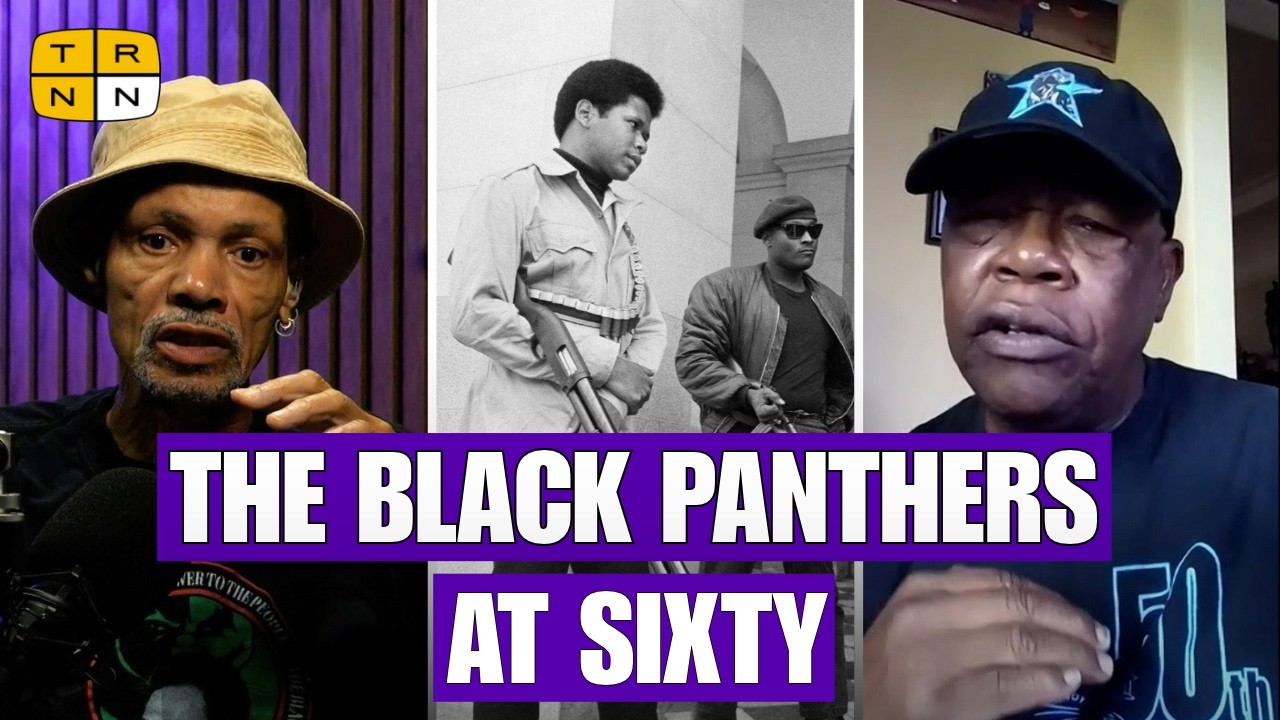
The Black Panthers at 60: A through line of resistance from the South to California

Two members of the Black Panther Party are met on the steps of the State Capitol in Sacramento, May 2, 1967, by Police Lt. Ernest Holloway, who informs them they will be allowed to keep their weapons as long as they cause no trouble and do not disturb the peace. Photo via Getty Images

In this episode of Rattling the Bars, host Mansa Musa interviews archivist, photographer, and veteran Black Panther Party member Billy X Jennings.

Joining the Party at age 17 after relocating from Hobson City, Alabama, to Oakland, Jennings managed BPP offices and served as bodyguard to Huey P. Newton. During Bobby Seale’s 1973 Oakland mayoral run, Jennings helped spearhead an unprecedented electoral effort: “…an organizing event on the highest level the parties had ever been. I mean, the party is known for organizing, but to go into electoral politics and do what we did for a first time basis, it changed over. Even though Bobby lost that election, it changed openly because it opened up so many doors. Part of his job was to kick down doors because we were the Vanguard.”

Today, Jennings operates the official Black Panther Party Alumni website and leads political education initiatives across the Bay Area for the Party’s 60th Anniversary.

Related links:

Credits:

  • Production/Post-production: Cameron Granadino
Transcript

The following is a rushed transcript and may contain errors. It will be updated.

Mansa Musa:

Welcome to the edition of Rattling the Bars. I’m your host, Mansa Musa. This year marks the 60th anniversary of the founding of the Black Panther Party, which started in Oakland in 1966. Today, I’m honored to be joined by Billy Jennings, AKA Billy X, well-known archivist in Oakland, member of the Black Panther Party, a photographer who runs the official Black Panther Party alumni website called It’s About Time. Thank you for joining me, Billy.

Billy X Jennings:

Hey, thanks for having me again. Good morning to everyone.

Mansa Musa:

And as we talked earlier, I was in different spaces and hoping I had met you while I was in Oakland. So this would more or less be like a reunion, but this is my first time meeting you. I’m really honored. I heard a lot about you. I know a lot about your work, and it’s an honor to be able to interview you about the party and some of the things and some of your experiences.

Billy X Jennings:

Okay.

Mansa Musa:

Please introduce yourself to our audience, who you are and how you came to be involved in the Black Panther Party.

Billy X Jennings:

Well, my name is Billy X. Jennings. I’m a member of the Black Panther Party. I joined in 1968 when I was 17 years old. And I came about joining the party because I’m from a historical town in Alabama in the South where most original members came from the South and migrated to California. So I came from a place called Hopson City, Alabama. And the tradition there, Hobson City have had the right to vote since 1890. And we were one of the only black municipal cities, little towns that could vote and had that right to do that. And so I came from a very strong area that had embedded that kind of thought into my mind. And when I traveled to California and I saw the Black Panther Party on TV for the first time in 1967 when they went to Sacramento, California, it blew my mind.

I was in high school at the time and I immediately changed our social… We had a social club called the Buccaneers. I changed it to the Panthers the next day. I didn’t know anything about the party with just that symbolism and how they stood up to the police and read their demands and so forth. It made a change happen in me. And it wasn’t until I graduated from high school, I decided to move to Oakland. And when I moved to Oakland, it was during the time that Huey knew the trial had just started and I was going to a college that’s two blocks away from where Huey was going on trial at the courthouse. And when the trial started, we would hear them saying Free Huey off the preg, free Huey. And I went over there one day and I was reading a book simultaneously at the same time called The Audible Malcolm X.

So what I read, I had read in the book already, but I heard Bobby Steele speak at a rally for Huey and they were saying the same thing. So it got me really interested in the party. And so I started going to the rallies to Free Huey. I met some Panthers and then they said their Panther office was going to open in my area. And when it did, I went down and joined, became a Panther in training and I’ve been working with the party ever since.

Mansa Musa:

Okay. And take us back to the party’s founding because you came in two years after its founding. And also you came in to your own observation and to what we know to be a fact, you came in at a point where they had just started to become on the radar of the feds, but more importantly, they was definitely on the radar of the Oakland police, LA police. And so talk about what was it like to be able to be in that space and ultimately find yourself in a position to be the bodyguard for Huey Newton once he got out.

Billy X Jennings:

Well, my process started at the very beginning. In 1968, there was a certain method the party employed. Before you became a Panther, you had to become a Panther in training, which requires six to eight week training. They give you a list of books that has about 35 different books, about books by Franc Fanon, Mao Saintong, Che Guevara, Pruma, and other revolutionaries to read. And you had to attend political education class on a weekly basis. Panthers at that time was required to read two hours a day. A Panther had to secure and have what we call technical equipment. Technical equipment was a firearm of some type, because at that time I joined the Black Panther Party, it was called Black Panther Party for self-defense. Later on, we dropped off the self-defense, but at that particular time, the party was engaged into patrolling

Police officers in the community, observing them and making sure they don’t beat and brutalize people. So the first six weeks is reading and studying and learning the rules of the Black Panther Party. And then you’re given a section. The city is divided into different sections. I worked in the section four in East Oakland. Section four had a section leader. They had a geographical area that they were responsible for. And so I was in section four. At that very beginning when I first started, we were theorizing about the breakfast program. It hadn’t came about, but we were still looking for geographical locations to have these breakfast programs in the future. So we did that. And every Panther is required to sell the Black Panther Party newspaper, which is the voice of the party. And at that time, the party was growing tremendously by leaps and bounds.

We had people flying into California from Kansas City, Chicago, New York, all to get this education. Before you can open up a chapter of the Black Panther Party or a branch of the Black Panther Party, you have to come to Oakland first and get educated. And you have to meet the leadership. The leadership has to eyeball you and find out your level of consciousness, what type of person you are before you can go back and represent the party. So this whole process was going on. People were flocking to the party. The party got so big that in 1969, we had put a stop on membership and we call that particular part of the party’s history the purge because the party had grown… I mean, the party was attractive. I mean, black coats, leather coats, I mean sunglasses and Afros at the same time. So this was a big thing for our culture.

At the same time, our culture level was rising even in music. James Brown had a record out in 1968 that elevated people’s social conscience, I’m Black and I’m proud. It moved people from the level of being a Negro, because that’s what the newspapers and that other people was referring us to. But in our community, we’re referring to ourselves as Black or African. And when James Brown came out with Black and I’m Proud, you could never go back to ever saying he was a Negro no more. There was different progress being made, but James Brown couldn’t sing no song like that. It wasn’t for groups like the Black Panther Party. Groups like The Shot Light Can’t Sing got to give more power to the

Mansa Musa:

People

Billy X Jennings:

Like the Black Panther Party, paving the way to educate people to lift up their consciousness. And so my role in the party, I came up as a Panther in training. I became a officer of the day, which is the person who runs the office. And from there I was transferred to central headquarters. Now, my name came about because my captain at that time was a legendary Panther called Robert Bay. Robert Bay ran the East Oakland office. Robert Bay was also an age of the central committee. And when Huey Newton got out of jail in 1970, the central committee made Robert Bay his permanent bodyguard and assistant. Now, I worked in that capacity as well after Huey got out of jail, mostly going to… I went to court with Huey on a daily basis because he was let out on appeal. He wasn’t just let out.

He had to go back to court and defend himself. And so my job became that. And also at the same time, I became to the Newton family. Mr. Newton, Mrs. Newton, I lived three or four blocks from them. I would walk over their house around the corner, mow their lawn. I’d be taken to the pharmacy, driving to doctors because they’re old people and they don’t drive so much. So that became my responsibility and me and Huey’s relationship grew behind that. So we had good personal relationship.

I worked central headquarters. Working at central headquarters was key to who I am today because I know Panthers from everywhere because every Panther had to call the central headquarters on a weekly basis or if the office gets ready or they need lawyer resources and stuff like that, I pick up the phone, write on the messages or tell them what they need to know. So I know Panthers from almost all the chapters and branches. And so I worked that group for a while. Then I was drafted into Bobby Seal’s campaign when he ran for mayor of open. I ran Bobby Seal’s campaign office in East Oakland. And it was an organizing event on the highest level the parties had ever been. I mean, the party is known for organizing, but to go into electorial politics and do what we did for a first time basis, it changed over.

Even though Bobby lost that election, it changed openly because it opened up so many doors. Part of his job was to kick down doors because we were the Vanguard. We had lead to struggle and there’s other people who follow behind us. I mean, our life was constantly in threat because we were on the front line, police department, clientele pro, all those things aimed at members of the Black Panther Party. So not only did we have the burden of dealing with the system, we had to deal with the authorities as well.

Mansa Musa:

Talk about, and you’re familiar with Eddie Conway, right? And so Eddie Conway, when he got locked up, he organized a chapter for the Black Panther Party in the prison, which I became a part of. And everything you outlined, as you was talking, I was reflecting on, we had to read at least two albums. We had every aspect of the thing that you outlined as what the party was doing, Eddie had us doing the same thing. We had political education classes, we had military classes, we had first aid classes. All our class was structured around an environment that we was in, and our technic class was finding a hole to get out of prison by any means necessary. So we had that type of mentality. So Billy, as an archivist, you have a lot of distortions in terms of the images that’s being projected of the party and it’s been dubbed Panther Porn, and just to note that it’s images that’s being perpetuated by the federal government, it’s images that’s become more idolization of the party versus the images as an archivist.

What would you say is the most positive or how would you characterize the imagery of the party as from an archivist in terms of educating people and raising their conscience? I see you with a shotgun. I know you in Sacramento. I know why you in Sacramento and I know why you coming out like that. That’s a good thing. But then I turn around, I see somebody standing on the corner. They got a picture of somebody standing on the corner with their mug broke and they got a bandela on and it had nothing to do with organizing, had nothing to do with raising people’s conscience. It’s got more to do with projecting the image of a thug, for lack of a better word. Talk about that if you can.

Billy X Jennings:

Well, the party was vilified on the highest level from the government who lied on us continuously to the media that used disinformation to scare people. The big image they had was, oh, these Negroes, they have guns. They’re angry. They hate white people. That’s their basic pitch on everything. Let it be Republican New Africa or any Black group, they paint them as very threatening group. And because we had guns, I mean, there was nothing… It wasn’t against the law in California to have guns, to have them in public long as they was not loaded, which we knew that. So the images they printed of the Black Panther Party was to vilify us and to scare white people and to frighten Black people. So it was all a part of their method to control who we were. They were trying to identify who we were. We could only define that.

We defined our own selves. And so that’s why we started a Panther newspaper in 1967 to get our voices and views out. So even though we had Time, Newsweek, Life Magazine, the Black Panther Party was cranking out close to 250 to 300,000 copies of papers per week into the community to combat this disinformation about the Black Panther Party. The 10 point program outlines what the Black Panther Party was all about, what we stood for.

Only on one aspect, which is 0.97, we talk about defending ourselves with guns. Other

Than that, we’re talking about social change in all levels, in education, housing and so forth. That was a threat to them because they did not want anyone to rocking the boat and we are rocking the boat. We are waking people up from their deep sleep. I mean, we’re telling people to read. We’re showing people what books to read. We are the Vanguard. People are following us. They didn’t want that. We had people in the white community, they wanted to join in with us. We had people from the Latino community, they want to join with us. You had people from around the world reading the 10 point program and looking at the positive aspect of the Black Panther Party. And that’s how we get the New Zealand Panthers and the Panthers from Africa and Panthers from India and the UK because of our social programs, how we was dealing with the oppressor here.

And so they follow those same examples there. They started social program, they started demanding and fighting for their rights. And that’s what the oppressor hates. They hate for people to wake up. And we were waking up big time in the 60s with the music, the culture, the back to Africa, who we are. How could you be a Negro in 1970 after all has been presented before you? So those things have changed. The party was a part of that change, that

Mansa Musa:

Consciousness. Talk about, because to your point, I remember reading the paper and when United Farm Workers, the party was one of the first papers to one, educate people on what their issues were, two, organize the boycott certain wines that they was taking and exploiting their labor and not giving them equal pay. So talk about the party’s social contribution to raising people’s concept, but more importantly, the elasticity of it, because can you see some of the influences today? Oh,

Billy X Jennings:

Definitely. Definitely. I can see the influences of the Rainbow Coalition. And that was something that Fred Hampton talked about. I could see the coalition building of the Black Panther Party. We’re working with the Brown Beret, the Young Lords, the Young Patriots. We’re working with the welfare rights groups. We’re working with the BSU, the Black Student Unions on campus. We’re working with prison groups. There was a number of prison groups throughout the country that started Black Panther Party off in San Quentin, in Algeria, Raway and other prisons because the ideology of the Black Panther Party was strong. What we were talking about, there was backbone to it. Everything we did was dialectic materialism, right? We were dialectic people. We looked at things from all sides. We just didn’t look at things in one side. Black Panther Party was an international group from the very start. Dewey and Bobby were international.

You can look at our reading list, those 35 books that come from Fanon, that’s from Africa, Mao Zeitang from China. So there was all kind of influences in the party. And so it was a big job just working to educate and organize people on all levels. Because in our community, action speaks. People learn in various ways, but in our community, people relate to action. They see something, they learn from it. Just like the breakfast program. We started the breakfast program in California and within two weeks it was a national program because people said, “Hey, we can do that here. This is how they did it. We can do it here.” The party set examples that people could follow in every aspect. We were on the forefront of fighting racism on all levels.

💾

“We started the breakfast program in California, and within two weeks it was a national program because people said, 'Hey, we can do that here. This is how they did it. We can do it here.' The party set examples that people could follow in every aspect. We were on the forefront of fighting racism on all levels.”
  •  

Major Study: COVID-Vaccinated Children 60% More Likely to Require Mental Health Treatment

A new study links COVID-19 vaccination in children to sharply higher rates of autism, ADHD, anxiety, special-education use, and other health conditions—based on an analysis of 21,990 U.S. children in official government data. The study “Neurodevelopmental Outcomes [...]

The post Major Study: COVID-Vaccinated Children 60% More Likely to Require Mental Health Treatment appeared first on The People's Voice.

  •  

Seized Mexican Cartel Records Link 221 U.S. Politicians to Child Trafficking Orders — ‘Ages and Preferences’

Mexican cartel kingpin El Mencho kept a personal list of 221 U.S. political leaders who placed orders for trafficked children—including specified ages and preferences. El Mencho was killed in February during a US-linked security operation [...]

The post Seized Mexican Cartel Records Link 221 U.S. Politicians to Child Trafficking Orders — ‘Ages and Preferences’ appeared first on The People's Voice.

  •  

‘Deranged and dangerous’ Trump decried for inviting Iran to ‘take out’ California cities

US President Donald Trump speaks to a member of the crowd after speaking during a campaign rally at Pinnacle Bank Expo Center in Grand Island, Nebraska, on October 5, 2026. Photo by Kent NISHIMURA / AFP via Getty Images
Common Dreams Logo

This story originally appeared in Common Dreams on Oct. 06, 2026. It is shared here under a Creative Commons (CC BY-NC-ND 3.0) license.

“Keep our city out of your reckless war talk,” said San Diego’s mayor, Todd Gloria, Monday night after President Donald Trump’s rambling speech at a rally in Nebraska included a particularly violent mention of the California city.

Gloria was among several Democratic political leaders who were incensed after Trump—moments after predicted the Republican Party would see a “tremendous victory” in the November 3 midterm elections—suggested that he would not object to an Iranian military or nuclear attack on San Diego and Los Angeles.

The president said that soaring prices for gas, groceries, and other essentials are a “small price to pay for keeping the world safe—keeping our country safe.”

Trump on Iran: Let 'em take out Los Angeles and San Diego, it's a small price to pay pic.twitter.com/Fc4BcjVDKj

— Headquarters (@HQNewsNow) October 6, 2026

He warned that Iran could “take out a city,” before adding that he would “let them” attack the two deep-blue cities—home to a collective 5.2 million people, with more than 20 million residents in the surrounding areas

“Let them take out Los Angeles. Let them take out San Diego,” Trump said at the rally in Grand Island. “This is a very small price to pay… It’s gonna be over very soon.”

The crowd responded to Trump’s comments with laughter and cheers. The president has frequently made Democratic strongholds like Los Angeles, Chicago, and his own hometown of New York City the targets of rhetorical attacks. He has also targeted those cities with the deployment of armed federal agents as part of his mass deportation agenda.

California Gov. Gavin Newsom, a Democrat whose name has been floated as a potential 2028 presidential candidate, condemned Trump’s remarks as “deranged and dangerous.”

“After sending the National Guard and Marines to occupy California, Donald Trump is now saying our foreign enemies should ‘take out’ Los Angeles and San Diego,” said Newsom, who later criticized Trump’s vice president and secretary of state for not speaking out against the comments.

“The SILENCE from JD Vance and Marco Rubio today is deafening,” said the governor.

Gloria added that San Diego, which is home to major military installations, “is not collateral damage. We are not expendable. And we are never a ‘small price to pay.’”

Los Angeles Mayor Karen Bass accused Trump of compromising the safety of the nation’s second-largest city.

“The role of a president is to protect the country, not to actively threaten it and encourage attacks on American lives,” said Bass. “In the face of irresponsible threats, as Angelenos, we know how to stand together and protect our city.”

Jim Desmond, a Republican running for Congress in California’s 48th District, which lies in San Diego, was also quick to distance himself from the president’s comments.

Some observers claimed the president had simply been speaking in an “especially confusing style,” as journalist Daniel Dale suggested, and did not intend to suggest that the two cities could be acceptable collateral damage.

“Of course you can say it’s inappropriate regardless for the president to casually float the possibility of a city being wiped out,” he added.

Trump’s comments came days after it was reported that the Pentagon is prepared to send thousands more troops and a third aircraft carrier to the Middle East, as talks between the US and Iran remain stalled. Gas prices remain elevated, at $4.36 per gallon on average, and nearly two-thirds of respondents to an Associated Press poll in June said they disapproved of how Trump had handled the war, which he joined Israel in starting in February without congressional approval.

Sen. Alex Padilla (D-Calif.) had a succinct response to Trump’s remarks, referring to the constitutional amendment that allows members of a president’s Cabinet to remove him from office on the ground that they cannot fulfill the duties of the president.

“Twenty-fifth amendment NOW,” said Padilla.

  •  
❌