❌

Reading view

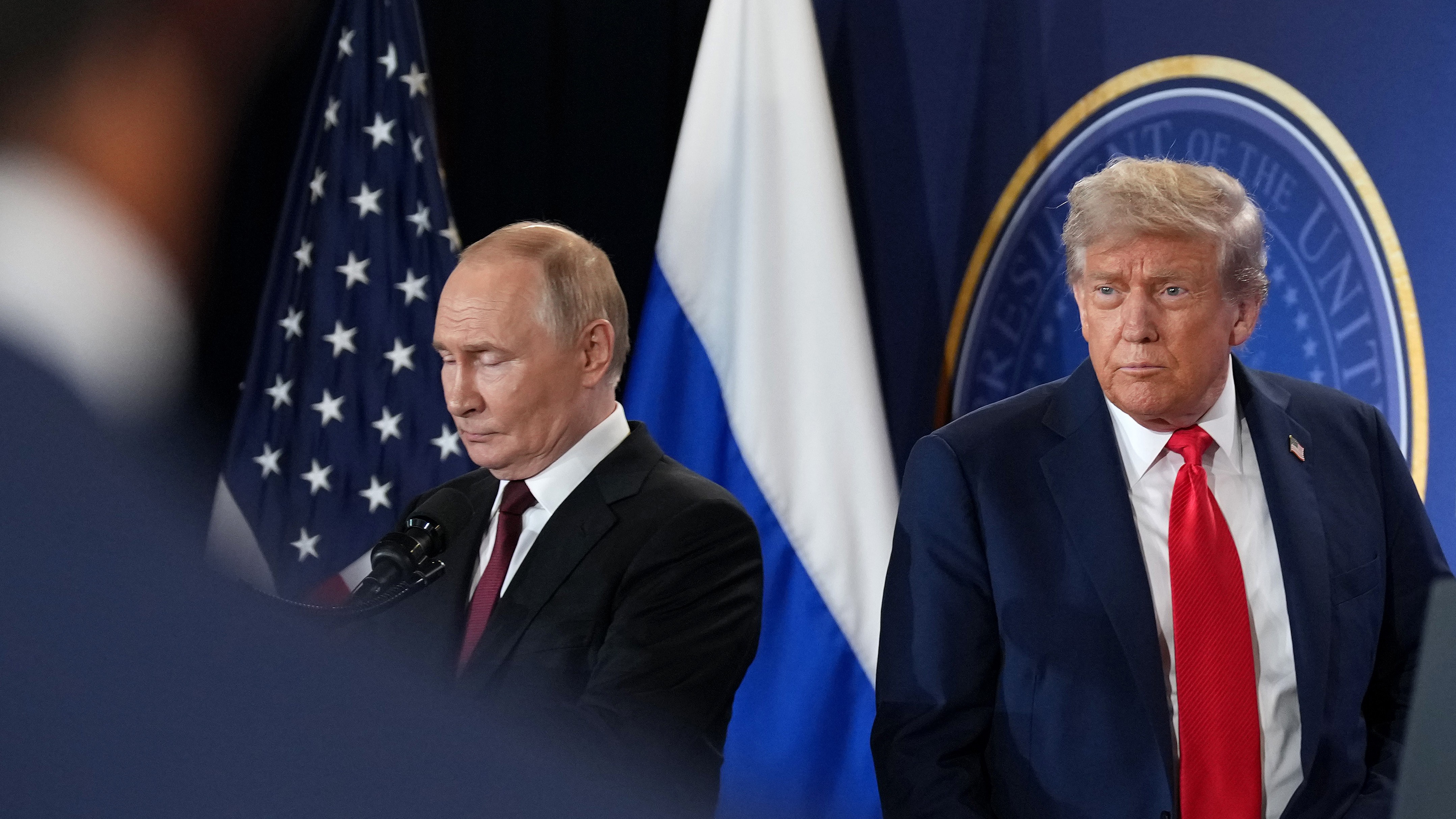
Trump Is an Easy Mark for Putin

Late last night, President Trump announced a “massive” deal to buy diesel fuel from Russia. For the American truckers and farmers Trump claims to be serving, the deal means little or nothing. Trump may not know or may not care that his latest gambit will not reduce diesel prices. His poll numbers are plunging to Herbert Hoover levels. He needs a last-minute electioneering gimmick.

But while the deal will not benefit American consumers, it has immense consequences for others. For Vladimir Putin’s Russia, the deal is a potential lifesaver. For war-ravaged Ukraine, it is the most outrageous and heartless Trump betrayal to date. For Trump’s entourage, the deal promises corruption opportunities on a multibillion-dollar scale. And for people trying to understand the Trump presidency, the deal is further proof of the accusation that Nancy Pelosi flung in Trump’s face in 2019: “With you, all roads lead to Putin.”

The United States is a diesel superpower. It is one of the world’s largest producers and exporters of diesel fuel. U.S. refineries produce about 5.2 million barrels of diesel a day. Americans consume about 3.7 million barrels a day. The surplus is sold abroad: In recent months exports have run above 1.5 million barrels a day.

The United States imports some diesel fuel from Canada, about 154,000 barrels a day, owing to the peculiarities of pipeline and shipping networks: It’s cheaper to supply New England from the Canadian refinery in New Brunswick than from U.S. refineries along the Gulf Coast. By comparison, Trump’s Russia deal is for 2.25 million barrels: the equivalent of about 16 hours’ worth of U.S. consumption, 10 hours’ worth of U.S. production, or 14 days’ worth of Canadian imports.

Unfortunately for U.S. diesel consumers, the price of diesel fuel is set by global markets, not North American ones. Trump’s Iran war has disrupted fuel supplies from the Middle East, including diesel supplies. Before the war, Europe imported more than half a million barrels of diesel a day from the Persian Gulf. The world’s second-biggest diesel exporter used to be Russia, which shipped about 817,000 barrels a day in 2025. When the Iran war raised energy prices, Russia was positioned to profit.

[David Frum: Why Trump didn’t predict the gas-price spike]

The United States in the past tried to help Ukraine by sanctioning Russian energy exports. Trump sometimes pretended to support this policy. In September 2025, for example, Trump proclaimed a tariff on India, ostensibly to punish India for buying Russian oil—but then lifted it in February.

So the Ukrainians took matters into their own hands. As Russia has intensified its horrific drone and missile attacks on Ukrainian civilians, Ukraine has struck back with a devastating campaign against Russian energy infrastructure, including diesel. By late summer 2026, the Ukrainians estimated that they had shut down 43 percent of Russian refinery capacity. According to Ukrainian reports, Russian production of oil of all kinds plunged from 5.6 million barrels a day before the Iran war to 4.1 million barrels by late summer 2026. Russia imposed a ban on diesel exports in July. That ban has been extended into October.

Friends of Ukraine hailed the attacks on Russian energy infrastructure as a war-changing success. Trump saw a threat to Republican hopes in the midterms. Curbs on Russian fuel exports helped push the price of diesel fuel in the U.S. above $5 a gallon in July, then higher than $6 a gallon in September.

Since Trump’s return to power in 2025, the Putin regime has dangled lucrative deals in front of the president’s entourage.

The Wall Street Journal reported in November 2025 about secret conversations in Miami the previous month between the head of Russia’s sovereign wealth fund, Kirill Dmitriev, and Trump’s negotiators, Steve Witkoff and Jared Kushner:

“For the Kremlin, the Miami talks were the culmination of a strategy, hatched before Trump’s inauguration, to bypass the traditional U.S. national security apparatus and convince the administration to view Russia not as a military threat but as a land of bountiful opportunity, according to Western security officials. By dangling multibillion-dollar rare-earth and energy deals, Moscow could reshape the economic map of Europe—while driving a wedge between America and its traditional allies.”

The report noted that Dmitriev “found receptive partners in Witkoff—Trump’s longtime golfing partner—and Kushner, whose investment fund, Affinity Partners, drew billion-dollar investments from the Arab monarchies whose conflict with Israel he had helped mediate.” The New York Times reported last week about an even more brazen Russian offering: a multibillion-dollar oil deal for assets owned by Russia’s Lukoil, which would directly benefit a Trump donor and two Middle Eastern groups that have done business with Kushner or Witkoff’s family. (A spokesman for Steve Witkoff said of the Times story that Witkoff “has no conflict of interest and no financial stake in this matter.” Of the Wall Street Journal story, a source described as “familiar with Witkoff’s thinking” said “the envoy is confident that any settlement with Russia would benefit America broadly, not just a handful of investors.”)

But all these apparently enticing Russian schemes come with a catch: Russian energy assets are not worth much if those assets are regularly wrecked by Ukrainian drones. This makes plain the implicit quid pro quo in these lucrative deals offered to Trump’s family and friends: If you compel Ukraine to surrender, we will enrich you beyond reckoning.

Putin is attempting to leverage Russia’s most strategic asset in his war on Ukraine: Trump’s weakness for corruption. The 2.25 million barrels of diesel Putin offered Trump will have zero net impact on world energy markets or the world price of diesel. But accepting those barrels will collapse the U.S.-led sanctions regime on Russia—and align Trump with Putin against the Ukrainian air attacks on Russian energy production.

Trump stopped providing aid to Ukraine long ago. But the U.S. still provides Ukraine with crucial intelligence information. If Putin can entice Trump to cut Ukraine off from U.S. intelligence, he can do real damage to Ukraine’s capabilities. Russian diesel fuel is the cheese in that mousetrap. Trump’s negotiators are sniffing at the bait: The Kyiv Post reported today that Witkoff and Kushner are already threatening to stop information-sharing if Ukraine continues to strike Russian energy assets. And meanwhile, FBI Director Kash Patel is reportedly planning his own trip to Russia—one that members of Congress are urging him to cancel, as my colleague Sarah Fitzpatrick recently reported.

There is much about Putin’s offer of diesel that remains doubtful. Does Trump have the legal authority to buy previously sanctioned Russian oil? Does Russia even possess the diesel to sell? But one thing at least remains as clear as ever: With Trump, all roads lead to Putin.
© Andrew Harnik / Getty

  •  

Realtà su ordinazione

🧠 Sabato siamo partiti dal volo Flydubai e dall’«11 settembre sventato» evocato da Netanyahu: come si costruisce un racconto prima dei fatti. Stasera scendiamo un livello più in profondità: perché la nostra mente accetta anche ciò che non è vero, e che cosa accade quando la storia viene riscritta dal potere mentre accade. Ne parliamo con con Stefano Re, criminologo, saggista ed esperto di metacomunicazione, autore di «Mindfucking», e con Roberto Quaglia, scrittore e saggista, autore de «Il mito dell’11 settembre» e de «Il fondamentalismo hollywoodista». Affrontiamo insieme: ✈ Il volo Flydubai una settimana dopo: che cosa resta del racconto quando le conferme non arrivano 🔁 Ripetere per convincere: l’effetto verità illusoria 🧩 Perché le smentite non cancellano la prima versione ⚖ Dissonanza cognitiva: quando i fatti contraddicono ciò in cui crediamo 👥 Credere per appartenere: conformismo e spirale del silenzio 📜 La storia riscritta: Il popolo palestinese che «non esiste» 🕊 Il paradosso della memoria distorta 🛡 Come difendersi, anche dalle contro-narrazioni 📚 I LIBRI DEGLI OSPITI Stefano Re LaScienzah. Quando la scienza si trasforma in fanatismo religioso, Arianna Editrice, 2025 Mindfucking. Dai manuali segreti della CIA al marketing, le tecniche di condizionamento mentale, Arianna Editrice, 2024 (edizione ampliata) Roberto Quaglia Guerra e pace e zombi. Democrazia totalitaria contro mondo multipolare, Youcanprint, 2025 Hollywoodism. The Invisible Ideology, Youcanprint, 2025 Il fondamentalismo hollywoodista. Viaggio in Iran alla scoperta dell’invisibile ideologia dell’Occidente, Youcanprint, 2020 Il mito dell’11 settembre. I versetti satanici della democrazia occidentale, Youcanprint, 2020 🎯 SOSTIENI CASA DEL SOLE TV Casa del Sole TV è un progetto di giornalismo indipendente autofinanziato. Nessun editore, nessun partito. Per donazioni: IBAN: IT63P0326822300052392596590 Intestato a: La Casa del Sole Edizioni Causale: Donazione Casa del Sole TV Membership YouTube: 👉 https://www.youtube.com/@CasadelSoleT… 💠 Analista Multipolare €5/mese 💠 Inviato della Verità €15/mese 💠 Architetto del Futuro €25/mese 📖 I LIBRI DI MARGHERITA FURLAN BRICS Scacco Matto (disponibile in italiano, inglese, russo) ▶ LA PRIMA PUNTATA Re e Quaglia: il volo Flydubai e l’11 settembre https://www.youtube.com/watch?v=SzUsh… ▶ PRECEDENTI CONVERSAZIONI Stefano Re: giornalismo, metacomunicazione e percezione della realtà https://casadelsole.tv/stefano-re-gio… Stefano Re, Federico Greco: codice Epstein, dal metalinguaggio all’analfabetismo indotto https://casadelsole.tv/stefano-re-fed… 🔔 Iscrivetevi al canale e attivate la campanella: è grazie a voi che siamo qui ogni sera. #StefanoRe #RobertoQuaglia #Propaganda #Narrazioni #GuerraCognitiva #Flydubai #11Settembre #Netanyahu #Gaza #Palestina #Sionismo #Antisionismo #NetureiKarta #Satmar #Metacomunicazione #Psicologia #Disinformazione #CasaDelSoleTV #Multipolarismo 🧠📜🕊✡📡


Come è stato realizzato

L'articolo Realtà su ordinazione proviene da Casa del Sole TV.

  •  

Samsung dangles $560,000 bonuses to keep engineers from China

A Samsung memory chip worker earning about $60,000 a year could receive roughly $560,000 in bonuses before tax, according to the company’s largest union. Its estimate includes both Samsung’s existing profit-sharing bonus and a new special payment. Samsung hasn’t confirmed the amount. On October 7, the company outlined how that special bonus would work: 10.5% […]

The post Samsung dangles $560,000 bonuses to keep engineers from China appeared first on Asia Times.

  •  

🔴 L’ALGORITMO CHE UCCIDE | LEVANTE – Casa del Sole TV

💣 Gli Stati Uniti hanno bombardato l’Iran durante i negoziati, e il Pentagono ha già pronti i piani per una nuova campagna dopo il 3 novembre. Intanto a scegliere i bersagli sono sempre più spesso sistemi di intelligenza artificiale sviluppati dai giganti della tecnologia: Palantir, Microsoft, Amazon, Google. E l’Italia? Il ministro Crosetto conferma 500 militari in Arabia Saudita, un nostro Eurofighter colpito a Ta’if e l’esercitazione nucleare Nato Steadfast Noon nei nostri cieli. “Non siamo in guerra”, dice. Ma allora che cos’è? ⛽ Petrolio sopra i 100 dollari, gas alle stelle, Hormuz al minimo dei transiti. Ucraina: strage di civili a Kramatorsk e nuovo tavolo a Miami. 🫒 Cisgiordania: i coloni aggrediscono i raccoglitori di olive. 🏚 Gaza: due milioni di persone verso il quarto inverno senza riparo. 🎙 Ne parliamo con: 👤 Tiziana Alterio: giornalista indipendente e scrittrice, già Rai e Mediaset, reporter in Africa, Asia, Sud America e Paesi arabi. 📖 Padroni nell’ombra (2025) · Putin. L’uomo di ghiaccio che sfida l’Occidente (2022) 👤 Gianmarco Pisa: operatore e formatore di pace dell’IPRI-CCP, con i Corpi Civili di Pace in Kosovo; ricercatore RESeT e IRES Campania, membro della Rete italiana Pace e Disarmo. 📖 Più eterno del bronzo (Multimage) · Paesaggi kosovari 1998-2018 🎤 Conduce Jeff Hoffman 🎯 SOSTIENI CASA DEL SOLE TV ☀ Casa del Sole TV è un progetto di giornalismo indipendente, autofinanziato, senza editori né partiti. 🏦 IBAN: IT63P0326822300052392596590 👤 Intestato a: La Casa del Sole Edizioni ✍ Causale: Donazione Casa del Sole TV ⭐ ABBONAMENTO YOUTUBE 👉 https://www.youtube.com/@CasadelSoleT… 🔹 Analista Multipolare: €5/mese 🔸 Inviato della Verità: €15/mese 🔺 Architetto del Futuro: €25/mese 📖 I LIBRI DI MARGHERITA FURLAN ♟ «BRICS Scacco Matto», disponibile in italiano, inglese e russo 🌐 SEGUI CASA DEL SOLE TV ▶ YouTube: @CasadelSoleTVChannel #Levante #CasaDelSoleTV #IntelligenzaArtificiale #AI #Iran #Israele #USA #Palantir #BigTech #Gaza #Cisgiordania #Ucraina #Crosetto #ArabiaSaudita #CrisiEnergetica #Hormuz #Geopolitica #Pace #InformazioneIndipendente #TizianaAlterio #GianmarcoPisa #Padroninellombra

L'articolo 🔴 L’ALGORITMO CHE UCCIDE | LEVANTE – Casa del Sole TV proviene da Casa del Sole TV.

  •  

China Space Plans: Station Touted as “Global Research Platform,” Moon and Mars Projects in Full Swing

China is planning to open the country’s space station to other countries, intended to transform the orbital facility into a global research platform. Yang Liwei, China’s first astronaut and deputy chief designer of the China Manned Space Agency (CMSA), discussed the plan during the now underway 77th International Astronautical Congress in Türkiye’s Mediterranean city of […]
  •  

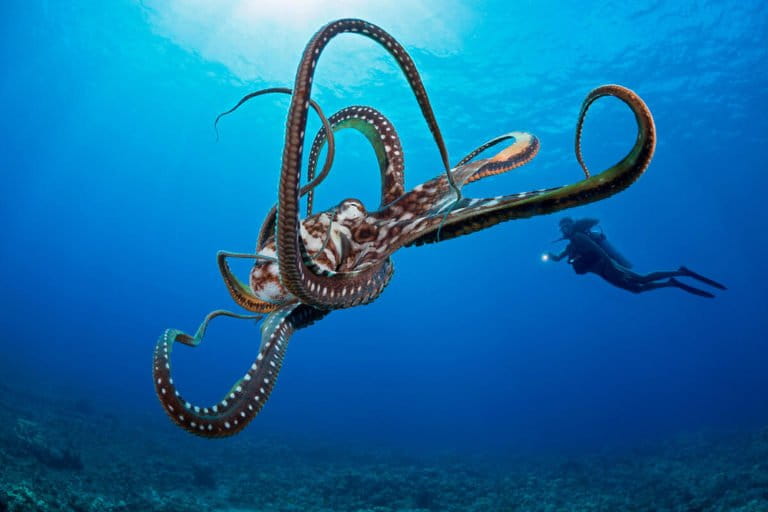
World Octopus Day: new discoveries about the world’s smartest invertebrates

Happy World Octopus Day!  Every Oct 8, the world celebrates one of the more unusual creatures of the sea. Octopuses are well-known for their eight legs and ability to squirt ink when frightened. They’ve also been known to use tools, a sign of intelligence, and can shape-shift to mimic the colors and texture of their surroundings, an effective way to disappear from both predators and prey. Mongabay has reported on several octopus discoveries this year, including: Ancient octopus were apex predators Modern colossal squid are believed to be the largest invertebrates in the sea, but Mongabay’s Shanna Hanbury recently reported on an even larger ancient octopus species whose fossils were described by Japanese researchers in April 2026. The Japanese team found a fossilized jawbone from the now-extinct Nanaimoteuthis haggarti. Based on its jaw size, researchers suggest the octopus may have reached 6.6 to 18.6 meters (22 to 61 feet) in length. On the higher end, that’s around two-thirds the size of an adult blue whale, the largest animal to ever exist. “It suggests that it may have been among the largest invertebrates ever known,” study co-author Yasuhiro Iba, a paleontologist at Hokkaido University in Japan, told Mongabay by email. They were likely gigantic predators that roamed the late Cretaceous seas between 100 million to 72 million years ago. A rare look at baby octopuses From long dead octopus to newly born, Hanbury also reported on baby Argentine octopuses and a rare photo of them. Patagonian octopus eggs in Puerto Lobos Protected…This article was originally published on Mongabay

  •  

Counterfeit seeds threaten African farmers’ crops and climate resilience: Study

In Africa, high-quality seeds can produce improved crops with enhanced nutrition, pest-resistance, and drought tolerance. However, such seeds for maize, vegetables, and cereal crops can be indistinguishable from counterfeit, or “fake” seeds. That’s creating a massive potential for fraud in seed quality that can potentially deprive farmers of access to climate-resilient seeds while putting their harvests and incomes at risk. A group of researchers analyzed the efforts of 50 African countries to combat counterfeit seeds. They found a wide range of penalties for selling them across different governments, and concluded that a significant gap exists between government policy commitments and implementation, largely due to limited capacity. Study lead author Ed Mabaya, a professor of global development at Cornell University in the U.S., told Mongabay, “For most smallholder farmers in Africa, planting happens once a season, often timed to the first rains. A farmer who buys counterfeit seed usually finds out only after planting, when the seed fails to germinate or the crop grows poorly. By then it is usually too late to replant, so the loss is not a slightly smaller harvest but potentially the whole season’s food and income.” That can lead to food insecurity for the individual farmer and local markets more broadly. Counterfeiters can dye or repackage grain and sell it as branded, certified seed, Mabaya said. “The problem arises because certified seed looks exactly like ordinary grain but sells for a much higher price, in some cases several times more for hybrid maize. That price gap…This article was originally published on Mongabay

  •  

🔴SCENARIO IBRIDO | LEVANTE LIVE

🔴Chi scrive lo scenario sceglie il nemico. L’Europa si esercita alla fine del mondo; il resto del mondo si esercita a farne a meno. 🎙A Levante questa sera, giovedì 8 ottobre 2026, Jeff Hoffman dialoga con Margherita Furlan, giornalista e analista geopolitica, direttrice di Casa del Sole TV, e con Vincenzo Maddaloni, giornalista e scrittore, direttore del Centro studi Berlin89. 🕵 A Bruxelles gli ambasciatori dei ventisette preparano a porte chiuse, senza telefoni, lo «scenario da incubo» di un attacco ibrido con molte vittime. ☢ Dal 13 ottobre i cieli del Tirreno ospitano Steadfast Noon, l’esercitazione nucleare annuale della NATO. 🌍 Ad Accra il Ghana annuncia che chiederà di entrare nei BRICS. 🔎AFFRONTIAMO INSIEME 🧨«Risposta dolorosa», «Schengen militare», «10 milioni di droni»: la nuova lingua della Commissione europea ⚖ Il protocollo d’emergenza di Bruxelles: difesa europea o competenza che i Trattati non danno? ✈ Steadfast Noon: Ghedi, Aviano, Amendola, Gioia del Colle, Trapani e la Sardegna sorvolata a bassa quota 📜 Un Parlamento informato da un avviso tecnico per i piloti: la sovranità comincia dall’informazione 🇩🇪 La Germania tra la paura di Lipsia, il rifiuto della guerra e il riarmo come politica industriale 💰 Chi incassa lo scenario: droni, cavi, satelliti e gli Azionisti dell’Apocalisse 📉 Se la paura è il prodotto, perché i titoli della difesa sono scesi? 🇬🇭 Il Ghana bussa ai BRICS passando da Nuova Delhi: multipolarità o diplomazia di facciata? 🔭 Cosa guardare nelle prossime due settimane per capire se lo scenario resta uno scenario 📚 LIBRI DEGLI OSPITI 📕 Vincenzo Maddaloni, «Voglia di rivoluzione», Nexus Edizioni, 2024 📗 Vincenzo Maddaloni con Modini, «L’atomica degli ayatollah», Nutrimenti, 2006 📘 Margherita Furlan, «BRICS Scacco Matto», La Casa del Sole Edizioni, 2025 (italiano, inglese, russo) 🎯 SOSTIENI CASA DEL SOLE TV ☀ Casa del Sole TV è un progetto di giornalismo indipendente, autofinanziato, senza editori né partiti. 🏦 IBAN: IT63P0326822300052392596590 👤 Intestato a: La Casa del Sole Edizioni ✍ Causale: Donazione Casa del Sole TV ⭐ MEMBERSHIP YOUTUBE 👉 https://www.youtube.com/@CasadelSoleT… 🔹 Analista Multipolare: €5/mese 🔸 Inviato della Verità: €15/mese 🔺 Architetto del Futuro: €25/mese 📖 I LIBRI DI MARGHERITA FURLAN ♟ «BRICS Scacco Matto», disponibile in italiano, inglese e russo 🌐 SEGUI CASA DEL SOLE TV ▶ YouTube: @CasadelSoleTVChannel 🔥 La guerra è il prodotto, il caos è la materia prima. #Levante #CasadelSoleTV #MargheritaFurlan #VincenzoMaddaloni #JeffHoffman #Geopolitica #Multipolarismo #GuerraIbrida #SteadfastNoon #NATO #BRICS #Ghana

L'articolo 🔴SCENARIO IBRIDO | LEVANTE LIVE proviene da Casa del Sole TV.

  •  

Even in dark times…


They rarely make headlines, but they happen every single day. While difficult news reaches us non-stop, there are scientists, doctors, teachers, and volunteers working quietly to make the world a slightly better place. And when we pay attention to that work, we realize there is far more to be grateful for than we imagine.

We can thank science, which today protects against HIV with just two injections a year and reaches, for the first time, rich and poor countries simultaneously. We can thank technology, which restores voice and gestures to those who lost them, and artificial intelligence, which detects heart disease in just a few seconds. And we can be grateful, right here in Canada, for a simple measure that ensures thousands of children do not learn on an empty stomach.

None of this is a miracle. It is the result of years of effort, persistence, and cooperation among people who refused to give up. These are advancements that remind us that progress is possible and that humanity remains capable of the very best.

In the following pages, we have brought together a few of these stories. Not to forget what is still wrong, but to remember that, even in uncertain times, there is always a light shining.

Guiomar e Maria Célia
Guiomar e Maria Célia (DR)


Kidney donated from mother to daughter reaches 111 years old, breaking a world record

A kidney donated from a mother to her daughter in Brazil in 1969 is still functioning and has reached a biological age of 111 years. It has now entered the history books as the oldest in the world.

Guiomar, who was 54 at the time, “had no hesitation whatsoever” in donating her kidney to her daughter, Maria Célia, who was suffering from kidney failure. At the time, the procedure was a novelty in Brazil—the first had taken place just five years earlier, and only about 50 were performed per year.

In the prime of her youth, Maria Célia underwent three hemodialysis sessions before the kidney transplant. But in 1969, they decided to move forward with the surgery, which took about five hours and carried several associated risks, as ultrasounds, CT scans, or MRIs were not available. “I never experienced rejection, I never had complications, I was never hospitalized,” the recipient told the Brazilian portal G1, adding that her mother also led a healthy life: “She never got sick, never had anything wrong. She died at age 97, without any complications.”

Speaking to the publication, nephrologist Dr. José Medina Pestana revealed that the situation is exceptional, given that transplanted organs last, on average, 20 to 30 years. The fact that they were mother and daughter, however, may have been the key to its success.

“I spent nine months inside my mother, and today she is here inside me. Alive. Much longer inside me. And she will stay,” Maria Célia highlights.

Currently, Brazil performs about 27,000 transplants per year, of which roughly 6,000 are kidney transplants. The surgeries are carried out under the Unified Health System (SUS), which provides anti-rejection medications free of charge. Estimates indicate that over 140,000 people have undergone kidney transplants in the country.

HIV Medication
(DR)


A twice-a-year injection against HIV

For decades, major innovations in the fight against HIV took years to reach poorer countries. With lenacapavir, the story is unfolding differently. This injectable medication, which protects against the virus in nearly 100% of cases, needs to be administered only twice a year. It is a massive advantage over daily pills, which many people struggle to adhere to.

For the first time, an innovation in HIV prevention has arrived almost simultaneously in rich and low-income countries. The initial doses arrived in Eswatini and Zambia in November 2025 and began being administered in December. According to the Global Fund to Fight AIDS, Tuberculosis and Malaria, 49,000 people had been protected by the end of June. By mid-August, that number was close to 100,000 across nine African countries. By the end of 2026, the drug is expected to be available in 24 countries.

The good news doesn’t end there. Cheaper generic versions are expected to hit the market at the end of this year, which will expand access further in 2027. Researchers estimate that lenacapavir could prevent nearly a third of new infections in parts of eastern and southern Africa and accelerate control of the epidemic by up to 14 years.

ALS
(DR)

Restoring voice and gestures to those who lost them

Imagine losing the ability to speak and move, but continuing to think with complete clarity. This is the reality for many people who have suffered a severe stroke or live with ALS (amyotrophic lateral sclerosis). For them, new hope has now arrived from the University of California, San Francisco.

A team led by bioengineer Samantha Brosler and neurosurgeon Edward Chang has developed a brain implant that allows paralyzed individuals to speak and gesture through a digital avatar using only their thoughts. The device, about the size of a cell phone, contains 253 electrodes and is placed over the region of the brain that controls movements. It reads brain signals and simultaneously translates them into words and gestures such as waving or clapping.

The system was tested on two patients. The patient paralyzed after a stroke achieved 100% accuracy in test conversations. The patient with ALS achieved 85% accuracy in gestures and 75% in speech. For now, the participants trained on ten simple phrases, such as “hello” and “nice to meet you,” and ten gestures, across a hundred combinations.

“Gestures play an important role in communication,” explains Samantha Brosler. The same word can carry different meanings depending on the gesture that accompanies it. The study was published on September 14 in the journal Nature Neuroscience.

AI flags heart disease
(DR)

Artificial intelligence detects heart conditions in seconds

The electrocardiogram is one of the simplest and cheapest medical exams: it takes just a few seconds and is available in almost every health center. Until now, it served primarily as an initial screening tool. Thanks to artificial intelligence, it may soon reveal far more.

Researchers at Imperial College London, led by physician Arunashis Sau, have developed a software program that analyzes an electrocardiogram in under two seconds and identifies signs of heart disease that doctors cannot see with the naked eye. The system learned from millions of tests in Brazil and the United States and was then tested on 67,000 patients. It correctly identified 81% of heart failure cases and 90% of heart valve diseases.

Today, many patients wait months for an echocardiogram—the test that confirms these conditions. With this tool, it will be possible to quickly identify who needs it most urgently. The goal is not to replace cardiologists, but to help them reach those in need much faster.

“A 10-second electrocardiogram, which was once a low-precision screening tool, could soon become one of the most informative tests in medicine,” said Professor Fu Siong Ng, one of the study’s leads. The results were presented at the European Society of Cardiology congress. Before reaching hospitals, the tool still requires approval from health authorities.

School lunch food tray
(DR)

No child should learn on an empty stomach

It’s hard to pay attention in math class when you’re hungry. Recognizing this, Canada took a major step forward: the National School Food Program became law on March 26, 2026, making it permanent and protecting it from future political shifts.

This school year, more than 10,000 schools are offering food programs to students—representing about 80% of the country’s public schools. The program will reach an additional 400,000 children annually. Approaches vary by region: free breakfasts, “pay-what-you-can” lunches, grab-and-go snacks, school gardens, and community meals featuring traditional foods.

Federal funding to provinces and territories doubled to $140 million per year. Starting in 2029–30, the government guarantees $216.6 million annually to maintain the program. Families are feeling the difference too. According to the government, a family with two school-aged children can save around $800 a year on groceries.

“When children have access to healthy food at school, they can learn, grow, and reach their full potential,” stated Parliamentary Secretary Anna Gainey. In a time when the cost of living weighs heavily on so many families’ budgets, this is a measure well worth giving thanks for.

hand with Pills
(DR)

US approves new Parkinson’s drug that acts differently in the brain

Hope for patients: a new drug for Parkinson’s disease has just been approved in the United States. The FDA, the country’s drug regulatory agency, authorized the use of tavapadon for adults living with the disease. The medication, which will be sold under the brand name Juvmo, is manufactured by AbbVie and is expected to hit American pharmacies this October.

The novelty lies in how the drug acts within the brain. Tavapadon is the first approved agonist that selectively targets D1 and D5 dopamine receptors, whereas similar medications currently in use mainly target D2 and D3 receptors.

The pill is taken once daily and can be used on its own or alongside levodopa, one of the primary medications for Parkinson’s.

Improvement in movement

The new medication is not proven to cure or stop the progression of Parkinson’s. The benefit demonstrated so far is the management of motor symptoms.

Another data point caught the researchers’ attention. After 85 weeks of follow-up, 93% of participants using tavapadon alongside levodopa did not need to increase their levodopa dosage.

Among patients in the early stages of the disease who were not yet taking levodopa, 94% remained off levodopa during that same period.

Matthew - McDonald's Rexburg, Idaho
Matthew (DR)

McDonald’s employee covers meal for customer who forgot wallet and receives surprise for his generosity

Look at what generosity can do! A young McDonald’s employee paid out of his own pocket for a meal for a customer he didn’t know, who had forgotten his wallet and couldn’t complete the payment using his phone. The gesture touched the customer so deeply that he reached out to a television station to share the young man’s act so he could be recognized. And that kindness came back to the young man in the form of gifts!

Matthew works at a McDonald’s location in Rexburg, Idaho, in the United States, and had no idea that paying for that burger and a milkshake would cause such a stir. The incident happened in July and was recently published by the portal Sunny Skyz.

The crew from the Feel Good Friday show, which regularly surprises community members who perform good deeds, sought out young Matthew and handed him several gift cards and presents in recognition of his attitude.

Daniel Romano
Daniel Romano (DR)

Pizzeria owner sees elderly woman eating from trash and starts chain of kindness against hunger

A pizzeria owner was heartbroken to see an elderly woman eating pizza out of the trash. Daniel Romano, owner of D’Romano’s Pizza, brought the woman inside, threw away what she had found, and served her a fresh, hot slice. The woman began to cry upon receiving the food.

Daniel told her: “Don’t cry, eat!” After that encounter, he made the decision to offer pizza to anyone in a similar situation who came to his shop. “I don’t want anyone eating from the trash,” said the shopkeeper from the Bronx, New York, in the United States.

The story, shared on social media in July, gained millions of views and gained traction again in late August when Fox 5 New York showed that the gesture had expanded beyond the pizzeria, sparking a massive chain of kindness.

Still deeply impacted by the hungry elderly woman’s story, Daniel grabbed a marker and wrote a note on the shop’s window: “To the people eating out of my trash: I have more love for you than you realize,” the message begins.

In the rest of the note, he asks that anyone in that situation step inside and simply say they are hungry, promising to offer a slice of pizza and fresh water free of charge. No explanations needed—just ask.

“I think there’s too much hate, too much anger, too much negativity. Why not put a smile on someone’s face?” said the business owner.

Daniel recalls that his mother, Carmella Romano, used to repeat an old Italian saying: “A desperate person always makes a better decision on a full stomach than an empty one,” he shared. And he never forgot it.

Chain of kindness reached other states

Daniel’s initiative inspired many people and set off a chain of goodwill. Today, strangers call from various states to pay in advance for new slices for people in need who arrive hungry. “I have people from Texas, Arkansas, Alaska, everywhere calling me,” Daniel said, laughing at the volume of calls he started receiving.

Madalena Balça/MS

  •  

Africa’s monitored wildlife populations declined 80% since 1970, new report says

Africa’s monitored wildlife populations have declined an average of 80% since 1970, according to a new global assessment. The report also points to pockets of recovery where conservation efforts have been maintained over decades. The report on the decline in the average size of monitored populations was released Oct. 8 in the Living Planet Report 2026. It tracked monitored populations of mammals, birds, fish, reptiles and amphibians between 1970 and 2022. Africa’s 80% decline compares with a global average of 73%; Latin America and the Caribbean recorded the largest regional decline, at 95%. The findings come as governments prepare to assess progress on the Kunming-Montreal Global Biodiversity Framework, whose 23 targets include commitments to halt human-induced extinctions and support the recovery of threatened species by 2030. The framework also calls for conserving at least 30% of the world’s land, inland waters and seas by 2030. The Living Planet Index, managed by the Zoological Society of London in partnership with the World Wide Fund for Nature (WWF), draws on 35,803 population trends from 5,790 vertebrate species worldwide. The index measure changes in the average size of monitored populations, it does not mean that Africa lost 80% of its wild animals or wildlife species, a press release obtained by Mongabay cautions. Habitat destruction and degradation are the most frequently reported pressures on the wildlife populations tracked globally, the report finds. Overexploitation, climate change, pollution, disease and invasive species are among the other threats identified. In the Congo Basin, for example, those pressures…This article was originally published on Mongabay

  •  

“Being grateful is being able to look at life from a more positive perspective”


Woman Sitting On Bench Against Lake
(DR)

We wake up to news of wars, fall asleep to reports of crises, and in between, we scroll through a screen that rarely gives us a reason to smile. In this scenario, talking about gratitude might seem like a luxury, or even naive. But is it really?

For psychotherapist Angela Masuzzo, the answer is clear: looking for reasons to hope is not naive; it is necessary. “Without hope, we often cannot move forward,” she states. In this conversation ahead of Thanksgiving, the psychotherapist helps us understand what happens within us when we choose to give thanks and why that choice is far from being just a pleasant feeling.

The specialist explains that our brains have a natural tendency to give more weight to what goes wrong than to what goes well. This is the so-called negativity bias, which social media and constant news consumption make even more intense. To counter this effect, she proposes something she calls “self-preservation”: knowing one’s own limits and knowing when to disconnect, without ceasing to care about the world.

Throughout the interview, Angela Masuzzo also distinguishes healthy optimism from so-called “toxic positivity”—the kind that forces us to say everything is fine when, inside, we are exhausted, anxious, or sad. For the psychotherapist, being optimistic requires courage: the courage to be honest about how we feel and, even so, to believe that there are viable paths forward.

Her simplest advice is also the hardest to follow nowadays: pause. Pause to see, hear, and notice the small things—like a conversation, a gesture of affection, or a shared meal—that we so often take for granted.

As the daughter of immigrants who left for Brazil after World War II, Angela Masuzzo knows firsthand the value of fresh starts. Because of this, she looks with special fondness upon the experience of immigrant communities, such as the Portuguese in Canada, who have learned to value every achievement because they know all too well the price paid for it.

This is a conversation that reminds us that, even on the hardest days, there is still so much to be thankful for.

Milénio Stadium: From a psychological standpoint, what happens within us when we practice gratitude? Is it merely a pleasant feeling, or does it have tangible effects on our well-being and mental health?

Angela Masuzzo

Angela Masuzzo: Gratitude is something that we should all cultivate in our daily lives. Practicing gratitude is often simply shifting the focus away from what we think we lack and learning to value and appreciate what we have in the present, as well as what we have already experienced in the past.

Being grateful is being able to look at life from a more positive perspective, recognizing the good things even when we are going through difficult times. Maintaining this focus can contribute to a more balanced mental health and help us live in a more optimistic, humble, and conscious way.

Gratitude also helps us accept that we won’t always have everything we desire at the exact moment we want it. Sometimes, what didn’t happen, what we don’t yet have, or even something we lost might be part of a larger process that we cannot yet comprehend.

Cultivating gratitude does not mean ignoring life’s hardships, pain, or challenges. It means learning to recognize that, even in the midst of them, there are still reasons to give thanks. It is a simple practice, but one that can transform the way we see ourselves, the people around us, and our own lives.

MS: Wars, economic crises, polarization, non-stop bad news… With so much negativity around us, is it naive to look for reasons to hope? What can help us find reasons to keep the light of hope in humanity burning?

AM: It is by no means naive to look for reasons to hope. Without hope, we often cannot move forward.

There is a lot happening in the world today. For people who are more sensitive to all these news items and events, practicing “self-preservation” can be very important.

And what does that mean? It doesn’t mean becoming indifferent individuals who don’t care about the world or what is happening. It means having the ability to assess our own limits and recognize how much we can absorb emotionally before that information begins to affect us negatively.

Limiting our constant exposure to news—whether on television, social media, artificial intelligence, or any other media outlet—can help relieve that emotional overload. We don’t need to be plugged in all the time to everything that is happening to remain conscious and engaged with the world.

Sometimes, preserving our emotional health means knowing when to stop. It means stepping away for a few hours or a few days and directing our attention toward the positive things that also exist around us.

Caring for ourselves in this way is neither selfishness nor a lack of awareness. It is a way to protect our ability to continue feeling empathy, to keep the light of hope burning, and to believe that, despite so many difficulties, there are still many good things happening in the world.

MS: We seem to have a natural tendency to focus more on what goes wrong than on what goes well. Why does this happen? And in what ways do social media and constant news consumption fuel this pessimistic view of the world?

AM: Yes, that tendency is real, and the reason why it happens is a good question. It is due to the so-called negativity bias. What does that mean? Simply that our brain has a natural inclination to give more importance to negative things than to positive ones. Our attention ends up being more directed toward a potential danger, a threat, a loss, or a conflict.

Social media and constant news consumption cause this effect to become even more intense. We are surrounded by news about the world, our country, and people that isn’t always positive, and that can reinforce a more pessimistic view of the world and even of humanity.

Often, it is human beings themselves who are involved in conflicts, wars, violence, crises, and other problems that end up being precisely the news we hear, read, and consume daily. When we are repeatedly exposed to this type of content, we can begin to get the impression that everything is worse than it actually is.

Therefore, it is important to remember that what receives the most attention in the news does not always represent reality as a whole. There are also many good things happening, people helping other people, and positive changes, but those don’t always receive the same spotlight.

MS: Can a more positive outlook truly help us live better? What is the distinction between healthy optimism and “toxic positivity,” which forces us to pretend that everything is fine?

AM: Yes, but that is a conscious and intentional decision we have to make to protect ourselves, including protecting our physical and mental health.

Practicing healthy optimism requires courage: the courage to be truthful and honest with ourselves and with what we are experiencing. When we enter the cycle of “pretending” that everything is fine, we often don’t get to experience optimism in a light and genuine way. On the contrary, we can end up in a constant state of alert, in that well-known “fight or flight response.” We are always trying to run, avoid, or protect ourselves from what we feel might hit us.

Being present and practicing honesty in a careful manner is not easy in today’s world. Many people aren’t truly interested in a real answer. The question “How are you doing?” is often already accompanied by an almost automatic response: “I’m good, thanks.” And it stops there.

But how many people are screaming inside, hidden behind that “everything’s fine”? How many are merely functioning, smiling, fulfilling their obligations, while inside they are exhausted, anxious, sad, or overwhelmed?

Perhaps that is precisely where courage comes in: the courage to be a little more honest. That doesn’t mean exposing everything to everyone, nor living life only talking about hardships. It means acknowledging what we are truly feeling, respecting our own boundaries, and allowing space for both pain and hope to exist.

Healthy optimism isn’t pretending that nothing is wrong. It is looking at reality as it is, recognizing what is difficult, and yet choosing to believe that there are possibilities, resources, people, and paths that can help us move forward. Perhaps, with a bit more honesty and less need to pretend, we can live in a lighter and more authentic way.

MS: What small daily habits or gestures can help us cultivate gratitude and a more positive mindset, both within ourselves and our families? And what advice would you give to someone going through a difficult time who feels they have nothing to be grateful for?

AM: There are people who have immense difficulty seeing the small positive things around them, and sometimes even quite significant ones.

Gratitude is a state of mind. When it doesn’t arise naturally, we can cultivate it at different moments in our lives. It is about developing the awareness that, no matter the size of the problem, difficulty, or obstacle we are facing, there is almost always an important lesson in that process. And that lesson, in itself, already deserves gratitude.

Human beings, in a way, have grown accustomed to never being completely satisfied. We are always looking for something more, something bigger, something better. And that “something more” can often be related precisely to the difficulty of recognizing and valuing what we already have in our lives.

This doesn’t mean we shouldn’t want to grow, change, achieve, or seek better things. The problem begins when we are so focused on what we don’t yet have that we stop seeing what is already present. And, often, important things pass right before our eyes without us realizing it.

My first suggestion would be: pause. Simply pause. Stop and begin to see, feel, hear, and pay attention. Pay attention to words, gestures, people, events, and small moments that pass us by unnoticed because we are always searching for “something” bigger, better, or different.

Sometimes, it’s a conversation. A gesture of affection. Someone remembering us. A text message. A moment of peace on a hard day. A meal. The opportunity to be with someone we love. Even small things that, because they are always present, we end up taking for granted.

And perhaps that is precisely where gratitude lives: not just in grand achievements, but in the ability to notice what is already happening while we are living it.

Because what happens when we don’t do that? We go on autopilot. We wake up, work, solve problems, handle our responsibilities, chase the next goal, think about what is missing, what we still want to achieve… and the day ends.

Then another day begins, and another. And, without realizing it, we can become people who simply exist, but aren’t truly living.

Cultivating gratitude is also cultivating presence. It is being able to step out, if only for a few moments, from this constant search for what is missing and look at what already exists. Because, often, the life we are waiting to live in the future is already happening right now. We just need to be able to notice it.

MS: For many immigrants, such as the Portuguese in Canada, life was built on sacrifices and fresh starts. Do you think this experience teaches people to appreciate the small things more and hold on to hope?

AM: Most certainly. I am the daughter of immigrants who went to Brazil after World War II, and I witnessed firsthand how they valued everything they achieved. I saw up close the sacrifices that were made, the effort to restart life in an unfamiliar place, far from what they knew, often out of necessity rather than mere choice.

There is something very profound in that experience. Starting over requires far more than willingness. It requires courage, perseverance, and the ability to believe that there is something better on the other side.

Everyone who prepares to immigrate needs, in some way, to cling to something stronger than themselves to keep going. It could be family, faith, a dream, an opportunity, the hope of providing a different life for their children, or simply the need to survive and build a new beginning.

Hope goes hand in hand with that perseverance and courage. Without hope, it becomes very difficult to envision a different future. And, in the end, that is precisely what every immigrant seeks: a different future.

Not necessarily a perfect future, but a future with more possibilities, more security, more dignity, or more opportunities than those left behind.

And perhaps that is why many immigrant families learn to value small victories so deeply. Because they know the price paid for them. They know that many things that seem simple or guaranteed to some were the result of immense effort, sacrifice, and courage.

Hope, in this sense, is not just waiting for something to get better. It is continuing to walk even without having all the guarantees, believing that today’s effort can make room for a different reality tomorrow.

Madalena Balça/MS

  •  

Artemis II Moon Flyby: Lunar Science Results Highlighted

More than 800 gigabytes of Artemis II lunar science data – some of it previously unreleased – was released today, posted to NASA’s Planetary Data System. Most of the images from the mission were previously made public – although this Oct. 7 release is the official data archive with high resolution imagery and robust metadata. […]
  •  

🔴DALL’11 SETTEMBRE AL 7 OTTOBRE | LEVANTE LIVE

LEVANTE | 7 ottobre, tre anni dopo: Netanyahu sapeva? Avvertimenti ignorati, Europa complice del silenzio e la legge sull’antisemitismo. 🕯 Tre anni dal 7 ottobre 2023. Secondo inchieste di Haaretz, New York Times e Wall Street Journal, Netanyahu avrebbe ricevuto avvertimenti dagli Emirati e dall’Egitto prima dell’attacco. Perché nessuno ha agito? E perché Israele rifiuta ancora una commissione d’inchiesta indipendente? Bruxelles sanziona tre coloni e quattro organizzazioni, ma risparmia Ben Gvir e Smotrich. Contro il governo di Tel Aviv, nessun passo concreto. Ipocrisia o impotenza? Il ddl antisemitismo adotta la definizione IHRA: tutela necessaria o strumento per silenziare la critica a Israele? Ripartiamo dalle parole di Moni Ovadia, ospite lunedì su Casa del Sole TV. 🌍 E poi: l’Accordo della Mecca tra Arabia Saudita, Turchia e Pakistan, la strategia di Erdogan, il fronte Houthi, la guerra dell’intelligenza artificiale e il declino della civiltà occidentale. ⛽ Intanto in Italia inflazione al 4,2%, energia +22% e carburanti sopra i 2 euro. I libri degli ospiti: ✍Federico De Renzi: ✍Dialoghi sulle minoranze. Un viaggio attraverso le minoranze del mondo, Fabrizio Noli, Federico De ✍Renzi- editore: Qulture Edizioni – anno edizione: 2014 ✍L’India dei turchi. Una storia dimenticata del subcontinente indiano- Federico De Renzi, Simone Costanzo – editore: Il Cerchio 2025 ✍Michele Putrino, Manuale di resistenza al potere – Uno Editori, 2019 ✍Liberi dalla paura. Gli insegnamenti di un’antica dottrina per liberarsi dal controllo del sistema Uno Editori, 2021 ✍ Roberto Quaglia, Guerra e pace e zombi, 2025 ✍ Roberto Quaglia, Il fondamentalismo hollywoodista, 2020 ✍ Roberto Quaglia, Il mito dell’11 settembre e l’opzione dottor Stranamore, 2006 📖 I LIBRI DI MARGHERITA FURLAN ♟ BRICS Scacco Matto (disponibile in italiano, inglese, russo) 📡 Un podcast d Margherita furlan, una produzione Casa del Sole TV 👍 Iscriviti, attiva la 🔔 e sostieni l’informazione indipendente! #Levante #CasaDelSoleTV #AccordoDellaMecca #ArabiaSaudita #Turchia #Erdogan #Pakistan #Iran #Yemen #Houthi #MedioOriente #AsiaOccidentale #Russia #Propaganda #GuerraCognitiva #IntelligenzaArtificiale #DeclinoOccidente #Inflazione #CaroCarburanti #Geopolitica #Multipolarismo

L'articolo 🔴DALL’11 SETTEMBRE AL 7 OTTOBRE | LEVANTE LIVE proviene da Casa del Sole TV.

  •  

Ever grateful!

Man harvesting different fresh ripe vegetables on farm, closeup
(DR)

Hello, good morning, how are you? Another month… and what really matters is that we keep moving forward in good health, stumbling here and there, but following our path without harming anything or anyone. And, let’s face it, that isn’t bad at all.

We are celebrating Thanksgiving weekend, but shouldn’t we be thankful every day?

Not only for the food we put on our tables for our families day after day, but have you ever stopped to think that this very food is indeed a blessing, and that sometimes those who produce it and get it to us from its source might not even have enough to eat?

And don’t you think that those who provide us with work, which secures that food for us, should also be in our thoughts when we reflect on what we should be grateful for? We are—and I say we are because I am a sinner just like all mortals—we are, as I was saying, “ungrateful.” We complain about trivial things. For example, I find myself looking at my husband when he prepares a wonderful breakfast for me, which he does whenever he can, and then sets out the wrong cutlery—oh dear, I just can’t convince him that we have smaller forks and knives; it is what it is. But then I think to myself: well, there are also those who have no forks, no cutlery at all, nor any food, and so that fleeting moment of “ingratitude” washes away with the ocean wave that had brought it in.

I am grateful for my health, despite a few hurdles. I am grateful for my daughters, for my husband, and for 4 or 5 true FRIENDS, already including Ross, who never fails me in anything.

I am grateful to belong to two countries that, for now, still live in peace, for the roof that protects me and my loved ones, and for everything I have, whether much or little. I am grateful that I don’t care for ostentation or vanity, for being humble and knowing how to appreciate those who lend a hand when we falter or lend us an umbrella on a rainy day. I am also grateful for being humble—something that, along with gratitude, is slowly being lost these days.

I wish you all a Thanksgiving weekend filled with peace, abundance, love, and good health. Do not forget, however, a neighbor or family member who might not have anything to put on the table. Remember, Kindness begets Kindness.

It is what it is, and it’s always worth what it’s worth.

See you soon,

Cristina DaCosta/MS

  •  

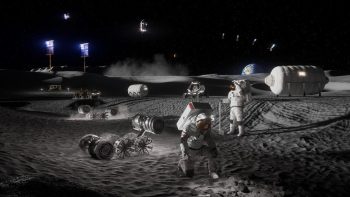
Moon Heritage: What Does It Take to Preserve Celestial Historical Landmarks?

Earth’s Moon is a historical landmark – a celestial body continually peppered with robotic landers shot from our home planet as well as being an in-your-face world dotted with human footprints planted there by a dozen visiting moonwalkers from 1969 to 1972. A recent gathering in Italy of the International Scientific Committee on Aerospace Heritage […]
  •  

The Donald’s Quixote Is Tilting at Iranian Windmills

Treasury Secy Scott Bessent clearly endeavors to be the second Pete Hegseth of Trump World, albeit via packing heat in the form of economic missiles rather than the kinetic kind. In fact, however, his ballyhooed Operation Economic Outcast actually amounts to the greatest windmill tilting operations since Don Quixote himself. So let’s cut to the […]
  •  

🔴 IL MONDO A SECCO | LEVANTE LIVE

🚨Riserve americane al minimo dal 1982, Cina che blocca l’export di carburanti, raffinerie russe in fiamme, Hormuz a scartamento ridotto: non è una crisi, è la somma di quattro crisi. E l’Europa le subisce tutte senza governarne nessuna. 🔝A Levante questa sera, martedì 6 ottobre, Margherita Furlan dialoga con Demostenes Floros, responsabile dell’area Energia del CER, sulla nuova geografia del potere energetico e su che cosa significa per l’Italia, nel giorno in cui torna l’accisa piena sul gasolio e il tetto ai prezzi resta affidato a Eni. 🛢 Hormuz, l’OPEC+ senza Emirati e i 5 milioni di barili al giorno che mancano all’appello 🇺🇸 Washington svuota la Riserva strategica e minaccia di fermare il gasolio: l’Europa apre le scorte 🇨🇳 Pechino chiude l’export di carburanti e si tiene le cisterne 🔥 La guerra delle raffinerie tra Kiev e Mosca e il conto che arriva alla pompa 🔵 Gas e GNL: il Qatar ferito, l’Europa dipendente dagli Stati Uniti, l’inverno alle porte ⛽ Eni, Mattei e lo Stato assente: tetto ai prezzi, dividendo straordinario, extraprofitti 📚 LIBRI DELL’OSPITE 📘 Crisi o transizione energetica? Come il conflitto in Ucraina cambia la strategia europea per la sostenibilità (con Stefano Fantacone), 2022 📗 Guerra e pace dell’energia. La strategia per il gas naturale dell’Italia tra Federazione Russa e NATO, Diarkos, 2020 🎯 SOSTIENI CASA DEL SOLE TV 🗞 Casa del Sole TV è un progetto di giornalismo indipendente autofinanziato. 💶 Per donazioni: 🏦 IBAN: IT63P0326822300052392596590 👤 Intestato a: La Casa del Sole Edizioni ✍ Causale: Donazione Casa del Sole TV ⭐ Membership YouTube: 👉 https://www.youtube.com/@CasadelSoleT… 🔹 Analista Multipolare €5/mese 🔸 Inviato della Verità €15/mese 💎 Architetto del Futuro €25/mese 📖 I LIBRI DI MARGHERITA FURLAN 📕 BRICS Scacco Matto (disponibile in italiano, inglese, russo) 🌐 SEGUI CASA DEL SOLE TV ▶ YouTube: @CasadelSoleTVChannel #Levante #CasadelSoleTV #MargheritaFurlan #Geopolitica #Multipolarismo #DemostenesFloros #Energia #Eni #Hormuz #Gasolio #Petrolio

L'articolo 🔴 IL MONDO A SECCO | LEVANTE LIVE proviene da Casa del Sole TV.

  •  

🔴Kiev senza ponti Roma senza soldi | LEVANTE LIVE

🔴La finanza è colpevole: la guerra si combatte sui ponti di Kiev e si paga con il debito di Roma. 🎙 A Levante, lunedì 5 ottobre 2026, alla vigilia del terzo anniversario del 7 ottobre, Margherita Furlan dialoga con Moni Ovadia, Francesco Dall’Aglio e Alessandro Volpi. 🧭 Tre forme della forza che riducono la persona a cosa: la legge che vuole fissare i confini del dicibile, le armi che paralizzano una capitale senza abbatterne i ponti, il denaro che finanzia il riarmo mentre il debito costa ogni mese di più. 📌 AFFRONTIAMO INSIEME ⚖ Il ddl antisemitismo alla Camera, la definizione IHRA, l’appello di Liliana Segre e il dissenso dentro la memoria 🕊 Tre anni dal 7 ottobre: Gaza in una tregua che continua a uccidere e Milano che discute il gemellaggio con Tel Aviv 🌉 Perché Mosca non abbatte i ponti sul Dnepr ma ne colpisce i cavi, e che cosa cambia per la logistica ucraina lungo la E40 🇩🇪 Merz a Kiev tra le sirene, l’avviso russo ai diplomatici e la nuova soglia dello scontro 📈 Treasury oltre il 5,3%, Francia ai massimi dal 2002, spread fino a 131 punti: come il debito americano contagia l’Europa 💶 Interessi verso 117 miliardi l’anno, manovra e spese militari: chi paga e chi incassa 🔥 «La terza guerra mondiale sarà quella della povertà sociale»: il nuovo libro di Alessandro Volpi 👥 GLI OSPITI 🎭 Moni Ovadia, attore, scrittore, uomo di teatro 🛡 Francesco Dall’Aglio, storico e analista militare 🏦 Alessandro Volpi, Università di Pisa, autore di «La finanza è colpevole» 📚 LIBRI DEGLI OSPITI 📕 Alessandro Volpi, La finanza è colpevole 📗 Alessandro Volpi, La guerra della finanza. Trump e la fine del capitalismo globale, Laterza, 2025 📘 Alessandro Volpi, I padroni del mondo, Laterza, 2024 🎯 SOSTIENI CASA DEL SOLE TV 🌞 Casa del Sole TV è un progetto di giornalismo indipendente autofinanziato. 💳 Per donazioni: 🏛 IBAN: IT63P0326822300052392596590 👤 Intestato a: La Casa del Sole Edizioni ✍ Causale: Donazione Casa del Sole TV ⭐ Membership YouTube: 👉 https://www.youtube.com/@CasadelSoleT… 🔹 Analista Multipolare €5/mese 🔸 Inviato della Verità €15/mese 💎 Architetto del Futuro €25/mese 📖 I LIBRI DI MARGHERITA FURLAN ♟ BRICS Scacco Matto (disponibile in italiano, inglese, russo) 🌐 SEGUI CASA DEL SOLE TV ▶ YouTube: @CasadelSoleTVChannel #Levante #CasadelSoleTV #MargheritaFurlan #Geopolitica #Multipolarismo #LaFinanzaÈColpevole #AlessandroVolpi #MoniOvadia #FrancescoDallAglio #Kiev #Ucraina #Spread #DebitoPubblico #Riarmo #DdlAntisemitismo #7ottobre

L'articolo 🔴Kiev senza ponti Roma senza soldi | LEVANTE LIVE proviene da Casa del Sole TV.

  •  
❌