As NATO Secretary General Mark Rutte and European leaders increasingly warn of a looming Russian threat, Vladimir Putin used the Valdai Discussion Club to deliver a very different message: Europe is feeding an escalation spiral it may no longer be able to control. Europe is being told to prepare for war, and the rearmament is...
Investigamos o que importa para os brasileiros além do que passa na campanha eleitoral. Leia mais reportagens como essa clicando aqui.
Falando por meio de um megafone, o presidente Lula (PT) anunciou, na quinta-feira (8), o primeiro ato público protagonizado por ele no segundo turno das eleições: uma passeata na manhã do dia seguinte, em Ceilândia, no Distrito Federal. O anúncio, publicado nas redes sociais, é encerrado com o brado de “bora, Lula!”, expressão vocal entre militantes e até então pouco ouvida na voz do petista. Embora com apenas 30 segundos, o vídeo marcou o início de uma nova estratégia montada ao longo de uma semana repleta de embates na campanha à reeleição. Um comitê de crise precisou ser montado após o resultado inesperado no primeiro turno do pleito, em que a oposição elegeu a maioria no Senado Federal e o candidato da extrema-direita, Flávio Bolsonaro (PL), saiu na frente, com uma diferença de 1,87 ponto percentual, equivalente a 2,2 milhões de votos válidos a mais do que o petista.
Um dia depois da contabilização dos votos, a campanha petista já discutia a narrativa a ser adotada na comunicação e nas ruas até 25 de outubro, quando os brasileiros voltarão às urnas. Mesmo com a discordância (ainda muito presente) entre a ala tradicional do PT e integrantes mais novos da base governista, houve consenso sobre um aspecto considerado um erro durante o processo eleitoral: não dar a devida importância a formatos “virais” nas redes sociais por conta da enrijecida receita de campanha que preconiza um primeiro turno aprofundado em propostas e o segundo, direcionado ao desgaste do adversário.
Para aliados ouvidos sob reserva pela Agência Pública, Lula teria admitido que a campanha não estava bem organizada. O presidente-candidato chegou a dizer ao presidente nacional do PT, Edinho Silva, que a observava como a corrida eleitoral menos organizada em que participou desde 1989, quando disputou pela primeira vez a presidência da República.
Para resolver os entraves e promover mudanças na linha de frente da campanha, o governador reeleito na Bahia, Jerônimo Rodrigues (PT), assumiu a coordenação de política (com ênfase na atração de prefeitos) e houve reforço na equipe de comunicação estratégica. O governador Rafael Fonteles (PT), reeleito no Piauí, foi escolhido para coordenar a comunicação. Além deles, o senador eleito, Rui Costa (PT-BA), assumiu a agenda; e o senador Camilo Santana (PT-CE) é o novo coordenador político, cargo anteriormente ocupado por Edinho Silva.
Também foram convocados para Brasília, em caráter de urgência, nomes progressistas engajados no Instagram, no YouTube, no TikTok e no WhatsApp. Entre eles, a deputada eleita Ana Elisa (PT), a segunda mais votada em Minas Gerais, que atribui 90% dos seus votos à presença ativa nas plataformas digitais. Além dela, outros jovens deputados federais eleitos engrossaram a campanha digital já em curso no segundo turno, como Jones Manoel (PSOL-PE), Guilherme Cortez (PSOL-SP), Renato Freitas (PT-PR) e Luna Zaratini (PT-SP).
De artistas fazendo o “L” ao “Exército de Lula” com Janones
O mutirão nas plataformas já sofreu ataques. Neste domingo (11), o ministro Kássio Nunes Marques atendeu ao pedido de Flávio Bolsonaro e mandou o WhatsApp suspender o canal “Exército de Lula”, administrado pelo deputado André Janones (Rede-MG) e que contabilizava mais de 3,4 milhões de seguidores. Marques justificou a suspensão por haver, segundo ele, a transmissão de conteúdo a milhões de pessoas “sob comando único para replicar conteúdos que a Corte já reconheceu como inverídicos”. Cerca de 4 horas depois, o corregedor do TSE, Ricardo Villas Bôas Cueva, revogou a decisão e determinou o retorno provisório do canal. Cueva declarou, com preocupação, ter visto a interferência do presidente do TSE em um processo do qual não participa. De acordo com o corregedor, não foram apresentadas provas que justificassem a suspensão. A palavra final agora será do plenário do Tribunal.
Também nas redes sociais, de Anitta, Ivete Sangalo e Luan Santana, de Pabllo Vittar a Ludmilla, passando por cineastas, escritores e sambistas, mais de 200 nomes, desde o primeiro turno, têm feito vídeos e declarado apoio a Lula, um movimento que foi intensificado e cresceu nesta última semana. Somados, os nomes levantados pela reportagem totalizam mais de 400 milhões de seguidores nas redes sociais. Segundo a coluna Mônica Bergamo, da Folha de S.Paulo, Flávio Bolsonaro liderou o engajamento nas redes em setembro, mas Lula virou depois do 1º turno e chegou a 9,9 milhões de interações na última quarta (7), o maior resultado diário dos dois candidatos desde 14 de setembro, segundo o Projeto Brief.
6×1 como trunfo e “CPF contra CPF”
Uma das reuniões do comitê de crise pós-primeiro turno aconteceu no diretório nacional do PT, em Brasília, na quarta-feira (7), e reuniu dirigentes do partido, além de deputados federais e senadores da sigla. Os parlamentares discutiram uma série de propostas consideradas por eles indispensáveis à comunicação da campanha. A Pública teve acesso ao documento apresentado em conjunto pela bancada petista no Congresso Nacional. Na proposta intitulada “O Brasil com Flávio”, os governistas sugeriram, sobretudo, foco na pauta econômica e nas consequências do regime de trabalho por hora trabalhada — projeto de Flávio Bolsonaro apresentado como alternativa à redução da jornada de trabalho para cinco dias por semana. A Proposta de Emenda à Constituição (PEC) que estabelece o fim da escala 6×1 é uma das armas eleitorais do atual governo e deve ser pautada ainda nesta semana no Senado, conforme anunciou o presidente da Casa, Davi Alcolumbre (União-AP), ao lado do governador eleito por Minas Gerais, Cleitinho (Republicanos-MG).
Os membros da reunião, no entanto, demonstraram pouco consenso. Um nome influente no meio petista disse, sob reserva, que “agora é CPF contra CPF”, referindo-se ao fato de que Lula passaria a atacar mais a figura do opositor e a tratar menos da própria imagem — como já era esperado. Alguns parlamentares se posicionaram de forma mais genérica e defenderam uma abordagem mais incisiva quanto aos riscos de perda de direitos sociais com a possível vitória do filho do ex-presidente Jair Bolsonaro, preso por tentativa de golpe de Estado.
Diante da quantidade de ideias apresentadas e do curto prazo até o segundo turno, o encontro foi tratado mais como um gesto necessário para amenizar o clima de tensão entre os correligionários do que como um momento indispensável para definir os rumos da empreitada. Um clima de desconforto também pairou entre governistas devido, entre outras situações, às declarações da senadora Kátia Abreu (PT-TO) sobre a presença da primeira-dama, Janja Lula da Silva, nas propagandas de Lula. Em 7 de outubro, a parlamentar sugeriu que Janja não deveria mais aparecer nos materiais. No dia seguinte, ela acentuou a crítica e reforçou, em entrevista ao jornal O Globo, que a esposa de Lula estava ocupando um espaço maior do que o do vice-presidente Geraldo Alckmin (PSB).
“Eu, a militância do PT e todos os colegas concordamos com ela [Kátia Abreu], mas não queremos problemas com ela [Janja]”, declarou à reportagem, em condição de anonimato, um parlamentar integrante do círculo de deliberações políticas da campanha. As críticas também envolvem o discurso “vencer o ódio” e “o amor vai vencer” — ideias sugeridas e utilizadas por Janja na disputa ao Planalto em 2022, mas consideradas defasadas pelo entorno de Lula no atual contexto político.
Outros parlamentares afirmaram que as falhas na corrida eleitoral se devem também à dispersão de apoiadores que estavam focados nas disputas dos respectivos estados, mas que agora há uma unificação sólida em prol da reeleição. “No segundo turno, as posições ficam mais claras. Eu acho que tem uma militância que foi às ruas e que agora acaba tendo outro processo de comunicação”, comentou a deputada Erika Kokay (PT-DF), que saiu derrotada para o Senado no Distrito Federal.
Foram realizadas aproximadamente 20 publicações no formato de vídeo selfie abordando direitos trabalhistas, a PEC sobre o fim da escala 6 por 1 e atos políticos nas ruas
O primeiro vídeo selfie no Instagram
A definição oficial do novo discurso de Lula ocorreu somente na tarde de quinta-feira (8), em uma nova deliberação em Brasília; desta vez, com a presença de influenciadores progressistas. Na ocasião, decidiu-se por uma desconstrução da imagem de Flávio Bolsonaro de maneira mais concisa, sem rodeios e em formatos mais direcionados ao engajamento do que no debate em si.
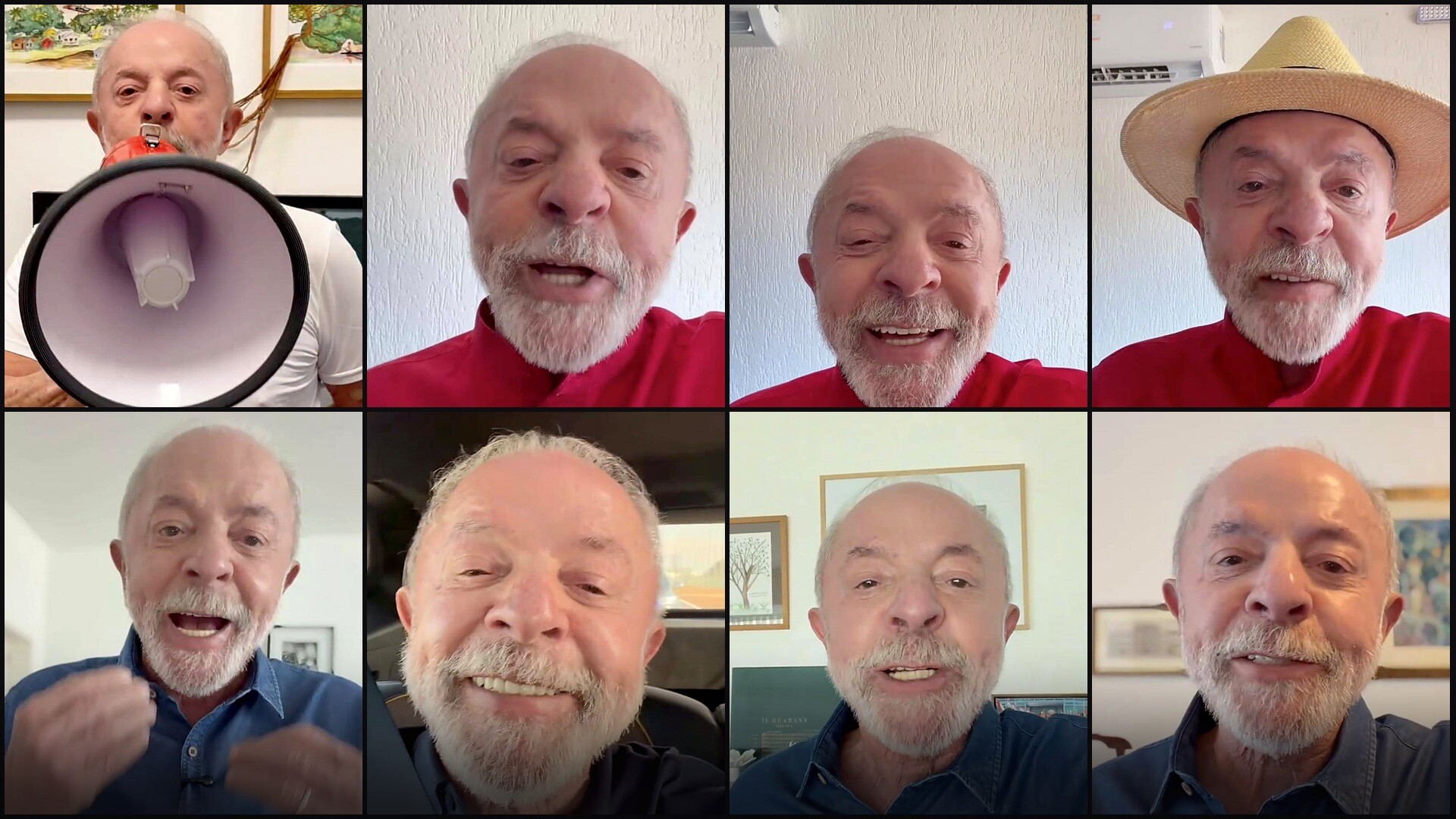
No mesmo dia da deliberação, Lula também publicou o primeiro vídeo selfie no Instagram, em um formato mais amador, ainda não utilizado por ele, convocando seus eleitores a irem às ruas em busca de votos. “Bora, gente, vamos conversar com as pessoas.”
Lula não gosta de usar celular nem redes sociais. Só conversa com aliados presencialmente ou por ligação, nunca por mensagens. E essa é uma característica nítida entre os aliados. Numa reunião no período de transição de governo, em novembro de 2022, por exemplo, ele se irritou com o ex-secretário-geral da Presidência, Márcio Macêdo, por o apoiador ter olhado uma notificação de mensagem enquanto conversavam.
Além disso, o presidente não teria gostado da ideia de ser 100% direcionado por um novo formato comunicativo e determinou aos membros da equipe a busca por um “equilíbrio” entre a forma como está habituado a dialogar com o eleitorado e as novas dinâmicas de produção de conteúdo para redes sociais.
As novas produções já se tornaram rotineiras. Foram realizadas aproximadamente 20 publicações no formato de vídeo selfie abordando direitos trabalhistas, a PEC sobre o fim da escala 6 por 1 e atos políticos nas ruas. Num outro vídeo selfie, o presidente aparece sorridente ao lado da deputada eleita Ana Elisa e reforça a necessidade de “falar mais na rede digital”. Em entrevista ao SBT News, Elisa lembrou a resistência do petista à internet, mas o vê com entusiasmo para se posicionar com assiduidade nas plataformas. “Ele é muito disposto. A minha eleição acho que foi um reflexo para ele também de que a rede social é uma porta e que vai dar certo. Não estou falando hora nenhuma para ficar o dia inteiro gravando vídeo, não é isso. É só conversar com as pessoas uma ou duas vezes ao dia. A gente percebe que a direita já está incomodada com isso”, ressaltou.
Presidente da República, Luiz Inácio Lula da Silva, durante ato de campanha em Ceilândia na última sexta-feira (9)
Ceilândia: o primeiro ato “vira voto” do 2º turno
Às 8h da manhã de sexta-feira (9), militantes e apoiadores da candidatura de Lula já se aglomeravam na concentração do primeiro ato do presidente no segundo turno. O local escolhido, Ceilândia (DF), é onde também cresceu a senadora eleita Michelle Bolsonaro (PL-DF), esposa de Jair Bolsonaro e símbolo da ala feminina conservadora no Brasil. A mobilização retratou muito do que viria pela frente: estímulo a manifestações populares e aceno mais direto a evangélicos e eleitores de direita e centro-direita.
Lula chegou ao ato às 10h39 da manhã, acompanhado de Janja e de Leandro Grass (PT), candidato ao governo do Distrito Federal. Antes da chegada do presidente, discursaram num trio elétrico políticos influentes na região, como Max Maciel (PSOL), deputado distrital mais votado da história do DF, e Fábio Félix (PSOL), o líder em votos no Distrito Federal para a Câmara dos Deputados. Durante o ato, Lula brincou que está virando o “rei da selfie”.
Um dos maiores destaques do evento foi a presença do pastor evangélico, ex-bolsonarista e político declaradamente de direita, deputado federal Otoni de Paula (PSD-RJ). Ele está incumbido da missão de coordenar a campanha com neopentecostais no Sudeste do país. O parlamentar pediu a palavra várias vezes e afirmou aos apoiadores que Flávio Bolsonaro “sequestrou” a direita e as igrejas evangélicas.
“Eu não tenho dúvida nenhuma de que nós vamos conquistar votos de evangélicos e de indecisos que tendem a vir para o nosso lado, principalmente aqueles que perceberam o que o bolsonarismo fez dentro da igreja. É um trabalho de conscientização, não é fácil”, frisou o parlamentar em entrevista à Pública.
Na passeata, emoção, gritos, aplausos e pessoas inconformadas com a ascensão do bolsonarismo. “Eu estou revoltada, não com os partidos, mas com o povo. Tenho dois filhos formados, um em matemática e outro em biomedicina, por causa do que Lula fez”, comentou a aposentada Maria das Mercedes, de 75 anos, em referência ao Programa Universidade para Todos (Prouni), implantado em janeiro de 2005. Católica desde a infância, ela foi ao ato vestindo uma blusa com o versículo bíblico “pois nada é impossível para Deus”.
Simultaneamente ao ato em Brasília, parlamentares influenciadores se mobilizaram em outras regiões. Guilherme Cortez (Psol-SP), por exemplo, estava no Amapá ao lado do senador do estado, Randolfe Rodrigues (PT), em uma mobilização na Universidade Federal do Amapá (Unifap). Os eventos descentralizados pelo Brasil também têm o objetivo de atingir os 21,08% dos brasileiros que deixaram de votar no primeiro turno — cerca de 33 milhões de eleitores.
Ato ”Lula em São Paulo, O Brasil Pronto Pra Mais” na Avenida Paulista, em São Paulo, neste domingo (11)
Do Rio Grande do Norte à Avenida Paulista, em São Paulo
Após o ato em Ceilândia, Lula foi para o Rio Grande do Norte e, neste domingo (11), participou de um ato na Avenida Paulista, em São Paulo, também convocado por meio de uma vídeo selfie. O ato ocupou sete quarteirões da Avenida Paulista. Entre os presentes, o vice-presidente Geraldo Alckmin (PSB) e as deputadas federais Érika Hilton (Psol-SP) e Sâmia Bomfim (PSOL-SP), além de famosos como o cantor Jão, o ator Humberto Carrão e o comediante Thiago Ventura. Também participaram do ato milhares de pessoas, incluindo movimentos sociais, estudantes, torcidas organizadas e até fandoms, comunidades de admiradores de artistas pop, como Lady Gaga, BTS, Beyoncé e Taylor Swift. Estimativa não confirmada dos organizadores do evento fala em 1 milhão de pessoas.
Durante o percurso, o presidente citou a importância de convencer quem se absteve, no primeiro turno, a votar no segundo. “Nós temos que conversar com as pessoas que acham que não têm mais direito de votar. Porque, se essa pessoa não quer votar por ela, tem filho, tem filha, tem neto, tem bisnetos e tem a pátria dela para cuidar”.
Em cima de um carro de som posicionado em frente ao Museu de Arte de São Paulo (MASP), Lula criticou a administração anterior, do ex-presidente Jair Bolsonaro, principalmente na gestão da pandemia de covid-19.
“Vocês sabem o que a família bolsonarista fez neste país. Vocês sabem o que é um presidente rir de pessoas que estavam morrendo asfixiadas por falta de oxigênio. Vocês viram quantas pessoas foram enterradas em saco preto, sem poder se despedir da sua família, porque tivemos um presidente irresponsável que duvidou da ciência, que não acreditou na medicina, que receitou remédio que não prestava para nada”.
O candidato defendeu realizações de sua gestão na educação e prometeu uma revolução nas áreas da tecnologia e da segurança no país.
“Quando nós chegamos na presidência, em 2003, o Brasil tinha apenas 4,8 milhões de pessoas com diploma universitário no mercado de trabalho. Hoje, o Brasil já tem 26 milhões, e nós queremos 50 milhões, 100 milhões”, disse.
Immigration and Customs Enforcement (ICE) agents shot seven rounds into the vehicle of a New York father while his five-year-old son was in the car on the afternoon of Thursday, October 8. Oscar Belgal, a Dominican man, who had just picked up his son from school, was hit in the neck but survived the shooting.
He is currently being detained by ICE in the Metropolitan Detention Center in Brooklyn after being discharged from the hospital Thursday night. His lawyers have reported that he still has a bullet lodged in his body more than 24 hours after being shot.
The Department of Homeland Security (DHS) said that they were conducting a “targeted enforcement operation,” calling Belgal a “criminal illegal alien.”
Local officials describe the incident differently. In a press conference, held by immigrant rights groups and officials a couple hours after the shooting, speakers described that disguised agents approached Belgal’s vehicle with their guns drawn. When Belgal started to move his vehicle forward at least one agent opened fire. Video emerged online of one of the agents carrying a large gun that reports say was a modified AR-15.
“They wore construction vests and masks that concealed their faces,” said New York City Mayor Zohran Mamdani to press later that night.
“There was no reasonable way to identify them as ICE agents.”
The mayor claimed that he attempted to negotiate with President Trump directly for the release of Belgal, but “those negotiations were unsuccessful.” He then described ICE as “vicious” and “cruel,” saying that ICE undermines public safety.
“This is an agency that must be abolished.”
New York politicians face calls to act against ICE
New York City Public Advocate Jumaane D. Williams said that federal officials would certainly try to justify the shooting by painting a narrative that makes Bengal seem like “the worst human being you ever heard of.” But he emphasized that what actually happened is that a father picking up his child was shot by a federal agency after school dismissal in a residential area.
Later that night, in a separate press conference with the mayor, New York City Police Department (NYPD) Commissioner Jessica Tisch announced that Oscar Belgal had been arrested in 2023. Hecklers and protesters then began disrupting the mayor and the police commissioner, accusing them of demonizing the victim and justifying ICE violence.
“Tisch and the NYPD are effectively running cover for the Trump administration” over the federal shooting of a Dominican father, said Andre Easton, candidate for New York’s 15th Congressional District, in a statement on Friday, October 9.
Easton called on the mayor to back up his call to abolish ICE with action. “He must fully enforce his own Executive Order 13 and kick every ICE agent out of our city.”
He also slammed Ritchie Torres, the current representative of NY-15, for only demanding an investigation into the shooting. Torres’ demands represent a “betrayal of the Bronx.”
The same politicians that built the deportation machine won’t dismantle it, he argued.
“We need a mass movement powerful enough to dismantle it and win full, equal, and permanent rights for all immigrants.”
Sparks of that very movement may already be breaking out in New York.
Movement for ICE out of NY re-emerges
Hours after the shooting, hundreds of New Yorkers took to the streets and marched to the hospital where Belgal was being treated. They carried banners and placards reading “Abolish ICE” and “Full Rights for All Immigrants” and “Justice for Lorenzo, Joan, and All Victims of ICE Terror.”
The protests were met with force by the New York City Police Department, who attacked protesters with barricades, pushing and shoving several, including congressional candidate Darializa Avila Chevalier, and making a handful of arrests.
However, New Yorkers have continued pushing for ICE to leave the city, organizing protests on Friday and Saturday.
ICE strikes again
The shooting in New York is yet another in a series of ICE shootings across the United States, including the killings of Renee Nicole Good and Alex Pretti in Minneapolis, Lorenzo Salgado Araujo in Houston, and Joan Sebastián Durán Guerrero in Maine. Each of these cases has left families and communities traumatized and provoked eruptions in the movement against ICE violence.
Now in New York, demonstrators are elevating the pressure on their elected officials and making a distinction between mere demands for investigation and concrete action that ends ICE operations and takes steps toward abolition.
As NATO Secretary General Mark Rutte and European leaders increasingly warn of a looming Russian threat, Vladimir Putin used the Valdai Discussion Club to deliver a very different message: Europe is feeding an escalation spiral it may no longer be able to control. Europe is being told to prepare for war, and the rearmament is […]
Last week, EU member states reached a common position on the European Commission Omnibus X ‘Food and Feed’ proposal, in a bid to simplify regulation of pesticides. In reality, however, it will weaken protection against pesticides’ negative effects in Europe. The proposal pleases the chemical industry but goes against the wishes of a vast majority of citizens and many scientists who value people’s health, clean drinking water and biodiversity.
A hearing in the European Parliament on 3 September highlighted the real problem. Under the guise of a ‘discussion with experts’ in the field of health and environment, the parliament handed the megaphone to lobbyists representing a broken, toxic agricultural model.
Representatives of industrial agriculture – sugar beet, apple and cereal growers – parroted industry arguments, justifying their demands to stop banning pesticides that are toxic to public health, the environment and pollute our water resources.
Despite Europe witnessing massive droughts, extreme heatwaves leading to countless deaths, wildfires destroying biodiversity, and devastating crop losses, it seems that a significant share of MEPs are ready and willing to accelerate the degradation of European’s wellbeing and natural resources.
Listening to them raises a fundamental question: Do farmers truly want to rely on a cocktail of toxic chemicals to maximise yields at low market prices, destroying their own health and local ecosystems in the process? Or do they wish to make an honest living, producing quality food in balance with nature for a fair income?
CAP subsidies
To better grasp this contradiction, we must look at what is actually at stake here.
Agrochemical corporations seek their share of the Common Agriculture Policy (CAP) cake – a colossal €58bn budget, accounting for one third of the EU’s total budget.
Their own survival is reliant on keeping as many farmers as possible dependent on pesticides, fertilisers and industrial seeds. By diverting public CAP funds through farmers into the pockets of their shareholders, these companies ensure their long-term profitability.
Many farmers’ unions also represent agri-cooperatives that profit significantly from selling pesticides, which raises questions about whether they truly represent farmers’ long-term interests, or those of the pesticide industry.
Since the European Commission published its ‘simplification’ proposal in December 2025, proponents of pesticide-intensive farming have presented a series of flawed arguments that in fact reveal the dead-end to which intensive agriculture has led us.
Firstly, farmers’ organisations complain about a “lack of pesticide substances” on the market.
Currently around 450 different pesticide active substances are approved in the EU, from insecticides to fungicides, and herbicides. If 450 different options are insufficient, does this not signal an unhealthy addiction rather than a shortage?
Lobbyist groups, furthermore, claim that pest resistance to synthetic pesticides would inevitably lead to dramatic yield losses and hunger, arguing for even more pesticides with diverse modes of action.
And yet, according to scientific research, the multiple chemical strategy that has been applied for more than 40 years is the very cause of the appearance of resistance. This problem cannot be solved with the mindset that caused it. The only scientific solution is, therefore, not more chemistry but prevention, and the use of alternative methods.
Thousands of farmers across the EU and the rest of the world are already proving this by switching towards Integrated Pest Management (a strategy for low-pesticide-input pest management) or organic practices to reduce pesticide inputs.
Who bares the cost
The call to keep all pesticides on the market – and potentially even use some of the banned ones – serves only the short-term interests of the pesticide industry, not of the farmers.
Destroying soil life – the basis of soil fertility – with chemicals, and killing insect populations that naturally control pests and pollinate crops, jeopardises the very basis of farming and long-term food security.
The societal costs of this pesticide-dependent model are staggering. Citizens are the ones who bear the healthcare costs for chronic diseases such as cancer and Parkinson’s, which impact not only farmers but also residents of agricultural areas.
We face water pollution that has become nearly impossible to remediate. Fewer pollinators means fewer healthy fruit and vegetables. These ‘externalities’ far outweigh any short-term benefits.
This is the reason why the Paris and Munich water companies financially support farmers in protecting the groundwater, because doing so is up to 45 times cheaper than depollution.
In the meantime, the agrochemical industry enjoys huge profits from pesticide sales, largely supported by CAP subsidies, while society foots the bill for the damage. It is indeed a perfect business model…for them.
Lobbyist circus
The spectacle witnessed in the alleged House of European Democracy is testament to the state of our political world; one that is dominated by corporate interests over citizens and farmers’ wellbeing.
We witnessed the desperate battle of a toxic agricultural model that struggles to survive, and resists being replaced by sustainable farming methods.
The lobbyist speakers in the European Parliament hearing more or less gave the diagnosis to the current pesticide-intensive agricultural system: it is simply broken.
Citizens have repeatedly expressed their concern on the impact of pesticides on their health and biodiversity. They have also expressed the need that public support for agriculture serves the common good.
The pesticide Omnibus X proposal is merely an attempt to maintain a detrimental status quo that favours the pesticides industry.
What is needed now is a new blueprint for a system which financially supports farmers to implement practices that improve soil and plant health, favour beneficial insects, accelerate the availability of alternatives to pesticides such as biocontrol products, and rapidly phase out toxic synthetic pesticides to protect our health, water resources and biodiversity.
Only then can we ensure a sustainable future for European agriculture and our children. Only then, will a greater share of the CAP remain in the hands of farmers who feed us and protect our nature.
Unsavoury news comes from Russia often these days. But the latest unexpected development is the spread of a deadly disease.
Behind the mysterious death of a young woman in Siberia in early October was reportedly pneumonic plague – a disease so contagious it is considered as bad as anthrax, smallpox, and Ebola.
Local authorities in Russia have denied the plague as cause of death, but despite this, they have implemented anti-epidemic measures.
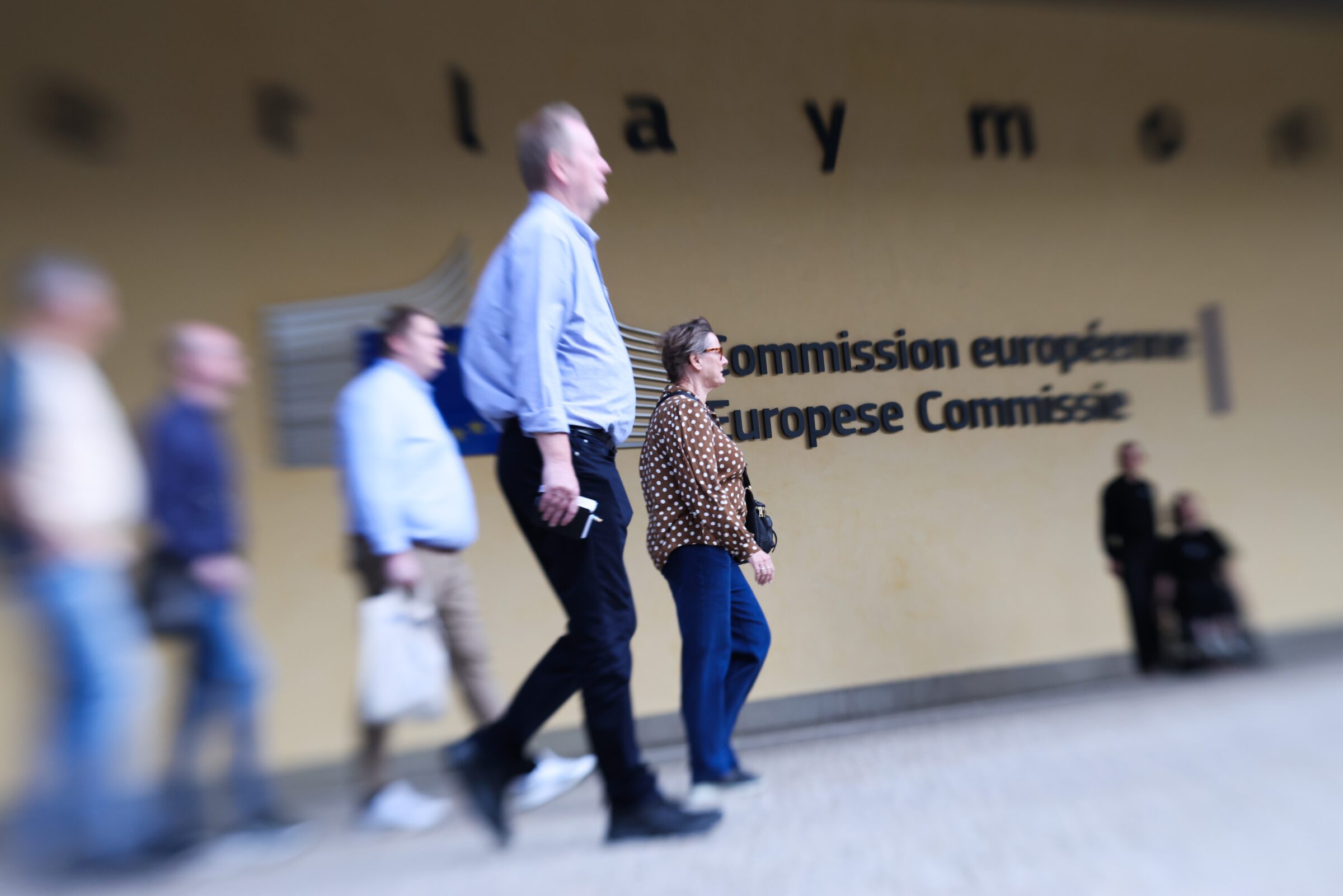
Eva Hrncirova, a spokesperson for the European Commission, said on Thursday (8 October): “Russia should make information about the plague available as soon as possible. This is what we need”.
“We had a meeting with the member states yesterday within the [EU Commission’s] Health Security Committee, and with the WHO [World Health Organization], who are in contact with our delegation in Moscow,” she said.
Russia was asked by the WHO to share “timely, precise, and exact information” about the possible plague in Siberia, she also said.
“We don’t have enough information to assess the epidemiological situation,” she added.
Nothing to see here, says Russia
Pneumonic plague disease can be treated with antibiotics if detected early, but officials beyond Russia’s borders are left with worrying questions.
Did an Irkutsk Anti-Plague Institute lab technician in Shelekhov (Siberia) really die of plague?
If so, was it a natural version of the disease, or a more dangerous bacterium modified in military labs?
And what is the risk of the Middle Ages-era disease spreading?
Pneumonic plague is caused by the bacterium Yersinia pestis — the same one that once brought devastating plague epidemics known as the Black Death.
The pneumonic form of plague, a disease that killed up to half of Europe’s population in the 14th century, spreads through droplets by coughing or sneezing.
It manifests as severe, rapidly developing pneumonia that almost always ends in death if left untreated. But if antibiotics are administered in time (ideally within 24 hours of the onset of symptoms), the disease is treatable.
Independent Russian-language media say that Darya Shipilova, a 28-year-old laboratory technician at the research and hygiene institute in question, accidentally broke a test tube containing plague bacteria in late September, became infected and died in hospital several days later, on 2 October.
Authorities have not confirmed the cause of the woman’s death, letting on only that she died of pneumonia and claiming that no microorganisms connected with her work had been found in her body.
Some 200 of her contacts were subsequently put into quarantine with medical supervision.
Authorities also ordered a three-week quarantine at several hospitals in the wider area, and facemasks for the wider population – even for schoolchildren.
Russia’s neighbours, Mongolia, Kazakhstan, Kyrgyzstan and Uzbekistan, have all introduced border controls.
Russia said the epidemic situation in the area was stable, that none of the deceased woman’s contacts had shown signs of infection, and that there was no cause for concern.
However, the head of Russia’s public health authority reportedly travelled to Irkutsk to attend a meeting with local officials, while residents of Shelekhov report that people in protective suits are moving around the town.
And epidemiologists say it is simply not possible that Russia’s public health service would resort to such dramatic measures, including closing hospitals, over a single case of ‘pneumonia of unknown origin’ .
The institute where the laboratory technician worked is said to be a civilian facility that, among other things, researches and monitors the incidence of plague.
In Siberia, especially near the borders with China and Mongolia, the bacteria in question still circulate among animals and occasionally infect humans, as they do in some parts of Africa, where the disease is most common.
This article continues, but the full version is available only to EUobserver.com subscribers. Visit account.euobserver.com/membership
NPR's A Martinez asks Israeli pollster and journalist Dahlia Scheindlin how the political legacy and future of Israel's prime minister have changed since the attacks of Oct. 7, 2023.
The EU’s difficulties in negotiating with China go beyond tariffs and quotas — structural economic differences, political fragmentation within Europe and broader geopolitical tensions reveal a fundamental misunderstanding of the China that Brussels is dealing with and the world in which it must compete. The Strategic Disconnect: Europe’s China Blindspot The fact that European negotiators […]
NPR's A Martinez speaks with Michael Ratney, former U.S. ambassador to Saudi Arabia, about the new military offensive launched by Saudi Arabia and Yemeni forces against the Iran-backed Houthis.
Investigators are still searching for the motive behind the midair attack aboard a commercial plane full of passengers heading from Dubai to Tel Aviv last week.
NPR's A Martinez speaks with retired FBI special agent Lara Burns about the investigation into the FlyDubai attack and the lessons for law enforcement agencies worldwide.
It was common practice during the Cold War to exaggerate the threat from the Soviet Union. Nowadays, Russia has assumed that role. Although the circumstances have changed, some of the political methods employed to create a sense of insecurity are still remarkably similar. Europe is not formally engaging in preparations for war since it desires […]
NPR's Michel Martin speaks to Philip Mudd, a former FBI and CIA counterterrorism official, about the investigation into the FlyDubai copilot suspected of trying to crash a plane bound for Israel.
NPR's A Martinez speaks with retired military and commercial airline pilot Ron Alvarado about how pilots are trained to avert interference in the cockpit.
NPR's Michel Martin speaks with Robert Malley, a negotiator of the 2015 Iran nuclear deal, about where talks stand after President Trump rejected Iran's offer to reopen the Strait of Hormuz.
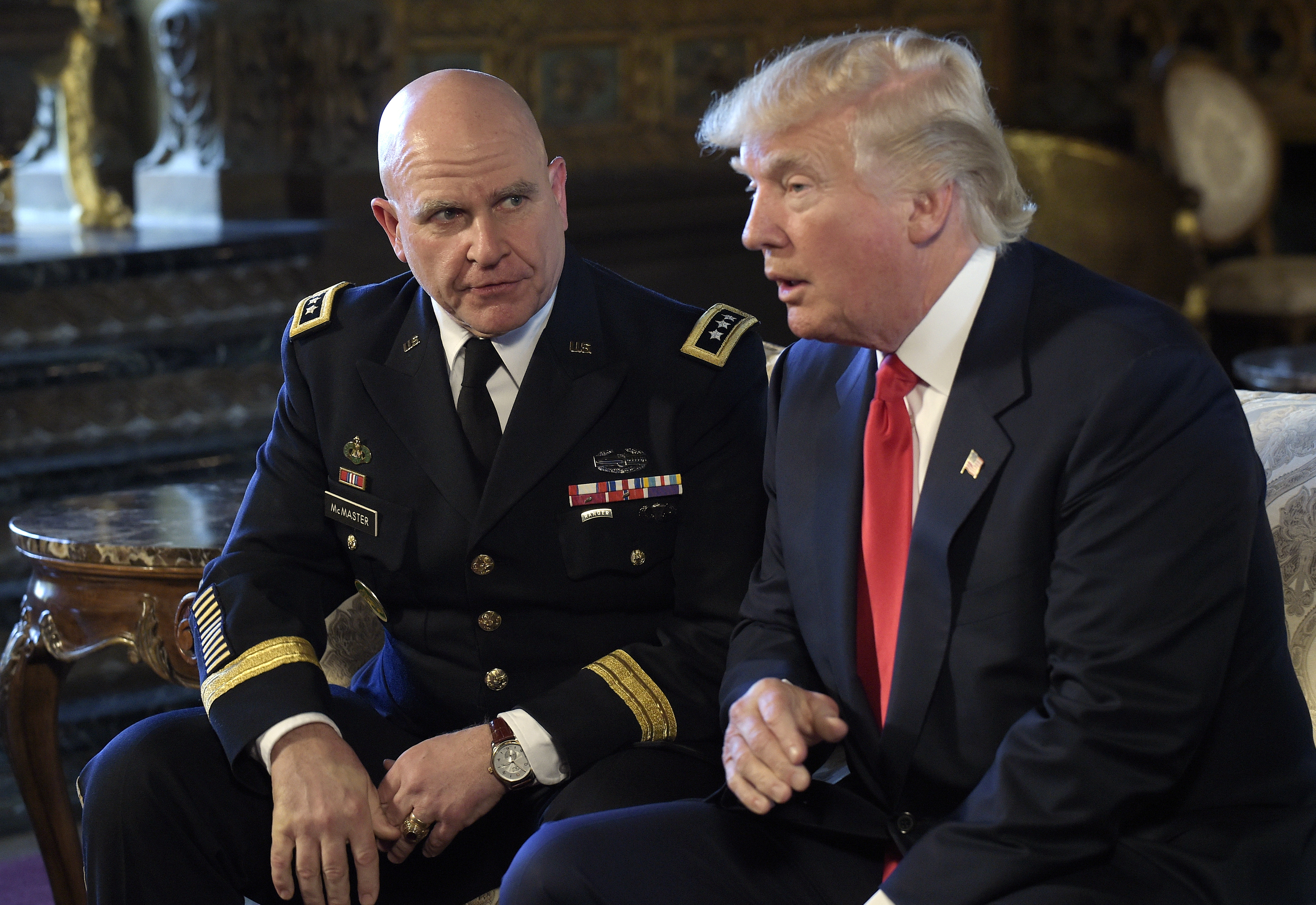
NPR's Michel Martin speaks with retired Lt. Gen. H. R. McMaster, former U.S. National Security Advisor, about the impact the final withdrawal of U.S. troops from Iraq will have on the Middle East.
On 4 October Brazil will hold an election which involves more than just the choice between Lula and Flávio Bolsonaro. It is a struggle concerning sovereignty, democracy and Brazil’s position in a rapidly changing world, with Washington keeping a close watch. Brazil will vote on 4 October, in just a few days, in an election […]

 Login