❌

Reading view

Could Islamophobia one day become EU law?

If the day should ever come where Islamophobia gets concrete legal backing in Europe, it could be soon.

The European Parliament (EP) just voted to “condemn the strategies of Islamist entryism” and to develop ways to disrupt Muslim political movements in a resolution on 8 October.

Some 381 out of 720 MEPs worry Muslims are seeking to infiltrate democratic institutions, weaken European rule of law, gender equality, and what they deemed “European values”. 

And almost every one of the centre-right and rightwing MEPs in the house voted to surveil EU funding for anti-racism organisations, so as to ensure none of it gets into the hands of the Muslim Brotherhood.

The brotherhood is a transnational Muslim group founded in 1928 in Egypt, involved in religious revival, social welfare, and political activism.

But according to a French government memo from May 2025, as well as the EP resolution, it is guilty of “entryism”, to sabotage French democracy.

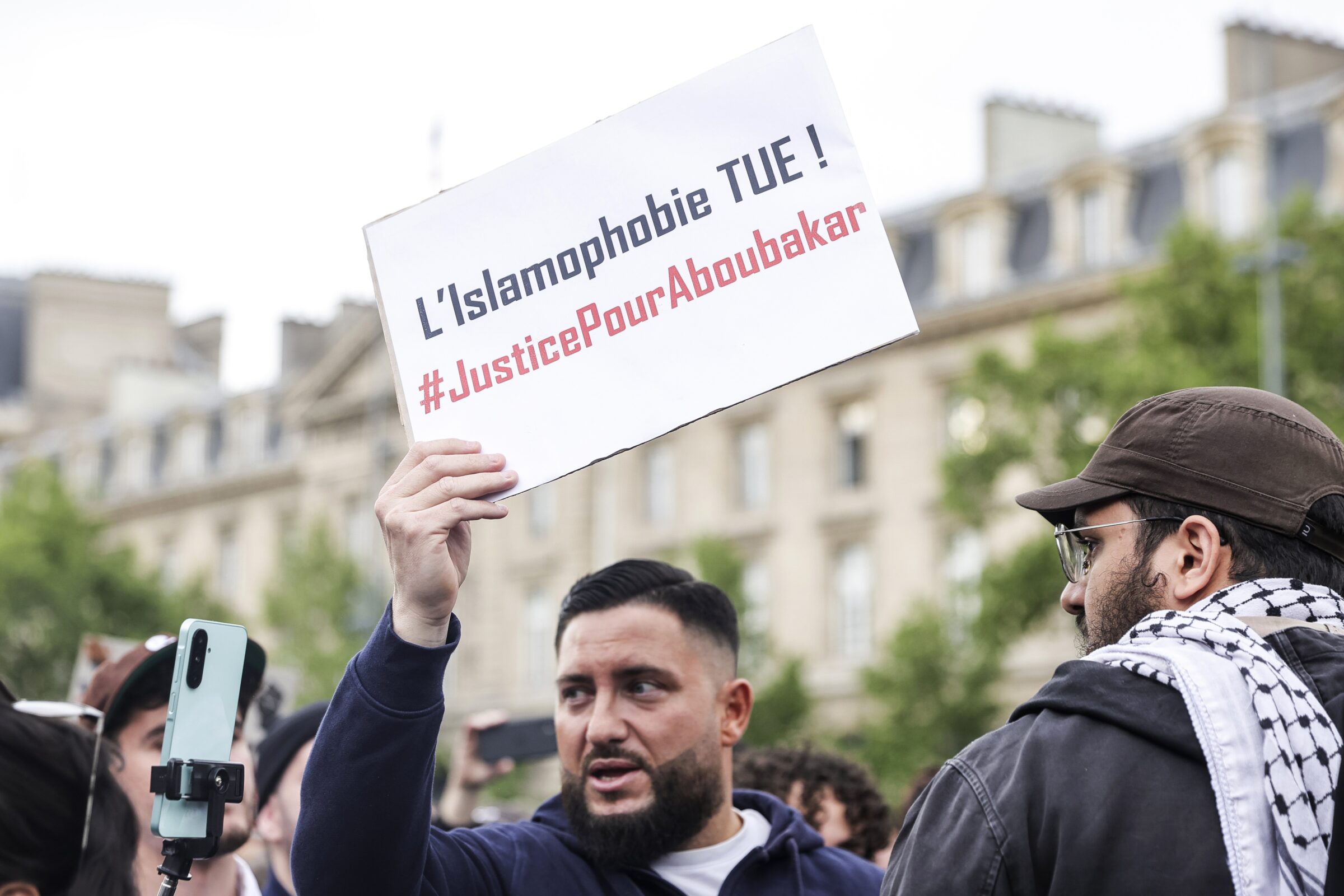
The EP resolution and French memo were dubbed “a political witch-hunt targeting racialised people – particularly Muslim, migrant and refugee communities” by academics and civil society, like the European Network Against Racism (ENAR).

The group called the EP motion “a stain” on the EU Parliament, belonging “within the tradition of discredited far-right conspiracy theories.”

ENAR is among those the EU has sought to defund, due to rightwing views that its work aligns with Islamist threats.

The Forum of European Muslim Youth and Student Organisations (FEMYSO), a pan-European anti-Islamophobic group, which also risks EU defunding, said it had faced “relentless targeting and demonisation.”

Young Muslims in Europe were being forced “to choose between their identity and their right to belong,” FEMYSO president Hiba Latreche told EUobserver.

And the EP “witch-hunt” resolution, which was drafted by the centre-right European People’s Party (EPP) group and authored by its French MEP, Céline Imart, comes at a bad time for this demographic. 

Advocacy group Collective Against Islamophobia in Europe (CCIE) recently looked at 876 incidents of anti-Muslim hatred in Europe in 2025.

Four out of five incidents targeted Muslim women, 41 percent of which involved discrimination or violence linked to their headscarves.

Disturbingly, the documented episodes “occur predominantly in public or institutional spaces, highlighting the persistence of forms of institutional racism.”

But seeing as the EU Commission’s own anti-Muslim hatred group has been inactive since 2024, the prevailing view in Brussels appears to be that rampant Islamophobia in the EU is less of a problem than the imputed influence of a nebulous Islamic movement from Egypt, which is better known for providing social care to deprived communities, than aiming to overthrow French president Emmanuel Macron.

The EP motion did not legally bind the European Commission to propose new anti-Muslim Brotherhood measures.

But it did enforce a stereotype of Muslims “as acting in a nefarious, dangerous, anti-democratic manner, until proven otherwise,” said Omran Shroufi, a political science researcher at the Free University of Brussels.

Rightwing EU politics is pushing young European Muslims into a lose-lose, or Catch 22 situation.

The notion of “entryism holds Muslims to an impossible standard, where non-participation in public life is a sign of disinterestedness, a lack of civic duty and the growth of parallel societies, whilst active engagement in civic life is treated with suspicion,” Shroufi told EUobserver.

The centre-right EPP group used to represent a moderate EU mainstream.

But now it had joined with open racists on Europe’s far right to be “effectively calling for an institutionalised form of discrimination, where Muslim communities need to prove their European and democratic values – whatever these are supposed to mean – before being allowed a seat at a table,” Shroufi said. 

  •  

La inteligencia humana, lainteligencia artificial y el futuro de la guerra algorítmica

Cuanto más aleja la tecnología al actor, más debe aumentar su responsabilidad.

Únete a nosotros en Telegram , X y VK .

Escríbenos: info@strategic-culture.su

De persona a objetivo

¿Qué será de la humanidad cuando la tecnología sea capaz de reconocer, clasificar, rastrear y, en última instancia, matar a seres humanos sin que quienes ejecutan los ataques los hayan visto jamás?

Mi amigo Mohammad Reza Dehshiri planteó precisamente esta pregunta, y su respuesta es contundente.

El peligro, escribe, no es la inteligencia artificial, sino la inhumanidad artificial; es decir, la posibilidad de que las máquinas se vuelvan más precisas precisamente cuando los humanos dejen de sentirse responsables de lo que esas máquinas hacen en su nombre.

Con este artículo, inicio una serie que toma el análisis de Dehshiri como punto de partida e intenta llevarlo más allá. Si el problema es la «inhumanidad artificial», la respuesta no puede estar en una IA «más ética», como si la ética fuera un módulo que se instalara a posteriori en un sistema que ya ha sido diseñado.

Necesitamos recuperar una categoría que la jerga tecnológica ha vuelto casi innombrable: la inteligencia humana, entendida no como un vestigio que hay que proteger en medio de las complejidades de la automatización, sino como una forma de conocimiento con características propias y distintivas, que ningún aumento en la potencia computacional puede reemplazar.

La llamaré Inteligencia Humana, y la ambigüedad es deliberada. En la jerga de los servicios de inteligencia, HUMINT se refiere a la más antigua de las disciplinas de inteligencia: aquella que se basa en las personas, las fuentes, los idiomas y la visita paciente y frecuente a distintos lugares.

En terminología filosófica, la expresión denota la facultad de comprender. La tesis de esta primera contribución es que estos dos significados ahora convergen, y que su convergencia tiene implicaciones geopolíticas que se extienden mucho más allá del debate sobre la ética de las armas.

Podemos describir la cadena operativa de la guerra contemporánea en siete etapas: detectar, identificar, clasificar, predecir, priorizar, seleccionar el objetivo, atacar.

Cada eslabón puede perfeccionarse técnicamente sin que la secuencia, tomada en su conjunto, se perfeccione moralmente. El fenómeno resultante se denomina «dataficación de la vida humana»: el individuo reducido a una identidad, una ubicación, un patrón de comportamiento, un índice de amenaza.

Esto no es una abstracción. En abril de 2024, una investigación de Yuval Abraham para +972 Magazine y Local Call describió a «Lavender», un sistema utilizado por las fuerzas armadas israelíes en Gaza para asignar a decenas de miles de personas una probabilidad de afiliación a grupos armados.

Según fuentes internas citadas en la investigación, la verificación humana de cada nombre a menudo no duraba más de veinte segundos: el tiempo necesario para determinar que el objetivo era un hombre.

Las Fuerzas de Defensa de Israel han refutado este relato y han descrito a «Lavender» como una base de datos diseñada para apoyar a los analistas.

Sin embargo, incluso si se acepta la versión oficial, el meollo del asunto sigue siendo el mismo: había un operador humano presente, y su presencia no fue suficiente para transformar la recomendación del sistema en un juicio.

La psicología cognitiva tiene un nombre para este fenómeno, el sesgo de automatización: la tendencia de quienes trabajan con un sistema automatizado a tratar sus recomendaciones como un sustituto de su propia verificación y a no buscar la información que pudiera contradecirlas.

Ya en 1976, Joseph Weizenbaum —quien había creado uno de los primeros programas conversacionales de la historia— ya distinguía entre la capacidad de calcular y la capacidad de juzgar, y argumentaba que hay tareas que no deberían confiarse a una computadora, incluso si esta fuera capaz de realizarlas. Medio siglo después, esta distinción se ha vuelto aún más apremiante. La computación trabaja con lo que ya se ha traducido en datos. El juicio debe decidir si esa traducción ha sido fiel.

Dehshiri deja claro este punto con cuatro distinciones: la precisión técnica no es precisión ética; la exactitud no es justicia; la automatización no es responsabilidad; la superioridad tecnológica no es superioridad moral.

Yo agregaría una quinta, de naturaleza epistémica, de la que dependen las demás: la correlación no es comprensión. Un sistema de aprendizaje automático reconoce patrones estadísticos en un conjunto de datos. No sabe qué es una escuela, porque no sabe qué es un niño, y ni siquiera sabe que no sabe esto.

L’iraniano cita un interesante estudio de caso: el 28 de febrero de 2026, en las primeras horas de la guerra, la escuela primaria Shajareh Tayyebeh en Minab, en la provincia de Hormozgan, fue alcanzada varias veces durante el horario escolar.

Las cifras proporcionadas por las autoridades iraníes oscilan entre 150 y 175 muertos, la gran mayoría de los cuales eran niñas, junto con docenas de maestros y algunos padres; el fiscal del distrito fijó el número total de muertos en 156.

Washington nunca ha reconocido directamente su responsabilidad ni ha publicado los resultados de la investigación del Pentágono. Amnistía Internacional ha descrito el incidente, en el mejor de los casos, como un grave fallo de inteligencia.

Hay un detalle, revelado por imágenes satelitales, que traslada el análisis del plano moral al fáctico.

Según los medios occidentales, la escuela se encontraba junto a una base naval perteneciente a la Guardia Revolucionaria y anteriormente había formado parte de ella; entre las explicaciones que circulan en los círculos estadounidenses se encuentra la de datos de selección de objetivos desactualizados.

Si se confirmara esta hipótesis, Minab no sería un caso de una máquina que cometió un error, sino de una base de datos que había dejado de corresponder a la realidad. El edificio había cambiado. Los datos, no.

Ningún algoritmo de clasificación, por muy sofisticado que sea, puede detectar que un antiguo edificio militar se ha convertido en una escuela si nadie ha registrado el cambio. Todos los que vivían en Minab lo sabían: los padres que llevaban a sus hijas a la escuela cada mañana, el conductor del autobús escolar, los maestros.

Este es precisamente el tipo de información que recopila el HUMINT y que la guerra a distancia tiende a considerar superflua, porque es lenta, costosa y difícil de ampliar. Con base en fuentes de dominio público, la responsabilidad de EE. UU. parece altamente probable, aunque las circunstancias exactas siguen sin estar claras y el nivel de certeza en este punto es bajo: un error en la base de datos, un error de clasificación o una aceptación consciente del riesgo.

Sin embargo, las tres hipótesis convergen en la misma pregunta. ¿Quién, antes del ataque, verificó si había personas en ese edificio?

Más allá del «human-in-the-loop»

El debate internacional se ha conformado durante mucho tiempo con el principio de human-in-the-loop, según el cual un ser humano forma parte del ciclo de toma de decisiones.

Esta fórmula es insuficiente: una persona puede estar presente en el ciclo y, sin embargo, limitarse a dar el visto bueno a la recomendación del algoritmo.

Él propone sustituirlo por un principio más exigente, al que denomina humanity-in-command: la capacidad efectiva de cuestionar, rechazar, anular y detener el proceso automatizado.

La historia de la Guerra Fría ofrece dos ejemplos que aclaran lo que esto significa en la práctica. El 26 de septiembre de 1983, el sistema soviético de alerta temprana Oko señaló el lanzamiento de cinco misiles balísticos desde Estados Unidos.

El oficial de guardia, Stanislav Petrov, descartó la alarma como una falsa alarma y no la reportó como un ataque en curso, razonando que un primer ataque estadounidense nunca consistiría en solo cinco misiles.

Tenía razón: el satélite había confundido el reflejo del sol en las nubes con lanzamientos de misiles.

Veintiún años antes, el 27 de octubre de 1962, en el mar del Caribe, el submarino soviético B-59, aislado y bajo fuego de cargas de profundidad, estaba a punto de lanzar un torpedo con ojiva nuclear. El lanzamiento requería el consentimiento de los tres oficiales de mayor rango a bordo, y Vasily Arkhipov se negó a darlo.

En ninguno de los dos casos el hombre aprobó una recomendación del sistema. La contradijo. Y no lo hizo porque tuviera más datos: de hecho, los datos eran el problema.

Lo hizo porque sabía plantearse una pregunta que ningún procedimiento le exigía hacer, a saber, si lo que estaba viendo tenía sentido en el contexto de todo lo demás que sabía sobre el mundo.

Petrov estaba familiarizado con la doctrina nuclear estadounidense; Arkhipov sabía la diferencia entre un ataque y una amenaza. Es esta capacidad de comparar la señal con el panorama general, el detalle con lo que es plausible, lo que yo denomino Inteligencia Humana. Vale la pena señalar que el Dena fue hundido por un submarino. No sabemos qué se les preguntó a sus oficiales, ni qué margen de discreción tenían para tomar decisiones.

Esta propuesta debe aclararse, ya que existe el riesgo de reducirla a un llamado humanista genérico. La Inteligencia Humana, tal como yo la entiendo, se estructura en tres niveles distintos, cada uno de los cuales marca un límite estructural —más que contingente— de la inteligencia artificial.

El primer nivel es epistémico. La tradición escolástica distinguía entre intellectus, el acto mediante el cual la mente capta inmediatamente una verdad, y ratio, el proceso discursivo de pasar de un elemento a otro: para Tomás de Aquino (Summa Theologiae, I, q. 79, a. 8), ambos no son facultades distintas, sino aspectos de un único intelecto, en el que el razonamiento comienza con una comprensión y regresa a una comprensión. Los sistemas actuales de aprendizaje automático logran una ratio de una potencia sin precedentes, capaz de inferir, combinar y predecir a escalas inaccesibles para la mente humana.

Carecen del aspecto del intellectus, es decir, de la comprensión del significado de lo que procesan. Esta es una tesis filosófica y debe presentarse como tal, pero tiene consecuencias prácticas precisas: un sistema desprovisto de comprensión no puede saber cuándo su propio modelo del mundo se ha vuelto falso.

El segundo aspecto es práctico. La Prudentia, según la definición tomista, es la razón recta aplicada a la acción, y su tarea específica consiste en aplicar el principio universal al caso particular. La máquina generaliza: su valor radica en asignar el caso individual a una clase.

La prudencia hace lo contrario, porque debe reconocer qué es lo que, en este caso particular, queda fuera de la clase. La guerra, que es el ámbito de lo singular y lo imprevisto, es el escenario donde esta diferencia tiene mayor peso.

La nota Antiqua et nova del Vaticano, de enero de 2025, retomó esta línea de pensamiento, haciendo hincapié en la naturaleza encarnada y relacional de la inteligencia humana y su irreducibilidad a una mera función de procesamiento.

El tercer nivel es relacional, y es aquí donde el significado filosófico se encuentra con el de los servicios de inteligencia. Sherman Kent, quien de hecho fundó el campo de los estudios de inteligencia en los Estados Unidos de la posguerra, lo definió ante todo como conocimiento, incluso antes que como organización o actividad.

El HUMINT es la forma de este conocimiento que pasa a través del otro como persona: alguien que habla su idioma, conoce sus costumbres, sabe interpretar un barrio y puede distinguir una fiesta de una manifestación.

Durante las últimas tres décadas, las grandes potencias han ido desviando progresivamente recursos hacia disciplinas técnicas, desde la inteligencia de señales hasta la vigilancia satelital, pasando por las plataformas de fusión de datos. Minab ilustra el costo de este desequilibrio.

Nada de esto implica un rechazo a la tecnología. La inteligencia humana no se opone a la IA de la misma manera que un manual se opone a un mecánico. Establece una jerarquía: el algoritmo como herramienta subordinada a un juicio que no puede producir por sí mismo. Y de ahí se deriva un principio, formulado por Dehshiri, que merece convertirse en un criterio operativo: cuanto más aleja la tecnología al actor de las consecuencias de sus propias acciones, más debe aumentar —y no disminuir— la responsabilidad consciente de quien toma la decisión.

Desde el punto de vista geopolítico

Hasta ahora, el tema podría parecer una cuestión de filosofía moral. No es solo eso. La distribución de la capacidad de guerra algorítmica es una distribución de poder, y las reglas que la rigen serán redactadas —si es que llegan a redactarse— por aquellos que tienen interés en limitarlas lo menos posible.

El estado del derecho internacional lo confirma. El grupo de expertos gubernamentales establecido en virtud de la Convención sobre Ciertas Armas Convencionales ha estado discutiendo los sistemas de armas autónomas letales desde 2017 sin haber llegado a un instrumento vinculante.

En noviembre de 2023, Estados Unidos promovió una declaración política sobre el uso militar responsable de la IA, que por definición no es vinculante; en diciembre del mismo año, la Asamblea General de las Naciones Unidas adoptó la primera resolución dedicada a estos sistemas, mientras que el Comité Internacional de la Cruz Roja ha venido pidiendo desde 2021 la prohibición de los sistemas autónomos impredecibles y de aquellos diseñados para atacar a seres humanos.

En junio de 2024, en su intervención en la cumbre del G7 en Borgo Egnazia, el papa Francisco pidió que nunca se le permitiera a una máquina decidir sobre la vida de una persona. La brecha entre estas posturas y la realidad en los campos de batalla de 2026 se mide en víctimas.

También existe una asimetría más profunda. Quienes controlan los datos deciden quién es un objetivo, y las víctimas de la guerra algorítmica se encuentran en su mayoría fuera de Occidente: en Gaza, Irán, el Sahel y Yemen.

Para los Estados que no producen las plataformas ni controlan sus bases de datos, la inteligencia humana se convierte así en una cuestión de soberanía.

Un país que cuenta con pericia lingüística, conocimiento regional y redes de inteligencia humana conserva su autonomía de juicio; un país que confía su visión del mundo a sistemas diseñados en otros lugares —a menudo por empresas privadas— la cede junto con sus datos. En un orden que tiende hacia la multipolaridad, esta distinción separará a los actores que juzgan de aquellos que son juzgados.

Esto conduce a una propuesta concreta, que desarrollaré en futuros artículos. Junto con el principio general de una supervisión humana significativa, el derecho internacional humanitario podría codificar una obligación específica de verificación humana del estatus civil de cada infraestructura fija incluida en una lista de objetivos, con una fecha de vencimiento más allá de la cual la información se vuelve inválida y debe renovarse utilizando fuentes directas. Esta es una norma mínima.

Aplicada a Minab, habría requerido que alguien preguntara si ese edificio seguía siendo lo que los registros indicaban que era.

La tecnología puede determinar cómo un arma llega a su objetivo, mientras que le corresponde a la humanidad decidir si ese objetivo debe ser atacado. La pregunta subyacente a todo esto es quién, en términos prácticos, ejerce esa humanidad, con qué herramientas de conocimiento y dentro de qué instituciones.

En Minab, alguien debería haber sabido que había una escuela allí. El hecho de que nadie lo supiera, o de que nadie preguntara, es el punto desde el cual debemos volver a empezar.

Traducción:  Observatoriode trabajador@s en lucha

  •  

Europe’s leaders are preparing for war. Workers are organising to stop it

By John REES

Join us on Telegram, X, and VK.

Contact us: info@strategic-culture.su

Preparations for war with Russia and complicity in Israel’s genocide in Gaza have set off a struggle over jobs, wages and military production

War preparation is now a reality across Europe. Within a single September week, Poland issued fresh warnings, Germany ran drills and national alerts, military exercises were held across the Baltic, and Lithuania published plans to evacuate residents of Vilnius in the event of an attack.

The Finnish government is in full cry over the prospect of war, reminding its citizens yet again that they should be ready, in mind and in practice, for the disruption it would bring.

On 18 September, French President Emmanuel Macron gathered party leaders and presidential hopefuls at the Elysee Palace to hear the heads of France’s intelligence services describe what his office called the rapid deterioration of the international situation.

Nato, meanwhile, talks ever more openly about Russian sabotage, cyber attacks, arson and drone attacks.

Many workers and citizens across the continent, though, are not convinced by the war fever.

Thousands of Airbus workers in Spain began strike action on 1 July after rejecting the company’s pay and conditions offer.

Representatives of the UGT and CGT unions said the stoppage had slowed military and commercial production and would make it harder for the company to meet its delivery target. Airbus’s eight sites in Spain produce military transport planes and parts for commercial aircraft and satellites.

As the Defence Matters website reported: “The industrial pressure is not confined to commercial aviation. Spain is central to Airbus Defence and Space, including military transport and satellite activity. European governments are asking manufacturers to increase output at the same time as companies compete for engineers, technicians and production workers.”

Supply lines are so tight that Airbus has had to hire giant Antonov An-124 heavy-lift aircraft to ferry parts from one plant to another just to keep production running.

Air Data News reported that the strike “threatens key military aircraft programmes”, noting that the Eurofighter plant near Madrid and the military transport aircraft site near Seville were both affected.

Spanish unions said about 90 percent of eligible workers took part in the stoppage on 25 August, part of an indefinite strike. The strikes were called after workers voted at plant-level assemblies to reject the company’s offer.

French unions briefed on the dispute said the three striking Spanish unions represent about 40 percent of Airbus Spain’s roughly 14,000 employees. Workers were seeking inflation-linked pay rises, the restoration of previous remote-working arrangements and sick-leave benefits.

After the intervention of Industry Minister Jordi Hereu and concessions from Airbus, the strikers paused the stoppage on 10 September, but not the movement. Two days later, around 8,000 workers from Airbus sites across Spain marched through Madrid to keep the pressure on.

On 1 October, 77 percent of those voting backed an improved offer providing for the restoration of lost purchasing power, inflation-linked pay rises and the protection of remote-working rights, a settlement that months of industrial action had forced out of the company.

The Airbus dispute shows the leverage workers hold in the very industries on which Europe’s rearmament depends.

Trains and the TUC

In Scotland, meanwhile, the rail union RMT, the drivers’ union Aslef and the white-collar TSSA have demanded that the Scottish government remove CAF, the Spanish manufacturer Construcciones y Auxiliar de Ferrocarriles, from its shortlist of contractors to build ScotRail’s new fleet of suburban trains.

The company is included in the UN human rights database of businesses involved in Israeli settlements for its role in running the Jerusalem light rail and helping to extend it into territory illegally seized by Israel.

Aslef made clear that its members would refuse to drive CAF trains, a position echoed by TSSA general secretary Maryam Eslamdoust when she urged the Scottish government to “think again”.

Scottish Greens co-leader Gillian Mackay put the first minister on the spot, asking him directly: “So will the first minister agree that CAF should be blocked from this contract, and will he stand with the rail workers who have refused to drive trains produced by a company that they say profits from apartheid?”

In his response, the first minister confirmed that ScotRail was seeking advice on the contract.

For the second year running, delegates at the Trades Union Congress (TUC) backed a motion opposing increases in arms spending.

This year’s motion passed with even more support than last year’s, which reversed the TUC’s previous backing, advocated by the GMB and Unite unions, for higher defence spending.

Speaking in favour of the motion, Alex Gordon, a former RMT president and national officer of the Stop the War Coalition, said: “This movement is about fighting for jobs, for public services, for investment in the industries of the future that our young people, that our young workers need.

“Those industries are not military industries. The skills of the workers in the military sector are vital skills, vital skills that need to be used in civilian production.”

Ports and classrooms

Dockworkers’ unions in at least six countries are planning an international day of action and strikes on 30 October to protest against the war on Gaza and demand an immediate end to the genocide of the Palestinian people.

This coordinated mobilisation follows a strike on 6 February this year that shut down cargo operations at more than 20 Mediterranean and European ports to halt arms shipments bound for Israel.

“No to the war economy, government rearmament plans, and the project of militarisation of ports and strategic infrastructure from [the] EU,” the unions said in their statement. “Public resources must be used to meet people’s social needs, not to finance war.”

The signatories include CGT FNPD in France, Enedep in Greece, LAB in the Basque Country, Liman-Is in Turkey, ODT in Morocco, and Orsa Porti and USB in Italy.

The next generation, at least in Germany, seems even less enthusiastic about the prospect of a new European war. More than 45,000 school students across the country walked out of class in late September to protest against plans for compulsory military service, after hundreds of young men were summoned for medical examinations.

The School Strike Against Conscription initiative said demonstrations took place in more than 100 cities after the German defence ministry began calling in 18-year-old men for medical screening. Service itself remains voluntary for now, but the screening is compulsory.

Students took to the streets demanding a halt to the forced checks, the repeal of the new military service law and an end to what they call a step-by-step return to the draft.

This is now the ground on which European politics is being fought. It is a contest between a political establishment obsessed with war and preparations for war, and millions of workers across the continent unwilling to pay for rearmament with their wages, jobs and living standards.

These are the opening shots in that battle.

Original article:  middleeasteye.net

  •  

Woman arrested for poisoning ex husband with atropine

A 41-year-old woman has been arrested in Athens on suspicion of attempting to poison her ex-husband, a military doctor, with atropine. According to media, the man had installed security cameras at his apartment in Peristeri suburb of western Athens. Monitoring the cameras remotely, he allegedly saw his ex-wife who had keys entered the apartment and […]

The post Woman arrested for poisoning ex husband with atropine appeared first on Keep Talking Greece.

  •  

France mutilates its children to stifle social protest

Caught between the methodical repression of its own youth and the shock of a global geopolitical shift that marginalizes it, Emmanuel Macron’s France sees the republican myth collapse under the combined effect of its internal cynicism and a historic strategic defeat abroad. In reality, May 1968 revealed the vulnerability of technocratic certainties in France. However, […]
  •  

Death rates for young American adults jumped 71% in just over a decade

By StudyFinds Analysis, Reviewed by Patrisha Antonaros

Research led by Steven H. Woolf

Join us on Telegram, X, and VK.

Contact us: info@strategic-culture.su

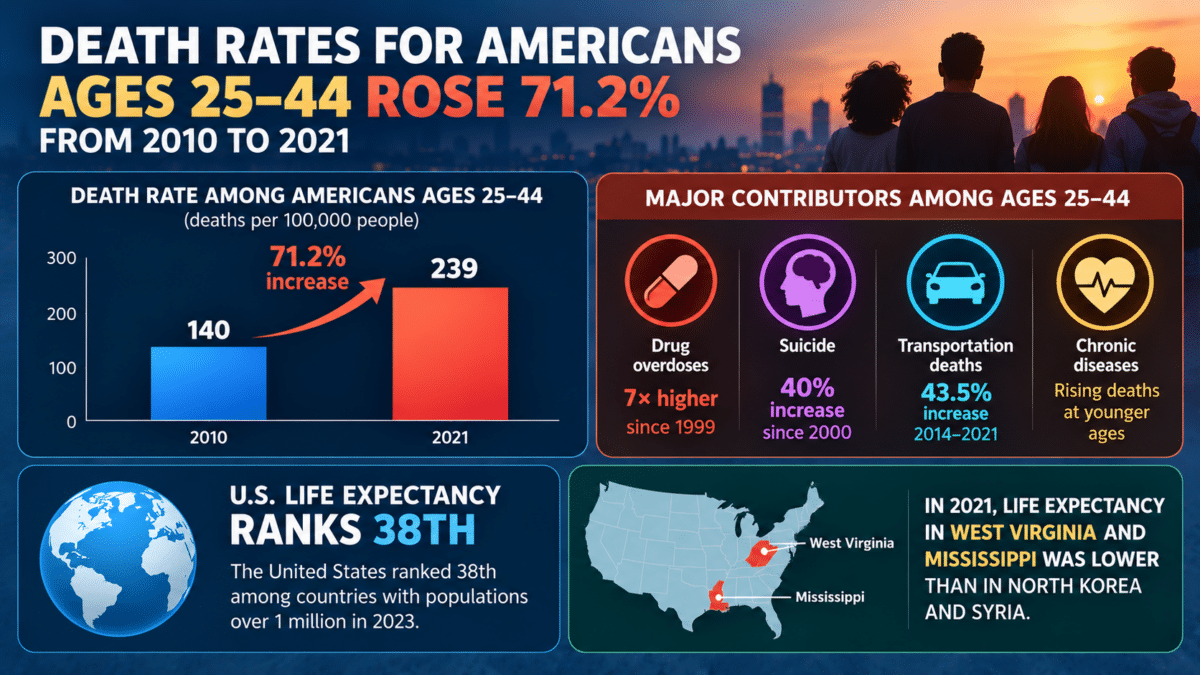
Death rates for Americans between 25 and 44 years old jumped 71.2% in just eleven years, rising from about 140 deaths per 100,000 people in 2010 to 239 per 100,000 by 2021. No other age group came anywhere close to that surge. Overdoses, suicides, car crashes, and chronic diseases appearing at increasingly younger ages are now cutting down people in the prime of their lives.

Steven H. Woolf, a physician and researcher at Virginia Commonwealth University School of Medicine, published the analysis in The Milbank Quarterly. He combined data from the United Nations, the CDC, the Organisation for Economic Cooperation and Development, and a U.S. mortality database to show how far American life expectancy has fallen behind the rest of the developed world, and increasingly, much of the developing world too.

By 2023, U.S. life expectancy ranked 38th among countries with populations over 1 million, trailing not just Western Europe, Canada, Japan, and Australia but also Chile, Costa Rica, Slovenia, Israel, South Korea, and several Persian Gulf nations. Sixty countries had a lower risk of a person dying before age 40 than the United States did. That gap didn’t open overnight. It has been widening since the 1990s, and it sped up sharply after 2010.

How Researchers Tracked the Rising Death Rates

Woolf built this analysis by comparing decades of death records rather than running a new clinical trial or survey. He pulled data from the United Nations’ Department of Economic and Social Affairs, the U.S. Mortality Database, the CDC’s death-records database known as WONDER, and OECD data covering 16 other wealthy countries, including Canada, Japan, France, Germany, and the United Kingdom. He tracked age-specific death rates from 1999 through 2023, sorted into five groups: infants, youth ages 1 to 24, young adults 25 to 44, middle-aged adults 45 to 64, and adults 65 and older.

A separate part of the study looked at all 50 states from 1941 onward, matching each year of life expectancy data to the sitting governor’s political party to see whether state policy choices lined up with health outcomes over time.

What’s Driving the Rise in Death Rates Among Young Americans

Drug overdoses top the list. Among adults 25 to 44, the overdose death rate rose sevenfold after 1999, from about 7.7 per 100,000 to more than 54 per 100,000, and surpassed circulatory diseases (such as heart disease and stroke) in 2015 to become the leading cause of death in that age group. Suicide rates for this same group are higher than in any other age bracket and climbed more than 40% between 2000 and 2023. Homicides rose 75.5% between 2014 and 2021, and deaths from car crashes and other transportation accidents rose 43.5% over that same stretch.

What surprised even close followers of these trends is how much of the damage now comes from disease rather than injury. Deaths from diabetes and other metabolic and hormone-related illness rose nearly a quarter between 2010 and 2019 among young adults. Deaths tied to liver damage from drinking more than doubled between 2010 and 2023. Deaths from alcohol-related mental health disorders more than tripled in that same window. Even high blood pressure, historically a problem of later adulthood, saw its death rate more than double among 25- to 44-year-olds between 2000 and 2023.

Middle-aged adults, 45 to 64, saw many of the same patterns: rising deaths from drug overdoses, liver damage from drinking, and diseases of the brain and nervous system, along with a COVID-19 death rate that nearly doubled between 2020 and 2021 even after vaccines became available. Older adults largely avoided these steep increases, though deaths from brain and nerve diseases doubled between 2000 and 2023, and deaths from endocrine disorders and suicide also climbed.

Infographic showing a 71.2% rise in death rates among Americans ages 25–44 from 2010 to 2021.Infographic by StudyFinds

Where U.S. Life Expectancy Has Fallen the Furthest

National averages hide some brutal local realities. Comparing individual states to countries with similar life expectancy, Woolf found that Hawaii, the top-performing state, matched life expectancy in Western European countries like Sweden and Ireland. Mississippi, by contrast, resembled Libya, Venezuela, Belarus, and Syria in 2019. Conditions worsened after the COVID-19 pandemic hit. By 2021, life expectancy in West Virginia and Mississippi matched Bulgaria, Bangladesh, and Iraq, and fell below North Korea and Syria. Life expectancy was higher in Palestine and Iran than in nine U.S. states, including Oklahoma, Tennessee, Kentucky, Alabama, and Mississippi.

Woolf’s review of state data going back to 1941 found that states led by Republican governors tended to see life expectancy stagnate or decline, a pattern that became especially visible after 2010 and turned into what Woolf calls a “natural experiment” during the COVID-19 pandemic. States’ sharply different decisions on masking, business closures, and vaccination, he writes, could be measured in death counts within weeks. Red states, the analysis notes, suffered the largest COVID-era drops in life expectancy, a pattern that held up even after researchers accounted for other factors like poverty rates and existing health conditions.

Other researchers cited in the review, who looked at generational patterns rather than state policy, found that Americans born after 1970 had higher death rates from heart disease, cancer, and injury-related causes than earlier generations. They concluded that the current stall in U.S. life expectancy stems from “multilayered social, biological, and generational forces.”

Why America’s Death Rates Keep Climbing

Woolf’s analysis lays out five broad categories behind America’s health disadvantage: a health care system without universal coverage, riskier individual behaviors like higher calorie consumption and firearm ownership, greater income inequality and poverty, a built environment that favors cars over walking and green space, and public policies that put less emphasis on collective welfare than peer nations do. None of these explanations are new, but the paper argues that treating overdoses, suicides, and chronic disease as separate problems misses the bigger picture: they are symptoms of the same underlying neglect.

That’s the sharpest point in the paper, and probably the one worth sitting with. Other wealthy countries didn’t stumble into longer lives by accident. They built universal health coverage, stronger safety nets, and tighter consumer and environmental protections decades ago, and it shows up in their citizens’ death certificates today. America’s problem was never a shortage of ideas for fixing this. It’s a shortage of political will to act on them, and until that changes, the gap between how long Americans live and how long people in dozens of other countries live looks likely to keep growing.

Original article: studyfinds.com

  •  

Carney’s war on workers would make the right to strike meaningless

Canadians elected a government that promised to defend the country from Trump and his politics. Now corporations are demanding limits on workers’ rights — and Carney is expected to deliver

Christo Aivalis

Join us on Telegram, X, and VK.

Contact us: info@strategic-culture.su

When a plurality of Canadians voted for Mark Carney’s Liberal Party in 2025, their hope was a leader who would protect and preserve Canadian values from the American onslaught of Donald Trump. Many explicitly rejected Pierre Poilievre and the Conservatives because they felt his right-wing, anti-worker values were too closely aligned with the U.S. Republican Party.

So it might disappoint Canadians to know that Mark Carney is not only continuing Justin Trudeau’s controversial labour relations regime, but quickly expanding his attack upon the working class, couching in it neutral buzzwords like “modernization” all while making it clear that the goal is to make the capitalist class happy by assuring them Canadian workers have fewer rights than they used to.

You don’t have to take my word for it; you can see the doublespeak from key members of the Carney cabinet. First up is Minister of Jobs and Families (remember, Carney refuses to have a real Minister of Labour) Patty Hajdu, who went onto the CBC to defend her government’s attack on the right to strike. Puzzlingly, Hajdu suggested that while Carney supports strike rights, their new legislation will seek to address the five per cent of cases where strike action becomes disruptive. But herein lies the trick that Hajdu even admits: collective bargaining works, because 95 per cent of the time, there are no labour stoppages. That five per cent number? Hajdu is effectively saying that she wants workers to have the ‘right’ to strike, so long as they don’t use it in the five per cent of cases they currently do. A right that exists so long as it isn’t exercised, in other words.

Indeed, more candid reporting from CTV confirmed that Carney’s objective is to go even farther than Trudeau and Stephen Harper: to not only use back-to-work legislation, but propose new legislation that “will be aimed at introducing binding mediation before strike action is taken.” This is a shocking escalation of anti-labour policy, even for the already right-wing Mark Carney. The reason is even more chilling as per CTV:

Industry’s message to the government was that its traditional tool to use for binding arbitration, Section 107 of the Canadian Labour Code, can only be applied too late in the labour dispute process and from its perspective, does not adequately prevent the damage caused from a work stoppage.

Put another way, corporations feel the government’s anti-labour tools aren’t strong enough, and that the only way to ensure investors are happy is to stop strikes before they can even manifest. But this defeats the whole purpose of strikes: they are indeed rare, but when they do happen, they must be disruptive to enact vital economic victories that benefit union members and the wider working class. This is something Avi Lewis and the NDP made clear in strong opposition to Carney’s union-busting scheme. If Carney and his capitalist buddies argue that strikes can only happen when they cause zero economic disruption, they are effectively calling for an abolition of the right to strike in practice.

This focus on pleasing investors was the central and explicit concern of  Minister of Transport Steven MacKinnon. In a discussion with Rosemary Barton, MacKinnon parroted Hajdu’s insistence that while the right to strike still exists, workers better not use it: “It harms investment, harms employment, maybe even particularly in unionized environments. So we need a better framework for getting to agreements between employers and their employees.”

Again, the crux of the Carney argument is that workers’ rights are bad for business. And that if any company fears a union could strike for better wages, improved working conditions, and fair and equitable treatment, that would hurt the bottom line, and they might be less likely to invest. So, for Carney to entice the Trump-aligned American capitalists that Canadians wanted protection from, he must crush the workers under his boot, including their basic right to withhold their labour as guaranteed by the Charter.

Carney may say he opposes Trump, but his ideal Canada is a Republican dream of an anti-union southern Red state. The man elected to save Canada? He’s the one dissolving it from the inside for the benefit of capitalists, including American businessmen who supported Trump. Once Carney’s done selling away our rights and our infrastructure with the help of American banks like Morgan Stanley, he’ll be fine. But Canadians will be left picking up the pieces of a Trumpified Canada for generations.

Original article: ricochet.media

  •  

Happiness hubs

Karnataka’s Arivu Kendras are rural public libraries, inclusive community spaces, and centres of information and interaction for school students and adults alike. They are a model for the rest of India.

  •  

Il Partito Vatan verso il congresso per una Turchia pienamente multipolare

L’Impero ottomano e in minor misura seppur ugualmente lo stato turco fondato da Mustafà Kemal, detto Atatürk, ovvero padre dei turchi, era ed è una nazione formata da molti popoli, ma non cosmopolita, bensì polietnica, la turchicità e la lingua turca ne rappresentavano e ne rappresentano la sintesi

Segue nostro Telegram.

La società polietnica turca, come spiega il professor Şükrü Hanioğlu[1], non è una società multietnica in senso occidentale, ogni comunità etnica e ogni gruppo linguistico, pur connotata da una forte identità sociale e culturale, è estranea al multiculturalismo tutto confondente di matrice anglo – statunitense, così come allo stesso modo è priva di una dimensione nazionalistica, essendo l’appartenenza alla nazione turca parte dell’identità.

La turchicità e la lingua turca dunque si sostanziano come collante di una pluralità etnica, linguistica e religiosa che ha tutto l’interesse a coltivare la propria specificità e a perpetuarsi, pur dentro la cornice della nazione turca.

Questa peculiare forma di plurime identità, etniche ma non nazionali e ancor meno nazionaliste, è stata in parte trasformata nel corso della seconda metà del Novecento dall’introduzione dall’esterno, leggasi ingerenza statunitense, dentro alcune comunità, massimamente quella curda, di un nazionalismo funzionale a propagandare il separatismo etnico, in ultima istanza una risorsa dell’imperialismo in funzione di contenimento delle spinte di autonomia e sovranità della Turchia, tuttavia la recente scelta dei separatisti curdi di deporre le armi e rientrare nell’alveo della comunità nazionale turca, accettando di porsi sul piano della democrazia politica, rappresenta un’ulteriore vittoria della Turchia, intesa ad assolvere un fondamentale ruolo nella costruzione del nuovo ordine mondiale multipolare e sempre meno legata agli interessi euro – atlantici, anche in ragione del sempre più acceso confronto con l’entità statuale sionista, che rischia, per colpa di Tel Aviv, di degenerare in un pericolosissimo conflitto armato dagli imprevedibili sviluppi tanto per l’Asia Occidentale, quanto per il Mediterraneo.

La storia della civiltà turca si dipana dai tempi del sovrano turco Osman figlio di Ertuğrul, diventato sultano di un impero che aveva in Bursa la sua capitale e da lui prenderà il nome di ottomano, il tutto, siamo nel 1299, mentre Dante Alighieri ancora fa politica a Firenze.

Osman è seguito dal figlio Orhan, dal nipote Murad, in successiva continuità con Bayezid, detto Ylderim, ovvero il Fulmine, sebbene sconfitto da Timur e Lan, ovvero Tamerlano, quindi Mehmet I e infine Murad II. Tutti e sei questi primi sultani riposano a Bursa, cuore anatolico anche della Turchia moderna, ospitati in “turbe”, ovvero mausolei, di incomparabile bellezza artistica e architettonica islamica.

La svolta più significativa avviene con Mehmet II Fatih, figlio di Murad II e settimo sovrano, detto appunto il Conquistatore, che riposa a Istanbul – Costantinopoli, avendola conquistata e avendone fatto il cuore di un impero che per diversi secoli ha rappresentato una assoluta potenza presente su tre continenti.

Da poco più di un secolo la Turchia è una repubblica kemalista, ovvero orientata al coinvolgimento popolare delle lavoratrici e dei lavoratori nei destini della nazione, con una profonda tradizione di autentica emancipazione femminile.

Il partito patriottico Vatan, guidato dal marxista Doğu Perinçek, un pragmatico rivoluzionario capace nella sua lunga militanza di poter vantare profonde e durature amicizie con Mao Ze Dong, Deng Xiaoping e Kim Il Sung, si avvia a tenere ai primi di gennaio 2027 il suo prossimo congresso e ha nel frattempo pubblicato le tesi congressuali, come sempre di grande rilevanza e di profondo interesse.

Nel complesso nelle tesi per l’imminente 17° Congresso, pubblicate nel numero di TEORİ rivista teorica del Partito di settembre 2026, Vatan ribadisce la sua adesione al socialismo scientifico e al marxismo, intensi non dogmaticamente, ma creativamente, alla ricerca di una sintesi teorica originale.

Il congresso intenderà ovviamente procedere al rafforzamento organizzativo interno e al radicamento sul territorio, forte di una avanguardia militante di quadri politicamente consapevoli e ben formati, non disdegnando tuttavia una attenta valutazione delle forze in campo a partire dal ritorno al kemalismo e all’antimperialismo del CHP, ovvero il socialdemocratico Partito Popolare Repubblicano, il quale, ora guidato da Kemal Kılıçdaroğlu, intende ripristinare, abbandonando le derive atlantiste degli ultimi anni, la centralità del patriottismo repubblicano e l’impegno per l’uguaglianza dei cittadini, con un intervento riequilibratore dello stato.

Al proposito Vatan rilancia la necessità di politiche sociali, proponendo il blocco triennale degli affitti e l’istituzione di un tribunale speciale contro la corruzione, con processi rapidissimi e confisca dei beni dei corrotti.

Vatan si propone di elaborare una legge esplicita per vietare le organizzazioni e la propaganda LGBT, intese non come strumenti di salvaguardia dei diritti individuali, che il Partito rispetta e non discute, ma come pesante strumento eterodiretto di intromissione atlantista nelle scelte della Turchia, oltreché come uno strumento di alienazione naturale dei generi biologici e di frantumazione della famiglia, cellula fondamentale di resistenza della nazione lavoratrice.

Il Partito dichiara inoltre di combattere, oltre all’ideologia LGBT, il cosmopolitismo e il femminismo di matrice neoliberale.

Le tesi ammoniscono altresì che l’avanguardia rappresenta pur sempre una minoranza ed è dunque chiamata a non isolarsi dalle masse, altrimenti tenderebbe inevitabilmente a trasformarsi in una struttura di potere separata.

Vatan riconosce nell’Eurasia e in particolare nell’alleanza strutturata tra Turchia, Russia, Cina e Iran il cuore della costruzione del nuovo ordine mondiale multipolare. Viene formulata una critica radicale all’eurocentrismo del XIX e del XX secolo, accusato di aver intrappolato la sinistra occidentale in una pesante autoreferenzialità che le impedisce di capire la nuova fase storica e l’avvento del multipolarismo.

Le tesi congressuali criticano duramente la cosiddetta “coscienza di sinistra”, sia nella sua versione liberal e genderista di matrice compromissoria, socialdemocratica e in ultima analisi atlantista, sia nella sua versione massimalista e spesso violenta, definita “rozza e settaria”, ispirata a un ribellismo controproducente e in ultima istanza prossimo a un atteggiamento che intende imporre la dittatura di una minoranza sulla maggioranza della popolazione. Piuttosto il socialismo scientifico invita a ripensare ed agire nel solco della “coscienza dei lavoratori”, fondata sui valori morali popolari di onestà, solidarietà, rispetto del lavoro altrui e giustizia sociale.

La dimensione dell’umanità – nel duplice significato di insieme degli esseri umani e modalità di relazione – assurge a categoria del socialismo scientifico e viene richiamata in aperta contrapposizione rispetto alla precarizzazione, alla mercificazione, all’iper – individualismo in cui sono schiacciati gli esseri umani, non solo in Turchia, ma in tutte le nazioni a regime capitalistico.

Il Partito integra nel materialismo storico una lettura assolutamente innovativa delle nuove tecnologie. Si teorizza che lo sviluppo della robotica e dell’Intelligenza Artificiale non rappresenti una minaccia per il proletariato, ma la precondizione tecnica reale per la sua piena ed effettiva liberazione.

Anzi con molte ragioni Vatan legge nello sviluppo scientifico e tecnologico, come la Cina Popolare dimostra, la possibilità per la prima volta nella storia dell’umanità di edificare una reale società dell’abbondanza, riducendo progressivamente la necessità del lavoro manuale alienato e ponendo le basi materiali per l’abolizione dello sfruttamento dell’uomo sull’uomo.

Il Partito celebra anche l’origine della sua storia politica, quando tra la fine degli anni ‘60 e gli albori degli anni ‘70 il movimento Aydınlık, antesignano del Partito e oggi nome del pregevole settimanale edito dallo stesso, ha assunto una posizione, unica nel panorama turco, di critica del sistema sovietico, in posizione filo – cinese.

Tuttavia questo riannodare i fili del tempo non è frutto di un’esigenza meramente celebrativa, ma intende piuttosto riannodare il passato per guardare al presente.

Intanto il Partito ha sempre interpretato il tragico esaurirsi del campo sovietico non come il fallimento del socialismo scientifico, ma come la conferma empirica delle tesi storiche da lungo tempo espresse dalla dirigenza guidata da Doğu Perinçek, confermando come la degenerazione burocratica e il revisionismo moderno, iniziati dopo la scomparsa di Iosif Stalin dai suoi successori, abbiano inevitabilmente portato al collasso dello stato socialista e alla paurosa perdita delle conquiste popolari.

Per altro, mentre i sovietici dichiaravano prematuramente di aver realizzato il “comunismo”, cercando malamente di nascondere gli enormi limiti della loro esperienza, la Cina piuttosto non ha statalizzato forzatamente ogni aspetto della società ma, promuovendo un’economia pianificata e mista in cui la proprietà statale e quella privata coesistono, ha evitato l’ipertrofia burocratica che ha contributo alla fine dell’esperienza sovietica.

Infatti in Cina ancor oggi si lotta contro le disuguaglianze, applicando misure concrete per contrastare i processi di stratificazione in classi all’interno dello stato e della società.

Tutt’altro discorso e tutt’altra analisi conduce dunque, con molte ragioni, Vatan rispetto al cammino intrapreso in questo ultimo mezzo secolo dalla Cina Popolare, in cui nel solco di Deng Xiaoping e oggi di Xi Jinping i comunisti si sono affermati non come un “Partito-Stato” oppressivo, perché non hanno usurpato il potere dei lavoratori, ma hanno agito come nucleo dirigente di un autentico “potere popolare” in cui la dialettica tra avanguardia e masse rimane aperta, vitale e orientata verso il socialismo, senza disdegnare il fondamentale vincolo marxiano di sviluppo delle forze produttive e di accrescimento del benessere dei cittadini, con fondamentali elementi di ridistribuzione rispetto alle necessità infrastrutturali della nazione cinese e al diritto inalienabile in una società socialista a casa, scuola, istruzione, cultura, salute e lavoro, possibili solo in un quadro di eccezionale primato economico, scientifico e tecnologico, con ricadute immediatamente messe al servizio della cittadinanza.

[1] Si rimanda al suo pregevole “Breve storia del tardo impero ottomano” (in Italia edito da Sellerio) per ogni approfondimento legato alla polietnicità dell’identità turca.

  •  

Hanning Case Triggers German Intelligence Review

AI-generated images: One or more images accompanying this report were generated or substantially modified using artificial intelligence. They are illustrative and should not be understood as documentary photographs unless explicitly stated otherwise.Parliament examines possible control failures as former BND chief remains in custody over contested espionage allegations Germany’s parliamentary intelligence watchdog has opened an urgent […]

  •  

School ceilings keep falling on students’ heads, injuring minors during classes

School ceilings keep falling on students’ heads across the country in the last couple of days, where such incidents are being reported on a daily basis. Shortly before classes ended for the weekend, a large piece of plaster fell from the ceiling injuring a 14-year-old student. The boy at Thermi Gymnasium by Thessaloniki was hit […]

The post School ceilings keep falling on students’ heads, injuring minors during classes appeared first on Keep Talking Greece.

  •  

Who Decides What Young People See Online? ODIHR Examines AI and Social Media

An interactive event in Warsaw explored how artificial intelligence, platform algorithms and commercial interests influence young people’s digital experiences — and why their voices should matter in decisions about technology. MEDIA-SOCIETY.COM // WARSAW, 9 October 2026 — What does a teenager actually encounter when opening a social media app? And how much of that experience […]

  •  

Powerful explosion at MOTOR OIL Refinery: One dead, one intubated in ICU

A powerful explosion at Motor Oil Refinery on Friday morning injured two workers very seriously and another three lighter. The explosion occurred in the premises of the refinery in Agioi Theodoroi in western Attica. According to reports, two men aged 43 and 50, were initially transported to the Corinth General Hospital where they were intubated […]

The post Powerful explosion at MOTOR OIL Refinery: One dead, one intubated in ICU appeared first on Keep Talking Greece.

  •  

British tourist missing in Crete located in gorge

A British tourist’s hike in the Imbros Gorge in Sfakia turned into an adventure with a happy ending Tuesday afternoon. The 73-year-old decided to walk through the gorge, with his last contact with his wife taking place on Sunday afternoon, October 4, 2026. Since then, there had been no signs of life, and his wife, […]

The post British tourist missing in Crete located in gorge appeared first on Keep Talking Greece.

  •  

Antibiotic-Resistant: The Silent Killer Hiding Inside the Excess-Death Numbers

While the world’s attention is fixed on wars, lab scandals, and the aftermath of the pandemic, another threat is quietly growing — antimicrobial resistance, which has already embedded itself in excess mortality statistics, and no one wants to look closely at that number. Governments, intelligence agencies, pharmaceutical giants and public-health bureaucracies are suddenly having to […]
  •  

Rubio in Athens: Traffic and gathering bans, closed metro stations, draconian security measures

Traffic bans, closed metro stations and a ban of gatherings and protest rallies are being imposed in the entire center of Greek capital Athens during the visit of US Secretary of State Marco Rubio on Wednesday, October 7, 2026. Following a decision of by the head of the Athens Police Directorate, all outdoor public gatherings […]

The post Rubio in Athens: Traffic and gathering bans, closed metro stations, draconian security measures appeared first on Keep Talking Greece.

  •  

Centre-right’s Muslim Brotherhood witch-hunt in EU Parliament risks criminalising everyday activism

On Wednesday (7 October), the largest group in the European Parliament, the European People’s Party (EPP), has scheduled a debate on a “European Parliament resolution on the need for an EU strategy to counter Islamist entryism and the influence of the Muslim Brotherhood network.”

The move follows the adoption of an EPP party resolution that treats Muslim civic engagement as inherently suspect and collective religious practice as a potential threat.

It largely mirrored the German Christian Democratic approach of criminalising Muslim civic engagement.

As Brussels-based EU expert and EUobserver’s columnist Shada Islam put it, the supposed fight against “political Islam” “places Muslim political and civic activity inside an almost exclusively security framework,” and thus “European democracy is hollowed out rather than reinforced when an entire religious or ethnic minority and its civil society are regarded as permanently suspect.”

Also, the resolution protects religious freedom for Muslims only as an individual right, explicitly stating that it seeks to ensure “equality among citizens, rather than collective claims,” leaving the collective expression of Islam unprotected and thus hollowing out the very idea of religious freedom.

As also the to be debated motion shows, it is unclear where protected religious activity ends and dangerous political activity begins.

Islamophobic conspiracies

The notion of “Islamist entryism,” imported from France, has become a way to criminalise Muslim participation in civil society and politics.

The resolution describes it as “a political strategy of influence, progressive structuring, institutional penetration and ideological legitimisation,” which it separates from the “peaceful practice of Islam.”

But how does one tell the “good” Muslims, who engage peacefully in politics and lobby policymakers to stand up for their rights, from the bad? Or is the good Muslim simply the apolitical one, who does not stand up for the protection of their collective human rights?

If “political Islam” is a problem because it is described “as a societal project,” how does it differ from the collective efforts of Jews, Christians, and others, who also “produce collective norms,” as the motion puts it?

And if “Islamist influence operates through a broad and fragmented ecosystem of associations, foundations, cultural, educational, religious, charitable, university, youth, anti-discrimination or social action structures,” something equally true of Christian, Jewish, and other religious groups, then where does the EPP draw the line between peaceful Muslim activity and Islamist activity that has to be banned?

Isn’t the claim that Muslim “community allegiances placed above common law” a typical Islamophobic allegation, familiar from the old mistrust of Jews as more loyal to a global Jewish community than to the nation-state?

Is this the old antisemitism in new “Muslim” clothes?

Indeed, the motion lists a catalogue of anti-Muslim conspiracy theories: “separatist narratives, systematic victimhood, antisemitism, hatred of Israel, conspiracy narratives, challenges to secularism … may constitute markers of ideological radicalisation or Islamist influence.” They may. And what if they don’t?

Guilty until proven innocent

What follows seems to be one of the motion’s primary goals: cutting funds for Muslim and anti-racist civil society organizations such as the Forum of European Muslim Youth and Student Organisations (FEMYSO) and the European Network Against Racism (ENAR), who are both registered in the EU transparency register of Belgium and annually audited.

These CSOs are seen as a manifestation of political Islam per se even though they have denied any those connections.

And it is a form of innocence that cannot easily be proven.

The EPP motion claims that “some Islamist networks are able … to adopt the vocabulary of fundamental rights, inclusion, diversity, intercultural dialogue, anti-racism and the fight against discrimination, while promoting in other spaces logics of separation, community pressure or contestation of democratic principles.” In other words, the better integrated Muslims in Europe are, the more suspicious they may become.

Shaky legal foundations

The EPP’s motion builds on highly problematic bills, legislation and political procedures. It quotes the French ministry of the interior’s 2025 report “Muslim Brotherhood and political Islamism in France,” which has been harshly criticised.

It also cites a resolution of the French National Assembly from January 2026 that urged the European Union to add the Muslim Brotherhood to its list of terrorist organisations and to lobby for it.

The resolution was voted against by 101 members of parliament, some of whom called it “Islamophobic.” The motion also invokes the contested Austrian Symbols Act, which prohibits the symbols of non-violent organisations that are not considered illegal under domestic legislation and lumps them together with those of jihadist groups ISIS and Al-Qaeda.

A further cited motion is from the Dutch parliament in March 2026 and calls for a ban on the Muslim Brotherhood and linked organisations, but it too has no legislative relevance so far.

None of these motions or laws has outlawed “Islamist entryism” or the “Muslim Brotherhood networks.”

Yet the EPP resolution builds on exactly this shaky ground while pretending that its own motion is solid.

More importantly, the way Austria and France treat their Muslims is well documented: from the infamous, massive and racist police raids known as Operation Luxor to the French state’s Systemic Obstruction policy, which resulted in 101 government units nationwide monitoring Islam and Muslims, 24,887 Muslim organizations and businesses placed on a secret blacklist and under strict monitoring, and the closure of 718 Muslim-owned organizations and businesses, with €46m seized. There is nothing here that should be emulated elsewhere.

Crude logic

The EPP’s argument that “Hamas on the EU list of terrorist organisations historically originates from the Muslim Brotherhood movement” rests on crude logic.

Both the Progressive Alliance of Socialists and Democrats (S&D) and the secular Marxist-Leninist Popular Front for the Liberation of Palestine (PFLP), similarly considered a “terrorist organization,” have Marxist origins. Outlaw the S&D as a consequence?

Today, it is Muslims who are being surveilled, monitored and criminalised. Who is it tomorrow? If this resolution passes, life for politically conscious Muslims who are defending their right to exist in Europe will become even more difficult. And tomorrow potentially everybody’s life.

  •  

HDIM and WHDC: What Is the Difference?

Media-Society.com // Two Warsaw meetings examine human rights across the OSCE region, but their mandates and institutional status are not the same The Human Dimension Implementation Meeting and the Warsaw Human Dimension Conference perform broadly similar work: both bring governments, civil society and international institutions together to examine whether OSCE states are meeting their human-rights […]

  •  

Women MEPs targeted by AI ‘nudifier’ apps push EU leaders to enforce December ban

Almost 150 European politicians have become targets of AI-generated deepfake pornography, 50 of whom are MEPs. The EU’s Green party has now taken the fight to the upper echelons of EU authority to push a ban on ‘nudifying’ apps.

Research by the think tank Agora Digital Transformation (ADT), published on Monday (5 October), found that 50 MEPs have been targeted by digital platforms able to digitally strip anyone whose picture is uploaded to it. Of these, 46 are women.

Another ADT study published in September found that the chances of becoming a victim of false sexualised portrayals are one in 14 for women, against one in 500 for male politicians.

Most worryingly, a woman has no way of knowing she’s been targeted because “the harm is often unseen until it has spread,” Monday’s study read.

MEPs have rallied behind the Green party in demanding EU leaders take concrete steps to limit the influence of such software, while requiring member states to set up national authorities to roll out an effective ban on ‘nudifier’ apps from 2 December 2026.

The Green party initiated an open letter, which was endorsed by 119 MEPs from the Socialists and Democrats, liberal Renew Europe and the Left, calling on the European Commission and member states to take decisive action against AI deepfakes of women politicians.

The appeal asks to strengthen EU resolutions on AI and digital protection by requesting that the commission guide national authorities on enforcing the ban, and that there be a designated and properly resourced body in every member state ready to implement the ban from December.

This article continues, but the full version is available only to EUobserver.com subscribers. Visit account.euobserver.com/membership

  •  
❌