❌

Reading view

Political crisis in Pakistan deepens with dismissal of PTI-led provincial government

Large-scale protests broke out in different parts of Pakistan’s Khyber Pakhtunkhwa (KP) province on Monday, October 12, after the federal government dismissed its elected government and imposed the centralized Governor’s rule.

The federal government also declared an emergency in 12 out of 40 of KP’s districts, citing a law-and-order situation. The imposition of the emergency under article 232 of Pakistan’s constitution means the suspension of citizen’s fundamental rights.

Pakistan Tehreek-e-Insaf (PTI) which was ruling the KP government, called the dismissal of its government a “direct assault on the democratic mandate of the people.” PTI is currently leading a large march to Pakistan’s capital, Islamabad, demanding the release of its jailed leader and former prime minister, Imran Khan,

Several of its leaders and activists protested the federal government’s decision in different parts of the province on Monday and Tuesday, despite the repression unleashed by security forces.

The federal government has deployed the armed forces in large numbers across the province, closed down all the educational institutions and blocked all access routes to the capital Peshawar with shipping containers in order to prevent large protests.

Chief Minister Sohail Afridi was also arrested on Monday, along with several of the elected members of the provincial legislative council, with PTI claiming his whereabouts were unknown.

Afridi, who was leading the march to Islamabad since October 4, had, on Saturday, dared the federal government to dismiss his government, claiming the imposition of federal rule by dismissing “the only truly elected government” in the country would be a brutal repression of popular will.

The PTI has called for large-scale protests against the move in the coming days. It has also filed a petition demanding the revocation of the Governor’s rule and production of its elected members, arrested since Sunday.

“Unpardonable crime“

Reacting to the dismissal of the PTI government, Ammar Ali Jan, leader of the leftwing Haqooq-e-Khalq Party (HKP) called it “one of the darkest chapters” in the country’s history.

“All those responsible, including the PMLN [Pakistan Muslim League Nawaz, the ruling party], PPP [Pakistan Peoples Party, part of the ruling coalition] & the establishment [the Army] have committed an unpardonable crime against our people,” Ali Jan said, asking people to “revolt against this tyranny.”

Several other groups and parties opposed the federal government’s move, calling it an attack on people’s basic rights.

HKP called it a brazen disregard for the will of the people which will further increase the gap between the people and the government “in the midst of unprecedented security, economic and regional challenges” faced by Pakistan.

The left-wing Mazdoor Kisan Party (MKP) and Awami Workers’ Party-Marxist also opposed the move, calling it an example of authoritarianism. The MKP dismissed the justification about the PTI government’s failure to maintain law and order and curb terrorism as just excuses to undermine the popular mandate.

The federal government, led by Prime Minister Shehbaz Sharif of the PMLN, has long accused the KP government of failing to secure law and order in the province, citing rising cases of “terrorist attacks.”

It claimed the PTI-led government has “deliberately disengaged with the fight against terrorism” as justification for its dismissal on Sunday.

Pakistan’s Information Minister Attaullah Tarar also claimed on Monday that the move has been welcomed by the people of KP as the PTI government was sympathetic and even supportive to “terrorist” groups.

The dismissal of the PTI government in KP is largely seen as a result of the persistent political tensions between the PTI and the ruling coalition.

The PTI is the largest opposition party in the country’s National Assembly. Khan, despite being in prison for the last three years, still has a large popular following.

Khan and the PTI have maintained that the ruling coalition, in collaboration with the country’s armed forces, conspired and rigged the 2024 elections to deprive them of power after Khan spoke against the latter’s interference in the democratic governance.

The PTI was denied its symbol during the national elections, forcing it to run its candidates as independents, while Khan was disqualified to contest in the elections and denied permissions to campaign. He was put in prison and charged with scores of cases related to corruption, misuse of power, and violence.

  •  

Archaeologists Excavate a Nearly 100-Meter Building Opposite Pakistan’s Greek-Style Temple at Taxila — Its Purpose Is Unknown

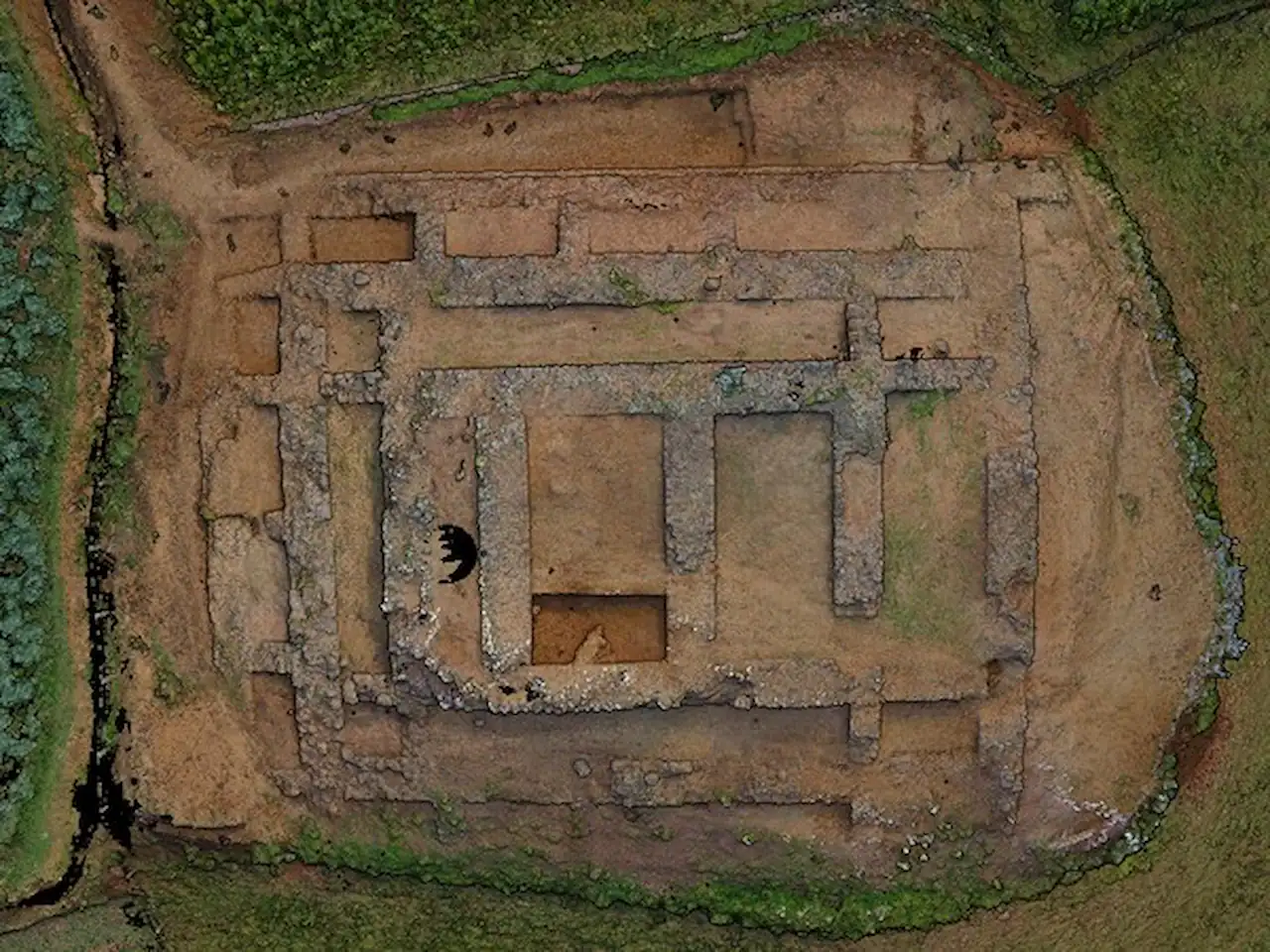
The building, named Jandial D, turned up during excavations by the Italian Archaeological Mission of Ca’ Foscari University of Venice in Pakistan, part of the Khyber PATH project. Work began in mid-August 2026 and has exposed an imposing structure: almost 100 meters (about 330 feet) long, close to the length of a football field, and […]

  •  

Descubren en la antigua Taxila en Pakistán un enorme edificio de 100 metros frente al templo griego de Jandial

El monumento, bautizado Jandial D, ha aparecido en las excavaciones que la Misión Arqueológica Italiana de la Universidad Ca’ Foscari de Venecia realiza en Pakistán, dentro del proyecto Khyber PATH. Los trabajos empezaron a mediados de agosto de 2026 y han dejado a la vista una estructura imponente, con muros que se conservan al menos […]

  •  

PTI opposition jailed as Trump embraces Pakistan’s Asim Munir

As US President Donald Trump deepens his ties with Pakistan’s powerful military chief Asim Munir, the nation’s government has detained the elected leadership of the last province controlled by jailed former Prime Minister Imran Khan’s opposition party – a move critics have condemned as a coup. Pakistan’s president, Asif Ali Zardari, declared a state of […]

The post PTI opposition jailed as Trump embraces Pakistan’s Asim Munir appeared first on Asia Times.

  •  

From Buffer to Bridge: The Wakhan Corridor and the Return of Russia and China to Eurasia

As the United States reassesses its global commitments, the opening of Afghanistan’s Wakhan Corridor creates a new trade artery between China, Central Asia and South Asia — giving Russia and China new openings to reshape the Eurasian order. The Changing Global Balance of Power On 4th October 2026, Afghanistan opened the Wakhan Corridor, which means […]
  •  

L'OTAN se rapproche-t-elle d'une guerre « chaude » avec la Russie ?

Par Thibault de Varenne

Le 26 juillet 2025, à Pabianice, Donald Tusk annonçait qu'il fallait se préparer à un affrontement majeur avec la Russie dès 2027 (Blue News, d'après PAP). Le 5 novembre, devant le Sénat, le chef d'état-major des armées, le général Fabien Mandon, demandait de « se préparer à un choc d'ici trois, quatre ans » (Public Sénat). Le 11 décembre, à Berlin, Mark Rutte, secrétaire général de l'OTAN, était plus net encore : « Nous sommes la prochaine cible de la Russie », qui « pourrait être prête à employer la force militaire contre l'OTAN d'ici cinq ans » (Anadolu). En juin dernier, l'inspecteur général de l'armée allemande assurait que les trente-deux alliés s'accordaient sur une date : 2029 (National Security Journal).

L'OTAN se rapproche-t-elle d'une guerre « chaude » avec la Russie ?
LE COURRIER
DES STRATÈGES
Restez libre !
L'OTAN se rapproche-t-elle d'une guerre « chaude » avec la Russie ?

LA NEWSLETTER · GRATUITE

Le Courrier,
chaque matin.

L'essentiel de l'actualité, passé au crible par les cinq plumes du Courrier. Dans votre boîte, chaque jour ouvré.

Gratuit. Vous restez libre de partir quand vous voulez.

JE M'INSCRIS lecourrierdesstrateges.fr
lecourrierdesstrateges.fr
Restez libre !

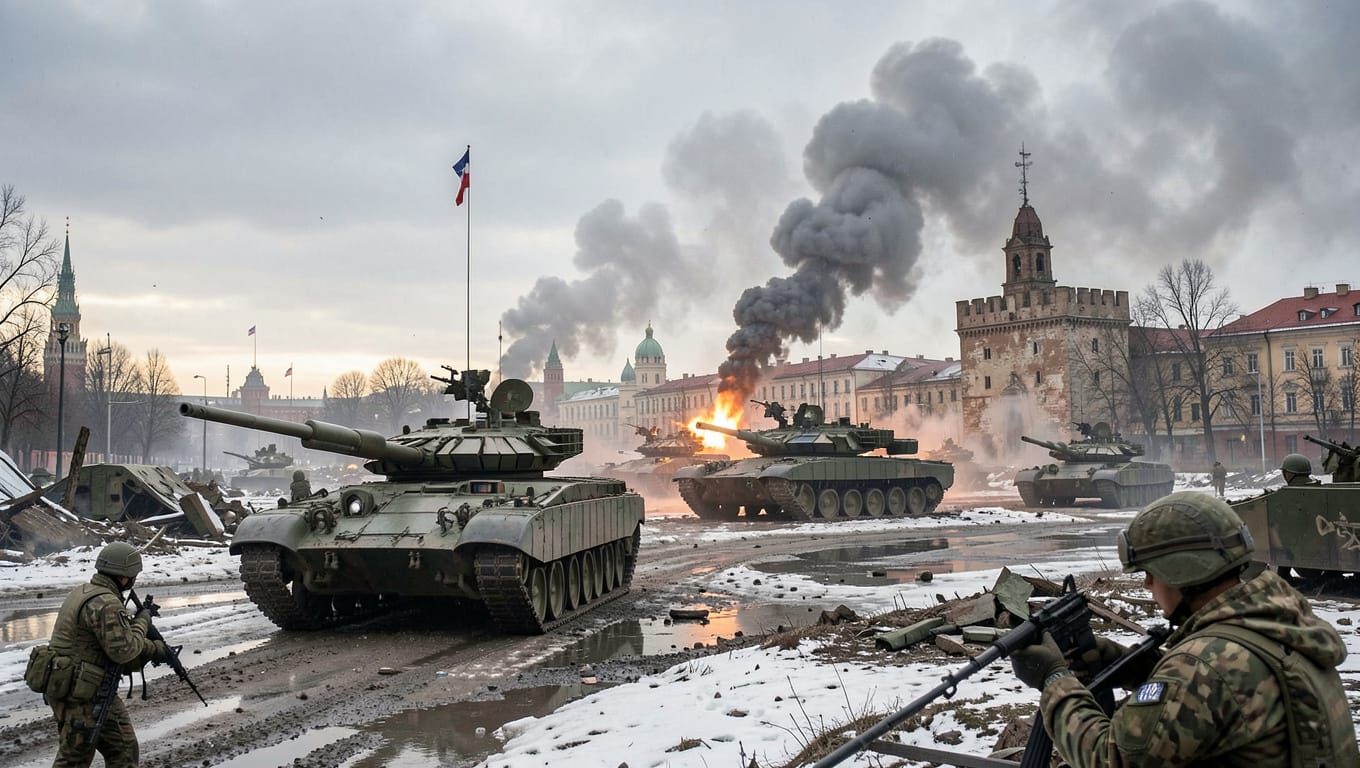
Hier, à Varsovie, le commandant suprême des forces alliées en Europe a présenté publiquement le plan par lequel l'Alliance briserait une invasion russe. En quinze mois, la guerre avec la Russie a reçu un calendrier. Elle a désormais un plan de bataille.

Ce que contient le très important discours de Poutine à Valdaï
Discours de Poutine à Valdaï, 1er octobre 2026 : ce qu’il a dit - c’est très important.
Poutine a-t-il raison de dire que l’ordre de 1945 est mort ?
À Valdaï, Poutine dit l’équilibre de 1945 effondré. Il a raison sur le constat, il en garde le siège et le veto. Pourquoi la France n’a pas intérêt à signer.
La nation contre la « communauté mondiale » : ce qu’a dit Marco Rubio à Athènes
À Athènes, Marco Rubio oppose la loyauté envers la nation à la « communauté mondiale ». Ce que dit le discours du 7 octobre, et comment il est lu.

Le calendrier des avertissements

Ces avertissements ne viennent pas de nulle part, et il faut commencer par le reconnaître. La Russie a tiré près de deux mille missiles balistiques sur l'Ukraine cette année, selon le commissaire européen à la défense (EU Perspectives). Des drones ont franchi l'espace aérien polonais et roumain. Des sabotages ont été signalés en Estonie et en Allemagne, que Moscou dément.

Le 24 septembre, le service de renseignement militaire danois, le FE, a publié l'évaluation la plus précise du lot. Il prévoit une escalade de la guerre hybride « dans les mois qui viennent » et juge « faible mais croissant » le risque d'une attaque militaire limitée contre un pays de l'OTAN voisin de la Russie : frappes isolées à longue portée contre des infrastructures qui servent à soutenir l'Ukraine, attaque sous faux drapeau avec des drones de fabrication ukrainienne, petites unités sans insignes franchissant une frontière (Nordic Defence Sector).

Le même service ajoute qu'il ne voit aucun signe de préparation d'une invasion, laquelle demanderait au moins six mois. Mark Rutte lui-même a reconnu, début octobre, qu'aucun élément ne laissait présager une invasion conventionnelle imminente (Business AM). Le général Grynkewich ne juge le conflit « ni imminent ni inévitable ».

L'OTAN se rapproche-t-elle d'une guerre « chaude » avec la Russie ?
LE COURRIER
DES STRATÈGES
Restez libre !

ABONNEMENT

Allez au fond
des choses.

Deux grands formats par jour. Les cinq plumes du Courrier. La série Sécession, le dimanche.

Le monde commente. Vous, vous comprenez.

S'ABONNER lecourrierdesstrateges.fr
lecourrierdesstrateges.fr
Restez libre !

Pouvoir n'est pas vouloir

Toute la difficulté tient dans un verbe. Les évaluations sérieuses parlent de ce que la Russie pourra faire en 2029. Le discours public dit ce qu'elle va faire. Le passage de l'un à l'autre ne se fait dans aucun rapport ; il se fait à la tribune, entre la note des services et la phrase du ministre. On ne prépare pas un budget de défense avec un conditionnel.

Je ne soupçonne personne de mentir. Une capacité qui se reconstitue est une menace réelle, et un gouvernement qui ne s'y préparerait pas manquerait à son premier devoir. Mais une date annoncée à voix haute produit des effets que la prudence aurait dû peser. Elle fixe un horizon aux budgets : être prêt en 2030, dit l'Union. Elle en fixe un aussi à l'adversaire. Si l'Europe sera prête en 2030, celui qui veut l'éprouver sait qu'il a intérêt à le faire avant. En 1914, l'état-major allemand raisonnait exactement ainsi devant le réarmement russe annoncé pour 1917. La prophétie d'une guerre à date fixe travaille à se réaliser.

L'OTAN se rapproche-t-elle d'une guerre « chaude » avec la Russie ?
LE COURRIER
DES STRATÈGES
Restez libre !

TELEGRAM · L'INFO EN CONTINU

Entre deux éditions,
le fil.

La newsletter vous donne le matin. Le fil vous donne l'instant.

Gratuit, et en continu.

REJOINDRE LE FIL t.me/resterlibre
t.me/resterlibre
Restez libre !

Ce que prévoit la riposte

Le plan présenté hier tient en trois verbes : bloquer l'invasion au point d'attaque, l'émousser par les drones et les capteurs, puis la briser en frappant « tout ce qui soutient, alimente et commande cette force » (Stars and Stripes). Il est présenté comme défensif, et il l'est dans son déclenchement : rien ne bouge avant une attaque.

C'est la troisième phase qui change la nature de l'affaire. Selon Meduza, elle prévoit des missiles à longue portée contre les postes de commandement et les défenses aériennes russes de la région de Kaliningrad, des environs de Saint-Pétersbourg et de Biélorussie. Il s'agit du territoire russe. Or la doctrine nucléaire russe, révisée en novembre 2024, admet l'emploi de l'arme en cas de « menace critique » contre la souveraineté ou l'intégrité territoriale de la Russie ou de la Biélorussie, et range parmi les situations dangereuses l'isolement d'une partie de son territoire (Carnegie). Kaliningrad est une enclave. Le plan de l'OTAN vise précisément les lieux que la doctrine adverse a désignés comme intolérables.

Il faut y ajouter un mot prononcé à Bruxelles. En décembre 2025, l'amiral Giuseppe Cavo Dragone, qui préside le comité militaire de l'Alliance, envisageait qu'une « frappe préemptive » puisse être tenue pour une « action défensive » face aux attaques hybrides, tout en concédant que l'idée s'écartait « de notre façon normale de penser » (Kyiv Independent, d'après le Financial Times). La préemption frappe une attaque imminente. La prévention frappe une menace future, et la Charte des Nations unies l'interdit. Dans la guerre hybride, où personne ne sait dire le jour où une invasion commence, la frontière entre les deux tient à l'appréciation d'un état-major.

Le scénario qui devrait inquiéter

Rapprochons les pièces. Le scénario que le renseignement danois juge le plus

  •  

Pakistan’s Emergency Rule Raises Uncomfortable Questions for Brussels

The imposition of emergency rule in Khyber Pakhtunkhwa, an opposition-controlled province, raises disturbing questions about the relationship between Pakistan’s civilian government and its powerful military establishment. Is this a legitimate response to terrorism, or another calculated assault on democracy?

There is an old saying in Pakistan that most countries have an army, but in Pakistan the army has a country. It is a cynical observation, certainly, but one that has survived successive governments, constitutional crises and military interventions with remarkable durability.

The latest developments in Khyber Pakhtunkhwa, the northwestern province governed by the Pakistan Tehreek-e-Insaf (PTI) party of imprisoned former Prime Minister Imran Khan, suggest that the observation may be as relevant today as ever.

President Asif Ali Zardari’s decision to impose emergency rule in the province, ostensibly in response to deteriorating security conditions, has prompted an obvious and deeply uncomfortable question: is Pakistan witnessing another military coup, albeit one conducted without tanks surrounding parliament or generals appearing on television to announce the suspension of democracy?

The answer depends largely upon how one defines a coup.

A constitutional manoeuvre with political consequences

Under Pakistan’s constitutional framework, federal authorities possess emergency powers that can, under specified circumstances, override provincial administrations.

Such powers are not inherently illegitimate. Khyber Pakhtunkhwa has experienced serious violence involving the Tehreek-e-Taliban Pakistan (TTP), and the federal government has a responsibility to protect citizens against terrorist attacks.

Nevertheless, the timing of the intervention demands scrutiny.

The province represents one of the most significant remaining political strongholds of Imran Khan, whose imprisonment and continuing confrontation with Pakistan’s political establishment have generated considerable unrest.

Suspending an elected provincial administration in these circumstances inevitably raises suspicions that national security has become a convenient instrument for achieving political objectives.

The crucial distinction is between responding to a genuine emergency and exploiting that emergency to neutralise an inconvenient opposition.

Pakistan’s authorities must demonstrate not merely that a security threat exists, but that the removal of elected provincial leadership is necessary and proportionate.

The army that never really left politics

Pakistan’s military has exercised an extraordinary degree of influence over the country’s political development since independence in 1947.

General Ayub Khan seized power in 1958. General Zia-ul-Haq overthrew Zulfikar Ali Bhutto’s government in 1977. General Pervez Musharraf removed Prime Minister Nawaz Sharif in 1999.

These were unmistakable military coups, involving direct intervention against civilian authority.

Yet Pakistan’s experience also demonstrates that generals need not formally assume the presidency to dominate political affairs. The military establishment has long maintained substantial influence over national security, relations with India, Afghanistan policy and, at various moments, the composition and survival of civilian governments.

Under Field Marshal Asim Munir, the relationship between the armed forces and civilian political authority has again attracted intense scrutiny. The central question is therefore not simply whether Pakistan’s generals have seized power. It is whether elected politicians retain sufficient independence to exercise it.

Imran Khan and the price of political defiance

Imran Khan’s political trajectory illustrates the extraordinary volatility of Pakistan’s relationship between civilian leadership and military power.

Once widely regarded as enjoying the establishment’s favour, Khan subsequently became one of its most prominent critics. His removal through a parliamentary no-confidence vote in April 2022 marked the beginning of an increasingly bitter confrontation.

His subsequent imprisonment, the prosecution of PTI figures and restrictions affecting the party’s political activities have fuelled allegations that Pakistan’s democratic institutions are being manipulated to exclude a popular opposition movement.

The authorities reject accusations of politically motivated persecution, while Khan’s supporters insist that his treatment demonstrates the extent to which democratic competition has been compromised.

Against this background, emergency intervention in a PTI-governed province cannot reasonably be viewed in isolation. It forms part of a wider struggle over who ultimately controls Pakistan’s political future.

A coup without the traditional trappings?

The latest emergency is particularly significant because Pakistan’s civilian government and military leadership appear aligned in their criticism of PTI.

According to Reuters reporting on 11 October, the province will be administered by a governor for an initial six months, with troops deployed to support security operations.

Hundreds of activists and three of Khan’s sisters have reportedly been detained ahead of opposition demonstrations.

PTI spokesperson Zulfikar Bukhari has characterised the emergency as a disguised coup. Even Maulana Fazlur Rehman, whose party has been involved in mediation efforts, condemned the intervention as an attack on democracy.

Yet evidence that the military directly ordered the takeover remains absent from the public record. Accusations of military involvement should be investigated rather than treated as established fact.

Nevertheless, a coup need not always involve soldiers removing a prime minister. Democratic institutions can also be progressively hollowed out through ostensibly lawful decisions that concentrate authority and deprive opposition parties of meaningful power.

A dangerous precedent for Pakistan

For Pakistan’s international partners, including the European Union, the implications extend beyond an internal constitutional dispute.

Pakistan benefits from preferential access to European markets under the EU’s GSP+ trading arrangement, which is linked to commitments concerning human rights, democratic governance and international conventions. Brussels should therefore be watching developments closely.

If emergency powers become a mechanism for suppressing political opposition rather than protecting public security, the European Commission will face legitimate questions about Pakistan’s adherence to its international obligations.

The immediate crisis may not constitute a conventional military coup. But the more troubling possibility is that Pakistan’s political system is evolving towards a form of government in which elections continue, civilian politicians remain in office, and the military’s influence is sufficiently powerful to determine the boundaries of democracy.

For Imran Khan‘s supporters, that distinction may offer little consolation.

Pakistan’s generals have seized power openly before. The question now is whether they need to do so again.

Geneva side event sharpens focus on Pakistan’s GSP+ status and rights record

  •  

No Permanent Allies: Pakistan and the Politics of National Interest

In a world of shifting alliances, Pakistan must balance strategic partnerships with national interests — and the key question is whether the Makkah Pact will become a tool of strategic autonomy or another form of dependence. In recent years, the world has seen an unprecedented shift in global alliances. According to the realist school of […]
  •  

Afghan road to China tests Pakistan’s power and leverage

China is increasingly trying to diversify its connections to the region as Pakistan’s actions in Afghanistan create new security and strategic problems for Beijing. The opening of a road through the Wakhan Corridor is an important step in that effort. Afghanistan has formally inaugurated a 121-kilometer road through the corridor, running from Broghil to the […]

The post Afghan road to China tests Pakistan’s power and leverage appeared first on Asia Times.

  •  

Pakistan’s Saudi Deployment: A Strategic Gamble with Grave Consequences

Pakistan’s deployment of troops to Saudi Arabia under the Makkah Pact could deepen domestic political instability, strain its relations with Iran, and undermine its strategic autonomy by drawing Islamabad further into a regional conflict with wider US and Israeli strategic implications. For decades, Israel has been committing genocide and war crimes in Palestine. In the […]
  •  

Yemen’s Red Sea Gambit: A New Regional Power Struggle

Operation Dawn has opened a new chapter in Yemen’s long-running war, bringing the strategically vital Bab al-Mandeb Strait back to the centre of the conflict, as Iran, the United States, Pakistan and Türkiye are increasingly drawn into a wider struggle. On 4th October, Yemeni President Rashad al-Alimi said in a televised address, “Today, I announce […]
  •  

The True Cost of Rape in America

The horrific story of Jane Doe and the Cornell Seven has spurred nationwide outrage and revived contentious debates around prevention and education. But one question is going unasked: Who really pays after a sexual assault? In terms of actual dollars and cents? The answer, Cosmopolitan finds, isn’t good:

Leah received an email from the first hospital. It was a bill for $3,338, including $663 for lab work and a pregnancy test she hadn’t asked for. She hadn’t been charged for the rape kit, but the price of just checking into the ER was $2,241. After her parents’ insurance was applied, she owed $451.06.

“I was so unbelievably angry,” she says. “I lost it. I was like, ‘You mean it cost me $450 to get raped?!’”

Most people don’t realize this care might not be covered, says Vega, who has worked as an emergency room nurse, emergency room director, and a SANE. But that’s actually common: KFF analyzed a sample of insurance claim data from 2016 to 2018 (the most up-to-date data KFF has) and found that 83 percent of women who received a sexual violence diagnosis were billed for treatment. Another analysis of emergency room department data from 2019 found that the average bill for sexual assault survivors was $3,551, according to the New England Journal of Medicine.

  •  

India’s Central Asia missile sales spark a new Great Game

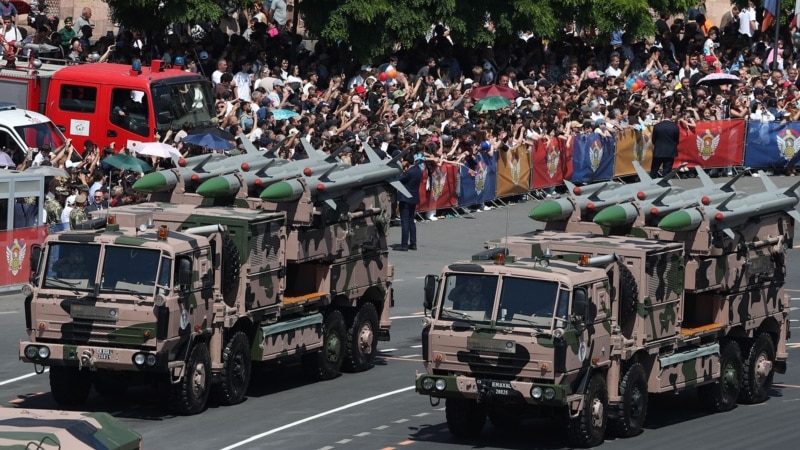
A flurry of landmark arms deals is reshaping Central Asia’s strategic landscape, as regional states leverage alternative defense suppliers to assert their sovereignty amid Russia’s waning dominance and an intensifying Sino-Indian rivalry. Indian Defense Secretary Rajesh Kumar Singh confirmed the export of India’s domestically developed Akash surface-to-air missile system to Tajikistan and Turkmenistan, multiple media […]

The post India’s Central Asia missile sales spark a new Great Game appeared first on Asia Times.

  •  

Bit by bit, the Taliban is losing control of Afghanistan

Five years after seizing Kabul, the Taliban’s strongest argument for international acceptance rests on control. The Taliban governs every provincial capital and faces no conventional army capable of marching on Kabul. It repeatedly cites improved security as proof that Afghanistan’s post-2021 order is settled. But armed resistance is becoming more geographically dispersed, more organizationally diverse […]

The post Bit by bit, the Taliban is losing control of Afghanistan appeared first on Asia Times.

  •  
❌