When Rudolph Diesel disappeared in 1913, many suspected foul play. The prime suspects were Germany’s Kaiser Wilhelm II and US oil man John D. Rockefeller. Both would have had reason to want the inventor of the diesel engine dead. The militaristic kaiser was building a diesel-powered submarine fleet. He had no interest in other countries […]
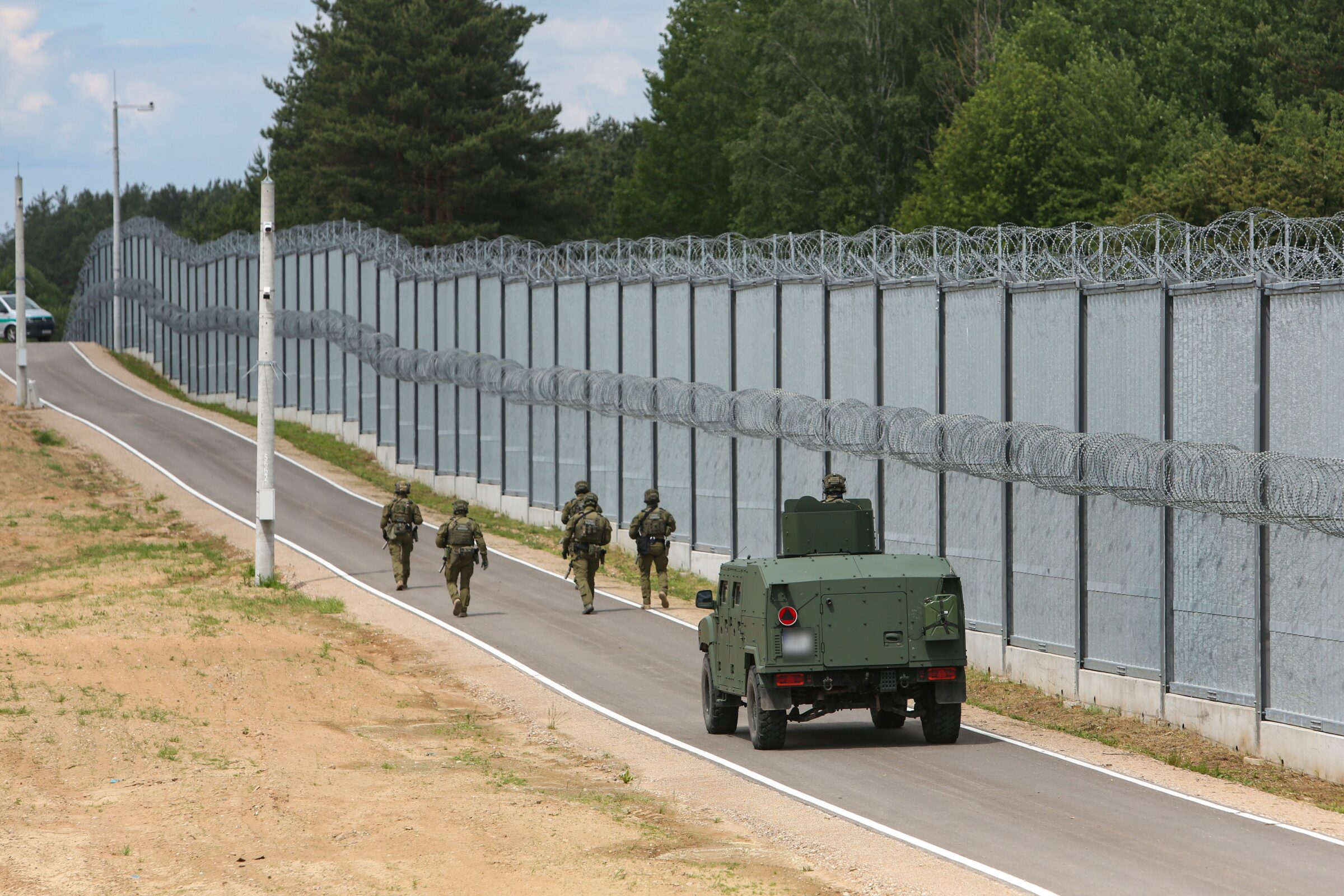
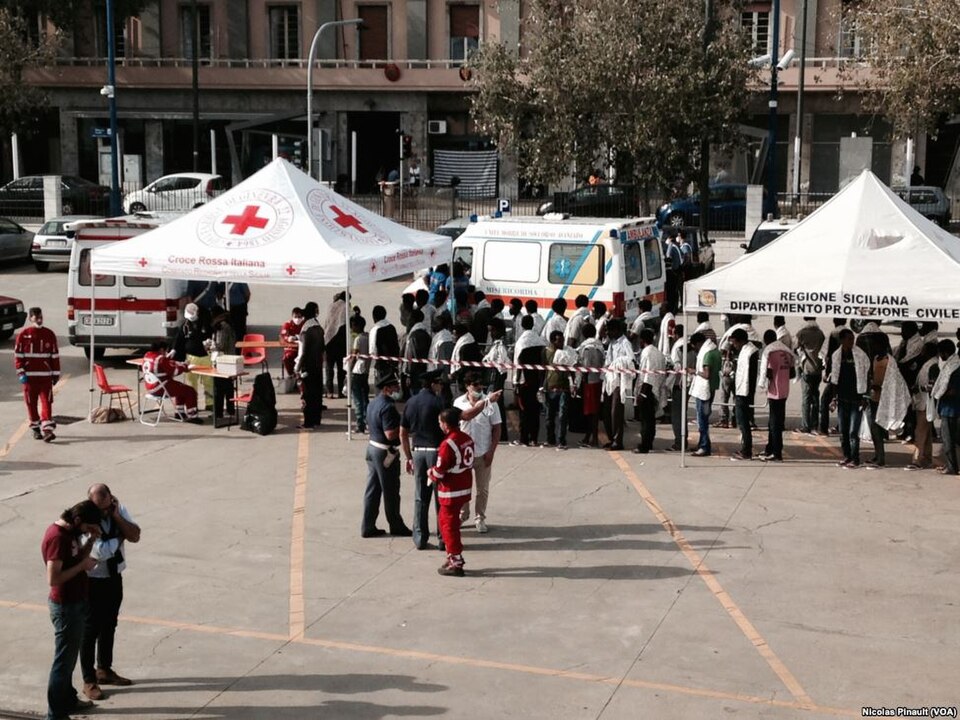
The European Commission says asylum seekers arriving at EU borders are now being screened, but it makes no mention of the independent rights monitors that EU law requires to oversee those procedures, even as spending on border surveillance surges.
“Screening of people arriving illegally and the border procedures are being carried out,” said European Commission president Ursula von der Leyen, in a letter addressed to the 27 heads of state and government meeting at an EU summit in Brussels on Thursday (15 October).
An annex to her letter, obtained by EUobserver, highlights broad outstanding issues when it comes to implementing new EU-wide asylum laws that kicked into force this past June.
This article continues, but the full version is available only to EUobserver.com subscribers. Visit account.euobserver.com/membership
When European Union leaders meet in Brussels later on Thursday (15 October), migration will be high on the agenda. Amid political panic — real and manufactured — over the events in Ceuta this summer, the European Commission has come out with a five-point plan promising more border surveillance and policing, more dodgy deals with countries outside the EU, and more deportations.
It also includes an ominous plan to devise a new “emergency response instrument” that could allow for the total suspension of access to asylum, which is likely to result in summary mass deportations, in situations when third countries are blamed for ‘instrumentalising’ migration movements.
That the idea is even on the table is a measure of how far the EU’s approach to migration has degenerated.
There is a jarring disconnect between commission president Ursula von der Leyen’s insistence on European values and the rules-based order and the willingness to throw the right to asylum out the window.
It is a short-sighted and dangerous hypocrisy that will harm women, men, and children at EU borders and potentially beyond if it encourages other states to adopt a similar approach.
If a 20-year-old man I interviewed in Ceuta in August were at the summit in Brussels, he might help guide the debate back to the realities of why people flee and seek safety, their needs and aspirations and hopefully toward a policy informed by shared humanity.
A Ceuta story
He told me he escaped from his village in Somalia in November 2024 when the Islamist armed group Al-Shabab attacked it. He went to Libya and spent six months detained in a smuggler’s warehouse in Kufra, where he said he witnessed many deaths from nightly beatings. He escaped, reached Morocco, and after months of hardship there saw his chance to seek safety on 31 July, when he swam to Ceuta.
It may well be that instrumentalisation played a role, among many other factors, in the arrival of more than 72,000 people there during two days at the end of July.
For many, the decision to cross may have been opportunistic and fuelled by disinformation on social media. Yet that cannot justify violence, summary returns, degrading treatment, or denying access to asylum procedures, in Ceuta or elsewhere.
Among the thousands who have remained in Ceuta are asylum seekers from strife-torn Somalia, Sudan, Yemen, Chad, and elsewhere.
Suspending asylum completely would not only thwart their chances to find protection. It would rupture the EU’s commitment to the rules-based international order in a profound way.
Rupture of rights
The right to seek asylum is embedded in the Charter of Fundamental Rights of the European Union and the related prohibition of refoulement — sending someone to a place where they face serious harm — is a red line through international human rights and refugee law.
The focus on deterrence and externalisation over the past decade – coinciding with the growing influence of the far-right in European politics – has arguably made this previously unthinkable option part of the conversation.
Both Greece (temporarily in 2020 and 2025) and Poland (continuously at its border with Belarus since March 2025) have suspended asylum without significant reaction from the commission or other member states.
The Crisis Regulation, part of the pact, already allows a member state to depart from normal border procedures and curtail important safeguards in a situation of mass arrivals and/or when a third country or hostile non-state actor instrumentalises migration. While the regulation causes concern about potential misuse and unjustified restrictions on access to asylum, it does not allow for wholesale suspension of the right.
A difficult situation was compounded by recriminations against Spain from other EU countries, exploitation by far-right groups, and neglect and hostility that led to people living on the streets, in the forests, and in makeshift huts on the beach in an apparent effort to compel them to go back to Morocco. It took Spain weeks to begin housing and registering people.
Spain did not invoke the Crisis regulation. Rather than adding new measures, policymakers should be wrestling with why it didn’t use supposedly tailor-made EU legislation and addressing how mismanagement and a finger-pointing lack of cooperation among EU states create an endless loop of crises that feed xenophobia.
EU leaders should keep sight of the people affected and basic principles at stake. They should reject approaches to migration that so clearly violate fundamental rights and normalise cruelty.
Eventually, death will come for me, as it does for everyone. My Christian faith helps me face that truth without believing I must control when it comes. Death will not have the final word. New York now offers people in circumstances like mine the ability to hasten that day. On Aug. 5, New York’s... Continue Reading
Now is not the time for the church to be discouraged; instead we must continue the good work to which God has called us. The church in every era has always grown weaker—and stronger—for all kinds of reasons, but through it all people of faith have always flourished and will continue to do so. ... Continue Reading
A recent ISEAS Fulcrum commentary by Hoang Thi Ha and Pham Thi Phuong Thao offers a useful mapping of how Chinese culture and economic opportunity are drawing in young Vietnamese. The authors are right that this bottom-up attraction is unfolding alongside renewed official promotion of people-to-people ties, and that long-standing sensitivities about China have not […]
“As we close the tap on Russian energy, we open the doors to a more diverse range of reliable suppliers,” EU energy commissioner Dan Jørgensen wrote in an op-ed for EUobserver this week.
“And these suppliers know that we are reliable buyers.”
One of those ‘reliable’ suppliers is the US, which provided 57 percent of the EU’s liquefied natural gas (LNG) last year and is on course to supply two-thirds this year, according to IEEFA.
Four out of five overseas gas cargoes arriving in the EU will be American by 2028, the think tank estimates. These expensive cargoes have kept coming in. But how reliable is that supply likely to remain?
US officials have already shown their willingness to use their gas dominance for strategic gain. In March, US ambassador to the EU Andrew Puzder threatened that Europe could lose its favourable access to American LNG if it tried to reopen the ‘Turnberry’ bilateral trade deal.
“In switching from Russia to the US, the EU has jumped from the frying pan into the fire,” Pascoe Sabido, a researcher at Corporate Europe Observatory, wrote in a comment under Jørgensen’s op-ed.
And recent developments prove his point.
This article continues, but the full version is available only to EUobserver.com subscribers. Visit account.euobserver.com/membership
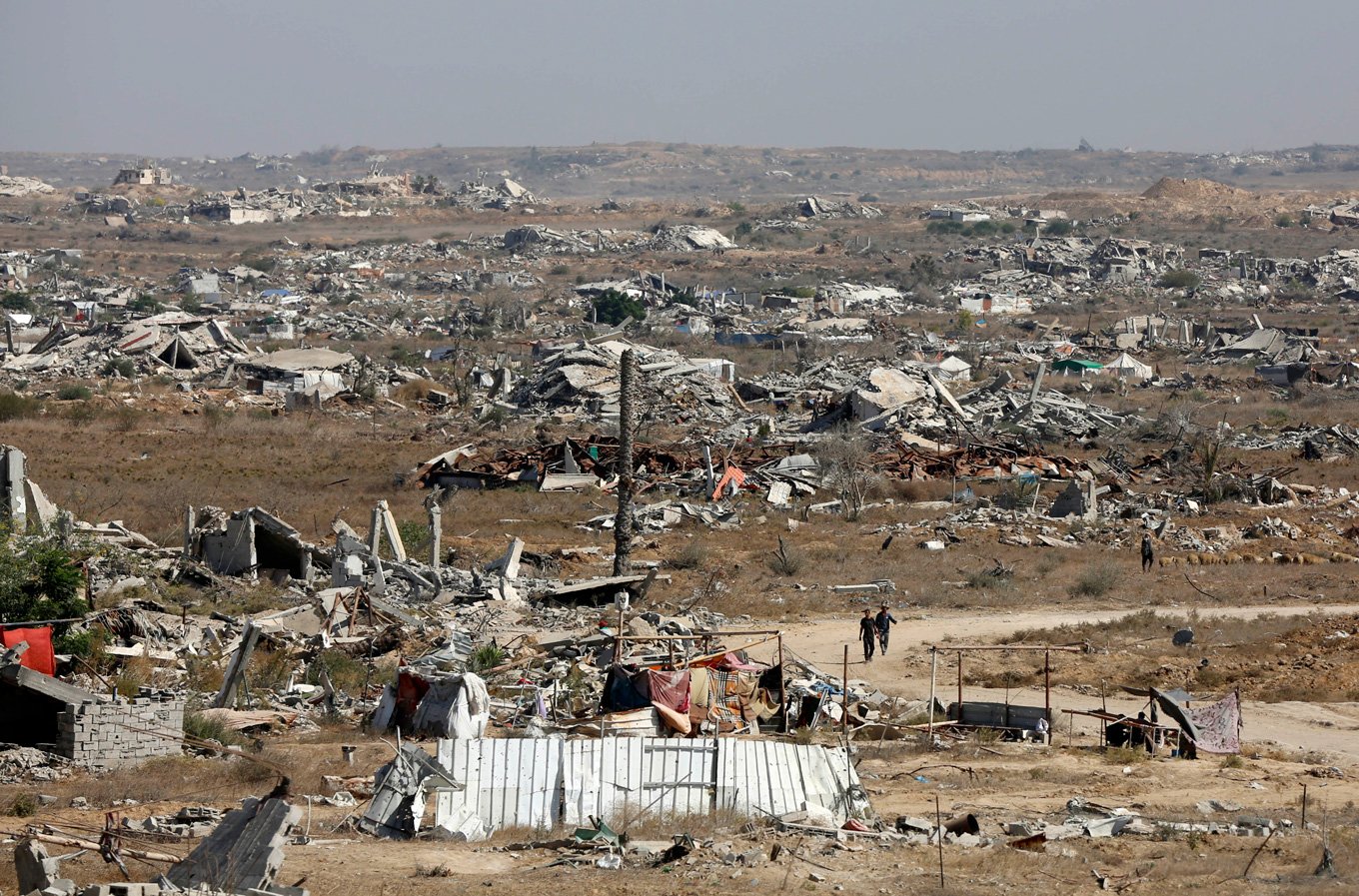
The European Union has continued its scientific cooperation with Israeli firms and institutions implicated in genocide and apartheid throughout Israel’s three-year old assault on Gaza. Such complicity must stop.
Israel has been associated with the €95.5bn Horizon Europe research and innovation programme (2021-2027), and, according to the European Commission’s detailed Horizon dashboard, the EU’s net contribution to Israel amounts to €1.02bn.
While much of the funding supports legitimate research, the programme also channels substantial resources to Israeli universities and companies, some closely connected to Israel’s military and security apparatus.
Pointing to just such EU-Israel collaboration, Francesca Albanese’s UN report “From economy of occupation to economy of genocide” published last year, estimated EU research funding to Israeli entities at over €2.12bn since 2014.
Horizon Europe funds collaborative projects and European Research Council grants.
But it is the European Innovation Council (EIC) and schemes which include the EIC Accelerator, the EIC STEP Scale-up and the Scaleup Europe Fund which are especially relevant to the question of EU complicity in Israel’s ongoing assault on Gaza.
Horizon Europe is formally limited to civilian research, but Israeli companies with links to Israel’s military and security establishment have received funding through these schemes.
In March 2026, for example, members of the European Parliament tabled a written parliamentary question asking the European Commission specifically about such companies including Sightec, an Israeli drone-navigation firm that received almost €2.5m through the EIC Accelerator and whose chief executive has described its technology as “combat-proven and deployed on over 3,000 drones in critical missions”.
The issue is not confined to overtly military applications. EU-funded civilian technologies can also serve Israel’s settler-colonial project.
Should European public money finance, for example, orange-harvesting robots that help Israel manage what it euphemistically calls a “labour shortage” in settlements built on occupied Palestinian land?
The EIC also goes beyond grants. Through the EIC fund, the EU can take equity in companies it supports; the new Scaleup Europe Fund is explicitly designed to make direct equity investments in strategic technology firms, and is open to companies based in countries associated with Pillar III of Horizon Europe, including Israel.
The EU can therefore not only subsidise Israeli technology firms but also acquire a financial stake in them and potentially profit from their future growth.
And it could get worse.
The EIC’s 2026 work programme expands the type of projects that can be funded by including ‘dual use’ applications that are both civilian and military.
This opens the door for the EU to fund nuclear-related Israeli projects although Israel is not a member of the European Atomic Energy community (Euratom).
But none of this is inevitable.
Next EU budget and credibility at stake
Israel’s association with the current Horizon Europe programme runs only until 2027 and the shape and scale of the EU’s next Horizon programme will be decided during ongoing negotiations on the bloc’s seven-year Multiannual Financial Framework (MFF).
There are also clear signs that Israel is likely to participate in the next Horizon programme (2028-2034).
Only a few weeks ago, Ekaterina Zaharieva, European commissioner for startups, research and innovation, met with the head of the Israel Space Agency, Shimrit Mama.
European Commission president Ursula von der Leyen and her team must ask themselves if the EU should be building an innovation architecture in which Israeli firms and state institutions, which are already deeply integrated into Israel’s military-industrial ecosystem, could receive European support for technologies explicitly framed as dual-use or defence-related.
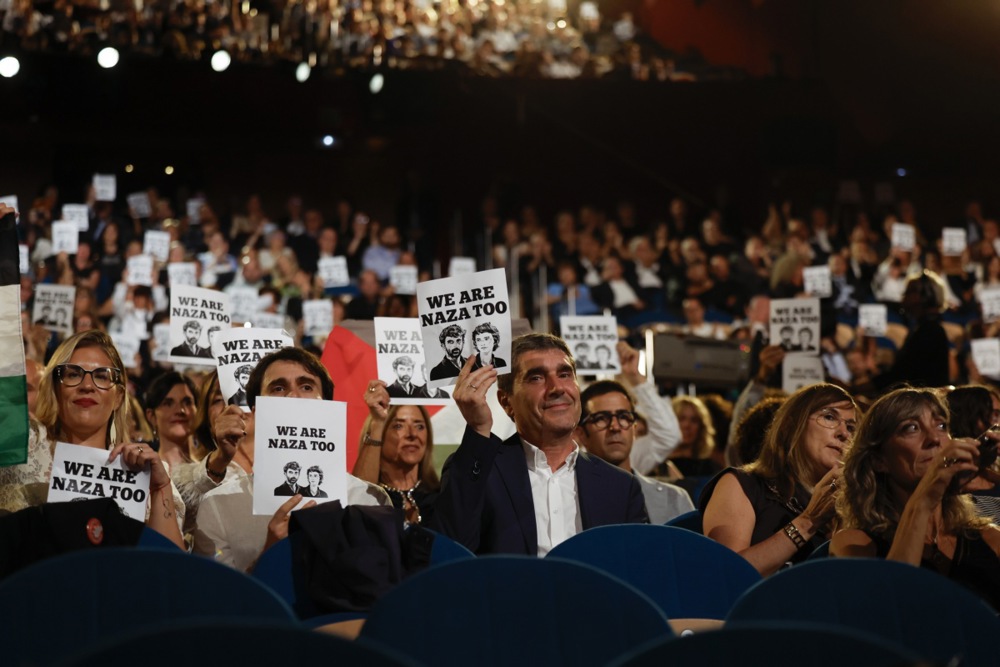
Are they comfortable with funding companies that help develop the type of violent technologies described in the award-winning documentary NAZA, which exposes the systems and AI technology used during the military campaign in Gaza?
Audience members hold signs supporting Yuval Abraham and Rachel Szor’s documentary Naza after it wins the European Film Audience Award at the 74th San Sebastian Film Festival in Spain, 26 September 2026 (Source: EPA/JUAN HERRERO)
Last year, under public pressure, von der Leyen proposed a partial suspension of Israel’s participation in Horizon Europe by specifically excluding Israeli entities from new EIC Accelerator grants and investment support.
The proposal was modest: it would have affected future funding only, not existing agreements, and covered roughly 20 percent of EU financial flows to Israel under the programme.
It required a qualified majority in the Council but did not secure the necessary votes. It is, however, technically “still on the table”, according to commissioner Zaharieva.
Nobel Peace Prize winner Navi Pillay concluded in 2025 that Israel’s actions have “consistently pointed toward a singular, harrowing objective – the destruction of Palestinian life in Gaza”.
The EU has done little so far to stop the genocide in Gaza and ethnic cleansing in the occupied West Bank, and arguably – through trade and weapons’ exports – is actually contributing to it.
Now the EU faces a clear choice. It can continue to fund, co-invest in and deepen research ties with an Israeli innovation sector increasingly oriented towards dual-use and defence technologies.
Or it can stand with the winner of the 2026 Nobel Peace Prize, draw a line and decide that there will be no Israeli participation in the next Horizon programme, no EU equity in Israeli firms, and no public money for technologies that may be used to sustain genocide, occupation, surveillance and war.
The credibility of the EU and the values it proclaims depends on the choice it makes.
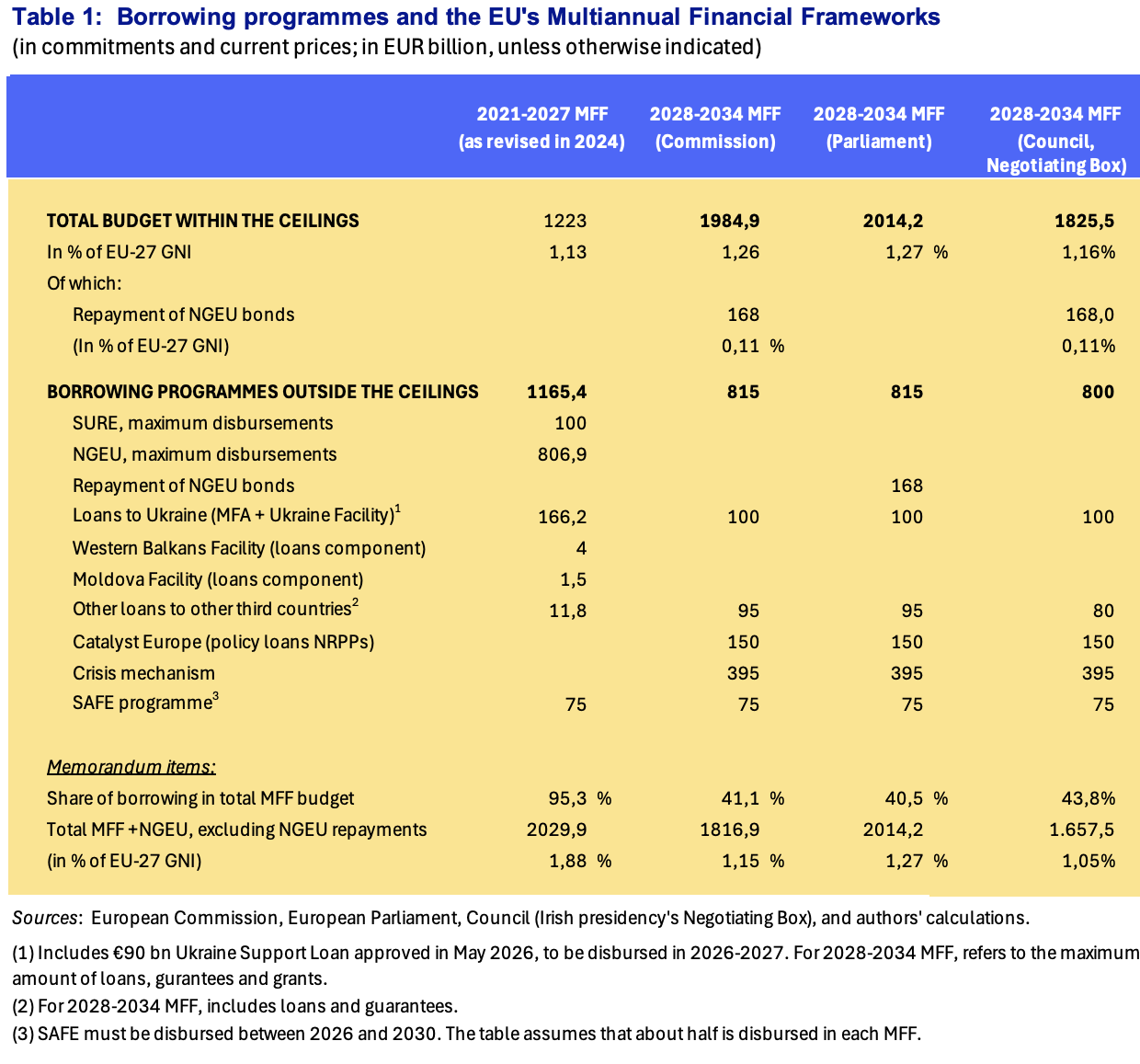
The Irish text, known in Brussels as the negobox, keeps all three of the commission’s borrowing programmes that sit outside the budget’s normal limits: Catalyst Europe, a €150bn lending facility; a crisis mechanism of up to €395bn for major unforeseen shocks; and support for Ukraine of up to €100bn.
Add loans for defence and lending to other non-EU countries and, by our estimates, joint borrowing could still equal around 44 per cent of the new budget, about €800bn at current prices, up from 41 per cent under the Commission’s proposal. The budget shrinks, but the borrowing hardly changes.
Ireland’s proposed budget is too small for Europe’s mounting common challenges, and its borrowing approach is too ad hoc and risky.
Excluding the distorting effects of NextGenerationEU (NGEU), the Covid recovery fund, the Commission’s budget proposal is already far smaller than the headline figures suggest, and Ireland’s proposal would make it smaller still.
That matters because, as the Draghi report argued, Europe’s shared challenges such as Ukraine, rearmament and competitiveness require European public goods because no single member state captures their full benefits.
A budget worth just over one percent of the EU’s gross national income (GNI) is a poor match for that responsibility.
By comparison, total government expenditure across EU countries comes to close to half of their combined GNI. Keeping most fiscal capacity at national level, while expecting such a modest EU budget to finance increasingly vital continental priorities, is a bad use of public resources.
A stronger common budget needs more of its own revenue, at least what the Commission proposes in its Own Resources Decision, which Parliament broadly supports and which would raise nearly €60bn extra a year.
The Irish plan’s acceptance of five new resources is encouraging. But it has to survive the negotiations, and the details of the final reform will decide whether it means anything.
The Council’s approach to common borrowing remains haphazard, lacking a permanent framework and relying on crisis-driven compromises. Governments may not like it, but a more European approach is coming, and the €800bn is likely to grow.
And a successor to SAFE, the EU’s defence loan scheme, is widely expected, since €150bn has proved far from enough for Europe’s rearmament.
France has just shown what it costs to borrow alone. Its yields recently hit a 24-year high, and the state now pays more to borrow than some major French companies. Sharing the effort through the common budget, including prudent joint borrowing, would help spread that risk.
Yet Europe has no clear, sustainable plan for borrowing. To date, EU governments have reluctantly signed up to each new borrowing instrument and called it an exception.
European borrowing capacity has been assembled one crisis at a time, starting with the euro area crisis and accelerating since the pandemic.
NGEU was accepted by fiscally cautious states as a one-off decision to deal with the Covid-19 emergency. Then the war in Ukraine and the need to fund rearmament produced new exceptions.
This year, EU governments used enhanced cooperation, a procedure that lets a subset of member states go ahead without the rest, to approve the €90bn Ukraine Support Loan, the EU’s largest foreign loan ever.
For defence, they reached for Article 122, the treaties’ emergency clause, to set up SAFE. Parliament, which felt sidelined, decided to sue the Council before the European Court of Justice.
There is a catch though.
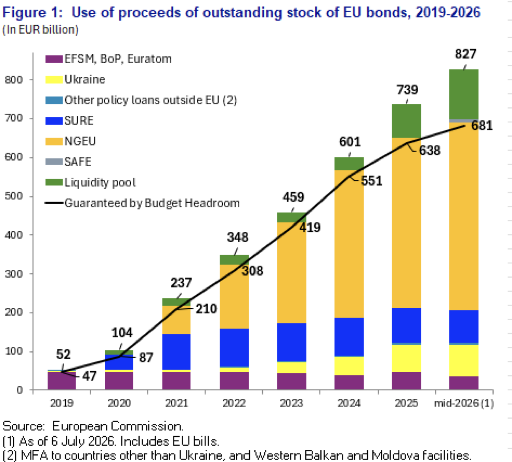
These exceptional programmes are guaranteed by the so-called budget headroom, the margin between the EU’s revenue ceiling and the spending limits in the seven-year budget, rather than by money set aside in advance.
In barely five years, headroom-backed exposure has climbed to €681bn (see Figure 1), 82 percent of all EU debt.
The European Court of Auditors has warned that if a Ukraine loan guaranteed this way goes bad, future EU budgets, and the national contributions that fund them, would have to cover the loss.
Frugals vs Friends of Cohesion
EU capitals remain divided over the new budget and over joint borrowing. Net contributors, sometimes referred to as the Frugal Six, want deep cuts in the commission’s proposal, argue that new common borrowing is not the solution and have misgivings about the creation of new own resources.
By contrast, a group of sixteen southern and eastern countries, that call themselves the “Friends of Cohesion”, are much more open to joint borrowing and back an approach closer to the Commission and Parliament on the budget and own resources.
Ireland’s plan largely reflects the influence of the frugal countries, yet one diplomat has already dismissed it as “not even close to a landing zone.”
Europe needs an ambitious budget, backed by at least the Commission’s proposed new own resources, so it relies less on national contributions based on GNI. Joint borrowing should become a permanent, predictable part of it, with safeguards.
First, it should fund loans, not grants, as the Commission suggests. Second, riskier exposures, especially to non-EU countries, should be at least partly backed by money set aside in advance, as the Court of Auditors recommends.
Where it makes sense, the headroom guarantee could be topped up with national guarantees in proportion to each country’s size, as under SURE, and like-minded partners outside the EU could sometimes take part.
Stronger capital at institutions such as the EIB, or at any future defence-financing vehicle, would also let Europe borrow more together without putting its creditworthiness at risk.
Governments should also consider deferring repayment of the NGEU bonds, as the Draghi report suggested, especially if the own-resources reform falls short. It would protect priority spending when it is needed most.
Sustained joint borrowing brings a bonus: more common safe assets in euros, which strengthens the euro’s international role. The demand is already there.
Wobbles in US bond markets, which partly reflect doubts about America’s fiscal health, its reliability as a partner and the dollar’s safe-haven status, give the euro an opening.
But it can only take it if EU governments put their own fiscal houses in order.
Ongoing tensions in the French bond market provide a clear warning. Putting France’s finances on a sustainable path would do more than reassure markets about the euro. It would restore French debt as a safe euro asset.
EU leaders meet on Thursday and Friday in Brussels. Whatever they discuss (and later decide) on the budget, Europe should keep borrowing together, and in large amounts.
The task now is to give that borrowing a coherent plan: a permanent framework, money set aside in advance and safeguards that cautious capitals can accept.
Anthropic, the maker of the Claude AI models, is preparing what could be the largest initial public offering in history, raising more than $100 billion, according to The New York Times, at a valuation near US$2 trillion. According to Reuters, which reviewed the draft prospectus (the document has not yet been made public), the company […]
Medicine can (and will) acknowledge that treatment has its limits. Families may decline further interventions and allow death by natural means. But there is a world of difference between eliminating suffering, ceasing medical treatments, and terminating the patient. The child never asked to die. Unable to speak, the child could not describe its suffering... Continue Reading
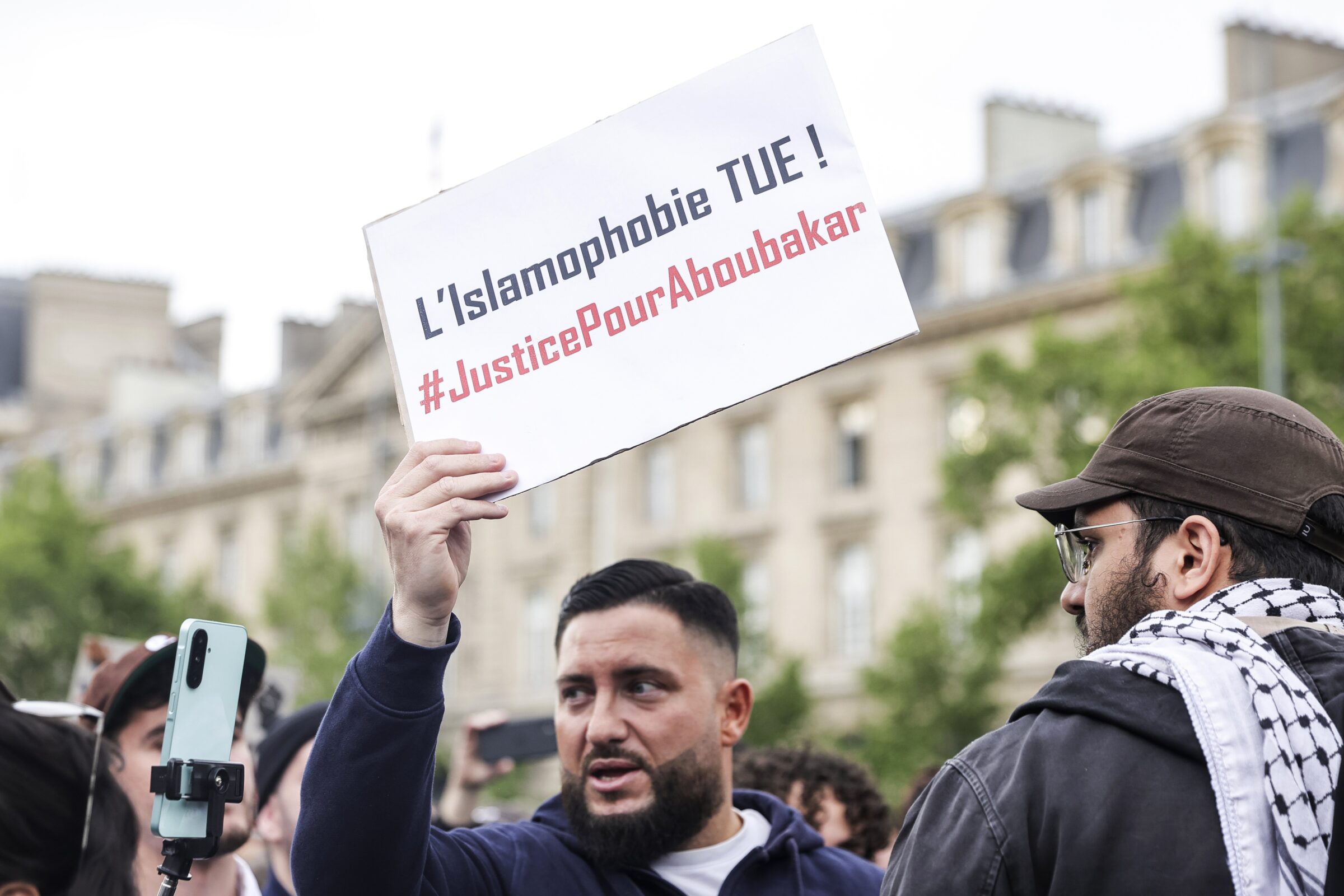
If the day should ever come where Islamophobia gets concrete legal backing in Europe, it could be soon.
The European Parliament (EP) just voted to “condemn the strategies of Islamist entryism” and to develop ways to disrupt Muslim political movements in a resolution on 8 October.
Some 381 out of 720 MEPs worry Muslims are seeking to infiltrate democratic institutions, weaken European rule of law, gender equality, and what they deemed “European values”.
And almost every one of the centre-right and rightwing MEPs in the house voted to surveil EU funding for anti-racism organisations, so as to ensure none of it gets into the hands of the Muslim Brotherhood.
The brotherhood is a transnational Muslim group founded in 1928 in Egypt, involved in religious revival, social welfare, and political activism.
But according to a French government memo from May 2025, as well as the EP resolution, it is guilty of “entryism”, to sabotage French democracy.
The EP resolution and French memo were dubbed “a political witch-hunt targeting racialised people – particularly Muslim, migrant and refugee communities” by academics and civil society, like the European Network Against Racism (ENAR).
The group called the EP motion “a stain” on the EU Parliament, belonging “within the tradition of discredited far-right conspiracy theories.”
ENAR is among those the EU has sought to defund, due to rightwing views that its work aligns with Islamist threats.
The Forum of European Muslim Youth and Student Organisations (FEMYSO), a pan-European anti-Islamophobic group, which also risks EU defunding, said it had faced “relentless targeting and demonisation.”
Young Muslims in Europe were being forced “to choose between their identity and their right to belong,” FEMYSO president Hiba Latreche told EUobserver.
And the EP “witch-hunt” resolution, which was drafted by the centre-right European People’s Party (EPP) group and authored by its French MEP, Céline Imart, comes at a bad time for this demographic.
Advocacy group Collective Against Islamophobia in Europe (CCIE) recently looked at 876 incidents of anti-Muslim hatred in Europe in 2025.
Four out of five incidents targeted Muslim women, 41 percent of which involved discrimination or violence linked to their headscarves.
Disturbingly, the documented episodes “occur predominantly in public or institutional spaces, highlighting the persistence of forms of institutional racism.”
But seeing as the EU Commission’s own anti-Muslim hatred group has been inactive since 2024, the prevailing view in Brussels appears to be that rampant Islamophobia in the EU is less of a problem than the imputed influence of a nebulous Islamic movement from Egypt, which is better known for providing social care to deprived communities, than aiming to overthrow French president Emmanuel Macron.
The EP motion did not legally bind the European Commission to propose new anti-Muslim Brotherhood measures.
But it did enforce a stereotype of Muslims “as acting in a nefarious, dangerous, anti-democratic manner, until proven otherwise,” said Omran Shroufi, a political science researcher at the Free University of Brussels.
Rightwing EU politics is pushing young European Muslims into a lose-lose, or Catch 22 situation.
The notion of “entryism holds Muslims to an impossible standard, where non-participation in public life is a sign of disinterestedness, a lack of civic duty and the growth of parallel societies, whilst active engagement in civic life is treated with suspicion,” Shroufi told EUobserver.
The centre-right EPP group used to represent a moderate EU mainstream.
But now it had joined with open racists on Europe’s far right to be “effectively calling for an institutionalised form of discrimination, where Muslim communities need to prove their European and democratic values – whatever these are supposed to mean – before being allowed a seat at a table,” Shroufi said.
“I’m okay.” That was the last message I sent my mother before an Israeli strike hit us, a group of seven journalists reporting in southern Lebanon.
Three years ago, on 13 October 2023, my colleague Dylan Collins and I headed to the southern border of Lebanon to cover the situation following cross-border shelling between Israeli forces and Hezbollah. We spent the morning filming UN peacekeeping force patrols along the blue line dividing Lebanon and Israel. The atmosphere was calm and nothing suggested that the day was about to change and upend our lives. We went to a coffee shop near a UN post where journalists from different outlets had gathered and there we met our friend and Reuters colleague Issam Abdallah.
Around 4:50PM, we heard a bombardment in a nearby town so we moved to an exposed hill in Alma Al-Shaab, where Al-Jazeera journalists Carmen Joukhadar and Elie Brakhya were positioned. Together with colleagues from Reuters, we were a group of seven journalists, all wearing press vests, reporting next to a car marked “TV”. We were clearly identifiable as press and spent about an hour filming while an Israeli drone hovered above us. At 5:57 I finished filing my photos and sent a message to my mother to tell her I was okay. Seconds later, I found myself on the ground, bleeding and screaming for help. Dylan rushed over with a tourniquet, but before he even had the time to put it, another strike hit.
Everyone disappeared and I was left alone, unable to move and the heat of the flames creeping closer to my face. I was terrified of burning alive, so I started crawling away with the camera still hanging from my neck and its strap tightening around my neck with every move. Two weeks later, I woke up from an induced coma with one leg missing, the other severely damaged, and Issam dead.
Not an isolated attack
What followed was as horrific and brutal as the attack itself and it didn’t stop there. What happened to us was not an isolated incident — for three years I watched journalists being killed in Lebanon and Gaza by Israeli forces in ways that felt painfully familiar.
In October 2024, Israeli forces struck a compound in Hasbaya where journalists were staying and killed media workers Ghassan Najjar, Mohammed Reda and Wissam Kassem, while they slept.
Human Rights Watch found no evidence of military activity at the site and concluded that the strike was deliberate and should be investigated as war crime.
Then in April 2026, journalist Amal Khalil was killed in southern Lebanon after an Israeli strike hit the building where she had taken shelter with her colleague Zainab Faraj, leaving both women trapped under the rubble. Investigations found that Israeli forces repeatedly obstructed rescue efforts.
Since our attack, dozens of journalists have been killed in Lebanon, and nearly 200 journalists have been killed in Gaza by Israeli forces.
Many have been mired by Israel with the same false allegations that they were “terrorists.” The dead can’t defend themselves against such accusations, but I survived and I can speak about what happened to us.
In June 2026 in an interview on France 2, Israel’s ambassador to France described the 13 October attack as a “mistake” saying that we were not targeted because we were journalists, but because Israeli forces had mistaken us for “terrorists.” The evidence tells a different story.
Five independent investigations by Agence France-Presse, Amnesty, Human Rights Watch, Reuters, and UNIFIL found no indication of fighters or military activity at the site, and no cross-border exchange of fire for more than 40 minutes before we were struck with a 120mm tank shell.
These investigations matter because they establish with certainty evidence beyond my own personal account.
What remains unanswered is who gave the order, who fired the double-tap strike, and why no one has been held accountable. These are basic questions that can be answered by Israel if they were sought by EU member states.
Three years on, Issam’s family and the survivors of this attack deserve to know: Who gave the order?
Evidence alone cannot deliver justice, someone must be willing to act on it. In the face of this attack, including the targeting of four of its own citizens on Lebanese soil, the Lebanese government has failed us.
Neither Lebanon nor Israel are party to the Rome Statute, meaning that the International Criminal Court does not have jurisdiction to prosecute those responsible for the attack.
In 2024, Lebanon approved a special declaration that would have allowed the Court to investigate war crimes committed after 7 October 2023, only to later reverse its decision for political reasons.
And now, making our legal path even more complicated, in June 2026 Lebanon signed a new framework agreement with Israel whereby Clause 13 commits both sides to cease “all hostile and adverse actions in international and legal fora.”
EU urged to act
I have no hope left that we will ever get justice for what we lost, but I will not rest before I know the names and faces of those responsible.
Our case is the most documented instance of Israeli forces targeting the press on record. The October 13 targeted attack was perpetrated by Israeli forces on a group of journalists clearly identifiable as press.
If we cannot get answers in the face of such overwhelming evidence, what does it mean for the hundreds of journalists killed by Israeli fire throughout the region for which there is no such evidence?
This is where the European Union must act. The EU has repeatedly said that journalists must not be attacked and that violations of international law must be met with accountability. Today, we demand actions not just words and statements. The EU must demand that Israel provide a full account of the 13 October attack, including who ordered, authorized and carried out the strikes.
For me, this is not an abstract question of foreign policy. Issam was my friend. I survived that attack with one leg missing. I know what it means when the people responsible for an attack are allowed to remain unnamed and unaccountable.
I am asking the EU not simply to stand with journalists in words, but to stand with us in action.
The EU has political, diplomatic, and legal leverage. It should use it. If Israel refuses to fully explain what occurred and disclose those responsible for killing and maiming journalists who were visibly identifiable as press, EU member states should use every available mechanism to pursue accountability, including further targeted sanctions or suspending trade with Israel.
I refuse to believe that a military with advanced surveillance could have simply mistaken us for fighters and attacked us in a double-tap strike, a tactic repeatedly used by Israel in this war. But, if that’s truly what happened, then Israel must still answer for how such incompetence and failure was possible.
For now, justice evades us, but the truth of who gave the order is within reach and we must demand it.
Famous Indian author Shashi Tharoor was famously quoted as saying: “Everything in India is recycled, even the dreams “ In October 2010, The Economist ran a cover titled “How India’s growth will outpace China,” citing India’s young population, dynamic private sector and a strong democratic system as advantages over China’s state-led model. The IMF projected […]
When Donald Trump went to Joint Base Andrews on September 23 to greet Xi Jinping in person, strategic analysts took notice. American presidents rarely wait on the tarmac for visiting foreign leaders unless they want to say something. The gesture was not a scheduling quirk or a show of personal warmth. It signaled that Washington […]
Getting co-decision powers on the budget, finally enshrined in the Lisbon Treaty after more than a decade of inter-institutional battles, was one of the European Parliament’s big wins.
The challenge facing MEPs in the coming months is whether they are really going to use those powers on the 2028-34 budget.
The early signs are that they are spoiling for a fight. The Irish government’s compromise proposal tabled on Saturday (10 October) – an 8 percent cut worth €141bn to the European Commission’s spending plan – isn’t exactly butchery.
But it does display a startling lack of ambition, in particular on the raft of ‘own resources’ proposed by MEPs to make the budget process less vulnerable to member states wanting to reduce or at least freeze their annual contributions
This time round, MEPs have proposed a digital services levy, an online gambling levy, and a levy on crypto-asset capital gains.
Put together the parliament reckons that these new taxes could bring an additional €30bn to the EU’s budget, on top of the €57.4bn that the EU commission believes can be raised from other levies, such as the emissions trading scheme and the carbon border levy.
This article continues, but the full version is available only to EUobserver.com subscribers. Visit account.euobserver.com/membership
A lethal plume of toxic smoke was blowing towards us from a blaze at a battery manufacturing plant in Kaliningrad.
Troops in the Russian exclave had been ordered to help put the fire out: untrained and under-equipped, they mutinied. Terrified civilians were thronging the borders.
The Kremlin, oblivious to the unfolding humanitarian and environmental catastrophe, blamed the West for sabotage and incitement, and demanded a transit corridor across Lithuania.
The crisis scenarios were hypothetical; the aim was to explore the dilemmas and trade-offs they created. (You are the Lithuanian government. Do you let the mutineers in? Or leave them to be massacred?)
The games-master provided regular “injects” – new developments – such as ill-written social media posts from US president Donald Trump. He blamed the authorities in “Lithvastonia” for having started the fire in “Kaliningradia”.
An amusing parody, we thought. A few hours later, the real US president published news of his deal with Russian president Vladimir Putin on sanctions-busting diesel imports, then blamed Ukraine for being invaded.
Not so amusing, especially for our Ukrainian participant, a senior military commander there.
As we were leaving (us to safety, him to danger), news broke that Russia is stepping up its assassination attempts in Europe, targeting defence industry bosses (and perhaps Polish politicians). Our scenarios seemed tame in comparison.
This article continues, but the full version is available only to EUobserver.com subscribers. Visit account.euobserver.com/membership
Poor Donald Trump. For the last 21 months he had to do a great deal of lying. He had to pretend at times that he really cared about the people dying in the Russo-Ukraine War, that he really wanted a deal that was good for Ukraine, that he was getting frustrated with Vladimir Putin, and […]
The most unsettling failure in digital payments may not be a black screen. Imagine a fraud-detection model that remains online but suddenly flags thousands of legitimate transfers as suspicious. Banks may see functioning servers while customers see rejected payments, delayed salaries and complaints no single institution can explain. This is a hypothetical scenario, not a […]
I write from Dubrovnik, a historic and heavily touristed city on Croatia’s Adriatic coast. Visiting here and other parts of Croatia and its next-door neighbor Slovenia, I’m reminded that the Balkan countries used to be part of a bigger entity called Yugoslavia. Before that, some of the Yugoslavian countries were part of the Austro-Hungarian empire, […]

 Login