A Madeira acolhe, pela primeira vez em Portugal, uma edição, a 28.ª, do Spirits Selection by Concours Mondial de Bruxelles, um dos mais prestigiados concursos internacionais dedicados às bebidas espirituosas. O evento, organizado na Região pelo IVBAM, realiza-se entre 16 e 18 de outubro, na Sala Funchal do Pestana Casino Park Hotel. O presidente do […]
A Igreja de São João Evangelista (Colégio), no Funchal, recebe esta sexta-feira, 16 de outubro, às 21h30, o concerto inaugural da 15.ª edição do Festival Internacional de Órgão da Madeira (FIOM), protagonizado pelo organista Alexander Paine, com o programa “Sobre os Ombros de Gigantes – Homenagens Musicais”. O Festival, uma vez mais da responsabilidade da […]
A Universidade da Madeira criou recentemente o Grupo de Investigação em Ciências Humanas: Textos, Imagens e Comunidades (HUM-TIC), afeto à Faculdade de Artes e Humanidades. Este Grupo pretende afirmar-se como um espaço de reflexão interdisciplinar e de investigação. Entre 2026 e 2029, o HUM-TIC definiu três eixos temáticos fundamentais de investigação científica: (1) corpo, idade […]
Têm amanhã início as cirurgias ortopédicas com recurso a robô, no Hospital Dr. Nélio Mendonça. Dia em que se assinala a entrada em funcionamento do sistema Mako SmartRobotics no Bloco Operatório Central do Hospital Dr. Nélio Mendonça, um investimento de cerca de 1,6 milhões de euros. A apresentação deste novo robô cirúrgico para a Ortopedia […]
A Junta de freguesia de São Pedro em parceria com a Polícia Judiciaria promoveu esta quinta-feira uma conferencia intitulada “Burlas Informáticas – Desconstrução e Prevenção”, uma conferencia a cargo do Inspetor Chefe Vitor Rodrigues. Esta conferencia, teve como público-alvo a população mais sénior de São Pedro tendo o Inspetor alertado e sensibilizado os participantes para […]
O Sindicato dos Trabalhadores em Funções Públicas e Sociais do Sul e Regiões Autónomas, Delegação da Madeira, apela à participação de todos os trabalhadores da Administração Pública e do Setor Social na Manifestação Nacional que terá lugar no Funchal, no próximo dia 17 de outubro, pelas 10h00. Esta manifestação assume particular importância num contexto marcado […]
A Secretária Regional de Inclusão, Trabalho e Juventude, Paula Margarido, participa amanhã, sexta-feira, 16 de outubro, pelas 18h30, na sessão de encerramento da iniciativa «Conversas em Rosa: Tertúlia ao Entardecer, pela Consciencialização do Cancro da Mama», que decorrerá no Pátio | Brunch & Bistrô, situado no Museu de Fotografia da Madeira – Atelier Vicente’s, no […]
O Congresso Internacional de Educação Artística 2027 desafia profissionais, docentes e investigadores a apresentar comunicações, pósteres e oficinas práticas até 10 de novembro. O encontro decorre de 4 a 6 de março, no Funchal, com participação presencial e à distância. O Conservatório – Escola das Artes da Madeira, Eng.º Luiz Peter Clode, em coorganização com […]
A Câmara Municipal do Funchal, aprovou, hoje, a alteração orçamental que permite alocar verbas, já este ano, mas também para o próximo, ao programa municipal de renda acessível. São dois milhões de euros. 500 mil em 2025 e um milhão e 500 mil, no próximo, como deu nota o presidente da autarquia. Jorge Carvalho adiantou […]
A Câmara Municipal de Câmara de Lobos vai atribuir 11 mil euros em prémios a 22 estabelecimentos de ensino e instituições do concelho distinguidos com o Galardão Bandeira Verde, no âmbito do programa Eco-Escolas. A iniciativa parte da autarquia, que pretende reconhecer o empenho da comunidade educativa e dar novo impulso aos projetos ambientais, num […]
O diretor regional das Comunidades e Cooperação Externa, Sancho Gomes, participou esta quinta-feira, em Barquisimeto, na terceira Gala “Madeira Solidária”, uma iniciativa promovida pela Academia do Bacalhau, com o apoio do Governo Regional da Madeira, destinada à angariação de fundos para apoiar as famílias portuguesas e madeirenses afetadas pelos sismos que atingiram a Venezuela, a […]
O Representante da República para a Região Autónoma da Madeira, Juiz Desembargador Paulo Barreto, recebeu em audiência, no Palácio de São Lourenço, o Comandante das Forças Terrestres, Tenente-General Luís Monsanto.
A Direção Regional de Estradas torna público que por motivo de trabalhos no túnel da ER116 (VE3), túnel da Pontinha, o trânsito será encerrado no dia 20/10/2026, das 00h00 às 06h00. Atendendo às alterações de operacionalidade que este encerramento acarreta, a Direção Regional alerta os utentes para a necessidade de cumprir a sinalização instalada no […]
O secretário regional da Economia e presidente da Invest Madeira, José Manuel Rodrigues, acompanha a participação de cinco empresas madeirenses no Salon International de l’Alimentation (SIAL) Paris 2026, que decorre de 17 a 21 de outubro, no Parc des Expositions de Paris-Nord Villepinte. Promovida pela Invest Madeira, entidade sob a tutela da Secretaria Regional de […]
O Conselho do Governo reunido hoje, dia 15 de outubro de 2026 resolveu autorizar a celebração de um contrato-programa com a Sociedade Metropolitana de Desenvolvimento (SMD), destinado ao financiamento do projeto de revitalização das infraestruturas e equipamentos do Fórum Machico, até ao montante máximo de 1.422.693 euros. A decisão, aprovada pelo Executivo madeirense, estabelece os […]
Várias viaturas que estavam estacionadas nos arredores do Tribunal de Santa Cruz foram alvo de furto de combustível. Alguns dos automobilistas só detetaram o furto quando chegaram ao carro e depararam-se com a tampa do combustível aberta ou danificada.
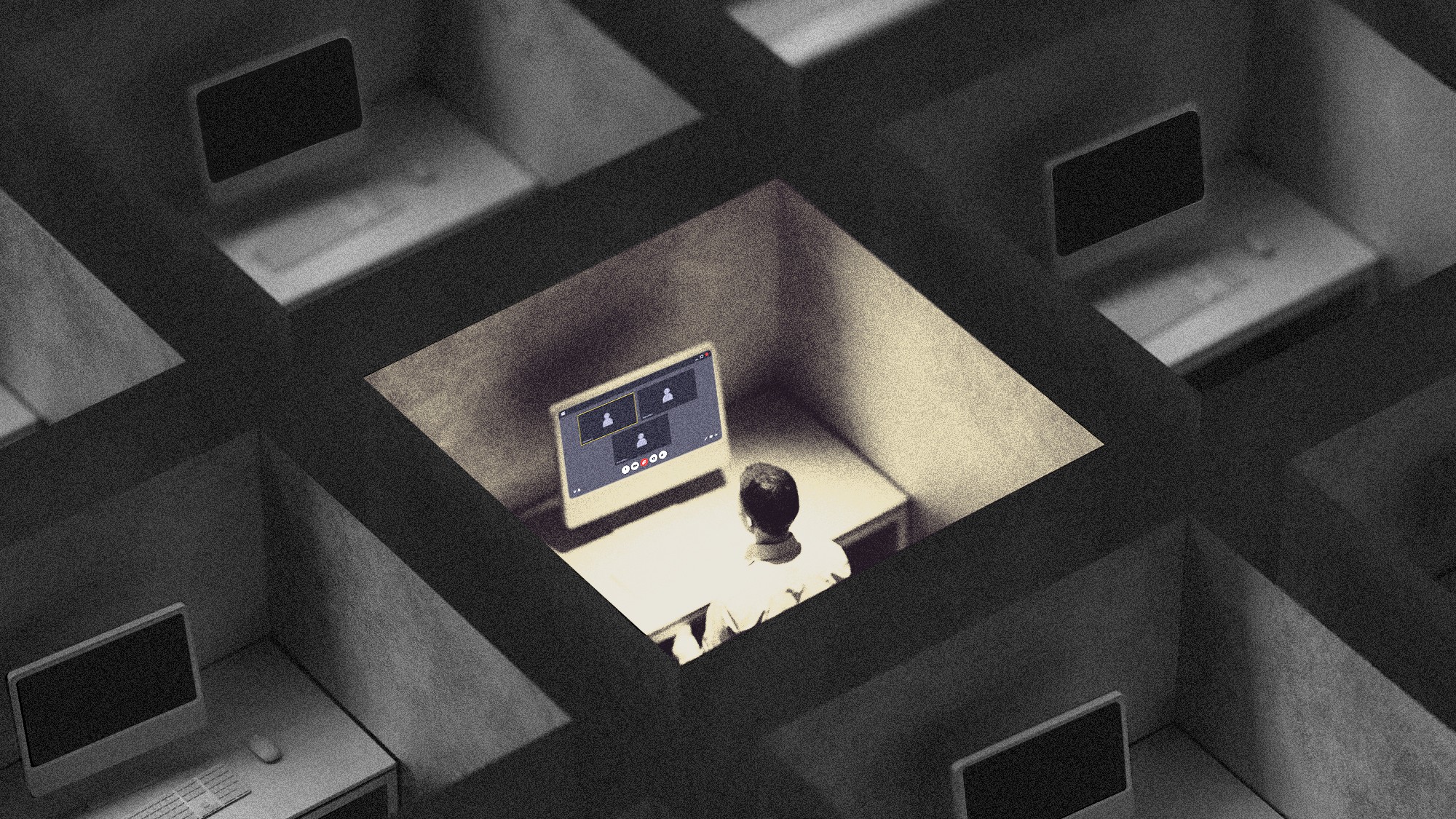
Home Depot, Instagram, Fidelity, and TikTok are just a few of the companies that have recently ordered their employees back to the office five days a week, part of a broader shift toward stricter return-to-office mandates. Such policies cut down on working from home, yet they don’t always cut down on remote work. Many employees now commute to the office only to spend each day on video calls with colleagues who are elsewhere, or even down the hall. They’re in the office but still working remotely.
We are two economists who have spent years studying how remote work shapes learning, productivity, happiness, and career progression. We have been struck by how often people picture the alternative to working from home as an office where nearly everyone is together. The modern office looks very different from that ideal. Today, the alternative to working from home is often working in a sea of mostly empty cubicles.
In a September survey of 1,835 college-educated American workers, we found that, on their most recent day at the office, more than 70 percent of respondents had at least one member of their team who was not in the building with them. As a result, roughly half of respondents had no fully in-person meetings. And more than a third had exclusively online meetings because their teams moved meetings entirely online whenever anyone was remote. For these workers, the commute to the office buys little more than a different background on their video calls.
The commute is costly. The typical American spends 54 minutes getting to and from work in a day, which they rank among their most hated activities. Yet when colleagues are actually together, this commute can be worth it.
In-person connection often unlocks the best parts of work. It sparks creativity; in an experiment published in Nature, pairs who brainstormed in person came up with about 14 percent more ideas than those brainstorming online. Face-to-face work also boosts mentorship, increasing the comments that people receive on their work by about 20 percent. Perhaps as a result, people consistently do better work when face-to-face with their colleagues and rate this work as more meaningful than work done alone.
But these benefits are fragile. In our research, we find that having just one distant teammate weakens the connections among those sitting side by side, as team meetings move partially or fully online. Thus, any exposure to remote work in the office eliminates many benefits of the commute.
Working remotely from the office has become so common because we have yet to shed two remnants of the pandemic era. The first is sprawl: Teams stretch across multiple locations. A typical team might have, say, a few employees who work in the same city, a couple who are fully remote, and one who works in a satellite office far away. So even if every teammate were in their office, the team meeting would still be largely online.
During the lockdown, distance didn’t matter for jobs that could be done over Zoom. Many companies hired people far from their team’s central hub, and allowed existing employees to move farther away. In our analysis of data from one Fortune 500 firm, about 60 percent of corporate employees had at least one distant teammate after the pandemic, up from 20 percent before. Among small businesses, the distance between employees and the central office nearly tripled from 2019 to 2023, driven in large part by employees who live too far away to regularly commute to work.
Many companies have simply accepted this geographic sprawl. If a team is already dispersed, managers may see nothing wrong with hiring a candidate in Detroit even though the team’s center of gravity is in Denver. Our analysis finds that job posts among Fortune 500 firms now list multiple possible office locations five times as often as a decade ago.
Bad habits are another remnant of the lockdown. During COVID, many workers became accustomed to focusing on their own to-do list and churning through more tasks in less time. Now many still view in-office interactions with colleagues as distractions from their work. As they see it, going to the office means they spend time commuting just to lose more time chatting. That view misses the potential for these conversations to spark new ideas, propel others’ growth, and improve the quality of their work.
Consequently, many stay home as much as they can get away with. Our analysis finds that the typical worker commutes in one fewer day than companies require: Ask for four and you get three. This might not sound like such a big deal, but on any given day, someone is likely staying home and causing their on-site peers to be on Zoom calls.
When one person fails to show up, the office has less of a draw for the rest of the team. This is especially true for managers; if the leader stays home, the rank and file often follow suit. Pretty quickly, the people who initially followed the rules start to skip the commute too.
Even when people do go into the office, many send out Teams or Zoom links rather than moseying over to a conference room. On their most recent day in the office, 52 percent of workers with meetings had at least one held online even though all the participants were in the same building. Skipping the schlep to the conference room can feel efficient. But this convenience cuts out the small moments that create deeper connections: the chat before the meeting starts, the debrief on the way back to your desk.
Rolling back this trend of working remotely from the office feels Sisyphean. Reuniting colleagues who have scattered to the four corners of a Zoom screen seems impossible. And showing up in a conference room feels pointless when the other participants are a few doors down on their laptop. Mandating more time in an office has neither ensured that colleagues go to the same office nor that they meet in person rather than online. The result is that bringing people back to the office often relocates—rather than reduces—remote work.
But an isolated workday doesn’t have to be the new norm. Companies could regather teams, by paying remote workers to relocate and refocusing hiring on each team’s central hub. When recongregating is impractical, they could hold regular off-sites. Companies could revamp performance reviews to reward the things that happen best in person: the creative breakthroughs, the mentorship moments. That way, conversations with co-workers would feel like essential parts of work rather than distractions from the solo tasks that people could do faster from home. Not every workday has to be in the office. But ensuring that in-office days are in-person days could make work feel more human.

 Login