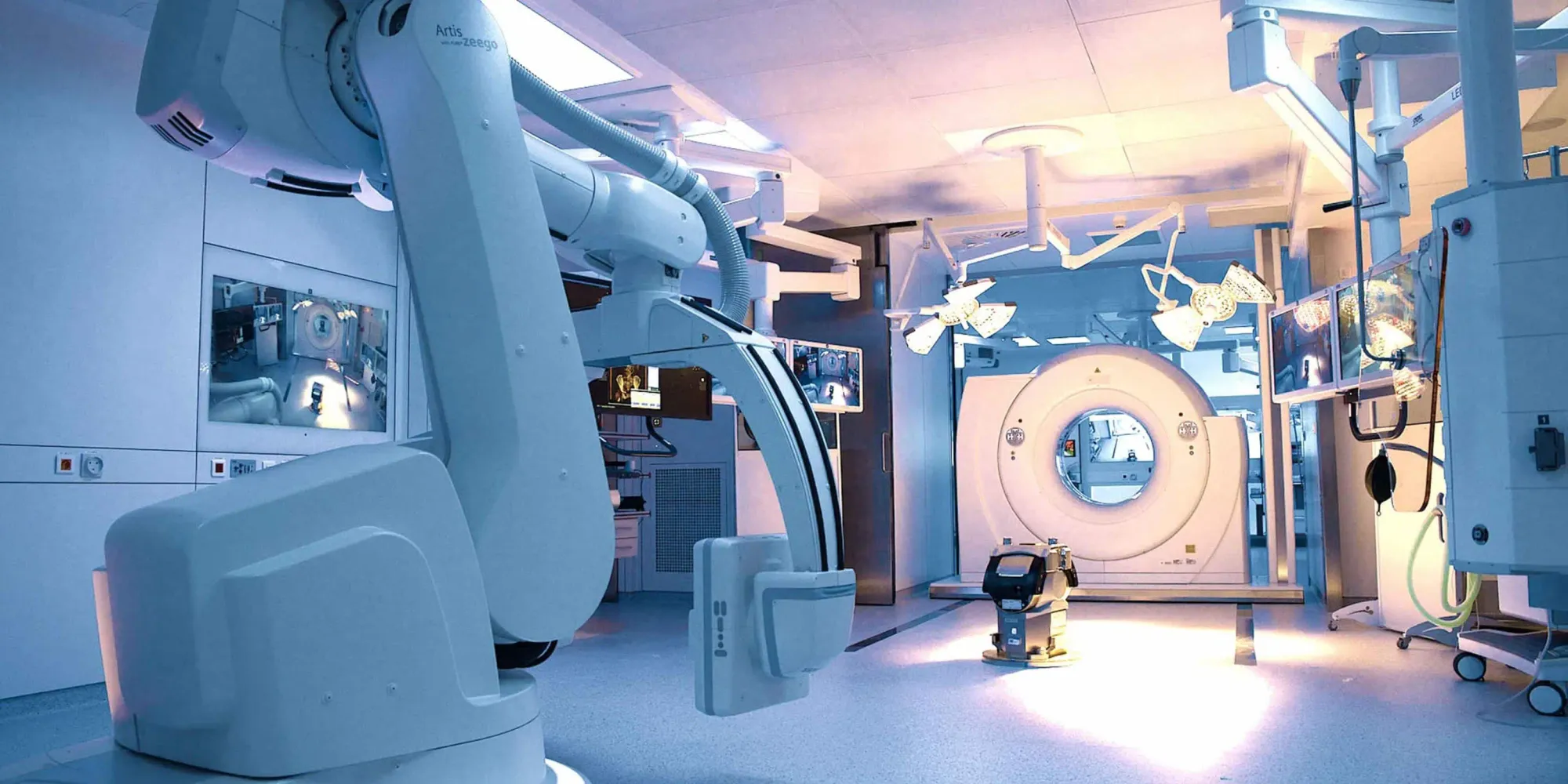
Le 12 octobre 2026, Gabriel Weisser, proche d’un patient atteint d’un cancer, a déposé plainte contre X auprès du procureur de Strasbourg pour « mise en danger de la vie d’autrui et omission de porter secours ». Pour mémoire, en mars 2025, quarante-trois patients de l’IHU de Strasbourg ont vu leur scanner annulé. Selon le rapport Igas-Igesr : l’IHU est suspecté d’avoir annulé des examens sur des patients cancéreux et donné la priorité à la recherche sur des cochons. Le rapport définitif, remis en décembre 2025, est resté confidentiel dix mois.
LE COURRIER DES STRATÈGES
Restez libre !
LA NEWSLETTER · GRATUITE
Le Courrier, chaque matin.
L'essentiel de l'actualité, passé au crible par les cinq plumes du Courrier. Dans votre boîte, chaque jour ouvré.
Gratuit. Vous restez libre de partir quand vous voulez.
Dans un établissement voué à l’innovation médicale, la recherche ne devrait jamais devenir une justification à l’effacement des patients. Or, à Strasbourg, les circonstances de l’annulation de dizaines d’examens destinés à des malades du cancer soulèvent une question élémentaire : qui doit répondre lorsque l’organisation d’un service hospitalier empêche l’accès aux soins ?
LE COURRIER DES STRATÈGES
Restez libre !
ABONNEMENT
Allez au fond des choses.
Deux grands formats par jour. Les cinq plumes du Courrier. La série Sécession, le dimanche.
Selon les conclusions du rapport définitif de l’Inspection générale des affaires sociales (Igas) et de l’Inspection générale de l’éducation, du sport et de la recherche (Igesr), remises en décembre 2025, l’Institut hospitalo-universitaire de Strasbourg présentait « de nombreuses irrégularités dans l’organisation de l’établissement ».
Les faits remontent à mars 2025. Un courriel interne daté du 14 mars demandait l’annulation de tous les scanners prévus ce jour-là, faute de manipulateurs disponibles. Quarante-trois patients ont été concernés, les professionnels étant mobilisés sur des recherches menées sur des cochons pour le compte d’entreprises privées.
Le 12 octobre 2026, Gabriel Weisser, proche d’un patient atteint d’un cancer, a saisi le procureur de la République de Strasbourg d’une plainte contre X pour « mise en danger de la vie d’autrui et omission de porter secours ». Il s’agit d’une plainte, et non d’une condamnation : la justice devra déterminer les responsabilités éventuelles.
LE COURRIER DES STRATÈGES
Restez libre !
TELEGRAM · L'INFO EN CONTINU
Entre deux éditions, le fil.
La newsletter vous donne le matin. Le fil vous donne l'instant.
Recherche privée, personnel réduit et pression sur les salariés
Le professeur Christian Debry, directeur de l’IHU, conteste l’idée d’un arbitrage entre recherche et soins. Il a notamment invoqué un risque d’absentéisme parmi les manipulateurs. Mais l’équipe d’imagerie serait passée de quatorze personnes à seulement trois ou quatre, une évolution qui pose la question des moyens humains et de la capacité de l’établissement à assurer ses missions.
Un autre élément interpelle : dans un courriel du 10 juin 2025, la direction rappelait au personnel son devoir de confidentialité et évoquait un licenciement en cas de prise de parole dans la presse. Cette consigne, rapportée dans le dossier, nourrit les interrogations sur la liberté d’alerte au sein de l’établissement.
LE COURRIER DES STRATÈGES
Restez libre !
TIPS · SANS ABONNEMENT
Offrez-nous un café.
Un média libre vit de ses lecteurs. Un pourboire ponctuel, sans compte ni engagement, quand le cœur vous en dit.
Vous donnez ce que vous voulez. Vous restez libre.
Cette affaire montre ce que devient un hôpital public lorsque la recherche contractuelle, rémunératrice, côtoie des soins en sous-effectif : la tentation de sacrifier le malade, qui ne rapporte rien à l’heure, à l’industriel, qui paye. Nénamoins,pour l'heure rien ne prouve encore que ce fut le cas ; c’est précisément ce que l’enquête devra établir. Dans un système où l’État est à la fois financeur, régulateur et juge de ses propres établissements, ce sont les citoyens qui doivent s’improviser.
Ne manquez pas nos vidéos exclusives gratuites
Si vous voulez voir les vidéos exclusives de décryptage, rejoignez notre chaîne Telegram gratuite en cliquant sur ce lien :
“Turbo-Cancer” in the Lung of Pope Leo XIV, a Promoter of COVID Vaccines
On Tuesday, October 13, Pope Leo XIV underwent surgery to remove a portion of his lung due to a tumor; in previous years, he had been a leading advocate of the COVID vaccination campaign, describing it as an “act of love.” Relying on information disseminated by the medical establishment, the then-bishop did not hesitate to spread the falsehood that mRNA Covid gene serums could limit transmission, a claim refuted from all quarters, most recently by the Florida Attorney General’s lawsuit against Pfizer, and previously by the authoritative journal *Science*.
Is there a faint possibility that, following his serious illness, a Christian like the current Pontiff—innately inclined to acknowledge and repent of his errors—might be ready to question the dangerous “Vaccine God” narrative?
This narrative was upheld by the Vatican to avoid defying the New World Order—comprising friends and profiteers of Big Pharma—during the SARS-CoV pandemic, a virus treacherously engineered in a laboratory.
If, as the Gospel states, Jesus Christ is the “way, the truth, and the life” (John 14:6), how do the Pope and the cardinals have the audacity to refrain from questioning the science to which they bowed?
Unfortunately for him, the Pope had to experience firsthand a highly probable adverse reaction to the very vaccines he had so imprudently and brazenly promoted
Autoimmune Pulmonary Conditions and “Turbo-Cancer”: Typical Adverse Reactions to Covid Vaccines
Yet, the health updates regarding Pope Leo XIV’s medical conditions echo with a sense of terrible nemesis, as they evoke two pathologies long listed among the most serious side effects of mRNA gene therapies:
Having made this long and inevitable preamble, let us look at what the Holy See’s official bulletin reports regarding the health issue facing the Bishop of Rome, Robert Francis Prevost.
Pope undergoes surgery at Gemelli; lower lobe of right lung removed
“In a procedure lasting approximately 90 minutes—which was successful and free of complications, Pope Leo XIV had the lower lobe of his right lung removed; an intraoperative histological examination confirmed a diagnosis of pulmonary adenocarcinoma. The anticipated medical bulletin containing news on Pope Leo’s health arrived in the evening at 9:53 PM (Occtober, 13), just over two hours after the surgery performed this afternoon, October 13, at the Gemelli Policlinic,” writes Vatican News.
The medical bulletin
“In the bulletin released by the Holy See Press Office, Dr. Luigi Carbone—Director of the Directorate of Health and Hygiene for Vatican City State—and Professor Margaritora announced: ‘This afternoon, the Holy Father underwent the scheduled thoracic surgery. To ensure a radical resection, the lower lobe of the right lung was removed using a video-assisted technique. An intraoperative histological examination confirmed the diagnosis of pulmonary adenocarcinoma, as had been suspected based on pre-operative tests,'” the Vatican news site adds.
“The Holy Father,” the statement continues, “was in the operating room for approximately three hours; the surgery itself lasted about 90 minutes. The procedure was successful, and there were no complications.”
Following the surgery, Leo XIV “woke up normally and, after a brief period of observation, returned to his room on the tenth floor.”
Fabio Giuseppe Carlo Carisio – Founder and Director of Gospa News
«She Believed in it with her whole heart. Dolly Parton’s hope for the genetic vaccine was as pure as anything she ever sang — and then her immune system turned on her, and a “brief battle” took her away».
The Mystery Behind the Form of Cancer That Affected the Singer
«Dolly Parton died Tuesday at Vanderbilt-Ingram Cancer Center in Nashville. She was 80. The estate’s official line — delivered first by a nephew in a recorded video, then repeated by publicist Marcel Pariseau and “Team Dolly” — is that she faced “a brief battle with cancer” and departed surrounded by loved ones» adds McCullough, referring to what was officially communicated by the singer’s entourage.
«In a statement to PEOPLE on Aug. 25, reps for the country star confirmed that the “Jolene” singer’s death at 80 on Tuesday followed a “brief battle with cancer.”The type of cancer was not disclosed» People wrote yesterday.
“Our beloved Dolly Parton spent her life and career bringing joy, laughter, hope and integrity into everything she touched. Her unmatched generosity reached the lives of countless people whom she would never meet, yet she was always there to offer a helping hand,” the statement read.
Autoimmune Damage Typically from Adverse Reactions to Covid Vaccine
«What type of cancer? Not disclosed. Hospitalized four days prior with, per one outlet, kidney and autoimmune issues. And that’s the whole story the public is getting» adds the American cardiologist, referring to the autoimmune disasters that represent one of the main causes of lethal adverse reactions to Covid mRNA genetic serums.
«For a woman worth a reported $600 million, with access to the absolute best medicine money can buy, the opacity is striking» highlights McCullough.
VIDEO – In 2021, Dolly Parton, a testimonial humming for the Covid-19 vaccine…
It’s disconcerting because, just over five years ago, in March 2021, she was the “testimonial” for the Covid-19 shot, appearing in a video circulated by mainstream media around the world while humming about the vaccine during the injection.
Trump declared National Mourning but he Defends Covid Vaccines which can Trigger Cancer
It’s even more disconcerting because one of her most famous fans, US President Donald Trump, wanted to honor her as a true star by declaring a week of national mourning while continuing to defend Operation Warp Speed, which funded Moderna’s dangerous and suspect vaccine, released on the market despite Big Pharma in Cambridge, Massachusetts, having known since 2019 that the new mRNA biotechnology could cause cancer…
Originally published on October, 6, 2025 – updated with VIDEO on August, 24, 2026
VIDEO – Two MASSIVE COVID shot studies on 8 MILLION people confirm that can trigger Turbo-Cancer in Vaccinated
Excerpt from American Thinker interview to American Epidemiologist Nicolas Hulscher
Korean Medical Doctors: “1-Year Cancer Risk Associated with COVID-19 Vaccination”
«The oncogenic potential of SARS-CoV-2 has been hypothetically proposed, but real-world data on COVID-19 infection and vaccination are insufficient. Therefore, this large-scale population-based retrospective study in Seoul, South Korea, aimed to estimate the cumulative incidences and subsequent risks of overall cancers 1 year after COVID-19 vaccination. Data from 8,407,849individuals between 2021 and 2023 were obtained from the Korean National Health Insurance database».
We can read in the Abstract of the Korean study Kim et al. titled “1-year risks of cancers associated with COVID-19 vaccination: a large population-based cohort study in South Korea” which was conducted byHong Jin Kim (Department of Orthopedic Surgery, Kyung-in Regional Military Manpower Administration, Suwon) Min-Ho Kim (Informatization Department, Ewha Womans University Seoul Hospital, Seoul), Myeong Geun Choi and Eun Mi Chun (both in Division of Pulmonary and Critical Care Medicine, Department of Internal Medicine, Ewha Womans University Mokdong Hospital, 1071, Anyangcheon-ro, Yangcheon-gu, Seoul).
The research was published on BMC Biomarker Research 13 (part of Springer Nature).
«The participants were categorized into two groups based on their COVID-19 vaccination status. The risks for overall cancer were assessed using multivariable Cox proportional hazards models, and data were expressed as hazard ratios (HRs) and 95% confidence intervals (CIs). The HRs of thyroid (HR, 1.351; 95% CI, 1.206–1.514), gastric (HR, 1.335; 95% CI, 1.130–1.576), colorectal (HR, 1.283; 95% CI, 1.122–1.468), lung (HR, 1.533; 95% CI, 1.254–1.874), breast (HR, 1.197; 95% CI, 1.069–1.340), and prostate (HR, 1.687; 95% CI, 1.348–2.111) cancers significantly increased at 1 year post-vaccination» adds the Abstract.
«In terms of vaccine type, cDNA vaccines were associated with the increased risks of thyroid, gastric, colorectal, lung, and prostate cancers; mRNA vaccines were linked to the increased risks of thyroid, colorectal, lung, and breast cancers; and heterologous vaccination was related to the increased risks of thyroid and breast cancers. Given the observed associations between COVID-19 vaccination and cancer incidence by age, sex, and vaccine type, further research is needed to determine whether specific vaccination strategies may be optimal for populations in need of COVID-19 vaccination».
The Korean study indirectly confirms the warning raised by two Chinese universities in October 2020, even before the Covid-19 vaccines were released, regarding the very serious risks of lung disease that both mRNA and mDNA gene sera could cause.
Furthermore, the study found that booster doses were associated with significantly higher risks of gastric and pancreatic cancer. For pancreatic cancer, the risk more than doubled in booster recipients.
More details below inside the analysis of American epidemiologist Nicolas Hulscher.
Fabio Giuseppe Carlo Carisio – Gospa News director
BREAKING: Second Massive Population Study Finds COVID-19 “Vaccines” Increase Risk of 6 Major Cancers
Originally published by Nicolas Hulscher, MPH on Substack Focal Points – Courageous Discourse by McCullough Foundation
About a month ago, the first-ever population cohort study reported increased cancer risks following COVID-19 vaccination. In Italy, nearly 300,000 residents were tracked for 30 months, showing that mRNA shots significantly increased the risk of overall cancer, breast cancer, bladder cancer, and colorectal cancer
Now, a second—and far larger—population-based cohort study by Kim et al from South Korea has corroborated and expanded upon those findings. Drawing on a massive sample of more than 8.4 million people, this is one of the most powerful cancer-safety datasets ever analyzed.
The results are striking. After accounting for age, sex, comorbidities, income level, and prior COVID-19 infection, COVID-19 vaccination was linked to significant increases in multiple major cancers, with the signal consistent across all vaccine platforms, both sexes, and age groups:
Study Design at a Glance
Design & data: Population-based retrospective cohort using the Korean National Health Insurance database (2021–2023).
Population: 8,407,849 adults.
Exposure: COVID-19 vaccination (analyzed overall and by platform: mRNA, cDNA, and heterologous schedules).
Matching: Large-scale propensity score matching (1:4 vaccinated:unvaccinated for the main analysis; 1:2 within vaccinated for booster vs non-booster).
Modeling: Multivariable Cox proportional hazards models (adjusted for age, sex, comorbidity index, income level, and prior COVID-19 infection), estimating hazard ratios (HRs) with 95% confidence intervals (CIs); analyses stratified by sex and age.
Breast cancer: HR 1.20 (1.07–1.34) → 20% higher risk
Interpretation: An HR of 1.53 for lung cancer means that vaccinated individuals developed lung cancer at a rate 53% higher than matched unvaccinated peers, over the same one-year follow-up period. Similar interpretations apply to each cancer type.
Heterologous (mixed schedules): linked to higher risks of thyroid and breast cancers.
Overall cancer HR 1.34 (95% CI 1.21–1.48) → 34% higher risk
Interpretation: The elevated cancer risks were not confined to one vaccine platform. Whether adenoviral-vector (cDNA), mRNA, or mixed schedules, each vaccine type was associated with a measurable increase in overall cancer — and each had specific cancer sites driving the signal. In other words, no vaccine technology was free of cancer risk in this dataset.
Interpretation: Booster doses were associated with notably higher risks of gastric and pancreatic cancers. For pancreatic cancer, the risk more than doubled in boosted individuals.
Women: elevated risks for thyroid and colorectal cancers
Under 65 years: stronger signals for thyroid and breast cancers
≥75 years: markedly higher risk of prostate cancer
Interpretation: Both the overall and site-specific results show a consistent pattern — every demographic group experienced elevated cancer risks, though the type and absolute burden varied. Women and the elderly were hit hardest, but no population segment was spared.
Conclusions: Major Increases in Cancer Risk from Chortes Studies in Italy and South Korea.
Taken together, the evidence is now impossible to ignore. The only two population-level cohort studies ever conducted on COVID-19 vaccination and cancer — one in Italy and one in South Korea — have both found major increases in cancer risk.
The Italian study (≈300,000 people, 30-month follow-up) identified significant elevations in overall cancer, breast, bladder, and colorectal cancers. The South Korean study (8.4 million people, 1-year follow-up) confirmed and expanded these findings, documenting increased risks of overall cancer plus six site-specific cancers (lung, prostate, thyroid, gastric, colorectal, and breast).
Critically, the signal was observed across all vaccine types — both mRNA and viral-vector (cDNA) shots — and in every demographic group analyzed. In plain terms: both major COVID-19 vaccine platforms appear to be carcinogenic
With two independent national datasets converging on the same conclusion, governments, regulators, clinicians, and researchers must confront a sobering reality: nearly 70% of the global population has been injected with a carcinogenic product. The evidence demands immediate market withdrawal of these products.
At the McCullough Foundation, we are deeply investigating both the molecular mechanisms and the population-level data linking COVID-19 vaccination to cancer. We are currently preparing several new studies to expand this critical line of evidence.
This work requires substantial time, expertise, and resources, and we ask for your support in funding this urgent research: mcculloughfnd.org/products/donate-1
Oririnally published by Nicolas Hulscher, MPH on Substack Focal Points – Courageous Discourse by McCullough Foundation
Nicolas Hulscher, MPH – Epidemiologist and Foundation Administrator, McCullough Foundation
Holbrook Mohr and Mitch Weiss | The Atavist Magazine | July 2026 | 2,284 words (8 minutes)
This is an excerpt from issue no. 178, “Toxic Lies.”
January 3, 2026
In the isolation ward of a hospital in Birmingham, Alabama, a nurse approaches Ron Fowler’s bed, cell phone extended in her hand.
“You have a call,” she says.
Fowler’s eyes flutter open. He tugs off his oxygen tube and, with trembling fingers, accepts the phone.
“Thanks,” he whispers, before turning his attention to us—the callers.
From his voice it’s clear that something is very wrong; he sounds nothing like his usual self. He’s due the next day to meet us for an interview in Paducah, Kentucky, where he and his friend Chuck Deuschle worked at a uranium-enrichment plant that helped fuel America’s nuclear arsenal. Years ago they blew the whistle on the government and its contractors for poisoning thousands of atomic workers. “Can’t make it,” Fowler chokes out. “Blood clots. Hospital. They may have to remove some toes—if those clots don’t reach my heart first. If they do…” He trails off, the terrible ending hanging in the air.
The Atavist, our sister publication, publishes one deeply reported, elegantly designed story each month. Support The Atavist by becoming a member.
Fowler, soon to turn 77, is desperate to talk before it’s too late—to pull up the memories one more time and commit them to the historical record. He and Deuschle had both moved to Kentucky to work at the nuclear plant, only to discover a grim secret: The facility was exposing people to dangerously high levels of radiation and toxic chemicals, and had concealed the truth about it from employees and the surrounding community. This went on for decades. Faced with a choice—either walk away or stay and sound the alarm—Fowler and Deuschle returned to work, day after day.
More than thirty years later, lying in the hospital with cancer, Fowler is certain that the plant doomed him to a slow, painful death. At 83, Deuschle is also fighting a serious health issue: an unexplained autoimmune disease. They believe their fellow whistleblowers—Deuschle’s wife, Kay, and their friend Garland “Bud” Jenkins—succumbed to illnesses caused by the plant. Still, they’d do it all again. Someone had to reveal the callous disregard the government and the plant’s operators had shown their own people.
Fowler and Deuschle have never shared their story in full—the details of what it was like to live, breathe, and possibly die from their commitment to the truth. But they want people to know, particularly in light of recent news reports: In August 2025, more than a decade after the plant was shut down, a private firm announced that it planned to revive uranium-enrichment operations there. To Fowler and Deuschle, it seems wrong to begin a new chapter in Paducah’s nuclear story. Many former employees are still seeking compensation for their exposure to radiation. Will future generations of workers be any safer?
Fowler struggles for each breath.
“Time’s up,” the nurse says gently, reaching for the phone. “You need to rest.”
Fowler grips the device tighter.
“Call tomorrow when you meet with Chuck,” he implores. “I’m staying alive until then.” He pauses for a moment. “Just make sure Chuck’s with you. Promise me.”
We promise.
1.
One morning in late 1991, Ron Fowler stood in front of the bathroom mirror, parting his hair to the side and noting the first strands of gray at his temples. His beard was neatly trimmed, his black slacks and white dress shirt crisply pressed. He was ready. Today would be his first day at the Paducah Gaseous Diffusion Plant, a uranium-enrichment facility about ten miles outside Paducah, Kentucky. This was more than just a job—it was the start of a new life.
Fowler was a health physicist, an expert in the science of radiation protection. For years he’d traveled the country to train workers at nuclear plants in safety protocols. The pay was great, but being on the road weeks at a time had worn him down. When he moved to Paducah in his early forties, Fowler had already lived in Illinois, Pennsylvania, Maryland, Virginia, and Arkansas. Paducah promised stability: the perfect place to settle through retirement. His wife’s parents even moved from Illinois to be nearby.
After eating breakfast—a sausage patty and a scrambled egg—he kissed his wife, Sandi, goodbye and slipped out the door. He steered his green Oldsmobile Delta 88 through the country roads outside Paducah and let his mind drift back to his childhood in Florence, South Carolina. Life there had been simple. His father, who dropped out of school in the fourth grade, supported the family by working on the railroad. Florence was a place where men had jobs, women tended to the home and children, everyone went to church, and neighbors helped neighbors who fell on hard times. Paducah felt just as close-knit. Folks looked out for one another, and honest labor was rewarded.
Situated on the Ohio River where it meets the Tennessee, Paducah owes its origins to trade; it was founded in 1827 by William Clark of the Lewis and Clark expedition and named for a powerful Native American tribe. The area is naturally beautiful—the city is surrounded by rolling hills and sprawling plains dotted with ponds. For Fowler, a keen fisherman, it was paradise. Paducah had about 27,000 residents when he arrived. It was big enough to have all the right shops, yet small enough that restaurant owners knew whether regulars preferred barbecue or fried catfish, the local staples.
As Fowler drove, the plant appeared in the distance. It spread over some 3,500 acres—750 of them secured by fences and gates—and sat amid modest homes and farms. The community was proud of this place because of its long history supporting the military. Originally, it was a TNT munitions factory, built during World War II. Later, as Cold War tensions escalated, officials scouted locations for a uranium feed facility to supply weapons-production sites in Piketon, Ohio, and Oak Ridge, Tennessee, with the material required to make nuclear bombs. Paducah native Alben Barkley leveraged his position as Harry S. Truman’s vice president, campaigning aggressively to repurpose the munitions factory in his hometown. He recognized that the project likely would inject billions into the local economy and transform living standards for the region’s blue-collar workforce.
Construction of the nuclear plant began in 1951. By the following year, it was enriching uranium for atomic bombs and the Navy’s nuclear fleet. Rising from the countryside, the gleaming buildings looked like modern marvels, and the economic windfall lifted Paducah residents’ spirits. Meanwhile, employees at the plant—everyone from nuclear technicians to welders, cooks, and janitors—were united in patriotic pride. Their jobs paid well, and the workers believed that they were helping fend off communism. It was no wonder Life magazine printed a photo spread of the site.
As the Cold War thawed, the mission changed but the jobs remained. The plant began recycling materials—gold, among other things—extracted from dismantled atomic weapons while continuing to enrich uranium, now for nuclear power plants instead of bombs. Wages allowed families to buy homes and cars and afford vacations—the American middle-class dream. The plant operated like a self-contained town for its 1,700 employees: It had its own security force, fire department, library, post office, and health clinic. A shuttle service ferried employees around the plant’s grounds. Workers participated in golf leagues and fishing tournaments. The Uranium Enrichment News kept everyone informed about goings-on at the site.
Though the plant was owned by the Department of Energy, it was run by contractors. Union Carbide initially oversaw operations, followed by Martin Marietta, which later merged with Lockheed to become Lockheed Martin. Management changed, but to employees that just meant a different name on their paychecks. The people on the ground were like family—fiercely loyal to one another and to the plant they called the Atomic City.
Fowler smiled as he drove through a security gate into a sprawling lot. He parked by the administrative building and checked in with a secretary, who called someone to escort him to his department. From there he would lead health and safety training sessions. The federal government had known as early as 1944 that radiation was hazardous and had issued policies to limit worker exposure. It was Fowler’s job to help ensure that regulations were enforced, to protect both employees and the surrounding community from contamination.
He had barely settled in when a coworker poked his head in.
“Want to see the place?”
The complex was huge—more than five hundred buildings connected by nearly twenty miles of access roads. Fowler was impressed until, as he rounded a corner on his tour, a yellow triangular sign with the radiation symbol caught his eye. There was no step-off pad in sight. In a nuclear facility, a step-off pad is a buffer zone between a hazardous area and a clean one. Workers at the Paducah site were supposed to remove radiation-tainted clothing and footwear before crossing through these zones to ensure they didn’t unwittingly transfer dangerous materials to other parts of the plant or transport it home with them.
Fowler flagged down a worker leaving the building where the warning sign was posted. “You don’t have a step-off pad down here,” Fowler said. The worker shrugged and said there was nothing to worry about.
“That sign says otherwise,” Fowler said. He explained that protocol required a pad and training for workers so they knew how to use it.
The worker’s expression was unchanged as he walked away.
Fowler’s pulse quickened as he imagined invisible particles on boot soles spreading throughout the plant or, worse, tracking onto kitchen floors or into rooms where children played. He hurried to his division manager’s office. The supervisor listened, then leaned back in his chair and tapped a pen on his desk calendar. He said he’d call a meeting about the issue.
That night at home, Fowler sat at the kitchen table watching Sandi cook. Normally, he’d have been joking with his wife about her limited culinary range—she often made breakfast for dinner—but tonight his mind was elsewhere. The sizzle from the stove filled the silence between them.
Sandi knew something was wrong. In the years since they first met at a bar in Joliet, Illinois, she’d become attuned to her husband’s moods. Despite his imposing frame—six foot two, 245 pounds—Fowler had always been the gentle sort and quick to laugh. Their courtship progressed quickly, and within four months of meeting Fowler had moved in to her family’s home in Aurora. They married there so her father, a former school principal paralyzed from a stroke, could attend.
“What is it, Ron?” Sandi asked, spatula in hand.
He sighed. “Something’s not right at work.”
“What do you mean?”
“The way they treat radiation—like it can’t hurt them. No precautions,” Fowler said.
“That doesn’t make sense,” Sandi replied, frowning.
“I know.” Fowler shook his head. “I’ve never seen anything like it.”
Uranium is a silvery-white radioactive metal. More than 99 percent of it found in nature is U-238, and the rest is U-235, an isotope that can sustain the chain reactions needed to fuel nuclear power production and atomic weapons. Enrichment is the process of increasing the concentration of U-235 in a supply of uranium. At different points, enrichment produces one powder Paducah workers called black oxide—not to be confused with the coating of the same name applied to some metals to improve corrosion resistance—and another, uranium tetraflouride, that’s known as green salt. Eventually, uranium hexafluoride, a colorless crystalline solid, is heated into a gas that’s pushed through microscopic porous barriers. This process, called gaseous diffusion, separates U-235 from U-238; at plants like the one in Paducah, it’s done hundreds of times in a cascade until the desired enrichment level is reached.
Uranium enrichment is hazardous business. Fowler knew that any leak, spill, or accident at the Paducah plant could damage kidneys and lungs, irritate skin, and increase cancer risk. More insidiously, simple mistakes or oversights by workers could have that same result. During his first few weeks on the job, Fowler explored the plant on his own, and what he found unsettled him. Employees worked in radioactive areas without protective suits or masks. Some couldn’t read and might not understand warning signs. People left the site after their shifts without changing clothes or showering, likely conveying radioactive dust home to their families. Some workers even warmed their lunch on top of machines in hazardous areas.
Fowler knew that things needed to change, and quickly. He took his concerns to the plant manager, Steve Polston, who heard him out and then called a meeting about step-off pads—the very issue Fowler had flagged on his first day. At the meeting, Fowler outlined the safety gaps he’d observed at the plant, but it seemed to him as though the senior managers in the room could barely feign interest. He heard what would become something of a refrain: “We’ve been doing it this way for years.” He was also told that Department of Energy officials visited the site regularly and hadn’t raised concerns.
More worried than ever, Fowler spent the next several months developing new safety protocols. He beamed with satisfaction as he handed the plan to Polston. In the period that followed, however, he became frustrated with how officials implemented the measures. Even when company-issued safety equipment was made available, Fowler noticed that much of it was obsolete. And he watched in disbelief as employees poked holes in respirator masks to smoke while working.
“I’m not making progress,” he told Sandi one night between sips from a can of Miller Lite. “No one is listening.” He likened his work to “scooping water out of the ocean.”
Sandi, who had studied his training manual to understand his work, gently touched his arm. “Be patient,” she suggested. “Maybe you just have to get to know the people better.”
Fowler’s shoulders dropped. “It seems like more than that,” he said.
The genocide in Gaza has created some 60 tons of rubble. In doing so, it has released asbestos, lead, and other toxic materials, guaranteeing “an epidemic of cancer, lung disease, and brain damage,” Helen Epstein writes, “[that] could come to rival in lethality the war’s bombs and bullets.” Research is starting to make visible the scale of dangerous fallout, but there are limitations:
To confirm [scientist Yaakov] Garb’s estimates, it would be necessary to test soil samples from the areas he has identified as particularly likely to be contaminated. But the Israeli government seems to be obstructing efforts to carry out such tests, let alone assist the current and future victims of this environmental catastrophe. Aid workers and others entering Gaza attend an official briefing where they are informed that it is forbidden to leave the enclave with even small amounts of soil or sand. Once in the Strip, any scientists surreptitiously collecting research material risk being spotted by overhead surveillance drones. At departure checkpoints every piece of luggage is emptied onto a conveyor belt, and border guards carefully inspect each item. Several people told me they knew researchers whose soil samples had been confiscated. Palestinian researchers in Gaza have no capacity to conduct such experiments on their own, since the enclave lost all twelve of its universities and scores of scientists in the bombing. Without the Israeli government’s cooperation, only remote assessment and modeling like Garb’s can even begin to determine the scale and location of toxic contamination in which Gaza’s population now lives.

 Login