For Nyaradzo Auxilia Hoto, one of the most memorable moments of becoming a wildlife ranger was a trip to town. She and her fellow recruits walked through the streets in their new uniforms, on their way to open bank accounts. Soon, they would receive their first salaries. For a woman who had struggled to make ends meet in rural Zimbabwe, it was an extraordinary moment. “We were very proud,” she recalled. Hoto, 34, grew up in Huyo, a village in Zimbabwe’s Lower Zambezi Valley, where her family depended largely on growing and selling vegetables. Money was scarce, and although she had done well at school, she could not afford to continue her education beyond secondary school. Marriage, she hoped, might offer a better life. Instead, she says, she endured nearly four years with a violent husband before deciding to leave. She returned to her parents’ home with her young daughter and resumed working in the family garden. Her fortunes changed in 2017, when the International Anti-Poaching Foundation began recruiting local women for Akashinga, a new wildlife protection initiative. Hoto was among 16 women selected from roughly 100 applicants. Many men in her community doubted that women could confront poachers or withstand the demands of ranger work. She went anyway. Within a few years, she had become a ranger sergeant, leading other women on patrol. She later returned to university, graduating in 2023 with a degree in wildlife, ecology and conservation. Today, she works as a biodiversity officer with Akashinga, using…This article was originally published on Mongabay
A menopausa é uma fase natural da vida da mulher, mas nem todas as alterações devem ser encaradas como normais. Uma hemorragia após a menopausa merece atenção: pode ter causas benignas, mas também ser um sinal de cancro do endométrio, pelo que deve ser avaliada.
É com agrado que tenho visto que a menopausa é cada vez mais um tema discutido abertamente, contribuindo para desmistificar um processo natural da vida da mulher e dar a conhecer o que a ele diz respeito, o que é normal e o que deve ser entendido como um sinal de alarme.
Esta fase traz consigo alterações que podem impactar o dia-a-dia das mulheres, com ciclos menstruais que terminam e níveis hormonais que se alteram, além dos sintomas como afrontamentos, alterações de sono ou secura vaginal. Tudo isto faz parte desta nova etapa. Porém, há uma mudança que não deve ser atribuída à menopausa: o aparecimento de uma hemorragia vaginal depois de um período prolongado sem menstruação, ou seja, qualquer sangramento vaginal que ocorra depois de 12 meses sem menstruar.
Esta hemorragia pode ser semelhante à menstruação, mas também pode manifestar-se através de pequenas perdas de sangue ou um corrimento rosado ou acastanhado. O importante é saber que, mesmo quando é pouco intenso ou acontece apenas uma vez, a mulher deve procurar um profissional de saúde para uma avaliação. A razão é simples: este pode ser um dos primeiros sinais de cancro do endométrio, um tumor que se desenvolve no revestimento interno do útero.
Embora a maioria das mulheres com hemorragia pós-menopausa não tenha cancro, este é um sinal que pode, literalmente, salvar vidas, já que é muito evidente e pode significar um prognóstico muito favorável quando o tumor é diagnosticado numa fase precoce. Este é, desde logo, o sintoma mais frequente deste tipo de cancro e contribui, quando não é desvalorizado, para 80% dos diagnósticos precoces.
A avaliação médica irá permitir perceber a origem do sangramento e determinar se serão necessários exames complementares, segundo cada situação clínica. O processo envolve a realização de uma observação ginecológica e uma ecografia transvaginal, para avaliar a espessura do endométrio e identificar alterações que justifiquem uma investigação mais aprofundada, que pode envolver uma histeroscopia e/ou biópsia do endométrio.
Durante a consulta, a mulher deve referir não apenas o episódio de sangramento, mas também outros aspetos da sua história clínica, medicamentos que toma e eventuais antecedentes familiares. Isto porque existem outros fatores que podem aumentar o risco de alterações do endométrio, como obesidade (um dos principais fatores de risco para o desenvolvimento deste tipo de tumor), diabetes, determinadas terapêuticas hormonais ou fatores hereditários.
Contudo, é importante não transformar isto numa situação de alarme, mas encará-la como uma oportunidade para cuidar da saúde. Perante sinais do corpo, as mulheres tendem a desvalorizá-los, atribuindo-os ao cansaço e ao ritmo exigente do dia-a-dia, adiando, por vezes, a procura de uma avaliação médica. Existem várias causas benignas para a hemorragia pós-menopausa. Por exemplo, a redução dos estrogénios associados à menopausa pode provocar uma redução na espessura do endométrio e uma fragilidade dos tecidos da vagina.
A existência de pólipos também pode provocar um sangramento após a menopausa. A utilização de terapêutica hormonal da menopausa pode, igualmente, contribuir para hemorragias ou perdas irregulares de sangue durante determinados períodos do tratamento, sobretudo no início ou após as alterações da terapêutica.
Ainda assim, a mensagem é clara: perante uma hemorragia inesperada após a menopausa, esta deve ser motivo para procurar uma avaliação médica. Mais do que falar de medo, devemos falar de atenção. O cancro do endométrio pode ser tratado de forma eficaz quando detetado numa fase inicial, e reconhecer os possíveis sinais e procurar ajuda é uma parte fundamental para um diagnóstico precoce.
Na maioria dos casos, felizmente, a causa não será cancro, mas só uma avaliação médica poderá esclarecer a origem de um sangramento e, quando necessário, permitir atuar atempadamente. Fazê-lo não é alarmismo, é prevenção.
A Hyatt Inclusive Collection está a procurar ativamente oportunidades para desenvolver novos projetos hoteleiros no Algarve, no âmbito da sua estratégia de expansão em Portugal e noutros mercados da Europa, África e Médio Oriente.
Through a landmark agreement, America once again had to eat humble pie, which appears to have become the new normal for Washington. In this era of multilateralism, state actors cannot act in a way they want because other actors have emerged as equally strong centers of power and influence. No matter how strong you are, […]
The public education system in Madrid – teachers and students alike – launched an indefinite strike on Wednesday, October 14. Tens of thousands emptied classrooms and took to the streets, demanding an end to the regional government’s education policy – warning that it promotes privatization.
Episodes of police violence were reported near part of the education sites.
A joint union front, including sectoral branches of the General Union of Workers (Unión General de Trabajadores, UGT), the Workers’ Commissions (Comisiones Obreras, CCOO), and the General Confederation of Labor (Confederación General del Trabajo, CGT), among others, started building the mobilization months ago.
While preparing the strike, they tabled demands including wage increases, investment into education infrastructure, and smaller class sizes.
A strike to defend quality public education
“Madrid’s teachers have said ‘enough is enough’ in the face of regional policies that seek to dismantle public services in favor of private management, demonstrating a profound contempt for the inclusive school, one that equalizes, protects, and guarantees real opportunity for the future of children and the working class,” the union front stated.
“This strike is not just for teachers,” UGT Public Services Madrid emphasized in a statement. “We are defending quality public education for students and their families, who are the ones who suffer the consequences of overcrowded classrooms and staff shortages.”
Students on the first day of the strike. Source: Sindicato de Estudiantes
Union demands were endorsed by students, including the student union Sindicato de Estudiantes. “Ceilings are crumbling, there is no air conditioning, facilities are outdated, and students are forced to learn in makeshift and portable classrooms or overcrowded spaces,” the organization stated.
Student union recognizes strike’s “decisive moment”
Students and teachers insist on the responsibility borne for the crisis by the regional People’s Party government led by Isabel Díaz Ayuso. Ayuso was also an often-quoted name in recent housing mobilizations in Madrid, where demonstrators linked the right-wing party’s policies with the ongoing housing crisis – including the eviction of Maricarmen Abascal.
The education strike, Sindicato de Estudiantes wrote, is a “way to involve the entire working class and youth against a reactionary government that not only does business with public education, but is selling our neighborhoods to vulture funds and rentier landlords who speculate on housing, one that steals money from public health to hand it to companies and the corrupt …”
In their communications, student associations echoed the historic school strikes taking place in France. “Also very present in the minds of Madrid students, as in the entire State, are the events shaking France and Belgium: the enormous student strikes of our colleagues that have filled Paris and dozens of cities, and the brutal police repression that they have had to endure,” they wrote. “We know that we are in a decisive moment, and like them, we will fulfill our task.”
Strong adherence to the education strike gives hope for an even stronger mobilization on November 11, when Spain’s labor movement has called for a general strike to increase wages, fight against the cost of living crisis, and overhaul the country’s housing policy.
The Earth got its Moon when a small planet collided with our planet more than four billion years ago. This impact hurled molten rock into space, which eventually coalesced to form the satellite we can see every night from across our planet. But what of our neighbor, Mars? The Red Planet has two small, irregularly […]
El podcast ‘Hogar de cenizas’ habla con los afectados del volcán para entender por qué nos cuesta tanto construir un hogar
Episodio 4 - ¿Hay hogares que vale la pena dejar ir?
El 19 de septiembre de 2021, Eva tuvo que marcharse de su casa, porque a pocos kilómetros montaña arriba había erupcionado un volcán. Cinco años después, aunque su casa finalmente se librase de la lava, sigue viviendo en un contenedor. ¿Qué ha fallado en La Palma para que 110 familias no hayan podido reconstruir su vida?
Rayco, que vivía en el centro de Todoque, ha comprado una finca con un pajero para reformar en Mazo, a 50 minutos de su antigua casa. “Cada vez que quiero socializar tengo que atravesar media isla. Si viviese en el Oeste me sentiría más acogido, allí es donde me crie, pero está todo carísimo”.
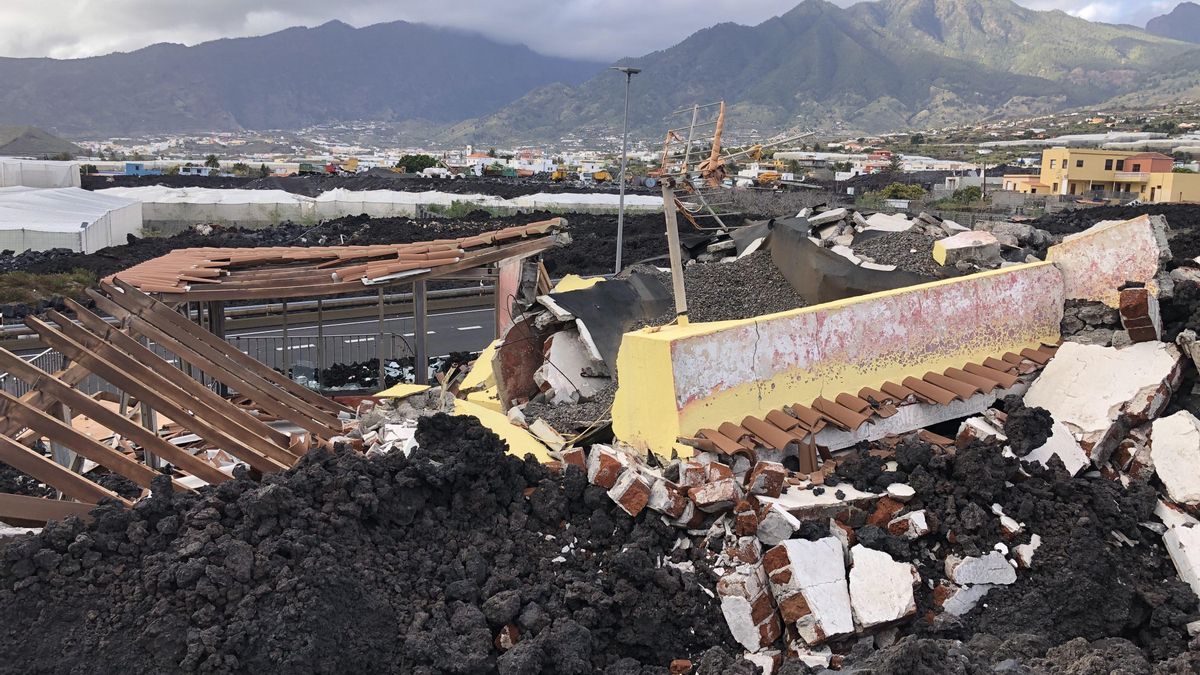
Vicente entraba en su casa cada semana para barrer ceniza. No barría el suelo, barría el tejado: su vivienda había quedado totalmente sepultada por la lluvia de piroclasto. Limpiaba la ceniza, sabiendo que tras marcharse, su casa volvería a quedar tapada. “Llegué un día y me di cuenta de que ya no había casa. Tenía que descubrirla yo. Tenía que desenterrarla”. Vicente dejaba unos palos sobresaliendo de la chimenea para saber, al regresar, donde comenzar a excavar de nuevo y no perder de vista la casa bajo un manto de ceniza.
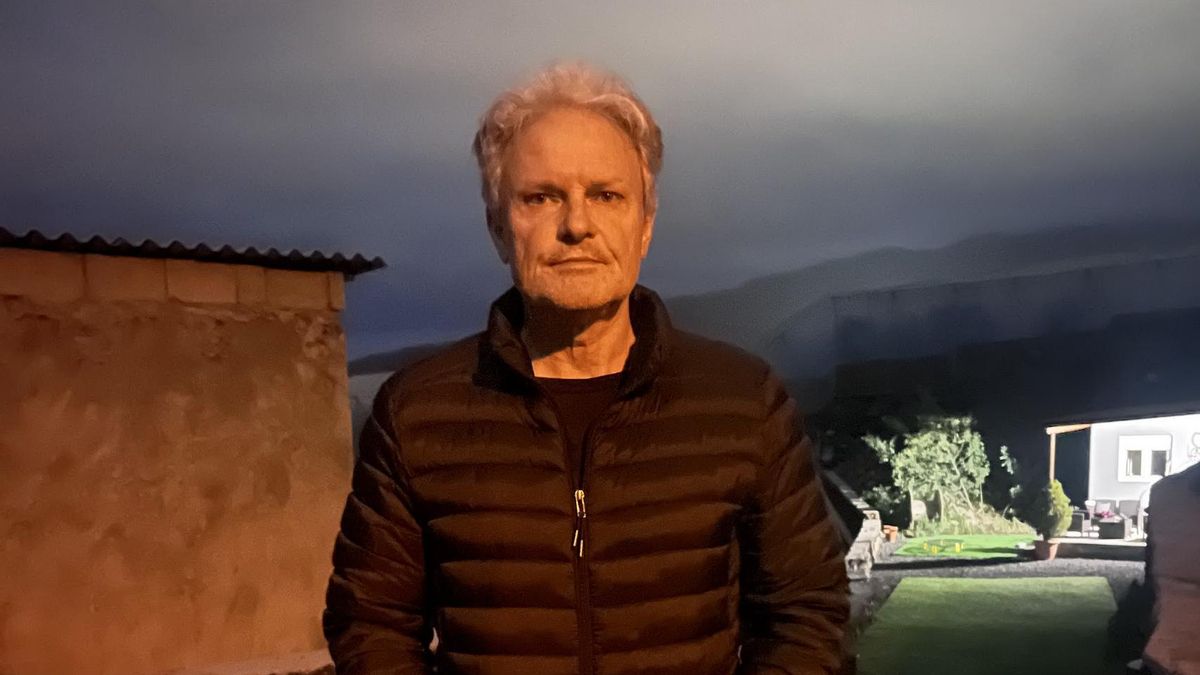
Vicente, uno de los afectados por el volcán de La Palma.
El volcán Tajogaite cumplió el pasado 19 de septiembre cinco años, pero no todas las familias de la isla han podido recuperar su hogar. En total, la lava se llevó 1.600 casas y dos barrios enteros -El Paraíso y Todoque- que han quedado bajo un manto de roca negra.
Por vivienda afectada, el Gobierno central ha concedido una ayuda de 60.000 euros, el Gobierno canario, 30.000 más, y el Cabildo otros 10.000. Quién tuviera la vivienda asegurada, ha podido recibir del Consorcio el valor de su casa. Pero para recibir todo esto, lo esencial es tener una casa. Y sobre el papel, muchos afectados no la tenían. ¿Cómo es posible?
En La Palma, donde el salario mínimo es regla y la mayor parte del territorio no es urbanizable -por lo tanto, el que hay es caro- muchos vecinos levantan sus casas poco a poco, a lo largo de los años, partiendo de pequeños cuartos de apero en una finca o en un terreno rústico. Y nunca llegan a regularizar esa vivienda. Hay quién diría que es picardía. Para muchos es necesidad.
En este contexto, mucha gente no ha podido siquiera demostrar que han sido afectados por un volcán porque no vivían oficialmente en la zona.
En La Palma, el volcán no solo se lleva cuatro paredes. Se lleva el esfuerzo de años de levantar una casa, piedra a piedra, y se lleva a los vecinos que han ayudado a levantarla. Porque cuando la mano de obra es cara, en La Palma las “gallofas” ganan terreno y es la comunidad quién ayuda en la obra. Hace cinco años, el volcán se llevó las paredes, pero también separó a los vecinos.
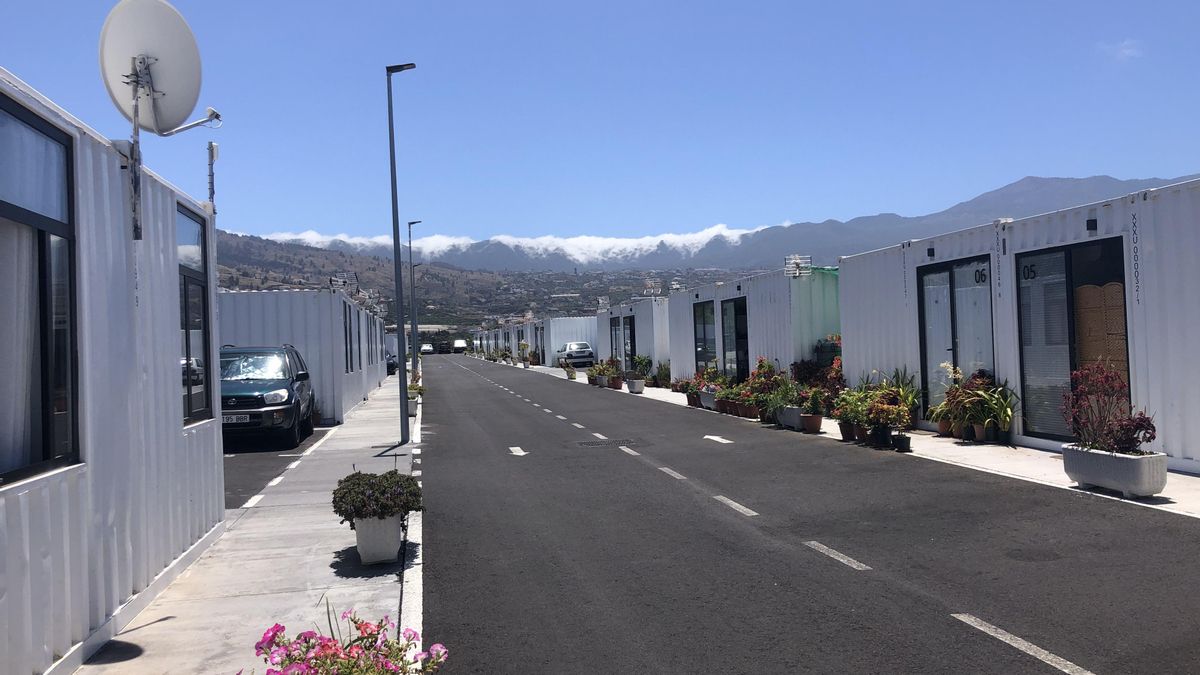
Calle de casas contenedor de los afectados por el volcán de La Palma.
Los contenedores
No son casos aislados, sino que se trata de uno de los principales problemas de esta erupción, y da respuesta a por qué, cinco años después, 110 familias siguen viviendo en los “barracones”, que se construyeron como medidas supuestamente temporales.
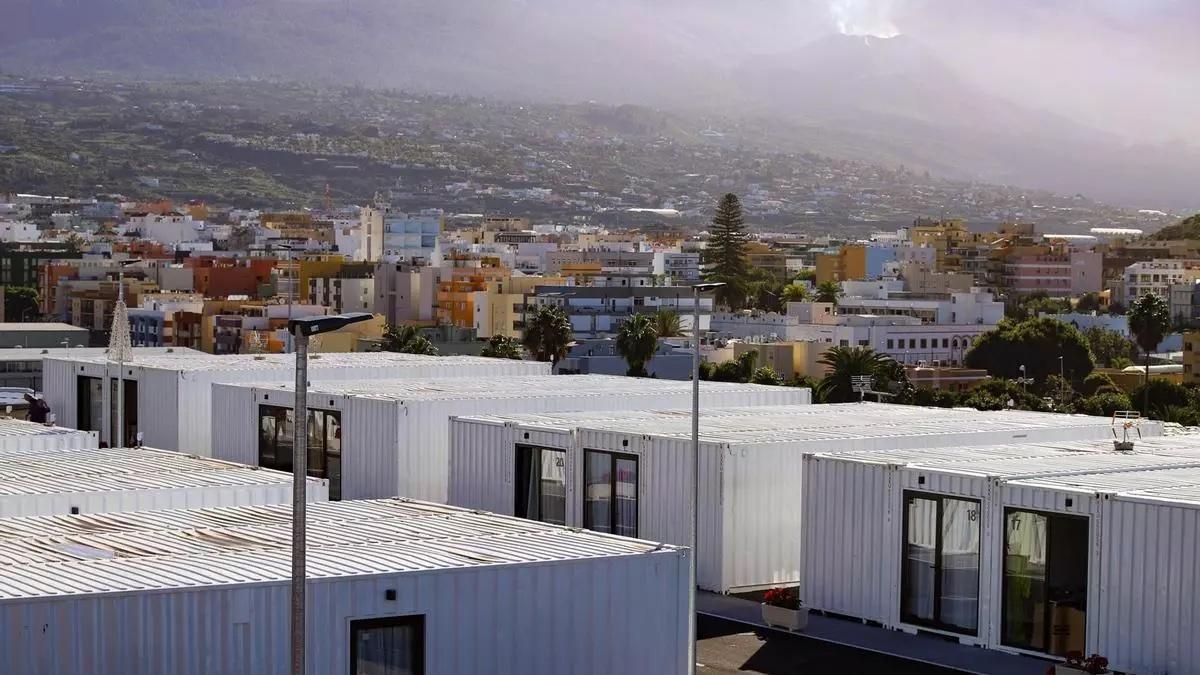
La vida en estos contenedores no es sencilla: quién vive ahí ahora, antes del volcán solía vivir en una casa terrera, con su huerta y animales. Los contenedores tienen unos 50 metros cuadrados y están situados en un parking. En la localidad de Los Llanos, los vecinos se quejan de la falta de insonorización y de aislamiento, tanto del frío como del calor. Eva cuenta que no es capaz de sentir el contenedor como un hogar porque “no estoy en mi ambiente, porque no puedo moverme. De aquí al sofá, del sofá a la cama, de la cama al sofá. Salir no salgo, porque todo el mundo ahí afuera está con la oreja pegada”.
Viviendas en contenedores para personas afectadas por el volcán, que humea detrás, al fondo.
Otra dificultad por la que están pasando los afectados es la adaptación a un formato de vida no acorde con sus costumbres. “Vivíamos entre familias y nos llevábamos muy bien con todos los vecinos”, cuentan dos hermanas de La Laguna, barrio que se perdió parcialmente. En los lugares afectados, lo más habitual era vivir en lugares con huerto o jardín, lo que contrasta con el reducido espacio del contenedor. “Árboles frutales, naranjos, orquídeas. Teníamos de todo. Nosotras estábamos acostumbradas a vivir en casas terreras. Y eso está debajo del volcán”.
Eva concluye: “El container no está para vivir personas. Esto es de chapa. La chapa está pensada para meter muebles y animales, y nosotros no somos eso”.
El estatus de damnificado
Los vecinos damnificados han podido construir de manera legal en terreno rústico. Pero, ¿quién se considera damnificado del volcán? Ahí radica otro de los grandes problemas.
Rayco no se considera damnificado a efectos legales, ya que su casa estaba a nombre de sus padres. Por tanto, no ha podido acogerse a las ayudas y facilidades para construir que ofrecen las Administraciones. Lo mismo le sucede a aquellos que, tras el fallecimiento del propietario original, no actualizaron el registro de la propiedad. Si el propietario de la vivienda está muerto, sus herederos -hijos, sobre todo- no han podido recibir las ayudas por la pérdida de la casa, aun estando empadronados en ella.
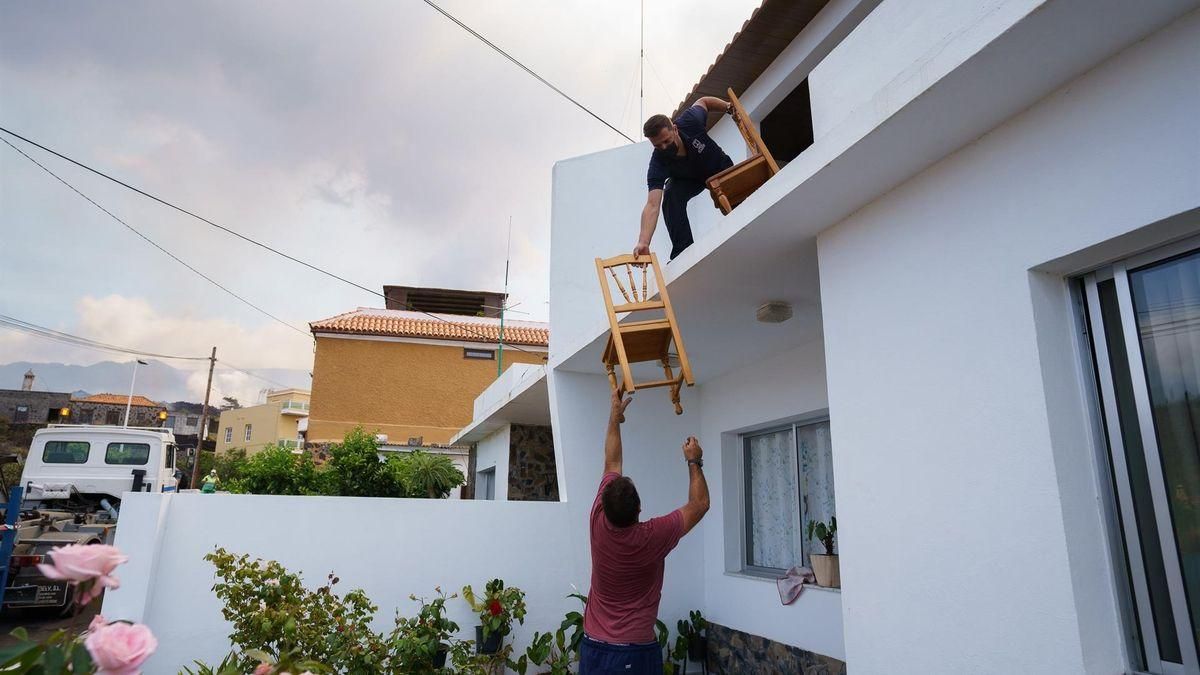
Vecinos desalojando sus casas en La Palma durante la erupción.
Vicente ha tardado tres años en recibir la consideración de afectado. Su casa sigue en pie, aunque quedase sepultada bajo la ceniza. “Se ha pagado el valor de lo perdido bajo la lava. Pero ¿qué ocurre con estas viviendas que están deterioradas, con grietas, no hay paredes, no hay servicios...? Para esto no ha habido ninguna dotación”. Vicente no puede habitar su casa, porque hasta su barrio en Las Manchas todavía no llega ninguna carretera, ni agua o luz. Es un barrio todavía sepultado por la ceniza. Tan solo algunas viviendas como la suya sobresalen de entre el desierto negro.
Muchos vecinos denuncian violencia burocrática. “ Vas al Ayuntamiento y todo son problemas. Como si no fueras afectada, ¿sabes?”, cuenta Esther, que perdió la casa el último día de erupción y quiso reconstruir sobre la lava, en su propiedad. “ Para construir, tuve que pedir que me quitaran de la zona de exclusión. Me quitaron, después me volvieron a poner, sin dar explicaciones. Pedíamos permiso para aplanar, para quitar la lava. Te cobran hasta por los permisos para aplanar el terreno. Encima que pagas al palista, te cobra el ayuntamiento. Todo son problemas”.
Una mujer llora sentada sobre sus cosas después de vaciar su casa por la amenaza del volcán de La Palma.
La pérdida del hogar
Es difícil sentir un hogar allí donde es difícil construir un proyecto de vida. La incertidumbre ha inundado las vidas de sus vecinos, y preguntas como “¿hasta cuando podré quedarme en el contenedor?”, o “¿cuándo podré empezar reconstruir mi casa?” se arremolinan en la mente de los vecinos.
“Vecinos que nacieron ahí, se criaron ahí, y de pronto toda tu raíz… ¿qué pasa con toda esa parte que desaparece y no queda rastro?”, relata Belqui, cuya casa en el barrio de Tajuya se salvó por muy poco.
El volcán se ha llevado, en tan sólo 85 días, lo que para muchos vecinos es el esfuerzo de 30 años de trabajo. Y les ha quitado, además del esfuerzo, y en contraposición, el descanso. Porque un hogar también es poder llegar a casa y tumbarse en el sofá, sabiendo que nadie ni nada interrumpirá ese momento.
Durante cinco años, los vecinos damnificados han pasado por muchas ubicaciones, pero ninguna a largo plazo, y ninguna donde poder descansar plenamente. Habitaciones en albergues, contenedores, casas de familiares o alquileres temporales han compuesto algunas de las soluciones aportadas a los vecinos. Pero llevando siempre una maleta a cuestas, es difícil construir un hogar.
Todos estos testimonios y sentimientos, en el podcast Hogar de Cenizas, de Canarias Ahora y elDiario.es.
High school and university students in France continued their protests on Tuesday, October 13, demanding government investment in public education. Approximately 480,000 protesters took to the streets in the latest iteration of the mobilization, with families, teachers, and trade unions backing students’ demands.
The mobilization remains marked by widespread police violence. Police used tear gas and dispersal grenades on crowds, including at Tuesday’s central march in Paris. Hundreds of students were injured and thousands arrested in these incidents, prompting reactions from human rights organizations.
In response, the public joined students as they blocked high schools and organized marches to physically shield them from potential harm. Trade union members, notably from the education sector, were highly represented in these support lines.
“The CGT reaffirms the urgent need to address the demands of those who are the country’s future ,” the General Confederation of Labor (CGT) asserted. “The CGT salutes their fighting spirit. It welcomes the strong anti-fascist tone of the demonstrations, which shows that there is no inevitability to the continued flourishing of fascist ideas or to the far right’s rise to power.”
Students demand access to higher education
Since the beginning of the month, French students have organized three massive demonstrations to warn against the state of education under austerity. “For several weeks, high school and university students have been mobilizing to denounce the deterioration of their study conditions, the Parcoursup system, staff and resource shortages, policies that are dismantling public services, and – more broadly – the future this society holds in store for them,” the trade union federation Solidaires recognized in their statements.
Trade unions continued their support for student mobilizations. The banner reads: “Electricity and gas workers stand with the youth. Our rage is nuclear.” Source: CGT/Facebook
Equal access to higher education has been high on the protesters’ demand list since the beginning. This refers in good part to how students are currently recruited into university courses – the Parcoursup admission platform. Introduced in 2018 under Macronist ministers to replace a previous system that randomized selection for oversubscribed courses, Parcoursup was supposed to “rationalize” admissions.
In practice, however, critics and applicants emphasize the platform allows institutions to apply unclear selection criteria and even discriminate against students from working-class areas.
In September 2026, the left party La France Insoumise warned that 126,652 students were not able to access a course as a result of the system – up from 77,000 in 2023. “This selection process is the product of austerity-driven political choices deliberately implemented by successive Macron-era governments,” the party warned.
“Parcoursup is a social sorting machine,” Solidaires echoed. “The platform organizes competition among young people for places that the State deliberately refuses to create. It transforms the right to study into a privilege, scarcity into selection, and austerity into supposed individual failure.”
Commodification of education
Jean-Luc Mélenchon, the left’s presidential candidate, pointed out that these choices are part of a broader political agenda: “the commodification of education and knowledge.”
Trade union briefs on the subject back this interpretation. At the beginning of this school year, Solidaires warned that thousands of those left without higher education placings are being sacrificed in the name of austerity.
“But not everyone experiences this violence in the same way,” they wrote. “The wealthiest families can afford private schooling, fund housing on the other side of the country, or sustain a year without studying. Young people from working-class backgrounds, however, have no way out. A lack of options means either being forced into the job market or military service – abandoning their plans for good – or facing precariousness, isolation, and debt at a private institution.”
“We have shifted from an egalitarian system to a discriminatory one: pay for your own future,” Mélenchon concluded in a recent interview.
The left leader anticipated that student demands will be an important topic during the upcoming election campaign, where the left is contrasting a program of rupture with neoliberal policies to the far right’s intention to build a debt brake not unlike Germany’s. In practice, this would translate into years of sustained attacks on social security and public services.
Trade unions and progressive organizations announced their support for the youth mobilizations will continue as they build campaigns to resist the government’s intention to impose billions in cuts to pensions and social security while spending record amounts on rearmament.
For their part, student unions invited their members to remain active and join a general mobilization against the cost of living crisis this Saturday, October 17.
El Niño, a naturally occurring climate pattern that involves unusually warm surface waters in the central and eastern equatorial Pacific Ocean can alter atmospheric circulation and significantly influence rainfall and temperatures patterns far beyond the ocean, according to the World Meteorological Organization (WMO). The WMO, the United Nations’ weather agency, says this warming is already underway and getting stronger. In an Oct. 8 update, it put the chance of an El Niño continuing through February 2027 at nearly 100%. It expects the event to be strongest in December. Regional forecasters predict a 90% chance of heavier-than-usual rain in southern Ethiopia, central to southern Somalia and northeastern Kenya between October and December 2026. Excessive rainfall could cause flooding, destroy crops, spread disease and make health services inaccessible in some areas, depending on local conditions and the season. A National Oceanic and Atmospheric Administration (NOAA) map illustrates typical seasonal rainfall shifts associated with El Niño, rather than a specific forecast for 2026. Graphic courtesy of NOAA. Action Against Hunger, an international aid organization, says families in southern Madagascar are enduring food shortages earlier than usual following a season of poor harvests. Its teams are treating children for malnourishment, as households continue to endure worsening food insecurity. Cuts in aid are also making help to tackle malnourishment harder to obtain. The United Nations International Children’s Fund (UNICEF) reported on Aug. 21 that 205 health and nutrition facilities in Somalia had closed because of funding cuts, forcing families to travel farther to find care.…This article was originally published on Mongabay
Organized criminal rings target SNAP recipients because of the government program's outdated security features. But upgrading the tech costs money and states' SNAP budgets are getting squeezed.
Tens of thousands of people took to the streets of Belgium from October 9-12, marching against the government’s austerity and militarization policies, as well as in solidarity with Palestine.
“Four mobilizations, one shared struggle: that of the Belgium of those at the bottom — who refuse to foot the bill for a system that benefits a tiny minority, and who refuse to remain complicit in an apartheid state,” wrote the Workers’ Party of Belgium (PTB-PVDA). “They thought they could impose their anti-social measures without resistance. They were wrong.”
50,000-strong demonstration against austerity
The weekend began with a 50,000-strong demonstration against austerity in Brussels on October 9, building on months of resistance to budget cuts, anti-labor reforms, and threats to pension rights. Various blocs joined the protest, including the youth movement, who demonstrated against tuition hikes, education budget reductions, and attacks on services they depend on – notably public transport.
“The government is desperately trying to balance its budget,” the General Labour Federation of Belgium (ABVV-FGTB) wrote in their protest call. “And to find the missing billions, it seems to have made a habit of always digging into the same pockets: ours. Yours.”
“If money is needed, the government should go get it where it actually is: from great fortunes, capital income, big corporations and their lucrative handouts.”
Protests on October 9, 2026. Source: ABVV-FGTB/Facebook
The Confederation of Christian Trade Unions (ACV-CSC) echoed concerns about the unfair distribution of the burden envisioned by the De Wever–Bouchez administration. “The budget must be balanced, but the distribution of the burden must also be fair,” the confederation’s leader Marie-Hélène Ska said. “The Prime Minister appeals to everyone’s sense of responsibility. It is time for him, too, to abandon dogmas and clichés and put forward an honest proposal.”
“Twenty months into this government’s term, social resistance remains very much alive,” wrote PTB-PVDA President Raoul Hedebouw. “Many young people are also taking to the streets to protest austerity measures and stand up for their future.”
Protests reject complicity in genocide, inadequate climate policies
The following day, Palestine solidarity groups around the country joined the global day of action against genocide and occupation with local actions. Like other European governments, the De Wever–Bouchez administration has failed to take substantial steps to hold Israel accountable for crimes committed in the Gaza Strip since October 7, 2023, causing widespread anger at home.
This failure has gone hand in hand with plans for massive investment in armament at the expense of public services and climate justice policies.
60,000 people joined a climate march on October 11. Source: Comac/Facebook
As a result, on Sunday, October 11, approximately 60,000 people – once again with strong participation from the youth – joined a climate march.
The demonstration’s demands were heavily influenced by the memory of the past summer, when heat waves and wildfires ravaged parts of the country. Due to previous cuts to public services, firefighting forces responded to the crisis in inadequate numbers, with implications for their health and overall response capacity.
“We need a genuine plan to tackle heatwaves, strengthened public and emergency services, and massive investment in public transport, home insulation, and renewable energy that is accessible to everyone,” PTB-PVDA said.
“The De Wever–Bouchez government wants to balance the budget by targeting our public services and imposing austerity,” Hedebouw wrote, drawing a direct link between the government’s cut drive and the state of essential services like firefighting. “But if we cut funding for public services, we will all pay the price. What will happen during the next fire if we have fewer firefighters and insufficient equipment?”
Wealth tax demands
The protests rolled out as the government is trying to balance the national budget. Yet the scale of the response indicates the chosen path will remain contested every step of the way.
Another sign came on Monday, October 12, as trade unions in the public sector called for strikes and mobilizations to protect these services and the workers who make them run.
“The plans currently on the table are unacceptable to many people,” Hedebouw emphasized. “They see their purchasing power steadily eroding while fuel prices skyrocket. Yet at this very moment, De Wever is proposing a VAT hike, an attack on wage indexation, and further cuts to our healthcare system.”
Protesters insisted the government should design and implement policies that would enable adequate funding for labor rights, public services, and climate transformation – policies that begin with a millionaire tax as outlined by the country’s left.
BANGKOK — Marine biologist and photojournalist Sirachai “Shin” Arunrugstichai has taken many notable photographs in Thailand, from white bleached coral reefs to beaches blackened by oil spills. He shot the viral, award-winning photo of orphan baby dugong (Dugong dugon) Marium being hugged by her carer. Many of Shin’s works have ignited public awareness of marine conservation in Thailand. He recently took part in a scientific study on necrophilia behavior in squids, which was inspired by his photographs. In an interview with Mongabay, Shin, 39, talks about his career journey, recent research and how his work can make a difference. Trained as a marine biologist, Thai photojournalist Sirachai Arunrugstichai has a passion for taking pictures of marine wildlife and telling stories through photographs. Image courtesy of Pratch Rujivanarom. Mongabay: Can you tell me how the research about necrophilia behavior in squid began? Sirachai Arunrugstichai: I was working at Mergui Archipelago in Myanmar from 2019 to 2020. We found ghost fishing nets wrapped around an entire reef. So, our team went diving to retrieve the net. I caught a glimpse of what appeared to be two squids mating. I thought it was strange, so I swam closer. I found that one squid was trapped in the net while another was outside, mating with it. I felt it was very unusual that a dying squid would still be mating. However, after I finished photographing them, I noticed that the trapped squid was actually already decaying. Its tentacles were completely severed, and there were…This article was originally published on Mongabay
“Protected areas are protected areas,” says Nadège Nzoyem, WWF’s regional director for the Congo Basin. For her, mining has no place in landscapes that governments have committed to conserve. Yet keeping extractive industries out and ensuring effective protection remain major challenges across the region. A recent analysis by U.S.-based Earth Insight highlights the conflict between conservation commitments and extractive interests. Across the tropical countries examined, the report says, oil and gas blocks overlap across nearly 62 million hectares (153 million acres) of protected and conserved areas. Mining concessions overlap with another 43 million hectares (106 million acres). In the Congo Basin, 29% of identified terrestrial Key Biodiversity Areas remain unprotected. The findings raise questions about where protection is needed and how effective it is against industrial pressures. WWF’s “Living Planet Report 2026” adds to those concerns. It reports an average 80% decline in monitored wildlife population sizes across Africa between 1970 and 2022. The figure is continent-wide, not specific to the Congo Basin. Next week, the global community will meet for the biodiversity COP17 in Armenia, where the urgency of meeting the global 30×30 target puts protected areas under greater scrutiny. Conserving 30% of land and waters by 2030 means more than drawing boundaries, the Earth Insight report argues. It requires effective management, equitable governance, and respect for Indigenous peoples’ and local communities’ rights. Semi-industrial mining at Muchacha along the Ituri River, in the southwestern sector of Okapi Wildlife Reserve in the DRC, has caused deforestation and contamination of water…This article was originally published on Mongabay
A Airbel, empresa especializada em marketing olfativo com mais de uma década de atividade, está a reforçar a sua aposta no setor hoteleiro. Em entrevista ao TNews, a empresa explica como são desenvolvidas identidades olfativas adaptadas ao posicionamento, conceito e perfil de cada unidade hoteleira e descreve a abertura da sua primeira loja na Madeira, no passado dia 1 de outubro, como um "passo importante" na consolidação da presença na região.
In September, Henry Price observed a classroom of 7- to 8-year-olds learn about the Stone Age. They discussed and wrote about cave paintings, then put on virtual reality headsets to...
With Election Day just a few weeks away — and millions of votes already cast — midterm polls are everywhere. While polling can be a helpful tool to understand the electorate, it's not a crystal ball.
What Israel has done, is doing, to Gaza has not sprung ex nihilo from October 7. Genocide is not a situational counter-response to aggression. It’s a coming-out event of sorts. Differently put: There are no legitimate antecedents to genocide. Genocide is not a “war crime” to which a set of mitigating or exculpating legal defenses...

 Login