❌

Reading view

Curfews imposed in French cities as rebellion against austerity grows nationwide

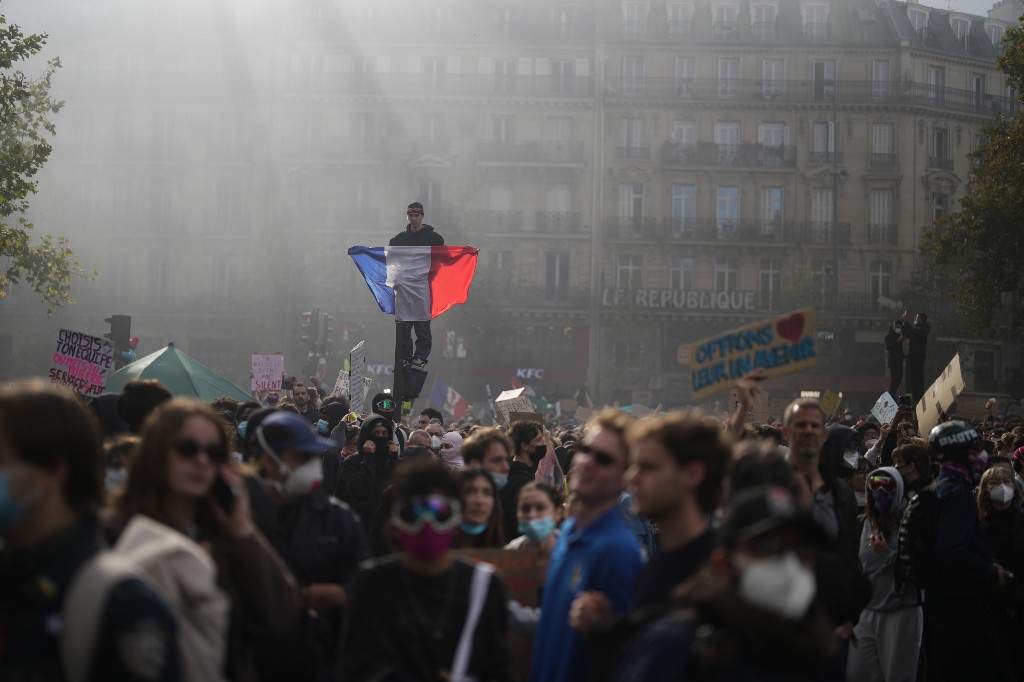
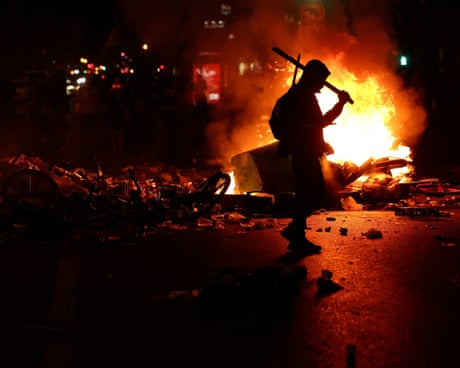
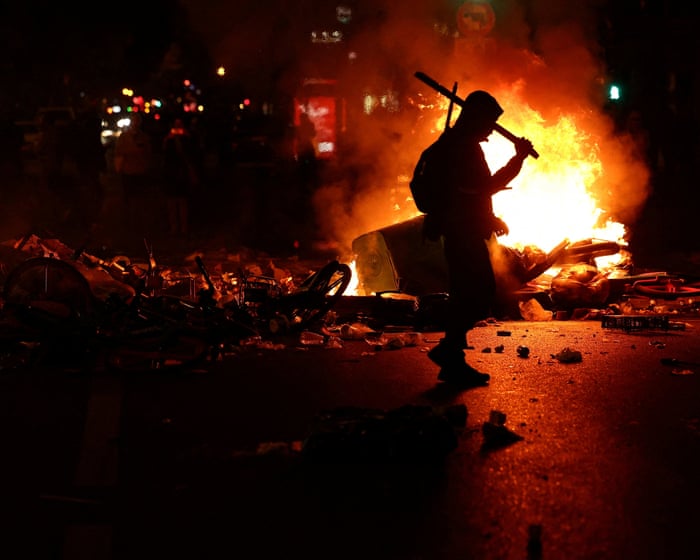
Mass mobilizations against austerity policies and their effects are not winding down in France. On Saturday, October 17, roughly 800,000 people joined protests across more than 1,700 assembly points, according to union figures – amplifying demands tabled over a month of student protests and demanding urgent action on the cost of living crisis.

In the aftermath of the protests, the government expanded local authorities’ powers to introduce curfews. This led to overnight movement limitation orders introduced in several cities, including central parts of Paris, Lille, Lyon, and Nice. Many of the curfews target young people in particular, reflecting institutional concern about the success of their recent mobilizations.

Over the past weeks, students launched a wave of school strikes and occupations, resisting the erosion of education services under successive neoliberal governments. Their movement drew support from trade unions and progressive political forces, who joined students on the streets to pressure the Lecornu administration to change course and prioritize public services and labor rights over armament. 

Read more: One barricade after another: How protesters marched on the garrisoned heart of India’s capital

Rallies and marches reinforced the student movement’s demands for accessible, equitable higher education, alongside trade unions’ calls for higher wages. 

They also drew links to other historic moments of mobilization, including the struggle for Algeria’s liberation. Many groups taking part echoed the anniversary of the 1961 demonstration that ended in the massacre of hundreds of people protesting for independence.

Police violence continues

Teachers, families, and elected officials also joined, for a practical reason: to shield students from the law enforcement violence unleashed on their mobilization. 

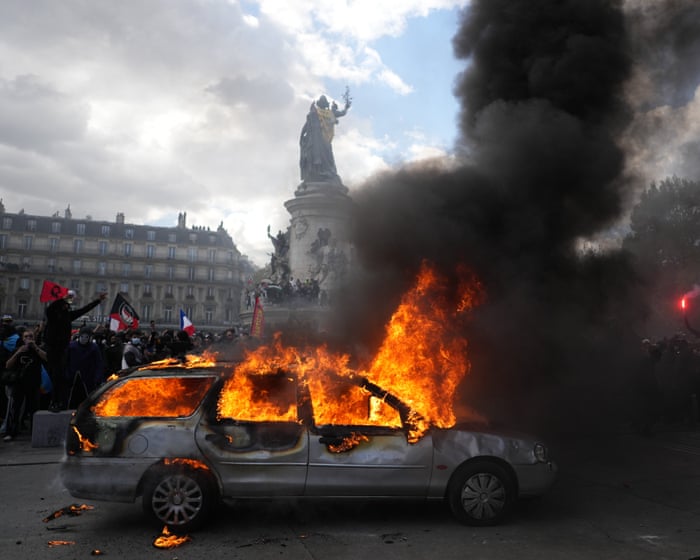
Saturday’s protests were again met with police violence, with officers relying – unsuccessfully – on tear gas and water cannons to disperse crowds. Serious injuries and cases of severe police brutality were reported throughout the day.

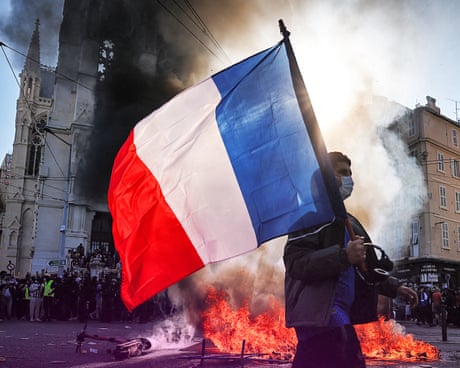
After repeated repression, and with neither the government nor President Emmanuel Macron offering credible solutions to protesters’ grievances, protests turned into riots. While those close to social movements emphasized the events were triggered by years of cuts and unimpeded attacks on workers’ rights, the middle and upper classes were indignant.

Recent protests in France have a decisively antifascist character. Protester’s sign reads: “Always angry, never fascist.” Source: Manon Aubry/Facebook

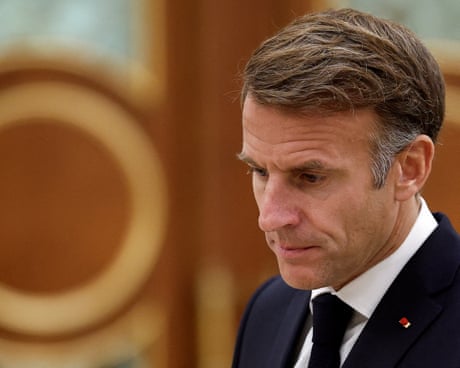
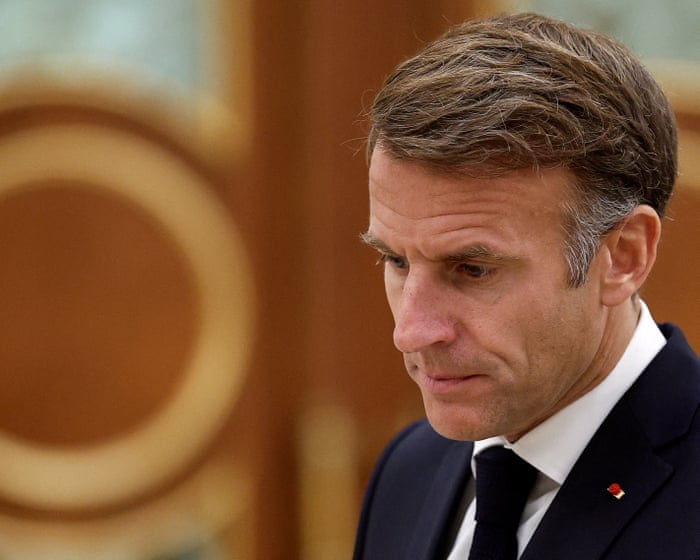
Macron channeled their reaction in his post-protest speech. He declared those responsible for the looting must be punished, while promising more “dialogue” and offering a mild acknowledgment of people’s concerns over fuel, food, and other essentials. 

“There are people out there who rightfully feel that the price of fuel is too high,” the president said – before shifting responsibility elsewhere. He said rising prices were the result “of what is happening in the Persian Gulf – a war that France was not part of.” 

The speech landed poorly at home and abroad. The Iranian government, for one, has repeatedly called out Macron for applying double standards between protests in West Asia and France, emphasizing that the French president had expressed support for US plans in Iran and that ongoing mobilizations were a logical outcome of the policies he endorsed. 

Students reject Macron’s response

In France, protesters called out Macron for failing – yet again – to identify a concrete way out of the situation facing the country. 

“Since the beginning of this movement, high school and university students have been met with nothing but contempt and police batons in response to their demands,” the university students’ union Union Étudiante wrote. “Yet we have put forward a clear set of demands, widely supported by everyone who took to the streets on October 17.” 

Read more: Madrid teachers and students launch strike to defend public schools

“He did not utter a single word about the high school and university students maimed in the crackdown,” the organization added. “He said nothing at all about the real violence committed on Saturday,” referring to approximately 2,300 arrests made on that day alone – and dozens of young people who were seriously injured over the past weeks.

“It is not a matter of engaging in endless dialogue, but of responding concretely to the needs of high school and university students: income, housing, food services, healthcare, study conditions, access to degrees, and an end to repression.”

Lecornu attempts to blame left for chaos

Prime Minister Sébastien Lecornu’s reaction to the protests drew an equally negative response from progressive forces, especially after he suggested left movements were responsible for chaos and violence.

“What a pathetic politician,” wrote presidential candidate Jean-Luc Mélenchon. “He is responsible for the chaos – chaos he methodically prepared, whether through sheer incompetence or a deliberate ‘strategy of the worst’ aimed at conjuring up a ‘party of order’ that would make people forget his failure on the public finances.”
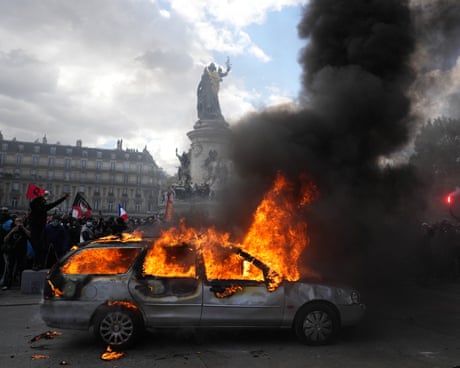
  •  

Electric Car Sales Surge 70 Per Cent as France and Germany Seek Changes to EU Emissions Rules

Registrations of fully electric cars across 17 European markets increased by 70.3 per cent in September, according to industry figures published on Monday, 19 October, as France and Germany seek to ease the European Union’s emissions requirements for new vehicles.

The data show that 300,202 battery-electric cars were registered during the month, accounting for 32.6 per cent of new passenger-car registrations in the markets surveyed.

The figures emerge three days after Paris and Berlin announced a joint position on the future of Europe’s automotive industry, proposing greater flexibility in the EU’s 2035 emissions regime while introducing measures intended to favour vehicles manufactured in Europe.

Electric vehicles gain market share

The latest figures, compiled by E-Mobility Europe, New Automotive and Fier Automotive, indicate that electric vehicle demand accelerated sharply during September.

According to the industry data published on 19 October, approximately 1.98 million battery-electric cars have been registered across the 17 markets during the first nine months of 2026, an increase of 38.1 per cent compared with the equivalent period last year.

Higher oil prices, government incentives and the introduction of more affordable electric models have all contributed to demand.

The figures represent a substantial change in the composition of European new-car sales, although they cover selected markets rather than constituting a complete statistical account of the EU’s 27 Member States.

France recorded 65,243 battery-electric registrations in September, representing 41.7 per cent of its new-car market. Germany registered 88,724 electric vehicles, giving the technology a market share of 34.6 per cent.

Both countries have substantial automotive manufacturing industries and are directly involved in negotiations over Europe’s future emissions legislation.

Significant differences between European markets

Despite the overall increase, electric vehicle adoption remains uneven across the continent.

Norway retained its position as Europe’s most electrified new-car market, with battery-electric vehicles accounting for 98.8 per cent of registrations in September.

Denmark followed with 88.8 per cent, while Finland recorded 62.7 per cent and Sweden 49 per cent.

Electric models also accounted for approximately half of new-car registrations in Belgium, the Netherlands, Ireland and Portugal.

At the other end of the market, battery-electric vehicles represented only 11.2 per cent of registrations in the Czech Republic, 7.6 per cent in Italy and 6.2 per cent in Poland.

These differences illustrate the difficulty of establishing a uniform European transition timetable.

Household incomes, purchase incentives, vehicle prices and charging infrastructure differ substantially between countries. The availability of affordable electric cars is particularly important in markets where buyers are more sensitive to the initial purchase price.

The varying national figures also complicate the EU’s industrial calculations, since manufacturers must operate across markets progressing at different rates.

France and Germany reach automotive compromise

On 16 October, French President Emmanuel Macron and German Chancellor Friedrich Merz agreed on a joint approach to changes in European automotive regulations.

Under the proposed compromise, car manufacturers would be required to reduce carbon dioxide emissions from new vehicles by 90 per cent by 2035 compared with the 2021 reference level.

The agreement would also remove a proposed requirement to compensate for the remaining emissions through measures such as the use of low-carbon steel.

The change would create additional opportunities for manufacturers to continue selling vehicles powered by combustion engines beyond 2035, subject to the final legislative framework.

In their joint declaration on the automotive industry’s future, the French and German governments argued that emissions reduction must be combined with industrial competitiveness, investment and European manufacturing capacity.

The agreement also envisages preferential treatment for vehicles produced in Europe under certain public procurement and subsidy arrangements.

Britain could potentially benefit from provisions allowing selected European partners to qualify under the proposed industrial framework.

The Franco-German understanding is not, however, a final EU legislative decision. Changes to the regulatory regime require agreement through the relevant European legislative procedures.

Automotive competitiveness enters the debate

The principal argument advanced by supporters of greater regulatory flexibility is that European manufacturers need additional time to adapt production, protect employment and compete with international rivals.

German manufacturers retain extensive investment in combustion-engine and hybrid technology, while French producers have placed considerable emphasis on electric vehicles and maintaining European supply chains.

The negotiations therefore concern more than emissions limits. They also involve battery production, access to raw materials, manufacturing costs and the ability of European companies to compete with producers in China and other markets.

Supporters of the existing transition timetable argue that weakening long-term requirements could discourage investment in electric manufacturing capacity just as consumer demand is increasing.

Manufacturers seeking greater flexibility maintain that regulatory targets must account for uneven market conditions and the cost of developing new technologies.

September’s sales figures provide evidence that electric vehicle adoption is accelerating, but they do not establish whether the same rate of growth will continue without existing incentives.

The debate now centres on whether regulatory relaxation will preserve Europe’s automotive industry during the transition or slow investment in the technology that is already capturing an increasing share of the market.

  •  

The Guardian view on France’s protests: a polarised country is in a perilous political moment | Editorial

The scenes of social unrest and violence at the weekend are an ominous portent, ahead of elections which may deliver a far-right presidency

In Emmanuel Macron’s book Revolution, published ahead of the 2017 presidential election that he went on to win, he promised to restore hope to a country that was losing faith in its future. As Mr Macron’s lame-duck second term enters its last phase against a quasi-insurrectionary backdrop of torched public buildings and looted shops, the failure of that political project appears total.

The worst scenes of urban violence for years overshadowed a weekend of protest that gravely undermined what is left of the French president’s authority. As police lost control of the streets, more than 2,000 shops were ransacked. Far-left groups targeted town halls and local buildings, and engaged in pitched battles with the police, whose disastrously heavy-handed response to last week’s high school protests has succeeded only in escalating tensions.

Do you have an opinion on the issues raised in this article? If you would like to submit a response of up to 300 words by email to be considered for publication in our letters section, please click here.

Continue reading...

© Photograph: Thibault Camus/AP

© Photograph: Thibault Camus/AP

© Photograph: Thibault Camus/AP

  •  

Ferocious criticism from all sides underlines Macron’s isolation

French president has compounded impression of arrogance with strategic errors – and consequences could be profound

The near-universal chorus of condemnation that greeted Emmanuel Macron’s address to the nation on Sunday, after one of the most violent days of rioting and looting in France’s recent history, was a stark reflection of just how weakened he now is.

Speaking from his office at the Élysée Palace, the president delivered an eight-minute speech expressing “anger and shame” after a weekend in which a town hall was set ablaze, 2,000-plus shops were looted, 2,300 people were arrested and 1,000 police injured.

Continue reading...

© Photograph: Benoît Tessier/AFP/Getty Images

© Photograph: Benoît Tessier/AFP/Getty Images

© Photograph: Benoît Tessier/AFP/Getty Images

  •  

Cyberattack on 700 French Supermarkets Exposes Gaps in Europe’s Infrastructure Security

A cyberattack affecting approximately 700 supermarkets in France has exposed serious weaknesses in the digital systems used to control commercial refrigeration, raising concerns about the vulnerability of European food distribution networks and other essential infrastructure.

The attack began overnight on 11–12th October, when intruders gained access to remotely managed refrigeration equipment and altered operating settings, causing refrigerators and freezers to overheat.

Stores belonging to several major supermarket chains were affected, including Intermarché, Netto, Coopérative U, Carrefour and Monoprix. Some were forced to discard substantial quantities of fresh and frozen food.

French Finance Minister Roland Lescure confirmed that approximately 700 of the country’s 10,000 supermarkets had been affected, although the severity of the disruption varied between locations.

The Paris prosecutor’s office has opened an investigation into the attack, including the damage caused by destroyed merchandise and reported fires.

The incident has drawn attention to industrial control systems that are routinely connected to the internet but may receive less cybersecurity protection than corporate networks and customer databases.

Refrigeration systems remotely manipulated

Investigators have established that refrigeration equipment was targeted through vulnerabilities associated with remote monitoring and control systems.

The French cybersecurity authorities identified compromises involving products supplied by Danish manufacturer Danfoss and American company Copeland.

Some of the affected systems used older equipment that no longer received regular security updates.

According to information released by the companies and cybersecurity specialists, certain industrial controllers had been accessible through public internet connections, creating opportunities for unauthorised access.

Hackers reportedly manipulated defrost cycles and increased temperature settings, preventing equipment from maintaining the cold conditions required to preserve food.

The attack affected approximately 300 Intermarché and Netto stores, while Coopérative U reported disruption at around 80 outlets.

Several retailers managed to contain the damage, but others lost substantial quantities of stock.

The consequences extended beyond malfunctioning equipment. Businesses faced the cost of replacing spoiled food, repairing refrigeration systems and restoring normal operations.

The precise financial damage is still being assessed, although estimates from the retail sector indicate that losses across France could amount to tens of millions of euros.

Vulnerabilities in connected equipment

The incident illustrates the security problems created by the growing use of internet-connected industrial equipment.

Modern refrigeration installations allow contractors and maintenance specialists to monitor temperatures, adjust settings and diagnose faults remotely.

These arrangements can reduce operating costs and improve efficiency, but they also create additional access points that attackers may exploit.

Cybersecurity specialists have identified vulnerabilities in commercial refrigeration platforms manufactured by Danfoss and Copeland.

The manufacturers subsequently addressed identified flaws, although older or unsupported equipment remained a concern.

A critical problem for businesses is that industrial machinery often remains operational for many years after its original software has become obsolete.

Replacing entire refrigeration installations can involve substantial expense and operational disruption, encouraging operators to retain equipment that may no longer meet contemporary cybersecurity standards.

The risks are particularly difficult to manage when responsibility for maintenance, software updates and network security is divided between retailers, equipment suppliers and external contractors.

France’s delayed cybersecurity legislation

The attack has renewed scrutiny of France’s implementation of the European Union’s NIS2 Directive, which is intended to strengthen cybersecurity across sectors providing important economic and public services.

The directive establishes common requirements covering risk management, incident reporting, organisational responsibility and protection against cyber threats.

Its scope extends beyond traditional critical infrastructure such as energy, telecommunications and transport to include certain businesses involved in food production, processing and distribution.

EU member states were required to incorporate the directive into national legislation by 17 October 2024.

France was among the countries that received a formal warning from the European Commission in May 2025 over incomplete implementation.

French cybersecurity specialists have since warned that delays have complicated efforts to establish consistent obligations for organisations operating industrial and commercial systems.

However, NIS2 does not automatically cover every supermarket. Its application depends on the nature and size of an organisation and the provisions of national implementing legislation.

The incident therefore raises questions not only about the pace of legislative implementation but also about the practical protection of equipment already in use.

Wider implications for European infrastructure

The disruption demonstrates how a cyberattack can cause physical damage without directly targeting a conventional industrial facility.

Unlike breaches intended to steal customer information, the French incident interfered with machinery responsible for preserving essential products.

The distinction is important for European policymakers, who increasingly face threats to infrastructure that combines digital controls with physical operations.

The European Union’s cybersecurity agency ENISA has organised cross-border exercises to test how authorities and companies would respond to disruption affecting essential services.

The attack itself has been established, but responsibility for it has not been publicly attributed.

French authorities have said there is no immediate threat to national food supplies. Nevertheless, the destruction of merchandise and interruption of ordinary retail operations have demonstrated the potential economic consequences of weaknesses in relatively commonplace equipment.

The continuing investigation must establish how access was obtained, which systems were compromised and whether the vulnerabilities were known to operators before the attack.

For Brussels and national regulators, the case provides a practical test of whether European cybersecurity legislation can translate into effective protection for the connected equipment on which ordinary commercial activities increasingly depend.

  •  

France protests escalate with riots, looting and 2,400 arrests – The Latest

Last weekend there were mass protests across France, with more than half a million people estimated to have been involved. The unrest included rioting, looting and violent clashes with outnumbered police in cities including Paris, Marseille and Limoges. The interior minister conceded that police ‘lost control’ in some cities, while President Emmanuel Macron demanded a full security review. Lucy Hough speaks to the Guardian’s Europe correspondent, Jon Henley – watch on YouTube

Continue reading...

© Photograph: Pascal Lachenaud/AFP/Getty Images

© Photograph: Pascal Lachenaud/AFP/Getty Images

© Photograph: Pascal Lachenaud/AFP/Getty Images

  •  

France protests escalate with riots, looting and 2,400 arrests - The Latest

Last weekend there were mass protests across France, with more than half a million people estimated to have been involved. The unrest included rioting, looting and violent clashes with outnumbered police in cities including Paris, Marseille and Limoges. The interior minister conceded that police ‘lost control’ in some cities, while President Emmanuel Macron demanded a full security review. Lucy Hough speaks to the Guardian’s Europe correspondent, Jon Henley – watch on YouTube

Continue reading...

© Photograph: Guardian Design

© Photograph: Guardian Design

© Photograph: Guardian Design

  •  

Couple enjoy a drink as fires burn nearby amid Paris unrest – video

A couple were seen enjoying a drink near the Arc de Triomphe on Saturday, close to where some of the main rioting took place in central Paris. Flames from a burning bin could be seen in the background as the pair dined on a cafe terrace.

The initial wave of protests began last ‌month over absent teachers and decrepit school buildings, and has since developed into a bigger movement over the cost of living and falling standards in education. Demonstrations broke out nationwide, with hundreds of thousands of people taking to the streets in Paris, Marseille, Lille and Nantes

Continue reading...

© Photograph: Reuters

© Photograph: Reuters

© Photograph: Reuters

  •  

2,000 shops looted or damaged across France, Macron rejects Interior Minister Núñez resignation offer

French Interior Minister Laurent Núñez offered his resignation to President Emmanuel Macron after nationwide protests on Oct. 17 spiraled into some of the worst urban violence and looting France has seen in years. Macron refused the offer, citing the need for uninterrupted command of the security forces amid ongoing fallout from the unrest.

Núñez, speaking on France Inter Monday morning, was direct: “I submitted my resignation because I am responsible for everything that happens.” 

"Je remets ma démission parce que je suis responsable de tout ce qui se passe" : Laurent Nuñez a déposé sa démission au président de la République qui l’a refusée Le ministre de l’Intérieur est au micro de @Ben_Duhamel dans le 7h50 du 19 octobre 2026 ➡ https://t.co/MWEMOE13HA https://t.co/lYQMvwmNj3

— France Inter (@franceinter) October 19, 2026

He acknowledged a “lack of anticipation” in preparations and said police had “lost control” in certain major cities, according to Le Monde news outlet. Forecasts had put expected turnout at around 200,000; the Interior Ministry later counted roughly 550,000 participants nationwide, while the CGT union estimated 800,000. About 60,000 law-enforcement personnel were deployed, yet the scale overwhelmed them in multiple locations.

A second wave of protests is already being called for on Oct. 24 and Oct. 31, with fears of a new wave of violence and unrest.

🇫🇷🔴 The Great Replacement is driving the French riots, says right-wing politician Éric Zemmour. "I believe that what we saw yesterday is the true face of the Great Replacement. It has an appearance: hordes of North African and African barbarians who ransack cities." Follow: @RMXnews
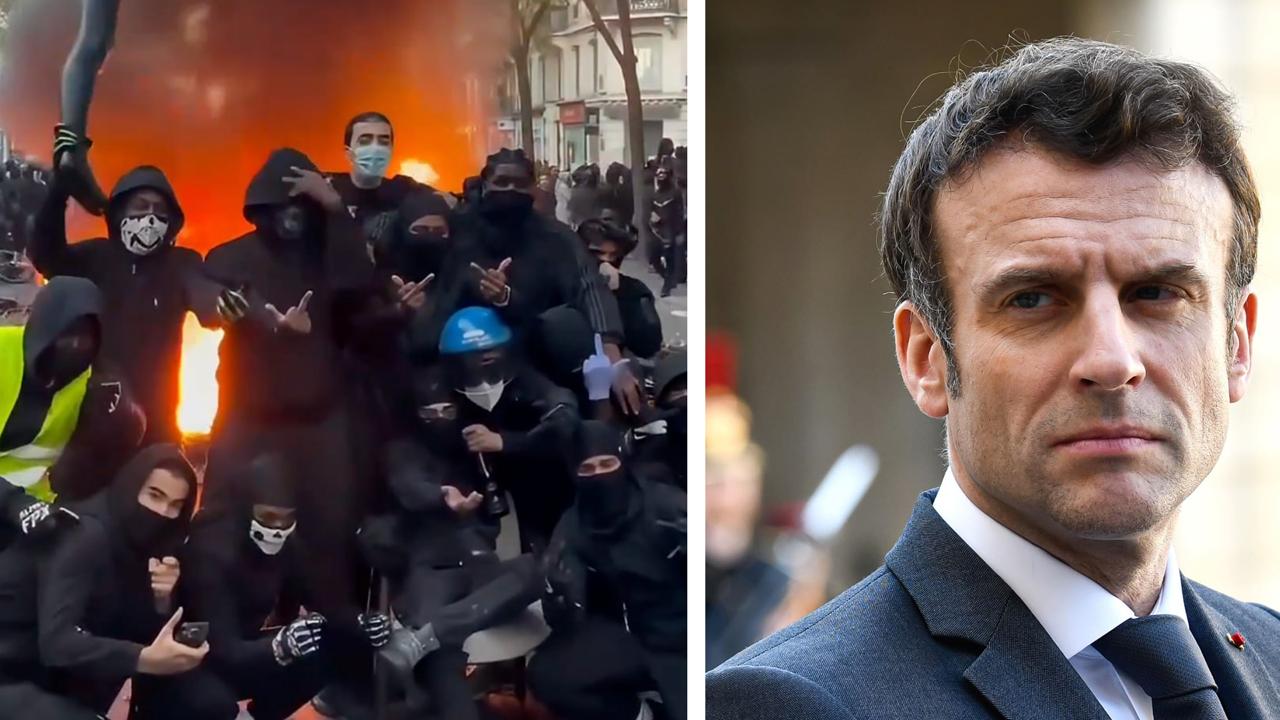
— Remix News & Views (@RMXnews) October 19, 2026

The Saturday demonstrations, called over rising living costs, fuel prices, declining public services, and conditions in schools, began largely peacefully but were overtaken by extreme violence in cities including Paris, Marseille, Lyon, Bordeaux, Limoges, and Strasbourg. 

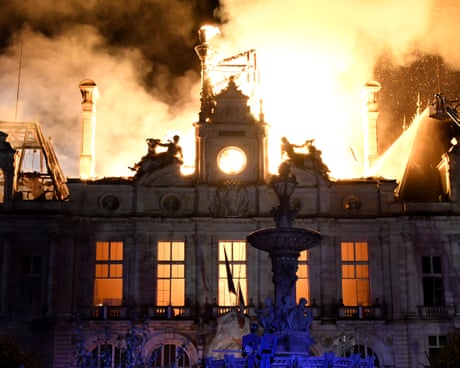
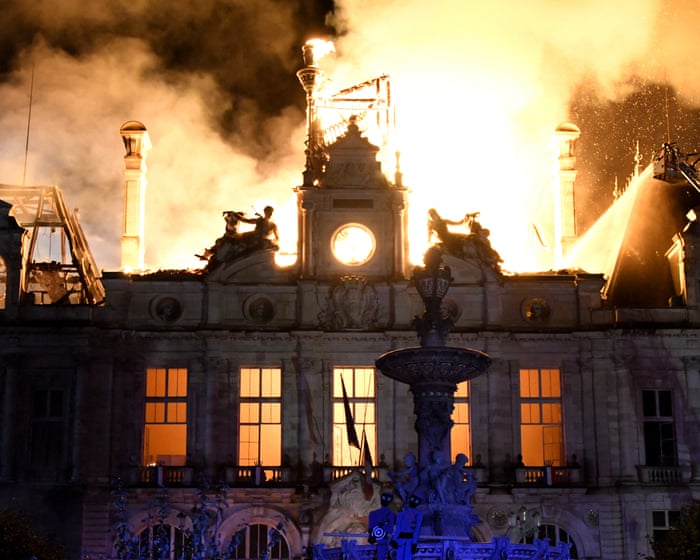
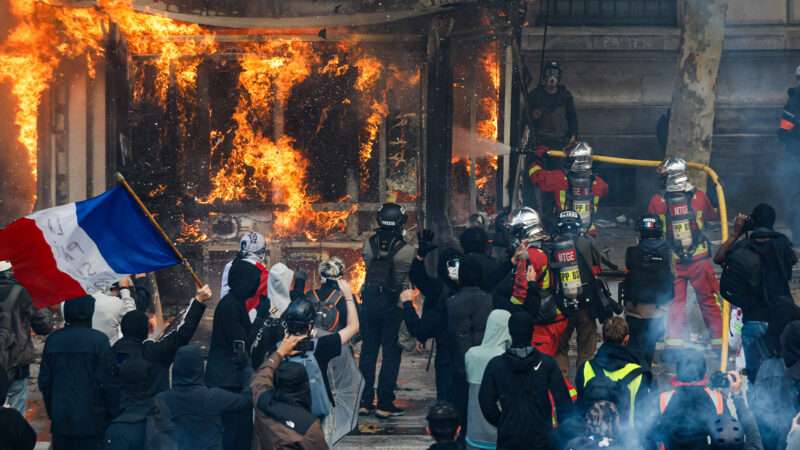
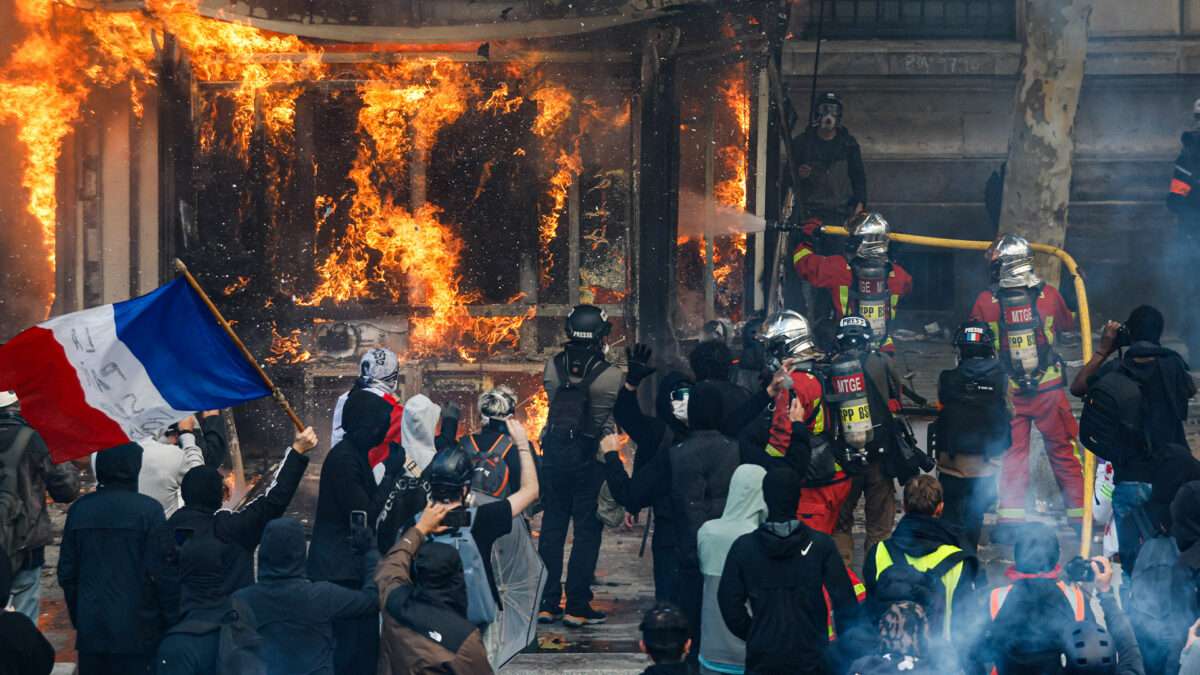
Masked groups set fires, attacked public buildings, and looted shops. In Limoges, the historic 19th-century town hall was largely destroyed by arson. In Marseille, protesters breached city hall. Nationwide, authorities reported roughly 1,800 to more than 2,400 arrests and nearly 1,000 injured police and gendarmes. Additional clashes occurred in Paris and Marseille on Sunday.

Mass looting hits France

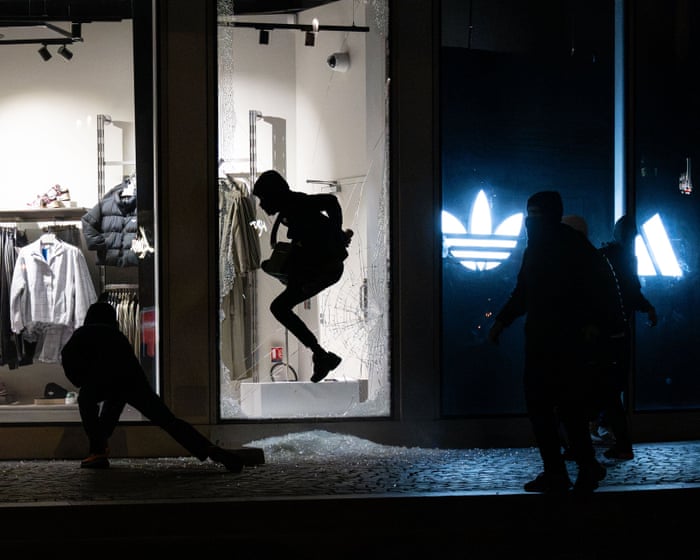
More than 2,000 shops were looted or damaged across the country, with the French Chamber of Commerce and Industry estimating damages in the hundreds of millions of euros.

Carrefour alone saw about 50 stores affected, with repair costs exceeding €10 million and knock-on effects for employees through reduced hours.

In Paris, the area around Place de la République and the Marais saw systematic looting of supermarkets, electronics stores, bars, wine shops, gold buyers, and clothing retailers.

🇫🇷🔴 This is what happened when French people tried to stop the rioters. French Interior Minister Laurent Núñez has now offered his resignation to President Emmanuel Macron after nationwide riots. Macron refused the offer. Follow: @RMXnews https://t.co/CCdB254Yma

— Remix News & Views (@RMXnews) October 19, 2026

According to Welt newspaper, one gold-shop owner told reporters, she received a call from a neighboring restaurant worker who had filmed a group of young people breaking in: “They smashed everything up. They stole things. When I got back, they’d taken everything.”

A Nicolas wine store nearby had its windows and entrance smashed, shelves emptied, and champagne cartons and glass left on the floor. Employees of a Marais fashion boutique described the atmosphere as “dystopian,” with tear gas entering the premises. Paris Mayor Emmanuel Grégoire later said entire streets had been “methodically ravaged.”

Ceux qui ont cherché à faire tomber la République auront à en répondre. https://t.co/qtqKUIXPpu

— Emmanuel Macron (@EmmanuelMacron) October 18, 2026

The Élysée announced Monday that Macron had rejected the resignation “given the need for continuous command of the security forces in the current situation.” The government was also reportedly considering declaring a state of emergency. However, Núñez has since stated that the government was “absolutely not” considering a state of emergency and would continue with existing public-order tools.

The presidency also acknowledged “failures in anticipation and intelligence-gathering” and directed Núñez to deploy a new doctrine of order maintenance “against the rioters” as quickly as possible, while ensuring transparency over the planning shortfalls.

Prime Minister Sébastien Lecornu was scheduled to chair an interministerial crisis unit. Macron himself continued a planned diplomatic tour of Gulf states aimed in part at securing oil and diesel supplies to ease fuel prices.

The post 2,000 shops looted or damaged across France, Macron rejects Interior Minister Núñez resignation offer appeared first on Remix News.

  •  

‘It looks like a war zone’: France reels as looting continues for second night

Police appear to have been taken by surprise by scale of looting that began after protests turned violent in Paris and other cities

Just before 1am on Monday morning, two motorbikes carrying one passenger each stopped at a traffic light on a backstreet near rue de Rivoli, one of central Paris’s busiest shopping streets.

“You’ve got to go where there are a lot of people, where they’ve done the shop windows,” said one motorbike rider to another. Minutes later 10 other men, their faces covered with ski balaclavas, came down the street on foot pursued by a police van.

Continue reading...

© Photograph: Jeanne Accorsini/SIPA/Shutterstock

© Photograph: Jeanne Accorsini/SIPA/Shutterstock

© Photograph: Jeanne Accorsini/SIPA/Shutterstock

  •  

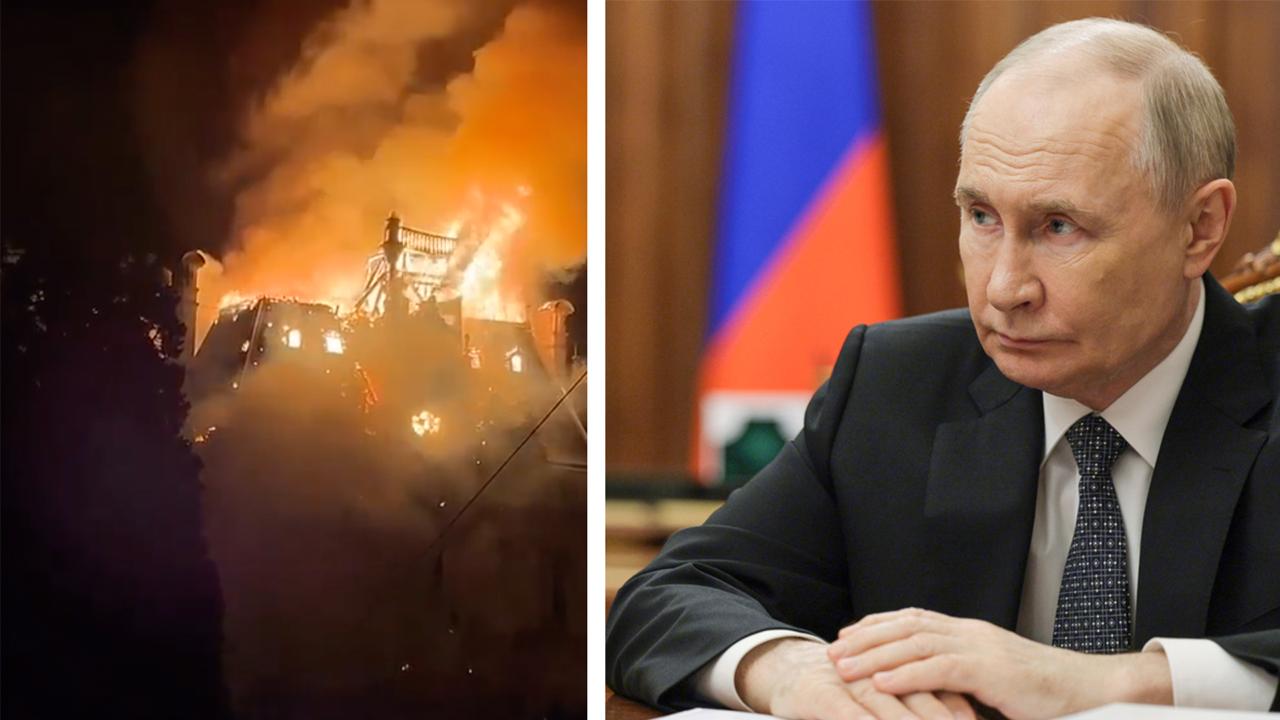
Putin may be behind the riots in France, suggests Polish journalist

Mainstream Polish journalist Dominika Długosz suggested that recent protests in France, Spain and Italy are being driven and influenced by Russia, a claim that was sharply rebuked by a number of Polish conservatives on X.

Długosz, a political reporter for Newsweek and Onet, wrote sarcastically on X on Oct. 18: “We’ll certainly be very surprised if in a year/two/five it turns out that the protests right now in Spain, France, Italy were influenced by Russia. We’ll be in shock.”

Bardzo się na pewno zdziwimy jak się za rok/dwa/pięć okaże, że protesty właśnie teraz w Hiszpanii, Francji, Włoszech były inspirowane z Rosji. W szoku będziemy.

— Dominika Długosz (@domi_dlugosz) October 18, 2026

Rafał A. Ziemkiewicz, a conservative writer and commentator, replied directly to Długosz: “Because it was Putin who let all those migrants in there and ran up those debts. Of course, Ms. Dominika.”

Bo to Putin tam wszystkich tych migrantów nawpuszczał i tych długów narobił. Wiadomix, pani Dominiusiu

— Rafał A. Ziemkiewicz (@R_A_Ziemkiewicz) October 18, 2026

Łukasz Warzecha, a journalist and commentator associated with the conservative weekly Do Rzeczy, posted a broader mockery: “What else in history did Russia influence? In my opinion, Putin was behind the extinction of the dinosaurs, the Tunguska meteorite impact, the murder of Leszek the White and the death of Vasco da Gama. What’s more, Putin personally infected da Gama with malaria by sending a trained mosquito after him.”

Co jeszcze w historii inspirowała Rosja? Moim zdaniem Putin stał za zagładą dinozaurów, uderzeniem meteorytu tunguskiego, zabójstwem Leszka Białego oraz śmiercią Vasco da Gamy. Przy czym da Gamę Putin osobiście zaraził malarią, nasyłając na niego wytresowanego komara.

— Łukasz Warzecha (@lkwarzecha) October 18, 2026

Długosz’s post did not present evidence of Russian involvement, and no independent verification of external direction of the protests has been reported by major international news agencies covering the events.

The posts came as France reeled from one of its most violent days of unrest in years. On Saturday, Oct. 17, demonstrations against rising living costs, fuel prices, declining public services and school conditions drew between 550,000 and 800,000 people nationwide, according to Interior Minister Laurent Núñez and the CGT union. Violence erupted during the protests in numerous cities including Paris, Marseille, Bordeaux, Lyon, Limoges and Strasbourg.

🇫🇷🔴 The Great Replacement is driving the French riots, says right-wing politician Éric Zemmour. "I believe that what we saw yesterday is the true face of the Great Replacement. It has an appearance: hordes of North African and African barbarians who ransack cities." Follow: @RMXnews

— Remix News & Views (@RMXnews) October 19, 2026

The exchange, highlighted by the conservative outlet Do Rzeczy, reflects a recurring Polish and broader European debate over whether external actors, particularly Russia, are driving social unrest. For years, the left has claimed Russian influence campaigns were responsible for everything to the election of Donald Trump to the popularity of the Alternative for Germany (AfD). While Russian influence campaigns are active and ongoing, their reach is extremely limited, and even more so now that major media actors like RT have been banned in Europe.

In France itself, right-wing politician Éric Zemmour said the violent protests and looting were “the true face of the Great Replacement,” citing Palestinian, Algerian and Moroccan flags among demonstrators and alleging ties to antifascist groups and left-wing lawmakers.

“What we saw yesterday is the true face of the Great Replacement. It has an appearance: hordes of North African and African barbarians who rampage through cities,” he said.

Authorities reported roughly 1,800 to more than 2,400 arrests during the riots, thousands of shops looted or damaged, and significant injuries among police, firefighters and others. A historic town hall in Limoges was largely destroyed by arson. In Marseille, protesters breached city hall.

President Emmanuel Macron, in a televised address, distinguished between “legitimate demands” of protesters and those who “destroyed, smashed and looted.” He said those responsible “must pay,” blamed “seditious elements from far-left factions, joined by numerous delinquents,” and asked, “How can French people do this to France?”

The post Putin may be behind the riots in France, suggests Polish journalist appeared first on Remix News.

  •  

‘The true face of the Great Replacement’ – Right-wing politician Zemmour says French riots driven by ‘hordes of North African and African barbarians’

French right-wing politician Éric Zemmour said Sunday that violent protests and looting the previous day revealed “the true face of the Great Replacement,” citing Palestinian, Algerian and Moroccan flags among demonstrators and alleging ties to antifascist groups and left-wing lawmakers.

During an appearance on French news network LCI, Zemmour said: “What we saw yesterday is the true face of the Great Replacement. It has an appearance: hordes of North African and African barbarians who rampage through cities.”

🇫🇷🔴 The Great Replacement is driving the French riots, says right-wing politician Éric Zemmour. "I believe that what we saw yesterday is the true face of the Great Replacement. It has an appearance: hordes of North African and African barbarians who ransack cities." Follow: @RMXnews
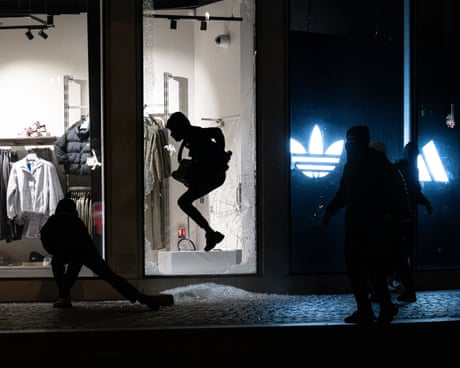
— Remix News & Views (@RMXnews) October 19, 2026

“It has its flags: Palestinian, Algerian and Moroccan. It has its allies, Antifa militias. It has its legal backing, the LFI deputies. It has a mode of operation: looting, raids. And finally, I would say it has an ideological, historical engine: hatred of France and revenge for colonization,” he continued.

Zemmour, a former journalist and author who leads the Reconquête party, has long promoted the “Great Replacement,” which he uses to describe native European populations being demographically supplanted by non-European immigrants, particularly from Muslim-majority countries, Africa, and Asia. The topic is openly discussed in France, including among intellectuals, academics, politicians, and even Michel Houellebecq, arguably the country’s most celebrated living author.

Zemmour’s remarks referred to massive riots on Oct. 17 that occurred in French cities across the country, where protests over the cost of living and public services turned into some of the country’s most violent demonstrations in years. Videos of burning buildings, looted stores, and violent clashes with police were spread across social media.

🇫🇷🔥 Unbelievable footage from Paris. Police are in open panic as they flee from rioters. State control has collapsed across the country. Follow: @RMXnews https://t.co/sPAoTLe8VZ

— Remix News & Views (@RMXnews) October 17, 2026

Similar unrest occurred the same weekend in northern Italy, including Milan, where youths looted shops and clashed with officers.

🇮🇹🔴 Taking inspiration from riots in France, 2nd- and 3rd-generation migrant youths in Milan looted luxury stores and supermarkets today (Oct. 18). Italian police are nowhere to be seen. Follow: @RMXnews https://t.co/eAauRfkJU4

— Remix News & Views (@RMXnews) October 18, 2026

Zemmour’s remarks came at a time when U.S. officials, including Donald Trump, have remarked on the riots as well.

“France is burning! The immigration of people from an entirely different world, people with hatred in their hearts, has shattered that once great country. Close your Borders and take control, before it is too late!” wrote Trump.

Vice President JD Vance also wrote on X: “Western liberals imported the third world into France and other countries in the name of diversity and compassion. They ignored fundamental questions of assimilation and compatibility. They were told it would lead to this and they didn’t listen.”

Western liberals imported the third world into France and other countries in the name of diversity and compassion. They ignored fundamental questions of assimilation and compatibility. They were told it would lead to this and they didn’t listen. I pray that France, a beautiful country of amazing people, will stop this madness before more of its landmarks burn. And I hope Americans are paying attention. This is the future congressional Democrats seek for your country.

— JD Vance (@JDVance) October 18, 2026

Zemmour, who finished fourth in the 2022 presidential election, has remained a prominent voice on immigration ahead of France’s next national vote, but his right-wing rival, Le Pen, is heavily favored to win the presidency. Zemmour typically polls around 5 percent in the first round.

The post ‘The true face of the Great Replacement’ – Right-wing politician Zemmour says French riots driven by ‘hordes of North African and African barbarians’ appeared first on Remix News.

  •  

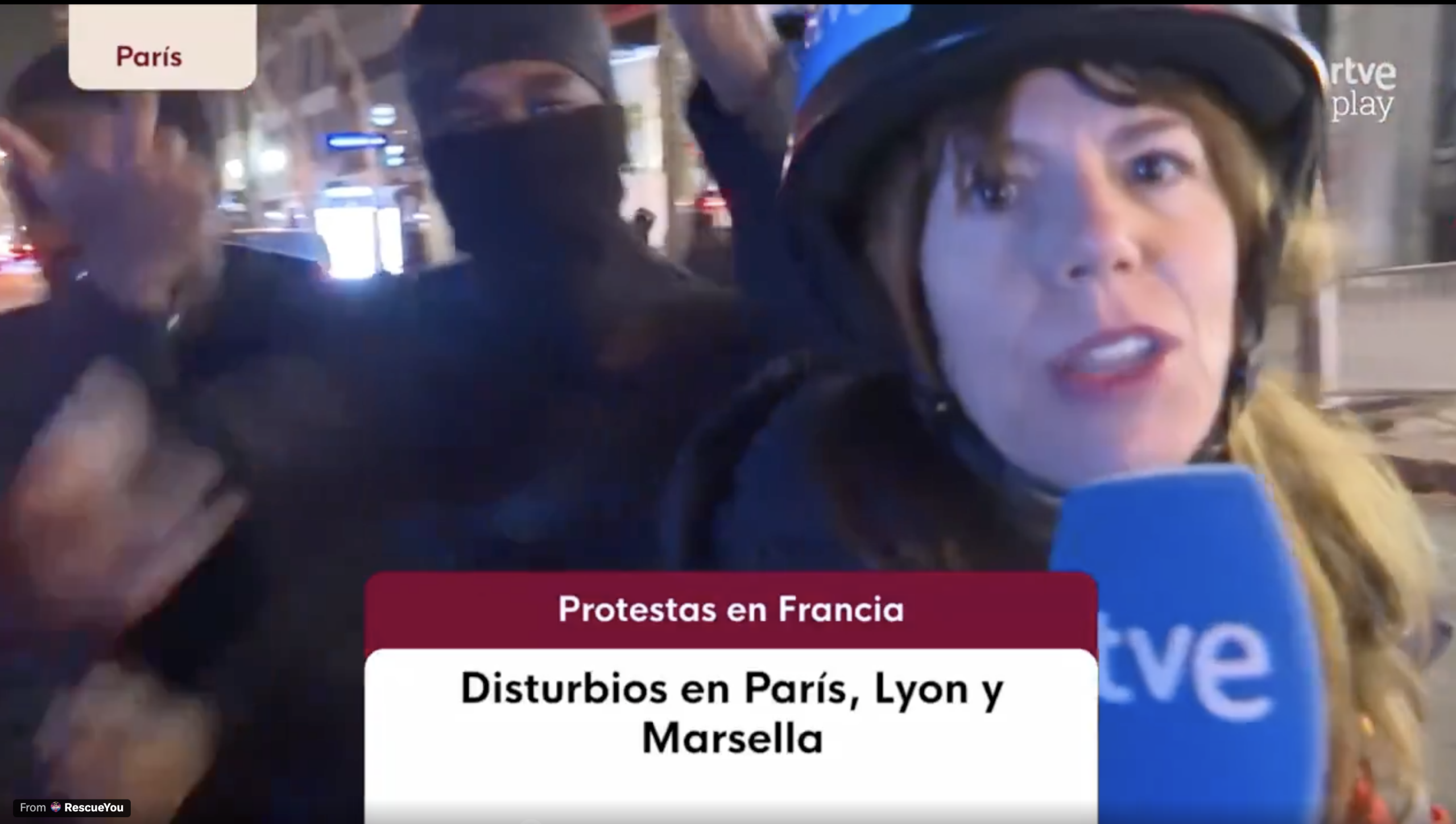
France: Arab and Black youths make throat-slitting gesture while Spanish journalist reports on French riots

A Spanish public television correspondent was forced to cut short a live report from the French capital Saturday night after several Arab and Black men approached her and made threatening gestures, including one simulating a throat-slitting motion, as nationwide protests turned violent, stores were looted, and historic buildings burned to the ground.

The female TVE journalist, wearing a protective helmet and holding a microphone bearing the network’s logo, was reporting from a Paris street on official figures when the Arab and Black men appeared behind her in video of the broadcast.

During the broadcast, she stated: “According to figures just released by the Minister of the Interior, some 550,000 people have taken to the streets across France and around 400 people have been arrested.” 

JUST IN: This is the true face of the French protests. A Spanish TVE journalist was reporting live from Paris when a group of Arab and Black males jumped behind her and made throat-slitting gestures. She was forced to cut off the broadcast. Follow: @RMXnews https://t.co/0HjambGvfC

— Remix News & Views (@RMXnews) October 17, 2026

Then, the youths crowded the screen with one Black male raising his arms and drawing a finger across his throat towards the camera.  He also gave the middle finger and made shooting motions.

The correspondent continued briefly, noting fires nearby, firefighters responding and the difficulty of maintaining the connection amid the disorder, before the live feed was interrupted.

The episode occurred during a day of demonstrations that began weeks earlier as student protests devolved into mass rioting with thousands of arrests, numerous schools set on fire in arson attacks, and even over 60 teachers and school staff suffering injuries.

🇫🇷🔴 JUST IN: The entire roof of the Limoges City Hall has collapsed after an arson attack during ongoing riots in France. Due to the catastrophic damage, this beautiful piece of European architecture is unlikely ever to be restored. Follow: @RMXnews https://t.co/AbqDbP3GIq

— Remix News & Views (@RMXnews) October 17, 2026

Interior Minister Laurent Nuñez put the nationwide turnout at about 550,000, including 110,000 in Paris. Prime Minister Sébastien Lecornu said more than 1,200 people were detained and condemned the “unacceptable levels of violence.” Paris Mayor Emmanuel Gregoire later said entire streets had been devastated.

Violence included clashes with riot police using tear gas and water cannons, looting, and arson. The city hall in Limoges was set ablaze, with its roof collapsing in video footage; similar attacks or defacement targeted buildings in Marseille and Lyon. Authorities reported dozens of injured officers.

🇫🇷⚡- "Wallah, f**k the police!" A Black male rioter shouts as he throws a massive piece of concrete from a rooftop in Paris down on police officers and their vehicles. The projectile missed but a strike from that height would likely be deadly. Follow: @RMXnews https://t.co/41nvVkxdmK
— Remix News & Views (@RMXnews) October 17, 2026

TVE had not issued a detailed public statement on the specific interruption in available reports as of early Sunday. The network’s correspondent was among those working amid the disorder that continued into the night.

The post France: Arab and Black youths make throat-slitting gesture while Spanish journalist reports on French riots appeared first on Remix News.

  •  

Rising fuel prices and shortages have helped drive ongoing protests and rioting in France

Remix News | October 19, 2026

France’s fuel shortages persisted Monday, with roughly 14 percent of the country’s service stations reporting at least one product out of stock and hundreds completely dry, as diesel prices hovered near multi-year highs and President Emmanuel Macron began a Gulf tour aimed at securing additional supplies.

Official data from the Economy Ministry showed 14 percent of stations nationwide facing shortages of diesel or gasoline as of 9 a.m. Monday, up from 10 percent on Saturday.

Independent trackers drawing on the same government feed reported more than 1,600 stations with at least one temporary shortage and several hundred that had run completely out of the fuels they normally sell. Diesel was among the products affected, with median prices around €2.35–€2.36 per liter.

The disruptions have been most acute at TotalEnergies stations, which have capped prices at €1.99 per liter for gasoline and €2.25 for diesel since July.

More than half of the company’s roughly 2,300 sites have reported shortages in recent days, according to data analyses, as drivers seek the cheapest fuel and inventories run low. Regions including the Grand Est, Île-de-France and Normandy have been among the hardest hit.

The shortages are rooted in global market tightness linked to disruptions in the Strait of Hormuz amid conflict involving Iran, which has constrained refined product flows, particularly diesel. However, Ukraine’s ongoing strikes against Russian refineries have also played a key role.

France and other G7 members agreed earlier this month, under French chairmanship and with International Energy Agency coordination, to release up to 100 million barrels of emergency oil and diesel stocks. France is drawing down 10 million barrels of its own diesel reserves over three months, with the government estimating the move could cut pump prices by 12 to 18 cents per liter starting around Nov. 1.

TotalEnergies has separately pledged reductions of roughly 8 to 12 cents at its stations over the same period.

Macron arrived in Kuwait on Monday for a three-day tour that also includes the United Arab Emirates, Bahrain and Qatar. The Élysée said the goal is to secure additional diesel and oil volumes and explore alternative shipping routes, with senior executives from TotalEnergies and Engie accompanying him.

A presidential adviser said that the aim is “additional volumes and more supplies for the French people, which will indirectly have an effect on prices.” Macron has linked the price surge to the Hormuz disruptions and maintained the trip despite the weekend’s violent cost-of-living protests, during which fuel prices were among the grievances cited by demonstrators.

Prime Minister Sébastien Lecornu has said the reserve release should begin easing prices from Nov. 1 and that electricity bills will not rise this winter. Opposition figures have called the plan insufficient or a “scam,” arguing it does little to address longer-term vulnerabilities or the immediate empty pumps. The government has maintained that strategic stocks remain adequate and that the main issue has been logistics and distribution under high demand.

Drivers across multiple regions reported long searches for open pumps over the weekend, with some stations posting “out of stock” signs for diesel. The combination of high fuel prices and shortages has added to broader cost-of-living pressures that [have fueled] large demonstrations and mass riots on Oct. 17, which turned violent in several cities.

  •  

France Burns

Protests in France | Abaca Press/Corsan O/Le Parisien/Abaca/Sipa USA/Newscom

Is this really about cost of living? Over the weekend, the civil unrest that had been at a simmer boiled over in cities all over France. Over 1,000 police officers were injured, with seven seriously injured. More than 2,400 people were arrested.

"Rioters…attacked city halls from Lille in northern France to Marseille in the south, where they broke into the local government headquarters and tipped over a bust of Marianne, a symbol of the French Republic," reports The New York Times. "A fire destroyed a tourist office in Lyon, and 1,500 shops were damaged or looted nationwide, according to Alexandre Bompard, head of the French federation of commerce and distribution, who estimated that the cost of repairs could run into hundreds of millions of dollars."

"They came prepared," claimed the French journalist Paul Amar on CNews. "They had the addresses of town halls. They had addresses of Jewish shop owners. In a street in Marseille, all businesses owned by Jews were set on fire. Businesses run by Muslims weren't." The Jewish Community Protection Service has disputed such claims.

Reason's Matt Welch has a good write-up of how the violence and destruction have altered Lyon, Paris, Marseille, and Limoges, where the city hall was burned and collapsed.

Ces images doivent faire le tour du monde. Nos voisins doivent savoir.

Lyon l'une des plus grandes villes de France le 17 octobre est l'une des villes les plus touchées.

A Lyon, aucun commerce n'a été épargné, oui aucun commerce n'a aucun épargné vous avez bien lu. Toutes les… pic.twitter.com/15dG6QB5lK

— Guillaume Herblot 🎖 (@Guigz75116) October 18, 2026

What was nominally about cost of living and budget issues appears to have expanded far beyond those. ("Free Palestine" and "ACAB" graffiti have been seen everywhere.) President Emmanuel Macron has blamed far-left protesters, saying they have taken advantage of the situation. Far-right leader Marine Le Pen has blamed the "Macronist administration that is out of steam, exhausted, and disoriented."

It's not clear to me how the possibility of that retirement age needs to be raised will in any way be changed by, say, donning black balaclavas and breaking into the Louis Vuitton store:

French rioters loot Louis Vuitton store located just 2 KM away from the Élysée. pic.twitter.com/cnb5aWczcN

— Drew Pavlou 🇦🇺🇺🇸🇺🇦🇹🇼 (@DrewPavlou) October 17, 2026

Here's how it all started: Since September 18, lycée (or secondary-school) students have held demonstrations, starting in the Paris suburb, Créteil. The students said the Education Ministry had neglected them—not enough resources, not enough teachers, and overcrowded classes. (The original demands were met and that strike ended, but not before sparking a wider movement.) This was all happening concurrently as the government was deciding its budget, and public-sector strikes were beginning. High social-program spending, an aging population, and high debt-to-GDP, plus an ever-increasing cost-of-living is resulting in a math problem that politicians have no real way out of except by raising the retirement age. Over the last few years, the French have had several hissy fits over the possibility of that happening.

Lawmakers from left-wing party La France Insoumise were at the first blockade on September 21, which has sparked questions about whether the party helped fuel the protests ahead of April's presidential election. I take all this—the disparate movements, the sheer volume of violence, the political-party involvement, the elections coming up—to mean that what started as an education-quality/cost-of-living protest has been used to lodge all kinds of grievances, and is attracting allies with an unquenchable thirst for violence and destruction.


Scenes from New York: "Darrel Rodriguez, 26, was shot on Saturday in the 7th Avenue Station on 53rd Street, a few blocks from Times Square, the police said. An unidentified man approached Mr. Rodriguez on the northbound E train platform, drew a gun and shot him once in the chest, they said," reports The New York Times. The man who shot Rodriguez was wearing a full balaclava-style face covering, and has not been found by the cops.

Philadelphia enacted a ban on such masks back in 2023. Just anecdotally, I've seen a lot of them in New York, but not by people trying to stay warm in the cold—these types of masks are used by people hopping turnstiles, stealing from bodegas, and more. Some bodega owners have started posting signs on their doors saying masks aren't allowed, since it's become such a problem.

"As of Oct. 11, there have been 1,697 crimes in the transit system since the start of the year, 27 more than the same period in 2025," reports The New York Times, citing Police Department figures.


QUICK HITS

  • Inside the property-tax rebellion.
  • In Texas, Ken Paxton appears to have lost the support of suburban women, according to The Washington Post.
  • "Jewish life in the Emirates has grown quieter and less visible," notes The New York Times. "Religious symbols have disappeared, and gatherings have moved into private. Many have become more guarded about their online presence and their willingness to speak to the media. Some are reconsidering how openly to identify themselves as Israeli or Jewish, while others weigh whether they can still build a life in a nation they once considered a haven."
  • Can you really see everything?

YOU CAN SEE EVERYTHING is doing a public service if it gets the general population to question why, precisely, folks lend so much credence to documentaries as vehicles of truth. https://t.co/n7CHwkmDmr pic.twitter.com/IHUvEbKECl

— Sonny Bunch (@SonnyBunch) October 18, 2026

  • "I recently attended a meeting of the Democratic Socialists of America, where I officially enrolled as a member. Though I was new to the party, I put forth a number of proposals, many of which were met with considerable enthusiasm and, I'm happy to report, have now been incorporated into their manifesto," writes Larry David in a satirical essay for Airmail. "We contend that the only way anyone can be rehabilitated is through the simple act of love. When the D.S.A. takes over, it will be our policy to close the jails and release all prisoners. Once released, the former prisoners will continue to walk around in their orange jumpsuits, the easier to spot them. People will be encouraged to give them a pat on the back, offer some words of encouragement, and maybe even get them to open up about their crimes. Imagine how upsetting it must be to know you've taken a life! To err is human, to forgive, divine. With empathy and compassion, it's easy to see a day when these former convicts will be contributing to society in a very meaningful way." It's not that funny of an essay, but I think it's great for more people to be talking about how asinine DSA ideas are.

The post France Burns appeared first on Reason Magazine.

  •  

France imposes partial curfews in several cities, including parts of Paris

Interior minister concedes police ‘lost control’ of weekend protests as PM vows to restore public order

Partial curfews have been issued for a number of French cities, including parts of Paris, after the government admitted police had “lost control” during violent weekend protests around the country.

Sébastien Lecornu, the French prime minister, said after an emergency cabinet meeting on Monday he was “fully resolved to restore public order” and had called for “local and partial” curfews if needed. There was “no question” of imposing a full curfew on entire cities, he said.

Continue reading...

© Photograph: Abdul Saboor/Reuters

© Photograph: Abdul Saboor/Reuters

© Photograph: Abdul Saboor/Reuters

  •  

Europe’s new Franco-German auto pact will protect combustion engines, not European jobs

Berlin and Paris spent months negotiating over the future of Europe’s auto industry.

Germany wanted to keep selling new combustion-engine cars beyond 2035. In return, France wanted strict “Made in Europe” rules: public money spent on electric vehicle (EV) purchase incentives, subsidies and government contracts should benefit cars genuinely made in Europe, not simply assembled here. 

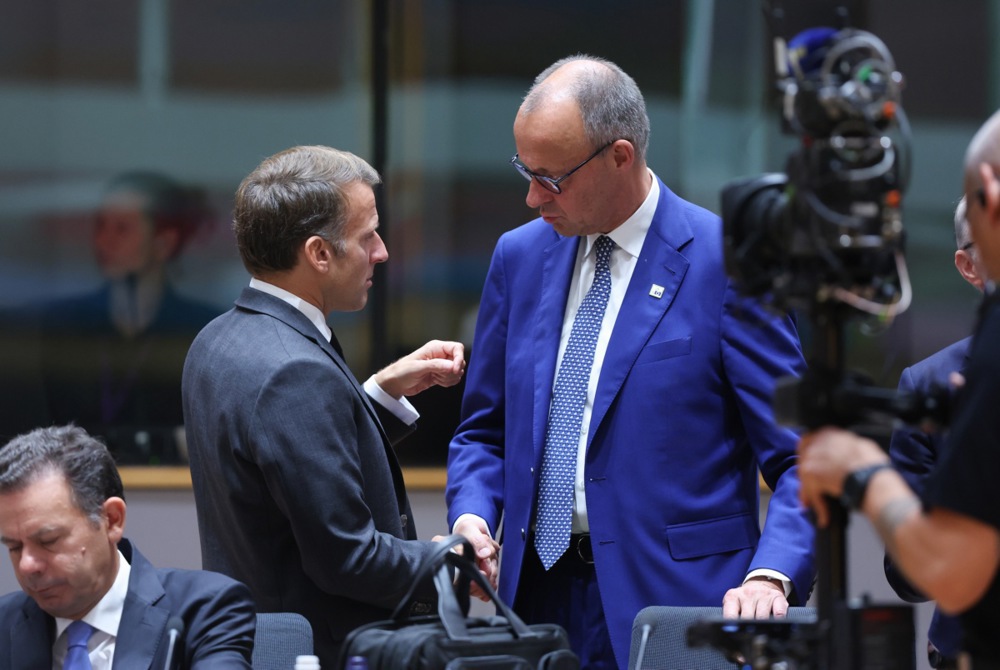
One concession in exchange for the other. French president Emmanuel Macron and German chancellor Friedrich Merz have now sealed the deal.

Both can claim victory at home, and both say they want the same thing: to strengthen Europe’s auto industry against Chinese competition. 

But the trade-off undermines that very goal. It rightly pushes for more European production, but pays for it with less ambition for electric vehicles.

For Europe’s automakers to compete, two things need to happen: More of the value generated by car manufacturing must stay in Europe, and the transition to electric vehicles must remain on track. Trading one for the other weakens both. 

Value creation is already moving elsewhere 

On one point, France is right: a growing EV market alone won’t protect European jobs. Many of the most important components in electric cars already come from China, especially batteries.

Meanwhile, Chinese automakers are building factories in Hungary and Spain, securing direct access to the European market. 

The risk is clear: cars assembled in Europe from imported components qualify as European products, benefit from purchase incentives and win public contracts.

Final assembly stays in Europe, but much of the economic value is created elsewhere. European auto suppliers have already cut more than 100,000 jobs in two years, and the European Commission warns that up to 600,000 more could disappear over the next five to 10 years. 

That’s where the proposed Industrial Accelerator Act comes in. It would link public spending on subsidies, purchase incentives and government procurement to production in Europe.

This isn’t just about shutting out foreign competition. It steers demand to where it strengthens Europe’s industrial base.

To work, the rules must target the components that will shape the industry’s future: battery cells, software, electric drivetrains and power electronics.

“Made in Europe” can’t simply mean attaching the wheels here. 

That doesn’t mean every nut and bolt must come from the EU.  The auto industry relies on global supply chains and trusted trading partners.

But a law riddled with exemptions would be little better than no law at all: It would create more red tape without bringing a single new factory to Europe. 

Factories need customers 

Even the best industrial policy will fail without buyers. A battery factory can only make money if it produces enough batteries. Yet Europe’s battery plants are running well below capacity because they don’t have enough orders. Every battery that goes unproduced drives up the cost of those that are made. Factories, machinery and workers still have to be paid for. 

Since 2022, roughly a quarter of announced battery projects in the EU have been canceled or put on hold. 

This is why Germany’s push to delay the phaseout of combustion-engine cars is so damaging. Every combustion-engine car sold instead of an EV means one fewer battery that could be made in Europe. The very factories meant to make “Made in Europe” a reality would lose potential customers. 

The best way to boost demand for European batteries is to build more small, affordable EVs in Europe. That’s where the biggest sales volumes are. Yet German automakers in particular have been slow to embrace this market, despite significant demand potential in Germany itself. Delaying the combustion-engine phaseout would only give them another reason to hold back.  

Slow down, lose out

For European automakers, the stakes go far beyond their home market. Sell fewer EVs at home, and manufacturers will launch fewer new models, produce fewer cars and face higher costs. That will make it harder to compete abroad, too. Giving combustion engines more time won’t close the gap with China. It could make it wider. 

Political uncertainty only makes matters worse. Automakers plan new models, factories and supplier contracts years in advance. Every fresh debate over exemptions gives investors and consumers another reason to hesitate. 

Companies investing billions in EVs and batteries – and consumers considering buying an electric car – need to know that policymakers won’t change direction tomorrow.  

The Franco-German bargain ignores economic reality. The future of the car is electric, and China figured that out long ago.

Beijing is doing everything it can to build an unbeatable lead in EVs, including through unfair practices such as massive government subsidies.

And Europe? It’s haggling over more time for yesterday’s technology. At stake is nothing less than the auto industry – the backbone of Europe’s industrial economy and a major source of jobs.

This deal is not yet law. A better deal would be simple: Europe should pursue electric vehicles with the same determination as China while making sure the jobs, factories and economic benefits stay in Europe. 

  •  
❌