❌

Reading view

Tap water no longer drinkable in Norwegian town as climate-related thawing releases heavy metals

Warning for other Arctic communities as residents told not to use water in Longyearbyen in Svalbard, one of the fastest-warming places in the world

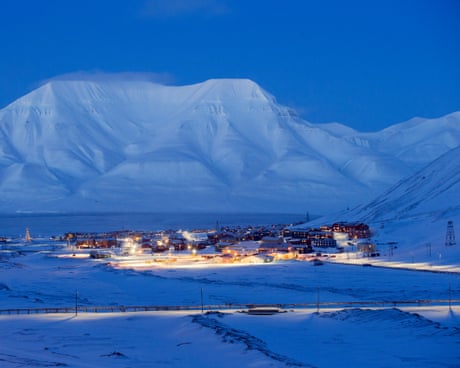
Residents of a remote town in Norway that is in one of the fastest-warming places in the world have been told they must no longer drink tap water due to heavy metal contamination that scientists have linked to the thawing permafrost.

Longyearbyen, in the archipelago of Svalbard, gets its main drinking water supply from a 1.5 mile-long (2.5km) dammed lake called Isdammen, or “ice pond”. Higher temperatures as a result of the climate crisis have thawed permafrost, leading to newly exposed bedrock leaching metals into the pond.

Continue reading...

© Photograph: Rimante_Hegland/Getty Images/iStockphoto

© Photograph: Rimante_Hegland/Getty Images/iStockphoto

© Photograph: Rimante_Hegland/Getty Images/iStockphoto

  •  

Norwegian Divers May Have Found the World’s Oldest Anchor, a Grooved Stone From the Stone Age

Five kilometres (about three miles) of open sea, strong currents and waves that give no warning. That is the distance between the coast of Bømlo, in western Norway, and Hespriholmen, a small rocky islet that archaeologists regard as the most emblematic Stone Age site in the region. For thousands of years, groups of fishers and […]

  •  

Trump Threatens Norway After Missing Out on Nobel Peace Prize Again

US President Donald Trump has accused the Norwegian Nobel Committee of discrediting the Peace Prize after it awarded the 2026 honour to South African jurist Navanethem Pillay, warning Norway that Washington would not forget the decision.

US President Donald Trump has launched an attack on Norway and the Nobel Peace Prize committee after being overlooked for the 2026 award, declaring that the decision had permanently damaged the prize’s credibility and left an indelible stain on the country responsible for selecting its recipient.

Speaking at a campaign rally on Friday, 9 October, Trump insisted that his diplomatic achievements entitled him to the distinction and accused the committee of allowing political ideology to determine its choice.

His remarks followed the announcement that South African lawyer and former United Nations human rights chief Navanethem “Navi” Pillay had received this year’s prize for her contribution to peace and international law.

“The United States of America, represented by me as your president, should have received the Nobel Peace Prize, but didn’t,” Trump told supporters.

He described the committee’s decision as disgraceful and embarrassing before issuing a pointed warning: “We will not forget, Norway.”

The American president went further, claiming that the award had been discredited by radical ideologues whom he characterised as opponents of democracy and civilisation. He also questioned Pillay’s qualifications, telling his audience that he had never heard of the South African jurist.

Nobel Committee Recognises International Justice

The Norwegian Nobel Committee’s announcement honoured Pillay’s contribution to peace and international law.

Born in Durban in 1941 under South Africa’s apartheid system, Pillay became a prominent human rights lawyer before serving as a judge at the International Criminal Tribunal for Rwanda and subsequently at the International Criminal Court (ICC). She was also UN High Commissioner for Human Rights between 2008 and 2014.

Her judicial career included work on cases involving genocide and sexual violence during the Rwandan conflict. More recently, she chaired the UN Independent International Commission of Inquiry on the Occupied Palestinian Territory, including East Jerusalem, and Israel. Israel rejected the commission’s findings.

The award comes at a contentious moment in Washington’s relations with international judicial institutions. On the same day as the Nobel announcement, the Trump administration introduced new sanctions against the ICC, expanding American restrictions and bringing Washington into conflict with European governments that support the institution.

Trump’s Claims of Diplomatic Success

Trump has repeatedly argued that his interventions in international disputes justify receiving the Nobel Peace Prize. During Friday’s rally, he claimed to have settled eight wars and suggested that he was approaching further breakthroughs involving Iran and Russia’s war against Ukraine.

Those claims remain contested. Several disputes cited by Trump have not resulted in comprehensive peace agreements, while others involved ceasefires or diplomatic arrangements that did not permanently resolve the underlying conflicts.

His administration also participated alongside Israel in the war against Iran earlier this year. Although Washington subsequently pursued a negotiated settlement, the conflict raised questions about the relationship between American military intervention and Trump’s presentation of himself as an international peacemaker.

Trump has likewise maintained that he can secure an end to the war in Ukraine, although Russian military operations continue and no comprehensive settlement has been reached.

The president’s dispute with the Nobel Committee is not new. He has frequently contrasted his diplomatic record with that of former President Barack Obama, who received the prize in 2009, less than a year after taking office.

Machado’s Medal and the Norwegian Connection

Trump’s frustration has also been shaped by his relationship with Venezuelan opposition leader María Corina Machado, who received the 2025 Nobel Peace Prize for her campaign for democratic rights and political change in Venezuela.

In January 2026, Machado presented her Nobel medal to Trump in a symbolic gesture. However, the Nobel Committee subsequently reaffirmed that a Nobel Prize cannot be transferred to another person, regardless of what happens to the physical medal.

The president’s latest criticism also draws Norway into a dispute over which its government has no direct authority. The Nobel Peace Prize is awarded by an independent five-member committee appointed by the Norwegian parliament, rather than by the Norwegian government.

Under the rules governing the award, the committee is responsible for selecting the individual or organisation judged to have made the greatest contribution to peace in accordance with Alfred Nobel’s will.

Trump’s warning therefore raises a separate diplomatic question: whether his dissatisfaction with an independent committee’s decision will have consequences for relations with Norway, a longstanding NATO ally.

For European governments, the controversy also comes against the background of Washington’s escalating confrontation with international courts. Russia has separately demanded the extradition of ICC President Tomoko Akane and other judicial officials over proceedings connected with the war in Ukraine.

The Nobel Committee’s decision to honour a former ICC judge, just as the institution faces pressure from both Moscow and Washington, has consequently acquired significance beyond the question of Trump’s personal ambitions.

The 2026 Nobel Peace Prize will be formally presented in Oslo on 10 December.

  •  

‘They want to shut me up’: Norwegian activist fights 20‑year Greek prison threat over asylum aid

Two human rights defenders are facing a Greek court in Rhodes and 20 years in jail over allegations they belong to a criminal organisation.

The hearing targets Norwegian activist Tommy Olsen and Panayote Dimitras, a legal administrator and representative of the NGO Greek Helsinki Monitor.

“They want to shut me up because what I’ve been doing over the last six to seven years is revealing their wrongdoings,” Olsen told EUobserver on Monday (5 October).

The hearing, which is taking place on Tuesday, is years in the making, following repeated attempt by Greek authorities to punish the pair for helping people seek asylum on the island of Kos in 2021.

Both deny any wrongdoing and Amnesty International earlier this year said the two were being prosecuted for their human-rights work of documenting serious rights violations.

This article continues, but the full version is available only to EUobserver.com subscribers. Visit account.euobserver.com/membership

  •  

This Fossil Predates Dinosaurs by 300 Million Years — and Scientists Still Aren’t Sure What It Was

Finding fossils usually means months of fieldwork, a hammer, and a lot of patience. In Finnmark, Norway’s northernmost region, it took none of that. According to the University of Cambridge, a cluster of rocks had broken loose from a cliff above a sheep field. When they split open on landing, they exposed a fossil of […]

  •  

Archaeologists Uncover a Rare 4,000-Year-Old Tomb in Norway — Built From Slabs That Weigh Hundreds of Kilograms Each

The team wasn’t even looking for a grave. Kjersti Væge, project director at the Museum of Cultural History at the University of Oslo, was overseeing a dig at Kongefaret 8, on the Svinesund plateau near Halden, in southeastern Norway — a few kilometers from the Swedish border. The site was thought to hold a Stone […]

  •  

EU welcomes Cambodia to WTO appeal arrangement

The EU welcomes Cambodia’s decision to join the Multi-party Interim Appeal Arbitration Arrangement (MPIA) for WTO members, contributing to efforts to uphold a rules-based multilateral trading system. 

With Cambodia’s participation, the MPIA now covers 62 World Trade Organization (WTO) members and 60.4% of world trade.  

The MPIA brings together participants from all continents and at different levels of development, united by a shared commitment to upholding the rules-based trading system. 

The MPIA preserves the right to appeal in trade disputes among participating WTO members, at a time when the WTO’s Appellate Body remains non-functioning. It helps ensure that disputes can continue to be resolved in an orderly and binding manner, avoiding appeals 'into the void'. 

“I welcome Cambodia to the MPIA. The arrangement plays an important role in upholding the rules-based trading system. Each new participant helps reinforce the predictability, stability and credibility of global trade rules. I encourage other WTO members to join the MPIA,” said EU Trade and Economic Security Commissioner Maroš Šefčovič. 

Background 

The MPIA was established in 2020 and has proven its effectiveness in many WTO disputes.  

Under the MPIA, appeals are heard by arbitrators randomly selected from a pool of 10 standing appeal arbitrators set up by the participating WTO members. These arbitrators are persons of recognised authority, with demonstrated expertise in law, international trade and WTO agreements.  

The MPIA is open to all WTO members as a practical tool for appeal arbitration, pending the restoration of a reformed and fully functioning WTO dispute settlement system. 

As of 1 June 2025, the MPIA has an updated pool of appeal arbitrators to ensure that appeals continue to be heard by independent arbitrators of the highest calibre. 

At the WTO Ministerial Conference that took place earlier this year, MPIA ministers stressed the importance of the MPIA for the security and predictability of the multilateral trading system.  

The current MPIA participants are Australia, Barbados, Benin, Brazil, Cambodia, Canada, China, Chile, Colombia, Costa Rica, Ecuador, the European Union (and its Member States), Guatemala, Hong Kong (China), Iceland, Japan, Liechtenstein, Macao (China), Malaysia, Mexico, Moldova, Montenegro, New Zealand, Nicaragua, Norway, Pakistan, Paraguay, Peru, the Philippines, Singapore, Switzerland, Ukraine, the United Kingdom, Uruguay and Vietnam.

More information

MC14: Supporting the rules-based multilateral trading system: the role of the MPIA

  •  

Gjøa: The Little Ship That Conquered the Arctic

On October 19, 1906, a modest 70-foot sailing vessel slipped into San Francisco Bay. Compared with the large steamships and ocean-going vessels that crowded the harbour, she appeared unremarkable. Yet the small ship had attracted a small crowd that day, for she had just accomplished one of the greatest feats in the history of exploration.

The vessel was Gjøa, and aboard her were the Norwegian explorer Roald Amundsen and six companions. After a voyage lasting more than three years through the frozen waterways of the Canadian Arctic, they had become the first people to successfully navigate the Northwest Passage—a route that generations of explorers had sought, and many had died trying to find.


Roald Amundsen arrives at Nome aboard Gjøa, dated 31 August 1906. Credit: Wikimedia Commons


© Amusing Planet, 2026

  •  
❌