❌

Reading view

The Guardian view on Trump and Putin: Ukraine’s future is not theirs to bargain away | Editorial

Russia wants America and China to decide Ukraine’s future without Kyiv. Europe must challenge this dangerous return to diplomacy of the strong for the strong

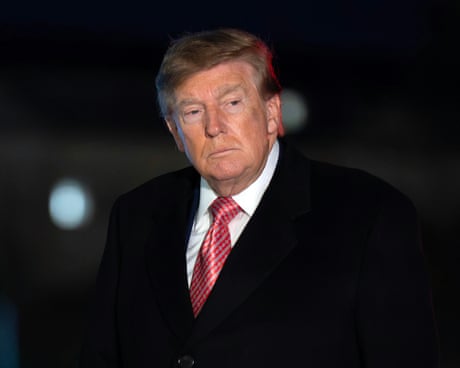
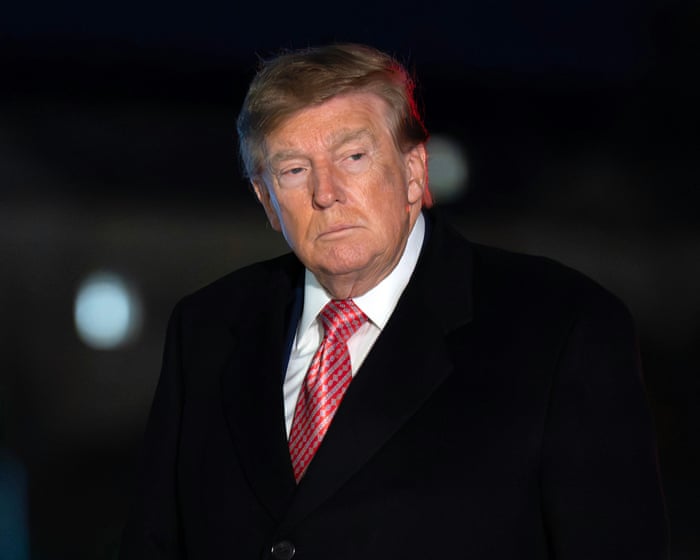
Does Vladimir Putin know exactly how to play Donald Trump? The history of chummy phone calls, high-profile meetings and attempts to bring Russia in from the cold certainly suggests that Moscow’s thuggish ruler has a hold on this American president. If Mr Trump agrees to negotiate Ukraine’s future with Mr Putin and China’s Xi Jinping without Ukraine at the table, he will have handed the Russian leader a victory before talks begin. The message will be that strongmen are ruling the world and determining the fate of weaker nations.

Ukraine has the right to determine its future. That right cannot be waved away by a self-serving Russian proposal, however much it indulges Mr Trump’s belief that world affairs should be settled by powerful men. The scales are falling from European eyes. Trumpian America is raising doubts about whether it will help deter aggression or even honour its Nato commitments. If Washington now rewards Moscow and pressures Ukraine to accept a raw deal, it would be a betrayal. European governments would wonder where America might be in the future when their own security is threatened.

Do you have an opinion on the issues raised in this article? If you would like to submit a response of up to 300 words by email to be considered for publication in our letters section, please click here.

Continue reading...

© Photograph: José Luis Magaña/AP

© Photograph: José Luis Magaña/AP

© Photograph: José Luis Magaña/AP

  •  

Trump defends Russia sanctions waiver, says he does not want to drive Moscow from talks

Trump WEF

US President Donald Trump wrote in a Truth Social post on 18 October that he did not want to “drive, foolishly, Russia away from the bargaining table.” He also wrote: “Signing that document at this time will do that, and I can sign it later, or any time that I want!”

Trump was referring to sanctions and tariffs under the Lindsey O. Graham Sanctioning Russia and Iran Act of 2026, which he waived in an executive order on 16 October, days before the measures were due to take effect. The waiver suspends additional economic penalties intended to pressure Moscow over its war against Ukraine, while leaving earlier US sanctions in place. The decision came weeks before the 3 November midterms, in which Republicans are defending slim majorities in both chambers, and analysts said the penalties could have pushed up oil prices for Americans already paying more, largely because of the US-Israeli war with Iran, Reuters reported.

Trump says Zelenskyy could have made a better deal two years ago

A week before the waiver, Trump had announced a deal for Russia to increase diesel supplies to global markets. The Treasury also issued a license, valid until 7 April 2027, permitting certain transactions in Russian-origin diesel.

In the Truth Social post, Trump accused Ukrainian President Volodymyr Zelenskyy of targeting Russian diesel refineries, saying the strikes were “seriously hurting the world diesel markets, including those in the United States.” Kyiv had paused its refinery strikes for three days at Washington’s request after Trump declared an energy ceasefire on 11 October, which Russia never confirmed, then resumed them. Since then, Russia has struck Ukraine’s energy sector 76 times, Zelenskyy said on 18 October.

kyiv attack
Explore further

Kyiv gets no warning of the first of two Russian ballistic waves, hours after Zelenskyy said US alerts were back

Trump wrote that Zelenskyy “doesn’t want to end this war, and probably never did,” and that he “could have made a better deal two years ago than he can now.”

“His country is in shambles, a large portion of his land is lost, his oceans and seas are gone, and his male population is low, wounded, and/or dead,” Trump added.

He also said Russia was “doing very little, if anything, to help” Iran and that he wanted to keep it that way.

A day earlier, Trump said he had not made a final decision

On 17 October, Trump told reporters at Mar-a-Lago that he had not announced his final decision. “A lot of you don’t know what my decision is yet, but we’ll figure it out, and you’ll figure it out,” he said, Reuters reported.

“I think the president wants to take the 60-day period of time to sort of analyze what imposing both sanctions and tariffs will mean to the global economy and even to the US economy,” US Secretary of State Marco Rubio told reporters before departing for Uzbekistan the same day.

Zelenskyy calls the waiver a pity as Republicans split

Zelenskyy called it a “pity” that Trump had waived sanctions under a law named for the late Senator Lindsey Graham, who “really believed in Ukraine.” He said he hoped Trump would change his decisions, NBC News reported.

Discussing the diesel deal on NBC’s Meet the Press, Zelenskyy said US oil prices had risen because shipping through the Strait of Hormuz was blocked, not because of Ukraine.

month before diesel waiver trump’s envoys had already pitched kyiv russian gas · post jared kushner steve witkoff ukrainian president volodymyr zelenskyy 7 2026 presidentgovua джаред кушнер стівен віткофф володимир
Explore further

A month before the diesel waiver, Trump’s envoys had already pitched Kyiv on Russian gas, NYT says

On 17 October, Zelenskyy told journalists that “the decision to undo all of this, to block all of it, seems wrong to me” and that it “definitely helps only the Russians.” His remarks appeared in Ukrainian on his official Telegram channel.

“Sanctions relief will continue. I think the diesel deal and the move regarding the Lindsey Graham Act are not the end of it. Unfortunately,” Zelenskyy said.

On 19 October, Zelenskyy wrote that partners had again given no warning of Russia’s overnight ballistic attack and that blocking missiles for Ukraine’s air defense while Russia gets sanctions eased or postponed amounts to partners denying reality.

Republican Senator James Lankford defended Trump’s decision on NBC’s Meet the Press, saying the president was “choosing the American people first.”

Senator Darline Graham, Lindsey Graham’s sister, whom Trump has endorsed for a full term, said at a campaign stop on 17 October that she would “choose to keep the pressure on Russia.”

“I don’t trust Putin and I don’t trust Russia,” Darline Graham said.

She did not directly criticize Trump but said she would not have made that choice, Reuters reported.

  •  

Rubio reassures Greece of its “importance to USA” after Guilfoyle ousting

U.S. Secretary of State Marco Rubio sought to reassure Greece that Kimberly Guilfoyle’s departure would not diminish its importance to Washington, promising a successor with access to President Trump and his full confidence. “Greece deserves a strong and good ambassador that has access to and the confidence of the president,” Mr. Rubio told Matthew Boyle […]

The post Rubio reassures Greece of its “importance to USA” after Guilfoyle ousting appeared first on Keep Talking Greece.

  •  

Kyiv gets no warning of the first of two Russian ballistic waves, hours after Zelenskyy said US alerts were back

kyiv attack

Russia attacked Kyiv with ballistic missiles in two waves overnight on 18–19 October. Information from partners did not arrive before the first wave, at around 23:00, Air Force spokesperson Yurii Ihnat said on national television. A warning came before the second wave, at around 03:00, but the window was short, he told NV.

Hours earlier, Ukrainian President Volodymyr Zelenskyy told NBC that US warnings of Russian ballistic launches were working again after three days without them, and that only the United States has that intelligence. Those warnings have for years given Ukrainian authorities several minutes to sound alarms and let civilians reach shelters before ballistic missiles hit.

“Once again, a Russian ballistic attack in several waves overnight, and once again there was no warning from partners,” Zelenskyy wrote. It was at least the third ballistic strike on Kyiv in a week to begin without warning from partners, following attacks on 12 October and 13 October.

Metro station damaged on Kyiv’s left bank

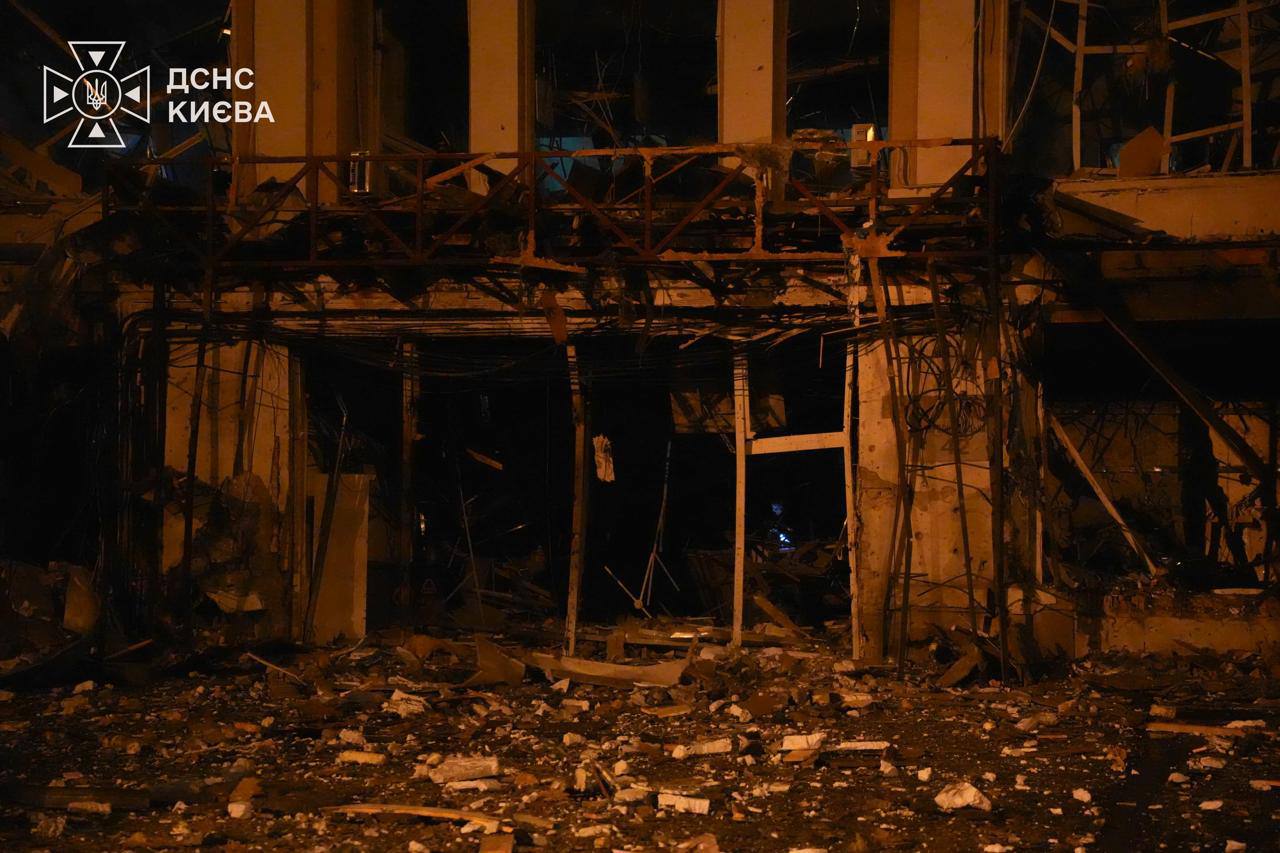
One person was killed and eight injured in Kyiv, Ukrainian Prime Minister Serhii Koretskyi said. A strike damaged a metro station on Kyiv’s left bank, and debris broke the rails beside it, Mayor Vitali Klitschko said. City authorities said the damaged station was above ground, closed Chernihivska and Lisova stations, and said red-line trains would run only between Akademmistechko and Darnytsia. The attack also damaged a 25-story building, a medical facility, and the Cosmo Multimall shopping center in the Solomianskyi district, NV reported, and Zelenskyy said a school was hit too.

The attack also damaged one of Ukraine’s main ice arenas, on Shalett Street in Kyiv, which hosts Ukrainian championship hockey games and youth training, hockey Telegram channel Flamingo reported. Parts of the facade, metal structures, and roof were damaged, but the ice surface showed no significant visible damage, according to preliminary information, Suspilne reported.

Damage in 11 oblasts, three missing in Irpin

Koretskyi said energy and infrastructure were the main targets, with damage in 11 oblasts. Russia also hit warehouses of medicines, railway stations, shops, and homes, he said. In Kyiv Oblast, Russian strikes injured six people in Irpin, including three children, and three more were missing, oblast head Tymur Tkachenko said. In Kharkiv Oblast, six people were injured, including two children, Koretskyi said. In Rivne Oblast, four people were injured, and one of them was hospitalized, regional police reported.

Zelenskyy said that more than 10 energy facilities were damaged and at least 550,000 families lost power. Ukrenergo reported new outages in 10 oblasts: Volyn, Zhytomyr, Rivne, Ternopil, Khmelnytskyi, Vinnytsia, Kirovohrad, Kharkiv, Odesa, and Mykolaiv. In Volyn Oblast, about 15 jet-powered Shahed-type drones targeted the region, and around 66,000 customers were without power on the morning of 19 October, oblast head Roman Romaniuk said. Kovel, Manevychi, and Lutsk were hit hardest, and no casualties were reported. In Vinnytsia Oblast, a critical infrastructure facility in Koziatyn was damaged, and power there would stay unstable for some time, city council secretary Iryna Repalo said, Suspilne reported.

Zelenskyy said Russia fired 16 ballistic missiles at Kyiv and Kyiv Oblast. The Air Force reported that Russia also used Iskander-K cruise missiles and 269 drones, and that by 09:00 air defenses had shot down or suppressed four Iskander-K cruise missiles and 243 drones. Its preliminary count did not list any ballistic missiles among the intercepted targets.

Rubio denies any pause and points to a software problem in Ukraine’s warning system

On 19 October, Rubio told reporters in Samarkand, Uzbekistan, that “there’s been no pause” in intelligence-sharing with Ukraine, Reuters reported. He said he did not know where Zelenskyy was getting such claims and that he should focus on ending the war. He also said he did not know whether a failure had happened the previous night, but that a few nights earlier there had been a software problem with “their early warning system,” and that US European Command was looking into the strikes, The Guardian reported. US officials had not mentioned a software glitch before, and in at least one case Ukraine was told that bad weather over southern Russia had hidden launch preparations, the newspaper noted.

Ihnat said Ukrainian specialists and their partners were working to establish why information about the first launch had not arrived. He added that similar gaps had occurred during earlier attacks.

Zelenskyy wrote that when missile supplies for Ukraine’s air defense are blocked while Russia gets sanctions relief or delays, “this is, unfortunately, a denial of reality on the part of partners.” A night earlier, Russia had hit Ukraine’s energy system again, while Ukrainian drones set fire to St. Petersburg’s oil terminal despite Washington’s pressure to stop refinery strikes.

  •  

Ballistic missile warnings are back, but the Starlink cap stays, Zelenskyy says: Ukraine’s two US lifelines, one restored

warnings back starlink cap isn’t zelenskyy says ukraine’s two lifelines one restored · post ukrainian president volodymyr interview nbc’s meet press aired 18 2026 ukraine news reports

The US has resumed sharing intelligence on Russian ballistic missile launches with Ukraine after a pause of several days, Ukrainian President Volodymyr Zelenskyy told NBC News on 18 October. The blackout fell on days when Russia was firing ballistic missiles at Ukraine. Limits on the Starlink satellite service that Ukraine’s forces rely on remain in place, he said.

Russia has leaned on ballistic missiles in this month’s strikes on Ukraine’s grid, firing 39 in a single attack, and Ukraine is short of interceptors to stop them. Washington has used its support as leverage, reportedly telling Kyiv to spare Russian refineries or lose US intelligence and arms.

Three days without warnings

The sharing had been blocked for some period of time before it was restored, Zelenskyy said on Meet the Press.

“We are very thankful for this. Now it works,” he said.

Ukraine gets other intelligence from Europeans and dozens of other partners, he explained. But only the United States has the data that tells Kyiv when Russia launches ballistic missiles.

“We didn’t get it during ballistic attacks during three days,” Zelenskyy said.

A timely warning gives Ukraine’s air defenses extra minutes to prepare and lets authorities alert civilians, Liga noted. Late on 12 October, Russian ballistic missiles hit Kyiv before the air-raid alert reached people, with no advance data on launches from Russian territory. The next day, US President Donald Trump said Washington was still sharing intelligence. Two days later, Zelenskyy said Kyiv had received no US warnings of incoming ballistic missiles while it paused its strikes on Russian refineries at Washington’s request. That pause followed the energy ceasefire Trump declared on 11 October, which Russia never confirmed.

The White House in Washington DC, USA. Illustrative image: Wikimedia Commons.
Explore further

“He thinks Ukraine is a weak link and that it needs to be squeezed into giving in”: diplomat on why Trump pressures Kyiv, not Moscow

Starlink still capped, Kyiv says

Starshield, the military version of Starlink, still cuts out above 161 km/h, Zelenskyy said, too slow for Ukraine’s interceptor drones to catch Russia’s jet-powered Shahed-type drones. NBC News, which aired the interview, separately reported that Starlink services had resumed at normal speed. He said Ukraine’s generals and government believe the order came from the US government and SpaceX carried it out, though he did not know who exactly made the call. Ukraine had instead asked SpaceX and Trump to open Starlink over Russia so it could hit ballistic missile launchers, he said.

“If [Trump] will personally decide to lift this decision, it will immediately work as it was before,” he said.

US Treasury Secretary Scott Bessent, who appeared on the same show, called Zelenskyy’s charge “very reckless” and said Trump and Secretary of State Marco Rubio had denied any administration role. Asked about the break in intelligence sharing, he said he did not know anything about it but that Zelenskyy should be “very careful about making statements like this that aren’t true.” Reuters had reported, citing three officials, that White House officials ordered the Pentagon to limit the service.

Asked whether Ukraine could win without the United States, Zelenskyy said it would be very difficult.

“But if the United States will support Putin, I mean, it’s unbelievable, it’s tragedy. It’s historic mistake and big tragedy,” he said.

He also said his team had received word that US negotiators wanted to meet, and that he had offered to meet in Brussels or London, hoping the US team would be ready this week.

The warnings are back, but they stopped once without explanation. Ukraine’s defense against Russia’s missiles still runs through decisions made in the US.

  •  

22 House lawmakers press Trump to implement Russia sanctions law. Diesel deal draws bipartisan backlash

US President Donald Trump signs the Lindsey O. Graham Sanctioning Russia and Iran Act in the Oval Office, 18 September 2026

A bipartisan group of 22 House lawmakers is urging President Donald Trump to fully implement the new Russia sanctions law and revoke a license allowing certain Russian diesel transactions. In a letter sent on 15 October, they copied Secretary of State Marco Rubio and Treasury Secretary Scott Bessent and requested details on planned sanctions, tariffs and waivers.

Their request comes as the law’s first requirements fall due on 18 October, while lawmakers from both parties challengethe administration’s decision to allow certain Russian diesel transactions. Some restrictions take effect automatically, while others require presidential action. The law does not specify a penalty for the president missing the deadline.

    What the Russia sanctions law requires

    Congress passed the Lindsey O. Graham Sanctioning Russia and Iran Act of 2026 by votes of 86–11 in the Senate and 262–159 in the House. Trump signed it on 18 September. Graham, a Republican senator from South Carolina, died in July.

    Restrictions taking effect automatically on 18 October include a ban on US banks and broker-dealers processing transfers to or from the Russian government, a ban on new US investment in Russia, a ban on new US investment in Russia’s energy sector, and a ban on US energy exports to Russia.

    Other measures require presidential action by the same date. The law directs Trump to review and sanction Russian officials, oligarchs and shadow-fleet vessels, sanction the Bank of Russia, specified Russian banks and state-owned companies, and impose tariffs of up to 500% on Russian goods. Tariffs of up to 100% can apply to goods from countries among the five largest importers of Russian oil or gas, or among the top five countries facilitating Russian oil sanctions evasion.

    Trump may waive sanctions, restrictions and tariffs under the law if he first certifies in writing to Congress that a waiver is in the US national interest and submits a report explaining its basis.

    The diesel license at the center of the dispute

    House members also urged Trump to revoke General License 135, which the Treasury Department issued on 9 October and that is valid until 7 April 2027. It permits certain transactions involving Russian-origin diesel, including imports into the United States. Trump said Russia would immediately supply more than 300,000 tons of diesel to US and global markets and predicted prices would fall sharply, according to a 9 October Truth Social post.

    On 13 October, a bipartisan group of 12 senators also urged Trump to rescind the deal and revoke the license. Seven senators said the deal conflicted with a 2022 law banning Russian energy imports.

    The Graham Act says nothing in its provisions affects the Treasury secretary’s existing authority to issue general licenses. That provision does not resolve whether the diesel license complies with the separate 2022 law.

    A White House official told Newsweek the administration would comply with the Graham Act. Bessent said the administration would use “all the legal authorities we have” and called the deal “good for the American people,” Fox News reported on 11 October.

    How the sanctions could be lifted

    Separately, the law sets a process for terminating sanctions, restrictions or duties against Russia. Trump must report to Congress that Russia has signed a peace agreement accepted by Ukraine’s government and ceased military hostilities against Ukraine, as well as activities to overthrow, dismantle or subvert its government. Congress has 30 days to block termination through a joint resolution of disapproval, or 60 days for reports submitted between 10 July and 7 September.

    •  

    Ecuadorian fishermen who were kidnapped by the US military have been acquitted

    An Ecuadorian judge ordered the immediate release of nearly 30 fishermen whose two boats were destroyed by the US military in the Pacific Ocean. The Ecuadorian prosecutor’s office had charged them with alleged illegal activities.

    The sequence of events is telling.

    In two separate instances between late August and early September, the fishing boats Conquista II and María Candelaria were boarded by US military forces while on the high seas. The US forces, after transferring the fishermen to other vessels, destroyed and sank their boats.

    The fishermen’s families quickly reported that they had lost communication with their loved ones. Only after prolonged uncertainty were the crew members handed over at Ecuadorian ports and placed under the control of Ecuadorian authorities.

    In other words, the crew members were not charged with any crime before their vessels were destroyed, but rather afterward. This move has drawn heavy criticism from criminal defense attorneys (who argue that these actions violate due process) and caused anxiety among Ecuadorian fishermen, who have expressed their fear of fishing on the high seas and suffering the same fate as their compatriots. Several other boats have been intercepted and sunk in the Pacific by US forces in recent months, only increasing fears about transiting there at all.

    The US military, for its part, claims that the destroyed vessels serve as fuel refueling points for other boats involved in drug trafficking. Under this strategy, US Southern Command intercepted at least eight Ecuadorian vessels between August and September 2026.

    Foreign military actions on Ecuadorian soil have been defended by the government of right-wing President Daniel Noboa, who has aligned himself with Donald Trump’s hemispheric security policy embodied in the Shield of the Americas. During a recent visit to the South American country, Marco Rubio defended the military operations as necessary to dismantle drug trafficking routes.

    But why destroy a vessel that has already been evacuated of its crew? 

    Defense Minister Giancarlo Loffredo, who defends US military operations against Ecuadorian fishermen based on alleged “prior intelligence,” said that destroying a vessel that has already been evacuated of its crew is justified because it is too risky to tow the vessels to shore. He also said that seizing the fuel on board is dangerous.

    However, the minister’s justifications have not convinced everyone. Human Rights Watch stated that both the United States and Ecuador must present evidence justifying the destruction of the vessels: “Of the detained crew members, 90 are facing criminal investigations in Ecuador, 56 were released because Ecuadorian judges ruled that their detention was illegal, and another 14 were not brought before a judge.”

    In addition, Juanita Goebertus, director of the Americas division at Human Rights Watch, said: “Intercepting fuel trafficking at sea can be an important step in stopping criminal groups, but that does not give security forces the right to detain people without evidence, destroy their boats, and commit abuses.”

    The fact is that the Ecuadorian fishermen deny any involvement in the crimes of which they are accused. For now, the Ecuadorian courts have ruled in favor of nearly 30 fishermen from the Montecristi and the Don Rufo, stating that the prosecution failed to present evidence to support its accusations. With them, the total number of acquitted crew members stands at 56. Another 32 fishermen are on probation while investigations into alleged criminal association continue.

    •  

    Greek diplomats disagree with Rubio’s position on GSI cable

    A senior diplomatic source sent a clear message that the “sensitivities” of third countries do not constitute a right, in the wake of comments by U.S. Secretary of State Marco Rubio on the Greece-Cyprus electricity interconnection – the Great Sea Interconnector (GSI) – during his visit to Athens. Referring to energy interconnection projects and clearly […]

    The post Greek diplomats disagree with Rubio’s position on GSI cable appeared first on Keep Talking Greece.

    •  

    Rubio pushes for “MAGA Nationalism” with “the cradle of Democracy” as backdrop

    With the Acropolis as a backdrop, US Secretary of State Marco Rubio Rubio lavishly praised the Ancient Greece with the usual clichés, all of them except the most important one: Greece is the cradle of Democracy. How could he talk about “democracy”? On the contrary. Rubio chose to rolled out the MAGA agenda as if […]

    The post Rubio pushes for “MAGA Nationalism” with “the cradle of Democracy” as backdrop appeared first on Keep Talking Greece.

    •  

    Rubio in Athens: Traffic and gathering bans, closed metro stations, draconian security measures

    Traffic bans, closed metro stations and a ban of gatherings and protest rallies are being imposed in the entire center of Greek capital Athens during the visit of US Secretary of State Marco Rubio on Wednesday, October 7, 2026. Following a decision of by the head of the Athens Police Directorate, all outdoor public gatherings […]

    The post Rubio in Athens: Traffic and gathering bans, closed metro stations, draconian security measures appeared first on Keep Talking Greece.

    •  

    US Secretary of State Marc Rubio in Athens next week

    US Secretary of State Marco Rubio will visit Athens next week as head of an American delegation to the 6th US-Greece Strategic Dialogue. According to a statement by the State Department, his visit is part of a series of stops at Rekjavik, Athens, and Lisbon from October 5 to 8, 2026. “In Greece, Secretary Rubio […]

    The post US Secretary of State Marc Rubio in Athens next week appeared first on Keep Talking Greece.

    •  

    US Faults Lebanon on Disarmament; PM Urges Respect for Lebanese Sovereignty

    The ongoing trilateral talks between the US, Lebanon and Israel are, as ever, accomplishing comparatively little. Lebanese PM Nawaf Salam held talks with US Secretary of State Marco Rubio on Monday, seeking progress. Salam said it was important for the US to support “tangible results on the ground,” including steps toward an Israeli withdrawal from […]
    •  

    Costa Rican foreign minister dismissed after president misses ‘Shield of Americas’ meeting in NYC

    Costa Rica’s Minister of Foreign Affairs, Manuel Tovar, was dismissed from his post last week by the country’s president Laura Fernández. Tovar was considered one of the “heavyweights” of the country’s dominant political faction, having previously served as Minister of Commerce under President Rodrigo Chávez.

    The decision was made by Fernández on September 24, because, according to a statement, her foreign minister failed to inform her of an invitation to a meeting held in New York City aimed at strengthening the so-called Shield of the Americas.

    Shield of the Americas is a political-military alliance led by Donald Trump that seeks to secure Washington’s geopolitical leadership in the region, and which right-wing and far-right Latin American governments have joined enthusiastically.

    Right-wing President Fernández said that failing to report such an important meeting constituted an act of negligence on Tovar’s part. The Costa Rican president also said that Shield of the Americas is a “fundamental platform in the fight against drug trafficking and organized crime.”

    The president did not travel to the United States to deliver her speech at the UN General Assembly because she was on an official visit to Colombia with her counterpart, the far-right Abelardo de la Espriella.

    The Costa Rican presidency reported that the invitation – which was not extended to her – came from US Secretary of State Marco Rubio himself. Several heads of state from Shield of the Americas member states participated, including Javier Milei of Argentina, José Antonio Kast of Chile, Rodrigo Paz of Bolivia, Daniel Noboa of Ecuador, Irfaan Ali of Guyana, Nasry Asfura of Honduras, Santiago Peña of Paraguay, Luis Abinader of the Dominican Republic, and Keiko Fujimori of Peru, among others.

    In this regard, Fernández publicly apologized to the US ambassador to the Central American country, Melinda Hildebrand: “I reiterate to your country my firm and resolute commitment to continue supporting the Shield of the Americas alliance… I regret my absence… The failure to forward that invitation from your government to me did not go unnoticed, and today the foreign minister of the Republic was dismissed,” which clearly demonstrates the enormous importance San José attaches to an invitation from Washington.

    Tovar’s dismissal comes on the heels of a series of dismissals of key ministers in Fernández’s government, a development the opposition has used to highlight a certain instability in the very young administration.

    “We are concerned about serious foreign policy mistakes that need to be corrected… Second, we are concerned about the stability of the cabinet: in less than five months, five senior officials – including ministers and deputy ministers – have already been dismissed. That instability is not in her best interest, nor in that of her government or Costa Rica,” said the leader of the National Liberation Party caucus.

    For his part, the former foreign minister did not explain the reasons behind his decision not to inform Fernández about the invitation. In a post on X, he said briefly: “I thank Laura Fernández for the opportunity to serve the Costa Rican people from the Casa Amarilla, and I wish her every success as President of the Republic for the good of the country. Finally, I would like to commend the team at the Ministry of Foreign Affairs for the passion and dedication with which they undertake every mission on behalf of the country. To them, I offer my eternal gratitude. I accept this moment with great peace of mind. I will always stand by the just causes of the Costa Rican people and the international community.”

    The reasons behind Tovar’s decision remain unknown, although several sectors of the opposition have raised suspicions about an alleged ulterior motive on Fernández’s part for not attending the Shield of the Americas meeting – which, if true, could reveal political and diplomatic contradictions deeper than they might appear at first glance.

    •  

    A pro-neoliberal security strategy returns to Latin America

    Right-wing and far-right governments in Latin America have adopted a very similar discourse regarding insecurity. The leaders share a narrative that describes how in the 1980s and 1990s, a sort of neoliberal panacea reigned supreme, but then, as if speaking of a biblical plague, the progressive governments of the early 21st century arrived. Then, their story goes, through rampant corruption, they destroyed paradise on earth and brought about various evils such as insecurity, migration, and the destruction of traditional values.

    Thus, several of these new – and not-so-new – right-wing governments have won the presidency, almost always in elections where they prevailed by a narrow margin, asserting that the solution to the “disaster” is to return to radical neoliberalism and implement a security policy that restores an order which, they claim, existed before the “original sin.” This “salvation,” no doubt, will come hand in hand with military, intelligence, and operational oversight from Washington – an ally that, they say, was alienated by regional center-left governments. The most serious consequence of this distance was the infiltration of drug trafficking into all strata of society.

    It matters little or not at all to these new governments that during the era of progressivism, the region enjoyed a certain positive level of security, as argued by critics of the far right. In the case of Ecuador, this supposedly only happened due to an alleged peace pact between the center-left governments and criminal groups. So that peace was, in reality, merely the prelude to what would later erupt.

    A US-backed regional security program

    In light of this, the region’s security policy appears to be nearly identical across all countries governed by the Latin American right and far right: 

    • Expand the executive branch’s power to declare states of emergency and prolong them over time (sometimes for years, as has happened in El Salvador and Ecuador, with the consequent erosion of individuals’ constitutional guarantees); 
    • Sign security agreements with the United States and become part of its hemispheric military and security policy (such as the well-known “Shield of the Americas”); 
    • Attempt to facilitate US military and intelligence operations within each country’s territory (whether or not there are military bases on the ground); 
    • Promote extradition proceedings to the United States; 
    • Increase security spending while cutting spending in other areas such as health care, education, and housing; 
    • And various other measures.

    However, with the exception of El Salvador and, to some extent, Chile, the results these governments promise – to reduce organized crime and insecurity in the region through the quasi-militarization of daily life and security agreements with Washington (which many accuse of undermining sovereignty) – have not materialized.

    Read more: Shield of the Americas, military operations, and decorations: Rubio’s fruitful visit to South America

    Ecuador, which is facing the most serious security crisis in its history, has failed to reduce violence as promised by the executive branch, even though the country is currently under a nearly permanent state of emergency and foreign military operations are underway. According to some experts, 2026 could become the second most violent year in the country’s history, with nearly 5,000 homicides in just six months. The Noboa administration says that positive results take time and that better days are ahead. The local elections at the end of the year will surely provide a better gauge of the government’s credibility than any speculation.

    In Chile, Kast managed to rally support to win the election by focusing on his security policy, which asserts that the rise in insecurity in Chile is largely due to migration from other South American countries. In response, he promised to build various infrastructure projects that would prevent new migrants from entering the country, similar to the US border wall. For now, the government is celebrating a reduction in certain crime rates, although several polls indicate that the public still feels concerned.

    In Colombia, the recently inaugurated government of Abelardo de la Espriella has declared that the time for peace talks with certain insurgent groups is over and has resumed the country’s long-standing policy of waging war against insurgent and drug-trafficking groups. So far, there have already been several dozen deaths, with the bodies displayed as war trophies that the president showcases in his addresses to the nation. It is still too early to tell whether De la Espriella’s war will have a direct impact on reducing insecurity, which, according to the executive branch, spiked during Petro’s administration – a claim that Petro categorically denies.

    For now, Washington has expressed its support both verbally and by providing funds to many of these countries to bolster their security, while also carrying out actions in the region, such as those already mentioned in Ecuador or operations in the Caribbean Sea. Furthermore, during a recent visit by Rubio to Peru, the secretary of state stated that US forces will act wherever invited by local governments, which foreshadows new military operations in South America.

    Read more: The ugliness of Latin America’s angry tide

    Without a doubt, the growth of US influence and presence in South America is undeniable. But it would be a mistake to think that this is something new. The history of Latin America in the 20th century has shown how Washington has managed to steadily increase its military presence in the region by invoking various justifications that have proven very effective in winning public support, especially those concerning the security of the population.

    Decades of US intervention in Latin America

    During World War II, the United States significantly increased its military presence in the region under the pretext of defense against potential military actions by the Axis powers, specifically Japan and Germany. Thus, the United States and its powerful fleet established several military bases in South America and succeeded in getting virtually all governments to align themselves with Washington’s geopolitical interests.

    Shortly thereafter, Washington justified increasing its military presence in the region to halt the dangerous “communism” that, they claimed, would sweep through the region and had become a cause for concern not only for US security but also for the internal security of each country, where “dangerous” revolutionaries would destroy the social foundations of each nation. Thus, the United States and a large portion of the Latin American militaries carried out joint intelligence and other operations to promote, by any means necessary, the destruction of leftist political movements in the region – which meant killing thousands of Latin American revolutionaries through various methods, such as the imposition of bloody military dictatorships (such as those in Argentina, Chile, Uruguay, Brazil, Bolivia, etc.) and/or boycott and conspiracy operations against anti-imperialist governments, such as Castro’s Cuba, Allende’s Chile, or so many other political movements violently aborted through the active participation of US and local forces.

    However, the socialist bloc collapsed in the 1990s and brought on a crisis within the revolutionary left. Right-wing governments, incidentally, took advantage of these events to promote ultraliberal economic policies, but began to lack a new justification for expanding military and police forces, and the US presence in the region. 

    One exception to this was Colombia, where the internal war served as a justification for the establishment of several US bases during the 21st century.

    Read more: The ‘War on Drugs’ has always been more about war than drugs

    Now that drug trafficking has become the region’s primary security threat, Latin American right-wing forces, alongside Washington, have once again raised the alarm about the threat of insecurity to promote securitist policies and an increased US military presence. Nazis, communists, and now narco-terrorists seem to be the lineage of a political strategy designed not only to promote a greater military presence in social life but also to advance neoliberal policies that are often accompanied by the aggressive influx of international capital, which typically appropriates the economic resources of this part of the Third World. 

    For we must not forget that every cycle of increased security-oriented policies has been followed by lucrative and substantial profits for the wealthiest in Latin America and around the world.

    •  

    India must return to its roots and recover its voice

    At the BRICS Business Forum in Bharat Mandapam on Friday, Russian President Vladimir Putin read out the numbers. The eleven members of this grouping now produce more than 40% of the world’s output. The G7 produces 29. Over the last five years, BRICS countries generated more than half of all global growth. The G7 managed 18%. Narendra Modi, speaking at the same event, added that the bloc is home to half of humanity and a quarter of world trade.

    This is not rhetoric. The center of gravity of the world economy has moved, and India is in the chair while it happens.

    Now recall something else that took place in that same hall. On May 24 of this year, US Secretary of State Marco Rubio sat down in Bharat Mandapam for an interview with India Today. Asked about Iran’s closure of the Strait of Hormuz, he called it “illegal, unlawful, reckless, dangerous, and unacceptable.” Then he said something more revealing. “I think the whole world needs to say that, and most of the countries in the world are saying that. India is saying that.“

    A US official, sitting in Delhi, announced India’s foreign policy position on its behalf. Nobody in the room corrected him. In the same interview Rubio said the trade agreement was “weeks, not months” away. Four months later, it is still unsigned.

    India and the construction of the Global South

    In March 1947, months before independence, Delhi hosted the Asian Relations Conference. At the Bandung Conference in 1955, India’s first Prime Minister Jawaharlal Nehru was among the chief architects of an idea that seemed audacious then and remains unfinished now: that newly free countries did not have to rent themselves to Washington or Moscow to be taken seriously. The Bandung spirit produced the Non-Aligned Movement, then the Group of 77 in 1964, and then the demand through the 1970s for a New International Economic Order, which was simply a demand that the IMF and the World Bank stop working only for the countries that funded them. India made those arguments first and made them at a time when the material conditions were not as conducive as we see today.

    What India has done inside BRICS follows directly from that. At the Delhi summit of 2012, under Manmohan Singh, the group took up the idea of a development bank and asked its finance ministers to study it. That became the New Development Bank, with an Indian, K.V. Kamath, as its first head. The same summit set up the $100 billion Contingent Reserve Arrangement. At Goa in 2016 both were made operational, and India put forward the idea of a BRICS credit rating agency, aimed squarely at the three Western firms whose verdicts decide what every poor country pays to borrow. In 2021 India proposed the BRICS platform for digital public goods. Across four chairships and two very different governments, India’s contribution has been consistent: turning complaints about an unfair world into institutions that can actually be used.

    Now look at how Washington talks about the country.

    In July 2025, announcing his first tariffs, US President Donald Trump called India and Russia “dead economies” and said they could “take their dead economies down together, for all I care.” He has called India the “tariff king” and its trade rules “obnoxious.” After Indian Prime Minister Narendra Modi went to the Shanghai Cooperation Organization summit, Trump called the relationship “a totally one-sided disaster.” In April this year he shared, without comment, a post describing India as “some other hellhole on the planet.” Our foreign ministry replied that this was “uninformed, inappropriate and in poor taste.” When Rubio was asked in Delhi about the racist abuse Indians face in America, he said that “every country in the world has stupid people.”

    No country of India’s size is spoken to this way. The damage is not to anyone’s feelings. It is what other governments now expect of us.

    Standing is not a sentiment. It is a prediction that other capitals make about how you will behave when you are pushed. For seventy years, the prediction about India was that it would not be told what its position was.

    Five things India should do this week

    Start with Iran, because the silence there has cost us the most.

    Standing with Tehran has nothing to do with liking its government. A member state of the United Nations was illegally bombed by Israel and the United States of America, and its leadership killed. If the largest grouping of developing countries cannot say so plainly, then sovereignty becomes a privilege granted at Washington’s pleasure, and every country sitting in Bharat Mandapam holds it on loan. Bandung was convened to reject exactly this, and India wrote the rejection.

    Our own losses are not abstract. The frigate Dena was sunk on March 4 with 87 men aboard, days after exercising with the Indian Navy at Visakhapatnam. Admiral Arun Prakash, a former navy chief, called it “a perverse act” by a country “supposed to be friends and partners.” More than 11 Indian sailors have been killed since. The Hormuz carries most of our cooking gas, and its closure puts queues outside Indian kitchens. The Iranian port city and free-trade zone Chabahar, representing a decade of Indian money and our only road to Central Asia that avoids Pakistan, was abandoned when an American waiver was allowed to lapse in April. We have been here before. In Trump’s first term, India resisted American sanctions on Iran and then gave in completely, ending every barrel of Iranian oil and damaging a relationship built over centuries.

    So why does the Indian state keep walking towards Washington after every humiliation? Not out of confusion. The corporate class that matters politically in this country raises money in New York, lists there, sells services there and answers to regulators there. For them, alignment is good business. For the sorghum farmer in Rajasthan, whose tariff protection was traded away in February, it is ruined. Over 45% of Indians still depend on farming.

    The chairship is the one thing Washington cannot take from India this week. Five demands would make the Delhi Declaration an important step towards global south solidarity and action.

    One. Name it. The declaration must say what was done to Iran and to the Strait of Hormuz and must reject unilateral secondary sanctions as a category. Washington has increased sanctions on its targets by 933% in recent decades. A bloc that cannot describe the main act of force in its own year has told everyone what its words are worth.

    Two. Put Global South debt at the center. Some 3.4 billion people live in countries that spend more on debt interest than on health or education. In 2023 the poorer nations paid $25 billion more to foreign creditors than they received. India should make debt relief the bloc’s headline demand and push the New Development Bank to lend without IMF-style conditions attached.

    Three. Open the door wider. BRICS should stop behaving like a club of the eleven. Expand New Development Bank membership to developing countries outside the grouping, give partner states a real say rather than a seat at the back, and have India publicly champion Africa’s place in the bloc’s decision-making.

    Four. Build food security together. Set up the grain exchange, and behind it a shared reserve that member and partner countries can draw on. India, of all countries, knows what it means to depend on someone else’s harvest. We must remember the history when India went to Washington for wheat in the 1960s and spent thirty years making sure we would never do it again.

    Five. Make reform a demand of the bloc, not a bid for ourselves. India has spent two decades asking for a permanent Security Council seat. It should spend this week asking for Africa’s, and for an end to the 85% voting rule that gives the United States a permanent veto at the IMF. Ask for everyone, and the asking carries weight. Ask only for yourself, and it looks like what it is.

    In 1947 India convened the Asia Relations Conference in Delhi with no power and enormous standing. In 2026 it has real power and is spending the time standing down. A new Bandung will not be built by a country that waits to be told what it thinks.

    Atul Chandra is the Asia Co-Coordinators of Tricontinental: Institute for Social Research.

    This article was produced by Globetrotter.

    •  

    El “Memorándum Islamabad” vs Marco Rubio e Israel. ¿Le tendió Trump una trampa a Irán? – Por Alfredo Jalife Rahme

    Por Alfredo Jalife Rahme Hoy resaltan dos posturas diametralmente opuestas cuan incompatibles entre el “memorándum Islamabad” de 14 puntos, negociado con Irán por el vicepresidente JD Vance, frente al “memorándum…
    •  
    ❌