As the U.N. Convention on Biological Diversity’s 17th summit opens in Yerevan, Armenia, on Oct. 19, what’s at stake for Africa? In 2022, parties signed the Kunming-Montreal Biodiversity Framework, agreeing to maintain, restore, and substantially increase the area of natural ecosystems and end human-induced extinction of threatened species; to sustainable use of biodiversity; to fair and equitable sharing of both monetary and non-monetary benefits derived from genetic resources; and to establish adequate means to implement the framework — including finance, scientific cooperation and building capacity of all parties. The summit, which runs through Oct. 30, marks the halfway point to the deadlines for a first set of 23 action-oriented global targets. The progress report is not encouraging: Fewer than half of countries say they are on track to meet their self-designed biodiversity targets. “The report shows that many of the critical elements of progress, including finance, capacity, cooperation and data — are still missing in action,” U.N. Secretary-General António Guterres said in a press release accompanying the organization’s State of Biodiversity Action report. Three of the world’s “megadiverse” countries are in Africa: The Democratic Republic of the Congo, Madagascar and South Africa make the list of 17 countries that are each home to at least 5,000 of the world’s plant species that are endemic. None of the three met the initial 2024 deadline for a national biodiversity strategy as set out under Kunming — South Africa still hasn’t submitted an action plan. The headline goal — to see 30% of…This article was originally published on Mongabay
stc Group seized the initiative on AI-native networking, setting a target of employing the technology directly in its core infrastructure by 2030.
The operator believes placing the technology at the heart of its infrastructure is essential to keep pace with growing demand for AI services and the resulting changes to connectivity requirements.
stc detailed its ambitions and approach in a white paper released during the Network X event in Austria last week in which it argued AI is essential to handle the complexity of modern telecoms networks.
In a statement publicising the white paper, stc explained the evolution to 5G-Advanced is a principal driver of increased operational complexity. It also pointed to “AI-enabled calling and immersive communications” as factors necessitating the technology.
stc argued operators are set to become essential providers of connectivity as AI services take-off, stating agents and automated systems “need networks to coordinate communications and computing resources”.
It believes an AI-native network is essential in this regard because of the greater levels of automated decision making and resource allocation the technology should afford.
stc is also seeking to improve network maintenance and reliability.
The Malian military had taken control of the Intahaka gold-mining site in the Gao region, Malijet reported on October 19, citing information relayed by several sources.
Authorities launched a security operation in the area to pursue armed groups, the Malian news outlet reported, adding that a delegation led by Mali’s mining minister also visited the site after it was captured on October 18.
Intahaka lies about 50 kilometers southwest of Gao and is known for artisanal gold extraction. The site has attracted miners from across the region, with hundreds of people previously reported working across its extensive mining grounds.
Last year, L’Economiste du Mali reported that the government had assigned management of the site to the state-owned mining company SOREM as part of efforts to formalize production and strengthen state oversight of gold extraction.
The mining area fell to the Tuareg-led Azawad Liberation Front, better known as the FLA, and Jama’at Nusrat al-Islam wal-Muslimin, an al-Qaida affiliate, during a coordinated offensive launched last April. The Critical Threats Project reported that Malian troops and Russian Africa Corps personnel withdrew from Intahaka following negotiations with the insurgents, who also advanced across other parts of northern Mali.
The reported return comes amid efforts by Mali’s military government to reassert its presence in areas affected by the insurgent offensive.
The Malian military, backed by Africa Corps, subsequently reentered Kidal on October 6 after the FLA announced a strategic withdrawal from the northern city, marking a significant victory for the military government.
Malijet’s report didn’t clarify whether Africa Corps personnel also participated in the latest operation. However, footage from Intahaka indicates that there among the forces that entered the site.
Last week, anti-immigrant protests in South Africa turned violent, with looting, destruction of property, and reports of 24 vehicles being burnt as tensions escalated in Johannesburg and Durban. The unrest followed growing anger over a government directive on asylum applications, which the Department of Home Affairs has since withdrawn.
The directive, issued on September 28, instructed Refugee Reception Offices (RROs) to process all asylum applications immediately. Massive queues of foreign nationals subsequently formed at immigration offices, which were met with demonstrations and violence from anti-immigrant groups.
Protests were reported in Soweto township, Johannesburg, and Durban, in KwaZulu-Natal province. Demonstrations in Durban continued for a second day, prompting police to strengthen their presence to contain the unrest. However, tensions remained high in the city and in the country.
Government withdraws asylum directive
On October 9, the director-general of the Department of Home Affairs announced the withdrawal of the directive concerning the intake of asylum applications.
The directive had been introduced following a July 7, 2026 Constitutional Court judgment that mandated that individuals could not be barred from accessing South Africa’s asylum system, even if they entered the country irregularly. According to the department, the September directive intended to guide Refugee Reception Offices in implementing the court’s order.
The department said the directive had been issued as an operational measure without the knowledge or involvement of the Minister of Home Affairs or other political office-bearers. It rejected claims that the measure had been politically motivated.
However, the department acknowledged that implementing the judgment had produced consequences that were not anticipated in the court order. These included overcrowding at Refugee Reception Offices within days of the directive’s introduction, risks to the safety of Home Affairs officials and emerging threats to public order.
The director-general said the department would begin a fresh process to determine a more appropriate and sustainable way of complying with the court order, while reaffirming its commitment to the rule of law and the authority of the judiciary.
Home Affairs warns of disinformation
Two days before withdrawing the directive, the Department of Home Affairs issued a statement on October 7 warning of what it described as a coordinated disinformation campaign surrounding the Constitutional Court judgment.
The department said false claims had circulated suggesting that the Minister of Home Affairs or political parties had independently decided to suspend certain asylum procedures. It insisted that the operational directive had been issued to implement a binding court judgment.
The department also rejected claims that the ruling granted citizenship to asylum seekers or automatically legalized all foreign nationals living in the country.
It warned that misinformation intended to inflame tensions and incite violence threatens public stability, urging South Africans to verify information before sharing it.
The subsequent withdrawal of the directive, however, does not reverse the Constitutional Court’s judgment. Home Affairs has said it will develop a new operational approach that complies with the ruling while addressing the challenges faced by refugee reception offices.
Anti-immigrant tensions continue to escalate
Last week’s violence is the latest in a wave of anti-immigrant and xenophobic mobilization that has built steadily since the start of the year. Protests broke out across Johannesburg, Durban and Pretoria in April, and anti-immigrant groups, led by the March and March movement, set June 30 as a deadline for undocumented migrants to leave the country.
On that day, police arrested hundreds during nationwide marches, and one person was shot dead in Johannesburg’s Alexandra township as residents looted spaza shops owned by foreign nationals. In the following weeks, protesters in Johannesburg went door to door, seizing foreigners from their homes, with many fleeing for safety.
Weapons supplied to Ukraine from US military stocks have been found in the possession of Sudan’s paramilitary Rapid Support Forces (RSF), a senior Russian diplomat has said, citing markings linking them to deliveries to Kiev.
Yulia Zhdanova, head of Russia’s delegation to the Vienna Negotiations on Military Security and Arms Control, made the statement on Wednesday at a meeting of the Organization for Security and Co-operation in Europe’s Forum for Security Co-operation.
Sudanese troops recovered MK19 automatic grenade launchers, M72 anti-tank weapons, and Swedish-made AT4 launchers during an operation near Bara, she said, according to TASS. “A preliminary examination of the markings revealed that these weapons were donated to the Ukrainian Armed Forces in December 2024 from US military stock,” Zhdanova said.
Sudan’s army and the RSF have been at war since April 2023, forcing millions from their homes and exposing civilians to bombardment, hunger, and widespread abuses. In June last year, Sudanese Foreign Ministry official Muhammad Al-Sirr told RT that Ukraine was supplying drones to the paramilitary forces at very low prices and helping its fighters use the technology to strike Sudanese infrastructure.
Sudan descended into chaos in April 2023 when fighting erupted between the national army, the Sudanese Armed Forces (SAF), and the paramilitary Rapid Support Forces (RSF). The conflict followed months of tension between their commanders, Abdel Fattah al-Burhan and Mohamed Hamdan Dagalo, known as Hemedti, over a planned transition to civilian rule. What began in the capital, Khartoum, as a power struggle has devastated the country, killing tens of thousands, displacing millions, and pushing parts of Sudan into famine.
Regional and international peace efforts, including African Union mediation and Saudi-US talks in Jeddah, have repeatedly stalled. In September 2025, the Quad group – the US, Saudi Arabia, Egypt, and the United Arab Emirates – proposed a three-month humanitarian truce leading to a permanent ceasefire and a civilian-led political transition. Burhan rejected a subsequent US-led proposal that November, arguing it would dismantle state security institutions while leaving the RSF in place. The paramilitaries said they accepted the truce.
The UAE’s involvement has deepened mistrust of mediation. Sudan’s army-backed government severed diplomatic ties with Abu Dhabi in May 2025, accusing it of supporting the RSF. The UAE denies supplying weapons to the paramilitaries. Relations with Washington deteriorated further in September 2026 after the US questioned both factions’ legitimacy. Sudan rejected the remarks and called for peace efforts free from foreign dictates.
Meanwhile, rival administrations have entrenched Sudan’s divisions. Burhan’s government returned to Khartoum in January 2026 after the army recaptured the capital, having operated from Port Sudan during the fighting. In July 2025, the RSF-aligned TASIS coalition announced a rival government based in Nyala, Darfur, with Dagalo heading its governing council. The UN Security Council and African Union rejected the move.
Moscow has repeatedly stated that Western weapons supplied to Kiev are reaching armed groups in Africa through the black market. Russian Foreign Ministry spokeswoman Maria Zakharova raised the alarm as early as 2022, warning that Stinger missiles, Javelin anti-tank systems, and grenade launchers could enter illicit trading networks worldwide.
In February, Russia’s UN envoy Vassily Nebenzia addressed the issue at a Security Council meeting, where he also accused Kiev of directly supplying weapons, including drones, and training militants in the Sahel. Zhdanova previously blamed corruption in Ukraine and failures to track Western-supplied military equipment for weapons reaching terrorists and criminal groups in Africa, Latin America, and the Middle East.
Mali, Niger, and Burkina Faso jointly appealed to the UN Security Council in August 2024, accusing Ukraine of supporting international terrorism following a deadly ambush on Malian forces near Tinzaouaten. Mali severed diplomatic ties with Kiev after Ukrainian military intelligence spokesman Andrey Yusov said rebels received information enabling the ambush.
Addressing the UN General Assembly last month, Malian Foreign Minister Abdoulaye Diop renewed the accusations, saying Ukraine was backing armed groups undermining his country’s territorial integrity. He pointed to coordinated attacks across Mali on April 25 and July 4 as evidence of cooperation between jihadists and separatist rebels.
Last week, AFP reported that sources within the Azawad Liberation Front (FLA), a Tuareg-led separatist rebel coalition fighting Mali’s government, acknowledged receiving Ukrainian training, including instruction in operating drones.
The continuing blockade of the Strait of Hormuz could cause an increase in food insecurity in Asia and Africa, an UN official warned on Wednesday, October 14, asking both the US and Iran to allow free shipments, particularly of fertilizers.
“It is absolutely crucial to get the deal in the next few weeks. Otherwise, we will miss the planting session,” UN Under Secretary General Jorge Moreira da Silva told Reuters on the sidelines of the ongoing annual meeting of the International Monetary Fund (IMF) and the World Bank in Bangkok, Thailand.
Almost one third of all global supplies of urea and around half of sulphur used to pass through the Strait of Hormuz before the US-Israeli war on Iran began in late February and Iran blocked traffic through it in retaliation.
Most countries in Asia and Africa get their urea products, used in the majority of fertilizers worldwide, from the Gulf nations.
Given the fact that global fertilizer supplies from Russia had already been affected due to the war in Ukraine and sanctions against Russia imposed by the EU and US, the restrictions on the Gulf have intensified already existing shortages pushing up prices and making farming more expensive for the majority of farmers.
Food prices are already rising in different countries in Asia and Africa and it is expected that if the supply constraints remain the same, food production could be impacted and prices will rise further in the coming days, affecting millions of people in the region.
The crisis is further intensified due to the rising cost of oil, particularly diesel which is extensively used in farming.
The Strait of Hormuz was the source of around a quarter of world energy supplies before the war. Despite the claims that supplies of energy have been normalized in recent days the global oil prices remain much higher than the pre-war period.
According to a Reuters’ report, fertilizer supplies from the Strait of Hormuz have remained negligible despite resumption of other shipments including the oil in recent weeks.
Iran asserts control over the Strait of Hormuz
The UN set up a taskforce to facilitate the passage of fertilizers through the Strait of Hormuz in March itself. The taskforce has proposed an interim arraignment to resume the fertilizer supplies through the region with the consent of both the US and Iran.
Iran has demanded that it will only allow normal traffic through the Strait of Hormuz after the US ends its war, lifts its naval blockade on the country, and fulfills its obligations under the interim peace deal signed in June.
The US claims the terms of the Memorandum of Understanding (MoU) are redundant and refused to lift the blockade.
Reuters reported the US State Department reiterating on Wednesday that it will continue to target Iran, accusing it of disrupting freedom of navigation and taking the global economy hostage.
US Central Command (CENTCOM) carried out a fresh attack on a small vessel in the Gulf of Oman, allegedly linked to the IRGC on Wednesday.
The US and President Donald Trump have also repeatedly claimed the Strait was fully under its control and free for all kinds of navigation. CENTCOM also reiterated on Wednesday that Iran has no navy to control the Strait.
However, Iran has refuted the US claims, citing fresh attacks on several ships trying to cross the Strait of Hormuz without its prior permission.
At least two ships, one container ship and a large bulk carrier, reportedly bound for Singapore, sank after allegedly being hit by projectiles on Wednesday.
The IRGC also claimed that another tanker was hit by the Iranian Navy on Thursday after it ignored repeated warnings. The ship carrying oil caught fire in the attack.
“The Americans claim that the Strait of Hormuz is open and they control it, but this claim is far away from the realities on the ground,” Ali Ozmaei, IRGC Navy chief, said on Tuesday, asking the US armed forces to “step into the field and see who is in control of it.”
It blamed US restrictions on media reports for a wrong impression about the status of the shipping through the Strait and repeated that all ships wanting to transit through it must obtain prior Iranian permission if they want to avoid any kind of mishap.
How many days of work does it take to earn enough to buy a basic food basket of 10 items? If we ask that question in Ireland, the answer is just 1.2 hours of work. The picture changes dramatically in the Central African Republic, where a worker needs about 30 days to purchase the same basic basket. In Finland, a person can pay for a week’s groceries with only 1.7 hours of work, compared with the 20.4 days required for someone living in Malawi.
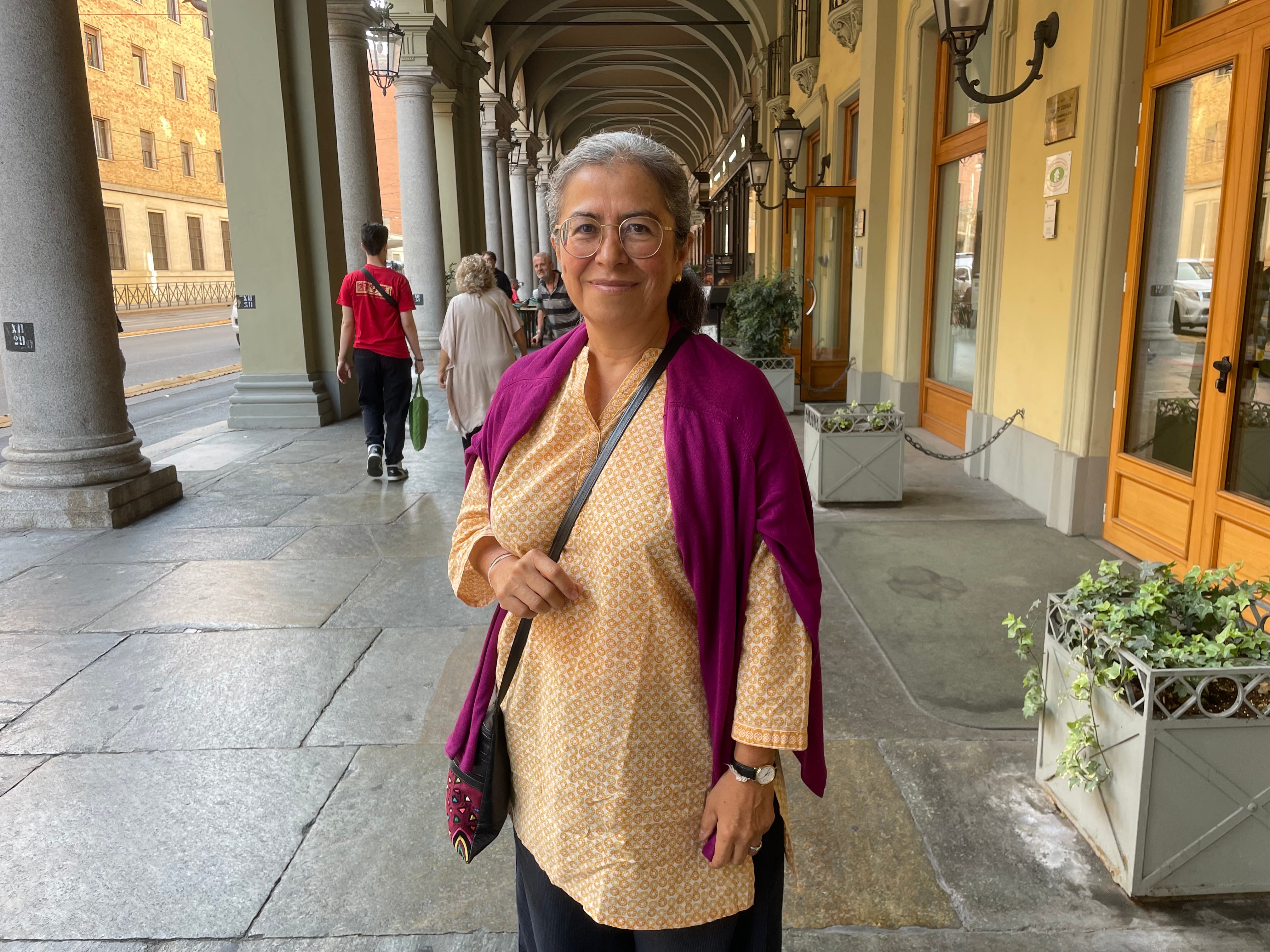
Seasoned in defending rural communities and smallholder farmers, Sofía Monsalve, 56, was appointed United Nations special rapporteur on the right to food in May. In exchange for throwing herself into an unpaid position, the Colombian political scientist says she enjoys complete independence. “I have the freedom to call things by their name,” she tells EL PAÍS in Turin during Terra Madre, the gathering of the international sustainable food network Slow Food.
Burkina Faso has begun reviewing its history, geography and civic education curricula. The government says the aim is to “decolonize” the country’s schools by removing colonial-era portrayals of African history and giving more space to national history, African resistance, cultural values, and local knowledge.
Speaking during a meeting with education officials in Ouagadougou, Secondary Education Minister Moumouni Zoungrana criticized the language used in school textbooks to describe European colonialists.
“Those who came to conquer Africa are called explorers, conquerors. Were they conquerors? They were spies…. They were invaders,” the minister said, according to APA News.
The minister said certain terms in the current materials serve to “infantilize” and “animalize” Africans in the teaching of their own history. “We have made a firm resolution to reread these curricula, to reread the content and to remove the words that are infantilizing and animalizing us,” he said.
He added that the reform would go beyond removing offensive language. “We have made the same decision to add other chapters that promote our values and eliminate the chapters that are dragging us down,” he said.
Further, during the second phase of Burkina Faso’s National Days of Patriotic Commitment and Citizen Participation (JEPPC), where officials presented education reforms and responded to concerns raised by citizens. It was emphasized that beyond the revision of historical narratives, the reforms seek to make education more responsive to Burkina Faso’s sociocultural and environmental realities. Measures include strengthening civic and moral education, introducing English progressively from the second grade, expanding instruction in national languages, and promoting bilingual education and cultural activities in schools.
“The logical continuation” of decolonizing reforms
Souleymane Kimbié Armel, of the Comité international Mémorial Thomas Sankara, told BreakThrough News that the curriculum overhaul follows directly from the country’s wider political project.
Armel said the reforms sought to decolonize the minds of younger generations, arguing that previous curricula glorified European colonialists while presenting African societies through degrading descriptions.
He cited the expression “the flight of the Moogho Naaba,” referring to the Mossi king of Ouagadougou at the arrival of invading forces, as an example of terminology that requires critical examination.
“The change in the curriculum is the logical continuation of reforms aimed at decolonizing mindsets, beginning with the youngest members of society,” Armel said.
He also challenged what he described as the longstanding portrayal of Burkina Faso as an inherently poor country, arguing that such narratives obscure the country’s capacities and resources.
According to Armel, the educational system has historically failed to recognize the value of Burkina Faso’s cultural diversity, sometimes presenting ethnic differences as a source of division rather than a strength.
Instead, he said, the reforms aim to restore popular confidence and pride by helping students understand their own histories, cultures and collective capacities.
“All these reforms aim to restore the people’s pride and confidence in their own abilities,” he said.
The emphasis on national history and indigenous knowledge is therefore intended not only to change what students learn but also to challenge inherited assumptions about African societies and their capacity for self-directed development.
Liberation struggles key to the new curriculum
Liberation struggles are at the centre of the new curricula, Armel said. “African states and countries of the Global South have always fought for their emancipation. The history of these struggles must be known by present and future generations,” he said. “It is in this spirit that the Haitian Revolution, the Chinese Revolution, and Thomas Sankara’s revolution are being taught.”
“The objective is to sow the seeds of revolution among young students,” he said. He noted that the Ministry has developed teaching modules and curricula and distributed them to teachers.
He added that the reforms are not limited to political education. “Beyond teaching these revolutions, the transformation also involves technical and scientific education, with the aim of ensuring that young Burkinabè are both politically conscious and technically competent.”
Armel linked the reforms to economic sovereignty, drawing on the South African anti-apartheid leader Steve Biko. “As Steve Biko rightly said, what the master has conquered in the colonized is their mind. No development can take place without the decolonization of mindsets,” he said. “This will help prevent the economy from being outward-oriented and dependent on external forces. It will also help stem the brain drain to Western countries.”
“Teaching in national languages and incorporating indigenous knowledge will contribute to achieving political sovereignty,” he continued. “In a context where the people must remain continuously mobilized, the education system should enable them to rely on their own capabilities to take charge of their country’s development.”
Challenges ahead
Armel acknowledged that implementing the reforms will be difficult. “Implementing these curricula also presents challenges, including the need to train teachers in the new concepts and ideas being introduced. This will enable teachers to understand and teach in the spirit of these changes,” he said. “In addition, textbooks and teaching materials for both teachers and students must be developed to support the reforms and improve their effectiveness.”
He also pointed to political opposition. “As with any reform, there is resistance from Francophiles who are ardent supporters of the French system. These groups represent obstacles that must be taken seriously,” he said. “Ultimately, the state must provide teachers with training and greater motivation so that they can sustain the revolution within the school system.”
The geopolitical aspects of Bab-al-Mandab extends way beyond any narrow view, both historically and contemporarily. So, before the next “maritime security initiative” arrives, ask the 4 main questions the brochure never answers Ethiopia lost its sea, Yemen’s highlands never accepted a master, and this month a Zaydi movement took the strait’s Arabian shore. Every capital […]
Instability in countries that later formed the Alliance of Sahelian States (AES) in security political and economic affairs resulted from perennial interference by the US and France. Military assistance from Russia is helping these countries to regain sovereignty and capture more value from their resources. Mali and Africa Corps reenter Kidal On October 6, 2026, […]
In less than five months, the fastest-spreading Ebola outbreak in world history has killed at least 4,205 people in the conflict-ridden eastern region of the Democratic Republic of Congo (DRC) as of October 7.
It is the deadliest outbreak in the DRC since the disease was first discovered in the country in 1976, killing nearly one in two of the 8,728 people confirmed to be infected.
With treatment still in experimental stages, there is no specifically approved treatment for the particular Bundibugyo strain of the Ebola virus that caused this outbreak, declared on May 15.
However, the virus had been circulating in communities in Ituri province since mid-February, three months before the outbreak was identified and officially declared.
Aid cuts: unpaid frontline workers
When the health response started, already late, it was severely underfunded, as the UK, France and Germany have also followed in the footsteps of the US to slash humanitarian aid and increase military spending.
The UN Office for the Coordination of Humanitarian Affairs (OCHA) said in late September that the Humanitarian Response Plan had only half the funding needed to counter the outbreak.
Contact tracing is well below the Africa Centers for Disease Control and Prevention (CDC) and the WHO-recommended 95% to effectively break transmission. Only now in October, it has been built up to 80.4%, which still means that almost 20% of the people at risk of exposure to the virus due to contact with confirmed cases are off the radar of the health authorities, and could potentially be transmitting the disease further.
Lack of funds has meant that the understaffed and overworked frontline health workers – scores of whom have died in the line of duty – have been repeatedly forced to go on strike to protest unpaid wages. Their efforts are further impeded by the poor transport infrastructure and lack of healthcare facilities in the remote eastern region where the disease is spreading.
Armed conflict complicating health response
Armed conflict displacing millions on this mineral-rich land is another major hurdle in the way of effective health response. In Ituri, the epicenter of the outbreak, a key Ebola transit center in the fighting-affected Kigonze camp burnt down on September 29.
The camp, which had housed 19,000 Internally Displaced People (IDPs) fleeing violence, was reportedly infiltrated by the Convention for the Popular Revolution (CRP).
Uganda
This coalition of armed militias, formed in March 2025 at a hotel in Uganda’s capital, Kampala, is led by Thomas Lubanga, a former warlord, convicted by the International Criminal Court (ICC) of war crimes, released from prison in 2020 after serving 14 years. He resides in Uganda, where he is also known to have recruited fighters along ethnic lines.
In a 2022 judgment, the International Court of Justice (ICJ) ordered Uganda to pay DRC USD 325 million in reparations. This included USD 225 million for killings, rapes, child soldier recruitment, and displacement, USD 40 million for damage to property, and USD 60 million for plundering its gold, diamonds, and timber as an “occupying power” in Ituri from 1998 to 2003.
The nature of the occupation has since evolved. Under a bilateral agreement with the DRC, Uganda had deployed 2,000 troops to the country to jointly fight an Islamic State-affiliated group. However, Uganda deployed an additional 4,000 troops without the DRC’s consent in early 2025, around the time as the CRP’s formation in Kampala.
Searching for CRP militants and weapons, soldiers and police entered the camp on September 20. When they came under fire, clashes erupted between the security forces and the militants. Thousands of IDPs fled again as gunfire continued rattling around the camp for days. Deaths, injuries, and arrests were reported.
Ebola transit center burns down
Amid this violence, on September 29, fire engulfed the camp’s Ebola transit center. It is a facility for the isolation and care of suspected cases, until the results of the lab tests on their blood samples. If confirmed as positive, they are then transported to an Ebola treatment center.
“It’s been a huge struggle to create Ebola transit centers [and] Ebola treatment centers; it’s required money, bringing in staff and it’s been a struggle all across the east. So, when we lose a center, that means we lose capacity, we lose investment and we have to start again,” said Julien Harneis, UN’s senior Ebola response official in the DRC.
“Eastern DRC now faces a catastrophic collision of disease and conflict, with the Ebola outbreak in Ituri province outpacing the response,” the WHO’s director general, Tedros Ghebreyesus, had warned in May.
The outbreak has since reached seven of DRC’s 26 provinces, predominantly in the east. About three-quarters of the confirmed cases remain concentrated in Ituri. However, its neighboring province, North Kivu, which has another 20% of confirmed cases, is emerging as the new hotspot.
Rwanda
Large areas of this province are occupied by Rwandan troops and its proxy militias, the M23, which captured its capital, Goma, in January 2025, and went on to expand territorial control into South Kivu province.
Without humanitarian access to these occupied areas, the government cannot mount a health response, Communications Minister Patrick Katembwe said in late May, second week after the outbreak was declared. He called for the “withdrawal of foreign forces and the removal of their auxiliaries.”
Instead, the M23’s parallel administration launched a separate health response in the areas under its control, independently of the DRC government, with which cooperation was limited to data sharing and lab testing. This severely hampered contact tracing, especially because people regularly travel between the M23-held areas and government-controlled territory.
“Multiple outbreaks are developing at the same time”
The parallel M23 administration has also meant additional delays in diagnosis. With bed capacity in Ebola treatment centers stretched taut in North Kivu, medics in this province are forced to refer infected patients to general health facilities, where a third of all confirmed cases are being treated, posing further risk of transmission into the wider community.
The spread has rapidly increased since September in this province, which now accounts for nearly 40% of all new confirmed cases, up from 24% in August-end, Doctors Without Borders (MSF) said on October 5.
“It is like fighting a megafire,” said Stéphanie Hoffmann, MSF coordinator of the treatment center in Butembo, a major commercial city in the province. “Multiple outbreaks are developing at the same time, with varying intensity and in different locations. As long as new hotspots continue to emerge while the virus spreads across northern North Kivu, containing the epidemic will remain extremely difficult.”
Mali’s armed forces have recaptured the northern city of Kidal following a large-scale military offensive conducted alongside Russia’s Africa Corps. It is a major development in the government’s efforts to restore state control over territory held by armed groups.
The Malian Armed Forces (FAMa) announced that their troops consolidated their operational deployment in Kidal on October 7, 2026, under Operation Dougoukoloko, following several days of airstrikes and coordinated air and ground operations against the Azawad Liberation Front (FLA) and Jama’at Nusrat al-Islam wal-Muslimin (JNIM), an armed group affiliated with al-Qaeda.
In a statement, the military said the operation had weakened the armed groups’ fighting capacity and disrupted their logistical networks.
“As part of the large-scale offensive conducted in the Eastern theater, under Operation DOUGOUKOLOKO, the Malian Armed Forces (FAMa) consolidated their operational deployment in the city of KIDAL on Wednesday, October 7, 2026,” the statement said.
The military added that the offensive followed an intense air campaign and several air-ground operations that had “neutralized several elements belonging to the FLA-JNIM terrorist coalition” and inflicted significant damage on their logistical capabilities.
According to the statement, the operation was conducted by Malian forces and their partners, referring to Russia’s Africa Corps, which has supported Mali’s military authorities in security operations.
The military said the offensive aimed to strengthen security for communities in northern Mali, ensure the free movement of people and goods, reinforce border security, and disrupt the criminal economic activities of armed groups.
“Through this operational dynamic, the FAMa continue their sovereign mission of securing the national territory and protecting civilian populations and their property against abuses by Armed Terrorist Groups,” the statement added.
A strategic city in the conflict
Kidal, long a stronghold of Tuareg separatism, has been at the center of the conflict in northern Mali since 2012. The Malian army first retook the city on November 14, 2023, after more than a decade with almost no state presence there.
That control ended in April 2026. On that day the FLA and JNIM launched near-simultaneous assaults on several cities, including the capital, Bamako, as well as Kati, Mopti, Gao and Kidal. The attacks targeted military installations and strategic sites. Defense Minister General Sadio Camara was among those killed. Malian troops and Africa Corps forces subsequently withdrew from Kidal.
For the transitional government led by General Assimi Goïta, which has made territorial sovereignty its central promise, the recapture is a major symbolic victory.
Mali’s sovereignty and regional security
The recapture comes as Mali continues to pursue a security strategy centered on strengthening its armed forces and working with external partners, particularly Russia, following the deterioration of its relations with several Western governments and the expulsion of French forces.
For the Malian government, securing Kidal is more than a military objective but also a question of national sovereignty. Control of the city would strengthen the state’s position in the north.
In its statement, the military said the operation was intended to provide lasting security for the population, protect civilian property, and restrict the activities of armed groups operating in the region.
The recapture of Kidal does not by itself resolve Mali’s broader security crisis. The Alliance of Sahel States (AES) broadly continues to face security threats and destabilization campaigns from adversaries in its fight to assert sovereignty.
The International Criminal Court (ICC) has ignored allegations of “very well-documented” NATO war crimes brought before it, former Libyan Information Minister Moussa Ibrahim has told RT.
In an interview on Saturday, he argued that the US-led military bloc has never been held accountable for what he described as “very well-documented” crimes committed during military interventions in several countries.
“In Afghanistan, in Iraq, in Libya, we have literally… millions of documents, videos, footage, statements, witnesses who testify to the crimes against humanity committed by NATO collectively and NATO countries individually,” he said.
The former minister said he had personally participated in a 2013 effort to bring allegations of NATO war crimes before the ICC over the bloc’s 2011 intervention in Libya, which left the country devastated and deeply divided.
“We presented a very powerful profile of thousands and thousands of pages. And it was not even allowed to be seen or heard or discussed. It was dismissed right away,” Ibrahim said, adding that prominent European human rights lawyers had been involved in preparing the case.
The failure to pursue such cases demonstrated the “limitation” of the system, he said, urging the East, particularly China and Russia to “rethink the whole equation.”
The ICC needs to be “radically, not superficially” reformed or replaced with a new international judicial institution capable of upholding human rights without Western political interference, he stressed. A handful of powerful Western countries currently exploit the ICC for their own advantage while ensuring “that they are immune against any cases brought forward against them,” he said.
The remarks come just days after Washington imposed sweeping new sanctions on the court after accusing it of overstepping its jurisdiction in pursuing alleged crimes involving American and Israeli nationals. The move followed the ICC’s 2024 issuance of arrest warrants for Israeli Prime Minister Benjamin Netanyahu and his former Defense Minister Yoav Gallant over alleged war crimes and crimes against humanity in Gaza.
Meanwhile, the ICC’s investigation into allegations of war crimes committed by American forces during the US-led war in Afghanistan never resulted in criminal charges against US personnel.
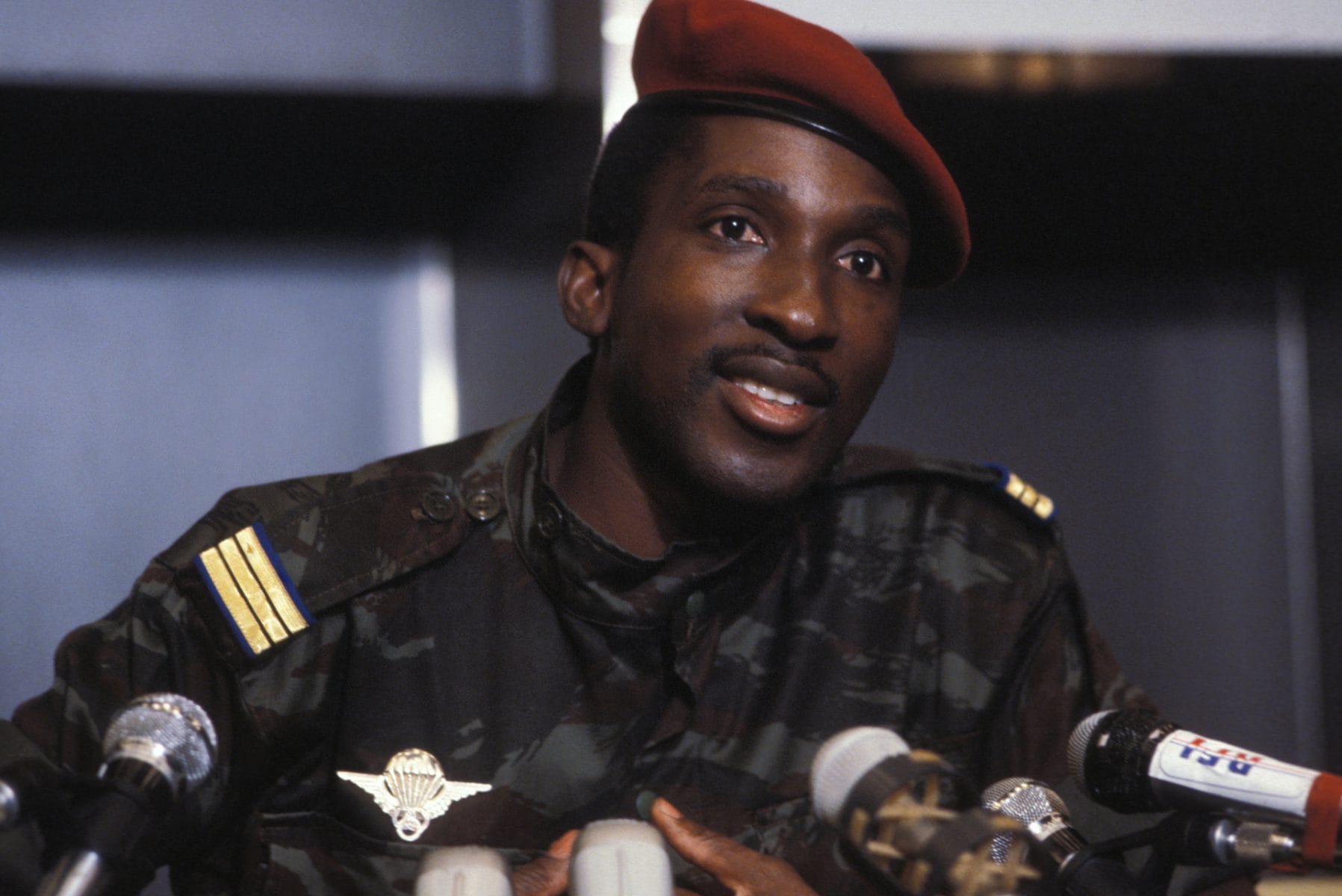
Thomas Sankara had a signature look: a natty red beret, worn with military fatigues. A striking figure, Sankara was a military officer and the radical, anti-imperialist prime minister of the Republic of Upper Volta. His arrest in 1983 led to demonstrations, followed by a coup, after which Sankara was released and installed as president. By the following year Sankara had given the country he now led its new name — Burkina Faso. He fashioned a Burkinabè identity in his own anti-imperialist image, eschewing French for local languages, promoting economic self-reliance and national pride.
In 1986, he famously took the then French president François Mitterrand to task in a fiery speech broadcast both in Burkina Faso and France. Sankara’s dashing uniform played an outsized role in how his words were interpreted. Here was Africa’s own Che Guevara. But by October 1987, Sankara was dead, killed during a military coup led by his former friend and ally Blaise Compaoré.
France, the old colonial power, backed Compaoré. Soon after the coup, French officials once again flocked to Ouagadougou, helping to prop up Compaoré for decades.
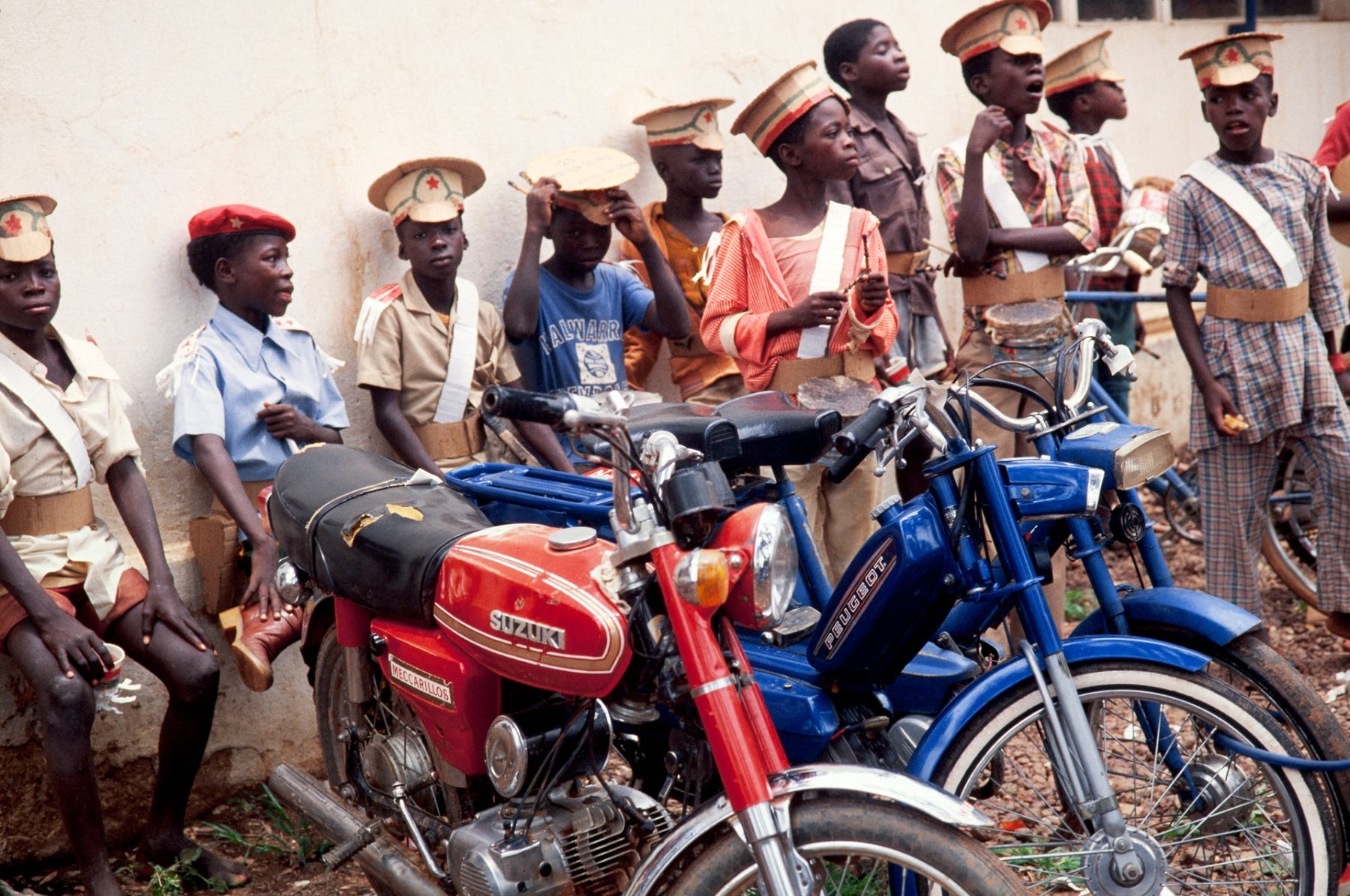
Burkinabè children wearing false kepis during the military parade in Ouagadougou to commemorate the second anniversary of the revolution of the Burkina Faso. August 4, 1985. Daniel LAINE / AFP via Getty Images.
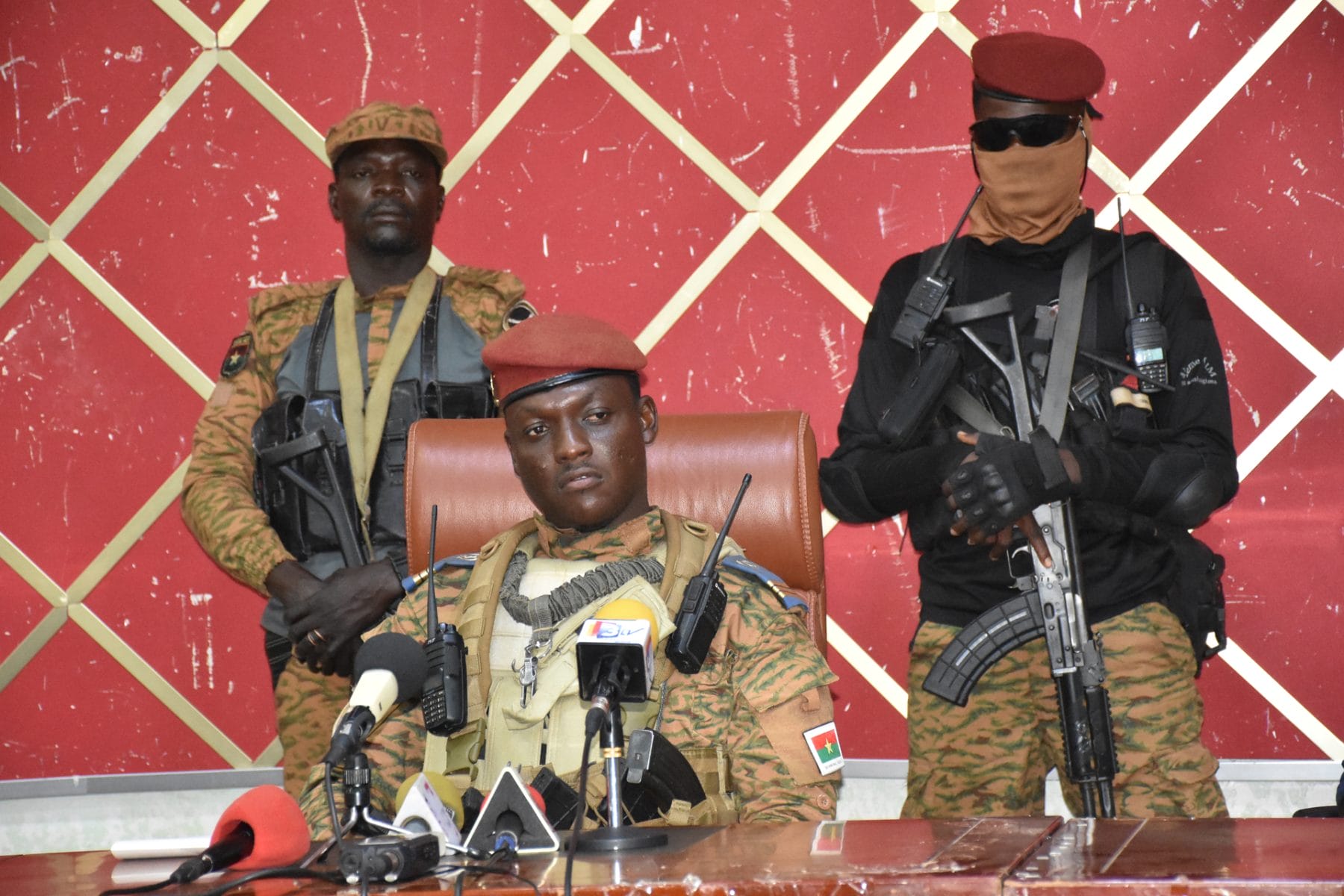
This potted history is important to understanding the phenomenon of Ibrahim Traoré, Burkina Faso’s current president, an authoritarian head of state who in his charisma and self-presentation so deliberately echoes Sankara.
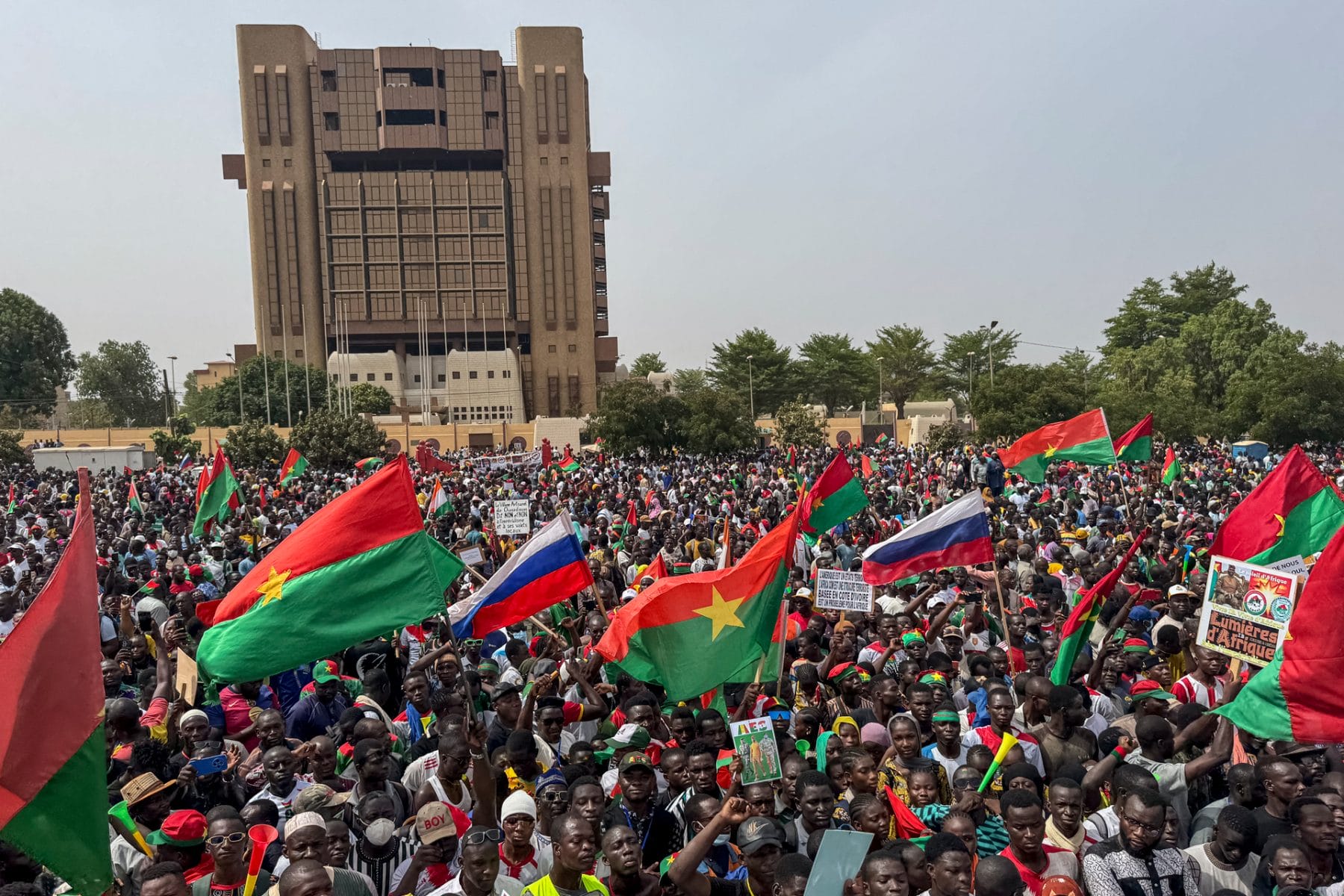
On September 30, thousands of Burkinabè gathered in Ouagadougou’s Place de la Révolution to hail Traoré on the fourth anniversary of the coup that brought him to power. As the second coming of Sankara, Traoré — whatever their entirely different political ideologies – is arguably the face of contemporary African anti-imperialism. It is a meticulously cultivated image that has almost nothing to do with Traoré’s actual record, or his achievements in Burkina Faso.
Traoré is a pan-African leader for a digital age, an autocrat who has suspended his country’s constitution, dismantled its admittedly fledgling democratic institutions and been accused of crimes against humanity, but who has used artificial intelligence, particularly deepfakes, to bury that record beneath a highly effective cyber cult of personality.
How do Burkinabè reconcile the man with the persona? And is Traoré a triumph of the algorithm, the kind of politician increasingly familiar from Ouagadougou to Delhi, Berlin, Buenos Aires, and of course Washington, DC?
Left: Burkina Faso President Thomas Sankara during a speech on October 5, 1983, in Paris, France. Alain MINGAM/Gamma-Rapho via Getty Images. Right: New coup leader Captain Ibrahim Traoré at a news conference on October 2, 2022 in Ouagadougou, Burkina Faso. Stringer/Anadolu Agency via Getty Images.
The man, the myth, the algorithm
Ibrahim Traoré came to power in September 2022. In his own telling, while Sankara was installed as president, Traoré led the putsch himself. By January 2023, Burkina Faso terminated its military accord with France, giving French special forces one month to leave the country. In June this year, Burkina Faso ended all diplomatic relations with France.
As Traoré turned away from France, he strengthened relations with Moscow. It’s in keeping with the pattern across the countries of the Sahel — Burkina Faso and its neighbours Mali and Niger — as the region’s colonial history with France has been swept clean by a broom held first by the mercenaries of the Wagner Group and latterly the Russian state itself, represented by the Africa Corps.
But in April and May 2026, Africa Corps forces were dealt a humiliating defeat in northern Mali by a combination of Tuareg separatists and allegedly Al-Qaeda linked Islamists. The Malian defence minister was assassinated in a suicide bombing at his home near the capital Bamako. With Russia so involved militarily in the Sahel countries, Ukraine has admitted to assisting rebel forces. Both Mali and Niger have cut diplomatic ties with Kyiv. And Burkina Faso has described Kyiv as a destabilising force in the region, making the Sahel effectively a front in Russia’s war with Ukraine. As recently as September, Traoré named Ukraine as a part of Burkina Faso’s “map of enemies” for which, he added menacingly, “we need to prepare.”
Russia, as Coda Story has reportedforyears, has used everything from weapons sales to mercenaries to paying African influencers to both spread Russian narratives and hold Moscow up as the alternative to continuing to rely on exploitative economic relationships with the West, particularly erstwhile European colonialists.
Despite the extent of Russian attempts to influence the Sahel, it’s not Moscow that is signing the most consequential deals with the military juntas it helps prop up. It’s Beijing. And the deals being signed with China to mine the region’s extensive mineral wealth — the lithium, gold, copper, zinc, bauxite and uranium — have served as a reminder to the United States that it too should resume stalled relationships in the Sahel. Early in 2026, Burkina Faso signed a near $150 million healthcare deal with the U.S. in exchange, it appeared, for favourable access to minerals. Both Zambia and Zimbabwe backed away from similar deals, expressing concern about U.S. demands for data and minerals that amounted to an infringement of sovereignty.
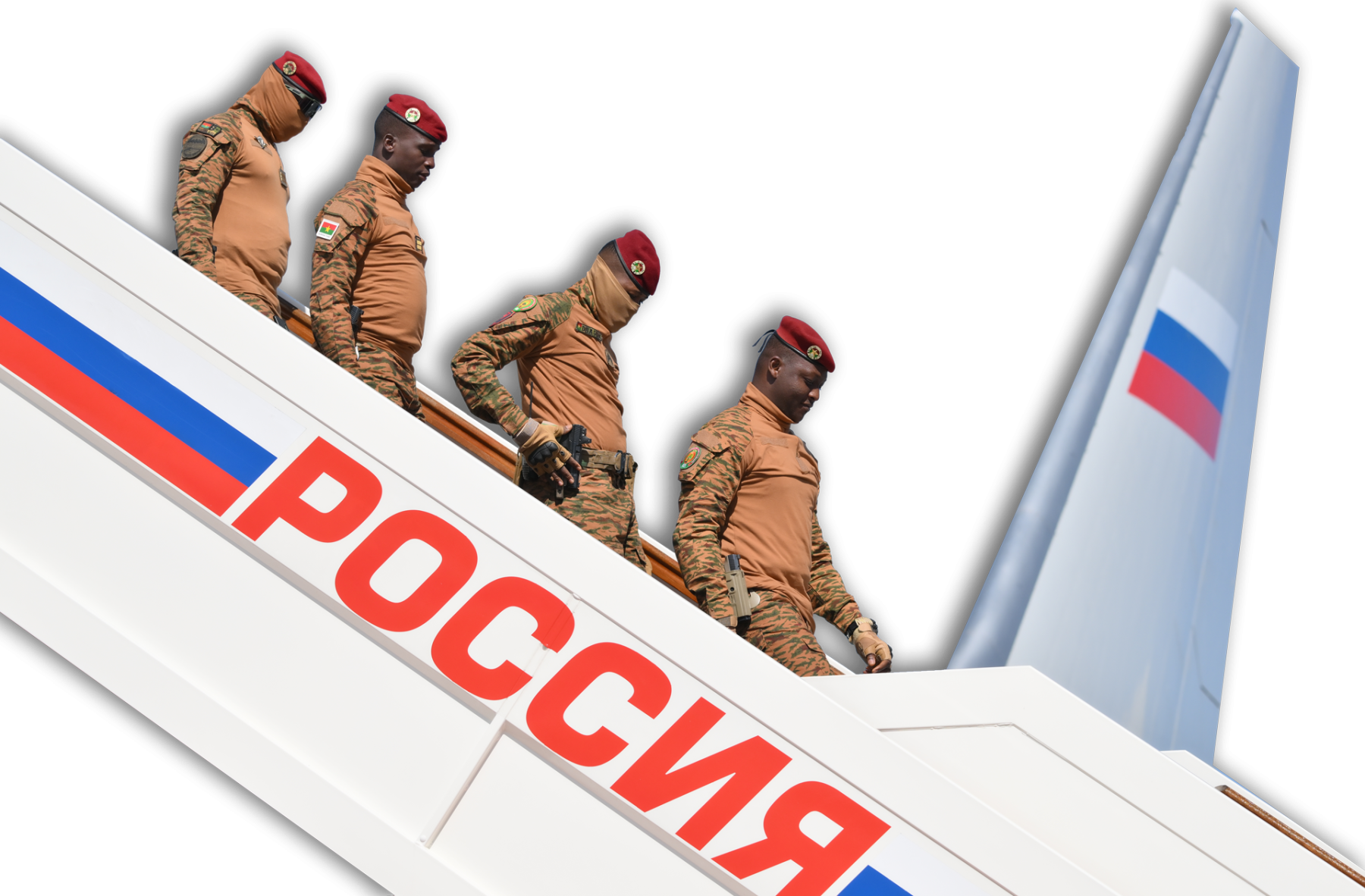
Burkina Faso's President Ibrahim Traoré arrives in Moscow, Russia on May 8, 2025. Grigory Sysoev / RIA Novosti/Anadolu via Getty Images.
The deals with China and the United States are being negotiated alongside a drive to reduce reliance on foreign loans and grants and ramp up domestic production, particularly of gold. Traoré claims his economic policies emphasise nationalisation and self-reliance. His government has taken over major mining operations and increased state stakes in other industries. In early 2024, his administration suspended export permits for small-scale gold production to crack down on smuggling and keep mineral wealth inside the country. Last month, he inaugurated Burkina Faso’s first gold refinery.
Some of this has had positive economic effects. The World Bank, in a June 2026 update, said the country had an estimated 5.3% growth in 2025, up from 4.8% in 2024, and its fiscal deficit narrowed from 5.8% of GDP to 1.8%. Inflation was also negative, 0.5%, compared to 4.2% in 2024. Reports by the World Bank and IMF have ascribed these growth to external factors such as the gold rally, climate-driven increase in agricultural outputs, and reduction in energy prices.
Economic growth, though, is part of a larger story that includes a crackdown on the press, particularly critical coverage of alleged human rights violations. Human Rights Watch documented 1,840 civilian deaths between January 2023 and April 2025, over 1,200 of which were directly attributed to government forces. Even as the report acknowledged widespread violations by Islamist groups, the actions of the Burkina Faso military, it said, “amounted to war crimes and crimes against humanity.” At the same time, Traoré has clamped down on Burkinabè civil society, banning over 100 human rights organizations and dissolving all political parties.
None of it appears to have affected his carefully-honed image in certain online spaces.
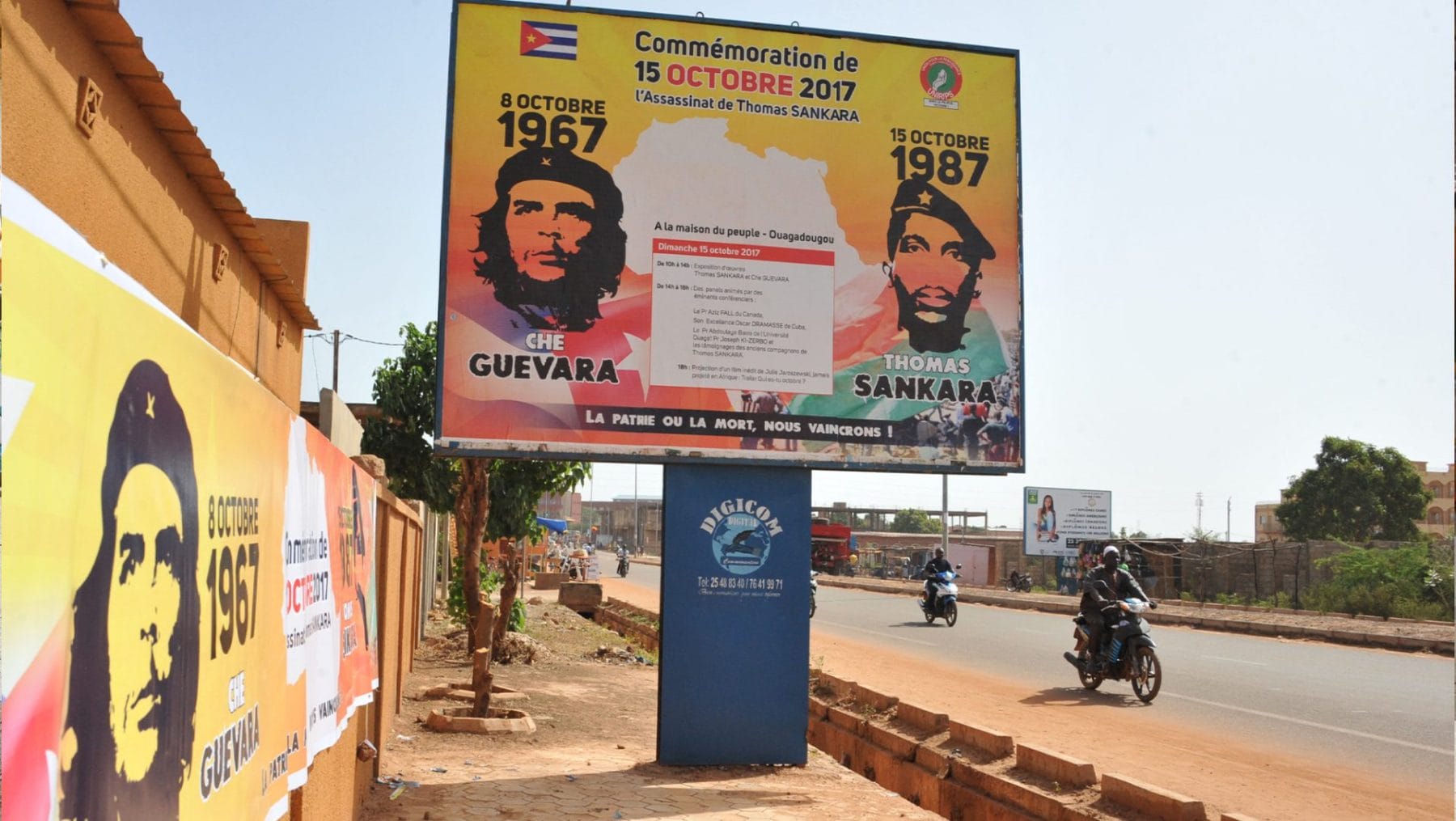
Street of Ouagadougou shows a poster celebrating former President Thomas Sankara, known as "Africa's Che Guevara" and the portrait of the Argentine-born guerrilla leader Ernesto Che Guevara. Ahmed Ouobaa/AFP via Getty Images.
Streets of Accra, Ghana, May 9, 2026. Olatunji Olaigbe.
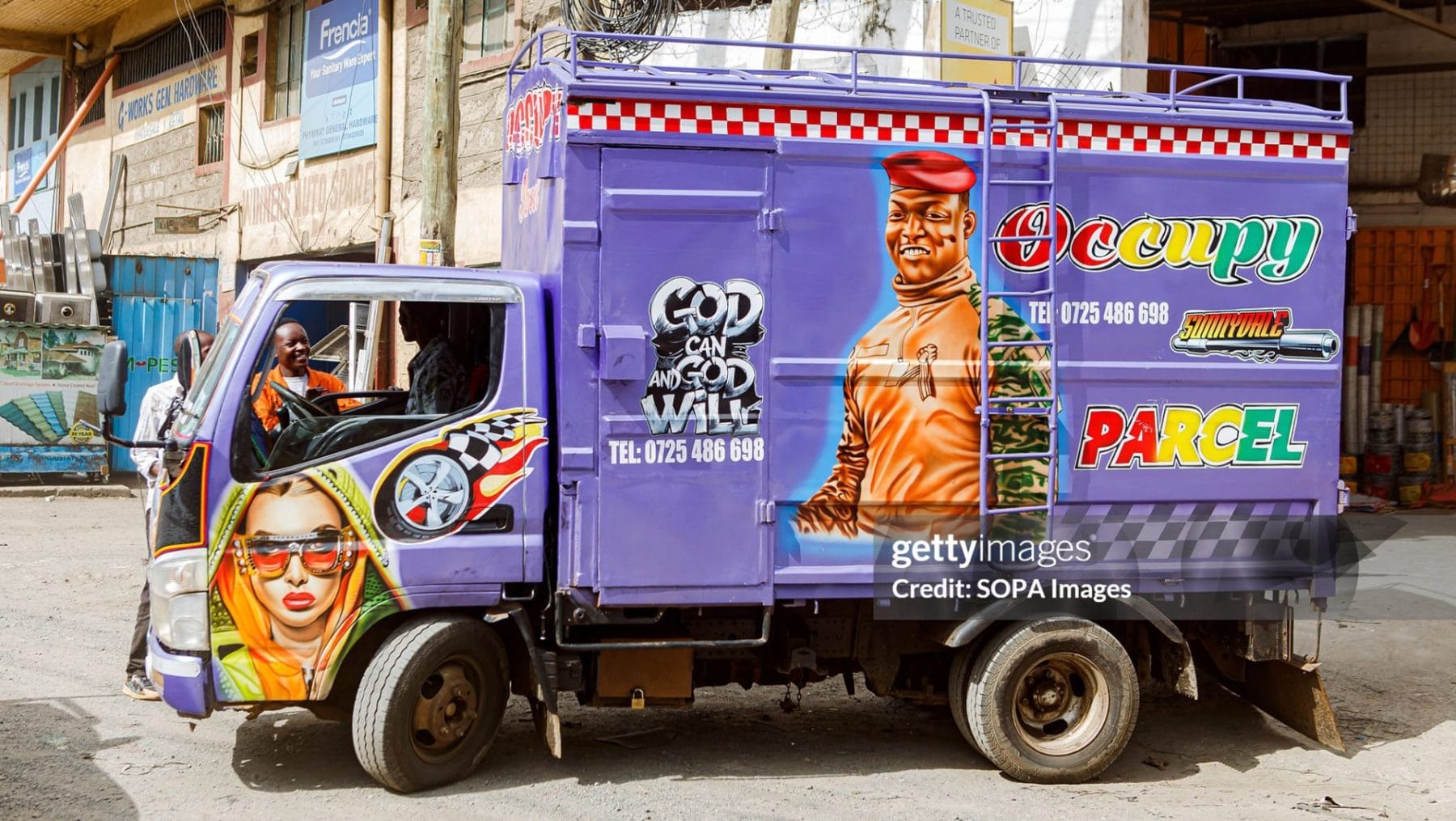
A graffiti portrait of the president of Burkina Faso Ibrahim Traoré. Boniface Muthoni/SOPA Images/LightRocket via Getty Images.
A pan-African hero
Traoré is everywhere. In Accra, the capital of Ghana, his image is pasted onto buses and in parks. In January 2025, at the swearing-in of the Ghanaian president John Mahama, it was Traoré who the crowd responded to, cheering for a rockstar rather than a head of state. Even Mahama joked that Traoré had stolen the show. Artwork celebrating Traoré is frequently posted online. The commentary that accompanies the art is gushing. “Through this artwork,” reads one Facebook tribute, “I celebrate the spirit of a man who stands for sovereignty, truth, and the rise of a self-determined Africa.”
Meanwhile, the Ivory Coast government has granted refugee status to at least 69,000 Burkinabè fleeing Burkina Faso.
In May, when I travelled to Ghana and Ivory Coast to talk to people displaced from Burkina Faso, at least five sources decided they no longer wanted to speak. Guaranteeing anonymity didn’t seem to matter. A Burkinabè journalist who was helping me find people to speak to, stopped responding to my messages the day after I arrived in Accra. Those who did speak to me refused to be quoted for fear that harm would come to family and friends left behind in Burkina Faso.
Reporters have been intimidated into silence. “Today, any journalist living in the country is forced to practice self-censorship to avoid being arrested,” says Harouna Simbo Drabo, disinformation analyst and Director of Programs & Partnerships of Faso Check. “Burkinabé journalists have two options,” he told me, “either practice self-censorship or go into exile.” After threats to his life, Drabo has left Burkina Faso.
He’s one of the luckier journalists. Since 2022, at least seven Burkinabè reporters have been forcibly conscripted into the army after criticizing the Traoré junta's crackdown on the press. Guezouma Sanogo, Boukari Ouoba, and Luc Pagbelguem were abducted days after their union denounced state media as "instruments of propaganda." Atiana Serge Oulon, editor-in-chief of L'Événement, is among the disappeared. Many, like Drabo, have either left Burkina Faso or quit their jobs.
As conditions deteriorate, what information is becoming available is government propaganda amplified by social media linked to Russian misinformation. In the absence of accurate, verified information, there is inevitably only disinformation. For instance, one of the most persistent pieces of disinformation is the story that Traoré — a supposedly avowed anti-imperialist despite his kowtowing to Moscow, Beijing and Washington — rejected billions of dollars in International Monetary Fund handouts because he believes, à la Thomas Sankara, in economic self-reliance. It is a story that has been debunked but was repeatedly told to me by Traoré supporters, including at least one journalist.
The claim was cited more than 700 times in a single three-day window in January 2025 alone, racking up millions of views across Facebook, X, and TikTok. Dubawa fact-checked the story and found that rather than rejecting money from the IMF, the Burkina Faso government had negotiated a 48-month IMF loan program in September 2023 and drew on World Bank financing in 2024.
By mid-2025. Code for Africa's analysis found social media in sub-Saharan Africa flooded with AI-generated videos casting Traoré alongside Beyoncé, Rihanna, and, in one particularly unhinged iteration, Pope Leo XIV, all of whom supposedly endorsed him as a Pan-African hero holding the line against the West. After US AFRICOM commander Michael Langley criticized Traoré's handling of Burkina Faso’s gold reserves in a Senate hearing, a network of 165 Facebook accounts began posting identical language claiming Putin had deployed special forces to protect Traoré from an American assasination plot. In ten days it pulled 10.9 million views.
In Accra, I caught a bus with a picture of Traoré emblazoned on the side. The driver, who only identified himself as Kofi, insisted that before we spoke I should tell him what I thought of Traoré. I say I am not Burkinabè, that I have not visited Burkina Faso but that I have spoken to many people whose lives have been upended by Traoré’s strongman politics. I told him about Burkinabè journalists in exile, forced to join the army, or even disappeared. I told him that when asked about a transition to democracy, Traoré said it was important for Burkinabè to “forget” about democracy. “We have to tell the truth,” Traoré said, “democracy isn’t for us.” I told him about the Burkinabè refugees I met in Treichville, a district in Abidjan, the Ivory Coast capital.
Kofi listened and then told me that “good things take sacrifice,” including the death of a free press. When I asked what he meant by good things, he showed me AI-generated videos of a smart city Traoré had supposedly built.
African identity is tightly wound around the belief that the continent has more potential than it has achieved. The deficit can be attributed to a lot of issues, but chiefly to Western exploitation and the complicity of African leaders. “African countries have also fallen into autocratic democracy,” Sanusi Sanusi, Research Analyst at the Digital Tech, AI & Information Disorder Analysis Centre, DAIDAC, tells me. “There is an election every couple of years but it isn't free or fair.”
Supporters of Traoré wave Burkina Faso and Russian flags during a rally at Place de la Nation Ouagadougou on April 30, 2025. AFP via Getty Images.
Neil Postman, in Amusing Ourselves to Death, writes that “disinformation does not mean false information. It means misleading information — misplaced, irrelevant, fragmented or superficial information — information that creates the illusion of knowing something but which in fact leads one away from knowing.”
Many Traoré supporters I spoke with, most of whom were men, were convinced they knew things I did not. They told me to educate myself more on Western hypocrisy in Africa. They said they did not have faith in those who appointed themselves arbiters of what was fact and what was disinformation. In Lagos I met Lemi Ghariokwu, who designed album covers for the iconic Nigerian musician Fela Kuti, a revolutionary figure. Ghariokwu, who has a portrait of Ibrahim Traoré hanging in his studio, told me that “Western education and propaganda has made our elite class toothless bulldogs.” Listening to them, it seemed as if a successful Africa needed strongmen, needed autocrats.
In Abidjan, the last person I spoke to about Traoré was Oumar, a Burkinabè taxi driver who had moved to the Ivorian capital in 2021. He told me he “supports Traoré with all my heart.” But as we talked, he admitted he had not been back home because “things are only getting worse.” Three Burkinabè refugees I spoke to told me they thought I might be a government agent planted among them to find out what they really thought about Traoré and that I would then report those thoughts back to Ouagadougou.
Many of the Traoré supporters I spoke with thought I was brainwashed by Western media or, worse, too docile to participate in an African revolution. For my part, I thought they were ill-informed and unable or, worse, unwilling to see through propaganda.
The fundamental curse of the age of information and connection is that we rarely confront how the mediums meant to unite us have fractured us. An unprecedented flood of data has shattered shared reality into millions of customized, mutually hostile subcultures.
With the help of AI and social media, Traoré has managed to decouple national and anti-imperial pride from government performance. By the middle of next year, Burkina Faso will no longer be part of the International Criminal Court, denounced by Traoré as an “instrument of neocolonial oppression”, and thus no longer accountable in any international forum. His government has said it is “decolonizing” the school curriculum. Cheered on by social media, Traoré has used anti-imperial grievances and resentments to argue that authoritarian military rule is the only safeguard for sovereignty.
As some Burkinabè exiles told me ironically, they thought both I, so sceptical of Traoré, and the Traoré die-hards in the African diaspora could use a few months living in Burkina Faso. We should, they said, experience the country Traoré has made IRL. See past the carefully curated myth of the man himself, the largely online fantasy of the pan-African, anti-imperial revolutionary who needs to break a few eggs to make the omelet, and assess the country he runs unchallenged.
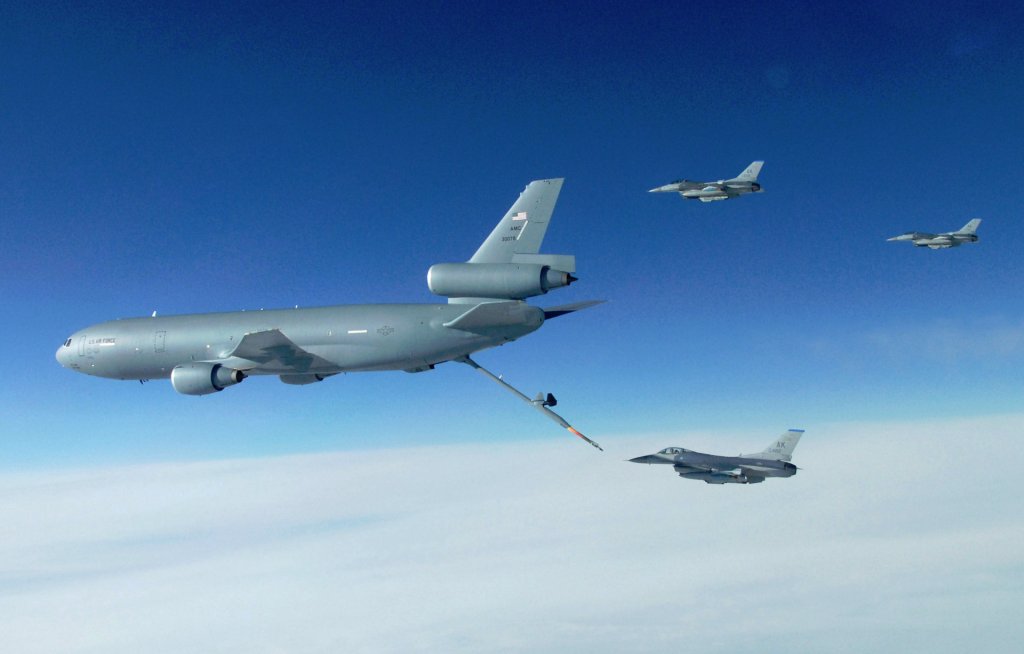
Just over two years after the U.S. Air Force retired the last of its KC-10A Extender aerial refueling tankers, four of those aircraft may be bound for a new career in North Africa for a mysterious end user.
The Air Force Life Cycle Management Center (AFLCMC) put out a contracting notice yesterday “solely for information and planning purposes” with the express intent “to identify potential industry sources that possess the capability, expertise, and facilities to execute the regeneration, one-time flight clearance, depot-level return to service, worldwide ferry delivery, in-country Contractor Logistics Support (CLS), and operational/maintenance training for up to four (4) KC-10 Extender aircraft.”
The KC-10s could be “transferred via Excess Defense Articles (EDA) to a partner nation in North Africa,” the notice adds, without naming the country in question.
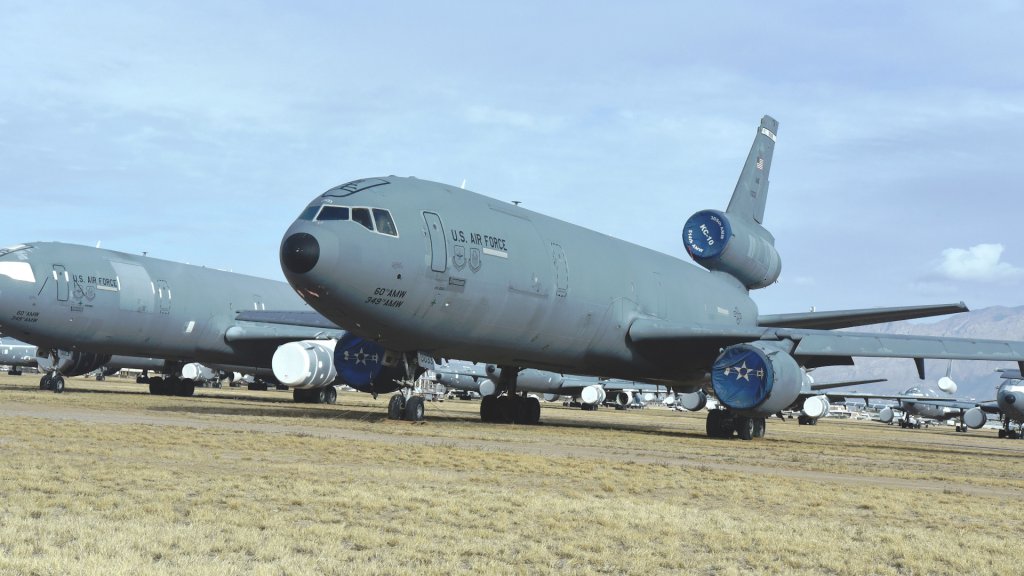
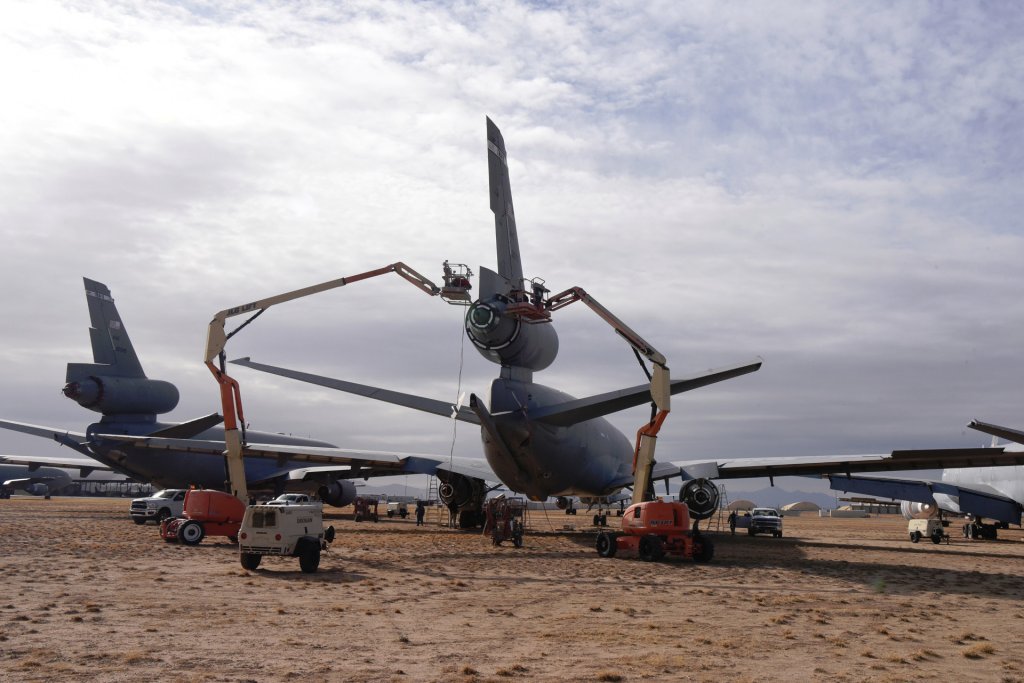
Retired KC-10 tankers seen at the boneyard at Davis-Monthan Air Force Base in Arizona in 2025. US Military
The Air Force operated KC-10s between 1981 and 2024. TWZ has reached out to the U.S. Air Force, as well as the U.S. State Department, for more information. The State Department directed us to contact the Pentagon.
The EDA program allows for materiel deemed extraneous to U.S. military needs to be transferred to allies and partners either at a reduced cost or as a grant. The foreign nation in question has to pay for those assets to be delivered, as well as refurbishment, if applicable.
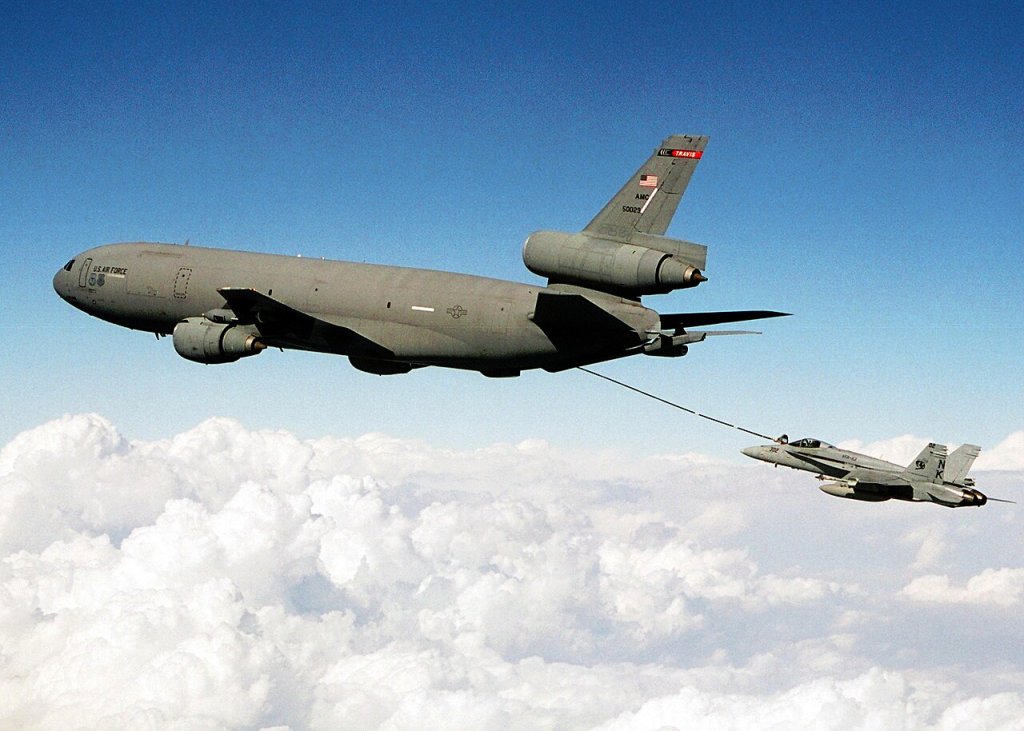
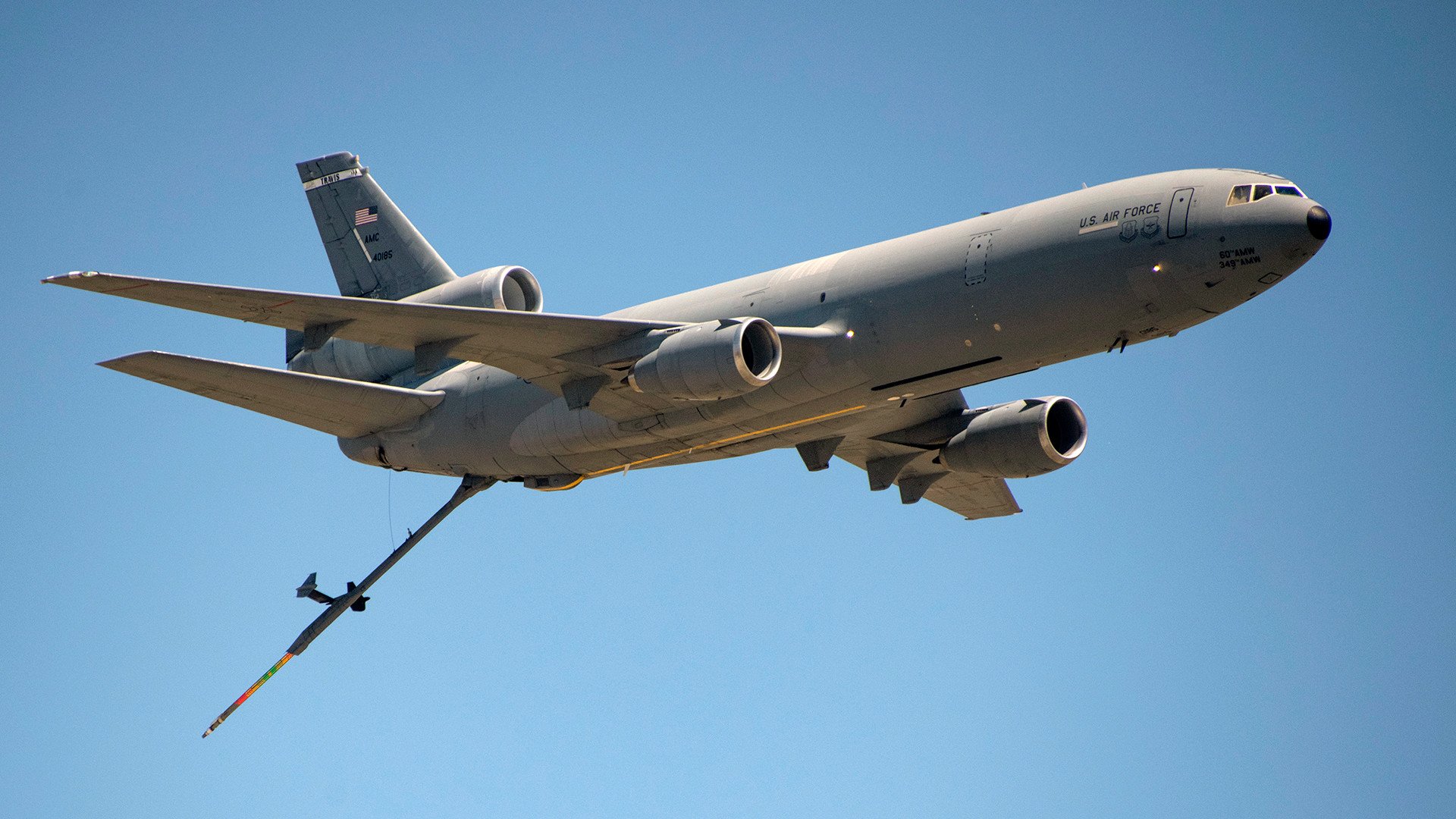
It is important to note here that the Extender, as designed, is capable of refueling receivers using either the boom or the probe-and-drogue method. Tankers equipped for the probe-and-drogue method are, by far, more common internationally. We will come back to this later on.
A KC-10 seen refueling F-16 fighters via the boom. USAFA KC-10 refuels a US Navy F/A-18 Hornet via the probe-and-drogue method. USN
While we don’t know what the North African country might be in line now to receive the quartet of KC-10s, Egypt and Morocco would seem to be the most likely candidates based on their current and planned aircraft inventories. They are also both major U.S. allies.
The Egyptian Air Force currently does not operate any dedicated aerial refueling tankers. The country is in the process of acquiring two new C-130J-30 Hercules aircraft for use as airlifters, as well as tankers, using the probe-and-drogue method. It does already fly C-130s, but none explicitly configured for aerial refueling duties. Egypt also has a very diverse array of fighters that includes U.S.-made F-16 Vipers that can only be refueled in mid-air via boom.
A US Air Force KC-10 refuels an Egyptian F-16 during an exercise in 2023. USAF/Staff Sgt. Emily Farnsworth
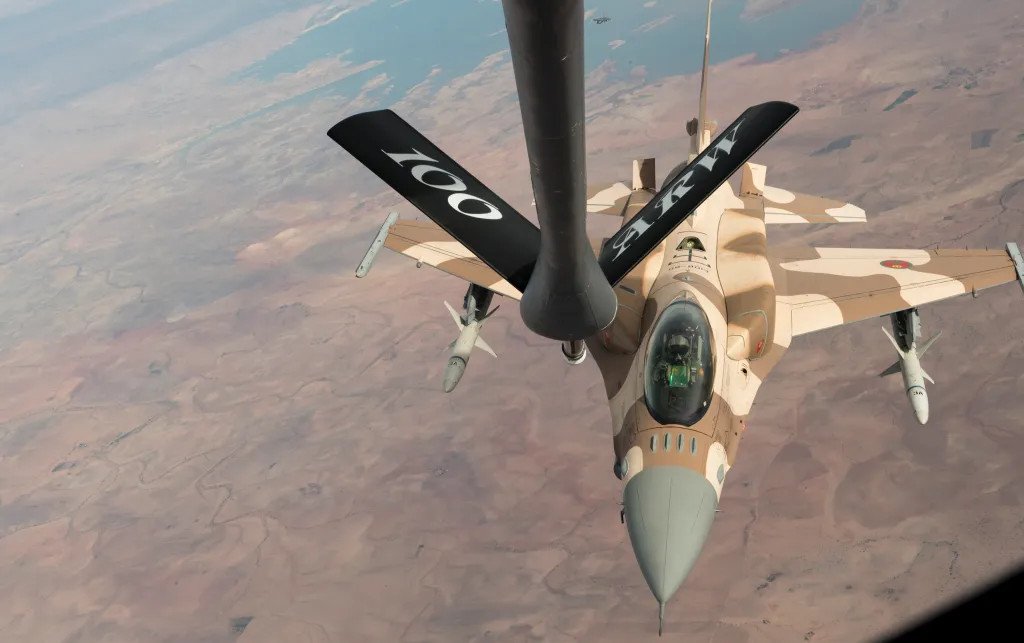
A Moroccan F-16 seen linking up with a US Air Force KC-135 tanker during an exercise. USAF
As mentioned, the KC-10 was designed to connect with receivers via probe-and-drogue, as well as boom, and could be used to refuel other tactical jets in Egyptian or Moroccan service. As an aside, fighters belonging to both regularly receive foreign tanker support during exercises, as already seen earlier in this story. Just last month, Chinese YY-20 tankers (also sometimes referred to as Y-20Us) notably did just this in an exercise in Egypt.
Footage released by Egypt’s official authorities from the “Eagles of Civilization 2026” joint air exercise shows Egyptian **MiG-29M/M2s and Rafale fighters receiving aerial refueling from a Chinese Y-20 tanker aircraft. pic.twitter.com/pvxkpsDHxG
Whichever country may be in line to receive the four KC-10s, there is a question about the current state of those aircraft. Earlier in this story, we talked about the Extender’s capabilities as designed.
McDonnell Douglas (since absorbed into Boeing) delivered a total of 60 KC-10s to the U.S. Air Force between 1979 and 1987. The Extender was derived from the three-engine DC-10 airliner, the last of which was produced in 1989. The Air Force lost one of its KC-10s in an accident in 1987.
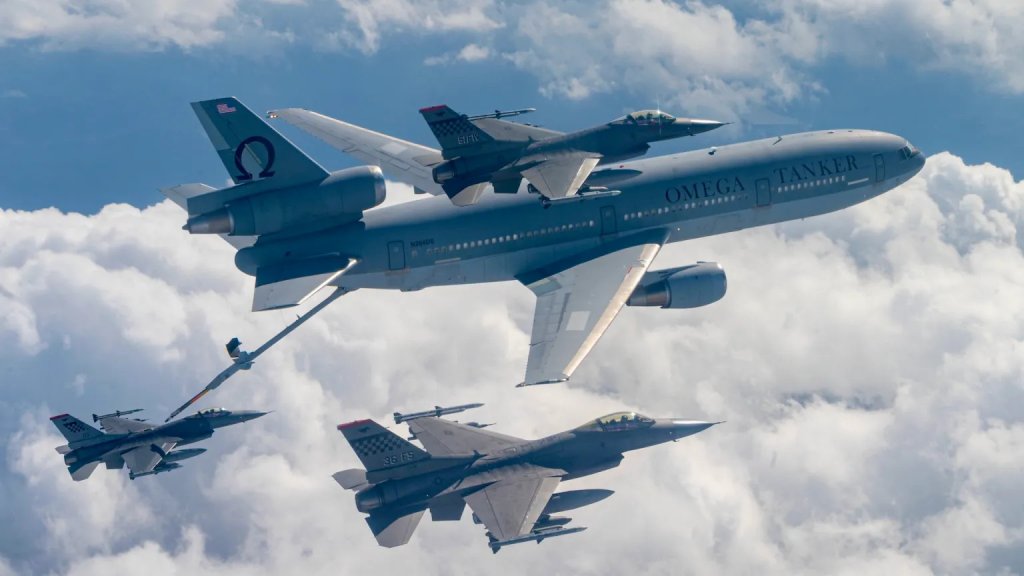
Of the remaining 59 KC-10s, 10 were put up for auction in a non-flyable state last year. For reasons that remain unclear, a single engine had been removed from under one of the wings of each of those aircraft. These Extenders were also among the first to be retired, and their booms had been stripped to be used as spares for the examples that remained in service until 2024. Private aerial refueling contractor Omega Air looks to have subsequently won those auctions. Omega also operates two ex-Dutch KDC-10 tankers, which are broadly similar to the KC-10, as well as another DC-10 converted into a probe-and-drogue-only tanker. The company has several Boeing 707-based tankers, as well.
One of Omega Air’s KDC-10s refuels US Air Force F-16s. USAF
The condition of the remaining 49 Extenders is unclear. Congress included a provision in the annual defense policy bill, or National Defense Authorization Act (NDAA), for the 2026 Fiscal Year that required the Air Force to preserve remaining retired KC-10s, but only stipulated they be maintained “in the same storage condition” they were in as of September 30, 2025. The bill, which was signed into law in December 2025, also made clear that the Air Force could still “dispose” of the aircraft in accordance with existing property management statutes.
Regenerating military aircraft, especially larger ones, back to service can be costly, complex, and time-consuming, even when they are kept in storage in a highly maintained state. In this particular case, acquiring KC-10s via the EDA program, with a very low up-front purchase price, could still be attractive to the right buyer, especially compared to the cost of acquiring new-production tankers.
Personnel at the boneyard at Davis-Monthan Air Force Base apply a protective coating to a KC-10. USAF
For a country like Egypt or Morocco that has never operated a boom-equipped tanker, second-hand Extenders could be a valuable entry point to future aerial refueling capabilities, as well. In general, organic aerial refueling capability is an important force multiplier for any air arm.
There is a possibility that KC-10s could be regenerated not as tankers, but as cargo aircraft, though this seems less likely to be the case. Cargo carrying was also an important duty for the Extenders while in U.S. Air Force service, and they still could operate in this role even when returned to service as tankers.
Though the aging KC-10s were getting increasingly more difficult to operate and maintain, the Air Force’s decision to retire them was still controversial. The Extender was a highly flexible tanker that could carry more fuel than the KC-46s that supplanted them. Clearly, there are others still interested in operating them.
It should be stressed that the AFLCMC contracting notice does not present the transfer of the four KC-10s as a done deal. At the same time, it has revealed that one of America’s partners in North Africa could breathe new life into four of these retired tankers.
From David Ben-Gurion—the architect of a state whose foundations remain a subject of debate—to Benjamin Netanyahu, a master of maintaining constant tension, the “periphery doctrine” has remained a cornerstone of Israeli foreign policy. Its essence lies in forging alliances with states that surround hostile neighbors. Israeli authorities operate on the premise that secure borders do […]
Today's trade flows resemble a windy waterpark slide more than the traditional waterway superhighway. The three-dimensional chess game being played by ocean carriers and tankers has delivered big bucks in day rates, container rates, and surcharges. But there is a group of winners not currently being highlighted.
The African Union (AU) on Wednesday launched a continental credit rating agency aimed at providing risk assessments that it says will be more credible and realistic than those produced by the major international rating agencies. The goal is to lower Africa’s borrowing costs and support the continent’s development and industrialization. To that end, the African Credit Rating Agency (AfCRA), which will be headquartered in Port Louis, the capital of Mauritius, will operate as a private and independent entity, with no ownership stake held by the AU or any government.
A new war of words has broken out between Egypt and Ethiopia over the Grand Ethiopian Renaissance Dam (GERD). It comes as renewed fighting in northern Ethiopia pulls the country’s long-running disputes with its neighbors back into the open.
Ethiopia’s government has blamed neighboring states for the escalating conflict in the north. The government has accused Eritrea, Sudan, and Egypt of backing armed opposition groups, raising fears that the conflict could expand regionally. Birhanu Jula, Ethiopia’s army chief, stated that the Tigray People’s Liberation Front has clearly needed outside support and supplies from Egypt, Sudan, and other foreign powers to sustain its campaign.
Cairo rejected the claim. Foreign Ministry spokesman Nader Zaki said Egypt’s foreign policy rests on respect for the sovereignty, unity and territorial integrity of other states and on staying out of their internal affairs, adding that claims to the contrary had no basis in fact.
Tension over Ethiopia minister’s remarks
The dispute quickly returned to the Nile. On Saturday, Ethiopia’s minister of Water and Energy, Habtamu Itefa, published a social media post, later deleted, comparing the GERD to Egypt’s Aswan High Dam. “Before criticizing Ethiopia, Egypt should explain why it built the Aswan High Dam without Ethiopian consent.”
Cairo responded the same day. A source at the Egyptian Ministry of Water Resources and Irrigation called the post “shameful” and said it reflected political confusion.
“Responding to such nonsense and the political confusion reflected in the post would be nothing more than a waste of time,” the source said. The source called the post “a desperate attempt to divert attention from the core dispute: Ethiopia’s continued unilateral actions over its illegal dam, which violate international law.”
Habtamu made the same argument. He said it was shameful to hear Egyptian politicians demand that Ethiopia obtain their consent for dams that do no significant harm, and argued that Egypt had not consulted Ethiopia when it built Aswan. He described Cairo’s insistence on prior consent as an outdated approach rooted in colonial-era arrangements.
The $5 billion GERD sits on the Blue Nile, about 14 kilometers from the Sudanese border. It is 1.8 kilometers wide and 145 meters tall, with a design capacity of 5,150 megawatts. Prime Minister Abiy Ahmed inaugurated it on September 9, 2025. Egypt and Sudan, the downstream states, have long demanded a legally binding agreement on how it is filled and operated. The United States has also stepped back, in a January 2026 letter to President Abdel Fattah el-Sisi, US President Donald Trump offered to restart US-led mediation between Egypt and Ethiopia on Nile water-sharing.
The El Alamein declaration
The leaders of Egypt, Sudan, Eritrea, and Somalia met in El Alamein and issued a joint declaration covering both the Red Sea and the Nile, and among other things. On the question of the Red Sea, the four states affirmed “the principle of freedom of navigation and that the governance of the Red Sea is the exclusive responsibility of the littoral states.”
Regarding the Nile, the declaration emphasized “the importance of respecting international law regarding transboundary rivers including the Nile River particularly the principle of ‘no harm’ and the obligation to cooperate through prior notification, consultation, and consensus.” It also categorically rejected “any unilateral measures that harm the existing water uses of the two downstream Nile states.” The four countries pledged to keep strengthening “consultation and coordination among the four countries and other sisterly African nations.”
“Realities cannot be altered by political rhetoric”
Ethiopia issued its own statement in response to the El Alamein declaration, arguing, “Ethiopia is the source of the Abay River, commonly known as the Blue Nile. Virtually all of the Blue Nile originates in the Ethiopian highlands, and the Abay contributes about 85% of the Nile River’s total flow. Any discussion concerning the utilization and management of the Abay River should be informed by these fundamental realities.”
Insisting that, “Despite changes in political boundaries over time, Ethiopia remains closely connected to the Red Sea, with its nearest border lying barely 30 miles from the coast. Accordingly, any serious discussion of regional maritime affairs and security architecture must account for Ethiopia’s legitimate interests and its enduring connection to the Red Sea.”
It added, “These geographic and historical realities cannot be altered by political rhetoric, coercive measures, or acts of destabilization. Actions taken through proxies or acts of aggression will not change the facts on the ground, nor will they diminish Ethiopia’s legitimate interests, role, and responsibilities in the region.”
Reaffirming that it “stands ready to defend its sovereignty, territorial integrity, and core national interests,” Ethiopia urged regional actors to pursue “constructive dialogue, partnership, and adherence to the principles of good neighborliness rather than confrontation and zero-sum approaches.”
With fighting is spreading in Ethiopia’s north and rival blocs are forming along the Red Sea, the Nile dispute could be tied into a wider regional confrontation.

 Login