Las rebajas que de verdad compensan casi nunca son las que salen en la foto. Suelen estar en el abrigo que ibas a comprar igual, la báscula del baño o la crema que pide a gritos el sofá de piel. Entre las ofertas de Amazon de hoy caen unas cuantas de esas, ahora que el frío asoma por las mañanas. Y alguna menos aburrida, como el iPhone Air.
Poco más de medio centímetro de grosor. Es lo primero que notas al cogerlo, y entra en el bolsillo de la chaqueta sin hacer bulto. Lo de dentro no es de móvil de adorno. El chip A19 Pro mueve juegos exigentes y la pantalla de 6,5 pulgadas va suave al pasar el dedo. La cámara de 48 Mpx tiene un zoom x2 que Apple vende como de calidad óptica, y la batería da para el día entero. Con 256 GB hay sitio de sobra para no andar borrando fotos cada mes, y hoy se queda por debajo de los 1.000 euros. Es el móvil para quien ya había decidido cambiar y quiere algo ligero de verdad.
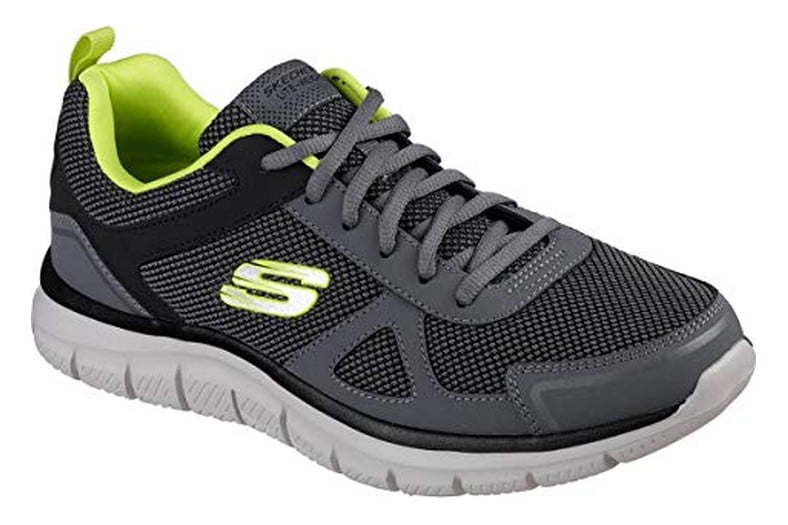
Zapatillas Skechers Track Bucolo de hombre en rojo y negro
La piel roja con rejilla negra les da un aire más de calle que de pista. La suela de caucho aguanta bien el asfalto del día a día. Se quedan por debajo de los 40 euros, con tallas de la 39 a la 48,5.
Auriculares CMF by Nothing Buds 2 con cancelación de ruido
Pensados para el que sube el volumen en el metro para tapar el traqueteo. La cancelación de ruido corta ese zumbido antes de que llegue al oído. Los seis micrófonos limpian tu voz en las llamadas aunque sople el viento. La marca anuncia hasta 55 horas de batería contando el estuche. Se quedan en menos de 30 euros, y la cancelación de ruido ya justifica el gasto por sí sola.
Esta báscula baja hoy un 49% y se queda en menos de 25 euros. Aparte del peso, te dice cuánta grasa, músculo y agua tienes, y lo manda solo al móvil por Bluetooth. Se sincroniza con Apple Health, así que si ya apuntas los pasos en el reloj, todo acaba en el mismo sitio. La pantalla desaparece bajo el cristal cuando no la usas (detalle tonto que en un baño pequeño se agradece). Aguanta hasta 180 kg y no necesitas nada más que el móvil para llevar la cuenta. Es de esas compras que cuesta justificar a precio completo y que hoy se justifica sola.
Zapatillas adidas Streettalk de mujer en blanco y plata
La puntera de concha es el guiño a las adidas de toda la vida. En blanco con detalles plateados, combinan con vaqueros, con falda o con el chándal del domingo. El empeine es de piel sintética y el forro, de tela. Bajan de los 40 euros, poco para unas que van a salir de casa casi todos los días.
Quien se arregla la barba en casa conoce el error. Un milímetro de más en un lado y acabas igualando el otro hasta quedarte casi sin barba. Esta recortadora tiene 40 posiciones que suben de medio en medio milímetro. La rueda se bloquea para que no se mueva a mitad de pasada. Trae siete accesorios, entre ellos un cabezal para apurar el contorno y una plantilla para perfilar. Se puede mojar sin miedo y aguanta hasta 2 horas sin cable. Hoy cuesta menos de 65 euros, un precio razonable para todo lo que trae en la caja.
El sofá de piel que se cuartea en los brazos, los asientos del coche, el bolso que perdió el brillo. Medio litro de esta loción da para todo eso. Limpia la grasa, aviva el color y deja el cuero flexible sin que quede resbaladizo. Por menos de 10 euros, es de esas compras aburridas que luego agradeces tener a mano.
Comprar sandalias en octubre tiene su lógica: es justo cuando nadie piensa en ellas. Estas son de tiras blandas, con una plataforma de 3,3 cm que suma altura sin castigar el pie. Van a la lavadora cuando vuelvan con arena. En negro y por menos de 25 euros, se quedan guardadas para la primera escapada de primavera.
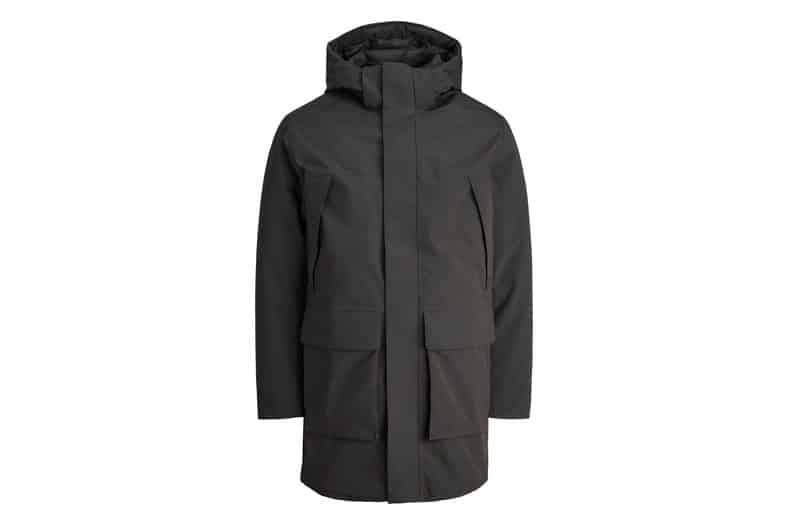
La primera mañana en que sales a las ocho y el viento corta, la sudadera ya no basta. Esta parka de Jack & Jones es de corte largo y tiene capucha que se quita cuando no llueve. El bolsillo del pecho cierra con cremallera, buen sitio para el móvil. Va a la lavadora, lo que en un abrigo negro de diario ahorra viajes a la tintorería. Baja de los 90 euros.
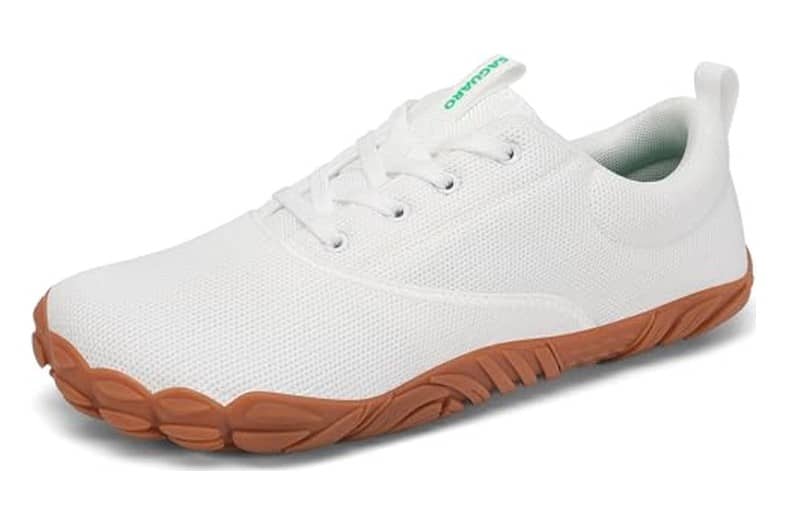
Una suela de 5 mm y una puntera ancha donde los dedos se abren a su aire. Así se nota el suelo con estas zapatillas barefoot, y es justo lo que buscan quienes quieren pisar de forma más natural. Cuestan menos de 35 euros. No es un mínimo, porque desde la primavera se han visto a precios parecidos, pero sí una forma barata de probar la sensación si vienes de zapatillas con mucha amortiguación. La suela de goma agarra en tierra y la plantilla se saca para lavarla.
Merece la pena empezar por lo que vas a usar a diario desde la semana que viene: la báscula y la parka. Las sandalias, para quien ya piensa en la primavera. El iPhone Air es otra liga, y compensa si ya tenías decidido cambiar de móvil antes de Navidad.
Los contenidos publicados en esta sección pueden incluir recomendaciones de productos y servicios que consideramos de interés para nuestra audiencia. Cuando el lector realiza una compra a través de los enlaces incluidos, podemos recibir una comisión. Esto no afecta al precio final ni condiciona nuestra selección de productos.
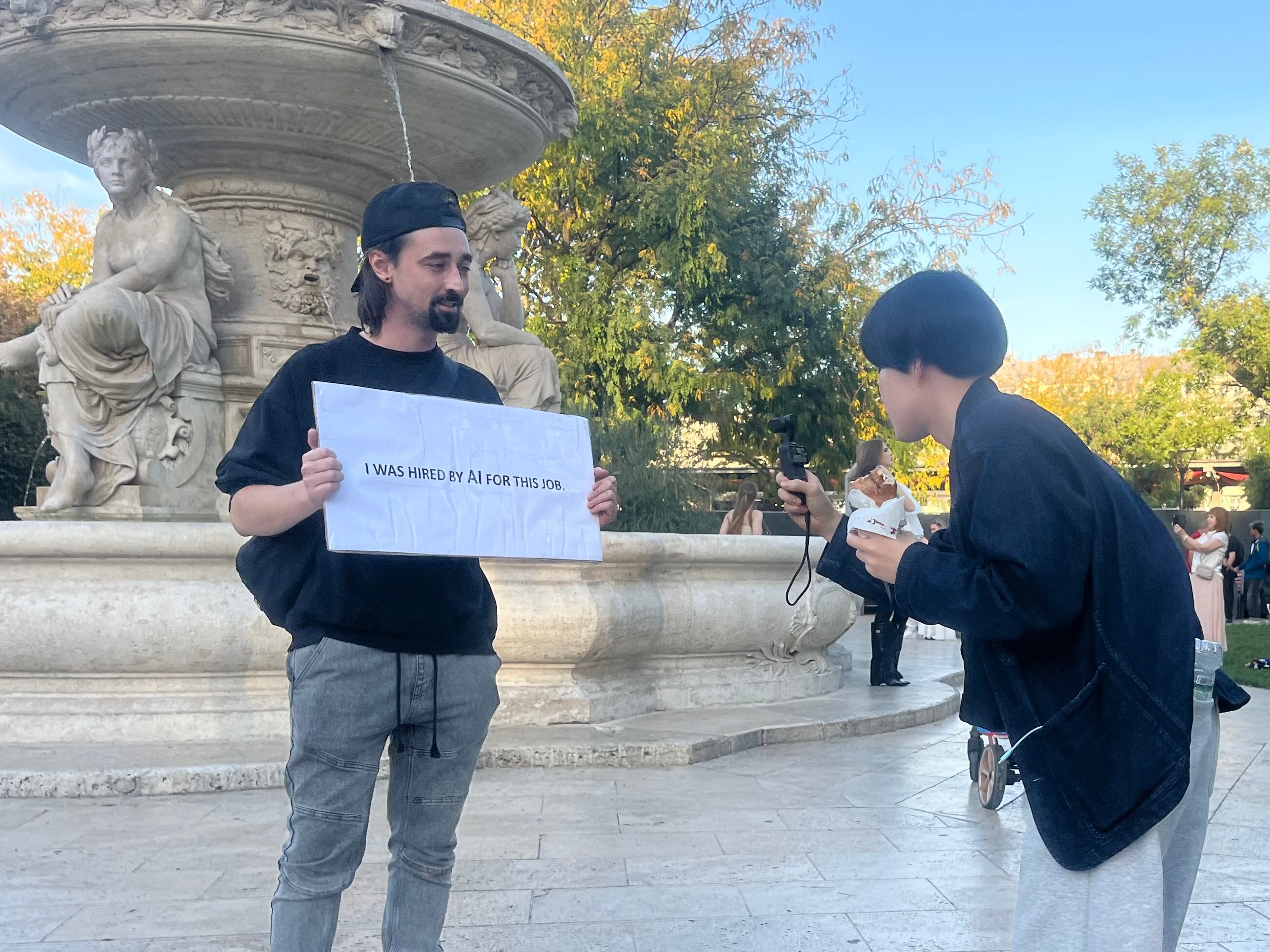
Hungarian artist Peter Weiler wanted to test a new platform called RentAHuman: the website’s slogan is “physical labor for AI” and it is designed for artificial intelligence agents to hire people to do jobs. Weiler wanted to test the platform and offered money for a person to hold a sign in a square in downtown Budapest that read in Hungarian and English: “An AI hired me for this job.” Last Thursday someone did that job for two hours for a fee of $70.
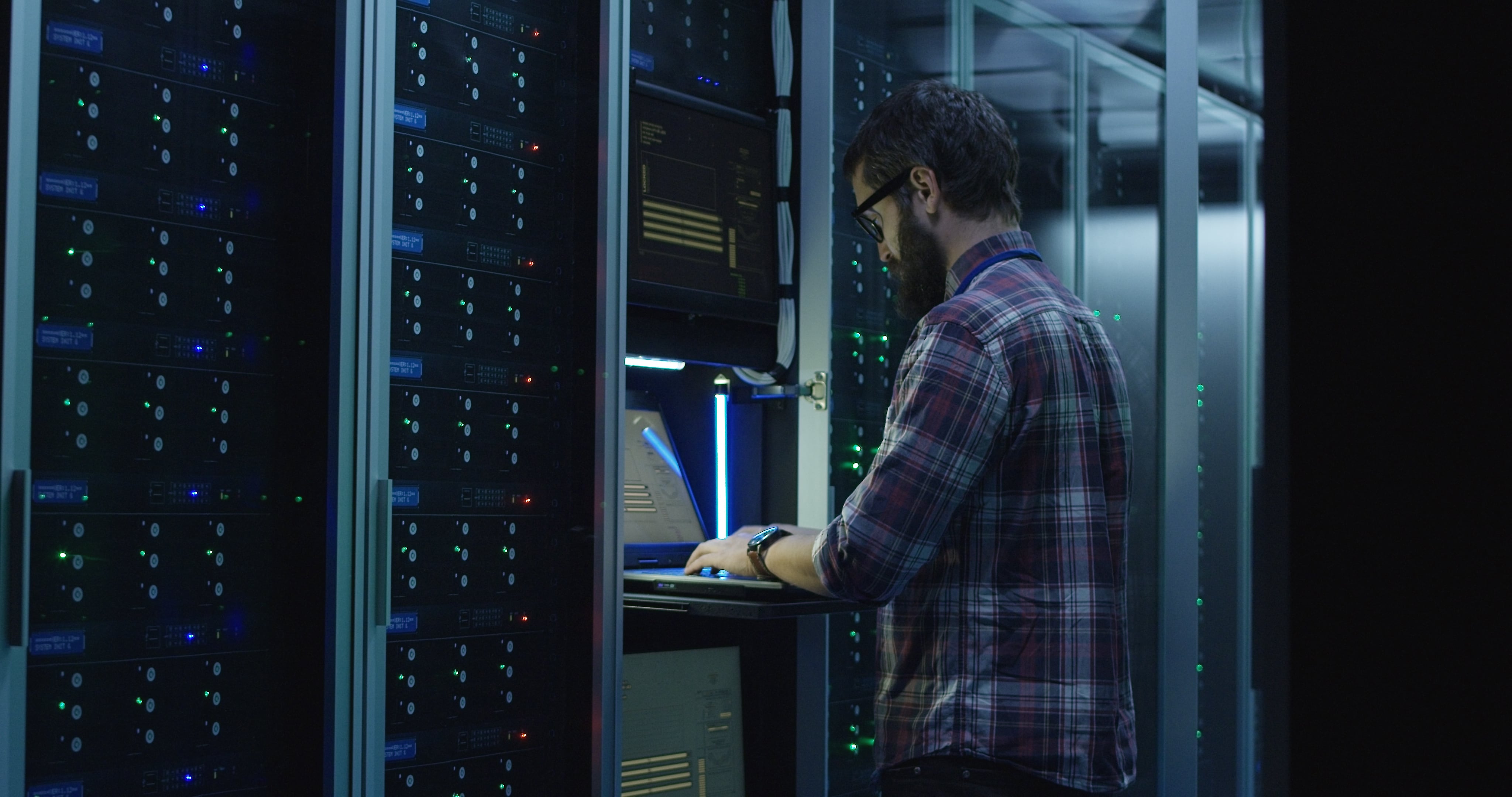
Ukraine has struck a major blow to Russia’s digital infrastructure. Since last Thursday, Ukrainian drones have carried out a series of attacks that destroyed three large data centers belonging to Yandex — known as “the Kremlin’s Google”— on the outskirts of Moscow. The Yandex Taxi ride-hailing app and the group’s payments service, Yandex Pay, have been temporarily taken offline. Ukrainian President Volodymyr Zelenskiy even said the bombings disabled Russian bots.
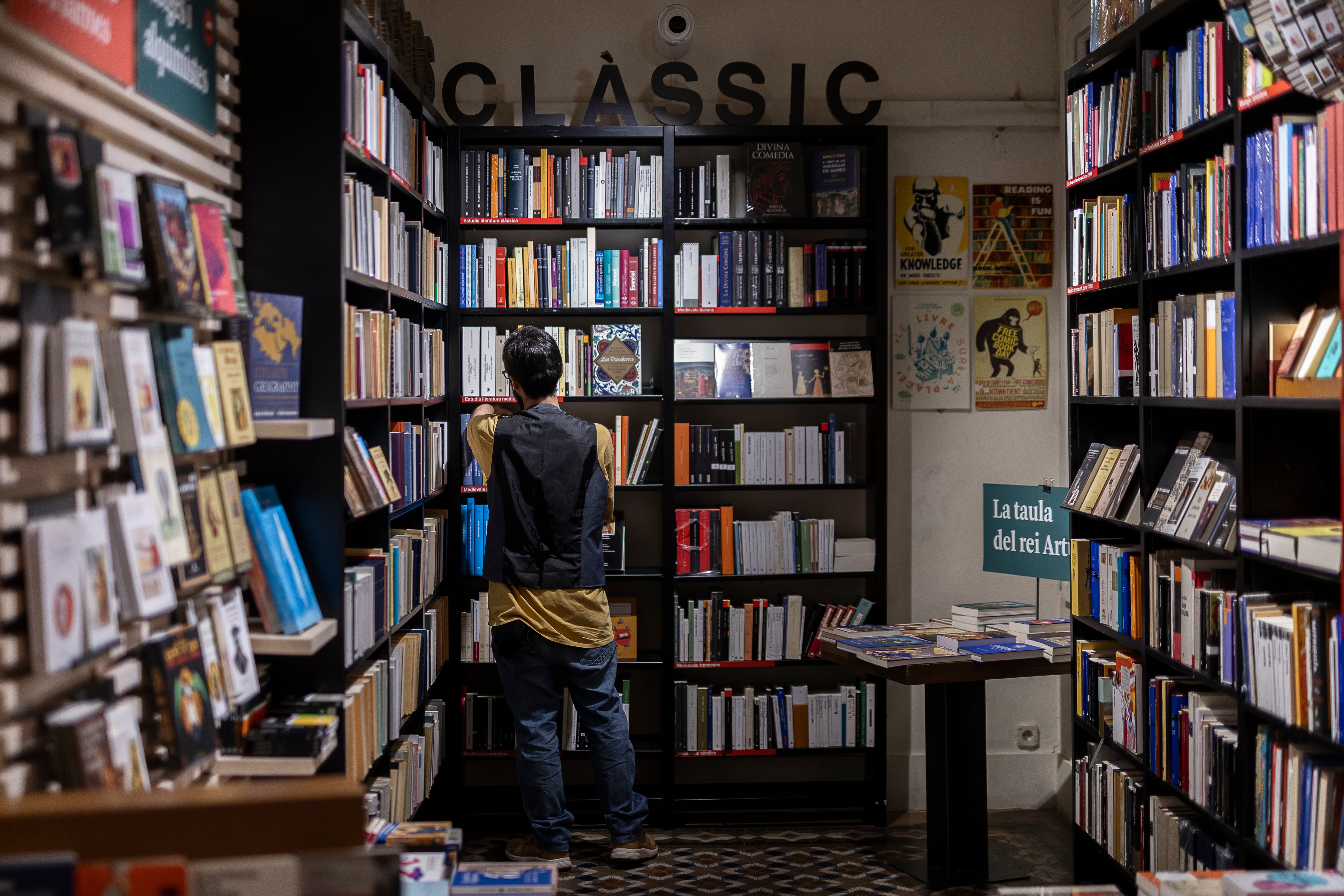
Artificial intelligence is also making its way into the world of books. EL PAÍS examined the use of AI in a sample of 119 popular books published in 2025 and 2026, analyzing titles that appeared on the bestseller lists at Amazon.es and the Spanish bookstore chain Casa del Libro, as well as the winners of a major literary prize.
They aren’t made of asphalt, have no traffic lights, and no cars drive on them. Yet, these unusual “highways” are already saving thousands of lives. In the Brazilian Amazon, conservationists have built rope bridges high up in the trees, allowing monkeys, sloths, and other jungle inhabitants to safely cross over the roads. The results are […]
As the controversy over AI safety grows, another debate is emerging. Bill Gates, the founder of Microsoft, has said that artificial intelligence should pay taxes to compensate for the jobs that will be destroyed by the deployment of this technology.
The 18th-century notion of the panopticon — a circular prison design with a guard station in the middle, allowing a single officer to enforce discipline by keeping watch over all the prisoners — has become real in the 21st century through AI-driven surveillance against workers: It’s the Amazon warehouse.
It should be no surprise that the company that harnessed technology to create a vast, $2.7 trillion empire would employ the same sophistication to enforce workplace discipline and tamp down insurgent unionization efforts. A recent disclosure of Amazon’s internal “employee relations” documents reveals just how extreme Amazon’s methods of warehouse surveillance and control have become.
Amazon employs what it calls the “Atlas” model, inputting into a computerized model a staggering amount of information on workers, their thoughts and behaviors, the workplace environment, and myriad other factors — “hundreds of data points,” according to the company. Atlas produces not just a granular measurement of ongoing worker unrest, worksite by worksite around the world, but also a prediction model for future organizing. It’s like the “precrime” police in the film Minority Report who use psychic powers to identify and apprehend would-be criminals before they act — except in this case, it’s an AI-driven tool used by the billionaire owners of one of the richest companies in history to head off rebellion among its low-wage workforce. And this is not Tom Cruise play-acting; it’s very real.
Workers anywhere who have endured anti-union campaigns can relate to stories of overbearing surveillance by management; the Atlas model, however, takes the spying to an entirely new level.
Details of the Atlas model came to light recently as a result of a legal dispute between Amazon and Unifor, the Canadian private sector union. Last year, British Columbia’s Labour Relations Board awarded union certification to Unifor at Amazon’s YVR2 warehouse outside Vancouver, finding that the company had broadly interfered in the union drive. It was the second union certification at Amazon in North America — the other being the 2022 union win at JFK8 in Staten Island, New York. But in contrast to the U.S., where Amazon has managed to stall bargaining for four and a half years because of weak labor laws, the B.C. Labour Relations Board ordered Amazon to recognize the union and negotiate. Contract bargaining commenced last December.
Not surprisingly, Amazon has dragged its feet in negotiations, prompting the union to file unfair labor practice charges with the Labour Board. Following a series of hearings earlier this year, the Labour Board found that Amazon violated provincial law. In August it ordered a remarkable step — first-contract arbitration at YVR2. That fight remains in play, but as a result of the legal proceedings, Amazon was required to turn over documents to the Labour Board and Unifor. Unifor has shared them with Truthout, and they can be viewed here.
Atlas produces not just a granular measurement of ongoing worker unrest, worksite by worksite around the world, but also a prediction model for future organizing.
In addition to the Atlas model revelation (beginning on Page 19 of the document), the material includes more than 100 pages that reveal in great detail how Amazon trains its frontline managers in union-busting. My colleague at the Center for Work and Democracy, Ben Fong, has written about this other portion of the disclosed material.
“Amazon’s own documents pull back the curtain on what workers have been telling us for years,” said Justin Gniposky, Unifor’s organizing director. “Behind the friendly PR, Amazon sees workers as property and treats their fundamental right to unionize as a threat to be managed and then eliminated.”
Amazon did not respond to Truthout’s request for comment on the Atlas model.
The documents describe the Atlas model as “a labor risk framework to clarify how Amazon evaluates emerging workforce issues, labor union targets, and internal or external labor threats.” The Atlas model ingests hundreds of data points: employee trainings completed; health and safety incidents, from simple first-aid cases to serious injuries; feedback from workers on management; worker tenure and turnover; the proximity of a warehouse to another workplace experiencing union activity; local minimum wage rates and other area economic conditions; and even the temperatures inside and outside of the warehouse.
Amazon seems especially thorough about scraping data from worker communications channels to plug into the Atlas model — the company’s internal “Voice of the Associate” (VOA) electronic bulletin board, the answers to digital questions posed daily to workers, and externally, forums including Reddit — “to understand the tenor of the discussion at the site level,” according to the documents.
“Behind the friendly PR, Amazon sees workers as property and treats their fundamental right to unionize as a threat to be managed and then eliminated.”
Atlas uses AI to identify phrases and “common keywords” to allow managers to do a “deep dive into the worker population driving the discussion.” Atlas also looks at the upvotes or other responses — positive, negative, or neutral — that the comments elicit, and the volume of those worker reactions. All of these data points go into Atlas and let managers “look around corners to identify developing themes” so they can “tailor strategic responses for addressing emerging risk.”
Amazon also tracks and documents all organizing activities that managers detect, and records them under the category of “employee relations events.” Each activity is assigned a severity score. “High severity” events include employees signing union cards, delegations of workers approaching management with demands, protests, sickouts, and work stoppages.
Atlas uses mathematical modeling to create a point system for all these data points, assigning a “labor score” to each workplace. The scale is further broken down into tiers, with the Tier 5 designation applied to facilities with high scores, where there is “no immediate perceived risk,” and Tier 1 applied to facilities where “future activity is imminent.” Amazon’s union busters focus largely on Tier 1 and 2 facilities.
Atlas produces extensive spreadsheets ranking different facilities and looking not just at raw “labor scores” but also at monthly trends. In 2024, the year the documents date from, Amazon was most concerned about union activity at 16 warehouses it had ranked as Tier 1. For instance, at LDJ5, a Staten Island sortation center across the street from JFK8, Atlas noted that leading issues of worker concern were “bathroom breaks, equipment, rest breaks, leadership/management, temperature.” The spreadsheet noted that “internal activists” — workers — were organizing, and that by looking at month-over-month trends, LDJ5 was experiencing “Risk Increase,” with the phrase placed inside a bright red box. At four of these Tier 1 facilities, the spreadsheet noted, the threat of union activity was sufficiently high to justify deploying Amazon’s “rapid response” team: union busters who travel to hotspots of organizing throughout Amazon’s global network.
Union organizing at Amazon is not just a battle over economics; it’s also a fight for basic freedom and democracy.
But the main value of Atlas seems to be predictive. For the Tier 2 worksites (“future activity is highly probable”), the spreadsheet poses these questions: “Which sites are showing the most future risk that are not Tier 1 sites yet?” and “What is the risk in each business line and which has the most risk, is it increasing or decreasing? What is driving the risk?” Tier 2 spreadsheets in the document look at the number of investigations of workers that management has handled in the last month, whether that number is trending up or down, the number of worker appeals of those investigations, and — notably — the percentage of negative worker comments on internal bulletin boards.
Voice of the Associate and other internal bulletin boards are key focal points. Charts in the document track how often workers raise particular topics, like weather, time off, breakroom amenities, management treatment, and restroom cleanliness. They also analyze the “vector” of each issue: “What are the top drivers of negative Sentiment and change MoM [month over month]?” is one question posed in the document. “What Sites are spiking MoM in negative sentiment? What themes are driving the sentiment? What anecdotes can we pull?”
Atlas is not strictly a North American tool. One chart analyzes trends for warehouses globally, documenting “employee relations events” — worker organizing — and cataloguing the number of worker comments on Voice of the Associate and the percentage of those comments that were negative. Two warehouses in the English Midlands where workers have been organizing with the GMB union — both Tier 1 sites in Atlas’ taxonomy — showed high volumes of negative VOA posts. A warehouse in Melbourne, Australia, also showed mostly negative Voice of the Associate posts, while posts were mostly not negative in some of the warehouses in Poland, Germany, and Italy.
All this is surely a tiny sliver of Atlas’s output. The former head of Amazon’s HR platforms, Bud Cashatt, boasted on LinkedIn recently about how his department created “predictive site-risk ML touching every building in Amazon’s global network.” (“ML” stands for machine learning, where programmers train AI to learn patterns and build predictions based on analyzing vast quantities of data.)
Did Jeremy Bentham, the 18th-century British philosopher who dreamed up the panopticon, anticipate Atlas? Nearly 250 years ago, he imagined his panopticon as a useful tool for prisons, “madhouses,” and also “to the business of manufactories,” the industrialized manufacturing plants then just emerging in England. Speaking of his watchman in the center of the operation — the human Atlas of his time — Bentham wrote, “The concealment of his person will be of use.”
The documents uncovered at the B.C. Labour Board shine a light on Amazon’s concealed watchman. Atlas illustrates just how far Amazon will go to try to rule the warehouse floor. And its scope also underscores just how terrified Amazon’s masters are of their own workforce rising up and claiming their due.
Bentham theorized that the panopticon would facilitate social control: He imagined that incarcerated people would behave, not knowing at any moment whether they were being watched by the guard. It was, he wrote, “A new mode of obtaining power of mind over mind.”
But what happens when prisoners — or workers — resist such attempts at social control? There’s no level of AI sophistication that can erase the reality that Amazon’s workers move millions of packages every day, and without their labor, the Amazon supply chain collapses.
Peter B. Olney, the retired organizing director of the International Longshore and Warehouse Union, calls Atlas “a promethean tool for union busting and the thwarting of any employee organizing.”
To fight back against this “existential threat” to basic worker rights and unions, Olney says, “we have to get real about deploying massive resources towards organizing the workforce and finding their serious vulnerabilities and choke points.”
Today we see emerging fights everywhere against a billionaire class intent on harnessing AI and technology to undermine basic democracy and impose authoritarianism, both in the workplace and throughout society: in revolts against the algorithmically driven content we are force-fed on the internet; protests against and sabotage of the Flock cameras on neighborhood lampposts; and resistance against the replacement of workers with bots and computers. The Atlas model places Amazon workers at the center of this global fight against the AI billionaires. And it highlights that union organizing at Amazon is not just a battle over economics; it’s also a fight for basic freedom and democracy.

 Login