❌

Reading view

Curfews imposed in French cities as rebellion against austerity grows nationwide

Mass mobilizations against austerity policies and their effects are not winding down in France. On Saturday, October 17, roughly 800,000 people joined protests across more than 1,700 assembly points, according to union figures – amplifying demands tabled over a month of student protests and demanding urgent action on the cost of living crisis.

In the aftermath of the protests, the government expanded local authorities’ powers to introduce curfews. This led to overnight movement limitation orders introduced in several cities, including central parts of Paris, Lille, Lyon, and Nice. Many of the curfews target young people in particular, reflecting institutional concern about the success of their recent mobilizations.

Over the past weeks, students launched a wave of school strikes and occupations, resisting the erosion of education services under successive neoliberal governments. Their movement drew support from trade unions and progressive political forces, who joined students on the streets to pressure the Lecornu administration to change course and prioritize public services and labor rights over armament. 

Read more: One barricade after another: How protesters marched on the garrisoned heart of India’s capital

Rallies and marches reinforced the student movement’s demands for accessible, equitable higher education, alongside trade unions’ calls for higher wages. 

They also drew links to other historic moments of mobilization, including the struggle for Algeria’s liberation. Many groups taking part echoed the anniversary of the 1961 demonstration that ended in the massacre of hundreds of people protesting for independence.

Police violence continues

Teachers, families, and elected officials also joined, for a practical reason: to shield students from the law enforcement violence unleashed on their mobilization. 

Saturday’s protests were again met with police violence, with officers relying – unsuccessfully – on tear gas and water cannons to disperse crowds. Serious injuries and cases of severe police brutality were reported throughout the day.

After repeated repression, and with neither the government nor President Emmanuel Macron offering credible solutions to protesters’ grievances, protests turned into riots. While those close to social movements emphasized the events were triggered by years of cuts and unimpeded attacks on workers’ rights, the middle and upper classes were indignant.

Recent protests in France have a decisively antifascist character. Protester’s sign reads: “Always angry, never fascist.” Source: Manon Aubry/Facebook

Macron channeled their reaction in his post-protest speech. He declared those responsible for the looting must be punished, while promising more “dialogue” and offering a mild acknowledgment of people’s concerns over fuel, food, and other essentials. 

“There are people out there who rightfully feel that the price of fuel is too high,” the president said – before shifting responsibility elsewhere. He said rising prices were the result “of what is happening in the Persian Gulf – a war that France was not part of.” 

The speech landed poorly at home and abroad. The Iranian government, for one, has repeatedly called out Macron for applying double standards between protests in West Asia and France, emphasizing that the French president had expressed support for US plans in Iran and that ongoing mobilizations were a logical outcome of the policies he endorsed. 

Students reject Macron’s response

In France, protesters called out Macron for failing – yet again – to identify a concrete way out of the situation facing the country. 

“Since the beginning of this movement, high school and university students have been met with nothing but contempt and police batons in response to their demands,” the university students’ union Union Étudiante wrote. “Yet we have put forward a clear set of demands, widely supported by everyone who took to the streets on October 17.” 

Read more: Madrid teachers and students launch strike to defend public schools

“He did not utter a single word about the high school and university students maimed in the crackdown,” the organization added. “He said nothing at all about the real violence committed on Saturday,” referring to approximately 2,300 arrests made on that day alone – and dozens of young people who were seriously injured over the past weeks.

“It is not a matter of engaging in endless dialogue, but of responding concretely to the needs of high school and university students: income, housing, food services, healthcare, study conditions, access to degrees, and an end to repression.”

Lecornu attempts to blame left for chaos

Prime Minister Sébastien Lecornu’s reaction to the protests drew an equally negative response from progressive forces, especially after he suggested left movements were responsible for chaos and violence.

“What a pathetic politician,” wrote presidential candidate Jean-Luc Mélenchon. “He is responsible for the chaos – chaos he methodically prepared, whether through sheer incompetence or a deliberate ‘strategy of the worst’ aimed at conjuring up a ‘party of order’ that would make people forget his failure on the public finances.”


  •  

A eleição das Big Techs

Quer receber os textos desta coluna em primeira mão no seu e-mail? Assine a newsletter Xeque na Democracia, enviada toda segunda-feira, 12h. Para receber as próximas edições, inscreva-se aqui.

“Wow”, tuitou Elon Musk, dono do X, depois que as apostas no site Polymarket passaram a favorecer Flávio Bolsonaro na disputa contra Lula, demonstrando quem é seu favorito nas eleições brasileiras. O advogado Martin de Lucca, tuitou: “Primeiro eles cancelaram o X. Depois cancelaram o Rumble. Recentemente, até cancelaram o Polymarket. O tiro saiu espetacularmente pela culatra”, escreveu Lucca, que advoga para a Truth Social, rede de Donald Trump, e para a Rumble, rede social de direita que teve investimento milionário de JD Vance e de Peter Thiel, depois da vantagem de Flávio no primeiro turno. “Que bela manhã, né Brasil?”. 

JD Vance reuniu-se com Flávio Bolsonaro em maio deste ano, e com André Marinho, filho do coordenador de campanha bolsonarista, em abril. Seu aliado e fiador, Peter Thiel, esteve em São Paulo apenas duas semanas depois, em 30 de abril, com uma comitiva de pelo menos 15 executivos, segundo revelou o jornalista Paulo Motoryn. De acordo com o site Amado Mundo, a rede Rockbridge Network, fundada por JD Vance, mantém um representante integrante dentro da sede de campanha de Flávio Bolsonaro em São Paulo, e enviou um plano de trabalho que incluía a criação de um Conselho de Tecnologia para assessorar sua campanha, segundo o Intercept. 

Mark Zuckerberg, em janeiro do ano passado, nomeou o Brasil – sem nomear – ao afirmar que “os países latino-americanos têm tribunais secretos que podem ordenar empresas para silenciosamente derrubar [posts]” e que se uniria ao governo de Donald Trump para lutar contra essas ordens secretas – a referência eram ordens do STF depois da tentativa de Golpe de Estado em 2023. 

Os donos das Big Techs estão acompanhando de perto as eleições brasileiras. Afinal, sabem que elas serão cruciais para definir como será o futuro dos seus negócios. 

O caso mais notório de interferência, até agora, tem sido a Meta – empresa que mais faturou com impulsionamento de campanhas, R$282 milhões. Mesmo assim, funcionários da empresa reclamaram em canais internos da inação dos desenvolvedores lotados nos EUA em reverter o banimento da conta de anúncios da campanha de Lula no Instagram, em 9 de outubro. Os americanos fizeram corpo mole em vez de permitir condições iguais às do adversário, que seguia impulsionando seus conteúdos. 

Mas esse foi apenas um dos eventos. Na semana passada, a IA da Meta permitia que qualquer pessoa criasse imagens pró-Flávio e contra o Lula – acusando o PT de corrupto, por exemplo. Se o mesmo pedido era feito sobre o candidato do PL, a IA respondia que não podia gerar a imagem. A Meta reconheceu que sua IA permitiu a criação de imagens favorecendo Flávio e que “a conta de anúncios da campanha de Lula foi desativada por engano por pouco mais de 1 hora, e não por razões políticas”.

Antes disso, a Meta suspendeu por algumas horas a conta do canal Revelando Brasil no Instagram, que tem publicado vídeos documentais sobre casos envolvendo Flávio Bolsonaro, quando este se tornava o principal assunto das redes, uma semana antes do primeiro turno. Até agora não houve explicação do porquê.    

A tendência para o lado da campanha do filho de Jair incomodou até mesmo o TSE, que na semana passada decidiu que a Big Tech tem que agir com isonomia sobre conteúdos das duas campanhas – e que prove que está fazendo isso. Em caso de descumprimento, a Meta terá que pagar R$ 500 mil por dia.

O Ministério da Justiça acionou a Agência Nacional de Proteção de Dados (ANPD) e o Ministério Público Federal para abrir uma investigação contra a Meta, e a Procuradoria Federal dos Direitos do Cidadão do MPF já abriu um procedimento para investigar a empresa. Além disso, a deputada Érika Hilton (PSOL-SP) está coletando assinaturas para uma CPI na Câmara dos Deputados para investigar se está havendo interferência das Big Techs nas eleições. 

A mobilização chamou a atenção da imprensa internacional – o que forçou a Meta a publicar um comunicado negando tentar interferir nas eleições. A empresa ainda saiu com essa: “Há muito tempo, a Meta alerta que as regras rígidas do Brasil para conteúdo digital aumentam o risco de aplicação excessiva e ameaçam a liberdade de expressão. Desde 2025, essas regras ampliaram a possível responsabilidade das plataformas por conteúdo e anúncios gerados por terceiros” – ou seja, a culpa dela estar prejudicando a campanha petista é da regulação.  

É aí que está o fio da meada. Faz sentido para a Meta e também para outras Techs investirem no fim do governo Lula porque o Brasil é o fiel da balança no sul global em termos de regulação do mundo digital. 

Durante o governo Lula, elas contabilizaram muitas derrotas: o banimento do Twitter pelo STF; a decisão do STF de responsabilizá-las legalmente por conteúdo ilegal; o Eca Digital, conhecido como “Lei Felca”; a decisão do Cade de abrir uma investigação conta o Google por concorrência desleal ao jornalismo ao lucrar com o conteúdo sem pagar por ele, além de outras decisões da Secretaria Nacional do Consumidor (Senacom), do MJ, e da ANPD – por exemplo, a agência obrigou a Meta a informar os usuários e pedir permissão sobre uso de conteúdos de usuários no Facebook, WhatsApp, e Instagram para treino no IA. Recentemente, as “lives” do Discord foram banidos depois do suicídio de uma menina de 13 anos.  

Flávio e a bancada digital já avisaram que querem reverter todas essas regras. Flávio planeja um “revogaço” dos decretos de Lula que regulamentaram a decisão do STF sobre a responsabilização das plataformas, que estabeleceu a ANPD como agência reguladora. A “bancada da liberdade de expressão digital”, que tem nomes como Carol di Toni, Filipe Barros e Carlos Jordy, do PL, quer que o Congresso defina as responsabilidades da ANPD.     

Só que, no Brasil, a discussão sobre redes sociais e Big Techs ultrapassou, e muito, a esfera do Congresso. É o que mostra o caso da interferência da Meta nas eleições. Arrisco dizer que o Brasil é o único país em que a sociedade tem clareza dos riscos representados pelas Big Techs. Não se trata de um partido, um político ou um punhado de ONGs: é um país se mobilizando para conter os danos da tecno-oligarquia. 

Hoje às 17h, a pressão vai aumentar. Organizações da sociedade civil e movimentos sociais convocam a sociedade para um ato pacífico na sede da Meta, na Faria Lima, em São Paulo.

E agora, volto ao início da minha coluna. Se as Big Techs estão de olho nas nossas eleições, o mesmo é verdade para a crescente comunidade de especialistas, legisladores, jornalistas e ativistas que se importam com a batalha mundial da humanidade contra essa oligarquia. Com as eleições, o epicentro desta luta volta a ser o Brasil – e isso não vai terminar no domingo, vença quem vencer. O Brasil seguirá tendo um dos movimentos atuantes e mais robustos de pressão e organização cívica para emparedar as Big Techs – um movimento, ouso dizer, irreversível.  

  •  

Trump defends Russia sanctions waiver, says he does not want to drive Moscow from talks

Trump WEF

US President Donald Trump wrote in a Truth Social post on 18 October that he did not want to “drive, foolishly, Russia away from the bargaining table.” He also wrote: “Signing that document at this time will do that, and I can sign it later, or any time that I want!”

Trump was referring to sanctions and tariffs under the Lindsey O. Graham Sanctioning Russia and Iran Act of 2026, which he waived in an executive order on 16 October, days before the measures were due to take effect. The waiver suspends additional economic penalties intended to pressure Moscow over its war against Ukraine, while leaving earlier US sanctions in place. The decision came weeks before the 3 November midterms, in which Republicans are defending slim majorities in both chambers, and analysts said the penalties could have pushed up oil prices for Americans already paying more, largely because of the US-Israeli war with Iran, Reuters reported.

Trump says Zelenskyy could have made a better deal two years ago

A week before the waiver, Trump had announced a deal for Russia to increase diesel supplies to global markets. The Treasury also issued a license, valid until 7 April 2027, permitting certain transactions in Russian-origin diesel.

In the Truth Social post, Trump accused Ukrainian President Volodymyr Zelenskyy of targeting Russian diesel refineries, saying the strikes were “seriously hurting the world diesel markets, including those in the United States.” Kyiv had paused its refinery strikes for three days at Washington’s request after Trump declared an energy ceasefire on 11 October, which Russia never confirmed, then resumed them. Since then, Russia has struck Ukraine’s energy sector 76 times, Zelenskyy said on 18 October.

kyiv attack
Explore further

Kyiv gets no warning of the first of two Russian ballistic waves, hours after Zelenskyy said US alerts were back

Trump wrote that Zelenskyy “doesn’t want to end this war, and probably never did,” and that he “could have made a better deal two years ago than he can now.”

“His country is in shambles, a large portion of his land is lost, his oceans and seas are gone, and his male population is low, wounded, and/or dead,” Trump added.

He also said Russia was “doing very little, if anything, to help” Iran and that he wanted to keep it that way.

A day earlier, Trump said he had not made a final decision

On 17 October, Trump told reporters at Mar-a-Lago that he had not announced his final decision. “A lot of you don’t know what my decision is yet, but we’ll figure it out, and you’ll figure it out,” he said, Reuters reported.

“I think the president wants to take the 60-day period of time to sort of analyze what imposing both sanctions and tariffs will mean to the global economy and even to the US economy,” US Secretary of State Marco Rubio told reporters before departing for Uzbekistan the same day.

Zelenskyy calls the waiver a pity as Republicans split

Zelenskyy called it a “pity” that Trump had waived sanctions under a law named for the late Senator Lindsey Graham, who “really believed in Ukraine.” He said he hoped Trump would change his decisions, NBC News reported.

Discussing the diesel deal on NBC’s Meet the Press, Zelenskyy said US oil prices had risen because shipping through the Strait of Hormuz was blocked, not because of Ukraine.

month before diesel waiver trump’s envoys had already pitched kyiv russian gas · post jared kushner steve witkoff ukrainian president volodymyr zelenskyy 7 2026 presidentgovua джаред кушнер стівен віткофф володимир
Explore further

A month before the diesel waiver, Trump’s envoys had already pitched Kyiv on Russian gas, NYT says

On 17 October, Zelenskyy told journalists that “the decision to undo all of this, to block all of it, seems wrong to me” and that it “definitely helps only the Russians.” His remarks appeared in Ukrainian on his official Telegram channel.

“Sanctions relief will continue. I think the diesel deal and the move regarding the Lindsey Graham Act are not the end of it. Unfortunately,” Zelenskyy said.

On 19 October, Zelenskyy wrote that partners had again given no warning of Russia’s overnight ballistic attack and that blocking missiles for Ukraine’s air defense while Russia gets sanctions eased or postponed amounts to partners denying reality.

Republican Senator James Lankford defended Trump’s decision on NBC’s Meet the Press, saying the president was “choosing the American people first.”

Senator Darline Graham, Lindsey Graham’s sister, whom Trump has endorsed for a full term, said at a campaign stop on 17 October that she would “choose to keep the pressure on Russia.”

“I don’t trust Putin and I don’t trust Russia,” Darline Graham said.

She did not directly criticize Trump but said she would not have made that choice, Reuters reported.

  •  

Kyiv gets no warning of the first of two Russian ballistic waves, hours after Zelenskyy said US alerts were back

kyiv attack

Russia attacked Kyiv with ballistic missiles in two waves overnight on 18–19 October. Information from partners did not arrive before the first wave, at around 23:00, Air Force spokesperson Yurii Ihnat said on national television. A warning came before the second wave, at around 03:00, but the window was short, he told NV.

Hours earlier, Ukrainian President Volodymyr Zelenskyy told NBC that US warnings of Russian ballistic launches were working again after three days without them, and that only the United States has that intelligence. Those warnings have for years given Ukrainian authorities several minutes to sound alarms and let civilians reach shelters before ballistic missiles hit.

“Once again, a Russian ballistic attack in several waves overnight, and once again there was no warning from partners,” Zelenskyy wrote. It was at least the third ballistic strike on Kyiv in a week to begin without warning from partners, following attacks on 12 October and 13 October.

Metro station damaged on Kyiv’s left bank

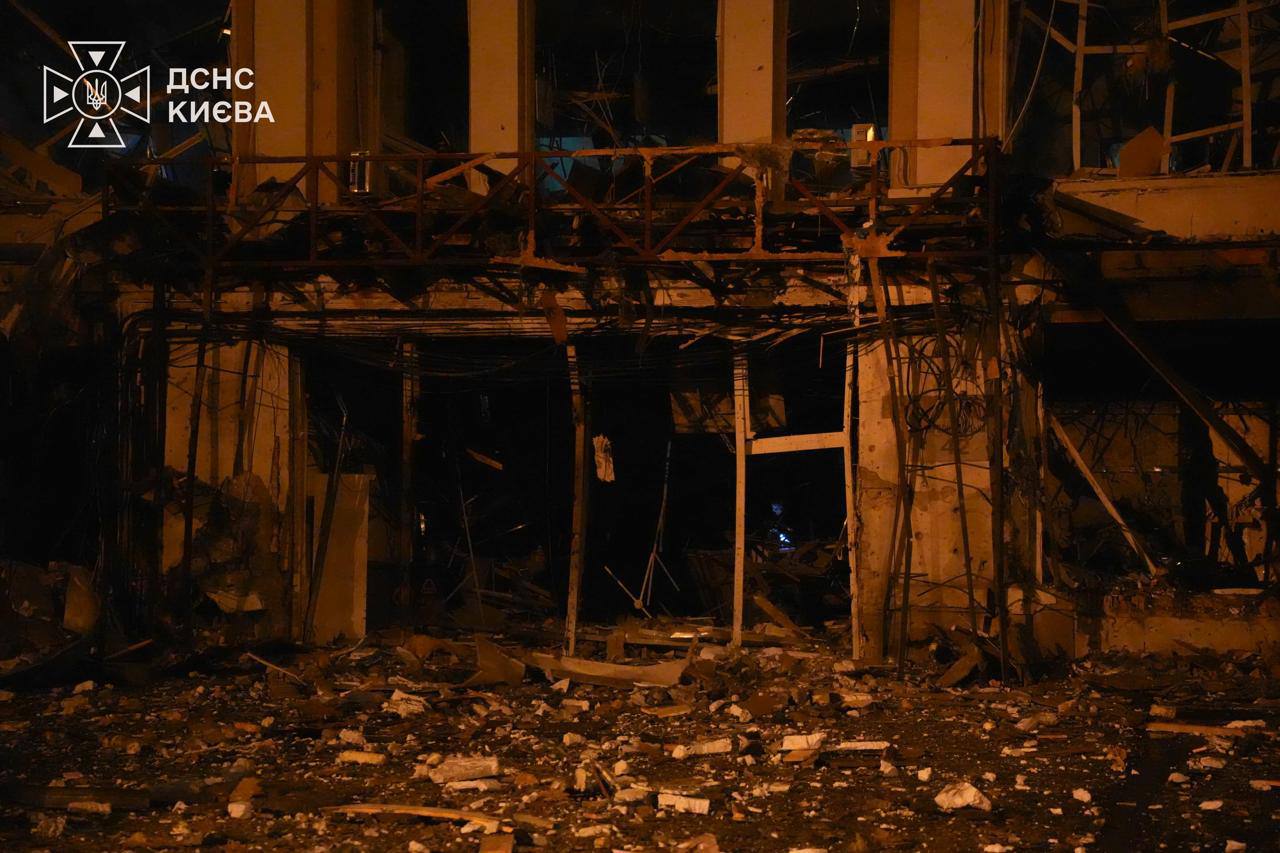
One person was killed and eight injured in Kyiv, Ukrainian Prime Minister Serhii Koretskyi said. A strike damaged a metro station on Kyiv’s left bank, and debris broke the rails beside it, Mayor Vitali Klitschko said. City authorities said the damaged station was above ground, closed Chernihivska and Lisova stations, and said red-line trains would run only between Akademmistechko and Darnytsia. The attack also damaged a 25-story building, a medical facility, and the Cosmo Multimall shopping center in the Solomianskyi district, NV reported, and Zelenskyy said a school was hit too.

The attack also damaged one of Ukraine’s main ice arenas, on Shalett Street in Kyiv, which hosts Ukrainian championship hockey games and youth training, hockey Telegram channel Flamingo reported. Parts of the facade, metal structures, and roof were damaged, but the ice surface showed no significant visible damage, according to preliminary information, Suspilne reported.

Damage in 11 oblasts, three missing in Irpin

Koretskyi said energy and infrastructure were the main targets, with damage in 11 oblasts. Russia also hit warehouses of medicines, railway stations, shops, and homes, he said. In Kyiv Oblast, Russian strikes injured six people in Irpin, including three children, and three more were missing, oblast head Tymur Tkachenko said. In Kharkiv Oblast, six people were injured, including two children, Koretskyi said. In Rivne Oblast, four people were injured, and one of them was hospitalized, regional police reported.

Zelenskyy said that more than 10 energy facilities were damaged and at least 550,000 families lost power. Ukrenergo reported new outages in 10 oblasts: Volyn, Zhytomyr, Rivne, Ternopil, Khmelnytskyi, Vinnytsia, Kirovohrad, Kharkiv, Odesa, and Mykolaiv. In Volyn Oblast, about 15 jet-powered Shahed-type drones targeted the region, and around 66,000 customers were without power on the morning of 19 October, oblast head Roman Romaniuk said. Kovel, Manevychi, and Lutsk were hit hardest, and no casualties were reported. In Vinnytsia Oblast, a critical infrastructure facility in Koziatyn was damaged, and power there would stay unstable for some time, city council secretary Iryna Repalo said, Suspilne reported.

Zelenskyy said Russia fired 16 ballistic missiles at Kyiv and Kyiv Oblast. The Air Force reported that Russia also used Iskander-K cruise missiles and 269 drones, and that by 09:00 air defenses had shot down or suppressed four Iskander-K cruise missiles and 243 drones. Its preliminary count did not list any ballistic missiles among the intercepted targets.

Rubio denies any pause and points to a software problem in Ukraine’s warning system

On 19 October, Rubio told reporters in Samarkand, Uzbekistan, that “there’s been no pause” in intelligence-sharing with Ukraine, Reuters reported. He said he did not know where Zelenskyy was getting such claims and that he should focus on ending the war. He also said he did not know whether a failure had happened the previous night, but that a few nights earlier there had been a software problem with “their early warning system,” and that US European Command was looking into the strikes, The Guardian reported. US officials had not mentioned a software glitch before, and in at least one case Ukraine was told that bad weather over southern Russia had hidden launch preparations, the newspaper noted.

Ihnat said Ukrainian specialists and their partners were working to establish why information about the first launch had not arrived. He added that similar gaps had occurred during earlier attacks.

Zelenskyy wrote that when missile supplies for Ukraine’s air defense are blocked while Russia gets sanctions relief or delays, “this is, unfortunately, a denial of reality on the part of partners.” A night earlier, Russia had hit Ukraine’s energy system again, while Ukrainian drones set fire to St. Petersburg’s oil terminal despite Washington’s pressure to stop refinery strikes.

  •  

Trump’s Threats to Annihilate Iran

Of all of the things that Donald Trump has said publicly since returning to the White House, his threats to annihilate Iran are arguably the worst. This is not only because the repeated statements are deeply immoral and illegal – deliberate killing of civilians is a war crime – but because they represent the kind […]
  •  

Nigeria drove thousands of gold miners from a national park. But can it keep them out?

A military-backed operation shut down a major illegal gold mining site in Gashaka-Gumti National Park, driving more than 4,000 miners from Nigeria’s largest national park, according to the Africa Nature Investors Foundation (ANI). The miners had already fled by the time Nigerian soldiers arrived at the Kila mining area in July, according to Tunde Morakinyo, executive director of ANI, a Nigerian conservation organization working with the government to manage Gashaka-Gumti. He said no shots were fired during the operation, and bulldozers were brought in to fill the mining pits and shafts. As world leaders and conservation practitioners head to Armenia for the U.N. biodiversity summit Oct. 19-30, with the goal of protecting and conserving 30% of land and waters by 2030, the crackdown spotlights the complexity of safeguarding some of the most biodiverse places on the planet. Gashaka-Gumti is a stronghold for one of the rarest primates in the world: the Nigeria-Cameroon chimpanzee (Pan troglodytes ellioti). The park is also home to more than 1,000 plant species and hundreds of bird and butterfly species, with some of the highest rates of endemism on the continent. A ranger patrols Nigeria’s Gashaka-Gumti National Park, where the Africa Nature Investors Foundation says it employs more than 180 rangers to help protect the park. Image courtesy of Africa Nature Investors Foundation. The operation followed years of growing friction over mining in the park. Tensions came to a head in late 2025. Two rangers were killed by miners in October 2025, according to Morakinyo. The…This article was originally published on Mongabay

  •  

The uplifting story of one of Zimbabwe’s pioneering women rangers

For Nyaradzo Auxilia Hoto, one of the most memorable moments of becoming a wildlife ranger was a trip to town. She and her fellow recruits walked through the streets in their new uniforms, on their way to open bank accounts. Soon, they would receive their first salaries. For a woman who had struggled to make ends meet in rural Zimbabwe, it was an extraordinary moment. “We were very proud,” she recalled. Hoto, 34, grew up in Huyo, a village in Zimbabwe’s Lower Zambezi Valley, where her family depended largely on growing and selling vegetables. Money was scarce, and although she had done well at school, she could not afford to continue her education beyond secondary school. Marriage, she hoped, might offer a better life. Instead, she says, she endured nearly four years with a violent husband before deciding to leave. She returned to her parents’ home with her young daughter and resumed working in the family garden. Her fortunes changed in 2017, when the International Anti-Poaching Foundation began recruiting local women for Akashinga, a new wildlife protection initiative. Hoto was among 16 women selected from roughly 100 applicants. Many men in her community doubted that women could confront poachers or withstand the demands of ranger work. She went anyway. Within a few years, she had become a ranger sergeant, leading other women on patrol. She later returned to university, graduating in 2023 with a degree in wildlife, ecology and conservation. Today, she works as a biodiversity officer with Akashinga, using…This article was originally published on Mongabay

  •  

Hemorragias pós-menopausa: quando procurar ajuda?

A menopausa é uma fase natural da vida da mulher, mas nem todas as alterações devem ser encaradas como normais. Uma hemorragia após a menopausa merece atenção: pode ter causas benignas, mas também ser um sinal de cancro do endométrio, pelo que deve ser avaliada.

É com agrado que tenho visto que a menopausa é cada vez mais um tema discutido abertamente, contribuindo para desmistificar um processo natural da vida da mulher e dar a conhecer o que a ele diz respeito, o que é normal e o que deve ser entendido como um sinal de alarme.

Esta fase traz consigo alterações que podem impactar o dia-a-dia das mulheres, com ciclos menstruais que terminam e níveis hormonais que se alteram, além dos sintomas como afrontamentos, alterações de sono ou secura vaginal. Tudo isto faz parte desta nova etapa. Porém, há uma mudança que não deve ser atribuída à menopausa: o aparecimento de uma hemorragia vaginal depois de um período prolongado sem menstruação, ou seja, qualquer sangramento vaginal que ocorra depois de 12 meses sem menstruar. 

Esta hemorragia pode ser semelhante à menstruação, mas também pode manifestar-se através de pequenas perdas de sangue ou um corrimento rosado ou acastanhado. O importante é saber que, mesmo quando é pouco intenso ou acontece apenas uma vez, a mulher deve procurar um profissional de saúde para uma avaliação. A razão é simples: este pode ser um dos primeiros sinais de cancro do endométrio, um tumor que se desenvolve no revestimento interno do útero.

Embora a maioria das mulheres com hemorragia pós-menopausa não tenha cancro, este é um sinal que pode, literalmente, salvar vidas, já que é muito evidente e pode significar um prognóstico muito favorável quando o tumor é diagnosticado numa fase precoce. Este é, desde logo, o sintoma mais frequente deste tipo de cancro e contribui, quando não é desvalorizado, para 80% dos diagnósticos precoces.

A avaliação médica irá permitir perceber a origem do sangramento e determinar se serão necessários exames complementares, segundo cada situação clínica. O processo envolve a  realização de uma observação ginecológica e uma ecografia transvaginal, para avaliar a espessura do endométrio e identificar alterações que justifiquem uma investigação mais aprofundada, que pode envolver uma histeroscopia e/ou biópsia do endométrio.

Durante a consulta, a mulher deve referir não apenas o episódio de sangramento, mas também outros aspetos da sua história clínica, medicamentos que toma e eventuais antecedentes familiares. Isto porque existem outros fatores que podem aumentar o risco de alterações do endométrio, como obesidade (um dos principais fatores de risco para o desenvolvimento deste tipo de tumor), diabetes, determinadas terapêuticas hormonais ou fatores hereditários.

Contudo, é importante não transformar isto numa situação de alarme, mas encará-la como uma oportunidade para cuidar da saúde. Perante sinais do corpo, as mulheres tendem a desvalorizá-los, atribuindo-os ao cansaço e ao ritmo exigente do dia-a-dia, adiando, por vezes, a procura de uma avaliação médica. Existem várias causas benignas para a hemorragia pós-menopausa. Por exemplo, a redução dos estrogénios associados à menopausa pode provocar uma redução na espessura do endométrio e uma fragilidade dos tecidos da vagina.

A existência de pólipos também pode provocar um sangramento após a menopausa. A utilização de terapêutica hormonal da menopausa pode, igualmente, contribuir para hemorragias ou perdas irregulares de sangue durante determinados períodos do tratamento, sobretudo no início ou após as alterações da terapêutica.

Ainda assim, a mensagem é clara: perante uma hemorragia inesperada após a menopausa, esta deve ser motivo para procurar uma avaliação médica. Mais do que falar de medo, devemos falar de atenção. O cancro do endométrio pode ser tratado de forma eficaz quando detetado numa fase inicial, e reconhecer os possíveis sinais e procurar ajuda é uma parte fundamental para um diagnóstico precoce.

Na maioria dos casos, felizmente, a causa não será cancro, mas só uma avaliação médica poderá esclarecer a origem de um sangramento e, quando necessário, permitir atuar atempadamente. Fazê-lo não é alarmismo, é prevenção.

* Médica de Medicina Geral e Familiar da USF Vale do Arunca, ULS Região de Leiria

  •  

Madrid teachers and students launch strike to defend public schools

The public education system in Madrid – teachers and students alike – launched an indefinite strike on Wednesday, October 14. Tens of thousands emptied classrooms and took to the streets, demanding an end to the regional government’s education policy – warning that it promotes privatization.

Episodes of police violence were reported near part of the education sites.

Read more: Spanish unions announce general strike over housing

A joint union front, including sectoral branches of the General Union of Workers (Unión General de Trabajadores, UGT), the Workers’ Commissions (Comisiones Obreras, CCOO), and the General Confederation of Labor (Confederación General del Trabajo, CGT), among others, started building the mobilization months ago. 

While preparing the strike, they tabled demands including wage increases, investment into education infrastructure, and smaller class sizes.

A strike to defend quality public education

“Madrid’s teachers have said ‘enough is enough’ in the face of regional policies that seek to dismantle public services in favor of private management, demonstrating a profound contempt for the inclusive school, one that equalizes, protects, and guarantees real opportunity for the future of children and the working class,” the union front stated.

“This strike is not just for teachers,” UGT Public Services Madrid emphasized in a statement. “We are defending quality public education for students and their families, who are the ones who suffer the consequences of overcrowded classrooms and staff shortages.”

Students on the first day of the strike. Source: Sindicato de Estudiantes

Union demands were endorsed by students, including the student union Sindicato de Estudiantes. “Ceilings are crumbling, there is no air conditioning, facilities are outdated, and students are forced to learn in makeshift and portable classrooms or overcrowded spaces,” the organization stated.

Student union recognizes strike’s “decisive moment”

Students and teachers insist on the responsibility borne for the crisis by the regional People’s Party government led by Isabel Díaz Ayuso. Ayuso was also an often-quoted name in recent housing mobilizations in Madrid, where demonstrators linked the right-wing party’s policies with the ongoing housing crisis – including the eviction of Maricarmen Abascal.

The education strike, Sindicato de Estudiantes wrote, is a “way to involve the entire working class and youth against a reactionary government that not only does business with public education, but is selling our neighborhoods to vulture funds and rentier landlords who speculate on housing, one that steals money from public health to hand it to companies and the corrupt …”

Read more: Students in France are fighting for stronger public education

In their communications, student associations echoed the historic school strikes taking place in France. “Also very present in the minds of Madrid students, as in the entire State, are the events shaking France and Belgium: the enormous student strikes of our colleagues that have filled Paris and dozens of cities, and the brutal police repression that they have had to endure,” they wrote. “We know that we are in a decisive moment, and like them, we will fulfill our task.”

Strong adherence to the education strike gives hope for an even stronger mobilization on November 11, when Spain’s labor movement has called for a general strike to increase wages, fight against the cost of living crisis, and overhaul the country’s housing policy.

  •  

Japan’s MMX space mission probes how Mars got its moons

The Earth got its Moon when a small planet collided with our planet more than four billion years ago. This impact hurled molten rock into space, which eventually coalesced to form the satellite we can see every night from across our planet. But what of our neighbor, Mars? The Red Planet has two small, irregularly […]

The post Japan’s MMX space mission probes how Mars got its moons appeared first on Asia Times.

  •  

Un volcán, cinco años después: ¿en qué ha cambiado la vida de los palmeros?

Un volcán, cinco años después: ¿en qué ha cambiado la vida de los palmeros?

El podcast ‘Hogar de cenizas’ habla con los afectados del volcán para entender por qué nos cuesta tanto construir un hogar

Episodio 4 - ¿Hay hogares que vale la pena dejar ir?

El 19 de septiembre de 2021, Eva tuvo que marcharse de su casa, porque a pocos kilómetros montaña arriba había erupcionado un volcán. Cinco años después, aunque su casa finalmente se librase de la lava, sigue viviendo en un contenedor. ¿Qué ha fallado en La Palma para que 110 familias no hayan podido reconstruir su vida?

Rayco, que vivía en el centro de Todoque, ha comprado una finca con un pajero para reformar en Mazo, a 50 minutos de su antigua casa. “Cada vez que quiero socializar tengo que atravesar media isla. Si viviese en el Oeste me sentiría más acogido, allí es donde me crie, pero está todo carísimo”.

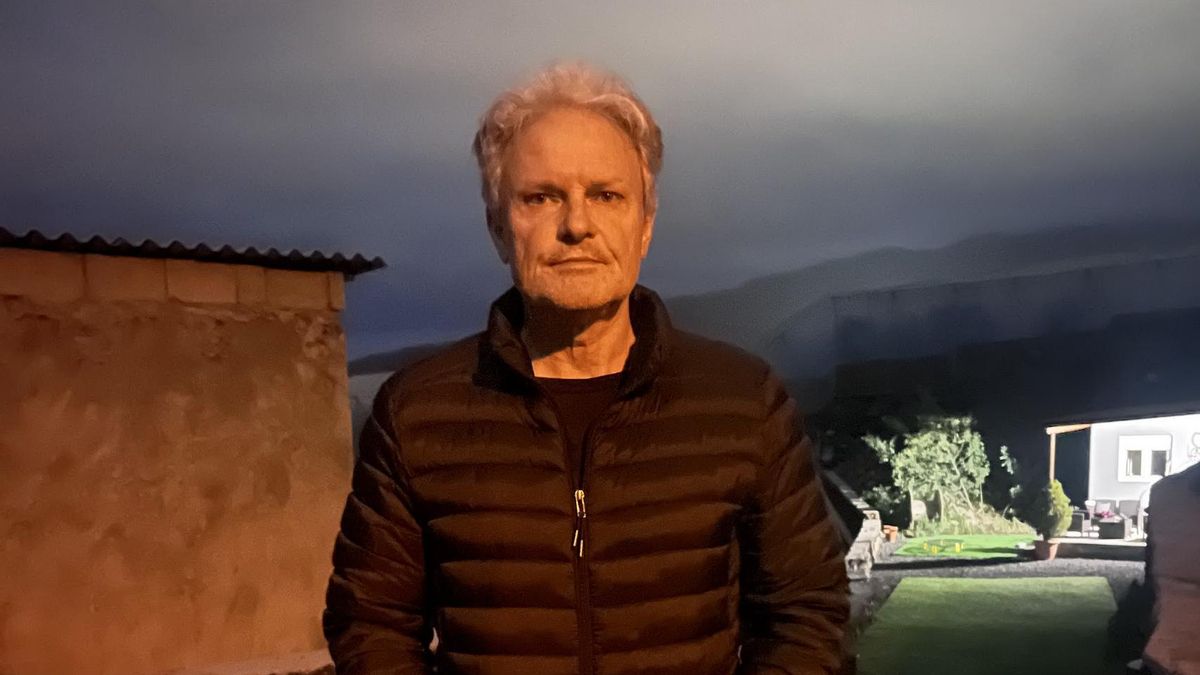
Vicente entraba en su casa cada semana para barrer ceniza. No barría el suelo, barría el tejado: su vivienda había quedado totalmente sepultada por la lluvia de piroclasto. Limpiaba la ceniza, sabiendo que tras marcharse, su casa volvería a quedar tapada. “Llegué un día y me di cuenta de que ya no había casa. Tenía que descubrirla yo. Tenía que desenterrarla”. Vicente dejaba unos palos sobresaliendo de la chimenea para saber, al regresar, donde comenzar a excavar de nuevo y no perder de vista la casa bajo un manto de ceniza.

Vicente, uno de los afectados por el volcán de La Palma.

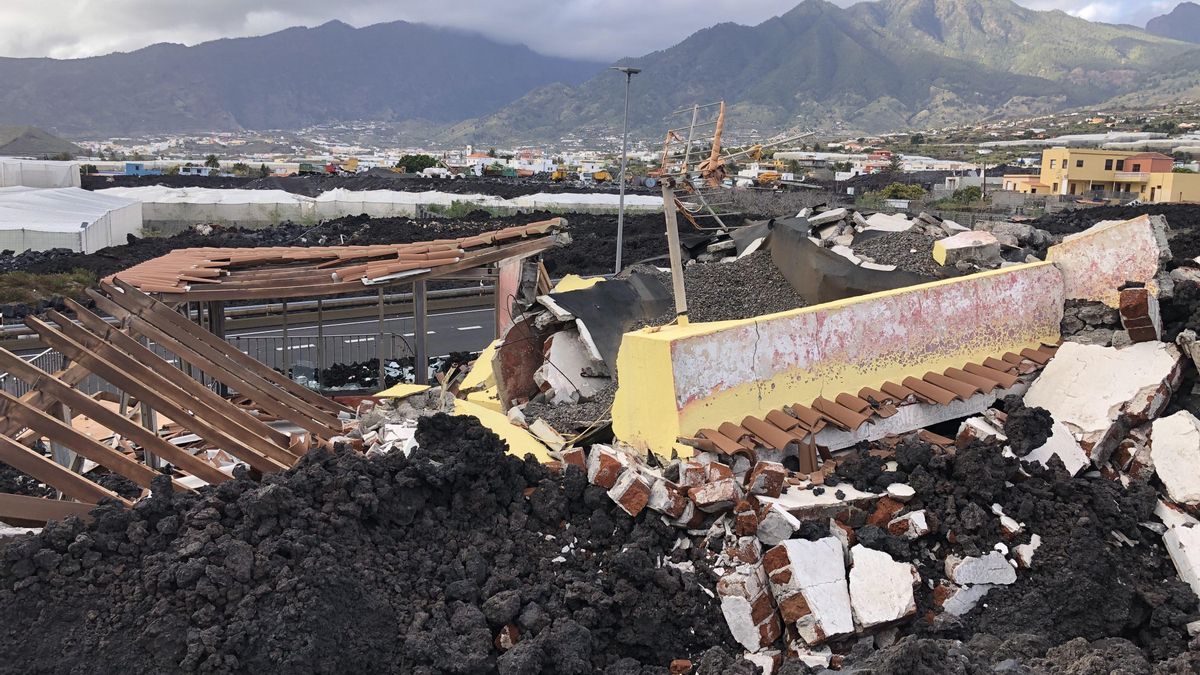
El volcán Tajogaite cumplió el pasado 19 de septiembre cinco años, pero no todas las familias de la isla han podido recuperar su hogar. En total, la lava se llevó 1.600 casas y dos barrios enteros -El Paraíso y Todoque- que han quedado bajo un manto de roca negra. 

Por vivienda afectada, el Gobierno central ha concedido una ayuda de 60.000 euros, el Gobierno canario, 30.000 más, y el Cabildo otros 10.000. Quién tuviera la vivienda asegurada, ha podido recibir del Consorcio el valor de su casa. Pero para recibir todo esto, lo esencial es tener una casa. Y sobre el papel, muchos afectados no la tenían. ¿Cómo es posible?

En La Palma, donde el salario mínimo es regla y la mayor parte del territorio no es urbanizable -por lo tanto, el que hay es caro- muchos vecinos levantan sus casas poco a poco, a lo largo de los años, partiendo de pequeños cuartos de apero en una finca o en un terreno rústico. Y nunca llegan a regularizar esa vivienda. Hay quién diría que es picardía. Para muchos es necesidad.

En este contexto, mucha gente no ha podido siquiera demostrar que han sido afectados por un volcán porque no vivían oficialmente en la zona. 

En La Palma, el volcán no solo se lleva cuatro paredes. Se lleva el esfuerzo de años de levantar una casa, piedra a piedra, y se lleva a los vecinos que han ayudado a levantarla. Porque cuando la mano de obra es cara, en La Palma las “gallofas” ganan terreno y es la comunidad quién ayuda en la obra. Hace cinco años, el volcán se llevó las paredes, pero también separó a los vecinos.

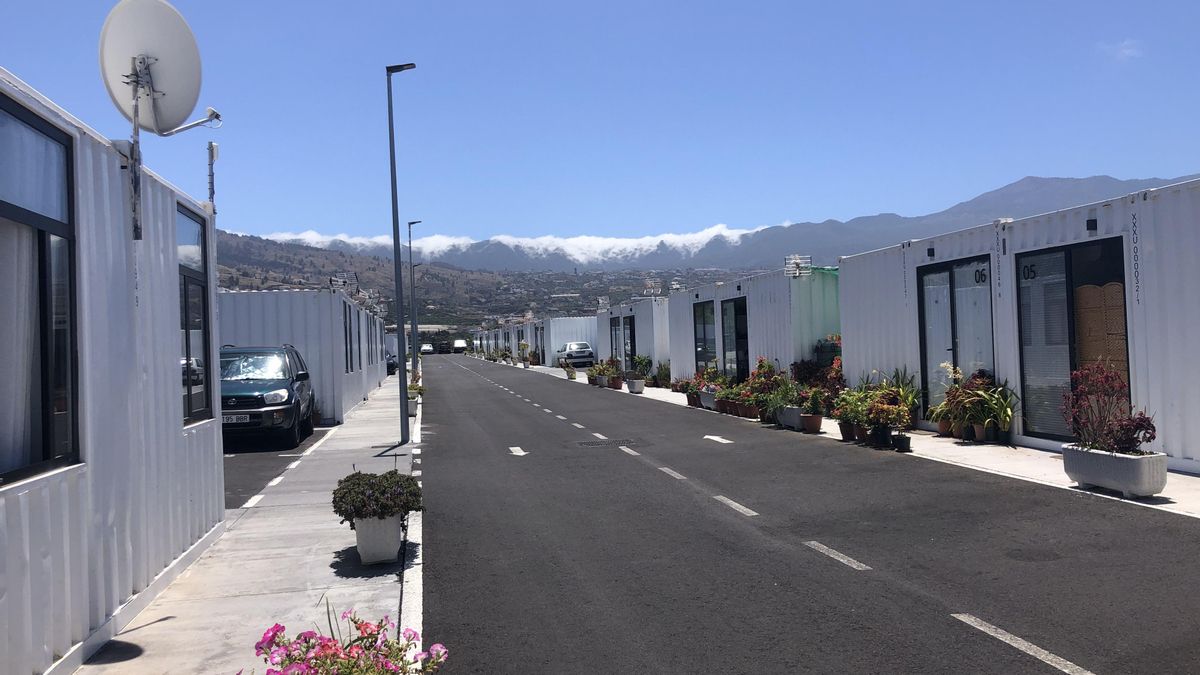
Calle de casas contenedor de los afectados por el volcán de La Palma.

Los contenedores

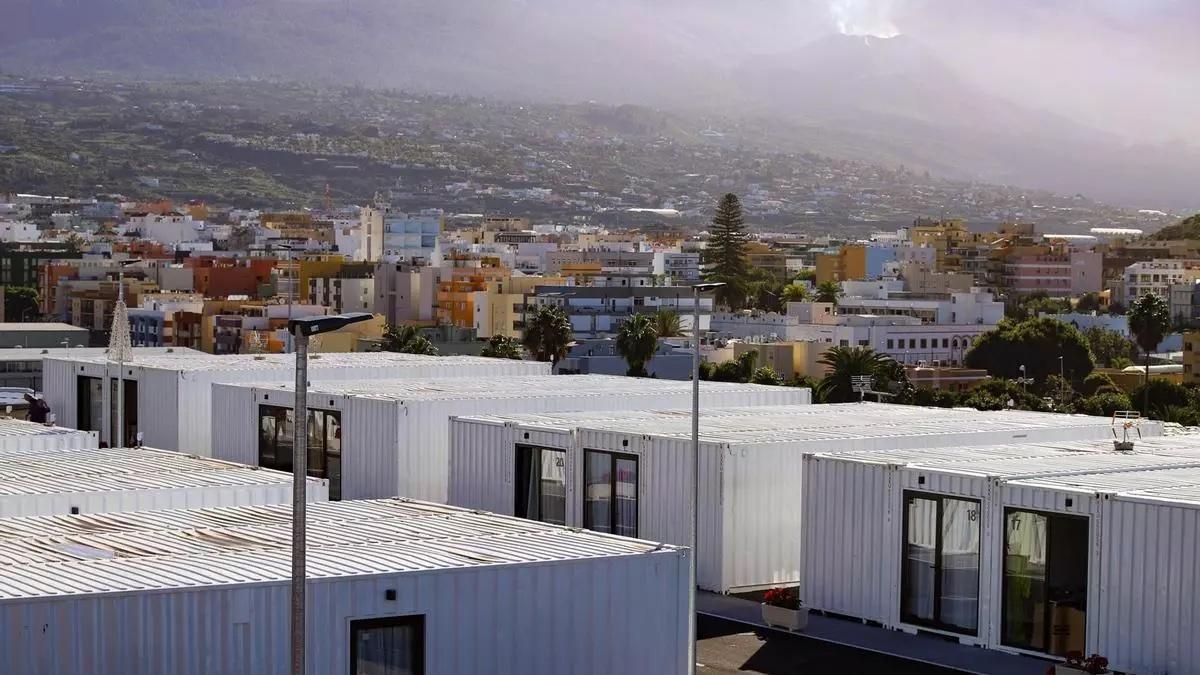
No son casos aislados, sino que se trata de uno de los principales problemas de esta erupción, y da respuesta a por qué, cinco años después, 110 familias siguen viviendo en los “barracones”, que se construyeron como medidas supuestamente temporales.

La vida en estos contenedores no es sencilla: quién vive ahí ahora, antes del volcán solía vivir en una casa terrera, con su huerta y animales. Los contenedores tienen unos 50 metros cuadrados y están situados en un parking. En la localidad de Los Llanos, los vecinos se quejan de la falta de insonorización y de aislamiento, tanto del frío como del calor. Eva cuenta que no es capaz de sentir el contenedor como un hogar porque “no estoy en mi ambiente, porque no puedo moverme. De aquí al sofá, del sofá a la cama, de la cama al sofá. Salir no salgo, porque todo el mundo ahí afuera está con la oreja pegada”.

Viviendas en contenedores para personas afectadas por el volcán, que humea detrás, al fondo.

Otra dificultad por la que están pasando los afectados es la adaptación a un formato de vida no acorde con sus costumbres. “Vivíamos entre familias y nos llevábamos muy bien con todos los vecinos”, cuentan dos hermanas de La Laguna, barrio que se perdió parcialmente. En los lugares afectados, lo más habitual era vivir en lugares con huerto o jardín, lo que contrasta con el reducido espacio del contenedor. “Árboles frutales, naranjos, orquídeas. Teníamos de todo. Nosotras estábamos acostumbradas a vivir en casas terreras. Y eso está debajo del volcán”. 

Eva concluye: “El container no está para vivir personas. Esto es de chapa. La chapa está pensada para meter muebles y animales, y nosotros no somos eso”.

El estatus de damnificado

Los vecinos damnificados han podido construir de manera legal en terreno rústico. Pero, ¿quién se considera damnificado del volcán? Ahí radica otro de los grandes problemas.

Rayco no se considera damnificado a efectos legales, ya que su casa estaba a nombre de sus padres. Por tanto, no ha podido acogerse a las ayudas y facilidades para construir que ofrecen las Administraciones. Lo mismo le sucede a aquellos que, tras el fallecimiento del propietario original, no actualizaron el registro de la propiedad. Si el propietario de la vivienda está muerto, sus herederos -hijos, sobre todo- no han podido recibir las ayudas por la pérdida de la casa, aun estando empadronados en ella.

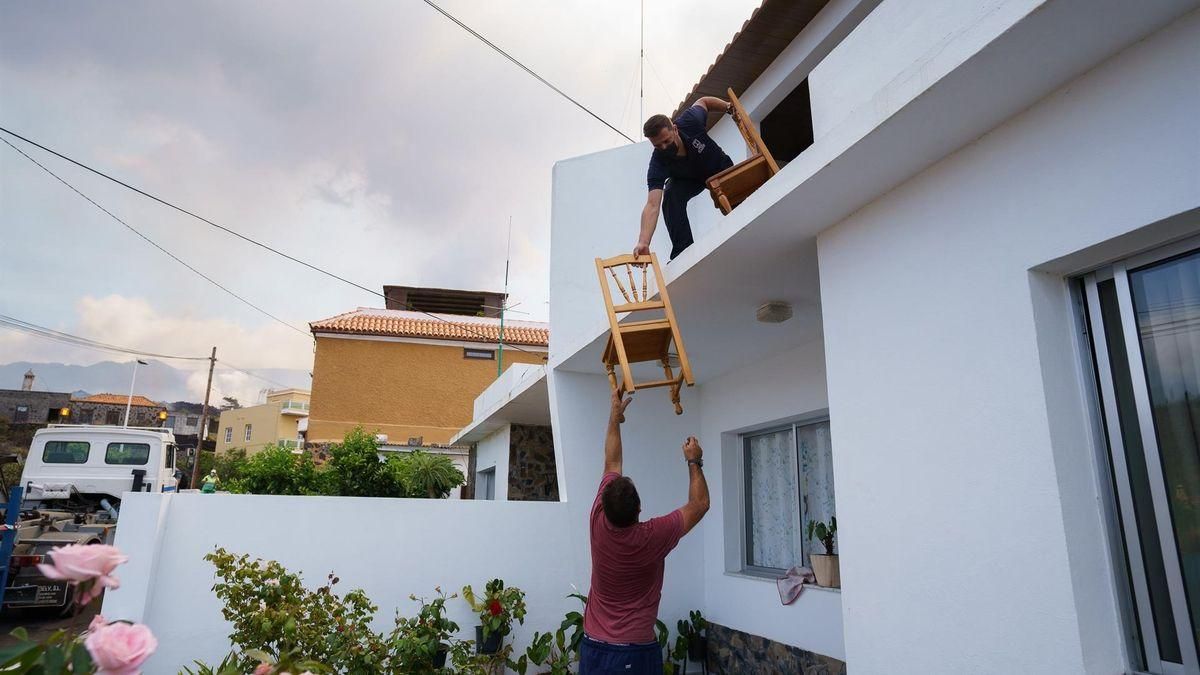
Vecinos desalojando sus casas en La Palma durante la erupción.

Vicente ha tardado tres años en recibir la consideración de afectado. Su casa sigue en pie, aunque quedase sepultada bajo la ceniza. “Se ha pagado el valor de lo perdido bajo la lava. Pero ¿qué ocurre con estas viviendas que están deterioradas, con grietas, no hay paredes, no hay servicios...? Para esto no ha habido ninguna dotación”. Vicente no puede habitar su casa, porque hasta su barrio en Las Manchas todavía no llega ninguna carretera, ni agua o luz. Es un barrio todavía sepultado por la ceniza. Tan solo algunas viviendas como la suya sobresalen de entre el desierto negro.

Muchos vecinos denuncian violencia burocrática. “ Vas al Ayuntamiento y todo son problemas. Como si no fueras afectada, ¿sabes?”, cuenta Esther, que perdió la casa el último día de erupción y quiso reconstruir sobre la lava, en su propiedad. “ Para construir, tuve que pedir que me quitaran de la zona de exclusión. Me quitaron, después me volvieron a poner, sin dar explicaciones. Pedíamos permiso para aplanar, para quitar la lava. Te cobran hasta por los permisos para aplanar el terreno. Encima que pagas al palista, te cobra el ayuntamiento. Todo son problemas”.

Una mujer llora sentada sobre sus cosas después de vaciar su casa por la amenaza del volcán de La Palma.

La pérdida del hogar

Es difícil sentir un hogar allí donde es difícil construir un proyecto de vida. La incertidumbre ha inundado las vidas de sus vecinos, y preguntas como “¿hasta cuando podré quedarme en el contenedor?”, o “¿cuándo podré empezar reconstruir mi casa?” se arremolinan en la mente de los vecinos.

“Vecinos que nacieron ahí, se criaron ahí, y de pronto toda tu raíz… ¿qué pasa con toda esa parte que desaparece y no queda rastro?”, relata Belqui, cuya casa en el barrio de Tajuya se salvó por muy poco.

El volcán se ha llevado, en tan sólo 85 días, lo que para muchos vecinos es el esfuerzo de 30 años de trabajo. Y les ha quitado, además del esfuerzo, y en contraposición, el descanso. Porque un hogar también es poder llegar a casa y tumbarse en el sofá, sabiendo que nadie ni nada interrumpirá ese momento.

Durante cinco años, los vecinos damnificados han pasado por muchas ubicaciones, pero ninguna a largo plazo, y ninguna donde poder descansar plenamente. Habitaciones en albergues, contenedores, casas de familiares o alquileres temporales han compuesto algunas de las soluciones aportadas a los vecinos. Pero llevando siempre una maleta a cuestas, es difícil construir un hogar. 

Todos estos testimonios y sentimientos, en el podcast Hogar de Cenizas, de Canarias Ahora y elDiario.es.


  •  

Students in France are fighting for stronger public education

High school and university students in France continued their protests on Tuesday, October 13, demanding government investment in public education. Approximately 480,000 protesters took to the streets in the latest iteration of the mobilization, with families, teachers, and trade unions backing students’ demands. 

Read more: French students shut down schools in historic strike against austerity

The mobilization remains marked by widespread police violence. Police used tear gas and dispersal grenades on crowds, including at Tuesday’s central march in Paris. Hundreds of students were injured and thousands arrested in these incidents, prompting reactions from human rights organizations. 

In response, the public joined students as they blocked high schools and organized marches to physically shield them from potential harm. Trade union members, notably from the education sector, were highly represented in these support lines. 

“The CGT reaffirms the urgent need to address the demands of those who are the country’s future ,” the General Confederation of Labor (CGT) asserted. “The CGT salutes their fighting spirit. It welcomes the strong anti-fascist tone of the demonstrations, which shows that there is no inevitability to the continued flourishing of fascist ideas or to the far right’s rise to power.” 

Students demand access to higher education

Since the beginning of the month, French students have organized three massive demonstrations to warn against the state of education under austerity. “For several weeks, high school and university students have been mobilizing to denounce the deterioration of their study conditions, the Parcoursup system, staff and resource shortages, policies that are dismantling public services, and – more broadly – the future this society holds in store for them,” the trade union federation Solidaires recognized in their statements. 

Trade unions continued their support for student mobilizations. The banner reads: "Electricity and gas workers stand with the youth. Our rage is nuclear." Source: CGT/Facebook
Trade unions continued their support for student mobilizations. The banner reads: “Electricity and gas workers stand with the youth. Our rage is nuclear.” Source: CGT/Facebook

Equal access to higher education has been high on the protesters’ demand list since the beginning. This refers in good part to how students are currently recruited into university courses – the Parcoursup admission platform. Introduced in 2018 under Macronist ministers to replace a previous system that randomized selection for oversubscribed courses, Parcoursup was supposed to “rationalize” admissions.

In practice, however, critics and applicants emphasize the platform allows institutions to apply unclear selection criteria and even discriminate against students from working-class areas.

In September 2026, the left party La France Insoumise warned that 126,652 students were not able to access a course as a result of the system – up from 77,000 in 2023. “This selection process is the product of austerity-driven political choices deliberately implemented by successive Macron-era governments,” the party warned.

“Parcoursup is a social sorting machine,” Solidaires echoed. “The platform organizes competition among young people for places that the State deliberately refuses to create. It transforms the right to study into a privilege, scarcity into selection, and austerity into supposed individual failure.”

Commodification of education

Jean-Luc Mélenchon, the left’s presidential candidate, pointed out that these choices are part of a broader political agenda: “the commodification of education and knowledge.”

Trade union briefs on the subject back this interpretation. At the beginning of this school year, Solidaires warned that thousands of those left without higher education placings are being sacrificed in the name of austerity. 

“But not everyone experiences this violence in the same way,” they wrote. “The wealthiest families can afford private schooling, fund housing on the other side of the country, or sustain a year without studying. Young people from working-class backgrounds, however, have no way out. A lack of options means either being forced into the job market or military service – abandoning their plans for good – or facing precariousness, isolation, and debt at a private institution.”

“We have shifted from an egalitarian system to a discriminatory one: pay for your own future,” Mélenchon concluded in a recent interview.

Read more: Greek university labor leaders face charges after supporting students

The left leader anticipated that student demands will be an important topic during the upcoming election campaign, where the left is contrasting a program of rupture with neoliberal policies to the far right’s intention to build a debt brake not unlike Germany’s. In practice, this would translate into years of sustained attacks on social security and public services. 

Trade unions and progressive organizations announced their support for the youth mobilizations will continue as they build campaigns to resist the government’s intention to impose billions in cuts to pensions and social security while spending record amounts on rearmament.

For their part, student unions invited their members to remain active and join a general mobilization against the cost of living crisis this Saturday, October 17.

  •  
❌