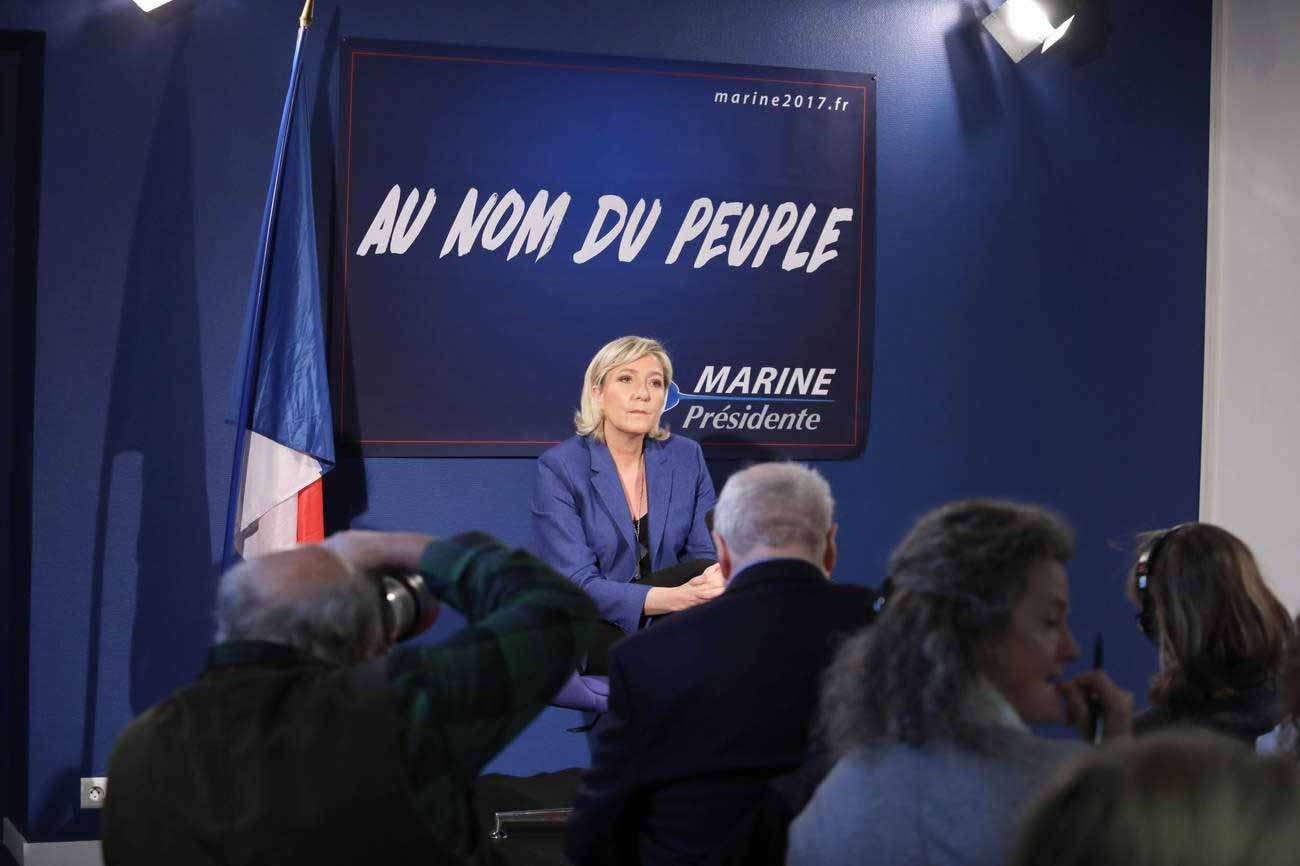
Marine Le Pen is only around 50% likely to win the French Presidency next spring, according to bookmakers' odds. But Mark Littlewood reckons it's much more likely than that and is well worth a flutter.
The far-right leader’s promise to restore order will appeal to many ahead of next year’s presidential elections – the stakes are suddenly much higher
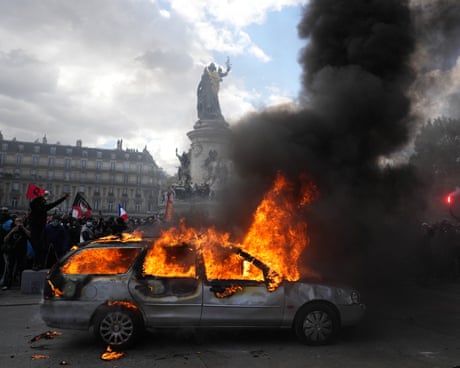
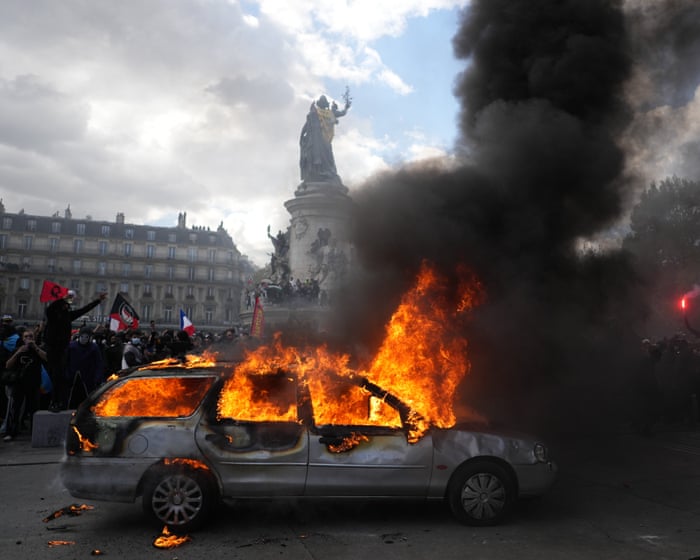
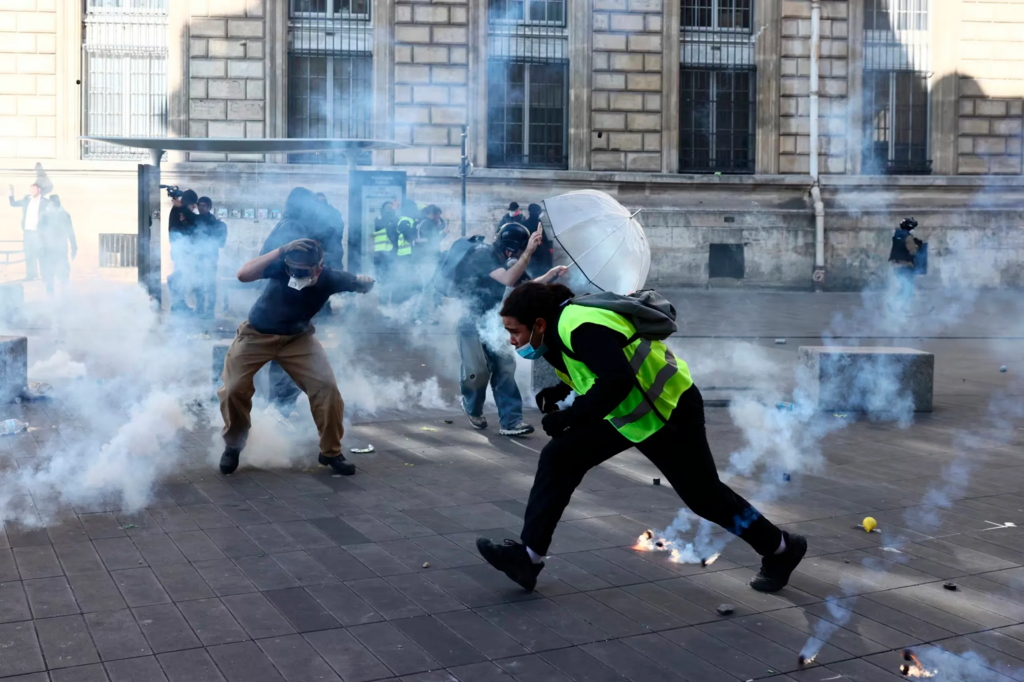
There is only one clear winner so far from France’s chaos: Marine Le Pen. The violence and rioting that engulfed towns and cities across the country over the weekend, six months before a pivotal presidential election, is a godsend for the hard-right, Eurosceptical, anti-immigration candidate. As buildings burned, shops were looted and police attacked, the rioting largely drowned out peaceful mass protests over the dilapidated state of schools , fuel prices and the cost of living.
Across France and the rest of Europe, people are in shock at scenes of arson and pillage in city centres, the wrecking of symbols of the republic such as the 19th-century town hall in peaceful provincial Limoges and the bust of Marianne in Marseille’s city hall, and the looting of more than 2,000 shops.
Paul Taylor is a senior visiting fellow at the European Policy Centre
Le mobilitazioni del 17 ottobre e le violenze che ne hanno accompagnato la fase finale mostrano una Francia attraversata da una crisi sociale e politica profonda. Mentre il macronismo entra nel suo ultimo semestre, Marine Le Pen e Jean-Luc Mélenchon incarnano due risposte radicalmente opposte alla domanda di rottura.
Le immagini degli incendi, delle barricate e degli scontri che hanno attraversato la Francia nelle giornate del 17 e 18 ottobre rischiano di nascondere il dato politicamente più importante: centinaia di migliaia di francesi sono scesi in strada contro il carovita, la crisi dei servizi pubblici e il progressivo deterioramento delle condizioni materiali di vita. Il ministero dell’Interno ha contato circa 550.000 partecipanti alla giornata nazionale del 17 ottobre, mentre gli organizzatori ne hanno rivendicati circa 800.000. Una mobilitazione di dimensioni tali da costituire la più importante esplosione di protesta sociale dai tempi della battaglia contro la riforma delle pensioni del 2023.
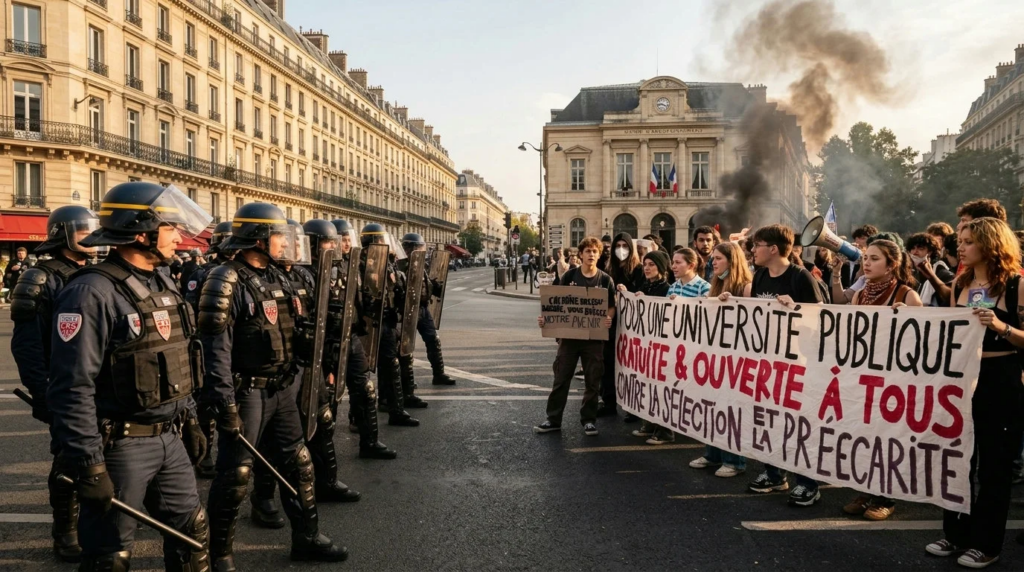
Il fenomeno sarebbe tuttavia incomprensibile se venisse ridotto ai disordini che hanno segnato la conclusione di numerosi cortei. Lungi dall’essere nata il 17 ottobre, la protesta rappresenta il risultato di un processo cominciato settimane prima nelle scuole e nelle università, quando studenti e liceali hanno iniziato a denunciare classi sovraffollate, carenza di personale, precarietà e progressivo impoverimento dell’istruzione pubblica. Alle mobilitazioni giovanili si sono poi aggiunti sindacati, lavoratori, pensionati e settori del movimento dei gilets jaunes, mentre il rincaro dei carburanti ha agito da detonatore di un malessere sociale molto più ampio.
Tale convergenza conferisce agli avvenimenti un significato politico ben superiore a quello di un’ennesima fiammata di protesta francese. L’Humanité ha descritto il corteo parigino come l’incontro tra generazioni differenti accomunate dalle rivendicazioni sui salari, sul futuro della gioventù e sulla difesa dei servizi pubblici, ma soprattutto dal rifiuto delle politiche seguite dal 2017. In questo senso appare particolarmente significativa l’immagine proposta dal quotidiano della sinistra francese: il macronismo rischia di terminare così come era cominciato, in mezzo ai lacrimogeni e a un conflitto sociale che il potere politico sembra incapace di ricomporre.
Nel tentativo di distogliere l’opinione pubblica dalle ragioni concrete delle proteste, il primo ministro Sébastien Lecornu ha accusato gruppi dell’ultrasinistra di avere deliberatamente organizzato gli incidenti, arrivando a contrapporre il “campo della Repubblica” a quello dei “casseurs” e indirizzando buona parte delle proprie accuse contro La France Insoumise (LFI), nonostante lo stesso leader Jean-Luc Mélenchon avesse invitato esplicitamente i propri sostenitori a non partecipare a saccheggi e devastazioni. Il Rassemblement National (RN), dal canto suo, ha rapidamente trasformato le immagini dei disordini in materiale di propaganda, cercando di associare la protesta sociale a una crisi dell’autorità e alla necessità di restaurare l’ordine.
È una dinamica che rischia di favorire l’estrema destra, ma che non deve far perdere di vista l’origine della crisi. L’aumento del costo della vita, la stagnazione dei salari, il deterioramento dei servizi pubblici e la nuova impostazione austeritaria del bilancio per il 2027 rappresentano il terreno materiale sul quale la protesta è cresciuta.
La risposta televisiva di Emmanuel Macron del 18 ottobre ha mostrato una volta ancora la difficoltà dell’Eliseo a uscire dalla contraddizione che accompagna ormai l’ultimo periodo della sua presidenza. Il capo dello Stato ha riconosciuto la legittimità delle preoccupazioni espresse dai manifestanti, ma ha a sua volta concentrato una parte importante del proprio intervento sulla condanna delle violenze e sulle questioni di ordine pubblico. Ha annunciato consultazioni con studenti, insegnanti, sindacati, parlamentari e rappresentanti delle imprese, senza però indicare immediatamente una svolta economica capace di rispondere alle cause sociali della protesta.
Messi insieme, tutti questi elementi fanno emergere in modo chiaro la dimensione strutturale della crisi del macronismo. Quando Emmanuel Macron conquistò l’Eliseo nel 2017, promise di superare la tradizionale divisione tra destra e sinistra. La sua formula politica avrebbe dovuto sostituire il conflitto ideologico con una gestione pragmatica, europea e modernizzatrice della società francese. Quasi dieci anni dopo, il risultato appare paradossalmente opposto: la Francia non è meno polarizzata, anzi risulta essere molto più polarizzata di quanto fosse all’inizio della presidenza Macron.
La dissoluzione dell’Assemblée nationale nel 2024 aveva già distrutto l’illusione di una maggioranza presidenziale stabile. Da allora la Francia è entrata in una lunga sequenza di governi minoritari, crisi parlamentari e negoziati sul bilancio. Il governo Lecornu resta privo di una maggioranza autonoma, mentre il progetto finanziario per il 2027 è stato accolto con ostilità dalle opposizioni e con crescente nervosismo dai mercati. All’inizio di ottobre i rendimenti del debito francese avevano raggiunto livelli che non si vedevano dai primi anni Duemila, mentre il debito pubblico ha superato il 119% del prodotto interno lordo e la crescita resta debole.
Ma sarebbe riduttivo interpretare questa situazione come una semplice “crisi del debito”. Il problema fondamentale riguarda piuttosto la distribuzione dei costi della crisi. Il governo continua a presentare l’austerità come una necessità tecnica, mentre la sinistra francese sottolinea come essa rappresenti piuttosto una scelta politica precisa: ridurre la spesa sociale e comprimere i servizi pubblici anziché intervenire sulle grandi fortune, sui profitti e sulle ingenti sovvenzioni concesse alle imprese. Da qui nasce la domanda che attraversa una parte consistente delle piazze francesi: chi deve pagare la crisi?
La risposta del RN è radicalmente diversa. Marine Le Pen tenta di trasformare la crisi del macronismo in una crisi dello Stato, dell’immigrazione e dell’ordine pubblico. Il suo partito cerca di intercettare lo stesso malcontento che alimenta le proteste, ma di orientarlo verso una soluzione nazionalista e securitaria. Sul terreno economico, inoltre, il RN sta tentando di rassicurare i mercati: Le Pen ha recentemente promesso forti riduzioni della spesa pubblica qualora conquistasse l’Eliseo, mentre Jordan Bardella ha difeso un piano volto a tagliare circa 140 miliardi di euro di spesa e a ridurre rapidamente deficit e debito. La pretesa dell’estrema destra di rappresentare una rottura sociale con il macronismo entra quindi in contraddizione con un programma economico che contiene anch’esso una pesante componente austeritaria.
Ad ogni modo, i dati demoscopici mostrano quanto questa contrapposizione stia modificando la politica francese. Le rilevazioni pubblicate nelle ultime settimane indicano Marine Le Pen come candidata nettamente più forte al primo turno, ma contemporaneamente mostrano una crescita di Mélenchon e soprattutto una straordinaria solidità della sua base. Un’indagine Ipsos BVA-Cevipof attribuiva in settembre al candidato di LFI tra il 15,5 e il 17% delle intenzioni di voto, ma con livelli molto più alti tra i giovani: fra i 18 e i 24 anni Mélenchon raggiungeva addirittura il 40%. Un sondaggio successivo, riportato da Reuters, ha delineato perfino scenari nei quali Le Pen e Mélenchon si qualificherebbero insieme per il ballottaggio, estromettendo completamente i candidati dell’area centrista.
Naturalmente manca ancora molto alla primavera del 2027 e ogni previsione resta fragile. Marine Le Pen deve inoltre affrontare ancora l’incognita del proprio contenzioso giudiziario, mentre a sinistra rimangono divisioni profonde tra LFI, socialisti, comunisti ed ecologisti. Ma il dato politico è già evidente: il successore di Macron non sembra destinato a provenire dal blocco che ha governato la Francia nell’ultimo decennio.
La battaglia per l’Eliseo sarà quindi molto più di una competizione tra candidati. Sarà uno scontro attorno all’interpretazione stessa del fallimento macronista. L’estrema destra sostiene che la Francia soffra soprattutto per un deficit di autorità, sovranità e controllo. La sinistra radicale individua invece il problema nella crescente disuguaglianza, nell’austerità, nell’indebolimento dei servizi pubblici e nella subordinazione delle scelte economiche agli interessi del grande capitale. Il campo macronista, nel frattempo, fatica sempre più a convincere che la continuazione delle politiche degli ultimi dieci anni possa rappresentare una risposta alla crisi prodotta proprio durante quel decennio.
The scenes of social unrest and violence at the weekend are an ominous portent, ahead of elections which may deliver a far-right presidency
In Emmanuel Macron’s book Revolution, published ahead of the 2017 presidential election that he went on to win, he promised to restore hope to a country that was losing faith in its future. As Mr Macron’s lame-duck second term enters its last phase against a quasi-insurrectionary backdrop of torched public buildings and looted shops, the failure of that political project appears total.
The worst scenes of urban violence for years overshadowed a weekend of protest that gravely undermined what is left of the French president’s authority. As police lost control of the streets, more than 2,000 shops were ransacked. Far-left groups targeted town halls and local buildings, and engaged in pitched battles with the police, whose disastrously heavy-handed response to last week’s high school protests has succeeded only in escalating tensions.
Do you have an opinion on the issues raised in this article? If you would like to submit a response of up to 300 words by email to be considered for publication in our letters section, please click here.
O governo francês anunciou medidas para conter a onda de violência que atingiu diversas cidades do país após manifestações contra o aumento do custo de vida e a deterioração dos serviços públicos. Nesta segunda-feira (19), o primeiro-ministro Sébastien Lecornu pediu que prefeitos adotem toques de recolher em áreas consideradas críticas, enquanto o presidente Emmanuel Macron determinou uma revisão das estratégias de segurança.
Os protestos reuniram mais de 500 mil pessoas no fim de semana, segundo os dados apresentados no balanço das manifestações. Em diferentes cidades, atos inicialmente pacíficos terminaram em confrontos, incêndios, invasões de prédios públicos e saques a estabelecimentos comerciais. Um manifestante morreu, quase mil agentes de segurança ficaram feridos e cerca de 2.400 pessoas foram detidas.
A dimensão dos distúrbios levou o governo a discutir restrições à circulação noturna e à realização de manifestações. Lecornu afirmou que as medidas serão definidas em conjunto com os representantes locais. Marselha já proibiu aglomerações e manifestações entre meio-dia e 20h, enquanto Denain, próxima à fronteira com a Bélgica, estabeleceu toque de recolher noturno até domingo.
O primeiro-ministro descartou, por enquanto, decretar estado de emergência, medida defendida pelo líder dos Republicanos, Bruno Retailleau. Lecornu, no entanto, não excluiu a possibilidade de recorrer ao mecanismo caso as restrições locais não sejam suficientes para conter a violência.
França tem onda de protestos, incêndios e 272 prisões em apenas um dia | Foto: Rede social
Macron cobra revisão da segurança
Diante da escalada dos confrontos, Macron reconheceu falhas na condução da resposta policial e determinou uma revisão dos procedimentos adotados pelas forças de segurança. O presidente pediu novas estratégias operacionais para impedir a formação de barricadas, os saques e os ataques a estabelecimentos e edifícios públicos.
O ministro do Interior, Laurent Nuñez, admitiu que as autoridades perderam o controle da situação em algumas cidades. Segundo ele, os aproximadamente 60 mil policiais e agentes mobilizados no sábado não conseguiram conter todos os grupos envolvidos nos episódios violentos.
Macron também recusou o pedido de demissão apresentado por Nuñez e cobrou esclarecimentos sobre as falhas de prevenção e inteligência que permitiram a expansão dos distúrbios. Apesar das restrições anunciadas, o ministro afirmou que as medidas não devem afetar a partida entre Paris Saint-Germain e Barcelona, prevista para terça-feira (20), pela Liga dos Campeões.
Manifestações contra o alto custo de vida e a crise na educação se espalham pela França | Foto: Rede social
Louvre fecha as portas após bloqueio
Em Paris, o Museu do Louvre amanheceu fechado nesta segunda-feira após um bloqueio organizado por estudantes da École du Louvre. A direção da instituição confirmou a interrupção das atividades e informou que o fechamento ocorreu em razão da mobilização estudantil.
O movimento também chegou à Sciences Po, universidade localizada no centro da capital, onde estudantes realizaram concentrações e bloquearam acessos. Os atos fazem parte de uma onda de manifestações iniciada semanas antes, com reivindicações por melhores condições nas escolas.
No fim de semana, a mobilização ganhou escala nacional e foi acompanhada por episódios de violência em Paris, Marselha, Lyon e outras cidades. Prédios públicos foram invadidos, uma prefeitura foi incendiada e estabelecimentos comerciais sofreram depredações e saques. Veículos, bicicletas e patinetes também foram queimados.
O impacto econômico preocupa o setor comercial. Mais de 2 mil lojas foram atingidas em todo o país, com prejuízos estimados em centenas de milhões de euros, segundo Alain Di Crescenzo, presidente da Câmara de Comércio. Somente na capital francesa, aproximadamente 400 estabelecimentos foram depredados.
Protesto fecha Louvre, e governo anuncia toques de recolher para conter onda de violência na França | Foto: Divulgação/Rede social
Crise amplia pressão política sobre Macron
A onda de violência também intensificou a disputa política na França, a poucos meses de uma eleição presidencial que não poderá contar com Macron como candidato à reeleição. Marine Le Pen, líder do partido de ultradireita Reunião Nacional, aparece em posição de destaque nas pesquisas de intenção de voto.
Lecornu acusou setores da ultr esquerda de tentar ampliar a instabilidade no país. Le Pen, por sua vez, responsabilizou o partido de Jean-Luc Mélenchon por, segundo ela, legitimar a violência. À esquerda, críticos do governo afirmam que Macron negligenciou as reivindicações sociais que deram origem aos protestos. Já representantes da direita defendem uma reação mais rigorosa contra os responsáveis pelos ataques.
Em artigo publicado no jornal Libération, os prefeitos de Paris, Marselha e Lyon cobraram explicações do governo sobre a preparação das forças de segurança. Os três gestores, ligados à centro-esquerda, afirmaram que a dimensão dos acontecimentos surpreendeu as administrações locais e expôs falhas na proteção de áreas inteiras das cidades.
A crise coloca o governo diante de um duplo desafio: conter os atos de violência e responder às reivindicações que mobilizaram centenas de milhares de pessoas. Enquanto as autoridades avaliam novas restrições, a capacidade de restabelecer a segurança sem ampliar a tensão política permanece no centro do debate nacional.
What began as a student protest over deteriorating schools has developed into a nationwide revolt against economic hardship, political paralysis and declining public services. With the 2027 presidential election approaching, the violence has exposed problems that neither the government nor its principal opponents have convincing plans to resolve.
France’s latest wave of unrest has developed into one of the most serious domestic crises of Emmanuel Macron’s presidency. More than 550,000 people participated in demonstrations on 17 October, according to official estimates, before violence spread through Paris and other major cities. Shops were looted, police confronted rioters, and the historic town hall in Limoges was largely destroyed by fire.
The scale of the destruction prompted emergency government consultations and a televised presidential address. Macron promised to prosecute those responsible, while stopping short of declaring a state of emergency. Yet the immediate security challenge conceals a more difficult political question: why have protests that began with relatively specific demands over education become a confrontation involving such different sections of French society?
From school protests to a national revolt
The movement originated among secondary-school students demanding better facilities, more teachers and improvements in educational standards. Their complaints subsequently attracted trade unions, workers, farmers and elements of the Gilets Jaunes, the Yellow Vest movement that challenged Macron’s government in 2018.
The resulting coalition has no coherent political programme. Students protesting overcrowded classrooms share demonstrations with workers concerned about purchasing power and motorists angered by fuel prices. Their interests are not necessarily compatible, but they reflect a common dissatisfaction with the government’s ability to deliver functioning public services while containing living costs.
This distinction matters. The presence of masked rioters and organised groups engaged in violence does not establish that the hundreds of thousands who demonstrated peacefully supported their actions. Equally, the destruction of public buildings, attacks on police and widespread looting raise legitimate questions about the state’s capacity to maintain public order.
The economic problem behind the protests
At the centre of the discontent lies a structural problem that successive French governments have struggled to confront: the distribution of public expenditure between an ageing population and the services required by younger generations.
A French government budget assessment published in October revealed that pension obligations accounted for approximately 32 per cent of the education ministry’s budget, including €28.5 billion in pension expenditure. These obligations restrict the resources available for other departmental priorities.
France nevertheless remains a substantial spender on education. According to official figures, expenditure reached €199.2 billion in 2025, equivalent to 6.7 per cent of GDP. However, after inflation, the annual increase was only 0.1 per cent.
The issue is therefore not simply how much France spends, but how efficiently resources are allocated and whether expenditure meets changing educational needs.
The OECD’s 2025 PISA assessment found that French pupils’ performance in mathematics and reading had declined compared with 2022. Results were among the country’s lowest recorded, although broadly comparable with the OECD average.
These figures give the student protests a significance extending beyond the immediate condition of classrooms. They raise questions about France’s longer-term economic competitiveness and its capacity to provide younger generations with opportunities comparable to those enjoyed by their predecessors.
The limits of Macron’s reform programme
Macron entered office in 2017 promising to modernise the French economy and overcome the traditional division between left and right. Nearly a decade later, his administration faces a fragmented parliament, constrained public finances and growing resistance to further structural reforms.
The suspension of his pension reform illustrated the difficulty. Raising the retirement age was intended to reduce pressure on the pension system, but parliamentary opposition forced the government to defer the measure until after the presidential election.
The underlying financial pressures have not disappeared. Nor can they be resolved easily through additional spending when public debt, borrowing costs and budgetary obligations already restrict the government’s room for manoeuvre.
This creates an uncomfortable political reality: the state is expected to provide better services, greater purchasing-power protection and stronger security, while the available resources remain limited.
Can the opposition benefit?
The unrest comes approximately six months before the presidential election, with Marine Le Pen’s National Rally and Jean-Luc Mélenchon’s France Unbowed competing to establish themselves as alternatives to Macron’s political centre.
Le Pen has sought to combine support for economic grievances with demands for tougher policing. That position may attract voters concerned by the violence, but it also exposes tensions within a movement that previously supported the Yellow Vest protests.
Mélenchon faces a different difficulty. Supporting demonstrations against government policy is consistent with his political programme, but the involvement of violent groups risks shifting public attention from social demands towards questions of security.
A recent presidential opinion poll even suggested that Le Pen and Mélenchon could contest the final round, illustrating the weakening position of more conventional political alternatives.
Neither, however, can escape the fiscal constraints that have frustrated Macron’s government. A change of president would not automatically provide the resources required to expand public services, reform pensions and reduce the deficit simultaneously.
A wider problem for France and Europe
President Donald Trump has attributed the French unrest to immigration, although the movement’s documented origins lie principally in education, living costs and dissatisfaction with public services. Without established evidence about those responsible for individual acts of violence, broader claims about the demonstrators’ backgrounds remain speculative.
For the European Union, France’s instability carries consequences beyond its domestic political debate. France is central to European defence, fiscal negotiations and support for Ukraine. Sustained political paralysis would complicate its ability to negotiate and implement decisions requiring substantial public expenditure.
The immediate task for Macron’s government is to restore security without allowing the legitimate grievances of peaceful demonstrators to disappear from political consideration. The more difficult task will fall to whoever enters the Élysée in 2027.
France’s crisis is not simply a repetition of the Yellow Vest movement. It reflects a growing conflict over public resources, expectations of the state and the ability of established political institutions to reconcile competing demands.
The violence may subside, but the economic contradictions that brought such different groups onto the streets will remain. The presidential election will determine who inherits them, rather than whether they exist.
According to an Ifop poll for the newspaper Marianne, nearly half of Muslims and Jews would consider leaving the country if Marine Le Pen were to emerge victorious in the presidential election next year. 20% of them would “certainly” do so.
Which candidate would cause you to leave France? This is one of the questions posed by the Ifop poll for Marianne, released on Thursday, October 15. The study reveals that a significant proportion of Muslims and Jews say they are prepared to leave the country if Marine Le Pen wins the 2027 presidential election.
Some 46% of that number are planning “leaving France to settle in another country,” while 20% say they will “certainly” take the plunge. More broadly, 40% of younger French people say they have made plans to leave. Among voters of La France Insoumise, the figure rises to 43%. Furthermore, 44% of Jewish citizens responded that they would consider leaving the country.
Marine Le Pen’s rise to power could create “significant obstacles” and generate “high levels of fear and insecurity,” Francois Kraus, director of the political division at Ifop, explained to journalists. More than eight out of ten Muslims fear an “increase in attacks and discrimination” against them. This concern is particularly relevant in the context of the National Rally’s plan to ban the wearing of the Islamic veil in public spaces. Confirmed at the end of August by MP Jean-Philippe Tanguy, the new measure would impose stiff fines on offenders and is expected to be included in Marine Le Pen’s platform for the 2027 presidential election. To circumvent the legal hurdles that such a ban might encounter, the presidential candidate is reportedly considering putting it to a referendum.
Meanwhile, only 27% of Muslim respondents would be willing to “conceal [their] religious affiliation on a daily basis,” for example, by ceasing to wear the headdress in public (18%). More broadly, 41% of those surveyed, regardless of their religion, would refuse to “respect laws” they consider “unjust.” This distrust affects three out of four Jean-Luc Melenchon voters and nearly half of civil servants (45%). According to the latest Ifop-Fiducial poll, Marine Le Pen maintains a significant lead in the first round. Depending on the scenario, the National Rally candidate is in first place with between 32% and 36% of the total vote.
While Le pen has remained antagonistic towards Islam in France, she has often cast herself as a protector of the Jewish people in the country.
In 2024, she remarked, “The best shield for French people of the Jewish faith is the National Rally. It is the only movement that has the will, the conviction and the means to fight Islamist fundamentalism, which is the major danger facing them.”
Yet, nearly as many Jews said they would leave the country under a Le Pen presidency as Muslims.
Marine Le Pen has warned that a future French government could oppose further European financing for Ukraine and withhold part of France’s EU budget contribution, bringing the cost of supporting Kyiv into the 2027 presidential contest.
Marine Le Pen has threatened to challenge future European Union funding for Ukraine, warning that France cannot continue underwriting large financial commitments while confronting its own deteriorating public finances. The National Rally leader has also proposed withholding half of France’s contribution to the EU budget, a confrontation that could place Paris at the centre of a major dispute over European spending.
In an interview published on 14 October, Le Pen questioned the EU’s €90 billion support loan for Ukraine, describing France’s estimated €18 billion share as an excessive burden. She also expressed opposition to the proposed €100 billion financing instrument for Ukraine under the Union’s next seven-year budget, covering 2028 to 2034.
Her intervention comes as EU leaders meet in Brussels to negotiate competing financial priorities, including defence, industrial competitiveness, agricultural subsidies and continued assistance to Kyiv. France’s presidential election in 2027 gives the dispute particular significance: a change of government in Paris could alter the position of one of the Union’s principal financial contributors.
Two funding programmes under pressure
The distinction between the existing Ukraine loan and the proposed future instrument is important to the financial consequences of Le Pen’s position.
The €90 billion package, approved earlier this year, supports Ukraine during 2026 and 2027. According to the European Parliament’s latest assessment, €60 billion is allocated to defence and €30 billion to budgetary assistance. Almost €15 billion had been disbursed by 18 September.
The loan is financed through EU borrowing backed by the Union’s budget. Le Pen’s description of an €18 billion French share should therefore not be confused with an immediate payment of that amount by the French Treasury. The financing arrangements involve collective European commitments and potential future liabilities.
The second programme concerns financing beyond 2027. Under the European Commission’s budget proposal, up to €100 billion would be available for Ukraine between 2028 and 2034, with the eventual allocation depending on its requirements. The mechanism would support reconstruction, economic stability and preparations for eventual EU membership.
Le Pen’s opposition therefore extends beyond the immediate cost of the war. It challenges the assumption that the EU will remain a major source of Ukrainian financing throughout the next budgetary cycle.
France’s contribution becomes an electoral issue
The National Rally’s position is closely connected to its domestic economic programme.
As EU Today reported on 6 October, Le Pen has proposed €140 billion in public spending reductions by 2032, alongside measures intended to reduce France’s deficit and stabilise its national debt.
Her programme includes limiting France’s net contribution to the EU budget to €5 billion. The latest threat to withhold part of the country’s payments moves that argument from budgetary reform towards a potential institutional confrontation.
EU contributions are legal obligations established under the Union’s financial framework and own-resources arrangements. A French president could oppose a new seven-year budget, which requires unanimous approval by member states, but could not simply cancel existing payment obligations without encountering legal consequences.
Timing will also be decisive. EU governments are attempting to secure a political agreement on the next budget before the end of 2026, ahead of France’s presidential election. An agreement concluded before a change of government in Paris would constrain the options available to Le Pen.
Ukraine policy exposes a wider contradiction
Le Pen’s latest statements also reveal the limits of the National Rally’s changing position towards Moscow.
However, their willingness to condemn Moscow’s conduct does not translate into support for maintaining the present scale of financial assistance to Ukraine.
The consequences for Kyiv would be substantial. European assistance finances civilian government operations and defence procurement while Ukraine devotes much of its domestic revenue to resisting Russia’s invasion.
France’s next president will therefore inherit a dispute involving more than the national contribution to Brussels. The decisions taken in Paris could determine whether the EU retains sufficient financial capacity to support Ukraine while financing its own defence, industrial and economic commitments.
For Le Pen, reducing European expenditure offers a potential response to French public debt and voters’ concerns about national spending. For the EU, the same policy could remove a major source of support from Ukraine’s longer-term financing arrangements at a time when European governments are already struggling to agree on their collective obligations.
Right-wing National Rally leader Marine Le Pen on Thursday called footage of a young French police officer being chased, knocked down and kicked during high school protests “unbearable,” and said the attackers deserved exemplary punishment. The video comes at a time when 305 police officers have been injured as of Oct. 2 and 400 schools remain closed.
In a post on X, Le Pen wrote: “The image of this young policewoman, pursued by a pack howling its hatred, thrown to the ground and assaulted, is unbearable. These acts deserve exemplary sentences. Let her know that tonight, millions of French people offer her warm support.”
L’image de cette jeune policière, poursuivie par une meute qui hurle sa haine, projetée à terre et molestée, est insoutenable.
Ces faits méritent des peines exemplaires. Qu’elle sache que ce soir, des millions de Français lui apportent un soutien chaleureux.
The clip, which spread rapidly online, shows a lieutenant trainee with the Paris police prefecture being pursued on foot by several people near Avenue Gambetta in the 20th arrondissement. Voices on the recording shout insults, calling her a “bitch,” and scream: “Kill her!”
One person trips her; others then kick her while she is on the ground, according to accounts from the Paris police prefecture and French media. A follow-up video shows the woman being beaten and kicked on the head while on the ground.
10 ans de prison…. Voilà ce qui leur laisserait le temps de réfléchir à leurs actes. https://t.co/gTKwfkVe7S
Authorities said the officer had stopped to retrieve a dropped radio during a tense confrontation involving roughly 100 demonstrators and was then overtaken. She later filed a criminal complaint. The Paris prosecutor’s office opened an investigation Friday into group violence against a person holding public authority.
Interior Minister Laurent Nuñez wrote on X that attacking a representative of law and order in this way was intolerable. He said he supported the officer and the 305 other police officers and gendarmes injured in interventions that day, and that those responsible would be found and prosecuted.
Une jeune lieutenant stagiaire de la préfecture de Police a été poursuivie, projetée au sol et agressée par plusieurs individus dans le 20e arrondissement de Paris cet après-midi. S’en prendre ainsi à une représentante de l’ordre est intolérable. J’apporte tout mon soutien à…
The assault occurred amid a wave of high school blockades and demonstrations that have turned violent in several cities, leading to close to 2,000 arrests. Le Pen, president of the National Rally group in the National Assembly and the frontrunner to win the 2027 presidential election, had earlier posted that the unrest was no longer ordinary student protest but organized rioting involving professionals and lawmakers from the left-wing France Unbowed party.
She called for a new anti-rioter law that would make participation in a riot a clearly defined offense.
BREAKING: Another major school arson attack at Blaise Pascal High School in the French city of Rouen.
Regional council president Valérie Pécresse likewise described the scenes as urban rioting rather than student demands and said images of the officer being attacked were frightening.
The Paris Court of Appeal issued its ruling on Tuesday, July 7, 2025, in the National Rally’s parliamentary assistants case. Marine Le Pen’s period of ineligibility for public office was reduced to 45 months on appeal, clearing the way for a fourth presidential bid. However, this legal victory comes with a personal dilemma: the National Rally leader will be required to wear an electronic ankle monitor for one year, a condition she has repeatedly said she would not accept while campaigning.
Marine Le Pen candidate en 2017 (DR)
Convictions Upheld: Guilty of Misappropriating Public Funds
The Paris Court of Appeal upheld Marine Le Pen’s conviction in the case involving parliamentary assistants employed by members of the European Parliament. She was found guilty of misappropriating public funds and of aiding and abetting that offense.
The presiding judge repeatedly emphasized the seriousness of the misconduct, noting that it had continued over an eleven-year period spanning three parliamentary terms, despite repeated warnings from the European Parliament about compliance with its rules.
The figures speak for themselves: €2.8 million in misappropriated funds. The court found evidence of “an operating system designed to divert European funds for purposes other than those for which they were intended.” According to the ruling, this systematic scheme was established under the leadership of Jean-Marie Le Pen and later continued under Marine Le Pen herself.
As part of her sentence, Marine Le Pen received a three-year prison term, including two years suspended and one year to be served under an alternative custodial arrangement. She was also fined €100,000. During the one-year custodial portion of her sentence, she will be required to wear an electronic ankle monitor.
Reduced ineligibility changes the political landscape
This significant reduction marks a major turning point in the National Rally leader’s legal battle.
Her attorney, Rodolphe Bosselut, described the ruling as “a good start” and a “partial victory,” stressing that the reduction of the ineligibility sentence was “an extremely important point.” He also highlighted the presiding judge’s remarks emphasizing voters’ freedom to choose from the full range of candidates.
Electronic monitoring : A major campaign obstacle
During an exclusive interview with BFMTV in February, Marine Le Pen stated unequivocally: “You cannot run a campaign under those conditions.”
She was referring to the mandatory electronic ankle monitor that accompanies a custodial sentence served outside prison. That statement clearly foreshadowed the dilemma she now faces.
The legal situation has become paradoxical. Marine Le Pen is now legally eligible to run for president. However, wearing an electronic ankle monitor for an entire year could severely limit her ability to conduct a normal presidential campaign.
Such a campaign requires constant travel, rallies, media interviews, and visits across the country—activities that could prove difficult to reconcile with electronic monitoring, particularly in the eyes of the public.
Other convictions in the parliamentary assistants case
Marine Le Pen was not the only person convicted.
Fernand Le Rachinel, the first defendant to appear before the court, received a reduced sentence on appeal: two years of suspended imprisonment instead of three, a €15,000 fine, and one year of ineligibility instead of the three years imposed at trial.
Former National Rally Member of the European Parliament Bruno Gollnisch, who was absent from the hearing, was sentenced to three years in prison and one year of ineligibility, a lighter sanction than the three-year ineligibility period imposed by the lower court.
French lawmaker Julien Odoul was also among the defendants whose case was heard on appeal.
Political reactions
Opposition politicians argued that the core issue remained unchanged regardless of who ultimately represented the National Rally in the presidential election.
Boris Vallaud, leader of the Socialist group in the National Assembly, emphasized that respect for the rule of law and the justice system remained the overriding priority.
Green Party lawmaker Benjamin Lucas-Lundy argued that “whether it’s Marine Le Pen or Jordan Bardella, it changes nothing” regarding the National Rally’s political platform. He reiterated that the party “stole from European taxpayers” and “stole from the French people,” allegations that, he noted, had now been upheld twice by the courts.
Socialist lawmaker Philippe Brun described Marine Le Pen and Jordan Bardella as “interchangeable candidates,” suggesting that choosing between them would make little political difference for voters.
What comes next
Marine Le Pen left the courthouse without speaking to reporters and headed directly to National Rally headquarters, where senior party officials had convened a crisis meeting.
Her silence contrasted with her attorneys’ public statements and suggested that the party leadership intended to carefully evaluate the full implications of the historic ruling.
The stakes extend well beyond the legal issues.
Marine Le Pen must now choose between pursuing a fourth presidential campaign and remaining consistent with her long-held position that a presidential campaign cannot realistically be conducted while wearing an electronic ankle monitor.
Jordan Bardella, the party’s vice president, remains the fallback candidate should she decide not to run.
Patrick Maisonneuve, attorney for the European Parliament, underscored the significance of the appellate ruling, stating that the court had confirmed that “European taxpayers’ and French citizens’ money” had been diverted through “an organization that operated for years” under the leadership of the National Front.
Impact on the national rally’s electoral strategy
Regardless of Marine Le Pen’s decision, the National Rally has a credible alternative in Jordan Bardella.
Nevertheless, the possibility that Marine Le Pen could legally run reshapes the party’s internal dynamics and the balance of power within its leadership.
National Rally lawmaker Thomas Ménagé, who represents the Loiret department, said that “nothing changes” for the party’s members of Parliament, who would continue their legislative work regardless of who ultimately becomes the party’s presidential nominee.
The Court of Appeal’s Trap
The Court of Appeal’s ruling places Marine Le Pen in a genuine Catch-22.
Legally, she achieved a significant victory through the substantial reduction of her ineligibility sentence.
Politically and practically, however, the electronic ankle monitor remains a serious obstacle to conducting a conventional presidential campaign.
Her silence upon leaving the courthouse suggests she is taking time to consult with close advisers, party officials, and campaign strategists before deciding on the best course of action for both the National Rally and her own political future.
By allowing Marine Le Pen to remain eligible to run for president while simultaneously requiring her to wear an electronic ankle monitor, the court has placed both the National Rally and its leader in an exceptionally difficult strategic position.

 Login

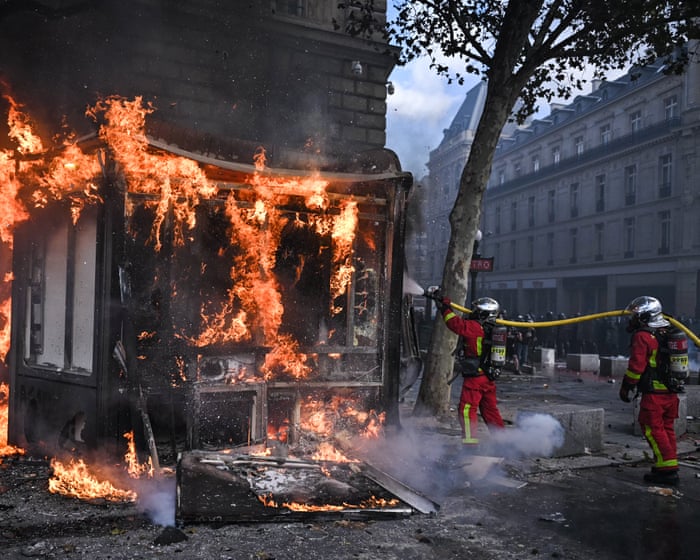


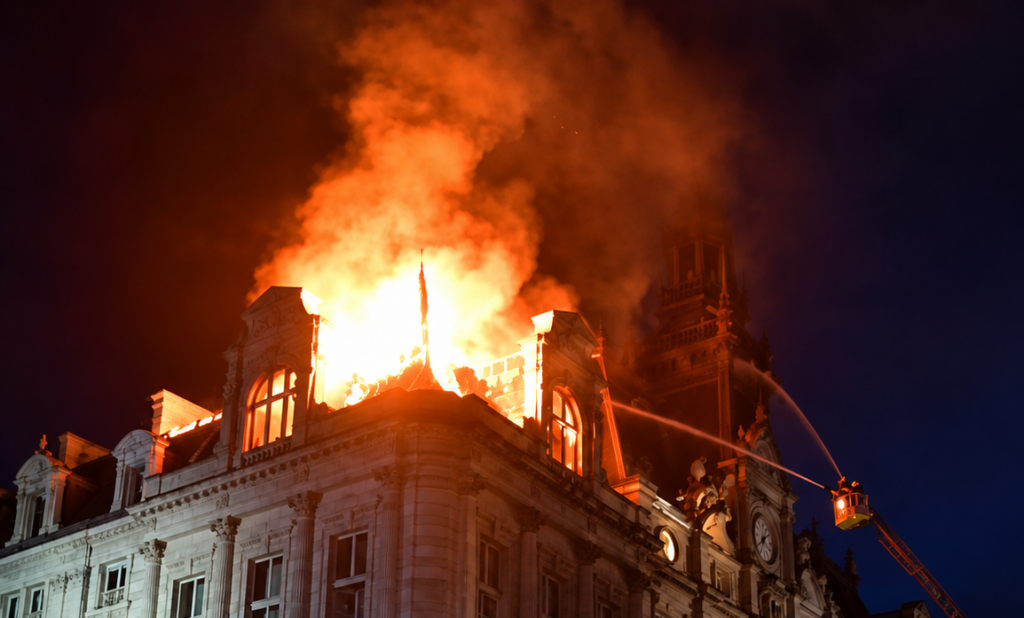


 BREAKING: Another major school arson attack at Blaise Pascal High School in the French city of Rouen.
 JUST IN: More footage of the arson attack on Roger Verlomme High School in Paris.