❌

Reading view

Mississippi A.G. Says Killing of 1-Year-Old Boy Over Stolen Diapers Was 'Justified'
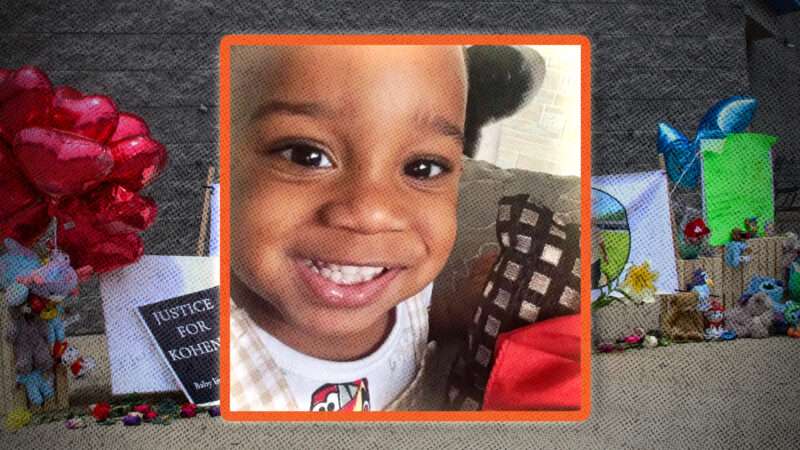
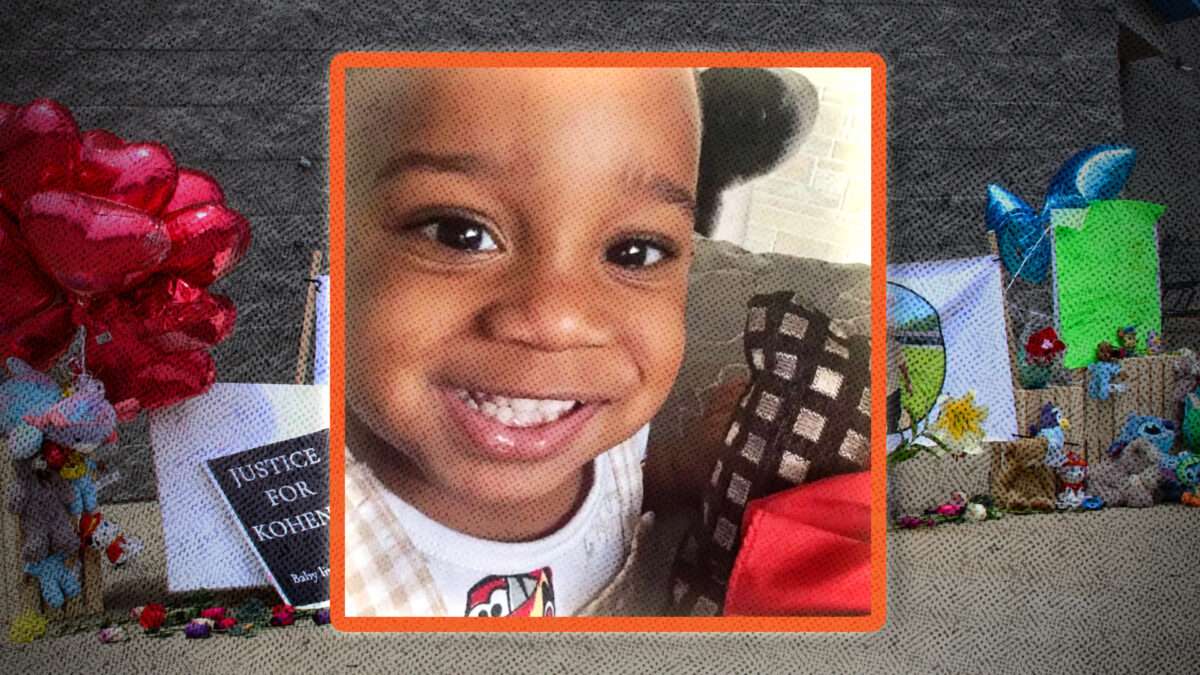
Kohen Wiley against a background of flowers and cards left to remember him | Carlos Kosienski/Sipa USA/Newscom/reshmasaujani/Instagram.Kohen.jpg

On Monday, Mississippi Attorney General Lynn Fitch ruled that the police shooting of 1-year-old boy Kohen Wiley was a "justified" use of force. ​Kohen was fatally shot in June, outside of a Walmart, as cops investigated his mother and her friend for stealing diapers. Fitch didn't explain the reasoning behind the decision or what evidence was considered in a case that has sparked national backlash.

According to a June 14 statement from the Mississippi Bureau of Investigation (MBI), officers from the Senatobia Police Department (SPD) and Tate County Sheriff's Office were responding to a shoplifting call when "officers encountered two subjects and a juvenile child fleeing from the store into a vehicle." They "attempted to stop the vehicle, but the driver drove in the direction of the officers, almost striking one," and the officer then "discharged their weapon and the vehicle fled the scene." The family went to a local hospital, where 1-year-old Kohen Wiley was pronounced dead.​

Kohen's mother, Vellesiya Wiley, has a different version of events, which she outlined in a video on X following the tragedy. She said that after police tried to stop her friend (the driver) outside the Walmart, Wiley continued to go to her car, saying the interaction had "nothing to do" with her. Once she got into the car, her friend arrived and began to back out of the parking spot. Then officers came over to the car, drawing their guns. She says that after she raised Kohen to show him to the officers and try to defuse the situation, they opened fire. "[The police] tried to say that [my friend] forcefully was trying to drive and hit them, but they was all on the right side, and she was driving towards the left….They personally just shot at the car," she said. In the months since the incident, the family held several rallies, demanding justice for Kohen's death.​ 

The tragedy of the shooting has been compounded by a lack of transparency from the SPD, as well as alleged expert analysis that counteracts the MBI's statement. According to reporting from Mississippi Today, Ben Crump, a civil rights attorney who is representing the Wiley family, claims that an independent autopsy conducted by forensic pathologist Robert Mitchell indicates that the bullets entered through the front passenger door, rather than the windshield, suggesting that the officer wasn't in the vehicle's path when he discharged his gun.​

In response to Fitch's announcement on Monday, Crump released a statement asking, "How can anyone accept that conclusion when Kohen's family and the public still have not been allowed to see the body-camera footage?" 

"If the footage supports the state's decision, release it. We will not stop fighting until this family gets the truth," he added. To this point, the SPD has declined to release the footage, saying it's standard procedure during an ongoing investigation.

Crump was also keen to point out complaints of racism in the SPD: "This is a department whose chief was fired after reports of racial slurs in his text messages, and whose officer faced a complaint alleging a racially offensive remark two days before he shot Kohen."​

The SPD's chief at the time, Harold Vanderford, was unceremoniously fired after journalists from Mississippi Today, The New York Times, and Verite News revealed a slew of racist text messages he sent. According to reporting from Verite News, in one of the messages he said he "almost beat a nigger and white woman's ass a few minutes ago." Senatobia's Board of Aldermen rejected his attempted resignation and voted to fire him instead on September 1.

Crump also cited a complaint filed by Officer Dexter Smith, who claimed that Sergeant Hunter Foster, the officer who shot Kohen referred to him as "a black motherfucker" on June 12, just two days before the incident. According to reporting from Mississippi Today, Smith's complaint states that he was filling out paperwork in the booking room when he heard Foster say, "Who is this Black motherfucker back there?" to his colleagues. Smith claims to have had almost no relationship with Foster prior to the encounter.​

It's hard not to feel outraged considering that this little boy lost his life over something as trivial as shoplifting—a misdemeanor in Mississippi that does not justify use of lethal force, as Reason's Joe Lancaster wrote in June—and for diapers no less. With the bodycam footage yet to be released, all the public is left with is the state's word that the investigation found no wrongdoing. Given the multiple instances of racism within the department, it shouldn't come as a surprise if the public isn't content to take them at their word.

The post Mississippi A.G. Says Killing of 1-Year-Old Boy Over Stolen Diapers Was 'Justified' appeared first on Reason Magazine.
  •  

He Campaigned for the East Cleveland Mayor's Opponent. Then Police Came for His Truck.

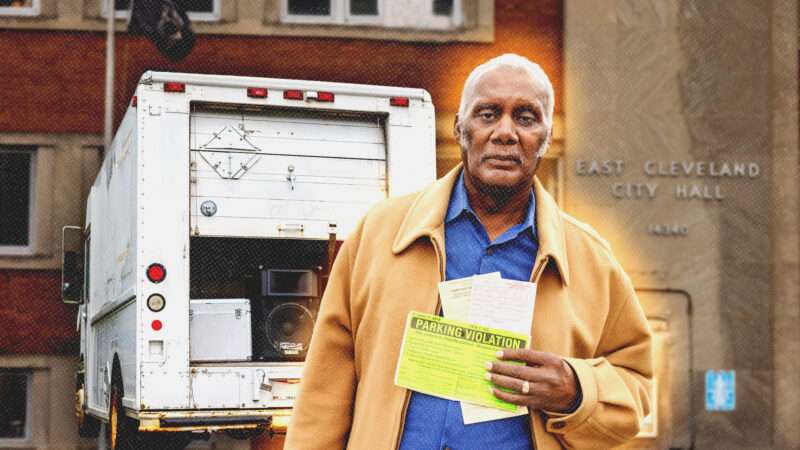
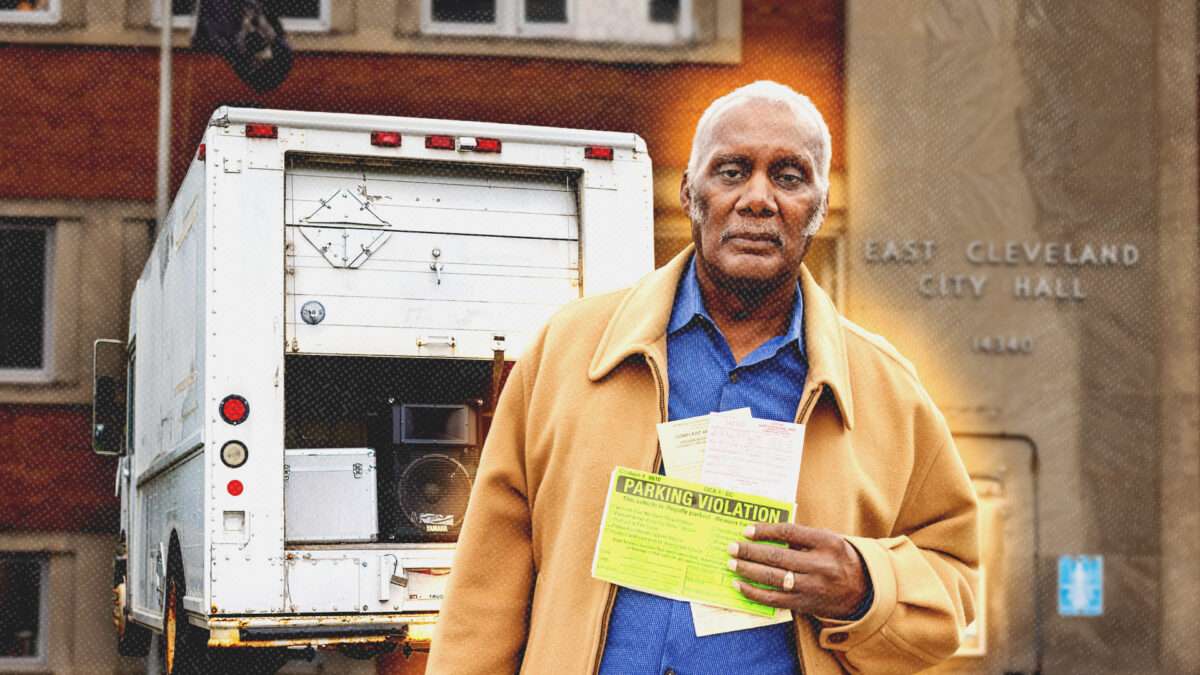
William Fambrough seen in front of his sound truck | Institute for Justice

Walking through East Cleveland, Ohio, feels a touch like you've wandered onto the set of a postapocalyptic film noir. Grand, gilded homes announce themselves on neighborhood streets, some crowned with turrets, many with windows punched out like missing teeth. Often, no one is home, because no one lives there. It is safer than 1 percent of U.S. cities.

So why did local law enforcement pour considerable time and resources into pursuing a man for a sound truck?

That question is not really a legal one, at least not in the most technical sense. But it is the driving force behind a thorny case a federal court recently resuscitated: Fambrough v. City of East Cleveland, a saga concerning a man whose vehicle became an obsessive target of the East Cleveland Police Department (ECPD) after he used it to campaign for a mayoral challenger.

Some of the facts are in dispute. But the basic gist is as follows: William Fambrough, long a politically engaged East Clevelander, campaigned for Juanita Gowdy—a challenger to then-Mayor Brandon King—by broadcasting messages around the city with his sound truck. That ultimately came to an end after law enforcement impounded the car, cited him for parking and noise violations, and prosecuted him for the latter.

Fambrough sued, alleging the complex legal odyssey set into motion over his step van amounted to First Amendment retaliation, an unreasonable seizure under the Fourth Amendment, and a violation of the 14th Amendment's proscription against selective enforcement. The U.S. Court of Appeals for the 6th Circuit rejected some of those claims. But it resurrected claims against King and his chief of staff, Michael Smedley—depriving them of qualified immunity, the legal doctrine that inoculates state and local government officials from facing lawsuits if their alleged misconduct was not "clearly established" as illegal in prior case law. It also revived Fambrough's retaliation claim against the city.

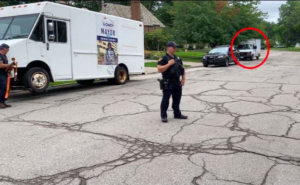
As the 6th Circuit summarizes: King "says he received a phone call from a resident who complained about Fambrough's sound truck and someone else's box truck being parked in a residential area," so he told someone to take care of it. Scott Gardner, then the city's chief of police, "was concerned about selectively enforcing" the parking ordinance—which prohibits parking a truck in front of residential property, except for loading or unloading—because it is indeed almost never enforced. This was the beginning of a long pursuit, which ultimately saw a swarm of officers dispatched to Fambrough's house in August 2021 to confiscate the vehicle, allegedly resulting in $6,000 in damage. Fambrough also had to pay $528 in fees to get the damaged truck back.

"All the attention City officials gave Fambrough struck Gardner as unusual," the 6th Circuit notes. "The mayor's office wasn't this attentive even in homicide cases. And considering that the City had around only 50 police officers at the time and had 'serious crime problems,' Gardner thought it was odd to devote this much attention to permitting and parking issues." Based on available data, East Cleveland's violent crime rate is 1,409 per 100,000 residents, about four times higher than the national average.

Yet Gardner ultimately got on board. Smedley phoned him on August 9 "extremely upset," according to Gardner, and told the police chief he was "incompetent" for failing to "take care of" Fambrough's sound truck. Smedley wanted the "utmost enforcement as possible." So Gardner sent an email. "Please, find this vehicle and tow it," he wrote to all of ECPD. "Cite the operator with disturbing the peace and loud music. Please contact me as soon as this is complete to claim a surprise." A surprise!

Police succeeded. "On its face, the email told officers to tow Fambrough's truck regardless of whether it was parked illegally," writes the 6th Circuit. "And the Noise Ordinance authorizes seizure only of 'the sound device used,' and only upon conviction. So Gardner's instruction to tow the truck wasn't authorized by municipal law." The court still held that the seizure did not violate the Fourth Amendment. It also gave Gardner qualified immunity, ruling it is not clearly established that someone who acts as a conduit for someone else's alleged retaliation—which here came from the mayor's office—is a "responsible party."

Heather McCollough, the city's assistant law director, subsequently prosecuted Fambrough for allegedly violating the noise ordinance. According to a sworn declaration from Fambrough's attorney, McCollough outlined some of Fambrough's offenses on a call: that he "made complaints about the police department" and filed "public records requests," among other issues. Notably, it is legal to do those things. McCollough was typically willing to resolve minor noise complaints, she added, but not so much in this case, because Fambrough needed to "stand down." (He ultimately pleaded no contest to disorderly conduct, a reduced charge.)

East Cleveland police step van
Institute for Justice

"Only after [Fambrough] began supporting Gowdy's election was the weight of the law thrown against him," the 6th Circuit writes in its analysis of potential municipal wrongdoing. "And the City's police officers didn't uncover Fambrough's violations of their own accord. Instead, City decisionmakers sent them to Fambrough's home each time to enforce the Parking Ordinance. So the timing of the parking-related enforcement actions supports an inference that Fambrough's political speech was the motivating factor—as does the fact that the City rarely enforced the Parking Ordinance against anyone else despite having plenty of opportunities to do so." Incredibly, a photo of another truck can be seen down the street on the same day law enforcement came to fetch Fambrough's vehicle. (The law also includes pickup trucks, so the city arguably has a lot of enforcement to do if it sincerely believes this law matters.)

King allegedly set the chain of events into motion while Smedley took the driver's seat. "Smedley's pattern of incessantly calling and berating Gardner," the 6th Circuit adds, "clashes with the idea that Smedley was chiefly concerned with minor permitting, noise, or parking issues." After all, if that were true, why would the problem appear to begin and end with one person?

Over five years have passed since the ordeal. Although Fambrough is now potentially closer to getting in front of a jury, he has yet to actually state his case, still burdened by the onerous process government actors invoke to kill such suits before the community can assess the merits. King, meanwhile, won that election. He left office in May 2025, however, after he was found guilty of one count of theft in office, four counts of having an unlawful interest in a public contract, three counts of representation by public official or employee, one count of filing a false disclosure statement, and one count of soliciting improper compensation.

The post He Campaigned for the East Cleveland Mayor's Opponent. Then Police Came for His Truck. appeared first on Reason Magazine.

  •  

Georgia Cop Who Shot a Miniature Donkey Says Body Camera Footage Shows an 'Imminent Threat'

Screenshot from a body camera video showing a a handgun drawn at a small donkey | The Civil Rights Lawyer Raw/Youtube/Cedartown Georgia Police Department

The Georgia officer responsible for killing a 1-year-old miniature donkey, HeeHaw, has filed a motion to dismiss the lawsuit against him, claiming the body camera footage proves he "reasonably believed the donkey posed an imminent threat to a fellow officer." But even if it doesn't, the officer argues he is immune from liability. 

In the early morning hours of August 30, Hannah Michelle Israel was at her Cedartown home in western Georgia when she received a distressing phone call. A supervisor with the Cedartown Police Department "tersely informed [Israel] that a donkey on her property had been 'dispatched,'" according to her federal lawsuit. After some clarification, she learned that police had not only entered her enclosed private property in the middle of the night without permission while looking for a missing person, but also shot and killed her miniature donkey in the process. 

Israel immediately set out to search for her beloved pet, HeeHaw, only to find her bottle-raised donkey's lifeless body alone in her field. Israel told ABC7 News the incident has left her "traumatized and shocked." She continued, "I honestly can't even believe he's not here…There's no words."

Demanding accountability, Israel filed a lawsuit in the U.S. District Court for the Northern District of Georgia in September against the shooting officer, Officer Trenton Ryan Garner, for violating her Fourth Amendment rights and submitted a separate demand for $1 million from the City of Cedartown.  

Last week, Garner responded by asking the court to dismiss the case, arguing in part that he did not violate Israel's constitutional rights when he entered her property. Under the open fields doctrine, there is no reasonable expectation of privacy in one's pastureland, even if enclosed. Further, the motion argues, exigent circumstances existed in the search for a missing 12-year-old girl. 

As far as HeeHaw is concerned, Garner claims he acted reasonably by using deadly force and argues the footage clearly shows HeeHaw "charging" and posing an "imminent threat to a fellow officer." 

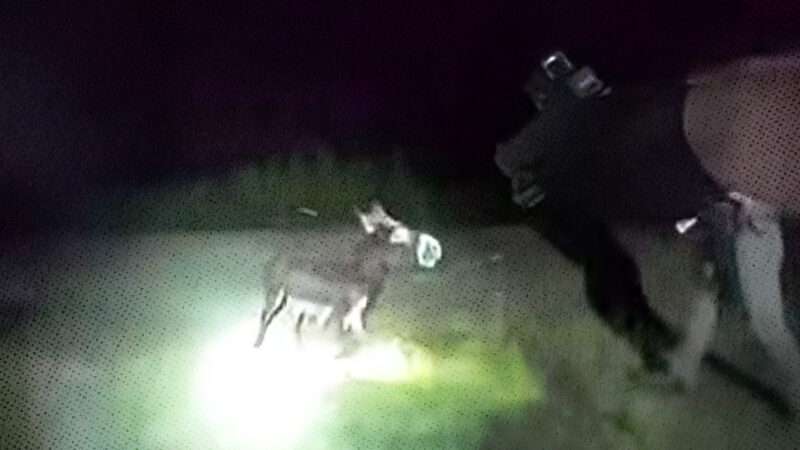
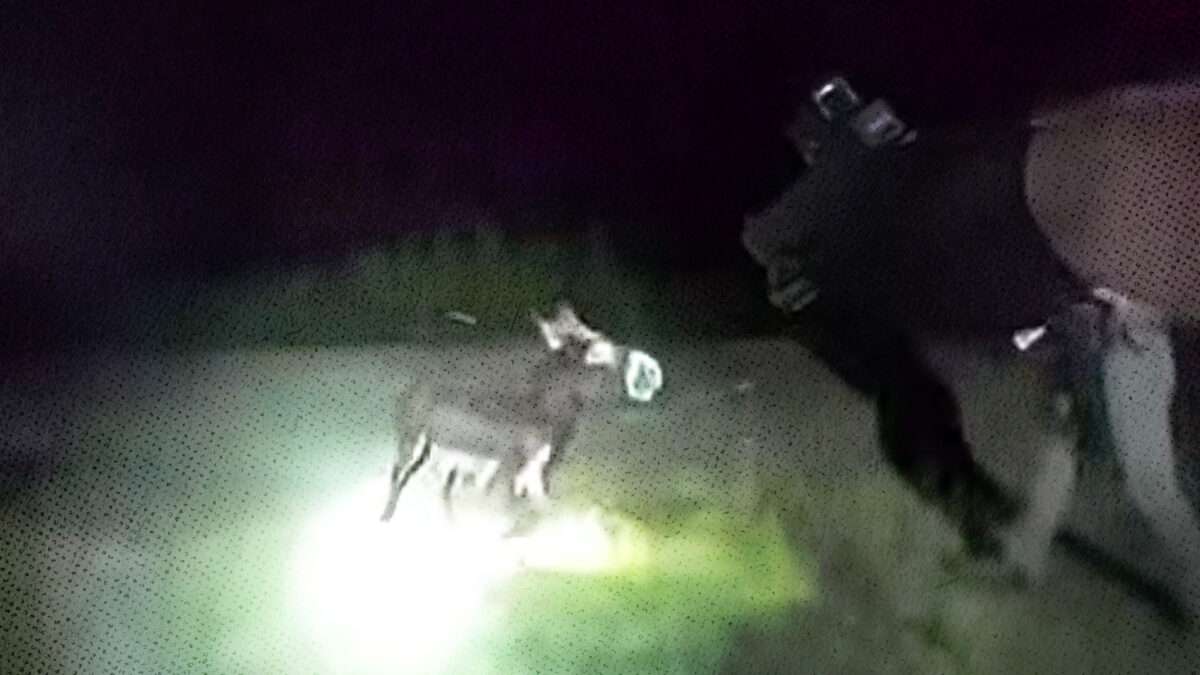
However, the footage, posted by the Civil Rights Lawyer Raw, may not be so clear-cut. Garner's body camera was off at the time of the shooting but had a "rolling buffer of video," a recording without audio of the 30 seconds preceding activation of the camera, according to court documents. During the silent portion, two officers and a bloodhound are in front of Garner with flashlights in a dark field. A small donkey, roughly 3 feet tall, appears and slowly moves toward one of the officers. The officer backs away slowly, but the donkey moves closer and picks up speed. Garner pulls his gun and fires. The donkey turns and runs before falling over.

Whether Garner reasonably believed HeeHaw posed an imminent threat to his fellow officer may be up for debate.

When the audio kicks in, a fellow officer asks, "Why'd you shoot it up?" "I don't know," Garner responds rather nonchalantly before telling dispatch he had to shoot a donkey because "it was trying to attack." If another officer on the scene wasn't sure why Garner used deadly force, perhaps the decision wasn't so reasonable after all. 

In her lawsuit, Israel accuses Garner of needlessly killing HeeHaw "maliciously…and recklessly, with deliberate indifference…for [Israel's] constitutional rights." The suit continues: "No reasonable officer in…Garner's position would have believed that such force was necessary or justified." 

But whether Garner acted reasonably or not by shooting HeeHaw, qualified immunity may still shield him from accountability. Qualified immunity is a legal doctrine that protects government actors from lawsuits alleging rights violations, unless the right is clearly established. In practice, that means plaintiffs must be able to point to a previous court ruling in a case with the same circumstances to show that the right was obvious to government officials. 

The bar can be quite high to show a right is clearly established. For example, in March, the Supreme Court reversed a 2nd Circuit decision in a case involving an officer who was sued for using a rear wristlock to arrest a protester. The 2nd Circuit denied qualified immunity, reasoning that a previous case from 2004 clearly established that rear wristlocks used to arrest anti-abortion protesters constitute excessive force. But the Court disagreed, stressing that "principles stated generally, such as that 'an officer may not use reasonable and excessive force,' do not suffice." 

And while there may be ample cases involving officers shooting pet dogs, cases involving miniature donkeys are in short supply. If the court finds that there is no clearly established rule that specifically prohibits officers from shooting a miniature donkey moving toward a fellow officer in the dark, the court may end up dismissing the case and sidestepping both the reasonableness and constitutional questions entirely.

The post Georgia Cop Who Shot a Miniature Donkey Says Body Camera Footage Shows an 'Imminent Threat' appeared first on Reason Magazine.
  •  
❌