After five years, brothers Franz and Moritz Wagner are no longer playing together for the Orlando Magic. In the new NBA season, their separation will likely mean the new "German" team is the Charlotte Hornets.
Hello and welcome to another edition of Free Agent! Be careful when you're behind the wheel this week.
College football is great! Surely you want even more of it, right? We'll get into the problems with a 24-team College Football Playoff (CFP), then talk about the NBA's new betting restrictions, and close with thoughts about President Donald Trump's new government golf course plans. And just in case you don't make it to the end, here's a shortcut to our survey on who you're rooting for in the World Series.
But first, many congratulations to "Gary's 1st Entry" on outlasting everyone else in our NFL Survivor group. There's no prize other than this shoutout, so be sure to print out today's newsletter, highlight this paragraph, and frame it in gold. Perhaps Gary can keep going and challenge Primetime Paulie Rothrock's 13-game winning streak from last season.
Locker Room Links
Both teams in the WNBA Finals left the court for the National Anthem—unclear if this was a protest or just part of the pregame routine. WNBA policy doesn't require teams to be on the court for the anthem, but does require a "dignified posture" if they are.
In the thick of a playoff race, three Zambian women's soccer players are separated from their National Women's Soccer League teams because they played in Uganda, and the Centers for Disease Control and Prevention has a three-week restriction on reentry due to Ebola. (There are zero active Ebola cases in Uganda and Zambia.)
This is the kind of excessively nerdy fantasy football content I live for. (Yahoo remains the best fantasy sports system. ESPN's is trash, relying on name recognition to get by.)
I figured out how ESPN calculates fantasy football win percentage, it's bad!
ESPN made a stats 101 error when calculating their win percentage which leads to horribly miscalibrated numbers. ( thread) pic.twitter.com/bDypgjelKj
Saturday was one of the best days of college football ever—or perhaps it could have been, if we thought any of the five top-10 teams who took a loss were now certainly out of playoff contention. Instead, Georgia, Notre Dame, Indiana, Alabama, and Texas are all still very much alive in the championship hunt.
Today was one of the craziest days in college football history:
- First time ever five teams ranked in the top 7 lose in a single week - First time the No. 1-ranked team loses to an unranked team in consecutive weeks since 1990 - First time Texas, Alabama, and Georgia all lose… pic.twitter.com/psVRoM5s5b
With two losses, Alabama and Texas are at least on the edge of the playoff bubble with perhaps no more room for error. But that's only true under this year's CFP format. Next year, the playoff is almost officially set to balloon to 24 teams, making the chaos of a day like Saturday matter even less.
Fans will always celebrate a huge upset or major rivalry win, of course—Tennessee fans don't need playoff stakes as an excuse to get drunk when they beat Alabama. But the joy of a rivalry win in the past was always bigger because of the off-field stakes, too—the first loss for your rival meant they probably wouldn't be national champions, the second meant they'd be out of the Rose Bowl, a third meant you could be proud your team sent them packing for the Alamo Bowl. Winning is great; ruining your rival's season is even better.
With 24 teams in the playoff, the joy is a bit diminished because it will take four or possibly five losses to knock a powerhouse program out of the CFP (Iowa, at 8–4, was ranked 23rd by the committee before last year's playoffs). It'll be a bit like a rivalry win in college basketball—we win, you suck, congrats on getting a slightly worse NCAA Tournament seed.
In the business of sports, more inventory for TV is king, and the powers that be think more teams playing more playoff games will make more money. At Free Agent, we don't begrudge institutions for trying to make more money—we all do the same every day. But it's not clear abandoning conference championship games will be the answer, especially when the Big Ten and SEC championships apparently outdraw many playoff games.
ESPN and the power conferences know fans aren't happy about it—just look at allthechatteronline, and how the crowd at BYU reacted when College GameDay discussed expansion on Saturday (especially when BYU would probably benefit from expansion!). They're betting enough people will watch to make the expansion profitable anyway. The last hope is that fans get loud enough to bully them into abandoning expansion—which only occasionally works, sometimes on things small (putting the trophy logo on the court for the NBA Finals) and large (soccer's European Super League). If any powerhouse considers going independent, that might shock leaders into a rethink too.
Almost every sport I know is adding more: more teams, bigger playoffs, more for TV. As fans, we still eat it up, of course—much to the excitement of the TV executives who are selling commercial time to the people trying to reach us, the viewing public. (The only counterexample is the MLB proposal to cut eight games from the regular season—I'd love to see each sport I follow cut its season by about 25 percent to make regular season games matter more, so I'm interested to see how this goes.)
Perhaps I'm biased because my favorite team, Michigan State, is a dumpster fire—they could expand the playoff to 64 teams and the Spartans still wouldn't deserve a bid. I personally don't have a whole lot at stake in the playoff format now or anytime soon. But as a neutral, the chaos of Saturday might have been viewed with my full attention in the past—instead, this year I just had it on in the background while I played video games.
Sports Are Regulating Bets Without Politicians, Part 3
After last year's major betting scandal, the NBA asked sportsbooks late last week to stop offering certain types of potentially problematic bets. The sportsbooks, which the NBA says handle roughly 99 percent of the U.S. betting market, agreed. No politician or regulation was necessary to solve the problem.
No longer can bettors bet on unders for a bit player who likely won't get more than 12 minutes of playtime. Bettors also can't wager on the opening tip or on players to miss specific shots. Parlays that string together under bets on the same player's statistics are also out (this one seems a bit harsh—if you just want to bet on a certain major player to have an off night, you can bet on stats separately, but not in a big multiplier parlay). Bets on players who have two-way contracts between the NBA and G League were already banned.
This all comes on the heels of similar developments last year in the NFL and MLB. While some people want to ban prop bets altogether, the NFL asked sportsbooks to eliminate bets in four different categories. Sportsbooks largely agreed or weren't offering those bets anyway. MLB, in light of some pitching-related scandals, asked for a $200 limit on pitch-specific bets and to keep them out of parlays—sportsbooks agreed to that too.
As I wrote last year, "Ideally, this is how the regulation of the sports betting industry should go….These approaches are catching the nuances of what works for both the leagues and for sportsbooks without the heavy-handed approaches of politicians who would use an axe to ban all prop bets instead of a scalpel to limit problematic bets."
It's important to note leagues are able to do this because they have commercial partnerships with the sportsbooks. Otherwise, the leagues would have no direct leverage over a sportsbook offering a bet the league doesn't like. Keep that in mind the next time you see people bemoaning a league partnership with a sportsbook or a prediction market.
Trump's Golf Course Plans Have People Teed Off
President Donald Trump has new plans for the National Park Service golf course at East Potomac—again. Last time new plans were announced, the site plan still had its historic miniature golf course, a par-3 course, and the existing road still ringing the property for bicycling, running, etc. Much of the public didn't like that plan anyway—now, none of that remains in the latest plans, just 18 holes of golf and a driving range.
What's really going on here seems quite clear to me: Like so many other things going on in the second Trump administration, this is a scheme to enrich the Trump family. The plan?
Step 2: Use taxpayer dollars to pay for renovation of the course into, allegedly, a championship-level course capable of hosting major golf tournaments (no matter that the area has next to zero parking, is a mile from the nearest Metro station, and only accessible by narrow roads not meant to handle tens of thousands of spectators).
Step 3: Have the federal government sign a sweetheart deal with, who else, the golf division of the Trump Organization to operate the course on extremely favorable and profitable terms.
If you're wondering why the Trump administration is doing something, corruption is usually a good guess.
The arguments for the course don't make much sense. There are plenty of adequate, competitively priced golf courses in the broader Washington, D.C., area. Several of them are already capable of hosting professional golf tournaments. Between LIV Golf and the PGA Tour, there were three tournaments at three different courses in the last couple years. The 2030 PGA Championship and 2037 Ryder Cup will happen just over the D.C. line in Bethesda, Maryland.
East Potomac is not the nicest course around, no thanks to the legal limbo it's been in for the past year. But if the National Park Service is going to, for some reason, be in the business of running a golf course, it should be a course that emphasizes and teaches its history instead of the pipe dream of a corrupt madman.
Who Ya Got? 2026 World Series Edition
For the first time in 46 years, we've got a World Series contested by two teams that have never won it before. Brewers against Rays is also a rare instance of the top seeds from each league outlasting the randomness of the MLB playoffs to make the World Series. And before you trot out the tired line that "TV executives must be seething about the small market teams" remember that they care much more about getting a playoff series that goes seven games with close results in each game (What did I say above? Inventory rules all!).
Nine-year-old Ukrainian Anastasiia Kovtun won a silver medal at the international Romanian Junior Open 2026 tournament, held on October 16–18 in Bucharest. For the young athlete, it was the first international tournament of her career. Overall, Ukrainian squash players demonstrated strong results, winning in five age categories.
The competition took place at the Infinity Sport Arena sports complex under the auspices of the European Squash Federation (ESF). Romanian Junior Open is part of the international ESF Junior Circuit series and has Bronze status.
One of the main stories of the Ukrainian team’s performance was the success of 9-year-old Anastasiia Kovtun in the youngest age category, Girls U11.
Despite the competition in Bucharest marking Nastia’s debut at international level, she confidently advanced through the group stage. The Ukrainian successively defeated Romania’s Anna Oltean 3:0 (11:4, 11:9, 11:9), as well as two Bulgarian athletes — Ema Taneva 3:0 (11:3, 11:5, 11:5) and Gabriela Zarova 3:0 (11:8, 11:2, 11:2).
In the decisive match for the gold medal, Anastasiia faced another Ukrainian, Oleksandra Sinielnikova, who has considerable experience competing in international and Polish junior tournaments. The final ended with Sinielnikova winning 3:0 (11:3, 11:5, 11:5).
Thus, Oleksandra Sinielnikova became the Romanian Junior Open 2026 champion among girls under 11, while Anastasiia Kovtun claimed a silver medal at her very first international tournament.
Five gold medals for Ukrainian athletes
Other Ukrainian participants also performed successfully. Among boys under 11, another all-Ukrainian final took place.
Artem Kostiukov and Mark Hrabovskyi competed for the championship title. Both athletes won their groups, each recording three victories.
In the group stage, Kostiukov defeated two representatives of Romania and an athlete from Israel, while Hrabovskyi beat two Romanian squash players and a representative of Bulgaria. In the final, Artem Kostiukov emerged victorious 3:1 (11:7, 11:6, 7:11, 11:8).
Artem Kostiukov, winner of Romanian Junior Open 2026
It is worth noting that Artem Kostiukov continues his family’s sporting traditions.
His mother is the well-known Ukrainian squash player Anastasiia Kostiukova, a Ukrainian champion and multiple winner of national competitions, including the 2023 Ukrainian Cup.
In 2022, she became the first Ukrainian woman to win a squash match at the World Games and also took silver at the international PSA Saarland Squash Open tournament.
In the Girls U13 category, Varvara Sinielnikova took first place, demonstrating confident play throughout the tournament.
Viktoriia Syvoplias brought Ukraine another gold medal in the Girls U19 category. In the final, she defeated Bulgaria’s Emma Peteva in a tense five-game contest — 3:2 (7:11, 11:9, 11:5, 8:11, 11:8).
Nestor Saplashenko secured another victory for Ukraine in the Boys U15 category. In the final, he defeated Greece’s Konstantinos Christos Papatheodorou 3:1 (11:8, 11:7, 7:11, 11:9).
Ukrainian Oleksandra Orlenko also competed in the Girls U19 category, finishing the tournament in seventh place.
Ukrainian juniors confirm their high level on the European stage
At Romanian Junior Open 2026, Ukrainian athletes won five gold medals in the Girls U11, Girls U13, Girls U19, Boys U11 and Boys U15 categories.
Anastasiia Kovtun, silver medalist at Romanian Junior Open 2026
Ukrainian juniors confirm their high level on the European stage
At Romanian Junior Open 2026, Ukrainian athletes won five gold medals in the Girls U11, Girls U13, Girls U19, Boys U11 and Boys U15 categories.
In addition, Ukrainians also claimed two silver medals thanks to the performances of Anastasiia Kovtun and Mark Hrabovskyi.
In addition, Ukrainians claimed two silver medals thanks to the performances of Anastasiia Kovtun and Mark Hrabovskyi.
For nine-year-old Anastasiia Kovtun, the silver medal in Bucharest marked an important first step in her international sporting career.
Already in her debut appearance, she managed to become one of the medalists at an official European tournament.
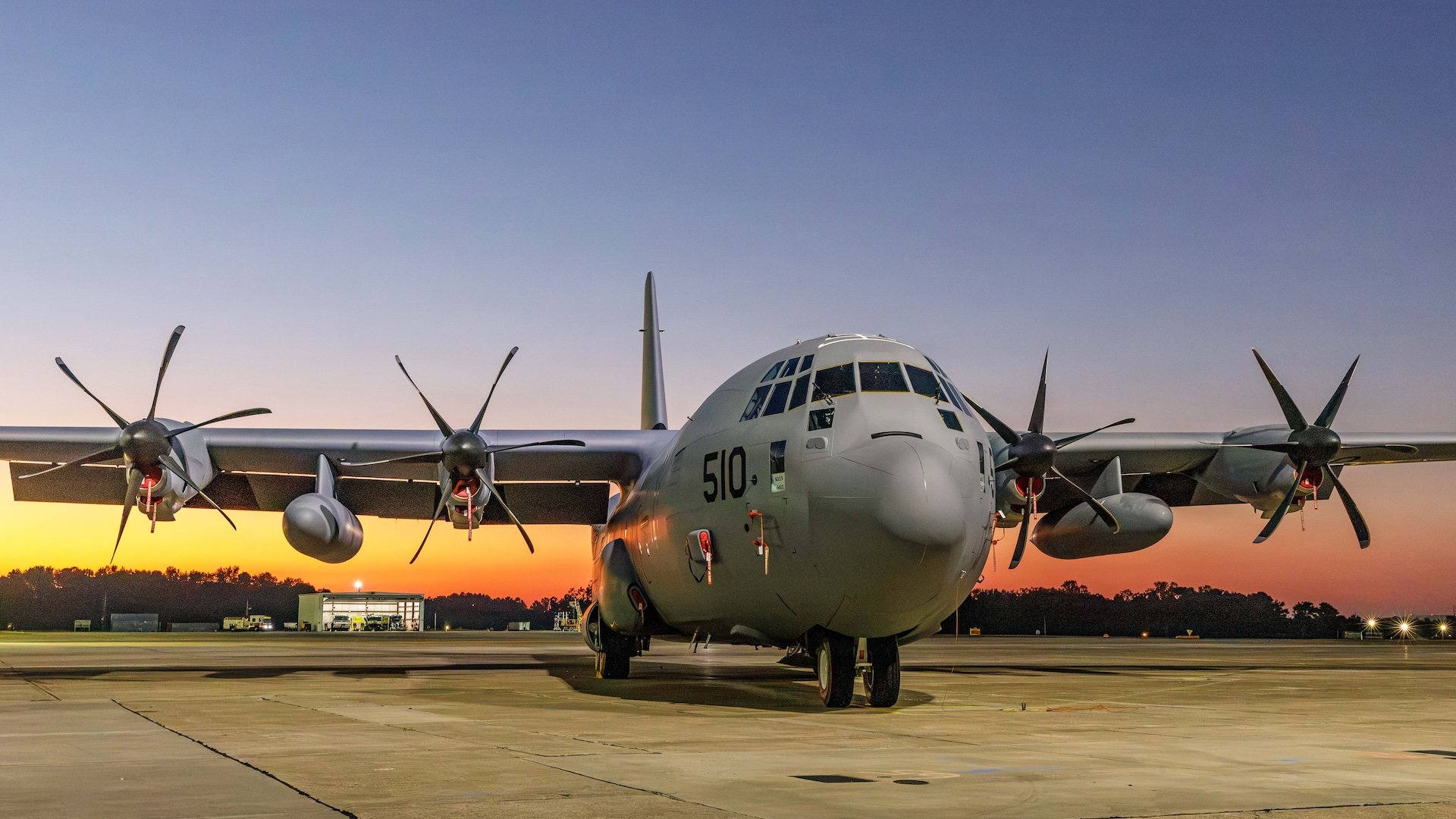
The U.S. Navy has taken delivery of the first C-130J-30 Hercules airframe destined to become an E-130J Phoenix II, the service’s next-generation aircraft for maintaining communications with its nuclear ballistic submarines. The aircraft will now undergo extensive mission-systems integration before it can begin testing for the Take Charge and Move Out (TACAMO) mission.
Lockheed Martin handed over the newly built aircraft at its facility in Marietta, Georgia, on October 15. The delivery marks the start of the transition from the Navy’s aging E-6B Mercury fleet to the turboprop-powered E-130J, which is intended to provide a survivable communications link between national leadership and U.S. Navy nuclear ballistic missile submarines, including the ability to send them orders to launch strikes while they are submerged.
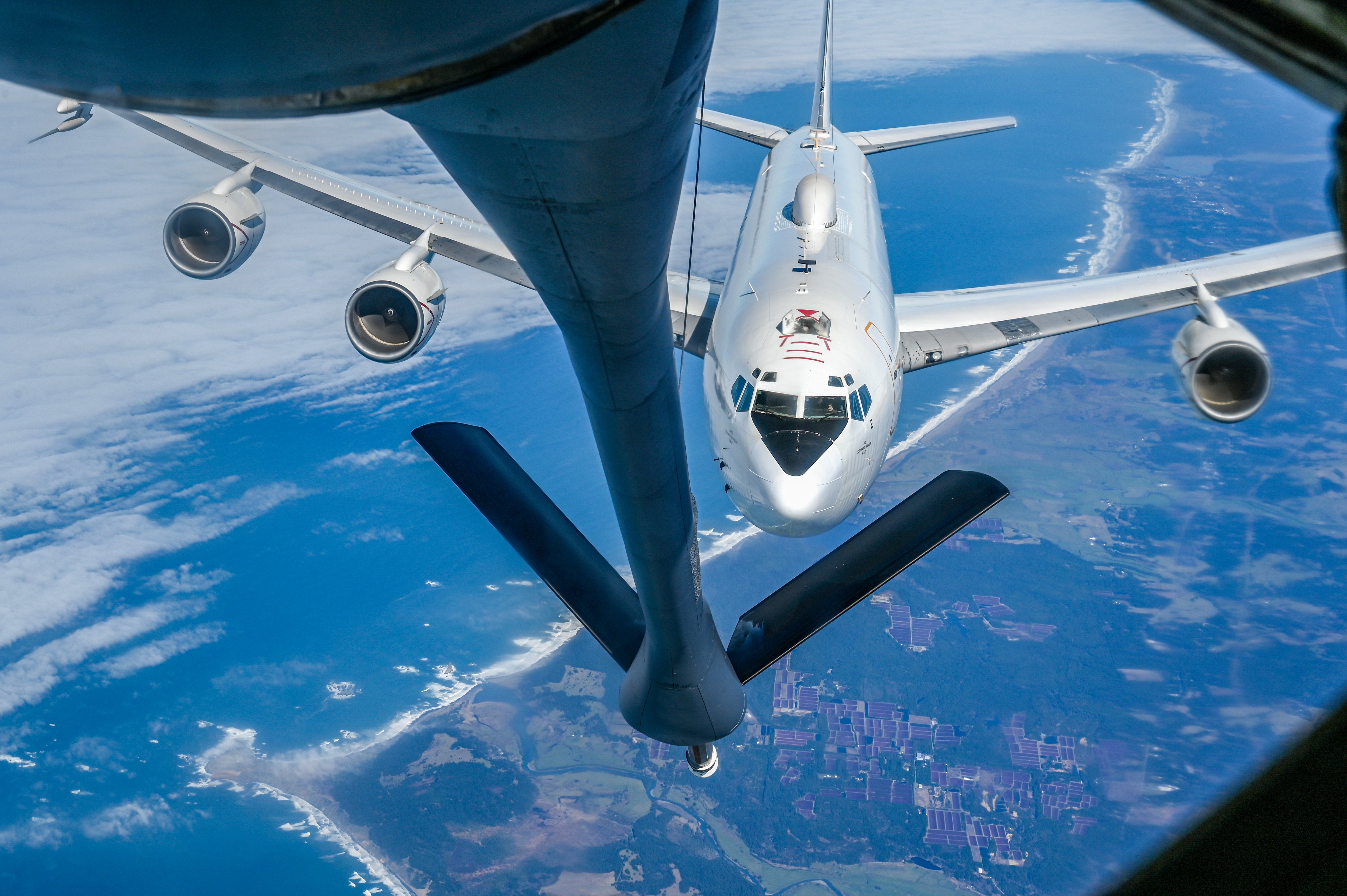
An E-6B Mercury assigned to the Strategic Communications Wing 1 at Tinker Air Force Base approaches a tanker during an aerial refueling mission over Oregon, Feb. 28, 2025. U.S. Air Force photo by Airman 1st Class Megan Delaine
“Today’s delivery from the historic Marietta line represents far more than a new airframe; it marks the foundation of our future strategic deterrence posture,” Capt. Roger Davis, program manager for the Navy’s Airborne Strategic Command, Control, and Communications program office (PMA-271), said in a statement.
“Through our close partnership with Lockheed Martin and our industry team, we are ensuring our nation maintains an unshakeable communications lifeline to our ballistic missile submarine fleet.”
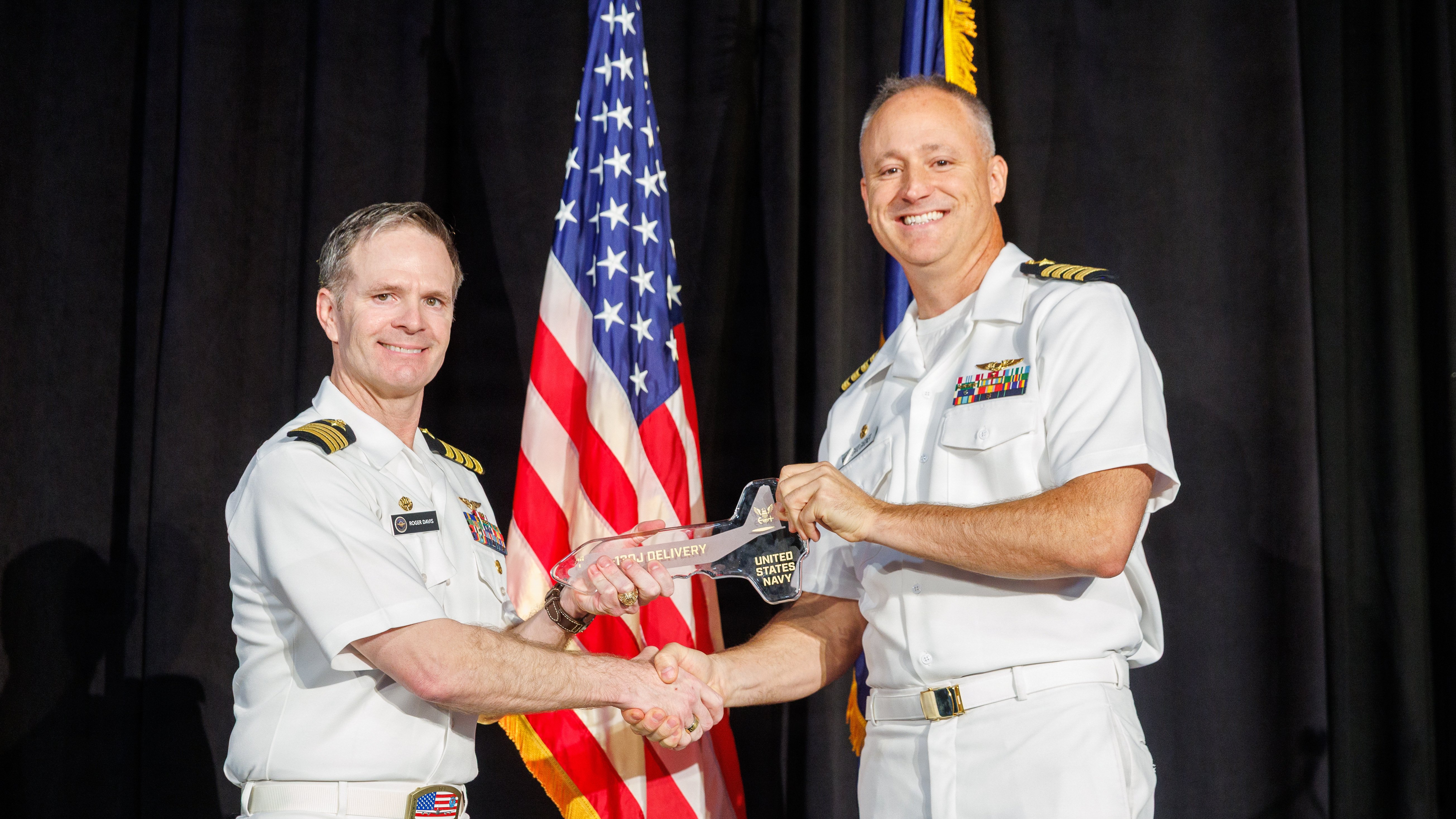
Capt. Roger Davis, left, Airborne Strategic Command, Control and Communications program manager (PMA-271), presents a ceremonial key to Capt. David Gardner, commodore of Strategic Communications Wing 1 (SCW 1), during the C-130J-30 delivery ceremony Oct. 15, 2026 in Marietta, Georgia. Photo courtesy of Lockheed Martin by Thinh D. Nguyen
The aircraft is the first of three C-130J-30s initially procured by the Navy in September 2024. It will be transferred to Northrop Grumman, the E-130J program’s prime contractor and mission-systems integrator, for conversion. Collins Aerospace is providing the very low frequency (VLF) communications system, a key component of the TACAMO mission.
TACAMO aircraft provide a means for the president, secretary of defense, and U.S. Strategic Command to communicate with nuclear forces, including submarines submerged at sea. The mission is designed to preserve the ability to transmit emergency action messages even if conventional communications infrastructure is disrupted or destroyed.
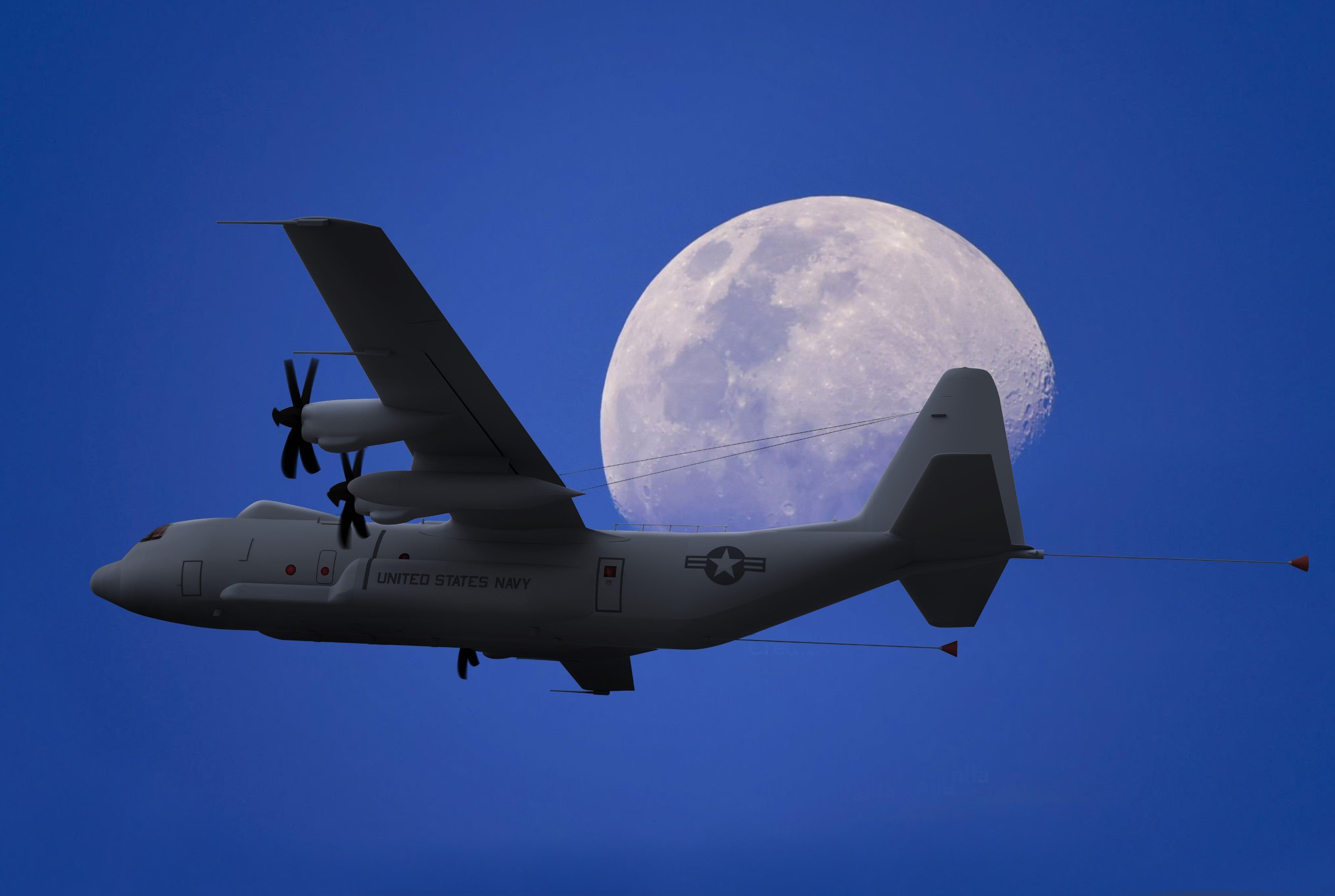
The E-6B accomplishes this in part through a long, trailing wire antenna that enables VLF transmissions to submerged submarines. The E-130J will receive a comparable system as part of its conversion.
The first C-130J-30 being built by Lockheed Martin Corp. for the E-130J program. Photo by David L. Key, Lockheed Martin
The Navy plans to acquire 31 E-130Js, nearly doubling the 16 E-6Bs currently in service. That total includes six developmental aircraft and 25 production examples, although it remains unclear how many of the developmental aircraft will ultimately be available for operational use.
The larger planned fleet should provide additional aircraft to support training, maintenance, and operational demands. However, the transition also brings technical challenges. The Government Accountability Office (GAO) has previously warned that integrating the specialized mission equipment into the smaller C-130J-30 airframe could affect operational availability and create additional engineering and manufacturing difficulties.
Rendering of the future E-130J aircraft. Courtesy of Northrop Grumman Corp.
In the past, TWZ has discussed the potential operational readiness and other trade-offs that could come from selecting a C-130-based platform to replace the E-6B in the TACAMO role. As we wrote previously:
“It’s certainly worth pointing out that the E-6Bs, conversions of what were some of the last and most modern 707 airliners built, were larger and higher performance platforms than the EC-130Qs. The C-130J-30 is certainly a more capable aircraft than the C-130H on which the EC-130Q was based, but it won’t have the base speed and altitude capabilities of an airliner-sized multi-engine jet. Compared to the Mercuries, any TACAMO-configured C-130J-30 would not be able to get on station as quickly, or fly as high, limiting its ability to get above bad weather or establish a better line of sight for its communications systems.”
“At the same time, as the Navy itself has noted, the C-130J-30 platform does immediately open up the ability to use a larger number of air bases, airports, and airfields, including austere ones that the E-6B cannot operate from. This could be very useful in a contingency scenario where an opponent may have destroyed or otherwise rendered unusable many well-established bases, as well as larger secondary dispersal sites, which include large commercial airports. Being able to fly from smaller, tertiary locations could help to ensure that the TACAMO mission continues without significant disruption under such circumstances. This is also true during peacetime, as targeting the TACAMOs on the ground would be much harder if they could easily operate from and sit alert at a much larger number of airports.”
“A C-130J-30 configured for the TACAMO mission would certainly have a mid-air refueling capability, and the Hercules is already a platform that has demonstrated the ability to loiter over particular areas for long periods of time. Unlike the Boeing 707, the C-130J is still in production, as well, meaning that TACAMO aircraft based on this plane would be inherently easier to maintain and support logistically, and may also be easier to convert to this specialized configuration to begin with. As time goes on, the J looks set to increasingly become the default base C-130 model across the U.S. military, as well. Compared to the long out-of-production 707-based E-6, support for the C-130J is already distributed across the U.S. and beyond. Training C-130J crews is even an easier proposition.”
The E-130J also represents a return to the Hercules family for the Navy’s TACAMO mission. The EC-130Q performed the role from 1963 to 1993, before the E-6A Mercury took over. The E-6B subsequently added an airborne command post mission known as Looking Glass, supporting U.S. strategic forces beyond the submarine communications role.
The US Navy operated a fleet of EC-130Q TACAMO aircraft like the one seen here before the arrival of the E-6As. U.S. Navy
The Navy’s current plan is for the E-130J to assume the TACAMO mission, while the Air Force pursues a separate effort to replace the Looking Glass airborne command post capability.
Following its delivery, the first E-130J airframe will enter mission-systems modification, ground testing, and developmental flight testing. The aircraft is not yet an operational TACAMO platform, and further integration and testing will be required before the Navy can begin fielding the new fleet.
The transition is intended to preserve one of the most critical links in the U.S. nuclear command, control, and communications architecture as the E-6B fleet becomes increasingly difficult to sustain.
Sections of the crowd chanted "Whoever doesn't jump is Muslim", while Egypt's national anthem was also jeered before kick-off.
Spain winger Lamine Yamal, who is Muslim, condemned the chants after the match as disrespectful and intolerable.
"Using a religion as a taunt on the field makes you look ignorant and racist," he said.
FIFA said its appeals committee had upheld the sanction following an earlier ruling by its disciplinary committee.
The Spanish Football Federation has been ordered to pay a $20,000 fine and must also close at least 15% of the seating at Spain's next home friendly.
FIFA said the affected seats could instead be allocated to groups including families, students and anti-discrimination organisations.
The governing body's disciplinary judges said "harsh sanctions were necessary", while acknowledging that it was the Spanish federation's first offence and that officials had acted quickly after the chants began.
Stadium announcements were made during the match calling on supporters to stop discriminatory behaviour.
The Spanish federation also condemned the chants and co-operated with authorities seeking to identify those responsible.
Spanish police opened an investigation the following day into what they described as "Islamophobic and xenophobic" chanting.
FIFA rejected the Spanish federation's argument that the word "Muslim" was not inherently insulting, ruling that otherwise neutral language can become discriminatory when used as a taunt or marker of inferiority.
The federation said on Friday that it considered the punishment disproportionately severe and would appeal to the Court of Arbitration for Sport.
FIFA has also imposed sanctions elsewhere this year for breaches of anti-discrimination rules, including a fine against the Israeli Football Association over its handling of racist behaviour by Beitar Jerusalem supporters.
Formula One will return to Africa for the first time since 1993. There is concern Rwanda are using it as another sportswashing opportunity, but there is also hope the event's legacy can impact wider African society.
On the road into the stadium at Olympia, at the foot of Mount Cronius, ancient Greek athletes passed a stone platform with steps cut through it. A row of bronze statues of Zeus, the god the Games were held to honour, stood beside it. None of them celebrated a victory. Each had been paid for […]
Nearly 20 years after arriving in England, Manchester City's UAE owners could exit amid cheating charges. That would pose a challenge for a city — and prime minister — closely tied to Abu Dhabi.
Expected global revenue of over $1 billion and new faces at the U17 World Cup show women's football is booming, but a recent report also highlights need for better structures globally.
The last time Formula 1 hosted a race in Africa was way back in 1993. But a new track in Rwanda is set to host a Grand Prix in "the early 2030s," continuing the country’s investment in international sport.
Germany's win against Australia saw Ena Mahmutovic excel in goal. The 22-year-old Bayern Munich goalkeeper is considered the successor to Ann-Katrin Berger and is making a name for herself.
Since winning the right to hold the 2034 World Cup unopposed, Saudi Arabia has been pulling away from sport. With reports that its most ambitious stadium project will be abandoned, what does this mean for the World Cup?
Just hours before Lionel Messi played his last match for Argentina, Cristiano Ronaldo posted his latest salvo in a row with Portugal. Ronaldo wants to play on despite the troubles, while Messi bathed in adulation.
The 2026 Asian Games in Japan drew to a close on October 4 following two weeks of competition between 45 countries and territories across 43 sports. Despite the official slogan “Imagine One Asia,” fragmented regional politics came to the fore as the event unfolded. Just days before the games officially began, tensions between Japan and […]
The International Olympic Committee has revealed the six other countries intending to bid for the 2036 Olympic Games. This comes after Germany selected Munich as its Olympic candidate.
Jürgen Klopp has done things a little differently since becoming Germany coach. Casting a wider net for talent and trying to connect with players and country haven't made an immediate impact, but he is not bowed.
Franz Reindl has been elected president of ice hockey's world governing body. The former forward was a member of West Germany's Olympic bronze medal-winning team.
It may have taken a little longer than he would have liked, but Jürgen Klopp has finally won a game as Germany coach. Despite a number of debutants, it was a familiar face who stood out in the victory over Serbia.
Since being bought by the UAE in 2008, Manchester City has become one of the world's most successful football clubs. A raft of serious financial charges threatens to undermine this and bring chaos to the Premier League.

 Login


 thread)