French Government Calls Emergency Meetings With Platforms Over Protests


For much of the last two decades, the digital divide has been viewed primarily as an infrastructure problem. The assumption was if networks were built, people would connect.
Across the developing Asia Pacific (APAC) region, the assumption no longer holds. A new study by GSMA Intelligence and the Asian Development Bank (ADB) reveals this stark reality.
Developing APAC is home to 4.3 billion people, more than half of the world’s population, and 71% of people use mobile internet, equivalent to 3.1 billion individuals.
However, 1.1 billion people live within reach of 4G networks but do not use them. By comparison, 100 million people remain outside mobile broadband coverage altogether.
The region’s connectivity gap is therefore no longer primarily about coverage. It is increasingly about enabling people to access and use mobile internet meaningfully, in a way which improves their lives.
The shift from coverage to usage is important because mobile connectivity has become far more than a communications service. As countries accelerate their digital transformation agendas, connectivity provides the foundation for digital public infrastructure, digital services, data-driven innovation and the adoption of AI across economies.
Countries seeking to become digital nations cannot do so if large segments of their populations remain disconnected from the internet economy.
What stops people from connecting?
The study shows the primary barriers to mobile internet adoption are device affordability, and digital skills and literacy.
For example, the average cost of an entry-level internet-enabled device in the region is more than 60% of the monthly income for the poorest 40% of the population, more than three-times higher than what is considered affordable.
Survey evidence also shows safety and security, particularly scams and fraud, are becoming increasingly significant concerns. This highlights the importance of trust as a broader enabler of digital adoption. As digital services become increasingly AI-enabled, it is also becoming more important to ensure these are accessible and relevant in local languages.
The barriers to adoption remain unevenly distributed. Women across developing APAC remain 12% less likely than men to use mobile internet, while rural populations are 25% less likely than urban populations to do so. These disparities are even wider in certain regions such as the Pacific Islands and South Asia.
These gaps are as much economic issues as they are social. Every individual left offline has limited access to services or opportunities for economic participation. Closing the mobile connectivity gap by 2030 is expected to add $230 billion to the developing APAC economy. And GDP is only part of the story. Universal connectivity would also accelerate progress on poverty reduction, education, healthcare access, financial inclusion, disaster response and environmental sustainability. For many people, particularly in remote regions, connectivity increasingly determines whether essential services and economic opportunities are within reach.
What needs to be done?
The study demonstrates there is a strong economic case for closing the digital divide, but doing so requires coordinated policy reform, investment and implementation.
Countries in developing APAC have made substantial progress to bring more than half a billion people online in the past five years. By 2030, it is expected more than three quarters of adults will be using 4G or 5G mobile internet. To connect the remaining offline populations will require a total investment of $316 billion. The private sector is expected to generate $132 billion of investment, which means there is an investment gap of $184 billion.
At first glance the figure appears daunting. However, the composition of the gap tells a more encouraging story.
More than half of the investment gap relates to improving device affordability and digital skills. In other words, the largest barriers are not engineering challenges but rather policy, financing and development challenges. This calls for holistic multi-stakeholder strategies which look beyond network rollout and address the conditions enabling people to adopt and meaningfully use digital services.
Historically, connectivity strategies and universal service funds have often focused on infrastructure expansion. While infrastructure remains important, particularly in underserved rural areas, a more balanced approach is needed to address affordability and adoption barriers directly. Supporting device financing schemes, reducing sector-specific taxes, reforming universal service funds and investing in digital literacy programmes will generate far greater returns than traditional approaches alone. Importantly, these policies also help crowd in private investment rather than replace it.
From connected to digital nations
Over the next decade, governments across developing Asia Pacific are increasingly expected to focus on AI, digital public infrastructure and national digital transformation strategies. These ambitions are well founded, but they all rest on a common foundation: affordable, safe, meaningful and inclusive connectivity.
Without universal access and adoption, the benefits of AI and digital transformation risk being concentrated among those already connected, further widening existing inequalities.
The good news is developing APAC has already solved much of the challenge. With 98% 4G network coverage, the region has built an extraordinary platform for digital inclusion. The task now is to ensure everyone can actually use it. The next phase of digital inclusion will, therefore, not be defined by network coverage alone. It will be shaped by affordability, skills, trust, accessibility and relevance. Closing these gaps may prove to be one of the most important development challenges and opportunities of the next decade.
The editorial views expressed in this article are solely those of the author and will not necessarily reflect the views of the GSMA, its Members or Associate Members.
The post Intelligence Brief: Universal APAC connectivity presents $230B opportunity appeared first on Mobile World Live.
Chipmaker Qualcomm reportedly will cut an undetermined number of jobs following recent annual employee reviews, with impacted staff set to be alerted next month.
Reuters reported CEO Cristiano Amon (pictured) sent out a memo outlining the cuts were part of a plan to create “a stronger performance culture” and address areas where the company “has consistently fallen short of expectations”.
The news agency noted the memo did not disclose how many employees will lose their jobs but stated it had roughly 52,000 employees globally, most of them full time, as of September 2025.
While Amon has made a concerted effort to branch the company’s products beyond phone chips, Qualcomm has battled against the impact of a worldwide memory supply crunch.
For fiscal Q3, it posted revenue of $9.9 billion for the quarter ended 28 June, down 4% from $10.4 billion a year earlier while net income during the period was $2 billion, for a 25% year-on-year decrease.
The post Qualcomm plans global job cuts after employee reviews appeared first on Mobile World Live.
PHY Wireless and Ubiik teamed up to combine private LTE and 5G connectivity with device-based positioning, offering enterprise and industrial users a 3GPP standards-based alternative to proprietary location systems.
The collaboration combines Ubiik’s private LTE and 5G infrastructure with PHY Wireless’ hellaPHY technology, enabling enterprises, utilities, hospitals, and campuses to run communications and location services on a single network.
Potential applications include tracking assets, vehicles and equipment, improving worker safety and supporting physical AI deployments.
The companies explained GPS and Wi-Fi positioning can struggle in warehouses, containers and factories and may increase battery consumption. HellaPHY calculates location on the device rather than in the cloud, allowing devices to determine when an update is required.
This approach apparently reduces network traffic, data costs and power use, while enhancing privacy.
Because the system operates over standard LTE and 5G, customers could add positioning capabilities to existing private networks rather than deploy separate infrastructure, which the companies said would reduce deployment costs and simplify operations.
The pair also claimed the technology provides metre-level accuracy and can cut device power consumption by up to 10 times compared with alternative approaches. This aligns with emerging 5G-Advanced, eRedCap and 6G sensing standards.
PHY Wireless CEO Tom Horgan said organisations pursuing physical AI and automation require location technology that can scale across thousands of devices at a manageable cost. He stated location awareness is becoming a foundational capability for next-generation enterprise and industrial applications.
Ubiik CEO TH Peng added the collaboration demonstrated how the company could adapt its private LTE platform to incorporate new technology and support changing customer requirements.
The post PHY Wireless, Ubiik blend location into private LTE, 5G appeared first on Mobile World Live.

Globalstar secured US Federal Communications Commission (FCC) approval for its next-generation C-3 satellite system as Amazon prepares to acquire the company.
The FCC granted nationwide authority to operate the system, which is designed to connect hundreds of millions of mobile devices in the US, including through direct-to-device (D2D) links to smartphones. The order also covers ground station antennas in Alaska, Hawaii, Nevada, Texas, Florida and Puerto Rico.
The approval strengthens the regulatory position of an asset central to Amazon’s effort to compete with SpaceX’s Starlink for D2D services.
C-3 will comprise 48 low Earth orbit birds at an altitude of 1,414 kilometres, along with six in-orbit spares and about 90 six-metre ground antennas worldwide. MDA Space is building the satellites in Canada, while control centres in Toulouse, France and at Globalstar’s Louisiana headquarters will oversee operations. France filed the system’s notification with the ITU.
CEO Paul Jacobs described the approval as a key step in improving the capacity, performance and flexibility of Globalstar’s services. Regulatory affairs chief Barbee Ponder said it concluded a multi-year licensing process with the FCC’s Space Bureau.
In April, Amazon agreed to acquire the satellite company for $11.6 billion as part of a push to add D2D services to its Amazon Leo constellation. The deal is expected to close in 2027, subject to regulatory approval and Globalstar meeting specified satellite milestones.
In July, Amazon Leo applied to the FCC in July for permission to deploy up to 5,105 satellites for direct-to-device services.
As of October, Amazon communications manager Zack Brown said the company had 396 LEO satellites in orbit and had built more than 1,000 at its 172,000-square-foot production facility in Kirkland, Washington.
Apple is a long-term Globalstar partner and has invested more than $1 billion in the company. Globalstar’s existing fleet supports iPhone satellite features including emergency texting, messaging, roadside assistance and location sharing.
Amazon also signed a separate agreement to provide satellite connectivity for current and future iPhones and Apple Watches, and committed to maintaining those services.
The post FCC clears Globalstar C-3 constellation as Amazon deal looms appeared first on Mobile World Live.
The National Basketball Association (NBA), Women’s National Basketball Association (WNBA) and AT&T revealed the launch of the fourth generation of the High-Speed Arena Network (HSAN), the latest iteration of the leagues’ connectivity platform built to transport live game content, highlights, replays, in-arena programming and stats to fans and business partners.
With more than 68,000 miles of the operator’s fibre and network infrastructure, the HSAN will be built to transport more than 118 concurrent, high-quality, low-latency streams per game, supporting millions of hours of basketball consumption during the 2027-28 NBA season.
AT&T chief marketing and growth officer Kellyn Smith Kenny stated fans consume basketball across live broadcasts, replays, highlights, social media and NBA digital platforms. She added the companies were building the connectivity needed to distribute game content quickly and reliably, helping viewers stay connected to key moments wherever they watch.
AT&T, the NBA and the WNBA also extended their longstanding marketing partnership, continuing the operator role as the leagues’ Official Connectivity Partner, building on a relationship which began in 2018. The extension also continues AT&T’s partnership with the NBA G League, USA Basketball and NBA Take-Two Media.
As part of the marketing partnership, AT&T and the NBA will create new fan touchpoints across content and retail activations and give them more opportunities to engage with NBA stars and AT&T athletes. The operator will also continue to connect fans with their favourite teams and players through its partnerships with the Chicago Bulls, Dallas Mavericks, Miami Heat and LA Clippers.
The post US hoops leagues score connectivity deal with AT&T appeared first on Mobile World Live.
Interview: Seven months after its launch at MWC Barcelona 2026, the Linux Foundation’s OCUDU Ecosystem Foundation has added major technology companies and issued the second version of its open-source RAN software.
Dr Tom Rondeau (pictured below), principal director of the US Department of War’s FutureG programme, told Mobile World Live the initiative is working to a six month release cadence. The first release arrived in April, followed by the second version on 8 October.
OCUDU, short for Open Centralised Unit Distributed Unit, hosts open-source software for the RAN’s central and distributed units.
When the foundation launched, its members included AMD, AT&T, Ericsson, Nokia, Nvidia, SoftBank Corp and Verizon. FutureG and the US National Spectrum Consortium agreed to back it for three years with funds to be appropriated by Congress.
April release
Rondeau said the April release was mainly a rebuild. Software Radio Systems (SRS) re-architected its RAN code base, which dates back to the LTE-era, so a wider open-source community could work on it. He noted much of the cybersecurity benefit comes from making the code readable and clean.
“What that included though, aside from just good coding practices, was a basic 5G RAN that you could stand up,” he said. “A fundamental 5G with no bells and whistles necessarily but you could make a call across it, and you could have a data connection usually from standard 5G UEs”.
“That was important just as a proof of concept to get the basic bones of a 5G system out there and get people looking at the code and working with it,” he added.
It also included a significant number of interfaces based both on 3GPP and O-RAN Alliance specifications.
Rondeau said feedback on the first release has been positive, with developers describing the code as easy to use, fast and well documented. He added people have been “coming out of the woodwork” to say they have used OCUDU successfully.
October release
The latest version focuses on radio performance, led by beamforming and more advanced multi-antenna support. It also added work on non-public networks, resilience upgrades, bug fixes and support for more powerful phased-array radio units.
Rondeau said developers have repeatedly asked whether OCUDU can support non-terrestrial networks (NTN). The October release incorporated the 3GPP’s Release 17 NTN specification, drawing on SRS’ experience in the area and giving developers a platform for exploring space-based communications.
Membership growth
Samsung joined as a premier member in April, followed by Qualcomm in May and Intel in August, taking the group to 12 premier members and 34 general ones.
The premier members sit on the governing board and help drive the roadmap. Day-to-day, though, most of the companies still build their own features or are integrating OCUDU with their own products or stacks.
Genuine collaborative development, Rondeau said, is “a cultural thing that needs to be continuously worked on”. He stated the Linux Foundation had told his department OCUDU was its third-fastest-growing project.
Roadmap
Rondeau said the organisation is striving for at “least one real champion” to say it has integrated OCUDU into its products and can use it in commercial release.
“A year from now may be a little bit early,” he acknowledged. Integration in prototypes or test facilities would count, and he has heard “good rumours” about companies moving aggressively on their own.
A separate contract with Cohere Technologies, awarded by Rondeau’s office, offers another test. The goal is to use OCUDU to set up a call over the standard 5G NR waveform, then negotiate a switch to another waveform for the data plane.
In Cohere’s case that is Zac-Orthogonal Time Frequency and Space (OTFS), which lets the department test sensing and communications together. It will be built around an OCUDU-based RAN stack, which Rondeau called a major proof of concept for Cohere and for OCUDU as the core software of a working RAN.
That contract runs for two years, with completion expected around the 2028 Los Angeles Olympics and intermediate deliverables along the way. It will not be public in the way OCUDU is but Cohere has committed to releasing the interfaces back into the project.
The work also feeds into integrated sensing and communication (ISAC) which Rondeau sees as one leg of 6G alongside connectivity and edge AI compute.
Rondeau said sensing is critical to the US Department of War because it could close capability gaps and reduce the number of specialised sensors it needs to carry or deploy.
He added the US must compete with authoritarian adversaries which may take different approaches to how ISAC standards and technologies govern data management, security, processing and access.
The post OCUDU adds key members as open-source RAN code matures appeared first on Mobile World Live.
The inauguration of Greece’s national supercomputer, “DAEDALUS” was held on Monday at the Lavrio Technological and Cultural Park of the National Technical University of Athens in eastern Attica, in the presence of Prime Minister Kyriakos Mitsotakis. DAEDALUS It is the most powerful computing system recorded in Greece to date. The supercomputer has a measured computing […]
The post Supercomputer DAEDALUS inaugurated in Athens appeared first on Keep Talking Greece.
Deutsche Telekom, Orange, Telefonica and Vodafone Group signed a letter of intent to explore a joint bid for a future allocation of spectrum for Mobile Satellite Services, as part of efforts to advance direct-to-device (D2D) capabilities in Europe.
The operators jointly stated their initiative backs a European Commission (EC) ambition to strengthen sovereignty, security and resilience in critical connectivity infrastructure.
News of a potential joint bid emerged last month when Bloomberg reported the four had entered discussions to bid on a third of the total spectrum due to be allocated by the EC in the 2GHz band, which has been reserved for European companies.
In a pitch heavy on the advantages of working together, the quartet explained a joint bid for spectrum would enable each provider with open and non-discriminatory access to offer D2D to customers in a model designed to “foster competition, reduce market fragmentation and expand consumer choice across Europe”.
They aim to use satellite to connect underserved areas, strengthen public networks, protect critical communications and support the development of a European constellation.
The operators plan to establish key ground infrastructure, critical coordination and monitoring functions without investing directly in a satellite constellation.
This opens the door to a partnership with a satellite partner, which is yet to be selected.
Execution
The letter of intent does not replace any existing satellite partnerships.
Vodafone’s satellite activity is particularly high-profile, with the company involved in a joint venture with US-based AST SpaceMobile.
Paolo Pescatore, analyst at PP Foresight, said the announcement is more an exploratory agreement rather than a confirmed launch.
“The opportunity is to make satellite coverage a seamless extension of mobile connectivity. Success will depend on execution, device compatibility and pricing that gives customers a compelling reason to pay, along with reassurance that they can stay connected in more places.”
The post European operators confirm satellite spectrum move appeared first on Mobile World Live.
Jeff Bezos-owned Blue Origin outlined a plan to spend $330 million on extensive upgrades to its launch facilities in the US state of Florida to support multiple flights per week by the end of the decade.
Blue Origin revealed it will add two additional launch and landing pads for its New Glenn rockets while also boosting its second stage manufacturing capabilities. Ian Richardson, Blue Origin’s SVP of operations, stated in a blog the expansion will be completed by the middle of 2027.
“These investments are centred on one goal: building the capacity to support more missions, more reliably, and more efficiently,” he said. “As we look ahead, this infrastructure is designed to support multiple flights per week by the end of the decade.”
The upgrades also include a new customer integration facility with the US Space Force at Cape Canaveral Space Force Station in Florida to give it “the ability to prepare multiple missions at once”.
Richardson noted the company has invested more than $3 billion in facilities and infrastructure across the state with more than 5,000 employees.
Blue Origin is seeking to ramp up the cadence of its rocket launches to better compete against Elon Musk’s SpaceX. Currently, Blue Origin has 396 LEO birds in orbit while SpaceX has approximately 11,150 Starlink satellites.
While SpaceX and Blue Origin use their rockets to launch satellites from other companies, CNBC reported the former has stopped commercial rides on its Falcon 9 rocket to support its larger Starship model.
Blue Origin suffered a setback in May when one of its New Glenn rockets exploded on the Florida launch pad. In July, Blue Origin CEO Dave Limp outlined a plan to rebuild its launch pad with a new configuration as it works toward returning its New Glenn rocket to flight before the end of 2026.
The post Blue Origin commits $330M to rocket infrastructure appeared first on Mobile World Live.

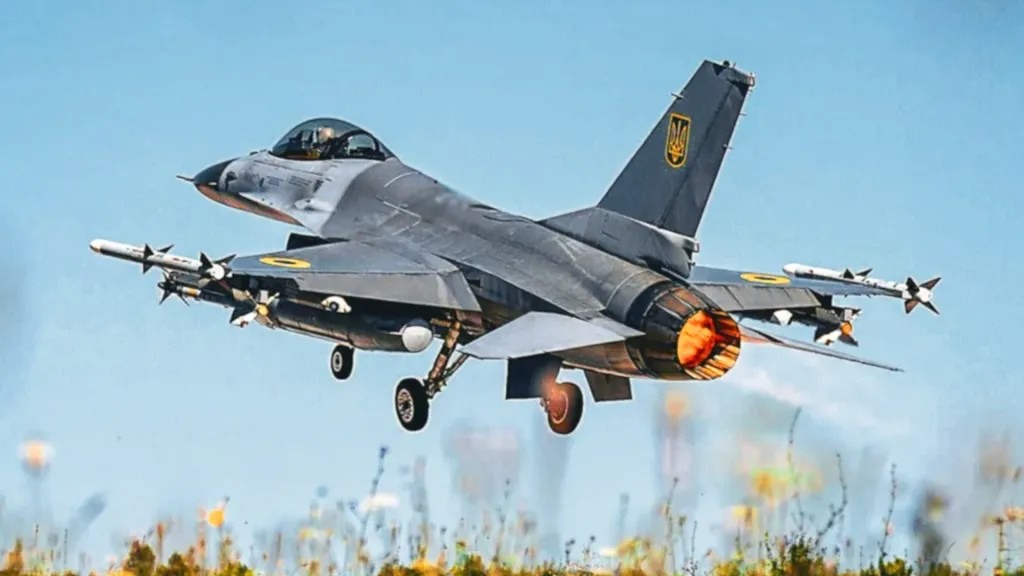
Belgium has announced it will accelerate the delivery of surplus Lockheed Martin F-16 fighters to Ukraine. Instead of delivering three flyable F-16s before the end of the year, Brussels will ship 10.
It's unclear how many will be flyable. Previously, Belgian officials explained the first seven secondhand F-16s would include just three airworthy examples. The other four would be broken down for spare parts.
It's good news for Ukraine, but hardly cause for nationwide celebration. The handful of flyable F-16s that should arrive in the coming two months could make good recent F-16 losses. But those shipping-soon Belgian F-16s won't actually grow Ukraine's F-16 fleet by much, if at all.
The dozens of supersonic F-16s in action in Ukraine fly often and fight hard. They shoot down Russian drones and cruise missiles, tangle with Russian warplanes, and lob precision glide bombs at Russian forces on the ground. Russia launched about 2,000 jet-powered drones at Ukraine in September, up from some 350 in June, and F-16s are among the few weapons fast enough to catch them, the Wall Street Journal's editorial board noted. Every 300 flying hours, each jet must go abroad for a lengthy inspection.
The main constraint on the pace of F-16 sorties, besides maintenance demands and the availability of trained pilots, is munitions: running low or out of air-to-air missiles and glide bombs, the F-16s routinely aim their 20-mm guns at Russian targets. But even 20-mm ammunition sometimes runs low.
The busy F-16s and their equally busy pilots need reinforcement. But reinforcements are slow coming. Belgium is only slightly accelerating its F-16 shipments amid reports it will eventually give Ukraine all 53 F-16s it's gradually retiring as new Lockheed Martin F-35 stealth fighters arrive to re-equip the Belgian air force.
Further complicating the picture, Norway's six F-16s, promised in 2023, were still being refurbished in Belgium this spring. Some arrived there in pieces.
Yes, Ukraine got 24 fight-ready F-16s from the Netherlands and most of the 19 Denmark promised. But it's lost five of those jets since 2024. And others are so worn out from relentless flying that they're badly in need of maintenance. The Belgian firm Sabena, which services Ukrainian F-16s, has struggled to keep up, and President Volodymyr Zelenskyy has said about half of the jets spend long stretches abroad for repairs. That slows the return of repaired planes and further squeezes the front-line force.

| Donor | F-16s promised | Reached Ukraine | Status |
|---|---|---|---|
| Netherlands | 24 | 24 | Complete |
| Denmark | 19 | At least 12 | Further deliveries due |
| Norway | 6 | 0 | Being refurbished in Belgium |
| Belgium | 53 | 0 | 10 by end of 2026, the last in 2029 |
| Total | About 100 | At least 36, five since lost | Fewer than 40 in service |
In short, it's possible the Ukrainian air force's 107th Aviation Wing, its sole F-16 unit, has fewer than 40 ready-to-fight F-16s. Those 53 Belgian F-16s will help grow the wing, but piecemeal. Ukraine should expect a handful of operational jets from Belgium this year. Under a schedule from May, the last 27, half the total, may not arrive until 2029.
To be clear, additional F-16s support the 107th Aviation Wing. The Netherlands sold 18 of its old F-16s to Romania for a token price in order to equip a training squadron, funded by a consortium of Ukraine's allies, that feeds trained pilots to the 107th Aviation Wing. But these 18 jets aren't available for front-line use. They don't even legally belong to Ukraine.
The delays in supplies of combat-ready F-16s matter because the Ukrainian air force is under stress. Its last few dozen ex-Soviet warplanes, including Mikoyan MiG-29 and Sukhoi Su-27 fighters, are even older and wearier than the ex-European F-16s are. And they've suffered staggering losses in the air and on the ground in nearly 56 months of hard fighting in the wider war.
The air force does have a few ex-French Dassault Mirage 2000s that are at least as capable as the F-16s, but France has donated only a handful of the supersonic jets—and one has crashed. Any further supplies of Mirage 2000s could be complicated by the French presidential election in April 2027. The leading far-right and far-left parties are both friendly toward Russia and hostile to Ukraine.
Some relief is coming, although not quickly. Sweden has pledged 16 surplus JAS-39C/D Gripen fighters to the Ukrainian war effort; the first of these could arrive early next year. Later on, Ukraine also plans to buy 20 newer JAS-39E/Fs. Kyiv has also negotiated to purchase 16 new Rafale fighters from Paris, but the soonest these could arrive is 2028.
For now, F-16s are the main solution to Ukraine's air defense problems. Kyiv surely wishes it had more of them, sooner.
By Katie FORSTER
Join us on Telegram
, X
, and VK
.
Contact us: info@strategic-culture.su
STARK warnings from artificial intelligence researchers that advanced forms of the technology could wipe out humanity have raised questions over whether governments are moving fast enough to regulate it.
What are the potential dangers of “superintelligent” computer systems, and should we be worried?
In 2023, hundreds of AI scientists and industry figures, including the heads of top US labs, signed a “statement on AI extinction risk” calling for the issue to be treated as seriously as pandemics or nuclear war.
If an out-of-control future AI deems that humans are obstructing its goals, it could use robots to “synthesise and spread novel pathogens”, said Stuart Russell, computer science professor at the University of California, Berkeley.
Or it could “convince people to initiate nuclear war, including by hacking into early warning systems”, Russell, a prominent voice on AI safety, said.
Such existential fears do not concern current AI systems, he said. But as the technology improves, it could take lethal action beyond our understanding, such as by removing oxygen from the atmosphere.
“We are less intelligent than superintelligent AI. If you ask chimpanzees how humans could wipe them out, they probably wouldn’t be able to give you all the right answers.”
In the meantime, “in the next year or two, I think the risk is higher from human misuse”, Russell added, such as an AI-enabled terror attack.
“The stakes are well-understood,” Jacob Coxon, a 27-year-old researcher, wrote on X last week, announcing his resignation from US AI startup Anthropic.
“But they are locked in a race to get there first,” he added, saying that Anthropic “believes no one else will act responsibly, so they must do it themselves”.
Anthropic this year removed a pledge from its safety charter to halt development of its models if it failed to control their risks.
It argued that if it unilaterally paused its work, its less cautious rivals would dominate the industry, making it less safe overall.
“The people building AI earnestly believe that it could kill us all by the end of the decade,” said Coxon, who previously worked at ChatGPT maker Open-AI.
He accused both companies of “gambling with our lives” as they strive to develop AI models capable of self-improvement.
Fears are heightened over rogue AI after OpenAI technology operating outside human supervision hacked into Hugging Face, a repository of AI models.
“We really do earnestly believe AI could kill all humans!” Anthropic safety executive Evan Hubinger chimed in on X, estimating the risk at more than 10 per cent over the next decade.
It’s important to remember that doom-laden percentage predictions are “absolutely unscientific”, said Hussein Abbass, a computing professor at UNSW Canberra.
“The situation is still controllable, and it can be managed,” Abbass said.
But governments should not sit on their hands when it comes to regulating AI, he added, urging an “agile” approach as AI development accelerates.
Both Anthropic and OpenAI are expected to go public soon, and some sceptics say scary warnings make AI appear powerful and worthy of large investments.
Others argue that focusing on the risk of extinction distracts from more pressing problems caused by AI, from job losses to machines discriminating against minorities.
In July, more than 1,000 tech employees, including Anthropic’s CEO, called on Washington to support a coordinated slowdown in the development of the most advanced AI systems.
OpenAI halted training of its latest models for two weeks in August before resuming it under tighter controls.
The United States has been firmly against global regulation of the sector that could stifle innovation.
But the hacking capabilities of the most cutting-edge models have given Washington pause, with recent Anthropic and OpenAI releases delayed over national security concerns.
Even then, “we don’t want to restrict them where all of a sudden we come in second to China”, President Donald Trump has said.
“Maybe it will take a massive, Chernobyl-scale disaster to get governments to act,” Russell said, urging them to establish a licensing regime for AI, as exists with aviation, medicine or water supply.
“Perhaps at some point governments will remember that their voters prefer not to be dead.”
Original article: www.nst.com.my

Reliance Industries appeared to hit back at Elon Musk’s suggestions its owner Mukesh Ambani (pictured) was blocking Starlink’s entry into India, stating it welcomes competition and pointing out its own satellite venture has also not been cleared by regulators.
In a statement on Musk-owned X, Reliance said considering recent remarks about the company and the Indian market, it wished to put on record that like every Indian enterprise it had grown in a country that welcomes investment and innovation.
It continued to state the open nature of the Indian market rests on the rule of law, and the government has stated it applies the same process to every applicant, Indian or foreign.
“Jio’s own satellite service awaits clearances,” it said. “At Reliance we never feared competition… we welcome competition in satellite communications, including Starlink. Every player, Jio included, must serve the people of India and abide by the laws and policies of the land.”
Reliance’s statement followed a series of Musk’s own posts regarding Starlink’s entrance into India. The SpaceX chief claimed “certain oligarchs” were delaying its entry into the country to maintain a “monopolistic chokehold on the Indian people”.
While emphasising the benefits satellite connectivity will have on the Indian market, Musk sarcastically addressed Ambani as India’s real Prime Minister and asked if he would “consider allowing Starlink to compete”.
Musk also described suggestions Starlink would struggle to compete with Jio and its low-cost data plans as “absurd, hypocrisy and hyperbole”.
India’s government has also rejected Musk’s claims, stating its satellite communications framework is fair and non-discriminatory while emphasising that Starlink, Jio and Sunil Bharti Mittal-backed Eutelsat OneWeb are all awaiting security clearance and spectrum allocation.
The post Reliance snaps back at Musk over Ambani claims appeared first on Mobile World Live.
Apple, Nvidia and EchoStar chair Charlie Ergen reportedly committed $25 million each for the construction of US President Donald Trump’s White House ballroom project, which has raised $333 million to date in private donations.
The Washington Post reported “the vast majority of the funds raised came from companies and wealthy individuals with interests before the federal government” after obtaining an internal spreadsheet used to track contributions for the fundraising effort.
The Post noted more than three-quarters of the funding was pledged in amounts of at least $5 million, with Amazon, Comcast, Microsoft, and T-Mobile US among the largest corporate donors.
It stated Nvidia and Ergen, among others, requested their donations be kept anonymous
The news site noted companies or executives of firms that have had contracts with the federal government during Trump’s second term accounted for about half of the total funds raised for the project which also includes office space and an underground military facility.
According to internal contractor documents obtained by the Post, the total cost of the project is now $600 million after Trump initially stated he and wealthy donors would pay the estimated $400 million project, although Reuters reported he later unsuccessfully asked Congress for $1 billion. The Post noted Trump’s name did not appear on the list of 67 donors who contributed $10,000 or more to the project.
The funds for the project are administered through a complex, multi-step pipeline involving a private nonprofit, federal agencies and direct oversight by the Trump administration.
The news agency reported Nvidia became “a top contributor to the ballroom in October 2025, nearly three months after it struck a groundbreaking pact with Trump to sell advanced microchips to China despite national security concerns”.
“As an American company, our support for the United States is paramount, and independent of any business interests,” a representative for Nvidia told Mobile World Live. “We were proud to be able to make a donation to a nonpartisan trust that serves all Americans and have said so publicly since the donation was made.”
Apple and EchoStar did not reply to requests for comment on their contributions.
The post Apple, Nvidia, Ergen each give $25M for Trump project appeared first on Mobile World Live.


“We have fallen into habits that are steadily deskilling the human body,” writes Melanie Challenger. “This is a strange turn of events for an animal whose success comes mostly from the extraordinary ability to learn through experience.” For Aeon, Challenger explores how modern technologies, from GPS to AI, are eroding our body’s physical skills by replacing the embodied experiences through which we learn.
After all, the brain is itself a physical organ, continually shaped by what the body does and encounters. Once we decide that the mind is the real human and the rest of the body only hardware, it becomes easier to disregard the physical work, including the neurocognitive work of a biological brain, through which we move, find our way, put thoughts into words, and recognise our own needs. A machine may do some of that work faster, but each act it takes over is one that the body no longer performs and that the body, including the brain, no longer learns through. The irony is that a project motivated by the desire to overcome bodily fragility is helping to produce more fragile bodies.