Meta must pay New Mexico $25 billion, its biggest fine ever, for deceiving users about Facebook privacy


Key developments on Oct. 21:


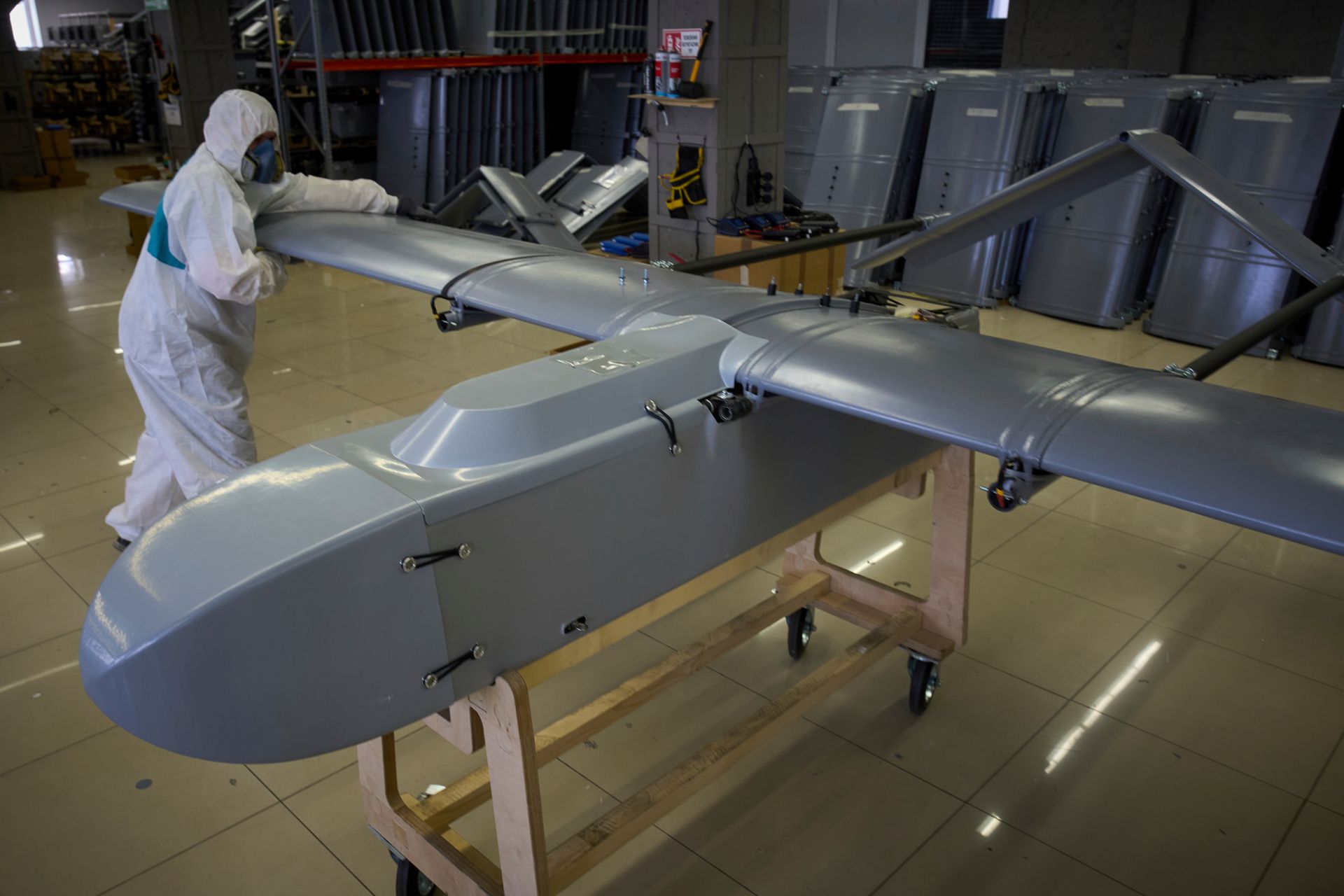
Ukrainian drone maker Wild Hornets is rethinking projects it is currently working on, including launching interceptors from aerial platforms, because of limits on SpaceX’s Starlink satellite internet. Spokesman Mike Orliuk told The War Zone (TWZ) this on 20 October. The company builds Sting interceptors, which it says destroyed over 15,000 Shaheds and Gerberas, a cheaper Shahed lookalike, in a year. Orliuk said Sting’s current operations are unaffected.
The stakes rise as Russia shifts to faster drones. Ukrainian defense technology adviser Serhii Beskrestnov counted more than 2,500 jet-powered Gerans, Russia’s version of the Shahed, in August. President of Ukraine Volodymyr Zelenskyy said on 16 October that these drones fly faster than 400 km/h. He added that some Ukrainian interceptors chasing them work through Starlink. When the link was slowed, Ukraine could not intercept some of them, he said.
“Our own communications system provides the basic connection to our interceptors,” Orliuk said. The company’s remote-control technology can draw on various internet sources, he added, though the military often uses Starlink. Even then, the terminal does not need to move at high speed. It only links the command center to a ground station, which Orliuk compared to a cell tower.
“For these needs, everything is operating normally with Starlink at the moment,” he said.
“Some drones carry a terminal on board and need to fly at high speed with it,” Orliuk said. “In such cases, Starlink’s limitations make their operation impossible.”
That is why the company is rethinking the air-launch project. Wild Hornets has made no clear decision yet but will test alternatives, Orliuk said. He declined to describe them.
“I believe, in any case, depending on a single solution is very risky,” he said.
Orliuk said he has spoken with other companies that rely far more on Starlink and have expressed concerns. He pointed to growing interest in Europe’s Eutelsat network, though “creating something like Starlink won’t be easy.”
Who ordered the slowdown remains unclear. The order to slow Ukraine’s Starshield service came from inside the White House, two US officials and a Western official said. A US official told TWZ the president never made such a request. US Secretary of State Marco Rubio said on 17 October that the slowdown had “nothing to do with the White House” and called “a report on that” “categorically false,” without saying which report he meant.
Mounting anxiety as Russia’s war on Ukraine reaches Nato’s borders with targeting of vessels transporting agricultural cargo
Nato is deploying additional military assets to the Black Sea amid the recent deadly escalation of Russian attacks on merchant shipping, as five more vessels were attacked on Tuesday.
Russia’s military said it struck three cargo vessels in Ukraine’s port of Reni and two other cargo vessels en route to Odesa.
Continue reading...
© Photograph: MAPN/Romanian Defence Ministry/AFP/Getty Images

© Photograph: MAPN/Romanian Defence Ministry/AFP/Getty Images

© Photograph: MAPN/Romanian Defence Ministry/AFP/Getty Images
Conflict in Middle East is pushing jet fuel costs higher and many carriers are not hedged against such increases, Michael O’Leary says
Ryanair’s chief executive has predicted a record increase in European air fares next year, as airlines grapple with fuel bills pushed higher by the Middle East conflict.
Many carriers are not hedged against rising jet fuel costs, Michael O’Leary said, which he predicted would lead to airline bankruptcies and takeovers. He forecast these pressures would result in the price of plane tickets rising by as much as 20%.
Continue reading...
© Photograph: Alexandros Avramidis/Reuters

© Photograph: Alexandros Avramidis/Reuters

© Photograph: Alexandros Avramidis/Reuters

Drones attacked an oil and fuel pumping station of Russia’s Druzhba pipeline system in Tambov Oblast overnight on 20 October, setting a diesel tank on fire, Ukrainian monitoring channel Exilenova+ reported, citing locals. Druzhba, Russian for “friendship,” is a Soviet-era oil pipeline, about 4,000 km long, that carries Russian crude west to Europe, including through a branch that crosses Ukraine. The struck station is on its Russian section. Tambov Oblast Governor Yevgeny Pervyshov confirmed a fire at an unnamed enterprise in Michurinsk district after what he called a Ukrainian drone attack. The station lies about 400 km from the front line.
Ukraine has spent months striking the refineries, terminals, and pipelines that fund Russia’s war, and its Defense Ministry says the strikes have knocked out more than half of Russia’s refining capacity. Washington wants them stopped. US officials reportedly tied intelligence sharing to a halt in refinery strikes, and US President Donald Trump called their resumption “a disgrace.”
Russia’s regional alert system declared a drone threat at 03:38, Ukrainian military outlet Militarnyi reported. By 06:25, Exilenova+ said the Nikolskoye station was under attack, after Michurinsk had been under attack for several hours.
The Nikolskoye fuel pumping station in Russia’s Tambov region is under attack. pic.twitter.com/cA64vMgjsM
— Exilenova+ (@Exilenova_plus) October 20, 2026
Pervyshov said four Ukrainian drones were shot down over the region and no one was hurt. He did not name the site.
More footage from the Nikolskaya oil pumping station. Locals report that a tank containing diesel is on fire. pic.twitter.com/1jvbxSuGHo
— Exilenova+ (@Exilenova_plus) October 20, 2026
Ukraine has not commented. The General Staff’s 20 October list of overnight strikes does not mention Tambov Oblast.

The Nikolskoye station belongs to Transneft, Russia’s state pipeline operator. It stores and pumps crude oil and refined fuels, including diesel, gasoline, and jet fuel. The complex has three tank farms and two pumping stations, and it can move up to 300,000 tonnes a day, according to Current Time.
Ukrainian drones hit a station of the same hub in August 2025, and Ukraine’s General Staff said then that pumping on the pipeline had stopped completely.
Ukraine paused refinery strikes for three days after Trump announced an “energy ceasefire” on 11 October, while Russia fired 39 ballistic missiles at Ukraine’s grid. Since Kyiv resumed the strikes, drones have also hit an oil terminal and a fuel depot in St. Petersburg.
Kyiv reads other US moves as pressure too, from missed warnings of Russian ballistic launches to a Starlink cap that slows Ukrainian drones. President of Ukraine Volodymyr Zelenskyy told US senators he had offered a 30-day halt on refinery strikes in exchange for Patriot interceptors, but Trump’s envoys showed no openness.

Defence City, Ukraine’s special support regime for arms makers, now has 63 member companies, the Defense Ministry said in a 19 October release. That is more than double the late-May count, and Euromaidan Press calculations show the newcomers are, on average, much smaller firms.
Ukraine already buys most of its weapons at home. More than 75% of its 2025 weapons procurement budget went to domestic manufacturers. Most new weapons models cleared for military use are Ukrainian too: 892 of the 1,000 authorized from the start of 2026 to mid-June. Defence City is meant to turn that demand into more production capacity, and our calculations suggest it is now reaching smaller producers too.
Each resident’s figure in the ministry’s count is its qualified income, meaning revenue from selling weapons and military equipment. Applicants file details of their defense contracts for the previous calendar year with their application, the ministry’s guide shows. So the combined total changes as members join. It does not track month-to-month sales.
The 63 current residents have a combined qualified income of nearly $2.47 billion. At the end of May, 31 residents had $2 billion, the ministry reported. By July, 45 residents had over $2.07 billion, it added.
By Euromaidan Press calculations, the 32 companies added since May bring about $15 million each on average. The first 31 averaged about $64 million each. The math assumes all 31 early members remain, with unchanged figures. If they do, the newcomers are smaller producers on average, because each figure reflects a firm’s own prior-year weapons sales.
The profit-tax break comes with a condition. Residents choose where their untaxed profit goes, but it must go to purposes the tax code allows, the ministry explained. If the money goes elsewhere, the break does not apply.
Residents also get customs incentives and state support to relocate plants and better protect production sites. They can rent state property without an auction. They can also ask to restrict access to sensitive information about them in public registries. Some defense export procedures are simplified too.
Resident status also makes a company eligible to be designated critically important to the defense industry. That lets it defer up to 100% of its staff liable for military service from the draft, the ministry noted.
To join, a company must confirm it meets the legal requirements and file an application with supporting documents. By law, the ministry has 10 working days to decide. If approved, a ministerial order grants the status, and the company enters the Defence City register.
The funding, announced on Monday, 19 October, will come from the EU Innovation Fund, which uses revenues generated by the Emissions Trading System to support investment in technologies intended to reduce greenhouse gas emissions.
The selected projects include manufacturing facilities, renewable energy installations, advanced energy storage, critical raw materials processing and industrial carbon management. For the first time, the programme also includes a small modular nuclear reactor project and a direct air carbon capture and storage initiative.
The announcement comes amid growing concern over Europe’s industrial competitiveness, particularly as manufacturers face high energy costs, increasing competition from China and difficulties securing investment for major industrial projects.
According to the Commission’s announcement, the 77 selected projects span energy-intensive industries, clean technology manufacturing, alternative fuels, transport and several other sectors.
Six projects concern critical raw materials, an area in which the EU has been seeking to reduce its exposure to foreign suppliers.
These investments are intended to strengthen European supply chains for technologies including batteries, renewable energy equipment and permanent magnets, which are essential components in electric motors and other industrial applications.
The funding follows renewed political pressure to expand the processing and production of strategically important materials inside Europe.
As EU Today recently reported, the European Parliament has been pressing for stronger measures to reduce dependence on China for critical raw materials used by European manufacturers.
China occupies a dominant position in several international processing and refining markets, leaving European companies exposed to supply interruptions and trade restrictions.
The Commission is seeking to support alternative production capacity through financial assistance, industrial regulation and measures designed to attract private capital.
However, the selection of projects for EU funding does not automatically mean that the proposed facilities will be built. Their implementation will still depend on financing agreements, regulatory approvals and commercial decisions.
The inclusion of a small modular nuclear reactor project represents a new development in the Innovation Fund’s portfolio.
Small modular reactors are designed to produce electricity or industrial heat using nuclear technology on a smaller scale than conventional nuclear power stations.
Supporters argue that modular construction could reduce certain project risks and provide stable electricity supplies for energy-intensive industries.
However, the technology faces substantial challenges involving construction costs, regulatory approval, supply chains and the transition from demonstration projects to commercial production.
The Commission published a European strategy for small modular reactors in March, outlining plans to accelerate their development and support the first operational facilities in the early 2030s.
The latest funding decision gives the technology access to a financial instrument principally associated with industrial decarbonisation and clean energy investment.
Another newly represented technology is direct air carbon capture and storage, which involves extracting carbon dioxide from the atmosphere and storing it.
Both technologies remain at comparatively early stages of commercial deployment in Europe, making their eventual costs and performance important considerations.
The Innovation Fund is financed through revenues from the EU Emissions Trading System, under which companies operating in covered sectors must obtain allowances for their greenhouse gas emissions.
Part of the revenue generated from auctioning allowances is reinvested into projects designed to introduce lower-emission technologies into industrial production.
The Commission estimates that the 77 newly selected projects could avoid approximately 290 million tonnes of greenhouse gas emissions during their first ten years of operation.
That figure is a projection based on the projects’ anticipated performance, rather than an achieved reduction. Actual results will depend on construction, commissioning and subsequent commercial operation.
The funding announcement also follows the publication of the EU’s broader industrial policy initiatives, which seek to increase domestic production of clean technologies and improve investment conditions for European manufacturers.
The Commission announced a separate allocation of more than €390 million to 135 environmental and climate projects under the LIFE programme on the same day. That funding is distinct from the €3.4 billion Innovation Fund selection.
The companies and organisations behind the selected Innovation Fund projects must now complete the procedures necessary to obtain their grants.
During the Commission’s 19 October press briefing, officials indicated that project-specific grant amounts would become available when the agreements are signed, currently envisaged for the first quarter of 2027.
The final allocations and implementation conditions therefore remain subject to the grant preparation process.
For industrial companies, the principal test will be whether the European funding attracts sufficient additional investment to bring the selected technologies into commercial operation.
The results will also provide an indication of how effectively Brussels can translate its industrial policy objectives into additional European manufacturing capacity, particularly in sectors where supply chains remain concentrated outside the Union.
The Council approved its partial negotiating mandate on Monday, 19 October, covering changes to the Common Market Organisation regulation, which governs agricultural markets across the European Union.
The proposals include new arrangements for wine producers, protein crops and oilseeds, revised marketing standards, changes to the EU school food programme and provisions intended to improve preparedness for agricultural market disruptions.
However, the agreement does not settle future funding allocations or the broader structure of agricultural subsidies, which remain under negotiation as EU governments attempt to reconcile farming expenditure with competing demands for defence, industrial investment and regional development.
The Council’s negotiating position retains much of the European Commission’s original proposal while introducing amendments intended to accommodate national differences in agricultural production.
Under the proposed arrangements, sector-specific interventions would become mandatory in several areas, including beekeeping, fruit and vegetables and, under certain circumstances, wine production.
The Council has also proposed flexibility for countries where particular sectors are absent or relatively undeveloped.
For the wine industry, governments would be able to seek exemptions from certain obligations where national circumstances justify different arrangements.
This would allow the framework to retain common European rules while avoiding requirements that would be inappropriate for member states with little or no domestic wine production.
Sectoral interventions form part of the mechanisms through which the EU supports agricultural markets and producer organisations. They can cover measures intended to improve competitiveness, manage production and strengthen farmers’ commercial position.
The Council has endorsed the establishment of a separate sector for protein crops and oilseeds, replacing existing provisions covering dried fodder.
The objective is to encourage domestic production and reduce dependence on imported agricultural inputs, particularly crops used in animal feed and food production.
European livestock producers rely on protein-rich feed ingredients, including soyabeans, that are often sourced internationally.
Greater domestic production could reduce exposure to fluctuations in global commodity prices, transport costs and disruptions to international supply chains.
Under the Council’s proposal, member states would be encouraged to recognise producer organisations specialising in protein crops and oilseeds.
Such organisations can help farmers coordinate production, marketing and investment, although the effectiveness of the proposed measures will depend on how they are implemented nationally.
The proposals follow broader EU efforts to improve supply security in sectors extending from agricultural inputs to critical industrial materials.
The negotiating mandate also preserves the EU school scheme, which provides support for the distribution of fruit, vegetables and milk to schoolchildren.
Under the proposed framework, the programme would move from a school-year financing cycle to a calendar-year system, with transitional provisions intended to prevent disruption during implementation.
The Council has maintained the Commission’s objective of encouraging healthier eating habits by limiting products containing high levels of free sugars and fats.
The proposal also opens the possibility of additional marketing standards for several agricultural products, including protein crops, beef, pork, sheepmeat, goatmeat and rice.
These standards could provide consumers with more detailed information about product origins, subject to the final legislation.
Such measures would also have implications for producers and food businesses, which would need to comply with any new requirements concerning classification, marketing and labelling.
The Council additionally supports the harmonisation of rules covering industrial hemp, while retaining safeguards concerning seed certification and the permitted level of tetrahydrocannabinol.
The agricultural market agreement forms part of negotiations over the next Common Agricultural Policy, which will operate within the EU’s new seven-year financial framework.
Under the Commission’s proposed budget structure, several funding streams, including agricultural and cohesion programmes, would be brought together within national and regional partnership plans.
The restructuring has encountered opposition from governments and agricultural interests concerned that farming could lose protected access to EU funding.
As EU Today previously reported, 17 member states have called for agricultural and regional development expenditure to be protected against further reductions.
The Council’s latest position addresses how agricultural markets should operate rather than determining the size of the financial support available to them.
A separate debate concerns the conditions for receiving direct farm payments, including the definition of an active farmer and the degree of discretion granted to national governments.
Those questions remain central to the continuing CAP negotiations, which are due to return to the Agriculture and Fisheries Council on 26–27 October.
The Council’s partial mandate now provides a basis for negotiations with the European Parliament on the agricultural market provisions.
The legislation will still require agreement between the institutions, while its financing will depend on the eventual settlement of the 2028–2034 budget.
Governments must also complete negotiations on the wider CAP framework, including direct income support and the distribution of responsibility between Brussels and national administrations.
The market agreement reached on 19 October therefore establishes important elements of the proposed agricultural rules, but leaves unresolved the level of financial support available to European farmers after 2027.
The data show that 300,202 battery-electric cars were registered during the month, accounting for 32.6 per cent of new passenger-car registrations in the markets surveyed.
The figures emerge three days after Paris and Berlin announced a joint position on the future of Europe’s automotive industry, proposing greater flexibility in the EU’s 2035 emissions regime while introducing measures intended to favour vehicles manufactured in Europe.
The latest figures, compiled by E-Mobility Europe, New Automotive and Fier Automotive, indicate that electric vehicle demand accelerated sharply during September.
According to the industry data published on 19 October, approximately 1.98 million battery-electric cars have been registered across the 17 markets during the first nine months of 2026, an increase of 38.1 per cent compared with the equivalent period last year.
Higher oil prices, government incentives and the introduction of more affordable electric models have all contributed to demand.
The figures represent a substantial change in the composition of European new-car sales, although they cover selected markets rather than constituting a complete statistical account of the EU’s 27 Member States.
France recorded 65,243 battery-electric registrations in September, representing 41.7 per cent of its new-car market. Germany registered 88,724 electric vehicles, giving the technology a market share of 34.6 per cent.
Both countries have substantial automotive manufacturing industries and are directly involved in negotiations over Europe’s future emissions legislation.
Despite the overall increase, electric vehicle adoption remains uneven across the continent.
Norway retained its position as Europe’s most electrified new-car market, with battery-electric vehicles accounting for 98.8 per cent of registrations in September.
Denmark followed with 88.8 per cent, while Finland recorded 62.7 per cent and Sweden 49 per cent.
Electric models also accounted for approximately half of new-car registrations in Belgium, the Netherlands, Ireland and Portugal.
At the other end of the market, battery-electric vehicles represented only 11.2 per cent of registrations in the Czech Republic, 7.6 per cent in Italy and 6.2 per cent in Poland.
These differences illustrate the difficulty of establishing a uniform European transition timetable.
Household incomes, purchase incentives, vehicle prices and charging infrastructure differ substantially between countries. The availability of affordable electric cars is particularly important in markets where buyers are more sensitive to the initial purchase price.
The varying national figures also complicate the EU’s industrial calculations, since manufacturers must operate across markets progressing at different rates.
On 16 October, French President Emmanuel Macron and German Chancellor Friedrich Merz agreed on a joint approach to changes in European automotive regulations.
Under the proposed compromise, car manufacturers would be required to reduce carbon dioxide emissions from new vehicles by 90 per cent by 2035 compared with the 2021 reference level.
The agreement would also remove a proposed requirement to compensate for the remaining emissions through measures such as the use of low-carbon steel.
The change would create additional opportunities for manufacturers to continue selling vehicles powered by combustion engines beyond 2035, subject to the final legislative framework.
In their joint declaration on the automotive industry’s future, the French and German governments argued that emissions reduction must be combined with industrial competitiveness, investment and European manufacturing capacity.
The agreement also envisages preferential treatment for vehicles produced in Europe under certain public procurement and subsidy arrangements.
Britain could potentially benefit from provisions allowing selected European partners to qualify under the proposed industrial framework.
The Franco-German understanding is not, however, a final EU legislative decision. Changes to the regulatory regime require agreement through the relevant European legislative procedures.
The principal argument advanced by supporters of greater regulatory flexibility is that European manufacturers need additional time to adapt production, protect employment and compete with international rivals.
German manufacturers retain extensive investment in combustion-engine and hybrid technology, while French producers have placed considerable emphasis on electric vehicles and maintaining European supply chains.
The negotiations therefore concern more than emissions limits. They also involve battery production, access to raw materials, manufacturing costs and the ability of European companies to compete with producers in China and other markets.
Supporters of the existing transition timetable argue that weakening long-term requirements could discourage investment in electric manufacturing capacity just as consumer demand is increasing.
Manufacturers seeking greater flexibility maintain that regulatory targets must account for uneven market conditions and the cost of developing new technologies.
September’s sales figures provide evidence that electric vehicle adoption is accelerating, but they do not establish whether the same rate of growth will continue without existing incentives.
The debate now centres on whether regulatory relaxation will preserve Europe’s automotive industry during the transition or slow investment in the technology that is already capturing an increasing share of the market.
The proposals, scheduled for debate in Strasbourg on Monday, 19 October, and a vote on Tuesday, would strengthen coordination over strategic supplies and revise the responsibilities of European companies that depend on vulnerable international supply chains.
At the centre of the discussions is a proposal to establish a European Critical Raw Materials Centre, which would coordinate purchasing arrangements, assess supply risks and support the development of strategic reserves.
The initiative comes amid increasing concern over China’s dominant position in the processing and supply of several materials regarded as indispensable to European industry.
According to the European Parliament’s October plenary briefing, the proposed Critical Raw Materials Centre would operate as an EU body responsible for several functions currently distributed between European institutions and national authorities.
These would include identifying vulnerabilities in supply chains, conducting risk assessments, coordinating contingency stocks and supporting joint purchasing arrangements.
The objective is to give European governments and manufacturers greater capacity to respond to interruptions in supplies of minerals and processed materials that cannot easily be replaced.
The legislative report has been prepared by the Parliament’s Committee on Industry, Research and Energy, with Dutch Social Democrat MEP Mohammed Chahim serving as rapporteur.
The committee examined amendments to the existing legislation during 2026, with its revised report submitted for plenary consideration on 9th October.
Tuesday’s vote is intended to establish Parliament’s position for negotiations with the Council. It would not, by itself, constitute final adoption of the amended regulation.
The European Union depends heavily on imported critical raw materials, particularly those required for batteries, permanent magnets, semiconductors and specialist industrial equipment.
China occupies a particularly important position in the refining and processing of rare earth elements, graphite and several other materials used in high-technology manufacturing.
The concentration of production creates vulnerabilities because disruption at a single stage of processing can affect manufacturers operating across multiple European countries.
According to the Council of the European Union’s assessment of strategic mineral supplies, China is the principal supplier to the EU for numerous materials, including gallium, germanium, magnesium and rare earth elements.
These substances are used in applications extending well beyond electric vehicles.
Permanent magnets are required for certain electric motors, wind turbines and defence systems, while other critical materials are used in radar, satellites, aircraft components and advanced electronic equipment.
Restrictions affecting their availability can therefore have consequences for European industrial output, defence procurement and the development of new technology.
The question for EU policymakers is not simply whether minerals can be obtained, but whether Europe has sufficient alternative sources and processing capacity to withstand restrictions imposed by a dominant supplier.
The Critical Raw Materials Act entered into force in May 2024 and established benchmarks intended to strengthen European production and diversify imports by 2030.
Under the existing framework, the EU aims to develop extraction capacity equivalent to at least 10 per cent of its annual consumption of strategic raw materials, where geological reserves allow.
The corresponding benchmarks are 40 per cent for processing and 25 per cent for recycling.
The legislation also seeks to prevent any single non-EU country from supplying more than 65 per cent of the Union’s annual consumption of a particular strategic raw material at any relevant processing stage.
These are policy benchmarks rather than binding production quotas imposed on individual companies.
Their achievement depends on the development of mines, processing facilities and recycling operations, as well as the ability to attract investment.
New extraction projects frequently require lengthy environmental assessments, infrastructure development and extensive capital investment. Processing operations face additional challenges involving energy costs, technical expertise and commercial competitiveness.
Consequently, reducing import dependence involves more than identifying mineral deposits within European territory.
The proposed amendments also address the responsibilities of major European companies using strategic raw materials.
Under provisions examined by the parliamentary committee, the European Commission would take a greater role in identifying large manufacturers whose operations depend on strategically important supplies.
These companies could face requirements to assess vulnerabilities in their supply chains, including the geographical location of extraction and processing operations and the ownership of relevant facilities.
The arrangements would be particularly significant for businesses producing batteries, aircraft, drones, satellites, advanced chips and other products considered strategically important.
Where significant risks are identified, companies could be expected to consider measures including diversification, improved material efficiency or maintaining stocks.
The proposals also seek to strengthen recycling and the recovery of valuable materials from existing products, reducing the quantity of newly extracted resources required by European industry.
Recycling alone cannot remove the need for imports, particularly where demand for new technologies is increasing, but it can provide an additional source of supply.
The legislation forms part of a wider effort to link European industrial policy with economic security.
Brussels has been seeking additional raw materials partnerships with third countries, while manufacturers remain concerned about the commercial cost of building alternative supply chains.
Recent EU discussions concerning cooperation with Vietnam illustrate the emphasis being placed on securing alternative access to minerals such as tungsten and rare earth elements.
However, diversifying supplies does not necessarily mean transferring extraction and processing to Europe. Partnerships with reliable external producers may remain essential, particularly for materials unavailable in sufficient quantities within the Union.
The proposed European centre would therefore have to balance internal production, international purchasing, strategic stocks and commercial demand.
The immediate legislative issue is whether the revised framework gives European institutions sufficient powers to coordinate these activities without placing disproportionate administrative obligations on businesses.
Tuesday’s parliamentary vote will determine the negotiating position MEPs take into discussions with EU governments over how those responsibilities should be distributed.

With little more than two weeks to go until the midterm elections, it seems increasingly possible that the Democrats, already a big favorite to win control of the House of Representatives, will also take charge of the planet's most elite nursing home, the United States Senate, where the median age is 64 years old. RealClearPolitics' poll aggregator has moved control of "the world's greatest deliberative body" (as its members are grandiosely wont to call it) to "toss up," status and prediction markets are now breaking big toward a blue wave. As of this writing, Kalshi has its Senate odds at 63 percent for the Dems vs. 37 percent for the GOP; Polymarket is at 62 percent vs. 39 percent.
As gratifying as it might be to see unprincipled Trump enablers reduced to minority status after signing off on economy-wrecking tariffs, inhumane immigration detentions, and wars of choice, there's at least one good reason to dread a Democratic majority too: Sen. Elizabeth Warren, the Massachusetts progressive who is spending the run-up to the midterms freaking out over possible consolidation in the condiments business and accusing private equity firms of gutting such shopping-mall favorites as Claire's and Toys R Us. There's every reason to believe that a Senate run by Warren and other economic interventionists will waste time, money, and resources trying to prevent a world in which, per the X wag Iowahawkblog, "a panopticon conglomerate owns two brands of hot sauce."
On October 13, Warren posted this dire warning to X:
Hellmann's mayo
McCormick spices
Cholula hot sauce
Frank's RedHotWhat do these products have in common? One company could soon control them all.
I have concerns that McCormick and Unilever's $45 billion merger could increase YOUR grocery prices.
— Elizabeth Warren (@SenWarren) October 13, 2026
It's hard to think of a more competitive and varied market than the one for hot sauces, which is expected to more than double over the next decade. The barriers to entry are generally low, as are the key ingredients, and new entrants can easily market and sell online, avoiding the costs of buying shelf space in conventional supermarkets. Yet Warren is urging regulators at the Department of Justice and the Federal Trade Commission to halt mergers of both product makers like McCormick and Unilever and grocery stores like Kroger and Giant Eagle.
The latter complaint is particularly picayune. Kroger is one of the country's largest supermarket chains, operating around 2,800 stores under its own name as well as Harris Teeter, Ralph's, and others. Giant Eagle operates about 170 stores. This merger is no more the stuff of nightmares than a single company producing both Cholula and Frank's RedHot. If Warren gains more clout from being in the majority, expect her to butt in more and more on such mergers.
Making it harder for businesses to adapt is not a recipe for making goods and services more affordable. But Warren is keen to blame economic creative destruction not on "new forms of industrial organization that capitalist enterprise creates" (as Joseph Schumpeter would have it), but on pure greed. In a TikTok released earlier this month, she shows a poster board with corporate logos from once-thriving companies that she says have been "gutted" by "private equity" firms.
"Here's your local mall," she piously intones. "Now, private equity wants you to believe that Red Lobster went bankrupt because of their endless shrimp….They want you to believe that Claire's went bankrupt because teens stopped shopping at the mall." In Warren's telling, private equity firms magically take over thriving businesses and then strip them bare. The typical pattern is that private equity enters the picture after a business is failing.
Virtually all accounts of the decline of, for example, Red Lobster, note that the chain had been spiraling for several reasons before the private equity firm Golden Gate Capital got involved in 2014. As this CNN article notes, the chain, which started in 1968, had seen drops in sales as customer desires changed. Management compounded the difficulties with a series of bad decisions, including continuing various all-you-can-eat menu specials, before coming out of Chapter 11 bankruptcy last year.
Similarly, it's true that some teens still go to malls and get their ears pierced at Claire's. But anyone who has spent time in retail America over the past few decades knows that malls are no longer the destination that they once were. As CapitalOne Shopping Research documents, "in 1986, there were 25,000 malls, large and small, nationwide." By 2023, that number had shrunk to just 1,200. While some malls are coming back, most are not, and for reasons that have nothing to do with private equity. Online retails plays a role (though a smaller one than usually imagined, with e-commerce accounting for less than 20 percent of all retail sales). But mostly, it's that people today tend to want a different sort of retail environment. Anchor stores—think Macy's and J.C. Penney—are shadows of themselves, and younger people have less unstructured time in which to prowl food courts and arcades.
For politicians like Elizabeth Warren, though, there can be no financial gains or losses that aren't the result of shadowy, conspiratorial forces. If her party takes control of the Senate, her words will carry more weight. But it will be American consumers that ultimately shoulder the burden of an even-more-regulated economy. The market for hot sauces will almost certainly stay spicy, but many other parts will surely suffer.
The post Be Prepared for Elizabeth Warren's Reign of Economic Error appeared first on Reason Magazine.

Indonesia has spent a decade trying to turn its mineral wealth into something more valuable than raw commodity exports. The strategy is ambitious: restrict raw nickel exports, attract investment, build processing capacity and move downstream into electric-vehicle (EV) batteries that will power the next generation of transport and energy storage. China is central to the […]
The post Owner or owned? Indonesia’s Chinese battery chain dilemma appeared first on Asia Times.
Premium paid over French counterparts has risen to almost £30 a megawatt hour, analysis by lobby group finds
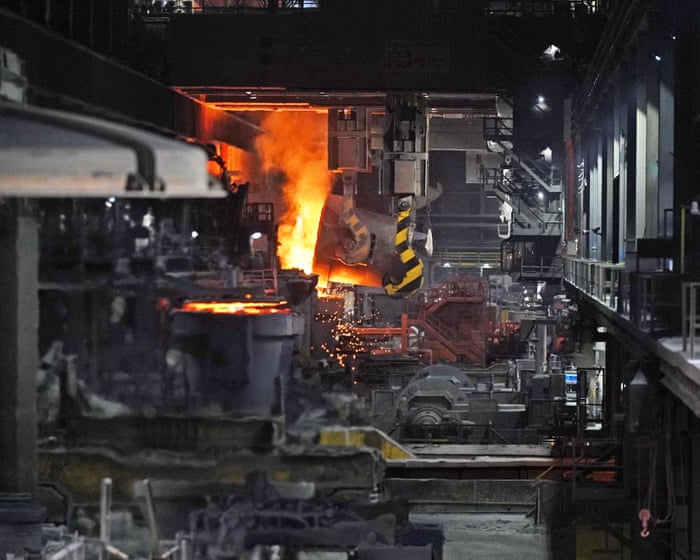
British steelmakers have been pushed further behind European rivals on electricity costs after the US-Israeli war on Iran caused a surge in global gas prices.
The premium paid by the British industry over its French counterpart has risen to almost £30 a megawatt hour (MWh), its highest level in three years, according to analysis by the lobby group UK Steel.
Continue reading...
© Photograph: Ian Forsyth/Getty Images

© Photograph: Ian Forsyth/Getty Images

© Photograph: Ian Forsyth/Getty Images

Ukrainian company Nodrics has developed MAT1LDA, an eight-wheeled amphibious ground robot that can carry supplies across water, swamps, and rough terrain, robot-maker Tencore said, Ukrainian military outlet Militarnyi reported on 17 October. The machine joins Tencore’s new family of ground robots, which the company has also shown in the US.
Ukraine’s ground robots now haul supplies and evacuate wounded soldiers through zones where drones make every move deadly, and the Defense Ministry has launched its first competitive tender for them.
A petrol engine drives MAT1LDA’s eight wheels, and side pontoons keep it afloat, so it can cross water, marshland, and rough ground without preparation, Militarnyi said. Its makers claim it carries up to 500 kg on land and 400 kg on water, with a range of up to 160 km on land and 50 km on water.
Its open frame lets crews swap equipment quickly to suit the task, fitting cargo containers or evacuation stretchers.
MAT1LDA is part of the Tencore Ecosystem, which brings together four classes of ground robots for military and civilian work, Militarnyi reported earlier. Besides the amphibious eight-wheeler, it includes the tracked TerMIT, the wheeled TOR 4×4, and the TRAX Utility firefighting and rescue robot. The company says it has delivered more than 4,000 robots to Ukraine’s armed forces since the full-scale invasion, used across more than 50 brigades.

Tencore calls it Ukraine’s first integrated ecosystem of its kind. Putting the platforms into one system is meant to make them easier to use, maintain, and fit with extra equipment. One of the first shared add-ons is AI KIT, a hardware and software module that lets a robot keep to its route or drive back on its own after losing contact with its operator.

Tencore displayed MAT1LDA carrying a TerMIT robot at the Association of the US Army’s annual trade show in Washington this month, Breaking Defense reported.
Other Ukrainian makers have built swimming ground robots too: one switches from land to water in seconds, and another can tow 10 tons, its maker says. In April, Tencore formed a joint venture with France’s Shark Robotics.
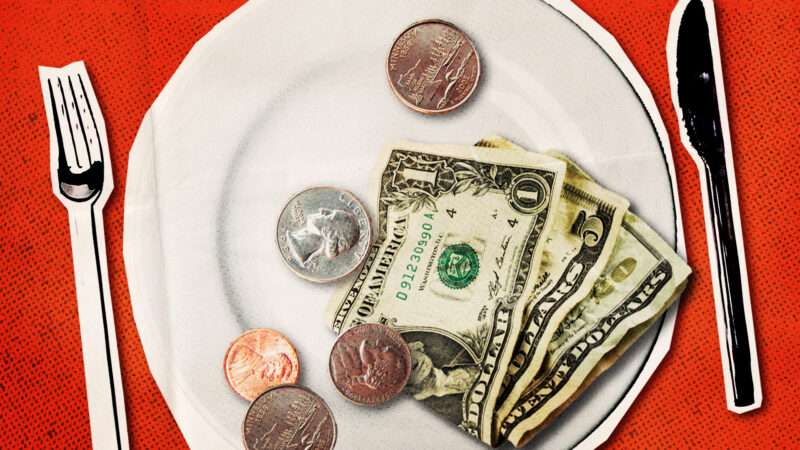
In recent years, one of the predominant policy initiatives of the progressive left has been raising the minimum wage in locales around the country. At the same time, left-leaning politicians have sought the elimination of what's known as the tip credit, which allows employers to pay restaurant servers and other tipped employees a lower hourly base wage that they then bolster with gratuities.
Just a few years into this experiment, however, policymakers are showing signs of an about-face on the tip credit's abolition as they grapple with the unfortunate, and predictable, economic results.
In 2022, Washington, D.C., made news headlines when voters passed Initiative 82. As originally designed, it would have repealed the tip credit and required servers to be paid the District's full statutory minimum wage by 2027. (D.C.'s minimum wage was $16.10 per hour in 2022, but has since risen to $18.40 due to inflation indexation.) Prior to Initiative 82, D.C. servers could be paid a $5.35 tipped wage, so long as they earned enough tips to make up the difference between the lower tipped wage and the higher traditional minimum wage.
D.C.'s Initiative 82 was just the beginning. One Fair Wage, a progressive group that lobbies against subminimum wages, quarterbacked an all-out push to eliminate the tip credit in jurisdictions across America. Chicago became the second prominent city to follow suit. States like New York, Connecticut, and Illinois also quickly saw legislation introduced to eliminate the tip credit at a statewide level. (Apart from this recent wave, a small handful of American states—including California, Oregon, and Alaska—have long operated without a tip credit).
But just when it seemed like momentum against the tip credit had reached its apex, progressive politicians started to see the writing on the wall. In the aftermath of the tip credit's repeal, D.C. saw a close to 5 percent decline in full-service restaurant jobs. Tipped worker earnings also dropped by just under $12 million—likely a result, at least in part, of restaurants reducing hours for staff in the face of higher labor costs. At the same time, many D.C. restaurants began implementing service fees or so-called auto-gratuity policies that added mandatory 10-20 percent charges onto customers' bills.
Mugged by this economic reality, D.C. Mayor Muriel Bowser called for the full repeal of Initiative 82. Ultimately, the D.C. Council settled for a partial repeal in 2025, maintaining at least some semblance of a tipped wage that sits below the traditional minimum wage into the years ahead (although the tipped wage eventually rises to 75 percent of the traditional wage by 2034). This was a familiar story: The council had previously repealed Initiative 77, a near-identical attempt to abolish the tipped wage that voters passed in 2018.
After Chicago moved to eliminate the tip credit, the Illinois Restaurant Association found that 89 percent of Windy City restaurants raised menu prices; another 79 percent responded by reducing worker hours. Again bowing to economic reality, the progressive Chicago City Council voted to freeze the tip credit's planned elimination, only to see the effort vetoed by Mayor Brandon Johnson. Eventually, a compromise was brokered to at least pause the tip credit at its current level for two years—which punts the issue until after Johnson stands for election again, allowing a potential successor to endorse a more lasting reversal.
In Michigan, a 2024 state supreme court ruling set the tip credit on the path toward elimination by 2030. But state lawmakers intervened last year, deciding to maintain a 50 percent tip credit in perpetuity after 2031. Notably, Michigan is currently governed by a Democratic trifecta in the governorship and both houses of the Legislature. The tip credit's revival garnered key support from Republican lawmakers to pass in a bipartisan fashion, before being signed into law by Democratic Gov. Gretchen Whitmer.
While progressive efforts to eliminate the tip credit may be motivated by an earnest desire to ensure waiters are paid more, the math isn't that simple. Requiring a server to be paid a $16 traditional minimum wage—up from a $5 tipped wage—might appear to raise their pay on paper. But this fails to consider several important factors.
Under our "No Taxes on Tips" new normal, raising the minimum wage for servers could lead to a partial reduction in tips, which under certain scenarios can result in less take-home pay for waiters once the taxman takes his cut. If more server earnings come in the form of "auto-gratuity" policies—which are treated as taxed wages under the law—then the tax repercussions may grow even grimmer.
But more broadly, these laws attempt to subvert basic economics. As of 2025, Bureau of Labor Statistics data show that D.C. restaurants shed over 1,600 jobs in aftermath of Initiative 82; meanwhile, between 2022 and 2025, restaurant job growth in the District declined by more than 8 percent. This is just one example. The fallout is the inevitable result of restaurants responding to labor costs that suddenly skyrocket, forcing establishments to cut worker hours and sometimes transition to quick-service models that require less hourly staff. And that's to say nothing of the diners who bear the cost with higher prices and new service fees.
"We're watching a beloved bar back, a beloved busser, a dishwasher have their jobs taken away," D.C. restaurant worker Valerie Graham told Reason in 2024. "Not because our owner-operator is an evil billionaire but because they're an independent business owner who had to make some business decisions and there's a callousness with which our industry is talked about."
To be sure, the tip credit has only survived in modified and reduced form in D.C., Chicago, and Michigan—and in the case of Chicago, the about-face is only temporary. But the partial reversals show the tip credit's elimination is not a foregone conclusion. Economic reality continues to rear its head.
The post Some Progressives Tried To Abolish the Tipped Minimum Wage. Now They're Backtracking. appeared first on Reason Magazine.

© Elijah Nouvelage/Getty Images

TSMC expects overseas manufacturing to reduce its consolidated gross margin by nearly two percentage points in 2026, with the impact widening to three to four points later in its expansion program. The company plans to spend $60 billion to $64 billion on capital expenditure this year. Its latest outlook calls for fourth-quarter revenue of up […]
The post TSMC’s global buildout faces crucial capital efficiency test appeared first on Asia Times.
NFU analysis of official data shows falls in exports to UK’s largest trading partner since 2019 include 70% for sugar and 74% for egg products
Exports of British food and drink to the EU have collapsed by more than a third since Brexit with eggs, chicken and potato producers badly hit, new figures show.
Analysis by the National Farmers’ Union (NFU) of HMRC data shows a sharp fall in exports in the year to July compared with the same period in 2019, with sugar dropping the most, down 70%.
Continue reading...
© Photograph: David Levene/The Guardian

© Photograph: David Levene/The Guardian

© Photograph: David Levene/The Guardian