❌

Reading view

Romania shot down two drones it believes were Russia’s new Geran-4s. Europe isn’t ready for swarms of them, analyst warns

ukraine spent three years learning catch russian drones—so russia made fly faster · post geran-3 jet-powered attack drone wild hornets c1c840787fca380485636007cf683d71 news ukrainian reports

In a direct confrontation with Russia, European NATO states would likely be even more vulnerable than Ukraine to swarms of Russia’s new jet-powered strike weapons, Fabian Hoffmann of the Norwegian Institute for Defence Studies (NIDS) argued in a 20 October op-ed for the Center for European Policy Analysis (CEPA). He calls them low-cost cruise missiles. Just three days earlier, Romania met what it believes were two of them over the Black Sea.

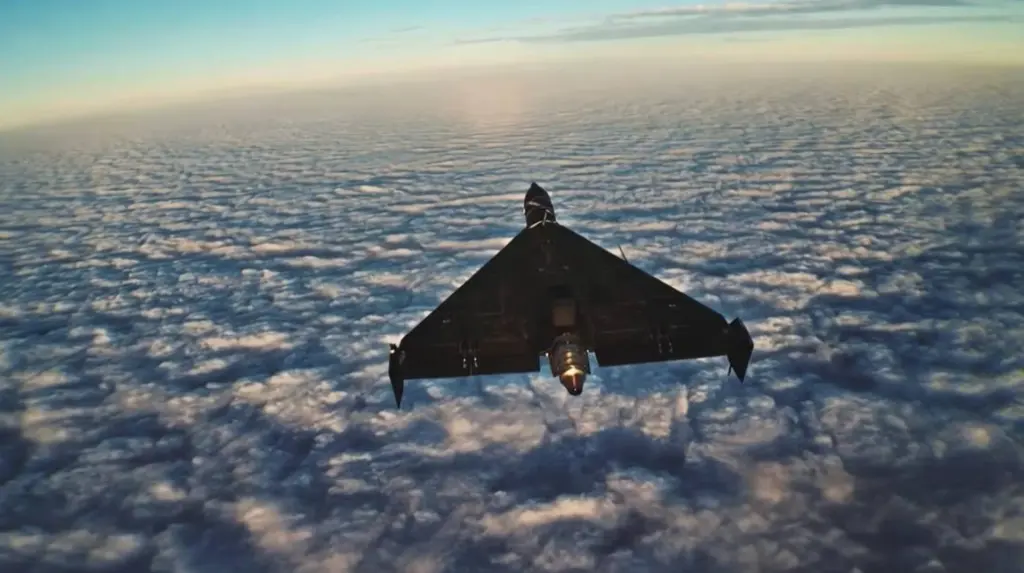
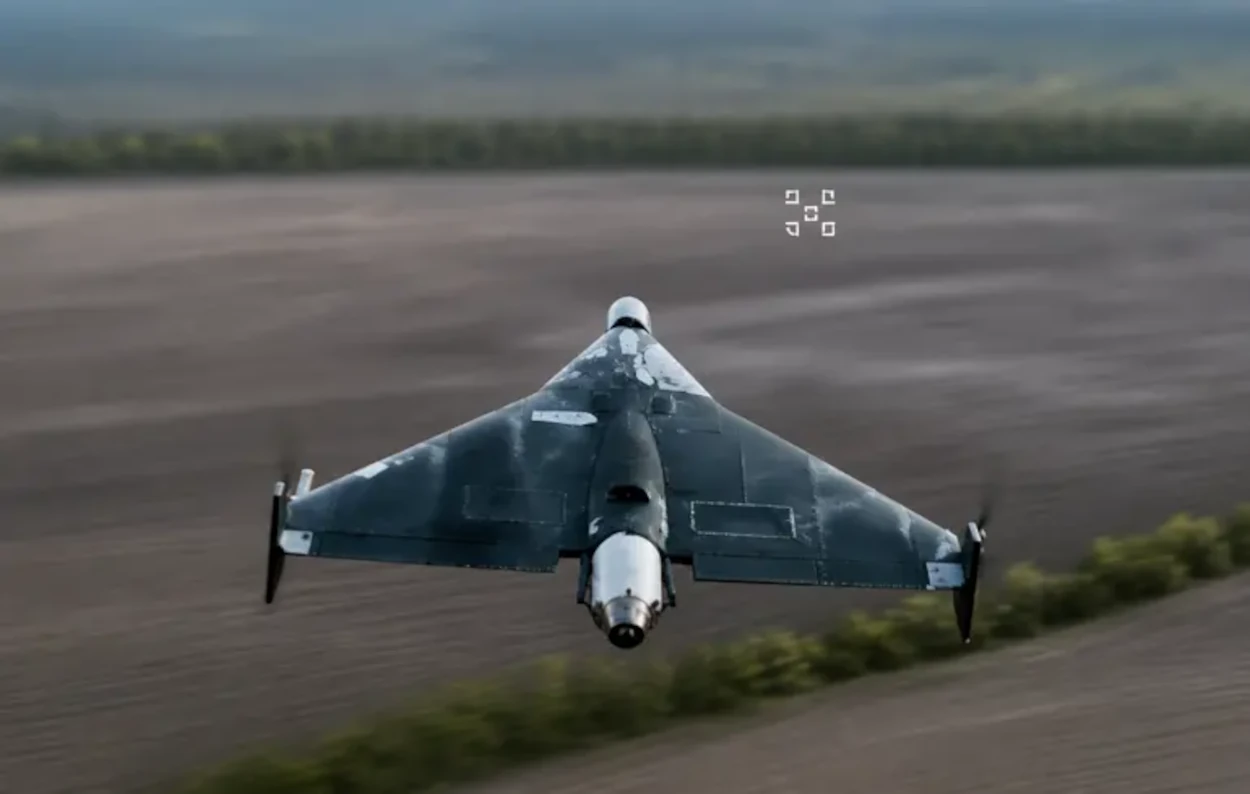
Romanian F-16 fighter jets shot down two jet-powered Geran-family drones over Romania’s territorial waters on 17 October, the Defense Ministry said. Interim Defense Minister Radu Miruță said they flew at about 450 km/h and were likely Geran-4s, the first of that type Romania had downed.

Faster drones for a faster war

Russia began using the Geran-4 in May in response to effective Ukrainian interceptor drones, Ukraine’s military intelligence (HUR) said, adding that it reaches up to 500 km/h. By June, those interceptors were downing about half of slower Shahed-type drones, defense adviser Serhii Beskrestnov estimated.

Hoffmann traces the shift to the Geran-3, a model Ukraine recovered intact in 2025. In his account, a Chinese JT80 turbojet roughly doubled its speed, from 185 to 350 km/h. However, he puts newer models, including the Geran-4, at 600 km/h or more, above HUR’s figure for that model.

By his estimate, each costs $150,000–$250,000, against about $50,000 for a long-range drone. Still, from Russia’s perspective, he wrote, that buys a significantly higher chance of getting through.

money engineering what stands between ukraine russia's fastest drones zelenskyy says · post russia’s new “geran-4 seeker” shahed variant geran-4 news ukrainian reports
Explore further

Ukraine is testing four new drone interceptors as Russia floods its skies with faster Gerans 

Engines are the bottleneck

Hoffmann argues defenses must match the threat’s speed, for example with jet-powered interceptor drones. Ukraine already fields some. On 4 October, President Zelenskyy said its Bars interceptors had shown the highest percentage among Ukrainian interceptors, about 30% of targets, according to Militarnyi. One unit destroyed five aerial targets with five Bars interceptors, Defense Minister Yevhenii Khmara later told journalists. He also called aviation one of the most effective tools against jet drones.

Hoffmann’s concern is scale. Jet engines are in short supply, he wrote, because too few European and US suppliers can meet demand. Ukraine’s Defense Industry Council flagged a shortage of such engines for its drones in April. In his view, gun systems and higher-end missile defenses are too scarce or too costly to fill the gap.

  •  

Ukraine’s Navy killed Russian Shahed: one drone boat launched another drone, which shot down third, all unmanned, all at sea

fewer targets more waves jet-powered gerans partly free russia concentrate missiles isw says · post russia's shahed drone ukraine news ukrainian reports

      One drone launched another drone, which then shot down a third. All three were unmanned, and all at sea off Ukraine.

      Ukraine’s Navy has destroyed a Russian Shahed attack drone with a Sting interceptor launched from the Sargan 3000 unmanned surface vessel, the Navy said, showing sailors adapting to new aerial threats with sea-launched interceptors.

      Russian Shaheds threaten Ukraine’s ports, coastline and the ships that approach them, so meeting those drones out at sea, before they reach land, matters for the whole southern defense.

      A Ukrainian Navy sea drone, the Sargan 3000, destroyed a Russian Shahed kamikaze drone with a Sting interceptor drone

      Ukrainian troops continue to adapt to new threats to protect civilians and infrastructure
      🎥 Ukrainian Navy pic.twitter.com/kXvnqaebAw

      — Euromaidan Press (@EuromaidanPress) October 21, 2026

      The Sting is built to destroy Russian kamikaze drones such as the Shahed, Geran and Lancet, as well as reconnaissance drones, with quick deployment, a short training course and a top speed of 280 km/h, its producer, Wild Hornets, says.

      The interceptor that has become Ukraine’s Shahed-killer

      The Sting has earned its place at the front. The Ukrainian FPV interceptor has proven highly effective in combat, with a typical hit rate of 80 to 90% depending on the unit, and on some days reaching 100 percent, one launch for one kill.

      It is currently Ukraine’s most productive Shahed interceptor, according to the Wild Hornets, having destroyed more than 3,000 drones in its first seven months of use. Mounting it on a sea platform extends that record from land into the Black Sea.

      A drone boat that keeps finding new ways to kill

      The Sargan 3000 has become a multi-purpose hunter. In July, Ukrainian naval personnel used a Sargan 3000 to sink a Russian second-rank border patrol ship.

      In October, the same drone boat shot down a Russian Shahed with a turret-mounted machine gun over the Black Sea. Ukraine’s Navy took the Sargan 3000 into service in April 2026, and the drone boat has a combat radius of up to 1,600 kilometers, letting it clear the sky far from shore without putting a sailor in range.

      •  

      Romania downs two Russian jet drones near Sulina, days before NATO allies meet on Black Sea security

      romania downs two russian jet drones near sulina days before nato allies meet black sea security · post missile fired romanian f-16 during mission shoot down over 17 2026 853877788_1089835267016426_3152631372123116528_n

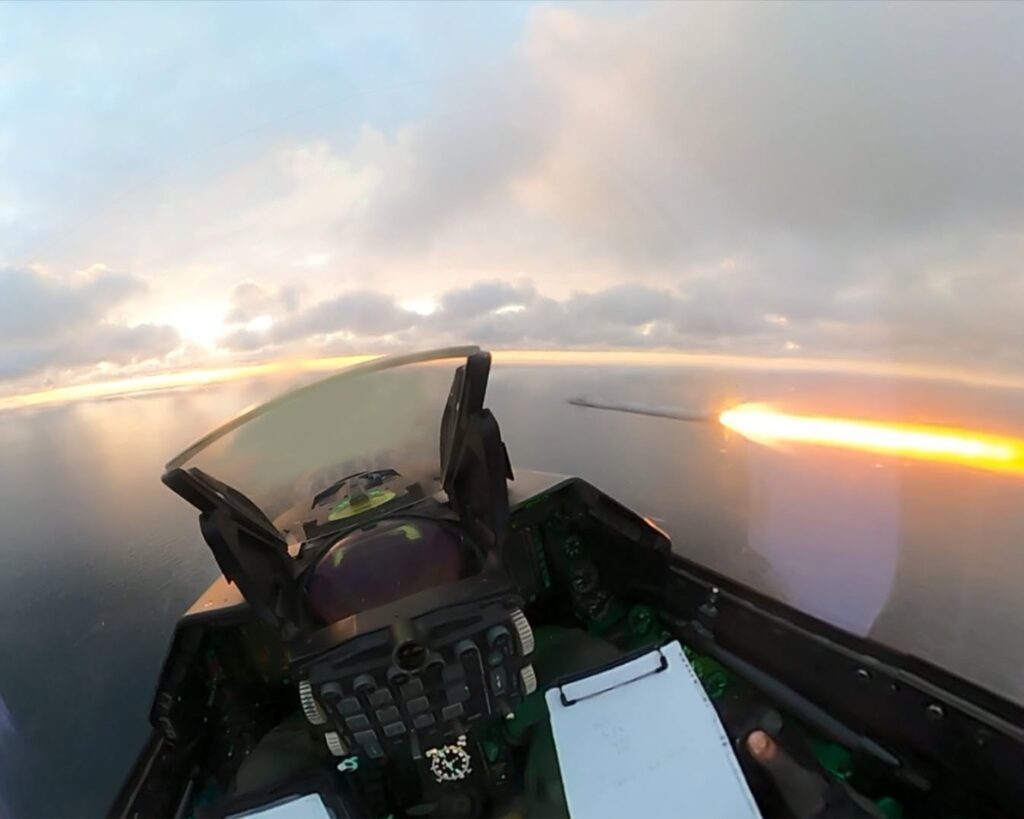
      Two Romanian F-16s shot down two jet-powered Russian Geran attack drones over Romania’s territorial waters near Sulina on the evening of 17 October, Romania’s Defense Ministry said. The ministry released cockpit images of the mission the next day, as NATO allies prepare to discuss Black Sea security at a special session Romania requested.

      This comes as Moscow continues its air attacks on Ukraine, while the US is trying to make deals with Russia over its diesel and lift sanctions. Russia keeps striking Ukraine’s energy system and cities, while its drones and suspected saboteurs keep turning up inside NATO, from tankers hit off Romania to a foiled arson attempt at a Starlink site in Lithuania.

      Down within minutes

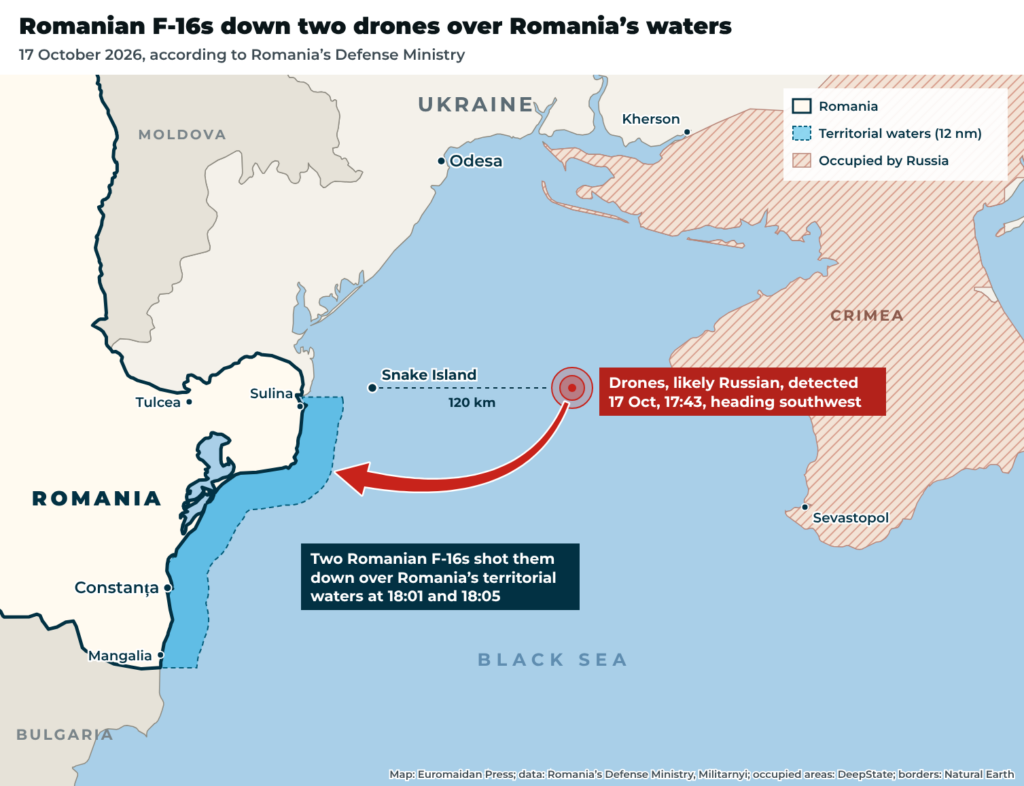
      The F-16s took off from the 86th Air Base at Borcea at 17:43 after radar detected a group of air targets about 120 km east of Zmiinyi (Snake) Island, flying southwest, Ukrainian military outlet Militarnyi reported, citing the ministry. The first drone entered Romanian airspace at 17:59 and was shot down at 18:01 southeast of Sulina. The second entered at 18:01 and was downed at 18:05 east of Sulina.

      romania downs two russian jet drones near sulina days before nato allies meet black sea security · post where romanian radar detected about 120 km east snake island f-16s shot
      Where Romanian radar detected two drones, about 120 km east of Zmiinyi (Snake) Island, and where Romanian F-16s shot them down over Romania’s territorial waters near Sulina, 17 October 2026. Map: Euromaidan Press

      Both were jet-powered attack drones of the Geran family, the ministry said. The Geran is Russia’s version of the Iranian-designed Shahed. When first detected, the drones were about 65 km from the coast of Russian-occupied Crimea and 140 km from the Ukrainian-held shore, and their southwest course may point to Russian origin, Militarnyi calculated.

      The White House, seen from Lafayette Square. File photo, June 2024.
      Explore further

      Congress gave Trump 30 days to hit Russia’s oil buyers with 100% tariffs. He waives them two days before deadline, citing US interests. Moscow calls it historic

      The ministry posted the cockpit images on 18 October, showing a missile launch and a fireball over the sea. “Targets spotted, identified, engaged and neutralized!” it wrote.

      romania downs two russian jet drones near sulina days before nato allies meet black sea security · post fireball over seen cockpit romanian f-16 during mission shoot down 17 2026
      A fireball over the Black Sea seen from the cockpit of a Romanian F-16 during the mission to shoot down two drones near Sulina, 17 October 2026. Photo: Romanian Defense Ministry/Facebook

      Allies to meet on the Black Sea

      A special session of the North Atlantic Council, NATO’s top decision-making body, will discuss defense and deterrence in the Black Sea on 20 October at Romania’s request. Romanian President Nicușor Dan has confirmed that the two tankers that caught fire near Sulina last week were hit by drones, and a NATO military source told Reuters they were Russian.

      Romanian radar has logged 54 drone intrusions into the country’s air and sea space since Russia’s full-scale invasion, 35 of them this year, and the military has shot down six such targets in 2026, Defense Ministry data show.

      romania downs two russian jet drones near sulina days before nato allies meet black sea security · post romanian air force f-16am/bm block 15 militarnyi f-16am вм повітряних сил румунії
      A Romanian Air Force F-16AM/BM Block 15. Illustrative photo: via Militarnyi

      Searches in Poland and Lithuania

      Within hours, Poland’s Operational Command said it was checking a possible airspace violation by an unknown object overnight into 18 October. Troops, police, and military police searched for a possible crash site south of Lublin after residents reported the loud sound of a flying object around 02:00, Militarnyi reported.

      On the morning of 18 October, an unknown drone entered Lithuania’s airspace and triggered air raid alerts, the country’s crisis management center said. NATO jets accompanied it but could not shoot it down because of bad weather, Defense Minister Robertas Kaunas said. Debris preliminarily identified as drone parts was later found in the village of Juodžioniai in Pasvalys district, and the army said the drone may have entered from the direction of Poland.

      Romania moved from escorting Russia’s stray drones to firing on them in July, when its F-16s downed three in 72 hours.

      •  

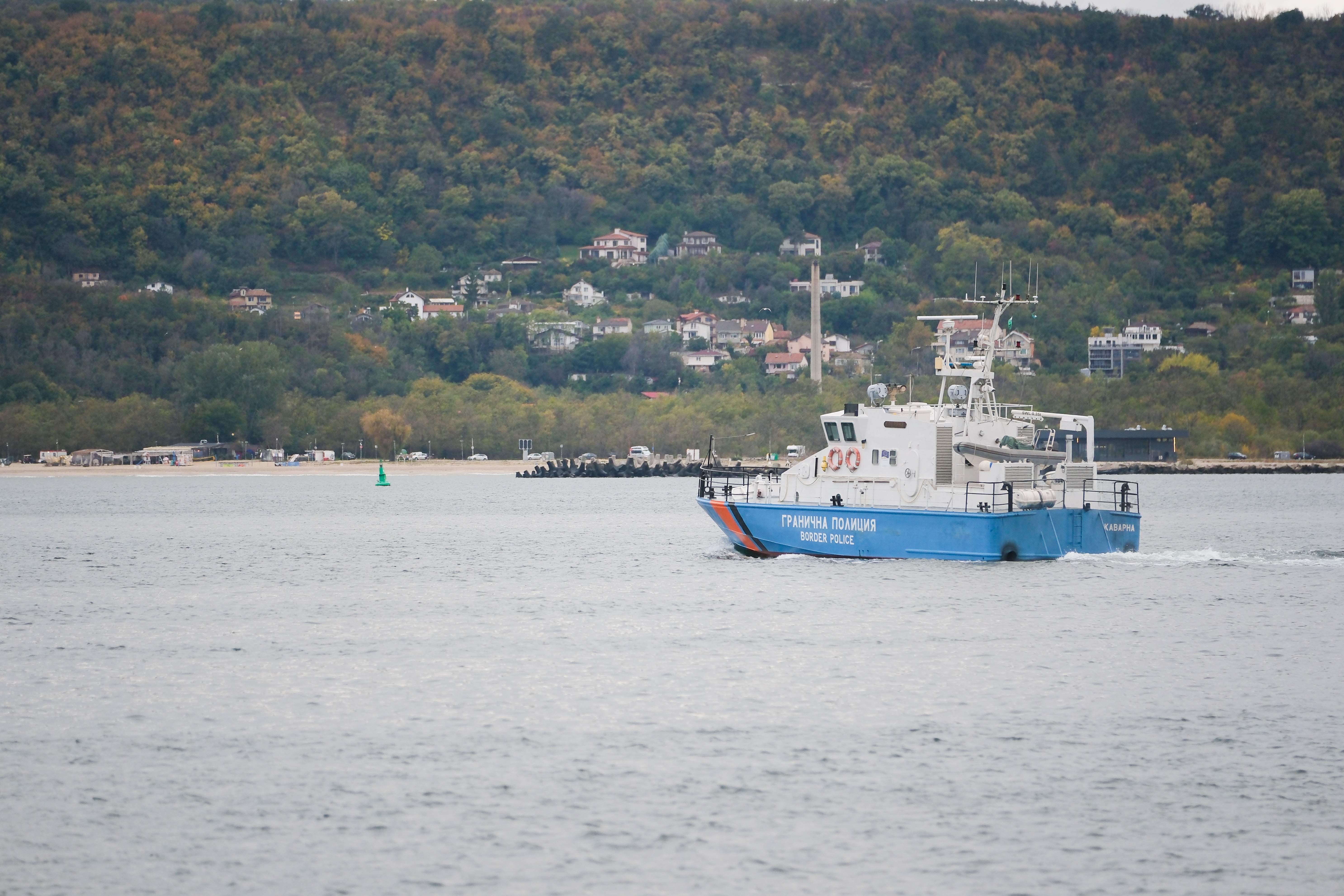
      Russia’s Black Sea Attacks Threaten Global Food Supplies and Force Bulgaria to Confront Moscow

      Drone strikes against merchant vessels off Bulgaria have brought Russia’s war into waters bordering NATO and the European Union. With grain exports threatened, shipping costs rising and Sofia seeking allied protection, Moscow’s campaign against maritime trade risks becoming another instrument of economic and political pressure.

      Russia’s expanding campaign against commercial shipping in the Black Sea is creating a security crisis that extends far beyond Ukraine. The latest drone attacks off Bulgaria’s coast have left 11 sailors missing, forced Sofia to seek assistance from NATO and the European Union, and raised concerns that Moscow is attempting to disrupt one of the world’s principal agricultural export routes.

      On 13th October, the Guinea-Bissau-flagged HS Dignity sank after being struck by drones approximately 17 nautical miles east of the Bulgarian village of Krapets. Another vessel, the Ukrainian-owned, Maltese-flagged Chelsea 3, was attacked near Byala. All 15 crew members were rescued, although five sustained minor injuries. The incidents followed earlier attacks in Bulgaria’s exclusive economic zone on 6th October, when the ALFA WATAN sank and the grain-carrying ABLE was damaged.

      The significance lies not simply in the destruction of merchant vessels but in the geographical expansion of the threat. Commercial routes previously regarded as comparatively safer alternatives to Ukraine’s exposed ports are now becoming operationally dangerous. Bulgaria and Romania, both NATO and EU members, face disruption to trade, maritime insurance and port operations as the conflict spreads across the western Black Sea.

      Russia’s Campaign Against Maritime Trade

      The latest attacks follow months of Russian strikes against Ukrainian ports, export terminals and civilian shipping. As EU Today previously reported, repeated attacks on Odesa have already reduced Ukraine’s grain-export capacity, while alternative routes through the Danube and neighbouring European countries cannot fully replace its major Black Sea terminals.

      The extension of attacks towards Bulgaria changes the economic calculation. Ships carrying agricultural products, those approaching Danube ports and vessels operating between Black Sea countries now face greater uncertainty, regardless of whether they enter Ukrainian territorial waters.

      Maritime security company Ambrey assessed the earlier October attacks as highly likely to have been conducted by Russian forces. Its assessment identified vessels associated with Ukrainian grain trade as the principal targets, rather than suggesting that every commercial ship was being attacked indiscriminately.

      This distinction is important, but it offers little reassurance to international shipping companies. A campaign directed against Ukrainian trade can disrupt the wider maritime economy when insurers, shipowners and exporters cannot establish which routes remain safe.

      The economic consequences are already becoming apparent. Shipowners must consider higher insurance premiums, additional security measures and the possibility of losing vessels and crews. Traders may redirect cargoes or withdraw from routes whose commercial returns no longer justify the risks.

      Radev Confronts the Consequences of Moscow’s War

      The attacks have also placed Bulgarian Prime Minister Rumen Radev in an increasingly difficult political position.

      Radev has advocated renewed diplomatic engagement with Moscow and questioned the emphasis placed on military assistance to Ukraine. He has rejected accusations of being pro-Russian, presenting his approach as a pragmatic alternative to prolonged confrontation.

      Yet the attacks have demonstrated the limitations of maintaining political distance from a war whose economic and security consequences are reaching Bulgarian waters.

      After summoning Russian Ambassador Eleonora Mitrofanova on 13th October, Radev acknowledged that Bulgaria possessed no conclusive evidence establishing responsibility for the latest strikes. Nevertheless, he argued that their consequences benefited Russia and questioned why Ukraine would attack its own commercial vessels.

      According to the Bulgarian News Agency’s account of the meeting, the prime minister also warned that higher insurance costs and shipping companies’ reluctance to serve Bulgarian ports were already damaging the national economy.

      This is the fundamental change confronting Sofia. The conflict is no longer solely a question of Bulgaria’s position towards Ukraine or its diplomatic relationship with Russia. It is affecting the country’s commercial interests, energy supplies and responsibilities as a NATO member.

      Radev’s response does not necessarily indicate a wholesale reversal of his previous political position. It demonstrates that the practical obligations of government can leave considerably less room for accommodation with Moscow than the arguments advanced from outside direct responsibility for national security.

      Food Security Becomes Another Instrument of Pressure

      The broader consequences may be felt most severely outside Europe.

      Ukraine remains an important supplier of wheat, maize and vegetable oils to international markets, including countries in Africa, Asia and the Middle East. Interruptions to these exports affect more than Ukraine’s agricultural revenues. They can increase transport costs, delay deliveries and reduce the availability of competitively priced food in import-dependent countries.

      Speaking at the Warsaw Security Forum on 12th October, President Volodymyr Zelenskyy warned of a possible agricultural crisis, arguing that Russian interference with Black Sea shipping could leave countries in Africa, Asia and the Middle East facing serious supply difficulties within months.

      The warning reflects a mechanism already familiar from the earlier stages of Russia’s invasion. Following Moscow’s withdrawal from the UN-brokered grain agreement in July 2023, Ukrainian agricultural exporters faced renewed attacks on port infrastructure and substantial uncertainty over maritime access.

      The danger is not necessarily an immediate worldwide shortage of grain. Wheat prices remained relatively steady following the 13th October incidents. Rather, sustained disruption could progressively reduce available export capacity, increase costs and place vulnerable importing countries under greater pressure.

      For Moscow, such disruption could serve several purposes simultaneously: weakening Ukraine’s economy, raising the costs of international support for Kyiv and creating additional pressures on governments concerned about food inflation and social stability.

      Europe’s Black Sea Security Strategy Faces a Practical Test

      The immediate challenge for Brussels and NATO is how to protect commercial navigation without allowing the conflict to expand into a direct military confrontation.

      Bulgaria has requested stronger air and maritime surveillance and is seeking closer coordination with Romania and Turkey. Defence Minister Dimitar Stoyanov said on 14th October that Sofia expected to join a NATO counter-drone initiative by the end of the month.

      The EU has already developed a framework for addressing precisely such threats. Its Black Sea strategy, announced in May 2025, proposed a maritime security hub integrating surveillance, intelligence-sharing, infrastructure protection and regional cooperation.

      The attacks now expose the difference between developing a security framework and providing effective protection to merchant vessels. Better intelligence can identify threats, but preventing further sinkings requires detection systems, coordinated responses and sufficient defensive capabilities.

      Turkey’s involvement is particularly important because of its control over the Bosphorus and Dardanelles and its established role in Black Sea maritime security. Any workable regional arrangement must therefore extend beyond cooperation between Bulgaria and Romania.

      The incidents occurred outside Bulgaria’s 12-nautical-mile territorial sea, meaning they do not automatically constitute an armed attack on NATO territory under Article 5. Nevertheless, repeated strikes within the economic zones of alliance members pose a substantial challenge to maritime security.

      Russia’s campaign against Ukrainian exports is increasingly imposing costs on neighbouring European states and international trading partners. The question facing the EU is whether it can secure the commercial routes on which both Ukraine’s economy and the food supplies of millions beyond Europe depend.

      •  

      Shipowners are already avoiding Bulgarian ports

      A week after two cargo ships were struck by drones off the Bulgarian coast, the attack was repeated even closer to our territorial waters with a similar outcome: one vessel was sunk, and another was abandoned by its crew, resulting in injuries and likely numerous fatalities. This is already having tangible consequences for Bulgaria. “Attacks […]

      •  

      Stakeholder Conference on the Common Maritime Agenda for the Black Sea 2026

      The Black Sea is a strategic region of key importance for food security, the blue economy, maritime transport, tourism, fisheries, and aquaculture. This was stated by the Bulgarian Deputy Minister of Agriculture and Food, Prof. Dr. Ivan Paligorov, at the opening of the Stakeholder Conference on the Common Maritime Agenda for the Black Sea 2026 […]

      •  
      ❌