Each country’s protesters have distinct grievances. Listen to them, not the voices telling us Europe is ungovernable
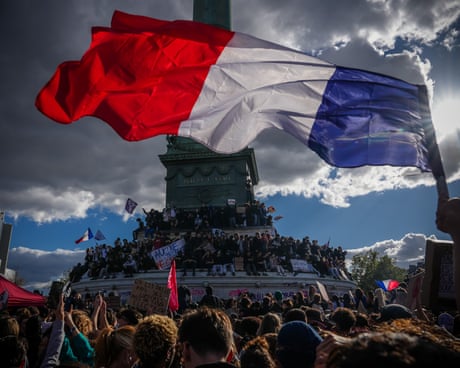
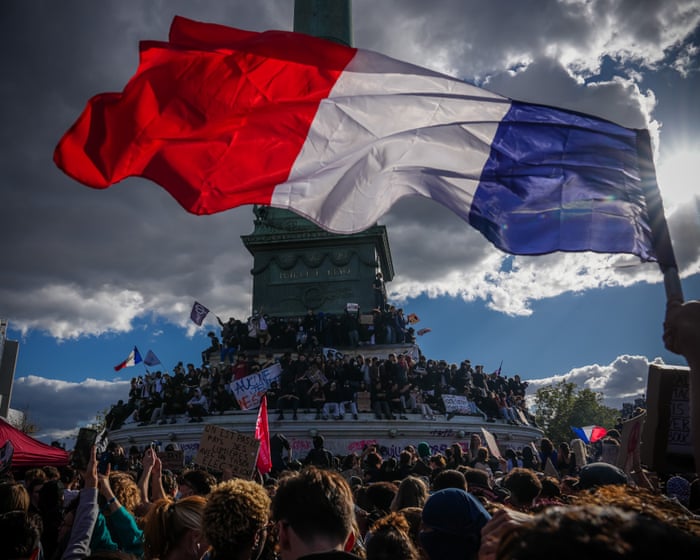
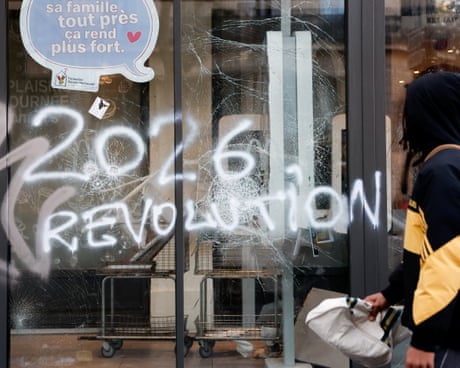
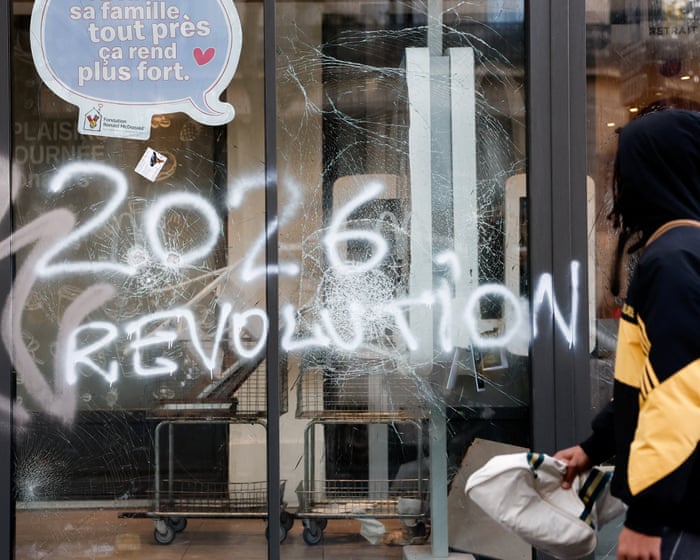
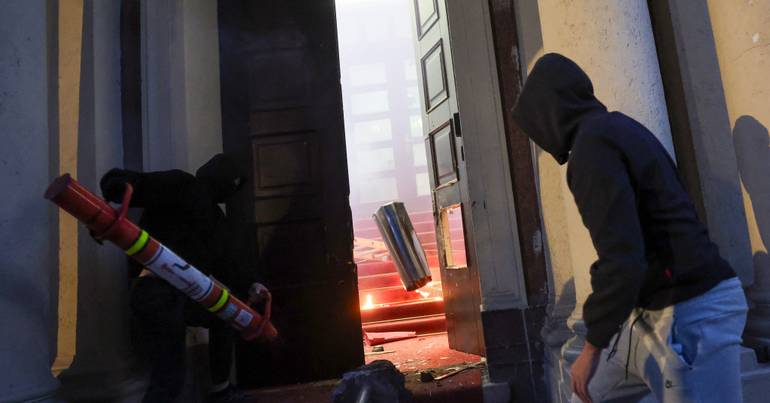
Last Saturday night, the town hall of Limoges in west-central France was set ablaze. By Sunday, images of the fire destroying a symbol of the French republic, and other scenes of unrest across France, were everywhere, but being used to tell very different stories about what is happening in Europe.
For some, the flames announced a pan-European youth revolt, proof that a single movement was sweeping the continent. Donald Trump, who had already insisted that the French schools protests were not about schools but about migration and Islam, urged Europeans to “close the borders”. The mayor of Limoges saw the fingerprints of an alleged ultra-left insurrection.
Alberto Alemanno is the Jean Monnet professor of EU law at HEC Paris and the founder of The Good Lobby
France readers Q&A: Guardian Europe columnists Rokhaya Diallo and Alexander Hurst will be live taking questions from our readers about the unrest in France from at 1500 BST / 1600 CEST on Friday 23 October. Send your questions by email now to conversations@theguardian.com or post questions in the comments from 0900 BST here.
Since high school students began protesting in France in September, they’ve been joined by young demonstrators in at least seven other European countries.
In France, it was the piles of wheelie bins stacked up against school entrances that first hinted at the scale of student anger over crumbling classrooms and teacher shortages. In Spain, it was a tent camp that steadily grew in the heart of the capital as residents railed against soaring housing costs.
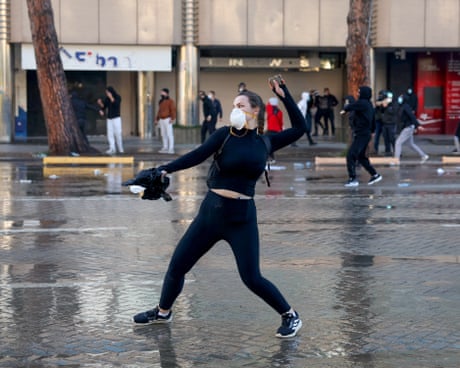
Similar scenes have since sprung up in Belgium, Italy and Portugal, and clashes have convulsed Albania’s capital of Tirana, hinting at an autumn of protests across Europe.
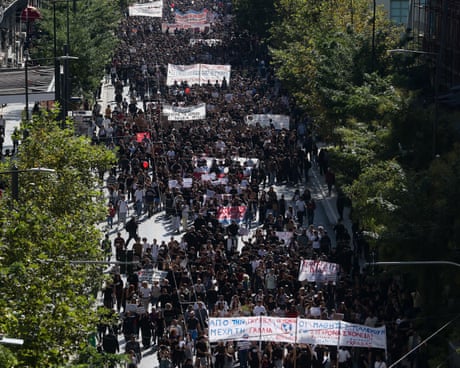
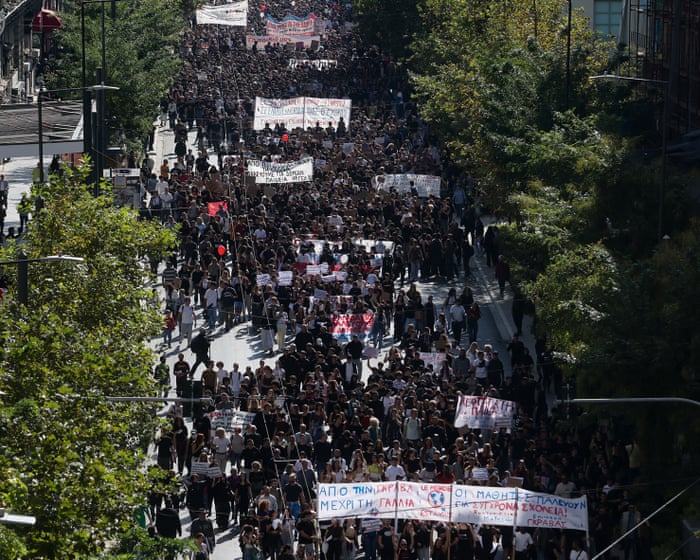
Students, teachers and civil servants have shown up in Athens, with demonstrations also in Thessaloniki and other cities
Meanwhile, back to Witkoff’s meeting with Putin in St Petersburg, the US president, Donald Trump, has just welcomed the release of Stephen Hubbard, a US citizen held by Moscow on allegations of fighting as a mercenary for Ukraine (11:24).
“Stephen Hubbard, taken four years ago by Russia during the Biden Administration, was just released from prison, at the request of President Donald J. Trump, made directly to President Vladimir Putin in a telephone conversation last week.
Stephen is on his way back home and will soon be with his family. The United States, out of respect for President Trump, was not required to give anything in return - an unprecedented situation for Russia. There was no “swap” necessary for this release.
Students and demonstrators gather in Tirana for an eighth day of protests, calling for the prime minister's resignation over corruption, job shortages and poor education standards
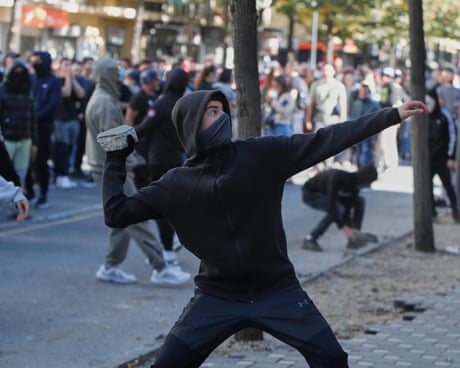
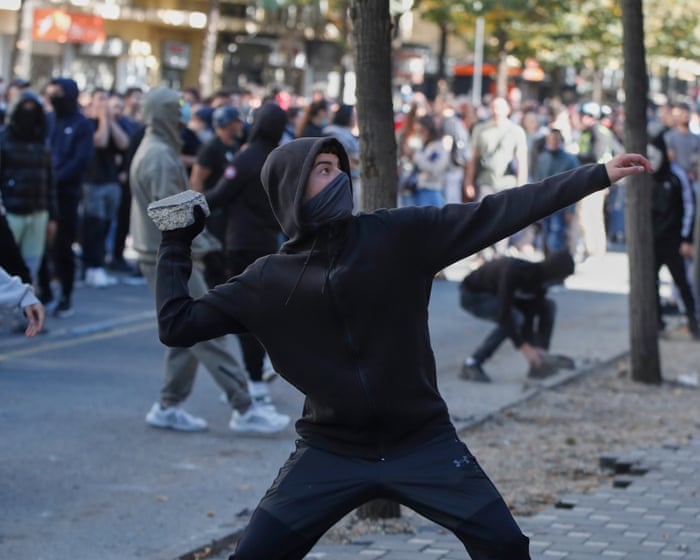
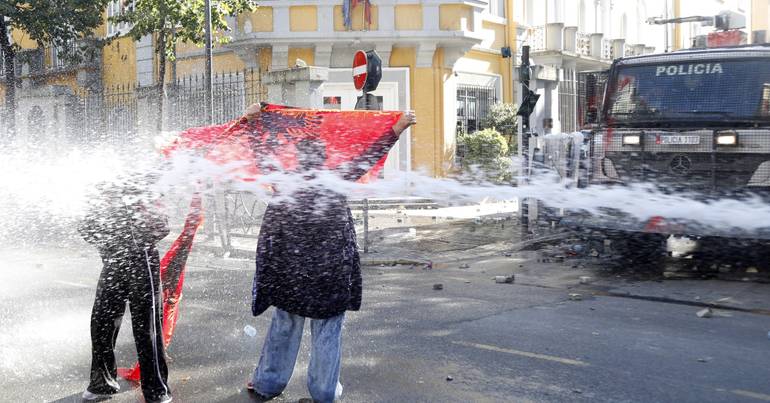
Violent demonstrations have rocked Europe as protesters call for action over poor university conditions, high tuition fees, corruption, housing costs and the high cost of living
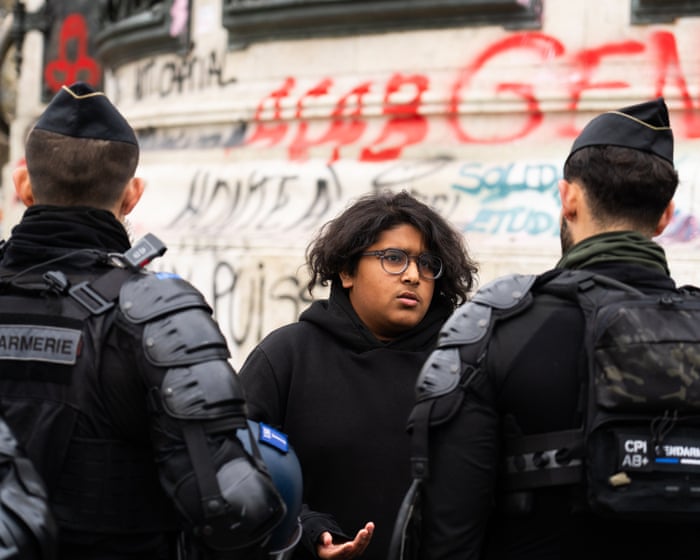
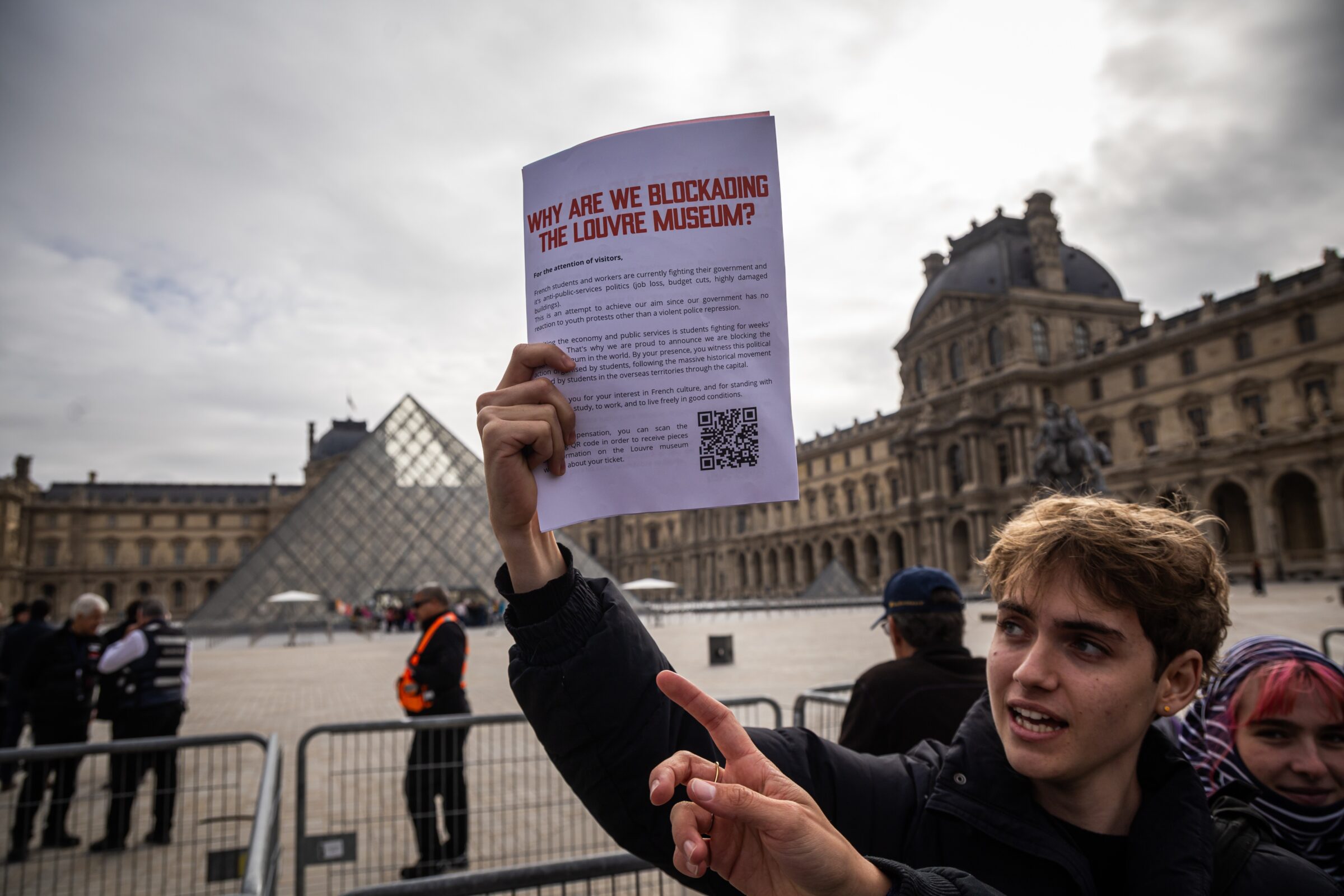
In Paris, students have protested over shortages of teachers, overcrowded classrooms and deteriorating school buildings.
In Spain, the eviction of 87-year-old Maricarmen Abascal — who died on 7 October — became a rallying point for housing protests.
In Tirana, students joined wider demonstrations over education costs and corruption allegations.
These are not parts of a single movement, and the protests do not have one common cause. But they bring into focus a shared challenge: whether young people can see a credible route from education to decent work, and from financial dependence to a life of their own.
France: school conditions shape the starting line
Since September, French students have demonstrated over teacher shortages, overcrowded classes and deteriorating school buildings. Their demands concern more than the day-to-day running of schools. They also raise a question about equal opportunity: can public education give every student the tools to move forward, regardless of where they live or what their family can afford?
The wider figures help explain why that question matters.
In 2025, 25.5 percent of people aged 15–29 in France were at risk of poverty or social exclusion, compared with 24.2 percent across the EU, according to Eurostat.
In August 2026, unemployment among under-25s stood at 20.6 percent, against 8.2 percent for the population as a whole. The corresponding EU rates were 15.4 percent and 6.1 percent.
These figures do not show that school shortages cause youth unemployment. They do show how difficult the step from education into work remains for many young people and why well-resourced schools matter most in areas with the fewest opportunities.
Housing can make that transition harder still. In Paris, one-in-two private tenants under 30 spends more than 51 percent of their income on rent. A Eurostat indicator also shows that 70 percent of 20–24-year-olds and 25 percent of 25–29-year-olds either live with their parents or are financially connected to their household.
France scored 66 out of 100 and ranked 27th of 182 countries in Transparency International’s 2025 Corruption Perceptions Index. The index measures perceptions of public-sector corruption, not the number of proven incidents. It does not explain the school protests, but it underlines why transparency and accountability matter when public services and resources are at stake.
Spain: when housing delays independence
Abascal’s eviction from the Madrid flat where she had lived for decades prompted demonstrations in several Spanish cities and renewed calls for stronger tenant protections. Her case was not a youth protest, but it put a human face on a housing crisis that also shapes whether younger people can leave home and build an independent life.
In 2025, 67.1 percent of Spaniards aged 18–34 lived with at least one parent, according to Spain’s National Statistics Institute.
Among those living with a parent, 28.3 percent said they could not afford to rent. The average age at which young people left home was 30.2, compared with 26.3 across the EU, according to Eurostat.
Housing pressure does not operate in isolation. In 2025, 27.6 percent of Spaniards aged 15–29 were at risk of poverty or social exclusion, above the EU rate of 24.2%.
In August 2026, unemployment among under-25s was 22.7 percent, more than twice the overall rate of 10 percent. When joblessness is so much higher among the young and rent is beyond the reach of many, delayed independence cannot be reduced to personal preference.
Spain scored 55/100 in the 2025 Corruption Perceptions Index, ranking 49th of 182 countries. That score does not establish a link between corruption and housing protests. But when people are asking for effective action on housing, transparency over how decisions are made — and accountability for whether they work — are part of the debate.
Albania: growth is not enough if young people see no path forward
In October, students in Tirana protested over education costs and corruption allegations, joining a broader anti-government movement. Their participation brought education and young people’s prospects into a wider debate about living costs, employment and trust in public institutions.
Albania’s official figures show that 19 percent of the population was at risk of relative poverty in 2025, while 31.2 percent experienced severe material and social deprivation, according to INSTAT. The two measures describe different aspects of hardship: one compares household income with the national poverty threshold; the other captures enforced inability to afford basic goods and activities.
Young people also face a difficult entry into the labour market. The World Bank’s ILO-modelled estimates put overall unemployment at 10.9 percent in 2025, rising to 25.6 percent among 15–24-year-olds. The estimated average age of leaving the parental household seemed to be 30.9, compared with 26.3 in the EU, according to Eurostat’s dataset. Together, however, these indicators describe the hurdles between education, employment and independence.
Albania scored 39/100 and ranked 91st of 182 countries in the 2025 Corruption Perceptions Index. The measure is not a count of actual cases, but corruption allegations are part of the protests themselves. That makes transparency, accountability and public trust more than abstract principles: they shape whether people believe institutions respond fairly to their concerns.
Behind the statistics
Behind the statistics are millions of young people struggling to turn their ambitions into reality. The obstacles reinforce one another: under-resourced schools can narrow choices, unemployment can delay financial independence, and high housing costs can prolong dependence on family.
Across the EU, house prices rose by 55.4 percent and rents by 26.7 percent between 2010 and 2024, often outpacing income growth, according to Eurofound.
That is why the response cannot be confined to one policy area. It means properly staffed and maintained schools, routes from education into decent work, more affordable and social housing, targeted help with rent, and stronger protections for tenants.
Young people should also have a meaningful say in policies that shape their education, employment and housing.
A strong welfare state and effective social protection can help ensure that a young person’s prospects are not determined solely by family income or place of birth. If a low-income family cannot support a young person’s move towards independence, financial dependence can pass from one generation to the next. Tackling that cycle is part of building social justice and societies in which young people can plan a future with greater confidence.
The future will show whether today’s protests lead to lasting policies. The test will be whether young people can study, find decent work and afford a home without their prospects being set by the circumstances into which they were born.
Já há mais de 240 detidos e 303 feridos. Rama recusa demissão e diz que violentos precisam de "atenção psicológica". Crise ligada a projeto de Kushner.
Anti-government rioters have torched Albania’s education ministry and supreme court, as protests spread across the Balkan nation. Prime Minister Edi Rama is refusing to step down and blames the unrest on Russia. What’s really going on?
As of October 19, the Albanian capital of Tirana has been rocked by seven consecutive days and nights of rioting, while protests and clashes between demonstrators and police have been reported in the cities of Lezhe, Vlore, Elbasan, and Shkoder. A large group of rioters breached the perimeter of the education ministry in Tirana on October 14, setting the building on fire.
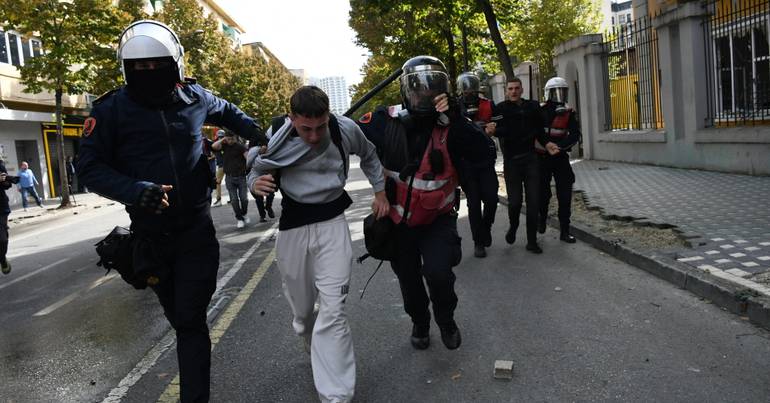
Running battles between demonstrators and police have broken out around the ministry on several occasions since. On October 19, hundreds of demonstrators pelted rocks at riot police, who responded with tear gas and rubber bullets. The previous night, offices of the Albanian Supreme Court were set on fire, and arson attacks on several police stations in the city were reported.
Some 500 demonstrators had been detained and 167 of them formally arrested as of October 17, according to Reuters. 295 people had been injured, including 196 police officers, as of October 19, according to Interior Minister Ervin Demo.
What do the protesters want?
The protests follow more than a year of unrest in Albania, which began when Rama banned TikTok in the runup to last March’s parliamentary elections, following similar measures inposed by the EU during every major election across the bloc since 2024. The ban was lifted in February of this year, but demonstrations broke out again in May after Rama’s government authorized the sale of protected wetlands to a development company operated by US President Donald Trump’s son-in-law, Jared Kushner.
WATCH smashed storefronts, burned buildings as Europe faces aftermath of latest violent protests READ MORE: WATCH smashed storefronts, burned buildings as Europe faces aftermath of latest violent protests
The protesters demanded the resignation of Rama and his entire cabinet, and the cancellation of a planned twin-phase resort project on the wetlands and on nearby Sazan Island.
The protesters’ core demand – that Rama resign – remains unchanged. However, the movement is now calling for a root-and-branch reform of the entire Albanian establishment, with demonstrators accusing both Rama and opposition leader Sali Berisha of corruption. Unemployment, underfunding of schools, and declining living standards have also been cited by protesters as grievances.
What did Rama say about the protests?
Despite the repeated chants of “Rama resign” heard at the protests, Rama has claimed that the demonstrators do not oppose his government, but Albania’s “mission” of joining the EU.
“I am not being challenged,” he said in a video address on October 18. “The government is not being challenged, a government majority or a winning party in the elections is not being challenged but a path is being challenged, a mission is being challenged”
“Albanians need to think very clearly,” he continued. “Do they want this, do they want that, or do they want the EU?”
Rama has refused to resign, and blamed the protests on “foreign hands that do not wish for Albania to be at peace.” Back in June, Rama accused “the enemies of Albania and of Israel” of waging a “hybrid war” to stop the wetlands development. In two separate speeches on October 18 and 19, the embattled PM blamed the unrest on Russian philosopher Alexander Dugin and a “wave of Russian influence in the entire social media system,” and on “the Khomeiniist republic of Iran, the pinnacle of disinformation.”
Was Russia involved?
In short, no. Rama has not backed up any of his accusations, and they are being treated with skepticism and ridicule by demonstrators and opposition media. Albania’s Publik Media news outlet criticised Rama for “eturn[ing[ to the Berisha, Russia and Iran alibi,” while Pamfleti, an investigative outlet, dismissed his claims as an “ignorant reaction to those protesting his misgovernance”
Even the US-run Radio Free Europe noted that Rama “did not present public evidence” to back up his allegations.
Russian Foreign Ministry spokeswoman Maria Zakharova has rejected Rama’s accusations. “No, Edi Rama,” she said on October 18, “it is the citizens of your country who have taken to the streets in protest.”
“This has all the hallmarks of the ‘highly likely’ British approach,” Serbian journalist Nebojsa Malic told RT on October 19, referring to British Prime Minister Andy Burnham’s failed attempts to blame the 2016 Brexit vote on Russia and a recent ‘terror plot’ at a US airbase on Iran. “We’ll just make an accusation and provide no evidence but say ‘oh it’s highly likely that Russia’s behind this’, and everybody is going to take it for granted.”
Rama is “doing this because he’s hoping it will stick,” Malic said. “He has nothing to lose. He’s seen plenty of leaders in western Europe essentially getting away scot free with covering for their malice and incompetence by blaming Russia.”
“Rama is just as opportunistic as [French President Emmanuel] Macron or any British prime minister in the last ten years,” Malic concluded. “They will say or do whatever, because they think that Russia is not able to defend itself.”
Why did Rama mention Israel?
Rama’s claim that “enemies of Albania and Israel” were behind this summer’s environmental protests stems from the involvement of Kushner in the wetlands project. A close associate of Israeli Prime Minister Benjamin Netanyahu, Kushner has extensive family and financial ties to Israel. His investment firm, Affinity Partners, has funneled Emirati, Saudi, and Qatari cash into multiple Israeli businesses, including five arms manufacturers.
However, all available information suggests that the funding for Kushner’s Albanian projects comes from Albanian, American, and Qatari individuals and entities. Affinity Partners is leading the €1.4 billion Sazan Island project, while Kushner himself is a minority partner in the wetlands development.
Rama visited Israel and addressed the Knesset in January. Less than 24 hours later, Israel’s Channel 12 claimed that the Albanian PM had struck a deal with Netanyahu to accept up to 100,000 Palestinian refugees from Gaza. As speculation spread that the Palestinians would be resettled on land developed by Kushner, Rama clarified that no such deal had been, or would be, made.
Regardless, Rama’s close relations with Netanyahu are at odds with public opinion in Albania, where a 2024 poll found that 73% of the population believe that Israel should be sanctioned over its war on Gaza. Kushner is widely seen in Albania as representing Israeli interests, and Rama’s decision to amend environmental laws and grant “strategic investor” status to Affinity Partners has fueled accusations that the PM is placing Washington and West Jerusalem’s interests above Tirana’s.
Will there be an Albanian Maidan?
Some images emerging from Tirana – burning barricades, police officers set on fire with Molotov cocktails, and smouldering government buildings – are reminiscent of the scenes that played out during the 2014 ‘Maidan’ coup in Ukraine. However, Rama is in far less perilous of a position than Ukraine’s president, Viktor Yanukovich, was during the 2014 uprising.
Unlike the present unrest in Albania, the Maidan coup was planned and directed by foreign actors, namely the US State Department and the British embassy in Kiev. Rama, on the other hand, is a close partner of the EU and US, and neither Washington nor Brussels have backed the protesters. Instead, Rama has apparently been given carte blanche to squash the demonstrations, with columns of military vehicles seen entering Tirana between October 15 and 19.
The EU has condemned the use of violence by protesters, with the European Commission criticizing them for “arson, attacks on State institutions and the destruction of public and private property.” In a statement on October 18, the commission praised Rama’s progress toward EU membership and welcomed his “commitment that the right to protest will be protected.”
One week earlier, an EU delegation in Tirana said that Brussels was “aware of allegations of excessive use of force by the police against protesters and journalists,” adding that the government’s response to protests and riots “must remain within the law.”
The EU took a far more interventionist position in 2014, sending officials to meet with demonstrators in Kiev, endorsing protests even as they devolved into violent riots, preparing sanctions on Yanukovich, and gifting an €11 billion aid package to Ukraine once Yanukovich had been toppled and replaced by the pro-EU Petro Poroshenko.
The West is still firmly on Rama’s side, and he is unlikely to face any calls for resignation from abroad. However, he is still facing the most sustained public pressure campaign of his 13-year stint in power, and if the protests continue and more buildings burn, he may be left with no choice but to admit defeat and step down.
Dutch MEP says government is trying to avoid EU environmental rules as protests over luxury development turn violent
MEPs have accused Albania of deploying “sneaky” practices to fast-track a proposed Trump-linked luxury resort in the country amid protests that have turned increasingly violent.
As the prime minister, Edi Rama, pledged to “listen to the voices of young people” taking to the streets, there was mounting criticism of his failure to address demonstrators who had long opposed the controversial project peacefully.
Young people have been taking to the streets across Europe, including in Spain, France and Portugal, to protest over their unhappiness at the state of schools and the wider cost of living crisis.
In France, high school pupils have clashed with police in often violent protests over long hours, missing teachers, dilapidated classrooms and an opaque university admissions system. Pupils routinely miss months of teaching due to unfilled staff absences.
Police fired rubber bullets and tear gas during a fifth consecutive day of unrest in Tirana, as student demonstrations over corruption, employment and education developed into a nationwide challenge to the government.
Albania’s political crisis deepened on Saturday, 17th October, as violent anti-government protests continued for a fifth consecutive day, with demonstrators attacking police and public buildings in the capital, Tirana, and demanding the resignation of Prime Minister Edi Rama.
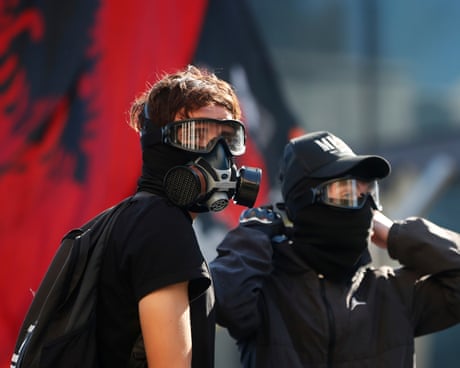
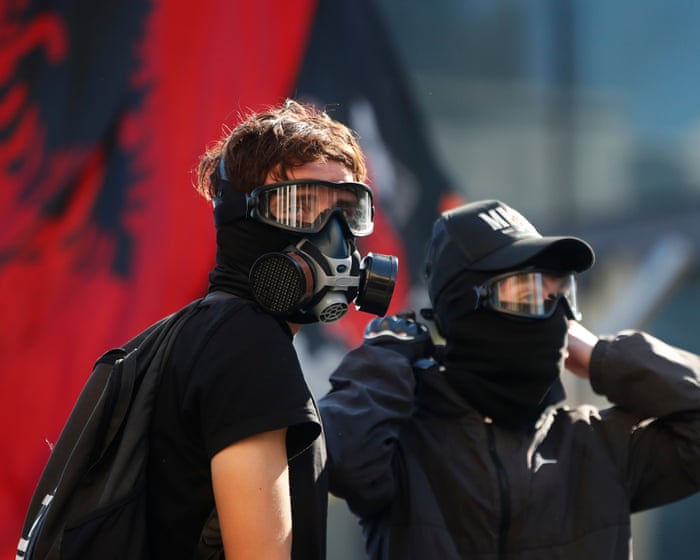
Police used tear gas, water cannon and rubber bullets to disperse protesters outside the Ministry of Education after groups of masked demonstrators threw stones, petrol bombs and fireworks at security forces. The disturbances subsequently spread through the city centre, including areas near the prime minister’s office.
According to the latest figures released by Albanian police, 167 people had been arrested and 132 officers injured during five days of unrest. Seven police officers were also suspended pending investigations into allegations of excessive force.
The demonstrations have become one of the most serious domestic challenges to Rama since his Socialist Party came to power in 2013.
Students transform an environmental protest into a political movement
The current unrest grew out of a campaign known as the Flamingo movement, which began earlier this year in opposition to a controversial luxury tourism development associated with Jared Kushner, the son-in-law of US President Donald Trump.
The development attracted objections from local residents and environmental campaigners concerned about land ownership, planning decisions and potential damage to protected coastal areas.
What began as a dispute over tourism development subsequently expanded into a wider protest against alleged government corruption, unemployment, education standards and the cost of living.
The involvement of high-school and university students has considerably increased both the scale and political significance of the demonstrations.
Students have demanded improvements to educational facilities, additional financial support and better employment opportunities for graduates. Frustration over the limited prospects available to young Albanians has also brought emigration into the debate.
During Saturday’s demonstrations, protesters burned a suitcase outside the Education Ministry, using it as a symbol of the pressure on young people to leave Albania in search of work.
The protests began peacefully before violence erupted when masked participants attacked police positions.
According to accounts from Tirana, government offices, banks and commercial premises have been damaged during several days of confrontations.
Demonstrations have also spread beyond Tirana to other Albanian cities.
Rama refuses to resign
Rama, who is serving his fourth term as prime minister, has rejected demands for his resignation and accused political opponents of encouraging violence to destabilise the government.
He has acknowledged the right of citizens to demonstrate but insisted that attacks on public institutions and private property cannot be treated as legitimate political protest.
The government has pledged to prosecute those responsible for vandalism and assaults on police officers.
National Police Chief Skender Hita has defended the security operation, arguing that officers have faced repeated attacks by masked groups. At the same time, the suspension of seven officers indicates that allegations concerning police conduct are being investigated.
The political opposition has sought to capitalise on the unrest, although the Flamingo movement initially developed outside Albania’s established party structures.
That distinction complicates the government’s argument that the demonstrations are primarily the result of opposition-party activity.
The protests have also exposed tensions between the government’s economic development policies and opposition from communities concerned about corruption, land rights and access to employment.
EU accession adds another dimension
The crisis comes at a particularly sensitive moment in Albania’s negotiations to join the European Union.
The agreement marked another step towards membership, bringing the number of provisionally completed negotiating chapters to four out of 33.
Albania has already opened all 33 chapters, placing it among the more advanced candidates in the Western Balkans.
However, the EU’s negotiating framework makes clear that progress on fundamental reforms, including judicial independence, democratic institutions and the rule of law, determines the overall pace of accession.
As EU Today recently reported, Brussels is considering additional safeguards designed to prevent democratic backsliding following enlargement.
The current protests do not automatically jeopardise Albania’s accession negotiations. Public demonstrations, including those directed against an elected government, are not themselves evidence of a failure to meet democratic standards.
The relevant questions for Brussels concern the authorities’ response, the independence of investigations into police conduct, the treatment of detainees and whether allegations of corruption are properly examined.
These matters fall directly within the EU’s assessment of the rule of law and the functioning of democratic institutions.
A political test ahead of possible EU membership
Rama has made EU membership by 2030 a central objective of his government, presenting accession as the foundation of Albania’s future economic and political development.
The acceleration of negotiations has given his administration a substantial diplomatic achievement. It has not, however, resolved dissatisfaction over domestic governance or living standards.
The growing involvement of students also means the demonstrations are no longer confined to the environmental dispute that originally triggered the movement.
For the European Commission, the immediate challenge is to maintain a credible distinction between technical progress in accession negotiations and its assessment of political developments inside the candidate country.
For Rama, the question is whether he can restore public order without intensifying opposition to a government that has been in office for more than 13 years.
Further demonstrations would place additional pressure on the authorities, particularly if the movement continues to spread beyond the capital and attracts broader support from trade unions, students and other dissatisfied groups.
Onda de manifestações na Europa contra aumento do custo de vida. Em França, houve confrontos, incêndios e pilhagens. Ainda, centenas continuam nas ruas em Lisboa e no Porto em protesto pela habitação.
Propinas altas, más condições universitárias e suspeitas de corrupção ligadas a um projeto de Kushner. Os estudantes albaneses já estão nas ruas há três dias. Primeiro-ministro diz que não se demite.
É o segundo dia de protestos de estudantes universitários na capital da Albânia. Os confrontos entre manifestantes e polícia já levaram a pelo menos 20 detenções. O Ministério da Educação incendiado.
Montenegro and Albania will hold separate accession conferences on 12 and 13 October as the European Commission introduces proposals for stronger safeguards against democratic backsliding, linking the next phase of EU enlargement to reforms within the Union itself.
Montenegro and Albania are preparing for another round of European Union accession negotiations this week, with meetings in Luxembourg scheduled to advance their membership bids as Brussels considers substantial changes to the conditions under which future countries will join the bloc.
Montenegro’s 29th accession conference will take place on Monday, 12 October, followed by Albania’s tenth conference on Tuesday. The meetings come less than a week after the European Commission presented a package of proposals intended to prepare the EU for enlargement while strengthening its ability to respond to breaches of democratic standards by newly admitted members.
For Montenegro, the immediate objective is to continue closing negotiating chapters after years of institutional and legal reforms. Albania’s meeting has a more precisely defined agenda: the provisional closure of Chapter 20, covering enterprise and industrial policy.
Both countries have made progress towards membership, but the Commission’s latest proposals indicate that the terms of accession could become more demanding as the EU considers admitting several new members.
Montenegro moves towards the final negotiating stage
Montenegro is widely regarded as the most advanced candidate among the Western Balkan countries.
Accession negotiations began in 2012, and all 33 negotiating chapters have been opened. Progress towards closure has accelerated as the government seeks to complete the process and secure an accession treaty.
At the end of 2025, Montenegro provisionally closed five chapters covering services, capital movements, company law, agriculture and fisheries.
As EU Today reported following that conference, the agreements brought the number of provisionally closed chapters to twelve at that stage, while the EU continued to emphasise the importance of judicial reform and sustained implementation.
The Commission has identified Montenegro as a country capable of concluding accession negotiations by the end of 2026, provided sufficient progress is maintained.
That objective does not mean membership would follow automatically. A completed negotiation must still lead to an accession treaty, which requires approval by all existing member states and ratification under their constitutional procedures.
Outstanding questions include the independence of the judiciary, enforcement of anti-corruption legislation and the capacity of state institutions to apply EU law consistently.
Albania advances in industrial policy negotiations
Albania’s accession process has also gained momentum, supported by renewed EU interest in incorporating the Western Balkans into European political and economic structures.
The chapter concerns the legal and institutional environment in which businesses operate, including industrial competitiveness, entrepreneurship and policies supporting small and medium-sized enterprises.
Provisional closure would represent further progress in Albania’s alignment with EU legislation and policy, although it would not constitute a final agreement on accession.
As with Montenegro, the negotiating framework requires sustained progress on the fundamentals of membership, notably judicial independence, fundamental rights, corruption and organised crime.
The Commission argues that enlargement can be accommodated within the existing treaties, but that the EU will need additional safeguards and improvements to decision-making.
Among the most consequential proposals is the possibility of suspending a new member state’s voting rights in the Council if it commits serious breaches of the Union’s fundamental values or the principle of sincere cooperation.
Such provisions would be incorporated into future accession arrangements, making some membership conditions enforceable after a country has joined.
The proposal reflects concerns that the EU’s existing mechanisms for responding to democratic backsliding can be slow and politically difficult to apply.
The Commission’s October package develops that argument into a broader programme of institutional preparation.
Enlargement beyond the Western Balkans
The debate extends to Ukraine and Moldova, whose membership applications have acquired greater strategic importance following Russia’s full-scale invasion of Ukraine.
The Commission is examining how candidate countries can progressively participate in EU policies and programmes before obtaining full membership.
These arrangements could include greater integration in energy, transport, defence and selected areas of the single market, subject to the implementation of relevant reforms.
Brussels is also considering transitional arrangements affecting agricultural support, financial transfers and sensitive sectors of the economy.
The political challenge is to provide candidate countries with credible membership prospects while reassuring existing members that enlargement will not weaken common decision-making or create unsustainable budget commitments.
For Montenegro and Albania, the October conferences therefore take place at a pivotal point in the accession process.
Both governments are moving through the technical stages of membership negotiations while the EU is still determining how its next enlargement will operate.
The outcome will depend not only on their progress towards meeting accession conditions, but also on whether the existing 27 member states can agree on the institutional changes required for a larger Union.
The European Commission has proposed up to 15 years of post-accession safeguards to punish new member states in case of bad behaviour, in a long-delayed pre-enlargement policy review out on Tuesday (6 October).
The reforms were initially requested by the European Council in June 2024 to be ready by spring 2025, but were delayed several times due to political sensitivities in EU capitals.
They are aimed at frontrunners for future EU membership – Montenegro, Albania, Moldova, and Ukraine – each of whom will get an accession roadmap this month.
EU Commission president Ursula von der Leyen has deemed union enlargement a “geopolitical imperative” amid the war in Ukraine and shift towards a new global order.
By expanding, the EU hopes to promote democracy and strengthen the single market.
But this also comes with fears that countries could misbehave after getting in, prompting the commission’s proposed new guardrails.
The commission suggests that new member states promise “not to oppose EU decisions on future enlargements” due “to bilateral disputes” for an unspecified time.
But Marta Kos, the EU’s enlargement commissioner, said this commitment would be voluntary.
Commissioner dismisses ‘two-tier’ concerns
This article continues, but the full version is available only to EUobserver.com subscribers. Visit account.euobserver.com/membership
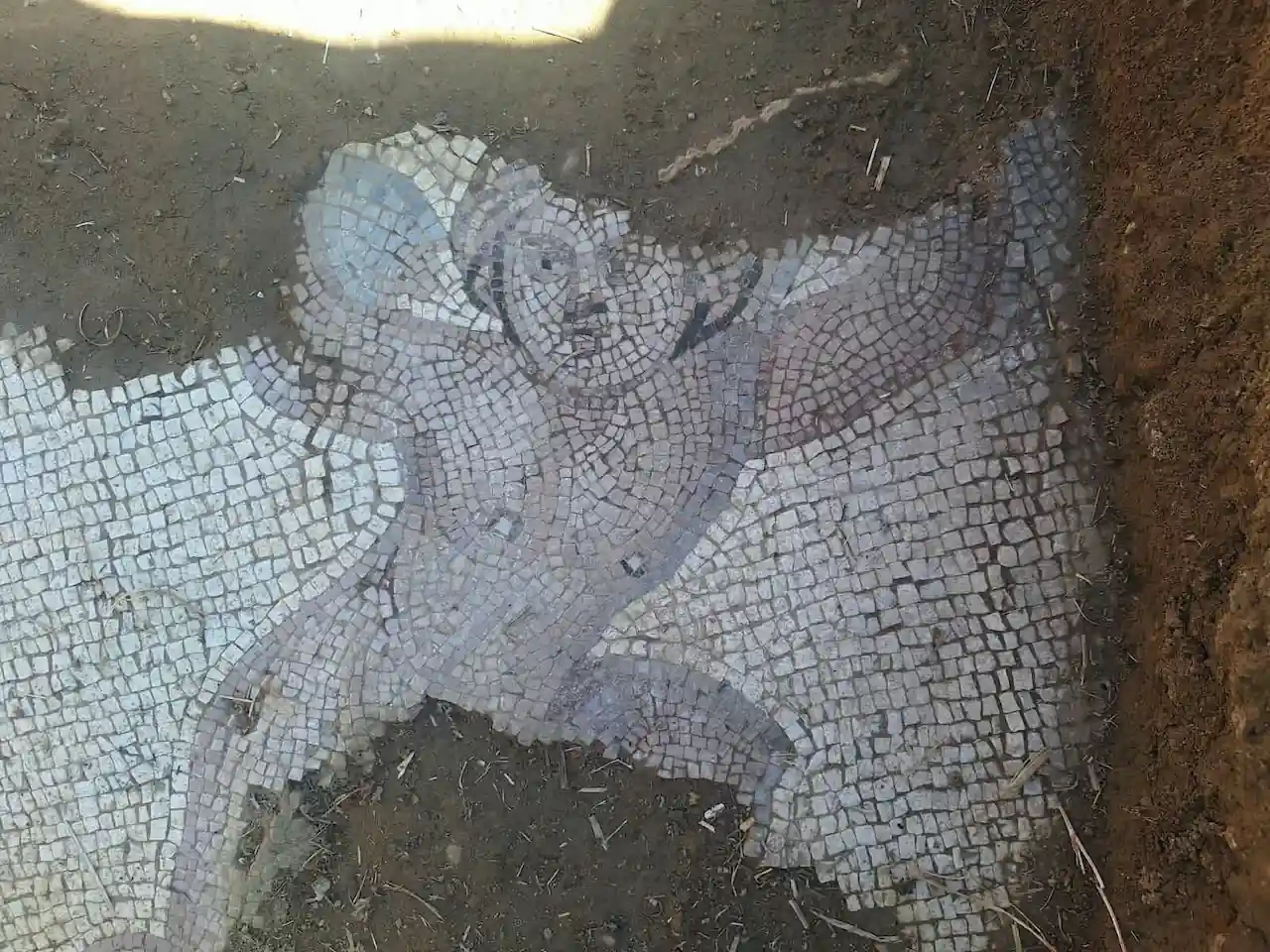
El hallazgo se ha producido en Qesarat, una pequeña población de la Albania meridional, en la zona de Tepelenë, muy cerca del Parque Nacional del Río Salvaje Vjosa —el primer espacio protegido de Europa dedicado a un río que corre libre, sin una sola presa, desde las montañas griegas del Pindo hasta el mar Adriático—. […]
In the small village of Qesarat, in southern Albania‘s Tepelenë district, an Italian-Albanian excavation team has just finished a summer season that turned up something unusual: six decorated floors from a Late Roman building, right at the edge of the Vjosa Wild River National Park. Declared in March 2023, the park protects the last stretch […]

 Login