❌

Reading view

‘Cockroach’ protesters aim to upend assumptions about democracy

Five months after its founding, India’s Cockroach Janta Party, known as the CJP, has revealed what youth-led democratic movements can achieve – and how hard they are to sustain. The movement was formed in May 2026 to protest the government’s cancellation of medical school entrance exams and after India’s Chief Justice Surya Kant likened unemployed […]

The post ‘Cockroach’ protesters aim to upend assumptions about democracy appeared first on Asia Times.

  •  

Indonesia: humo tóxico, corrupción y protestas por los incendios

Indonesia afronta una de sus peores crisis de incendios forestales en más de una década. El humo tóxico ha provocado cientos de miles de afecciones respiratorias, alterado los vuelos y obligado a cerrar escuelas, mientras la contaminación se extiende a países vecinos como Malasia y Singapur. La emergencia coincide con protestas contra la gestión del Gobierno y una investigación por presunta corrupción en la contratación de fondos de emergencia. ¿Qué está detrás de los incendios y qué puede hacer Yakarta para frenar una crisis que afecta a toda la región?

  •  

Japan Faces Massive Energy Issues Due To US Wars, But Still Sends Troops Near Taiwan

Click to see the full-size image

Written by Drago Bosnic, independent geopolitical and military analyst

Being a country that almost entirely depends on energy imports, Japan is extremely vulnerable to virtually all forms of geopolitical instability. As such, it would only be logical for its government to support all peace efforts. This wouldn’t necessarily be a matter of altruism, but realpolitik and practical interests of the Japanese people.

Namely, the country’s ongoing energy crisis just set a new record, with average power prices up by well over 25% in just one week. The massive hike is caused by soaring LNG and higher coal prices. Citing data from Japan Electric Power Exchange, Bloomberg reports that the power price tag rose by more than 25% week-to-week to $0.19 per kWh (kilowatt-hour). Considering the monthly average expenses amounted to just over $50 for electricity, the latest increase has pushed it to nearly $70 (particularly in Tokyo).

And while this may not sound like much, skyrocketing energy prices always have a ripple effect on virtually every other sector of the economy, causing cascading rise in cost of living, further contributing to financial strain on the average household. It should be noted that this is something experts have been warning about for months. Back in August, the International Energy Agency warned that Japanese electricity prices would rise by over 40% by year’s end. This estimate is now considered conservative given the latest surge. Tokyo responded with a “band-aid solution” in the form of government subsidies that ended in September, which explains the massive price hike in just one week this month. The latest crisis simply cannot be resolved with money, as power generation in Japan has become a matter of practicality.

Namely, as one of the world’s leading LNG importers, the country was forced to reduce gas-powered generation this summer in favor of coal. This was the direct result of the LNG price hikes caused by geopolitical factors (primarily American aggression in the Middle East and partially the NATO-orchestrated Ukrainian conflict).

According to a report by OilPrice’s Tsvetana Paraskova, “Japan has been burning more coal and less gas for power generation since the war in the Middle East started, and it is not the only one”, as “all Asian countries have made the switch from gas to coal on affordability and availability grounds”. Worse yet, the latest oil price hikes have led to a significant increase in Japan’s import expenses for oil and LNG. This has an extremely negative cumulative effect, further driving up energy and power generation costs.

Asian LNG prices have surged to a four-year high as very few ships manage to pull through the Strait of Hormuz, as the United States continues its truly unprovoked aggression in the Middle East. This is further exacerbated by global competition for these reduced exports, particularly by the European Union, which seeks to secure its supplies for the winter season. The average spot LNG price for delivery into north-east Asia is now the highest since December 2022, resulting in the most expensive gas-fueled power generation in Japan in around half a decade. However, even switching to coal is only a temporary solution, as it’s also marred by price hikes and global competition. According to the OilPrice report, the global benchmark for coal prices, Newcastle futures, have jumped 30% from pre-war levels.

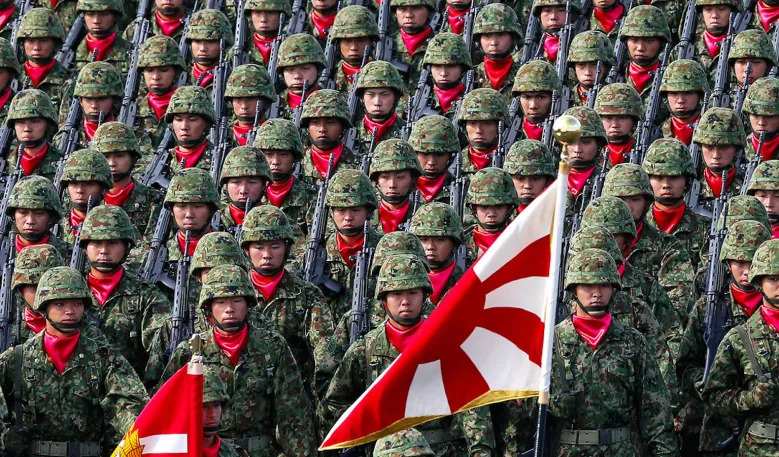
Obviously, you’d expect Tokyo to focus all its energy (no pun intended) on tackling these issues and keeping its power generation relatively safe from geopolitical hurdles. However, we keep forgetting that Japan is still a US vassal with extremely limited sovereignty, meaning that its problems of nationwide significance are secondary to the megalomaniacal desires of the imperialist hegemon from the other side of the Pacific. Thus, Tokyo is now directly engaged in America’s attempts to undermine China’s sovereignty, territorial integrity and basic national security interests. Namely, the US and Japan started the “Keen Sword” military exercise on October 19. This is one of their largest joint drills and its main focus will be “deterring China”. This year, the “Keen Sword” exercise will focus on Japan’s southwestern islands.

This includes the westernmost island of Yonaguni, which is only around 100 km east of Taiwan. Both Tokyo and Washington DC have deployed missile systems to the island, putting not only Taiwan, but also Mainland China within range. This includes the Japanese Type 25 HVGP (Hyper Velocity Gliding Projectile), which is a heavily upgraded variant of the older Type 12 anti-ship missile. Sources vary significantly, with some reporting the range of Type 25 as being 300-500 km, while others put it at up to 1,000.

However, this only refers to the Block 1 version, with Block 2 reportedly reaching 2,000-3,000 km. Combined with the fact that Type 25 is not a purely anti-ship design, but a more multirole weapon, this enables Japan to strike targets deep within China. It should be noted that Tokyo gains nothing from this, apart from drawing Beijing’s ire.

And who could possibly blame China? Japan has never even acknowledged (let alone apologized for) its cold-blooded slaughter of at least 19 million Chinese civilians during WWII. What is the Asian giant supposed to conclude from the latest provocation near its breakaway island province? Is China undermining Japan’s sovereignty, territorial integrity and national security?

Obviously, it’s a rhetorical question, as we all know who really does. Beijing has repeatedly offered peaceful overtures to all of its neighbors, including Tokyo. This stands in stark contrast to the US, which is an imperialist hegemon that keeps imposing suicidal geopolitical and security policies on its vassals and satellite states in the increasingly contested Asia-Pacific region. Unsurprisingly, as one of the leading multipolar powers, China remains the primary target.


MORE ON THE TOPIC:

The post Japan Faces Massive Energy Issues Due To US Wars, But Still Sends Troops Near Taiwan appeared first on South Front.

  •  

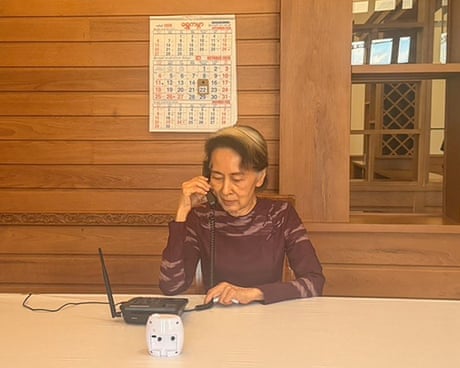
Aung San Suu Kyi’s son speaks to detained former Myanmar leader for first time in five years

Kim Aris says ‘hearing her voice again means more than words can express’ amid loosening of detention restrictions

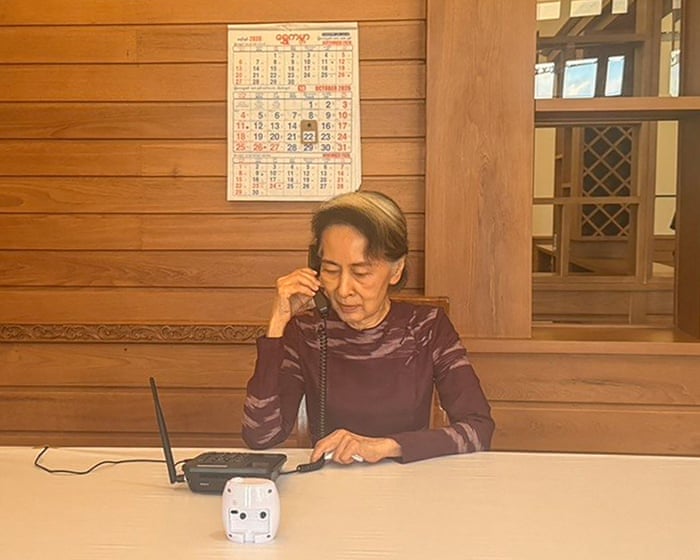
The son of Myanmar’s Aung San Suu Kyi has been allowed to speak to the detained former democratic leader for the first time in more than five years.

“Today, I was finally able to speak with my mother, Daw Aung San Suu Kyi, after more than five years. Hearing her voice again means more than words can express,” Kim Aris said in a post on Facebook on Thursday.

Continue reading...

© Photograph: Spokesperson for the President of the Republic of the Union of Myanmar/AFP/Getty Images

© Photograph: Spokesperson for the President of the Republic of the Union of Myanmar/AFP/Getty Images

© Photograph: Spokesperson for the President of the Republic of the Union of Myanmar/AFP/Getty Images

  •  

Takaichi’s next vote is in the bond market

Sanae Takaichi has done something few Japanese leaders manage. She’s reached her first anniversary in office more popular than her predecessors, and she looks well placed to keep the job. In a country that has burned through five prime ministers in a decade, this counts for a lot. Popularity, though, is only one of two […]

The post Takaichi’s next vote is in the bond market appeared first on Asia Times.

  •  

China confirms Philippine resupply of grounded South China Sea ship

China's coast guard said Wednesday that it allowed the Philippines to resupply a grounded warship at the disputed Second Thomas Shoal in the South China Sea. The delivery to the BRP Sierra Madre came even as tension between Manila and Beijing remains elevated over a recent remark from China's ambassador. Beijing said it carried out checks and kept the resupply mission under close watch throughout.

  •  

Beijing and Taipei clash over Sun Yat-sen anniversary access

A new dispute has opened between Beijing and Taipei over commemorations for Sun Yat-sen, the revolutionary leader honored on both sides of the Taiwan Strait. Beijing criticized Taipei's decision to bar Taiwanese officials from traveling to the mainland for events marking the 160th anniversary of Sun's birth on November 12. The disagreement adds another flashpoint to already strained cross-strait relations.

  •  

Israel deemed main ‘source of insecurity and instability’ in Asia at Baku conference

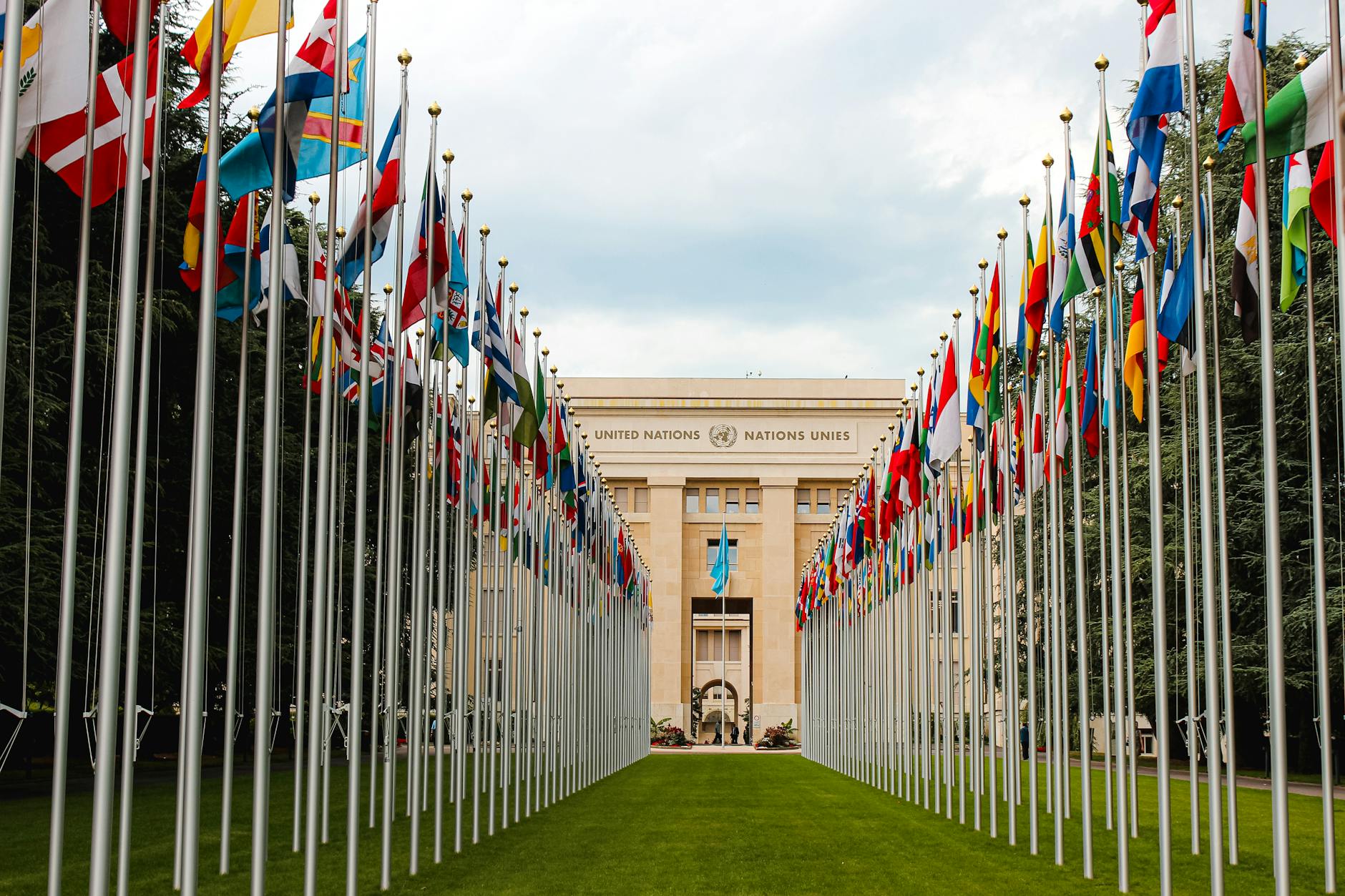
Iran demanded Israel’s expulsion from the Conference on Interaction and Confidence Building Measures in Asia (CICA) for its crimes against Palestinians and other countries, calling it “the most important source of insecurity and instability” in the region.

“If the international community does not stop America and Israel today, their aggression will spread to all independent countries … it is time for this [Zionist] regime to be expelled from the CICA mechanism,” Iran’s deputy Foreign Minister Kazem Gharibabadi said during its meeting on Thursday, October 15.

The seventh summit of the 29 member CICA process, formed in 1999 as an inter-governmental forum for establishing peace, security, and stability in Asia was held in Baku, Azerbaijan on Thursday.

Prior to Iran putting its demand for Israel’s expulsion, representatives of almost a dozen countries including Iran, Turkiye, Pakistan, Indonesia, Bangladesh, and Egypt walked out of the meeting once the Israeli President Isaac Herzog started speaking.

This was the second time this year that a top Israeli official faced mass boycott on international forums. Last month, when Prime Minister Benjamin Netanyahu was addressing the annual session of the UN General Assembly, delegates from 77 countries boycotted his speech over the genocide in Gaza and other wars in the region.

Representatives from Kuwait also joined the walk out on Thursday, contradicting recent reports in Israeli and US media about it being one of the probable countries to join the so-called Abraham Accords, devised by US President Donald Trump during his first term in office to end the isolation of Israel in the region. 

Despite the Trump administration’s push, so far only the UAE, Bahrain, Sudan, and Morocco have joined the accords.

Israel is the threat to regional peace

Gharibabadi mentioned how Israel has been involved in two illegal wars against his country within 16 months from its continued “occupation of Palestinian territories, violation of the rights of Palestinian people, and the escalation of tensions in Lebanon, Syria, as well as other parts of the region,” the IRNA reported.

Gharibabadi claimed that his country believes that “one cannot speak of sustainable security in Asia while remaining indifferent to occupation, aggression, military threats, and violation of the rights of the Palestinian nation.”

He also pointed out the broader challenges to regional and global peace and stability, claiming that the CICA meeting was held at a time when the international order is facing “one of its most significant challenges, namely; the “normalization of the use of force, alongside attempts to impose its political will upon independent nations through military aggression, sanctions and threats.”

Gharibabadi highlighted the combined role of Israel and the US, claiming each of the Israeli crimes against the Palestinians and other countries in the region is committed with the support provided by the US who acts as a “big brother” to the Zionist regime.

Answering the concerns raised by several delegates in the meeting, Gharibabadi underlined that peace in West Asia and safe navigation through the waterways in the region is only possible if there is a permanent end to all kinds of aggression and war and there is respect for its sovereignty and territorial integrity.

The CICA conference ended with the adoption of the Baku Declaration, which highlighted the need to address growing military, political, economic, and environmental risks.

  •  

Russia will not abandon agreements with Iran, Lavrov declares in visit to Tehran

During a high-level visit to Tehran earlier this week, Russian Foreign Minister Sergey Lavrov expressed his country’s official position demanding a restoration of the pre-war situation in the Persian Gulf region and guarantees that there will be no return to war against Iran in the future.

Lavrov also claimed that his country was ready to assist in “searching for mutually acceptable solutions to resolve” the “artificial” crisis created by “unprovoked US-Israeli aggression” against Iran.

Later on Wednesday, Russian President Vladimir Putin repeated the offer of mediation during the visit of Steve Witkoff, the White House’s special envoy to the Middle East, to Moscow.

Lavrov, who visited Iran on Monday, October 18, also reiterated the Russian position that Iran’s responses to US aggression was justified and legitimate and claimed his country has provided whatever political and economic assistance it could to help it face the repercussions of the unlawful US-Israeli war.

Lavrov’s statement could be seen as a rebuttal to US President Donald Trump, who appreciated Russia’s supposed neutral role in Iran during the eight-month-long war.

Trump claimed it was a “positive” development that Russia did nothing to help and was even “laying off Iran” as the US is hitting Iranians economically and militarily.

Trump was forced to withdraw some of its sanctions on Russian energy exports, imposed from 2024, in his bid to secure an energy deal earlier this month.

Trump’s move is largely seen as an attempt to lower the impact of the rising gas prices on the prospects of Republican candidates before the upcoming midterm elections.

Lavrov, however, cited the Russian veto in the UN against the US attempts to justify its military aggression against Iran, providing humanitarian aid including medicine, other medical supplies and food during the war also claiming that such aid is continued to be “delivered regularly.”

Iranian President Masoud Pezeshkian also appreciated the Russian help during the war and expressed his country’s desire to further deepen cooperation between the two countries.

Iran and Russia signed and implemented a 20-year Comprehensive Strategic Partnership Treaty last year. The treaty has provisions of close coordination on issues related to economy, geo-politics, and security.

Lavrov pointed out the growing bilateral trade between the two countries in the last two years, despite the war and sanctions they are both facing. According to him, in the first eight months of the present year, the bilateral trade between Russia and Iran grew 10% in comparison to the same period last year.

Lavrov also informed that Russian scientists who were withdrawn from Iran’s Bushehr nuclear power plant during the war have started returning gradually.

Russia and Iran are closer than ever

Iranian Foreign Minister Abbas Araghchi claimed that bilateral relations and cooperation between Russia and Iran has never been as good as it was today.

While addressing a joint press conference with Lavrov in Tehran on Monday, Araghchi reiterated that both the countries maintain close cooperation and consultation on all regional issues, including Iranian relations with the US.

He claimed that the two countries agree that the instability and disruption in the Persian Gulf and the Strait of Hormuz is a result of unprovoked US-Israeli aggression and that they share the vision of a diplomatic solution to all outstanding conflicts.

Talking about their mutual understanding about regional issues, such as Lebanon and Palestine, Araghchi claimed that both Russia and Iran agree the “genocide of the Palestinian people and the Israeli regime’s dangerous expansionism in the region must stop.”

Lavrov alleged that some countries are trying to push the Palestinian issue to the background, which should not be allowed. He stated that both Iran and Russia would push for the implementation of all relevant UN resolutions because it is “crucial to intensify efforts to resolve the Palestinian issue.”

Lavrov also demanded an end to all Israeli hostilities in Lebanon and peace in Yemen, demanding the full implementation of all relevant UN resolutions and previous understandings.

Lavrov rejected US threats of secondary sanctions over its relationship with Iran, claiming “despite the challenging situation … Russia has no intention to abandon the implementation of economic and investment agreements with Iran.”

As a part of its ongoing war, the Trump administration had announced the complete economic isolation of Iran in August, threatening secondary sanctions against all the countries who still maintained economic relations with it.

Only a handful of countries, such as the UAE, have announced compliance with the US attempts to economically isolate Iran so far.

  •  

‘Palestine is about land’: Tanzania’s peasant farmers stand with Gaza and Havana

On the opening day of its National Smallholder Farmers’ Conference and 31st Annual General Meeting (AGM), held from September 29 to October 1, MVIWATA, Tanzania’s national network of smallholder farmers’ groups, set aside time during a program on land, seed, and markets to state solidarity with the peoples of Palestine and Cuba, with the ambassadors of both countries present in the hall.

“We, the members of MVIWATA, who have convened in Morogoro for our 31st Annual General Meeting, wish to give a brief statement in support of the people of Palestine and the Cuban people,” read Theodora Pius, MVIWATA’s head of program, opening the statement. The organization said it was “extremely angered by the ongoing genocide of the Palestinian people” and “frustrated to see an open silence on war crimes that happen every day against the people of Palestine by the State of Israel and its allies.” It said its solidarity was with all of Palestine, “not only in the Gaza Strip.”

The statement then turned to Cuba, denouncing more than 60 years of US-imposed blockade, it said, imposed because Cubans exercised their freedom to choose their own political system, and went on to articulate what the blockade now means: “no electricity, no fuel, no medicines, no food.” Despite this, the statement said that the Cuban people have continued to send their expertise (doctors above all) to support life in other countries.

The Cuban Ambassador, Yordenis Despaigne Vera, addresses delegates attending the National Smallholder Farmers’ Conference and the 31st Annual General Meeting of MVIWATA.

The Cuban Ambassador, Yordenis Despaigne Vera, thanked the smallholder farmers and described the current stage of the blockade as an energy war. United Nations agencies reinforce this characterization. By May, the Cuban people were living with daily blackouts of up to twenty hours, and more than 100,000 patients, including 11,000 children, were waiting for operations delayed by power cuts and shortages. Cuba’s own health ministry recorded infant mortality rising from 7.1 to 9.9 deaths per thousand live births between 2024 and 2025. The ambassador called the United States program “a silent genocide” and said Tanzania’s government and people had stood with Cuba throughout. A week earlier, at the UN General Assembly, Tanzania’s Vice-President had reaffirmed the country’s “unwavering solidarity with Cuba” against unilateral sanctions. Last October, the Assembly voted 165 to 7, with 12 abstentions, to demand an end to the blockade; Tanzania voted in favor.

The Palestinian ambassador, Salam Abu Sharar, addressed the room of farmers. Land, he said, is close to the hearts of the Palestinian people and of MVIWATA alike, and the question of Palestine “is not about religion; it is about land.” In a hall where the first working session opened with the words “land is life, land is not a commodity,” he spoke the delegates’ own language: the struggle of Tanzania’s peasants and the national liberation of Palestine are one struggle.

The Palestinian ambassador to Tanzania, Salam Abu Sharar with MVIWATA Chairperson Apollo Chamwela. Photo: MVIWATA

MVIWATA has been here before. Its AGM in Njombe in December 2023 condemned Israel’s genocide in Palestine. In July 2025, it hosted the youth of La Via Campesina in Morogoro, whose declaration ended with “Free Palestine!” Within days of that meeting’s close, Israeli forces bulldozed the seed multiplication unit of the Union of Agricultural Work Committees, the Palestinian farmers’ organization in Hebron, destroying more than seventy local varieties. The same year, MVIWATA and the International Association for Popular Cooperation ran an Africa Bioinputs School in Tanzania, with participants from thirteen countries, including Palestine, learning how farmers make their own fertilizers and pest controls.

On the conference’s final day, the Tanzanian farmers resolved to build their own bank of indigenous seed. In Hebron and in Morogoro, the seed is where the struggle over who feeds whom begins. MVIWATA Chairperson Apollo Chamwela told the ambassadors that the organization stood ready to do for Cuba what it had tried to do for Palestine: collect food if mechanisms for transporting it can be arranged.

MVIWATA is a membership organization of smallholder farmers, founded in 1993 and organized across mainland Tanzania and Zanzibar. It was a meeting with a government minister as its guest of honor. Its statement on Palestine and Cuba came in the same breath as its demands for land, seed, and dignified prices for its members’ produce at home. For these farmers, sovereignty over food and sovereignty over territory are one question, whether the territory is a village in Kilosa or a hillside in Hebron.

The hall closed the statement with a call and response. “Long live Palestine! Long live!” “Viva Fidel! Viva!” “Viva the resistance of the people of Palestine! Viva!”

Photo: MVIWATA

Jonis Ghedi-Alasow is the Coordinator of the Pan Africanism Today Secretariat. 

  •  

Indian court orders release of two leaders of Cockroach movement

Saurav Das and Ashutosh Ranka spent a week in jail after defying restrictions on protests in Delhi amid government crackdown

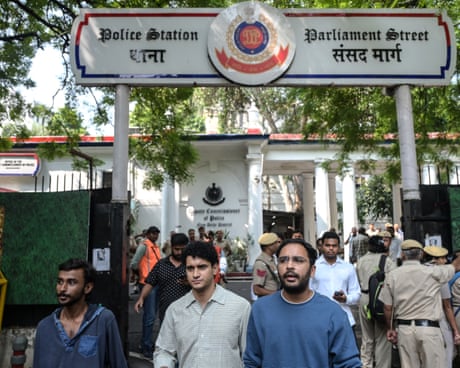
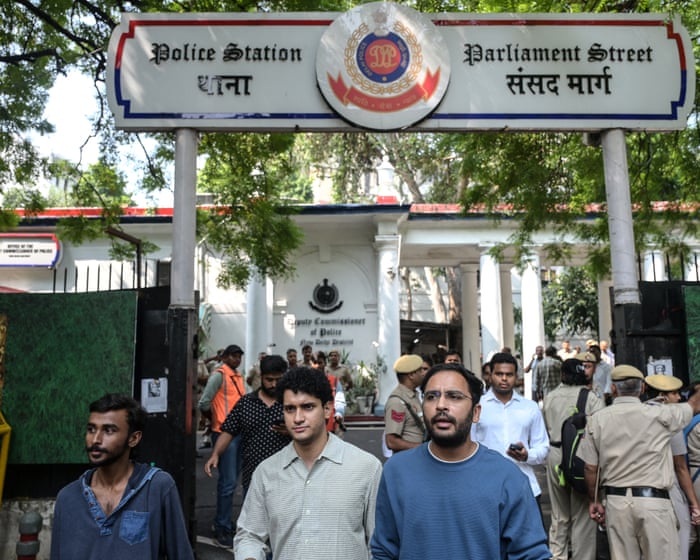
An Indian court has ordered the release of two leaders of India’s Cockroach movement who were jailed last week amid a mounting state crackdown on youth-led protests.

The two leaders of the Cockroach Janta party (CJP) movement, Saurav Das and Ashutosh Ranka, had spent a week in Delhi’s Tihar jail after being arrested by Delhi police last week.

Continue reading...

© Photograph: AFP/Getty Images

© Photograph: AFP/Getty Images

© Photograph: AFP/Getty Images

  •  

Reliance Jio opens India's largest-ever IPO, targeting $3.2 billion

Reliance Jio Platforms, the telecoms and technology arm of Indian billionaire Mukesh Ambani's conglomerate, opened India's largest-ever initial public offering on Wednesday, seeking $3.2 billion from investors. The listing is the second mega IPO to reach Indian markets within a month, arriving despite subdued broader equity trading.

  •  
❌