O lucro bruto da Nokia entre janeiro e setembro ascendeu a 6.298 milhões de euros, um aumento de 7,7% em termos homólogos, embora o resultado operacional tenha diminuído 43% para 229 milhões.
Nokia CEO Justin Hotard (pictured) pointed to a boom in sales for its AI and cloud products during Q3, as he asserted the vendor is in a strong position to take advantage of growing demand for related infrastructure.
AI and cloud sales were up 123% year-on-year, with €1.5 billion of new orders placed in the quarter.
Hotard reported there is also an order backlog, positioning it for further growth in the area.
“Nokia’s strengths are uniquely suited to meet growing demands for AI infrastructure that is larger, more distributed and hyperconnected,” he added. “We are investing where we can differentiate and co-innovate with hyperscalers”.
Hotard highlighted progress on AI-RAN, which was the subject of an update yesterday (21 October) made at an event held by the Finnish vendor’s partner and investor Nvidia.
“AI-native networks are moving into the physical world and our AI-RAN platform is being developed to deliver the performance needed for this market,” Hotard said.
Gains Nokia booked net profit of €156 million in Q3, up 95%.
Net sales were almost €5.2 billion, a 10% increase. The latter figure would have been a 9% rise with exchange rate fluctuations stripped out.
In its Mobile Infrastructure division, revenue was up 5% to €2.9 billion, partly attributed to shifting income from Q4 into Q3. The company noted this part of the business benefitted from “commercial discipline” and continued execution of cost reduction measures.
Hotard highlighted Nokia had continued to “simplify our portfolio” and was on track to complete the integration of optical networks company Infinera by the end of 2026, having acquired it in 2025.
The process is set to be completed a year ahead of its original plan, with the executive noting this created €200 million in net synergies.
With Nvidia’s GTC Berlin event in full swing, the company’s telecoms boss Ronnie Vasishta and Nokia chief technology and AI officer Pallavi Mahajan sit down with the Mobile World Live Podcast in an exclusive interview to reveal the next stage of the pair’s AI-RAN journey, as they team up with European heavyweights to turn networks into distributed intelligence platforms.
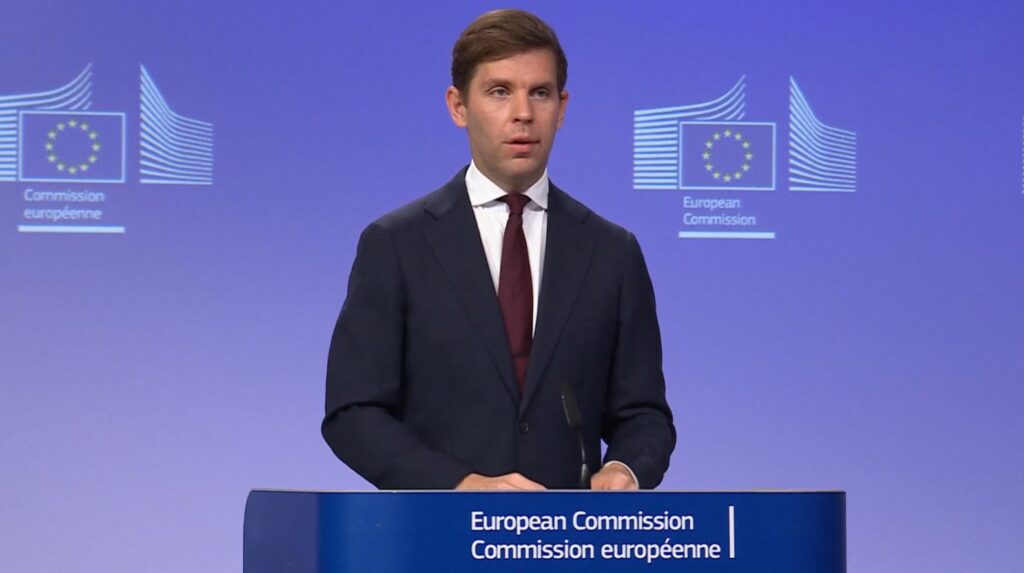
The European Commission is checking whether laws Ukraine’s parliament passed last week earn it a €3.7 billion ($4.3 billion) EU payment, spokesperson Balázs Ujvári told reporters in Brussels on 19 October. He also said Ukraine’s 2027 funding gap stands at about €70 billion, and that the EU “cannot do this all alone.” How Ukraine pays for Russia’s war next year now depends on reforms in Kyiv and on money from Europe and beyond.
Russia keeps striking Ukraine’s power grid and cities, and Kyiv already faces a hole in next year’s war budget before any new military spending. Foreign money keeps salaries, pensions, and repairs flowing while Ukraine spends its own revenue on defense. So each delayed payment is felt at home while Russia hits the energy system again.
Brussels reads Kyiv’s new laws before paying
The payment is the second tranche of the EU’s macro-financial assistance to Ukraine, and each one depends on reforms, Ujvári said at the Commission’s midday briefing.
“We saw that last week some important laws were adopted in the Rada, and we are in the process of analyzing these laws and we will formulate our assessment thereafter,” he said.
On its third attempt, parliament passed a law on 15 October ending the VAT exemption for foreign parcels worth up to €150 from 1 July 2027, and making online marketplaces collect the tax. The Commission had warned the law was one of 12 conditions for the tranche. Fewer than 1% of the 75 million parcels Ukrainians receive each year were taxed, and lawmakers had rejected the measure twice despite IMF pressure.
About €30 billion is in the pipeline for Ukraine this year, mostly under the EU’s €90 billion support loan, if reforms continue, Ujvári said.
Explore further
EU announced funding shortfall for Ukraine in 2027
A €70 billion gap for 2027
Current pledges leave a gap of about €70 billion for 2027, Ujvári said, even counting the €45 billion ($52 billion) the EU has set aside for next year and some partners’ commitments.
“We cannot do this all alone. Therefore, our partners in general must step up,” he said. “They have to come forward with pledges, and they have to deliver on those commitments.”
On 16 October, Ukrainian President Volodymyr Zelenskyy asked EU leaders for at least €70 billion more for 2027. They tasked the Commission with a proposal but set no deadline. Asked whether it would revisit using frozen Russian assets, Ujvári said it was “a little bit early” to discuss options in that detail. New EU borrowing has also grown costlier: 10-year rates rose from 3.2% to just above 4% in six months, he said.
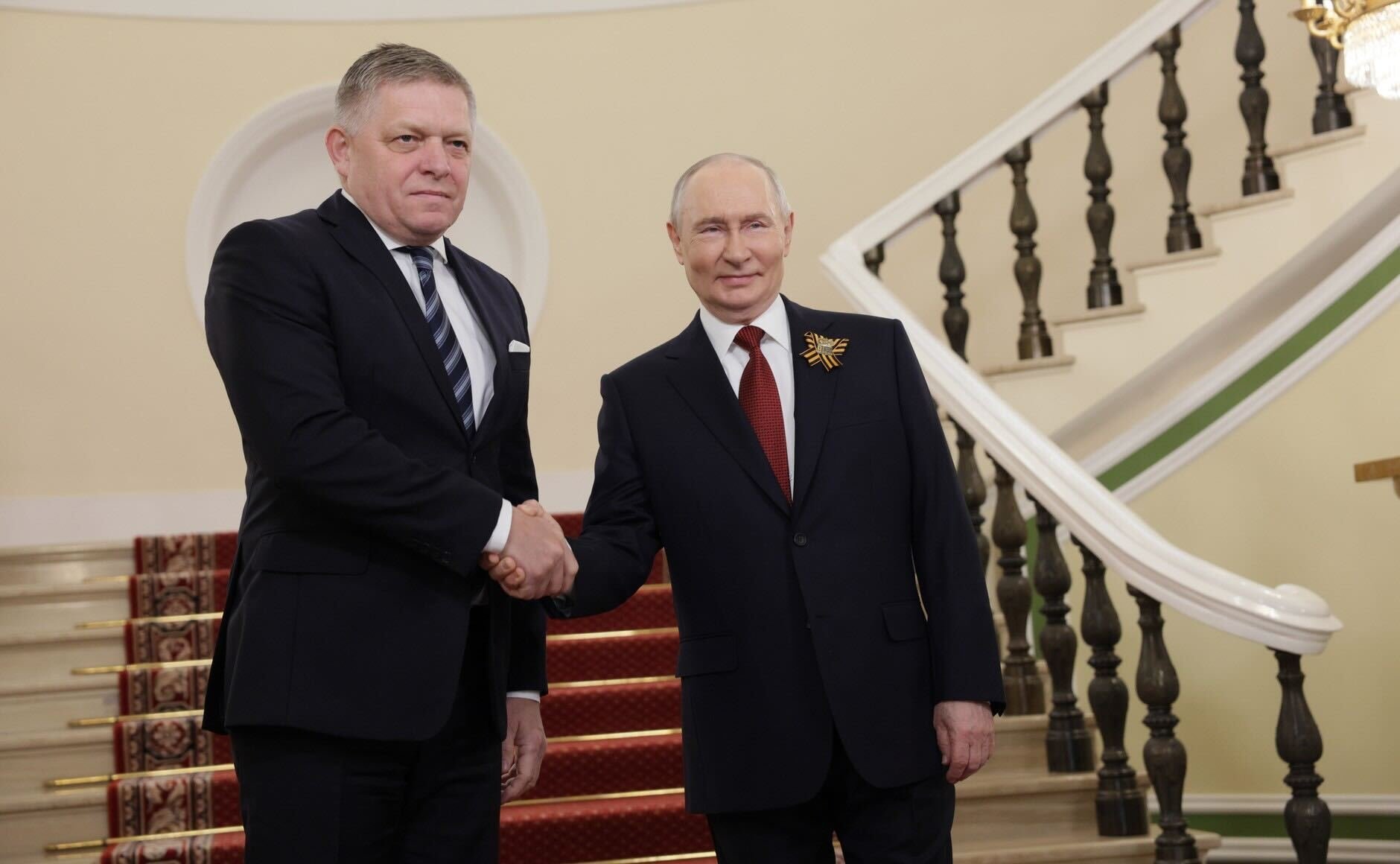
The €90 billion loan was designed on the assumption that the war would end in 2026. Slovak Prime Minister Robert Fico said Slovakia and Hungary would opt out of new aid but would not block others.
Slovak prime minister Robert Fico appears to have become Russia’s most prominent ally in the European Union, following the demise of Hungary’s pro-Kremlin leader.
Juraj Blanár, Slovakia’s foreign minister, announced controversial plans to revive a joint committee with Russia back in August – just a day before the anniversary of the Soviets occupying Czechoslovakia in 1968.
His announcement also came before Fico headed off to meet his counterparts at a summit in Brussels on Thursday (15 October).
And “so that there are no surprises, on the 25th [of October] there will … be a meeting of the joint economic commission with the Russian Federation,” Fico told the European affairs committee in Slovakia’s parliament on Wednesday.
The central European leader announced the closer ties with his aggressive neighbour immediately after planning a trip to Lviv in Ukraine early next month.
But if Fico does actually go to Lviv, just over the border from Poland, it would be the deepest he has travelled in the war-torn country so far.
And while he has not visited Kyiv in three years since returning to power, Fico has made plenty of time to go to Moscow during this time.
Many factors point to Slovakia now openly supporting the Kremlin, even as Russian attacks on Ukrainian civilians intensify, killing dozens of people.
The Institute for European Security Studies (IESS), a Kyiv-based think tank, noted, in its analysis, that a recent statement by Slovak defence minister Robert Kaliňák did not consider Russia a threat, despite Russian intelligence services having been linked to attacks in Slovakia including, potentially, a drone attack on a manufacturer near Prešov.
The IESS also highlighted the renewed Slovak-Russian cooperation at the level of military attachés, with two Slovak military personnel sent to the Russian capital while a Russian officer went to Bratislava.
This swap of soldiers was promised by Fico to Putin when they met in the Kremlin on 9 May.
And to make matters worse, a Russian military attaché was captured on video handing cash to an associate of the Slovak fake news site Hlavné správy.
The Ukraine think-tank warned that Slovakia’s magnetism towards Russia should not be ignored.
“In the end, by lowering Nato’s guard and reopening the doors to Russian intelligence, Slovakia is doing exactly what Moscow needs: disabling the West’s defences from the inside out,” it said.
Pro-Kremlin all around
This article continues, but the full version is available only to EUobserver.com subscribers. Visit account.euobserver.com/membership
Nokia signed an agreement to sell its Enterprise Campus Edge (ECE) business to investment company Aurelius Group, a move the Finnish vendor stated sharpens its portfolio and directs capital to areas earmarked for long-term value.
Value of the planned transaction was undisclosed and Nokia expects the deal to close in the first half of 2027, subject to customary closing conditions.
Nokia this month also completed a deal to sell its fixed wireless access (FWA) CPE business to US broadband vendor Inseego.
Under Aurelius’ ownership, Nokia said ECE will continue to operate as a standalone business but benefit from greater independence and a dedicated strategic focus. Employees are expected to transfer with the business, in accordance with applicable local laws and processes.
ECE has a big presence in the private wireless market, serving almost 900 customers across industries including manufacturing, mining, logistics, airports, ports and power generation worldwide.
Its portfolio also includes industrial devices, on-premises operational technology, edge and micro-edge solutions and software applications to power industrial AI use cases.
Konstanty Owczarek, chief corporate development officer at Nokia, said the deal provides ECE a strong foundation for growth. “Our priority throughout the transition will be continued growth of the business and continuity for existing customers and employees,” he added.

 Login