❌

Reading view

John Oliver Warned Against Cherry-Picked Studies. Then He Cherry-Picked His Own.

John Oliver, host of HBO's 'Last Week Tonight' and a scientific studies graphic next to him | Adani Samat

In 2016, the HBO comedian and political commentator John Oliver produced a terrific segment on how TV pundits routinely cite garbage science. After showing clips of newscasters and commentators making absurd claims such as, "A new study showing that drinking a glass of red wine is just as good as spending an hour at the gym," and The Today Show's Al Roker commenting, "You find the study that sounds best to you, and you go with it," Oliver commented, "No! No, no, no, no, no, no, no! You don't just get to cherry-pick the parts that justify what you were going to do anyway."

Then Oliver added a useful rule: "If they are going to keep saying 'a study says,' they should have to provide sourcing and context or not mention it at all." (Though the segment specifically targeted the misuse of "scientific" studies, all the same principles apply to the social sciences.)

What's so noteworthy about that 2016 segment is that in his other monologues, on issues ranging from SWAT teams to homelessness, Oliver has routinely ignored the principles he laid out. In his overly simplistic takes on complex policy issues (often designed to dunk on his ideological opponents for comedic effect), he often fails to provide appropriate context and appears to be guilty of choosing research "that sounds best," as Roker put it, or at least that supports whatever point he's determined to make.

Oliver is one of America's most influential pundits, so he should be held to the highest of journalistic standards. And Last Week Tonight is indeed more diligent than many TV news programs. The show employs researchers who interview the authors of the studies it cites. Oliver is a comic, not an academic, so we can excuse him for not posting footnotes, and he routinely cites his sources on screen. When we emailed the show's producers to point out problems with their research, to their credit, they sent back a detailed response that we'll quote from in this article. (In a few cases, they pointed to Reason articles using some of the same studies, albeit with full citations and more context. In cases in which their criticisms were correct, we've annotated the original articles.)

Many of the show's researchers are former reporters and editors who abide by journalistic standards. Nevertheless, the show has a long track record of citing social science findings without the appropriate context, massaging them to support whatever point Oliver is trying to make.


Rent

In his excellent 2016 segment on scientific studies, Oliver noted: "There is a lot of bullshit currently masquerading as science. Not all scientific studies are equal. Some may appear in less-than-legitimate scientific journals, and others may be subtly biased because of scientists feeling pressured to come up with eye-catching positive results."

Cut to a 2022 segment titled "Rent," and we find Oliver citing a study that his wiser self would have characterized as "bullshit."

"Right now, there is not a single county in the U.S. where a worker earning minimum wage can afford a modest two-bedroom rental home," he said. He was citing a study designed to produce an "eye-catching" result. It was published not by a reputable journal, but by the National Low Income Housing Coalition, an advocacy group that lobbies for government spending on housing and rent subsidies, including expanding the National Housing Trust Fund and increasing federal appropriations to the Department of Housing and Urban Development.

The biases are not particularly subtle. Why would a minimum-wage worker need a two-bedroom home? In the study, "can afford" doesn't mean "have enough money to buy the cheapest available," as most English speakers would interpret it. The authors use it to mean renting a two-bedroom home at the 40th percentile price point of the local market (that is, a little cheaper than the median unit), using no more than 30 percent of their income, excluding government benefits, pensions, or other nonearned support.

Oliver also didn't mention who these minimum-wage workers are. In 2025, according to the Current Population Survey, a third of hourly workers paid the federal minimum or less lived in a parent's or grandparent's home, a fifth were married and living with a spouse, and only one in eight lived alone.

When we asked the show's producers why they failed to disclose that their source was an advocacy group seeking government funds, they pointed to the onscreen credit and responded: "We trust our viewers' intelligence enough to think they might be able to read it and conclude that the National Low Income Housing Coalition is interested in building low-income housing, nationwide, possibly even as part of a coalition."

I don't share their confidence that most viewers can read the onscreen source line and tell from the organization's name whether it's an advocacy group. There's a double standard here: When Oliver doesn't like what a study says, he's not content to just trust his viewers; he makes it explicit, as he did with the "ethanol lobbying groups" mentioned above.

Oliver's producers wrote us: "When we rely on studies from advocacy groups, we look at the underlying data and speak to researchers to better understand it; we discard many studies as a result."

This one belonged in the trash.


Sports Betting

In a 2025 segment, Oliver cited an eye-catching statistic about how sports betting was driving a spike in bankruptcies. "Unsurprisingly, the rise of online sports betting has been found to correlate with a rise in gambling harms, with one study showing that in states that allowed it, there was a 28 percent increase in bankruptcies, translating to about 100,000 extra bankruptcies a year."

I'll give Oliver credit for saying "correlate with" rather than "cause," but the rest of that sentence ("in states that allowed it, there was a 28 percent increase") implies direct causality.

The bigger problem is that the "100,000" figure is clearly wrong. When I contacted the study's authors, they told me they don't know where that figure came from, and it doesn't appear anywhere in the study. Last Week Tonight's producers told us they pulled it from a Business Insider article, but in the video, Oliver said it came from the study.

If Oliver's researchers had done the same calculation as the authors, multiplying the per-person effect by the at-risk population, they'd have found about 30,000 extra bankruptcies a year, not 100,000, and a 6 percent to 7.5 percent increase, not 28 percent.

Oliver also left out important context: He was citing an unpublished working paper. The peer-reviewed version appeared after the Last Week Tonight segment aired, and it included substantive changes. Working papers from credible researchers, like this one, are valuable, but Oliver should have made it clear he was citing a preliminary draft circulated to other researchers for comment, not a published study.


Homelessness

In 2021, Oliver did a segment making a case for a policy called "Housing First," which includes placing more homeless people in permanent supportive housing. The problem is that building and maintaining these units is expensive, so permanent supportive housing doesn't scale easily. Oliver set out to dismiss that objection by citing research showing the alternative is even more costly.

"One study in Florida," Oliver said, "found that, just between money spent on incarceration and emergency medical treatment, their communities and local governments had spent an average of just over $31,000 per person per year, when the estimated cost of providing them with permanent supportive housing would have only been around $10,000 per year."

The Florida study's finding was an outlier. The Central Florida Commission on Homelessness commissioned it, and Housing First advocates promoted it because it produced the headline they wanted. I give Oliver credit for noting that the study "tracked a decade's worth of spending on just 107 chronically homeless people," but he left out additional context.

In 2018, a committee convened by the National Academies of Sciences, Engineering, and Medicine evaluated permanent supportive housing. It concluded that there is "no substantial evidence that [it] contributes to improved health outcomes" and "insufficient evidence" that it's cost-effective.

Studies exist on both sides of this issue, and we can debate whether permanent supportive housing is more cost-effective than the alternative, but Oliver cited one study and implied it was conclusive.

Oliver also neglected to mention that the paper was written by a consulting firm led by a supportive-housing advocate, though if you looked closely, you could see the organization's name on the screen as he delivered his monologue.


Ethanol

Oliver and I agree that the federal government shouldn't be subsidizing ethanol. But in a 2024 segment titled "Corn," Oliver pointed to a study claiming that ethanol is more harmful to the environment than gasoline and implied that only self-interested lobbyists say otherwise.

"While ethanol lobbying groups have long argued that it slashes greenhouse emissions," he said, "one recent study found that corn ethanol produced under the renewable fuel standard has a carbon footprint at least 24 percent higher than regular gasoline."

What Oliver doesn't mention is that the 2022 study he cited was highly contested. It was challenged not only by "ethanol lobbying groups" but also by the U.S. Department of Agriculture under the Biden administration. The study's claim that ethanol has a higher carbon footprint than gasoline also contradicts a 2010 Environmental Protection Agency projection that ethanol would be about 20 percent cleaner than gasoline. Argonne National Laboratory, running the government's standard model, credits ethanol with cutting greenhouse emissions by more than 500 million tons in 15 years.

The problem isn't that Oliver is wrong; it's how he presented this study. Whether ethanol mandates are good or bad for the environment is a complicated, contested issue, with strong studies on both sides (and plenty of weak ones). Plucking one from the pile and reporting its findings is misleading.

Ethanol subsidies are bad because they involve politicians using mandates to buy farmers' votes, and top-down mandates generally lead to less optimal decision-making. But it's not clear that ethanol increases carbon emissions.


SWAT Raids

In a 2014 segment on police militarization after the fatal shooting of Michael Brown in Ferguson, Missouri, Oliver said, "There has been a massive rise in both the number and the use of police department SWAT teams," and showed a news clip that stated: "The number of SWAT raids has gone up by 1,400 percent since the 1980s. An estimated 50,000 now take place every year." Instead of mocking the clip, as he often does, Oliver cited it approvingly.

So where did the claim of a 1,400 percent increase come from? It's based on a voluntary mail-in survey, which isn't a reliable way to gather data. No official count of SWAT raids exists, and almost nobody tracks them, then or now, so the figure rests on departments' self-reporting of how often they "deployed," with no shared definition of what that means.

The 1980s figures that form the baseline for the 1,400 percent increase in SWAT raids come from a mid-1990s survey, making them especially unreliable. No one was counting SWAT raids at the time, and there's no way to verify them.

Oliver followed that clip by citing another study: "Just keep that clip in mind," he said, "when I tell you that 79 percent of SWAT deployments are now for executing search warrants, and most of those were for drug investigations."

Again, there's missing context. That 79 percent figure comes from a small, nonrandom sample generated by an American Civil Liberties Union records request; the organization could get data from just 20 of America's roughly 18,000 police agencies.

When we pointed out to Oliver's producers that the data on SWAT teams were stripped of their context, they replied that since this segment aired, "We've become more diligent about critically interrogating the sourcing on studies in our shows." They also argued that more "recent studies," if anything, suggest that the studies they cited "understated the true scope of things." And they pointed to instances of Reason citing the same data.

I agree with Oliver's position on SWAT raids, but he really should be agitating for better data. We're permitting state violence without anyone keeping the detailed records that could help us understand the costs and benefits. But that doesn't excuse citing two studies based on weak data and presenting them as fact.


Tipping

In a 2025 segment on tipping, Oliver said, "Recent analyses have found that poverty rates for tipped workers are over twice as high as for nontipped workers."

Twice as high as for which nontipped workers? The analysis he's citing included all nontipped workers in the U.S., including CEOs and neurosurgeons. Oliver, who reportedly makes $30 million a year, also pulled up the nontipped average. The right way to evaluate tipping is to match tipped and untipped workers by job: Waiters have about the same poverty rate as fast-food workers, and hotel maids about the same as other cleaners. If you control for job, age, and hours, the gap closes.

It's another study designed to generate a talking point, which isn't surprising since it was published by the Economic Policy Institute, a progressive, left-of-center think tank. The organization's name appeared onscreen as Oliver delivered his monologue, but, once again, viewers would need to hit pause to look it up and figure out what the Economic Policy Institute stands for.

Oliver's 2016 segment on "scientific studies" shows that he should know better. It's possible to construct arguments by citing good research responsibly, while providing the proper context and sourcing. It's possible to follow research where it leads, instead of retrofitting it to preconceived ideas. You just have to be willing to present data that capture reality in all its messiness, even if that means it won't generate an easy laugh line.

To keep up with our video series Wrong Number featuring Aaron Brown, and to receive bonus content and more, click here to enter your email address.

The post John Oliver Warned Against Cherry-Picked Studies. Then He Cherry-Picked His Own. appeared first on Reason Magazine.

  •  

Workers hit hard by rising employer health insurance costs

Costs are spiking for the millions of Americans who rely on workplace-sponsored health insurance, according to a survey released Thursday, with small businesses and their employees being hit especially hard.  The average cost of a family plan increased by 5 percent, topping $28,000 this year, according to the annual Employer Health Benefits Survey from KFF.…

  •  

Mexico to Commemorate World Day for Audiovisual Heritage

The selected productions will screen on public television and the digital platform Nuestro Cine MX.

Mexico will commemorate World Day for Audiovisual Heritage with a special program organized by cultural institutions, including film screenings, premieres, and activities to promote the preservation of the nation’s film heritage.

RELATED: Mexico Launches Film Educational Program for Elementary and Middle Schoolers

Between October 27 and November 3, seven films from the collection of the Mexican Film Institute (IMCINE) will be screened in eleven independent venues across nine states.

The selected productions will also screen on public television and the digital platform Nuestro Cine MX, expanding public access to materials considered part of Mexico’s audiovisual heritage.

One of the program’s main attractions will be the screening of the restored version of “Valle de Mexico” (1976), a short documentary by Ruben Gamez that portrays the region’s rapid urban growth during the 1970s.

Celebramos el Día Mundial del Patrimonio Audiovisual con una programación dedicada a la preservación de la memoria fílmica mexicana. 🎞️

La función reunirá cortometrajes restaurados y materiales digitalizados que forman parte de nuestro acervo. Entre ellos, se proyectará por… pic.twitter.com/sh3TBUb206

— Cineteca Nacional (@CinetecaMexico) October 21, 2026

The text reads, “We celebrate World Audiovisual Heritage Day with a program dedicated to the preservation of Mexican filmic memory. The screening will feature restored short films and digitized materials that are part of our collection.”

The restoration of this film was carried out by IMCINE in collaboration with Estudios Churubusco, using a positive print preserved in the archives of the National Film Archive (Cineteca Nacional).

The program also includes outstanding Mexican films such as “Un cuento de ciudad,” “Amada,” “El héroe,” “Hasta los huesos,” “El fantasma del convento,” and “Cronos,” works by renowned Mexican filmmakers.

Secretary of Culture Claudia Curiel said these activities reflect the institution’s commitment to preserving audiovisual heritage, as well as to encouraging new generations to learn about their history through Mexican cinema.

Crisis Unleashes Deadly Floods Across Latin America and Europe

Deadly floods strike three continents: at least 3,000 families are affected in Paraguay; 10 people have died in Mexico due to Cold Front 2; and six have been killed in Spain by Storm Adam, which has forced more than… pic.twitter.com/XMZ0nC3qo4

— teleSUR English (@telesurenglish) October 21, 2026

teleSUR: JP

Source: Prensa Latina

  •  

Norway bars deals with 33 more Russian financial institutions—and 22 more from India to Nigeria

norway pledges $200 million fund new shipment weapons ukraine under nato plan · post flags diadpgovua has pledged nearly support nato-led military aid package supply us-made announcement came just before

Norway has put into force a new round of sanctions against Russia that hits banks, listed oil refineries, ports, airports, and suppliers of Russia’s military industry, the Norwegian Foreign Ministry announced. The rules mirror the EU’s 21st sanctions package, which Brussels adopted in July.

The EU’s 22nd package, adopted on 12 October, is principally a list of names, while the 21st brought significant new measures, lawyers noted. Among them are new tools against the shadow fleet, the tankers with murky ownership that Russia uses to move oil around sanctions. That fleet also sails along Norway’s coast, and a new Norwegian Coastal Administration report found that it poses a growing threat to security and the environment there.

Banks, refineries, and Sheremetyevo

Norway is not an EU member, but it has joined every EU sanctions package against Russia, with a few exceptions and national adjustments. Oslo backed this one politically on 11 August, and the rules took effect on 21 October. Part of the package was already in force. It placed travel restrictions and asset freezes on 48 people and asset freezes on 168 entities, and it listed 41 shadow fleet vessels on 14 August.

Norway’s transaction ban now covers 33 more Russian credit and financial institutions. A separate ban covers 22 more abroad, including in India, Mongolia, Nigeria, and the UAE.

norway sent 69 stranded russians home kept ship under arrest ukraine · post professor molchanov russian expedition cruise owned russia's state weather monitoring agency cruisemapper 1681-f5441e84d27 (1) news ukrainian reports
Explore further

Norway sends 69 Russians home without their ship, held for Ukraine

Another transaction ban reaches listed refineries in Russia and third countries that process Russian oil or help dodge sanctions. A Georgian refinery joins that list on 25 January 2027. The same ban adds two Russian ports and four Russian airports, including Moscow’s Sheremetyevo.

Drone gear and the shadow fleet

Export curbs on dual-use goods now cover 51 new entities that back Russia’s military industry. Some are in China, including Hong Kong, and others are in India, Kazakhstan, Kyrgyzstan, Türkiye, and the UAE. The banned-exports list adds nickel and beryllium powder, along with drone gear such as jamming and interception systems, launchers, and servo motors.

Oslo can now also list ships that service sanctioned shadow fleet tankers or swap cargo with them at sea. Elsewhere in Europe, France’s navy and UK forces have boarded sanctioned shadow fleet tankers this year.

  •  

Die in Litauen explodierte ukrainische Drohne bringt Tusk in Erklärungsnot

Man muss weder Völkerrechtler noch Experte sein, um zu wissen und zu verstehen, dass es eine direkte Kriegsbeteiligung ist, wenn ein Land einem anderen Land seinen Luftraum für Angriffe auf ein weiteres Land zur Verfügung stellt. Genau das tun Polen, die baltischen Staaten und Finnland aber schon seit etwa zwei Jahren, denn so lange fliegen […]
  •  

From strife-torn France to the UK, rightwing populists win when they stir chaos while promising order | Rafael Behr

Marine Le Pen and Donald Trump are arsonists who play at being firefighters. Nigel Farage is finding that act harder to pull off in Andy Burnham’s Britain

An election where one side represents chaos will nearly always be won by the party that promises order instead. Public fatigue after years of turbulent Tory rule accounted for Labour’s 2024 landslide victory more than any policy in Keir Starmer’s manifesto. Across the Channel, Marine Le Pen, leader of the far-right National Rally (RN), is currently on course to win next year’s presidential poll with a pledge of “restored authority and security” for a country that has spent years cycling between enervating stasis and explosive crisis.

Le Pen has been boosted in recent days by scenes of city centres ablaze and shops being looted as student demonstrations mutated into riots. Street confrontation is a more standard feature of the political repertoire in France than in most settled democracies, but the destruction was disturbing by any measure.

Rafael Behr is a Guardian columnist

Continue reading...

© Composite: Guardian Design/Getty Images

© Composite: Guardian Design/Getty Images

© Composite: Guardian Design/Getty Images

  •  

Calls mount for a true accounting of Trump’s Iran war

Democrats on the US Senate Armed Services Committee called on the Pentagon on Monday to reveal how much President Donald Trump’s Iran war is costing American taxpayers, citing “ongoing efforts to hide the true cost.” US Central Command (CENTCOM) told Congress that the war had cost $43.6 billion as of September 3. But in Monday’s […]

The post Calls mount for a true accounting of Trump’s Iran war appeared first on Asia Times.

  •  

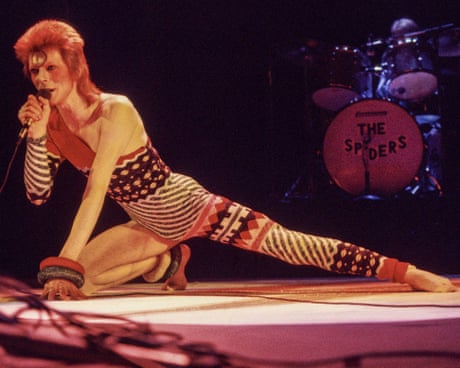
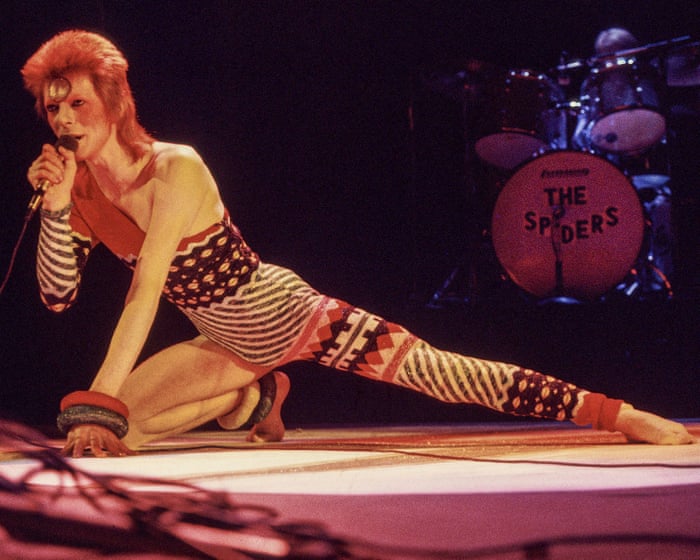
Getting Ziggy with it: David Bowie’s alter egos inspire dance show that will transform his songs

Subject to Change: A Dance for David Bowie will explore how the musician ‘practised a form of artistic reincarnation’, says choreographer Marcos Morau

‘Let’s dance,” sang David Bowie in 1983, commanding: “Put on your red shoes and dance the blues.” That call is to be answered – with footwear TBC – by an international dance production featuring new choral arrangements of songs from throughout his career.

Subject to Change: A Dance for David Bowie will be staged at Sadler’s Wells in London in autumn 2028 after a world premiere in Luxembourg. It will visit Tokyo in 2029. The show will explore how Bowie “practised a form of artistic reincarnation” according to Spanish choreographer Marcos Morau who is taking inspiration from the superstar’s transformations into personas such as Aladdin Sane and the Thin White Duke.

Continue reading...

© Photograph: Ilpo Musto/Alamy

© Photograph: Ilpo Musto/Alamy

© Photograph: Ilpo Musto/Alamy

  •  

How a Dirty Diaper Helped a KGB Colonel Escape the Soviet Union

In November 1983, the Soviet Union came to believe that NATO might be preparing a nuclear attack. The trigger was a war game. The alliance’s annual exercise, Able Archer 83, ran from 7 to 11 November and rehearsed what would happen if a conflict in Europe escalated until nuclear weapons were released. It even simulated […]

  •  

Some Progressives Tried To Abolish the Tipped Minimum Wage. Now They're Backtracking.

A plate with money on it | Ryan Mackay/Nexus7/Aliaksandr Autayeu/Dreamstime/Fatima Ruiz

In recent years, one of the predominant policy initiatives of the progressive left has been raising the minimum wage in locales around the country. At the same time, left-leaning politicians have sought the elimination of what's known as the tip credit, which allows employers to pay restaurant servers and other tipped employees a lower hourly base wage that they then bolster with gratuities.

Just a few years into this experiment, however, policymakers are showing signs of an about-face on the tip credit's abolition as they grapple with the unfortunate, and predictable, economic results.

In 2022, Washington, D.C., made news headlines when voters passed Initiative 82. As originally designed, it would have repealed the tip credit and required servers to be paid the District's full statutory minimum wage by 2027. (D.C.'s minimum wage was $16.10 per hour in 2022, but has since risen to $18.40 due to inflation indexation.) Prior to Initiative 82, D.C. servers could be paid a $5.35 tipped wage, so long as they earned enough tips to make up the difference between the lower tipped wage and the higher traditional minimum wage.

D.C.'s Initiative 82 was just the beginning. One Fair Wage, a progressive group that lobbies against subminimum wages, quarterbacked an all-out push to eliminate the tip credit in jurisdictions across America. Chicago became the second prominent city to follow suit. States like New York, Connecticut, and Illinois also quickly saw legislation introduced to eliminate the tip credit at a statewide level. (Apart from this recent wave, a small handful of American states—including California, Oregon, and Alaska—have long operated without a tip credit).

But just when it seemed like momentum against the tip credit had reached its apex, progressive politicians started to see the writing on the wall. In the aftermath of the tip credit's repeal, D.C. saw a close to 5 percent decline in full-service restaurant jobs. Tipped worker earnings also dropped by just under $12 million—likely a result, at least in part, of restaurants reducing hours for staff in the face of higher labor costs. At the same time, many D.C. restaurants began implementing service fees or so-called auto-gratuity policies that added mandatory 10-20 percent charges onto customers' bills.

Mugged by this economic reality, D.C. Mayor Muriel Bowser called for the full repeal of Initiative 82. Ultimately, the D.C. Council settled for a partial repeal in 2025, maintaining at least some semblance of a tipped wage that sits below the traditional minimum wage into the years ahead (although the tipped wage eventually rises to 75 percent of the traditional wage by 2034). This was a familiar story: The council had previously repealed Initiative 77, a near-identical attempt to abolish the tipped wage that voters passed in 2018.

After Chicago moved to eliminate the tip credit, the Illinois Restaurant Association found that 89 percent of Windy City restaurants raised menu prices; another 79 percent responded by reducing worker hours. Again bowing to economic reality, the progressive Chicago City Council voted to freeze the tip credit's planned elimination, only to see the effort vetoed by Mayor Brandon Johnson. Eventually, a compromise was brokered to at least pause the tip credit at its current level for two years—which punts the issue until after Johnson stands for election again, allowing a potential successor to endorse a more lasting reversal.

In Michigan, a 2024 state supreme court ruling set the tip credit on the path toward elimination by 2030. But state lawmakers intervened last year, deciding to maintain a 50 percent tip credit in perpetuity after 2031. Notably, Michigan is currently governed by a Democratic trifecta in the governorship and both houses of the Legislature. The tip credit's revival garnered key support from Republican lawmakers to pass in a bipartisan fashion, before being signed into law by Democratic Gov. Gretchen Whitmer.

While progressive efforts to eliminate the tip credit may be motivated by an earnest desire to ensure waiters are paid more, the math isn't that simple. Requiring a server to be paid a $16 traditional minimum wage—up from a $5 tipped wage—might appear to raise their pay on paper. But this fails to consider several important factors.

Under our "No Taxes on Tips" new normal, raising the minimum wage for servers could lead to a partial reduction in tips, which under certain scenarios can result in less take-home pay for waiters once the taxman takes his cut. If more server earnings come in the form of "auto-gratuity" policies—which are treated as taxed wages under the law—then the tax repercussions may grow even grimmer.

But more broadly, these laws attempt to subvert basic economics. As of 2025, Bureau of Labor Statistics data show that D.C. restaurants shed over 1,600 jobs in aftermath of Initiative 82; meanwhile, between 2022 and 2025, restaurant job growth in the District declined by more than 8 percent. This is just one example. The fallout is the inevitable result of restaurants responding to labor costs that suddenly skyrocket, forcing establishments to cut worker hours and sometimes transition to quick-service models that require less hourly staff. And that's to say nothing of the diners who bear the cost with higher prices and new service fees.

"We're watching a beloved bar back, a beloved busser, a dishwasher have their jobs taken away," D.C. restaurant worker Valerie Graham told Reason in 2024. "Not because our owner-operator is an evil billionaire but because they're an independent business owner who had to make some business decisions and there's a callousness with which our industry is talked about."

To be sure, the tip credit has only survived in modified and reduced form in D.C., Chicago, and Michigan—and in the case of Chicago, the about-face is only temporary. But the partial reversals show the tip credit's elimination is not a foregone conclusion. Economic reality continues to rear its head.

The post Some Progressives Tried To Abolish the Tipped Minimum Wage. Now They're Backtracking. appeared first on Reason Magazine.
  •  

Renaissance Masterpiece Reunited in Italy After Nearly 200 Years

A 500-year-old religious triptych by Andrea Previtali has been brought together for the first time in almost two centuries. The reunion forms the centrepiece of a new exhibition examining the painter’s place in the Venetian Renaissance.

Three panels of a Renaissance altarpiece, separated for almost 200 years, have been reunited in Italy for an exhibition opening on Saturday, 17th October, offering visitors a rare opportunity to see a work by Andrea Previtali in its original arrangement.

The painting, created around 1515 for the Church of the Annunciation in Serina, near Bergamo, has been reconstructed through cooperation between the Diocese of Bergamo and the Museo Villa Bassi Rathgeb in Abano Terme, close to Padua. One panel, depicting a bishop saint, belongs to the museum’s permanent collection, while the remaining two have been brought together for the exhibition.

The reunion was confirmed on 16 October by Italy’s Ministry of Culture heritage authority. It forms the central attraction of Andrea Previtali: Disciple of Giovanni Bellini, which runs until 7th February 2027 and examines the career of a painter who worked between two important artistic centres of Renaissance Italy.

Reconstructing a Renaissance Altarpiece

The three panels originally formed a triptych, a type of religious painting consisting of a central image flanked by two wings. Such works were commissioned for churches and private chapels, where they served as devotional objects and demonstrations of the artistic ambitions of their patrons.

Over succeeding centuries, many Renaissance altarpieces were dismantled, removed from their original settings or dispersed among private collections and museums. Their individual panels could subsequently be displayed as independent works, losing much of the relationship between the images originally intended by the artist.

The Previtali triptych provides an example of how those connections can be recovered.

The Museo Villa Bassi Rathgeb holds the panel depicting a bishop saint as part of the collection assembled by Roberto Bassi Rathgeb, an art historian and collector who contributed to renewed scholarly interest in Previtali.

His collection, donated to the municipality of Abano Terme between 1972 and 1980, contains important examples of painting from the Bergamo and Brescia schools.

The collaboration with the Diocese of Bergamo has now made it possible to display the bishop saint alongside the two surviving companion panels from the original altarpiece. Their reunion allows the work to be studied as a complete composition rather than as three separate paintings.

It also offers an opportunity to reassess Previtali’s decisions concerning the relationship between figures, religious symbolism and the architectural arrangement of devotional paintings.

A Pupil of Giovanni Bellini

Andrea Previtali was born around 1480 in Valle Imagna, in the territory of Bergamo, before moving to Venice, where he entered the workshop of Giovanni Bellini.

Bellini was among the most influential painters of the Venetian Renaissance, known for his treatment of colour, light and religious subjects. His workshop trained artists who would help establish the distinctive visual language of sixteenth-century Venetian painting.

Previtali’s connection to his master is documented in an inscription on his 1502 painting Madonna and Child with Donor, now held by the Musei Civici di Padova.

The artist described himself as a pupil of Giovanni Bellini, a declaration that has become an important piece of evidence for reconstructing his early career.

The new exhibition explores that relationship by displaying works by Previtali alongside paintings associated with the artistic environment in which he trained.

Among the loans is Bellini’s Saint Justina, from the Museo Bagatti Valsecchi in Milan. Although painted before Previtali’s mature career, it demonstrates the treatment of sacred figures, colour and composition that influenced succeeding generations.

The exhibition also includes works connected with Francesco Bissolo, Girolamo da Santacroce, Palma il Vecchio and Giovanni Busi, known as Cariani.

Together, they illustrate the movement of artistic ideas between Venice, Bergamo and Brescia during a period in which painters increasingly travelled between workshops, cities and patrons.

Venice, Bergamo and the Changing Renaissance

Previtali’s career developed at a time when the artistic traditions of northern Italy were undergoing considerable change.

The Venetian school placed particular emphasis on colour and atmosphere, while painters working in Lombardy drew on different approaches to portraiture, religious narrative and landscape.

Previtali’s paintings reflect both traditions. His subjects included Madonnas, religious gatherings, portraits and landscapes, often combining carefully observed human figures with detailed natural backgrounds.

After returning to Bergamo, he encountered the work of Lorenzo Lotto, whose approach to portraiture and religious painting introduced further stylistic developments.

The exhibition therefore examines Previtali not simply as a follower of Bellini, but as an artist whose work developed through exchanges between different regional schools.

It also includes Renaissance portraits, among them a painting on loan from the Accademia dei Concordi in Rovigo.

A separate section examines the practical techniques employed in Renaissance workshops, using physical and digital displays to explain how artists prepared, constructed and completed their paintings.

Such research has become increasingly important in the study and preservation of Europe’s Old Master paintings, allowing historians to reconstruct relationships between works that have survived in different institutions.

The restoration and presentation of historic collections also forms part of the wider debate about protecting Europe’s cultural heritage.

The Previtali exhibition has been organised by the municipality of Abano Terme in cooperation with the University of Padua and the Italian heritage authorities. It is curated by Raffaele Campion and Barbara Maria Savy.

Visitors will be able to see the reunited triptych at the Museo Villa Bassi Rathgeb from 17th October until 7th February 2027. The exhibition provides a rare chance to examine the three panels together and to understand how a religious commission created more than five centuries ago fitted into the artistic culture of Renaissance northern Italy.

  •  

X-Ray Research Reveals Hidden Figures Beneath Belgian Surrealist Paul Delvaux’s Painting

A new exhibition in Belgium brings together a 1956 painting by Paul Delvaux and its original preparatory drawing, revealing how the artist transformed his composition and concealed elements beneath the finished work.

Scientific examination of a painting by Belgian surrealist Paul Delvaux has revealed significant changes to its original composition, including figures and other details concealed beneath layers of paint. The findings are being presented in a new exhibition opening on 16 October at Musée L in Louvain-la-Neuve.

The exhibition, La Ville lunaire II: The Hidden Side of Paul Delvaux’s Painting, examines a work completed in 1956 and held in the museum’s permanent collection. Through X-ray imaging, infrared reflectography and ultraviolet examination, researchers have been able to investigate the artist’s working methods and compare the finished painting with an original preparatory drawing.

The exhibition, which runs until 7 February 2027, follows the acquisition of the drawing by the King Baudouin Foundation in 2024. Its subsequent deposit at Musée L has made it possible to examine the two works together and reconstruct the development of a composition that underwent substantial alterations.

A Painting Concealing Its Own History

Completed in June 1956, La Ville lunaire II depicts a mysterious nocturnal landscape, with a long avenue, buildings, streetlamps and figures arranged within an unsettling architectural setting.

The painting measures approximately 89 by 139 centimetres and was executed in oil on a fibreboard panel. It entered the museum’s collection in 1990 through a bequest from Dr Charles Delsemme.

Its carefully constructed perspective and unusual treatment of space reflect Delvaux’s interest in creating scenes that appear familiar while remaining detached from ordinary reality.

The museum’s collection records describe the work as a strange nocturnal landscape, with wooden barriers and a sequence of streetlamps establishing its distinctive spatial arrangement.

Yet the painting visible today differs considerably from the composition Delvaux originally envisaged.

Earlier technical examinations had already established that important details were covered during the painting process. The new exhibition brings those findings into direct comparison with the preparatory drawing, enabling visitors to see how the artist’s intentions changed.

An auction catalogue published in 2024 identified several elements present in the drawing and concealed in the painting, including a moon in the right-hand sky, a seated figure on the right and two figures wearing robes near the centre.

These changes are significant because they suggest that Delvaux did more than adjust minor details. He altered the population and lighting of the scene, potentially changing how the composition would be experienced by the viewer.

The reasons for those decisions remain uncertain.

How Scientific Technology Reveals Hidden Paintings

Modern conservation techniques allow researchers to examine works of art without removing the paint that covers earlier stages of their creation.

Infrared reflectography can reveal underdrawings and certain changes concealed beneath surface paint, depending on the materials used by the artist. X-ray imaging can detect differences in the composition of pigments and structures below the visible surface.

Ultraviolet examination provides further information about surface materials and alterations, including some later interventions.

When combined with documentary evidence, these methods help researchers distinguish between an artist’s initial design, revisions made during painting and changes introduced after completion.

The Musée L exhibition uses these techniques to investigate what art historians call pentimenti — visible or detectable alterations that record an artist changing their mind during the creative process.

The preparatory drawing, measuring approximately 28 by 45 centimetres, provides an additional reference point. Executed in ink and pencil, it contains elements that were subsequently revised or painted over in the final composition.

Displayed alongside the finished work, it allows visitors to follow the artist’s decisions from the preliminary design to the version that eventually entered the museum’s collection.

The technical findings also demonstrate the importance of preserving preparatory studies, which can contain information absent from completed paintings.

Paul Delvaux and the Belgian Surrealist Tradition

Born in Antheit in 1897, Paul Delvaux became one of Belgium’s best-known twentieth-century painters, developing a distinctive artistic language associated with surrealism.

His paintings frequently depict classical buildings, railway stations, deserted streets and solitary figures, often arranged in environments where architectural precision contrasts with an atmosphere of uncertainty.

He was influenced by the Italian painter Giorgio de Chirico, whose deserted urban spaces and dramatic perspectives helped establish the visual language of metaphysical painting.

Delvaux’s relationship with de Chirico has been examined extensively by art historians, including Joël Roucloux, whose study of La Ville lunaire II analysed its architectural perspective, shadows and the psychological effect of its composition.

The painting’s apparently moonlit setting is particularly interesting in light of the concealed moon identified by technical examination.

The absence of that celestial body from the final visible composition changes the relationship between the painting’s title and its visual content, leaving the viewer to interpret the source of its unusual illumination.

This approach distinguishes Delvaux from other Belgian surrealists, including René Magritte, whose work frequently relied on recognisable objects placed in logically contradictory situations.

For Delvaux, architecture, perspective and the arrangement of human figures were equally important in constructing a world that appears coherent but resists conventional interpretation.

A New Examination of a Familiar Work

The exhibition forms part of Musée L’s programme devoted to research into its permanent collections, rather than a conventional retrospective of the artist’s career.

Its central purpose is to explain how a single painting developed, from its first drawn composition through successive revisions to its completed form.

The research has been supported by the Jacqueline Delcourt-Nonkels Fund, managed by the King Baudouin Foundation.

For visitors, the opportunity is to examine not only a painting by one of Belgium’s leading surrealists, but also the evidence of the artistic decisions that shaped it.

The exhibition is open at Musée L in Louvain-la-Neuve from 16 October 2026 to 7 February 2027. By presenting the original drawing, technical images and finished painting together, the museum offers a detailed examination of Delvaux’s methods and the changes he made to one of his most carefully constructed nocturnal scenes.

  •  

Phoenician Ivory, a Phrygian-Style Belt and Traces of Indian Pepper, Found Inside a Strange “Dark Age” Tomb in Jordan

Around 1200 BC, the eastern Mediterranean fell apart. The great empires of the Bronze Age collapsed, many cities were destroyed or emptied, writing disappeared from much of the region, and long-distance trade shrank to almost nothing. Archaeologists call what came next the dark age, and the name is earned: with few texts and almost no […]

  •  

Archaeologists Uncover Lost 1,600-Year-Old Cathedral Near Venice

Excavations at the ancient Roman city of Altinum have revealed the probable remains of an early Christian cathedral and bishop’s palace, offering new evidence about the origins of Venice and the transformation of its lagoon settlements.

Archaeologists working near Venice have identified what they believe to be the remains of a 1,600-year-old cathedral and an adjoining episcopal palace, resolving a longstanding question about the location of one of the region’s earliest Christian centres.

The discovery was announced on 15 October by Ca’ Foscari University of Venice, following excavations at Altinum, an important Roman settlement on the mainland near the Venetian lagoon. The foundations of a substantial religious complex have emerged from an area where ancient written accounts had long indicated the existence of a cathedral, although its precise location had remained unknown.

The findings suggest that the church was constructed between the late fourth and early fifth centuries AD, making it the earliest Christian church so far identified archaeologically in the Venetian territory. The researchers believe the complex provides physical evidence of the period when Christianity was becoming an important political and administrative force in the declining Roman Empire.

A Cathedral Hidden Beneath a Roman City

The newly identified church was a rectangular structure approximately 30 metres long and 20 metres wide, without an apse and orientated towards the east. Its layout differs from the surrounding Roman street grid, reflecting the religious requirements of the early Christian community.

The architectural arrangement resembles early churches in the northern Adriatic region, particularly those associated with Aquileia, which was an important centre of Christianity during late antiquity.

An adjoining building, distinguished by its substantial foundations and a complex arrangement of internal rooms, has been provisionally identified as the bishop’s palace. Archaeologists believe it may have stood two storeys high, with residential accommodation for senior clergy above rooms potentially associated with privileged burials.

Among the most revealing discoveries is the extensive reuse of stone paving blocks taken from the Roman streets. These materials were incorporated into the foundations of the ecclesiastical buildings, providing evidence of how the city was being physically reorganised during the transition from Roman to Christian administration.

The university’s researchers suggest that the removal of public paving materials may also indicate the authority exercised by the bishop over urban infrastructure. This interpretation would place the emerging Church at the centre of the city’s political transformation.

Ancient Written Accounts Supported by Archaeology

The existence of an early Christian cathedral at Altinum had been documented in letters written by Saint Jerome, one of the most influential Christian scholars of the late Roman period.

Writing in AD 396, Jerome referred to the religious activities of Nepotian, a priest associated with Heliodorus, the first bishop of Altinum. His descriptions included the maintenance of church furnishings, walls, floors and sacred vessels, suggesting an established and relatively prosperous Christian institution.

Until now, however, archaeologists had struggled to connect those accounts to a particular building.

The latest excavations, combining evidence collected during the 2025 and 2026 campaigns, have provided what researchers consider a convincing identification of the ecclesiastical complex.

The excavation is directed by Diego Calaon of Ca’ Foscari University and co-directed by Elisa Possenti of the University of Trento. Their work has brought together earlier archaeological records and newly examined foundations, including sections exposed during investigations in previous decades.

Researchers have also identified a burial area dating from the sixth and seventh centuries. Many graves were disturbed when construction materials were removed from the abandoned complex, but surviving human remains offer opportunities for further scientific investigation.

Radiocarbon dating, anthropological examinations and additional geophysical surveys are planned to establish a more detailed chronology and search for other elements of the religious complex, including its baptistery.

What the Discovery Reveals About Venice’s Origins

The historical importance of Altinum extends beyond the cathedral itself.

The ancient settlement was an important Roman commercial centre with connections to the waterways of the northern Adriatic. As political, environmental and demographic conditions changed during late antiquity, its population and institutions gradually shifted towards settlements within the lagoon.

One of the most important destinations was Torcello, which later became an early centre of Venetian civilisation.

Traditional accounts have often portrayed the creation of lagoon settlements as a response to barbarian invasions, with mainland inhabitants fleeing to isolated islands for protection.

The latest archaeological findings support a more complicated process.

Research at Altinum and Torcello indicates that the movement of people, religious institutions and construction materials was gradual and organised rather than the consequence of a single catastrophic event.

The cathedral appears to have been systematically dismantled during the first half of the seventh century, with substantial quantities of its stone and brick transferred to developing lagoon communities.

A surviving inscription records the establishment of Torcello’s cathedral in AD 639, providing an important chronological reference for the movement of ecclesiastical authority.

The findings add to the wider study of Europe’s surviving archaeological and architectural heritage, particularly the transformation of Roman settlements into medieval urban centres.

They also demonstrate how archaeological evidence can challenge historical narratives constructed centuries after the events they describe.

Much of the late-antique landscape at Altinum disappeared because of centuries of agricultural activity and the systematic removal of reusable building materials. In many cases, the excavators are studying trenches left by the extraction of foundations rather than surviving walls.

Further investigations may determine the complete extent of the episcopal complex and clarify the chronology of its abandonment.

For the first time, however, researchers can locate the religious buildings associated with Altinum’s earliest Christian bishops and trace their connection to the communities from which medieval Venice eventually emerged.

  •  

Archaeologists Discover 130-Metre Mining Tunnel Beneath German Forest

Excavations in Germany’s Ruhr region have uncovered evidence of a substantial underground mining operation that predates the area’s industrial expansion. The discovery is providing new clues to the origins of European coal mining.

Archaeologists have identified a previously unknown coal-mining tunnel stretching at least 130 metres beneath woodland near Sprockhövel in western Germany. The remains provide evidence of coordinated underground construction at a time when the Ruhr’s mining industry was still developing, long before the region became synonymous with heavy industry.

The discovery was announced on 15 October by the Westphalia-Lippe Regional Association (LWL), whose archaeologists are working alongside the German Mining Museum in Bochum and GeoPark Ruhrgebiet. The team says its findings shed light on tunnelling techniques used before the eighteenth century, although the newly identified passage has not yet been given a precise scientific date.

At Haßlinghausen, a forest floor conceals old shafts, spoil heaps and depressions left by abandoned mining operations. Researchers did not enter an intact underground gallery. Instead, they identified the location of a collapsed passage by excavating at two former shaft sites and drilling into the surrounding spoil. Subsidence created by the collapse left a recognisable trace above ground.

How Early Miners Organised Underground Work

The evidence suggests a more complex operation than miners simply following exposed seams into the earth. Construction shafts were sunk at intervals along the proposed tunnel. Workers descended through them and excavated separate stretches underground, later joining those sections into a continuous passage.

This method allowed several groups to work simultaneously rather than advancing from a single entrance. It also demanded planning and considerable labour. The filled-in shafts and disturbed soil are still visible in the excavated sections, enabling specialists to reconstruct the miners’ methods even though much of the original tunnel has collapsed.

Till Kasielke of GeoPark Ruhrgebiet explained that the construction shafts were located beside the underground route and then filled after the gallery was completed. Jennifer Garner, an archaeologist at the German Mining Museum, said the excavations would provide material for scientific dating and a better understanding of the effort required to build the structures.

The latest work follows a 2025 investigation of a separate, approximately 70-metre tunnel nearby. That earlier feature reached a coal seam some ten metres below ground. Researchers suspected it might predate the seventeenth century because it appeared to have been overlooked during later mining activity. The newly identified 130-metre passage is a distinct discovery.

The chronology matters because horizontal tunnels changed the possibilities of coal extraction. Early miners could reach seams by digging pits or inclined shafts, but groundwater increasingly obstructed work at depth. Drainage galleries allowed water to escape, making deeper workings more practical and potentially extending the life of individual mining sites.

An Industrial Region’s Earlier History

The Ruhr is usually associated with the vast collieries, factories and transport infrastructure that drove Germany’s expansion in the nineteenth and twentieth centuries. Yet coal was extracted locally during the Middle Ages. The transition from small workings to organised subterranean networks remains poorly documented, partly because written records from the earliest periods are scarce.

The archaeological research programme, which began with related investigations in 2024, is intended to address that gap. The team has excavated soil layers associated with old shafts, and the recovered material may help establish when specific construction techniques were introduced. For now, it would be premature to assign the new passage a medieval date.

At Essen, the UNESCO-listed Zollverein Coal Mine Industrial Complex preserves the architecture and machinery of the Ruhr’s later industrial era. The remains at Sprockhövel represent a different historical record: temporary shafts, collapsed passages and waste deposits left by miners whose operations preceded industrial-scale coal production.

Across Europe, such landscapes have become an important part of cultural heritage. EU Today has previously reported on the preservation of Belgium’s Bois du Cazier colliery, where 262 people died in the 1956 mining disaster. In Sprockhövel, the focus is on a much earlier workforce, whose organisation and technical knowledge must be reconstructed from the ground itself.

Further dating and analysis will determine whether the newly identified tunnel pushes back the known chronology of organised drainage and gallery construction in the Ruhr. The excavations have already established that a substantial underground project once operated beneath a forest whose surface retains remarkably little indication of the work carried out there.

Image credit: LWL-Archäologie für Westfalen / Manuel Zeiler
  •  

The Right to Compensation Must Be Proven: Why Ukraine’s Postwar Reparation Depends on Lawyers

For more than four years, Ukraine has been living through a war that destroys homes, businesses, and infrastructure. People need compensation for the damage and regularly file claims with the authorities. This raises a question: how can citizens exercise their right to compensation, and who can act as the go-between connecting Ukrainians with national and international bodies?

The fifth Rapid Damage and Needs Assessment put direct war damage at $195.1 billion (€173.4 billion) as of the end of 2025. Recovery and reconstruction needs over the next ten years are estimated at $587.7 billion (€522.3 billion), almost three times Ukraine’s nominal GDP for 2025.

Compensation goes to those whose damage has been documented, properly filed, and accepted by an international mechanism. One person working on this problem is Andriy Yermak, Chair of the UNBA Committee for the Protection of Victims of Armed Aggression against Ukraine, Compensation Mechanisms and European Integration Legal Support for Recovery. He is also the initiator of “Advokat+”, a nationwide legal support initiative for Ukrainian service members and their families. His position rests on a simple premise: an unproven right doesn’t pay, and proving it takes lawyers.

Compensation starts with documents

Individuals and companies follow roughly the same process. The claimant must attach proof of ownership and confirmation of value, gather photo and video evidence of the damage, and prove that the military aggression specifically caused it. The required documents depend on the claim category, and, as Andriy Yermak points out from his professional experience, this is where people most often make mistakes. In such matters, a lawyer’s help is often more than necessary.

Businesses face the same questions on a larger scale. Kyiv’s first McDonald’s, opened in 1997, has been damaged by Russian strikes, and the Coca-Cola plant near Kyiv, in operation since 1998, was recently hit by a Russian drone. A company in this position must decide what was lost, how to prove it, and which mechanism to use: the international register, a national program, or a court.

Which mechanisms exist and which are being developed

The international and national Ukrainian compensation system has several components.

The Register of Damage for Ukraine (RD4U). It has accepted claims since April 2024 and operates under the Council of Europe, headquartered in The Hague. As of 30 September 2026, all 43 claim categories are open: 21 for individuals, 11 for legal entities and 11 for the State of Ukraine. By early September, the register had received almost 190,000 claims: about 58,000 were recorded, while the rest were under review. Claims can be submitted through the Diia portal. Yermak stresses that the register records damage but does not pay compensation.

The International Claims Commission. About 40 states and the EU signed the convention establishing it in The Hague in December 2025, and ten have ratified it. Twenty-five ratifications are needed for the commission to begin work. The Verkhovna Rada ratified the convention on 30 April 2026. The commission will review the claims from the register on their merits and determine the amount of compensation in each case.

National programs. Individuals have eRecovery (єВідновлення), which covers owners of homes damaged or destroyed in hostilities after 24 February 2022. Owners of damaged homes get money for repairs, minor or major. Owners of destroyed homes get a housing certificate to buy a new one. Applications go through Diia, an administrative services centre, or a notary, and a commission decides within 30 calendar days. As of 10 October 2026, 273,169 families had received UAH 160.9 billion in total, according to the Ministry for Communities and Territories Development.

Businesses have had a war risk insurance program since 1 January 2026. It rests on Government Resolution No. 1541 and is run by the Export Credit Agency (ECA), whose mandate has already been expanded to cover insurance for domestic investments against war risks. Enterprises in high-risk regions can receive direct compensation for destroyed or damaged assets, such as buildings and equipment, up to UAH 10 million at launch. Businesses that buy war risk policies in Ukraine get part of their premiums back, up to UAH 1 million a year. Only property already enrolled in the program on the date of damage qualifies.

The courts. The Supreme Court has established a practice that allows Ukrainian courts to hear individual claims against Russia for damage caused by armed aggression, without applying state immunity. However, enforcing such judgments is difficult, so victims often turn to state and international mechanisms.

What the system lacks

Yermak says:

“We need lawyers who can work across several levels of law at once: Ukrainian legislation, European regulation and international procedures. And this is where we run into the reform of the legal profession. Under the Rule of Law Roadmap, the Law on the Bar and Legal Practice must be adopted by the end of 2026. How it is written will determine whether the profession gets the independence, legal privilege, and training standards it needs to do this work. At the same time, in a government working group of 27 people, the UNBA holds only one seat.”

Independence plays an important role here: in compensation cases, individuals or companies face official bodies. The lawyer’s role is to challenge a decision without fearing for their own position. In Yermak’s view, this requires upholding legal privilege and adherence to credible professional standards.

The register contains around 190,000 claims, each with supporting documents. Andriy Yermak notes that at this scale, legal practice can be transformed by modern technology. AI, which is now spreading into almost every area of life, can reshape legal analysis and the review of large volumes of data. Today’s lawyers are expected to work properly with data summaries, protect their clients’ confidential information, and keep professional judgment in their own hands. Looking ahead, Yermak believes this raises questions about training the next generation of lawyers: for them, professional standards will cover this practice in both compensation cases and other areas of legal work.

The experience of “Advokat+”

The “Advokat+” initiative, created by Yermak, shows that the profession can scale up quickly. Ukrainian attorneys, often pro bono, help service members and their families with procedures, applications, and complaints. Yermak is convinced that if the profession could organize mass assistance for service members, it can do the same for those affected by destruction. All it needs is training and clear rules.

In the lawyer’s view, several steps are worth taking in this direction:

  1. Create training programs for lawyers on working with international compensation mechanisms, including filing claims with the register and working with the future commission.
  2. Develop standards for handling evidence: how to document damage, store materials, and prepare a document package that meets international bodies’ requirements.
  3. Ensure the UNBA participates in drafting the bar law so the profession’s institutional experience is reflected in the final text.
  4. Enshrine legal privilege and the lawyer’s independence in law. A claimant gives a lawyer information about their property, income, and the circumstances of the loss. Without a guarantee of confidentiality, this kind of trusting work is impossible.

The result would be a system in which the scale of damage has been measured, the register accepts claims, and the commission is created. But between an entry in the register and an actual payout lies a path every claimant must walk. Without a trained, independent, and protected profession, the right to compensation will remain formal.

  •  
❌