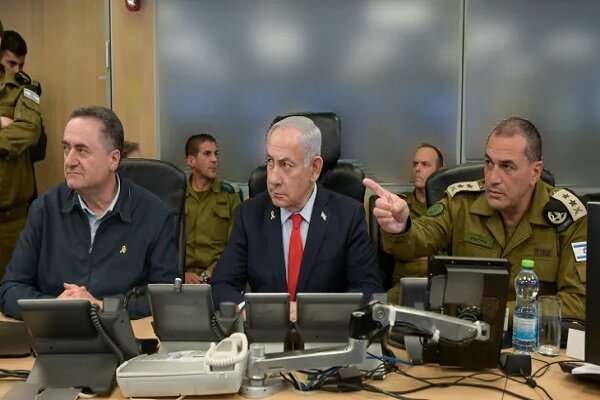
In a memo sent Friday to Secretary of State Marco Rubio, Director of National Intelligence Jay Clayton said his teams "have received intelligence that Iran has substantially increased efforts to target U.S. personnel."
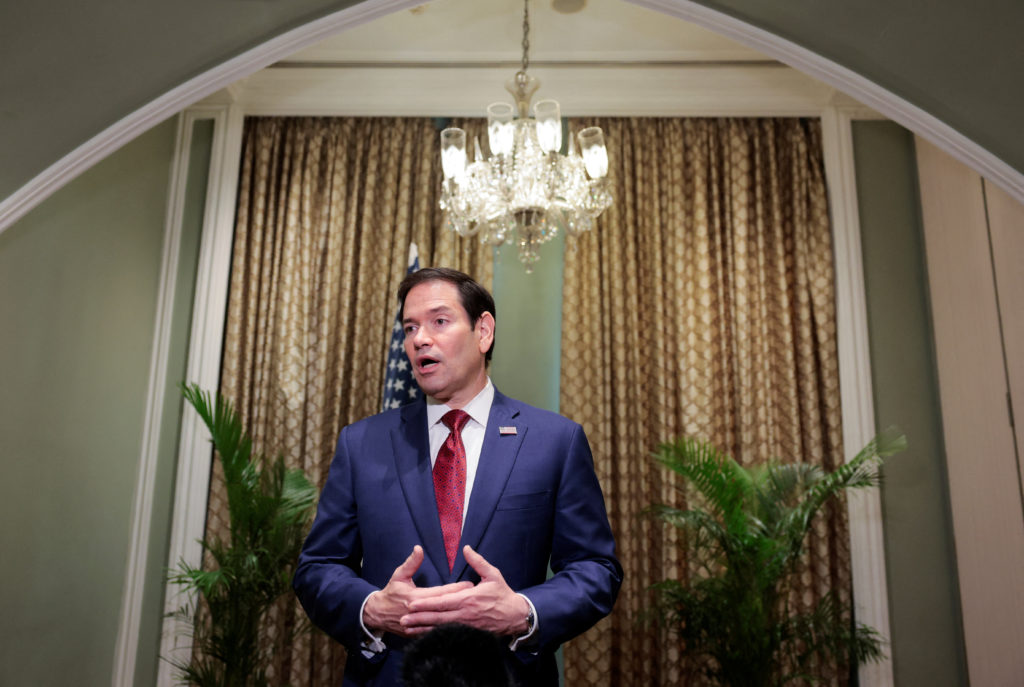
U.S. Ambassador to Turkey Tom Barrack suggested on Friday that the U.S. could strike Iran as early as this weekend. His statement caps a week of growing speculation about whether America and Israel could resume major attacks on the Islamic Republic.
“Could there be a strike this weekend? Absolutely,” Barrack told online commentator Mario Nawfal when asked to explain the end game of efforts to seek a diplomatic resolution. “The president is very clear. He’s open and available and accessible to a deal. And we’ve been at the table for months and months and months… the nuclear proliferation and where we go with the enrichment and all those things are, are details, the punctuation in the chapter that needs to be finished.”
BREAKING: AMB. TOM BARRACK WARNS U.S. STRIKE COULD HAPPEN THIS WEEKEND
I asked Trump's Special Envoy, Tom Barrack: “Could there be a strike on this this weekend?
Asked about Barrack’s comments regarding the potential timing of a strike on Iran, President Donald Trump told reporters that the ambassador “is a powerful man, I guess. If that’s the case, I don’t know anything about it.”
Q: Your ambassador to Türkiye said that "absolutely" there could be a strike on Iran this weekend.
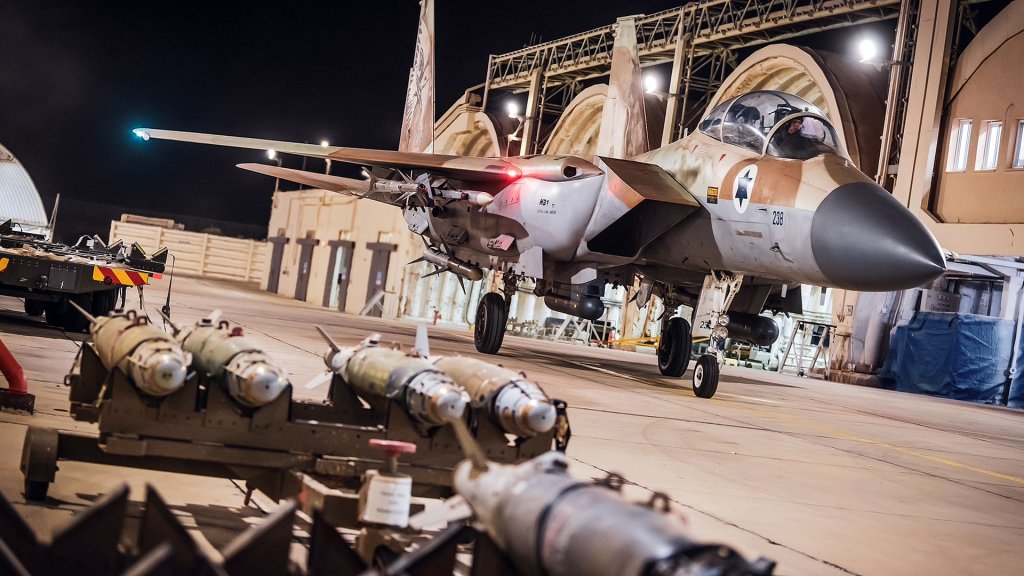
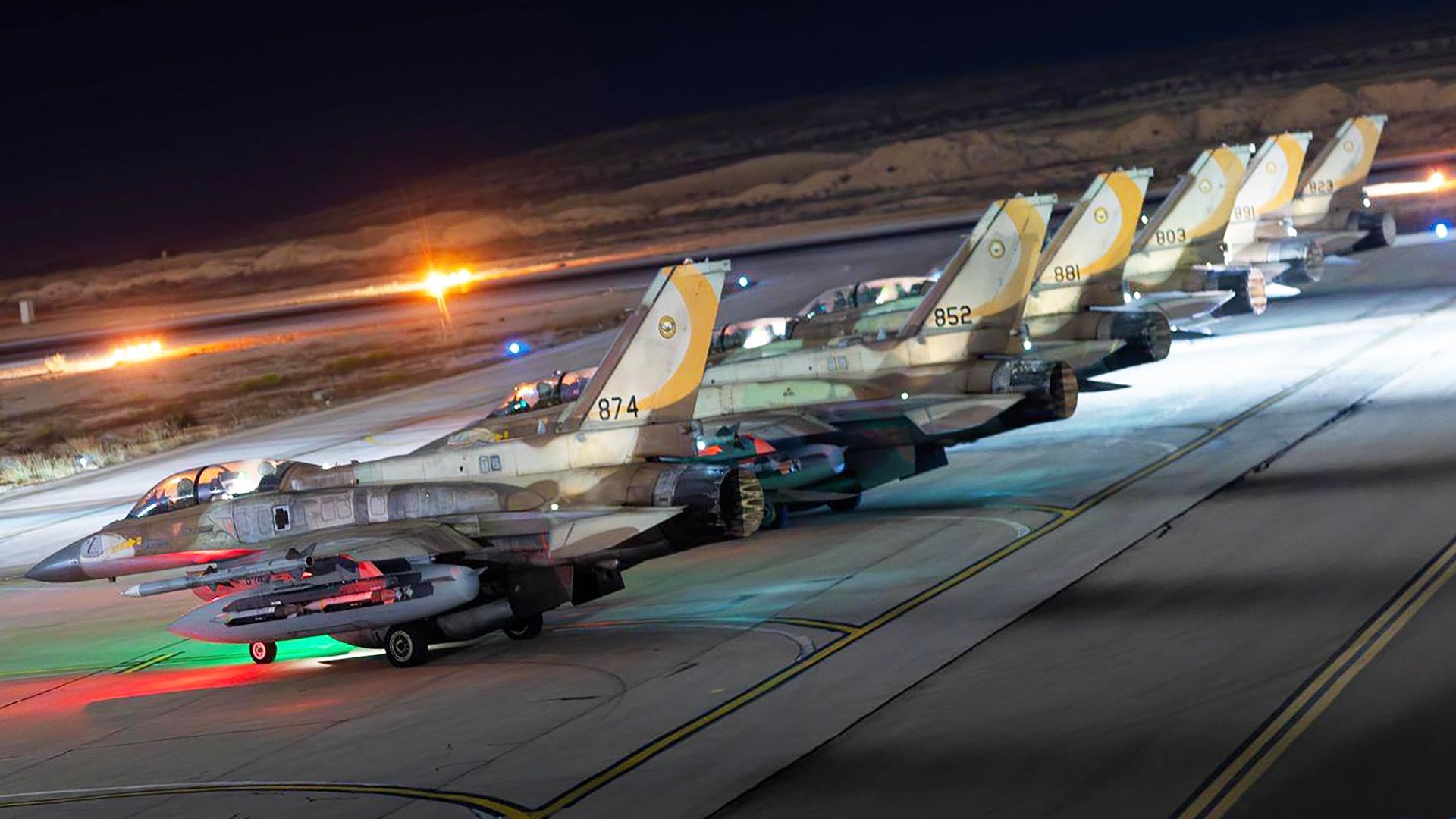
On Wednesday, Axios reported that dozens of Israeli fighters flew through Syrian and Iraqi airspace toward the border with Iran on Monday as part of a “power projection” exercise.
The sorties, extending some 800 miles away from Israel proper, were launched after U.S. Defense Secretary Pete Hegseth made a surprise trip to Israel earlier this week to meet with that country’s Prime Minister, Benjamin Netanyahu, reportedly to discuss new plans to attack Iran.
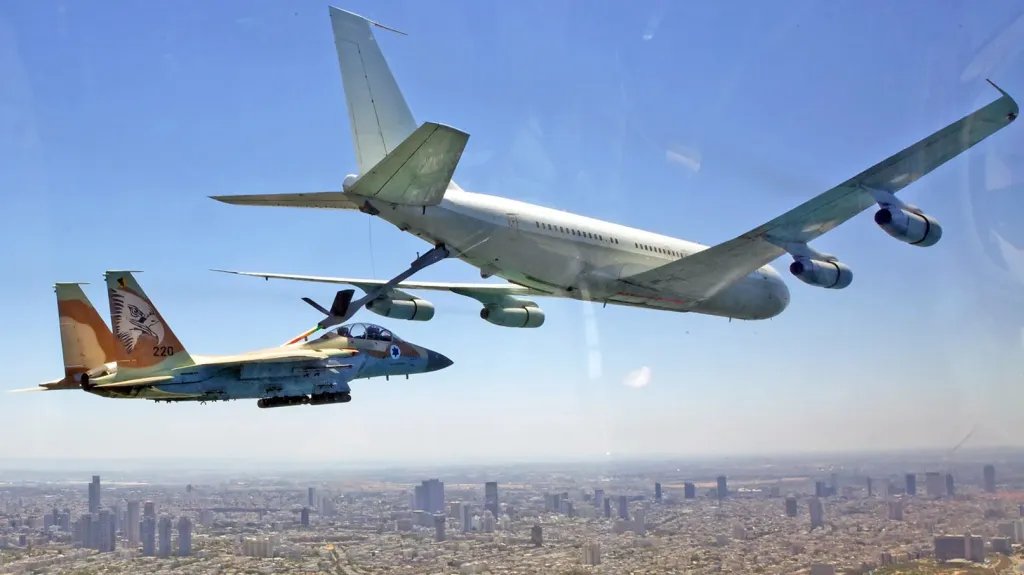
“Israel notified the U.S. in advance and described the operation as a training exercise [on Monday] intended for ‘power projection’ and aimed at deterring Iran from launching attacks against Israel ahead of the elections [in that country],” according to Axios. “Dozens of fighter jets and refueling aircraft” were involved.
One of the IAF’s KC-707s seen refueling an F-15. (IAF)
After the Axios story came out, there were unconfirmed reports of additional major Israeli military air activity on Wednesday night.
Intense IAF fighter jet activity is now being reported over Iraq, especially on the border with Iran.
Meanwhile, continuous takeoffs are taking place from the Ramon, Nevatim, and Ovda airbases. https://t.co/c35xIbtAAu
As TWZ editor-in-chief Tyler Rogoway pointed out on X Wednesday evening, the commotion over Iraq was likely practice runs and would be part of the prelude to any major new air operation targeting Iran. Conducting sorties relatively close to the Iranian border would also offer opportunities to gain valuable intelligence about the current state and disposition of that country’s air defenses.
“Dry runs are important for such a large integrated operation,” Rogoway noted. “They can be scaled as the operation gets closer. Getting a large part of the intended force up and in position can really help with the chances of mission success if the actual order to execute is given. So many moving parts to align. Not great to find out any weak spots on night one of a new offensive.”
“Stimulating Iran’s air defenses is critical,” he added. “By Iran operating as if a full scale attack could be coming, their air defenses can be detected, categorized and geolocated. This is absolutely critical prior to a major air operation. Surveilling them during times of lower alert does not provide the same fidelity of actionable intelligence. Knowing where those threats are and how they are operating can mean the difference of life and death and/or will help standoff munitions make their way to their targets as those defenses can be suppressed, destroyed, or avoided entirely via careful mission planning.”
Couple things on the large scale tactical aircraft activity over the Middle East tonight:
I don't have any info on this operation or if it truly has gone kinetic, but here is likely what is happening if not:
1.) Dry runs are important for such a large integrated operation. They…
“U.S. officials said the Israelis knew that Iran’s air defense systems would detect the sortie[s on Monday],” Axios’ report also noted. “Some U.S. sources said they had the impression that Israel was hoping the Iranians would fire at the aircraft, providing a justification for launching strikes against Iran.”
TWZ cannot confirm this; however pushing Iran to react would not fit with the goals of a major exercise like this.
There have been other signs that a major new round of U.S. and/or Israeli strikes on Iran might be looming on the horizon. Fox News reported earlier this week that the Nimitz class aircraft carrier USS Theodore Roosevelt and the rest of its carrier strike group, as well as the Makin Island Amphibious Ready Group carrying the 13th Marine Expeditionary Unit (MEU), were heading to the Middle East, citing unnamed U.S. officials.
“The ships will arrive in the Middle East by the end of November,” the officials said, according to a post on X from Fox’s Jennifer Griffin on Tuesday. “These new deployments will add about 10,000 sailors and Marines to the Middle East.”
Per @Liz_Friden The U.S. is sending the USS Theodore Roosevelt carrier strike group and the 13th Marine Expeditionary Unit to the Middle East, two U.S. officials confirm to Fox News. The ships will arrive in the Middle East by the end of November, the officials said. These new…
There have been indications of increased U.S. military air activity in the Middle East recently, as well. Observers have called attention to the particularly significant influx of aerial refueling tankers to bases in the region, as well as in Europe, which would be critical to any new major air campaign.
Overall numbers across CENTCOM and Europe have now stabilised back to the levels they were at back at the start of September, around 190-195. There are a few tankers dotted around at other sites temporarily (Glasgow Prestwick and… pic.twitter.com/taKi8op7Tv
In addition, there are claims that Russia is evacuating its scientists from the Bushehr Nuclear Power plant and other Russians ahead of a potential new round of strikes. TWZ cannot independently verify this.
BREAKING: Russian airforce TU-134 used to evacuate high ranking personnel has just left Iran with its transponder off rumoured to be picking up Russian scientists from Bushehr Nuclear Power Plant.
The New York Times reported on Wednesday that the U.S. and Israeli militaries had “developed specific plans for renewed strikes against Iran after the American midterm elections,” citing U.S. officials and other people briefed on the deliberations.
Authorities in Washington and Jerusalem appear to be planning “a short but intensive operation” that would last between three and five days, the newspaper added. “The targets would likely include Iran’s energy infrastructure, nuclear facilities, and missile and drone arsenal. Some officials say one more big round of attacks could push Iran’s economy over the brink and force the country to make diplomatic concessions after nearly eight months of conflict.”
Separately on Wednesday, NBC News also reported that the Pentagon and U.S. State Department were relocating personnel from bases and diplomatic facilities in the Middle East, amid the possibility of new strikes on Iran, as well as broader regional security concerns. The State Department subsequently pushed back on that report, saying that non-emergency U.S. government employees and dependents had only been directed to leave Saudi Arabia in response to attacks from Iranian-backed Houthi militants in Yemen.
This is inaccurate. The U.S. Department of State issued an ordered departure for non-emergency U.S. government employees and their family members in Saudi Arabia only.
Iranian-supported Houthis have increasingly engaged in hostilities against Saudi Arabia, including attacks on… https://t.co/yNrCwDcfIg
A high-ranking Israel Defense Forces (IDF) official we spoke with said a new war with Iran is not a foregone conclusion.
“I would describe the situation as increasingly tense, with a real risk of renewed escalation,” the IDF official told us. “However, I would be cautious about concluding that another war is inevitable or that its timing can be reliably predicted.”
“The recent IAF [Israeli Air Force] activity is significant, as are the reported military preparations and the increasingly confrontational rhetoric from both Washington and Jerusalem,” he added. “But military readiness, deterrence, and operational planning do not necessarily mean that a final political decision to launch another campaign has been made.”
An Israeli Air Force (IAF) F-15I. (IAF) IAF
“We do not see any indications of a need to strike Iran before the election,” IDF Chief of Staff Lt. Gen. Eyal Zamir also said during a recent closed-door meeting, according to Israeli media reports. At the same time, “if we determine that a strike on Iran is necessary, we will carry it out.”
“Iran is once again attempting to develop a nuclear bomb,” Israeli Prime Minister Netanyahu also warned again this week, according to TheJerusalem Post. “My directive to the IDF, the Mossad, and the defense establishment… [is] to overthrow the regime in Iran.”
The IDF official also raised questions about the potential efficacy of any new major air campaign against Iran.
“Both Trump and Netanyahu have previously described the results of earlier rounds of fighting as a decisive, even total, victory, emphasizing the damage inflicted on Iran’s ballistic missile capabilities, its production and supply chains, and its nuclear infrastructure,” the official noted. “This raises an obvious question: If the results were as decisive as they claimed, what has changed to make another confrontation necessary now?”
“I believe we must recognize the limitations of trying to defeat a country like Iran through targeted killings and stand-off kinetic strikes alone,” he added. “Such operations can destroy infrastructure, eliminate key personnel, disrupt production, and delay military programs. They can impose significant costs on an adversary. But they do not necessarily eliminate the adversary’s strategic ambitions, prevent the regeneration of capabilities, or produce a durable political outcome.”
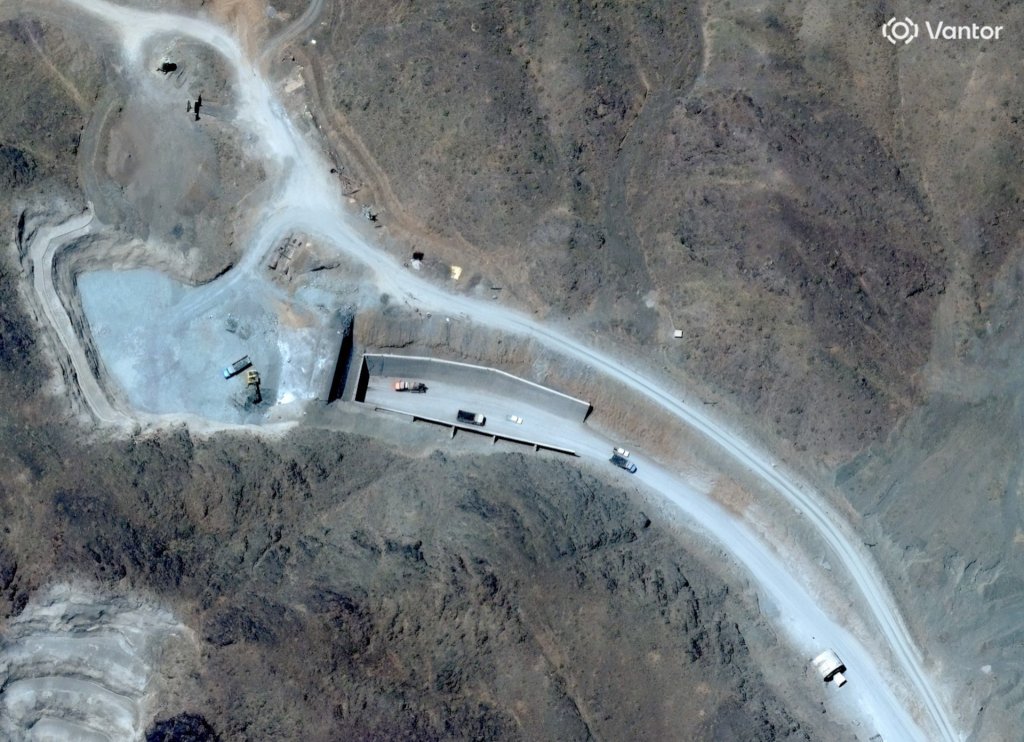
CBS News reported last week that the White House and Pentagon “have prepared plans to use a Massive Ordnance Air Blast bomb [MOAB] to hit military sites in Iran,” including Pickaxe Mountain, “if ordered by President Trump.” However, the 22,000-pound-class MOAB, also designated the GBU-43/B, is not a deep-penetrating munition, and it was not immediately clear from that story how the weapon might be employed. The bomb is also only known to be currently cleared for employment via C-130-type aircraft. It has only been used in combat once, in Afghanistan in 2017, where the skies above were entirely permissive. You can read more about the targeting challenges specific to Pickaxe Mountain, and what options the U.S. military might have for halting, or at least degrading activity there, in a previous TWZ feature here.
MOAB’s use case would be limited against sites like Pickaxe Mountain. While its unique overpressure effects could harm any personnel openly exposed inside tunnel systems, it is unlikely to destroy or even heavily damage the hardened facilities themselves. It could cause damage to external support infrastructure and act as a psychological weapon in its own right, but it is not a bunker buster in any way.
Not what this weapon is really used for. Psychological effect, maybe https://t.co/hDWSXYKexr
The puzzling leak about the MOAB may be part of the administration’s effort to use the media to try and compel Iran to negotiate. This has been a glaring pattern throughout the ebb and flow of this conflict and a common tactic used by the Trump administration.
Talking threatening plans against Iran here. They are always planning and have a slew of options.
The leaks and sources are by and large fully aware what their marching orders are. It’s coordinated. A lever this admin pulls non stop right on cue.
For its part, Iran is operating on the assumption that a U.S.-Israeli attack is a “certainty,” The Jerusalem Post reported on Wednesday, citing Iran’s Fars News Agency, a quasi-state media outlet affiliated with the Islamic Revolutionary Guard Corps (IRGC). “The report, which cited a senior Iranian security official, added that Iran will consider U.S. politicians legitimate targets if such an attack involves the assassination of Iranian officials.”
The IRGC has also threatened to launch expanded retaliatory attacks on targets across the Middle East in response to any new waves of strikes.
As we noted earlier in this story, Iran continues to actively attack commercial shipping in and around the Strait of Hormuz. The official Iranian IRNA news agency reported that the IRGC Navy claimed that it recently struck four ships transferring oil cargoes in the northern Persian Gulf, while three other vessels suffered damage after striking mines west of the Strait of Hormuz.
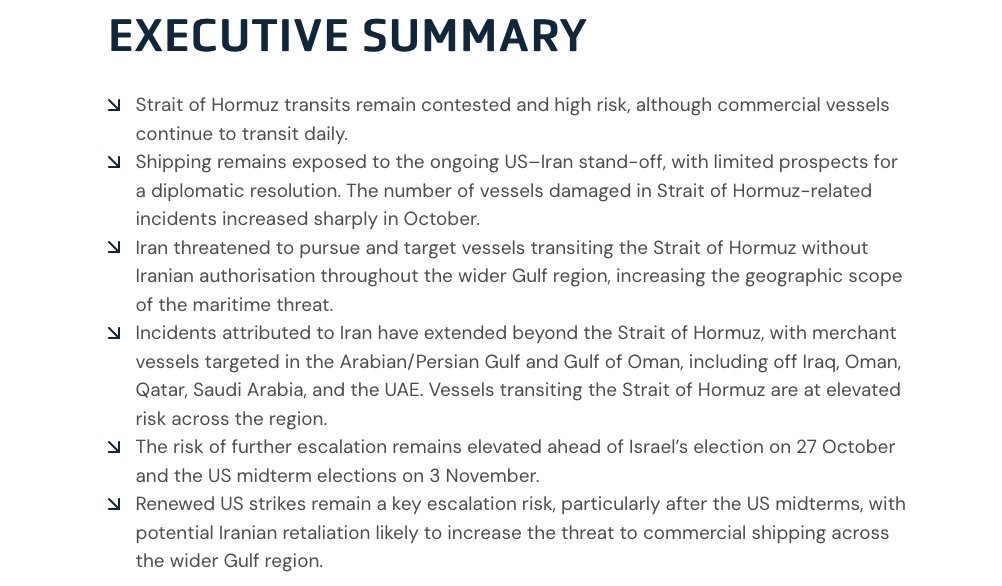
While TWZ cannot independently verify those claims, the Ambrey maritime security firm said that the number of vessels damaged during Strait of Hormuz transits has “increased sharply” this month.
“During the two weeks from 3 to 16 October, the number rose to 11 and 13 vessels per week, respectively, compared with an average of three to four per week in the preceding weeks,” Ambrey senior analyst Daniel Mueller noted today in the company’s latest security assessment. “This increase coincided with an expansion of Iranian operations aimed at restricting transits deemed unauthorized, while the US continued to facilitate transits along the Omani coastline.”
On Oct. 9, “the Islamic Revolutionary Guard Corps (IRGC) threatened to pursue and target vessels transiting the Strait of Hormuz without Iranian authorisation throughout the wider Gulf region,” Mueller added. “During October, incidents attributed to Iran involved merchant vessels off Qatar, the United Arab Emirates (UAE), Saudi Arabia and Sohar, Oman. Between 8 and 16 October, six merchant vessels – five tankers and one gas carrier – were damaged outside of the Strait of Hormuz. Additionally, a tanker was damaged offshore Iraq on 20 October.”
Ambrey
Reports emerging earlier this week from The Wall Street Journal and The Washington Postdo say that oil exports from the Persian Gulf have returned to prewar levels thanks to U.S. efforts to safeguard tankers out of the region.
“Middle East oil flows, including shipments through Hormuz and alternative routes across the region, averaged more than 24 million barrels a day in the week through Oct. 18, surpassing prewar levels of 23.3 million,” according to the Journal, citing ship tracker Kpler. “Preliminary figures show Hormuz oil flows, including offshore transfers in the Gulf of Oman, came to around 14 million barrels a day on average for the same period, or 82% of prewar levels.”
From the @WSJ: “Persian Gulf oil exports have surpassed prewar levels, as an improvised shipping system under U.S. protection is helping tankers move oil through one of Iran’s fiercest waves of attacks in the Strait of Hormuz.”https://t.co/SJo2jlUfew
However, global energy oil markets continue to be under immense strain as a result of the ongoing fallout from the conflict with Iran, thanks in no small part to surging insurance costs for shipping companies. This has been further exacerbated now by Yemen’s Houthis expanding their attacks on oil infrastructure in Saudi Arabia, including a recent strike near the Shaybah oilfield. The Houthis are also exerting their own pressure on shipping passing through the Bab Al Mandab Strait, a critical chokepoint that links the Red Sea and the Gulf of Aden.
A Saudi-led coalition supporting Yemen’s internationally recognized government has been embroiled in an on-again-off-again conflict with the Houthis since 2014. Fighting with the Iranian-supported Yemeni militants in and around the Red Sea was inflamed last year as a by-product of Israel’s 12 Day War with Iran. The Houthis also retaliated with missile and drone attacks in support of Iran in the wake of U.S. and Israel launching their major operations against the regime in Tehran in February.
The U.S. government and the Houthis have been observing a tenuous ceasefire since May 2025. This has continued despite the Yemeni militants now imposing a blockade on the Bab Al Mandab Strait, and a new campaign of strikes on Saudi ships in the southern part of the Red Sea, as well as targeting critical energy terminals on that body of water and Saudi refineries. Iranian proxies have also struck the vital East-West pipeline that carries oil to the Red Sea to bypass the Strait of Hormuz. That line has reportedly since reopened after being shut down following a long-range drone attack.
“On Wednesday, two people were killed and two others injured by debris from intercepted drones near a processing plant at the Shaybah field, one of the biggest oilfields in Saudi Arabia,” The National noted. “Operations at the Shaybah field and its processing facilities remain unaffected, but the attack rattled markets again amid concerns about potential disruption to Saudi supply just as the Kingdom has largely restored its exports via the Strait of Hormuz and the Red Sea.”
As a result, the per-barrel price of Brent crude has jumped to more than $114 as of Friday morning, according to OilPrice.com, the highest that it has been since May during intensified fighting between the U.S. and Iran.
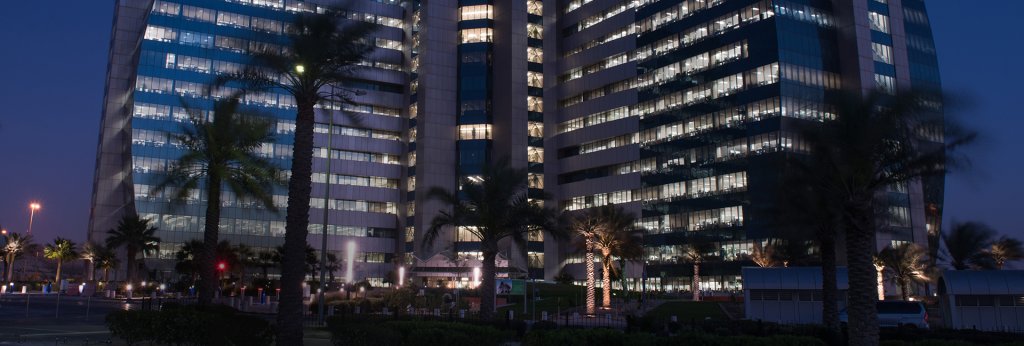
In addition, Saudi Aramco has told staff to evacuate its Dhahran headquarters and work remotely, Reuters reported, citing six people with knowledge of the matter. The move came a day after two people were killed in an attack on a nearby airport. The order marked the first time Aramco had asked staff to evacuate its headquarters since the start of the Iran war, Reuters added.
The Houthis “caused extensive damage to the company’s headquarters earlier this month when they struck the building, with fire spreading across several floors,” the outlet explained.
Houthi attacks on Saudi Arabia have spurred Britain to commit to providing “defensive counter air missions to support the protection of Saudi cities and critical national infrastructure against aerial attack, using RAF Typhoon fighter jets,” Defense Secretary Wes Streeting said in a statement. “These aircraft will operate in a defensive role and will not conduct offensive strikes against the Houthis. The UK will provide an RAF A400M to support the movement of defense materiel within Saudi Arabia, alongside UK military advisers to support Saudi staff officers.”
“The continuing attacks from the Houthis on our ally Saudi Arabia are absolutely despicable,” Streeting said.
Sunset photo of Saudi Aramco’s headquarters. (Saudi Aramco) brigido alcayde
As we noted earlier in this story, the U.S. is continuing its naval blockade of Iranian ports.
U.S. Central Command said Thursday on X that its renewed naval blockade of Iranian ports, now in its 100th day, “has helped prevent Iran from exporting at least $25 billion worth of crude oil and constrained the IRGC’s ability to fund proxy militias, criminal networks, and terrorism. There have been no exports or imports to Iran by sea except for the humanitarian aid U.S. forces have allowed.”
Today marks 100 days since CENTCOM forces resumed America's steel wall naval blockade against Iran. This effort has helped prevent Iran from exporting at least $25 billion worth of crude oil and constrained the IRGC's ability to fund proxy militias, criminal networks, and… pic.twitter.com/DwiamYBdHY
“The report, which cited a senior Iranian security official, added that Iran will consider U.S. politicians legitimate targets if such an attack involves the assassination of Iranian officials,” the publication added.
The IRGC also announced that it was preparing to unveil a new weapon, which it dubbed the “Father of All Bombs,” in response to U.S. threats to use the most powerful conventional bomb in the American arsenal against Iran’s nuclear facilities, the Jerusalem Post also reported.
Officials, however, declined to offer any details about what kind of weapon it is, its power, whether it is operational or when it will be shown to the public, the Post noted.
In addition to the strategic and tactical issues in the region, the IDF official we spoke with raised concerns that “domestic political considerations may influence the rhetoric and decisions” of Prime Minister Netanyahu and U.S. President Donald Trump. Israel is holding nationwide parliamentary elections on October 27 that could have significant domestic political ramifications. The same is true of mid-term elections in the United States in November.
“I cannot know their precise calculations, but the possibility that political incentives could affect decisions with such enormous strategic consequences should not be dismissed,” the IDF official cautioned. “With Israel’s elections approaching, I sincerely hope that Netanyahu will not make a decision with far-reaching consequences for the country’s security based, even partly, on immediate political considerations. The stakes are simply too high for military action to become a means of reshaping a domestic political narrative.”
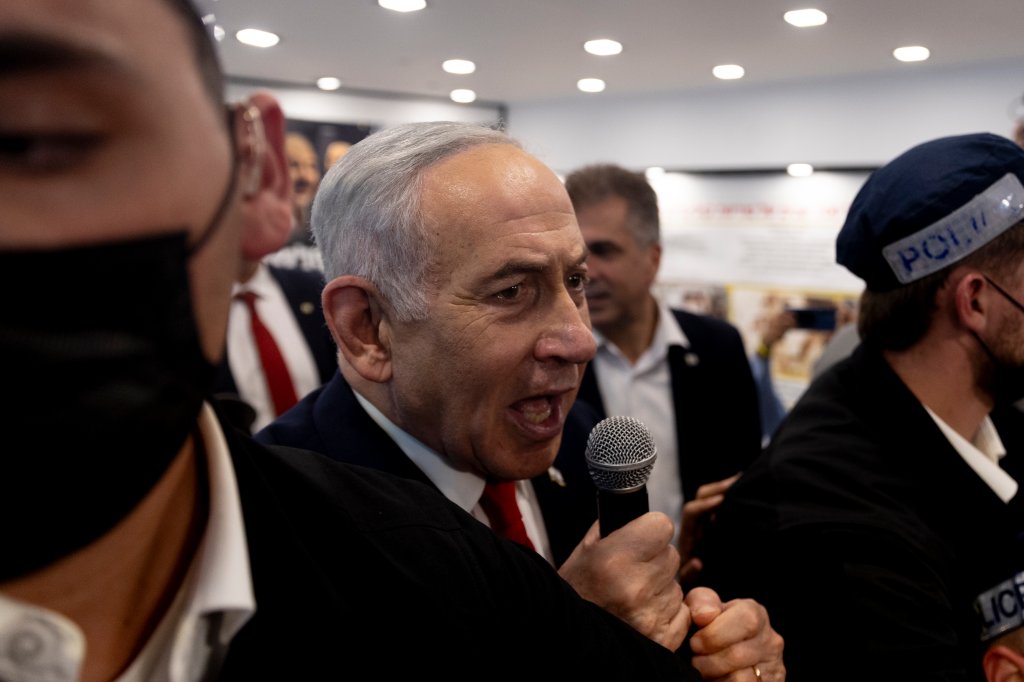
Israeli Prime Minister and Likud Party leader Benjamin Netanyahu speaks to supporters during an election campaign event in a restaurant in Hatikva Market ahead of Israel’s general elections on October 27, 2026. (Photo by Amir Levy/Getty Images) Amir Levy
In a phone call with Trump recorded live on Monday and posted on his X account, Netanyahu thanked the American leader for his election endorsement and suggested future operations against Iran.
“Donald, we have a job to finish [in Iran]…and we’ll finish it together,” the Israeli leader told Trump. “We’ll finish it, and no one else will do it.”
בשיחה עם ידידי הנשיא טראמפ לאחר שהודיע על תמיכתו בי בבחירות. יחד אנחנו הולכים להסיר את האיום האיראני לתמיד! צאו להצביע מחל! pic.twitter.com/GuPEAPn0Tc
— Benjamin Netanyahu – בנימין נתניהו (@netanyahu) October 19, 2026
Speaking to reporters Thursday afternoon, Trump acknowledged that the Iran war could have a negative impact on Republican hopes for the midterms.
“Well in one way, they love it because I’m doing what should have been done by other presidents, and another way maybe they don’t,” Trump said. “It’s — there’s a price to pay, which I knew immediately when I did it, but we can’t let Iran have a nuclear weapon. I mean, in one way, people probably don’t love it, but many people, many great patriots, really love it. This should have been done a long time ago by other presidents. The Iran War, and we’ve knocked the hell out of them, and we may do it a little bit further.“
Q: How do you feel the Iran war impacted the midterm races?
Trump: In one way, they love it. In another way, maybe they don't. There's a price to pay. pic.twitter.com/qtkE9M2vSQ
Later on Thursday, the American president said that: “We’re gonna have Iran finished very soon, one way or the other. It’s almost insignificant to me which way.”
U.S. President Donald Trump on Iran:
"We're gonna have Iran finished very soon. one way or the other. It's almost insignificant to me which way.
It's going to be done very soon, and your gasoline prices and your oil is going to come tumbling down." pic.twitter.com/vIGviqe8gi
While indicators are pointing to the U.S. and Israel at the very least in the very late stages of planning for new strikes against Iran, even if that doesn’t happen, the Middle East will remain a top concern. The ongoing threats to shipping and the escalating fighting between the Houthis and Saudi Arabia are having increasingly dire impacts on gas prices, which is spiking inflation, and causing heavy pressure on the global economy.
In a peek behind the curtain of the White House, it has been revealed that Donald Trump Jr. has privately opposed his father’s war with Iran from the very start, even personally confronting President Donald Trump with his objections, according to The Atlantic.
The president’s eldest son has continually expressed his reservations to the off-again, on-again nearly eight-month conflict behind closed doors, despite going to extra lengths to avoid any public criticism of his father.
Two anonymous sources who reportedly spoke directly with Trump Jr. said the MAGA leader has repeatedly questioned the military campaign, a position in line with his longstanding opposition to U.S. involvement in foreign wars.
The father-son fallout reportedly dates back to the beginning of the war, when Trump Jr. vocalized his objections directly to the president.
“Don has kept his views on the subject private, as he would never publicly break with his dad on an issue like this, but I can’t imagine anyone who knows Don would be surprised by his personal views on the subject,” a person supposedly close to Trump Jr. told the progressive magazine.
Trump Jr. has continuously propped up his father as a leader who would keep America out of costly foreign entanglements, particularly in the Middle East.
Trump Jr.’s apparent opposition to his father’s foreign policy moves also reflects wider divisions within the MAGA movement, where prominent conservative voices have questioned whether the conflict is consistent with the president’s states campaign pledges.
Meanwhile, the war has become an increasingly vexing political issue for Republicans ahead of November’s midterm elections.
Exploding gasoline prices and mounting economic pressures have fueled public frustration, while a Pew Research Center poll found that 65% of Americans disapprove of the administration’s handling of the conflict.
A spokesman for Trump Jr. refused to comment on the report.
British Prime Minister Andy Burnham has found a novel way of solving Britain’s cost-of-living crisis. By bombing Yemen.
Yes, you read that correctly. This week, Burnham authorized the deployment of British Typhoon fighter jets to Saudi Arabia for its war with Yemen.
Downing Street assured the British public that the deployment was for “defensive” operations only. The BBC and other British media outlets indulged this fantasy by repeating over and over that the Royal Air Force was being deployed for “defensive actions”. The RAF would not be engaging in attacking Yemen, it was claimed, and the British fighter jets were being sent to “protect” Saudi Arabia from “escalating” Houthi aggression.
Britain’s Minister of Defense Wes Streeting (a former health minister, please note) framed the RAF mission as necessary to counter instability in the Middle East and soaring energy prices. As if Britain was not the cause of instability and higher fuel costs by backing Trump’s aggression on Iran.
The Guardian reported: “The [British] military intervention [in Yemen] was partly justified because instability in the Middle East was driving up energy prices and affecting the cost of living.”
This logic is as absurd as it is gross deception.
Recall that Burnham was ushered into Downing Street in July to replace the hapless Keir Starmer as Labour prime minister. Burnham, formerly the Mayor of Manchester and posing with his working-class credentials, made a big public pitch that he would prioritize easing the cost-of-living crisis ravaging Britain.
However, since entering office, his most notable forays have been in foreign policy. For example, he has received the Ukrainian dictator Vladimir Zelensky in Downing Street with promises of more military aid in addition to the $20 billion that Britain has already provided (the second largest source of aid in Europe after Germany). Burnham has pledged to provide Ukraine with British blueprints for manufacturing cruise missiles.
Last month, Burnham announced that Britain was deploying an RAF in-air refuelling plane to “help” Saudi Arabia’s air strikes on Yemen. To allay public concerns about that move, Downing Street and the British media assured that the deployment was “defensive only” and for a limited period.
Ironically, Burnham made that announcement while travelling to address the United Nations General Assembly in New York, where he hailed Britain for offering world leadership for peace and security.
Now, again this week, the RAF deployment is extended to sending Typhoon fighter jets to Saudi Arabia. London is also providing a RAF A400M transport plane for troops and up to 100 military advisers.
This sounds like classic mission creep. Downing Street is aware of the exposure to public criticism. The prime minister’s office denied Britain was being dragged into the conflict. It said: “Our support for Saudi Arabia is considered, proportionate and focused on helping them defend themselves from relentless Houthi attacks.”
The British government and media are distorting the conflict between Saudi Arabia and Yemen as one of “aggression” by the Yemeni forces of Ansar Allah, referred to as “the Iran-backed Houthis”. That description makes the Yemenis sound like crazy terrorists who are being directed by Iran.
Here’s the BBC’s creative reporting: “The UK will deploy RAF Typhoon jets to defend Saudi Arabia in response to escalating Houthi missile and drone attacks, the government has said.”
The BBC goes on: “The defensive mission will help defend Saudi cities and infrastructure – a move authorised by Prime Minister Andy Burnham – against aerial attacks by the Iran-backed group… Since September, Saudi Arabia has been struggling to defend its skies from Houthi attacks after a ceasefire of sorts in Yemen broke down.”
This is reality inversion by the British state-owned media outlet.
The ceasefire in Yemen was violated in mid-July when Saudi Arabia launched air strikes on the international airport in Sanaa, the Yemeni capital, to target a delegation attending the state funeral of Iran’s Ayatollah Khamenei, who was murdered in a U.S.-Israeli air strike on his family home in Tehran on February 28.
That ceasefire was called in 2022 to end a seven-year war of aggression by Saudi Arabia against Yemen. The war began in 2015 to reinstate a Saudi puppet regime that the Ansar Allah-led Yemenis ousted in 2014. The Saudis bombed Yemen relentlessly for seven years with support of the United States, Britain, and France. An estimated 20,000 Yemenis were killed in air strikes, and around 300,000 died from a humanitarian blockade that the Western-backed Saudi coalition imposed on the country.
Britain’s military minister Wes Streeting referred to recent Yemeni strikes on Saudi Arabia as “despicable”. He mentioned a ballistic missile attack on October 10 on King Khalid international airport in the Saudi capital, Riyadh. At least 13 people were killed in the strike, and over 300 were injured.
The Ansar Allah-led Yemeni Armed Forces have also hit several other Saudi airports and key oil industry installations. The number of Saudi civilians killed in these attacks is relatively small, around 20, whereas Saudi warplanes have killed hundreds of Yemeni civilians since it broke the ceasefire in July. This week, eight Yemeni fishermen were killed in Saudi strikes. What Yemen is doing to Saudi Arabia is self-defense, not aggression.
London and its media propaganda are making out that Britain is “defending” Saudi Arabia. The reality is London is assisting Saudi aggression and war crimes.
Significantly, Streeting flew to Washington, DC, last week, where he met the war secretary, Pete Hegseth. Their agenda was about how to respond to “Houthi escalation.” Obviously, the junior partner got the memo: send warplanes to Yemen; we’re too busy with Iran.
Meanwhile, in Britain, an unprecedented social crisis is unfolding from poverty and a crippling cost of living. Charities report that four million families are having to go without adequate food or home heating because of soaring bills. Oxfam estimates that 13.5 million Britons, or a fifth of the population, are suffering from poverty. More than six million people rely on food charities for a modicum of sustenance.
It tells you everything about a state whose government does nothing about its own people’s dire needs but finds the resources to send warplanes to distant countries to bomb other poor people.
Andy Burnham is just another puppet who is assigned to put on a show in Downing Street for public appeasement. The imperial deep state has its hand up his rear. That’s mission creep in Downing Street.
On October 20, 2026, a week before Israel’s elections, dozens of men were detained on suspicion of evading the draft – arrests that Prime Minister Benjamin Netanyahu called “unacceptable.” The young men attend ultra-Orthodox, or Haredi, religious schools, whose students were long exempt from the military service mandatory for most Israelis. A 2024 court ruling […]
The U.S. government has ordered diplomats and other federal employees to leave Saudi Arabia. It is also drawing down staff at other missions in the region.
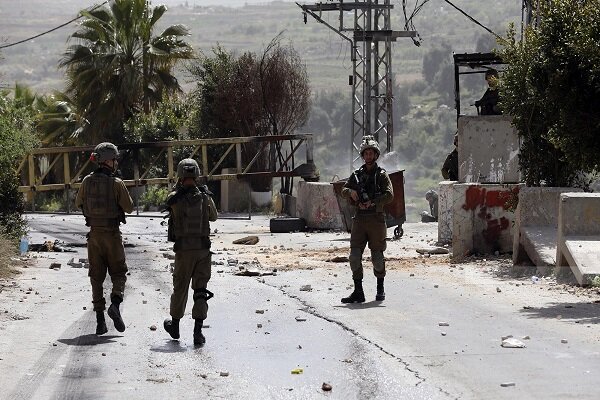
TEHRAN, Oct. 24 (MNA) – A coalition of Gaza-based Palestinian resistance groups has praised a retaliatory shooting operation in the southern West Bank city of al-Khalil that left two Israeli soldiers dead and three others wounded.
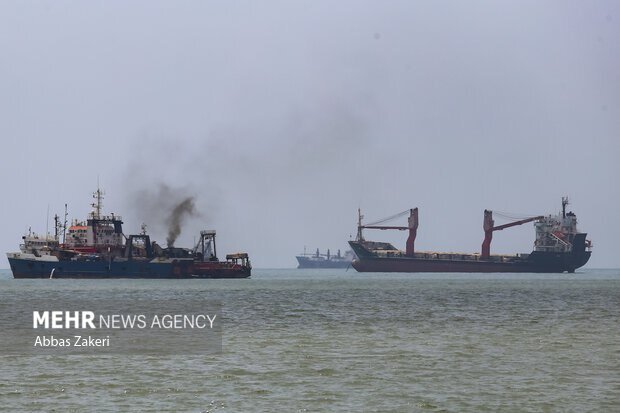
TEHRAN, Oct. 24 (MNA) – The United Kingdom Maritime Trade Operations (UKMTO) reported that an oil tanker was struck by an unknown projectile while transiting the Strait of Hormuz on October 22, 2026.
Oil prices on Friday hit their highest point since May as the war in Iran drags on. As of Friday morning, futures for international benchmark Brent crude were trading at $116 per barrel, while U.S benchmark West Texas Intermediate traded at about $102. The high prices come as the war in Iran nears the eight-month…
Prime Minister Benjamin Netanyahu said Friday that he has ordered the Israel Defense Force to “immediately impose a lockdown on Hebron and prepare for a full lockdown of the entire” illegally occupied West Bank following a gun battle that reportedly left two Palestinians dead and at least five Israeli soldiers wounded. Following an emergency meeting […]
Jared Kushner, son-in-law of US President Donald Trump, for years allegedly had access to at least two secret foreign bank accounts in Israel and the United Arab Emirates whose deposits totaled roughly $2 billion according to an excerpt, published on Thursday by Vanity Fair, from an explosive upcoming book . The excerpt of the book […]
El sistema de pago que Irán pretende imponer a los buques que atraviesan el estrecho de Ormuz está inspirando también a otros países. Esta fuente de inspiración amenaza no solo los equilibrios de poder regionales, sino también el propio «orden mundial».
Recientemente, Talmiz Ahmad, un diplomático que anteriormente ocupó el cargo de embajador de la India en Arabia Saudí, Omán y los Emiratos Árabes Unidos, advirtió de que está aumentando el riesgo de que el estrecho de Malaca se utilice para generar ingresos.
Indonesia, Malasia y Singapur bordean el estrecho de Malaca. Malaca es una ruta comercial tan importante como Hormuz. Aproximadamente dos meses después de que comenzara la guerra de Irán, el ministro de Hacienda de Indonesia propuso cobrar a los buques que atravesaran Malaca. Los ingresos se repartirían entre los tres países ribereños del estrecho.
Singapur rechazó la propuesta, Malasia abogó por un compromiso e Indonesia anunció que, por el momento, no se impondrían tasas de tránsito. Sin embargo, la idea de implantar un sistema de este tipo en Malaca u otros estrechos ha pasado a formar parte del debate mundial.
Se proponen cortar el cordón umbilical de China
Los expertos entrevistados por The Diplomat advierten de que el estrecho de Malaca podría convertirse pronto en un punto donde «se cruzan los intereses comerciales, las preocupaciones de seguridad nacional y la competencia geopolítica». Tienen buenas razones para hacerlo, ya que la cuestión no se limita a la imposición de tasas de tránsito de una u otra forma, sino a la influencia estratégica que podría llegar a tener el estrecho. Las siguientes cifras bastan por sí solas para ilustrar la importancia geopolítica de Malaca:
Aproximadamente el 29 % del petróleo transportado por mar y el 24 % de todas las mercancías comerciales pasan por el estrecho de Malaca.
Entre el 75 % y el 80 % de las importaciones de petróleo por vía marítima de China se transportan a través de Malaca.
Si bien esta ruta satisface las necesidades de China, la dependencia que genera constituye también una vulnerabilidad estratégica. Esta situación se conoce como el «dilema de Malaca».
Sin embargo, la amenaza no proviene únicamente de la propia dependencia de China. Durante años, los estrategas estadounidenses también han estado debatiendo formas de convertir esta vulnerabilidad en un arma contra Pekín.
Un artículo publicado en el Georgetown Journal of International Affairs en 2023, titulado «El reto de la seguridad económica de China», sostenía que Estados Unidos y sus aliados deberían dificultar que China superara su dilema de Malaca.
Un estudio de 2024 de la Brookings Institution, titulado «After Primacy: US Military Options in Contemporary East Asia» (Tras la primacía: opciones militares de EE. UU. en el Asia Oriental contemporánea), incluía entre las opciones militares disponibles en caso de un conflicto en torno a Taiwán un contra-bloqueo basado en una coalición dirigido al tráfico marítimo comercial de China. Dicho bloqueo podría extenderse a puntos estratégicos clave como Malaca. El análisis también señalaba que tal medida podría acarrear elevados costes para la economía mundial.
De la vulnerabilidad a la ventaja
Según el periodista Andy Browne, ganador del Premio Pulitzer, los estrategas estadounidenses llevan aproximadamente 25 años considerando el bloqueo de las importaciones marítimas de petróleo de China como un arma poderosa contra Pekín. Aunque esta estrategia sigue siendo objeto de debate en la actualidad, la guerra de Irán ha presentado un panorama que pone en tela de juicio las hipótesis en las que se han basado los estrategas estadounidenses:
China ha demostrado que puede capear las interrupciones en el suministro de petróleo a través del estrecho de Ormuz sin sufrir daños significativos.
Además de utilizar sus reservas de petróleo para aliviar la presión sobre numerosos países, China también contribuyó a evitar que los precios de los combustibles se dispararan aún más fuera de control. Al mismo tiempo, los oleoductos terrestres, las tecnologías de conversión del carbón en productos químicos y la capacidad de energía verde han reforzado la posición estratégica de China.
Los aliados de EE. UU. en la región de Asia-Pacífico, incluidos Japón y Filipinas, que se han visto muy afectados por la guerra, siguen lidiando con el aumento de los precios de la gasolina y el gasóleo, la disminución de las reservas estratégicas y la creciente inflación. Los aliados de EE. UU. en Asia Occidental y Europa están sufriendo los mismos efectos.
La imagen de Estados Unidos como potencia capaz de proyectar su poderío militar ha sufrido un duro golpe.
A la luz de estas realidades, los expertos estadounidenses reconocen ahora que el cierre del estrecho de Malaca podría dejar a los aliados de EE. UU. en la región sin petróleo antes de que ello afectara de manera significativa a China.
Según Andy Browne, la Iniciativa de la Franja y la Ruta de China se ha convertido en una «medida defensiva», que crea rutas alternativas para eludir un bloqueo energético al tiempo que refuerza las conexiones euroasiáticas.
Pero la cuestión no termina ahí. La guerra de Irán también ha puesto de manifiesto las vulnerabilidades de las bases, los destructores y los portaaviones estadounidenses en la región de Asia-Pacífico. Los misiles hipersónicos, de crucero y balísticos de China podrían alcanzar estos objetivos, del mismo modo que los misiles iraníes han alcanzado activos estadounidenses en Asia Occidental. Las reservas chinas de misiles avanzados son enormes.
Dado que los actores asiáticos también debaten la posibilidad de generar ingresos a partir del estrecho, Washington se ve abocado a su propio «dilema de Malaca».
Una reacción en cadena que trastoca la doctrina estadounidense
La ecuación multidimensional que se está configurando actualmente indica que el objetivo de «controlar la alta mar» y «actuar como garante de la libertad de navegación» —la columna vertebral de la hegemonía estadounidense desde la Segunda Guerra Mundial— se enfrenta a su crisis más grave de la era posterior a la Guerra Fría.
La pérdida efectiva del control de Washington sobre estrechos estratégicos clave como Ormuz y Bab el-Mandeb está desencadenando una reacción en cadena que podría extenderse a la región de Asia-Pacífico y a otros estrechos críticos. A medida que convergen los avances en la tecnología de misiles, las amenazas asimétricas y las reivindicaciones de soberanía e ingresos de los actores locales, la capacidad de proyección de poder a escala mundial en la que Estados Unidos ha confiado durante décadas se está erosionando rápidamente.
El fin de la libertad de navegación garantizada por Washington en algunas regiones, y su creciente vulnerabilidad en otras, representa ahora algo más que un fracaso de la política exterior. Supone una grieta en el pilar marítimo fundamental que sustenta la hegemonía global de Estados Unidos.
Oil prices rose above $114 a barrel on Friday as attacks in Saudi Arabia and the prospect of further Middle Eastern escalation increased concern about the security of global energy supplies.
Brent crude futures reached $114.72 during the session, their highest level since early May, before easing slightly. The benchmark was trading around $114.31, while US West Texas Intermediate futures rose above $101.
The immediate pressure followed Houthi attacks in Saudi Arabia and intensifying concerns about shipping through the Bab el-Mandeb strait, the narrow passage connecting the Red Sea with the Gulf of Aden. Saudi Aramco reportedly ordered the evacuation of its headquarters in Dhahran.
For Europe, the rise introduces an additional cost pressure when natural gas prices are also climbing sharply and policymakers are trying to contain inflation without further weakening industrial growth.
The significance of the attacks is not confined to facilities directly affected. Traders price the probability of interruption across production, ports, tankers and shipping routes. Even a limited episode can raise insurance premiums and freight charges while companies adjust deliveries.
Bab el-Mandeb is an important shipping bottleneck for commercial traffic using the Suez Canal. Sustained insecurity can force vessels onto longer routes around Africa, delaying cargoes and increasing transport costs.
Other disruptions have compounded uncertainty, including concerns about a Libyan pipeline and an oil spill near the United Arab Emirates. The scale and duration of their impact remain uncertain.
What higher prices mean for Europe
European manufacturers, haulage companies, airlines and agricultural producers are sensitive to increases in fuel and transport costs. Those pressures can eventually reach consumer prices, although the timing and size depend on contracts, taxes and domestic competition.
The European Union has sought to reduce its reliance on Russian fossil fuels since Moscow’s full-scale invasion of Ukraine. That diversification does not insulate the bloc from global prices, which reflect worldwide trading conditions.
European natural gas prices have also moved higher in October, adding to the burden faced by energy-intensive industries. Gas and oil are different markets, but geopolitical tensions can affect both.
Central banks and governments
Persistent energy-price increases complicate the inflation outlook for the European Central Bank. Higher imported energy costs can reduce household purchasing power and slow investment, even before interest-rate decisions respond.
A temporary spike may reverse if shipping lanes remain open and supplies are restored. A sustained interruption would produce a different economic calculation, particularly ahead of winter.
The immediate priority for European governments is to assess exposure through import contracts, reserve levels and supply routes rather than assume that a quoted oil price translates directly into the same percentage increase in household bills.
If one were seeking to create something like a modern-day folk tale based on current realities and having the theme of “good versus evil” there are any number of real-life narratives available that could be exploited to invite speculation on actual environments that might have served as models for the fiction. I have found much of the bizarre and blood-soaked evil relationship between the United States and Israel, which serves no US interest at all, to be one such arrangement in which two countries have through their own behavior become the most hated in the world. They have successfully established an odd partnership based largely on a common view of which other nations they hate and would like to destroy.
One must consider the monstrous joined-at-the-hip relationship between Washington and Tel Aviv, which is likely soon to become a true military and policy partnership by act of Congress. It will leverage the already existing ability of tiny Israel to manipulate and dominate the large and powerful United States. And there is also something else that should be reckoned with in the arrangement, and that is melding of the desire of the two countries to dominate not only their neighbors but also far beyond that. One can cite the aberrations in behavior that reveal how neither government wants to get along with other nations except in those rare cases where America and the Jewish state are accepted and even honored in spite of not being bound by any rules, decency or even democratic norms.
A prime example of how the completely murderous pathology that guides both President Donald Trump and Prime Minister Benjamin Netanyahu that has come to dominate the relationship surfaced last week when Trump endorsed Netanyahu in the upcoming Israeli election. It was a case of two completely evil men finding common ground to congratulate themselves and advance their respective careers, which nearly all of the rest of the world would like to terminate!
Both men are in trouble with their respective electorates in large part because their obsession with endlessly killing anyone annoying be it in the Caribbean or Gaza, has become suspect, largely because the killing is without any actual objective and no real good comes out of the process. This is particularly true for voters in the US who have suffered the bullying by Israel and its domestic Lobby and also bear the tax burden and shortages that are the only fruit that falls from the trees of the conflicts. In Israel the equation is somewhat different as 90% of the Jewish voters want to eradicate even more Muslims and Christians and fully support a new Prime Minister who will kill even more of the vermin.
Observe what a brain dead Trump has to say about his good buddy Netanyahu in a shared phone call in which they first exchanged pledges that they would soon “finish the job,” the “job” in question being the “extermination” of Iran and most particularly its government. Bibi told Trump “Donald, we have a job to finish. You said it, and we’ll finish it together. We’ll finish it, and no one else will do it.” Bibi explained later how “I have spoken about this with President Trump more than once, including the day before yesterday… Finishing the job means bringing down the terrorist regime in Iran. It is the head of this poisonous octopus. You cut it off, and it will fall. We will also have peace with Lebanon. We must complete the elimination of the Iranian regime — that is the primary objective.”
Trump then responded in kind, telling Netanyahu that “You’re a warrior, and you’ve been treated unfairly by your country and from some others … but you’re a great warrior, and we will prove that. We will prove that very soon. I think you’re terrific, Bibi … You’re the man I want by my side, Bibi.” On Truth Social Trump later elaborated how “Bibi Netanyahu has been a Great Warrior Prime Minister and an even greater Partner for Peace in combatting the Islamic Republic of Iran.” He is “Strong, Brave, and Brilliant, the kind of Partner that the United States of America is demanding of Israel, a Country for which it has done so much.”
Clearly Netanyahu wants to get reelected to stay out of jail for corruption, apart from anything else, and he knows that unconditional support from the United States is essential to achieve that end and keep the wars in Lebanon, Syria and Iran going. What the two monsters were pledging was the total destruction of a nation of 90 million people that prior to the war initiated by Israel and the US had not threatened in any way either nation. That means it was per the Geneva Convention a war crime and besides which it is a violation of the War Powers Act and the US Constitution that Trump had sworn to support. Israel was admittedly the driving force behind the war against Iran, which has done huge damage to the world economy, because it saw the country as a political-military competitor in the Middle East region and Netanyahu was able to convince a stupid and willfully ignorant Trump that the war would be over in a week or two, a walk-over.
In a move that is being interpreted as an additional American support for Netanyahu in the upcoming election, US Secretary of War Pete Hegseth made an unannounced visit to Israel on Monday and met with the Prime Minister. The talks reportedly took place at the Ovda Air Base in southern Israel, where US refueling planes and fighter jets are deployed. Hegseth also met with some US troops. As Netanyahu and President Trump have discussed the possibility of restarting the full-scale bombing campaign against Iran the appearance and timing of the Hegseth visit, as he is the strongest supporter of resuming strikes on Iran within the administration, suggests that the war will soon be resuming.
Beyond the depressing likelihood that the war against Iran will soon start up again, there is the language employed by Trump, which as usual is inane. So Bibi is a “great warrior”? That comes from a draft dodger who avoided US military service in 1968 not for any moral reason but because it was inconvenient for him so his father arranged for a Jewish doctor to fake the records for a medical deferment. Trump had “bone spurs,” a condition largely unheard of in the real world before Trump came up with it on paper. And now the draft dodger is praising a “great warrior” who sends his men and women out to shoot three year olds as part of a regime that has been killing children systematically and without any consequences since the conflict with Gaza began.
And, unfortunately, the bad news is still coming. There is no doubt Trump has been the most servile president in US history when it comes to his constant supporting Israel even when it carries out genocide and kills American citizens. Trump has never failed to obey Netanyahu, but, it must be observed, he has only done slightly more so than Biden and the Democrats did when they preceded him in office. So one should have doubts that a possible change-over in the US Congress and Senate, where Israeli flags can be seen flying in some of the offices, is going to make much difference when it comes to the United States “standing with our best friend and closest ally Israel.”
An incident that took place in Italy deserves careful consideration, because it demonstrates the close relationship between Israel and the political institutions of European countries.
An incident that took place in Italy deserves careful consideration, because it demonstrates the close relationship between Israel and the political institutions of European countries—in a Europe that is becoming a destination for many Israeli citizens seeking to recreate their communities in small territorial enclaves on the Old Continent. Why is it worth discussing this? Because this is an example of a pattern that is beginning to repeat itself in various parts of Europe, and this will have significant geopolitical consequences sooner than we expect.
Here’s what happened. On October 5, 2026, Fanpage.it published an investigative report by Michelangelo Mecchia that had a rare impact in Italian journalism: in less than a week, it reached the Chamber of Deputies, the European Parliament, and the Veneto Regional Council. At the center of the story is an association based in Albignasego, in the Padua area, called Christians for Israel Italy. It is the Italian branch of Christians for Israel International (C4I), a network founded in the Netherlands in 1979 and now present in over forty countries. According to the investigative report, for more than twenty years this network has been raising money for Israeli settlements in the occupied West Bank.
So far, this would be a story of transnational religious and political activism—the kind that exists in every democracy. The point is another. Between 2023 and 2024, the Veneto Region allocated 16,000 euros in public funds to the association. And the same association, according to the documentation, has over the years built up privileged access to the leadership of the parties currently governing the country and the region. The question that arises does not concern anyone’s beliefs. It concerns the way in which an Italian public institution chooses its partners, and whether it does so knowing—or wanting to know—who it is funding.
The method used was undercover investigation. Journalists approached the Italian chapter posing as potential donors and asked whether it was possible to support projects in the occupied territories. The answer was yes: all they had to do was indicate “Judea and Samaria” in the transfer description. The term is not neutral. It is the biblical designation that Israeli authorities use for the West Bank and that the settler movement employs precisely to deny that it is occupied territory. According to the investigation, the Italian office also clarified that it works in direct contact with Israeli political authorities.
The main operational channel is Christian Friends of Israeli Communities (CFOIC), a partner organization based in the settlements themselves. According to Fanpage, it is through CFOIC that most of the money destined for the settlements passes, used to purchase drones, cameras, surveillance systems, and jeeps for patrolling the territory. This is therefore not generic humanitarian aid, but equipment for controlling the area around the outposts: the very same security infrastructure that, in the day-to-day reality of the West Bank, serves to demarcate land, monitor Palestinian villages, and facilitate the expansion of the settlements.
Two factors add weight to this picture. The first is the scale. After October 7, 2023, the international network launched an extraordinary campaign that, according to its own 2023 financial report, raised 3.6 million. The second concerns an incident that came to light in the Netherlands, where the investigative journalism platform Investico investigated the Dutch branch of the network: in an interview with reporters, a settler, Nati Rom, proposed using donations to buy guns for settlement residents. The Dutch section subsequently suspended that collaboration. Investico also traced the funding for prefabricated housing units for new settlement residents. It should be noted precisely that the proposal regarding weapons has not been attributed to CFOIC or the Italian section. But it speaks volumes about the environment from which that money comes—and about the fact that the network itself felt it had to distance itself from it.
Then there is the public discourse. Marco Alexander, a tour guide, has spoken several times in the movement’s webinars, suggesting that the best solution would be to relocate the population of Gaza elsewhere, followed by a process of “de-Palestinization.” In a video, the association’s president, Edda Fogarollo, a history professor, attacked Cardinal Pierbattista Pizzaballa, the Latin Patriarch of Jerusalem, for wearing a keffiyeh, calling for the Pope to intervene. The attack came after Israeli police had prevented the patriarch from reaching the Church of the Holy Sepulcher. That an association calling itself Christian would choose to take aim at the shepherd of the Christians of the Holy Land—rather than at those who barred him from entering Christianity’s holiest site—is a political fact even before it is a theological one.
International law as a matter of opinion
The press release in which the Green and Left Alliance brought the case before the Regional Council refers to a “ruling” from 2024. The technical term is different, and the distinction deserves clarification because those who defend the settlements often exploit precisely these inaccuracies. On July 19, 2024, the International Court of Justice issued an advisory opinion, at the request of the United Nations General Assembly, on the legal consequences of Israeli policies in the Occupied Palestinian Territory. An advisory opinion is not a judgment between parties, but it represents the most authoritative interpretation of current international law that exists. And its conclusions are clear: Israel’s continued presence in the Occupied Territory is illegal; Israel must immediately cease all new settlement activity and evacuate the settlers; and all States have an obligation not to recognize the situation as legal and not to render aid or assistance in its maintenance.
This last point is decisive for the Veneto case. The obligation not to provide assistance does not apply only to governments in their diplomatic relations: it extends to the entire state apparatus, including local authorities, to the extent that they use public resources. On September 18, 2024, the General Assembly adopted the opinion through Resolution ES-10/24, approved by 124 votes in favor, 14 against, and 43 abstentions, and called on Israel to end the occupation within twelve months. Italy abstained. That abstention was a political choice by the government, not a suspension of the legal obligations identified in the advisory opinion. The twelve-month deadline expired over a year ago. Meanwhile, the settlements have expanded.
Regarding the term “genocide,” used in the regional communiqué, legal prudence requires a distinction to be made. The case brought by South Africa against Israel before the International Court of Justice is still pending on the merits, and Israel rejects the accusation. In January 2024, however, the Court deemed some of the claims invoked by South Africa to be plausible and ordered provisional measures; in September 2025, the United Nations Independent International Commission of Inquiry concluded that acts of genocide were committed in Gaza. The final judgment rests with the Court. But a ruling class that uses public funds to finance those who publicly advocate for the forced transfer of the population of Gaza cannot claim to be unaware of the legal and moral climate in which it operates.
Public funds for israeli interests
We must be precise here as well, because the issue is serious and does not need to be exaggerated. The 16,000 euros were allocated via two decrees, in 2023 and 2024, under the call for proposals established by Regional Law No. 5 of February 3, 2020, which supports initiatives for Holocaust Remembrance Day, education about the Holocaust, the fight against antisemitism, and the promotion of Jewish culture. The funds went to two events: 9,500 euros for an “Exhibition of Degenerate Art” and 6,500 euros for an initiative dedicated to Eugenio Gentili Tedeschi.
This, however, does not settle the matter; it merely shifts it. Money is fungible: every public euro that covers an association’s cultural expenses frees up a private euro for other purposes, including campaigns for “Judea and Samaria.” But there is a plan even more significant than the flow of funds, and that is the plan of legitimization. A regional grant—especially one based on a law dedicated to the memory of the Holocaust—conferrs upon its recipient a badge of institutional respectability. It is symbolic capital that can then be spent anywhere: in the halls of the Senate, in relations with schools, and in fundraising. And during the Venice exhibition financed with that money, former Member of the European Parliament Magdi Cristiano Allam denied the very existence of a Palestinian national identity. Public sponsorship, in other words, provided a platform for a thesis that denies a people under occupation the right to exist as a political entity.
Finally, there is an aspect concerning the memory of the Holocaust itself. Using a law designed to educate young people about the extermination of Europe’s Jews as a funding channel for entities committed to supporting a military occupation that has been declared illegal amounts to co-opting that memory for a contingent political purpose. This also harms the Jewish communities of Veneto—the primary beneficiaries of the law—who bear no responsibility for the choices made by a Christian-Zionist association and yet find themselves sharing the same budget line with it.
The situation in Veneto is not an isolated administrative incident. Between 2011 and 2025, the Italian branch of C4I organized conferences with Israeli diplomats and members of the ruling party, several of which took place in the Senate chambers. On October 13, 2021, for example, the association hosted a “Jerusalem Prayer Breakfast” at the Senate, with the then-Israeli ambassador Dror Eydar, Giorgia Meloni (who was in the opposition at the time), Matteo Salvini, Lucio Malan, Paolo Formentini, and Simone Pillon announced as attendees. On that occasion, Salvini described the transfer of the capital from Tel Aviv to Jerusalem as a moral, civic, religious, and political commitment.
President Fogarollo ran in the 2015 Veneto regional elections with Fratelli d’Italia and in the 2022 Padua municipal elections on a center-right ticket; in September 2026, she was on the Pontida lawn with an Israeli flag alongside League deputy Formentini. On January 30, 2024, League Senator Massimiliano Romeo introduced a bill against antisemitism that incorporates the IHRA definition, which was later approved by the Senate; in September 2026, Maurizio Gasparri defended it in a public debate with Fogarollo herself. There is nothing illegal about lobbying, and an association has every right to support a bill. But the IHRA definition is contested by a large part of the legal and academic community precisely because, in its examples of application, it risks equating political criticism of the State of Israel with antisemitism. When it is promoted most zealously by circles that deny Palestinian identity, the suspicion that the aim is to silence dissent regarding the occupation becomes legitimate.
Viewed through a geopolitical lens, the case illustrates a broader dynamic. Christian Zionism, which originated in the Anglo-Saxon evangelical world, has for decades been one of the most effective vehicles for Western support of the West Bank colonization project: it provides money, volunteers, informal diplomatic networks, and above all, a theological framework that removes the issue from the realm of international law and places it in the realm of prophecy. In Italy, where Catholicism has a very different tradition and where the Holy See has recognized the State of Palestine since 2015, this influence has found a foothold not in the Churches but in a segment of the political right, which uses it as a marker of allegiance to the Atlantic camp. The result is paradoxical: an association that calls itself Christian attacks the Latin Patriarch of Jerusalem, while Palestinian Christian communities in the West Bank—from Taybeh to Bethlehem—have been denouncing settler violence for years.
What the Venetians expect from their institutions
On October 12, regional councilors Carlo Cunegato and Elena Ostanel of the Green and Left Alliance submitted a question requiring an immediate response to the Regional Executive Committee led by Alberto Stefani. Democratic Party councilors Monica Sambo, Alessandro Del Bianco, Chiara Luisetto, and Gianpaolo Trevisi asked Culture Councilor Valeria Mantovan to report to the committee on procedures and oversight. At the national level, Stefania Ascari, a member of the Chamber of Deputies from the Five Star Movement, questioned the Prime Minister and the ministers of Foreign Affairs, the Economy, and the Interior; in Strasbourg, Members of the European Parliament Brando Benifei and Cecilia Strada addressed the European Commission. To date, as far as is known, neither the Region nor the association has provided a public response on the matter.
There are four requests to be made to the Regional Executive, and none of them is radical. The first is full transparency: publish the decrees, financial reports, and expense receipts for the two grants, so that every euro is traceable. The second concerns the present. The 2026 call for proposals under Law 5/2020, approved on August 19 by Resolution No. 886, makes available 55,000 euros, and the rankings have not yet been published. Before awarding the funds, the Regional Executive must verify that no beneficiary supports, either directly or through networks of which they are a part, activities in the settlements. The third is structural: to introduce an explicit clause in regional calls for proposals that excludes from grants and funding any entity that finances activities in territories that international law considers illegally occupied, in accordance with the Court’s opinion. The fourth is political: a clarification as to why an association with these characteristics was able to access funds intended for Holocaust remembrance.
Throughout its history, Veneto has experienced life as a land of emigration and a border region; it knows what it means to have its territory determined by others, and it has also experienced what it means to be invaded, plundered, and culturally and politically violated. It needs no lessons to understand why a people would refuse to have its name erased.
The resources paid for by Venetian citizens through their taxes must be used for public health care, for nursing homes with fees that are becoming increasingly unaffordable, for schools, and for true culture. They must not—not even indirectly, nor through the veneer of respectability that public funding provides—contribute to legitimizing those who support the colonization of another people’s land. International law has already made clear which side to take. It is up to the Region to demonstrate that it understands this.
Albania has returned to the news in recent days, with protests that eventually culminated in the destruction of the Ministry of Education, but the process that led to this chaos began some months ago because of the negotiations surrounding the construction of a gigantic luxury resort in the country, in a megaproject led by Affinity Partners, owned by Jared Kushner, the Zionist agent who is Donald Trump’s son-in-law and who occasionally acts as his ad hoc diplomat. Alongside Kushner in this project, there was also capital from three Arab petro-monarchies and local investors.
The first point of dissent, the spark, so to speak, of this fire, was the fact that the project would be built in an environmental protection area, in the marshy wetland zone of Albania, which is considered a natural paradise where flamingos, pelicans and other animals nest, some of them endangered. Nevertheless, Kushner obtained authorization from Edi Rama’s government to go ahead with the project, as well as the classification of strategic investor, which allows him to bypass local regulations.
The project itself is expected to reach the sum of 4.7 billion dollars and would be implemented on the island of Sazan (once a military base), on the island of Vjosa-Narta and on the island of Zvernec, which also have defensive characteristics. Kushner supposedly had the “idea” and “discovered” Sazan while traveling on the yacht of his friend Nathan Rothschild, a context in which he also met the Albanian prime minister.
Kushner’s other partners at Affinity Partners are Luis Videgaray, former Minister of Finance of Mexico, and Elad Gil, an Israeli investor, and the project involves the construction of hotels, marinas and private villas, in an effort that seems to point toward a “Dubai-ization” of Albania.
Since June, therefore, when these shady deals were revealed, Albanian citizens began going to the streets to protest, with slogans (“Albania is not for sale”) against Washington and Tel Aviv and calling for Kushner to be made persona non grata. The protests had already been following protests organized in February and March over corruption accusations against Edi Rama, as well as the fact that the Albanian prime minister had begun a campaign to encourage Israelis to move to Albania.
What has been most worrying for the Albanian government is the fact that these protesters cannot be dismissed as members of some particular social segment, being instead a cross-party movement from all sectors of society. And the protests continued, intermittently, until now in October, which points to a permanent dissatisfaction that is difficult to stifle.
The most recent protests are more focused on youth and on new corruption scandals, problems in education and the government’s attempts to “force” entry into the European Union, but the issue of Jared Kushner’s luxury resort remains on the agenda.
It is possible to analyze the case from the conspiracy-minded angle of “Epstein Island,” especially considering the Rothschild family’s ties to Epstein and to Kushner, but perhaps a more interesting angle points to the geopolitics of the Mediterranean and the power project of the State of Israel.
Israel has been expanding its activities in this area and expanding its presence. Israeli investors, for example, have been mass-acquiring properties in Cyprus and in the Greek port city of Kalamata. When we add up these ventures targeting properties in Cyprus, Greece and now Albania, we clearly perceive that there is an eastern Mediterranean focus in Israeli parastatal business activities. It is striking that these always involve islands and ports, which points specifically to the construction of a thalassocratic strategy on the part of the State of Israel.
Also striking is a specific theme of Albanian political-social reality, which is the fact that it has become common practice for Albanian investors, after being legitimized as strategic investors to secure approval for development projects, to resell their shareholdings for negligible amounts to other, more obscure actors. In many cases, we are talking here about “straw man” schemes used by the Albanian mafia. That would not naturally be the case for Kushner or the Arab petro-monarchies, but the suspicion raised affects the Albanian partners in this investment.
Perhaps that is why the violent repression of the protests has drawn less attention than elsewhere. It appears to be the authentic eruption of popular dissatisfaction in a country that for decades has been victimized by corrupt leaders, highly dangerous mafias and brutal terrorists.
TEHRAN, Oct. 23 (MNA) – In the latest martyrdom-seeking operation by Palestinians in the occupied West Bank, local media report that six Israeli soldier were injured.

 Login



 BREAKING: AMB. TOM BARRACK WARNS U.S. STRIKE COULD HAPPEN THIS WEEKEND
 (@MoloWarMonitor)
 (@DefenceGeek)


 (@WarMonitor3)