
❌

Reading view

Abu Dhabi Peace Talks: Why Putin’s Ambitions May Defeat Trump’s Economic Bargain

Washington is offering Moscow sanctions relief, commercial opportunities and a possible return to European energy markets. Yet the Kremlin’s objectives in Ukraine extend far beyond economic interests, raising questions about whether Vladimir Putin has any intention of accepting a settlement that preserves Ukraine as an independent European state.

The Kremlin has announced plans for renewed negotiations between Russia, Ukraine and the United States in Abu Dhabi during the first half of November, reviving a diplomatic process that has repeatedly failed to produce a settlement to Moscow’s war against Ukraine.

Russian presidential spokesman Dmitry Peskov said on Friday, 23 October, that the discussions would concentrate on post-war security arrangements. He also left open the possibility of eventual European participation, although the initial meeting is intended to remain trilateral.

The announcement follows talks in St Petersburg between Vladimir Putin and Donald Trump’s special envoy Steve Witkoff. Yet the emerging American proposals reveal a fundamental problem: Washington appears increasingly prepared to offer Russia substantial economic incentives, while Moscow has provided little indication that its political objectives in Ukraine have changed.

The economic bargain taking shape

According to details reported on 23 October, citing The Economist, the American proposals involve Ukraine abandoning its ambition to join NATO in exchange for investment, security arrangements and the prospect of European Union membership.

Russia would receive sanctions relief, renewed commercial relations with American companies and potentially the restoration of natural gas exports to Europe. A demilitarised zone in Donbas is also reportedly under consideration.

The commercial dimension extends beyond theoretical proposals.

American and Russian representatives have discussed investment in the Nord Stream pipeline system and possible arrangements involving Lukoil’s international assets. The negotiations surrounding Russian energy infrastructure suggest that Washington regards commercial cooperation as a potential instrument for securing Moscow’s agreement.

There is no established evidence that Witkoff, Jared Kushner or members of Trump’s family would personally benefit from these arrangements. Nevertheless, the involvement of investors in strategically important Russian assets raises questions about whether economic agreements might advance independently of a settlement acceptable to Ukraine.

The Trump administration has already demonstrated its willingness to relax economic pressure. On 16 October, the president waived major provisions of the Graham sanctions legislation, which he had signed into law only four weeks earlier.

As EU Today previously examined, the decision suspended measures designed to increase the economic costs of Russia’s continuing aggression. Washington justified the waiver on the grounds that sanctions could interfere with negotiations.

Why Putin’s objectives are not primarily economic

The central weakness in a settlement built around commercial incentives is the assumption that Putin’s territorial and political demands can ultimately be exchanged for economic advantages.

Russia’s objectives have never been confined to Donetsk, Luhansk or access to Western markets.

In his July 2021 essay on the historical unity of Russians and Ukrainians, Putin advanced a conception of the two nations as belonging to a single historical and cultural space. His interpretation, examined by the Centre for Eastern Studies, challenged the legitimacy of Ukraine’s development outside Moscow’s political influence.

These ideas preceded the full-scale invasion of February 2022. They also followed Russia’s annexation of Crimea in 2014 and its intervention in eastern Ukraine.

Putin’s demands therefore concern more than military geography. They involve the extent to which Ukraine can exercise independent political authority, determine its international alliances and integrate with Western institutions.

Even a settlement granting Moscow substantial territory could leave this larger objective unresolved.

An independent Ukraine, increasingly integrated into the European economy and protected by Western security commitments, would remain outside Russia’s political control. For a Kremlin leadership that has repeatedly questioned Ukraine’s separate historical identity, such an outcome would represent a limitation on its wider ambitions.

Putin reinforced this position on 22 October when he again described Ukrainian territory in Donbas as historically Russian.

The advantages of negotiations without compromise

This creates an apparent contradiction. Why would Moscow return to negotiations if its broader objectives remain incompatible with the proposed settlement?

One explanation is that participation itself offers Russia strategic advantages.

Negotiations can preserve diplomatic engagement with Washington, complicate attempts to introduce additional sanctions and maintain American pressure on Kyiv to accept territorial concessions.

They also provide opportunities to negotiate economic arrangements before fundamental security questions have been resolved.

For Putin, the political timetable in Washington is relevant. Trump’s presidency is constitutionally limited to January 2029. Moscow can seek to exploit the present administration’s interest in a diplomatic agreement while continuing military operations.

None of this establishes that Putin has definitively rejected compromise. However, the Kremlin’s willingness to attend negotiations is not equivalent to a willingness to abandon its demands.

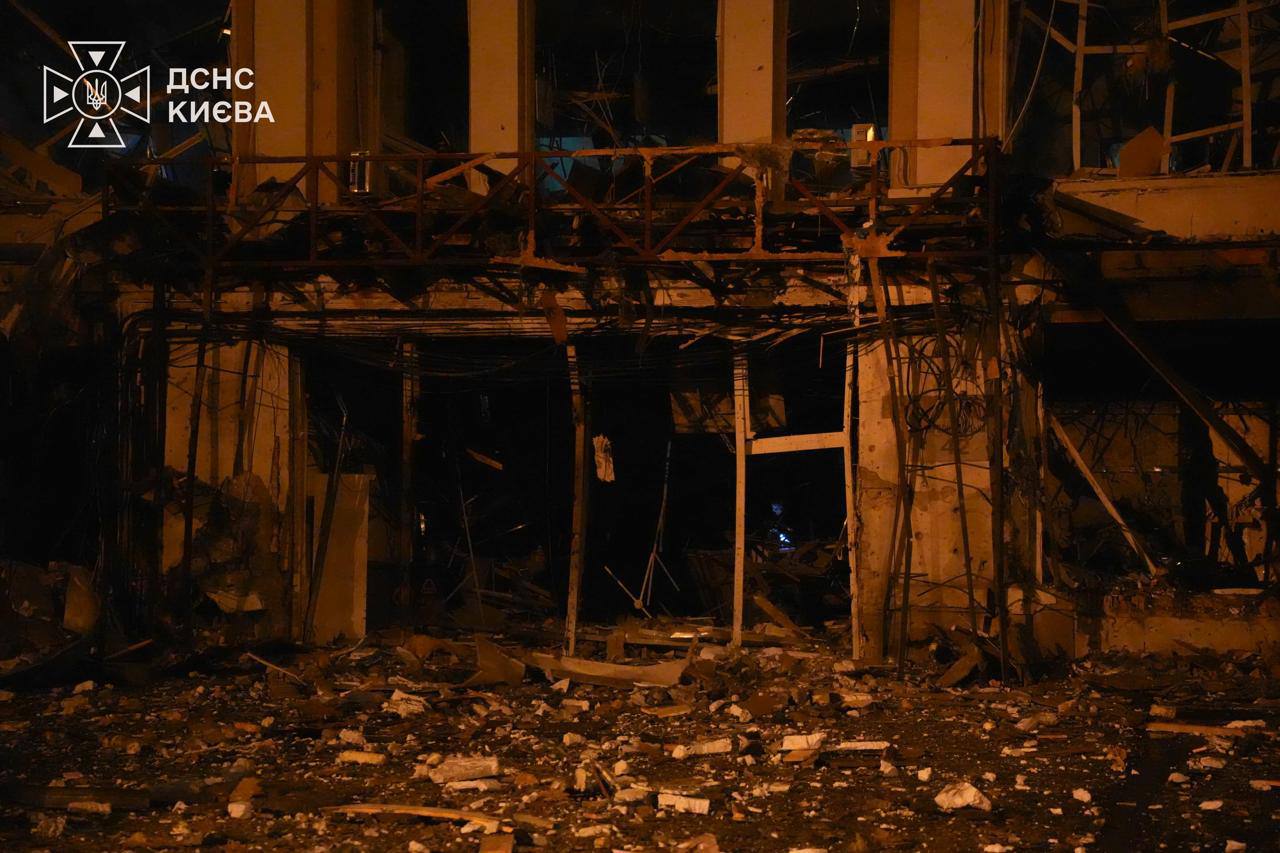
Russia continues attacking Ukrainian cities and energy infrastructure. As EU Today reported on 22 October, Russian forces launched 21 ballistic missiles against Kyiv shortly after Witkoff’s discussions with Putin.

The simultaneous pursuit of diplomatic engagement and military pressure allows Moscow to negotiate while attempting to alter conditions on the battlefield.

Europe cannot be treated as an economic bargaining chip

The proposed return of Russian gas exposes another contradiction in Washington’s approach.

The European Union has already adopted binding legislation to phase out Russian gas imports, with full restrictions taking effect during 2027.

The European Commission reiterated on 19 October that it had no plans to reverse its position. Reopening Nord Stream would also face sanctions, infrastructure and political obstacles, particularly in Germany.

Consequently, Washington cannot independently promise Moscow renewed access to European energy markets.

Nor can it guarantee Ukraine’s accession to the EU. Membership requires agreement among the existing member states, completion of accession negotiations and ratification of the relevant treaty.

A settlement negotiated primarily between Washington and Moscow would therefore depend on European decisions over which neither government has unilateral authority.

This helps explain the significance of Peskov’s remarks about possible European participation. Moscow needs European cooperation to secure meaningful sanctions relief and access to markets, even while seeking to negotiate Europe’s security arrangements principally with Washington.

The unresolved question

Trump’s approach rests on the proposition that economic incentives can make a settlement more attractive to Moscow than continued warfare.

Putin’s position presents a different calculation. The Russian president must weigh the benefits of restored commercial relations against the political implications of recognising Ukraine’s durable independence and Western orientation.

Those objectives may prove incompatible.

A settlement that restores Russian energy revenues without credible guarantees against renewed aggression could reduce Moscow’s economic constraints while leaving the causes of the war unresolved.

The decisive test in Abu Dhabi will therefore not be whether negotiators can agree on investment, pipelines or sanctions relief. It will be whether Russia is prepared to accept a Ukrainian state whose sovereignty, political direction and future European integration remain beyond Moscow’s control.

Until that question is answered, renewed negotiations may offer Washington the prospect of a diplomatic achievement while allowing the Kremlin to pursue objectives it has not publicly abandoned.

  •  

Rubio’s Intervention Exposes the Limits of Trump’s Russia Policy

Zelenskyy’s urgent discussion with the US Secretary of State suggests that Washington cannot pursue accommodation with Moscow without confronting opposition in Congress, the requirements of American national security and Ukraine’s continuing dependence on US military support.

The telephone conversation between Ukrainian President Volodymyr Zelenskyy and US Secretary of State Marco Rubio on Tuesday, 20 October, has exposed an increasingly uncomfortable contradiction in American policy towards Russia. While President Donald Trump is easing economic pressure on Moscow and attempting to restrain Ukrainian attacks on Russian energy infrastructure, senior members of his administration are having to address the consequences for Ukraine’s defence.

Zelenskyy raised three immediate concerns: the availability of Patriot interceptor missiles, interruptions to American early-warning intelligence concerning Russian ballistic attacks, and restrictions affecting Starlink and Starshield satellite communications. He described the discussion as constructive, expressing appreciation for Rubio’s willingness to help.

The significance lies less in the diplomatic language than in the circumstances surrounding the call. Washington is attempting to obtain concessions from Moscow while several of its own decisions have weakened confidence in the security arrangements on which Kyiv depends. Rubio’s involvement suggests that these difficulties cannot simply be left unresolved while Trump’s envoys pursue another round of negotiations.

The political cost of concessions to Moscow

Trump’s recent decisions concerning Russian energy exports have brought an existing disagreement over Ukraine into American domestic politics.

The administration has facilitated Russian diesel exports and waived new sanctions under the Graham Act, legislation intended to increase pressure on Russia and its principal energy customers. Rubio has said the president will use a 60-day period to assess the economic consequences of implementing the measures.

For Trump, the immediate attraction is apparent. Rising fuel prices have become a political liability ahead of the 3 November congressional midterm elections. Increasing supplies on international markets offers the administration a potential means of relieving pressure on American consumers.

The difficulty is that concessions to Vladimir Putin carry their own electoral consequences. Moscow remains deeply unpopular among substantial sections of the American political establishment, including Republicans who regard support for Ukraine as a matter of American strategic interest.

That opposition is no longer confined to public criticism. Republican senators have joined Democrats in challenging decisions affecting Ukraine’s military capabilities, creating an additional problem for an administration already facing a difficult electoral environment.

Trump can justify Russian energy concessions as an attempt to protect American consumers. Explaining why Ukraine should simultaneously experience interruptions to critical defence systems is considerably more difficult.

Rubio and the machinery of American foreign policy

Rubio’s position within the administration is particularly important. As both Secretary of State and National Security Adviser, he occupies two offices central to the formulation and execution of American foreign policy.

His conversation with Zelenskyy took place during a diplomatic tour of Uzbekistan and India, demonstrating that the deterioration in relations with Kyiv required attention even while the administration was pursuing other international priorities.

It would be premature to interpret Rubio’s intervention as evidence of an independent foreign policy. There is no indication that he is acting against Trump’s instructions. The more plausible interpretation is that the administration recognises a need to contain the consequences of its recent decisions without requiring the president publicly to reverse his position.

The controversy surrounding Starshield is particularly revealing. Reuters reported that instructions to restrict the satellite service used by Ukrainian forces originated inside the White House. The officials cited did not identify who authorised the order, while the administration has denied Trump’s personal involvement.

Separately, Zelenskyy has reported failures to receive advance warnings of Russian ballistic attacks. The cause of those interruptions remains disputed.

These developments have already attracted congressional scrutiny. Republican Senator Thom Tillis and Democratic Senator Jeanne Shaheen led a bipartisan request for an investigation, warning that failures in communications and intelligence-sharing may have endangered American personnel in Ukraine.

Congress cannot directly manage the administration’s foreign policy. Nevertheless, its powers over expenditure, legislation and oversight make sustained opposition politically consequential, particularly when members of the president’s own party are involved.

Ukraine needs military assistance, not diplomatic promises

The immediate requirements in Kyiv are considerably more specific than the objectives being discussed in Washington’s diplomatic negotiations.

Ukraine needs reliable satellite communications, uninterrupted intelligence concerning incoming missiles and sufficient Patriot interceptors to defend its cities and critical infrastructure. Delays in any of these areas have consequences that cannot be addressed through declarations about a future peace settlement.

The shortage of Patriot missiles is particularly serious. Zelenskyy has complained that American authorisation is delaying deliveries under arrangements financed by European governments. Washington’s commitments elsewhere, including the Middle East, add further pressure to American air-defence inventories.

Meanwhile, preparations for new negotiations in Oslo involving American envoys Steve Witkoff and Jared Kushner continue. The involvement of European leaders may broaden the diplomatic discussion, but it does not resolve the central obstacle: Putin has offered no convincing indication that he is prepared to end the invasion on terms acceptable to Ukraine.

Proposals concerning Ukrainian elections, NATO membership or alternative negotiating arrangements remain subordinate to that problem. Without a ceasefire that can be enforced, even an agreement on the political framework for peace would leave fundamental questions of security unanswered.

The limits of presidential power

Trump retains substantial authority over American sanctions, military assistance and diplomatic engagement. Yet his ability to offer Moscow meaningful concessions is constrained by several factors beyond his immediate control.

Congress can challenge further attempts to weaken sanctions or restrict assistance. European governments maintain their own sanctions regimes and are not obliged to follow Washington’s approach. Ukraine retains considerable military capacity, including the ability to attack Russian energy facilities that contribute to financing the war.

Nor can the American president compel Putin to accept a settlement. If Russia calculates that continuing military operations offers greater advantages than negotiations, additional concessions from Washington may encourage Moscow to prolong the conflict rather than end it.

Rubio’s conversation with Zelenskyy therefore suggests that the administration is being forced to confront the practical consequences of its policy. An American president may seek improved relations with Moscow, but the institutional interests of the United States do not necessarily change with his personal diplomatic priorities.

For Kyiv, the question is whether those interests will translate into the continued supply of weapons, intelligence and communications support. Russia’s attacks will continue irrespective of the timetable established for American diplomatic initiatives.

  •  

Trump defends Russia sanctions waiver, says he does not want to drive Moscow from talks

Trump WEF

US President Donald Trump wrote in a Truth Social post on 18 October that he did not want to “drive, foolishly, Russia away from the bargaining table.” He also wrote: “Signing that document at this time will do that, and I can sign it later, or any time that I want!”

Trump was referring to sanctions and tariffs under the Lindsey O. Graham Sanctioning Russia and Iran Act of 2026, which he waived in an executive order on 16 October, days before the measures were due to take effect. The waiver suspends additional economic penalties intended to pressure Moscow over its war against Ukraine, while leaving earlier US sanctions in place. The decision came weeks before the 3 November midterms, in which Republicans are defending slim majorities in both chambers, and analysts said the penalties could have pushed up oil prices for Americans already paying more, largely because of the US-Israeli war with Iran, Reuters reported.

Trump says Zelenskyy could have made a better deal two years ago

A week before the waiver, Trump had announced a deal for Russia to increase diesel supplies to global markets. The Treasury also issued a license, valid until 7 April 2027, permitting certain transactions in Russian-origin diesel.

In the Truth Social post, Trump accused Ukrainian President Volodymyr Zelenskyy of targeting Russian diesel refineries, saying the strikes were “seriously hurting the world diesel markets, including those in the United States.” Kyiv had paused its refinery strikes for three days at Washington’s request after Trump declared an energy ceasefire on 11 October, which Russia never confirmed, then resumed them. Since then, Russia has struck Ukraine’s energy sector 76 times, Zelenskyy said on 18 October.

kyiv attack
Explore further

Kyiv gets no warning of the first of two Russian ballistic waves, hours after Zelenskyy said US alerts were back

Trump wrote that Zelenskyy “doesn’t want to end this war, and probably never did,” and that he “could have made a better deal two years ago than he can now.”

“His country is in shambles, a large portion of his land is lost, his oceans and seas are gone, and his male population is low, wounded, and/or dead,” Trump added.

He also said Russia was “doing very little, if anything, to help” Iran and that he wanted to keep it that way.

A day earlier, Trump said he had not made a final decision

On 17 October, Trump told reporters at Mar-a-Lago that he had not announced his final decision. “A lot of you don’t know what my decision is yet, but we’ll figure it out, and you’ll figure it out,” he said, Reuters reported.

“I think the president wants to take the 60-day period of time to sort of analyze what imposing both sanctions and tariffs will mean to the global economy and even to the US economy,” US Secretary of State Marco Rubio told reporters before departing for Uzbekistan the same day.

Zelenskyy calls the waiver a pity as Republicans split

Zelenskyy called it a “pity” that Trump had waived sanctions under a law named for the late Senator Lindsey Graham, who “really believed in Ukraine.” He said he hoped Trump would change his decisions, NBC News reported.

Discussing the diesel deal on NBC’s Meet the Press, Zelenskyy said US oil prices had risen because shipping through the Strait of Hormuz was blocked, not because of Ukraine.

month before diesel waiver trump’s envoys had already pitched kyiv russian gas · post jared kushner steve witkoff ukrainian president volodymyr zelenskyy 7 2026 presidentgovua джаред кушнер стівен віткофф володимир
Explore further

A month before the diesel waiver, Trump’s envoys had already pitched Kyiv on Russian gas, NYT says

On 17 October, Zelenskyy told journalists that “the decision to undo all of this, to block all of it, seems wrong to me” and that it “definitely helps only the Russians.” His remarks appeared in Ukrainian on his official Telegram channel.

“Sanctions relief will continue. I think the diesel deal and the move regarding the Lindsey Graham Act are not the end of it. Unfortunately,” Zelenskyy said.

On 19 October, Zelenskyy wrote that partners had again given no warning of Russia’s overnight ballistic attack and that blocking missiles for Ukraine’s air defense while Russia gets sanctions eased or postponed amounts to partners denying reality.

Republican Senator James Lankford defended Trump’s decision on NBC’s Meet the Press, saying the president was “choosing the American people first.”

Senator Darline Graham, Lindsey Graham’s sister, whom Trump has endorsed for a full term, said at a campaign stop on 17 October that she would “choose to keep the pressure on Russia.”

“I don’t trust Putin and I don’t trust Russia,” Darline Graham said.

She did not directly criticize Trump but said she would not have made that choice, Reuters reported.

  •  

Congress gave Trump 30 days to hit Russia’s oil buyers with 100% tariffs. He waives them two days before deadline, citing US interests. Moscow calls it historic

The White House, seen from Lafayette Square. File photo, June 2024.

US President Donald Trump has suspended the tariffs and sanctions on the biggest buyers of Russian oil set by the Lindsey Graham Act, the law he signed himself in September. He says the move serves US national interests, according to an executive order published on the White House site.

The act required the president, within 30 days, to impose 100% tariffs on all goods from the five biggest buyers of Russian oil, to sanction a range of Russian entities and to put 500% tariffs on all Russian energy imports to the US. The deadline for those measures fell on 18 October.

Trump has used the president’s power under Section 115 of the Graham Act, which allows him to waive sanctions, restrictions, and duties by certifying to Congress in writing that doing so serves US national interests and submitting a report explaining why. The act does not, however, allow him to cancel sanctions that have already been announced.

Moscow calls it historic, Kyiv calls it a gift to Putin

The two capitals read the same order in opposite ways. Kirill Dmitriev, an envoy for Russian leader Vladimir Putin, called it “an important and truly historic moment” on X, claiming the sanctions had mainly harmed the US economy and world markets.

“Economic cooperation between Russia and the US serves the interests of both nations, contributes to global economic stability and lays the foundation for building trust and achieving lasting peace,” Dmitriev writes.

President Volodymyr Zelenskyy answered from under fire. Russia struck Ukraine’s energy system on 17 October, and at that very moment Washington chose “to completely ignore the Lindsey Graham law, which was supposed to impose real, effective pressure on Russia to end this war,” he says.

A law its own backers say is being gutted

The waiver lands amid a bipartisan revolt in Congress. Seven Republican and Democratic senators had already warned on 11 October that Trump’s move to allow Russian diesel imports had broken the law Congress passed after the full-scale invasion, urging the administration to reverse it so US money would not help finance Russia’s war.

Meanwhile, Zelenskyy argued the law can still work if Washington lets it.

“This law could, and still can, help a great deal. But the law has actually to work, and every vote for it matters,” he said, warning that the step only pushes Moscow to strike harder.

The world must not give up ground and must try to end the war, Zelenskyy added.

“To end it, and not give Putin every reason to continue it indefinitely,” he stressed, thanking everyone who “is truly fighting for peace and helping Ukraine," he stated.

The word from the Ukrainian opposition

The Ukrainian opposition also commented on Trump’s decision. Iryna Herashchenko, co-chair of the European Solidarity parliamentary faction, said that “the most cynical and stupid decisions are usually made by rulers on Saturday night,” when public attention is scattered, and people are preparing for the weekend.

“Rehabilitating Putin harms not only Ukraine but also the US itself, strengthens the axis of authoritarian regimes, and undermines international security,” she claimed.

  •  

Trump Shelves Russia Sanctions Weeks After Signing Them Into Law

President Donald Trump has waived sweeping sanctions and tariffs targeting Russia’s energy revenues, invoking national interest provisions in legislation passed only last month. The decision follows his controversial diesel agreement with Vladimir Putin and threatens to deepen divisions with Congress and European allies over economic pressure on Moscow.

President Donald Trump has suspended the implementation of sweeping American sanctions against Russia, using presidential waiver powers to prevent penalties approved by Congress from taking effect just weeks after he signed them into law.

The executive order issued by the White House on Friday, 16 October, suspends tariffs of up to 500 per cent on Russian imports, alongside penalties targeting major purchasers of Russian oil and gas. It also waives numerous financial and commercial restrictions intended to reduce Moscow’s ability to finance its war against Ukraine.

The decision comes two days before the 18 October deadline for implementing key provisions of the Lindsey O. Graham Sanctioning Russia and Iran Act of 2026, which Trump signed on 18 September. The legislation was named after the late Republican senator Lindsey Graham, who had championed tougher economic measures against Russia.

Sanctions established but immediately suspended

The presidential order formally establishes the tariff increases required by the legislation while simultaneously suspending their application.

Under the law, Russian imports into the United States would face additional duties of 500 per cent. A separate provision would impose 100 per cent tariffs on goods imported from the five largest purchasers of Russian crude oil and natural gas if those countries knowingly made new purchases from 18 October, subject to specified conditions and exemptions.

Another provision targets countries identified as leading facilitators of Russian oil sanctions evasion, potentially exposing their exports to similar American penalties.

Trump invoked Section 115 of the legislation, which permits the president to waive sanctions and tariffs after certifying to Congress that doing so serves the national interests of the United States.

The order confirms that the certification and an accompanying explanatory report have been submitted to Congress. However, the publicly released document provides no detailed justification for suspending the measures.

The waivers will remain in effect until the president or designated senior officials decide that further action is appropriate. Existing sanctions imposed under earlier executive orders are explicitly preserved, meaning the decision does not remove all American restrictions against Russia.

Nevertheless, the order prevents the new legislation’s principal economic penalties from operating at a time when Congress had sought to intensify pressure on Moscow.

Diesel agreement shapes Washington’s decision

The suspension follows Trump’s agreement with Putin to facilitate renewed Russian diesel exports, announced on 9 October as part of an effort to reduce international fuel prices.

As EU Today previously reported, the agreement envisages an immediate release of more than 300,000 tonnes of Russian diesel, followed by additional shipments in November and subsequent months. Washington also authorised certain transactions involving Russian diesel until April 2027.

The arrangement has raised questions about the relationship between the administration’s energy policy and sanctions intended to constrain Russia’s war economy.

Diesel prices have become an increasingly important domestic political issue ahead of the American congressional elections on 3 November. The war involving Iran and disruptions to international energy supplies have contributed to exceptionally high fuel costs, creating additional pressure on the administration.

The White House hopes additional Russian supplies will relieve pressure on international markets. However, energy analysts have questioned whether the quantities involved will materially affect American prices, particularly before the elections.

The latest waiver also removes the immediate threat of punitive tariffs against major Russian energy customers, including China and India, which had objected to the proposed measures.

Congressional opposition and European concerns

The decision is likely to intensify opposition within Congress, where the sanctions legislation attracted substantial bipartisan support.

Earlier this week, 12 senators, including six Republicans, called on Trump to reverse his diesel agreement, arguing that allowing Russian fuel back onto international markets would provide Moscow with additional revenue for its military operations.

Democratic Senator Richard Blumenthal, who helped develop the sanctions legislation, criticised the diesel arrangement as contrary to Congress’s intention to strengthen economic pressure on Russia.

The decision also exposes a widening divergence between Washington and Brussels.

At the European Council meeting on Friday, European Commission President Ursula von der Leyen and European Council President António Costa reaffirmed that EU sanctions against Russia would remain in place until Moscow ended its war against Ukraine.

Costa declared that the present circumstances required increased pressure on Moscow rather than a relaxation of existing restrictions. The European Union is also preparing a 22nd sanctions package while considering additional financial support for Kyiv.

For Ukraine, the decision means that Russia will continue to benefit from energy exports and the international trade that helps finance its war. Instead of tightening restrictions on these revenues, Washington has suspended measures specifically intended to cut them.

The timing is particularly significant. While Trump is pressing Kyiv to halt attacks on Russian oil refineries and other energy facilities, Moscow continues its strikes against Ukrainian cities and civilian infrastructure. Zelenskyy has argued that Ukraine cannot be expected to stop targeting Russia’s energy sector while Russian attacks on Ukrainian infrastructure continue.

Although Trump can reinstate the sanctions, his decision removes the immediate threat of additional penalties against Russia and its principal energy customers. It also places Washington increasingly at odds with its European allies. Brussels remains committed to maintaining and expanding sanctions against Moscow, while the White House is now giving priority to reducing American fuel prices, even if that means easing economic pressure on Russia.

  •  

EU leaders rule out easing sanctions on Russia until war ends

Ursula von der Leyen and António Costa said the EU would maintain pressure on Moscow, after the United States eased restrictions linked to Russian diesel exports. The statements came as Volodymyr Zelenskyy joined EU leaders in Brussels for talks on Ukraine.

The EU will not lift sanctions on Russia while its war against Ukraine continues, European Commission President Ursula von der Leyen and European Council President António Costa said on Friday. Their statements came ahead of discussions at the European Council, where leaders were due to consider further support for Ukraine and the needs of its critical infrastructure before winter. The assurances followed Washington’s move to ease sanctions pressure in connection with a deal involving Russian diesel supplies.

Von der Leyen said the EU had supported the energy truce announced by US President Donald Trump, but accused Russia of failing to observe it. “We have seen that Russia did not respect it. Not a single minute. Instead, Russia escalated. We have to increase the pressure on Russia,” she said. She added that the Commission was working on a 22nd sanctions package and that the bloc would not lift any sanctions unless Russia stopped the war.

Costa also rejected any reduction in pressure. “We will not cancel any sanctions until Russia stops the war,” he said, calling for stronger support for Ukraine and increased pressure on Moscow to secure a genuine ceasefire. The statements set out the position of the Commission and European Council presidents; they were not, in themselves, a new sanctions decision by EU member states.

The US and EU sanctions regimes are separate. Washington’s decision concerns US restrictions associated with Russian diesel exports, while EU measures are adopted by the member states. Moscow said it had resumed diesel exports under the arrangement with the Trump administration, a development that has prompted concern in Kyiv and European capitals. The reported resumption of Russian shipments has brought renewed attention to the effect of energy revenue on the Kremlin’s ability to finance its war.

The Commission describes EU sanctions as a means of reducing Russia’s capacity to fund the war, imposing costs on its political leadership and weakening its economic base. The measures cover energy, trade and finance, alongside listings of individuals, companies and organisations. The EU’s sanctions framework against Russia has been expanded through successive packages since the full-scale invasion of Ukraine.

The leaders’ statements came as Ukraine prepared for another winter of Russian attacks on energy infrastructure. The European Council meeting agenda included continued support for Ukraine and the operational needs of its critical infrastructure. Von der Leyen said the EU would continue to support Ukraine through the winter. She also referred to progress on Ukraine’s accession process, saying the remaining negotiation clusters should be opened by the end of the year.

The EU has recently added measures targeting Russia’s military-industrial sector. In October, it adopted a package of listings aimed at companies and individuals connected to the country’s war effort, as covered in EU Today’s report on the latest sanctions. The diesel arrangement has also followed earlier tensions over the use of sanctions and energy policy, including the US deal with Moscow.

The EU’s stated position is that its sanctions will remain in place until Russia ends the war. The Commission is preparing further measures, while any new package will require agreement among member states. Friday’s statements did not change the existing regime, but made clear that the US decision on Russian diesel would not, by itself, prompt Brussels to ease EU restrictions.

  •  
❌