Login

Ecuador Transfers Luisa González to Riobamba Prison
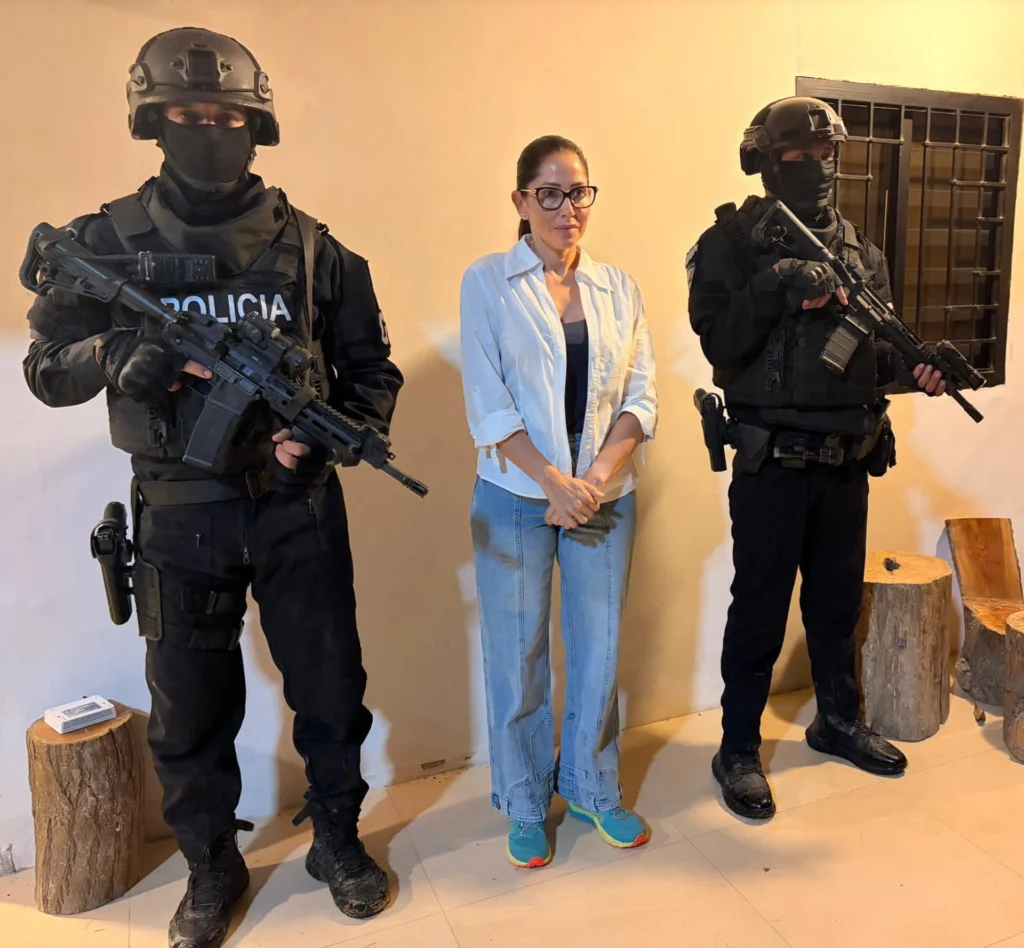
Ecuadorian opposition figure Luisa González faces pretrial detention over alleged money laundering in the Labyrinth case.
Ecuadorian opposition leader and former presidential candidate Luisa González was transferred to a prison in Riobamba on Friday night after a judge ordered her pretrial detention over alleged money laundering in the so-called Labyrinth case.
RELATED: Ecuador Prosecutors Seek Preventive Detention for Leftist Leader Luisa Gonzalez
A convoy of National Police and Armed Forces personnel arrived outside the detention center in Riobamba, in Chimborazo province, shortly after 9 p.m. local time on Oct. 23. Prison authorities had not officially confirmed González’s admission to the women’s facility at the time of the report.
The transfer began shortly after 4 p.m. from the Modelo barracks in Guayaquil, where González had been taken following her arrest Thursday in Canuto, Manabí province. Police transported her to an air base before she boarded a flight that landed at Latacunga airport in Cotopaxi province at 7:30 p.m.
Although initial reports indicated that González would be held at a prison in Cotopaxi or Quito, police ultimately arranged for her to travel by road to Riobamba in a heavily guarded convoy accompanied by patrol cars and tactical units.
Text Reads: 🛬 Luisa González, former presidential candidate for the Citizen Revolution (Revolución Ciudadana) movement, arrived at Cotopaxi Airport under the escort of military and police personnel, hours after a judge ordered her pretrial detention.
⚖️ This measure relates to alleged money laundering, as part of the “Laberinto” (Labyrinth) case. González was taken into custody early Thursday morning following a raid on her home in Chone, Manabí.
🏛️ The State Attorney General’s Office maintained its request for pretrial detention, which also applies to former assembly member Santiago Díaz and Wendy Onofre, secretary of the RETO movement.
📌 These judicial actions are part of a broader agenda of political persecution being carried out by the administration of Daniel Noboa against opposition figures and leaders.
The use of air transport for part of the journey was intended to reduce public-order risks amid tensions at several prisons across Ecuador. Interior Minister John Reimberg directly linked the unrest to reactions to González’s arrest.
González, the former leader of the Citizen Revolution movement, has rejected the allegations against her. The movement and her associates denounced the pretrial detention order as an act of lawfare and political persecution.
In a statement posted on social media, González reaffirmed her innocence and declared that she would remain in Ecuador to face the judicial proceedings.
Supporters gathered outside the Riobamba prison to hold a vigil, carrying flags and banners behind a security barrier erected by uniformed personnel. Patricia Núñez, a member of the National Assembly representing Chimborazo province, joined the gathering.
The court also ordered pretrial detention for former lawmaker Santiago D. and Wendy Onofre, secretary of the RETO movement, in connection with the same case. Onofre voluntarily surrendered in Guayas province and was admitted shortly after 8 p.m. to the Pichincha No. 3 detention center in Chillogallo, southern Quito.
Another defendant, Estefanía M., was granted alternative measures for the 90-day investigation period, including regular reporting to authorities, a ban on leaving the country and electronic monitoring.