❌

Reading view

My daughter and I needed a fresh start after my divorce. A vacation at a Colorado dude ranch gave us one.

Two horseback riders pause in a grassy valley with rocky hills in the background.
The author (right) traveled to a dude ranch in Colorado for a mother-daughter trip after her divorce.

Courtesy of Rebecca Lillian.

  • After my divorce, I wanted something special for my first mother-daughter trip with my 8-year-old.
  • We decided to spend a week at a luxury dude ranch in Colorado.
  • The trip helped me show my daughter

Resting by the heated pool in my cowboy hat, breathing the fresh mountain air, I watched my daughter laughing with her new friends and felt something I hadn't in years: a sense of peace.

Earlier that year, my husband and I inked our signatures in separate rooms, ending our 16-year marriage. Our divorce was one that could be labeled "volatile," and not just for us, but for our 8-year-old daughter.

When it came time to plan our first summer vacation with just me and her, I knew it would likely be a splurge, but I needed it to be special. We needed activity. We needed reconnection. We needed a dude ranch.

This was our first big adventure for just the two of us

My research led me to an all-inclusive ranch in Colorado. The website had footage of horses running across a bridge over a winding stream. It looked perfect.

Although I was apprehensive about the two of us traveling from Texas during the week of July 4th, I inevitably found it liberating. Wheeling luggage stuffed with heavy cowboy boots while lugging backpacks through airports, shuttling to the rental car, and navigating unknown mountainous switchbacks could have been disastrous, but we managed it well. It was our first accomplishment in independence.

Two smiling people take a selfie beside an outdoor swimming pool with lounge chairs and trees in the background.
The author said some independent time each day helped her and her daughter connect with other guests.

Courtesy of Rebecca Lillian.

We encountered some surprises

"You have arrived," the navigation system announced in our rental as we turned onto the dirt drive lined with quintessential log cabins with thick white chinking, set on manicured lawns before the Rocky Mountain backdrop. Each porch had bright pink, purple, and red petunias hanging in baskets above shellacked wooden rocking chairs. It was just like we imagined it.

After parking our red Wrangler, we were greeted by ranch staff in full cowboy gear who guided us past the soft pink peonies nestled between the grayish-white aspen trees to check in.

At check-in, while planning our next seven days, I discovered that children eat dinner most nights with the other children and their counselors and take separate trail rides twice a day. This concept is great for families, giving mom and dad a chance to reconnect over gourmet meals, but I wasn't so sure how our new life would fit into this scenario.

Initially apprehensive about the separation, my daughter and I soon discovered this daily dose of division was liberating, forcing us to foster new friendships.

Our expectations were exceeded

Later, we met the director of equestrian operations, and she asked about our riding experience and personalities to best match us with one of her cherished horses. We were excited to meet our horses the next day.

Meanwhile, our newly renovated western chic room was complete with leather-branded throw pillows, a fireplace, and a welcome basket full of healthy snacks, a red bandana, and a bottle of wine.

We quickly fell into a daily routine, bonding with our horses, riding and grooming them each day, and creating connections with other guests. We also tried out fly fishing (I caught three trout), hiking, archery, and ziplining. I especially enjoyed relaxing at the outdoor spa in luxury tents built over the creek, immersed in nature's music of bird calls and horse neighs.

We danced into the night and our next chapter

The whole trip was exceptional, and our favorite event was an evening barn dance. We dressed in full cowgirl fringe and ended the night with an elaborate fireworks display just for the resort. Sitting on the lush green grass watching red, white, and blue explosions just a few, yet safe, feet away, she and I weren't just celebrating our country's freedom, we were celebrating our own.

Two people wearing patriotic hats and star decorations pose for a selfie in an outdoor picnic area.
The author and her daughter celebrated July 4th while at the resort.

Courtesy of Rebecca Lillian.

I had not realized until that moment I was introducing my authentic self to her — the woman I was before my marriage unraveled — and reminding myself of that version of me. Free. Capable. And full of adventure.
Read the original article on Business Insider

  •  

Family Separation Drama Fjord Is a Haunting Depiction of Unchecked State Power

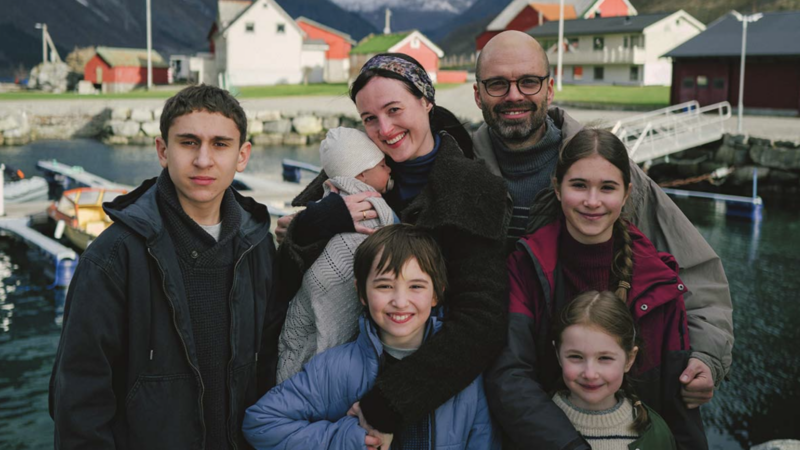
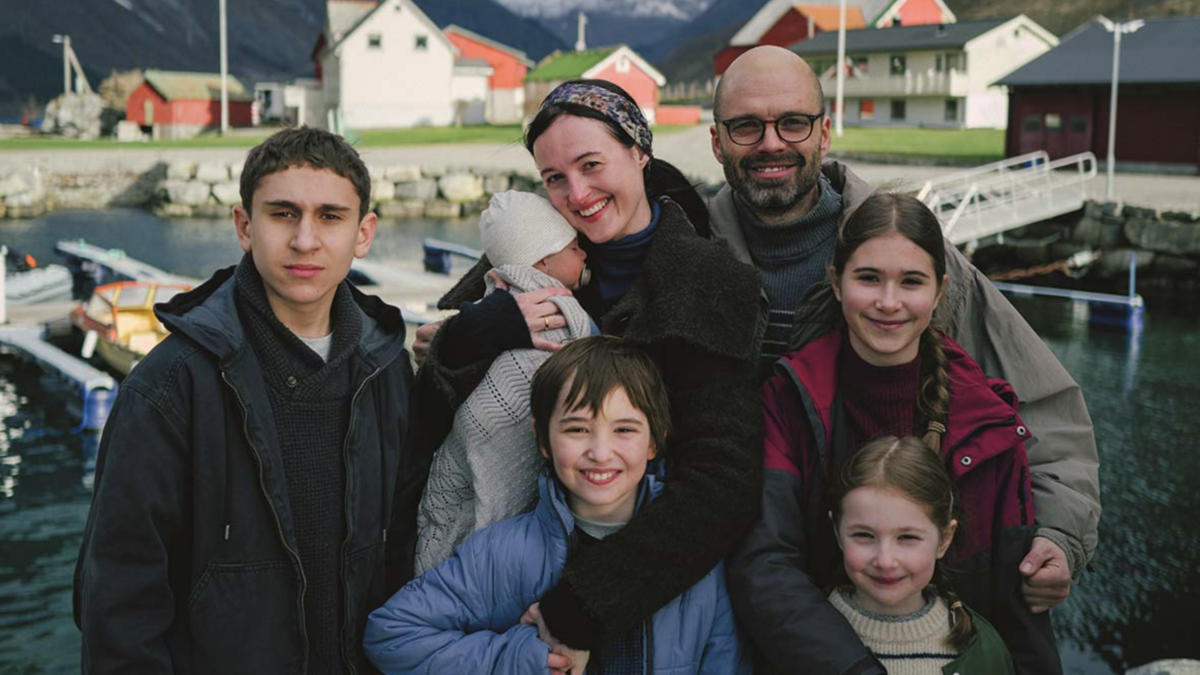
A scene from "Fjord" | Forum Film România

Fjord is a movie about having your children taken by the state. The tone is calm, clinical, measured, and by the books. No violence is depicted on screen. People rarely even raise their voices. Everything unfolds in the distant and impersonal style of bureaucratic procedure. 

But the movie, which won the Palme d'Or at this year's Cannes Film Festival, is utterly enraging, a fierce, ferocious, gut-punch of a film. It's a haunting portrait of the consequences of unchecked state power, especially the kind that purports to be for one's own good.

Much of the film's power comes from the fact that it simply depicts what happens when a person, or a family, comes under suspicion by the state. There's no commentary, no lecturing, no big speech at the end. Instead, writer-director Cristian Mungiu, a Romanian filmmaker whose sympathies are clearly with the family, simply shows us, unblinking, what it's like to lose one's rights and freedoms at the hands of a bureaucracy that respects no power and no authority but its own. 

When the film begins, the Gheorghiu family—a mother (Renate Reinsve), father (Sebastian Stan), and their five children—moves from Romania to a small town in Norway. Soon, school authorities notice the children have bruises. We in the audience know the bruises weren't caused by the parents, but the children, who don't speak Norwegian, give conflicting statements. After being brought in for questioning by the police, the father admits to sometimes spanking or lightly slapping his children on the behind, for correction. In order to go free, he's required to sign a statement that contorts his words, making his admission of spanking sound like something more sinister and violent. 

He's also a conservative Christian, which has caused some social tension: He's played Christian music, without singing the lyrics, on a piano at school, a no-no in a state that strictly curbs proselytizing. School officials are concerned that he requires his children to pray and study the Bible; the children aren't allowed to play video games or watch YouTube. One of his children spoke out against homosexuality in school during a session on gender. There's suspicion among the teachers and administrators that he might be indoctrinating his kids.

So the school authorities alert Child Protection, Norway's powerful family bureaucracy. They remove the kids, including a breastfeeding baby, from their parents' custody and place them in three separate foster homes. At first the parents are allowed no visitation, and they are not told where the children are located.

Then they go to court, initially for a civil trial, but with a criminal trial for child abuse looming in the background. As the legal process proceeds, they are told repeatedly that essentially anything they do to fight for their children will make the outcome worse. The state wants compliance and admission that they wrongly abused their kids. But if they admit to abusing their kids, doesn't that give the state evidence they are unfit to parent? Doesn't that make the criminal trial more likely to go against them? As their own, mostly sympathetic lawyer, informs the two parents, "Frankly unless you convince them that you understand and regret it, the risk of you going to prison is considerable." 

Later, at the trial, a representative from Child Protection calmly says there's no reason to believe children might be better off with their biological parents, noting the family's restrictions on video games, internet, and YouTube. In their view, the state knows what's best for the kids; the culturally backward, religious conservative parents do not. It's not for nothing that one character, a conservative political figure from Romania who has come to help publicize the situation, analogizes the power of Child Protection to the power of the Soviet state. 

Part of what makes Fjord so effective is its lack of sermonizing. You don't have to be a trad, a conservative, a family values evangelical, to see that what's happening to the Gheorghiu family is simply wrong. They are railroaded by an imperious bureaucratic state that distorts reality to turn them into villains, with the goal of separating children from their parents and each other. Who are the real child abusers here? 

The story is fictionalized, but not hypothetical. Fjord is based on the true story of the Bodnariu family, conservative Romanian immigrants whose five children were taken from them by the Norwegian state in the 2010s on similarly flimsy justifications. The family eventually left Norway. After watching Fjord, it isn't hard to see why. 

The post Family Separation Drama <i>Fjord</i> Is a Haunting Depiction of Unchecked State Power appeared first on Reason Magazine.

  •  

My kids used to complain on every trail. These 4 changes made family hiking fun again.

Four hikers pose on a rocky forest overlook with expansive green woodland and distant hills behind them at Konnevesi National Park in Finland.
The author (in blue) with her family as they hiked in Konnevesi National Park in Finland.

Courtesy of Emese Maczko.

  • My husband and I enjoy hiking, but our kids, 7 and 10, often complain along the way.
  • On a visit to Finland, we went hiking with a guide, and my kids were engaged the whole time.
  • It encouraged me to change a few things about the way I approach and plan family hikes.

It was an hour into our hike through Southern Konnevesi National Park in Finland, and neither of my 7- and 10-year-old daughters was complaining. It was glorious.

Normally, within the first hour, I would have already heard the question "How much longer?" One of them would also declare, "It's boring. We're just walking."

So what was different about this hike? Why weren't they complaining? It's because I took a different approach to this hike than I have with past ones — and it worked. Here's what I did.

A stranger motivated them more than I ever could

For this hike, we had a local guide with us, and my kids hung on her every word. They were asking questions non-stop and following her down the trail without a single complaint.

I almost laughed when I saw them literally stepping in her footprints and mimicking every move she made. This is not what my husband and I were accustomed to.

When she leaned on a rock to hear "the whispers of the forest," my kids did the same. When she found edible berries, my kids rushed there to try them first.

I do my best to make hikes interesting for my kids, but I am also a first-time visitor to most of the places we explore. No matter how much I research beforehand, I usually can't predict what they will find interesting along the trail. By contrast, this local guide knew exactly how to keep them excited, which kept them moving along.

Having a job kept them interested

I also noticed that the guide occasionally gave them "crucial" jobs along the trail. Who could find the next patch of berries, who could spot mushrooms growing on a log, or who could hear a bird singing?

When we are alone, I try to do these things too, but I cannot always answer the questions that ultimately follow: "Are these berries edible?" "What kind of mushroom is that?" or "Which bird is singing?"

I know my kids are naturally curious, but I wondered why my kids seem uninterested when it's just us. I began to realize they stopped asking me questions because they knew I didn't always have answers. Since our guide did this time, they asked her. They were eager to learn.

I tailored the goal to their needs

I also noticed they had not asked the dreaded question, "How much longer?" Not even once on our 2.5-mile hike.

I kept thinking about my usual responses. I say things like, "Look at the beautiful forest. Just enjoy the view and breathe in the fresh air," or, "Come on, we're almost there. It'll be worth it when we arrive."

Kids care about what's happening in the next five minutes in a way that's different from how my husband and I approach things. I was expecting them to hike like adults, getting from one point to the next. If they can discover something new at every step, they will relish the journey and won't feel time passing slowly. That's something I'm planning to incorporate into our future family hikes.

On a different trip, we tried forest bathing with a local guide in Austria, which lasted over three hours. When it ended, my kids frowned and said, "That was so short. Can we keep going?"

We allow time for free play along the way

After these experiences, I became much more careful about which trails I choose when hiking with my kids.

I know now that the best trails for my kids are the ones that offer exciting experiences along the way: a lake where kids can swim with tadpoles, a stream to cross, or rocks to scramble over.

I've also learned not to rush the stops. My daughters love spending time throwing rocks into a lake, sending leaf rafts down a stream, balancing on fallen logs, building hearts from flowers, or watching frogs or insects.

The biggest change for me has been to stop measuring a hike's success by how far we get and start measuring it by how much fun we had.

In Finland, I realized my kids already enjoy hiking. They just enjoy different things during a hike than I do as an adult. I should never forget that sometimes the part they remember most has nothing to do with the trail itself.

Read the original article on Business Insider
  •  

Investigation finds hundreds of U.S. citizens detained by ICE

California officials are calling for an investigation into the actions of federal immigration officers after they allegedly injured and detained a U.S. citizen. Ricardo Gonzalez's detainment comes as an investigation by ProPublica found that more than 500 citizens have been caught up in the administration's immigration operations. William Brangham discussed more with ProPublica's Nicole Foy.

  •  

The Kids Who Identify as Animals

For Boston Magazine, Kara Baskin explores a growing subculture of tweens and teens who don’t feel entirely human. Some identify as one animal, like a cat or a dog; others identify with multiple animals. One kid Baskin speaks to, Sol, says she “doesn’t summon the animals, but rather they come and go on their own schedule.” These young people call themselves therians (distinct from furries, who are fans of anthropomorphic animal characters). Baskin provides a fascinating glimpse into a world where adolescents can express themselves and explore their identities.

Bafflement is the baseline condition of raising kids right now. The adolescent quest for self-discovery is timeless—but today’s parents experimented in ways that were analog: new hairstyles, inscrutable music, beer snuck in the woods. Their own parents might not have liked it, but they could at least relate.

Now the landscape of adolescent discovery is literally foreign, thanks to social media, which has turbocharged once-obscure subcultures like the furry fandom—and, at its rarer edge, therianthropy—and redefined what “fringe” even means. Even if a kid is the only therian at school, she can find 400 more people just like her online. That’s one of the biggest challenges for parents in the algorithm age: The world your kid actually lives in is one you can’t enter. It touches the fear in every parent, therian kid or not: What happens when our kids inhabit a world we don’t understand, with idols we don’t recognize?

  •  

Giant Elephant Tooth Reveals the Green Wetland Where Early Humans Lived in the Road Between Africa and Eurasia 700,000 Years Ago

Among the stone tools that early humans left beside a lake in northern Israel, archaeologists found something far bigger: the molar of an elephant, about 8 inches (20 cm) tall and 3 inches (8 cm) wide, lying next to several pieces of tusk. It sat at the same level of ground as handaxes and cleavers […]

  •  

Hockey Dads and Hockey Sons

During one of his son’s hockey games, Nick Paumgarten watches as his eight-year-old is hit from behind, only to rise to his feet and use his stick to hit the side of his opponent’s head. Alongside his concern for his son’s head and neck, Paumgarten, who has written about his own hockey-related concussions, rapidly processes the outcomes of the exchange: a game-deciding penalty, his own reflexive rationalization, and the evaluation of other parents who “held me in some way responsible, as both father and coach, for the violence and loss of self-control.” Paumgarten’s essay is rich with such moments of parent-coach double-consciousness, and sensitive to the numerous ways, some of them awful, in which those two identities intrude upon each other.

That Sunday, it wasn’t yet 8 A.M. when a Rye player shoved James from behind into the boards. James went down awkwardly and stayed prone a moment, then leaped up and, with an implausible ferocity, cross-checked the other kid in the ear. The Rye boy collapsed to the ice, and the other kids poured in and began grappling with one another, while parents shouted and pointed. Soon there was a pile of mites, with the two referees pulling players off and flinging them aside like puppies. Through the windows, you could see that the sun had risen over the Long Island Sound. I thought of my son’s fellow second graders back in the city, likely still asleep or watching cartoons in their pajamas or getting dressed for church or whatever the unrinked got up to on weekend mornings, but here at Playland my boy had instigated a munchkin brawl.

  •  

A 1,700-Year-Old Pyramid Found in the Egyptian Desert Held a Judge, a Greek Poem and a Coin of Constantine

Egypt’s Ministry of Tourism and Antiquities has announced the discovery of a Roman-period tomb whose architecture, according to the country’s Supreme Council of Antiquities, has no exact parallel elsewhere in the cemetery where it was found. The tomb sits at Bir al-Shaghala, a site in the Dakhla Oasis, about 750 kilometers (roughly 465 miles) southwest […]

  •  

The Oldest Known Homo Sapiens Had a Modern-Sized Brain — Scientists Just Reconstructed his Face

Roughly 315,000 years ago, a group of early humans lived in what is now Morocco. Their remains, unearthed at a site called Jebel Irhoud, are the oldest fossils ever attributed to our species, Homo sapiens. Now, an international team of researchers has digitally reconstructed the face of one of these individuals, building a composite skull […]

  •  

Architecting hybrid defence: Why UTM and IDS should work together in Windows enterprise security

Enterprise security departments have typically been presented with one of two options: either the use of unified threat management systems (UTMs) to achieve a unified perimeter or an IDS solution that can offer greater insight into network activity. However, when considering solutions for enterprise environments running on Microsoft Windows-based products, it appears that both sides are focusing on the wrong issue. The argument from UTM vendors, who market their product as the "one-stop shop" for IT personnel with limited time resources, is that a UTM device provides all necessary functions (firewall, VPN, antivirus, etc.) within a single unit. On the other hand, the vendors of specialized IDS devices argue that the inclusion of these additional functionalities reduces the effectiveness of the IDS function. As such, organizations providing protection for Windows networks continue to be at increased risk due to this way of thinking.

Cybersecurity engineer Samuel Bemi investigated this gap through a controlled comparative evaluation of Snort, an open-source intrusion detection system, and pfSense, an open-source unified security platform, within a virtualised Windows 11 enterprise environment. His evaluation goes beyond the conventional question of whether a security control detects an attack, examining whether that detection remains operationally valuable once false positives, latency, throughput, and resource utilisation are taken into account.

Detection alone doesn't tell the whole story

The experiment simulated three of the most common attack patterns organisations face: ICMP flood attacks, port and service scanning, and denial-of-service traffic. Both Snort and pfSense were configured to defend a Windows 11 host inside an isolated network built specifically for testing.

The results were clarifying, not comforting. Snort detected 100 percent of ICMP flood attempts and 100 percent of denial-of-service traffic, and identified the large majority of port scanning attempts. Within the controlled test environment, Snort achieved strong detection performance against the traffic patterns tested. But the more important finding was that detection performance came with operational trade-offs.  Alongside that success sat a false positive rate high enough to be operationally significant, alongside a measurable increase in network latency and a meaningful drop in throughput once both systems were active.

Bemi's evaluation shifts the question from “which security control detects more attacks?” to a more consequential one: “does the security architecture remain effective when detection accuracy, false positives, and operational overhead are considered together?”  Rather than assessing IDS and UTM controls independently, Bemi's approach examines how detection accuracy, false positives, resource consumption, and network performance interact when the controls are deployed within the same enterprise environment. This perspective provides security teams with a more practical basis for designing defence-in-depth architectures, where protection is assessed not only by what threats a control detects, but also by how effectively it operates within the wider network.

"A 100 percent detection rate cannot be evaluated in isolation," Bemi says. "If achieving that result introduces significant false positives, latency or throughput degradation, the security control has to be assessed as an operational system rather than simply as a detection mechanism."

What UTM alone Mmisses

Bemi’s argument is that IDS will never replace or outperform UTM. Instead, he says both tools solve two different layers of the same issue. Layer one is Perimeter Enforcement (Firewalling, VPN termination, Traffic Shaping, Blocking Known-Bad traffic) as long as you have the correct settings with your UTM devices such as pfSense. The Layer Two that IDS addresses is what happens after you allow something past the first layer. This Layer two provides a level of detail that can't be replicated by UTM alone. In particular, this was very evident during Bemi's testing and evaluation based on Detection Capability and Operational Impact.

" A UTM determines whether traffic should be admitted into the Network," Bemi states. " An IDS answers a completely different Question; namely, now that it is inside the Network, does it appear to be anomalous?" Bemi stated enterprises who use only UTM are typically making only one determination regarding allowing traffic past the Firewall/VPN termination device. Then they are simply relying on anything that passes through to be safe."

Resource cost is a design input, not an afterthought

One of the study's most important findings is that defence-in-depth is not operationally free. Running both controls increased CPU and memory utilisation and introduced additional network latency, demonstrating that security architecture cannot be evaluated solely through detection effectiveness.

He argues the practical barrier to hybrid defence is often less about whether the controls can work together and more about whether organisations have planned for the capacity, tuning and monitoring they require. "Nobody disputes that defence-in-depth is the right architecture on a whiteboard," he says. "The resistance comes at implementation, when a smaller IT team realises that running both properly means capacity planning, rule tuning to bring false positives down, and ongoing log review. That is a resourcing conversation, not a technology conversation. But skipping it does not remove the risk; it just moves the risk from the network into the business."

The practical path forward

For organisations still treating this as a binary purchasing decision, the practical implication of Bemi's evaluation is not that every organisation should deploy both controls indiscriminately. Instead, security architects should treat UTM and IDS as complementary controls, evaluate their combined performance under realistic traffic conditions, and size infrastructure and monitoring capacity around the resulting operational overhead.

Conclusion

The challenge for Windows enterprise security is not choosing between UTM and IDS, but designing an architecture in which both controls address different layers of the same threat landscape. Bemi’s evaluation demonstrates that detection rates alone do not determine security effectiveness; false positives, latency, throughput, resource consumption, and the effort required to operate the controls also matter. The industry therefore needs to move beyond product-versus-product comparisons and assess how security controls perform together under realistic enterprise conditions. In practice, UTM can provide the first layer of perimeter enforcement, while IDS adds deeper visibility into suspicious activity that may pass through that boundary. Organisations considering a hybrid approach should test the combined architecture against representative workloads and establish clear thresholds for performance, false positives, and resource utilisation before deployment. They should also plan for ongoing rule tuning, monitoring, capacity management, and analyst involvement rather than treating these as secondary operational concerns. Ultimately, effective defence-in-depth depends not simply on deploying more security tools, but on ensuring that complementary controls work together in a way that is measurable, sustainable, and aligned with the organisation’s operational needs.

  •  

AI Is Dead. Organoids Are Alive

Scientists are growing miniature human brains in labs around the world. (Yep, you read that right.) For Wired, Claire L. Evans reports on the latest research in the field of organoid intelligence, or OI, where scientists are artificially growing brain organoids from tiny human samples, whether skin, blood, teeth, or even hair. As these seed-sized globs mature, they are able to send and receive electrical signals, and even learn to remember and anticipate them. In other words, this living matter is programmable. “And this is where things get truly weird,” writes Evans.

For now, these neural computers are mostly of interest to researchers who want to work with neurons without taking on the tedious wet-lab husbandry themselves. Eventually, however, the company hopes that neurons will prove themselves to be an energy-efficient, resilient substrate for more general computing applications—including some tasks currently handled by AI, like image recognition and classification.

“When you think about what you want from AI, it’s biology,” said Brett Kagan, Cortical Labs’ chief operating officer, when I reached him over Zoom. “You want it to be self-repairing as much as possible. You want it to be adaptable. You want it to be long-lived. You want it to be energy-efficient. These are all features you get for free in biology.”

  •  

Colossal Biosciences Said It Cloned Red Wolves. Is It for Real?

Midway through Boyce Upholt’s mind-boggling dispatch, one of his sources sums up the central challenge of the Gulf Coast canid: “Why is there not just a simple explanation for what this thing is?” The “wolfy coyotes” of southeastern Texas hold genetic traces that may link them to red wolves, which were declared extinct in the wild in 1980. But a lack of data makes it challenging to define the species—or, for that matter, to determine whether a private company has cloned the red wolf or something else entirely. Upholt doesn’t deal in simple explanations; the pleasure, here, is in the complexity.

The concept of a “species” is less sturdy than your high school biology teacher might have led you to believe. The most familiar definition is that a species consists of animals that can produce fertile offspring. But that’s a rule various species of canids violate all the time; it’s long been clear that North America’s soup of Canis genes is something less like a family tree and more like a river—one that’s broken by islands and sandbars into many braided channels that split and merge and re-split.

  •  

He’s the Last Great Land Artist You’ve Never Heard Of

Travis Diehl’s feature on “Star Axis,” the half-century project of artist Charles Ross, is transportive, an ideal combination of explanatory and sensory writing. Not all of us will make it to the sparse section of Anton Chico, New Mexico, to ascend the steps of Ross’s pyramid and see the stars reel. For those of us who don’t, Diehl’s piece makes for an elegant consolation prize.

Ross broke ground during the U.S. Bicentennial year. Fifty years and more than $10 million later, he says “Star Axis” will be done by winter. In the final design, the staircase rises 11 stories through a tunnel blasted in the rock of Chupinas Mesa, 6,000 feet above sea level and into a viewing chamber in a concrete, stone and steel pyramid 52 feet tall. A circular window there frames Polaris. As viewers climb each of the 147 stairs, the rim of the window appears to broaden, giving an idea of how far Polaris has and will move in a given amount of time, during the 26,000-year cycle known as precession, the gravitational wobble of the Earth’s rotational axis.

  •  
❌