The neuroscientist is investigating whether the brain has an internal map before an animal begins exploring its surroundings.
Even before we begin exploring the world, the brain may have a kind of internal map, “like a GPS,” ready to guide us. This hypothesis, which is still under investigation, fascinates Norwegian neuroscientist May-Britt Moser, the 2014 Nobel Prize in Physiology or Medicine laureate, who has spent decades trying to unravel how we know our way around.
“It seems that we could have an internal map that is ready for us when we start moving and exploring,” Moser said in an interview with EFE, although she cautioned that the findings she is currently working on have not yet been published.
Moser refers to philosopher Immanuel Kant and the possibility that, to experience the world, the brain needs certain pre-existing structures that allow it to organize what it perceives.
"I was not always the best student… but my teachers saw something in me."
May-Britt Moser, inspired by her teachers, went on to uncover the brain’s "inner GPS," for which she was awarded the 2014 medicine prize.#WorldTeachersDaypic.twitter.com/9AeljdCWRk
The neuroscientist is now trying to determine whether one of these structures exists before an animal — rats, in her case — begins moving around and learning about its surroundings.
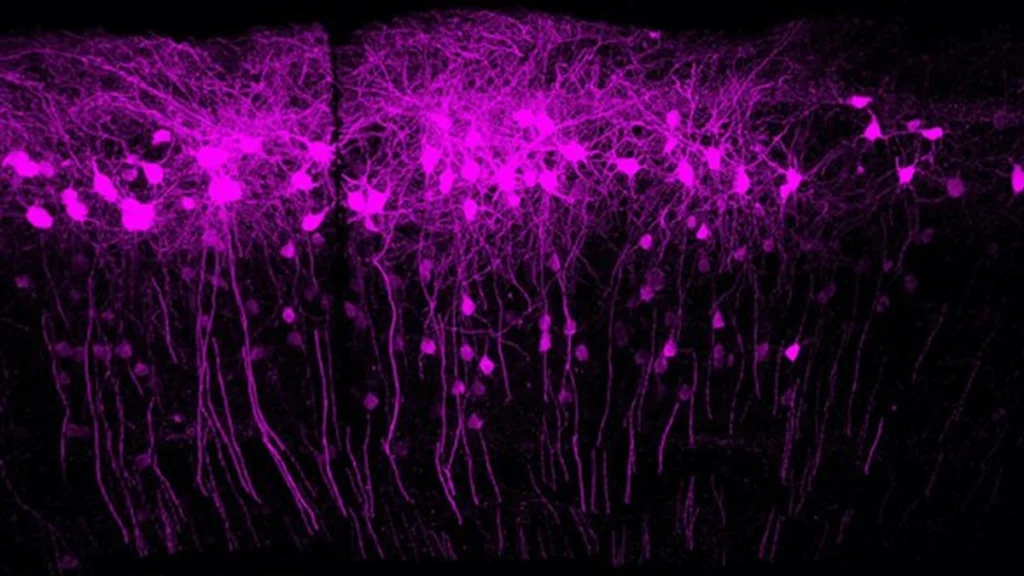
The clue comes from so-called “grid cells,” which Moser discovered with her husband, Edvard Moser. Their discovery helped the couple share the Nobel Prize with British neuroscientist John O’Keefe.
These neurons fire in a highly regular “spatial pattern.” When the locations where a single cell fires as a rat moves around are plotted, equilateral triangles can be drawn between its different activity fields.
Moser said she remains surprised by this level of precision, precisely because the brain is a biological system and, therefore, one might expect much more noise and many more errors.
“Because the brain is a biological system, you would expect many errors. And if there were many errors, we would never see a pattern like the one we observe in grid cells, where equilateral triangles can fit between each activity field as the animal moves through its surroundings. It is incredible,” she stressed.
The geometry becomes even stranger when scientists simultaneously record the activity of numerous grid cells and use mathematical tools to represent it in three dimensions.
What emerges is a “torus,” a doughnut-shaped surface across which neuronal activity appears to move, a kind of map that would not switch off even when the outside world disappears.
“This internal map is active even when the animal sleeps, so it does not need any information from the outside to keep functioning. It is simply the way the cells are connected that makes this pattern possible,” she said, adding that the question remains whether this architecture, or scaffolding, exists before exploration begins.
Moser is confident that the combination of new technologies capable of recording thousands of neurons, better mathematical theories and computational models will make it possible to achieve major advances in understanding the brain over the coming years.
"This is not biology! You can't get this in biology!"
Medicine laureate May-Britt Moser and artist Olafur Eliasson discuss the intersection of art and science at an event in 2015 at the Nobel Week Dialogue: The Future of Intelligence.
“But, as Professor Geoffrey Hinton, considered the ‘godfather’ of AI, said, understanding how we can come to have that feeling of being alive, of being conscious, can be quite difficult,” Moser reflected.
Artificial intelligence could become a tool for investigating this question, in part because it makes it possible to compare how a machine and a brain perform similar functions.
Asked whether she is optimistic about AI or a “doomer” — a term for someone who takes a catastrophic view of its future — Moser said that losing hope means surrendering. “But I think we need hope,” the neuroscientist replied.
In her view, tools can be used both to do good and to cause harm, and artificial intelligence does not eliminate this long-standing human trait, although it can greatly amplify its consequences, she added.
“It becomes dangerous if evil people use the tool to become even more evil. But they can also use their brains to be evil,” she said.
Against an international backdrop that she describes as “depressing” when she watches the news, Moser champions cooperation, science and education. She also points to individuals capable of mobilizing many others, from Malala Yousafzai to Greta Thunberg and Jane Goodall.
Thus, despite this depressing situation, Moser does not see machines as having intellectual supremacy, either. “For now, I think the brain is the best tool we have,” she concluded.
U.S. Customs and Border Protection (CBP) seized a psychiatric nurse practitioner's phone filled with confidential patient information at Washington Dulles International Airport last week, according to a new lawsuit. Muhammad Numaan Imam alleges that CBP agents told him that they could take his electronics the "easy way or the hard way" and refused to let him talk to his lawyer because "we are the authorities at the border."
The lawsuit by the American-Arab Anti-Discrimination Committee (ADC) may be the first time CBP is taken to court over seizing people's medical records. ADC is also helping Palestinian-American lawyer Jay Shehadeh and Jewish-American journalist Max Blumenthal sue over their devices being seized.
"We're seeing a pattern where officers use their border-search authority not to advance any legitimate border-related purpose, but to punish individuals for refusing to provide access to their personal electronic devices and for having expressed views the government didn't approve of," ADC president and legal director Jenin Younes wrote in a statement emailed to journalists.
While Shehadeh and Blumenthal claim that CBP is retaliating for their political views, Imam argues that he faced threats and retaliation with the simple act of asserting privacy rights. Both Imam and Shehadeh were considered "trusted travelers" under the Global Entry program, which allows American citizens who undergo a background check to pass through an automated fast track at airports and borders.
Asked by Reason, a CBP spokesperson did not address any specifics of the case, giving only a generic statement about how "CBP's ability to lawfully inspect electronic devices crossing the border is integral to keeping America safe in an increasingly digital world."
The border exemption to the Fourth Amendment gives U.S. authorities the power to look for "contraband" crossing into the country without a warrant. There is a mess of contradictory court rulings on whether that power includes searching travelers' electronic data, but in practice, CBP can simply seize the physical devices that the data live on.
And the agency often lies outright to travelers whose data that it wants to search, as documents recently released in the case of Atlanta protester Samuel Tunick show. CBP agents gave Tunick a false reason for detaining him and falsely promised that he would be allowed to leave with his phone if he cooperated, even though they were under orders to seize his devices no matter what. Tunick is now on trial for allegedly tricking the CBP agents into deleting his data to avoid a search.
"It's happening to a lot of people, and it's being used in this coercive, inappropriate way," Younes tells Reason.
The problems for Imam, who lives in Virginia, actually began at another border. He was heading to Istanbul on Saturday for a family vacation with his Pakistani wife, Khadijah Mansoor, and their 1-year-old child. Turkish authorities demanded to see Mansoor's U.S. green card, which she had forgotten at home, and wouldn't let her enter on her Pakistani passport alone. The family had to board the next flight back to Washington. On their arrival, CBP naturally wanted to know why they had been turned away and why Mansoor didn't have her green card.
But things took a weirder turn after agents told Imam he had been "flagged" for undisclosed reasons, pulled him into a separate room, and began questioning him about his social media use and group chats, according to the lawsuit. (Imam tells Reason that they asked about group chats in general, not any specific group chat.) When agents asked for the password to Imam's phone, he told them that he uses the phone to communicate with and manage cases for patients at the rehab facility where he works. The Health Insurance Portability and Accountability Act (HIPAA) strictly prevents doctors and other medical staff from sharing patient data without consent, so Imam asked to speak to a lawyer.
"Your lawyer cannot do anything. We are the authorities at the border," Imam recalls one agent saying. A supervisor then told the couple that CBP could take all of their electronics the "easy way or the hard way," and that the devices could take months to get back, Imam and Mansoor claim.
CBP's own internal policy says that devices should "ordinarily" be held for less than five days. The same policy includes vague guidelines for dealing with medical information: "Possibly sensitive information, such as medical records and work-related information carried by journalists, shall be handled in accordance with any applicable federal law and CBP policy." Imam says that the CBP agents claimed to have software for filtering out HIPAA-protected data.
After four hours in detention, CBP took the family's phones and laptops and let them go. The next day, Imam got an email stating, "We regret to inform you that your membership in Global Entry has been revoked for the following reason(s): You do not meet the Trusted Traveler standard." In addition to both Imam and Mansoor losing valuable work data, the lawsuit argues, Imam is now unable to prescribe certain psychiatric medications to his patients, because of federal regulations that require phone verification.
The lawsuit demands the return of the devices and data under Rule 41(g) of federal criminal procedures, which requires the government to hand back property that is no longer necessary for a criminal investigation. ADC has also filed these motions in Shehadeh and Blumenthal's cases. (CBP gave back Blumenthal and Shehadeh's phones almost immediately afterward, but ADC is continuing to press for records of what they did to those phones in custody.) Younes filed a brief on Blumenthal's behalf in support of an upcoming Supreme Court case over whether CBP can continue these electronic searches.
"The devices are neither contraband nor subject to forfeiture, and, to Plaintiffs' knowledge, there is no pending criminal investigation, criminal prosecution, or warrant authorizing their continued seizure or search," Imam's lawsuit states. "The Fourth Amendment does not permit the border-search exception to become a means of coercing compliance through the threatened or actual confiscation of travelers' personal property."
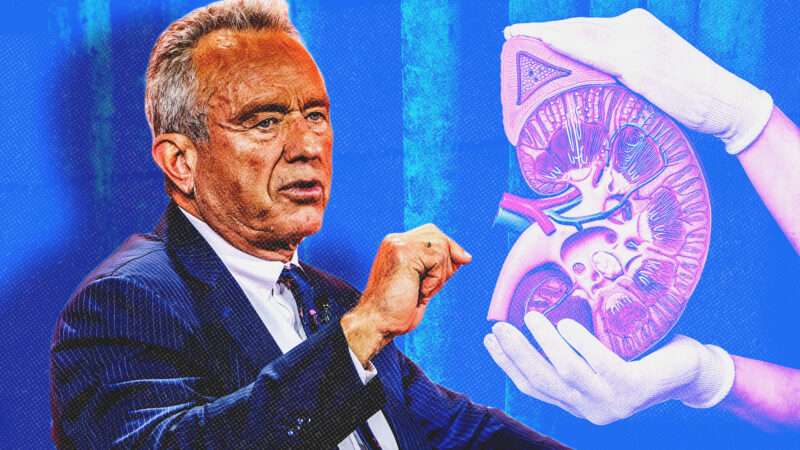
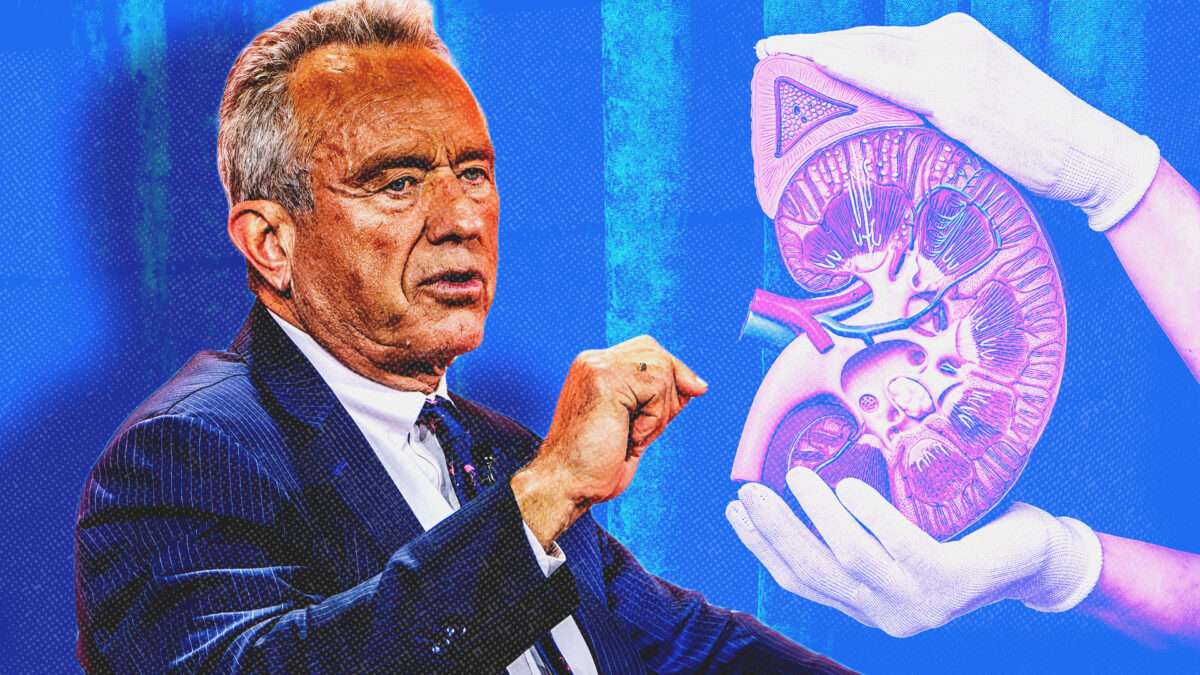
Like most of American healthcare, kidney care has for decades been plagued by red tape. The Trump administration says it wants to change that. On Tuesday, Department of Health and Human Services (HHS) Secretary Robert F. Kennedy Jr. announced his department's Kidney Care National Plan, which promises to introduce more competition, reduce regulatory barriers, expand patient choice, and overhaul America's kidney transplant system.
Much of the plan focuses on barriers to entry in dialysis care, which treats nearly 558,000 Americans. While dialysis can be performed at home, most patients receive treatment at specialized facilities, which must comply with federal certification requirements governing equipment, staffing, water quality, and patient safety in order to participate in Medicare.
Kennedy argues that regulatory barriers have discouraged competition and innovation, leaving patients with fewer dialysis treatment options. "Dialysis technology is an extraordinary technology," said Kennedy at the press conference, but "because of monopolies in the system and the barriers to new entrants, we have not seen any real improvements in that technology."
Of course, the existence of large or even monopolistic companies is not in itself evidence of a problem, but government regulation can often entrench those companies' positions in the market. "I like the fact that they're recognizing that a lot of regulatory…barriers are contributing to the problem, and that's refreshing to hear," says Jeffrey Singer, a practicing general surgeon and senior fellow at Reason Foundation, the nonprofit that publishes Reason. Singer says that removing barriers that prevent new companies from competing with established providers could not only increase choice but also drive down prices.
HHS says that two companies, DaVita and Fresenius Medical Care, control approximately 74 percent of the American dialysis market. As of 2019, roughly a third of Americans lived in areas where the only available dialysis provider was one of those two companies, according to the agency. The administration argues that government regulation has helped entrench this dominance by making it difficult for new providers to enter the market.
To address this, the Kidney Care National Plan suggests a number of reforms, including simplifying certification requirements. HHS also plans to investigate whether dominant dialysis providers have used payment arrangements and legal strategies to secure higher reimbursements without delivering better care.
The 17-page report calls for a review of existing requirements, but it does not specify which regulations will be repealed, nor does it establish a timeline for doing so. It also does not propose any significant reduction in the government's role in financing the distorted market. Instead, the plan largely seeks to make existing government-financed systems such as Medicare more competitive and efficient.
Kennedy has also correctly identified the need for reform regarding kidney donations. Nearly 90,000 people are waiting for a kidney transplant at any given time in America, and 11 people die every day waiting for a kidney. The transplant process is currently managed by Organ Procurement Organizations (OPOs), which are federally certified nonprofits responsible for recovering organs from donors and coordinating their transfer. There are currently just 55 federally designated OPOs operating in the United States, and HHS argues that they behave as "regional monopolies." Since no new OPOs have been approved in the last year, the Kidney Care National Plan suggests fast-tracking certification.
The plan also seeks to make living kidney donation easier by reducing financial barriers. Following the passage of the Honor Our Living Donors Act in February, HHS revised federal reimbursement rules so that a donor's eligibility for financial assistance is no longer determined by the transplant recipient's income. Eligible donors can receive up to $6,000 to cover expenses, including travel, lost wages, and childcare.
However, the reforms proposed stop short of allowing kidney donors to receive direct compensation for the organs themselves, which remains prohibited under federal law. "I can sell my blood. Why can't I sell my kidney?" Singer asks.
Peter Jaworski, director of the Georgetown Blood and Plasma Research Group, feels similarly, arguing that financial incentives are available to nearly everyone involved in kidney transplantation except the donors themselves. "According to this plan, it's OK to use incentives to encourage them to be more productive, to actually do a better job," Jaworski tells Reason, referring to transplant surgeons, hospitals, and organ procurement organizations. "The only exception, once again, is the donor who is offering a kidney."
Better solutions exist, according to Jaworski, who points to the proposed End Kidney Deaths Act. The bill, which was introduced by Rep. Nicole Malliotakis (R–N.Y.) last year, would offer living kidney donors a $50,000 refundable tax credit, distributed over five years. "We have those systems in order to make sure that we can treat patients. That's the point of blood donation. That's the point of plasma donation. That's the point of kidney donation too."
America's plasma market is an excellent example of financial incentives encouraging donation. Unlike many other countries, the U.S. allows plasma donors to be compensated, and despite accounting for just over 4 percent of the world's population, it supplies approximately 68 percent of the plasma collected globally for manufacturing medicines.
"Why do you think America does it? Is it because in America there's way more altruism than in France or Italy or Belgium? No, it's because in the United States you can be paid to donate plasma," argues Jaworski.
The Trump administration appears to recognize that government overreach has stifled competition and restricted patient choice. It also recognizes that living adults donating kidneys will be part of the solution to the long, deadly waiting lists. But its plan leaves the government's outsize role in kidney care largely untouched. For patients facing years on dialysis or waiting for a lifesaving transplant, recognizing the problem is not enough.
Beijing has proposed banning exports of the technology used to make next-generation solar cells, a move that could complicate United States technology guru Elon Musk’s plan to expand into space solar power. The ban, which covers production technology for perovskite and tandem solar cell modules, is part of a proposal by China’s Ministry of Commerce […]
Today is World Menopause Day – a day to convince women over 40 that yet another aspect of ordinary life needs to medicalised. It's time to stop the grift, says Joanna Gray.
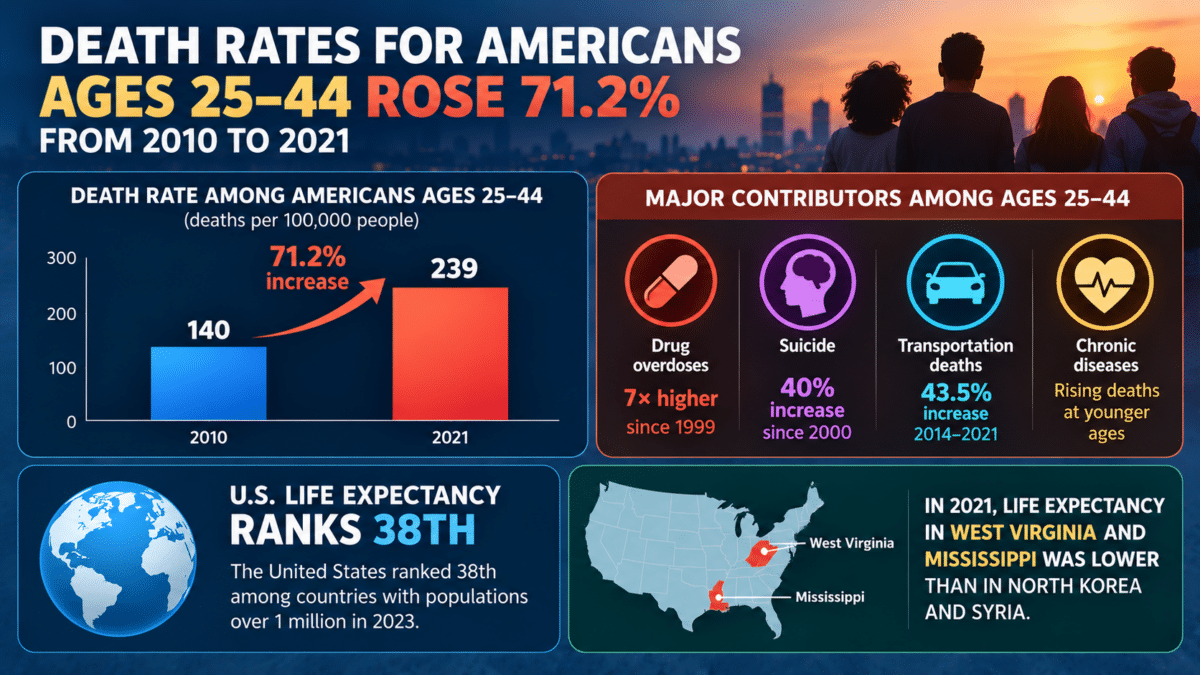
Death rates for Americans between 25 and 44 years old jumped 71.2% in just eleven years, rising from about 140 deaths per 100,000 people in 2010 to 239 per 100,000 by 2021. No other age group came anywhere close to that surge. Overdoses, suicides, car crashes, and chronic diseases appearing at increasingly younger ages are now cutting down people in the prime of their lives.
Steven H. Woolf, a physician and researcher at Virginia Commonwealth University School of Medicine, published the analysis in The Milbank Quarterly. He combined data from the United Nations, the CDC, the Organisation for Economic Cooperation and Development, and a U.S. mortality database to show how far American life expectancy has fallen behind the rest of the developed world, and increasingly, much of the developing world too.
By 2023, U.S. life expectancy ranked 38th among countries with populations over 1 million, trailing not just Western Europe, Canada, Japan, and Australia but also Chile, Costa Rica, Slovenia, Israel, South Korea, and several Persian Gulf nations. Sixty countries had a lower risk of a person dying before age 40 than the United States did. That gap didn’t open overnight. It has been widening since the 1990s, and it sped up sharply after 2010.
How Researchers Tracked the Rising Death Rates
Woolf built this analysis by comparing decades of death records rather than running a new clinical trial or survey. He pulled data from the United Nations’ Department of Economic and Social Affairs, the U.S. Mortality Database, the CDC’s death-records database known as WONDER, and OECD data covering 16 other wealthy countries, including Canada, Japan, France, Germany, and the United Kingdom. He tracked age-specific death rates from 1999 through 2023, sorted into five groups: infants, youth ages 1 to 24, young adults 25 to 44, middle-aged adults 45 to 64, and adults 65 and older.
A separate part of the study looked at all 50 states from 1941 onward, matching each year of life expectancy data to the sitting governor’s political party to see whether state policy choices lined up with health outcomes over time.
What’s Driving the Rise in Death Rates Among Young Americans
Drug overdoses top the list. Among adults 25 to 44, the overdose death rate rose sevenfold after 1999, from about 7.7 per 100,000 to more than 54 per 100,000, and surpassed circulatory diseases (such as heart disease and stroke) in 2015 to become the leading cause of death in that age group. Suicide rates for this same group are higher than in any other age bracket and climbed more than 40% between 2000 and 2023. Homicides rose 75.5% between 2014 and 2021, and deaths from car crashes and other transportation accidents rose 43.5% over that same stretch.
What surprised even close followers of these trends is how much of the damage now comes from disease rather than injury. Deaths from diabetes and other metabolic and hormone-related illness rose nearly a quarter between 2010 and 2019 among young adults. Deaths tied to liver damage from drinking more than doubled between 2010 and 2023. Deaths from alcohol-related mental health disorders more than tripled in that same window. Even high blood pressure, historically a problem of later adulthood, saw its death rate more than double among 25- to 44-year-olds between 2000 and 2023.
Middle-aged adults, 45 to 64, saw many of the same patterns: rising deaths from drug overdoses, liver damage from drinking, and diseases of the brain and nervous system, along with a COVID-19 death rate that nearly doubled between 2020 and 2021 even after vaccines became available. Older adults largely avoided these steep increases, though deaths from brain and nerve diseases doubled between 2000 and 2023, and deaths from endocrine disorders and suicide also climbed.
Infographic by StudyFinds
Where U.S. Life Expectancy Has Fallen the Furthest
National averages hide some brutal local realities. Comparing individual states to countries with similar life expectancy, Woolf found that Hawaii, the top-performing state, matched life expectancy in Western European countries like Sweden and Ireland. Mississippi, by contrast, resembled Libya, Venezuela, Belarus, and Syria in 2019. Conditions worsened after the COVID-19 pandemic hit. By 2021, life expectancy in West Virginia and Mississippi matched Bulgaria, Bangladesh, and Iraq, and fell below North Korea and Syria. Life expectancy was higher in Palestine and Iran than in nine U.S. states, including Oklahoma, Tennessee, Kentucky, Alabama, and Mississippi.
Woolf’s review of state data going back to 1941 found that states led by Republican governors tended to see life expectancy stagnate or decline, a pattern that became especially visible after 2010 and turned into what Woolf calls a “natural experiment” during the COVID-19 pandemic. States’ sharply different decisions on masking, business closures, and vaccination, he writes, could be measured in death counts within weeks. Red states, the analysis notes, suffered the largest COVID-era drops in life expectancy, a pattern that held up even after researchers accounted for other factors like poverty rates and existing health conditions.
Other researchers cited in the review, who looked at generational patterns rather than state policy, found that Americans born after 1970 had higher death rates from heart disease, cancer, and injury-related causes than earlier generations. They concluded that the current stall in U.S. life expectancy stems from “multilayered social, biological, and generational forces.”
Why America’s Death Rates Keep Climbing
Woolf’s analysis lays out five broad categories behind America’s health disadvantage: a health care system without universal coverage, riskier individual behaviors like higher calorie consumption and firearm ownership, greater income inequality and poverty, a built environment that favors cars over walking and green space, and public policies that put less emphasis on collective welfare than peer nations do. None of these explanations are new, but the paper argues that treating overdoses, suicides, and chronic disease as separate problems misses the bigger picture: they are symptoms of the same underlying neglect.
That’s the sharpest point in the paper, and probably the one worth sitting with. Other wealthy countries didn’t stumble into longer lives by accident. They built universal health coverage, stronger safety nets, and tighter consumer and environmental protections decades ago, and it shows up in their citizens’ death certificates today. America’s problem was never a shortage of ideas for fixing this. It’s a shortage of political will to act on them, and until that changes, the gap between how long Americans live and how long people in dozens of other countries live looks likely to keep growing.
Any pediatrician has seen it: a baby who spends so many hours lying on their back that one side of the head ends up flat. The condition is called deformational plagiocephaly, from the Greek plagios (“slanted”) and kephalé (“head”). It comes from steady outside pressure on a skull that is still soft, not from a […]
At first she told no one. Not her twin sister. Not her mother. Not even her father the scientist.
Six-year-old Jenna Smith knew better than to pee when she was in the bath. But on that night in 1992, in her family’s home in Iowa City, the water felt so comfortable against her skin that she didn’t want to get out of the tub. It seemed like such a small thing. Who would know?
Seconds later the water around her waist turned reddish pink. Blood? It had to be. Jenna wondered if she’d hurt herself. “I was six years old sitting in a bathtub, watching a few seconds of my world stop making sense,” she would recall years later.
The Atavist, our sister publication, publishes one deeply reported, elegantly designed story each month. Support The Atavist by becoming a member.
She kept the blood a secret because she didn’t want to admit that she’d peed in the bath. But when it was still in her urine the next time she used the toilet, she went to her mother. Concerned, her mom called her dad, Richard Smith, and he took Jenna to the emergency room.
Richard was an ear, nose, and throat doctor in the University of Iowa’s school of medicine, a researcher who would become one of the world’s authorities on the genetics of hearing loss. His wife, Lynne Lanning, had worked as both a lawyer and a nurse. They had four young children: twins Jenna and Jessica, who were identical, and two boys, Luke and Rion.
At the ER, doctors ran tests on Jenna, but they couldn’t identify the cause of the blood. In the days that followed the bleeding intensified. At her parents’ urging, Jenna collected samples of her urine in Dixie cups for further testing. The doctors remained stumped, however, and after a while Jenna found the whole thing more annoying than worrisome.
The uncertainty was much harder on her parents. It wasn’t that doctors were misdiagnosing their daughter; they were unable to diagnose her at all. “It was horrible,” Richard said. “Imagine seeing your child and you know something is wrong, and you know the doctors treating her have no clue what to do.” Richard called a pediatric nephrologist he knew in Houston, where the family had lived previously. The nephrologist listed several conditions that could be causing the bleeding and said that, to determine which was to blame, Jenna’s parents should take her to Cincinnati Children’s Hospital Medical Center.
In July 1992, Richard, Lynne, and Jenna drove nearly 500 miles to get answers. Doctors in Cincinnati diagnosed Jenna with dense deposit disease, a condition in which proteins clog and damage the kidneys, leading to renal failure in many patients. There was no cure.
The hospital couldn’t tell the family much else—no one could. The disease was exceedingly rare, afflicting between one and three people in a million. Back home, Richard and Lynne spent hours inside the University of Iowa’s quiet medical library, poring over papers in search of information about their daughter’s illness. They could find no evidence that anyone was actively studying the condition.
Although many Americans—roughly one in ten—suffer from a rare disease, the experience can be lonely. Friends and relatives don’t understand the unique miseries such illnesses impose on daily life. Few doctors are likely to have encountered them before. And because there aren’t many patients, drug companies usually don’t invest in research for treatments.
Richard and Lynne feared that their daughter’s life might be tragically brief. Sometimes the mention of weddings would sink Lynne into melancholy; she couldn’t bring herself to watch the movie Father of the Bride. Richard agonized over what to do. His training compelled him to seek answers, but he wanted to be Jenna’s father, not the scientist charged with curing her. He kept his research focused on hearing loss. At first, anyway.
Stories of scientific discovery almost always celebrate individual researchers, consigning the contributions of loved ones, communities, and colleagues to footnotes. There are exceptions―the teams that built the first atomic bomb and deciphered the human genome, for instance. Science also has its share of famous families. Marie and Pierre Curie, along with their daughter Irène and her husband, Frédéric, won five Nobel Prizes between them for discoveries related to radioactivity. For the most part, however, the history of scientific progress has been mythologized as a succession of brilliant, driven individuals—often men—who chose the lab over the dinner table and competition over collaboration.
Some scientists have embraced the role of maverick. “You have to worry about your own work and ignore what everyone else is doing,” the physicist and Nobel laureate Richard Feynman is said to have told a colleague. The decades-long pursuit of a treatment for Jenna’s disease followed a very different path. There was no single hero, no lone scientist seeking glory. The biomedical quest required the efforts of a family and their neighbors in Iowa City, and the work of scientists around the globe. Together they changed an obscure area of medicine.
Richard and Lynne met in 1977, when both were working at Memorial Hermann-Texas Medical Center in Houston—she as a nurse, he as a medical intern. He noticed a run in her nylons and was smitten by her smile. She liked his down-to-earth manner and intelligence, his humor and kindness. They were working in the hospital’s burn unit when he asked her out.
The couple married in 1981, and except for two years in England, they remained in Houston until 1990. That December they moved to Iowa City, where Richard had a job waiting for him leading the pediatric otolaryngology division and running a research lab at the University of Iowa’s medical school. They had been there only a year when Jenna got sick.
Richard and Lynne learned that their daughter’s disease was caused by a malfunction in her complement system. Believed to have evolved long before other parts of our immune infrastructure, the complement system sends proteins to battle foreign invaders. Unlike antibodies, these proteins are not tailored to fight a specific virus or bacteria, but they kick into gear faster when a threat is detected. In people with Jenna’s condition, the complement system is like a runaway train: Proteins become overstimulated and then accumulate in the glomeruli, tiny filters the kidneys use to clear waste from blood.
Blood in the urine is one symptom of the disease. Others include swelling, high blood pressure, inflammation, and fatigue. When Jenna was in the first grade, her body struggled to make growth hormones. Her production of red blood cells slowed, and she grew increasingly tired. During rehearsals for The Nutcracker ballet around Christmas 1993, she’d finish her part and then lie down backstage, completely spent.
Doctors put her on a heavy dose of the steroid prednisone and on blood-pressure medication. The prednisone caused her body to retain water. She woke up each morning with her eyes swollen shut, then waited in bed until the swelling receded. She couldn’t fit into her clothes or shoes. She wore flip-flops and roomy jumpers Lynne sewed for her.
As twins, Jenna and Jessica had always been close. They played together, made up songs and dance moves, explored the woods near their home, and enjoyed pranking friends and family members. “She made a lot of things feel not so heavy,” Jenna said of her sister. Still, she sometimes thought that Jessica “got off scot-free” by not having dense deposit disease. Neither girl liked feeling different from the other. (Years later, Jessica would be diagnosed with type-1 diabetes; Jenna would not.)
The changes to Jenna’s appearance meant the girls were no longer identical. Once, according to Lynne, when a boy at school said that Jenna couldn’t be a twin anymore because of how she looked, Jessica slugged him. Lynne recalled sitting in the principal’s office, politely listening to a lecture—this is not the way we resolve things!—but understanding why Jessica had lashed out. Nothing was so frightening to her daughters as the idea that they’d stop being twins.
About half of those afflicted with Jenna’s disease progressed to kidney failure within a decade of diagnosis; it took her less than a year. She made it through the last day of first grade. Then, as other children departed for summer camp, she went to a clinic. While her classmates practiced archery and did arts and crafts, she learned about the catheter doctors would surgically insert in her body. Through that tube, a machine would pump fluid into her abdomen, where her peritoneum—her abdominal lining—would take over the filtering function kidneys usually perform.
She would take the peritoneal dialysis machine home with her and use it every day for the foreseeable future, possibly for the rest of her life. When a nurse tried to take Lynne aside to show her how to operate it, Jenna stopped her. “I’m the patient,” the seven-year-old insisted. “I’m learning how to run the machine.”
In such moments, Lynne was surprised at the strength she drew from her daughter. She needed it. Her grief could leave her feeling drained. One day she found herself crying into the soil as she gardened.
But Lynne and Richard were determined that sadness would not define their lives. For a long time, they didn’t have a TV in their house—they wanted the family to talk when they were together, and for the children to build forts, learn to sew, be creative. They had painting nights, creating portraits of one another. There were cooking contests, too. Richard and Lynne made sure to spend one-on-one time with each kid. Richard traveled with Luke to Japan, with Rion to the Grand Canyon, with Jessica to Italy, and with Jenna to England. Lynne took trips with the children to Brazil, England, and Guatemala. There were themed birthday celebrations: a James Bond party for Richard, where everyone was armed with Nerf guns, and one for Lynne where Richard dressed as the artist Bob Ross and the guests painted “happy little clouds.” Richard coached the kids’ hockey and soccer teams. He built harps and lyres from scratch, and Lynne played them.
Every day, Richard left for work at 5 a.m., while the children were still in bed. He returned around six at night. The family joked that they could hear him coming from half a mile away in his rust-bucket Isuzu Trooper with the bad muffler and a hole in the passenger footwell. When he wasn’t seeing patients or in surgery, Richard was in the lab. On Saturdays, Luke would go there with him. Sometimes the other kids joined. They liked to refill the communal candy jars and visit the mice used in experiments.
It seemed a wonder to the lab’s staff that Richard squeezed so much into a day. When they began using email to communicate, they received messages from him time-stamped three or four in the morning. “Why don’t you sleep sometime?” a colleague replied once. Indeed, Richard slept little. At night his mind kept running through the mysteries of his daughter’s disease.
Richard had read that it took 10,000 hours—the equivalent of working full-time for about five years—to achieve expertise in a subject. He believed it. In 1995, he began flying to conferences about kidney disease, where he talked to the few doctors who cared for patients like Jenna. Medicine was getting no closer to finding a treatment.
That year the owner of a ranch where Richard and Lynne’s children took riding lessons offered to host a fundraiser for kidney disease research. The family organized Dressage in the Heartland, which featured riding events, fiddle music, and bowls of chili. After raising upwards of $10,000 for the National Kidney Foundation, they held the event again the following year. There are hundreds of kidney ailments, however, and the foundation didn’t allow the money the family raised to be earmarked for the research of dense deposit disease. (The foundation said it now allows monetary gifts to be dedicated to specific conditions.)
Richard and Lynne ran into more disappointment during a visit to the University of Minnesota in early 1997. A specialist they consulted was blunt. “Nobody is looking at this disease,” he told them. “And barring something unforeseen, nothing will be done in the next twenty years.”
It was a four-and-a-half-hour drive back to Iowa City. In the car, Lynne brought up what the doctor had said. Maybe they would have to be that unforeseen something.
The Nobel Assembly of Sweden's Karolinska Institute said the trio of scientists had been selected for their "discoveries concerning light-gated ion channels and optogenetics."
The Nobel Assembly of Sweden's Karolinska Institute said the trio of scientists had been selected for their "discoveries concerning light-gated ion channels and optogenetics."
The European Commission has put forward the European Radioisotope Valley Initiative (C/2026/6132) a new strategic framework to strengthen Europe’s leadership in the production of medical radioisotopes. It aims to reinforce EU security of radioisotope supply, guiding investment in the sector and reducing strategic dependencies on third countries, in particular Russia.
With more than 10 million medical procedures using radioisotopes performed in the EU every year, mainly in oncology and cardiology, an impressive EU-wide production and distribution network has been developed to supply radioisotopes to patients across Europe daily. The EU has become the world’s leading producer of medical radioisotopes, exporting about half of its production overseas. However, critical parts of the European supply chain are exposed to dependencies on foreign suppliers, ageing production facilities, and competition from alternative suppliers, thereby creating the risk of investment displacement and higher costs. Furthermore, the global demand for medical radioisotopes, as well as the pace of innovation in this area, are increasing. Today’s ERVI communication responds to these challenges by defining a coordinated approach to supporting investments in research and development, bringing innovation to market, addressing value chain dependencies, and increasing production capacity. It also provides a direct contribution to the REPowerEU Roadmap towards ending Russian energy imports.
The Communication establishes five strategic priorities and 10 actions.
Research & Development and bringing innovations to market
The Commission will support research and innovation into the next-generation medical radioisotopes, radiopharmaceuticals and production technologies. A Strategic Research and Innovation Agenda (SRIA) - as used in other sectors - will help better connect research with market needs and patients. Instruments such as the emerging IPCEI for innovative nuclear technologies, the European Innovation Council, and new European partnerships can help mobilize public and private investment to accelerate innovation deployment.
Investments in production facilities to ensure security of supply
The initiative aims to guide and support Member States and industry investments across the medical radioisotope value chain to strengthen the resilience and localisation of EU supply. Priorities include the development of EU-based metallic High Assay Low Enriched Uranium (HALEU) capacity and production of stable isotopes currently imported from Russia, as well as upgrades of existing reactors and construction of new production facilities. Member states should make use of theEU Startup and Scaleup Strategy, the SGEI State aid framework and the recent Critical Medicines Act for which thepolitical agreement was achieved this year to support these efforts, while the Commission will explore ways to better combine public and private financing.
Market Monitoring and Forecasting
The Commission will act to improve the visibility of supply and demand trends and assess the investment needs of the European market for radioisotopes. This work will build upon the European Observatory on the Supply of Medical Radioisotopes and rely on continuing involvement of Member States and stakeholders, while making full use of the new EU mechanisms for tackling shortages of essential medicines.
Developing strategic international partnerships
ERVI will support cooperation with trusted international partners to diversify supply chains, strengthen resilience and promote scientific and industrial collaboration. In particular, the continuing cooperation with our partners in the UK and US is crucial for developing a resilient supply chain for metallic High Assay Low Enriched Uranium (HALEU).
Supporting an evolving regulatory framework
The Commission will cooperate with the International Atomic Energy Agency to support reliable international transport of medical radioisotopes and explore further measures to facilitate transport between Member States. A further step will be to pursue the streamlining of EU and national procedures for radiation protection and waste management in nuclear medicine to support patients’ access to innovative treatments.
Background
In June 2024, the Councilcalled on the Commission to seek to maintain Europe’s global leadership role in the supply of medical radioisotopes and make tangible and swift progress on developing ambitious ‘building blocks’ for specific actions.
In order to define the objectives and architecture of ERVI, the Commission carried out extensive consultations involving stakeholders and member states and published a feasibility study in March 2026.
The initiative also builds on the Strategic Agenda for Medical Ionising Radiation Applications (SAMIRA), adopted by the Commission in 2021 to strengthen the secure supply of medical radioisotopes, improve quality and safety in radiation medicine, and support innovation in nuclear medicine technologies.
In May 2025, theREPowerEU road map further highlighted the need to increase EU production capacities, reduce dependency on Russia and strengthen the resilience of the European medical radioisotope supply chain. The establishment of ERVI was identified as one of the roadmap’s key actions.
Two skeletons from the Indonesian island of Sulawesi had something strange going on in their mouths. Not cavities. Not the usual wear from a tough diet. Deep, rounded grooves cut into the teeth — a pattern no archaeologist had documented before, and one nobody could explain. The answer, published in Science Advances, pushes the known […]
Carleton Gajdusek won the Nobel Prize for his work on a disease in Papua New Guinea. But his biggest experiment was on the children he took from the field to the US—many of whom he sexually molested, with the knowledge and, in some cases, approval of his professional peers and colleagues:
In his journals and in letters to colleagues, Gajdusek was self-righteous, arguing that what he’d done was “no more serious than lying on the grass or picking a dandelion,” and he cited the Anga initiation rites as justification. These ceremonies had brought boys into their communities, as part of a shared passage into manhood, but Gajdusek treated them as a timeless license for the acts that he’d committed privately, one boy at a time. George Klein, a professor at the Karolinska Institute, in Stockholm, who was part of the Nobel Assembly for thirty-six years, validated Gajdusek’s opinions, telling him that he wondered if “the Western world can ‘catch up with you.’” He wrote, “I share your indignation about the typically Jewish-Christian-Moslem hypocrisy on sexual matters.” Gajdusek was troubled, though, by how many colleagues wrote letters saying that they knew the charges must be untrue. “I thought better of my friends,” he said. “They are dissimulating and lying.”
In this harrowing, incredibly reported story co-published by Science and Retraction Watch, Brendan Borrell uncovers how “Mei,” a 6-year-old girl in China, died a week after an experimental gene-editing trial went wrong—and how her medical team, led by neuroscientist Zilong Qiu, downplayed the risks to her parents, did not publicly disclose her death, and has faced no real accountability.
On 23 March 2025, the day before the procedure, the family settled into a shared room inside a crowded pediatric ward. When the other girl in the room broke into tears, Mei handed her one of her favorite stuffed animals: a blue bird. “She liked to give things to other kids,” Jason said.
The next day Mei put on a brave face as she was taken to the procedure room. Yu’s handpicked doctor inserted a needle between two vertebrae on her lower back and withdrew just over a teaspoon of spinal fluid to create space for the drug. Then, he swapped syringes and gently pressed down on the plunger, filling her spinal canal with viruses.
For Men’s Health, Brian Underwood investigates the flood of sunscreen misinformation on Instagram and TikTok, where influencers push inaccurate data about chemical UV filters, play chemist and promote their own DIY formulas, or even encourage no sun protection at all. Underwood sorts fact from fear, talking with dermatologists, chemists, and professionals who are working to reshape the messaging around sun exposure and sunscreen.
Environmental concerns may have also shown up in your feed, with suggestions that these same filters are poisoning our oceans, giving rise to a whole category of sunscreens labeled “reef safe”—a meaningless marketing term that’s not regulated by the FDA (the same goes for products labeled “natural” or “organic”). Dr. Nelson’s point about “low-relevance models” is something to consider here too: The research demonstrating that oxybenzone, octinoxate, and other active ingredients may lead to reef bleaching was done in a lab setting where coral was exposed to levels of these chemicals significantly higher than has been found in the natural environment. It conveniently left out the fact that inorganic filters like zinc oxide (the one typically used in “reef safe” formulas) would have the same effect in similar doses.

 Login



 Infographic by StudyFinds