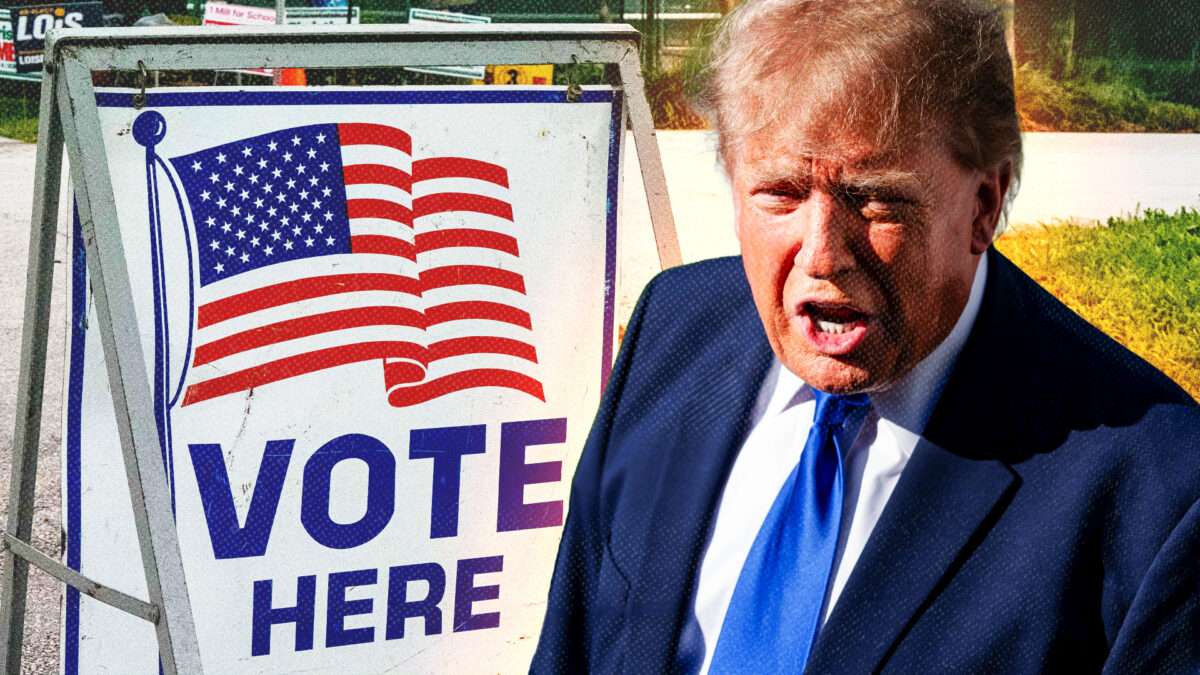
The 44th president sharply criticized Mr. Trump, who hit back later in the day. Mr. Obama also assailed Vivek Ramaswamy, the Republican nominee for governor of Ohio.
The Democratic presidential primary race appears to be wide open, while JD Vance and Marco Rubio led among Republican voters, a New York Times/Siena survey found.
Democrats are increasingly optimistic about the midterms. But they are being outspent by Republicans. And they are trying to compete in states that favored President Trump by large margins.
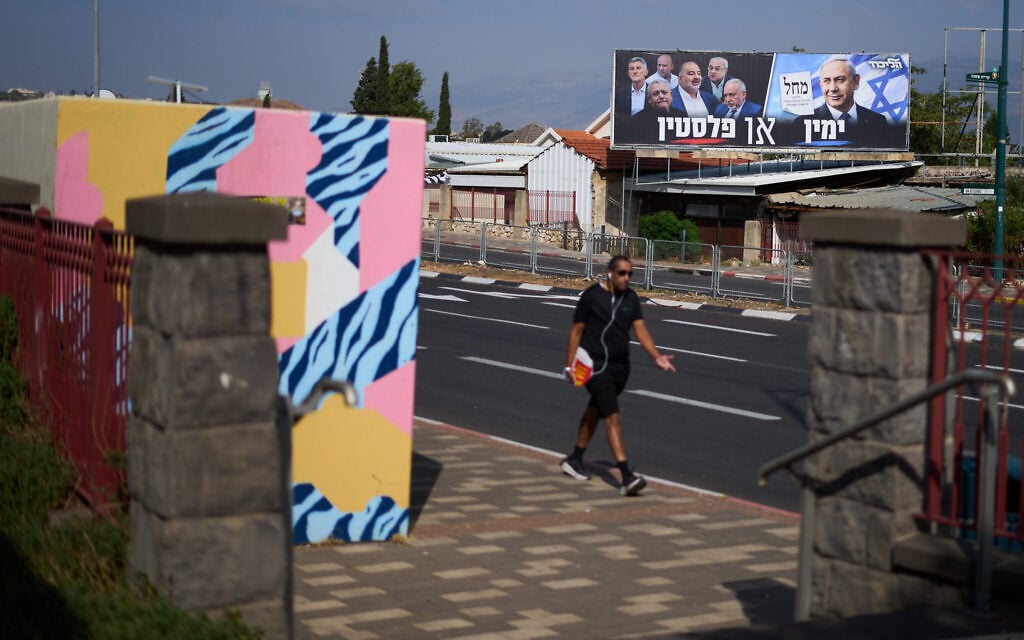
Some voters in traditionally pro-Likud Kiryat Shmona quietly question loyalty amid frustration over the government’s handling of the war with Hezbollah, broken security promises
The fallout from Vivek Ramaswamy’s brutal spot targeting his Democratic rival in the Ohio governor’s race showed that even in the Trump era, a political attack can be seen as going too far.
On October 20, 2026, a week before Israel’s elections, dozens of men were detained on suspicion of evading the draft – arrests that Prime Minister Benjamin Netanyahu called “unacceptable.” The young men attend ultra-Orthodox, or Haredi, religious schools, whose students were long exempt from the military service mandatory for most Israelis. A 2024 court ruling […]
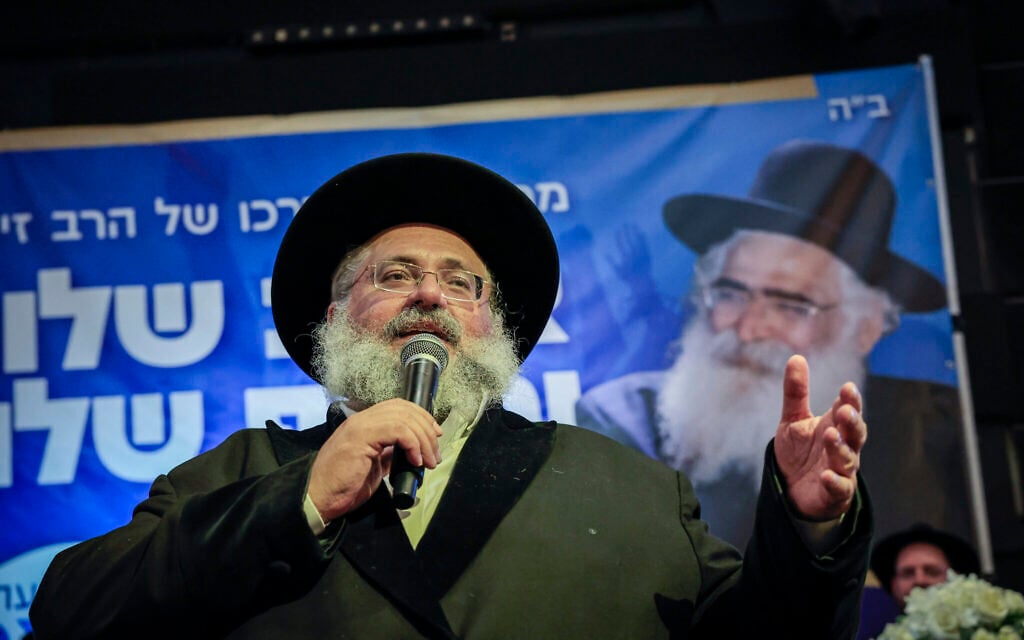
PM thanks Haim Yosef Abergel for 'truly caring for our people,' as he presses small factions to quit race; TV report says Likud already preparing to challenge results from Arab polling stations
No obvious legal authority supports a pre-emptive effort to block the certification of Alaska’s Senate election if the Republican incumbent narrowly loses.
A GOP campaign ad featuring the estranged mother of Ohio gubernatorial candidate Amy Acton (D) received blowback this week after it was revealed Acton’s mother stood by her husband after he was charged with sexually abusing Acton as a child. Court records show that the mother, Donna Arthur, has faced legal troubles of her own,…
Democrats have campaigned on lowering living costs and holding the Trump administration accountable. This is a look at their to-do list if they win the majority.
Should they win in November, top House Democrats are planning a shock-and-awe legislative sprint to demonstrate within hours of taking power that they are passing bills to deliver on their promises.
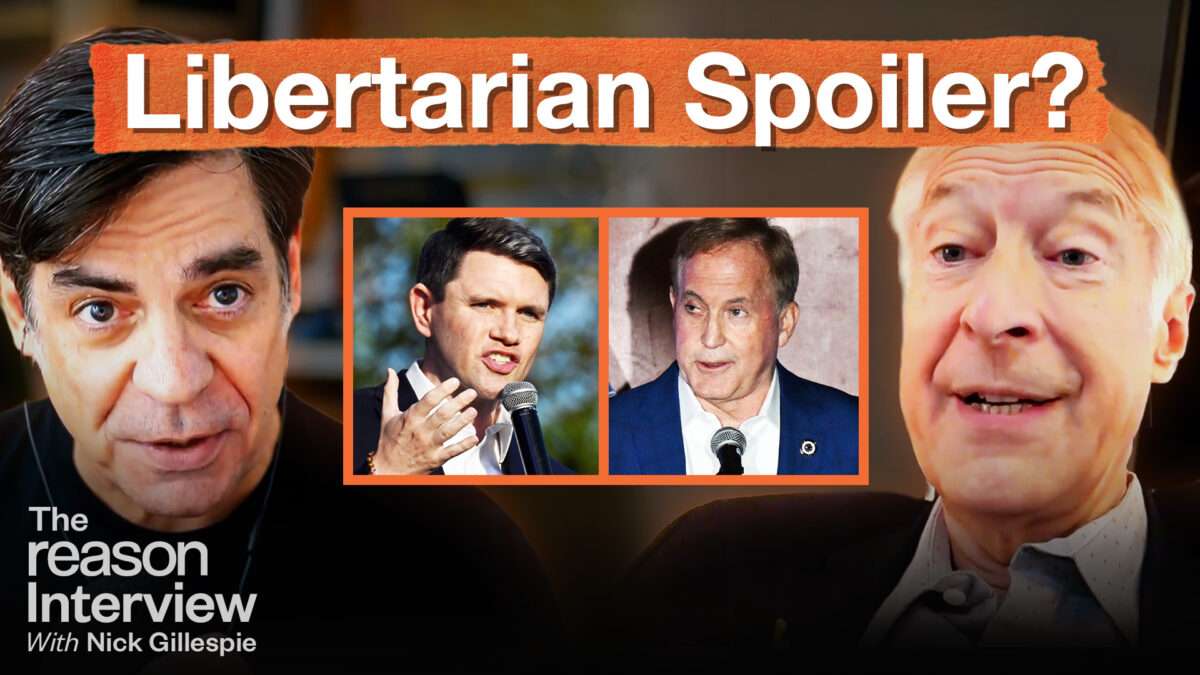
Today's guest is Ted Brown, the Libertarian Party candidate for U.S. Senate in Texas. Brown is facing off against Republican Ken Paxton and Democrat James Talarico in a closely contested race. Brown received more than 267,000 votes in his 2024 Senate campaign and is now challenging both major parties on their commitment to individual liberty. He argues that Republicans have abandoned limited government while Democrats increasingly embrace economic policies that undermine the free market.
Nick Gillespie talks with Brown about Paxton's corruption scandals, Talarico's hostility toward billionaires, and why Texas ranks poorly on personal freedom despite its business-friendly reputation. Brown makes the case for returning to an Ellis Island–style immigration system, cutting federal spending to confront the $40 trillion national debt, and ending America's military involvement in the Middle East. They also discuss abortion rights, government surveillance, online age-verification laws, and how regulations drive up the cost of healthcare. Brown explains what it will take to rebuild the Libertarian Party and why he believes a senator could accomplish more by stopping bad legislation than by passing new laws.
Gov. Kathy Hochul’s vision for New York has been largely shaped by her upbringing in a failing western New York town and her family’s move up from a trailer park to affluence.
Gov. Kathy Hochul has won over the real estate community in New York City, but her politics and worldview remain products of her life in western New York.
Supporters of Proposition 39, the statewide ballot initiative that would implement additional Voter ID requirements for California elections, pitch the measure as a "common-sense reform to increase trust and participation in our elections." Its sponsor, Assembly member Carl DeMaio (R–San Diego), touts widespread support for such measures by Democratic, Republican, and independent voters.
Yet the latest polls show the measure tanking, with a Public Policy Institute of California survey last month showing it losing 55 percent to 43 percent—dismal numbers this late in the election season. The official ballot arguments provide some insight into the reasons. While supporters stick with their "nonpartisan" shtick, opponents tie the measure to President Donald Trump's election denialism.
"Stop Trump from rigging our elections. Don't believe the lies. Prop. 39 MAKES VOTING HARDER, MORE EXPENSIVE, AND LESS SAFE for Californians," per the "no" argument. It refers to the measure's funding from "MAGA rightwing billionaires." That point was reinforced by a recent CalMattersreport showing large donations from "deep-pocketed Republican donors." The publication says it's a "signal that conservatives view Prop. 39 as a test of support for future battleground states in the broader push by…Trump to tighten voter restrictions."
That's a fair assessment. In a Democratic state where the president's approval ratings are 24 percent in one poll, it's hard to imagine that most voters will spend much time thinking about the ins and outs of election policy and analyze the measure based on its specifics. They'll no doubt see it for what it largely is: a Republican Party effort to aid and abet Trump's unfounded election conspiracies. That said, its requirements aren't overly obtrusive, only unnecessary.
Currently, Californians must show a state identification or provide the last four digits of their Social Security Number when registering. No identification is needed to vote in person, but election officials use signature verification for vote-by-mail envelopes. Around 90 percent of Californians vote that way, so the main issue involves the requirement that voters add the last four digits from their government IDs on the outside of the envelope—thus adding an additional checkpoint (and sadly an additional opportunity for identity theft).
There's no need to worry about compliance costs for election agencies, as it's their job to administer elections. The measure likely will marginally reduce voter participation (by increasing disqualified ballots, even from legal voters if they forgot the ID they used when they registered), while marginally increasing security. It would force many Californians to re-register, which is a hassle. It would no doubt burden our excruciatingly slow ballot counting.
I don't have any theoretical problem with requiring an identification before voting, but California's elections are remarkably secure. There's no evidence of widespread fraud. Basically no one risks prison time by pretending to be someone else on a ballot. It's not about fixing a problem.
Since his defeat in 2020, Trump has traded in election conspiracy theories. The new GOP game is to trot out evidence-free election-fraud claims whenever they lose. We shouldn't play along. Despite the nonpartisan rhetoric, Proposition 39 is the state GOP's way of leaning into Trump's priorities and, as that CalMatters article noted, build momentum for less-defensible nationwide restrictions—apparently the only way Republicans think they can build a lasting majority. The measure won't do much damage in California as it's fairly modest, but it energizes the party's worst instincts.
Consider what DeMaio wrote in 2024 about his seven-point plan to overhaul the state GOP: "Do you remember a time when Republicans controlled a majority of statewide offices in California and were competitive in the state Legislature and congressional delegations?" He rightly blames the party itself, then offers his first item on a platform to revive it: "Make election integrity CAGOP's top ballot priority." I, too, would prefer more competitive California elections, but my first point would be for the GOP to make a better case for fixing California's messes.
Others see the measure as a means to gin up Republican turnout for a November election that's going to be a referendum on Trump by giving them some high-excitement issue to rally around. But some savvy political observers think that it might backfire. We'll see, but it reminds me that the California GOP has too long relied on cute strategies rather than good candidates.
What about supporters' main claim that Voter ID is necessary because it will restore voters' flagging trust in election integrity? Well, Republicans are the ones who don't trust our elections—and that's precisely because Trump spent the last six years poisoning the well. Do you really believe the people who think MAGA Republican Spencer Pratt could have only lost a Los Angeles mayoral primary (where only 15.9 percent of voters are Republicans) because of fraud will have their faith restored if Proposition 39 becomes law? Doubtful.
Republicans can restore their fortunes by acting normal again. The rest of us needn't enable them by backing a measure based on an election-integrity fantasy.
This column was first published in The Orange County Register.

 Login