❌

Reading view

Taylor Swift made a rare PR misstep by revisiting 'Showgirl' instead of her debut album

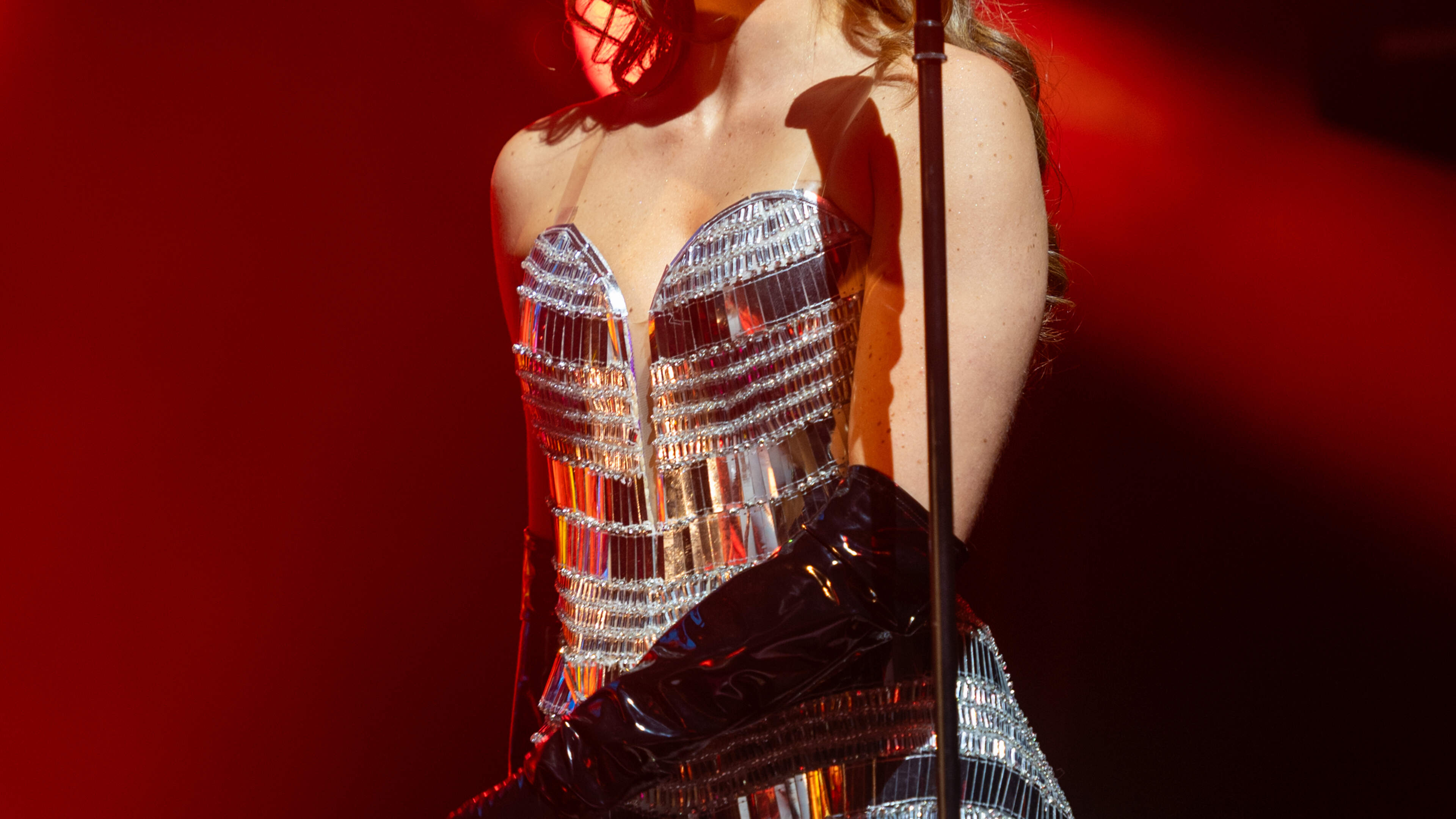
Taylor Swift performs at the sixth annual Academy Museum Gala at the Academy Museum of Motion Pictures on October 17, 2026, in Los Angeles
Taylor Swift sang "I Knew It, I Knew You" at the sixth annual Academy Museum Gala.

Stefanie Keenan/Oscars/Getty Images for Academy Museum Foundation

  • Taylor Swift's self-titled debut album celebrates its 20th anniversary this week.
  • It would've been the ideal time to revisit her country roots with "Taylor Swift (Taylor's Version)."
  • Instead, Swift squandered her own momentum by releasing the "Showgirl" deluxe last month.

The stage was set for Taylor Swift to sing her way back into critics' hearts — and back onto the country charts — with nostalgic twang and another picture to burn.

Instead, the curtains raised to reveal a rare strategic misstep.

This week is the 20th anniversary of Swift's debut album, "Taylor Swift." For much of this year, fans had been expecting Swift to mark the occasion by releasing "Taylor Swift (Taylor's Version)" and reclaiming her place in the country-star pantheon — especially after "I Knew It, I Knew You," her cowgirl-inspired single for the "Toy Story 5" soundtrack, became a crossover hit in June, topping the Billboard Hot 100 and Hot Country Songs simultaneously and finishing at No. 2 on the Songs of the Summer chart for 2026.

"I Knew It, I Knew You" suggested an imminent return to Swift's country beginnings, one that would be welcomed with open arms by longtime listeners and Nashville gatekeepers alike. The charm offensive was well underway: Swift gave interviews and exclusive snippets to country radio stations and publicly gushed about honoring her "country roots." Even the song's lyrics seemed to play like a sly Swiftian in-joke, the kind of marketing wink that she's famous for weaving into her work: "I remembered I loved you / Came back when it mattered."

But the "Taylor Swift" 20th anniversary celebration has been interrupted by a flashier, less prudent version of its titular author.

In late September, Swift surprised fans by unveiling the deluxe edition of her 12th album. "The Life of a Showgirl: The Encore" features four new songs Swift said she wrote in an excitable creative burst last year, shortly after the original album's release.

Commercially, this unexpected move has paid off. One of the new "Showgirl" tracks, "Patient Zero," has been No. 1 on the Hot 100 for three consecutive weeks, making "Showgirl" one of just a handful of albums throughout history to yield three chart-topping hits. The album also returned to No. 1, adding hundreds of thousands of additional sales to its already eye-popping total.

Strategically, however, revisiting "Showgirl" in lieu of "Taylor Swift" is far from savvy — especially for a self-described mastermind who is seldom caught in the middle of a PR campaign with a domino out of place. Swift had seemingly arranged her country-music homecoming with care, precision, and pitch-perfect anticipation. Now, that momentum is gone.

'The Encore' disrupted what could have been a perfect rollout to revisit 'Taylor Swift'

After two decades of Swift's solo-written anthems and high-pressure reinventions, the 2025 arrival of "Showgirl" was uniquely disenchanting. Swift had recently wrapped the highest-grossing tour in history, reunited with two of the music industry's most revered producers, and promised the album would contain "the best ideas we've ever had." This was positioned to be her pop opus.

Alas, "Showgirl" was overhyped and underbaked, peppered with ham-handed imagery and corny puns. Critics tempered their disappointment with justifications: Swift is too famous and too successful to disappear into her work; her public persona has grown too distracting and unwieldy; she's likely experiencing professional burnout.

This year's deluxe album was received with much less mercy, earning a 39 out of 100 on Metacritic, a 40-point drop from the original's score. When Swift brought "Showgirl" back to the fore, its shortcomings shifted focus away from the goodwill she'd spent all summer cultivating with "I Knew It, I Knew You."

Even worse, the new batch of "Showgirl" tracks included "Cleveland!" — an egregious attempted kiss-off that indulges all of Swift's worst impulses. Social media exploded with derisive glee, with some going so far as to say Swift had ruined her own songwriting legacy. Even fans who defended the song called it "rage bait" and "not that deep."

Even if the other deluxe tracks are catchy, polished, and well-structured, they were unleashed at a far too precarious time to receive the general public's benefit of the doubt.

Indeed, many assumed that Swift, ever the tactician, would move on from the "Showgirl" era with haste — and what better way to course-correct than by reminding us how she became a household name?

A reminder of Swift's country prowess is long overdue

Back in 2006, critics were charmed by the precocious lyrics and banjo-laden hooks that populate Swift's debut, from "Tim McGraw" and "Our Song" to "Should've Said No" and "Picture to Burn." At 16, Swift had already penned indelible zingers like "You said the way my blue eyes shine put those Georgia stars to shame that night / I said, 'That's a lie.'"

Twenty years later, the highlights on "Taylor Swift" stand as peak examples of Nashville-honed storytelling — the kind that helped pave the way for a new wave of country stars like Ella Langley to dominate the charts.

Of course, Swift may still release "Taylor Swift (Taylor's Version)." It could arrive tomorrow, next week, or years from now. While the "Taylor's Version" project was made redundant when Swift bought back her masters last year, she had already rerecorded her debut by the time the purchase went through. "I really love how it sounds now," she told fans, saying it would be released "when the time is right."

But it's hard to imagine a better window than the one Swift just squandered. If "Taylor Swift (Taylor's Version)" does end up closely following "The Encore," it will no longer live in its own moment, but in the shadow of a critical flop. The triumphant return-to-country narrative has been muddled. Plus, with "Patient Zero" still performing well on the charts, it doesn't make economic sense to release another album that would siphon away attention and streams.

So why did Swift decide this time wasn't right for her debut to reemerge? We can only speculate, though it's possible that Swift's talent for brand management has distracted us from her primary drive, the very thing that made "Taylor Swift" a sensation in the first place: She's a creative, an artist, a songwriter with something to say. Perhaps this was not a calculated choice, but a personal one. Perhaps she simply wrote new songs and decided to share them. Perhaps she anticipated "The Encore" would face more pushback than "Taylor Swift (Taylor's Version)" and decided to do it anyway.

Swift's lyrics offer clues to this effect. "Babylon," the final deluxe track on "The Encore," warns against "using nostalgia as a weapon to hurt yourself" and "missing all the best parts" of the present day. The story is not told from Swift's first-person perspective, but, when read as a meta-narrative, it seems to forestall critiques just like this one — asking listeners not to romanticize the past precisely as she declines the most obvious opportunity to monetize her own.

"Babylon" doubles as a preemptive epilogue to the embattled "Showgirl" era. Swift has recently been accused of devolving, of failing to live up to the heights of her past work — as if her now-beloved albums like "Red" and "Reputation" were never dismissed or ridiculed upon release.

Will "Showgirl" receive the same revaluation? Only time will tell, but it sounds like Swift is feeling optimistic.

"You hate this song," she sings, "but you wake up on the train with your headphones gone / Now that melody is all you want."

Read the original article on Business Insider

  •  

Dónal Lunny, ‘colossus of Irish music’, dies aged 79

Founding member of Planxty, Lunny went on to play for bands such as Moving Hearts, the Bothy Band and Coolfin

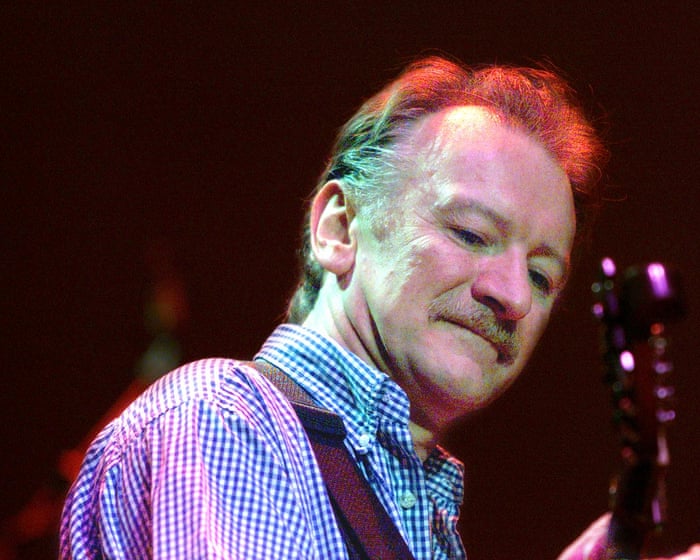
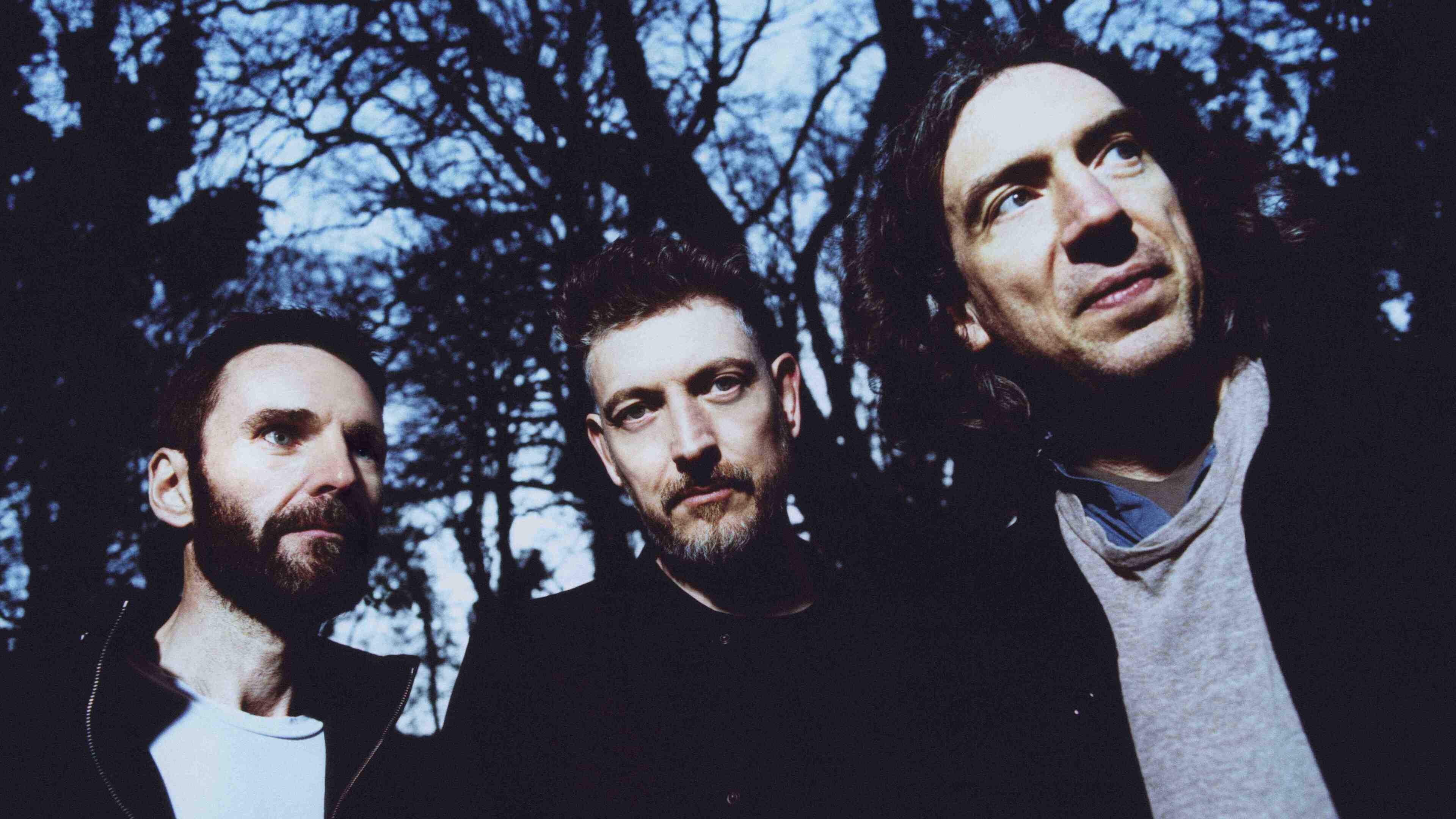
The Irish traditional musician Dónal Lunny has died at the age of 79 from cancer.

Lunny rose to prominence in the trio Rakes of Kildare alongside his brother Frank and Christy Moore. He went on to play in bands such as Planxty, Moving Hearts, the Bothy Band and Coolfin among others and toured the world.

Continue reading...

© Photograph: Christopher Thomond/The Guardian

© Photograph: Christopher Thomond/The Guardian

© Photograph: Christopher Thomond/The Guardian

  •  

Miley Cyrus doesn't need popular music to stay a pop diva

Miley Cyrus performs onstage at Bass Persuades Live at Hollywood Bowl
Miley Cyrus performs at the Hollywood Bowl on October 16, 2026.

Kevin Mazur/Getty Images for Live Nation

  • Miley Cyrus' new album, "Bass Persuades," is not selling well compared to her industry peers.
  • Although Cyrus' music has struggled to capture the zeitgeist, she has remained firmly A-list.
  • Her career more closely resembles that of a legacy act, like Cher or Madonna, thanks to her longevity.

Miley Cyrus is oozing star power.

Sporting an electric guitar and the perfect smoky eye in a recent promo video, she strums in the stance of a rock star, putting one leg up on a step and whipping her hair to the music. The clip is black-and-white, with the backdrop completely blank, suggesting Cyrus — who now goes mononymously by Miley — is magnetic all on her own.

The 33-second video, simply titled "MILEY," was designed to tease her big comeback shows at the Hollywood Bowl in October. It worked: Cyrus' two-night run sold out in minutes after 1.5 million hopefuls joined the presale ticket queue. Clearly, people were itching to see Cyrus in the flesh.

That demand, however, lately hasn't translated to people purchasing her music. Cyrus' new album, "Bass Persuades," sold only 61,000 units in its first week. For comparison, Taylor Swift's "The Life of a Showgirl: The Encore," the deluxe version of a year-old album, sold 173,000 units the very next week. Earlier this year, Ariana Grande's new album "Petal" sold 295,000 units in the same timeframe. Aside from Cyrus' titular lead single, which peaked at No. 35, only one more song from "Bass Persuades" cracked the Billboard Hot 100: "Let's Get Married" sneaked in at No. 99.

While Cyrus did sell enough to secure a No. 1 chart debut in a non-competitive release week, "Bass Persuades" also earned a less-flattering distinction when it plummeted to No. 157 on the Billboard 200 the following week: the biggest single-week drop for an album ever recorded.

Yet, somehow, when Cyrus appeared onstage at the Hollywood Bowl, numbers and technicalities melted away. Clad in understated, monochromatic looks with no backup dancers or flashy set pieces to speak of, she proved that her name alone is still a powerful draw.

In the last decade or so, Cyrus has become a celebrity whose creative output is tangential to her status, like a vestigial organ she's evolved to no longer need. Sure, Cyrus still makes and releases music, but she rarely engages with the typical cycle of promotion and performance. She hasn't staged an arena tour since 2014, and, with the sole exception of her Grammy-winning song "Flowers," her music over the past decade has struggled to capture the zeitgeist. (Perhaps if her 2020 rock opus "Plastic Hearts" hadn't been released during the pandemic, it could've broken that curse, but I digress.)

But as her sold-out Hollywood Bowl stint proves, Cyrus has a legion of supporters at her fingertips, whether her recent music is resonating or not. Even when Cyrus drew criticism for not singing every word of some of her songs — especially nostalgic hits like "Party in the USA," "The Climb," "We Can't Stop," and "Wrecking Ball" — the backlash underlined just how little she needs to do to keep her A-list position secure.

"I've learned now through the queue that my calculations are correct and people will come to me," she previously told Apple Music's Zane Lowe of the mini-residency. "I don't need to drive to you."

Miley Cyrus is a pop diva without the pop

Miley Cyrus attends the World Premiere of Disney+'s "Hannah Montana 20th Anniversary Special" at El Capitan Theatre on March 23, 2026, in Los Angeles.
Miley Cyrus attends the world premiere of "Hannah Montana 20th Anniversary Special."

Amy Sussman/Getty Images

Even as Cyrus' music since her last No. 1 album, 2013's "Bangerz," has failed to achieve widespread relevance and popularity, as a name, she remains as relevant and popular as ever.

Part of this is thanks to her longevity. Cyrus has been famous since she was the tween star of "Hannah Montana," a role that led to her being named the youngest-ever Disney Legend in 2024. Earlier this year, Cyrus celebrated the show's 20th anniversary with a Disney+ special, in which Chappell Roan told her, "You literally walked so I could run."

Cyrus and her blonde alter ego have also been cited as major influences by artists like Sabrina Carpenter and this year's breakout star Adéla, whose viral hits like "Ain't in LA" and "Nicole Kidman" have drawn comparisons to "Bangerz."

"Watching 'Hannah Montana' was my introduction to pop stardom," Adéla told Dazed.

As members of pop's new guard look to Cyrus' early work for inspiration, Cyrus remains positioned as a tastemaker and a reference point. The success of her newer albums is a secondary concern.

In recent years, Cyrus has deliberately been out of touch — both figuratively, from trends, and literally, from her audience. Despite fans clamoring for more live performances, Cyrus has declined to satisfy the demand, telling British Vogue that she doesn't want to live her life for "anyone else's pleasure or fulfillment." Cyrus has also been open about her "unhealthy" relationship to touring; she experienced job burnout at a young age and never quite recovered. As a result, she seems wholly unconcerned with chart positions or sales figures. She is more interested in building a legacy that will endure than in instant gratification.

"My life is so beautiful. It never feels like I'm swimming upstream anymore," Cyrus told Variety in March. "I like the way people see me. And when I first left 'Hannah' and put out 'Bangerz,' I did not feel that way." 

Cyrus is acting like a legacy artist, not a modern star

Marquee Sign at the Hollywood Bowl for Cher's Final concert on her "Living Proof Farewell Tour" which ended April 30, 2005 with the last show (325th show on the tour)  at the Hollywood Bowl.
Cher wrapped her farewell tour at the Hollywood Bowl in 2005.

Barry King/WireImage

Videos from the Hollywood Bowl show the crowd singing every word to Cyrus' decade-old favorites. For newer songs like "Orbit" and "Something Beautiful," Cyrus did most of the singing herself.

The gap between her past and present impact has never been more glaring. Cyrus may not have liked her public image as a teenager and young adult, but fans were gratified — and future phenoms were taking notes.

At 33, Cyrus has become a premature legacy act. The way she's navigating her career today resembles that of long-established divas like Cher, who remains a cultural touchstone but hasn't scored a hit in decades, or Madonna, whose most recent album is a callback to her earlier career heights. "Confessions II," the sequel to 2005's dance-pop blockbuster "Confessions on a Dance Floor," has thus far failed to spawn a top-40 hit. Still, Madonna's devoted fan base is ready to swarm a concert venue at a moment's notice.

Leaning on legacy and nostalgia is not necessarily a sign of failure. In fact, for Cyrus, it may be the goal.

With "Bass Persuades," her 10th studio album, Cyrus has dropped her surname in marketing materials. As her dad pointed out, this is a time-honored tradition in the music industry.

"I told @miley yesterday I felt good about her going with her first name," Billy Ray Cyrus wrote on X. "I mentioned Dolly and Cher. Thinkin about it more and more … Elvis .. Prince …and so on. It's a natural progression for an iconic superstar legend."

Like her forebears, Miley is in a league of her own — neither in the lower nor upper echelons of the music industry, but a secret third space, detached from standard markers of success.

In the end, a mononym is less a branding choice than a vote of confidence: the audience already knows exactly who you are.

Read the original article on Business Insider

  •  

‘An orchestra being gassed should be an alarm signal’: the musical activists targeted in Paris

New World Orchestra’s musicians are shocked at French police targeting peaceful gathering with teargas

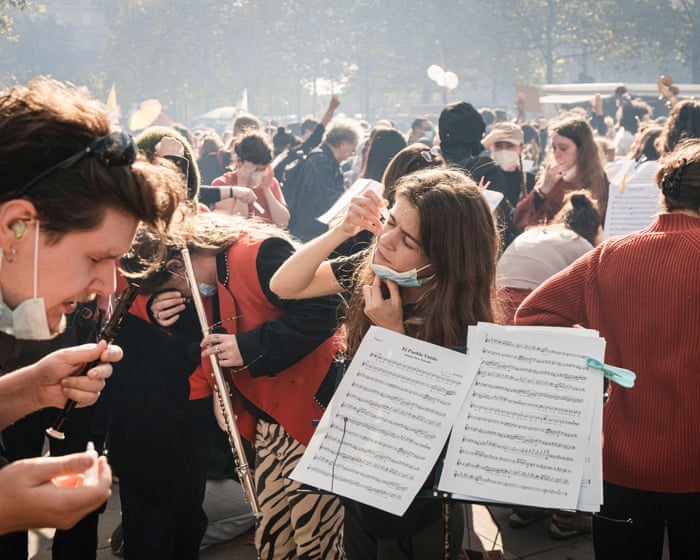
As riot police encircled Place de la République last week, lobbing teargas canisters to disperse demonstrators, the conductor Étienne Jarrier and his orchestra played on. They kept playing even after everyone else had disappeared and teargas was being fired into the central Paris square.

It was only when Jarrier noticed his musicians were being directly targeted that he ordered them to stop. “There were teargas canisters landing in the double bass and music stand cases, and starting fires the musicians had to stamp out,” he told the Guardian.

Continue reading...

© Photograph: Sipa US/Alamy Stock Photo/Alamy Live News.

© Photograph: Sipa US/Alamy Stock Photo/Alamy Live News.

© Photograph: Sipa US/Alamy Stock Photo/Alamy Live News.

  •  

Met Opera adapts experimental novel 'Lincoln in the Bardo' for the stage

An acclaimed novel comes to life as a new opera, exploring a deeply personal side of one of America's most consequential presidents, Abraham Lincoln, and the profound grief that shaped his life. Jeffrey Brown takes in "Lincoln in the Bardo" at the Metropolitan Opera in New York for our arts and culture series, CANVAS.

  •  

Steve Hackett announces Lisbon and Porto concerts for 2027

Steve Hackett

Legendary British guitarist Steve Hackett, best known for his work with progressive rock band Genesis, will return to Portugal in October 2027 for two concerts celebrating his musical career. The

The post Steve Hackett announces Lisbon and Porto concerts for 2027 appeared first on Portugal Resident.

  •  

The dangers of letting tech billionaires shape our world

As SpaceX impacts Ukraine and AI-generated music divides artists and fans, critics are asking what happens when technology has too much control over our lives

Hello, and welcome to TechScape. I’m Blake Montgomery, US tech editor at the Guardian, writing to you while sitting in front of Roy Lichtenstein’s monumental Drowning Girl, on view in New York City. Today in tech, we’re discussing the perils of Elon Musk’s one-man global infrastructure, AI-generated music and a Guardian AI conference in Paris.

Continue reading...

© Photograph: Gonzalo Fuentes/Reuters

© Photograph: Gonzalo Fuentes/Reuters

© Photograph: Gonzalo Fuentes/Reuters

  •  

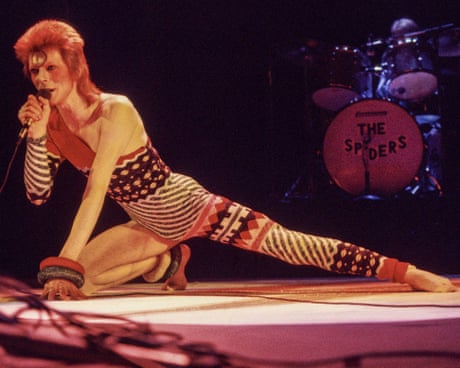
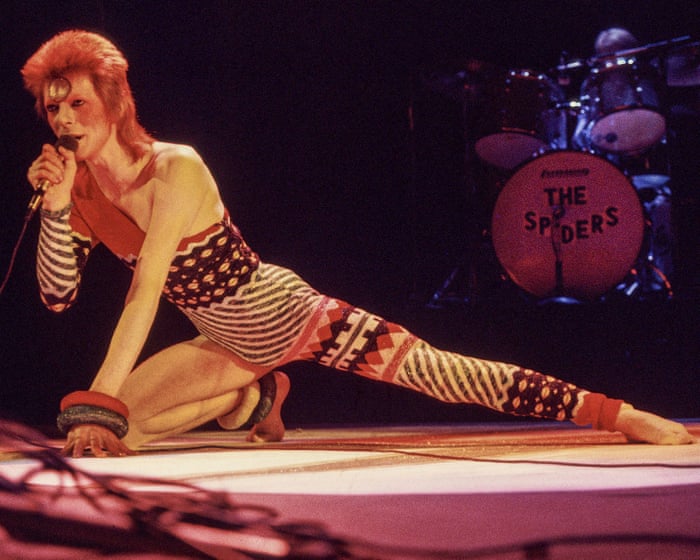
Getting Ziggy with it: David Bowie’s alter egos inspire dance show that will transform his songs

Subject to Change: A Dance for David Bowie will explore how the musician ‘practised a form of artistic reincarnation’, says choreographer Marcos Morau

‘Let’s dance,” sang David Bowie in 1983, commanding: “Put on your red shoes and dance the blues.” That call is to be answered – with footwear TBC – by an international dance production featuring new choral arrangements of songs from throughout his career.

Subject to Change: A Dance for David Bowie will be staged at Sadler’s Wells in London in autumn 2028 after a world premiere in Luxembourg. It will visit Tokyo in 2029. The show will explore how Bowie “practised a form of artistic reincarnation” according to Spanish choreographer Marcos Morau who is taking inspiration from the superstar’s transformations into personas such as Aladdin Sane and the Thin White Duke.

Continue reading...

© Photograph: Ilpo Musto/Alamy

© Photograph: Ilpo Musto/Alamy

© Photograph: Ilpo Musto/Alamy

  •  

10 of the Biggest Music Careers Launched by Sitcoms

Television has always been capable of turning actors into household names, but the right sitcom can also manufacture a music star. Sometimes the series builds in the transition, with a young performer singing onscreen before releasing records under their own name. In other cases, a sitcom simply gives an ambitious musician the audience needed to […]

The post 10 of the Biggest Music Careers Launched by Sitcoms appeared first on Listverse.

  •  

The new darbar

At Muse Music’s Jaipur retreat, Hindustani masters stayed steadfast to their genre while Carnatic experimenters and practitioners of Sufi pop embraced the non-conformist and entertained the nouveau patron.

  •  

10 Famous Musicians Who Grew to Resent Their Biggest Hits

Artists pour their souls into recording studios, but success can create a peculiar kind of regret when one song comes to overshadow everything else they have accomplished. Fans may cherish a familiar anthem forever, while the musician who recorded it must sing the same words night after night, answer the same questions, and watch one […]

The post 10 Famous Musicians Who Grew to Resent Their Biggest Hits appeared first on Listverse.

  •  

Heaven’s Melodic Strains

Audiophiles are sometimes described in terms reserved for cults; a 1956 New Yorker story, referenced in Colin Vanderburg’s exceptional tour of extreme listening, refers to “a remarkably articulate group of zealots” and “an almost mystical reverence for sound.” Vanderburg travels among the believers, tracing the decades-long promise of “consumer audio innovations” to their technological apex: the New York International Audio Show, where audiophiles sample six-figure sound systems in pursuit of a signal as pure as the world they already inhabit.

More than anything, I have spent long passages of this earthly life sitting on my ass, listening. I listen to music, but what I hear is sound. Texture, timbre, and tone; clarity and detail; space and depth. And I hear, even more acutely, what thwarts sound. Shrill treble, muddled bass — for me these are worse than peeves. They offend hearing. They diminish the human sensorium. Earbuds repulse me; laptop speakers grate; a tabletop Bluetooth unit is a kind of vandalism.

The word audiophile — etymologically, one who “loves to hear” — has a wine-sipping pretension that I hate, but sometimes an ugly shoe fits. Like similarly suffixed psychopathologies, the term suggests a state of warped dependence, of inbent sublimation. I didn’t set out to be this way, but neither have I ever sought help. My symptoms are apparent, their causes obscure. What, after all, do we love when we love sound?

  •  

Buffalo Nichols: A revolutionary blues man in the belly of the beast

In the year of the 250th anniversary of US independence, the bipartisan US Semiquincentennial Commission released “America’s Soundtrack: The Sound of 250 Years.” Perhaps unsurprisingly – because the initiative was planned over the course of a decade with the support of corporations like Amazon, Oracle, and Palantir – the playlist is a romantic ode to the most paternalistic and militaristic sides of the United States.

However, activists have pointed out that there are “Two Americas at 250.” In other words, there is a working-class history and culture that directly contradicts the imperialist project of the billionaire class. Therefore, we must study another soundtrack: one based on the struggles, desires, and traditions of the people. One person that represents this soundtrack is “America’s favorite blues man,” 34-year-old Buffalo Nicols.

Music characterized Carl Nichols’s upbringing in Milwaukee, Wisconsin. Though not surrounded by musicians, he always had the sounds of jazz on the radio, his mother‘s music collection, his older brother’s hip-hop, and his older sisters, R&B, punk, and metal. This was the context in which he taught himself to play his sister’s guitar at the age of 12.

Performing with bands throughout high school, Carl found kinship among the West African community. As he played a cheap banjo along with a friend on the instrument known as the xalam, he embraced music as an opportunity to learn about other cultures. Traveling through countries like Senegal, Romania, Hungary, and Ukraine in his early 20s and learning their sonic traditions, motivated him to study Black American music with the same rigor.

Performers like Lead Belly, Pete Seeger, and Woody Guthrie left a lasting mark on him, specifically relating to communal and commercial music. Similarly, the writing of Etheridge Knight, Langston Hughes, Zora Neale Hurston, and Amiri Baraka helped him understand the blues as “a living thing” rather than a set of important names and dates. He said, “There’s always been this connection between activism and folk music because I think trying to exist as an artist in America has been a political thing.”

His 2025 song “Belly of the Beast“ is one example of this because it asks about the responsibility which domestic victims of US imperialism have for protecting victims abroad. Written during the heightened media coverage of the Israeli genocide in Gaza, the song calls attention to the relationship between Black Americans and Palestinians. He conceptualized the song following a period of political education defined by a collection of Malcolm X speeches and Régis Debray’s 1967 “Revolution in the Revolution?”

I live in the belly of the beast

Though I only meant to look into his mouth

It was not opportunity but chains he used to capture me

And every day I’ve tried to get back out

While these lines of the chorus speak from the individual or first person perspective, Nichols uses them to describe a common experience.This is why the song ends with the collective “we live in the belly of the beast.” The song is neither nihilistic or romantic in its allusion to topics like police killings, occupation and ethnic cleansing. Rather, in verse four, the singer puts his hope for change in the hands of the people, saying “we cannot win ’till we get organized.”

Read more: Studying the changes: a Palestinian music teacher’s lesson on will

Some, who mistake folk music as apolitical, took offense to this song. They attack him in social media comments, direct messages, and hate mail. In the spirit of the blues, Nichols said he laughs at their assumption that they can hurt him. The same minority of listeners attacked him for his 2025 song “Ice Age Blues.”

He wrote the song in response to the second Trump administration’s escalation of ICE terror. Specifically, on the widespread sense of surprise that law-enforcement would use deadly force against the US residents. He said that it reminded him of the same realization among new activists during the 2020 uprising for George Floyd. However, Nichols shows that he was not shocked by the contradiction – he ends the song by asking,

You think all that money is for war fought abroad?

They won’t hesitate to kill you in your own backyard. 

They’d be happy to kill you in your own backyard.

Nichols said that political finger pointing will not help identify the common perpetrator of a shared oppression. Instead, he urges readers to understand the state and how it works against the people; to study the basis of its patterns and changes. By doing so, he calls listeners attention to the basis of repression rather than simply what accelerates it. 

Similarly, he recommends the new generation of blues people to “return to the root.” That is, to disregard stereotypes about their Black art and study those – like Zora Neal Hurston – who preserved long-standing traditions. By reclaiming their legacy, he said that culture workers can affect consciousness on a mass level.

I know no artist really wants to be a role model or to be representing an entire people but the reality is that Black culture is such a fragile, delicate and important thing that we have to be more mindful of how we share it and how we interact with it. 

Buffalo Nichols is currently touring through states like West Virginia, North Carolina, Illinois, and Minnesota.

  •  
❌