❌

Reading view

France Deploys 70,000 Officers Ahead of Protest Rallies
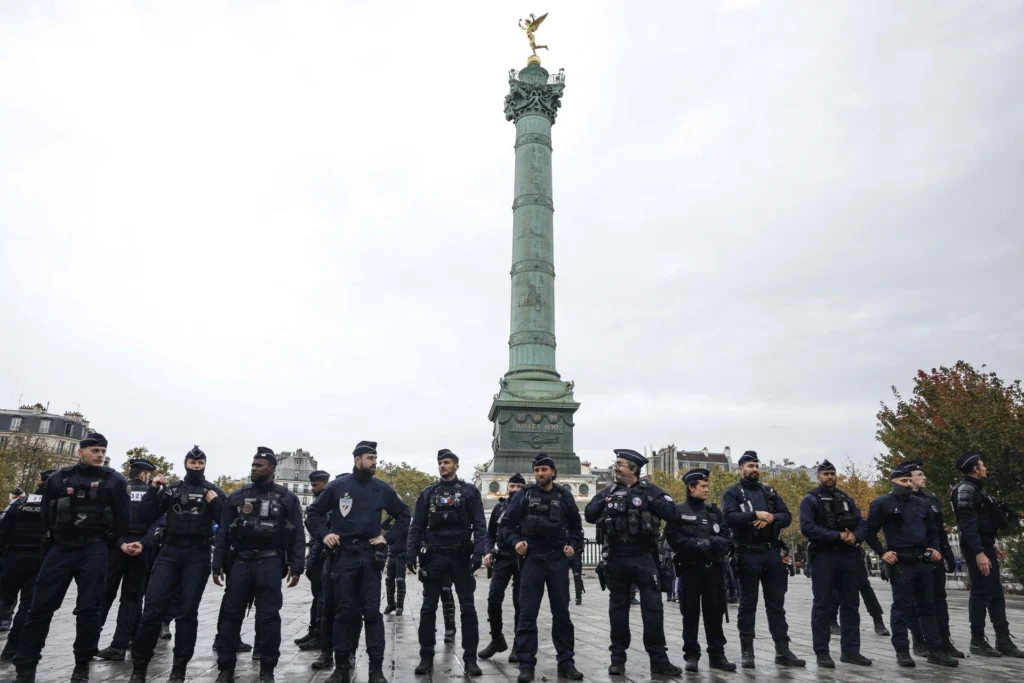
Businesses board up shopfronts in Paris ahead of protests in France as authorities deploy 70,000 police officers and gendarmes.

France mobilizes 70,000 police and gendarmes amid fears of renewed unrest, while authorities restrict demonstrations and tighten security.


France has deployed 70,000 police officers and gendarmes ahead of nationwide demonstrations on Saturday, with authorities warning of a heightened risk of unrest after vandalism and looting damaged about 3,000 businesses the previous week.

RELATED: France Reports 855 Arrests in Paris After Protests

Prime Minister Sébastien Lecornu warned late Friday that the threat remained high, particularly from radical far-left groups and criminal elements operating alongside demonstrations called by trade unions, students and the Yellow Vest movement.

Interior Minister Laurent Nuñez announced a large-scale security operation to prevent further violence and looting.

“We will show no mercy to looters and troublemakers,” Nuñez declared. He has faced criticism from the left over police tactics and from the right for failing to prevent the previous week’s unrest.

France to mobilise 70,000 security forces for Saturday protest, interior minister says https://t.co/ok4e8kEy5t https://t.co/ok4e8kEy5t

— Reuters World (@ReutersWorld) October 23, 2026

Authorities have banned gatherings in numerous cities and restricted the routes of other demonstrations on security grounds, prompting criticism from trade unions and human rights organizations.

In major cities, trade union demonstrations were authorized on Saturday only in Paris, Marseille, Strasbourg, Lille, Mulhouse, Grenoble, Toulouse and Amiens.

In Paris, a last-minute change to the union march’s route sparked a dispute between police officials and organizers. Authorities cited the heightened threat following a racist attack on the outskirts of the capital the previous day as they redirected the march from Place de la Nation to Place d’Italie, keeping it away from the city center.

Several museums in the capital, including the Louvre and the Musée d’Orsay, will remain closed, as will the nearby Palace of Versailles. A nighttime curfew in the areas around Place de la République and Les Halles will also remain in force until Monday.

Banks and businesses in central Paris were boarding up shopfronts and windows late Friday and early Saturday in anticipation of possible vandalism, according to observations by Spanish news agency EFE.

Security concerns also extend to Orléans, about 130 kilometers (81 miles) south of Paris, where the far-right National Rally (RN) is holding a congress to formally launch Marine Le Pen’s presidential candidacy, roughly six months before the election.

Authorities estimated that 11,000 people took part in a counter-demonstration in Orléans on Saturday against Le Pen’s party. Organized in opposition to racism, fascism and imperialism, the march proceeded peacefully in a festive atmosphere, according to EFE.
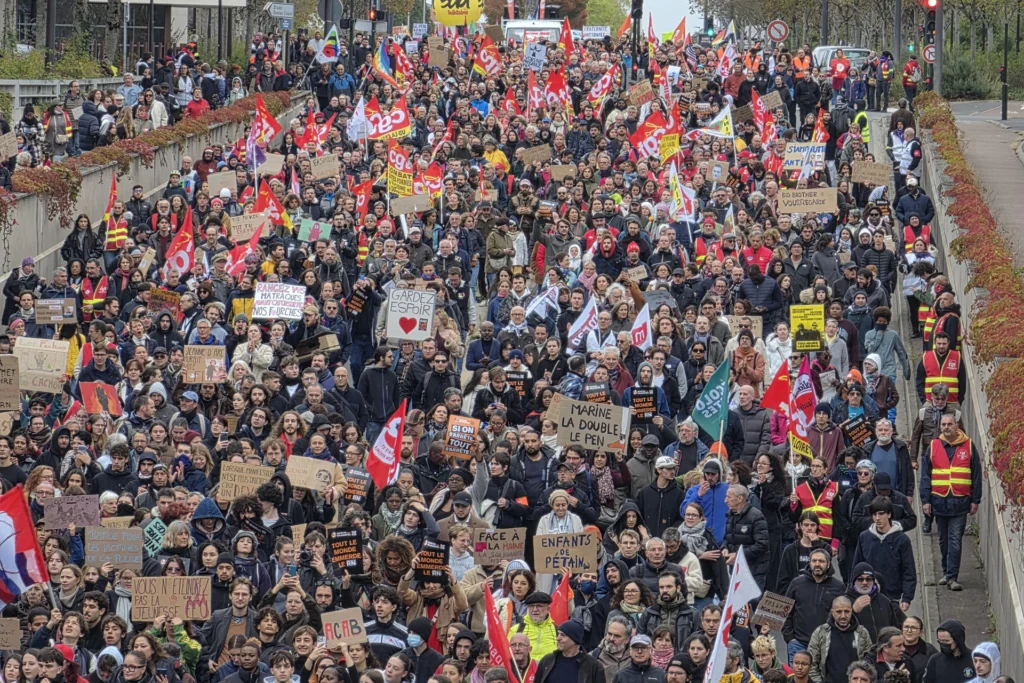
Photo: Orleans, France (October 24, 2026)

Protesters chanted slogans including “Macron resign, Le Pen to prison” and sang the French national anthem, La Marseillaise, as well as the Spanish-language protest song “The People United Will Never Be Defeated.”

Authorities deployed about 3,000 officers in Orléans to prevent clashes between demonstrators and attendees at the RN congress. The local prefecture authorized Saturday’s march but banned a separate demonstration planned for Sunday.

The security measures reflect the authorities’ efforts to prevent further disorder while allowing some demonstrations to proceed. Restrictions on public gatherings and the deployment of thousands of officers have shaped preparations for Saturday’s rallies across France.
  •  

Paraná River Floods Displace 4,200 Families in Paraguay

Paraná River floods inundate neighborhoods in Ciudad del Este, Paraguay, and Paso de la Patria, Argentina, forcing families to evacuate.

Flooding in Paraguay and Argentina’s Corrientes province has inundated homes and damaged infrastructure, with further rises in water levels possible.


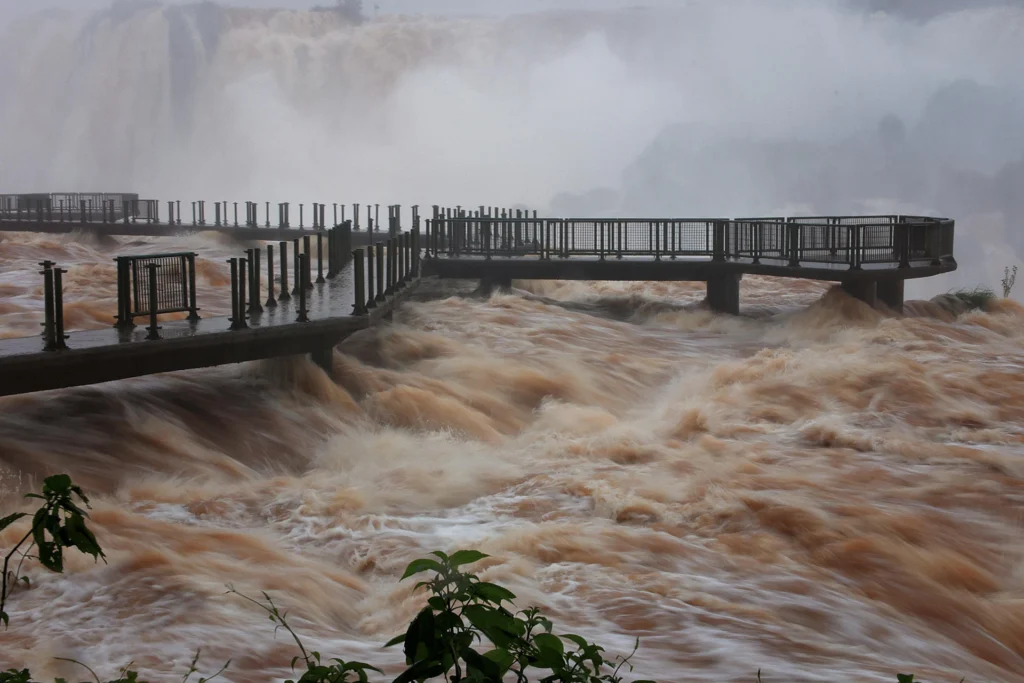
Flooding along the Paraná River has forced about 4,200 families to evacuate in eastern Paraguay and inundated neighborhoods in Argentina’s Corrientes province, as authorities warn that further rainfall could worsen conditions in the coming days.

RELATED: Paraguay Evacuates 4,200 Families as Parana River Overflows

Ciudad del Este, in Paraguay, is among the hardest-hit areas, with more than 1,000 households affected. In Argentina, a breached flood barrier in Paso de la Patria has sent water hundreds of meters inland, submerging streets and creating additional safety risks.

Heavy rainfall across the Paraná River basin has prompted civil protection agencies and local authorities in both countries to assist displaced residents, distribute sandbags and establish temporary shelters.

In Paraguay’s Alto Paraná department, the neighborhood of Remansito in Ciudad del Este has suffered severe flooding. Around 35 families involved in recycling were forced to leave their homes after their plots were inundated.

🌊 La crecida del río Paraná obligó a evacuar a unas 4.200 familias en el este de Paraguay. ⚠️ En Ciudad del Este hay más de 1.000 hogares damnificados y 35 familias del barrio Remansito debieron abandonar sus viviendas. #teleSUR #Paraguay #22Oct #AméricaLatina… pic.twitter.com/0TV9HiUCkP

— teleSUR TV (@teleSURtv) October 23, 2026

Residents have blamed the rapid rise in water levels on the opening of floodgates at the Itaipu Binacional hydroelectric plant. The dam’s administration has rejected claims that the operation was the main cause of the flooding, saying the gates were opened in accordance with technical safety protocols for operational contingencies.

The emergency has also severely affected Paraguay’s Ñeembucú department, particularly the localities of Ayolas and Cerrito. Residents have organized community kitchens to provide food and basic supplies to evacuees.

Across the border, Paso de la Patria has become one of the most vulnerable areas in Corrientes province after an embankment near the Don Julián cabin area gave way. Water levels at the town’s port reached 7.79 meters.

The breach allowed floodwaters to advance as far as 300 meters inland, inundating the Los Pescadores, La Isla and Señoran neighborhoods, as well as areas around the Huajó stream.

The rising water has also submerged the Pinín Palma amphitheater and Isla de los Pájaros. The presence of potentially dangerous wildlife, including caimans, in residential areas has added to concerns over public safety. The flooding has also hit a town whose economy relies heavily on tourism and sport fishing.

Residents have described the difficulty of escaping the rising waters. Ismael Ali, who lives in Los Pescadores, said he was surrounded by floodwater with nowhere to go, while neighbors fled as best they could and tried to rescue their dogs.

Although the Paraná’s level in the Argentine sector fell by 40 centimeters on Friday, authorities warned that the decline might be temporary. Heavy storms continuing upstream in Brazil could cause water levels to rise by as much as another meter in the coming days.

Paraguay’s Directorate of Meteorology and Hydrology has forecast continued rainfall through the weekend, raising the risk of landslides. Municipal authorities and rescue teams in both countries are continuing to distribute sandbags, open temporary shelters and monitor riverside areas. Residents have been warned to remain alert for further rainfall and possible hail.

  •  

Ecuador Transfers Luisa González to Riobamba Prison

Ecuadorian opposition leader Luisa González transferred to Riobamba prison in alleged money laundering case.

Ecuadorian opposition figure Luisa González faces pretrial detention over alleged money laundering in the Labyrinth case.


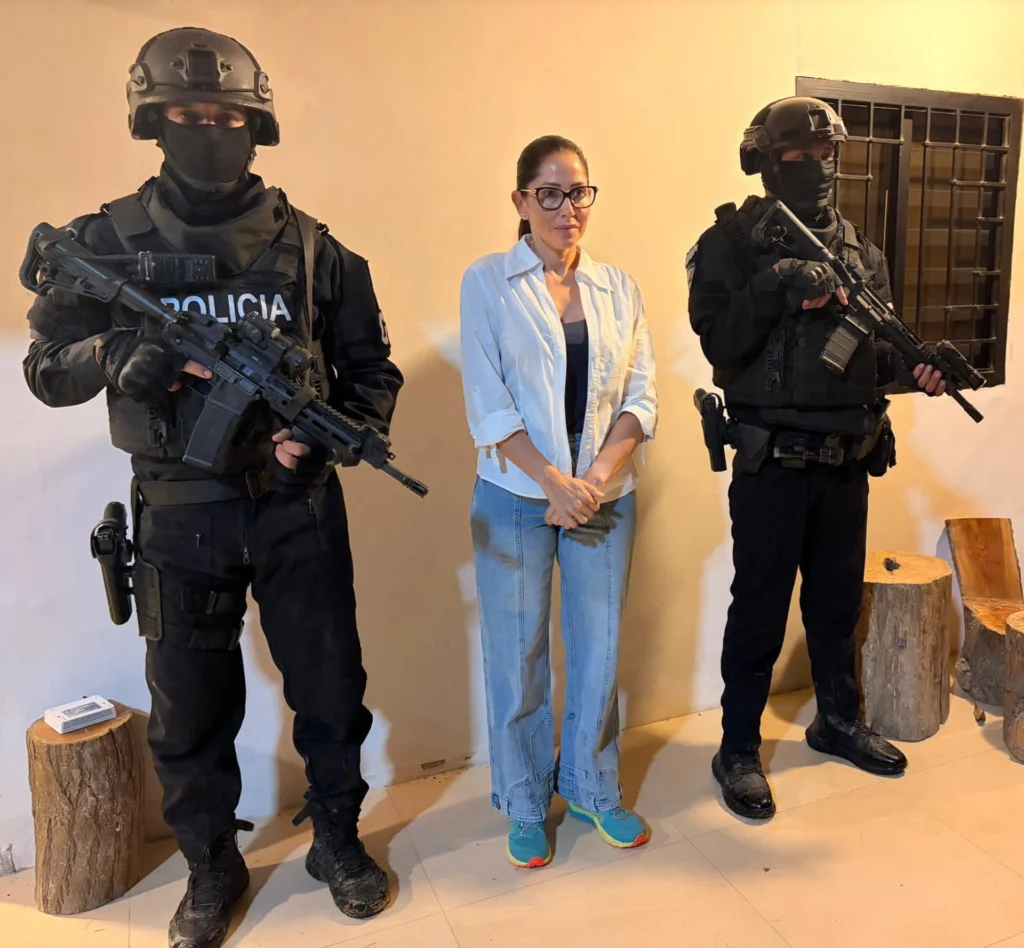
Ecuadorian opposition leader and former presidential candidate Luisa González was transferred to a prison in Riobamba on Friday night after a judge ordered her pretrial detention over alleged money laundering in the so-called Labyrinth case.

RELATED: Ecuador Prosecutors Seek Preventive Detention for Leftist Leader Luisa Gonzalez

A convoy of National Police and Armed Forces personnel arrived outside the detention center in Riobamba, in Chimborazo province, shortly after 9 p.m. local time on Oct. 23. Prison authorities had not officially confirmed González’s admission to the women’s facility at the time of the report.

The transfer began shortly after 4 p.m. from the Modelo barracks in Guayaquil, where González had been taken following her arrest Thursday in Canuto, Manabí province. Police transported her to an air base before she boarded a flight that landed at Latacunga airport in Cotopaxi province at 7:30 p.m.

Although initial reports indicated that González would be held at a prison in Cotopaxi or Quito, police ultimately arranged for her to travel by road to Riobamba in a heavily guarded convoy accompanied by patrol cars and tactical units.

Text Reads: 🛬 Luisa González, former presidential candidate for the Citizen Revolution (Revolución Ciudadana) movement, arrived at Cotopaxi Airport under the escort of military and police personnel, hours after a judge ordered her pretrial detention.
⚖️ This measure relates to alleged money laundering, as part of the “Laberinto” (Labyrinth) case. González was taken into custody early Thursday morning following a raid on her home in Chone, Manabí.
🏛️ The State Attorney General’s Office maintained its request for pretrial detention, which also applies to former assembly member Santiago Díaz and Wendy Onofre, secretary of the RETO movement.
📌 These judicial actions are part of a broader agenda of political persecution being carried out by the administration of Daniel Noboa against opposition figures and leaders.

The use of air transport for part of the journey was intended to reduce public-order risks amid tensions at several prisons across Ecuador. Interior Minister John Reimberg directly linked the unrest to reactions to González’s arrest.

González, the former leader of the Citizen Revolution movement, has rejected the allegations against her. The movement and her associates denounced the pretrial detention order as an act of lawfare and political persecution.

In a statement posted on social media, González reaffirmed her innocence and declared that she would remain in Ecuador to face the judicial proceedings.

Supporters gathered outside the Riobamba prison to hold a vigil, carrying flags and banners behind a security barrier erected by uniformed personnel. Patricia Núñez, a member of the National Assembly representing Chimborazo province, joined the gathering.

The court also ordered pretrial detention for former lawmaker Santiago D. and Wendy Onofre, secretary of the RETO movement, in connection with the same case. Onofre voluntarily surrendered in Guayas province and was admitted shortly after 8 p.m. to the Pichincha No. 3 detention center in Chillogallo, southern Quito.

Another defendant, Estefanía M., was granted alternative measures for the 90-day investigation period, including regular reporting to authorities, a ban on leaving the country and electronic monitoring.

  •  

Mamdani Issues Spanish-Language Guide to ICE Encounters

Zohran Mamdani explains immigrants’ rights during ICE encounters in a Spanish-language video for New York City residents.

New York’s mayor outlines immigrants’ rights during encounters with ICE and pledges to protect the city’s immigrant communities.


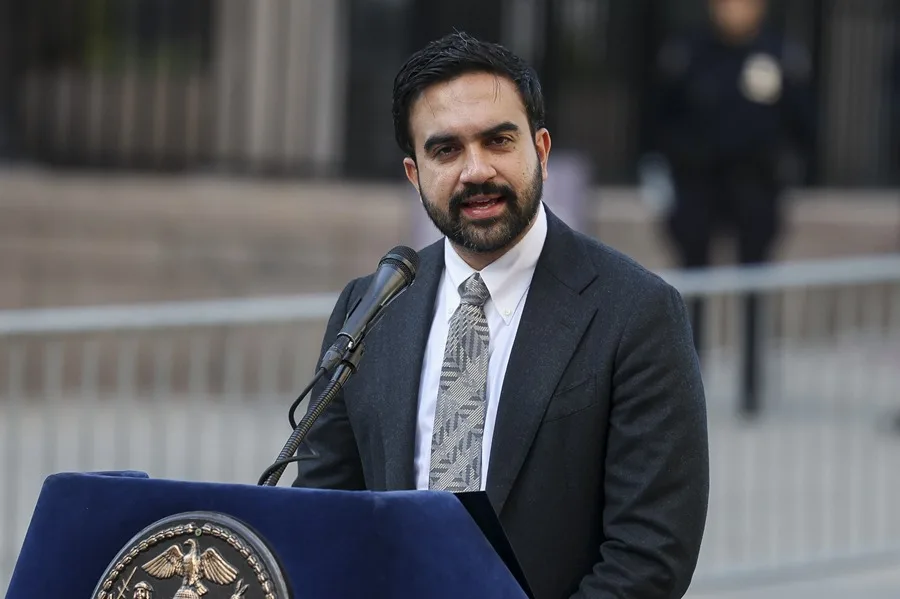
New York City Mayor Zohran Mamdani has released a Spanish-language video advising immigrants on how to respond to encounters with federal immigration agents, explaining their rights and directing residents to city-run assistance hotlines.

RELATED: Trump Backs ICE After Shooting Sparks New York Protests

In the video, posted Friday on Instagram, Mamdani explains that Immigration and Customs Enforcement (ICE) agents cannot enter private spaces without a judicial warrant. He advises residents to ask agents to slide the warrant under the door so they can examine it.

Without a warrant, residents can refuse entry and keep the door closed, he says. The video also addresses encounters in public, reminding immigrants that they have the right to remain silent if stopped by ICE.

Mamdani advises residents to ask agents, “Am I free to go?” If the answer is yes, they can leave calmly. He also urges immigrants to consult a lawyer before signing any documents or making decisions about their immigration cases.

If you encounter ICE, here's what every New Yorker should know. pic.twitter.com/hrjL8JPLyr

— Mayor Zohran Kwame Mamdani (@NYCMayor) October 23, 2026

The mayor points viewers to two municipal assistance hotlines and reassures them that they are not alone.

“Another thing: the Constitution gives you the right to protest, and we will protect that right,” Mamdani says. “These are frightening times for many people, but as your mayor, I will fight every day to protect, support and celebrate our communities.”

Since taking office in January, Mamdani has pledged to uphold New York’s sanctuary-city policies, which limit cooperation between municipal authorities and federal immigration enforcement. He has also vowed to protect immigrant residents amid U.S. President Donald Trump’s mass deportation policy during his second term.

  •  

Three Earthquakes Strike Near Tibet After Deadly 7.0 Quake

Earthquake damage and rescue operations in Tibet following a magnitude 7.0 earthquake and subsequent tremors in China.

Three tremors struck near the epicenter of a deadly earthquake in Tibet as rescue teams continued relief efforts amid severe weather.


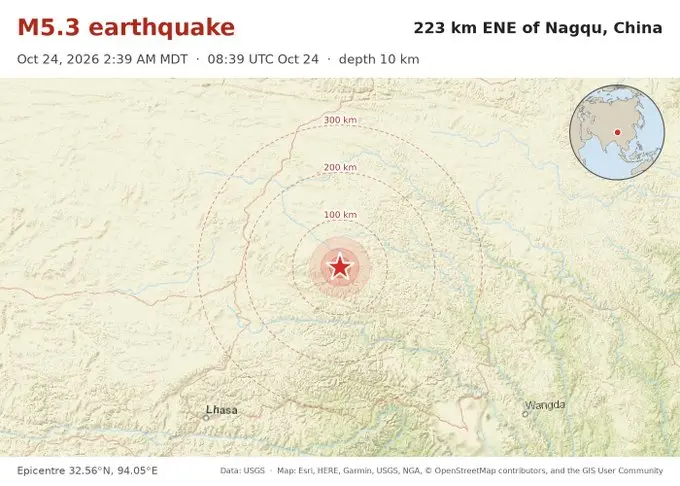
Three earthquakes measuring magnitudes 4.5, 4.1 and 4.2 struck near the epicenter of a magnitude 7.0 earthquake in China’s Tibet region between Friday night and Saturday morning, according to the China Earthquake Networks Center. The main quake has killed 16 people and injured 76, while rescue operations continue amid harsh weather and warnings of further tremors.

RELATED: Powerful 7.0 Earthquake in China’s Tibet Kills at Least 16 People

The first tremor struck Zaduo County in western China’s Qinghai province at 10:14 p.m. local time on Friday, at a depth of 10 kilometers. Two more earthquakes hit the same area and at the same depth on Saturday, at 6:39 a.m. and 8:07 a.m.

The tremors occurred near the epicenter of Thursday’s main earthquake in Baqing County, in Nagqu, Tibet. Seismological authorities have not yet confirmed whether the latest events are formally part of the same seismic sequence.

M5.3 likely aftershock – 223 km ENE of Nagqu, China

Oct 24 16:39 local time (18m ago)
Depth 10 kmhttps://t.co/A49zlMJPzH pic.twitter.com/PkqRxfBva0

— Earthquakes (@NewEarthquake) October 24, 2026

The official toll from the magnitude 7.0 earthquake remains at 16 dead and 76 injured. Authorities have also reported 339 homes destroyed or severely damaged, along with damage to 20 livestock facilities.

More than 5,000 personnel have been deployed to affected areas to conduct search and rescue operations and provide medical care and logistical support, state news agency Xinhua reported. Rescue teams have completed three rounds of house-to-house inspections without finding anyone reported missing.

Authorities have evacuated 12,489 residents and established at least 18 temporary shelters as a precaution.

🔊 A magnitude 7.0 earthquake hit Tibet, killing at least 16 and forcing thousands from their homes. It’s the strongest quake to hit China in nearly three years. More on the Reuters World News podcast https://t.co/dFVrexO5K2 pic.twitter.com/fu21iIGcM5

— Reuters (@Reuters) October 23, 2026

The emergency response is unfolding at an altitude of about 4,800 meters, where severe weather threatens to hamper relief efforts. China’s meteorological authorities forecast scattered snowfall for Saturday, with temperatures expected to fall as low as minus 9 degrees Celsius. Strong winds could further complicate travel and the installation of emergency shelters.

Chinese seismologists have warned that further perceptible aftershocks are likely in the coming days. Emergency teams are also monitoring secondary hazards, including potential rockfalls.

The magnitude 7.0 earthquake was the first of that strength recorded in China this year. It follows a January 2025 earthquake in Dingri County, Tibet, that killed at least 126 people.

  •  

Flávio Bolsonaro Apologizes to Lula During Brazil Presidential Debate

Lula da Silva and Flávio Bolsonaro debate maternity leave, Bolsa Família and poverty during Brazil’s presidential election.

Flávio Bolsonaro admitted he was wrong to oppose extending maternity leave and apologized to Lula for a personal insult during a heated debate.


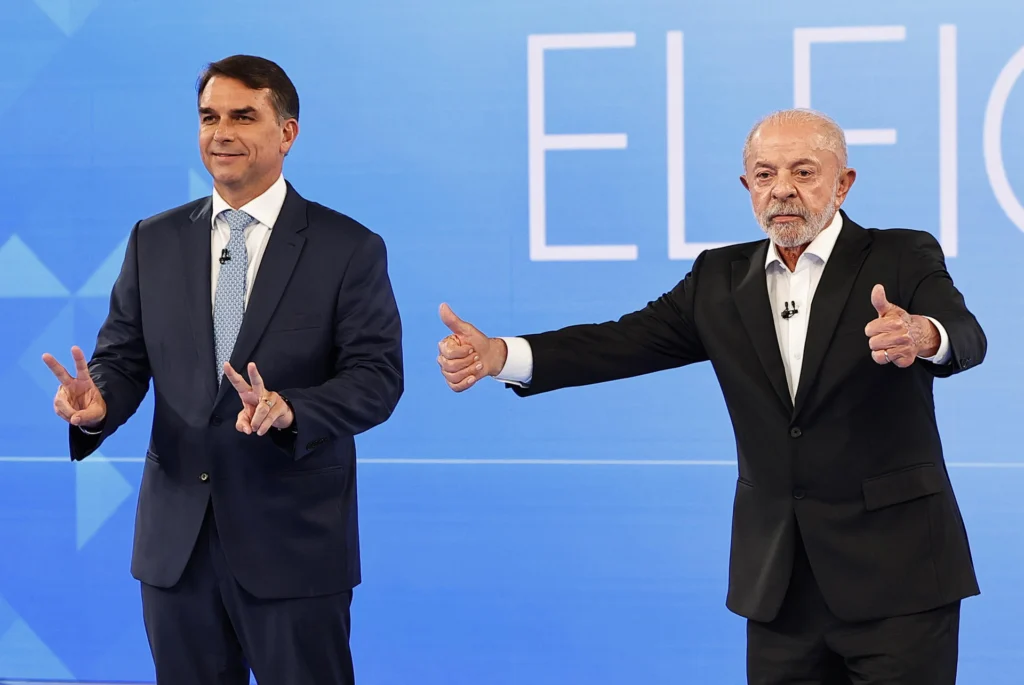
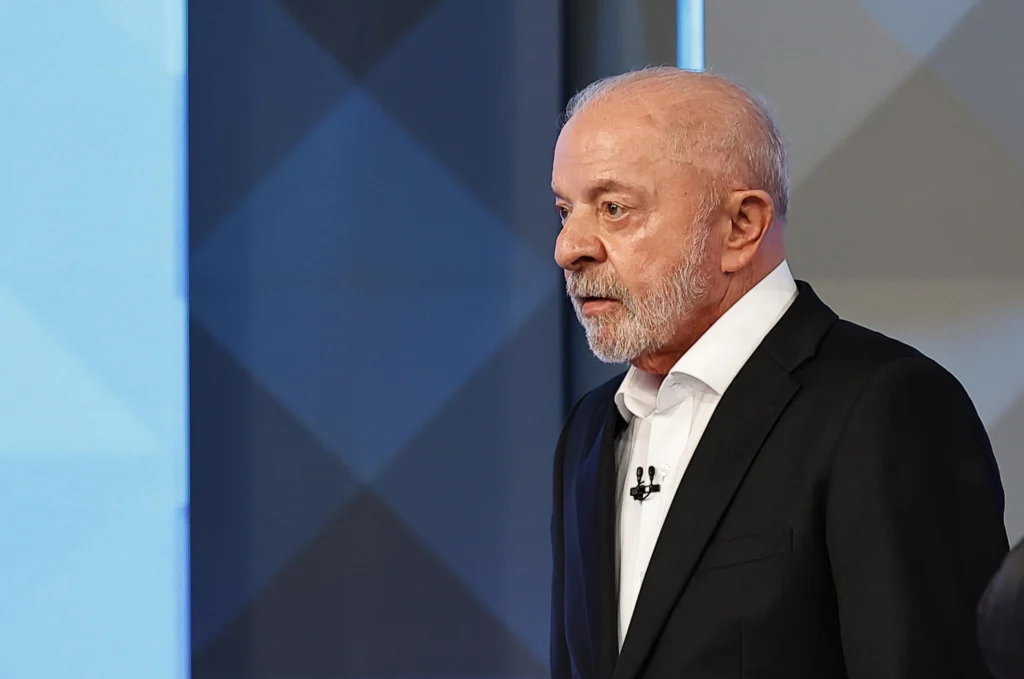
Brazilian presidential candidate Flávio Bolsonaro apologized to President Luiz Inácio Lula da Silva during a televised debate after Lula challenged him over his past opposition to extending maternity leave, sparking a heated exchange over social welfare, poverty and personal attacks.

RELATED: Lula Pledges Universal Full-Day Schooling in Brazil

Flávio Bolsonaro, who represents the Liberal Party (PL), acknowledged that his earlier vote was a mistake and said he would take a different position today. He also apologized for calling Lula “nine fingers,” a reference to the president’s missing finger, but followed the apology by demanding that Lula answer for his government’s record on poverty and social assistance.

The confrontation unfolded during the debate’s second segment, after Lula requested a right of reply over remarks he considered offensive. The production team had yet to rule on the request when the candidates resumed their exchanges.

Lula chose social policy as the subject of his question and returned to an issue he said Flávio Bolsonaro had left unanswered in the previous debate. He challenged his opponent to explain why he had been the only state legislator in Rio de Janeiro to vote against extending maternity leave.

Qual a justificativa para votar contra a licença-maternidade? Contra o direito das mulheres e da família? Explique, Flávio Bolsonaro. pic.twitter.com/17ibHC7knP

— Lula (@LulaOficial) October 24, 2026

Text Reads: What is the justification for voting against maternity leave? Against the rights of women and the family? Explain, Flávio Bolsonaro.

Flávio Bolsonaro defended his earlier decision by saying he had believed the measure could make employers less willing to hire women. He acknowledged that he had been wrong, adding that marriage and having two children had changed his perspective.

He said he now understood the importance of mothers staying close to their children and would support extending maternity leave beyond 180 days where possible. He maintained that he would vote differently today.

Lula dismissed the explanation, arguing that Flávio Bolsonaro had failed to support the measure when he had the opportunity and was now changing his position as women became more politically active and fought for their rights.

The president then challenged his rival over the term “Bolsa Farelo,” which Flávio Bolsonaro had used to disparage Bolsa Família, Brazil’s income-transfer program. Lula called the expression disrespectful to poor people, arguing that those removed from economic hardship often treated the poor as though they had no value.

The exchange escalated when Lula responded to Flávio Bolsonaro’s use of the nickname “nine fingers.” The president explained that he had lost a finger at age 17 while working the night shift at a factory, saying he had needed the job to afford food.

“I will not allow a militiaman to call me ‘nine fingers,’” Lula declared. He also accused Flávio Bolsonaro of never having worked, alleging that the first job recorded in his rival’s employment record was a fictitious position arranged by his father.

Flávio Bolsonaro offered an apology, saying he had not intended to offend Lula with the remark. He then turned the criticism back on the president, demanding that Lula apologize to people experiencing homelessness and recipients of Bolsa Família.

Flávio Bolsonaro claimed that the number of people living on the streets had nearly doubled under Lula’s current government, citing a figure of 199,000 people as the starting point. He also accused the president of neglecting Bolsa Família beneficiaries for four years and addressing their concerns only 17 days before the election.

The candidate criticized a recent adjustment to the benefit, claiming the increase amounted to three Brazilian reais a day — enough, he quipped, to buy three eggs.

The exchange brought the candidates’ competing arguments over social policy into sharp focus. Lula pressed Flávio Bolsonaro to account for his legislative record on maternity leave, while his opponent sought to shift scrutiny toward the government’s handling of homelessness and income support.

  •  

Lula Pledges Universal Full-Day Schooling in Brazil

Lula da Silva and Flávio Bolsonaro debate education policy, full-day schools and student aid in Brazil.

Lula promises to expand full-day schooling and student aid as Flávio Bolsonaro challenges his education record and attacks his family.


Brazilian President Luiz Inácio Lula da Silva pledged to bring full-day schooling to every school through the secondary level if re-elected, while opposition candidate Flávio Bolsonaro accused his government of cutting education funding and attacked the president’s family over online gambling.

RELATED: Datafolha Poll Shows Lula and Bolsonaro Tied at 50% Ahead of Runoff

The exchange during an education segment of the presidential debate centered on extended school hours, student assistance and childcare before turning into a personal confrontation over jogo do tigrinho, an online gambling game.

Lula, of the Workers’ Party (PT), challenged Bolsonaro to explain his plans for full-day schooling. Bolsonaro, of the Liberal Party (PL), responded that he would deliver what the current government had failed to achieve, accusing Lula’s administration of cutting federal funding for the program and attempting to conceal the reductions.

Enseñanza de tiempo integral enfrenta a Lula y Bolsonaro en el debate

🏫 Lula se comprometió a "concluir en el próximo mandato el 100% de las escuelas de tiempo integral en este país hasta la enseñanza media".

🎓 Defendió su gestión y destacó la creación del ProUni. También… pic.twitter.com/DHaNmtcXCo

— teleSUR TV (@teleSURtv) October 24, 2026

Text Reads: Full-Day Schooling Pits Lula Against Bolsonaro in Debate
Lula committed to “concluding in the next term 100% of full-day schools in this country up to secondary education.”
He defended his administration and highlighted the creation of ProUni. He also denounced the conditions in which he received the presidency regarding education.

Bolsonaro then shifted the discussion to online gambling, accusing Lula of being responsible for the rise of jogo do tigrinho. He claimed the game was created and authorized in 2022 by those now in government and alleged that its cancellation was being pursued only as the election approached. He also invoked the nicknames Lulinha and Tigrinho in referring to the president’s sons.

Lula responded by pointing to his party’s record on education since it first took office in 2003. He credited former education ministers Fernando Haddad and Camilo Santana with leading what he described as a transformation of Brazil’s education system. If re-elected, he said, he would ensure that all schools offered full-day schooling through the secondary level.

He also pledged to expand Pé de Meia, a financial assistance program designed to keep students in school, making it available to all secondary students and extending it to university students. Lula said the program had helped prevent 66% of participating students from dropping out, arguing that no young person should have to abandon their education.

“Não existe nenhum país do mundo que conseguiu se desenvolver sem antes investir na Educação. A gente tem mais universidades, IFs e escola em tempo integral. A gente cuidou da educação como jamais tinha sido cuidada na história desse país"

– Lula no debate da Globo…

— União Brasileira das/dos Estudantes Secundaristas (@ubesoficial) October 24, 2026

Text Reads: “There is no country in the world that managed to develop without first investing in Education. We have more universities, IFs, and full-time schools. We took care of education like it had never been taken care of in the history of this country” – Lula in the Globo debate

The president further recalled that his administration had inherited 5,600 stalled projects involving daycare centers, schools and federal institutes from the previous government. He contrasted those unfinished projects with the civic-military school model promoted by his predecessors, which he also described as incomplete.

Bolsonaro rejected claims that he intended to abolish Pé de Meia, calling the allegation a falsehood spread by his opponent’s campaign. He pledged to maintain the program and cited measures taken under the administration of his father, former President Jair Bolsonaro, including the cancellation of nearly 99% of the debt owed by students who had completed higher education and a 33% teacher salary increase, which he described as the largest in history.

The opposition candidate also proposed a childcare subsidy for mothers unable to work because they lacked access to daycare. He said more than one million children had no place in the public childcare system and pledged to allow families to enroll them in private facilities where public places were unavailable.

On full-day schooling, Bolsonaro proposed using the additional hours for vocational training and instruction in technology, artificial intelligence and application development. He argued that keeping children closer to school would put them farther from crime.

The candidates presented contrasting approaches to education, with Lula emphasizing universal full-day schooling and expanded financial support for students, while Bolsonaro focused on childcare subsidies and vocational training alongside accusations over education funding and the president’s family.

  •  

Bolivia Lawmakers Demand Orobe Into Alleged Plot to Abduct Evo Morales

Former Bolivian President Evo Morales faces allegations of an abduction plot involving surveillance equipment and purported foreign agents.

Leaked recordings allegedly detail a $600,000-plus operation to capture Evo Morales, but their authenticity remains unverified.


Bolivian lawmakers from several political parties are demanding an impartial investigation into audio recordings allegedly detailing a plan to abduct former President Evo Morales, including the procurement of surveillance equipment, contacts with foreign actors and a budget of up to 8 million bolivianos ($685,000).

RELATED: Judge Rules There Is No Evidence Against Evo Morales in Child Abuse Case

The recordings, attributed to former consultant Fernando Cerimedo, reportedly outline an operation targeting Morales in the Chapare region, his political stronghold. Their authenticity has not been officially verified by forensic authorities.

The allegations drew international attention after digital journalist Julián Macías Tovar published information about the recordings on X. According to the material circulated, Cerimedo allegedly traveled to the United States and Israel to arrange helicopters and specialized tracking equipment for an operation in the Chapare.

A voice attributed to Cerimedo can reportedly be heard discussing logistics with Public Works Minister Mauricio Zamora, including the acquisition of drones and specialized equipment.

The operation’s estimated cost was between 7 million and 8 million bolivianos, equivalent to approximately $600,000 to $685,000. In the recordings, the speaker allegedly offers to cover the entire cost informally and in US dollars. The audio also refers to a previous attempt in which those involved allegedly reached the second security perimeter around Morales, with support from purported foreign agents.

The allegations have prompted calls for accountability from across Bolivia’s political spectrum. Edgar Zegarra, a lawmaker from the Libre party, described the revelations as extremely serious and called for a transparent, balanced investigation free from political bias to establish responsibility.

Morales has also criticized what he described as the Public Prosecutor’s Office’s inaction, urging authorities to investigate the recordings. In a post on X, he asked: “What is new prosecutor José Armando Urioste waiting for to investigate Cerimedo’s new audios?”

Lawmakers want the investigation to establish whether the recordings are authentic, identify the source of the alleged operation’s funding and determine whether state resources or institutions were improperly used. They have also raised concerns about possible foreign interference.

Zamora has categorically denied the recordings’ authenticity, claiming they were manipulated and edited. However, in statements reported by the media outlet Fama, Poder y Ganas, he acknowledged having had previous telephone contact with Cerimedo.

The recordings’ origin and authenticity remain unverified by forensic authorities. The allegations have nevertheless intensified scrutiny of the security of Bolivia’s leading political figures and the country’s institutions amid deep political polarization.

.

  •  
❌