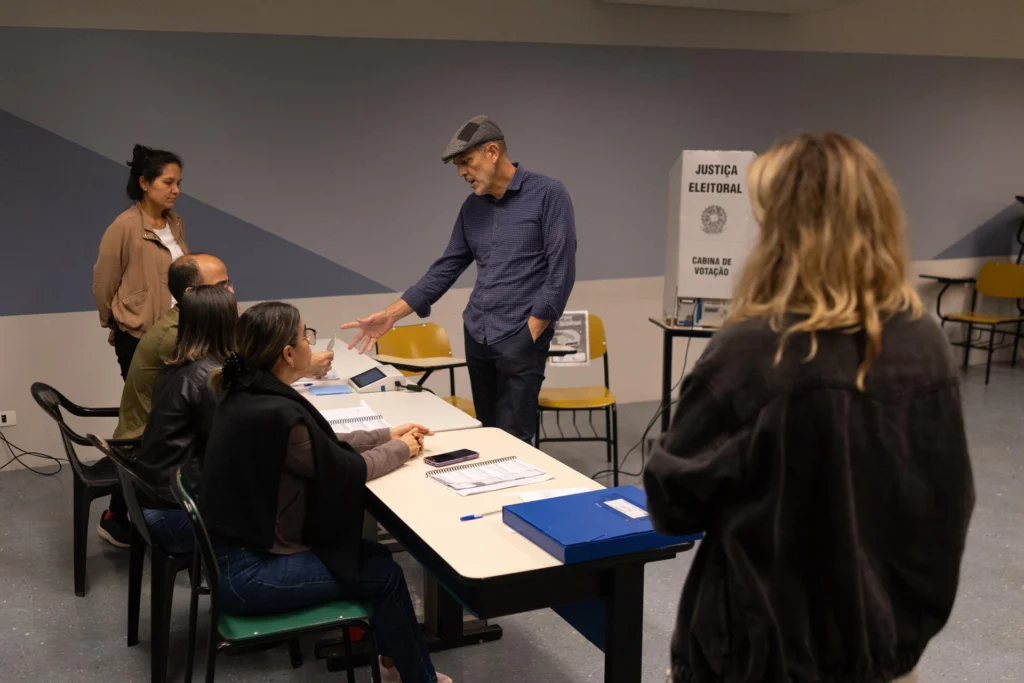
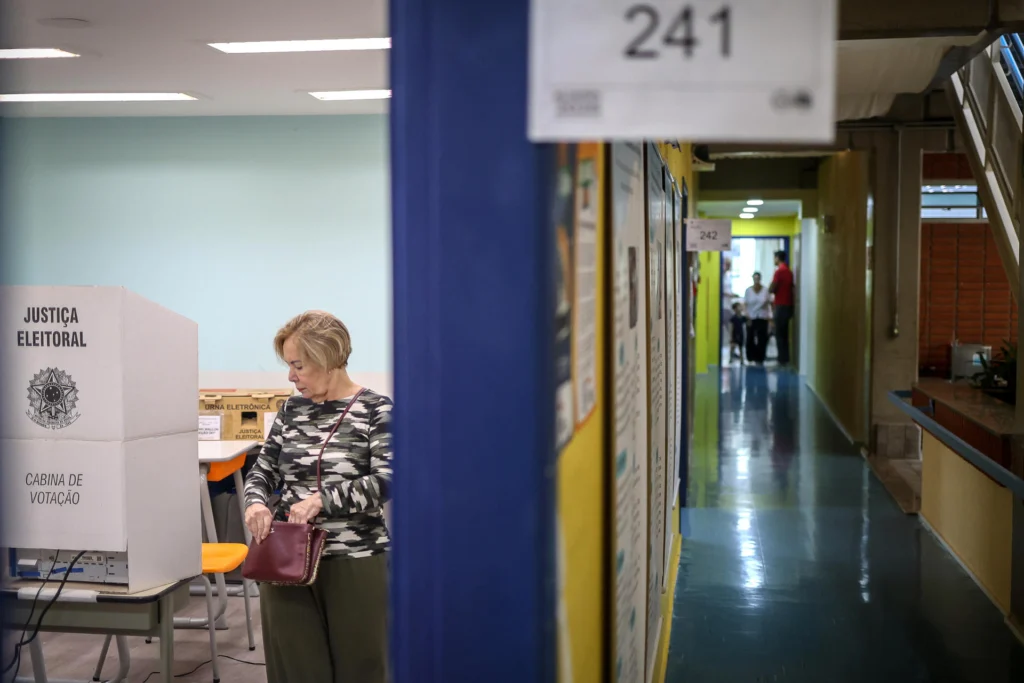
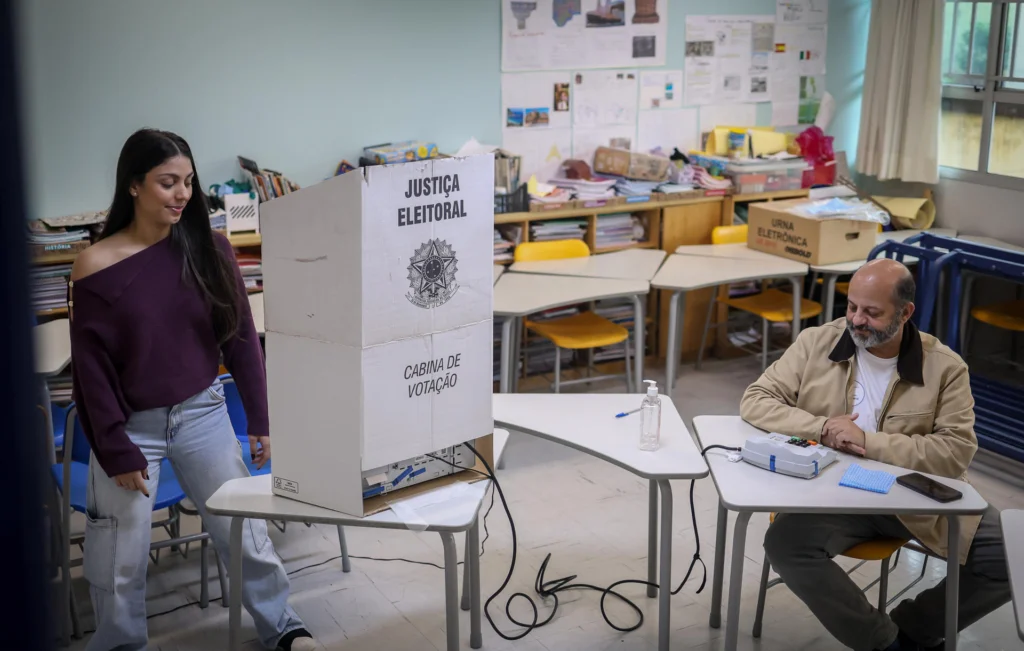
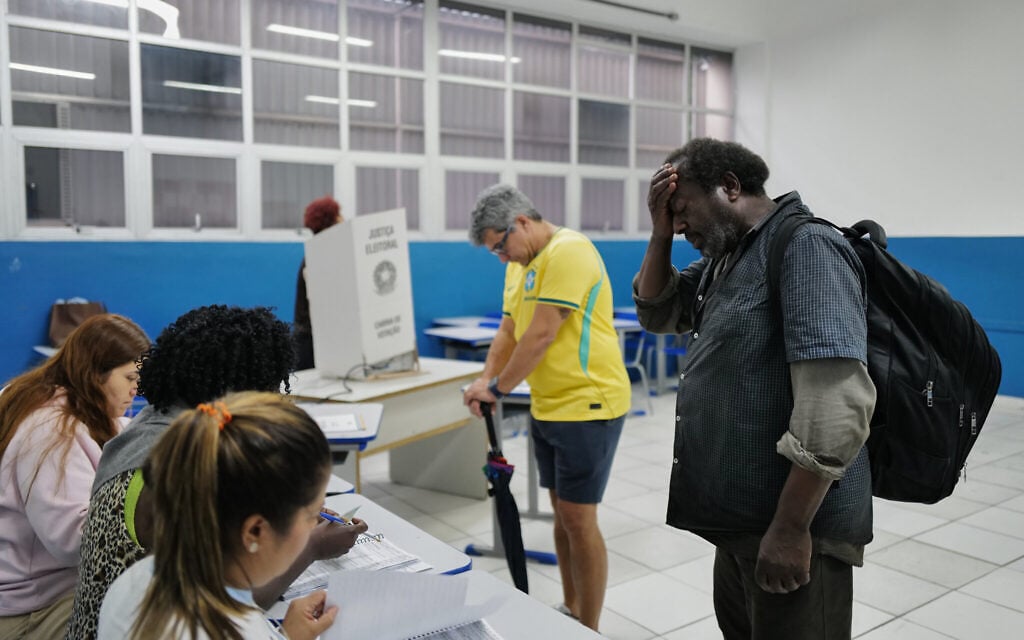
Brazil’s final polling stations closed at 7 p.m. local time Sunday, ending a two-hour Supreme Court extension and clearing the way for the vote count to resume in the presidential runoff.
The official cutoff had been set for 5 P.M. local time but the Supreme Federal Court pushed it back two hours as the original deadline arrived. Under the decision, only precincts where balloting had not ended by 5 P.M. Brasilia time could keep receiving voters.
The last polling stations in Brazil shut their doors at 7 P.M. Brasilia time on Sunday, marking the end of an extraordinary two-hour window that the Supreme Court had ordered only minutes before the original deadline.
Once the extended voting period concluded, election officials formally closed the polls and resumed the nationwide vote count.
The Court’s notification arrived shortly after 5 P.M., when voting was already due to close. By that point, hundreds of polling stations had finished the day’s work, printed their ballot bulletins and even begun shipping equipment to the regional electoral courts.
The definitive shutdown shifted attention to the Superior Electoral Court, which prepared to restart the count. Officials had frozen it six minutes after it began, when only 0.25% of ballots had been processed.
With counting now underway once again, millions of Brazilians are awaiting the official results that will determine the country’s next President who will govern Brazil from 2027 to 2031. The outcome is expected to shape Brazil’s political direction, economic priorities, and international relations over the coming years.
For now, the process rests on the resumed tally. The coming hours will show whether the early lead holds as ballot bulletins arrive from across the South American country.
Brazil’s electoral authority said Sunday that voting in the presidential runoff will continue only at polling places still open past 5 p.m., with ballot records, counting and results resuming after 7 p.m. under a court order.
The Brazilian Superior Electoral Court (TSE) announced the measure on its official account, describing it as a response to a ruling by Supreme Federal Court justice Cristiano Zanin.
Under the decision, only precincts where balloting had not ended by 5 P.M. Brasilia time could keep receiving voters.
Election officials suspended the receipt of printed ballot records, the tally of votes and the release of results, and said all three would resume after 7 P.M. local time.
Voting in Brazil closes nationwide at 5 p.m. in every election. The order by Zanin gives electoral authorities room to let voters cast ballots where local conditions kept lines moving past the cutoff.
Almost all Superior Electoral Court ministers had gathered in the office of the court’s presidency to await the end of balloting, the statement added.
Esclarecimento sobre prorrogação da votação
O Tribunal Superior Eleitoral (@TSEjusbr) informa que, conforme decisão do ministro Cristiano Zanin, do Supremo Tribunal Federal, a eleição segue em andamento apenas nos locais em que a votação não havia sido encerrada às 17h.
The electoral authorities will resume the receipt of the ballot-box bulletins (known as BUs), the totalization of votes and the release of results after 7 P.M. local time. These bulletins are the printed summaries of each electronic voting machine’s tally, and they feed the national count.
Brazil conducts its elections entirely on electronic voting machines managed by the Superior Electoral Court and the regional electoral courts. The system has drawn criticism over transparency, although no case of fraud has ever been confirmed.
The Superior Electoral Court heads the country’s Electoral Justice, which handles voter registration, biometric identification, vote collection, tabulation and the final certification of results.
Sunday’s vote settles the presidency after the October 4 first round produced no outright winner. Senator Flávio Bolsonaro led with 47.03% of valid votes, ahead of President Luiz Inácio Lula da Silva at 45.16%, forcing the runoff held on the last Sunday of October.
Brazil’s two round model requires a candidate to win more than half (50+1) of valid votes in the first round. Otherwise the top two finishers meet again three weeks later. Flávio Bolsonaro (Liberal Party) is the eldest son of former President Jair Bolsonaro, who was barred from office and later endorsed him. Lula da Silva (Worker’s Party -PT) returned to the presidency in 2023 after courts restored his political rights.
Results are expected later Sunday night once tabulation resumes after 7 P.M. The Court has not indicated when it will publish the first partial totals, a schedule that now depends on the pace of the last polling places to close.
Brazil’s Supreme Federal Court ordered polling stations to remain open nationwide until 7:00 P.M. Brasilia time on Sunday, extending the runoff vote after both candidates asked for more time.
Federal Supreme Court Minister Justice Cristiano Zanin issued the ruling, which pushed the deadline back from the original schedule set for the second round between President Luiz Inácio Lula da Silva and Flávio Bolsonaro. The change applied across all of Brazil.
The precautionary measure, with immediate effect, extends by two hours the closing of the polling stations, which was set for 5:00 P.M. Brasilia time., and applies to all electoral sections in Brazil. The Superior Electoral Court (TSE) is responsible for executing it.
“Considering the gravity of the facts presented, which reached the Supreme Federal Court at 4:32:49 P.M. today, and given the evident urgency of the measure, I order a two-hour extension, until 7:00 p.m. Brasilia time, of the closing of vote reception at all polling stations in Brazil,” Zanin detailed.
The decision came after the campaigns of Lula and Bolsonaro had requested to extend the schedule due to transportation problems in some cities and difficulties due to rains in other areas of Brazil.
The request had spanned three states, reflecting concern that severe weather could depress turnout across a wide stretch of southern and southeastern Brazil. However, Zanin’s ruling went beyond the listed municipalities, extending the schedule across the entire country rather than only in the rain-affected locations.
Confira abaixo o Ofício da Presidência do @TSEjusbr sobre o cumprimento da decisão do Supremo Tribunal Federal sobre a prorrogação do horário das Eleições 2026. pic.twitter.com/1c3D0s3LhA
The extension added two hours to the voting day. Polling stations that would have closed in the late afternoon remained open into the evening, giving voters in affected regions more time to reach their designated locations.
The Supreme Court’s nationwide extension acknowledged that voters beyond those municipalities could also face obstacles reaching polling places before the original deadline. The ruling treated the request as grounds for a broader safeguard covering the whole electorate.
With the later cutoff in place, authorities reminded citizens that anyone already in line at 7:00 P.M, local time would still be allowed to cast a ballot.
Officials have described the unified national schedule as a way to reduce confusion in a country of continental scale. The legal maneuvering unfolded on a day already marked by isolated logistical incidents. The extension gave electoral authorities additional time to process voters in the states most exposed to severe weather, while keeping the process unified from north to south.
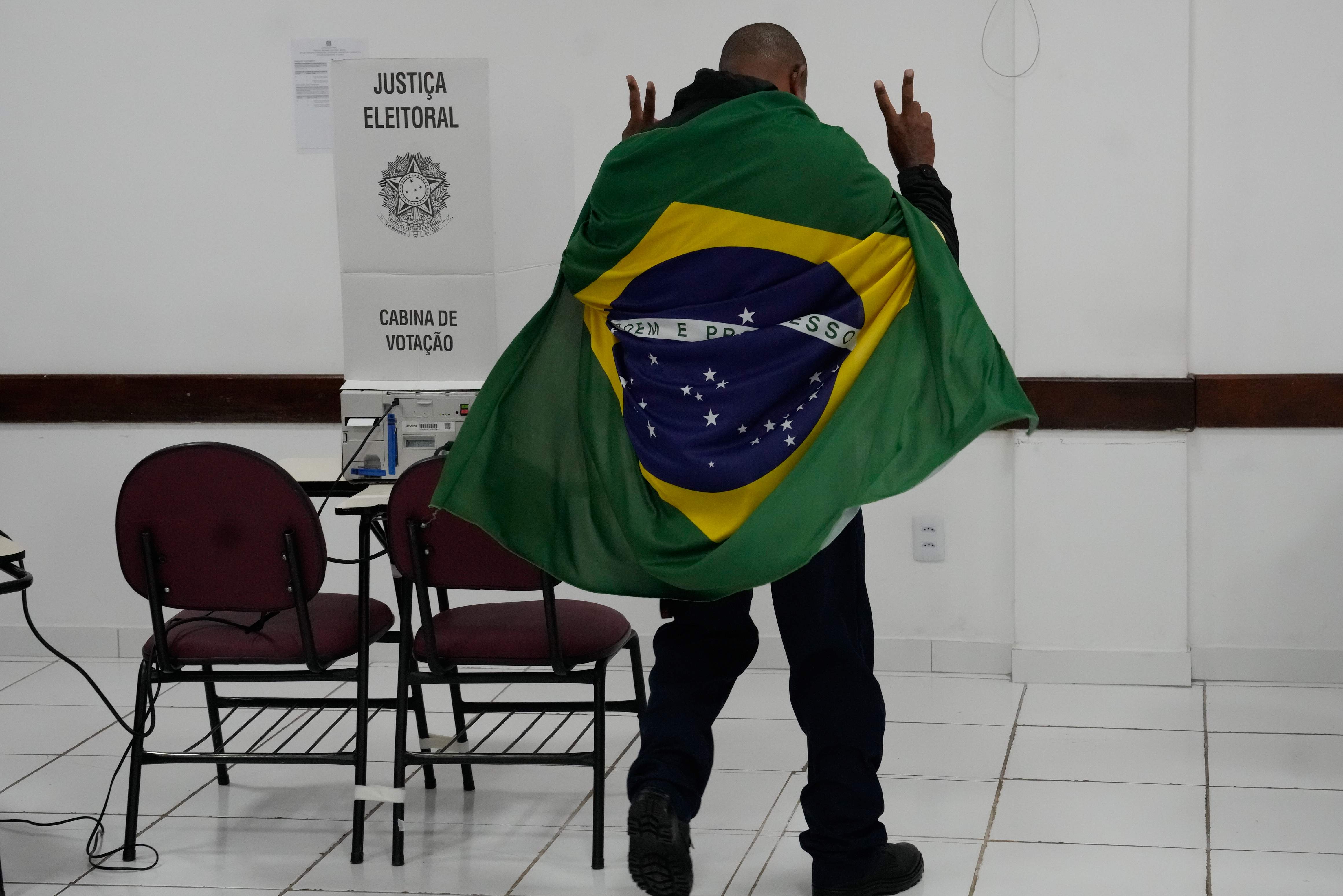
Brazil’s top electoral authority reported a generally calm second-round vote on October 25, as more than 158.7 million registered citizens chose the country’s next head of State and renewed regional executives across the nation.
The preliminary report had confirmed the preventive replacement of 900 ballot boxes that presented technical failures, a figure representing only 0.18% of the equipment installed nationwide. The electoral body also maintains more than 48,000 contingency devices ready for deployment in the event of any operational problem.
The public security balance described a day characterized by widespread calm and a low rate of irregularities at voting centers. Security forces counted 138 isolated events, including attempts to violate the secrecy of the ballot and three cases of alleged vote buying.
The second round follows the first-round vote held earlier in October. In the first round, on October 4, far-right senator Flávio Bolsonaro (Liberal Party) got 47.03% of the valid vote, while President Lula da Silva (Workers’ Party-PT), received 45.16%, in a process marked by extreme polarization. Brazil’s electoral system requires a runoff when no candidate secures an outright majority in the opening round, concentrating the contest between the two leading contenders.
The court highlighted that Brazil’s electronic ballot box system marked 30 years of uninterrupted operation. Following this, the court has emphasized that the electronic voting platform delivers preliminary results within hours of polls closing, a feature officials point to as evidence of the system’s efficiency.
1st round was narrowly led by Flávio Bolsonaro, Israel supporter and son of imprisoned former president, who looks to extend Trump-backed rightward shift in Latin America
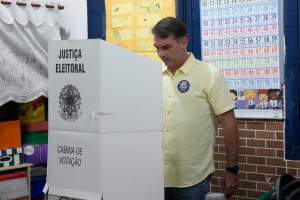
Voters cast ballots for far-right senator Bolsonaro or incumbent Lula da Silva amid a mostly peaceful atmosphere.
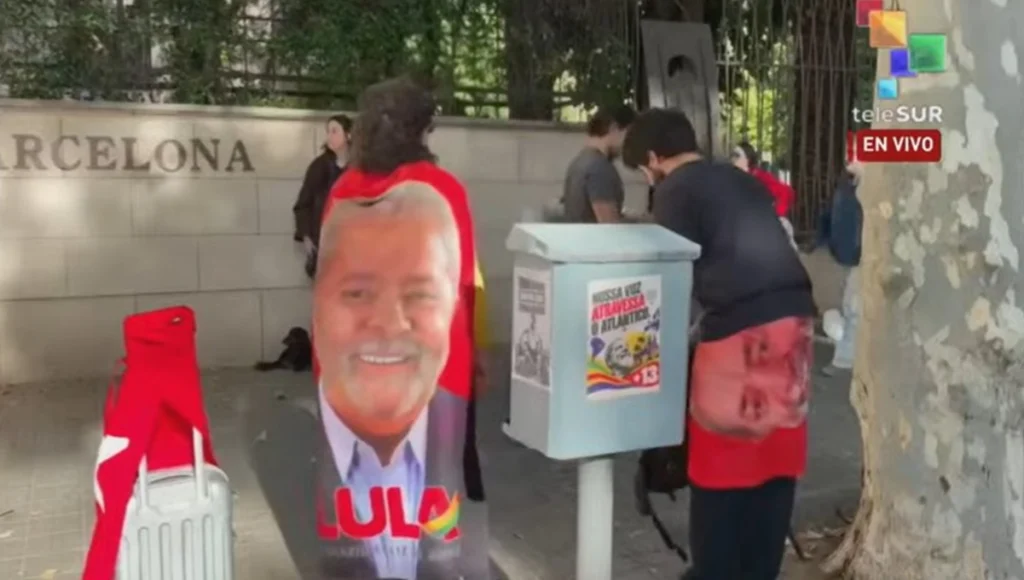
On Sunday, the second round of Brazil’s presidential election drew thousands of Braziliasn to polling stations in Madrid, where they voted for their next president, choosing between far-right senator Flavio Bolsonaro and incumbent Luiz Inazio Lula da Silva.
The second day of voting in the Spanish capital saw large, orderly crowds throughout the morning and a mostly peaceful atmosphere, although some voters clashed at the entrance to Blanca de Castilla School over their ideological differences. Workers organizing the lines had to separate them.
“The flow of voters is quite impressive compared with the first round. Many, many voters who did not come in the first round are here for the second,” said Brazilian Consul Maria Angelica Ikeda.
“The atmosphere has been very good, even though this is a very tense election. Here on the street, there are people who support one candidate and people who support the other, but they are all calm. Everything is going very well,” she added.
The text reads, “The left-wing wave in Brazil will reveal a new generation of leaders. Lula for Democracy!”
In the first round, held Oct. 4, the results in Madrid were 3,571 votes for Lula da Silva and 2,333 votes for Flavio Bolsonaro.
“I believe there is no such thing as a perfect society. We have an endemic problem with corruption, and unfortunately, that is something that will be very difficult to solve under any circumstances,” said Ana Paula Santos, a Brazilian woman who has lived in Spain for 25 years.
“There are universal values that Bolsonaro has shown, through his actions, that he does not uphold. The vote is individual, but the consequences are collective,” she stressed, explaining why she voted for Lula da Silva.
Santos was accompanied by Cristina Ana Perez, another Brazilian who said she does not share Bolsonaro’s “very radical” views and therefore voted in favor of Lula da Silva’s re-election.
In Barcelona, more than 40,000 residents of Spain will be able to exercise their right to vote. In the Madrid consular jurisdiction, 23,520 Brazilians are eligible to vote, and polling is open until 5 p.m. local time.
With 100% of the vote counted, Brazil's electoral court announced that the soon to be 81-year-old Lula held an unassailable lead of nearly 4.4 million votes over opponent Flávio Bolsonaro.
He highlights massive political demonstrations during the runoff campaign and warns of isolated incidents of political violence.
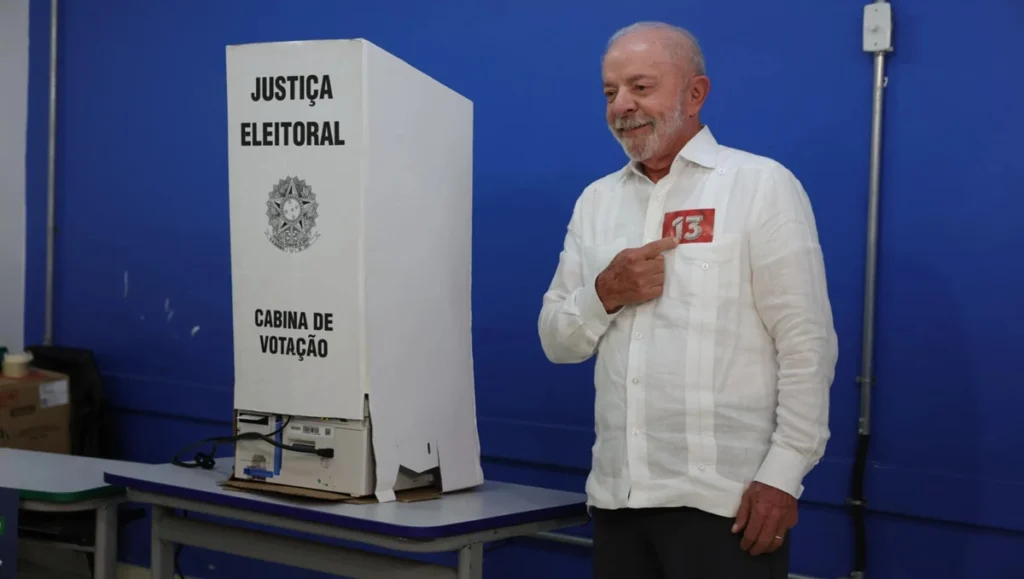
On Sunday, Brazilian President Luiz Inacio Lula da Silva, who is seeking reelection, voted in Sao Paulo in the presidential runoff, in which he is competing against far-right Sen. Flavio Bolsonaro.
“I am going to vote grateful to the Brazilian people. What the people have done for me in these days is so much that there is no way to repay it. It is so much generosity, so much affection and so much love. I will be eternally grateful for the people’s behavior,” he said minutes earlier as he left his home for the polling station.
At 10 a.m. local time, the Workers’ Party leader voted at João Firmino Correia de Araujo School in Sao Bernardo do Campo, a municipality bordering Sao Paulo where he rose to prominence as a union leader in the 1970s and began his political career.
After voting, Lula, who is seeking a fourth nonconsecutive term, highlighted the largest political demonstrations in Brazil in the past 50 years during the runoff campaign.
Mais uma vez, foi o povo brasileiro que me mostrou que nenhum sonho é grande demais quando a gente caminha junto. ❤️🇧🇷
Foram dias incansáveis. Cada caminhada, cada ato e cada passeata foram muito mais do que momentos de campanha. Foram encontros de sonhos que se transformaram em… pic.twitter.com/YdgeTlMzBK
President Lula da Silva’s text reads, “Once again, it was the Brazilian people who showed me that no dream is too big when we walk together. These were tireless days.
Every walk, every event, and every demonstration was much more than just a campaign moment. They were gatherings of dreams that transformed into concrete achievements—such as the end of the 6×1 work schedule.
Every outstretched hand and every smile reminded me why I have dedicated my life to the struggle for the working men and women of this country. We emerge from this journey stronger, more united, and more mobilized to secure a better future.
Thank you, Brazil, for every hug, every tear, every smile, and for never letting go of my hand. There are still many beautiful pages left to be written in our history. Tomorrow, October 25th, we will write another one. Together, for the Brazil we love and for the future our people deserve!“
“What I saw in this runoff was not about a political party or a union. The people took to the streets to defend their achievements,” the Workers’ Party (PT) candidate told reporters after casting his ballot.
The president also warned of isolated incidents of political violence reported in recent hours, including a brick thrown at a PT activist in the city of Montes Claros.
“This is a demonstration of what is at stake,” the progressive leader emphasized and criticized Bolsonaro, referring to him as “a militiaman” and a “morally and ethically unqualified person.”
Lula also said that on Sunday, voters would decide whether the Brazilian flag would be respected or whether to elect a political group that “wants to govern with the American flag.”
Lula, aos 33 anos, liderando junto ao sindicato dos metalúrgicos a greve que desafiou a ditadura militar no Brasil. Ele conquistou aumentos salariais e foi preso. Enquanto isso, a única profissão do Flávio foi ser vag4bundo político. #AposentadosComLulapic.twitter.com/34dsHpqtai
The text reads, “At the age of 33, Lula led the metalworkers’ union in a strike that challenged Brazil’s military dictatorship. He secured wage increases and was subsequently imprisoned. Meanwhile, Flavio’s only profession has been that of a political deadbeat.”
The Brazilian president, who will turn 81 next Tuesday, went to vote wearing a white guayabera shirt, accompanied by his wife, Rosangela Lula da Silva; Vice President Geraldo Alckmin; and five other current and former Cabinet ministers.
In the first round, held Oct. 4, Bolsonaro received the most votes, with 47% of the ballots, compared with 45% for Lula. Polling stations will close at 5 p.m., after which vote counting will begin.
The count is expected to be completed within a few hours thanks to Brazil’s electronic voting system, which was introduced three decades ago.
More than 158.7 million Brazilians are eligible to vote as President Luiz Inácio Lula da Silva faces Senator Flávio Bolsonaro in a closely contested runoff.
Brazilian voters are choosing between President Luiz Inácio Lula da Silva and Senator Flávio Bolsonaro in a presidential runoff after neither candidate secured a majority in the first round. More than 158.7 million people are eligible to vote, with polling stations open from 8 a.m. to 5 p.m. local time, according to the Superior Electoral Court (TSE).
In the first round on Oct. 4, Bolsonaro, of the Liberal Party (PL), received 47.03% of valid votes, or 56,104,503 ballots, while Lula, of the Workers’ Party (PT), won 45.16%, or 53,879,538 votes, according to official TSE figures. Neither surpassed the 50% threshold needed to win outright.
Voter abstention emerged as a significant factor in the first round, with 33,469,244 people staying away from the polls, representing 21.08% of registered voters. Both campaigns sought to attract those who did not vote, as pre-election polls pointed to a statistical tie.
The final day of campaigning on Saturday brought closing rallies from both candidates. Speaking in São Paulo, Lula attacked his rival, calling him a “liar,” a “militiaman” and unqualified for the presidency.
“A person like that does not have the political, moral or ethical qualifications to become president of the Republic,” Lula told reporters.
Bolsonaro received backing during the campaign from U.S. President Donald Trump, who described the senator’s first-round result as “a great victory.”
On Oct. 20, Lula framed the election as a choice over Brazil’s national sovereignty, saying voters would decide whether they wanted “a Brazil that kisses the Brazilian flag or one that gets down on all fours before the U.S. flag.”
Voting is compulsory for literate Brazilian citizens aged 18 to 70. It is optional for illiterate citizens, those aged 16 and 17, and people over 70.
Voting abroad
A total of 918,876 Brazilians registered to vote abroad across 134 countries, accounting for about 0.5% of the electorate, according to the TSE. The number represents a 358% increase from 2010.
Text Reads: The Brazil we dream of is built together with the people—through struggle and hope! ❤️🇧🇷 Thank you to every Brazilian who stands by our side on this journey. It is this strength that drives us, and this unity that empowers us. Tomorrow, let’s transform all this energy into the future! Together with the people, we will achieve so much more, secure new rights, and continue building a Brazil that is even fairer for everyone. Let’s do this together. Vote 13—vote for Brazil.
Overseas voters cast their ballots in person in 186 cities and can vote only for president and vice president. Women account for 57% of registered overseas voters and men for 43%, while the largest age group is between 40 and 44.
The United States has the largest number of registered Brazilian voters abroad, with 265,400, followed by Portugal with 134,700, Japan with 88,300, Canada with 46,400 and Germany with 41,500.
Other contests
Sunday’s elections also include gubernatorial runoffs in Acre, Amazonas, Rio Grande do Norte, Espírito Santo and Tocantins, as well as the Federal District. None of the candidates in those contests secured more than 50% of valid votes in the first round.
Several municipalities are also electing mayors. In Chopinzinho and São João, both in the state of Paraná, voters are taking part in a referendum on changing the territorial boundaries between the two municipalities.
The runoff will determine whether Lula remains president or Bolsonaro takes office, concluding a campaign shaped by a narrow first-round margin, high abstention and competing appeals over Brazil’s political future and national sovereignty.
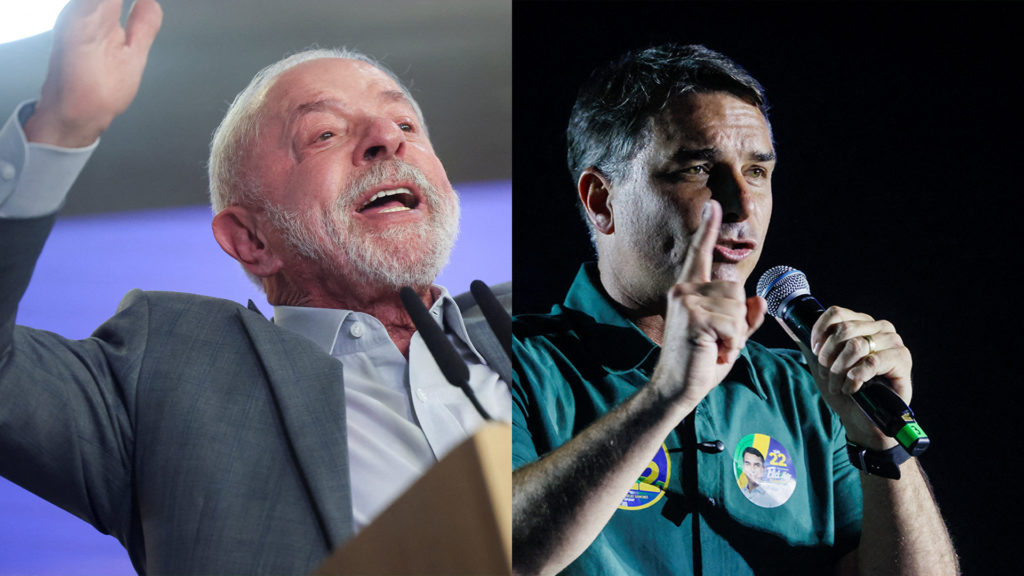
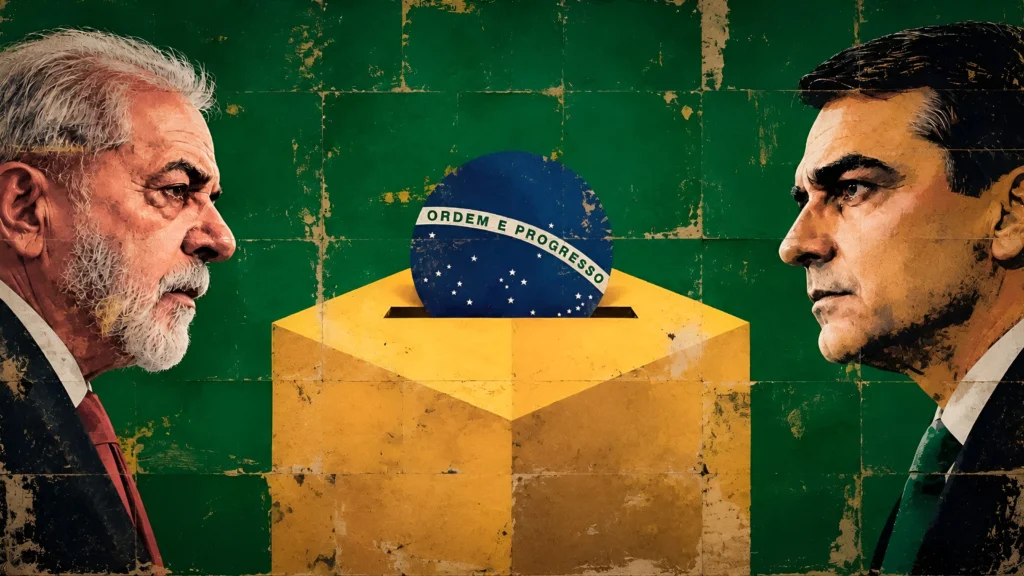
Luiz Inácio Lula da Silva, the leftist incumbent, and Flávio Bolsonaro, the right-wing challenger, face off in a narrow race that could redefine the future of Latin America.
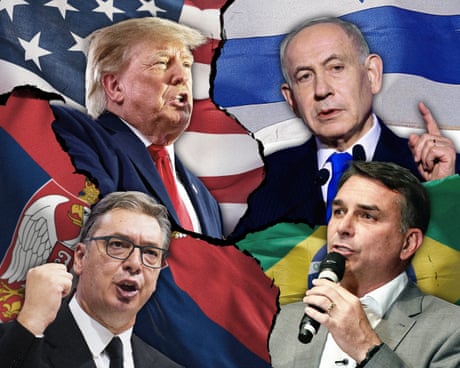
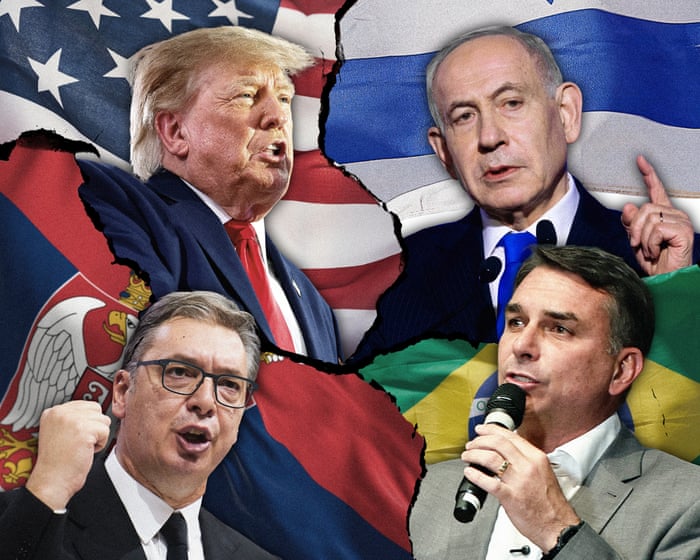
Brazil, Israel, Serbia and the US are holding elections within the space of 10 days. Will the authoritarian right cement its global gains, or can pro-democracy forces make a comeback?
Four elections on four continents within 10 days could profoundly reshape global politics, propelling the world further along its current authoritarian trajectory or marking a limited comeback for democratic norms.
In all four contests, basic democratic norms are at stake at a time when autocracy is advancing worldwide at an alarming rate. According to the Sweden-based V-Dem Institute, which uses multivariable assessment tools, the democratic freedoms enjoyed by the average global citizen are down to levels last seen in 1978 – long before the fall of the Berlin Wall and the collapse of communism in Europe.
The progressive leader seeks a fourth nonconsecutive term as Brazil heads to its tightest election in recent history.
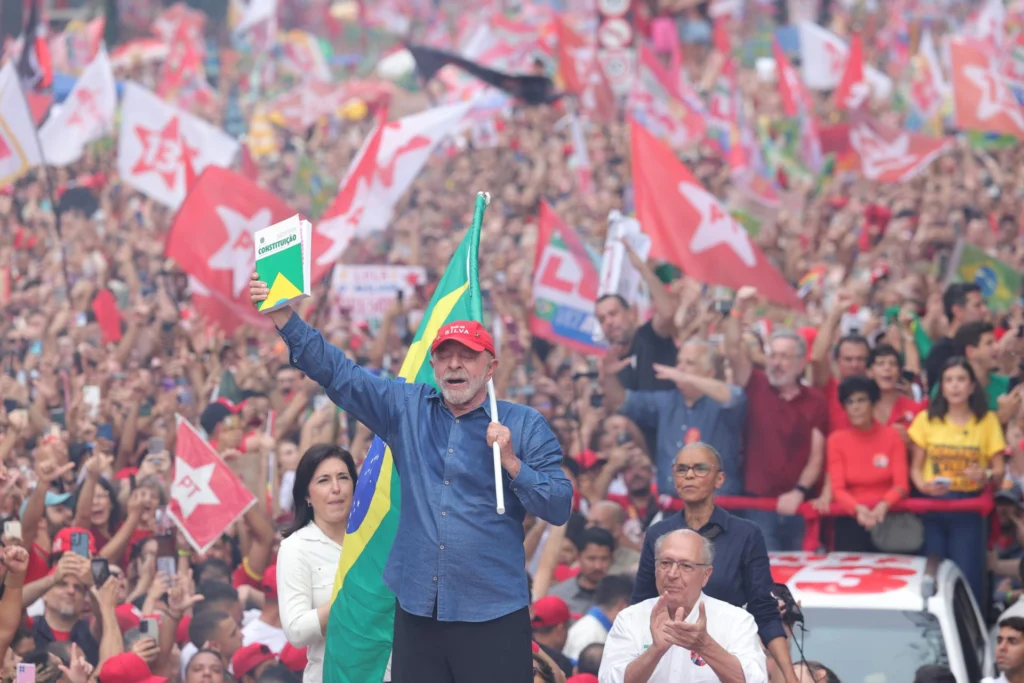
On Saturday, Brazilian President Luiz Inacio Lula da Silva gathered millions of supporters in Rio de Janeiro and said he was convinced of his victory over far-right Senator Flavio Bolsonaro.
“I am sure we are going to win the elections. You can write it down: tomorrow I will be elected president of the Republic again,” the progressive leader declared to journalists just before setting off on a march along the Copacabana beach promenade.
The Workers’ Party (PT) leader and the son of former ruler Jair Bolsonaro will face off this Sunday for the presidency in the tightest election in Brazil’s recent history.
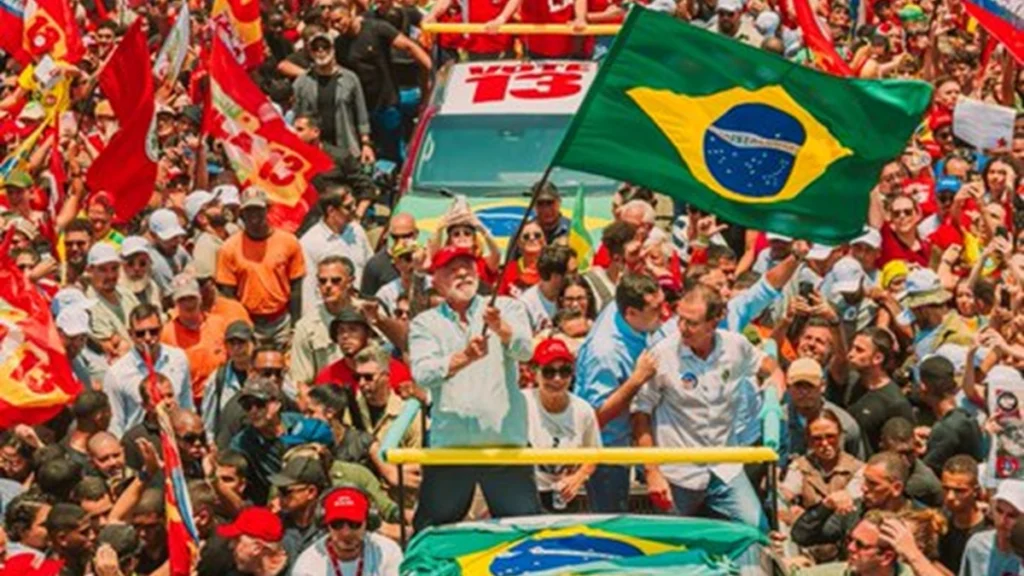
Lula, seeking his fourth nonconsecutive term at 80 years of age, began this last day of campaigning with a massive event in Rio, where his supporters dressed in red and unfurled a huge Brazilian flag.
Bora Rio de Janeiro! Bora Lula! Os cariocas já estão nas ruas iniciando os atos por de a opoio a Lula que vão ocorrer em todo o Brasil todo. Em Porto Alegre, nos encontramos às 17h, no Largo Zumbi dos Palmares. Até breve.#Lula13pic.twitter.com/dcVaYPu134
The text reads, “Let’s go Rio de Janeiro! Let’s go Lula! Cariocas are already in the streets starting the acts of support for Lula that will be held throughout Brazil. In Porto Alegre we meet at five in the afternoon, at Largo Zumbi dos Palmares. See you soon. Lula 13”
“We are going to win the elections, it is true that the people want change but a change for the better, forward. The people do not want to go backward,” said the former lathe operator who has become an indelible figure in South American history.
The Workers’ Party candidate accused Flavio Bolsonaro of being a “militiaman” in an allusion to the far-right candidate’s ties to relatives of Rio paramilitary groups.
“It is not possible that we fail to convince Brazilian society of the risk that democracy, freedom and people of good will face in this country,” Lula warned, and thanked the militancy for taking on the responsibility of the campaign after the first round with massive events in the streets and a strong mobilization on social networks.
“I have an army bigger than the Chinese and the American. It is the army of Lula,” the Brazilian president said in an allusion to a public WhatsApp channel that has gathered more than 10 million users who define themselves as soldiers of democracy in the fight against fascism.
On Saturday afternoon, Lula will travel to Sao Paulo, the country’s largest electoral district, to close his campaign. Meanwhile, Flavio Bolsonaro marched through the city of Belo Horizonte and will then move to Rio de Janeiro, the political cradle of bolsonarismo.
Nearly 159 million voters are expected to cast ballots in a closely contested election, with polls showing the two candidates tied.
On Sunday, Oct. 25, Brazil will decide its future in the presidential runoff election, pitting President Luiz Inacio Lula da Silva against far-right Sen. Flavio Bolsonaro.
Nearly 159 million Brazilians are eligible to elect their next president, who will take office on Jan. 5, 2027. Polling stations will be open for nine hours, from 8 a.m. to 5 p.m. local time. Results will be known on Sunday, thanks to the country’s efficient electronic voting system.
The eldest son of former President Jair Bolsonaro enters the runoff with an advantage after receiving the most votes in the first round on Oct. 4, winning 47% of the vote, two percentage points more than the progressive leader. However, polls conducted in recent days have shown an upward trend for the Workers’ Party leader, who, at 80, is seeking his fourth nonconsecutive term.
According to the latest poll, released Thursday by polling firm Datafolha, the two candidates are tied at 50% of the valid votes. The outcome of the race is shaping up to be extremely close, even more so than in 2022, when Lula defeated Jair Bolsonaro by just over 2 million votes.
The leftist leader faces the difficult challenge of winning the election after finishing second in the first round. In the nine presidential elections held since the end of the military dictatorship (1964-1985), no one has managed such a feat. To make history, Lula will have to overcome the 2.2 million-vote gap separating him from Bolsonaro after the first round.
“I would like to ask for your vote because either we keep democracy functioning or we will have a militiaman governing this country,” Lula said on Friday night during the final televised debate before the runoff.
Este es Lula liderando con el sindicato del metal a los 33 años la huelga que desafió a la dictadura militar en Brasil. Logró aumentos salariales y fue encarcelado. Mientras, la única profesión del ultraderechista Flávio Bolsonaro ha sido la de político desde que tiene 21 años. pic.twitter.com/pp7YHexIqf
The text reads, “Here is Lula, at age 33, leading the metalworkers’ union in a strike that defied Brazil’s military dictatorship. He secured wage increases and was subsequently imprisoned. Meanwhile, the far-right figure Flávio Bolsonaro has had only one profession—that of a politician—since the age of 21.”
Lula Changes Strategy
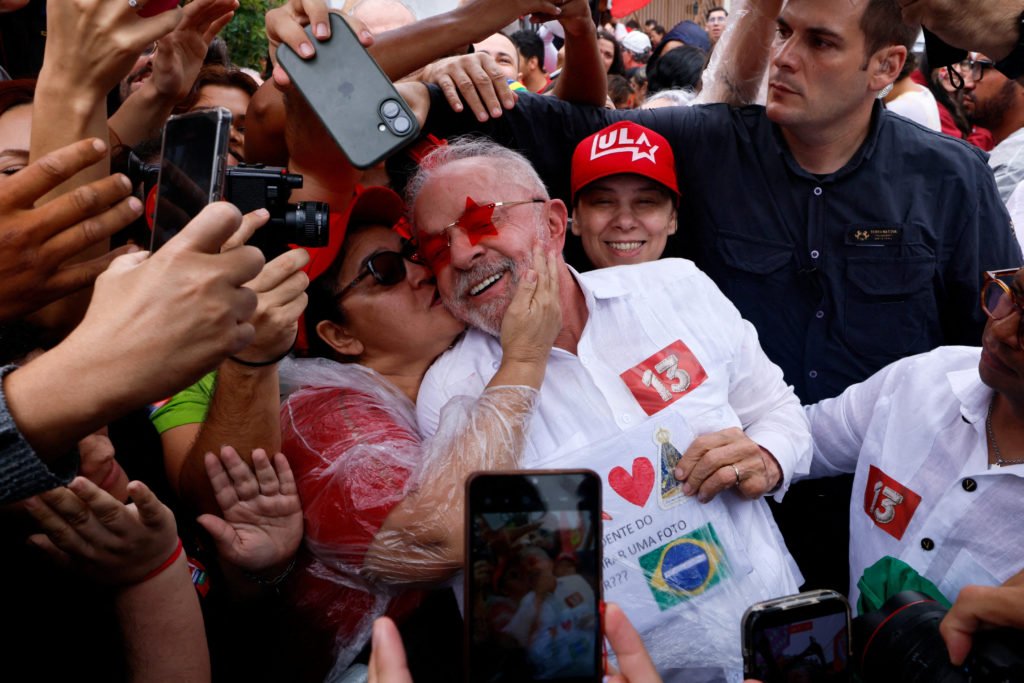
Over the past three weeks, Lula has radically shifted his campaign strategy. He has immersed himself in social media and energized his supporters with massive rallies in cities such as Belo Horizonte and Sao Paulo.
He has also stepped up announcements from the presidency: he obtained congressional approval for the reduction of the workweek, forgave the debts of millions of self-employed workers, and introduced incentive measures for the video game industry.
Lula also sent Parliament a proposal to make public transportation free on weekends and holidays in the country’s nearly 6,000 municipalities.
In recent weeks, the far-right Liberal Party (PL) senator has been significantly affected by the possible consequences of his own proposals. Among them is his intention to cut public spending by US$40 billion, although Flavio insists he does not intend to take a single cent from the most vulnerable.
In recent days, the Brazilian press has also revealed new suspicions about Flavio’s involvement in a money-laundering scheme linked to online betting.
📊 PESQUISA DATA FOLHA – NACIONAL ✅ VOTOS VÁLIDOS | 2º TURNO
The text reads: “Datafolha poll – valid votes nationwide | Runoff. Lula (Workers’ Party): 50% (+1). Flavio Bolsonaro (Liberal Party): 50% (-1). Keep working hard to secure votes for Lula—it’s all-out war now!”
Zuckerberg’s Meta Under Scrutiny for Aiding the Far Right
The 2026 presidential campaign has become embroiled in legal disputes on an unprecedented scale. The Superior Electoral Court has received more than 800 complaints throughout the election campaign.
One of those disputes has centered on the controversial conduct of Meta, the owner of WhatsApp, Instagram, and Facebook.
Lula’s supporters have requested the annulment of Bolsonaro’s candidacy over alleged interference by Mark Zuckerberg’s company, which they accuse of favoring the circulation of far-right content while restricting progressive content.
Flávio Bolsonaro admitted he was wrong to oppose extending maternity leave and apologized to Lula for a personal insult during a heated debate.
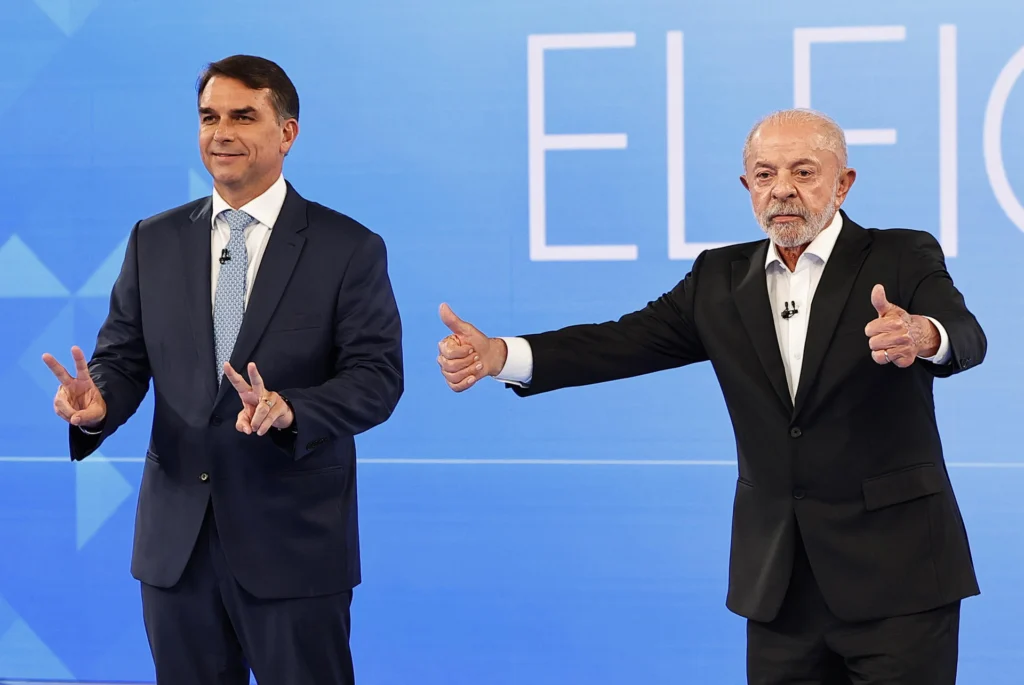
Brazilian presidential candidate Flávio Bolsonaro apologized to President Luiz Inácio Lula da Silva during a televised debate after Lula challenged him over his past opposition to extending maternity leave, sparking a heated exchange over social welfare, poverty and personal attacks.
Flávio Bolsonaro, who represents the Liberal Party (PL), acknowledged that his earlier vote was a mistake and said he would take a different position today. He also apologized for calling Lula “nine fingers,” a reference to the president’s missing finger, but followed the apology by demanding that Lula answer for his government’s record on poverty and social assistance.
The confrontation unfolded during the debate’s second segment, after Lula requested a right of reply over remarks he considered offensive. The production team had yet to rule on the request when the candidates resumed their exchanges.
Lula chose social policy as the subject of his question and returned to an issue he said Flávio Bolsonaro had left unanswered in the previous debate. He challenged his opponent to explain why he had been the only state legislator in Rio de Janeiro to vote against extending maternity leave.
Qual a justificativa para votar contra a licença-maternidade? Contra o direito das mulheres e da família? Explique, Flávio Bolsonaro. pic.twitter.com/17ibHC7knP
Text Reads: What is the justification for voting against maternity leave? Against the rights of women and the family? Explain, Flávio Bolsonaro.
Flávio Bolsonaro defended his earlier decision by saying he had believed the measure could make employers less willing to hire women. He acknowledged that he had been wrong, adding that marriage and having two children had changed his perspective.
He said he now understood the importance of mothers staying close to their children and would support extending maternity leave beyond 180 days where possible. He maintained that he would vote differently today.
Lula dismissed the explanation, arguing that Flávio Bolsonaro had failed to support the measure when he had the opportunity and was now changing his position as women became more politically active and fought for their rights.
The president then challenged his rival over the term “Bolsa Farelo,” which Flávio Bolsonaro had used to disparage Bolsa Família, Brazil’s income-transfer program. Lula called the expression disrespectful to poor people, arguing that those removed from economic hardship often treated the poor as though they had no value.
The exchange escalated when Lula responded to Flávio Bolsonaro’s use of the nickname “nine fingers.” The president explained that he had lost a finger at age 17 while working the night shift at a factory, saying he had needed the job to afford food.
“I will not allow a militiaman to call me ‘nine fingers,’” Lula declared. He also accused Flávio Bolsonaro of never having worked, alleging that the first job recorded in his rival’s employment record was a fictitious position arranged by his father.
Flávio Bolsonaro offered an apology, saying he had not intended to offend Lula with the remark. He then turned the criticism back on the president, demanding that Lula apologize to people experiencing homelessness and recipients of Bolsa Família.
Flávio Bolsonaro claimed that the number of people living on the streets had nearly doubled under Lula’s current government, citing a figure of 199,000 people as the starting point. He also accused the president of neglecting Bolsa Família beneficiaries for four years and addressing their concerns only 17 days before the election.
The candidate criticized a recent adjustment to the benefit, claiming the increase amounted to three Brazilian reais a day — enough, he quipped, to buy three eggs.
The exchange brought the candidates’ competing arguments over social policy into sharp focus. Lula pressed Flávio Bolsonaro to account for his legislative record on maternity leave, while his opponent sought to shift scrutiny toward the government’s handling of homelessness and income support.
Lula promises to expand full-day schooling and student aid as Flávio Bolsonaro challenges his education record and attacks his family.
Brazilian President Luiz Inácio Lula da Silva pledged to bring full-day schooling to every school through the secondary level if re-elected, while opposition candidate Flávio Bolsonaro accused his government of cutting education funding and attacked the president’s family over online gambling.
The exchange during an education segment of the presidential debate centered on extended school hours, student assistance and childcare before turning into a personal confrontation over jogo do tigrinho, an online gambling game.
Lula, of the Workers’ Party (PT), challenged Bolsonaro to explain his plans for full-day schooling. Bolsonaro, of the Liberal Party (PL), responded that he would deliver what the current government had failed to achieve, accusing Lula’s administration of cutting federal funding for the program and attempting to conceal the reductions.
Enseñanza de tiempo integral enfrenta a Lula y Bolsonaro en el debate
🏫 Lula se comprometió a "concluir en el próximo mandato el 100% de las escuelas de tiempo integral en este país hasta la enseñanza media".
Text Reads: Full-Day Schooling Pits Lula Against Bolsonaro in Debate Lula committed to “concluding in the next term 100% of full-day schools in this country up to secondary education.” He defended his administration and highlighted the creation of ProUni. He also denounced the conditions in which he received the presidency regarding education.
Bolsonaro then shifted the discussion to online gambling, accusing Lula of being responsible for the rise of jogo do tigrinho. He claimed the game was created and authorized in 2022 by those now in government and alleged that its cancellation was being pursued only as the election approached. He also invoked the nicknames Lulinha and Tigrinho in referring to the president’s sons.
Lula responded by pointing to his party’s record on education since it first took office in 2003. He credited former education ministers Fernando Haddad and Camilo Santana with leading what he described as a transformation of Brazil’s education system. If re-elected, he said, he would ensure that all schools offered full-day schooling through the secondary level.
He also pledged to expand Pé de Meia, a financial assistance program designed to keep students in school, making it available to all secondary students and extending it to university students. Lula said the program had helped prevent 66% of participating students from dropping out, arguing that no young person should have to abandon their education.
“Não existe nenhum país do mundo que conseguiu se desenvolver sem antes investir na Educação. A gente tem mais universidades, IFs e escola em tempo integral. A gente cuidou da educação como jamais tinha sido cuidada na história desse país"
– Lula no debate da Globo…
— União Brasileira das/dos Estudantes Secundaristas (@ubesoficial) October 24, 2026
Text Reads: “There is no country in the world that managed to develop without first investing in Education. We have more universities, IFs, and full-time schools. We took care of education like it had never been taken care of in the history of this country” – Lula in the Globo debate
The president further recalled that his administration had inherited 5,600 stalled projects involving daycare centers, schools and federal institutes from the previous government. He contrasted those unfinished projects with the civic-military school model promoted by his predecessors, which he also described as incomplete.
Bolsonaro rejected claims that he intended to abolish Pé de Meia, calling the allegation a falsehood spread by his opponent’s campaign. He pledged to maintain the program and cited measures taken under the administration of his father, former President Jair Bolsonaro, including the cancellation of nearly 99% of the debt owed by students who had completed higher education and a 33% teacher salary increase, which he described as the largest in history.
The opposition candidate also proposed a childcare subsidy for mothers unable to work because they lacked access to daycare. He said more than one million children had no place in the public childcare system and pledged to allow families to enroll them in private facilities where public places were unavailable.
On full-day schooling, Bolsonaro proposed using the additional hours for vocational training and instruction in technology, artificial intelligence and application development. He argued that keeping children closer to school would put them farther from crime.
The candidates presented contrasting approaches to education, with Lula emphasizing universal full-day schooling and expanded financial support for students, while Bolsonaro focused on childcare subsidies and vocational training alongside accusations over education funding and the president’s family.
This weekend, voters in Brazil head to the polls in a high-stakes presidential runoff that could reshape that country's political future. Will Brazil join a rightward shift across parts of the Americas, or stick with its left-wing leadership? Voting is compulsory for most adults, and the race has deepened political divisions across the country. Stephanie Sy reports.
The Superior Electoral Court enforces free public transport mandates and monitors vote access nationwide.
The Brazilian presidential campaign has entered its final stage ahead of the runoff vote scheduled for October 25, 2026. Incumbent President Luiz Inácio Lula da Silva faces Senator Flávio Bolsonaro, a candidate for the Liberal Party (PL), after a competitive first-round election on October 4, 2026.
The general election results established a narrow margin between the top two candidates. In the first round of voting, Senator Flávio Bolsonaro finished first, securing 47.03 percent of valid votes, or 56,103,033 ballots. Incumbent President Lula da Silva finished second, receiving 45.16 percent, or 53,870,724 ballots.
Turnout remained consistent with historical participation figures, reaching approximately 79 percent of registered voters. Lula maintained a structural lead throughout the Northeast region, winning majorities in key states such as Bahia, Pernambuco, and Ceará.
Economic indicators and social policy debates formed the primary foundation for candidate speeches throughout the first round. In campaign speeches, President Lula highlighted the accomplishments of his current administration, citing expanding employment rates, social assistance programs, and inflation control measures implemented since 2023.
Flávio Bolsonaro focused his campaign speeches on public security concerns, national debt levels, and economic challenges, presenting his platform as a continuation of conservative governance under his father, former President Jair Bolsonaro, who remains legally barred from holding office.
Street Mobilization and Electoral Propaganda Networks
Campaign operations shifted toward intensive physical rallies and structured broadcast messaging during the runoff period. The Workers’ Party (PT) and its broader political coalition centered their ground mobilization around major urban centers and traditional working-class strongholds.
Popular social movements, including the Landless Workers Movement (MST) and the Homeless Workers Movement (MTST), along with trade union confederations such as the Unified Workers’ Central (CUT), coordinated door-to-door canvassing operations and public rallies in major metropolitan areas including São Paulo, Rio de Janeiro, and Salvador.
Flávio Bolsonaro’s ground strategy relied heavily on state-level executive endorsements and conservative municipal networks. Key allies, including re-elected conservative governors from São Paulo, Minas Gerais, and Rio de Janeiro, organized regional logistics to boost conservative voter turnout.
Flávio Bolsonaro’s campaign speeches during street rallies emphasized hardline public security measures, moral issues, and support for the agribusiness sector, utilizing alliances with conservative caucus members in Congress to secure local political support.
Broadcast media exposure operated under the free electoral advertising time framework regulated by the Superior Electoral Court. The regulations ensured equal daily broadcast time across television and radio networks for both finalists during the runoff window.
Parallel to traditional broadcast propaganda, digital media networks expanded rapidly. Both campaign organizations directed significant funding toward micro-targeted online advertising and social media distribution channels to capture voters outside traditional media formats.
Digital outreach strategies diverged between the two operational teams. Lula’s digital apparatus utilized organized volunteer networks, endorsements from cultural figures, and policy fact sheets distributed through verified messaging channels.
The Flávio Bolsonaro campaign relied on decentralized messaging channels, emphasizing direct-to-voter video distribution, security rhetoric, and critiques of government institutions.
WHO'S THE REAL THIEF? LULA CHALLENGES BOLSONARO TO SHOW RECORDS
Ahead of Brazil’s presidential election, Brazilian President Lula da Silva publicly challenged rival Flávio Bolsonaro to open his bank accounts, release his phone records, and let the Brazilian people decide who… pic.twitter.com/U6Ge0yOV6A
The Superior Electoral Court (TSE) established strict administrative parameters to govern political content across major social networks, focusing heavily on Meta’s platforms, Facebook, Instagram, and WhatsApp.
Electoral judicial resolutions prohibited paid digital political advertising in the final 48 hours leading up to the October 25 vote, restricted automated messaging software, and required tech platforms to execute judicial content removal mandates within expedited timeframes.
Monitoring reports submitted to electoral authorities by digital rights watchdogs and research institutes identified recurring patterns in content dissemination across Meta’s channels.
Independent audits logged instances of dark ads, unverified allegations targeting electoral integrity, and micro-targeted digital campaigns deployed in private messaging groups.
Meta adjusted its content moderation operations in Brazil to comply with TSE directives, expanding its ad library transparency protocols and updating content review procedures.
The company reported the removal of non-compliant posts and the deactivation of unauthorized bulk-messaging networks. Despite these technical platform adjustments, electoral oversight bodies noted that closed messaging networks remained a primary vector for unverified political narratives due to end-to-end encryption limitations.
Broad Coalitions, Strategic Endorsements, and Voter Demographics
The transition from the October 4 first round to the October 25 runoff required both campaigns to expand beyond their primary ideological bases.
President Lula da Silva maintained a broad front coalition uniting left-wing parties with center-right political figures. Vice President Geraldo Alckmin returned as Lula’s running mate, reinforcing ties with business sectors and moderate electors, while key cabinet figures and allied governors led outreach campaign efforts aimed at consolidating anti-far-right voter segments.
Senator Flávio Bolsonaro expanded his campaign footprint by consolidating conservative regional power structures and legislative blocks. Selecting PL lawmaker Alfredo Gaspar as his vice-presidential running mate, a former prosecutor and public security secretary from Alagoas, Flávio Bolsonaro sought to bolster his law-and-order platform while solidifying backing among conservative lawmakers in Congress.
Flávio’s runoff effort secured endorsement commitments from conservative state governors, agribusiness associations, and international right-wing figures, reinforcing his position across traditional conservative strongholds.
Incumbent President Lula retained consistent lead margins among female voters, lower-income households earning up to two minimum wages, residents in the Northeast region, and older age demographics.
Conversely, Flávio Bolsonaro maintained stronger support metrics among male voters, higher-income earners, Evangelical Christian voters, and electors situated in the agribusiness-heavy South, Southeast, and Center-West regions.
Both campaign organizations directed their final operational focus toward undecided voters and middle-income suburban districts in the key battleground states of Minas Gerais, Rio de Janeiro, and São Paulo.
Debate Performances, Fact-Checking, and Media Coverage
The televised presidential debates between incumbent President Lula da Silva and Senator Flávio Bolsonaro emerged as decisive turning points during the three-week runoff window. Major media coalitions organized direct face-to-face encounters, allowing the candidates to present competing vision frameworks for Brazil’s governance.
During the live broadcast exchanges, President Lula focused his arguments on economic stability, job creation, and social progress achieved during his term, emphasizing the expansion of public investments, inflation control, and environmental protection initiatives.
Lula confronted Flávio Bolsonaro on fiscal proposals, judicial integrity, and the anti-democratic precedents associated with the far-right movement.
In response, Flávio Bolsonaro framed his candidacy around conservative public security policies, government austerity, and tax reforms. Flávio heavily criticized the economic administration’s public debt metrics and targeted the federal judiciary, presenting his campaign as a necessary alternative to political continuity.
Mainstream media coverage focused heavily on candidate posture, tone, and strategic attempts to appeal to the estimated 10 percent of undecided voters heading into the final days of the race.
Brazil’s top electoral court has said it will fine Meta $200,000 a day until it can prove that president Luiz Inácio Lula da Silva and his far-right challenger Flávio Bolsonaro get equal treatment on its platforms.
Election Day Execution, Institutional Resilience, and Regional Impact
Supervised directly by the Superior Electoral Court (TSE), voting logistics across all 26 states and the Federal District rely on fully digitized electronic voting machines (urnas eletrônicas) to ensure rapid processing and secure transmission of total ballots.
To facilitate maximum democratic access, federal judicial rulings mandated free public transportation (passe livre) across capital cities, while electoral inspectors monitored security forces to prevent voter transportation disruptions or targeted law enforcement checkpoints.
Following the October 4 first round, where Flávio Bolsonaro led with 47.03 percent (56,104,503 votes) against Lula’s 45.16 percent (53,879,538 votes), both organizations focused their final operational pushes on key battleground states like Minas Gerais, Rio de Janeiro, and São Paulo.
The outcome of the October 25 vote carries far-reaching geopolitical implications across Latin America and the broader global stage. A victory for President Lula would ensure the continuation of active multilateral diplomacy, regional integration through BRICS and CELAC, and strong federal commitments to Amazonian environmental conservation.
Conversely, a victory for Flávio Bolsonaro would mark a significant resurgence for the continental far-right, shifting Brazil’s diplomatic alignment toward conservative international blocs and introducing sweeping changes to domestic fiscal and environmental policy frameworks.
Sources: Brasil de Fato – Agência Brasil – Gov.br – O Globo – Folha de S.Paulo – O Estado de S.Paulo – El País – CNN Brasil – EFE – Instituto Tricontinental – La Base América Latina – Diario Re

 Login