En Italie, une femme a poursuivi son mari en justice en 2019 après qu'il lui a révélé être homosexuel et amoureux d'un autre homme. Elle réclamait 50 000 euros, estimant que leur mariage l'avait privée de maternité....
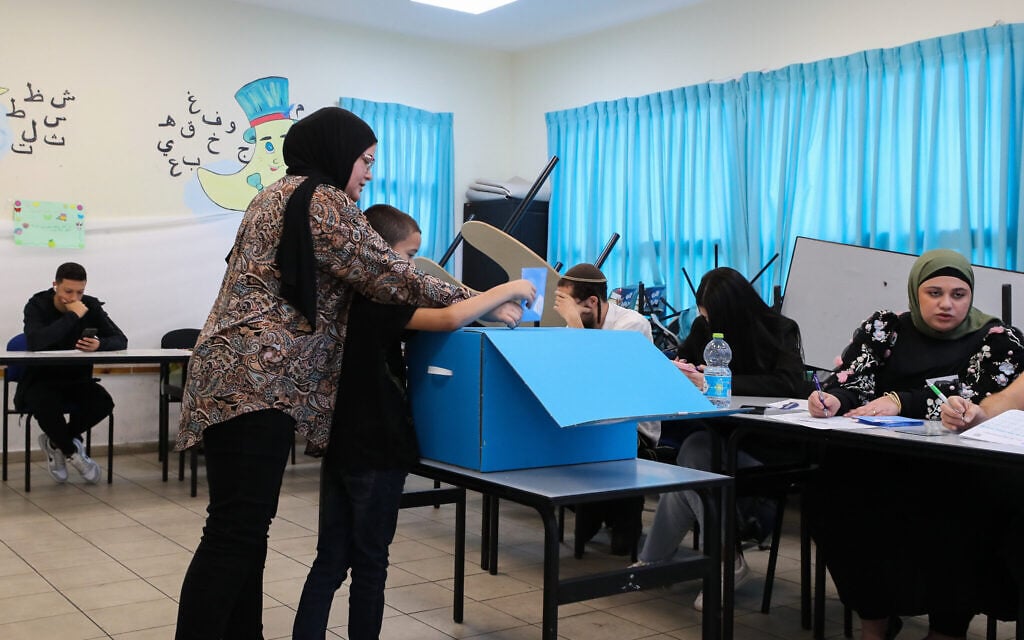
Rights organization petitions High Court to ban polling station officials from bearing arms, due to right-wing parties' intent to deploy 2,000 activists at Arab sites
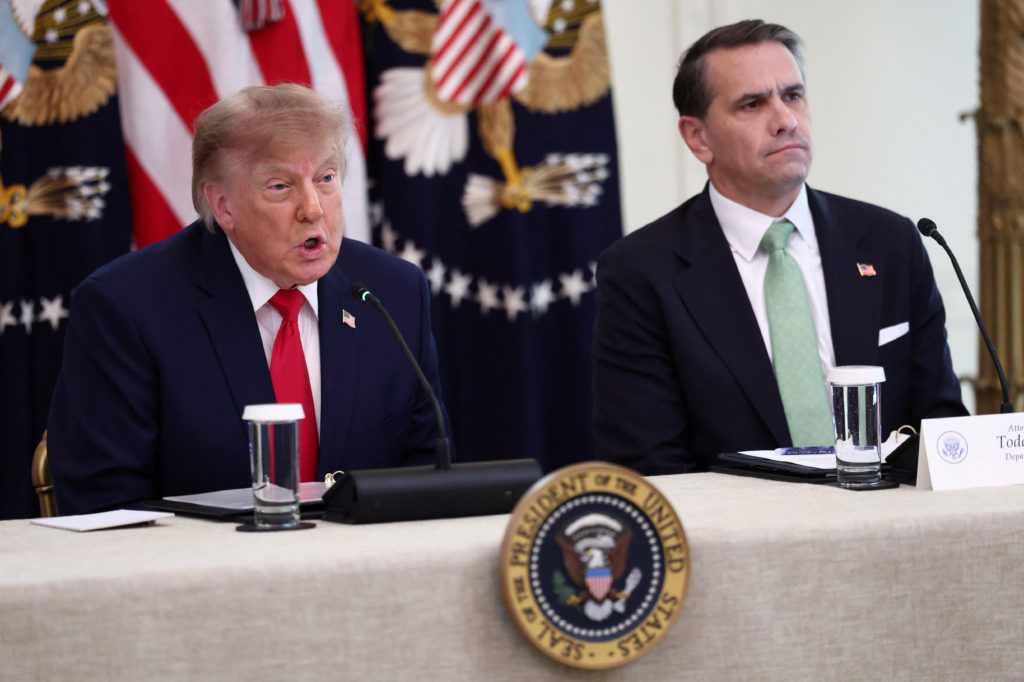
Blanche told CNN's "State of the Union" that President Donald Trump, who said Friday that he was "the one that said do it," is not trying to overturn state election results "in any way, shape or form" on the cusp of the Nov. 3 election.
Un agriculteur de 54 ans a été condamné vendredi 16 octobre 2026 par le tribunal de Cahors à quatre mois de prison avec sursis et à une interdiction de contact avec son fils. En mai dernier, à Girac, il avait détruit...
On Aug. 26, 2024, in Fort Myers, Florida, I answered a knock at my door to find a police officer waiting to arrest me. My first thought was my 12-year-old daughter, whose room was nearby. “Can she hear this?” I wondered. “Does she know what’s going on?” I had answered the door in my flip-flops, T-shirt and shorts, not realizing it would be all I had to keep me warm as I was thrown into an ice-cold jail cell, then into a steel cage in the back of a police van and finally locked up in a second jail. They told me I was being arrested for attempting to lure a child — roughly the same age as my daughter — from a McDonald’s in Jacksonville Beach, a town 300 miles away that I had never been to.
The whole time, I couldn’t stop thinking about when I would see my wife and daughter again. How would I explain why I was under arrest for a crime I didn’t commit in a city far across the state? Especially when I didn’t even understand what was going on myself.
The police ran my two vehicles through a database of license plate readers, which didn’t show my car anywhere in the entire county, much less near the restaurant. Yet based on the say-so of glitchy AI, they ruined my life.
After pledging the title to my truck for bond, I left the police station completely traumatized. I later learned that the Jacksonville Sheriff’s Office uploaded a picture of the McDonald’s security footage into an artificial intelligence facial recognition system, which erroneously flagged me as a possible match. Jacksonville Beach Police then conducted a photo lineup not with the victim, but with a McDonald’s employee who was not an eyewitness.
Meanwhile, the officer leading the investigation ignored a mountain of evidence of my innocence. I have a prominent scar on my face that the suspect didn’t have. The same employee who picked me out of the photo lineup also said the suspect was a “regular customer,” but I live more than five hours away. The police ran my two vehicles through a database of license plate readers, which didn’t show my car anywhere in the entire county, much less near the restaurant.
Yet based on the say-so of glitchy AI, they ruined my life.
Robert Dillon, a commercial crabber in Florida, holds a crab.Photo courtesy ACLU
Until I was arrested for a crime I did not commit, I was a successful commercial crabber. I’ve loved crabbing since I first tried it as an 8-year-old kid hanging out on the Maryland docks. In the 40 years since, I’d built a beautiful life. I had a fulfilling career on the water, and an incredible wife and daughter and great friends. Anyone who knew me would tell you that I was a family guy. I was happy. All that changed after the police hauled me to jail and posted my mugshot online.
Weeks later, the Florida state attorney’s office dropped all charges. Now, I’m suing the officers, the city of Jacksonville Beach and the Jacksonville Sheriff’s Office. In addition to damages, I am asking the court to order the city and the sheriff’s office to overhaul their procedures for using facial recognition technology.
It had taken two months to prove my innocence and my mugshot stayed on a police department website for nearly a year. At first, I could barely leave the house, terrified that someone would confront me for this revolting crime or see me with my daughter and call the police. Even when I was with people who knew I had been falsely accused, I couldn’t stand them looking at me and wondering even for a second, “Maybe he actually did it.”
I fell behind on rent, and when I was finally able to get back out on the water, it was too late. My seafood buyers had moved on. I was hemorrhaging cash. I had to turn my back on the ocean and start doing lawn care to provide for my family. Even harder than finding the money to rebuild my business is rebuilding the trust and credibility I lost because of the government’s colossal screw-up.
if there is one thing I am not, it’s a quitter. I will not quit until I get justice and the government makes amends.
When I told my daughter about the reason for the arrest, something I’d waited to do until after I had proven my innocence, she couldn’t stop laughing. To her, the accusation was that outrageous. While she laughed, I cried, just grateful to know that she was still in my corner and saw me for the person I was: her loving, caring, happy-go-lucky dad.
I am the first to admit that I am no angel. I’ve done stupid stuff in my past — gotten in some fights, spent some nights in jail. Any of my friends would agree that if there’s a loudmouth at the bar, I’m the one to tell him off. But I would never hurt a child. Ever.
When I’ve gotten in trouble, I’ve paid my debt to society. But the government doesn’t want to pay theirs. When I got into a bar fight, within a day I was hauled in front of a judge. Yet more than two years after my wrongful arrest, no one has even apologized, much less been held accountable in any court of law. And nothing has changed. I am still suffering. All because some cops used shoddy AI facial recognition, ignored contradictory evidence and, instead of protecting little girls in Jacksonville Beach, arrested an innocent guy in Fort Myers.
The government keeps trying to sweep what they did to me under the rug, hoping that I will give up and move on. But if there is one thing I am not, it’s a quitter. I will not quit until I get justice and the government makes amends. That’s why I have turned to the courts. They must hold the police accountable for altering my life forever. The record is clear. Justice should not take years to impose.
(Editor’s note: The Jacksonville County sheriff’s departmenttold Wired Magazine, “Due to pending litigation, we would be unable to comment further on the incident.”)
Paul Skalnik was one of the most prolific jailhouse snitches in American history. A new best-selling book, Catch the Devil, chronicles Skalnik's career helping prosecutors secure dozens of convictions—despite being a serial liar and criminal. His cartoonishly long rap sheet included elaborate frauds, multiple grand thefts, and sexual assault of a child; at various times, he passed himself off as a Southwest Airlines executive, a high-powered attorney, and a Vietnam War hero. In July, Reason's Billy Binion interviewed author Pamela Colloff, a staff writer at The New York Times Magazine and reporter at ProPublica.
Q: How is it possible for someone with such an intense history of dishonesty to still earn the state's trust for decades?
A: I think you hit upon the big question of the book, right? Skalnik was a former police officer himself, so he sort of knew how the game worked. When he got to whatever county jail he ended up in, he could size up whoever it was that prosecutors most wanted a conviction against. And he would produce these incredible quote-unquote "confessions." And in return for his testimony about those confessions, he would usually be let free.
You can imagine how there were police and prosecutors who bought this. I think what becomes more difficult as he's used more widely in [Pinellas County,] Florida—where he helped send upward of 40 men to prison—at what point does someone say, "What are the odds that this guy in the jail has a better batting record than our best detectives?" No one ever says that.
Q: The book covers a lot of disturbing cases, but the one central to it is a murder case in Florida. Can you set the scene?
A: There was a 14-year-old girl named Shelly Boggio who was found in a body of water. She'd been stabbed over 30 times, and the assumption was that she'd been sexually assaulted.
The investigation quickly narrows down to a man named Jack Pearcy, who had a long history of violence against women. He was the last person seen with Boggio. When he's interviewed by investigators, he realizes they know too much. So he pivots to saying that he had his housemate—Jim Dailey—with him that night, and that it was Jim who committed this crime. Jim did not have that kind of record, and there's no physical or forensic evidence tying him to the crime, or any motive whatsoever.
Skalnik is brought in very shortly before the trial starts. He is moved in the jail to be close to where Jim Dailey was. Within 24 hours, he says he has procured Dailey's confession—a total stranger who's awaiting trial. It was a story that really played upon jurors' sympathies. He talked about how Jim Dailey had supposedly told him about stabbing Shelly Boggio to death and how she'd been staring at him in this pleading way, but she wouldn't die. It's this horrific image, and he is sentenced to death.
Q: What makes you think Dailey is actually innocent?
A: There have been over 200 people in the U.S. who were sentenced to death who have since been exonerated. We know that jailhouse informants—who are notoriously unreliable—are a factor in 25 percent of those wrongful convictions.
As far as Jim's case, there's no there there. When you see a case with three jailhouse informants, no physical evidence, no motive, and your quote-unquote "eyewitness" is the main suspect in the case? There are a lot of questions.
Q: To me, the secondary theme was that when credible evidence may exonerate someone after a jury has rendered a verdict, it is depressingly difficult to get another chance.
A: I am obsessed with this idea that the system is built to compound its own errors. When new evidence comes out—and there's a lot of new evidence that comes out over the years that really points toward his innocence—you would think that would be enough. For some very good reasons, a jury verdict is sacrosanct. But what you see is that courts really look backward at precedent and jury verdicts rather than forward at new evidence.
Jim gets terrific attorneys in this case—too late. They do incredible work, and it doesn't matter. Too many judges have rubber-stamped this testimony by Paul Skalnik. There's no way for the courts to essentially say, "Hey, let's go back and look at this holistically and see if any of this makes sense." It was shocking to me to see that.
This interview has been condensed and edited for style and clarity.
En août 2025, alors qu'il dînait chez des amis, un homme de 78 ans s'est absenté en fin de repas pour s'introduire chez une voisine du couple et lui imposer des actes sexuels. Immobilisée sur un fauteuil roulant, la...
À Toulouse, Kamel Koob, coach en développement personnel, propose des formations pour apprendre à mieux communiquer, comprendre les réactions de son interlocuteur et désamorcer les situations conflictuelles avant...
Nonprofit watchdog group Common Cause, represented by attorneys from American Civil Liberties Union (ACLU), has filed a motion to intervene in the Department of Justice’s (DOJ) lawsuit over Alaska’s Senate election. The DOJ filed a lawsuit Thursday claiming the presence of a candidate with the same name as incumbent Sen. Dan Sullivan (R) could give…
The letters are the latest escalation in a legal battle between California and President Donald Trump's Department of Justice, which has recently focused on the state in its efforts to root out noncitizen voting ahead of the midterm elections.
The Department of Justice (DOJ) on Friday sent letters to election officials in every California county asking that they identify potential noncitizens on their voter rolls, according to several reports. The letter warned local officials would “risk significant federal scrutiny” if they failed to comply with this request, The New York Times reported, citing a…
Un ancien fonctionnaire de la préfecture du Tarn a vu sa carrière voler en éclats après avoir falsifié un document administratif en copiant la signature de son supérieur, afin d'obtenir l'utilisation de son compte CPF...
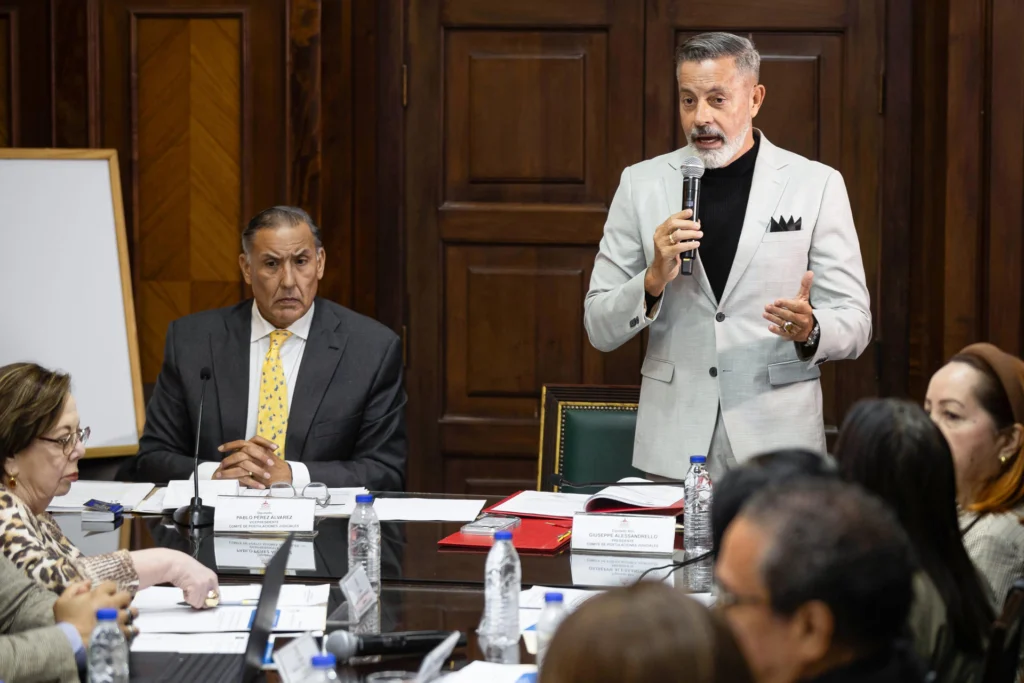
Venezuela’s National Assembly installed a Judicial Nominations Committee on Friday to evaluate and select new Supreme Court justices, a step lawmakers described as central to consolidating institutional stability.
The committee was formally established on October 23, at the Federal Legislative Palace in Caracas, one day after being sworn in during a legislative session.
Giuseppe Alessandrello, who presides over the body, announced that its immediate task is to draw up a work schedule under the Law of the Supreme Court of Justice.
Alessandrello said the law opened the selection process to ordinary citizens. Writing on social media, he stated that the legislation brought people into the work of “evaluating and selecting the leadership, in this case of the Supreme Court of Justice, to seek plurality.”
#23Oct || Desde el Palacio Federal Legislativo se realiza la Instalación del Comité de Postulaciones Judiciales. pic.twitter.com/MczZA2GxJ7
Text reads: “From the Federal Legislative Palace is carried out the installation of the Judicial Applications Committee.”
The committee operates within a broader national dialogue that authorities describe as “building a new Venezuela.” Officials have repeatedly framed the judiciary as the institution responsible for guaranteeing what they call true and just peace among citizens. “The judicial branch is the institution that will guarantee peace among us,” Alessandrello said.
The work schedule will set specific periods for the call for nominations, the evaluation of candidates, and the handling of challenges and responses.
The final goal is to present a definitive list of eligible candidates to the National Assembly.
Alessandrello stressed the weight of the assigned tasks, linking them directly to institutional stability. The committee’s operational work and the eventual delivery of the list will follow the terms and periods established by current law.
The process is governed by the Organic Law of the Supreme Court of Justice and the Constitution of the Bolivarian Republic of Venezuela. It covers the selection of both principal and alternate justices of the Supreme Court of Justice.
Subrayó el rol clave de la ciudadanía:
"La ley incorporó a los ciudadanos y ciudadanas de la sociedad en este trabajo de evaluar y seleccionar a las directivas, en este caso del Tribunal Supremo de Justicia, para buscar la pluralidad". pic.twitter.com/LhNVkaK6ov
Text reads: “The President of the committee, Giuseppe Alessandrello, highlighted the group’s harmony: “Everything we produce is decided unanimously and the auspices with the work of the committee are positive.” He also emphasized the importance of plurality in this process. He stressed the key role of citizenship: “The law incorporated citizens of society in this work of evaluating and selecting directives, in this case from the Supreme Court of Justice, to seek plurality.”
Selecting Court Leadership
The mandate extends beyond the high court itself. It also includes related judicial positions, among them the directorship of the National School of Magistrates.
The committee emerged from a process announced earlier this month. The National Assembly opened the nomination period between October 2 and October 9, allowing interested citizens and institutions to take part in the selection of the court’s leadership.
Once the schedule is finalized, the committee will move through successive phases, receiving nominations, reviewing candidates, and addressing any challenges filed against applicants. Each challenge will carry its own opportunity for a formal response before the list reaches the legislature.
The final list of selected candidates will be delivered to the National Assembly for consideration. The body’s work therefore functions as a preliminary filter within a process whose ultimate decisions rest with the legislature.
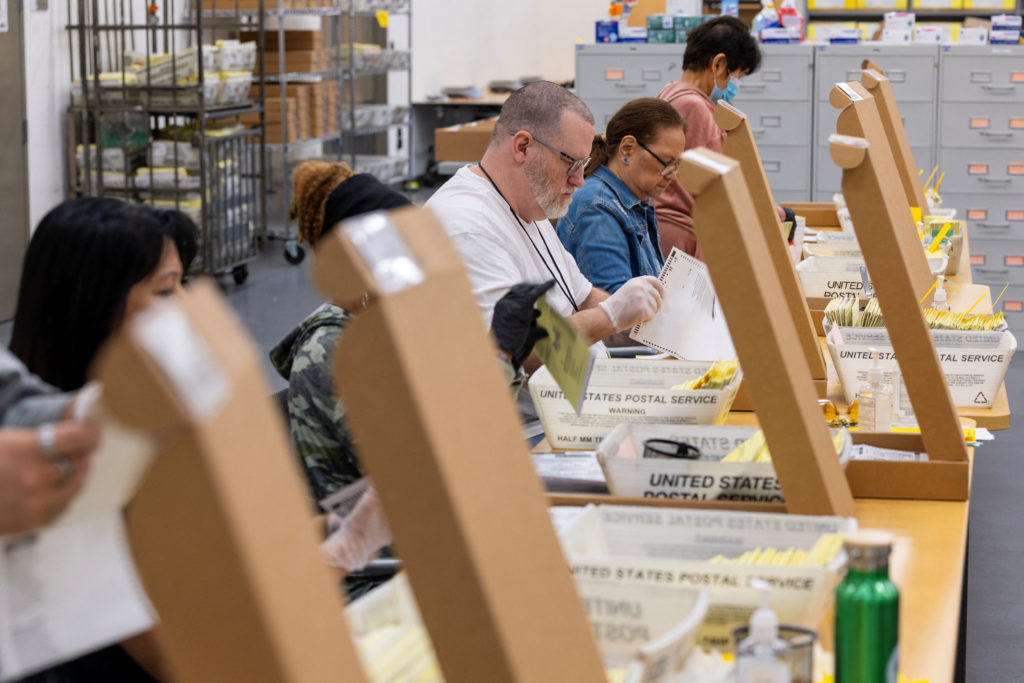
The agency regularly monitors polling places. But this year's effort on Nov. 3 will more than double the number of federal monitors deployed during the 2022 midterms.
Eight years ago, Scott Hancock, then 28, helped a 19-year-old acquaintance, identified in court records as T.G., buy fentanyl. At her request, Hancock, who had been addicted to opioids for years, got in touch with his drug dealer, who gave him five capsules that he handed over to T.G. in exchange for $20. Then Hancock gave the money to his dealer. Because T.G. subsequently died from a fentanyl overdose, Hancock is serving a 20-year sentence at a federal prison in Illinois.
That was the mandatory minimum sentence under 21 USC 241, which prescribes penalties for drug distribution resulting in death. Although that law has been on the books since 1986, the dramatic increase in fentanyl-related deaths during the last decade prompted a surge in federal drug prosecutions involving overdoses, which rose by 44 percent between FY 2019 and FY 2023. Hancock's case was part of that trend, and it prompted his mother, G.D. Hancock, a retired finance professor, to delve into the subject, resulting in a database that sheds light on what happens when the government treats accidental deaths as homicides.
So far, Hancock has identified 2,930 sentences in such cases since 2010. That includes 1,399 federal cases and 1,531 state cases, which rely either on laws dealing specifically with drug-induced deaths or on more general statutes addressing felony murder, "depraved heart" homicide, or manslaughter.
Sentences of 20 years or more were pretty common at the federal level, accounting for 37 percent of the cases, compared to 13 percent at the state level. The vast majority of the cases (84 percent) were resolved by plea deals. That is not surprising, given the potential consequences of going to trial. While the median sentence for defendants who pleaded guilty was nine years, it was 20 years for defendants who insisted on making the government prove its case.
Hancock's tally is based on news reports, court records, announcements by state and federal prosecutors, her own "case files and research," and "cases sent in by families, lawyers and researchers." A separate database compiled by researchers at Northeastern University, drawn from news reports, includes 3,264 cases involving drug-induced homicide from 2011 to 2022.
These prosecutions are morally nonsensical. They treat people who voluntarily consume drugs as helpless victims of supposed predators who gave them the drugs they wanted. By similar logic, bartenders and liquor store owners should be held criminally liable whenever a customer succumbs to alcohol poisoning or the long-term effects of heavy drinking. The main difference is the legal status of the drug, which is arbitrary, politically determined, and historically contingent. And while illegal drugs pose special hazards, that is a result of prohibition, which creates a black market where product composition is highly variable and unpredictable.
Charging people with homicide based on accidental overdoses would be illogical and unjust even if the defendants were limited to actual drug dealers. But you can be charged with drug-induced homicide even if your "trafficking" consisted of nothing more than sharing drugs with a relative, romantic partner, friend, or acquaintance. Based on the information Hancock was able to glean, she counts 241 cases where the person who died from an overdose was the defendant's friend, partner, or family member, and other sources suggest such prosecutions are common.
The Northeastern University researchers analyzed a sample of 213 online news reports from 2000 to 2017. They found that 50 percent of defendants charged with drug-induced homicide were caretakers, family members, friends, or partners of the people who died.
In 2021, when the Pittsburgh Tribune-Reviewexamined Pennsylvania prosecutions for "drug delivery resulting in death" (DDRD), it described a case involving "a Westmoreland County man" who "died from an overdose of drugs he'd gotten from a friend of a friend of a friend." Although "the drugs ultimately came from a man called 'Bee' in Penn Hills," the paper noted, "the three individuals between the victim and Bee were all charged" with DDRD, a first-degree felony punishable by up to 40 years in prison.
The Tribune-Review described several other DDRD defendants, including "a Delmont woman" who "called paramedics when she found her boyfriend unresponsive in their bathroom"; "two friends" who bought heroin for a man who overdosed at a Taco Bell; and "a Monessen woman" who "sent her cousin to buy a brick of heroin" and "sold five stamp bags to a friend, who then sold four bags to an Elizabeth Borough man who died from a fatal overdose."
The Tribune-Review also found that "many facing these charges are relatively low-level dealers." Jonathan Fodi, a defense attorney and former prosecutor, told the paper he and his colleagues had never seen a DDRD case involving a high-level dealer. Given the need to prove a link between the defendant and the person who died, that is not surprising. But that situation compounds the injustice of treating such deaths as homicides, since low-level dealers often do not know exactly what is in the drugs they are selling.
A 2002 analysis of 32 drug-induced homicide prosecutions, published in the New Jersey Law Journal, found that "25 involved prosecution of friends of the decedent who did not sell drugs in any significant manner." According to a 2017 report by a Wisconsin TV station that looked at the 100 most recent prosecutions for drug-induced homicide in that state, "nearly 90% of those charged were friends or relatives of the person who died, or the lowest people in the drug supply chain." When the Chicago Tribuneexamined drug-induced homicide cases filed between 2011 and 2014, it found "the defendant was typically the last person who was with the person who overdosed."
Even people who support the war on drugs should be able to recognize the injustice of sending people to prison for 10 or 20 years based on their tangential roles in deaths they neither caused nor intended. And far from making such deaths less likely, that policy impedes potentially lifesaving medical assistance because the risk of a homicide charge is apt to discourage bystanders from calling for help. That daunting deterrent undermines the goal of "Good Samaritan" laws that are supposed to shield 911 callers from criminal charges in such situations.
The official justification for these prosecutions is completely disconnected from the reality of the cases. "Deaths from illicit drugs, especially fentanyl, are at historic highs," the Drug Enforcement Administration (DEA) said in a 2023 press release. Because the DEA is "committed to protecting Americans and saving lives by pursuing those responsible," the agency explained, it aims to "make sure as many drug traffickers involved in those deaths as possible get an appearance in front of a judge."
As an example of that strategy, the DEA cited Scott Hancock's case, describing him as a "trafficker" who was "found guilty of providing the drugs that killed a 19-year-old woman in 2018." Given the details of that transaction, it is hard to see the logic here. Sending someone like Hancock to prison for 20 years has nothing to do with "saving lives."
Rep. Randy Fine (R-Fla.) said Friday he plans to introduce a resolution to expel Rep. Ilhan Omar (D-Minn.) if a federal investigation finds she broke the law. The Florida Republican is a conservative firebrand sometimes known for his controversial comments, including describing Omar as a “terrorist” in 2025, a comment House Democrats condemned as racist. …
The lawsuit invokes voter confusion over two candidates named Dan Sullivan, but its narrow conditions raise questions about the administration’s broader intentions
Minnesota officials said the Department of Justice (DOJ) has stopped sharing evidence related to the killings of Alex Pretti and Renee Good by immigration officers earlier this year. Minnesota officials said in a court filing reviewed by The Associated Press that the federal government stopped sharing evidence related to the two shooting deaths during President…
Earlier this week, Mississippi Attorney General Lynn Fitchsaid that the police shooting of 1-year-old boy Kohen Wiley in a Walmart parking lot earlier this year was a "justified" use of force. On Thursday, Sgt. Hunter Foster, the Senatobia police officer who shot Wiley, resigned from the department.
Foster's resignation comes after a tumultuous week for the Mississippi attorney general's office and the Senatobia Police Department (SPD). After Finch ruled the shooting a justified use of force on Monday, DarkHorse Press leaked footage of the body camera video from officers at the scene, along with Walmart surveillance video. On Thursday, the Mississippi Department of Public Safety released more footage, including from the bodycam of Foster, which WLBT News obtained. Together, the footage shows a less cut-and-dry incident than what statements from Fitch and the Mississippi Bureau of Investigation imply.
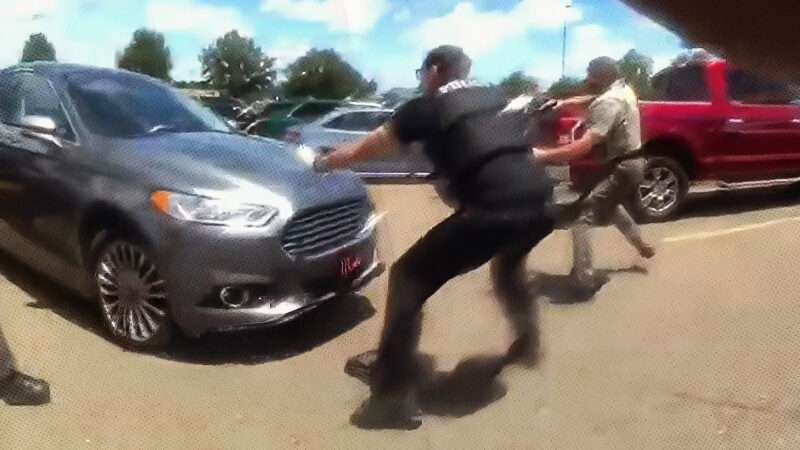
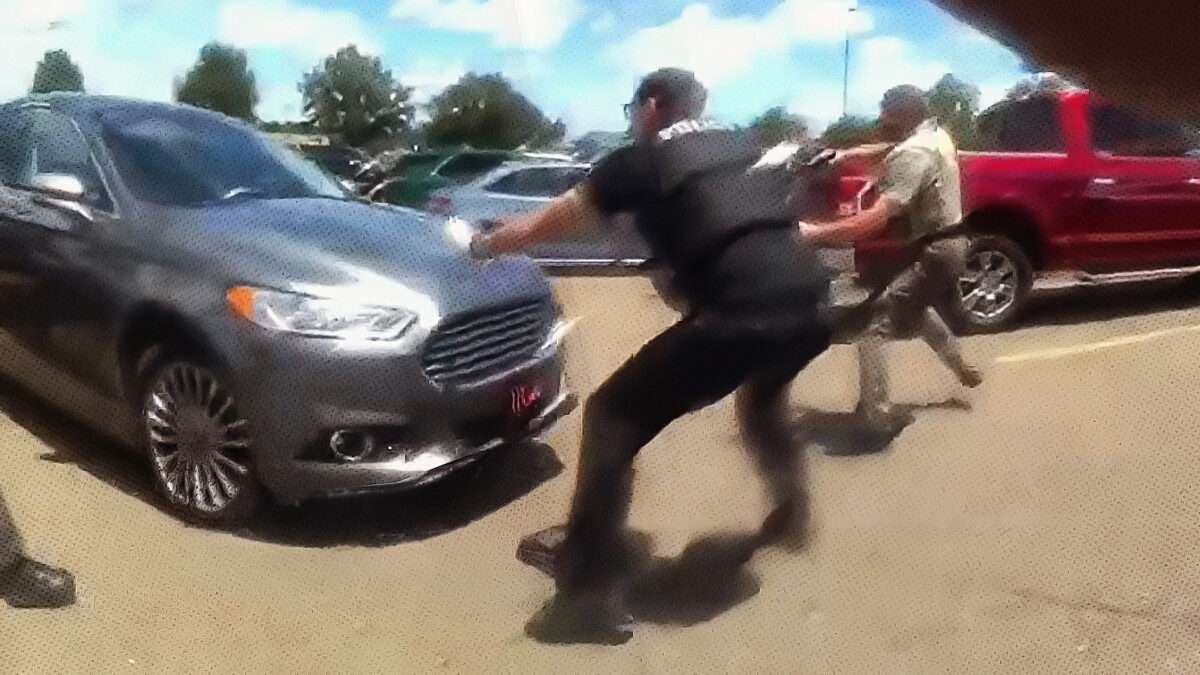
Surveillance footage shows Kohen's mother, Vellesiya Wiley, and her friend running to their car from the Walmart entrance as Wiley holds baby Kohen in her arms. Police officers soon enter the frame chasing the duo. After getting in the car, Wiley's friend backs out of the parking spot and hits another parked car. The officers crowd around the vehicle, drawing their guns and shouting "stop." Foster places himself directly in front of the vehicle, his gun primed and ready. The driver puts the car in gear and accelerates toward the officers. According to his bodycam footage, Foster, one of the two officers in the vehicle's path, lets off three shots as he hops out of the way and continues to aim his gun at the car as it passes him. It appears that at least one of the shots pierced the front windshield, while the others came through the window on the passenger side, where Kohen was sitting on his mother's lap. The car then drove away, and officers gave chase.
After reviewing the footage, Ben Crump, the Wiley family attorney, said during a Thursday press conference that the police officers "never ever should have drawn their weapons for a misdemeanor shoplifting allegation."
"The shot from the side of the vehicle was not justified," he added. "[Foster] was not in harm's way when he shot from the side." He claims that the shot that killed Kohen came from the side, corroborating an independent autopsy the family conducted.
Martin Zummach, an attorney for Foster, told the Associated Press that the driver "tried to kill" his client and other officers at the scene, giving Foster "no choice but to fire his weapon." He said it was "strictly muscle memory" that led Foster to fire those additional shots, according to WSB News. "The one that went through the side glass that everybody's going crazy about? That's because she was moving so fast," he said.
Regardless of whether the car was "moving so fast," Foster, who moved out of the vehicle's path, clearly had the choice not to fire his weapon. But instead of de-escalating the situation, the police officers decided to draw their guns and step in front of a vehicle, turning an incident involving an alleged shoplifter fleeing a misdemeanor into a life-or-death game of chicken.

 Login