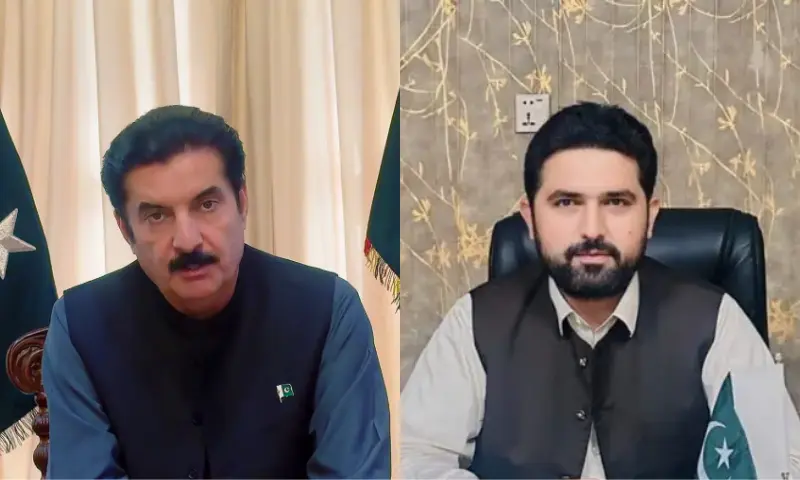
Khyber Pakhtunkhwa Governor Faisal Karim Kundi said on Sunday that Sohail Afridi and Assembly Speaker Babar Saleem Swati were “in safe hands” after being placed under house arrest.
Afridi, who has become non-functional as the KP chief minister, has not been seen since the Centre imposed governor’s rule and emergency in his province on Oct 11. After their whereabouts remained unknown that day, a federal minister confirmed the next day that he and some of his cabinet members were in preventative custody.
However, with no further details officially confirmed, Afridi’s brother and Swati’s cousin have approached the Peshawar High Court separately to seek their relative’s recovery.
Appearing on Geo News’ TV programme ‘Jirga’ aired on Sunday night, the governor — who now runs the province — was asked about the whereabouts of Afridi, Kundi said he had been placed under house arrest and was “in safe hands — there is no need to worry”.
He said that if there were cases against Afridi, action would be taken against him and he would be indicted. However, if there were no cases, he would be released.
Asked why Afridi was not being released if there were no cases against him, Kundi replied he could provide an update tomorrow regarding the matter.
The governor further said that Speaker Swati was also under house arrest and would also be freed if there were no charges against him. Responding to another question, Kundi accused the PTI member of committing “illegal and unconstitutional” acts in his role as the KP Assembly Speaker.
Asked how many people were self-arrested and how many were “genuinely” arrested, Kundi said he did not have these numbers but that about 40 or 50 per cent of them were “under self-imposed arrest or self-concealment”.
The governor also addressed the imposition of emergency and governor’s rule in KP, stressing that it had been the “absolute last option”.
Regarding the potential duration of the emergency, he said, “We will see … after six months are complete, we will talk about what will and will not happen.
“But in my opinion, maybe it will run longer,” he added, clarifying that this was a “personal opinion” and he could be wrong.
He said that the basis for saying this was that the Centre and province needed to be “on the same page” in the fight against terrorism and “streamline” efforts against it, and was making plans accordingly, which he believed would take some time.
Kundi also distanced himself and the state policy from purported remarks made by Malik Khan Marjan — a member of the newly formed Area Representative and Development Council (ARDC) for 12 districts of KP — wherein he favoured dialogue with the Afghan Taliban.
“I will definitely check on this, but our policy is very clear: for now, we will not be holding talks with Afghanistan,” he maintained.
The governor condemned acts of terrorism carried out against Pakistan from Afghan soil and criticised Kabul for “allowing” India to use its soil against Pakistan while also asking for dialogue.
“If there is terrorism from there … our army knows how to fix it,” he added. “There is no dialogue and no talks of any kind about this.”
“I think this is his (Marjan’s) personal opinion, but it is not our policy,” Kundi said.
Pakistan has reopened a major border crossing with Iran that handles key energy and commodity supplies between the two countries amid improved security in the region.
Pakistan’s Dawn newspaper reported on Sunday that the Gabd-Rimdan border crossing, also known as Gate 250, in the country’s Gwadar region, had reopened a day earlier following a weeklong suspension that began on October 17.
The report quoted Mir Naveed Jan Kalmati, president of the Gwadar Chamber of Commerce and Industry, as saying that import and export operations between Pakistan and Iran had resumed.
It said the decision came amid dwindling LPG supplies in Pakistan ahead of the winter season.
The closure of the border crossing on October 17 left hundreds of trucks stranded on both sides of the border.
An attack was also reported in the region earlier this week, when unidentified gunmen targeted parked trucks, setting dozens ablaze and damaging several others.
Dawn said local administrators had deployed additional forces to protect trade convoys before reopening the border crossing.
Meanwhile, Iran’s ambassador to Pakistan, Reza Amiri Moghadam, said in a post on his X account on Sunday that the disruption to cross-border trade between the two countries was mainly due to changes in Islamabad’s import rules.
He denied that Iran had made any decision to reduce LPG exports to Pakistan.
“… Changes in the implementation of Pakistan’s E-Form procedure for imports from Iran have created a situation in which traders are effectively and literally unable to dispatch cargo from Iran to Pakistan,” Amiri Moghadam said.
He said cross-border trade between Iran and Pakistan “serves the mutual interests of both countries and their people,” adding that Iran had made every possible effort to facilitate and promote trade with its “brotherly” neighbor.
RAWALPINDI – Security forces killed six terrorists belonging to the “Fitna al-Khawarij,” which the military describes as an Indian proxy, in an intelligence-based operation in the Zarkani area of Dera Ismail Khan. Two Pakistan Army soldiers were martyred in an intense exchange of fire.
According to the Inter-Services Public Relations (ISPR), the operation was carried out on October 24, 2026, after reports of the presence of terrorists in the area. Security forces responded effectively and killed six militants, whom the ISPR described as Indian-sponsored.
The ISPR said Naik Ghulam Murtaza and Sepoy Tasir Ahmad embraced martyrdom while fighting bravely. Naik Ghulam Murtaza, 36, belonged to Gujrat district, while 30-year-old Sepoy Tasir Ahmad was from Talagang district.
Weapons and ammunition were also recovered from the slain militants, who, according to the military’s media wing, had been involved in numerous terrorist attacks on security forces and law enforcement agencies and in the killing of innocent civilians.
The ISPR said a clearance operation is under way to eliminate any other militants present in the area.
It added that, under the National Action Plan approved by the Federal Apex Committee and in line with the “Azm-e-Istehkam” vision, counter-terrorism operations by security forces and law enforcement agencies will continue at full pace to completely rid the country of externally backed terrorism.
The ISPR also said the sacrifices of brave soldiers in defence of the homeland further strengthen the resolve to eliminate terrorism from the country.
FAISALABAD – Five people were killed and one person was critically injured in an accident involving a passenger bus, a car and a coaster on the M-4 Motorway.
According to National Highways and Motorway Police spokesperson Syed Imran Ahmad, motorway police officers reached the scene immediately after receiving news of the accident. Reports have been received of five people killed and one seriously injured.
The spokesperson added that the DIG Motorway and the sector commander have also left for the site of the accident.
ISLAMABAD – A father has been arrested for allegedly producing sexually exploitative videos of his own children and selling them online as part of a wider network, a senior National Cyber Crime Investigation Agency (NCCIA) official said on Sunday.
Speaking at a press conference in Islamabad, NCCIA Additional Director Shoaib Khan said the arrested man was making videos of his own children. Describing it as an unusual case, he said the children were aged between five and six, and that the videos were produced and sold through the Telegram app. A group had formed around circulating and selling such material, he added.
Khan said the network had also filmed the abuse of animals. He said nothing of this nature had previously surfaced in Pakistan’s history, and that the identities of those involved in such cases were not disclosed. According to him, the main suspect belonged to Skardu, while investigations were under way in Multan, Islamabad and southern Punjab.
Online sexual harassment case
Khan said the NCCIA had also arrested a suspect in an online sexual harassment case a day earlier, following a complaint from Karachi. He said action would also be taken against parents who knew of crimes involving their children but failed to report them. “In cases of sexual harassment, parents know what their child is doing,” he said.
The agency is launching an awareness campaign at universities and will also teach parents how to monitor what their children view on mobile phones. Khan said he would personally visit schools in Islamabad to raise awareness among parents, and that the campaign would later be expanded nationwide.
Crackdown on call centres
Khan said NCCIA Islamabad had also carried out crackdowns on call centres and identified a large number of such facilities in the capital. Seven FIRs had recently been registered, and between 13,000 and 14,000 devices had been recovered in these cases.
He warned the public not to share one-time passwords (OTPs) or PINs with anyone, noting that fake banking websites had been created that can look identical to genuine ones.
On Chinese nationals arrested in Pakistan, Khan said they would be punished under Pakistani law. After completing their sentences, their visas would be cancelled and they would be deported.
LAHORE – The Pakistan Meteorological Department has forecast a powerful spell of rain entering Punjab from October 28.
A new western weather system is expected to bring rain, accompanied by strong winds and thunder, across the province, leading to a significant drop in temperature.
The rain spell will bring a change in the weather, and the intensity of the cold is likely to increase in the province.
MUZAFFARABAD – At least seven people were killed when a jeep fell into a ravine in Shakar Parian, on the outskirts of Muzaffarabad, the capital of Azad Kashmir.
According to rescue officials and police, the jeep was loaded with grass and carrying seven people when it went out of control and fell into a ravine hundreds of feet deep. All seven on board, including the driver, died. Local residents and rescue workers shifted the bodies to hospital.
In a separate incident, four people, including a child and a woman, were killed and four others injured in a horrific collision between a passenger coach and a car on Tando Adam-Jhol Road in Sanghar’s Tando Adam taluka. The dead and injured were taken to the Taluka Hospital in Tando Adam.
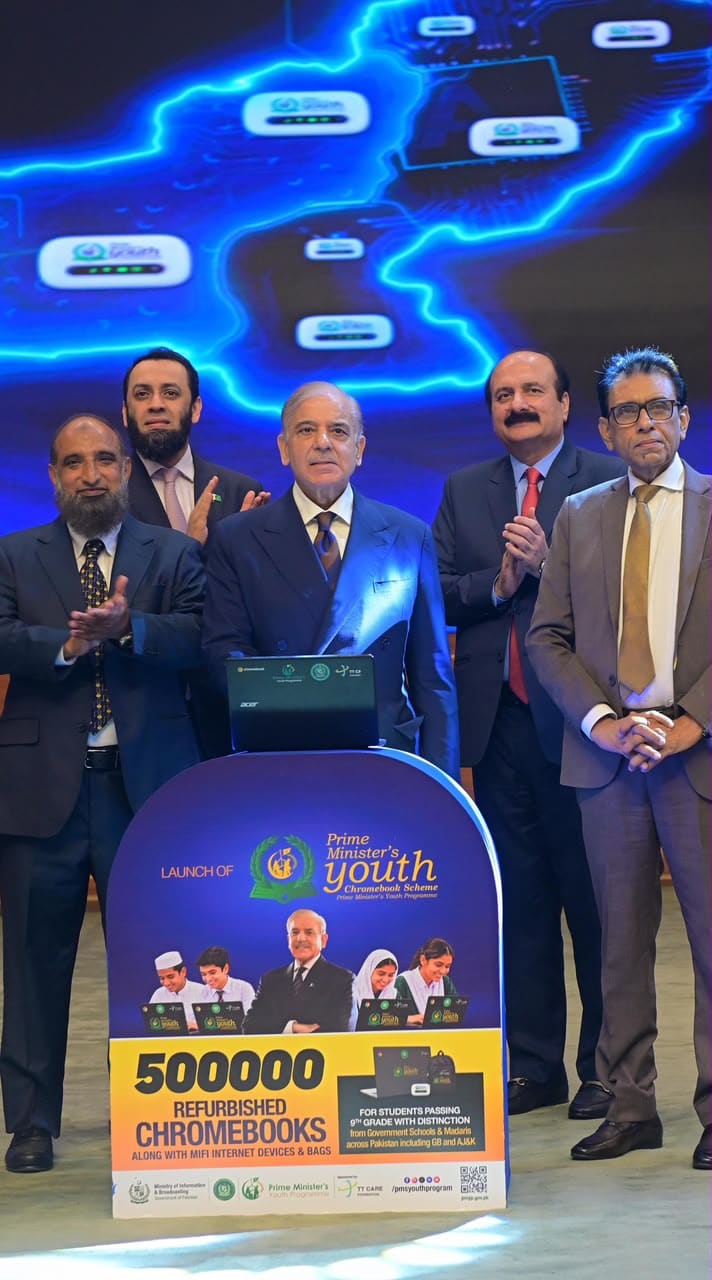
ISLAMABAD – Prime Minister Shehbaz Sharif launched an ambitious programme to provide half a million Chromebooks to students nationwide over the next two years, opening new doors to digital learning for hundreds of thousands of young Pakistanis.
Prime Minister’s Youth Chromebook Scheme was formally inaugurated at a ceremony in Islamabad today, marking another step towards making tech -based education more accessible, particularly for students who cannot afford modern digital devices.
Investing in the youth of Pakistan.
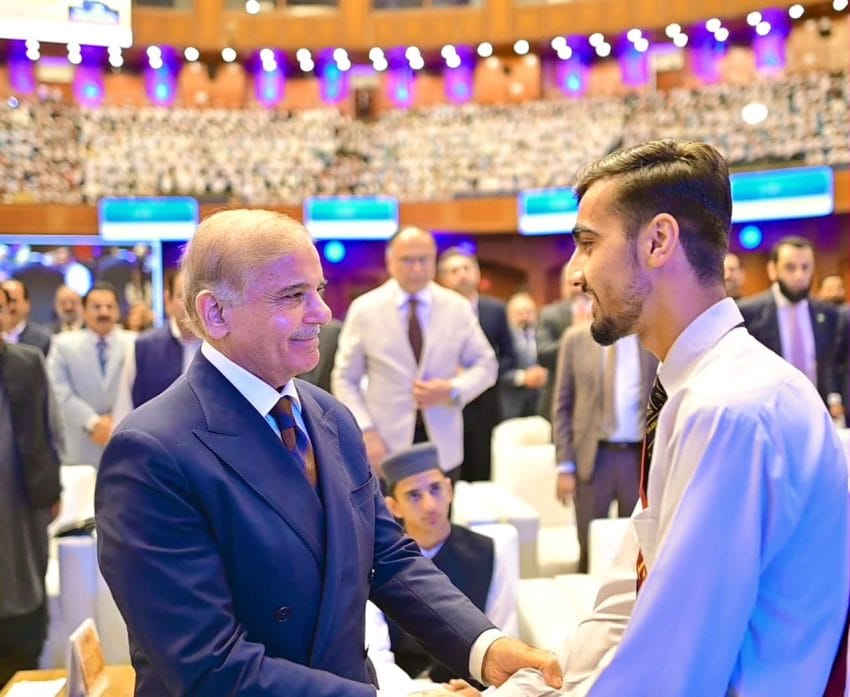
Prime Minister Muhammad Shehbaz Sharif arrives at the Convention Centre for the launch of the Prime Minister’s Youth Chromebook Scheme.
#PMYouthChromebookScheme https://t.co/WBOJoQ1OmC
— Prime Minister’s Youth Programme (@PMsYouthProgram) October 25, 2026
The initiative aims to bridge technological divide between students from different economic backgrounds, enabling young people to attend online classes, access international educational resources and build the skills required to compete in an increasingly digital world.
Addressing the ceremony, Prime Minister Shehbaz Sharif made it clear that Pakistan’s greatest investment was not in buildings or infrastructure alone, but in the education and capabilities of its young population. PM termed students country’s most valuable asset and stressed that providing them with modern educational tools was a collective responsibility of the government and the state.
5Lac Chromebooks in Two Years
Sharif led government plans to provide half million Chromebooks within two years, substantially accelerating the pace of its previous student technology initiatives.
He highlighted progress made under PML-N govt, and recalled that approximately 600,000 laptops had been distributed to students over a decade. This time, the government intends to provide 500,000 devices in only 24 months, reflecting its renewed emphasis on expanding digital access in education.
PM stressed that the distribution would recognize students’ hard work, abilities and educational achievements, reinforcing the principle that opportunities should be linked to merit rather than financial privilege. He also expressed optimism that the Chromebooks would help young Pakistanis continue their education remotely, participate in virtual classrooms and access learning material that was previously beyond their reach.
Delivering a message of encouragement to young Pakistanis, Shehbaz said that intelligence, ambition and determination were not confined to wealthy households. He stressed that students from financially disadvantaged families possessed the same potential to excel as their more privileged counterparts, provided they were given equal opportunities.
The government was committed to removing barriers that prevented deserving students from receiving quality education and preparing themselves for future challenges. Chromebook programme is intended to support this vision by bringing modern digital learning tools within the reach of students across the country.
He also highlighted the government’s continuing efforts to strengthen education through the expansion of Danish schools. Sharif announced that at least 27 such institutions were being established across Pakistan to provide modern educational facilities and essential services to deserving students completely free of charge.
Prime Minister’s Youth Programme Chairman Rana Mashhood Ahmad Khan, who addressed the ceremony before the premier, described the Chromebook initiative as an important development in the government’s efforts to empower young people. He revealed that the Tokyo Technology Care Foundation had taken practical steps to support digital facilities for 500,000 Pakistani students.
Eligibility
Only students enrolled in Government/Public Schools can apply. Private school students are not eligible.
AJK, Islamabad Capital Territory (ICT), and Gilgit-Baltistan: Top-performing students of both Grade 9 (SSC-I) and Grade 10 (SSC-II).
Students must appear on the list of top performers that their education board has submitted to IBCC. There is no single nationwide marks cutoff; each board decides its own “top-performing” criteria.
Enter your CNIC/B-Form number, roll number, or registration number (numbers only, no dashes) along with your date of birth.
Click “Find my record” to load your details from the board’s list.
Review the information carefully.
Upload the required documents.
Submit the form and download your reference slip.
You can apply only once. Once submitted, the form cannot be edited. If your record is not found, try a different number or contact your school/board. Providing incorrect information can cancel your allocation.
Documents Needed
Prepare clear scans (each under 300 KB):
Recent colour photograph (front-facing, plain background) – JPG or PNG
SSC-I or SSC-II mark sheet – JPG, PNG or PDF
Attested copy of your B-Form or CNIC – JPG, PNG or PDF
Attested copy of father’s or guardian’s CNIC – JPG, PNG or PDF
The announcement has generated interest among students seeking access to free educational devices. However, the government has not yet detailed the complete application and registration process in the information shared at the launch.
The official registration portal, eligibility conditions, application deadlines, academic criteria and province-wise distribution arrangements have yet to be clarified.
Students should therefore follow updates from the Prime Minister’s Youth Programme and other authorized government channels for information about how to apply.
The launch of the 500,000-Chromebook initiative, alongside the expansion of Danish schools, signals a broader effort to strengthen Pakistan’s education sector by connecting academic opportunity with modern technology.
For hundreds of thousands of students, particularly those from families struggling to afford digital devices, the programme could provide an important opportunity to access learning resources, develop valuable skills and pursue a more promising educational future.
LAHORE – If you use Lahore Ring Road for your commute, you need to check New traffic violation fines, with penalties reaching as high as Rs10,000 for offences, including underage driving and illegal overtaking.
The latest increase comes after similar revision in traffic police fines, making even routine traffic violations more expensive for drivers, motorcyclists and pedestrians. One of key changes concerns driving without a valid licence. The penalty jumped tenfold from just Rs500 to Rs5,000, meaning motorists caught behind the wheel without proper documentation will now face a substantially heavier fine.
Ring Road New Traffic Fines
Traffic Violation
New Fine
Driving without a licence
Rs5,000
Illegal overtaking (cars)
Rs5,000
Illegal overtaking (vehicles above 2,000cc)
Rs10,000
Wrong lane usage
Rs2,000
Wrong-way entry
Rs5,000
Smoke-emitting cars
Rs4,000
Smoke-emitting Vans, Buses
Rs5,000
Illegal parking
Rs2,000
Underage driving
Rs10,000
Black-tinted windows
Rs5,000
Missing or non-standard number plates
Rs5,000
Motorcycle entry on Ring Road
Rs5,000
Pedestrian crossing violation
Rs1,000
Illegal overtaking has also become costly offence. Cars drivers will face Rs5,000 fine, while those driving vehicles with engine capacities exceeding 2,000cc will be penalised Rs10,000 for the same violation. Motorists using the wrong lane will have to pay Rs2,000, while entering a one-way road in the wrong direction will result in a Rs5,000 fine.
Authorities have also increased penalties for smoke emitting vehicles. Cars emitting excessive smoke will face a Rs4,000 fine, while commercial vehicles violating emission regulations will be penalised Rs5,000. Parking violations will also hit motorists harder, as the fine for illegal parking has doubled from Rs1,000 to Rs2,000.
Underage driving will attract Rs10,000 penalty, making it one of the highest traffic offences under the revised structure. Drivers using black-tinted windows will face a Rs5,000 fine. The same penalty will apply to vehicles operating without number plates or displaying non-standard registration plates.
Bikers have also been warned against entering Ring Road, where motorcycle entry is prohibited. Anyone violating the restriction will face a Rs5,000 fine. The revised penalties are not limited to motorists. Pedestrians crossing the road in violation of traffic rules will now be fined Rs1,000, compared with the previous penalty of Rs200, representing a fivefold increase.
GUJRANWALA – A newlywed bride’s wedding celebrations ended in tragedy after the woman was gunned down while returning home with her husband from their Walima ceremony in Gujranwala.
The victim, identified as Saba, entered new phase of her life, but was aunware about the unambush or such plot. Two armed men intercepted car carrying the couple near Samanabad Chungi. According to police, the attackers specifically target the bride, and Saba suffered multiple gunshot wounds to her chest and abdomen, leaving her critically injured.
She was immediately rushed to nearby hospital in a desperate attempt to save her life. However, despite efforts to provide medical assistance, she succumbed to her injuries, turning what should have been one of the happiest occasions for her family into a devastating tragedy.
Investigators uncovered possible motive that makes the case even more disturbing. According to the First Information Report (FIR), a suspect identified as Sarfaraz allegedly wanted to marry Saba, but his proposal had been rejected. Police suspect that the refusal may have triggered resentment, ultimately leading to the fatal attack shortly after Saba married another man.
The allegation has raised serious questions about the circumstances surrounding the killing, although investigators have yet to establish the complete sequence of events or determine the individual roles of everyone involved.
Police registered a murder case and launched an investigation to identify and arrest the perpetrators. Reports indicate that Crime Control Department (CCD) is engaged in the case, while some local accounts place the incident within the jurisdiction of Aroop Police Station.
Investigators are looking into CCTV footage from the surrounding area to trace the bike borne attackers. The suspects remained at large at the time of the initial reports, with police continuing efforts to track them down.
LAHORE – Sindh Drug Testing Laboratory (DTL) declared seven batches of six widely used medicines counterfeit, revealing that the tested products contained none of the essential active ingredients needed to treat patients.
ARY News reported alarming findings, raising questions about how fake medicines carrying the names of trusted pharmaceutical brands made their way into the medicine supply chain, potentially putting unsuspecting patients at risk. The pharmac giants behind all six brands denied manufacturing the identified batches, suggesting that counterfeit products may be circulating under the names of established drug manufacturers.
Fake Medicines Alert
Sindh Drugs Authority Director Adnan Rizvi said the laboratory identified counterfeit batches of six medicines commonly used to treat bacterial infections, stomach problems, abdominal cramps, pain, inflammation and constipation.
Medicine
Velosef 500mg Capsules
Augmentin 625mg Tablets
No-Spa Forte 80mg Tablets
Mucaine Suspension
Brexin Tablets
Laxoberon Liquid
The laboratory classified the seven batches as counterfeit under the Drugs Act, 1976, after testing established that the samples lacked the active pharmaceutical ingredients claimed on their labels. This means patients using the affected counterfeit products could have been taking medicines that failed to deliver their intended therapeutic effects.
The investigation took a more troubling turn when the manufacturers associated with the affected brands rejected the authenticity of the identified products. Rizvi revealed that Martin Dow Marker, the manufacturer of Laxoberon, formally informed authorities in writing that the two identified batches had not been produced by the company.
The discovery raised critical question: how did medicines allegedly manufactured by counterfeiters find their way into the pharmaceutical supply chain under the names of recognised brands? Although the laboratory findings establish that the tested batches were counterfeit, authorities have not yet publicly identified their source, distribution network or the individuals responsible for producing them.
Following the startling findings, Sindh Drug Testing Laboratory has forwarded its reports to the Secretary of the Sindh Quality Control Board and the Provincial Drug Inspector, Karachi South, for legal action under the Drugs Act, 1976.
Medical experts warn that counterfeit medicines without their declared active ingredients can have potentially devastating consequences, particularly when patients depend on them to treat serious illnesses.
LAHORE – Pakistan and England prepare for One-Day International (ODI) clash at Gaddafi Stadium today and, Lahore Traffic Police chalked out an extensive traffic management plan, deploying more than 1,000 wardens and making designated parking locations.
Chief Traffic Officer (CTO) Lahore Syed Abdul Rahim Shirazi confirmed two SSPs, seven DSPs and 90 inspectors will supervise traffic arrangements around Gaddafi Stadium, team movement routes and surrounding roads. More than 1,000 traffic wardens will be stationed at key locations, while 10 forklifts and five breakdown vehicles will remain available to tackle illegal parking, remove obstructing vehicles and prevent congestion.
With thousands of cricket fans expected to head towards the stadium, authorities have also designated four parking facilities to ensure smoother entry and exit.
Traffic police have confirmed that Mall Road, Canal Road, Jail Road and Main Boulevard Gulberg will remain open throughout the match. However, motorists should prepare for brief traffic interruptions when the Pakistan and England teams travel to or from Gaddafi Stadium. According to the CTO, roads along the teams’ routes will be temporarily closed during their movement, but all diversions will be removed immediately after the convoys pass.
Officials stressed that no road will remain permanently closed during the match.
Parking
To prevent parking problems and heavy traffic around Gaddafi Stadium, Lahore Traffic Police have announced separate parking arrangements for spectators travelling from different parts of the city.
Coming From
Designated Parking Location
Mall Road, Jail Road, Canal Road and Ferozepur Road
Govt College for Boys via Ferozepur Road
Thokar, Johar Town and Kahna
Govt College for Boys via Kalma Chowk and Centre Point
DHA and Lahore Cantt
CBD Sunfort Hotel
DHA, Cantt and surrounding areas
Liberty Market
Spectators have been urged to use the designated parking areas rather than leaving vehicles on main roads or near the stadium, where illegally parked vehicles could be removed.
CTO Syed Abdul Rahim Shirazi has advised residents to avoid unnecessary travel towards Gaddafi Stadium during team movements, warning that temporary restrictions could cause short delays on nearby roads.
Cricket spectators have been instructed to follow traffic wardens’ directions for parking and stadium entry, while commuters are encouraged to check traffic updates before travelling. Despite the extensive arrangements, authorities have assured citizens that major roads will remain operational and traffic will be restored immediately after each team movement.
KARACHI – A price relief is on cards for millions of Pakistani consumers as liquefied petroleum gas (LPG) rates are expected to come down by Rs70 to Rs80 per kg with the reopening of the Pakistan-Iran border and the arrival of thousands of tonnes of imported gas at Port Qasim.
The development could bring end to worsening LPG shortage, particularly in Karachi, and parts of KP where disrupted imports had put pressure on supplies and pushed up market prices.
LPG transportation through the Gabd-Rimdan border crossing between Pakistan and Iran has resumed, allowing hundreds of stranded gas bowsers to move towards clearance. More than 200 LPG bowsers are expected to be cleared today, potentially releasing an additional 3,000 to 4,000 tonnes of LPG into Pakistan’s domestic market.
The anticipated influx of Iranian LPG has raised hopes of a sharp correction in prices, with industry sources forecasting a reduction of Rs50 to Rs70 per kilogram once supplies reach local distributors.
The reopening of the Iranian border is not the only positive development for consumers. Two LPG vessels have also arrived at Port Qasim, providing a significant boost to the country’s imported gas supplies. One vessel carrying 4,520 metric tonnes of LPG has already anchored at the port, while another ship transporting 3,083 metric tonnes has completed its cargo discharge and departed, according to a Port Qasim spokesperson.
Together, these shipments are of 7,603 metric tonnes of LPG. With another 3,000 to 4,000 tonnes expected through the Iranian border, Pakistan could receive a combined supply boost of approximately 10,600 to 11,600 metric tonnes of LPG, including the maritime shipments already handled.
LPG vessels have also reached the SSGC terminal operated by PGP Consortium, while cargo-handling operations continue at Port Qasim.
Industry sources believe the combined arrival of Iranian bowsers and imported LPG vessels could improve availability not only in Karachi but also in other major cities facing supply disruptions.
The reopening of the Gabd-Rimdan crossing is particularly significant because it restores a key import route that had been affected by the recent suspension of cross-border trade. As stranded bowsers begin entering Pakistan and additional shipments reach distributors, the pressure on LPG supplies is expected to ease.
ISLAMABAD – Sigh of relief for traders as Pakistan reopened its key Gabd-Rimdan border crossing with Iran, allowing return of commercial shipments, LPG and food supplies.
The border reopening follows security measures and operation in which 10 militants were reportedly killed, offering fresh hope of easing LPG shortages and rising prices, although uncertainty continues over trade operations at the Taftan crossing.
Commercial activity resumed at Gabd-Rimdan border crossing, following 7-day suspension that had brought a major part of Pakistan-Iran trade to a standstill. The reopening comes just two days after armed attackers torched dozens of freight vehicles near the border, triggering a security operation in which Pakistan’s military reported killing 10 militants.
Located in Gwadar district of Balochistan, the crossing connects Pakistan with Iran’s Sistan-Baluchestan province and has emerged as an important route for LPG, food commodities and other commercial shipments since its inauguration in 2020.
Gwadar officials confirmed that commercial vehicles had started crossing the border in both directions, bringing much-needed relief to traders and transporters. However, the resumption is initially restricted to consignments carrying invoices or shipping documents dated October 16 or earlier.
The week-long closure left hundreds of trucks carrying LPG, rice, fruit and other products stranded on both sides of the frontier. For transporters, the reopening means an opportunity to finally deliver goods that had been stuck for days. For businesses, it offers a chance to recover from mounting delays and financial losses.
One of key concerns during the shutdown was its impact on Pakistan’s LPG market. Before the suspension, industry reports suggested that more than 4,000 tonnes of LPG were entering Pakistan daily through the Gabd-Rimdan route, making it a major supply corridor for the country. The sudden interruption squeezed supplies, worsened shortages and contributed to a sharp increase in LPG cylinder prices.
The crisis started after mid-October when Ministry of Commerce suspended commercial trade through two major border crossings, Gabd-Rimdan and Taftan. The decision followed the withdrawal of an earlier government notification issued on October 3, effectively stopping the movement of commercial consignments through both routes.
Pakistani officials later pointed to security threats, smuggling concerns and the need for tighter border controls. Iran, meanwhile, termed interruption as temporary and linked it to technical issues, with officials indicating that consultations were underway to resolve the matter.
On October 22, armed men attacked freight vehicles parked near the closed crossing. Dozens of trucks were reportedly set ablaze, including vehicles transporting fruit, while other commercial vehicles were damaged. The attack sparked fears among drivers and traders who had already been waiting for days to resume their journeys.
Pakistan’s Armed Forces announced that security forces had killed 10 militants, including one woman, during operations in the Gabd and Gwadar areas. One civilian was killed during the incidents, while no security personnel were reported killed. Reports linked the violence to Baloch militant groups, although responsibility for the attacks on the trucks was not independently established.
Although Gabd-Rimdan has reopened, uncertainty remains over the full restoration of commercial operations at Taftan, another important trade crossing between Pakistan and Iran. Both routes were affected by the October 17 suspension, but the latest confirmation of resumed bilateral commercial traffic specifically concerns Gabd-Rimdan.
Islamabad and Tehran continue efforts to strengthen economic cooperation despite regional instability and security challenges along their shared border. Both countries have previously discussed plans to expand bilateral trade to $10 billion, an ambition that depends heavily on reliable transport links and uninterrupted commercial movement.
Russia’s diplomatic engagement in South Asia offers an opportunity to ease Pakistan–Afghanistan tensions and strengthen regional stability. Lasting peace, however, requires constructive dialogue, regional cooperation, and a collective commitment to counterterrorism. Russia’s Diplomatic Engagement and the Search for Regional Stability With the turn of the 21st century, Russia has reemerged as a global superpower. Moscow […]
Opium cultivation fell dramatically in Afghanistan, the world’s largest producer, after the Taliban imposed a narcotics ban in 2022. Since then, production has surged in neighboring Pakistan and Iran.
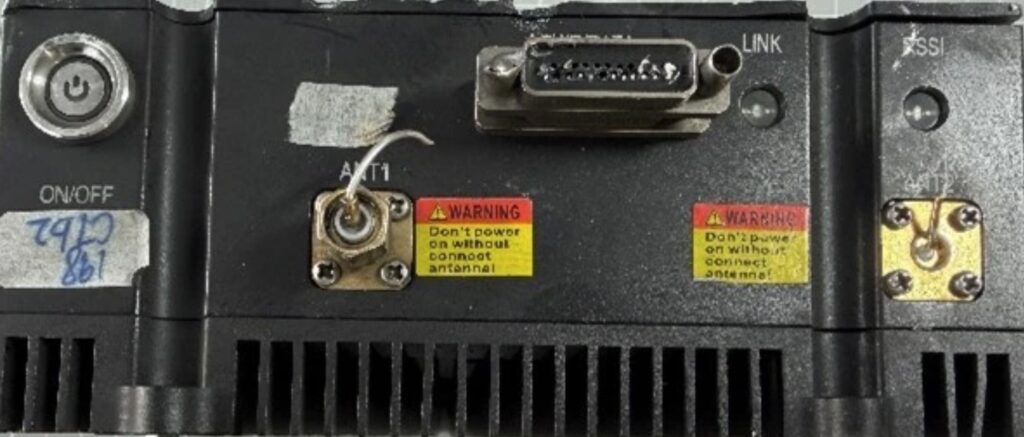
Undercover reporters ordered 500 drone mesh modems from a Chinese firm, which billed them to Russia’s Alabuga drone plant, investigation by The Insider found. The outlet estimates the firm makes about half the high-power mesh modems that let Russia steer its drones deep into Ukraine. The firm’s director also named US company AMD as the source of a key chip, and AMD says it has not sold to the firm.
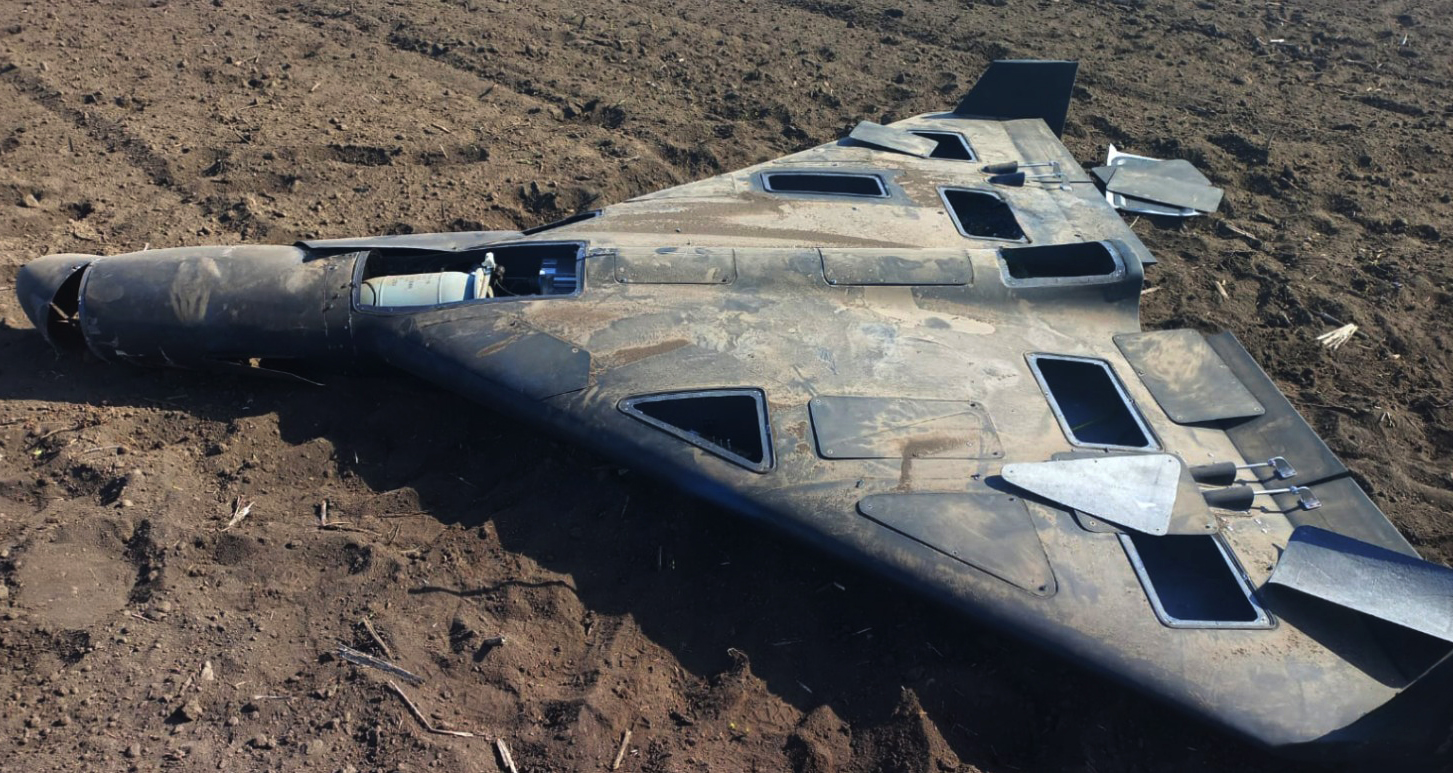
Geran drones and Banderol drone-missiles have become Russia’s main weapons against Ukraine’s energy grid. Russia began this winter’s strike campaign against that grid in late September, ISW assessed. Ukrainians’ survival this winter depends largely on how fast the West halts mesh modem sales to Russia, the outlet argued.
What a mesh modem does
A mesh modem links drones into one radio network. Each unit relays data for the others, so if one drone is shot down, traffic reroutes through the rest. Information keeps flowing even if nearly 80% of the drones are downed, Ukrainian defense adviser Serhii “Flash” Beskrestnov said in November 2025.
Range is the other half of the threat. One XK F-359 holds a line-of-sight link over 100–300 km, The Insider says. In theory, a couple of relay drones could keep a whole attack on Kyiv connected. Operators can then send new commands in flight and steer around air defenses. Russia’s Gerbera drones, first built as cheap decoys, increasingly carry these modems.
Explore further
Russia’s jam-resistant drones run on a Chinese modem no one has sanctioned
A modem from an upgraded Gerbera
To trace the part, The Insider’s correspondent in Ukraine examined an unmarked mesh modem from an upgraded Gerbera with a vertical tail fin, a version that appeared this summer. The outlet identified it as Xingkai’s XK F-359, the part Ukrainian intelligence and earlier reporting, Euromaidan Press included, had logged as the XK-F358. The Insider calls that label a misidentification.
Next, The Insider and the Nordsint investigative project contacted Xingkai on WeChat, posing as a Russian military supplier based in Alabuga. A company employee who introduced himself as “Jack Jiang” confirmed the firm is the model’s sole maker. The Insider identified him as Jiang Qin, Xingkai’s director and owner.
500 modems, three banks
The reporters then ordered 500 units for delivery to Alabuga, home to the plant that makes most of Russia’s long-range drones. Jiang invoiced 19.5 million yuan, which The Insider put at about $2.87 million. He offered two ways to pay: dollars to Xingkai’s DBS Bank account in Hong Kong, or yuan to his personal Ping An Bank account.
Explore further
America has sided with Russia against Ukraine. Europe should stop pretending and build a coalition against Russia, China, and even the US
In the chat, the reporters said outright that the end user was a military production facility. Jiang raised no objection, The Insider reported.
Later, after the reporters asked to update the address, Xingkai sent a revised invoice with “Alabuga” spelled in Latin letters. This time, it routed payment to a China Merchants Bank account in the name of a former Xingkai manager. She left a management post at the company in 2025, according to Tesari corporate records cited by The Insider. None of the three banks answered The Insider’s requests for comment.
Jiang also claimed the modem’s programmable chip is made by AMD. Asked for an AMD license, he refused, saying Xingkai buys the chips through a middleman. AMD told The Insider that Xingkai “is not an AMD customer or authorized partner,” and said it had sold the company nothing. AMD added that it bars exports of its products to Russia that violate US export controls and sanctions.
Russia's state-backed payment firm A7 took in at least 283 tons of cash rubles, worth more than $14 billion, between November 2024 and July 2025, and turned much of it into payments to China that hide where the money came from, the International Consortium of Investigative Journalists (ICIJ) and Russian investigative outlet Proekt reported on 21 October, citing leaked internal records.
Cut off from Western banks over its war against Ukraine, Russia now moves money the way drug gangs launder theirs: cash goes in, and clean-looking wire transfers come out abroad. The overlap is literal.
Last year, UK investigators found that a network laundering British drug gangs' cash had bought a Kyrgyz bank that was handling payments for Promsvyazbank, Russia's state defense bank. That same bank co-owns A7, which "is also likely to facilitate cash-based money laundering," anti-money-laundering expert George Voloshin told ICIJ. On 1 October, the US Treasury named A7 a "significant transnational criminal organization." Most of the market cash pays Chinese suppliers, and China supplies about 90% of the high-priority Western-restricted items Russia imports for its weapons. Drone makers working for the Russian army are among A7's clients, Proekt found in April.
From market stalls to a defense bank vault
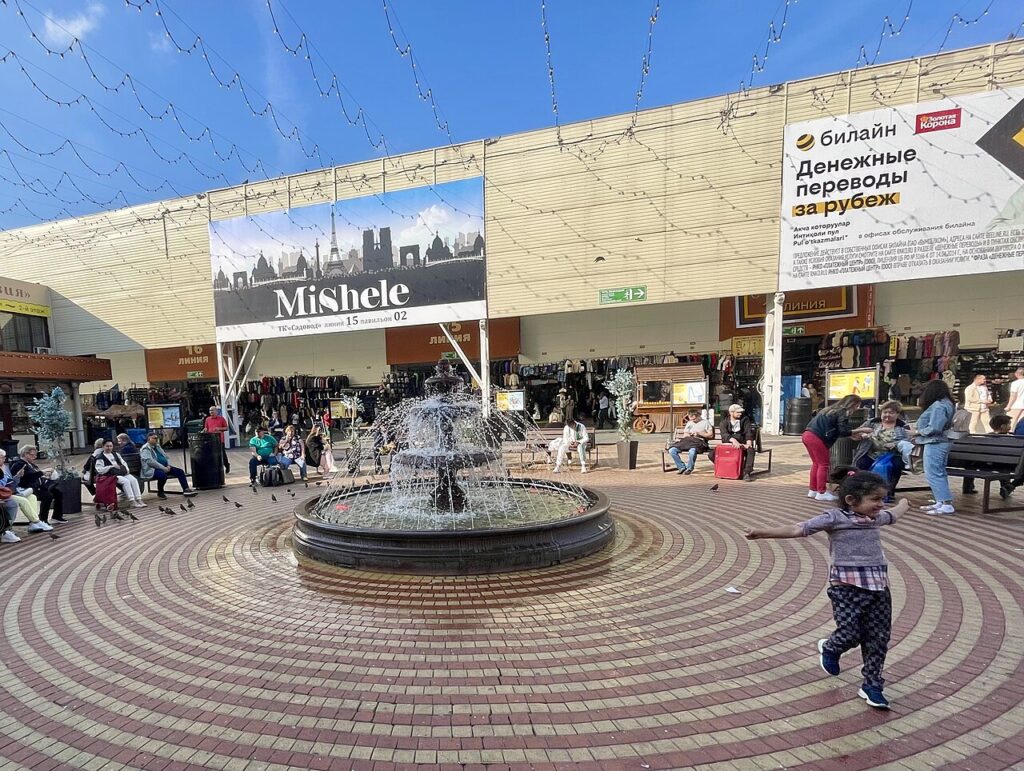
Much of the cash came from Moscow's giant Sadovod market, where broker teams known as "departments" collect bags of rubles from traders, the records show. Vans take the numbered bags to an A7 office, where about 50 cashiers count the money before it is trucked to Promsvyazbank. The bank vaults it and credits A7. At its peak, A7 handled at least 58 tons of cash a month.
Russia's central bank has flagged the problem itself. Money of unknown origin comes "primarily" from Moscow's wholesale and retail markets and from illegal crypto exchanges, a senior Central Bank official said in September, as quoted by ICIJ.
Sadovod market in Moscow, where broker teams later collected cash for the A7 payment firm, Russia, 19 September 2023. Photo: Nikita Andreev/Wikimedia Commons
Clean money for Chinese factories
A7 then orders shell companies outside Russia to pay its clients' suppliers, mostly Chinese exporters. The money moves through Kyrgyzstan, largely via the state-owned Trading Company of the Kyrgyz Republic, and the wire transfers carry no trace of cash or of Russia. The records list accounts at ICBC, Bank of China, Agricultural Bank of China, and China Construction Bank. One $287,000 transfer went through Standard Chartered's Hong Kong branch with "Sadovod" recorded as the client.
Chinese banks began refusing Russia-linked payments in December 2023 under the threat of US secondary sanctions. Stripping the funds of their origin makes them easier for Chinese banks to accept, illicit-finance expert Zachary Tvarozna told ICIJ. "The only company that sees everything is A7 itself," Voloshin said.
A7, Promsvyazbank, the Chinese banks, and Kyrgyzstan's economy ministry did not answer ICIJ's questions. A7 has publicly rejected the US accusations, saying it runs "a modern, multi-tiered compliance system."
Explore further
US Treasury cracks down on Russia-China-Kyrgyzstan payment network, expands sanctions
Sanctioned, but still moving
A7 launched in late 2024, co-owned by Promsvyazbank and led by Moldovan oligarch Ilan Shor, a "sanctioned and convicted criminal fraudster," according to the US Treasury. Ukraine sanctioned its network in February, and the UK followed in May. A7 claimed to have moved more than 7.5 trillion rubles, about 13% of Russia's 2025 foreign trade transactions, and its network also helped Iran sell oil and buy weapons, the Treasury said.
Sanctions did hit A7's crypto side. Daily volume of its ruble token A7A5 fell 96% from its peak by June 2026, blockchain analytics firm Elliptic found. The cash channel is harder to touch: Western banks can see where A7's money lands, but not where it starts.
But the headache hasn't deterred him from taking risks on projects that challenge the audience.
"It's not even about Trump anymore. We should be able to explore anything and everything that is uncomfortable," Stan told Business Insider. "We can't become so sensitive to the point where we're actually depriving ourselves of elevated thought about anyone or any matter. Certainly not in the hands of fear."
Stan's latest film, "Fjord," delivers on that promise, telling a subversive, provocative story about a conservative Romanian-Norwegian couple whose parenting methods are called into question after they move to a progressive Norwegian town.
For Stan, the film wasn't just an opportunity to play nuanced, thought-provoking material. As a Romanian-American who fled the country as a boy in the late 1980s, working with Romanian filmmaker Cristian Mungiu ("4 Months, 3 Weeks and 2 Days") was also a long-awaited homecoming.
Sebastian Stan plays a Romanian who moves to Norway in "Fjord."
Neon
Stan immersed himself fully in the role, sporting a shaved head with a massive bald spot and speaking most of his lines in Romanian. He and Renate Reinsve, who plays his wife, were so locked in during production that they would go out to dinner together, still dressed in the clothes they shot their scenes in that day. Stan said the experience brought him closer to his homeland.
"A lot of people go, 'Great, you want to come back to Romania, and you want to do movies, but you didn't grow up here, you don't know what our experience is. You were lucky you got away,' so I was a little apprehensive," Stan told Business Insider about working with Mungiu's Romanian-heavy crew. "But, honestly, on the last day of this movie, they wrapped the Romanian flag around me, and they were so proud to kind of take me back in a way and welcome me home."
For the latest interview in Business Insider's Role Play series, Stan talks about his failed "American Idol" audition, where he thinks Bucky Barnes fits in the current MCU, and realizing how "hypocritical" Hollywood is after playing Trump.
On sleeping on the street to audition for 'American Idol' and losing out on 'The O.C.'
Stan in 2006.
Chance Yeh/Patrick McMullan/Getty Images
Business Insider: What are your recollections of auditioning for "American Idol" back when you were 19?
Sebastian Stan: It was my friend Justin; we both went to Rutgers for the acting program, and he said, "I'm going to New York City to try out for this new show, 'American Idol,'" and he said, "Want to come?" And I was like, "Fuck it, why not."
I remember I had on leather pants; I don't know why I thought that was gonna make a difference. We got there and it was in Times Square, and I see this huge line around the block, and I'm like, "What's going on?" He's like, "No, no, the audition is tomorrow," but it was like 6 p.m., and he tells me we're going to sleep on the street.
So we went to a McDonald's in Times Square, slept barely in this line, and in the morning we got in to these auditions. And what they did was they took five or six of you at a time; they lined you up. I didn't meet any of the judges; it was just some guy. The five of us did 20 seconds of a capella; I think I sang the medley from "Moulin Rouge!," and they were like, "Next." So it didn't work out.
You start building credits, and then you go on this five-year run of playing the obnoxious jerk roles: "The Covenant," "The Education of Charlie Banks," "Rachel Getting Married," "Hot Tub Time Machine." Was there a point when you were worried about getting typecast as the 2000s-era jerk?
My mindset was, get a job. I was just trying to get a foot in the door. And by the way, I was getting close to a lot of other kinds of roles. At the time, there was that movie "Alpha Dog" — I tried out for that and didn't get it.
But in that era were the "American Pie" movies and "Not Another Teen Movie," which Chris Evans did; they were these movies that had the stereotypical jock asshole guy, and people would always take a look at me and go, "That's the guy." And in "Gossip Girl" I played that, too. But I was just trying to get a start. It wasn't who I felt I truly was.
I remember I tried out for "The O.C." and got very close. "Star Trek," didn't get that. "Green Lantern," "John Carter," "The Lone Ranger" — so I was going out for big stuff; I just wasn't getting it.
On why he believes Bucky Barnes needs to stay grounded and the 'education' Marvel gave him
Stan as Bucky Barnes in "Thunderbolts*."
Marvel Studios
Looking back, do you think your career could have went down a different path if being cast as Bucky Barnes didn't hit the way it did?
What's funny is you go to acting school, and you're being taught the craft, but then there's the learning that you do on set — having the experience of being on set with a camera, learning the lenses, what everyone does. So in some ways, Marvel was a real education in moviemaking and acting. It also allowed me to go back over and over and have some consistency in my life, which I didn't have. I grew up in that period. I got more focused. And it freed me.
The role, which I thought was complex, this character is very different now than when we started out. That character had PTSD, had gone through things; there was a lot to play there. So that box was checked.
Looking outside of that, it became: what were the things I could do that were so far away from that? I don't know if I would have pursued those things as aggressively if I didn't have this lane where I was getting to play more of the straight man.
Are there tweaks you've done to the Bucky character over the years that you're surprised fans haven't caught on to yet?
We've tried, and I make an emphasis on we because it's not just me. I have had to adjust to Marvel changing and evolving and becoming a bigger world. The Captain America franchise, when we started, they were very grounded. "Captain America: The Winter Soldier" is kind of a suspense thriller; "Civil War" had more personalities, but at the heart it was serious, so this character, at its core, is a very serious character.
Maybe people would argue differently, but things have gone more into an expansive, integrative place of how does everybody fit in, and I think humor is a big part of making that happen. We have, and I have, tried to adapt to those things. So the question then became, What's funny about this guy? What is there to play? Some of it has been explored, but not entirely.
It's trying different things. At this moment in time, the character adopted this sort of Clint Eastwood, crusty old man humor. Dry —been there, done that, Why are we fucking doing this again — that kind of thing. I don't know if the character will stay there, but it's not a character who can suddenly go big.
On realizing Hollywood is 'hypocritical' after playing Trump and collaborating with great directors
Stan as Donald Trump in "The Apprentice."
Briarcliff Entertainment
Going to acting school is one aspect of building a career, and you mentioned another is learning what it's like working on sets. But yet another is understanding the Hollywood game. What was the biggest thing you learned about Hollywood after playing Donald Trump in "The Apprentice"?
Um [Laughs.] It's quite hypocritical in a lot of ways. Everybody has good intentions, I think, about saying the right things, but they don't always do the right thing. I'm not saying it's gaslighting, but there's something to it, because there's often times you end up asking yourself if you're the one that's crazy.
There are many times — and I'm not saying it was just related to "The Apprentice" or Trump — there are other things even now where I've been in rooms and talking to people who will say things in private that they will never say publicly.
As it pertains to that movie, that was the experience, which was everybody loved the movie that I talked to; everybody wanted to support it, but yet nobody wanted to step up to the plate.
Now here we are today, where the trailer for the Elon Musk documentary is struggling to be shown online, so now this kind of thing is pretty normalized. Can you imagine that happening ten to 20 years ago?
Back in 2018, I spoke to you for "Destroyer." At that time, you hadn't landed lead roles yet. I asked what you were looking for when that happens, and you said, "Down the line I want to be remembered for being part of specific works and visions of directors rather than a group of characters."
It's crazy to hear that quote. Back then, I think that was where I was starting to go because I had come off of "I, Tonya" and I'd learned the value of having a good director and how it influences your work and the performance. Karyn Kusama, who did "Destroyer," was someone I really respected.
And also, before that, you mentioned "Rachel Getting Married" — my whole plan back then was to just get one scene or a little part in a big director's movie. So that was Jonathan Demme. "The Martian," I got to work with Ridley Scott. I took those parts because this is a director's medium.
Since then, I've tried to stick to that, and these performances you've mentioned, to some extent, they've worked because of those collaborations where you need to have the captain of the ship. You need to have those directors who know how to communicate. I've found myself better when I am in trusted hands, when it's someone that I really allow myself to let go with.
Because if you can't trust a director, what happens is you start to be worried about what's happening on the other side of the camera, and you're then not involved in the experience of the role you're playing. I think that shows when that happens.
This interview has been condensed and edited for length and clarity.
A sharp critique of Luke Coffey’s article on the C5+1 format and American ambitions in the region The other day, another opus from the camp of American neocons saw the light of day—an article by Hudson Institute senior fellow Luke Coffey under the loud headline “The US Cannot Afford to Stay on the Sidelines in […]

 Login