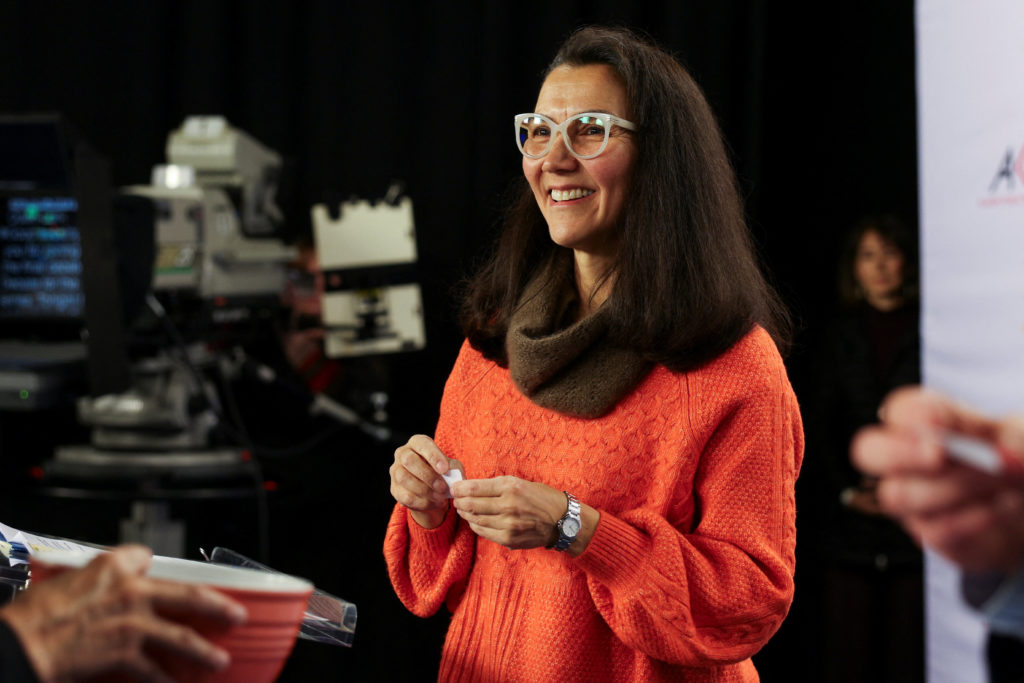
Peltola required medical attention after the accident, which happened when another vehicle crashed into the one transporting Peltola and her family, the campaign said.
Blanche told CNN's "State of the Union" that President Donald Trump, who said Friday that he was "the one that said do it," is not trying to overturn state election results "in any way, shape or form" on the cusp of the Nov. 3 election.
President Trump went after Sen. Lisa Murkowski (R-Alaska) and Alaska’s ranked choice voting system Saturday. “The Republicans’ Worst Senator, by far, Lisa Murkowski, of the Great State of Alaska (A State for which I produced, on a continuing basis, Billions and Billions of Dollars, and which Crooked Joe Biden and the Dumocrats had totally shut…
Nonprofit watchdog group Common Cause, represented by attorneys from American Civil Liberties Union (ACLU), has filed a motion to intervene in the Department of Justice’s (DOJ) lawsuit over Alaska’s Senate election. The DOJ filed a lawsuit Thursday claiming the presence of a candidate with the same name as incumbent Sen. Dan Sullivan (R) could give…
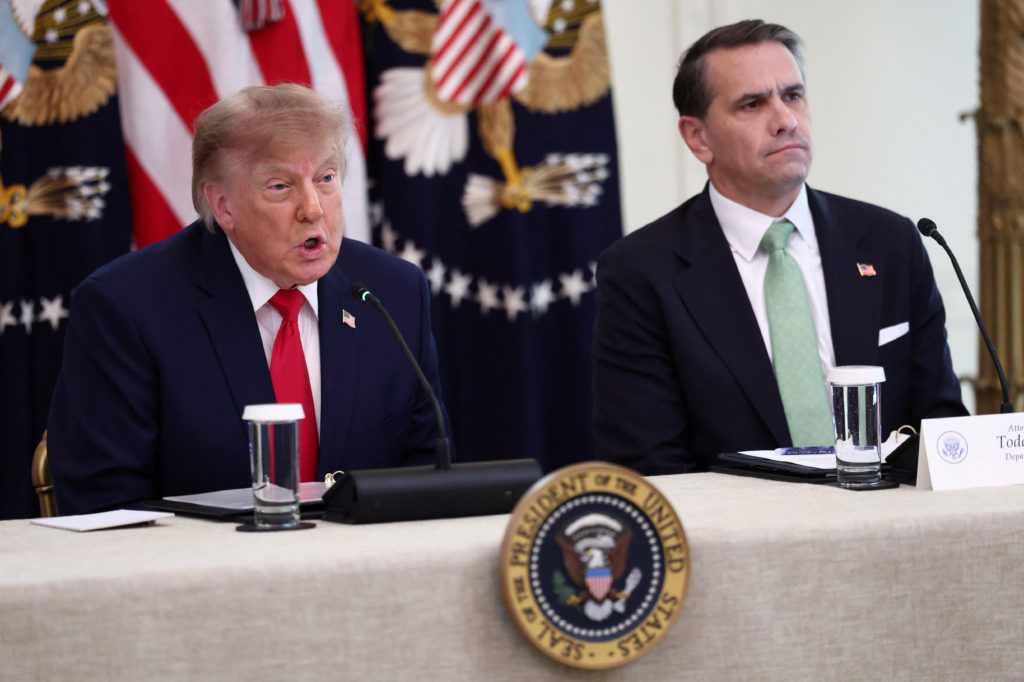
Attorney General Todd Blanche said Saturday that the Justice Department is not trying to stop the certification of Alaska’s election, referring to a recently filed lawsuit that claimed to “protect the integrity” of the election. The lawsuit, filed Thursday in the U.S. District Court for the district of Alaska, claims that the inclusion of a candidate with…
With moves in Alaska and California, the department has stepped up interventions in the midterm elections as the president’s instrument of unmediated executive power.
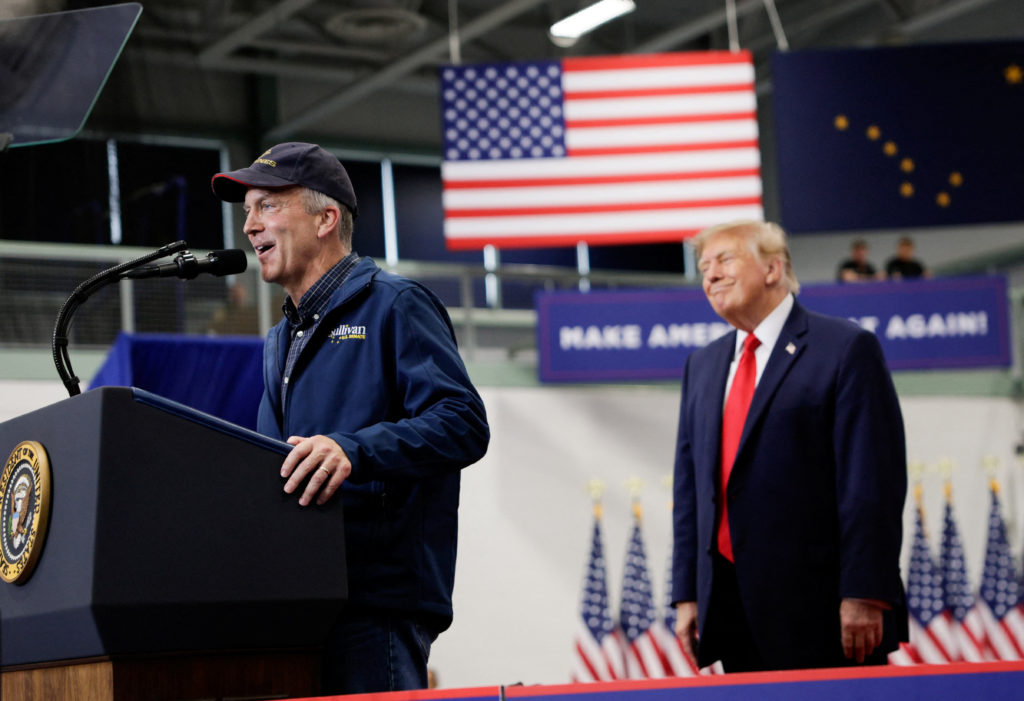
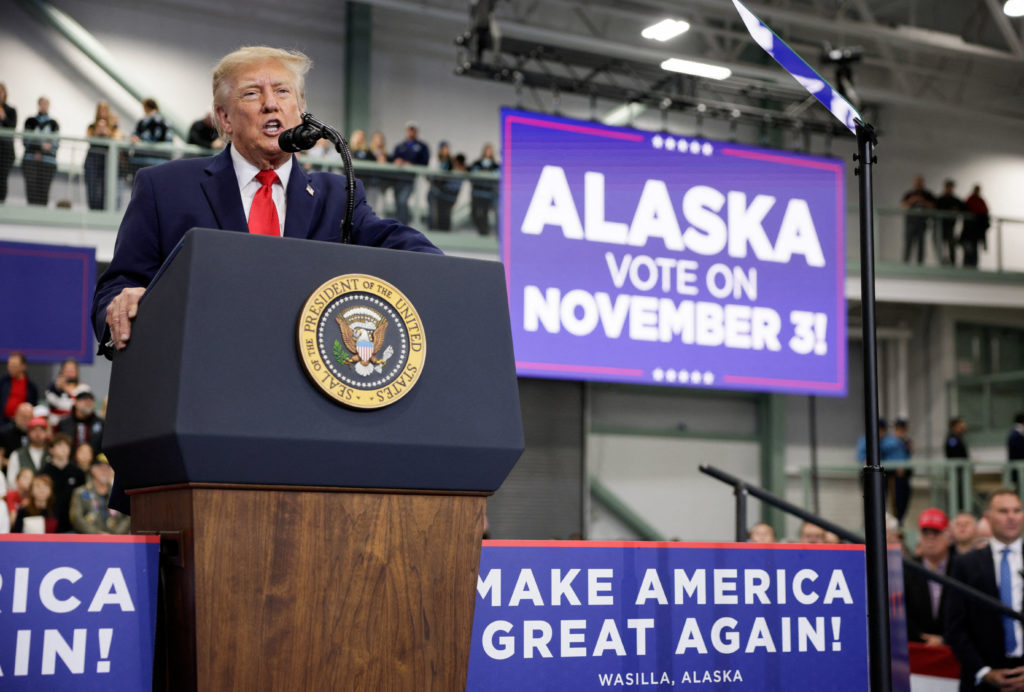
President Trump during a campaign rally in support of Senator Dan S. Sullivan in Wasilla, Alaska, this month. Mr. Trump urged the Justice Dept. to intervene in the Senate race.
One of them is a Republican senator and ally of the president. The other is a retired schoolteacher whom Republicans accuse of being a Democratic plant to siphon away votes.
Oil drilling rigs in Prudhoe Bay, Alaska. The Polar LNG plan called for the company to tap into the giant load of natural gas available in the state’s northern reaches.
No obvious legal authority supports a pre-emptive effort to block the certification of Alaska’s Senate election if the Republican incumbent narrowly loses.
President Trump is making a final push to help Republicans maintain control of Congress as some of the most closely watched races remain competitive. But the battle for the Senate is also playing out in court. In Alaska, the Trump administration sued to potentially block certification of the election if the Republican incumbent loses. White House correspondent Liz Landers reports.
La causa fa leva sulla confusione degli elettori riguardo a due candidati di nome Dan Sullivan, ma le sue condizioni restrittive sollevano interrogativi sulle intenzioni più ampie dell’amministrazione
Today, the Trump Justice Department filed a federal lawsuit seeking to block Alaska Senate election results on the grounds they might be influenced by voter "confusion" between incumbent Republican Senator Dan S. Sullivan and a separate Republican candidate with a very similar name (Dan L. Sullivan). I previously wrote about the issues raised by the two Dan Sullivans here. As I pointed out in the earlier post, there is no legal basis for overturning congressional election results based on voter confusion, and any such action would likely violate the First Amendment. See also this analysis by election law specialist Rick Hasen.
I would add that any such federal action also runs afoul of states' primary authority over election procedures. The Elections Clause of the Constitution gives states primary authority over "The Times, Places and Manner of holding Elections for Senators and Representatives," subject to Congress' power to modify these rules by legislation. Congress has not enacted any statute allowing overturning of election results based on possible "voter confusion."
If "voter confusion" were a legitimate reason to overturn election results, that would imperil a great many election winners, as voter ignorance - and exploitation thereof by candidates - is a widespread and longstanding problem. I covered some of these points in my previous post about the two Dan Sullivans:
Donald Trump is a particularly egregious example, going all the way back to his first campaign in 2016, and more recently with his lies about the 2020 election and other issues. But more conventional politicians also often resort to lies and deception, even if not to the same degree. President Obama, for example, famously lied when he claimed that, under the Affordable Care Act, "if you like your health care plan, you can keep it." That deception won the 2013 Politifact Lie of the Year award. But it still helped Obama get reelected in 2012. I am not sure exploiting voter confusion about names is any worse than exploiting their ignorance about policy issues like crime, immigration, and health care….
Voter confusion about candidates with similar names is just another example of this broader problem….
There is no easy solution to the problem of voter ignorance. But I assess a range of possible options in my 2023 article on "Top-Down and Bottom-Up Solutions to the Problem of Political Ignorance, and in my earlier book Democracy and Political Ignorance. I believe the best approach is to make fewer decisions at the ballot box and more by "voting with your feet," where incentives to seek out information and evaluate it wisely are much better. But I recognize that any effective approach will take time, and there may be no one fix that is sufficient by itself. We may need to pursue multiple strategies. In the meantime, voters are likely to continue to be ignorant and confused about a variety of issues, and politicians and interest groups are likely to keep on exploiting that.
Many of these other voter ignorance problems are far worse than any potential confusion between candidates with similar names, a problem that only comes up relatively rarely.
UPDATE: Rick Hasen has a helpful analysis of the Alaska lawsuit here:
DOJ has no power to decide which candidates can appear on the ballot. The sole basis that DOJ asserted for trying to block the state's certification process is the National Voter Registration Act's preamble that reads that the act is designed to "protect the integrity of the electoral process." That preamble of course gives no power whatsoever to the federal government to do anything. It does not give DOJ the power to determine ballot access or block certification of a federal election. The Alaska Supreme Court decided the state law ballot access question back in June, allowing the second Sullivan to appear on the ballot.
The Trump administration has filed a lawsuit that aims to block certification of the Senate election in Alaska if incumbent Republican Sen. Dan Sullivan loses his reelection bid. The lawsuit, filed Thursday in the U.S. District Court for the district of Alaska, argues that a win for Democrat Mary Peltola could be blocked by the…
The lawsuit centers on one of the president's longstanding complaints in the Senate race — the presence of a second candidate named Dan Sullivan who Republicans fear could siphon away votes from the incumbent in what's likely to be a photo-finish contest with Democrat Mary Peltola.
Charisma or cash: to win an election, candidates need at least one of those two factors. With two weeks to go until the U.S. midterm elections, Republicans are throwing everything they have into the closest states to try to climb back in polls that are unfavorable to them. They have the invaluable help of the vast sums Donald Trump raises through his Super PAC, the political action committee that pools donations coming from the ultraconservative MAGA movement.

 Login