Welcome to Bunker Talk. This is a weekend open discussion post for the best commenting crew on the net, in which we can chat about all the stuff that went on this week that we didn’t cover. We can also talk about the stuff we did or whatever else grabs your interest. In other words, it’s an off-topic thread.
This week’s caption reads:
The interior of the launch control equipment room in the underground of the Oscar-1 Minuteman Missile Alert Facility on Whiteman Air Force Base, Missouri, June 18, 2020. The Oscar-01 MAF was constructed at Whiteman AFB in 1963 and determined to be eligible for the National Register of Historic Places (NRHP) by Missouri SHPO in 1998. The facility consists of a one-story surface structure, assembled as a Launch Control Support Building (LCSB), and two sub-surface, re-enforced concrete encapsulated steel pods- a Launch Control Center (LCC) and Launch Control Equipment Building (LCEB). These two sub-surface wings are connected by a Tunnel Junction and accessed by an elevator. (U.S. Air Force photo by Tech. Sgt. Alexander W. Riedel)
PRIME DIRECTIVES:
If you want to talk politics, do so respectfully and know that there’s always somebody that isn’t going to agree with you.
If you have political differences, hash it out respectfully, stick to the facts, and no childish name-calling or personal attacks of any kind. If you can’t handle yourself in that manner, then please, discuss virtually anything else.
No drive-by garbage political memes. No conspiracy theory rants. Links to crackpot sites will be axed, too. Trolling and shitposting will not be tolerated. No obsessive behavior about other users. Just don’t interact with folks you don’t like.
Do not be a sucker and feed trolls! That’s as much on you as on them. Use the mute button if you don’t like what you see.
So unless you have something of quality to say, know how to treat people with respect, understand that everyone isn’t going to subscribe to your exact same worldview, and have come to terms with the reality that there is no perfect solution when it comes to moderation of a community like this, it’s probably best to just move on.
Finally, as always, report offenders, please. This doesn’t mean reporting people who don’t share your political views, but we really need your help in this regard.
U.S. Ambassador to Turkey Tom Barrack suggested on Friday that the U.S. could strike Iran as early as this weekend. His statement caps a week of growing speculation about whether America and Israel could resume major attacks on the Islamic Republic.
“Could there be a strike this weekend? Absolutely,” Barrack told online commentator Mario Nawfal when asked to explain the end game of efforts to seek a diplomatic resolution. “The president is very clear. He’s open and available and accessible to a deal. And we’ve been at the table for months and months and months… the nuclear proliferation and where we go with the enrichment and all those things are, are details, the punctuation in the chapter that needs to be finished.”
BREAKING: AMB. TOM BARRACK WARNS U.S. STRIKE COULD HAPPEN THIS WEEKEND
I asked Trump's Special Envoy, Tom Barrack: “Could there be a strike on this this weekend?
Asked about Barrack’s comments regarding the potential timing of a strike on Iran, President Donald Trump told reporters that the ambassador “is a powerful man, I guess. If that’s the case, I don’t know anything about it.”
Q: Your ambassador to Türkiye said that "absolutely" there could be a strike on Iran this weekend.
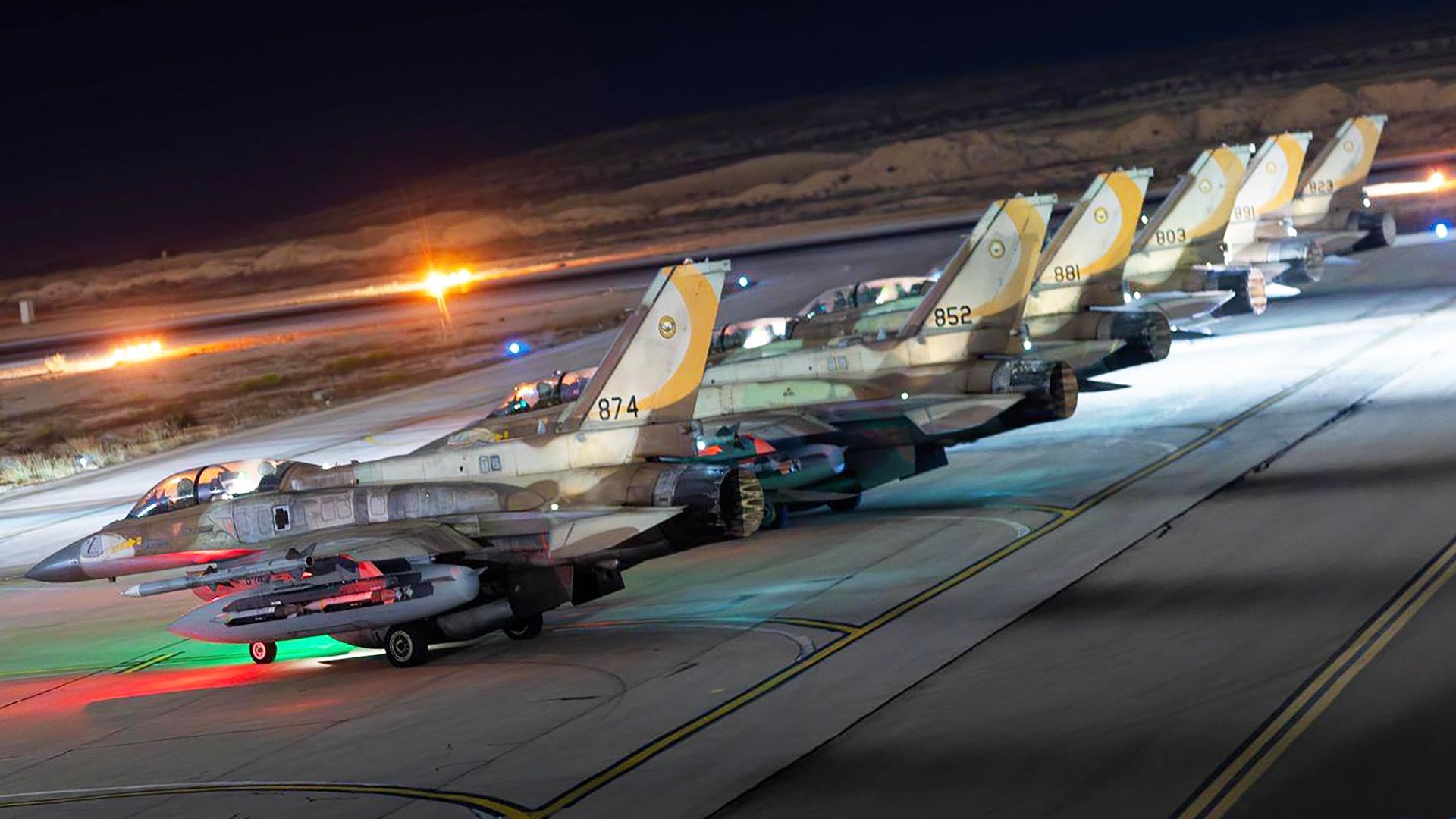
On Wednesday, Axios reported that dozens of Israeli fighters flew through Syrian and Iraqi airspace toward the border with Iran on Monday as part of a “power projection” exercise.
The sorties, extending some 800 miles away from Israel proper, were launched after U.S. Defense Secretary Pete Hegseth made a surprise trip to Israel earlier this week to meet with that country’s Prime Minister, Benjamin Netanyahu, reportedly to discuss new plans to attack Iran.
“Israel notified the U.S. in advance and described the operation as a training exercise [on Monday] intended for ‘power projection’ and aimed at deterring Iran from launching attacks against Israel ahead of the elections [in that country],” according to Axios. “Dozens of fighter jets and refueling aircraft” were involved.
One of the IAF’s KC-707s seen refueling an F-15. (IAF)
After the Axios story came out, there were unconfirmed reports of additional major Israeli military air activity on Wednesday night.
Intense IAF fighter jet activity is now being reported over Iraq, especially on the border with Iran.
Meanwhile, continuous takeoffs are taking place from the Ramon, Nevatim, and Ovda airbases. https://t.co/c35xIbtAAu
As TWZ editor-in-chief Tyler Rogoway pointed out on X Wednesday evening, the commotion over Iraq was likely practice runs and would be part of the prelude to any major new air operation targeting Iran. Conducting sorties relatively close to the Iranian border would also offer opportunities to gain valuable intelligence about the current state and disposition of that country’s air defenses.
“Dry runs are important for such a large integrated operation,” Rogoway noted. “They can be scaled as the operation gets closer. Getting a large part of the intended force up and in position can really help with the chances of mission success if the actual order to execute is given. So many moving parts to align. Not great to find out any weak spots on night one of a new offensive.”
“Stimulating Iran’s air defenses is critical,” he added. “By Iran operating as if a full scale attack could be coming, their air defenses can be detected, categorized and geolocated. This is absolutely critical prior to a major air operation. Surveilling them during times of lower alert does not provide the same fidelity of actionable intelligence. Knowing where those threats are and how they are operating can mean the difference of life and death and/or will help standoff munitions make their way to their targets as those defenses can be suppressed, destroyed, or avoided entirely via careful mission planning.”
Couple things on the large scale tactical aircraft activity over the Middle East tonight:
I don't have any info on this operation or if it truly has gone kinetic, but here is likely what is happening if not:
1.) Dry runs are important for such a large integrated operation. They…
“U.S. officials said the Israelis knew that Iran’s air defense systems would detect the sortie[s on Monday],” Axios’ report also noted. “Some U.S. sources said they had the impression that Israel was hoping the Iranians would fire at the aircraft, providing a justification for launching strikes against Iran.”
TWZ cannot confirm this; however pushing Iran to react would not fit with the goals of a major exercise like this.
There have been other signs that a major new round of U.S. and/or Israeli strikes on Iran might be looming on the horizon. Fox News reported earlier this week that the Nimitz class aircraft carrier USS Theodore Roosevelt and the rest of its carrier strike group, as well as the Makin Island Amphibious Ready Group carrying the 13th Marine Expeditionary Unit (MEU), were heading to the Middle East, citing unnamed U.S. officials.
“The ships will arrive in the Middle East by the end of November,” the officials said, according to a post on X from Fox’s Jennifer Griffin on Tuesday. “These new deployments will add about 10,000 sailors and Marines to the Middle East.”
Per @Liz_Friden The U.S. is sending the USS Theodore Roosevelt carrier strike group and the 13th Marine Expeditionary Unit to the Middle East, two U.S. officials confirm to Fox News. The ships will arrive in the Middle East by the end of November, the officials said. These new…
There have been indications of increased U.S. military air activity in the Middle East recently, as well. Observers have called attention to the particularly significant influx of aerial refueling tankers to bases in the region, as well as in Europe, which would be critical to any new major air campaign.
Overall numbers across CENTCOM and Europe have now stabilised back to the levels they were at back at the start of September, around 190-195. There are a few tankers dotted around at other sites temporarily (Glasgow Prestwick and… pic.twitter.com/taKi8op7Tv
In addition, there are claims that Russia is evacuating its scientists from the Bushehr Nuclear Power plant and other Russians ahead of a potential new round of strikes. TWZ cannot independently verify this.
BREAKING: Russian airforce TU-134 used to evacuate high ranking personnel has just left Iran with its transponder off rumoured to be picking up Russian scientists from Bushehr Nuclear Power Plant.
The New York Times reported on Wednesday that the U.S. and Israeli militaries had “developed specific plans for renewed strikes against Iran after the American midterm elections,” citing U.S. officials and other people briefed on the deliberations.
Authorities in Washington and Jerusalem appear to be planning “a short but intensive operation” that would last between three and five days, the newspaper added. “The targets would likely include Iran’s energy infrastructure, nuclear facilities, and missile and drone arsenal. Some officials say one more big round of attacks could push Iran’s economy over the brink and force the country to make diplomatic concessions after nearly eight months of conflict.”
Separately on Wednesday, NBC News also reported that the Pentagon and U.S. State Department were relocating personnel from bases and diplomatic facilities in the Middle East, amid the possibility of new strikes on Iran, as well as broader regional security concerns. The State Department subsequently pushed back on that report, saying that non-emergency U.S. government employees and dependents had only been directed to leave Saudi Arabia in response to attacks from Iranian-backed Houthi militants in Yemen.
This is inaccurate. The U.S. Department of State issued an ordered departure for non-emergency U.S. government employees and their family members in Saudi Arabia only.
Iranian-supported Houthis have increasingly engaged in hostilities against Saudi Arabia, including attacks on… https://t.co/yNrCwDcfIg
A high-ranking Israel Defense Forces (IDF) official we spoke with said a new war with Iran is not a foregone conclusion.
“I would describe the situation as increasingly tense, with a real risk of renewed escalation,” the IDF official told us. “However, I would be cautious about concluding that another war is inevitable or that its timing can be reliably predicted.”
“The recent IAF [Israeli Air Force] activity is significant, as are the reported military preparations and the increasingly confrontational rhetoric from both Washington and Jerusalem,” he added. “But military readiness, deterrence, and operational planning do not necessarily mean that a final political decision to launch another campaign has been made.”
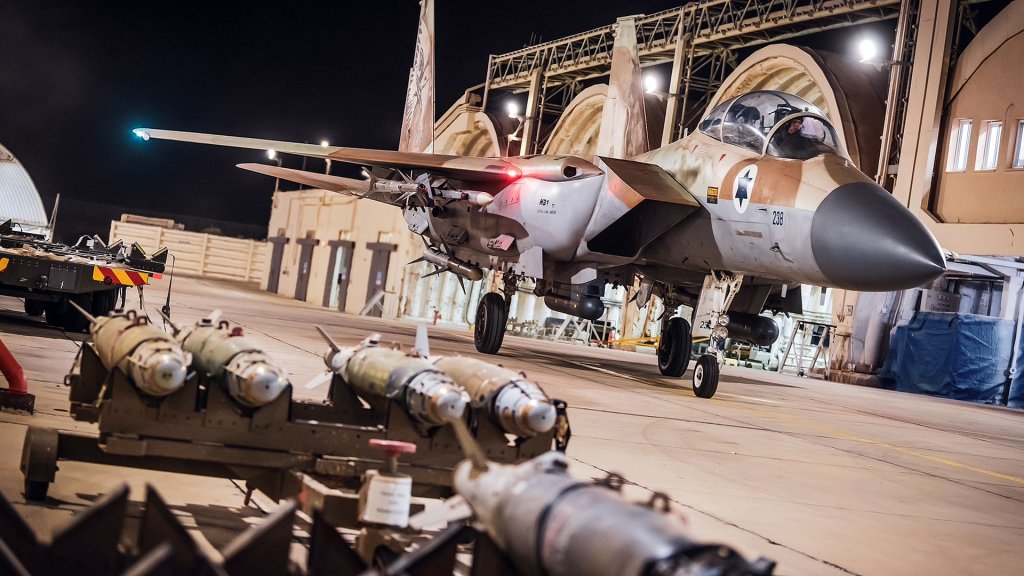
An Israeli Air Force (IAF) F-15I. (IAF) IAF
“We do not see any indications of a need to strike Iran before the election,” IDF Chief of Staff Lt. Gen. Eyal Zamir also said during a recent closed-door meeting, according to Israeli media reports. At the same time, “if we determine that a strike on Iran is necessary, we will carry it out.”
“Iran is once again attempting to develop a nuclear bomb,” Israeli Prime Minister Netanyahu also warned again this week, according to TheJerusalem Post. “My directive to the IDF, the Mossad, and the defense establishment… [is] to overthrow the regime in Iran.”
The IDF official also raised questions about the potential efficacy of any new major air campaign against Iran.
“Both Trump and Netanyahu have previously described the results of earlier rounds of fighting as a decisive, even total, victory, emphasizing the damage inflicted on Iran’s ballistic missile capabilities, its production and supply chains, and its nuclear infrastructure,” the official noted. “This raises an obvious question: If the results were as decisive as they claimed, what has changed to make another confrontation necessary now?”
“I believe we must recognize the limitations of trying to defeat a country like Iran through targeted killings and stand-off kinetic strikes alone,” he added. “Such operations can destroy infrastructure, eliminate key personnel, disrupt production, and delay military programs. They can impose significant costs on an adversary. But they do not necessarily eliminate the adversary’s strategic ambitions, prevent the regeneration of capabilities, or produce a durable political outcome.”
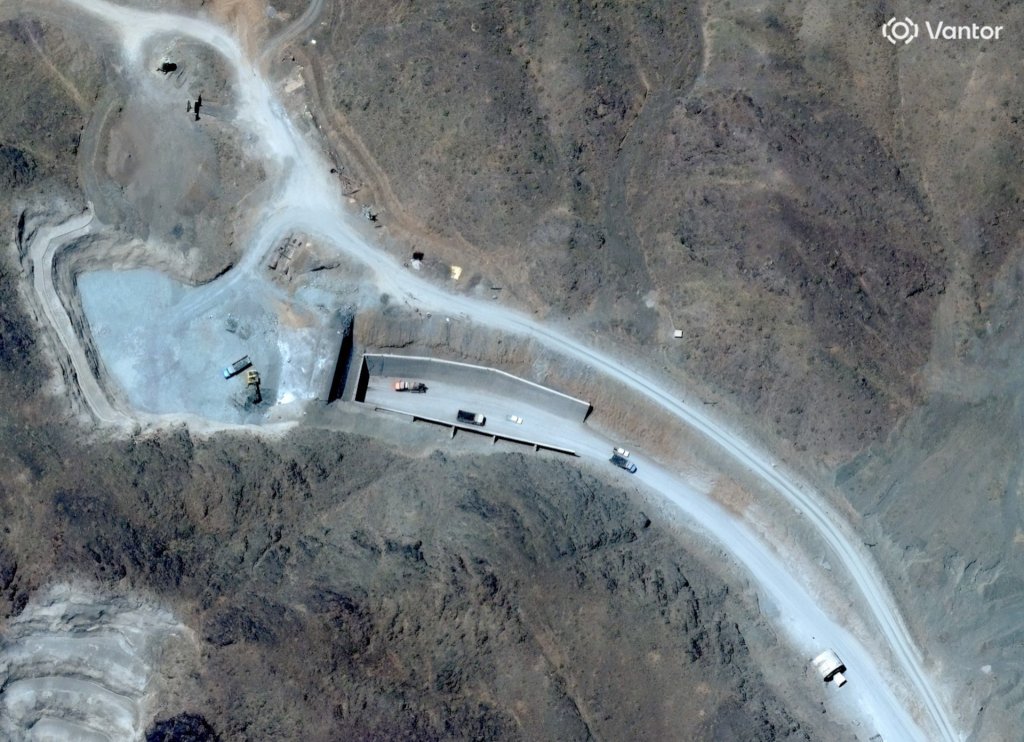
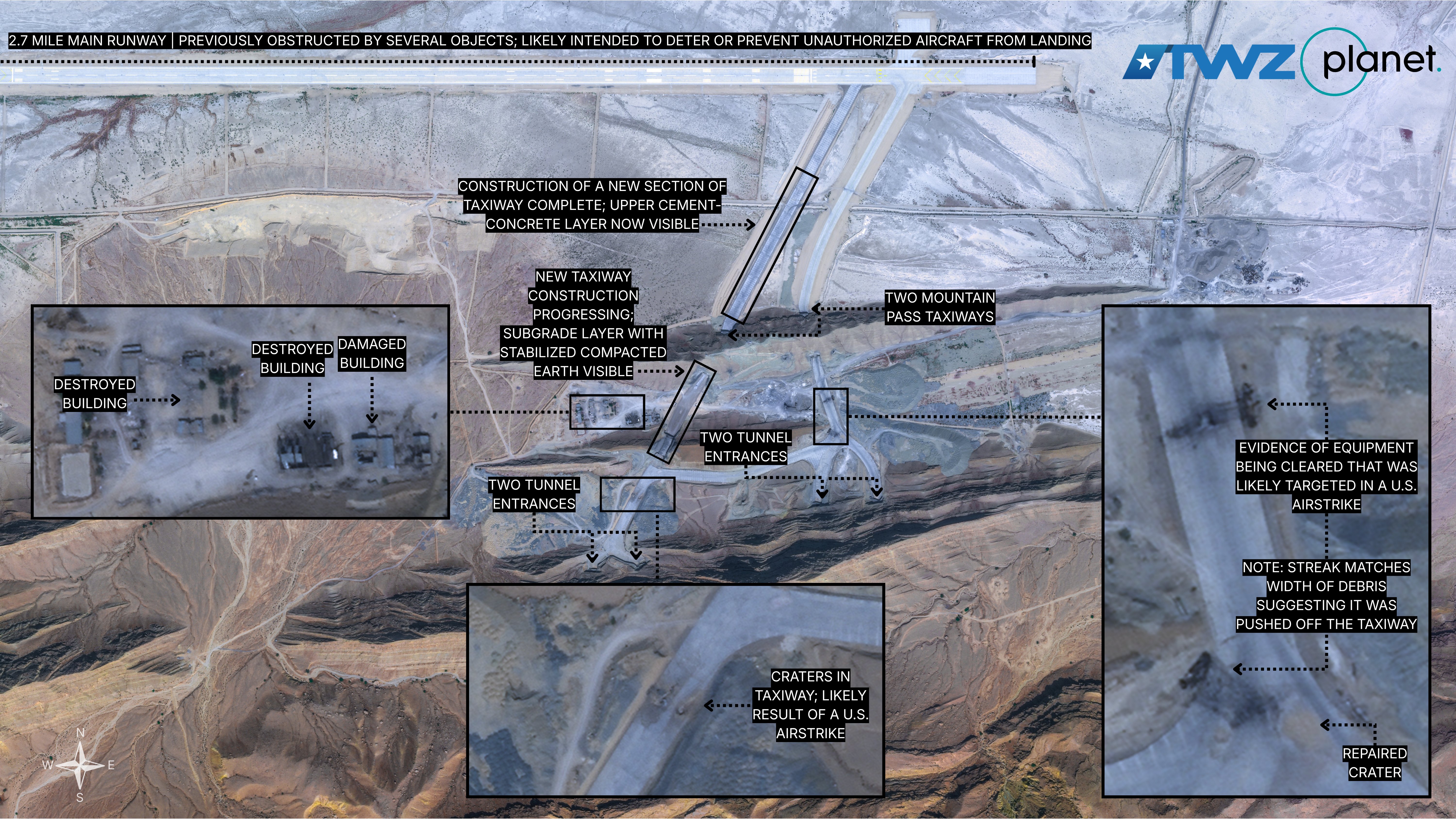
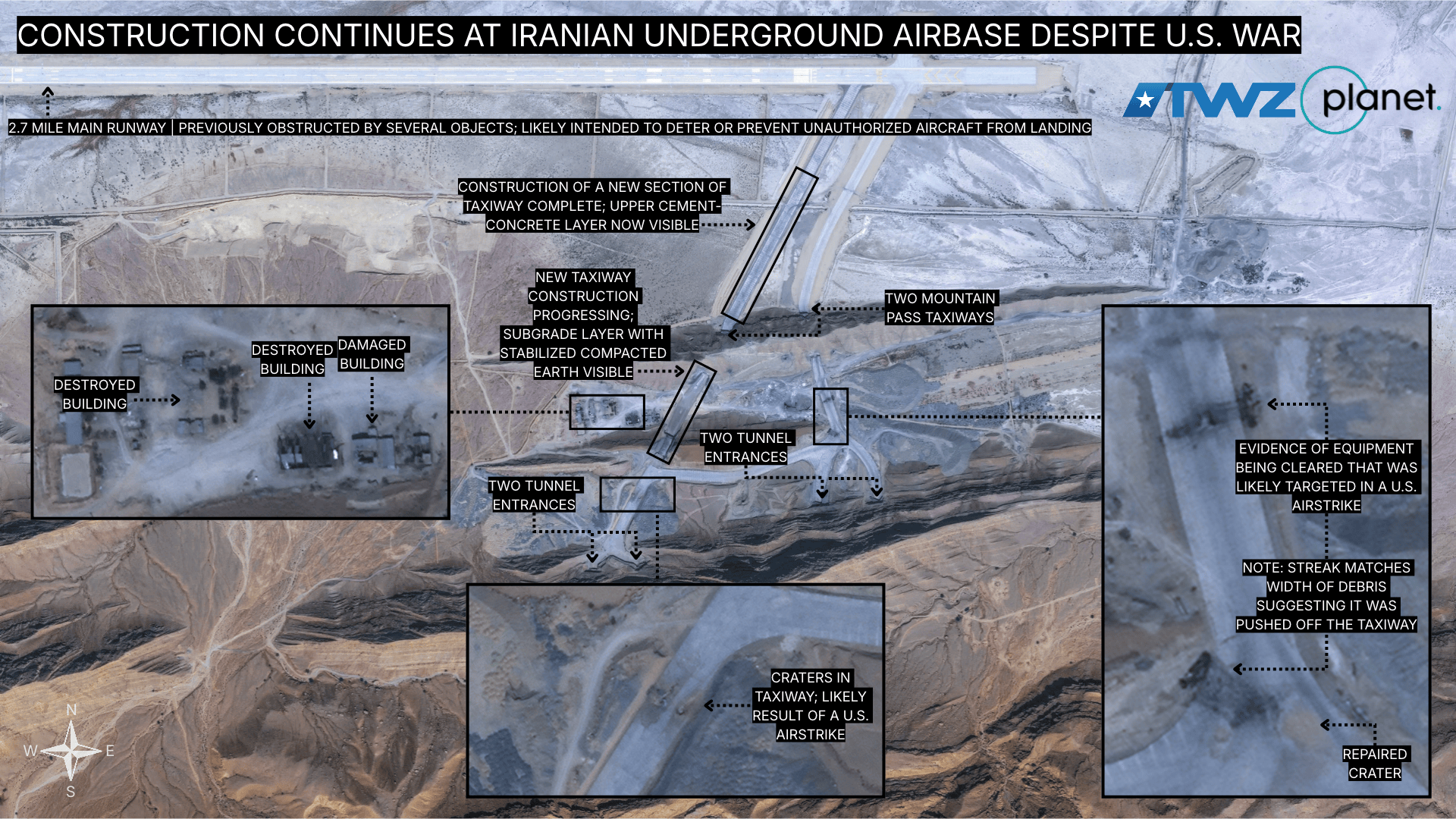
CBS News reported last week that the White House and Pentagon “have prepared plans to use a Massive Ordnance Air Blast bomb [MOAB] to hit military sites in Iran,” including Pickaxe Mountain, “if ordered by President Trump.” However, the 22,000-pound-class MOAB, also designated the GBU-43/B, is not a deep-penetrating munition, and it was not immediately clear from that story how the weapon might be employed. The bomb is also only known to be currently cleared for employment via C-130-type aircraft. It has only been used in combat once, in Afghanistan in 2017, where the skies above were entirely permissive. You can read more about the targeting challenges specific to Pickaxe Mountain, and what options the U.S. military might have for halting, or at least degrading activity there, in a previous TWZ feature here.
MOAB’s use case would be limited against sites like Pickaxe Mountain. While its unique overpressure effects could harm any personnel openly exposed inside tunnel systems, it is unlikely to destroy or even heavily damage the hardened facilities themselves. It could cause damage to external support infrastructure and act as a psychological weapon in its own right, but it is not a bunker buster in any way.
Not what this weapon is really used for. Psychological effect, maybe https://t.co/hDWSXYKexr
The puzzling leak about the MOAB may be part of the administration’s effort to use the media to try and compel Iran to negotiate. This has been a glaring pattern throughout the ebb and flow of this conflict and a common tactic used by the Trump administration.
Talking threatening plans against Iran here. They are always planning and have a slew of options.
The leaks and sources are by and large fully aware what their marching orders are. It’s coordinated. A lever this admin pulls non stop right on cue.
For its part, Iran is operating on the assumption that a U.S.-Israeli attack is a “certainty,” The Jerusalem Post reported on Wednesday, citing Iran’s Fars News Agency, a quasi-state media outlet affiliated with the Islamic Revolutionary Guard Corps (IRGC). “The report, which cited a senior Iranian security official, added that Iran will consider U.S. politicians legitimate targets if such an attack involves the assassination of Iranian officials.”
The IRGC has also threatened to launch expanded retaliatory attacks on targets across the Middle East in response to any new waves of strikes.
As we noted earlier in this story, Iran continues to actively attack commercial shipping in and around the Strait of Hormuz. The official Iranian IRNA news agency reported that the IRGC Navy claimed that it recently struck four ships transferring oil cargoes in the northern Persian Gulf, while three other vessels suffered damage after striking mines west of the Strait of Hormuz.
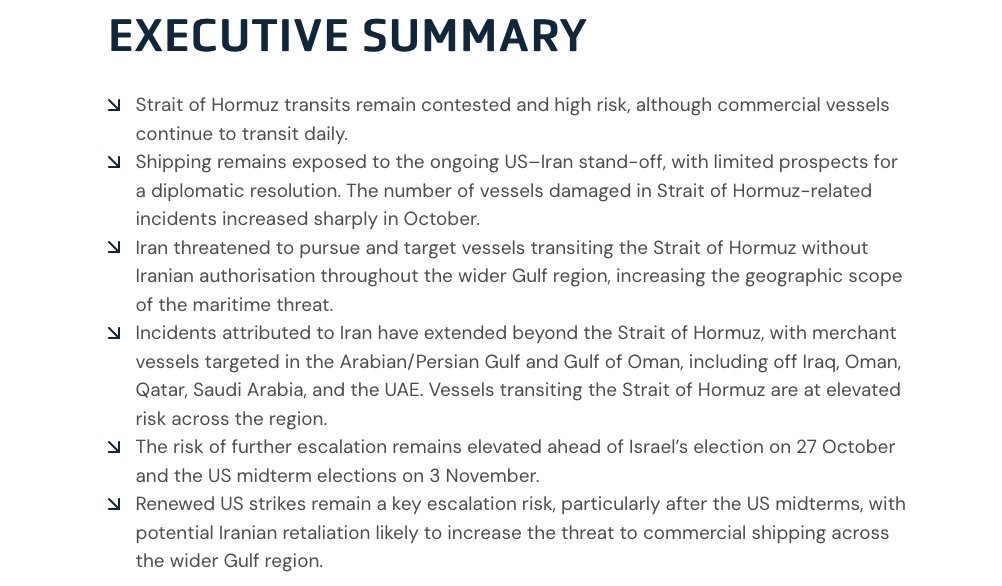
While TWZ cannot independently verify those claims, the Ambrey maritime security firm said that the number of vessels damaged during Strait of Hormuz transits has “increased sharply” this month.
“During the two weeks from 3 to 16 October, the number rose to 11 and 13 vessels per week, respectively, compared with an average of three to four per week in the preceding weeks,” Ambrey senior analyst Daniel Mueller noted today in the company’s latest security assessment. “This increase coincided with an expansion of Iranian operations aimed at restricting transits deemed unauthorized, while the US continued to facilitate transits along the Omani coastline.”
On Oct. 9, “the Islamic Revolutionary Guard Corps (IRGC) threatened to pursue and target vessels transiting the Strait of Hormuz without Iranian authorisation throughout the wider Gulf region,” Mueller added. “During October, incidents attributed to Iran involved merchant vessels off Qatar, the United Arab Emirates (UAE), Saudi Arabia and Sohar, Oman. Between 8 and 16 October, six merchant vessels – five tankers and one gas carrier – were damaged outside of the Strait of Hormuz. Additionally, a tanker was damaged offshore Iraq on 20 October.”
Ambrey
Reports emerging earlier this week from The Wall Street Journal and The Washington Postdo say that oil exports from the Persian Gulf have returned to prewar levels thanks to U.S. efforts to safeguard tankers out of the region.
“Middle East oil flows, including shipments through Hormuz and alternative routes across the region, averaged more than 24 million barrels a day in the week through Oct. 18, surpassing prewar levels of 23.3 million,” according to the Journal, citing ship tracker Kpler. “Preliminary figures show Hormuz oil flows, including offshore transfers in the Gulf of Oman, came to around 14 million barrels a day on average for the same period, or 82% of prewar levels.”
From the @WSJ: “Persian Gulf oil exports have surpassed prewar levels, as an improvised shipping system under U.S. protection is helping tankers move oil through one of Iran’s fiercest waves of attacks in the Strait of Hormuz.”https://t.co/SJo2jlUfew
However, global energy oil markets continue to be under immense strain as a result of the ongoing fallout from the conflict with Iran, thanks in no small part to surging insurance costs for shipping companies. This has been further exacerbated now by Yemen’s Houthis expanding their attacks on oil infrastructure in Saudi Arabia, including a recent strike near the Shaybah oilfield. The Houthis are also exerting their own pressure on shipping passing through the Bab Al Mandab Strait, a critical chokepoint that links the Red Sea and the Gulf of Aden.
A Saudi-led coalition supporting Yemen’s internationally recognized government has been embroiled in an on-again-off-again conflict with the Houthis since 2014. Fighting with the Iranian-supported Yemeni militants in and around the Red Sea was inflamed last year as a by-product of Israel’s 12 Day War with Iran. The Houthis also retaliated with missile and drone attacks in support of Iran in the wake of U.S. and Israel launching their major operations against the regime in Tehran in February.
The U.S. government and the Houthis have been observing a tenuous ceasefire since May 2025. This has continued despite the Yemeni militants now imposing a blockade on the Bab Al Mandab Strait, and a new campaign of strikes on Saudi ships in the southern part of the Red Sea, as well as targeting critical energy terminals on that body of water and Saudi refineries. Iranian proxies have also struck the vital East-West pipeline that carries oil to the Red Sea to bypass the Strait of Hormuz. That line has reportedly since reopened after being shut down following a long-range drone attack.
“On Wednesday, two people were killed and two others injured by debris from intercepted drones near a processing plant at the Shaybah field, one of the biggest oilfields in Saudi Arabia,” The National noted. “Operations at the Shaybah field and its processing facilities remain unaffected, but the attack rattled markets again amid concerns about potential disruption to Saudi supply just as the Kingdom has largely restored its exports via the Strait of Hormuz and the Red Sea.”
As a result, the per-barrel price of Brent crude has jumped to more than $114 as of Friday morning, according to OilPrice.com, the highest that it has been since May during intensified fighting between the U.S. and Iran.
In addition, Saudi Aramco has told staff to evacuate its Dhahran headquarters and work remotely, Reuters reported, citing six people with knowledge of the matter. The move came a day after two people were killed in an attack on a nearby airport. The order marked the first time Aramco had asked staff to evacuate its headquarters since the start of the Iran war, Reuters added.
The Houthis “caused extensive damage to the company’s headquarters earlier this month when they struck the building, with fire spreading across several floors,” the outlet explained.
Houthi attacks on Saudi Arabia have spurred Britain to commit to providing “defensive counter air missions to support the protection of Saudi cities and critical national infrastructure against aerial attack, using RAF Typhoon fighter jets,” Defense Secretary Wes Streeting said in a statement. “These aircraft will operate in a defensive role and will not conduct offensive strikes against the Houthis. The UK will provide an RAF A400M to support the movement of defense materiel within Saudi Arabia, alongside UK military advisers to support Saudi staff officers.”
“The continuing attacks from the Houthis on our ally Saudi Arabia are absolutely despicable,” Streeting said.
Sunset photo of Saudi Aramco’s headquarters. (Saudi Aramco) brigido alcayde
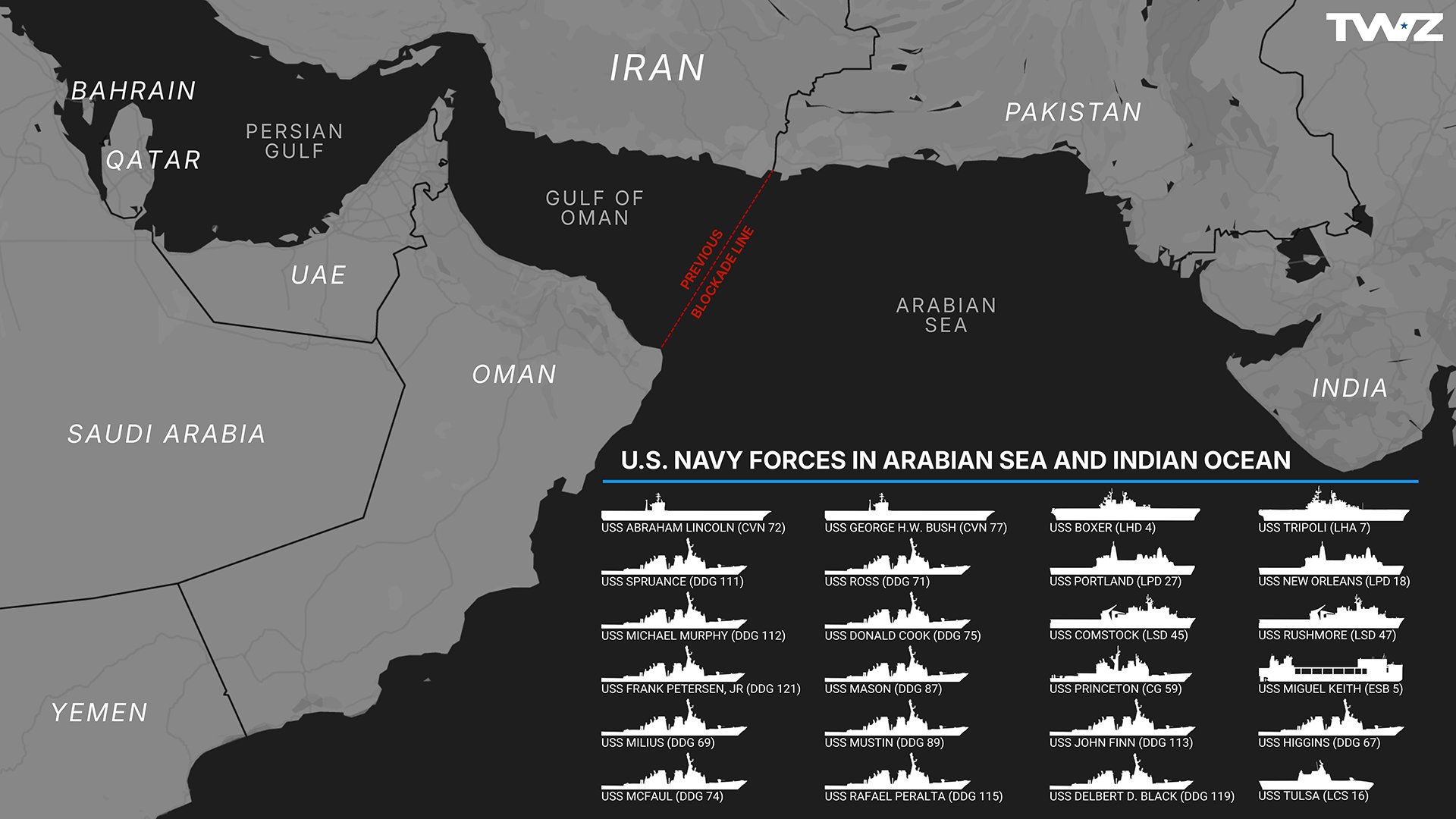
As we noted earlier in this story, the U.S. is continuing its naval blockade of Iranian ports.
U.S. Central Command said Thursday on X that its renewed naval blockade of Iranian ports, now in its 100th day, “has helped prevent Iran from exporting at least $25 billion worth of crude oil and constrained the IRGC’s ability to fund proxy militias, criminal networks, and terrorism. There have been no exports or imports to Iran by sea except for the humanitarian aid U.S. forces have allowed.”
Today marks 100 days since CENTCOM forces resumed America's steel wall naval blockade against Iran. This effort has helped prevent Iran from exporting at least $25 billion worth of crude oil and constrained the IRGC's ability to fund proxy militias, criminal networks, and… pic.twitter.com/DwiamYBdHY
“The report, which cited a senior Iranian security official, added that Iran will consider U.S. politicians legitimate targets if such an attack involves the assassination of Iranian officials,” the publication added.
The IRGC also announced that it was preparing to unveil a new weapon, which it dubbed the “Father of All Bombs,” in response to U.S. threats to use the most powerful conventional bomb in the American arsenal against Iran’s nuclear facilities, the Jerusalem Post also reported.
Officials, however, declined to offer any details about what kind of weapon it is, its power, whether it is operational or when it will be shown to the public, the Post noted.
In addition to the strategic and tactical issues in the region, the IDF official we spoke with raised concerns that “domestic political considerations may influence the rhetoric and decisions” of Prime Minister Netanyahu and U.S. President Donald Trump. Israel is holding nationwide parliamentary elections on October 27 that could have significant domestic political ramifications. The same is true of mid-term elections in the United States in November.
“I cannot know their precise calculations, but the possibility that political incentives could affect decisions with such enormous strategic consequences should not be dismissed,” the IDF official cautioned. “With Israel’s elections approaching, I sincerely hope that Netanyahu will not make a decision with far-reaching consequences for the country’s security based, even partly, on immediate political considerations. The stakes are simply too high for military action to become a means of reshaping a domestic political narrative.”
Israeli Prime Minister and Likud Party leader Benjamin Netanyahu speaks to supporters during an election campaign event in a restaurant in Hatikva Market ahead of Israel’s general elections on October 27, 2026. (Photo by Amir Levy/Getty Images) Amir Levy
In a phone call with Trump recorded live on Monday and posted on his X account, Netanyahu thanked the American leader for his election endorsement and suggested future operations against Iran.
“Donald, we have a job to finish [in Iran]…and we’ll finish it together,” the Israeli leader told Trump. “We’ll finish it, and no one else will do it.”
בשיחה עם ידידי הנשיא טראמפ לאחר שהודיע על תמיכתו בי בבחירות. יחד אנחנו הולכים להסיר את האיום האיראני לתמיד! צאו להצביע מחל! pic.twitter.com/GuPEAPn0Tc
— Benjamin Netanyahu – בנימין נתניהו (@netanyahu) October 19, 2026
Speaking to reporters Thursday afternoon, Trump acknowledged that the Iran war could have a negative impact on Republican hopes for the midterms.
“Well in one way, they love it because I’m doing what should have been done by other presidents, and another way maybe they don’t,” Trump said. “It’s — there’s a price to pay, which I knew immediately when I did it, but we can’t let Iran have a nuclear weapon. I mean, in one way, people probably don’t love it, but many people, many great patriots, really love it. This should have been done a long time ago by other presidents. The Iran War, and we’ve knocked the hell out of them, and we may do it a little bit further.“
Q: How do you feel the Iran war impacted the midterm races?
Trump: In one way, they love it. In another way, maybe they don't. There's a price to pay. pic.twitter.com/qtkE9M2vSQ
Later on Thursday, the American president said that: “We’re gonna have Iran finished very soon, one way or the other. It’s almost insignificant to me which way.”
U.S. President Donald Trump on Iran:
"We're gonna have Iran finished very soon. one way or the other. It's almost insignificant to me which way.
It's going to be done very soon, and your gasoline prices and your oil is going to come tumbling down." pic.twitter.com/vIGviqe8gi
While indicators are pointing to the U.S. and Israel at the very least in the very late stages of planning for new strikes against Iran, even if that doesn’t happen, the Middle East will remain a top concern. The ongoing threats to shipping and the escalating fighting between the Houthis and Saudi Arabia are having increasingly dire impacts on gas prices, which is spiking inflation, and causing heavy pressure on the global economy.
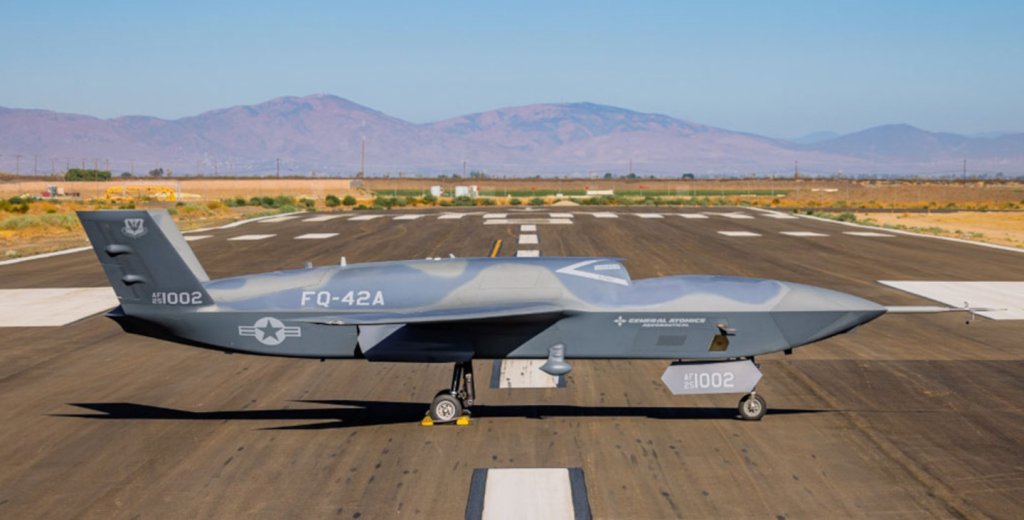
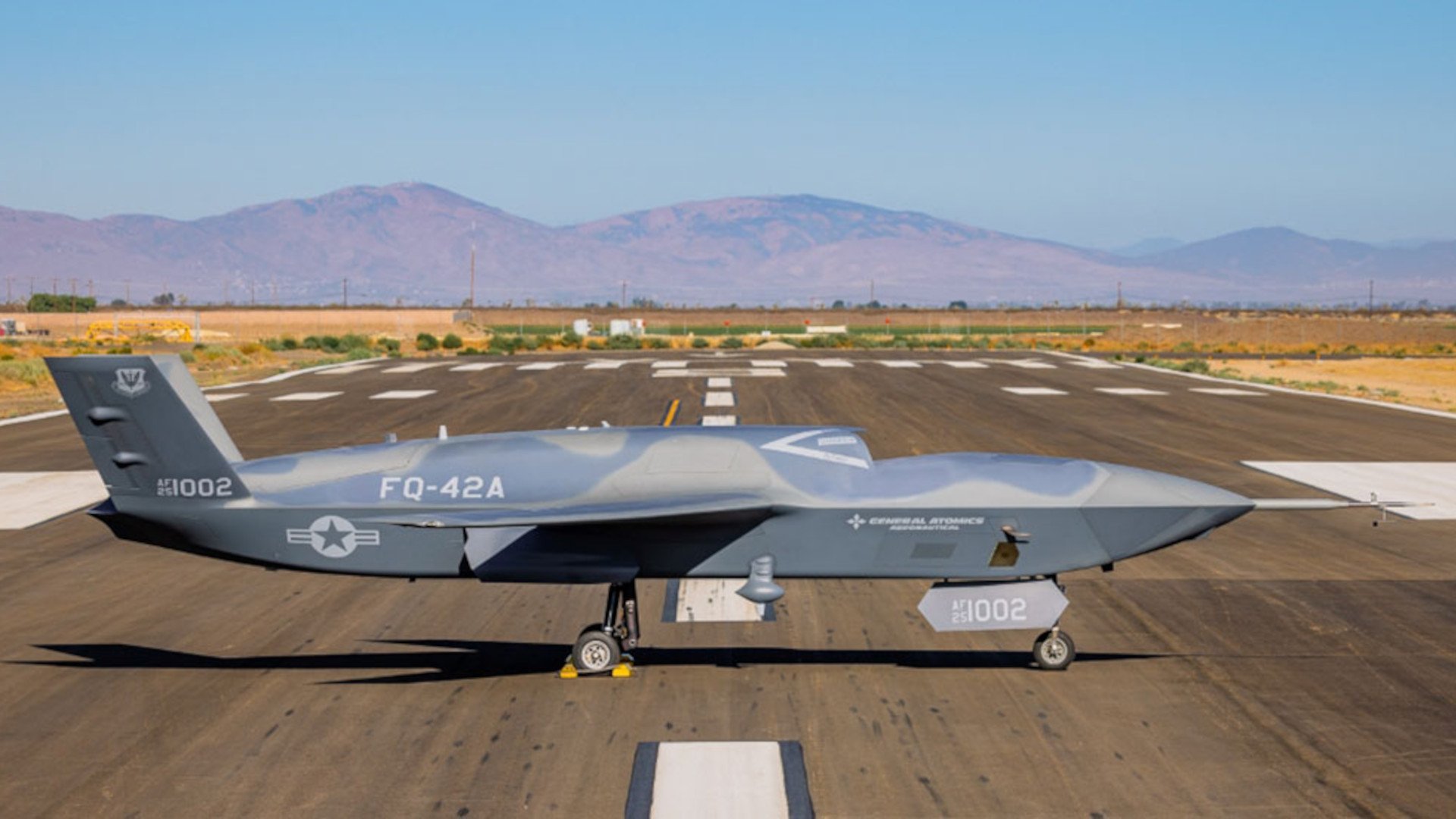
General Atomics’ Aeronautical Systems, Inc. division (GA-ASI) announced the team-up with Spirit on FQ-42 production earlier today. The Vengenace is one of two designs the Air Force has ordered into production under the first phase, or Increment 1, of its CCA program. The other is Anduril’s FQ-44A Fury. The 500-drone target the Air Force has laid out covers a mixed fleet of both FQ-42s and FQ-44s. The service is still planning to acquire additional CCAs, potentially with completely different designs, through a follow-on Increment 2.
A FQ-42A Vengeance CCA drone. GA-ASI
When it comes to FQ-42 production, “Spirit Defense’s role as a fuselage design-build partner brings together the company’s engineering and advanced manufacturing capabilities to support the program from design through production,” according to a GA-ASI release. “Partnering with Spirit Defense is a strength multiplier for the company and the nation, offering manufacturing capacity and industrial depth to scale CCA production faster, while strengthening production resilience, and reducing the risk of single points of failure.”
“We’re excited to be working with Spirit Defense,” David R. Alexander, GA-ASI’s President, said in an accompanying statement. “We’ve established our proven design, development, and manufacturing capability for the FQ-42. With Spirit Defense, we add capacity, which is exactly the kind of production resilience our U.S. Air Force customer is looking for with its CCA ramp-up. This kind of partnership represents the scalable industrial base the Air Force and the U.S. Department of War are looking for from industry.”
“The intent for them [the Air Force] is to go up to as many as 500 aircraft by 2032,” Mike Shortsleeve, Vice President for Strategy Business Development at GA-ASI, also told TWZ’s Jamie Hunter on the floor of the Air & Space Forces Association’s (AFA) 2026 Air, Space & Cyber Conference in September. “We’re ready to do that production.”
At the conference, Shortsleeve highlighted investments in additive manufacturing and advanced robotics, along with efforts to build out the company’s skilled workforce, to help meet those production demands.
General Atomics is already an established drone maker with significant serial airframe production experience of its own. At the same time, the company is seeing growing demand for its MQ-9B series of drones, including a sale to the U.S. Coast Guard announced earlier this month. The MQ-9B design builds on the highly successful MQ-9A Reaper. It is also pursuing a host of other opportunities in the U.S. and abroad that could add production demands.
Mike Atwood, GA-ASI’s Vice President of Advanced Aircraft Programs, notably acknowledged potential hurdles for meeting CCA production demands, specifically, in the past.
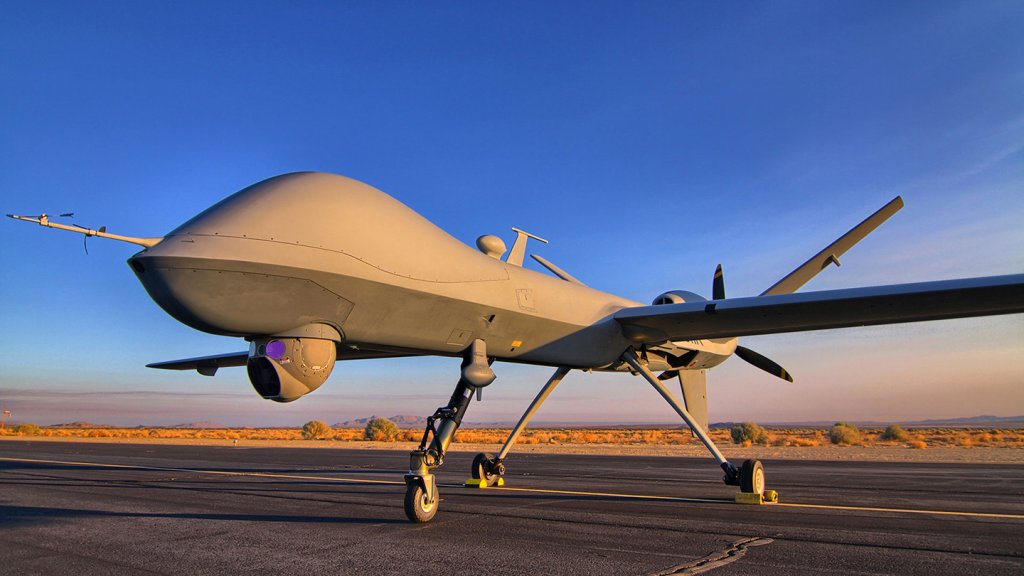
“We have basically a hot production line where I can take an MQ-9 out and put a Collaborative Combat Aircraft in,” Atwood said on an edition of The Merge podcast back in 2024. “We were able to essentially take Reaper parts out of stock rooms and build the first [CCA] aircraft.”
An MQ-9 Reaper drone. General Atomics (General Atomics)
“Composites are inherently expensive … they’re really for high-performance applications where you need certain strength and stiffness,” he also noted at that time. “When you look at Collaborative Combat Aircraft … we’re actually falling back on more metallic – what we call hybrid structures, metal frames with composite skins.”
The production of advanced composites and hybrid structures is Spirit’s main business. The company also has a well-established history of working as a subcontractor on military aerospace projects, including in support of bleed-edge programs like the B-21 Raider bomber.
It is also important to note here that, before its founding as an independent company in 2005, Spirit was actually a division of Boeing. By the early 2020s, Spirit had been suffering from significant financial losses and quality control lapses. Boeing subsequently decided to reacquire it in a multi-billion-dollar deal. The acquisition process began in 2024 and was finalized last year. Since then, Boeing has faced continued challenges in getting the firm back on track.
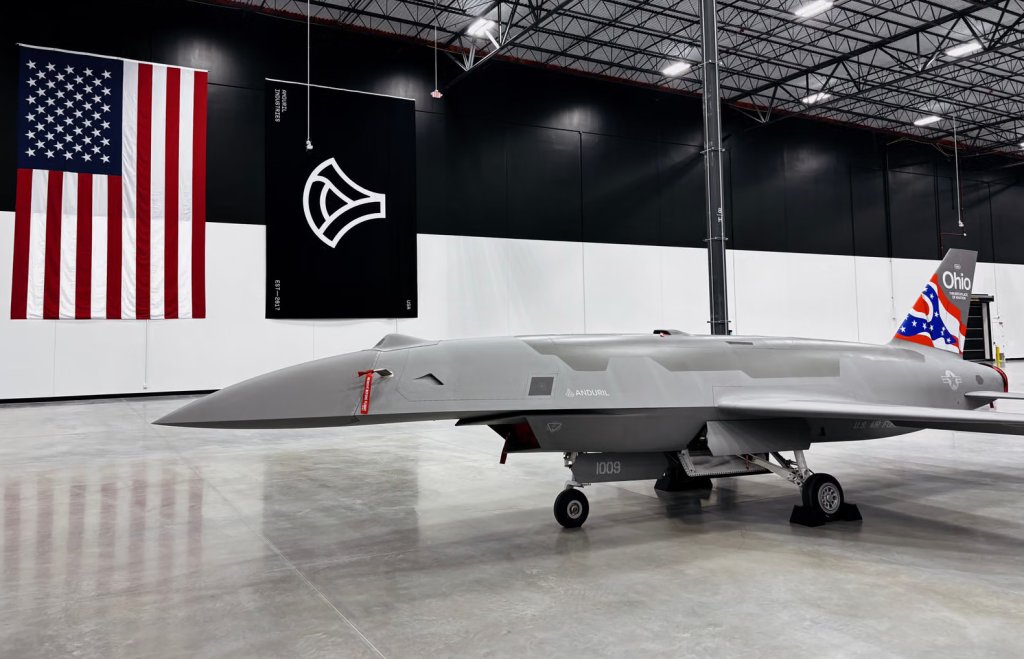
In 2024, when General Atomics and Anduril were selected to move ahead in the Increment 1 phase of the Air Force’s CCA program, TWZ explicitly raised the prospect of both companies bringing in help, especially to meet future production demands. At the time, the focus was more on Anduril, which was not a major airframer at the time and had yet to establish significant production facilities of its own for Fury. It was also unclear then whether the Air Force might pick a single winning Increment 1 drone rather than go the route it ultimately chose of ordering batches of both designs.
A Fury drone seen at Anduril’s Arsenal-1 production facility in Ohio. Anduril
However, as we wrote at the time: “No matter who is selected in the end as the prime contractor, a large pool of manufacturer partners will likely be key to meeting the Air Force’s production volume and schedule goals.”
As an aside, Boeing is already in the CCA business itself, with the MQ-28 Ghost Bat developed originally through a separate subsidary in Australia. The company has been working to expand its own production capacity to build those drones in recent years.
“The nuance here that probably is overlooked, is the fact that they’re [the Air Force] recognizing with 500 that they require, the factory floor is now becoming part of the battle space,” General Atomics’ Shortsleeve had told TWZ at the AFA conference last month. “So the ability for companies to be able to manufacture and produce those aircraft in numbers that are needed for the fight rapidly is going to be a key part to going forward in the future.”
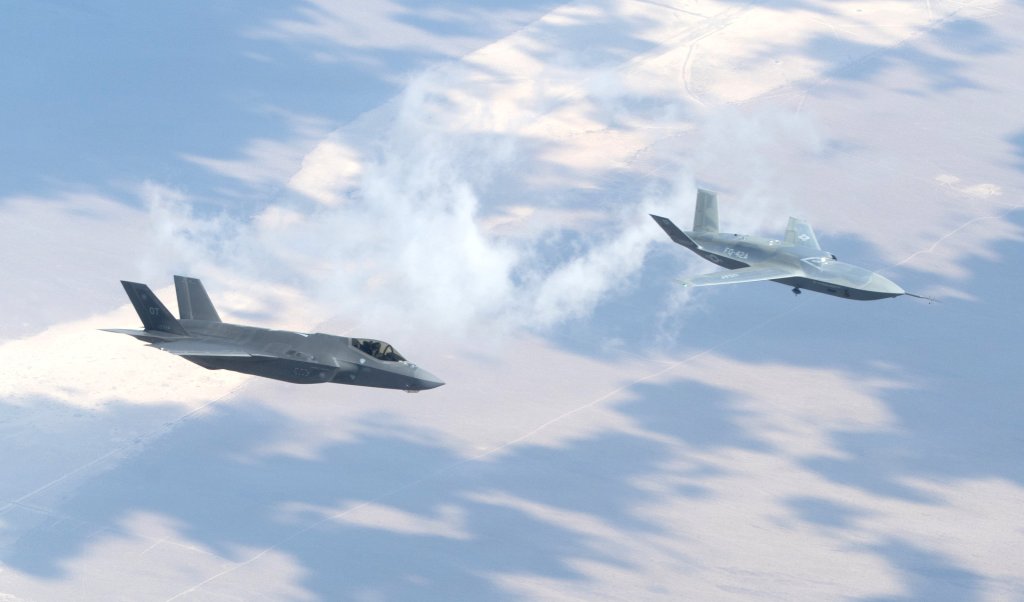
The Air Force is otherwise still very much laying the rest of the groundwork for fielding its future CCAs operationally toward the end of the decade. A full playbook for deploying, launching, recovering, supporting, and otherwise operating CCA-type drones on a day-to-day basis, let alone employing them tactically, still has yet to be written. Answering these questions will be important for other CCA programs across the U.S. military and elsewhere globally.
A Vengeance drone seen flying in formation with an F-35 fighter during a test flight. USAF
General Atomics’ new partnership with Spirit Defense underscores how production of Increment 1 CCAs is ramping up already in reponse to the Air Force’s current CCA program goals.
Opium cultivation fell dramatically in Afghanistan, the world’s largest producer, after the Taliban imposed a narcotics ban in 2022. Since then, production has surged in neighboring Pakistan and Iran.
Ten sanatoriums in the crumbling resort town of Tskaltubo are under the hammer, years after billionaire Bidzina Ivanishvili vowed to purchase and restore the famed properties.
Danish Defense Minister Jeppe Bruus announced the planned purchases yesterday. He said the new weapons would strengthen Denmark’s ability to respond to an attack and strike targets “behind enemy lines,” according to Reuters. Copenhagen has not disclosed the number of missiles involved, the value of the purchases, or expected delivery dates.
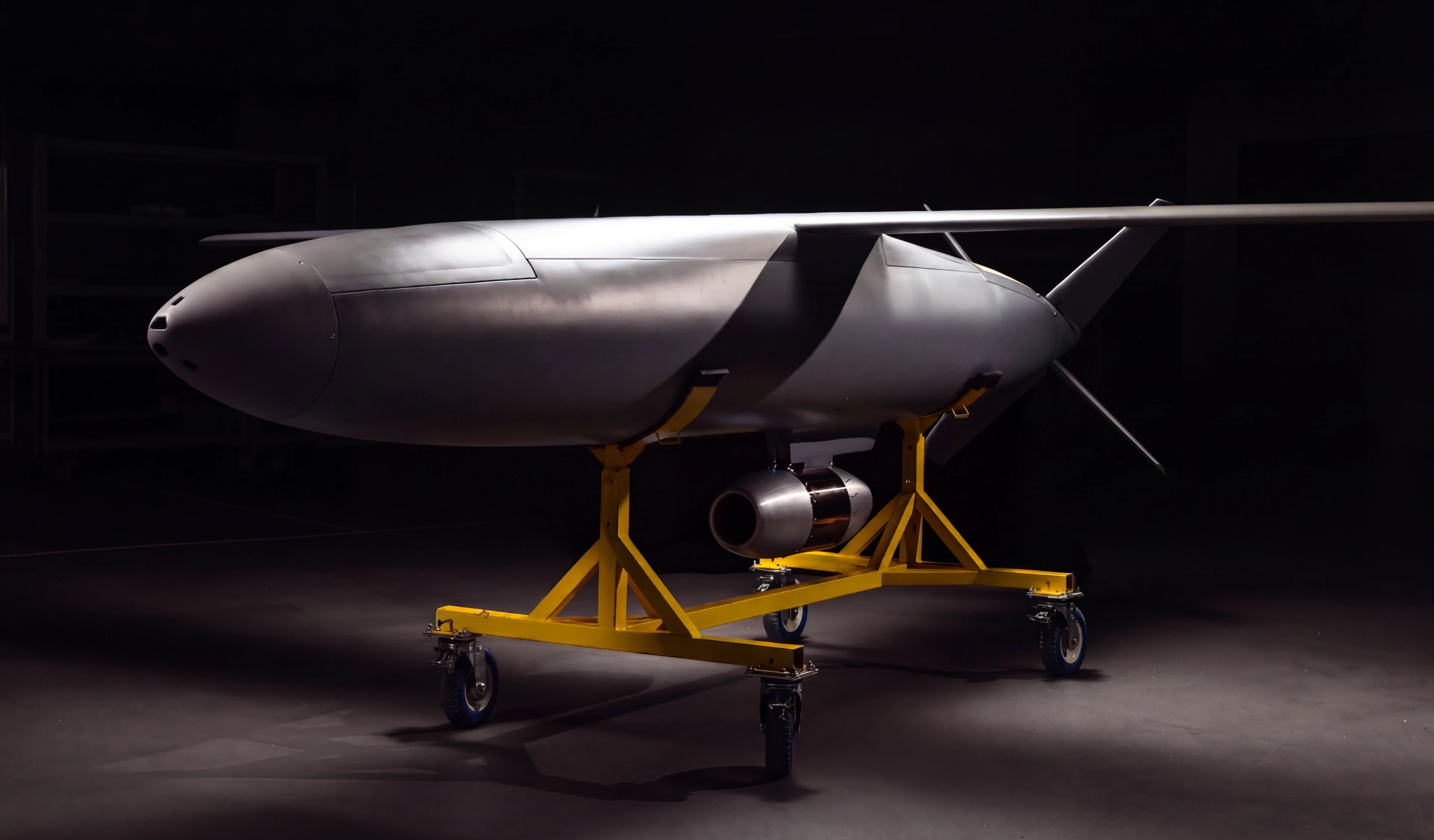
A stock picture of Covenant’s Anthem long-range strike weapon. Covenant
“We’re in a serious and deteriorating security situation, and that is why we are building up the defense and strengthening our combat power,” Bruus told reporters. The planned acquisitions are a “strong signal that we have the ability to strike back,” he added, without explicitly naming any particular adversary.
The Danish government did say last year that it would pursue new long-range offensive precision weapons, in general, in response to the growing security concerns in Europe amid Russia’s ongoing war against Ukraine. Bruus’ announcement comes amid a new surge in geopolitical friction between Russia and members of the NATO alliance.
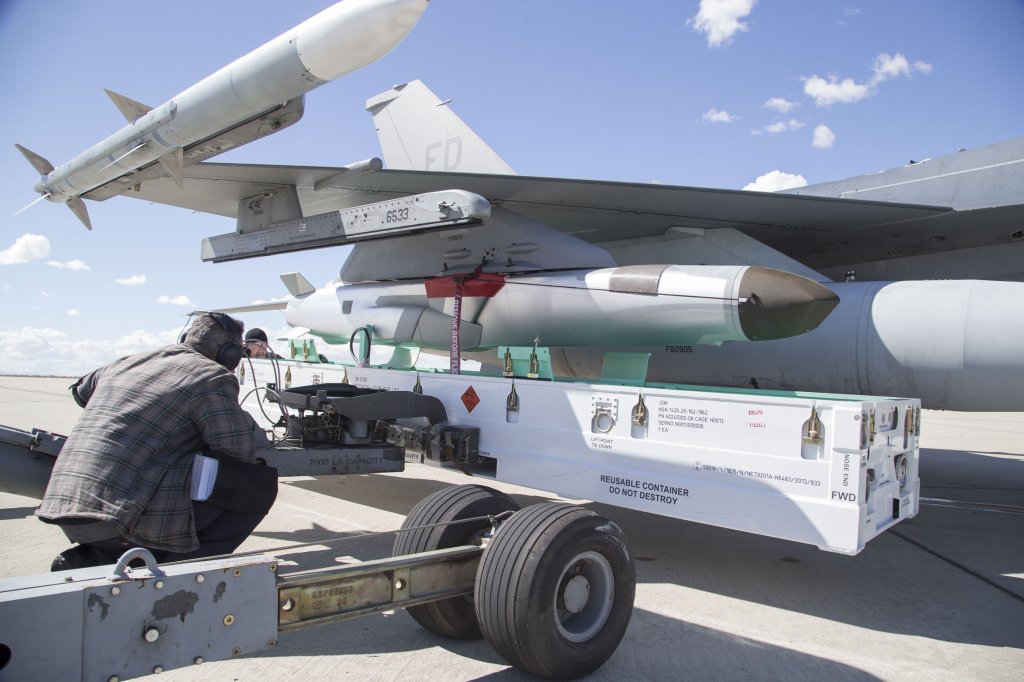
A stock picture of a Joint Strike Missile (JSM), seen here being loaded onto a US Air Force F-16 during a test in 2018. U.S. Air Force
The two new acquisitions will provide Denmark with important complementary strike options. Anthem is a ground-launched weapon, while JSM is designed to be air-launched, including by stealthy F-35 fighters just like those in Danish Air Force service today. Together, the weapons are set to expand the range of platforms from which Denmark can deliver stand-off precision strikes and give its armed forces additional options for attacking high-value military targets.
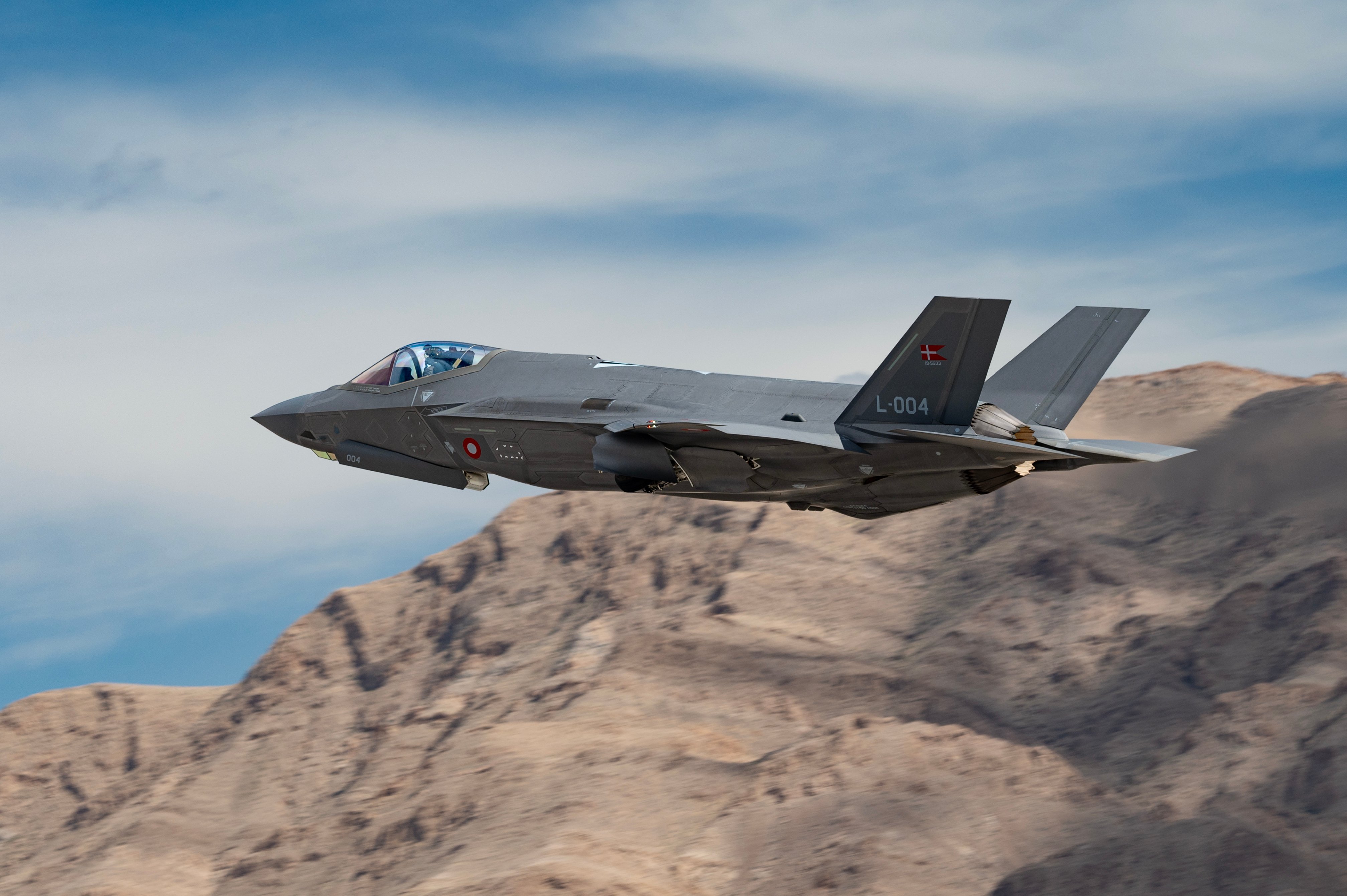
A Royal Danish Air Force F-35A takes off for a Red Flag-Nellis 24-2 mission at Nellis AFB, Nevada, on March 13, 2024. U.S. Air Force photo by William R. Lewis William Lewis
Anthem is being developed by Covenant, a U.S.-based defense company that has also outlined plans to establish missile production in Germany and Israel. The system’s selection by Denmark gives the company an important European customer as NATO members seek to expand their inventories of long-range weapons.
Covenant’s Anthem is in a category of munitions that increasingly blurs the line between long-range kamikaze drones and traditional cruise missiles. It is designed to offer a lower-cost, longer-range strike capability that can be produced more easily and at greater scale than many existing systems. Covenant has not publicly disclosed the weapon’s range. Still-unconfirmed reports put it at roughly 740 miles (1,200 kilometers). It is also said to carry a warhead weighing more than 200 kilograms (441 pounds). It also uses a solid rocket motor to provide an initial boost at launch before transitioning to a heavy-fuel jet engine for cruise flight.
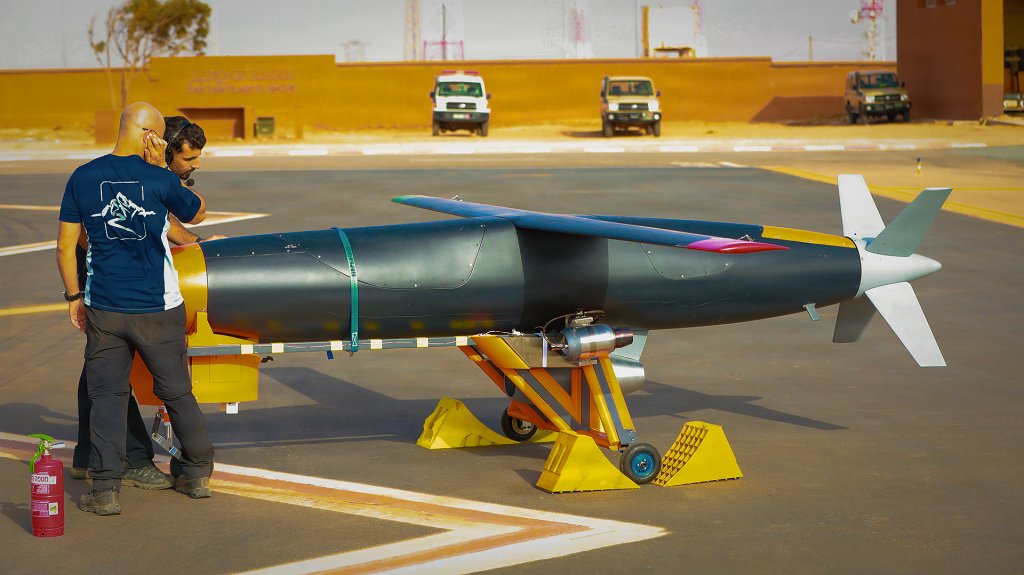
Currently, it is unclear how exactly Anthem is launched. It has already undergone testing with the U.S. Army, and images from those trials show the weapons being handled on the ground using a tricycle undercarriage. This may point to rocket-assisted takeoffs from runways.
A Covenant cruise missile is prepared for a live-fire demonstration at the Africa Multidomain Training and Experimentation Center in Tan-Tan, Morocco, August 5, 2026. U.S. Army photo by Capt. Jordan Beagle
Last month, Covenant announced it had already conducted more than 200 test flights of Anthem and had secured roughly $150 million in orders. It also disclosed that an unidentified international customer was expected to begin receiving German-built weapons before the end of this year. This may well be Denmark, though there could also be other customers that have yet to emerge publicly. Meanwhile, U.S. Army deliveries are expected in 2027, under an accelerated qualification contract.
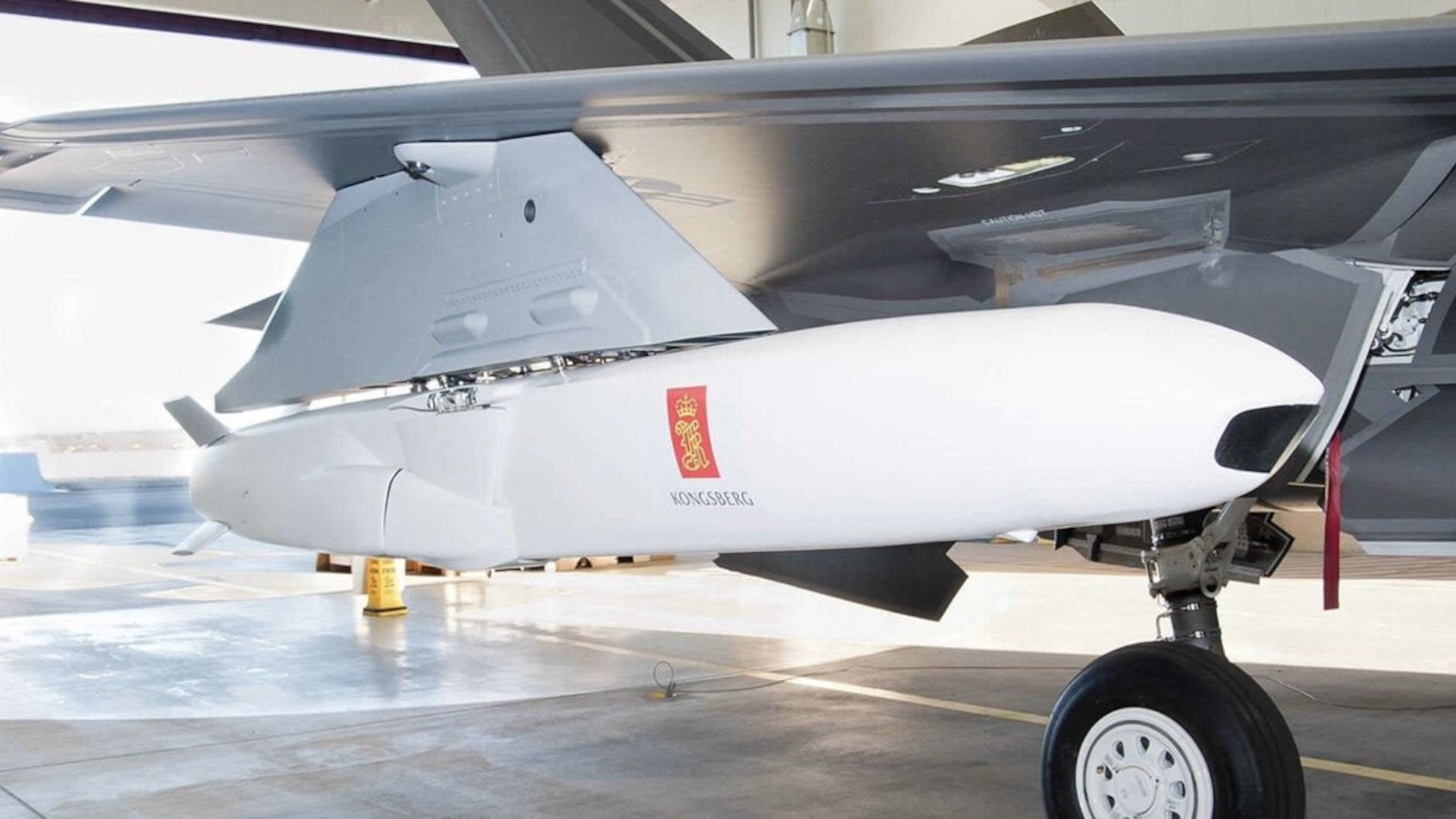
JSM, developed by Kongsberg in cooperation with U.S. defense contractor Raytheon, is a traditional air-launched cruise missile capable of being employed against targets on land and at sea. It is capable of being carried internally and externally on the A and C variants of the F-35. The design has also been fit-checked for external carriage on a variety of other tactical jets. As already mentioned, JSM will provide an entirely new standoff precision-strike option for Denmark’s F-35As. These are the only tactical jets in Danish service today following the retirement of the country’s F-16s in January.
Pictures showing work on integrating the Joint Strike Missile on all three variants of the F-35 Joint Strike Fighter, as well as the F-16. Kongsberg
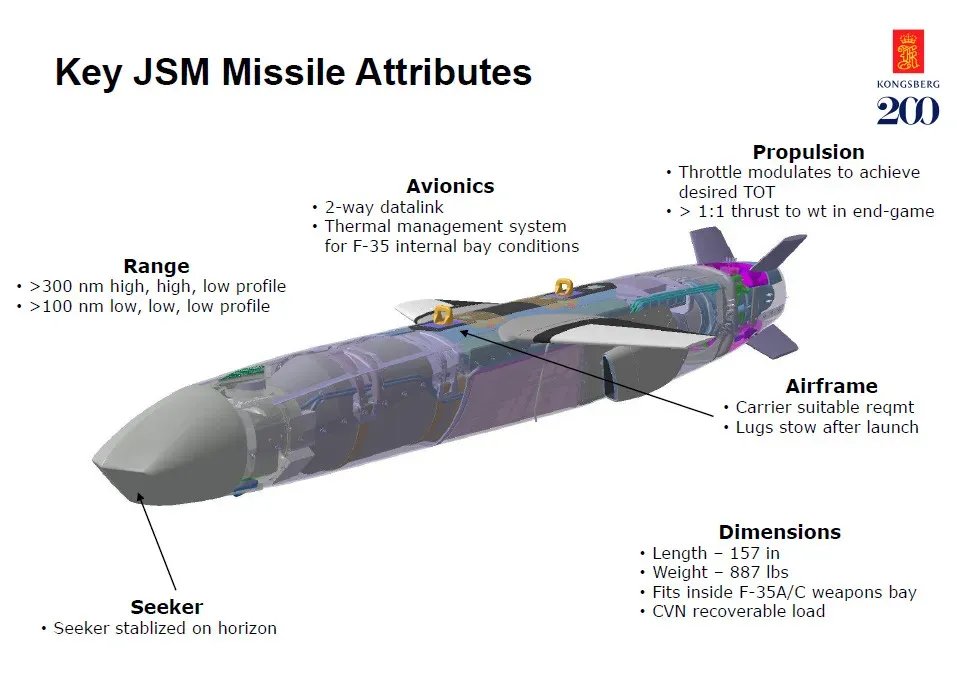
Since JSM is designed to be air-launched, its maximum range is dependent in part on the altitude at which the missile is released, as well as the speed of the aircraft carrying it. Kongsberg has said in the past the missile can fly out to a range of more than 300 nautical miles, but also that its reach is significantly cut back when it is employed in its low-altitude penetration mode.
A briefing slide with various details about the JSM’s capabilities. Kongsberg
The JSM carries a 260-pound warhead and uses a combination of GPS, inertial navigation (INS), and terrain mapping to guide it toward its target. The terrain-mapping capability provides an additional means of navigation, helping the missile maintain its course even in environments where GPS connectivity is degraded or unavailable.
The missile switches over to an imaging infrared seeker to provide precise target discrimination during the terminal phase of flight. Because the seeker operates passively, it does not rely on emitting radiofrequency signals, reducing the risk of detection and making it immune to conventional radiofrequency jamming. The agile JSM’s overall design also includes reduced-signature features to help limit its detectability and improve its survivability on the way to the target.
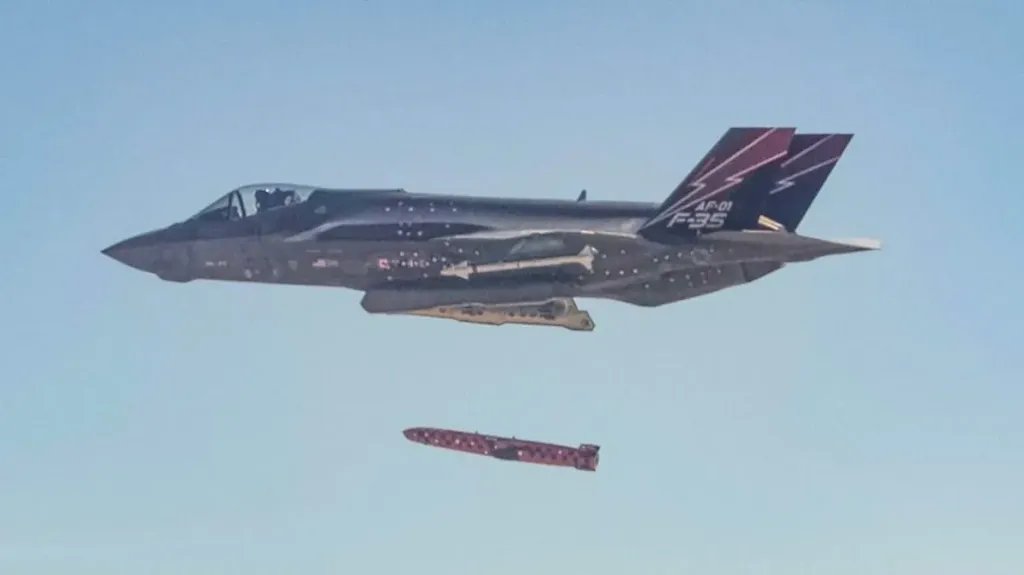
A U.S. Air Force F-35A releases a Joint Strike Missile (JSM) during a test. Norwegian Defense Materiel Agency
A two-way datalink also allows the missile to receive updated targeting information while en route, or to be redirected toward an entirely different target during the mid-course phase of flight.
The dual purchases build on a broader Danish effort to field new options for holding targets at extended ranges at risk. Denmark previously operated eight M270 Multiple Launch Rocket Systems (MLRS), but retired them in 2004. The country is now introducing Israel’s PULS rocket artillery system, which can employ different rocket and missile types depending on the mission. Presently, the Danish military looks to be fielding PULS just with artillery rockets.
In terms of Denmark’s current and future ground-based capabilities, PULS — which stands for Precise and Universal Launch System — and Anthem will serve different. In Danish service, PULS provides a flexible rocket artillery capability, while Anthem will offer a cruise-missile-like option for longer-range precision attacks.
The acquisition of JSM also reflects the importance of Denmark’s F-35 fleet to its future combat capability. Air-launched weapons offer mobility and flexibility, but their employment depends on available aircraft. In this context, Denmark’s planned expansion of its F-35 fleet from 27 to 43 aircraft, announced in October 2025, will provide a larger platform base for its emerging long-range strike capability. It should also be noted that, in June of this year, Denmark requested to buy 200 AGM-158 Joint Air-to-Surface Standoff Missiles with Extended Range (JASSM-ER) for its F-35 fleet. It’s unclear if the JSM has now been selected in preference, or if both will be procured. Unlike the JSM, JASSM-ER cannot fit in the F-35’s internal bays.
There could be some overlap here between Denmark’s growing array of air- and ground-based strike capabilities, as well. Dutch F-35As demonstrated their ability to provide targeting data to PULS launchers during a NATO exercise last year. A ground-launched weapon like Anthem also provides an alternative long-range strike option that does not require a fighter to carry it aloft, creating additional operational flexibility.
For Denmark, acquiring JSMs and Anthems also offers the appeal of adding a capable higher-end munition alongside a more affordable, readily available long-range strike weapon. Reuters has reported that Covenant expects Anthem to eventually cost in the mid-six-figure range, although a final unit price has not been disclosed. Meanwhile, the JSM has a reported unit cost of approximately $2.8 million.
As mentioned, the announcement of the Anthem and JSM purchase is fully in line with prior statements from the government in Copenhagen about acquiring new long-range strike options. Danish Prime Minister Mette Frederiksen previously urged the military to accelerate procurement across the board after years of comparatively limited defense spending. In
Danish Prime Minister Mette Frederiksen meets conscripts during a visit to Air Base Karup, the main air base of the Royal Danish Air Force, in Jutland, Denmark on March 7, 2024. (Photo by Mikkel Berg Pedersen / Ritzau Scanpix / AFP) / Denmark OUT MIKKEL BERG PEDERSEN
The long-range strike acquisitions also fit into a broader NATO effort to strengthen deterrence across the Baltic region and the alliance’s northeastern flank.
Denmark occupies a strategically important position linking the Baltic Sea to the North Sea, while its forces contribute to NATO’s regional presence and reinforcement plans. The ability to strike targets deep behind enemy lines will provide a new ability for Denmark to threaten an adversary’s military infrastructure, command facilities, and other critical targets.
Denmark is far from alone in pursuing new long-range strike capabilities. In September, Latvia moved to acquire Anduril’s Barracuda family of long-range strike missiles, building on its earlier order for Army Tactical Missile System (ATACMS) short-range ballistic missiles. Poland is expanding its own layered strike capabilities, while France, Germany, Italy, Poland, Sweden and the United Kingdom are working on the European Long-Range Strike Approach (ELSA) initiative to accelerate the development and procurement of next-generation weapons. The efforts reflect a wider shift across Europe toward restoring deep-strike capabilities that have been relatively scarce among NATO’s European members since the end of the Cold War.
All of this is happening while the Baltic states, in particular, increasingly voice their concerns that Russia could seek to exploit vulnerabilities along NATO’s northeastern flank. Estonia, Latvia, and Lithuania have all warned about the risks posed by Russian force expansion, airspace incursions, sabotage, and other potential provocations. In response, NATO has stepped up its regional posture through initiatives, including Operation Eastern Sentry.
Danish Defense Minister Jeppe Bruus (right) speaks with military personnel during a visit to the Antenna Park in Nuuk, Greenland, on August 26, 2026. Photo by Thomas Traasdahl / Ritzau Scanpix / AFP THOMAS TRAASDAHL
The news about Denmark’s new long-range strike plans has already drawn a heated reaction from Moscow. Russia’s embassy in Copenhagen accused Denmark of pursuing confrontation with Russia and warned of “inevitable disastrous consequences,” Reutersreported.
Many details about the planned Anthem and JSM acquisitions still remain to be learned. However, the announcement yesterday is a clear signal of Copenhagen’s intention to give its armed forces a more substantial ability to threaten targets at distance, and reflects still-growing trends elsewhere in Europe.
Battered by mismanagement, sanctions, and war, Iran’s economy is in deep trouble. The cost-of-living crisis is forcing people to change what they eat, how they socialize, and what they can afford to do with their lives.
The author's guest room at the Four Seasons Jackson Hole resort starts at about $1,000 during the winter ski season.
Joey Hadden/Business Insider
I've never been skiing.
But if I ever decide to learn, I'll do it at the Four Seasons in Jackson Hole, Wyoming.
My 550-square-foot room felt like a luxury cabin on the slopes.
When I arrived at the Four Seasons Jackson Hole on a muggy day in early September, I imagined it covered in snow. This was in 2024, when I visited Jackson Hole, Wyoming, for the first time.
I spent one night at the five-star ski-in, ski-out resort. If I ever take a ski trip, I imagine that my room at this Four Seasons would be a peaceful place to rest after an active day of gliding through powder.
Step inside the 550-square-foot room with a starting rate of nearly $1,000 a night during the winter ski season.
Welcome to the Four Seasons Jackson Hole, a five-star, slopeside ski resort.
Courtesy of Four Seasons Jackson Hole
The 65-year-old hotel chain has a luxurious reputation and over 130 locations worldwide, each designed to reflect its destination.
Kim Cole, the director of public relations for the Four Seasons, told Business Insider that the company describes the Jackson Hole location's aesthetic as "modern mountain chic," catering to hikers, bicyclists, and skiers in the winter.
After checking in, I explored the room with the typical peak-season guest in mind.
Joey Hadden/Business Insider
The hotel has 106 guest rooms and 18 suites. The starting rate is $525 in the offseason and $995 in the peak winter season. Business Insider received a media rate for a one-night stay.
There are also 31 Resort Residences on-site, built to serve large groups. These residences have kitchens and up to five bedrooms. Starting prices range from $4,200 to $11,000, depending on the season.
Cole told Business Insider that in the winter, guest rooms are typically booked with active guests who participate in winter sports, so I imagined how the room would feel as a skier.
I thought my 550-square-foot room blended traditional cabin nostalgia with midcentury modern luxury.
Joey Hadden/Business Insider
My room had a king-sized bed, a full bathroom, and a private balcony.
Renovated by Wimberly Interiors in 2022, the guest rooms were designed to bring the outside in, with metal accents, stone finishings, and a soft, earth-toned color palette. This nature-inspired trend, known as biophilic design, gained traction in 2024.
The bed was plush with warm, fluffy bedding and dense pillows.
Joey Hadden/Business Insider
The king-sized bed sat between mixed-material nightstands with edgy lamps that contrasted with classic wooden shutters.
With one king-sized bed, the room sleeps up to three adults (or two adults and one kid). The room can also be arranged with two double beds, increasing the maximum occupancy to four adults (or two adults and two kids).
The nature-inspired headboard was a mesmerizing statement piece.
Joey Hadden/Business Insider
The headboard was the standout piece in the room. A cherry-wood frame juxtaposed with a bright-white image gave it a midcentury modern look.
The image was a textured carving of trees that I could feel when I brushed my fingers over the branches. A light bar glowed beneath the board, making it easier to see the details of the monochrome image.
The bed was so comfy that I didn't want to get up — and with smart controls on the in-room tablet, I didn't have to.
Joey Hadden/Business Insider
The tablet on the nightstand served as the room's control center, commanding everything from the TV to room service. This amenity was added in the 2022 remodel.
The tablet would be especially handy after an exhausting day on the slopes.
The other nightstand held an eclectic shelf of books with a warm white color palette.
Joey Hadden/Business Insider
Few things are more relaxing on a snow day than cozying up with a good book.
Luckily, my room had a small selection of biographies, historical literature, and novels, ranging from realistic fiction to young adult fantasy.
Publishing dates for these books ranged from 2003 to 2020, but I thought they looked much older. They were all sleeveless with a white or off-white binding.
Across from the bed, a large TV was mounted above a stone fireplace.
Joey Hadden/Business Insider
Rustic drawers were to the left of the fireplace, while a modern sitting area was on the right.
I noticed all the seating in my room was soft and cushy, which seemed ideal for sore bodies after an active day.
The room also had a private bar with gold trimmings.
Joey Hadden/Business Insider
The bar had an espresso machine, neutral-toned ceramic mugs, and Four Seasons-branded water.
Beneath the bar, a cabinet hid the mini-fridge. It was stocked with alcohol and snacks like peanut M&Ms and gummy bears, which were available for an extra cost.
In the marble bathroom, the oversize tub had a bendy shower head that made me feel like I was in a spa.
The bathroom felt spacious, with a double-sink vanity, a sizable shower, and a separate toilet room.
Joey Hadden/Business Insider
The mirrors and vanities were replaced by Wimberly Interiors in 2022.
Across from the bathroom, a walk-in closet held bathrobes, a safe, and some classic, upscale amenities I've only seen in ultra-luxury hotels.
Joey Hadden/Business Insider
I spotted old-school amenities like a shoehorn and a shine brush, which I've seen more often in high-end European accommodations than in the US.
The ample size of the bathroom and closet made the room suitable for up to four guests.
The private balcony seated one in a comfortable lounge chair.
Joey Hadden/Business Insider
I spent some time on the deck, but since I imagined it would be less enjoyable in the cold, I appreciated the sliding glass doors that let me enjoy the view without the cold.
Out there, I had a view of the ski lifts traveling up and down Rendezvous Mountain.
Joey Hadden/Business Insider
From the balcony, I spotted the downhill trails towering over the resort's courtyard. Looking down, I pictured the green courtyard blanketed in snow.
In the winter, I imagine the biggest luxury of this $1,000-a-night room is hitting the slopes just outside. If I ever visit Jackson Hole during peak season, I'll only splurge on a Four Seasons stay if I'm taking a ski trip.
The Kremlin has heavily invested in the promise that retreating Arctic sea ice opens up a once impassable route that is further from the reach of Ukrainian drone attacks or European naval interdiction of shadow fleet vessels. But officials are learning that cutting a path through ice isn't easy.
After 14 years dominating Serbian politics, Aleksandar Vucic faces the biggest challenge to his rule in parliamentary elections on October 25 from an opposition movement that has sprung from mass student protests. But there’s growing concern about whether voting will be fair.
Verizon is one of the latest companies to announce job cuts.
Bloomberg/Getty Images
Companies including Meta, Amazon, and Visa have said they're trimming staff this year.
Many firms, like Wix and Block, have cited the rise of AI as a reason they need fewer staff.
See the list of companies letting workers go in 2026.
Big companies are still cutting jobs in 2026.
So far this year, dozens of major brands have laid off employees, continuing a trend of significant workforce reductions across a broad range of industries, including tech, media, finance, and retail.
While prominent brands continue to announce cuts, the broader economy shows that unemployment hasn't spiked. Economists frequently describe the environment as low-fire, low-hire.
A World Economic Forum survey last year found that some 41% of companies worldwide expected to reduce their workforces in the next five years because of the rise of artificial intelligence. The survey also found that jobs in big data, fintech, and AI are expected to double by 2030.
Last year, Business Insider tracked layoffs at around 65 major companies, including Amazon, Meta, Paramount, and Starbucks. In 2026, we'll continue to track additional job cuts based on company announcements, WARN notices, and our own reporting.
Here are the companies with job cuts underway in 2026, listed in alphabetical order.
Beth Galetti, senior vice president of people experience and technology, described the January move in a company memo as part of broader efforts to cut back on bureaucracy inside the company.
The cuts followed mass layoffs from October 2025, when the tech and retail giant shed 14,000 roles.
"Following a recent review, we've made the difficult decision to eliminate a relatively small number of roles in our Selling Partner Services team," a spokesperson told Business Insider.
American Express is cutting 5% of its workforce
Amex is planning cuts as it prepares for AI to help run its internal systems.
Alex Tai/SOPA Images/LightRocket via Getty Images
American Express took a $336 million restructuring charge as it plans to cut around 5% of its workforce, the company announced during its third-quarter earnings call.
It employed around 77,000 people by the end of 2025, meaning the layoffs could impact between 3,000 and 4,000 employees.
On the earnings call, the company also highlighted how AI has changed its internal structure.
"There's been a lot of talk about how companies are using AI to increase productivity, automate processes, and generally make their organizations more efficient," Stephen Squeri, Amex's CEO, said during an October earnings call. "We're using AI to do all of those things too."
Angi is cutting 350 jobs
Donald King/AP
Angi, the popular contractor listing site once known as Angie's List, said in January that it was cutting around 350 jobs "to reduce operating expenses and optimize the organizational structure in support of long-term growth." The company also said it's making the cuts "in light of AI-driven efficiency improvements."
In a January 7 SEC filing, Angi said that the cuts would save between $70 million and $80 million in annual spending. The layoffs will cost the company between $22 million and $30 million, according to the filing.
Atlassian is cutting 1,600 employees
Atlassian
Thomas Fuller/SOPA Images/LightRocket via Getty Images
Atlassian, the enterprise software company and maker of Confluence, said on March 11 that it will be cutting about 10% of its workforce as it invests in AI to reshape its organization.
CEO Mike Cannon-Brookes said in a statement that about 1,600 employees will be affected by the cuts.
"We fundamentally believe people and AI create the best outcomes. Our approach is not 'AI replaces people,'" Cannon-Brookes said. "But it would be disingenuous to pretend AI doesn't change the mix of skills we need or the number of roles required in certain areas. It does."
The company expects to incur $225 million and $236 million in restructuring charges, according to an SEC filing.
Anna Cross, the Group Finance Director of Barclays, said on an October 22 earnings call that the company expects more than GBP 1 billion in efficiency savings in 2027, which will involve reducing its head count by 5,000 full-time employees.
Cross said that 60% of affected workers are related to "support functions, including fewer developers as AI makes our people more productive."
The company reported Q3 pretax profit of GBP 2.3 billion — about $3 billion — up 12% from the same quarter a year earlier.
Barclays CEO, C.S. Venkatakrishnan, said that the company is moving to "drive even greater cost efficiency through deep technological transformation, reducing the unit cost of product, manufacturing, service and innovation."
British American Tobacco cuts 9,000 jobs
Illustration by Timon Schneider/SOPA Images/LightRocket via Getty Images
British American Tobacco said it will cut 9,000 jobs by the end of the year, about one-fifth of its workforce. The cuts will not impact the US arm of its business.
"We are building a future-ready organisation that is more agile, cost disciplined and technology enabled," CEO Tadeu Marroco said in the statement.
The company, whose cigarette portfolio includes brands like Lucky Strike and Dunhill, has stepped up its push in recent years into smoke-free alternatives, such as nicotine pouches and vapes.
Citi's job cuts continue this year
Citibank will continue to cut jobs in 2026.
Kevin Carter/Getty Images
Citi will cut more jobs this year as part of its plan to reduce its workforce by 10%, or 20,000 employees.
In a statement on January 13, the bank said that it will continue to reduce head count in 2026.
"These changes reflect adjustments we're making to ensure our staffing levels, locations and expertise align with current business needs," a spokesperson for Citi said.
Cybersecurity company Cloudflare on May 7 said it plans to cut roughly 20% of its global workforce, affecting more than 1,100 employees.
In an internal memo, Cloudflare executives said the company's use of AI has climbed more than 600% over the past three months, and that the rapid shift has forced the company to reconsider its structure.
"We want to be clear that this decision is not a reflection of the individual work or talent of those leaving us," Cloudflare executives wrote in the May 7 memo. "Instead, we are reimagining every internal process, team, and role across the company."
The company's shares fell more than 14% in extended trading following the announcement.
"AI is changing how we work. Over the past year, I've watched engineers use AI to ship in days what used to take a team weeks," wrote. "The pace of what's possible with a small, focused team has changed dramatically, and it's accelerating every day."
Armstrong said this would mean fewer layers and faster decisions in the company. No pure managers, he said — all leaders will now be required to get stuck in and "get their hands dirty."
"AI is bringing a profound shift in how companies operate, and we're reshaping Coinbase to lead in this new era," he added.
Crypto.com laid off 12% of its workforce
Marco Bello/Reuters
Crypto.com CEO Kris Marszalek said in March that the company laid off 12% of its workforce, including "roles that do not adapt in our new world."
"Companies that move immediately and pair the best AI tools with top-performers will achieve a level of scale and precision that was previously impossible," Marszalek wrote in a post on X. "This is where we must go."
Dell cut 10% of its workforce
Michel Porro/Getty Images
Dell cut its workforce by 10% for the third year in a row, the company said in its annual filing with the SEC.
As of January 31, 2026, the company had 97,000 employees, down 11,000 from the same time last year. The decline includes both layoffs and attrition, Business Insider reported.
eBay is expected to lay off 6% of its employees
Thomas Fuller/NurPhoto via Getty Images
eBay is set to eliminate about 800 jobs globally, making up 6% of its workforce. The company told Business Insider that it's taking steps to better align with its strategic priorities.
"We are grateful for the contributions of the employees impacted and are committed to supporting them with care and respect," a company spokesperson said in a statement.
Epic Games is cutting 20% of its workforce
Tim Sweeney, CEO of Epic Games
Philip Pacheco/Getty Images
Epic Games, the company behind Fortnite, said in March that it would lay off more than 1,000 people — about 20% of its workforce — as engagement with the game declined.
CEO Tim Sweeney said in a memo that the layoffs "aren't related to AI."
"To the extent it improves productivity, we want to have as many awesome developers developing great content and tech as we can," Sweeney said.
Estée Lauder is deepening its cuts, now to as many as 10,000 roles
Cheng Xin/Getty Images
Estée Lauder said in its May earnings report that it will deepen its previously announced cuts, which are now expected to affect up to 10,000 jobs.
More than two-thirds of the reductions are in cashier and demonstration roles at lower-performing retail and department stores.
Etsy
Etsy announced on Wednesday that it was laying off 220 employees.
illustration by Cheng Xin/Getty Images
Etsy said August 5 that it is laying off about 220 employees, roughly 12% of its workforce.
"We will be saying goodbye to approximately 220 colleagues across the company, with most of the changes concentrated in Product & Engineering," the company's CEO, Kruti Patel Goyal, told staffers in a memo.
The company also reported its second-quarter financial results on Wednesday.
While Goyal's memo made no mention of AI or its potential threat to jobs, she said that the cuts were a preemptive move.
"The answer is that today's decisions aren't a reflection of this quarter or even this year, but of where Etsy needs to go next," she wrote.
Expedia laid off some employees
Expedia said it was cutting some roles but the scope of the cuts was unclear.
Illustration by Thomas Fuller/SOPA Images/LightRocket via Getty Images
Expedia confirmed to Business Insider that it had laid off some employees on January 26 and had also posted new job openings. It's unclear how many of its workers were affected by the cuts.
"We are eliminating roles as well as opening some new roles as we remain disciplined about assessing the skills we need for the future," an Expedia Group spokesperson said in a statement. "We are also simplifying our structure and reducing organizational layers to move faster and with more accountability. These are not easy decisions, and we are grateful for the contributions of our colleagues who are impacted."
Freshworks is cutting 11% of staff
Freshworks is cutting staff
Illustration by Piotr Swat/SOPA Images/LightRocket via Getty Images
The San Mateo, California-based software company said in its early May earnings report that it would cut 11% of its staff in the second quarter. The company had about 4,500 employees at the end of 2025.
The cuts aim "to streamline the Company's organizational efforts and product development process" and increase AI across the company, according to the filing.
On an earnings call, CEO Dennis Woodside said about half the company's code comes from AI.
"Like many other software companies, that is definitely changing how we build products, how fast we can build products, and the amount of people that we need to build products," he said.
The company's stock slumped 35% from May 2025 to May 2026.
General Motors is axing 600 salaried employees
GM is overhauling its tech workforce to prioritize AI and software expertise.
credit should read CFOTO/Future Publishing via Getty Images
General Motors is cutting 600 salaried employees from its global IT division.
A spokesperson said the layoffs would enable it to "better position the company for the future," by ensuring GM has employees with expertise in AI-native development, data engineering, analytics, cloud engineering, prompt engineering, and AI workflows.
GoPro is laying off 145 employees
GoPro is cutting 23% of its staff to cut costs.
Illustration by Budrul Chukrut/SOPA Images/LightRocket via Getty Images
On April 7, GoPro said it would lay off about 145 employees as it tries to cut operating costs and restructure operations.
The layoffs make up 23% of its global headcount of 631 employees, the camera maker said in a regulatory filing.
The cuts will start in the second quarter of the year and will largely be completed by the end of 2026. The restructuring is expected to result in a charge of $11.5 million to $15 million.
The company cut about 15% of its staff in August 2024 to cut costs.
Groupon is reducing up to 400 positions globally
Bloomberg/Getty Images
Groupon said on May 21 that it would cut up to 400 roles globally as part of a restructuring plan, according to a financial filing. It previously said it planned to rebuild as an "AI-native company."
The cuts are expected to happen by the end of the third quarter of 2026. Groupon is looking to generate $10 million to $12 million in gross savings in 2026.
"Up to half of this year's savings will be reinvested into AI infrastructure, talent density, and the tools and teams building the next version of the company," a spokesperson told Business Insider.
Groupon had 1,734 employees worldwide at the end of 2025, according to its annual report.
Heineken has a multi-year plan to reduce its workforce
RAMON VAN FLYMEN/ANP/AFP via Getty Images
Heineken is cutting 5,000 to 6,000 roles over the next two years to boost productivity and bring down costs, according to its latest full-year earnings report.
The company told Business Insider that the divisions and regions where the layoffs are due to take place are yet to be confirmed.
Heineken said in its 2025 report that it faced "subdued consumer sentiment" in the Americas, alongside a "challenging year" for brewers in Europe.
Intuit is laying off 17% of its workforce
Intuit said it's laying off 17% of its workforce.
illustration by Cheng Xin/Getty Images
Financial software company Intuit announced on May 20 that it would be cutting 17% of its full-time workforce.
The company shared a memo from CEO Sasan Goodarzi to employees that listed five reasons for the culling, including reducing management layers, focusing roles on "high impact work," and closing down two of its offices.
"These changes are a necessary evolution to reduce complexity and architect an organization that operates with the velocity required to fuel our growth engines," Goodarzi wrote in the memo, shared in a blog post on Intuit's website.
Laid-off employees in the US would receive 16 weeks of base pay, plus two additional weeks of pay for every year they have worked at Intuit.
The company said in a May 20 earnings report that restructuring costs from the layoffs would be about $300 million to $340 million.
Kenvue cuts 3.5% of workforce
Kenvue will be laying off 3.5% of its workforce.
Kevin Carter/Getty Images
Consumer healthcare brand Kenvue, which produces Tylenol, plans to cut 3.5% of its staff. Kenvue had about 22,000 employees globally, per its latest annual report.
The company wrote in a mid-February SEC filing that its board aimed to reduce complexity and drive operational efficiencies.
The company'slayoffs and restructuring efforts are expected to cost $250 million in 2026, per the filing.
LinkedIn is laying off staff and 'scale back' other investments
INA FASSBENDER / AFP via Getty Images
LinkedIn CEO Daniel Shapero told employees on May 13 that it was laying off employees, and those in affected roles would receive a calendar invite. The jobs included positions in the Microsoft-owned company's Global Business Organization, marketing, engineering, and product teams.
"We need to reinvent how we work, with agile teams focused on our highest priorities, and by shifting investments toward areas such as infrastructure to fulfill our mission and vision over the long term," Shapero said in the memo.
Shapero also said LinkedIn would "scale back" investments in areas like marketing campaigns, customer events, and underutilized office space.
Lululemon laid off 100 part-time employees at its customer service center
John Keeble/Getty Images
The athleisure giant said it laid off 100 part-time employees to "strengthen the business." The affected roles are in the company's North American contact center.
"After careful consideration, we have made the decision to transition our North America GEC to a full-time employee staffing model. As a result, approximately 100 part-time positions in our GEC have been impacted," a Lululemon spokesperson said.
Meta lays off workers at Reality Labs and other divisions
Joan Cros/NurPhoto via Getty Images
Meta began laying off employees across multiple teams on March 25, including Reality Labs, Facebook, recruiting, sales, and global operations.
The cuts come as the company ramps up spending on AI infrastructure and talent, alongside broader cost-cutting efforts. Meta said the changes are part of ongoing restructuring to better align teams with company goals, while exploring other roles for affected employees where possible.
Meta first began preparing to slash jobs within its Reality Labs division, the unit responsible for Mark Zuckerberg's metaverse ambitions, in January, three people familiar with the matter told Business Insider at the time.
Two employees said that teams working on virtual reality headsets and Horizon Worlds, the company's VR social network, would be disproportionately affected.
Meta has shifted away from virtual reality in recent years in favor of spending hundreds of billions of dollars on beefing up its AI capabilities.
Nike laid off workers in two rounds
Sheldon Cooper/SOPA Images/LightRocket via Getty Images
Nike is cutting roughly 1,400 jobs, mostly from tech, as part of a broader push to streamline operations and revive growth.
In a memo to staff on April 23 obtained by Business Insider, Chief Operating Officer Venkatesh Alagirisamy said the layoffs are tied to the company's "win now" turnaround plan, which focuses on improving culture, product, marketing, marketplace strategy, and in-person retail. He described the effort as entering its "final stretch."
This is Nike's second layoff in 2026. Nike said on January 26 that it planned to lay off 775 employees across Tennessee and Mississippi, citing efforts to "streamline" its distribution center operations.
"We are sharpening our supply chain footprint, accelerating the use of advanced technology and automation, and investing in the skills our teams need for the future," Nike said in a statement to Business Insider.
Oracle's headcount fell 13% in a year
Bloomberg/Getty Images
Oracle's workforce shrank by roughly 21,000 employees, or 13%, over the past year, bringing its headcount to 141,000 as of May 31, according to a 10-K filing released on June 22.
"The adoption and deployment of AI technologies across our operations have resulted, and may continue to result, in reductions to our workforce," Oracle wrote in the filing.
Oracle also disclosed that restructuring costs surged in fiscal 2026. The company spent $1.84 billion on severance and other exit costs, up from $374 million in the prior year.
The reduction in workforce comes as Oracle continues to invest heavily in AI infrastructure.
Papa Johns is restructuring
Papa Johns said it will be closing 300 stores over the next two years, including 200 in 2026.
Brandon Bell/Getty Images
Papa Johns said it is laying off 7% of its corporate staff amid a broader restructuring.
The pizza chain said it will also close 300 locations in North America through 2027, starting with 200 this year.
"Optimizing our restaurant portfolio and strategically closing underperforming restaurants are among the most impactful actions we can take to improve restaurant profitability and fleet health," Papa Johns CFO Ravi Thanawala said during the company's fourth quarter earnings call on February 26.
Patreon, a creator economy company, laid off 20% of staff in July
Illustration by Thomas Fuller/SOPA Images/LightRocket via Getty Images
Patreon announced layoffs in July.
The creator economy company is laying off 93 employees — roughly 20% of the company — per a memo its CEO, Jack Conte, shared publicly.
Conte wrote that the "market in which we operate has undergone profound change over the last 6 months," and that Patreon needs to cut costs to "remain a stable, dependable rock for our creators."
Pinterest is expected to lay off 15% of its workforce
INA FASSBENDER / AFP via Getty Images
Pinterest announced a global restructuring plan that includes layoffs affecting less than 15% of its workforce, according to a January securities filing. The cuts come with reductions in office space.
"We are making organizational changes to further deliver on our AI-forward strategy, which includes hiring AI-proficient talent," a Pinterest spokesperson said.
"As a result, we've made the difficult decision to say goodbye to some of our team members. We are grateful for their service and supporting them with separation packages and benefits," they added.
Saks laid off 16% of its corporate staff, among other job cuts
ANGELA WEISS / AFP via Getty Images
Saks Global, the beleaguered parent company of Saks Fifth Avenue, Neiman Marcus, and Bergdorf Goodman, conducted several rounds of layoffs as it closed stores and trimmed its corporate staff
In April, the company cut about 16% of its corporate staff, representing less than 4% of its total workforce.
"Following the strategic actions we've taken to secure long-term financial stability, sharpen our focus on luxury and full-price selling, optimize our operational footprint, and exit non-core businesses, we are right-sizing our corporate organization to align with our go-forward strategy," a Saks spokesperson told Business Insider.
The cuts followed Saks's closure of dozens of stores and fulfillment centers in the first quarter, resulting in layoffs.
Sprout Social cut 20% of staff — about 260 employees
Sprout Social announced plans to lay off about 260 employees, or about 20% of its staff, citing rapid changes in the industry driven by AI.
Illustration by Thomas Fuller/SOPA Images/LightRocket via Getty Images
Sprout Social — a social media management program — announced on July 15 that it will cut 260 jobs, or about 20% of its workforce.
In a letter about the reduction in force, CEO Ryan Barretto said the cuts were due to rapid industry changes.
"This decision is not a reflection of their talent or commitment," Barrett said. "We made this decision because we believe it was the right one for Sprout's future. Our industry, and software more broadly, is changing quickly, and the way companies need to operate and invest has changed with it."
Affected staff will be offered a 12-week severance package, plus an additional week of pay for every year of tenure, fully-paid health benefits for six months, and a cash payment equal to the value of their equity shares that would have vested in the next 90 days.
Standard Chartered plans to eliminate 15% of corporate functions over the next 4 years
Cheng Xin/Getty Images
Standard Chartered plans to cut 15% of corporate function roles over the next four years, the company said on May 19.
The bank, headquartered in London, credited AI as a driver for the reductions.
"It is not cost-cutting, but it is replacing, in some cases, lower-value human capital with the financial capital and the investment capital that we are putting in," CEO Bill Winters said in a media briefing, Reuters reported.
The company added in a statement: "We are combining the best human talent with AI, investing to support our people into higher-value roles."
T-Mobile cut some jobs
Al Drago/Getty Images
T-Mobile cut some staff in early 2026, though the scope of the layoffs is unclear. Some workers posted on LinkedIn saying they'd been affected by the changes in January.
"As the next step in our evolution, we're making some changes while continuing to hire to ensure we have the right focus, structure, and momentum to keep changing the industry through innovation and our long-standing focus on customers," T-Mobile told Business Insider in a statement.
Tailwind cut 3 of its 4 engineers
Krongkaew/Getty Images
Tailwind, a popular web tool, said it cut three of its four engineers in January, citing an AI-driven decline in revenue.
"75% of the people on our engineering team lost their jobs here yesterday because of the brutal impact AI has had on our business," CEO Adam Wathan wrote in a GitHub comment on January 6 that made waves in the tech community.
Target is cutting 500 roles from its distribution and regional offices
Inside a Target regional distribution center in Wisconsin.
Dominick Reuter/Business Insider
Target confirmed to Business Insider in February thatit would cut 100 district office roles and 400 supply chain positions. It plans to invest instead in additional labor hours at stores to improve the shopping experience and return to growth.
The store improvement effort is a signature priority of the retailer's new CEO, Michael Fiddelke, who started on February 1.
In November, Fiddelke said the company intends to invest an additional $1 billion in capital expenditures for 2026, an increase of 25% from 2025.
TikTok lays off 250 employees
A phone with the logo of the TikTok app lies on an open book
Juliane Sonntag/Photothek via Getty Images
TikTok is laying off 250 employees and closing an office in Nashville, according to documents filed with the Department of Labor and Workforce Development in Tennessee.
A spokesperson for TikTok US Data Security, a joint venture established in January 2026 to oversee TikTok's US operations, said closing the office will "streamline our operations and better align our teams for long-term growth."
The Nashville office will close in October, according to the documents.
UPS said it will eliminate 30,000 jobs
Gary Hershorn/Getty Images
UPS CEO Brian Dykes told analysts during the company's fourth-quarter earnings call that the company plans to reduce its operational workforce by 30,000 in 2026.
"This will be accomplished through attrition, and we expect to offer a second voluntary separation program for full-time drivers," Dykes said.
He told analysts that the company has identified 24 buildings for closure in the first half of 2026 and will continue to evaluate additional buildings for closure.
Verizon is selling 274 retail stores, affecting about 3,000 workers
Bloomberg/Getty Images
Verizon said in July that it would transition 274 retail stores into franchise locations as part of ongoing changes at the telecom giant.
The company said about 2,500 retail workers and 500 corporate roles would be cut, and that typically around 70% of store employees accept jobs under the new franchisees.
The move comes two months after Verizon laid off several hundred corporate employees, or about 1% of its head count, as the company reallocates workers across its overall business.
Volvo is cutting 2,500 global jobs
Volvo says it's trying to save about $530 million as Chinese sales and American tariffs hit.
credit should read CFOTO/Future Publishing via Getty Images
Volvo's CEO, Håkan Samuelsson, said the luxury automaker is facing "a very tough environment with strong external challenges," including a fierce Chinese car market, US tariffs, and continued high-priced investments in a new lineup of electric vehicles.
The company said it is cutting 2,500 employees globally — including 2,000 in Sweden — to save around $530 million in response to those headwinds.
Volvo is also ending consultant contracts and planning some targeted employee exits, the company said in a press release.
Walmart said it would cut or relocate 1,000 corporate jobs
Brandon Bell/Getty Images
Walmart told employees on May 12 that it would cut or relocate about 1,000 corporate jobs to address redundancies and duplicate roles.
Suresh Kumar, Walmart's chief technology and development officer, and Daniel Danker, executive vice president of AI acceleration, product, and design, announced the changes in a memo.
"We've made changes to simplify how the work is organized, make ownership clearer, and better align roles to the work and skills we need going forward," the memo said.
The move follows Walmart's May 2025 decision to cut 1,500 corporate roles as part of an effort to "remove layers and complexity."
The company employed 2.1 million people as of January.
WiseTech is cutting 30% of its workforce
Wisetech is cutting 2,000 jobs.
Illustration by Thomas Fuller/SOPA Images/LightRocket via Getty Images
Logistics software maker Wisetech is cutting 2,000 jobs, or 30% of its staff, citing AI-driven efficiency gains.
In a conference call on February 25, CEO Zubin Appoo embraced AI and said that it means more productivity, in less time, and from fewer employees. The Sydney-based company employed about 7,000 people, according to its annual report released in October.
"I am prepared to say this clearly: the era of manually writing code as the core act of engineering is over," Appoo said. AI is "unlocking levels of efficiency gains across WiseTech that were previously out of reach."
Wix CEO said the company is set to cut 20% of its workforce
Illustration by Pavlo Gonchar/SOPA Images/LightRocket via Getty Images
Wix, which provides website-building software, is reducing its workforce by 20%, the CEO told employees in a memo published on X on May 28.
The Israel-headquartered company employs about 5,300 workers.
CEO Avishai Abrahami cited the "fast evolution of AI capabilities" as a reason for the cuts and said the company needed to become a "faster, leaner, and flatter organization."
Workday is cutting jobs
Dado Ruvic/REUTERS
Workday is cutting about 400 jobs, and said on February 4 that the move will help the enterprise software company redirect resources toward priority areas.
The layoffs will primarily affect customer-facing roles that are "non-revenue generating," Workday said in a regulatory filing.
The cuts represent roughly 2% of its workforce and are expected to result in about $135 million in charges in the fiscal fourth quarter, which ended in January.
Workday announced a larger round of layoffs about a year ago, citing the need to invest more heavily in strategic areas such as AI. The company reported about 20,600 employees as of late October.
Visa is cutting roughly 7% of its workforce
Visa is also cutting thousands of workers, the company confirmed.
Andrew Harrer/Bloomberg via Getty Images
Global payment technology company Visa confirmed to Business Insider that it's cutting about 2,600 jobs.
That's roughly 7% of the company's employee footprint.
"To capture the opportunities ahead and best position Visa to lead this transformation, we must continue evolving how we work," CEO Ryan McInerney wrote to staff in an internal memo, according to Bloomberg. "AI is also helping to accelerate this evolution and shape the way work gets done at Visa."
Zillow cut 500 employees
Zillow said it was cutting 500 roles.
Julia Beverly/Getty Images
Zillow CEO Jeremy Wacksman announced on August 4 that the company was cutting 500 employees as part of "organizational changes."
As of December, Zillow had around 7,000 employees, so the changes are affecting about 7% of its workforce.
"These changes are about ensuring we have a disciplined cost structure and getting more efficient, with the right people in the right positions," Wacksman said in a blog post.
"Delivering on that strategy requires concentrating our resources on the priorities that will have the greatest potential for customer impact and growth," Dropbox co-CEO Ashraf Alkarmi wrote in an email to employees.
Alkarmi said while Dropbox was profitable, it had to make "hard choices."
The affected roles are in the company's Engineering, Product, Design, and G&A teams. Alkarmi also wrote in the email that Dropbox's chief technology officer, Ali Dasdan, would be spending down.
Iran is rebuilding Eagle 44, a hardened underground airbase carved into the side of a mountain that can shelter fighter aircraft, drones, and potentially cruise and ballistic missiles, despite the remote facility absorbing at least three rounds of airstrikes this year. High-resolution satellite imagery captured by Planet Labs in late September and reviewed by TWZ shows a new section of taxiway completed, several support buildings still destroyed or damaged, wrecked equipment cleared off the pavement, and obstacles that were placed to obstruct the runway now removed. Construction is ongoing at a time when the Pentagon and Trump administration maintain there is little remaining of the Iranian air force for such a facility to protect.
Eagle 44, also called ‘Oghab 44’ after the 44th anniversary of the 1979 revolution, was unveiled by Iranian state media in February 2023 when senior officials visited what was described as the country’s newest underground airbase. Islamic Republic of Iran Air Force (IRIAF) F-4D/E Phantom IIs, armed with AGM-65 Maverick air-to-ground missiles, laser and electro-optically guided bombs, unguided ‘dumb’ bombs, as well as domestically produced anti-ship missiles, were shown using the facility in the footage. The IRIAF had roughly 60 examples in service at the time, its most numerous combat jet by some margin, though how many remain today, and are actually operational, is unknown. In addition to the Phantoms, one-way attack drones were also seen in the background.
F-4 Phantom at Eagle 44. Photo: Iranian state media Another view of an F-4 Phantom at Eagle 44. Photo: Iranian state media
The IRIAF, rather than the Islamic Revolutionary Guard Corps (IRGC) Aerospace Force, operates the base, which is located in Hormozgan province and sits in the foothills of the Zagros Mountains, approximately 100 miles northwest of the Strait of Hormuz. Iranian state media described it as “one of the army’s most important air force bases, with fighters equipped with long-range cruise missiles and built in the depths of the Earth.” Then-Chief of Staff of the Armed Forces Maj. Gen. Mohammad Bagheri, who was present at the unveiling, warned that “any attack on Iran from our enemies, including Israel, will see a response from our many air force bases including Eagle 44.” He was eliminated in the opening strikes of the Twelve-Day War, which Israel dubbed Operation Rising Lion, in June 2025.
Location of Eagle 44 airbase in southern Iran. Photo: Google Earth
Work on the cavernous underground tunnel complex began in 2013. Construction of a 2.7-mile main runway, situated on the northern side of the base on a valley floor below the mountain range, started roughly eight years later. Two taxiways run through a smaller ridge connecting the runway to four entrances to the primary tunnel complex, where the jets and weapons are stored, although only one taxiway is currently operational.
The promotional video released in 2023 revealed at least one internal blast door, as well as branches from the main tunnel to revetment areas to park fighters and drones. A support compound of several buildings is on the west side of the base, next to the unfinished taxiway. The purpose of each structure is unclear, but a functioning airbase requires maintenance and repair facilities, crew quarters, reserves of fuel and munitions, security and force protection assets, and infrastructure to coordinate air traffic control and command and control functions.
Video released by Iranian state media in February 2023 reportedly showing the inside of the tunnel complex at Eagle 44.
The United States kicked off Operation Epic Fury alongside Israel on February 28, launching a massive wave of strikes against Iran from the west and south. Eagle 44 is located within striking distance of the munitions carried by air wings embarked on U.S. Navy aircraft carriers operating in the northern Arabian Sea and missiles fired by the guided-missile destroyers that escort them, as well as Air Force tactical and strategicaircraft and Army assets in the region. However, low-resolution images reviewed by TWZ through March 16 indicated that while the base was targeted, little damage was visible.
HIMARS fired during OEF. CENTCOM photo B-1B fuels for OEF mission. USAF photo Super Hornets launch during OEF. Navy photo Guided-missile destroyer USS Spruance fires a Tomahawk Land Attack Missile (TLAM) in support of Operation Epic Fury (OEF). U.S. Navy photo
As the U.S. and Israel continued the relentless air campaign over the next several weeks, the base was targeted again at the end of March, with greater effect, according to a report from The New York Times. High-resolution images the paper reviewed revealed impact craters on the taxiways near the tunnel entrances, one building leveled, and small mounds placed along the runway, presumably to prevent enemy aircraft from landing. Battle damage assessments suggested the strikes were intended to cut the underground caverns off from the runway, trapping whatever was inside and preventing takeoff. The report did not state whether U.S. or Israeli aircraft carried out the attack, and Israeli officials declined to comment. However, the U.S. was primarily responsible for pressuring Iran’s southern flank, while the Israelis attacked the western front.
After the fragile April ceasefire collapsed and the U.S. imposed a second blockade, U.S. Central Command (CENTCOM), based out of MacDill Air Force Base in Tampa, Florida, and responsible for executing day-to-day operations of the war, launched multiple strikes across Iran on July 15, and Eagle 44 was hit for at least a third time. An analysis published by Soar Atlas, a satellite imagery provider, identified four aimpoints on July 16, with cratered taxiways and damage to additional infrastructure. According to that analysis, the structures targeted were related to the base’s construction unit, but TWZ has not independently verified this claim. The Pentagon and CENTCOM have not specifically named Eagle 44 in any press briefing or release, and Iran has not acknowledged the base was struck.
United States Navy forces on station in mid-July 2026 when the second blockade began and strikes resumed. TWZ/IAN ELLIS-JONES
The Planet Labs satellite imagery from September 29, obtained exclusively by TWZ, indicates that Iran began reconstruction after the July attacks and that the effort is ongoing.
The main runway, previously blocked by obstacles meant to deter and prevent unauthorized aircraft from landing, is now clear. On the western taxiway (marked in red below), a new section leading into the ridge ‘pass-through’ is complete, with its finished upper cement-concrete layer visible. On the other side of the pass, construction of the next segment is underway, with a subgrade layer of stabilized, compacted dirt laid down but not yet paved (orange). Farther south, in front of the western tunnel entrances, impact craters (blue) are still visible. When finished, the second taxiway will provide a direct link between the western hangars and the runway, allowing additional aircraft to move freely without sharing a single taxiway, a major bottleneck for higher operational tempos and more complex sortie launches and recoveries. A second functional taxiway and tunnel would also provide critical redundancy if the other is hit.
On the primary eastern taxiway, two dark streaks (green) that appeared following the strikes in July run off the edge of the pavement, likely debris left by equipment that was struck and removed. Notably, the streak marks match the width of the wreckage, suggesting it was bulldozed or pushed off the taxiway to reopen it. There is no sign of the equipment being recovered, only that it was cleared out of the way.
In the main support compound (yellow) next to the western taxiway, two buildings are clearly destroyed and a third is damaged. They have not been rebuilt yet, which is consistent with previous reporting from The Times and Soar Atlas that the attacks degraded construction capabilities, and suggests the regime may be focused on completing and repairing the taxiways rather than the installations.
The four entrances to the main tunnel complex (white), arranged in two pairs less than half a mile apart at the end of each taxiway on the southern part of the base, appear to be intact, although the angle makes it unclear whether they are open or sealed. What’s inside the mountain, and how many fighters remain in Iran’s inventory, is unknown. Regardless of the status of the fighter fleet, as we noted earlier, the base can also store drones and could be packed with cruise or ballistic missiles.
The U.S. and Israel have a range of bunker buster bombs that could be used in an attempt to collapse the tunnel entrances, a major choke point for any underground weapons storage site. While not destroying what is being held within, doing so would block anything inside from leaving — and being used — for a period of time. Additionally, the pass-through tunnels make for easy targets, and hitting them would keep fixed-wing aircraft from reaching the runway. No impact points on the mountain itself or damage to the portals inside is apparent, but they could have been sealed and hit farther in, which may not be highly visible via satellite imagery. Reaching the main storage caverns themselves would likely be far harder. Larger bunker busters in the U.S. inventory include the GBU-57 Massive Ordnance Penetrator (MOP) guided munition, which could be capable of reaching deeper into the main site, but these are very limited in number and can only be delivered by the Air Force’s B-2A Spirit stealth bombers. It’s highly unlikely the U.S. would expend such resources on a site like this over many others of higher strategic importance.
Eagle 44 is not the only base that Iran is fixing during the lull in hostilities. By the end of May, Iran had cleared 50 of 69 tunnel entrances struck at 18 underground facilities, including some “missile cities,” according to a report by CNN− and that number is likely higher now. Planet Labs, Airbus, and Vantor imagery reviewed by The Wall Street Journal in July showed rebuilt entrances near Kangavar, fresh excavation at Dezful, and repairs near Kermanshah. “They have very impressive industrialization and reconstruction capabilities,” Israeli Brig. Gen. Ran Kochav told the paper. “They refilled their stockpiles,” he added.
A Western official toldBloomberg earlier this month that Iran “remains well-stocked with ballistic missiles and some anti-ship missiles, and can quickly add more,” and a U.S. official posited in May that “the Iranians have exceeded all timelines the IC [Intelligence Community] had for reconstitution.” Both assessments are at odds with what the White House and Pentagon have repeatedly claimed. Secretary Pete Hegseth stated in April that Iran’s air force was “wiped out” and its missile program was “functionally destroyed; launchers, production facilities, and existing stockpiles depleted and decimated,” while acknowledging a week later that the regime was “digging out” launchers, missiles, and bombed facilities but had “no ability to replenish offensive or defensive capabilities.” In May, CENTCOM Commander Adm. Brad Cooper told Congress, “Before Operation Epic Fury, the Iranian Air Force flew between 30 and 100 sorties each day; today that number is zero.” More recently, at a campaign rally in Kansas on Monday, U.S. President Donald Trump said, “They have no air force… their 229 beautiful fighter jets are now scattered all over the runways, the beautiful runways of the Islamic Republic of Iran.”
Video released by Iranian state media in May 2022 showing a different underground missile and drone complex.
At the very least, strikes on Eagle 44 cratered the taxiways and degraded support infrastructure, which likely put at least some of whatever airpower is stored there, if any, out of action. But even after enduring months of war and extreme economic pressure due to the ongoing U.S. blockade and sanctions, as well as dealing with damage across the country, Tehran continues to prioritize construction on the remote base. That fact alone could put it back on the target list if the U.S. and Israel launch another operation. But above all else, it points to how important this facility is to the regime, for whatever reason.
A US congressman has urged Secretary of State Marco Rubio to sanction four Serbian businessmen with close ties to former president Aleksandar Vucic, accusing them of corruption and election interference ahead of a closely watched parliamentary vote.
The deportation of several Tajik opposition figures from Germany and other European countries, and their subsequent imprisonment, have heightened fears among Tajik oppositionists in exile. Some say they fear not only being sent home but also losing the Western support they once counted on.
 Login




BREAKING: AMB. TOM BARRACK WARNS U.S. STRIKE COULD HAPPEN THIS WEEKEND

(@MoloWarMonitor) October 21, 2026
(@DefenceGeek) October 21, 2026
(@WarMonitor3) October 23, 2026