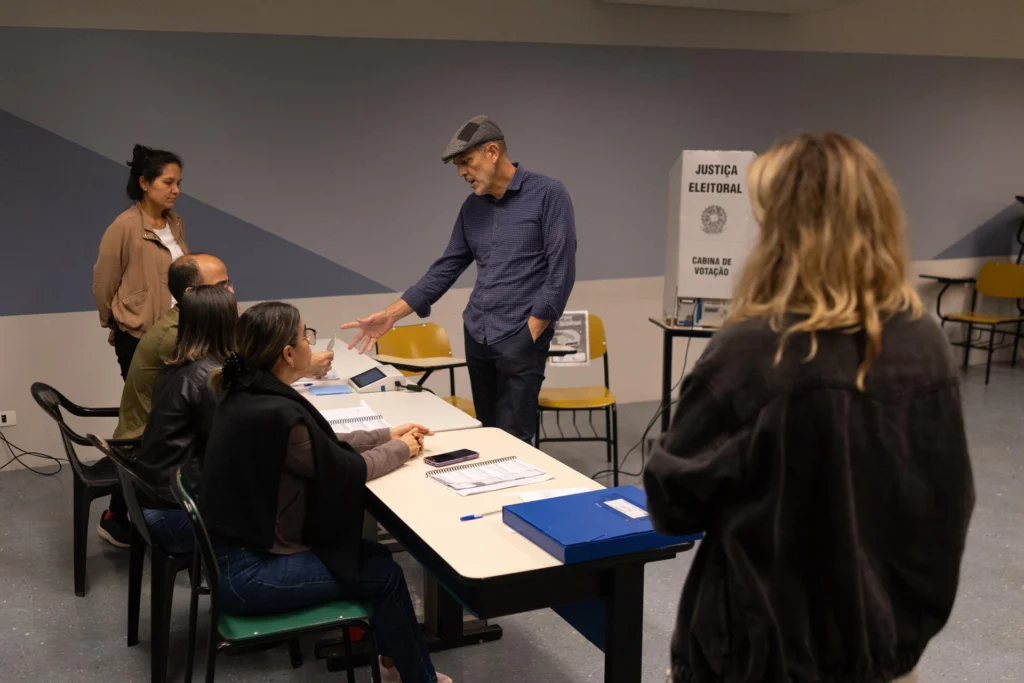
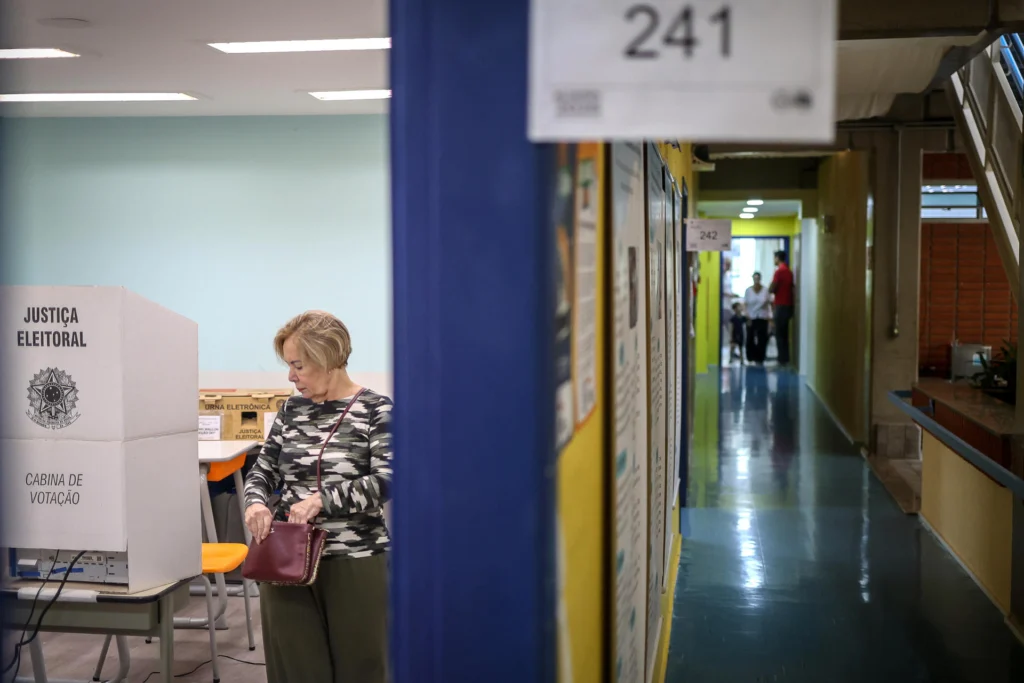
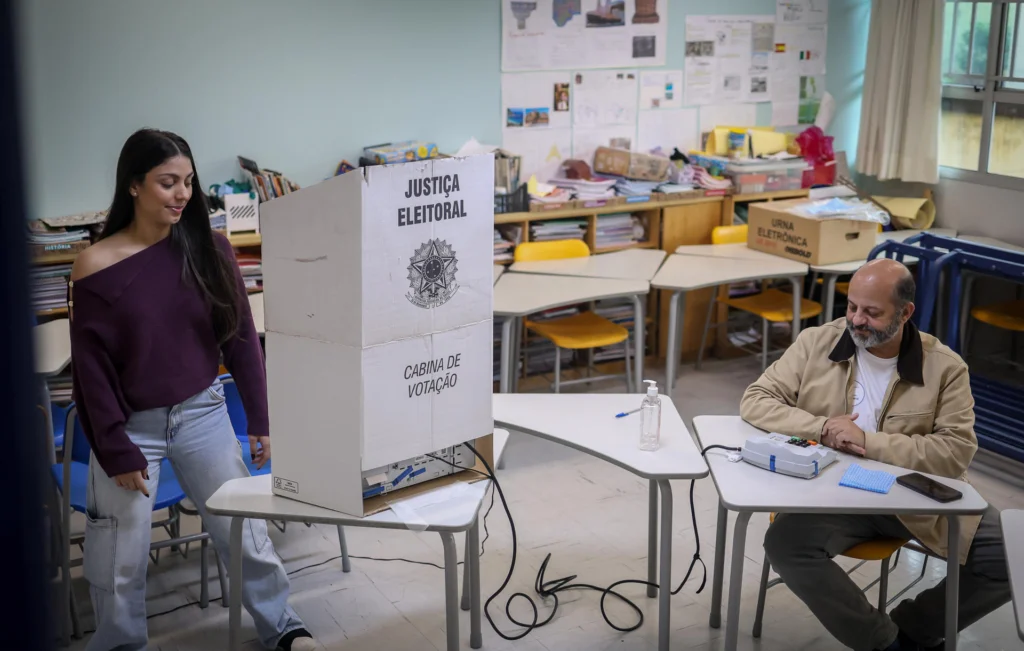
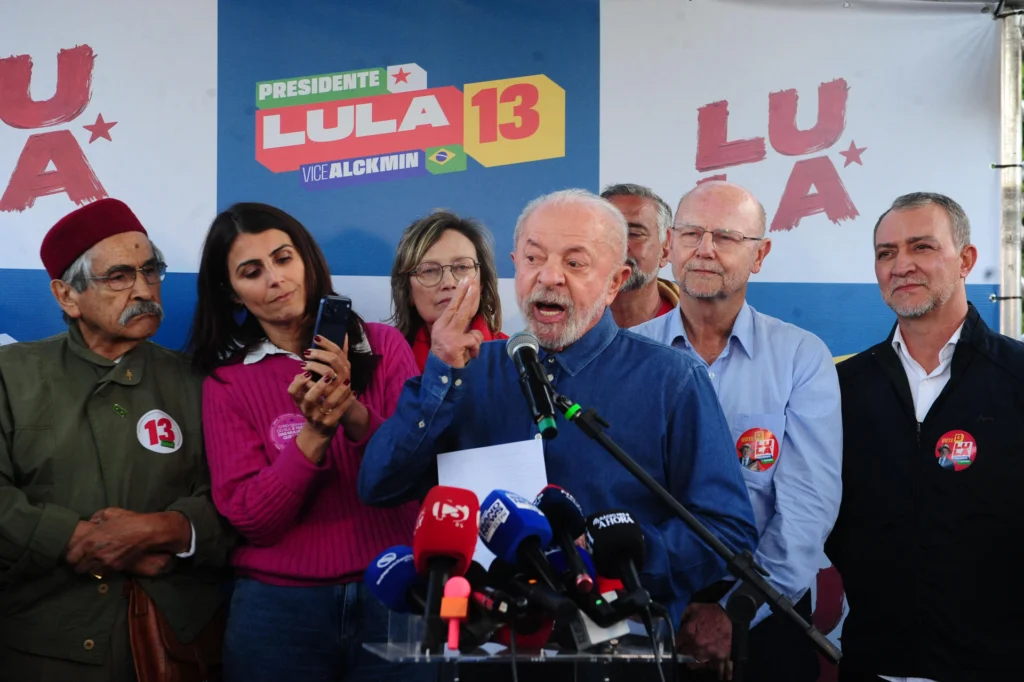
Brazil’s final polling stations closed at 7 p.m. local time Sunday, ending a two-hour Supreme Court extension and clearing the way for the vote count to resume in the presidential runoff.
The official cutoff had been set for 5 P.M. local time but the Supreme Federal Court pushed it back two hours as the original deadline arrived. Under the decision, only precincts where balloting had not ended by 5 P.M. Brasilia time could keep receiving voters.
The last polling stations in Brazil shut their doors at 7 P.M. Brasilia time on Sunday, marking the end of an extraordinary two-hour window that the Supreme Court had ordered only minutes before the original deadline.
Once the extended voting period concluded, election officials formally closed the polls and resumed the nationwide vote count.
The Court’s notification arrived shortly after 5 P.M., when voting was already due to close. By that point, hundreds of polling stations had finished the day’s work, printed their ballot bulletins and even begun shipping equipment to the regional electoral courts.
The definitive shutdown shifted attention to the Superior Electoral Court, which prepared to restart the count. Officials had frozen it six minutes after it began, when only 0.25% of ballots had been processed.
With counting now underway once again, millions of Brazilians are awaiting the official results that will determine the country’s next President who will govern Brazil from 2027 to 2031. The outcome is expected to shape Brazil’s political direction, economic priorities, and international relations over the coming years.
For now, the process rests on the resumed tally. The coming hours will show whether the early lead holds as ballot bulletins arrive from across the South American country.
Brazil’s electoral authority said Sunday that voting in the presidential runoff will continue only at polling places still open past 5 p.m., with ballot records, counting and results resuming after 7 p.m. under a court order.
The Brazilian Superior Electoral Court (TSE) announced the measure on its official account, describing it as a response to a ruling by Supreme Federal Court justice Cristiano Zanin.
Under the decision, only precincts where balloting had not ended by 5 P.M. Brasilia time could keep receiving voters.
Election officials suspended the receipt of printed ballot records, the tally of votes and the release of results, and said all three would resume after 7 P.M. local time.
Voting in Brazil closes nationwide at 5 p.m. in every election. The order by Zanin gives electoral authorities room to let voters cast ballots where local conditions kept lines moving past the cutoff.
Almost all Superior Electoral Court ministers had gathered in the office of the court’s presidency to await the end of balloting, the statement added.
Esclarecimento sobre prorrogação da votação
O Tribunal Superior Eleitoral (@TSEjusbr) informa que, conforme decisão do ministro Cristiano Zanin, do Supremo Tribunal Federal, a eleição segue em andamento apenas nos locais em que a votação não havia sido encerrada às 17h.
The electoral authorities will resume the receipt of the ballot-box bulletins (known as BUs), the totalization of votes and the release of results after 7 P.M. local time. These bulletins are the printed summaries of each electronic voting machine’s tally, and they feed the national count.
Brazil conducts its elections entirely on electronic voting machines managed by the Superior Electoral Court and the regional electoral courts. The system has drawn criticism over transparency, although no case of fraud has ever been confirmed.
The Superior Electoral Court heads the country’s Electoral Justice, which handles voter registration, biometric identification, vote collection, tabulation and the final certification of results.
Sunday’s vote settles the presidency after the October 4 first round produced no outright winner. Senator Flávio Bolsonaro led with 47.03% of valid votes, ahead of President Luiz Inácio Lula da Silva at 45.16%, forcing the runoff held on the last Sunday of October.
Brazil’s two round model requires a candidate to win more than half (50+1) of valid votes in the first round. Otherwise the top two finishers meet again three weeks later. Flávio Bolsonaro (Liberal Party) is the eldest son of former President Jair Bolsonaro, who was barred from office and later endorsed him. Lula da Silva (Worker’s Party -PT) returned to the presidency in 2023 after courts restored his political rights.
Results are expected later Sunday night once tabulation resumes after 7 P.M. The Court has not indicated when it will publish the first partial totals, a schedule that now depends on the pace of the last polling places to close.
Brazil’s Supreme Federal Court ordered polling stations to remain open nationwide until 7:00 P.M. Brasilia time on Sunday, extending the runoff vote after both candidates asked for more time.
Federal Supreme Court Minister Justice Cristiano Zanin issued the ruling, which pushed the deadline back from the original schedule set for the second round between President Luiz Inácio Lula da Silva and Flávio Bolsonaro. The change applied across all of Brazil.
The precautionary measure, with immediate effect, extends by two hours the closing of the polling stations, which was set for 5:00 P.M. Brasilia time., and applies to all electoral sections in Brazil. The Superior Electoral Court (TSE) is responsible for executing it.
“Considering the gravity of the facts presented, which reached the Supreme Federal Court at 4:32:49 P.M. today, and given the evident urgency of the measure, I order a two-hour extension, until 7:00 p.m. Brasilia time, of the closing of vote reception at all polling stations in Brazil,” Zanin detailed.
The decision came after the campaigns of Lula and Bolsonaro had requested to extend the schedule due to transportation problems in some cities and difficulties due to rains in other areas of Brazil.
The request had spanned three states, reflecting concern that severe weather could depress turnout across a wide stretch of southern and southeastern Brazil. However, Zanin’s ruling went beyond the listed municipalities, extending the schedule across the entire country rather than only in the rain-affected locations.
Confira abaixo o Ofício da Presidência do @TSEjusbr sobre o cumprimento da decisão do Supremo Tribunal Federal sobre a prorrogação do horário das Eleições 2026. pic.twitter.com/1c3D0s3LhA
The extension added two hours to the voting day. Polling stations that would have closed in the late afternoon remained open into the evening, giving voters in affected regions more time to reach their designated locations.
The Supreme Court’s nationwide extension acknowledged that voters beyond those municipalities could also face obstacles reaching polling places before the original deadline. The ruling treated the request as grounds for a broader safeguard covering the whole electorate.
With the later cutoff in place, authorities reminded citizens that anyone already in line at 7:00 P.M, local time would still be allowed to cast a ballot.
Officials have described the unified national schedule as a way to reduce confusion in a country of continental scale. The legal maneuvering unfolded on a day already marked by isolated logistical incidents. The extension gave electoral authorities additional time to process voters in the states most exposed to severe weather, while keeping the process unified from north to south.
Brazil’s top electoral authority reported a generally calm second-round vote on October 25, as more than 158.7 million registered citizens chose the country’s next head of State and renewed regional executives across the nation.
The preliminary report had confirmed the preventive replacement of 900 ballot boxes that presented technical failures, a figure representing only 0.18% of the equipment installed nationwide. The electoral body also maintains more than 48,000 contingency devices ready for deployment in the event of any operational problem.
The public security balance described a day characterized by widespread calm and a low rate of irregularities at voting centers. Security forces counted 138 isolated events, including attempts to violate the secrecy of the ballot and three cases of alleged vote buying.
The second round follows the first-round vote held earlier in October. In the first round, on October 4, far-right senator Flávio Bolsonaro (Liberal Party) got 47.03% of the valid vote, while President Lula da Silva (Workers’ Party-PT), received 45.16%, in a process marked by extreme polarization. Brazil’s electoral system requires a runoff when no candidate secures an outright majority in the opening round, concentrating the contest between the two leading contenders.
The court highlighted that Brazil’s electronic ballot box system marked 30 years of uninterrupted operation. Following this, the court has emphasized that the electronic voting platform delivers preliminary results within hours of polls closing, a feature officials point to as evidence of the system’s efficiency.
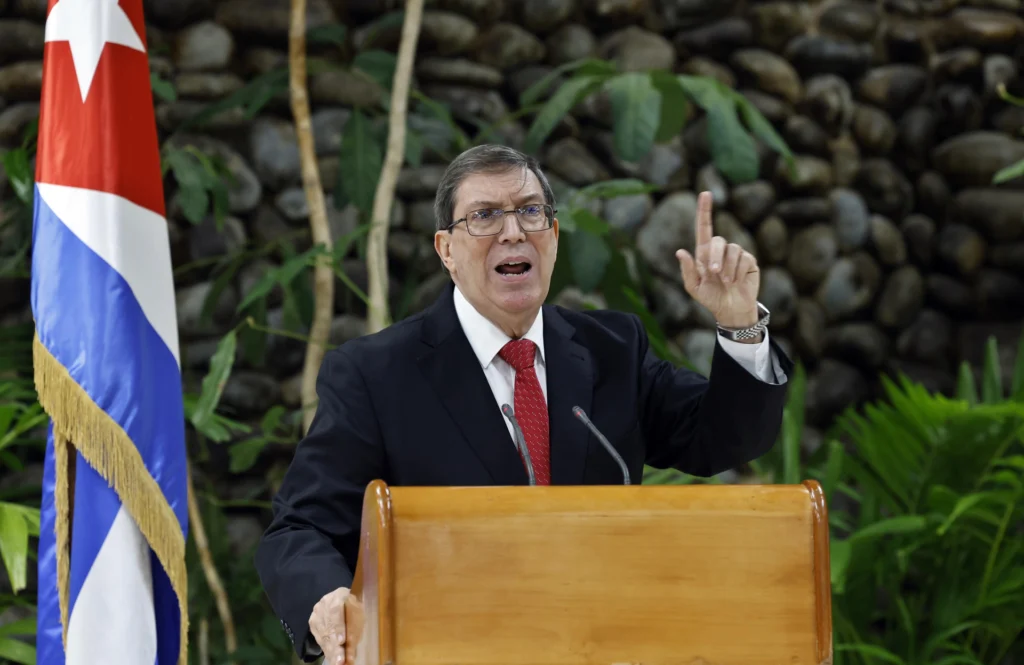
Cuban Foreign Minister Bruno Rodríguez Parrilla on Friday rejected a new threat from U.S. President Donald Trump, who said U.S. ships would make a “small stop” off the island on their return from Iran.
President Donald Trump has issued a new threat against Cuba as U.S. officials reportedly press ahead with military planning for the Caribbean country, an escalation that coincides with an intensified oil blockade and UN vote scheduled for October 28.
At a campaign rally in Fort Myers, the Republican President laid out his plan in vivid terms. “What we are going to do with Cuba is we are going to come back from Iran. Those beautiful ships, we will pass by Cuba, we will have one of them stop about 50 yards (45 meters) from the coast. They will raise their hands and then we will send Marco Rubio to close the deal,” he said.
The U.S. President closed the scene with a concrete promise: “We will take care of Cuba on our return from Iran. We will make a small stop.”
Cuba answered on X. “We reject all threats related to the ambitions of United States toward Cuba,“ wrote the Caribbean nation’s FM Bruno Rodriguez Parrilla.
He added a description of the coastline that carried an unmistakable warning. “Our coastline is full of beautiful beaches, but there ara also razor-sharp limestone spikes,” he said, referring to the karst rock formations along the shore. “Inhospitable to those who arrive with hostile intentions and dreams of domination,” he warned. The jagged coastal limestone, sharp and cutting, gave the response its edge.
We reject every threat related to US ambitions toward Cuba.
Our coastline is full of beautiful beaches, but there are also razor-sharp limestone spikes, an inhospitable environment for those who make it to our shores with hostile purposes and lust for domination.… pic.twitter.com/jrrBc1jR8S
Meanwhile, U.S. Secretary of State Marco Rubio used the same platform to urge those pushing for “change” on the island to engage in “discreet collaboration with the CIA.” In August, The New York Times reported that the intelligence agency had secretly set up a task force focused on Cuba.
The threat came amid a heated campaign in a state that is home to the largest Cuban community in United States. Its lawmakers and an influential segment of that community shape Washington’s decisions on Cuba.
Rodriguez Parrilla’s post also echoes another phrase from the current U.S. President. In March, speaking at the White House, Trump said he would have “the honor of taking Cuba” and that he “could do whatever he wanted with it.” He described Cuba then as a beautiful place, with “good land, landscapes, wonderful weather and great potential for tourism centers.”
On that occasion his unfamiliarity with the territory was on display. He argued that taking control would be good because the country is “not in the path of hurricanes.” “They won’t ask us for money for hurricanes every week,” he said in that time.
Passing by the island after Iran is not a new idea. In early May, while signing the Executive Order that launched an unprecedented wave of unilateral and illegal penalties against Cuba, Trump had already spoken of “taking control” once his military objectives in Iran were met. Following that, he has promised the war will end “immediately” after the November 3 elections, without explaining how.
The new threat coincides with the campaign Rubio himself is leading to sway the votes of UN member states on the resolution against the blockade against Cuba. In a recent press conference, Rodriguez Parrilla denounced the pressures and threats against governments to make them change their position.
In recent weeks the U.S. administration has seized fuel shipments bound for Cuba as part of an oil blockade. The campaign against Cuba’s international medical cooperation has intensified in parallel.
Elections Add Pressure
The escalation arrives at a difficult political moment for the U.S. President. Midterm elections take place on November 3, and the Republican Party could lose control of Congress. Trump’s approval has sagged, and a majority of voters now reject his management of the country’s main fronts, a rejection that cuts across every issue.
The domestic scenario is complicated further by the conflict with Iran. Tehran retains control of the Strait of Hormuz and has inflicted significant destruction on U.S. military bases in West Asia.
Fuel prices keep climbing in the meantime. The increase strikes U.S. households directly, and every rise deepens the damage to the President’s public standing at a moment when he can least afford it.
The pattern toward Cuba has hardened even as those pressures mount at home. The fuel seizures, the diplomatic campaign and the military planning all point in the same direction, toward an increasingly explicit posture of confrontation against the island.
With the United Nations vote set for October 28 and the U.S. midterm elections following days later on November 3, the coming weeks will reveal whether the planning described in U.S. media translates into further concrete action against Cuba, or whether it remains a lever of pressure in a campaign that already weighs heavily on the island.
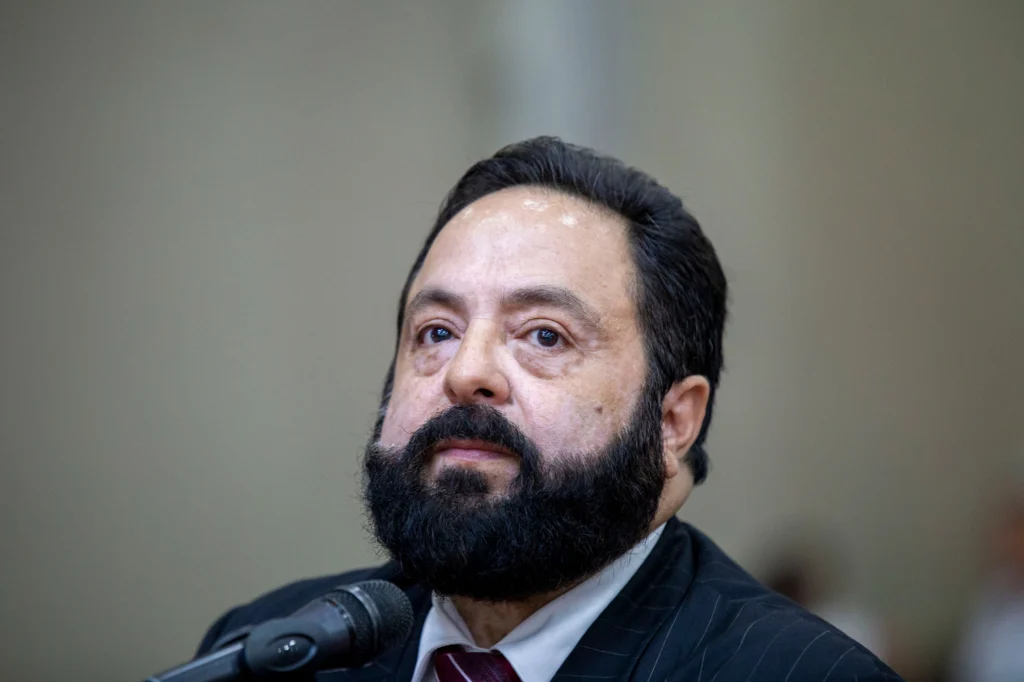
A Honduras’ court issued arrest warrants with international alerts against former Congress president Luis Redondo and former state printing manager Edis Moncada over a parliamentary order for a vote-by-vote recount of the 2025 general election.
A Honduran court ordered the international capture of former National Congress president Luis Redondo and Edis Moncada, former manager of the National Graphic Arts Company, attaching international alerts to both warrants.
The measure took effect after the deadline expired for their voluntary appearance before charges filed by the Public Ministry.
The prosecutorial request names 14 former members of the now-defunct Permanent Commission of the legislative power. The criminal case brought by the Prosecutor’s Office contains 21 charges against the former leadership of that parliamentary body, alleging disturbance of institutional functioning, usurpation of functions and violation of officials’ duties.
#HCHNoticias | En exclusiva HCH le muestra la orden de captura contra el expresidente del Congreso Nacional, Luis Redondo, quien está acusado de dos delitos de violación a los deberes de los funcionarios. FP pic.twitter.com/EzLfq095Wk
The charges target two central decisions adopted by the legislature. One was the installation and institutionalization of the commission itself. The other was the promulgation of a sovereign decree ordering a vote-by-vote recount of the 2025 general election.
Opposition sectors describe the prosecution as part of a campaign to criminalize officials and mechanisms that flagged irregularities in those elections. The parliamentary order to audit the ballot count challenged the authority of the National Electoral Council and drew the reaction of power groups opposed to democratic control of the vote.
The activation of international alerts and the prosecution of numerous former legislative officials shows, in the view of critics, the use of the punitive apparatus to intimidate state institutions. The case sets a precedent against the power of elected representatives to safeguard the legitimacy and transparency of electoral processes, they argue.
The 2025 elections remain at the center of the dispute. The legislative power had demanded verification of the tally sheets after the vote, a step that conservative sectors rejected. The recount order sought to audit what those lawmakers considered irregularities in the results.
Text reads: “Statement / LIBRE party: Requiring votes to be counted is not a crime! Defending democracy is not a crime! We denounce the political persecution against the deputies of LIBRE Party for demanding that the electoral count be completed and the popular will be respected. The defense of democracy cannot become a reason for persecution. Political persecution will not silence LIBRE or the Honduran people!”
Opposition Denounces Political Persecution
In September, former presidential candidate Rixi Moncada of the Freedom and Refoundation Party (LIBRE), publicly denounced what she called “systematic political persecution and the establishment of a judicial dictatorship” in Honduras.
Moncada questioned decisions by the National Congress and the judiciary that led to the abrupt dismissal of senior constitutional officials. Among those removed were the Attorney General, the President of the Supreme Court, a councilor of the National Electoral Council and a magistrate of the Electoral Justice Tribunal.
She also warned about regulations aimed at mass dismissals of public employees and an energy counter-reform designed to hand over the management of the National Electric Energy Company (ENEE, in Spanish), to banking corporations and private generators.
In her analysis, Moncada linked the parliamentary offensive to impunity rulings handed down by the courts. She highlighted the acquittal of former President Juan Orlando Hernández in the so-called Pandora Case, which investigated the diversion of 282 million lempiras (about 14,252,618 dollars) to parties of the traditional oligarchy of the country.
The international arrest warrants extend the reach of the judicial process beyond Honduran borders. The alerts would allow authorities in other countries to detain the former officials if they travel or are located abroad.
For now, the courts move forward with the charges while the opposition frames the case as retaliation against those who pushed to audit the 2025 vote. The next phase will determine whether the former officials appear before the court, are detained, or contest the prosecution as politically motivated.
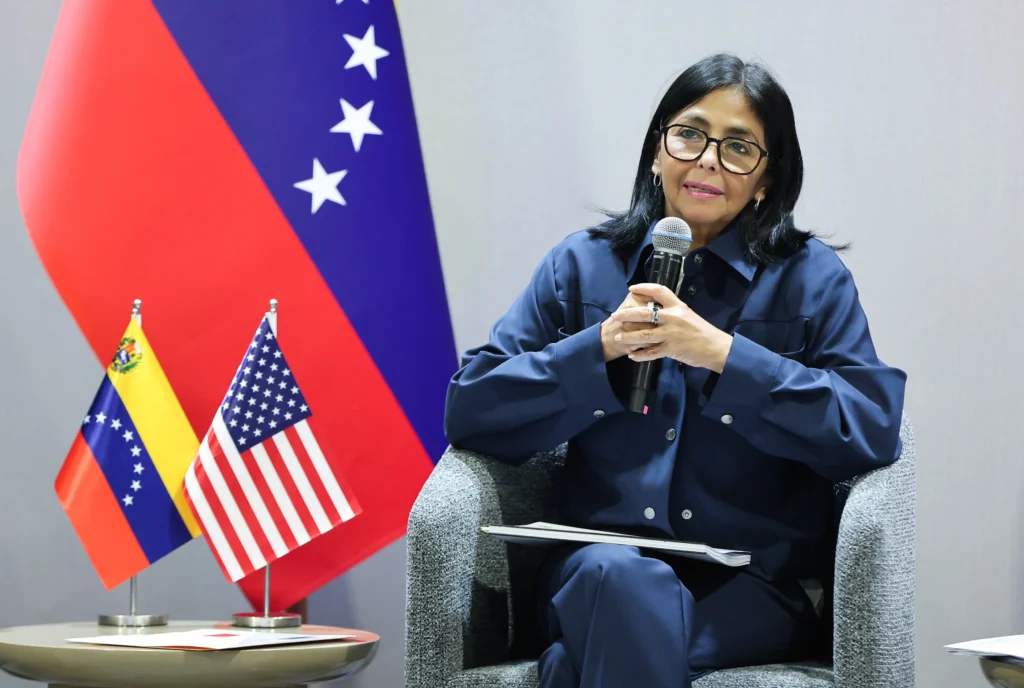
Venezuela’s Acting President, Delcy Rodríguez, inspected progress Friday on a package of 17 oil agreements signed with the United States, as the state of Zulia reported record output of 115,000 barrels per day.
The inspection covered joint projects aimed at extracting crude from national reserves. Eight of the 17 agreements involve the development of so-called green fields, new areas set aside for exploration and exploitation.
“We want to show the country the progress, to make clear that we do not leave things unfinished, that we go further: to action and to production. Once again, Zulia state broke its production record, reaching 115,000 barrels per day today,” Acting President Delcy Rodriguez said.
Rodriguez added that projections call for closing December at 120,000 barrels. The Acting President framed the tour as proof that the partnership has moved beyond paperwork into concrete output.
The cooperation framework was signed in August through North American Blue Energy Partners (NABEP). The 17 strategic agreements target the extraction of 65 million barrels of crude from Venezuela’s reserves.
On maritime infrastructure and logistics, Rodriguez said activity in Zulia will jump from 100 to 900 vessels, an increase of 800% in mobilized capacity. The figure signals a major expansion of port and transport operations tied to the oil sector.
The Acting President also outlined a plan for the progressive creation of jobs driven by industrial activity. Employment will begin in the food sector, continue in ironworks and industrial areas, and later extend to public accounts with the goal of raising working-class incomes.
Rodríguez said the central objective of the alliance is to develop the hydrocarbon industry and consolidate the country’s sovereign position. She stressed that Venezuela seeks to affirm itself as the nation with the largest oil reserves on the planet and to rank among the world’s leading producers and exporters. “We want to show the country the progress of these agreements,” she said.
Acting President Delcy Rodriguez insisted that rising production must translate directly into the welfare of the population. Following this, she pointed to concrete areas where the gains should appear: “In the daily life of Venezuelan men and women: in pay for workers, in health, public hospitals, schools, food, roads, water and public services. That is where Venezuela’s development goes,” she said.
The comments link oil revenue to social spending at a time when the government has promised greater transparency over hydrocarbon and mining income. The Acting President’s emphasis on hospitals, schools and food echoes longstanding official messaging that resource wealth should fund public services.
The Zulia figures mark a significant benchmark for the country’s oil industry, which has sought to recover output after years of decline. The jump from 100 to 900 vessels suggests broader commercial activity around the crude operations, beyond the wells themselves.
Eight green-field projects form part of the package, indicating that the partnership extends into undeveloped territory rather than relying solely on existing infrastructure. Rodríguez described the agreements as a path toward consolidating Venezuela’s position in global energy markets.
The inspection tour took place as the government pushes to showcase tangible results from the August accords. The Acting President’s visit to the field operations was intended to demonstrate that the agreements are generating activity on the ground, not only on paper.
The production target of 120,000 barrels by December would extend the record reported Friday. If achieved, it would reinforce the government’s narrative of recovery built around the US partnership and the state of Zulia’s role as the engine of national output.
Rodríguez closed her remarks by linking the oil gains to broader national development, arguing that the industry’s expansion must reach Venezuelans through wages and public services rather than remaining confined to export statistics.
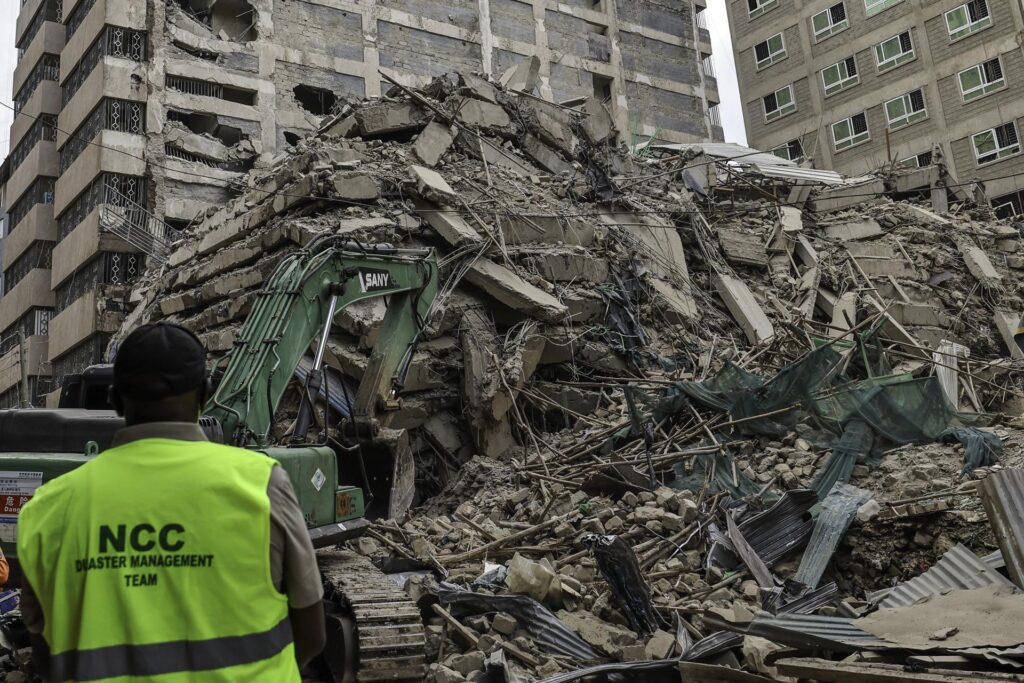
An 18-story building under construction collapsed Friday in Nairobi, Kenya, triggering an emergency operation as authorities feared workers and passersby were trapped beneath the rubble.
The structure gave way on Friday, October 23, near Yusuf Haji Avenue, inside the busy Eastleigh commercial district on the eastern side of the Kenyan capital. Security forces and the Kenya Red Cross deployed rescue brigades to the scene immediately.
Two people were pulled from the wreckage and rushed to Kenyatta National Hospital for specialized care, according to the latest report from relief agencies. The Kenya Red Cross confirmed that search and rescue operations continued without interruption at the collapse site.
The humanitarian organization located 26 people who had initially been reported missing. Tracking teams deployed across the sector found them safe and sound.
Given the heavy foot traffic in the commercial area, county security forces used tear gas to disperse crowds. The measure sought to protect nearby businesses from looting and to clear access routes for emergency vehicles.
🇰🇪 An 18-storey building under construction collapsed in Nairobi, Kenya
Numerous people, including construction workers and nearby pedestrians, are trapped under the rubble. pic.twitter.com/ErrXr9dzJE
Authorities asked residents to keep the perimeter clear so Red Cross teams and partner agencies could work safely. “Kenya Red Cross teams are working with partners from various agencies to support search and rescue operations,” the organization said in a statement.
Governor Deploys Machinery
Nairobi Governor Johnson Sakaja said relief agencies kept heavy machinery and specialized personnel on Yusuf Haji Avenue to remove debris and investigate possible failures in the construction project.
Sakaja also announced the installation of a guidance and information center at the site of the disaster. The facility aims to serve the families of workers and area residents directly, providing updated reports on the removal of materials and the status of the investigation into the responsible construction company.
The governor’s office described the operation as ongoing, with no timetable for when the rubble would be fully cleared or the cause determined.
The collapse added to concerns about construction safety standards in Nairobi, where rapid urban growth has pushed a wave of high-rise building across the city. The structure was still under construction when it fell, leaving questions about the materials, the design and the permits behind the project.
Rescue crews continued combing through the debris for any remaining victims. The Red Cross reiterated its call for the public to stay away from the area. “Clear the area to allow rescuers to work safely,” the organization urged.
Authorities have not yet confirmed whether anyone remains unaccounted for. The two injured patients were receiving treatment while investigators began examining the site for signs of structural failure.
The Eastleigh neighborhood, known for its dense commercial activity and large Somali community, sits in the eastern part of Nairobi. The collapse disrupted business operations across the district as authorities cordoned off streets around the disaster zone.
The investigation will look at the construction firm’s permits, the quality of materials used and whether the building met the standards required for an 18-story structure. Governor Sakaja said those findings would be shared with the families awaiting answers.
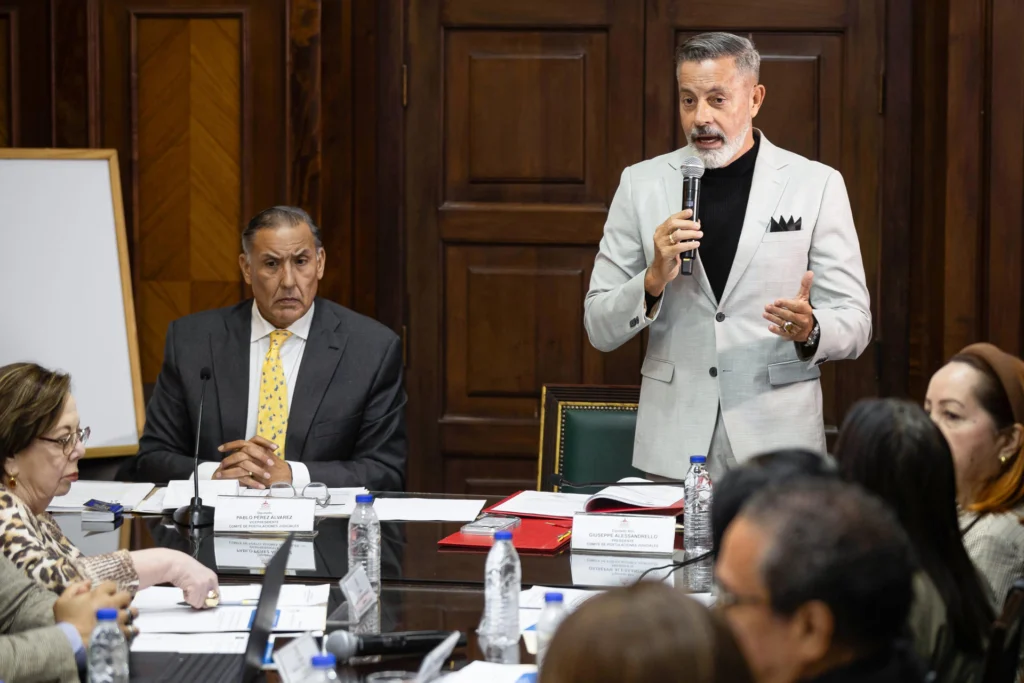
Venezuela’s National Assembly installed a Judicial Nominations Committee on Friday to evaluate and select new Supreme Court justices, a step lawmakers described as central to consolidating institutional stability.
The committee was formally established on October 23, at the Federal Legislative Palace in Caracas, one day after being sworn in during a legislative session.
Giuseppe Alessandrello, who presides over the body, announced that its immediate task is to draw up a work schedule under the Law of the Supreme Court of Justice.
Alessandrello said the law opened the selection process to ordinary citizens. Writing on social media, he stated that the legislation brought people into the work of “evaluating and selecting the leadership, in this case of the Supreme Court of Justice, to seek plurality.”
#23Oct || Desde el Palacio Federal Legislativo se realiza la Instalación del Comité de Postulaciones Judiciales. pic.twitter.com/MczZA2GxJ7
Text reads: “From the Federal Legislative Palace is carried out the installation of the Judicial Applications Committee.”
The committee operates within a broader national dialogue that authorities describe as “building a new Venezuela.” Officials have repeatedly framed the judiciary as the institution responsible for guaranteeing what they call true and just peace among citizens. “The judicial branch is the institution that will guarantee peace among us,” Alessandrello said.
The work schedule will set specific periods for the call for nominations, the evaluation of candidates, and the handling of challenges and responses.
The final goal is to present a definitive list of eligible candidates to the National Assembly.
Alessandrello stressed the weight of the assigned tasks, linking them directly to institutional stability. The committee’s operational work and the eventual delivery of the list will follow the terms and periods established by current law.
The process is governed by the Organic Law of the Supreme Court of Justice and the Constitution of the Bolivarian Republic of Venezuela. It covers the selection of both principal and alternate justices of the Supreme Court of Justice.
Subrayó el rol clave de la ciudadanía:
"La ley incorporó a los ciudadanos y ciudadanas de la sociedad en este trabajo de evaluar y seleccionar a las directivas, en este caso del Tribunal Supremo de Justicia, para buscar la pluralidad". pic.twitter.com/LhNVkaK6ov
Text reads: “The President of the committee, Giuseppe Alessandrello, highlighted the group’s harmony: “Everything we produce is decided unanimously and the auspices with the work of the committee are positive.” He also emphasized the importance of plurality in this process. He stressed the key role of citizenship: “The law incorporated citizens of society in this work of evaluating and selecting directives, in this case from the Supreme Court of Justice, to seek plurality.”
Selecting Court Leadership
The mandate extends beyond the high court itself. It also includes related judicial positions, among them the directorship of the National School of Magistrates.
The committee emerged from a process announced earlier this month. The National Assembly opened the nomination period between October 2 and October 9, allowing interested citizens and institutions to take part in the selection of the court’s leadership.
Once the schedule is finalized, the committee will move through successive phases, receiving nominations, reviewing candidates, and addressing any challenges filed against applicants. Each challenge will carry its own opportunity for a formal response before the list reaches the legislature.
The final list of selected candidates will be delivered to the National Assembly for consideration. The body’s work therefore functions as a preliminary filter within a process whose ultimate decisions rest with the legislature.
A new trial in the unified Hotesur and Los Sauces money laundering cases opened Friday in Buenos Aires against Argentine former President Cristina Kirchner, her son, Deputy Máximo Kirchner, and 17 other defendants.
Federal Oral Tribunal 5 allowed the former President and the deputy to attend the opening session virtually, with the favorable vote of judges José Michilini and Fernando Machado Pelloni. The ruling sought to coordinate the deputy’s parliamentary schedule and simplify transfer logistics from the home where the former president is serving a sentence.
The remote format was granted exceptionally, only for the formal reading of the indictment and the order sending the case to trial. The tribunal said later hearings will be in person for all defendants.
The case covers 19 people, including businessmen Lázaro Báez, Cristóbal López and Fabián de Sousa. Hearings are set for Mondays, Fridays and Saturdays, including the January 2027 judicial recess, when the defense lawyers must attend in person every day.
With over 300 witnesses initially slated to testify, the dynamics of witness credibility and testimonies would play a crucial role in shaping the outcome, but it was reduced by agreement between the parties.
[JUSTICIA] Terminó la audiencia por Hotesur y Los Sauces: solicitaron que Cristina Kirchner sea juzgada como "jefa de una asociación ilícita, coautora de lavado de activos y admisión de dádivas", y su hijo, Máximo, fue imputado como "organizador del entramado criminal". https://t.co/3s4n4ORbW3pic.twitter.com/VbWP9G9bve
The prosecution alleges that Kirchner’s family bought hotels and apartments, rented them to businessmen, mainly Báez, and laundered illegal money from public works.
The defense’s argument about the legitimacy of the funds is crucial. The defense, led by Carlos Beraldi and Ary Llernovoy, says the properties were bought with declared funds, including assets the family owned before Néstor Kirchner became Mayor of Río Gallegos, and that rentals were invoiced, banked and at market prices. The defense says similar claims were dismissed in three illicit enrichment cases. None of these claims has been tested at trial, and the defendants are presumed innocent.
Lawyer Carlos Beraldi maintained from the start that the hotels operated, collected and paid taxes like any other business. In September 2023, Chamber I of the Federal Chamber of Cassation revoked a previous dismissal and ordered that the trial go ahead.
The merged file brings together two fronts. Hotesur concerns the family’s hotel operation, while Los Sauces covers the real estate company at the center of the billing accusation.
The Cassation court removed the two judges who had dismissed the case and left only Palliotti, the magistrate who had voted to convict Cristina and Máximo Kirchner.
The same account recalls that in November 2021 judges Adrián Grünberg and Daniel Obligado dismissed the case against all defendants, with Adriana Palliotti dissenting, relying on an accounting expert report that found no harm. In September 2023, the Cassation Chamber overturned that decision and ordered a trial.
The opening of the process was preceded by an episode described as embarrassing. The Cassation court ordered the Federal Oral Tribunal 5 to merge the Hotesur and Los Sauces cases into a single proceeding and to begin it this Friday.
It is the first time in the country’s history that the Cassation court has dictated how a trial must be conducted, a power that normally belongs to each oral tribunal. Political pressure mounted after a Supreme Court resolution, and the judges had only 72 hours to unify the files. The order left the tribunal with no margin to set its own calendar.
The core of the Los Sauces case is the billing of the family’s real estate firm. According to the accusation, 88% of everything the company collected between 2009 and 2016 came from businesses controlled by Báez and from the Indalo Group.
The Hotesur portion of the merged case has not yet been read in court. The next hearings, set for October 26 and October 30, will determine how the combined process advances.
Severe flooding caused by heavy rainfall and the rising Parana River has forced the evacuation of some 4,200 families in eastern Paraguay, with local authorities monitoring vulnerable areas to move residents into temporary shelters.
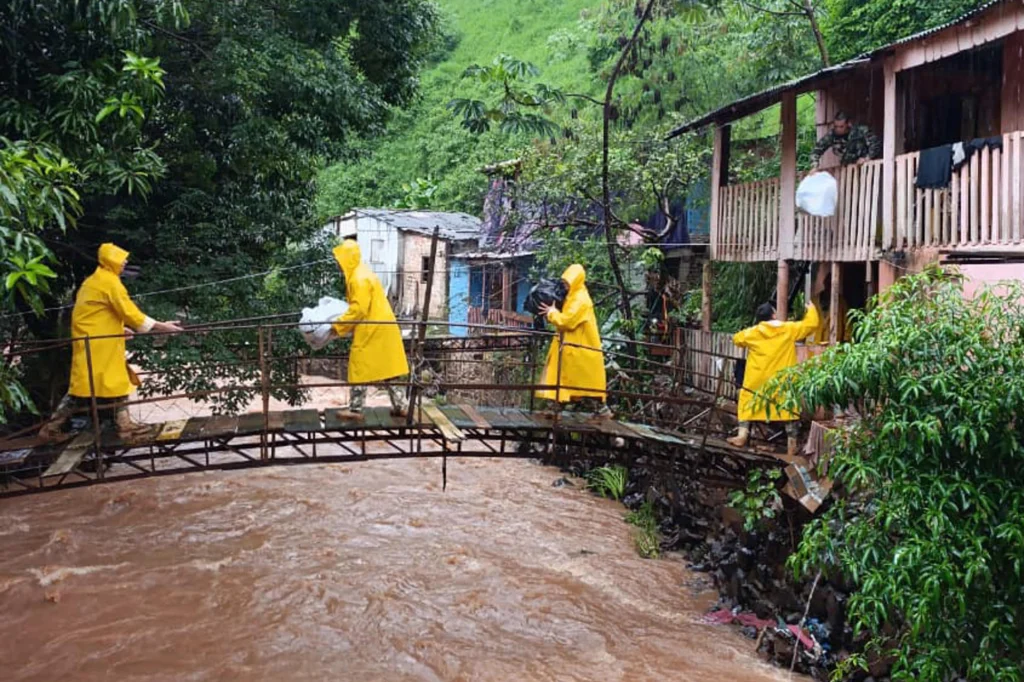
More than 1,000 severely damaged homes are concentrated in the municipality of Ciudad del Este, where the rising waters have swallowed entire parcels of land. Remansito neighborhood was hit hardest. Around 35 families who work in recycling had to abandon houses submerged under the floodwater.
The emergency extends beyond that city. In the department of Ñeembucú, severe flooding has been reported in the towns of Ayolas and Cerrito. Local authorities and rescue teams continue to watch the most exposed areas as they coordinate the transfer of affected residents to temporary shelters.
The scale of the crisis has grown quickly. Just days earlier, official figures put the number of affected households at 3,000, a count that has now risen above 4,200 as the river keeps climbing.
Residents along the riverbank say the situation worsens considerably each time the gates of the Itaipu Binacional hydroelectric dam open. They argue that releasing the reservoir’s excess water has an immediate and direct impact on homes built along the coastal strip.
Representatives of the hydroelectric facility defended the maneuver. The gate openings, they said, respond strictly to technical safety protocols established for operational contingencies. The dam’s administration rejected the claim that these operations are the main cause of the river overflowing in the region.
The dispute places technical necessity against lived experience. For the communities watching water pour into their streets, the relationship between the releases and the flooding feels direct. For the dam operators, the gates are simply doing what they were designed to do under extreme conditions.
The national weather agency has offered little relief. Projections from the Directorate of Meteorology and Hydrology warn that rain will continue falling through the weekend across the country’s eastern zone. The agency urged the public and protection agencies to maintain precautionary measures amid the risk of new landslides.
#Paraguay | Families in La Rivera have been affected by flooding along the Paraná River, with rising water levels impacting homes and surrounding communities. Footage captures the extent of the flooding and the challenges faced by residents as they deal with its consequences.… pic.twitter.com/7GKTOoXEnB
Solidarity has also moved through the affected areas. Neighbors in working-class sectors have organized to supply community kitchens and distribute donations of basic goods. That support network has become essential for families who left their homes with little more than what they could carry.
The flooding follows a pattern familiar to the region. The Paraná River, one of South America’s largest waterways, regularly swells after sustained rains, but the current emergency has outpaced local capacity to respond.
With the forecast showing no break in the weather, the number of displaced families could continue to rise. Shelters are filling, and the most vulnerable households, including those who earn their living from recycling along the riverbank, face an uncertain wait before the waters recede enough to return.
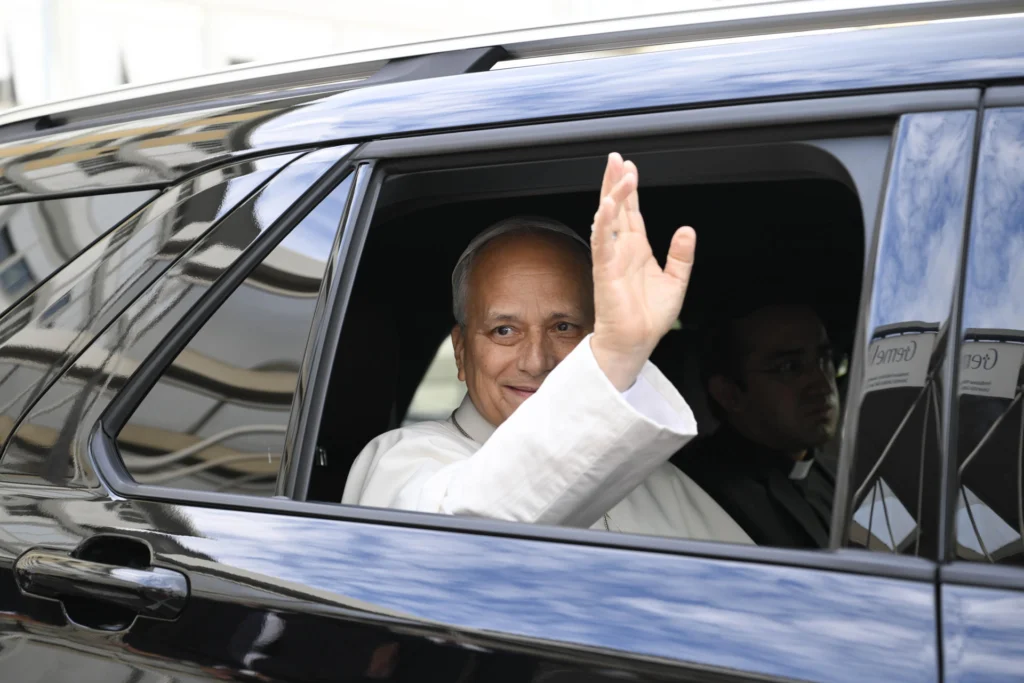
Pope Leo XIV confirmed his official visit to Argentina on Thursday, as he announced a four-day pastoral tour set to begin on November 8.
The Holy See press office released operational details of the journey after doctors cleared international travel, noting that the Pope requires no additional oncological treatment.
The Pope’s visit will include prisons, care homes for people with disabilities and meetings with workers’ organizations, reflecting an institutional intention to weigh in on debates over social justice, labor rights and the plight of the most vulnerable sectors.
His itinerary opens November 8 with a 4:30 P.M. local time arrival at Jorge Newbery Airport aboard a flight from Uruguay. From there he will pay tribute at the General San Martin Monument before attending a protocol reception hosted by President Javier Milei and meeting with diplomats.
The following day brings a packed schedule. Pope Leo will visit the Cottolengo in Don Orione, in Claypole, preside over a massive outdoor mass at the Monument to the Spaniards, meet with the labor sector at the Argentinean Catholic University, lead an interreligious gathering at San Martín Palace and dine with bishops at the Archbishopric.
During the welcoming session for newlyweds at the general audience, a couple said to Pope Leo XIV: “Papa, we’ll be waiting for you in Argentina!” The Pope replied enthusiastically: “Argentina—let’s go!” https://t.co/ut3jm7A7qB
On November 10 the tour moves inland to Cordoba province, where he will celebrate a liturgical ceremony at the Military Aviation School and walk through the of Nuestra Señora de la Asuncion Cathedral. He returns to Buenos Aires that night to preside over a youth vigil.
His final day, November 11, begins at the Federal Penitentiary Complex and continues with a mass at the of Lujan Basiliek. The trip concludes at 2:00 P.M. local time with a departure from Ezeiza International Airport bound for Lima.
Security and logistics teams from the Holy See are coordinating directly with Argentine authorities to finalize arrangements for the Pope’s movement at each public gathering on the schedule.
The visit unfolds in a political and social landscape shaped by the complex economic situation Argentina faces under the Milei’s administration. Structural tensions generated by fiscal adjustment policies and economic deregulation form the backdrop for a papal message that now carries deep political significance. The dignity of work and the protection of the vulnerable are expected to anchor his public remarks throughout the tour.
The confirmation also marks a decisive moment in the Pontiff’s recovery. Weeks after surgery, the international travel signals that his medical team considers the convalescence sufficiently advanced for the demands of a four-day, multi-city itinerary across two countries.
For Argentine faithful, the words delivered from St. Peter’s Square close months of uncertainty. The trip’s official schedule now stands, and preparations have shifted from speculation to logistics as November 8 approaches.
A magnitude 7.0 earthquake struck the Xizang and Qinghai regions of southern China on Thursday, killing at least 16 people and injuring 32 others.
Seismological monitoringplaced the epicenter 202 kilometers north of Nagqu prefecture-level city in the Tibet Region, at a depth of ten kilometers.
The shallow focus amplified the tremor’s destructive force, sending shock waves across the autonomous region and into border areas of neighboring countries.
The quake’s reach extended well beyond China’s borders, underscoring the scale of the event in a mountainous zone near the Himalaya range. Residents across the Himalayan chain felt the shaking, with alerts reported among populations in India, Myanmar and Nepal.
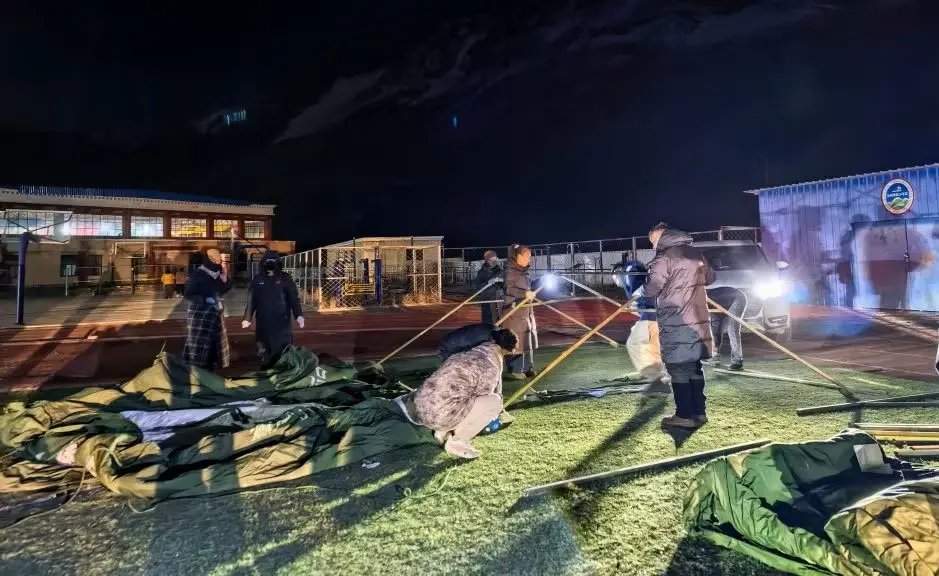
Rescue brigades and Chinese government agencies deployed immediately to the ground. Teams began assessing possible damage to infrastructure and attending to communities near the epicenter, where access routes and basic services could have been compromised.
A 7.0-magnitude earthquake struck Baqen County of Nagqu City in southwest China's Xizang Autonomous Region, at 10:33 p.m. Thursday (Beijing Time), according to the China Earthquake Networks Center (CENC). #XinhuaNewspic.twitter.com/ewln8dGEvn
Local authorities are conducting technical inspections in the Nagqu area, a settlement of about 30,000 inhabitants, and in Lhasa, the second-closest locality to the quake’s center. Emergency crews are checking the network of basic services and road structures in rural counties to rule out major damage from possible landslides.
Early Warning Network
China’s natural disaster response committees remain deployed as a preventive measure to coordinate logistical assistance and protect families living in zones of high seismic risk.
That response now leans on infrastructure the country has spent years building. In July, China consolidated the deployment of the world’s most extensive earthquake early warning system, a scientific network capable of issuing real-time alerts within seconds of detecting the first seismic movements.
The mechanism exploits a basic principle of physics, radio waves travel faster than seismic waves. That gap allows notifications to be triggered from magnitudes as low as 1.0, buying precious minutes for people to seek protection before the shaking arrives. The system covers more than 90% of the key risk areas across Chinese territory and generates intensity reports within minutes. Officials describe it as essential technical support for decision-making in rescue operations.
🇨🇳 A 7.0-magnitude earthquake in China's remote Tibet region has killed at least 16 people and injured dozens more, state media reports, with hundreds of houses collapsed. pic.twitter.com/IAH9IzVSHh
Emergency management institutions maintain permanent monitoring in the most vulnerable areas, linking cutting-edge research with direct operational response to natural disasters.
The quake arrives against a backdrop of recent tragedy in the region. A flood in Nepal and Tibet left at least 1,143 people dead and the mountainous terrain now faces a new emergency demanding the same mobilization of rescue resources.
With the preliminary toll still being updated, the priority has shifted to reaching remote settlements where landslides may have cut roads and interrupted communications. The full extent of the damage will depend on how quickly those rural counties can be reached and assessed.
Former presidential candidate Luisa González denounced political persecution Thursday after security forces detained her in a predawn raid in Ecuador’s Manabí province, accusing the government of President Daniel Noboa of an authoritarian drift.
In her first written message since the arrest, Luisa González rejected the accusations against her and described the country’s institutional situation as “unsustainable.”
“Today it is my turn to be detained over an absurd accusation,” she wrote on X. “I will respond with the dignity of the Ecuadorian men and women who owe nothing and who are committed to achieving freedom for Ecuador and a better future for the country,” she added.
The leading figure of the Citizen’s Revolution movement also warned of mistreatment and torture inflicted on political prisoners held by the current far-right government of Daniel Noboa.
Faced with what she called a repressive escalation and a socioeconomic decline marked by violence and state corruption, González issued a call for unity to social organizations and leftist movements. “To my partners of the Citizen’s Revolution and all progressive forces, I say: it is time for unity, unity and unity to achieve freedom and democracy in the country,” she said.
She thanked communities across the country for their support and insisted that the people remain determined to overcome government censorship. González closed her statement by asserting that popular silence would eventually break the authoritarian siege and restore sovereignty and full democracy to Ecuador.
A Judicial Crackdown
Luisa González was detained in the early hours of Thursday in the Canuto parish of Chone canton, Manabí province. National Police officers and state prosecutors carried out the operation under the name “Labyrinth case,” an inquiry authorities describe as targeting alleged electoral financing during the 2023 campaign.
The police deployment included simultaneous raids in Manabí and Pichincha provinces and ended with three people detained for the purpose of formal charges.
After the procedure, relatives and allies of González denounced uncertainty over her whereabouts. Officials have not clarified whether she remains in Manabí or is being transferred to Quito for a court hearing, a situation her supporters describe as a grave violation of due process guarantees.
The arrest is part of a broader judicial offensive against the Citizen’s Revolution movement, which is currently suspended for nine months following rulings by the Electoral Contentious Tribunal that critics say were designed to block its participation in sectional elections.
That institutional push previously prevented González from registering as a candidate for the Manabí prefecture. Quito mayor Pabel Muñoz, meanwhile, faced raids on his offices in the middle of his reelection campaign.
Ecuadorian Former President Rafael Correa denounced the detention of González in a separate statement, adding his voice to the growing criticism of the operation. The predawn arrest now places one of the government’s most prominent opponents at the center of a legal battle that her movement frames as political persecution rather than a legitimate investigation.
Venezuela’s National Assembly President reaffirmed sovereign control over the country’s oil revenues and reported 71 active energy agreements alongside 44 contracts under negotiation, framing the figures as evidence of a sector revival after years of financial restrictions.
The statements came amid what officials called a strategic reconfiguration of the Venezuelan hydrocarbon industry. After years of intense global financial restrictions, the gradual operational reactivation of agreements between state-owned oil company Petroleos de Venezuela (PDVSA) and international firms aims to restore a steady flow of foreign currency into the national treasury.
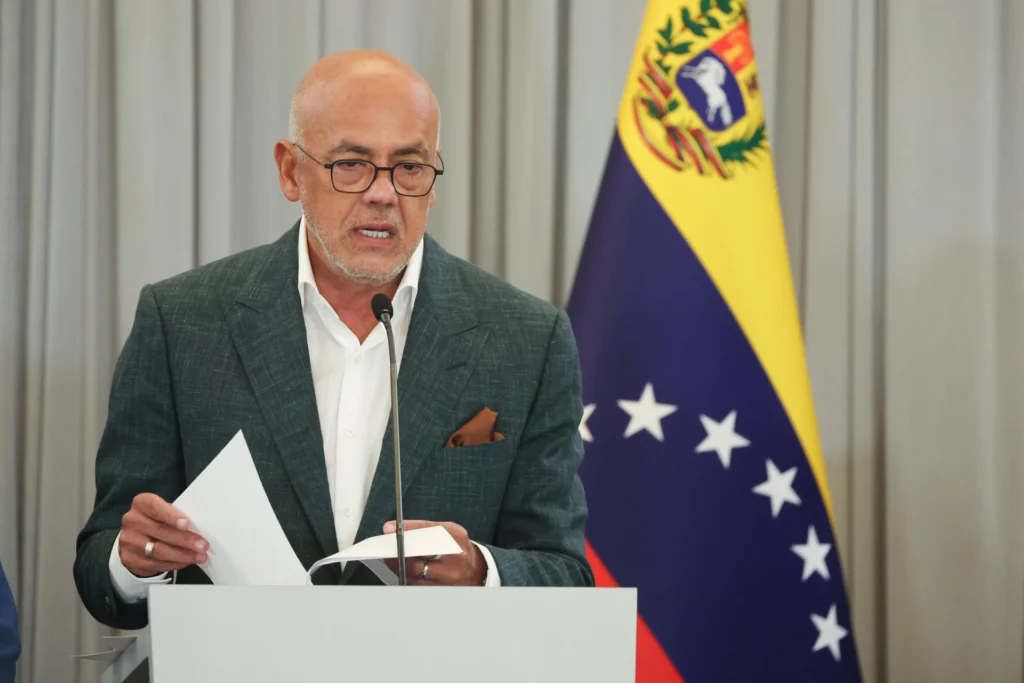
“No foreign agency or international financial entity administers or safeguards the public funds that enter the country from hydrocarbon sales,” National Assembly President Jorge Rodriguez said.
Rodríguez detailed that the money enters the public treasury under the supervision of authorized national banks, and he ruled out any external trust or any management of accounts by third parties outside the country’s institutions. In this sense, he called autonomy over foreign currency “a non-negotiable principle” for the country’s macroeconomic stability.
71 agreements are currently in force, while another 44 contracts are being negotiated. For the government, that volume confirms an operational momentum geared toward diversifying investment across the country’s main extraction fields.
The National Assembly President presented this dynamism as the result of a deliberate push to reopen the sector to international capital without surrendering control. Over the past several years, sweeping financial measures limited Venezuela’s ability to sell crude, collect payments and maintain production infrastructure. The current wave of deals represents a step-by-step return to commercial activity.
#EnVideo📹 | Coordinador del diálogo por el Gobierno Nacional, Jorge Rodríguez, aseveró que Venezuela mantiene el control sobre los recursos financieros obtenidos a través de la comercialización de petróleo hacia distintos países del mundo. pic.twitter.com/MUoEuwKXQI
— Ministerio de Comunicación e Información (@mippci_ven) October 22, 2026
Text reads: “Coordinator of the dialogue by the National Government, Jorge Rodríguez, asserted that Venezuela retains control over financial resources obtained through the marketing of oil to different countries in the world.”
Each reactivated agreement carries a single objective, officials indicated, the capture of hard currency for the public coffers. That revenue is meant to fund the productive apparatus and national infrastructure rather than remain subject to outside oversight.
By spreading investment across the country’s principal extraction zones, the government seeks to reduce dependence on any single field or partner.
Sovereign Control Defended
Reaffirming sovereign control over monetary flows stands as a central pillar of the government’s message. The leadership projected institutional stability at a moment when Washington continues to review and adjust the licenses it grants for oil operations.
Rodríguez also denounced continuous pressure and unilateral coercive measures against the country’s financial system by foreign powers. He said that, despite what he described as an economic siege, the government has consolidated alternative mechanisms to receive payments directly for oil-product exports.
Against that backdrop, the government is working to shield energy agreements legally, dismiss any suggestion of foreign tutelage and guarantee direct financing for public budgets.
Official strategy insists that autonomous management of oil income is an indispensable guarantee for preserving fiscal balance, defending the national currency and sustaining social development programs.
For the Bolivarian government, legal protection of the energy agreements goes hand in hand with financing priorities. The revenue is meant to flow directly toward the productive apparatus and public infrastructure, a framework that Rodriguez described as essential to institutional stability.
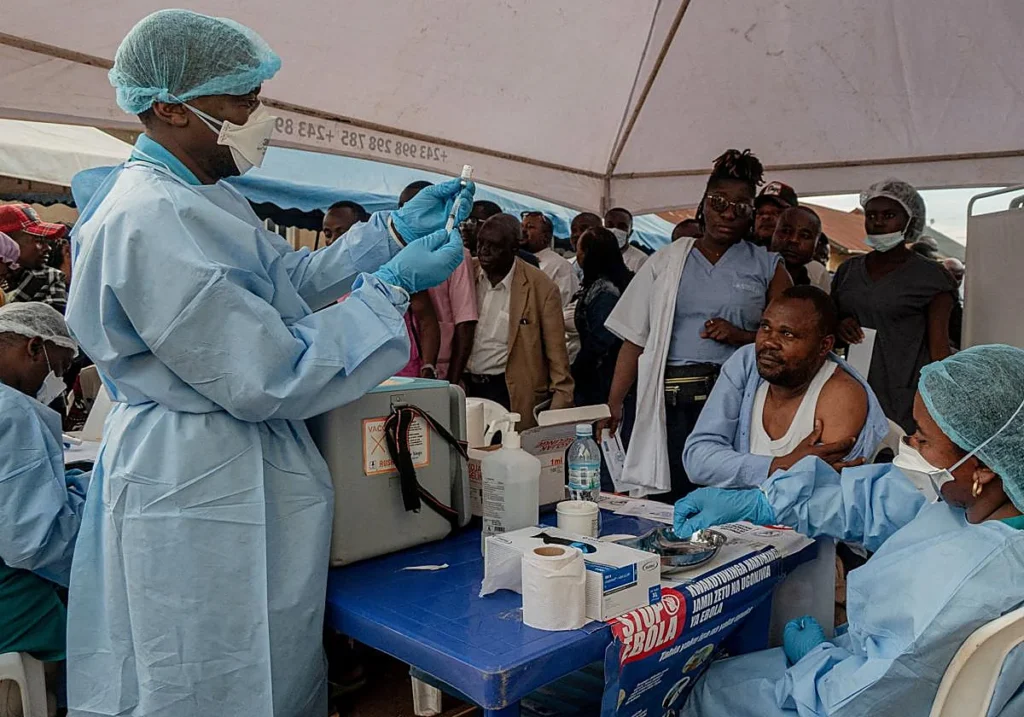
The Africa Centres for Disease Control and Prevention issued an urgent call for international solidarity Wednesday, warning that the Bundibugyo strain of Ebola is spreading faster and across a wider geographic area than any previous outbreak of its kind.
The alert followed confirmation by Nigeria’s government on Tuesday of the country’s first case, a woman who arrived in the capital Abuja on an international flight from Uganda, who remains isolated under medical care while authorities work to contain any possible transmission.
Nigeria has become the fourth nation on the continent to report confirmed infections, joining the Democratic Republic of the Congo, Uganda and Kenya.
Jean Kaseya, director general of Africa CDC, described the gravity of the moment in direct terms. “We cannot allow this outbreak to spread to more countries or continue for another year,” he said, stressing that the virus has now achieved the widest geographic reach in the history of the disease.
"This Ebola outbreak is no longer one country's fight."
Africa CDC Director General H.E. @Dr_JeanKaseya calls on every @_AfricanUnion Member State to detect early, trace every contact and protect health workers. On the 28th of October, he will be convening Africa's ministers of… https://t.co/7esmXLjk1N
The current episode stands as the second deadliest Ebola outbreak ever recorded worldwide, with more than 4,600 deaths across the region. In the Democratic Republic of the Congo alone, the toll has surpassed 4,205, a figure that underscores how deeply the epidemic has taken root there even as it extends into new territory.
Kaseya framed the response as inseparable from global security. “Every day of delay costs lives. Africa’s health security is global health security. Stopping Ebola in Africa today means protecting the world,” he said, adding that Nigeria has the agency’s total solidarity and that the outbreak must be defeated together.
Africa CDC had already anticipated the crisis. In May 2026 the specialized agency of the African Union declared a public health emergency of continental security, a warning that positioned the region’s institutions ahead of the current escalation. The agency has since begun mobilizing assistance toward Nigerian territory while reinforcing response operations in the Democratic Republic of the Congo, Kenya and Uganda.
Urgent Call for Funding
Kaseya directed his appeal beyond the continent, telling the international community what the response requires. “We need immediate and flexible funding, medical supplies, diagnostic tests, trained response personnel and stronger community surveillance,” he said.
The public health agency of the African Union has moved quickly to convert the appeal into action. On Wednesday it invited the region’s health ministers to a virtual meeting scheduled for October 28, where they will debate the spread of the virus and coordinate next steps. The gathering arrives less than a week after Nigeria’s first confirmed case, a timeline that reflects the urgency Kaseya has attached to the response.
Nigeria’s entry into the outbreak carries particular weight. The country is the most populous on the continent, and its capital’s connection to an international flight from Uganda raises questions about how far the virus may have traveled before detection. For now, the patient remains the single confirmed case in the country. But the presence of the disease in Abuja, rather than in a border community, changes the calculus for responders who must now trace contacts across a dense urban network. The woman’s isolation is one line of defense; the contact tracing around her is another, and both depend on the resources Africa CDC is struggling to assemble.
The outbreak’s trajectory since May has followed the pattern Kaseya warned about. Declared an emergency when still confined to a smaller footprint, it has now breached four national borders and shows no sign of slowing. The October 28 meeting of health ministers will test whether that warning has finally translated into the funding and supplies that African institutions have been requesting for months.
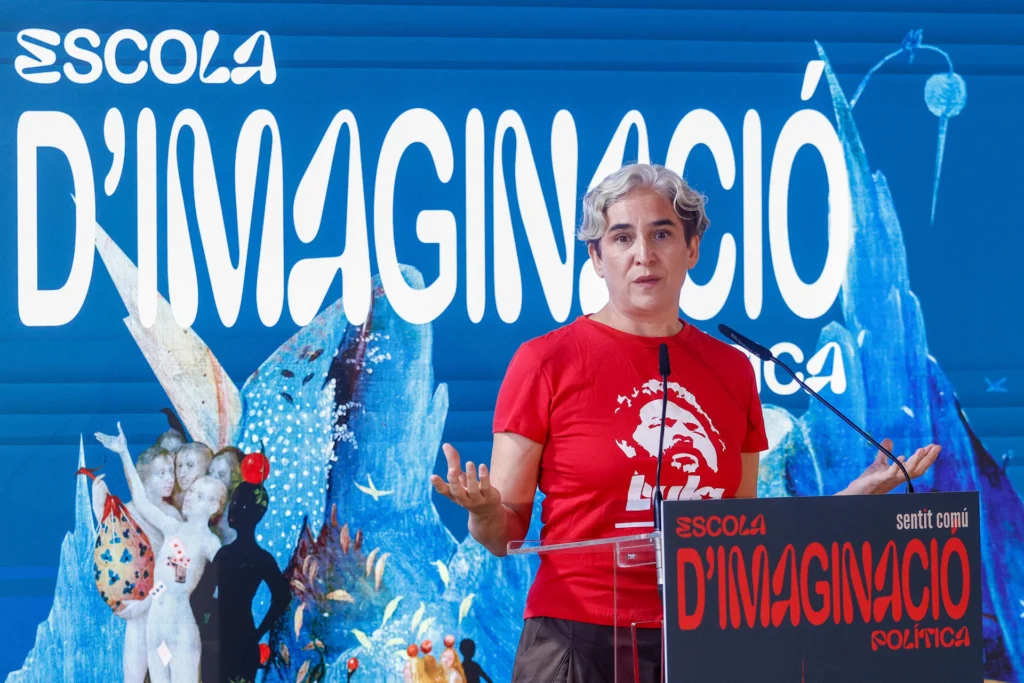
United States has denied former Barcelona Mayor Ada Colau permission to travel to Puerto Rico, where she was due to take part in a municipalist forum next month, a decision that sources close to her link to her pro-Palestinian activism.
Ada Colau, a candidate for the Frente Amplio, had planned to attend the Ciudades Valientes meeting on November 3 and 4 in the municipality of Caguas in central Puerto Rico. When she applied for the digital travel authorization known as ESTA (Electronic System for Travel Authorization), U.S. authorities approved the members of her delegation but denied her request. She was then advised to attend an in-person interview at the U.S. embassy in Madrid.
According to people close to Colau, the interview held two weeks ago focused on her position on the conflict in Gaza. “The entire interview was about the Flotilla and her pro-Palestinian activism, with a lot of insistence on the three days she was held in Israel,” they said.
After the interview, U.S. authorities issued a final denial, citing “suspicion that she wants to migrate illegally to the country.”
“This is a clear case of political censorship. And it is a disgrace, because while we see that Javier Milei can travel freely to our country to insult the press and citizens in general, his friend Donald Trump bans me from entering a country like Puerto Rico, which is a colony occupied by the United States,” Colau said.
The US has refused to grant a visa to former Barcelona mayor Ada Colau over her participation in the Global Sumud Flotilla and her support for Palestine.
Colau had been invited to attend a meeting convened by New York City Mayor Zohran Mamdani. pic.twitter.com/TuEEQasz9x
Ada Colau governed Barcelona between 2015 and 2023. She had traveled to the Caribbean archipelago in April 2024 to discuss urban planning, access to housing, human rights and the role of women in politics. During that visit, at a conference on government and citizen participation, she advocated for truth, justice and reparation in the face of European colonization in Latin America.
The prohibition echoes other restrictions imposed by Washington on figures critical of its foreign policy. The same administration has repeatedly denied a visa to Palestinian leader Mahmoud Abbas to attend the United Nations General Assembly. In Colau’s case, the stated rationale of immigration risk collides with a documented history of official visits and public conferences.
Event Agenda Unchanged
The decision keeps the event in Caguas and preserves the original schedule rather than postponing or relocating it.
The Puerto Rican collective confirmed that its upcoming event will keep its original agenda, and that the political leader will participate remotely. “Ada will be present, one way or another, because ideas and courage do not require visas to cross the borders imposed on us to divide us,” they affirmed.
“Colau is one of the founding voices of the international municipalist movement that inspires this meeting and her physical absence will be felt, but we maintain our commitment to the exchange of experiences,” the organizers said, rejecting the ban.
“Her physical absence will be felt, but we maintain our commitment to the exchange of experiences. Our collaboration with Ada and with the Sentit Comú Foundation remains just as strong and Brave Cities will take place as planned,” the League stated in a public communiqué.
For her supporters, the case exposes the double standard at the heart of the colonial relationship. The denial of entry, they insist, is not a security measure but a political sentence delivered through administrative channels.
Organizers say the work continues, and that Colau’s ideas will still shape the conversations in Caguas even in her in-person absence. The entry ban, however, ensures that a voice critical of U.S. policy will not speak from the island that Washington governs as a colony.
🚨🇪🇸 BREAKING — Ada Colau:
“If we trivialize and allow the genocide in Gaza, and apartheid and the colonial persecution of Palestine, humanity is lost.
Therefore, all humanity must not give up, resign itself, normalize or trivialize the genocide in Gaza and the persecution of… pic.twitter.com/cLg7UIx5Ss
Puerto Rico has been under U.S. control since 1898, after the Treaty of Paris, and since 1952 has held the status of a commonwealth with its own constitution, although the United States retains exclusive control over immigration, customs, defense and currency. ESTA was required because of the island’s colonial status. Puerto Rico is a U.S. territory, and ESTA applies to travelers from visa-waiver countries such as Spain who enter U.S. territory.
Rights groups have often criticized U.S. visa denials based on political views, while U.S. officials typically say such decisions follow immigration law and are not open to public discussion.
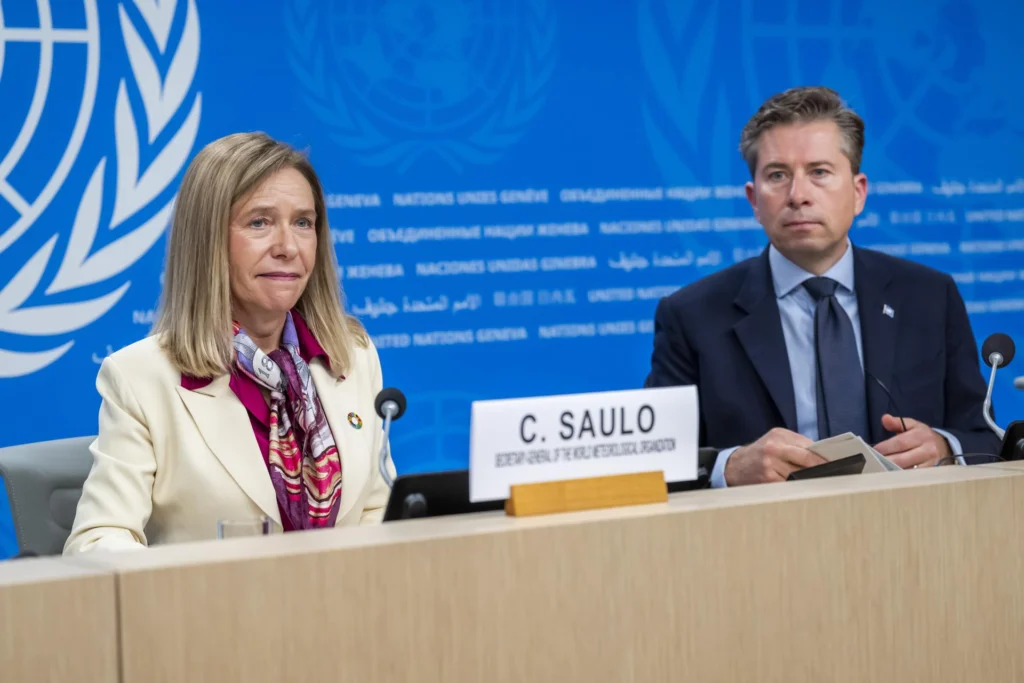
The UN World Meteorological Organization warned Wednesday that the current El Niño episode could push Pacific sea surface temperatures to 3.8 degrees Celsius above the average between November 2026 and January 2027, levels its top official called unprecedented in four decades of monitoring.
The alert came during a joint press conference in which the World Meteorological Organization (WMO) Secretary-General Celeste Saulo acknowledged that the phenomenon now sits “literally outside the scales of monitoring that we have used over the past four decades.”
Her assessment placed the coming months among the most severe climate events recorded since such tracking began.
Saulo and UN humanitarian coordinator Tom Fletcher issued an urgent call for the international community to prepare in advance for the consequences they expect.
Fletcher put the human cost in stark terms. The phenomenon “will shake Latin America, eastern and southern Africa, Asia and the Pacific with extreme heat, droughts and floods,” he warned, and could push food insecurity to affect as many as 50 million people worldwide.
The warning singled out regions already struggling with fragile agricultural systems and limited infrastructure, where a single failed harvest can tip entire communities into crisis.
El Niño is set to hit fragile communities hard.@UNOCHA and @WMO are sounding the alarm, appealing for immediate assistance to support communities already affected by what has been described as the strongest El Niño on record. https://t.co/LDrygGkPPwpic.twitter.com/H1XcVA3AR7
The temperature projection of 3.8 degrees above the long-term average would place this El Niño beyond the upper bands of the monitoring framework built over forty years. Saulo noted that extreme weather events are already being recorded and will tend to multiply as the phenomenon gains intensity. She stressed, however, that the crisis “does not have to inevitably trigger a humanitarian disaster,” a message both officials repeated throughout their appearance.
To front-load the response, Fletcher announced the allocation of 50 million dollars from the UN emergency fund. The money will assist 11 of the most vulnerable countries as a priority, including Chad, El Salvador, Ethiopia, Somalia and South Sudan. The list reflects the broad geographic reach of the expected impacts, spanning the Horn of Africa, the Sahel and Central America.
Both representatives insisted that a window of opportunity remains open. Extreme conditions “do not have to translate into humanitarian emergencies or fatalities” if precautions are taken in time, they argued, framing preparedness as the difference between a difficult season and a catastrophic one.
A Narrow Action Window
Saulo and Fletcher directed their appeal beyond governments. WMO and the humanitarian office urged development banks and international financial institutions to release funds in a coordinated manner before the worst damage occurs. The underlying premise is simple, El Niño cannot be stopped, but its worst human impacts can be mitigated and prevented.
Latin America appears prominently in the forecast. Central America has already been placed on maximum alert over drought conditions linked to the so-called Super El Niño, and the new warning extends that concern across the region. Africa faces the mirror problem in several zones, with eastern and southern areas bracing for a combination of heat, drought and flood depending on local geography.
WMO’s warnings marks a departure from the cautious phrasing typical of international agencies. Describing the phenomenon as off the scale is not a rhetorical flourish but a technical judgment, one intended to shake loose the funding and coordination that slow-moving bureaucracies often withhold until emergencies are already visible. For Saulo and Fletcher, the next three months represent the period when that response must be assembled, not the period when it can still be debated.
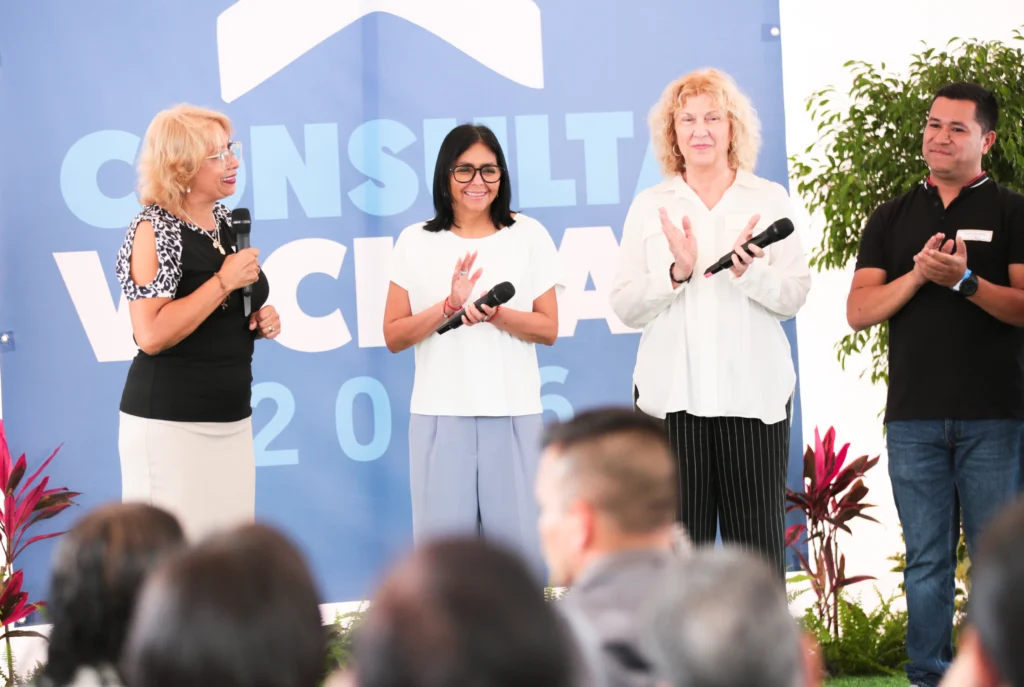
Acting President Delcy Rodríguez announced Wednesday that Venezuela will hold its Youth Popular Consultation in February 2027, a vote she framed as a platform for young people to convert their talent, creativity and ingenuity into a driving force for national development.
Venezuelan Acting President Delcy Rodríguez delivered the announcement during a visit to the Nueve Raíces de Simón communal circuit, where she urged the country’s youth to prepare actively for what she described as a democratic appointment that will mark the direction of the coming year.
Rodríguez said the process aims to vindicate the talent, creativity and ingenuity of the new generations and to propel Venezuela toward fresh development opportunities. The call places younger Venezuelans at the center of a participatory model that has gathered strength since 2024.
The announcement lands days after the Second National Popular Consultation of 2026, held on October 18. It was the eighth nationwide vote of its kind since 2024, and officials described the turnout as massive and successful. That result has now been translated into a fresh appeal aimed specifically at young people, signaling the government’s intention to widen the base of participants in community decision-making.
🗳️🔥 ¡LA JUVENTUD SE PREPARA: NUEVA CONSULTA EN FEBRERO 2027!🇻🇪✨
Tras una participación histórica en la pasada Consulta Nacional Popular, la ruta continúa: ¡Jóvenes de toda Venezuela a prepararse desde ya! 💪🌱
— Ministerio del Poder Popular para la Juventud (@Minjuventud__ve) October 21, 2026
Text reads: “Youth is preparing: new consultation in February 2027! After a historic participation in the last National Popular Consultation, the route continues: Young people from all over Venezuela to prepare now! The commitment does not stop: it’s time to move forward, organize and execute projects that will transform our territories.”
A Record October Turnout
Millions of residents from communities across the country turned out on October 18, prompting the National Electoral Council (CNE) to extend voting by one hour.
The scale of the exercise was measured in large numbers. More than 5,418 communes and communal circuits coordinated the work of over 48,000 communal councils, and voters selected among 37,205 priority community projects eligible for public financing.
Rodríguez has championed the consultation model as a vehicle for what officials call popular power. In separate remarks, she described participation in the October exercise as extraordinary, linking the strong turnout to a broader effort to place public decision-making directly in the hands of organized communities rather than distant institutions.
A Broader Community Voice
One of the most notable features of the October consultation was the first-time inclusion of condominium boards, which put forward 428 projects. Acting President Rodríguez celebrated that milestone on social media, underscoring the importance of keeping decisions about everyday matters firmly in the hands of communities themselves.
The proposals reflected local priorities. Acting President Rodríguez had previously detailed that 14% of the projects corresponded to the water sector, followed by initiatives in road infrastructure, lighting, electricity, public services and productive activities, showing residents directing public resources toward their most pressing daily needs.
With the youth consultation now scheduled for February 2027, the Acting President called young Venezuelans to assume what she called absolute protagonism in the process. Organizers expect the new consultation to build on the machinery tested in October and to channel the energy of younger generations into decisions that will shape the country’s near-term path.
More than 10 million U.S. citizens have already cast ballots for the U.S. midterm elections, and Democrats account for over half of that early turnout as the November 3 vote approaches.
General early voting began on Monday, October 19, led by Texas, Alaska, Arkansas, Colorado, Connecticut and South Carolina. Hawaii, Louisiana, Utah, Wisconsin, Florida and Missouri have since joined.
Voters will decide seats in the U.S. Senate and House of Representatives, governorships, state legislatures and local measures on November 3.
Democratic voters have shown up in force across several districts, a pattern party strategists read as an early effort to blunt the conservative agenda in Congress. That mobilization carries weight because the races will decide control of the Senate, the House of Representatives, several governorships and state legislatures, along with local ballot measures.
The opening surge unfolded amid deep polarization over the federal administration’s record. Turnout in the early states has outpaced expectations even as the national political climate remains volatile.
🎉 Double digits! We've just passed 10 MILLION early votes cast nationally in the 2026 midterms! 🗳️
In Alaska, polls will stay open for 15 days before Election Day. In Arkansas, the Secretary of State estimates early participation of half a million people. In counties such as Saline and Pulaski, early reports show a divided electorate: conservative voters back Governor Sarah Huckabee Sanders and Senator Tom Cotton, who are noted for their alignment with President Donald Trump’s administration.
In Colorado, in-person voting centers opened on October 19 and four million ballots were mailed out. Preliminary records show that 13% of Democrats have returned their ballots, compared with 10% of Republicans and 7.5% of unaffiliated voters. Colorado is electing all of its main executive and legislative offices. Inflation, public safety, defense of social benefits and control of presidential power dominate the priorities mentioned by community organizations and independent voters in Arkansas and Colorado.
Florida prepares to open its mandatory in-person period on October 24, where Hispanic voters make up roughly 29% of the population and carry decisive weight.
Early voting for the midterm elections begins this week in these states:
— Alaska — Arkansas — Colorado — Connecticut — South Carolina — Texas — Hawaii — Louisiana — Missouri — Utah — Wisconsin — West Virginia — Delaware — Maryland — Florida — Michigan — New Jersey — New York pic.twitter.com/YPYDIWpkNP
Elections officials warned that, because of the complexity of the voting system, close races could be resolved only on November 18, when the count of ranked choices ends.
The early surge arrives as surveys show some of the lowest approval numbers of Trump’s current administration. The President’s backers have framed the midterms as a referendum on his governing record, while Democrats describe the contest as a check on executive power.
The record pace of early ballots has already surpassed previous benchmarks, with Texas posting one of the strongest showings. As more states open their voting windows in the coming days, the national count is expected to climb sharply before November 3, when the full scope of the midterm verdict takes shape.
#FromTheSouth News Bits | In the United States, analysts assert that the Trump administration is seeking to destabilize democratic-led states by instilling fear through immigration agents known as ICE, in an effort to manipulate the midterm elections and win them. pic.twitter.com/e5Dal77aj0
Brazil’s President Luiz Inácio Lula da Silva presented a constitutional amendment on Wednesday that would reserve budget funds for free public transport on weekends and holidays, tying the move to workers’ newly expanded right to rest.
The initiative would redirect 26.8% of parliamentary budget amendments to fund the program, which the government says would strengthen working-class access to leisure and urban mobility.
It envisions reallocating 11.2 billion reais (more than 2.2 billion dollars) from the budget controlled by Congress, whose concentration of resources has historically limited the federal government’s ability to carry out social policies. The proposal still needs to pass Congress.
The Brazilian government argues that this concentration of resources in parliamentary hands has historically limited the federal government’s capacity to carry out social programs. Reassigning the money, officials contend, restores room for initiatives aimed at urban mobility and access to leisure for the working class.
PESSOAL URGENTE 🚨
Lula anuncia tarifa zero para ônibus aos fins de semana em todo o país. PEC foi enviada ao Congresso e prevê que parte do orçamento das emendas parlamentares financie a medida. #FandomsComLulapic.twitter.com/cYNB8bGf9q
During the same ceremony at Planalto Palace Lula signed a separate law forgiving 16 billion reais (about $3.1 billion) in tax debts accumulated by individual microentrepreneurs, a category that covers millions of small producers and self-employed workers.
Administration officials portrayed the debt pardon as a lifeline for families whose tax obligations had outpaced their ability to pay. The two measures, they said, respond to the same pressure weighing on popular households across Brazil.
The Brazilian President described the weekend transport plan as a pilot program. Its purpose is to measure the social and operational impact of the zero fare model before any decision to extend it nationwide.
Lula’s administration said the project complements the recent reduction of the working week, helping workers make effective use of their right to rest. Days before Wednesday’s event, Lula attended the Senate promulgation of a separate constitutional amendment that abolishes the six-days-on, one-day-off schedule. The change secures two paid days of rest each week, preferably Saturday and Sunday, and shortens the maximum work week without cutting pay.
🚍 MAIS TEMPO PARA VIVER!
Hoje enviamos ao Congresso a PEC da Tarifa Zero, que propõe transporte público gratuito aos fins de semana e feriados em todo o Brasil e em cidades que possuem transporte público.
Despite criticism from far-right sectors backing Senator Flávio Bolsonaro, the executive said it will deepen its commitment to restoring rights and defending popular gains. The announcements come days before the October 25 presidential runoff in which Lula faces Bolsonaro.
The weekend fare initiative arrives as Lula’s administration pushes a broader agenda of recovering social and labor protections. The Brazilian President has linked the transit measure and the shorter work week as parts of a single effort to lift the weight of daily costs from working families.

 Login