❌

Reading view

Reeleito, Lula fala em criar IA brasileira e regular big techs

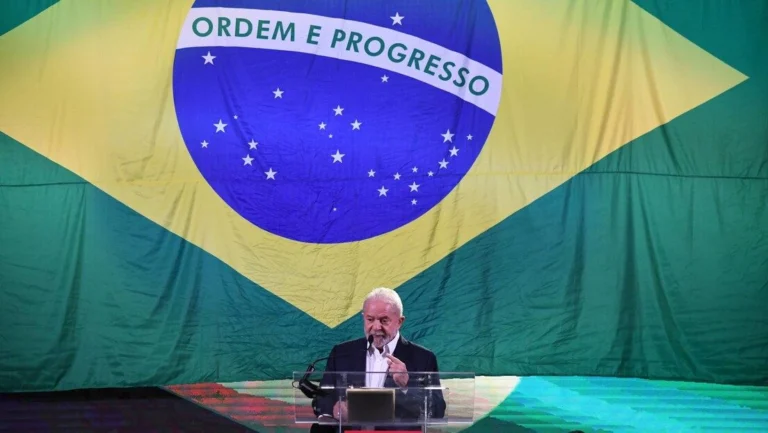
O presidente Luiz Inácio Lula da Silva (PT), reeleito para um quarto mandato não consecutivo no domingo (25), falou na criação de uma inteligência artificial brasileira e em regular as big techs em discurso pós-reeleição, na Avenida Paulista, em São Paulo (SP).

“Iremos ensinar mais matemática e engenharia, porque eu não quero ficar dependendo de inteligência artificial chinesa ou americana. Eu quero criar uma brasileira”, afirmou.

Lula também falou em uma “intromissão vinda de fora através de plataformas digitais”, em alusão ao caso da Meta.

Desde o início do período eleitoral, a coligação liderada pelo PT e adversários do presidente, como o deputado Nikolas Ferreira (PL-MG), acusaram a Meta de tentar interferir no pleito, supostamente influenciando métricas dos candidatos de um lado e bloqueando conteúdos de outros. Na última semana da corrida eleitoral, a big tech voltou ao centro do debate, quando surgiram novas denúncias de interferência, cobranças da Justiça eleitoral e a admissão da própria empresa de que há “falhas recorrentes” no controle do conteúdo.

“Não podemos ter empresas monstruosas de grande ganhando milhões e bilhões, não pagando imposto, e tentando direcionar o resultado eleitoral desse país”, disse Lula a apoiadores na Avenida Paulista.

Lula ainda afirmou que o Brasil é o País com maior potencial energético renovável para trazer data centers para solo nacional. No entanto, defendeu que as infraestruturas deverão armazenar também os dados brasileiros, não apenas o de empresas estrangeiras.

Investimento em IA e data centers fazem parte das propostas de Lula

As falas de Lula durante o discurso repetem pontos que já foram apresentados no plano de governo.

O documento traz medidas relacionadas à soberania digital, com o desenvolvimento de um ecossistema nacional de tecnologia.

Isso inclui supercomputadores desenvolvidos e operados por instituições nacionais, e a expansão de data centers e de outras infraestruturas de IA no país — seja acompanhada de proteções socioambientais, incluindo impactos sobre o sistema elétrico, híbrido e população local.

No plano, Lula também prometeu a criação de um modelo de linguagem em português, voltado para os problemas do país, junto de uma plataforma nacional que forneça os dados de treinamento.

Sobre as plataformas, o plano de governo menciona mecanismos para “assegurar que o ambiente digital esteja submetido às leis brasileiras, proteja os direitos fundamentais e sirva ao interesse público” e a regulamentação das plataformas de jogos e dos ambientes digitais.
  •  

Lula Pledges to Develop Brazil’s Own Artificial Intelligence

Luiz Inácio Lula da Silva announces plans for Brazilian artificial intelligence and renewable energy following his presidential election victory.

Lula plans to expand technical education and use renewable energy to attract data centers and keep information stored in Brazil.


Brazilian President-elect Luiz Inácio Lula da Silva has pledged to develop a domestic artificial intelligence system, expand technical education and attract data centers powered by renewable energy, aiming to strengthen Brazil’s technological independence and accelerate its transition to a developed economy.

RELATED: Lula Celebrates Reelection, Promises Education Reform and Sovereign AI

Speaking after his victory in the presidential runoff, Lula said Brazil must invest in mathematics and engineering to build its own artificial intelligence capabilities rather than depend on technology developed in China or the United States.

“We will teach more mathematics, more engineering, because I don’t want to depend on Chinese or American artificial intelligence; I want to create a Brazilian one,” he said.

Lula also pledged to use Brazil’s renewable energy resources to attract data centers and keep information stored within the country. The proposal forms part of a broader push to expand the digital economy and strengthen domestic technological capacity.

Text Reads: The Brazil we wish to build is a country where our elderly are cared for with dignity, women are respected, and everyone has the right to live out their faith in freedom.
It is a country that respects differences, with a State that guarantees rights for all—because to govern means to look after 215 million Brazilians, without distinction. Respect must be the starting point for us to build, together, a Brazil that is increasingly fair and humane.

“We want to transform this country from a developing country into a developed one,” he said, identifying the digital, green and creative economies as key areas for investment.

He also outlined an ambition for Brazil to play a central role in political and economic decision-making and in efforts to promote peace.

Lula promised that his next term would deliver unprecedented results, telling supporters: “I want to make a commitment: I will deliver the best term of office any president has ever had in Brazil’s history. You can be sure of that.”

The president-elect, who turns 81 on Oct. 27, dismissed concerns about his age as he prepares to take office for another term. He pledged to devote himself fully to the country’s development and to improving the daily lives of Brazilians.

“I will dedicate 20 or 24 hours a day to making this the country everyone dreams of, where people can go to sleep and wake up in complete peace of mind,” he said.

Lula also thanked voters for their support in the runoff and praised young people who took to the streets to defend democracy, crediting their participation as a key factor in his victory.

His pledges place artificial intelligence, renewable energy and digital infrastructure among the priorities he has outlined for Brazil’s next phase of development, alongside his ambition to transform the country into a developed nation.

  •  

What’s Riding on Anthropic Going Public? Nearly Everything.

Anthropic sits atop a pyramid of business partners and suppliers, making it a barometer of the broader economy. Its initial public offering will have widespread implications.
  •  

Trump Wants To Force Data Centers To 'Make Their Own Electricity.' Deregulation Would Work Better.

trump-data-centers-v2 | Illustration: Ron Sachs-CNP/CNP / Polaris/Newscom/Donald J. Trump/Truth Social

With public opposition toward data centers growing and midterm elections on the horizon, politicians across the spectrum have introduced overreaching policies to stymie data center development and ease voters' minds. These politicians now include President Donald Trump, who has historically been a staunch supporter of the industry.

"New and large, in some cases gigantic, Data Centers are mandated by me to make their own electricity, and give or sell any excess back to the local community, or grid," Trump declared on Truth Social on Wednesday. "If companies want to make their Data Centers popular, pay the community, and/or individuals within the community, a 'dividend.' I have watched the process closely, and Data Centers that were highly unpopular in a certain area have become extremely popular when a financial deal is struck."

While Trump has suggested that power plants pay for their own power before, ​these comments are in stark contrast to him saying less than a couple of months ago that "the only reason that communities throughout the U.S.A. should not want Data Centers is if they want to end up being backward and poor." Still, the president is not wrong that the strategy could boost data centers' popularity; polling regularly shows that concerns over higher energy prices are one of the main reasons people oppose data centers in their communities.

However, mandating that these power plants "make their own electricity" is the wrong way to accomplish this objective, in part because generation costs are not the leading factor in higher electricity prices—transmission infrastructure, such as wires and poles, is. And regulatory barriers, as well as a lack of competition in the building of this infrastructure, are mostly to blame. 

Regardless, if the goal is to have data center companies produce their own electricity, easing regulations would have more impact than imposing a mandate. As Travis Fisher, director of Energy and Environmental Policy Studies at the Cato Institute, tells Reason, "If a tech company buys electricity from the owner of a power plant, in most states the power plant owner then becomes a public utility (even if the transaction occurs off-grid), which brings heavy scrutiny in the form of economic regulation."

To ease these regulatory barriers, Fisher and other experts have advocated for a Consumer Regulated Electricity model that allows large-load customers to connect directly to unregulated power producers off the grid. 

Fisher also notes that lower power costs don't automatically translate into lower utility rates. He tells Reason, "Even if a data center were to bring a matching or beating amount of supply relative to their demand, based on the way retail rates work, I am not convinced that that guarantees that prices will fall." 

On top of not solving the main driver of higher electricity prices, the mandate isn't needed because many data centers have already begun to produce their own power. A report from energy research firm Cleanview shows that operating power capacity dedicated to data centers has nearly doubled since June, while capacity under construction has roughly quadrupled. Additionally, companies including Anthropic and Microsoft are already volunteering to cover consumers' electricity costs.

By calling on power producers to make their own electricity, Trump joins the growing chorus of politicians who are convinced that the government, not the market, is best equipped to dictate how data centers grow and operate. And, in typical Trump fashion, a "mandate" on social media without any legal action behind it has left the public and investors to guess what, if anything, is actually coming. 

Building power plants requires long-term planning and investments meant to last decades, making Trump's tendency to impose abrupt policy changes less than ideal. "The fact that the rules change, not just every four years, but occasionally overnight via tweet," says Fisher, does not make for "a great investment environment."

The post Trump Wants To Force Data Centers To 'Make Their Own Electricity.' Deregulation Would Work Better. appeared first on Reason Magazine.

  •  

Russia’s tax service runs on two key data centers. Drones went after one of them overnight, along with a chemical plant that supplies explosives makers

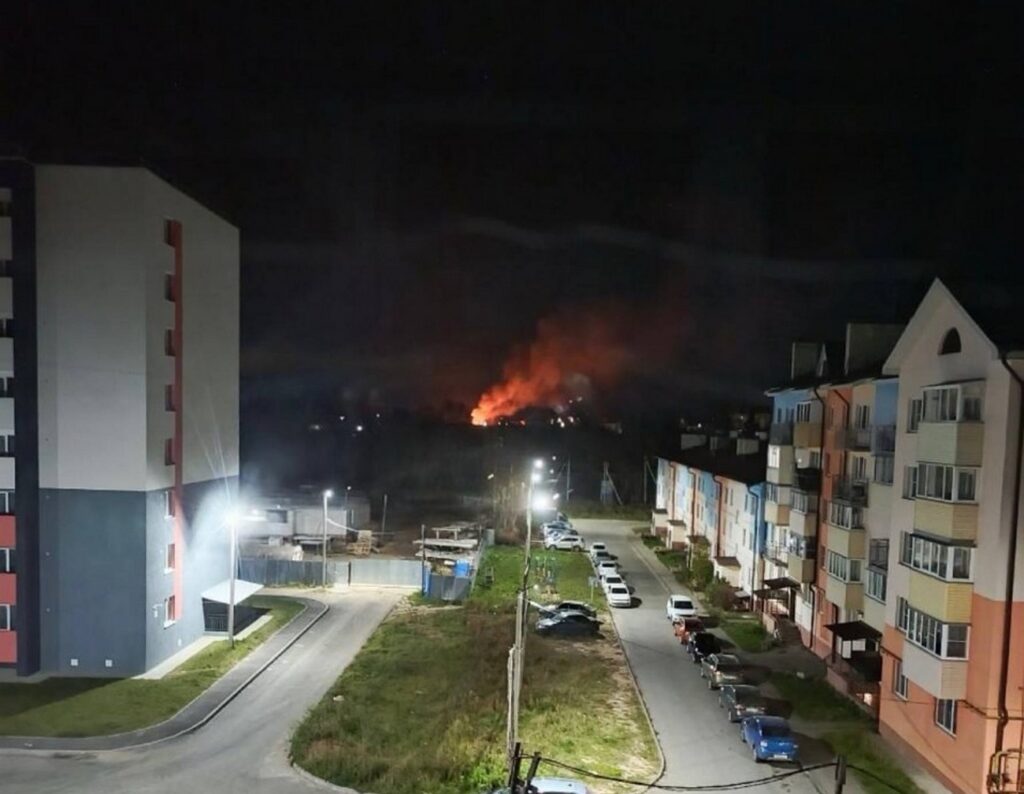
russia’s tax service keeps its databases two places drones went after one overnight also hitting air base explosives-chemical plant · post fire seen residential area gorodets nizhny novgorod oblast near

Drones attacked a Russian tax-service data center overnight on 23 October, Ukrainian monitoring channel Exilenova+ reported. A chemical plant in the Urals was also attacked, and a fire broke out near a Russian bomber base by late morning. Russian officials admitted injuries and damage but blamed falling debris. Ukraine has not commented.

Ukraine's long-range drones have widened their target list from Russian refineries to the servers and chemicals that keep Russia's state and war industry running.

The tax service's data center in Gorodets

The target in Gorodets, Nizhny Novgorod Oblast, is one of the Federal Tax Service's two key data centers, which work as a geographically distributed pair. It stores and processes state registers, including tax databases, Exilenova+ said. The extent of the damage is unconfirmed. The site lies about 785 km from Ukraine's northern border in a straight line.

The moment of impact at Russia’s Federal Tax Service data center in Gorodets last night. pic.twitter.com/PftC6keRpY

— Exilenova+ (@Exilenova_plus) October 23, 2026

Eyewitness footage shows a blast and fire in the area of the data center, which serves both the tax service and the Finance Ministry, Russian Telegram channel Astra found. The center opened in 2015. Mikhail Mishustin, then head of the tax service and now Russia's prime minister, attended the launch.

Nizhny Novgorod Governor Gleb Nikitin claimed air defenses repelled 19 drones. Falling debris injured three people in the Gorodets district and damaged several homes, an educational facility, and an infrastructure facility, he said, and local schools switched to remote learning. A Pantsir air defense missile hit a house, Exilenova+ claimed, though officials recorded it as a drone hit.

Ukrainian strikes inside Russia on Gorodets, Berezniki, and Voronezh, with distances from Ukraine, 23 October 2026
Ukrainian strikes inside Russia on Gorodets, Berezniki, and Voronezh, with distances from Ukraine, 23 October 2026. Map: Euromaidan Press/Datawrapper

This month, drones already hit three Yandex data centers and a VK data center near St. Petersburg.

A chemical plant behind Russia's gunpowder

In Berezniki, Perm Krai, smoke rose over Uralchem's Azot plant as air defenses fired, Astra reported. The regional security ministry announced a drone attack at about 06:00, and authorities closed the airspace within 50 km of the city. Ukraine's long-range Liutyi drones visited Berezniki, Exilenova+ wrote.

Our old friends, the Liutyi drones, paid Berezniki a visit today. Haven’t seen them in a while. 🫡 pic.twitter.com/NXuhIJ3xpm

— Exilenova+ (@Exilenova_plus) October 23, 2026

The attack on Azot was continuing in the morning, the channel wrote, adding that the plant covers about 140 hectares with some 90 production buildings. It makes ammonia, nitric acid, ammonium and potassium nitrate, and urea. Russian defense plants use its nitric acid to make explosives and gunpowder, including the Perm gunpowder plant, Astra said. Berezniki lies 1,500–1,600 km from Ukraine's border and the war zone.

Smoke rises over Uralchem's Azot chemical plant in Berezniki, Perm Krai, after a drone attack, Russia, 23 October 2026
Smoke rises over Uralchem's Azot chemical plant in Berezniki, Perm Krai, after a drone attack, Russia, 23 October 2026. Photo: Exilenova+/Telegram

Drones attacked Azot before, on 11 September. Earlier this year, Ukraine's Security Service hit Lukoil's refinery in the same region.

phones down water off factory roof broken open russian-occupied luhansk counts damage after another night drones · post fire occupied during drone attack 23 2026 ukraine news ukrainian reports
Explore further

Phones down, water off, a factory roof broken open: Russian-occupied Luhansk counts the damage after another night of drones

Fire near a Su-34 base in Voronezh

Late in the morning, Voronezh Governor Aleksandr Gusev declared a missile alert, and explosions followed in the city. Gusev later claimed air defenses downed several "jet-powered aerial targets." Debris set dry grass on fire in a suburb and damaged outbuildings and several cars, he said, adding that no one was hurt.

Missile alert in several regions of the Russian Federation.

Explosions have been heard in Voronezh. We are assessing the situation. pic.twitter.com/GY0NRZTo4x

— Exilenova+ (@Exilenova_plus) October 23, 2026

Eyewitness footage shows fire and smoke near Baltimor military airfield, Astra found. The strike preliminarily hit the grounds of a former military aviation engineering university and a nearby parking area for military aircraft, Exilenova+ said.

Fire and smoke near Baltimor military airfield in Voronezh after a Ukrainian attack, Russia, 23 October 2026
Fire and smoke near Baltimor military airfield in Voronezh after a Ukrainian attack, Russia, 23 October 2026. Photo: Astra/Telegram

Baltimor hosts the 47th Guards Bomber Aviation Regiment, whose Su-34s Russia uses to strike Ukraine, Militarnyi reported, saying Ukraine attacked the airfield with missiles. Voronezh lies about 185 km from Ukraine's border. Smoke rose over the base after an attack on 27 May, and a fire broke out near it on 2 September.

Moscow counts drones, Kyiv stays silent

Russia's Defense Ministry claimed it downed 443 drones overnight over 20 Russian regions, including Nizhny Novgorod Oblast and Perm Krai, as well as Russian-occupied Crimea and two seas. Ukraine's General Staff has not reported on the strikes. A night earlier, drones reportedly hit a sanctioned weapons plant near Moscow.

Russia's air defenses now have to cover state servers and Ural chemical plants as well as the airfields its bombers fly from.

  •  

US-China AI race turning ASEAN neutrality into a liability

For decades, Southeast Asia has turned great-power rivalry to an economic advantage. By maintaining healthy ties with Washington and Beijing, ASEAN governments attracted investment, expanded trade and preserved room for diplomatic maneuver. The great-power race for artificial-intelligence dominance, however, is changing that bargain. As the United States and China build competing technology networks, neutrality may […]

The post US-China AI race turning ASEAN neutrality into a liability appeared first on Asia Times.

  •  

Ukrainian OSINT analyst: Russia’s Yandex data center in Sasovo burned out inside, though its roof shows almost no significant holes

Cloud-free satellite image of the damaged Yandex data center in Sasovo, Ryazan Oblast, posted 22 October 2026

Russian tech giant Yandex's data center in Sasovo burned out from the inside, a Ukrainian OSINT analyst wrote on 22 October. On cloud-free satellite images, he saw almost no significant holes in its roof. Ukrainian drones hit the site overnight on 8 October.

Sasovo was the first strike on a data center in Russia. It came two weeks after Russia destroyed data centers in Kyiv. Drones then hit Yandex sites in Vladimir and Kaluga, a Sber data center, and a VK data center near St. Petersburg, which VK acknowledged. In occupied Donbas, monitoring channels reported hits on buildings housing telecom operators.

What the analyst sees

The analyst, who goes by Harbuz, runs the Ukrainian OSINT channel Dnipro Osint. His roof reading comes from the images. His interior claim comes from what he called available information: he wrote that a fire broke out inside and put part of the equipment out of action.

Cloud-free satellite image of the damaged Yandex data center in Sasovo, Ryazan Oblast, posted 22 October 2026
Cloud-free satellite image of the damaged Yandex data center in Sasovo, Ryazan Oblast, posted 22 October 2026. Image: Dnipro Osint

In an earlier post, Harbuz wrote that a third of the data center had burned out. In the new one, he writes that the building burned out from the inside. He does not say whether he revised the earlier figure.

Russian outlet Agentstvo studied Airbus images from 12 October. It found damage on about a third of the building. Unlike Harbuz, though, Agentstvo described a blackened western roof with damage resembling holes.

What Yandex says

On 8 October, Yandex stated that the attack caused a fire and forced it to suspend operations at the site, which hosts tens of thousands of servers, Reuters reported. Yandex Cloud and the Disk and Documents services that run on it ran with major disruptions that morning, Russian outlet The Bell reported.

Later that day, the company stated: "The scale of the damage to the infrastructure is still being assessed. For the moment, we cannot confirm whether it is possible to restore the data centre equipment in Sasovo." Two of Yandex's three supercomputers, used to develop its AI model, are housed there.

The same day, journalists asked Ukrainian President Volodymyr Zelenskyy whether Ukraine was targeting Russian data centers. He did not refer specifically to the Yandex strike, Reuters noted, but said: "We always respond in mirror-like fashion."

  •  

Google Eyes Large ‘Virtual Power Plant’ for Data Centers

The tech giant is funding one of the nation’s largest “virtual power plants,” which would pay homes and businesses to adjust their energy use when grids are strained.

© Bizuayehu Tesfaye/Las Vegas Review-Journal/Tribune News Service, via Getty Images

A Google data center in Nevada.
  •  

How the A.I. Boom Is Driving Up Sales of Gray Paint

Tech companies are painting data centers with gray coatings on top of gray concrete and steel to resist fire, rust and static electricity. That has made data centers a fast-growing market for paint makers.
  •  

Meta Earnings Show Increased A.I. Spending, Even as Cash Pressures Grow

The spending has hurt the Silicon Valley giant’s cash flow, which turned negative. Meta said it would issue a new class of stock to help it raise more money.

© Scott Ball for The New York Times

Construction of Meta’s Richland Parish Data Center in Holly Ridge, La.
  •  

Data centers in the line of fire of Ukraine war

In recent days, a Ukrainian drone strike hit Russia’s largest data center, owned by bank and technology company Sberbank. The strike came after Ukraine hit three data centers belonging to the tech giant Yandex, which is often referred to as “Russia’s Google.” After those attacks, Yandex’s traffic dropped 94%. Its users experienced heavy disruption to […]

The post Data centers in the line of fire of Ukraine war appeared first on Asia Times.

  •  

Nobody Wants To Be the Pro-Tech Candidate in This New York Race That Could Flip the House

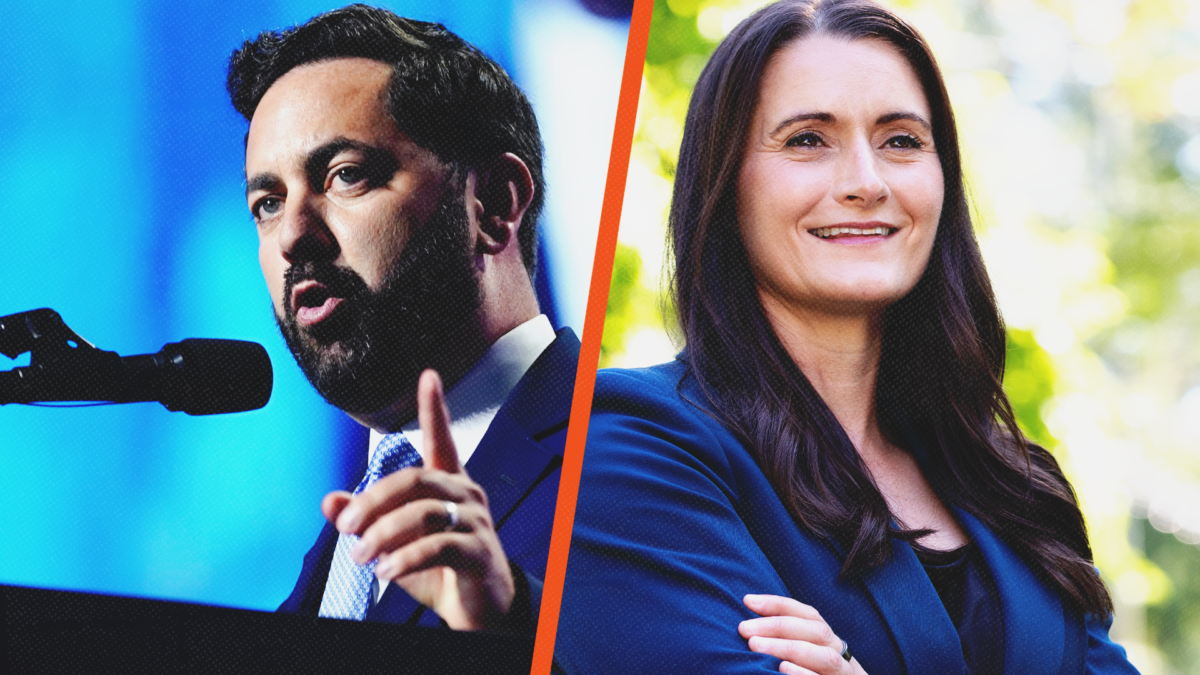
Mike Lawler and Cait Conley | Bonnie Cash/UPI/Newscom/caitconley.com

The Democratic Socialists of America (DSA) candidates running for the House of Representatives and endorsed by NYC Mayor Zohran Mamdani are all but guaranteed to win their general elections this November, but that does not mean the midterm drama is over in New York. In the state's 17th congressional district, which includes the lower Hudson Valley, Democratic challenger Cait Conley, a combat veteran who served on the Biden administration's National Security Council, could unseat incumbent Republican congressman Mike Lawler in one of the most consequential races of the midterms. 

The highly contested purple district voted for former Vice President Kamala Harris in the 2024 election while reelecting Lawler for his second term. Now, Lawler is attempting to win a third term as support for President Donald Trump wanes ahead of the midterms. As of Friday, The Cook Political Report lists the race, which could determine control of the House, as a toss-up. 

If elected, Conley would have far more in common with the "Badass Women" coalition of security state and military veterans than with DSA types (think more Sen. Elissa Slotkin from Michigan than Darializa Avila Chevalier). As Judge Street Journal's Timmy Facciola notes, "Conley's candidacy is testing the viability of a tactful centrism that rebukes left-wing positions like abolishing ICE or restricting weapon shipments to Israel." Lawler is also vying for moderates, pitching himself as "one of the most bipartisan members of Congress" and emphasizing his willingness to break with Trump occasionally while still welcoming Trump's support. 

While Lawler and Conley certainly are not pure MAGA acolytes or DSA members, both have leaned into a tech-critical position, much like that of more radical populists like Lina Khan or Steve Bannon, revealing how pervasive anti-tech sentiment has become in mainstream politics. 

This tech skepticism was on full display during an October 14 debate, when each candidate made the case for why they were the most equipped to regulate AI, insisting that the industry needs guardrails. 

Conley said members of Congress do not want to regulate AI because "they want to look out for their billionaire and trillionaire backers like Elon Musk, who is pouring over $260 million into this midterm election." She then added that Musk backed Lawler in his 2024 race. 

Lawler then accused Conley, who previously consulted for Primer AI, of being "the AI candidate for the AI industry."

While Lawler and Conley disagree on specific data center regulations (Conley supports Democratic Gov. Kathy Hochul's data center moratorium while Lawler supports local zoning control over data centers), neither wants to pitch themselves as an explicitly pro-data center candidate. During the debate, Conley claimed that, "On Mike Lawler's watch there have been five data centers built in Rockland County." Lawler has said that he had no say in the decision to build the data centers, and during the debate, he pointed out that the facilities were built for financial services. Lawler also attempted to attack Conley over data centers, slamming her in an ad for saying "we need data centers." Regardless of the candidates' specific policies on data centers, their attacks on one another demonstrate that cheerleading hyperscale data center development is a political liability. In their district, data center has presumably become a dirty term. 

The candidates' tech-skeptical rhetoric did not end with unchecked data center development. After the debate, Reason asked both candidates about their positions on age-verification laws for social media and AI, since such regulations raise significant privacy and censorship concerns by age-gating the internet. Unsurprisingly, both Lawler, who voted for the controversial KIDS Act, and Conley, who has proposed stricter age verification for AI tools, parroted platitudes about why such online safety regulations are necessary to protect children. 

"We have watched how social media is literally hurting the mental health of children," Conley told Reason. "And when you talk about the power of AI and what that power could do, we have to regulate this." 

Lawler gave a similar response, telling Reason that he respects free speech but that protecting children "is paramount." 

This bipartisan consensus over social media regulation has long been brewing in Congress. The mainstream political conversations about AI and data centers, however, are relatively new this midterm election cycle. And it appears both Lawler and Conley have figured out which way Americans' sentiment toward AI is leaning, and they have waged their campaigns accordingly. 

The post Nobody Wants To Be the Pro-Tech Candidate in This New York Race That Could Flip the House appeared first on Reason Magazine.

  •  

IMF warns of debt-fueled AI spending as bubble fears grow

The International Monetary Fund warned Tuesday that the global economy faces serious risks from Big Tech firms taking on massive debt to fund the buildout of artificial intelligence data centers worldwide. The IMF’s latest Global Financial Stability Report outlines a number of risks to economic growth in the coming years, including a reliance on AI […]

The post IMF warns of debt-fueled AI spending as bubble fears grow appeared first on Asia Times.

  •  

The People of Utah vs. Kevin O’Leary

In a remote part of Utah, the world’s largest data center project—allegedly—is being fast-tracked in secret. Kevin O’Leary of Shark Tank fame was brought in to hype the 40,000-acre complex. But the backlash among Utahns has been strong. Josh Dzieza reports from the front lines of the popular resistance to data centers:

[Brenna] Williams, a former government econometrician and college instructor, speaks methodically in a calm monotone as she enumerates the many reasons why the data center “doesn’t make sense”—a refrain. First among them is the water, an acutely sensitive issue in Utah in part thanks to Gov. Cox himself, who has declared repeated drought emergencies and urged residents to take shorter showers and cut back on watering their lawns. There is no more potent symbol of the state’s water crisis than the Great Salt Lake, which has been shrinking for years, exposing heavy metals on its lakebed that become airborne dust. Now here came a data center on its northern shore, or where its northern shore would have been if it hadn’t receded several miles.

“We have to report on our neighbors if they’re watering at the wrong times or on the wrong days,” Williams says. (There’s a hotline.) “But we have water to cool a power plant and cool the data center? It doesn’t make sense.”

  •  

Asia’s growth now belongs to Silicon Valley

Southeast Asia’s growth next year will be decided at meetings its finance ministers won’t attend. A few executives in California will soon settle next year’s spending on data centers. Their decisions will do more to shape growth in Vietnam, Malaysia, Thailand and the Philippines than any budget those governments pass. The World Bank has just […]

The post Asia’s growth now belongs to Silicon Valley appeared first on Asia Times.

  •  

What the AI boom is actually doing for Americans

Paul Krugman is the greatest econ writer in the world, and also a legendary economist. But I sometimes feel that he has a blind spot when it comes to the value of new technologies. In 1998 he famously wrote: The growth of the Internet will slow drastically, as the flaw in ‘Metcalfe’s law’—which states that […]

The post What the AI boom is actually doing for Americans appeared first on Asia Times.

  •  

US bans Chinese data center gear as Beijing grounds its AI talent

The artificial intelligence (AI) race between the United States and China has accelerated in model protection, supply chains and talent controls, even as the two nations’ leaders agreed last week to open a new dialogue on AI safety. A string of moves announced or uncovered this week shows that both sides are now guarding their […]

The post US bans Chinese data center gear as Beijing grounds its AI talent appeared first on Asia Times.

  •  
❌