❌

Reading view

Netanyahu fights for political future as Israel heads to polls with Iran threat looming

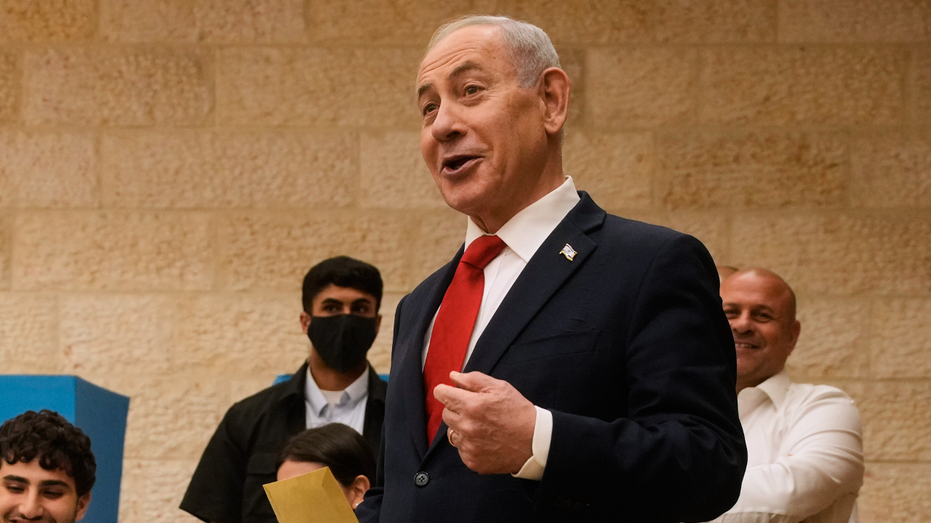
Ahead of Israel’s Oct. 27 national vote, President Donald Trump issued a sweeping endorsement of Prime Minister Benjamin Netanyahu’s re-election bid, calling him a "great warrior," an "even greater partner for peace" and an ally in the confrontation with Iran.

The backing could give Israel’s longest-serving prime minister a boost ahead of the country’s first national vote since the Hamas-led Oct. 7, 2023, massacre. The election is widely viewed in Israel as a referendum on whether to grant Netanyahu another term to pursue his war objectives, including disarming Hamas and Hezbollah and countering the nuclear threat from the Islamic Republic.

In response, Netanyahu thanked Trump for his "extraordinary endorsement." "Together we will never let Iran’s regime get nuclear weapons," he said.

TRUMP SAYS NETANYAHU NEEDS TO BE RE-ELECTED, OR ELSE US WILL HAVE TO 'FINISH THE JOB’ AGAINST IRAN ALONE

Addressing the endorsement, Doron Spielman, international spokesman for the Israeli Prime Minister’s Office, told Fox News Digital that no personal or professional bond in the history of U.S.-Israel relations compares with the current partnership.

"Israel and the U.S. have stood together as the two countries bearing the torch for the West, and that is a direct result of the incredible relationship between President Trump and Netanyahu," he said.

He reiterated Netanyahu’s long-standing foreign-policy priority and central campaign promise: ensuring that Iran does not acquire atomic bombs under his watch.

"Israel prefers to do this with the U.S., which has been our greatest ally and friend, and who has already entered the front with us twice. But already at the time of Operation Rising Lion, Israel showed that it was willing to act alone. Israel acted for over a week before the U.S. joined," he said, in reference to the June 2025 military mission against Iran.

Israel’s longest-serving prime minister, with roughly 20 years in office, Netanyahu began his diplomatic career in 1982 as deputy chief of mission at Israel’s embassy in Washington, D.C. He served as Israel’s ambassador to the United Nations from 1984 to 1988 before entering politics with Likud. He became the party’s chairman in 1993 and was first elected premier in 1996.

After losing the 1999 election, Netanyahu returned to government in 2002 as foreign minister and later served as finance minister. He returned to the premiership in 2009, serving until 2021 and again from late 2022. He is widely credited with liberalizing Israel’s economy and helping transform the country into a global high-tech hub.

FORMER ISRAELI ARMY CHIEF GADI EISENKOT EMERGES AS NETANYAHU’S LEADING ELECTION CHALLENGER

Netanyahu’s current political allies include Itamar Ben-Gvir’s Otzma Yehudit, Bezalel Smotrich’s Religious Zionism-Zehut, and the ultra-Orthodox parties Shas and United Torah Judaism. The newcomer Amcha Yisrael, led by Ofer Winter, could also join the bloc, although Winter is currently feuding with Likud over concerns that his party, which is hovering near the electoral threshold, could split the right-wing vote and potentially "waste" tens of thousands of ballots.

According to most Hebrew-language media polls, neither Netanyahu’s bloc nor the opposition led by Gadi Eisenkot currently has a clear path to securing the 61 Knesset seats needed to form a government.

If no candidate can assemble a governing coalition, Israel could head to another election, repeating the cycle of political instability that saw the country hold four national votes between April 2019 and March 2021.

Dan Diker, president of the Jerusalem Center for Security and Foreign Affairs, told Fox News Digital that any incoming government will face the same formidable security challenges as the current one, with few prospects for quick victories.

"The major challenge in this election will be what Netanyahu discussed in terms of adjusting the national security concept to prioritize prevention. That means taking very serious, assertive and aggressive military counterterrorism and nonmilitary actions against our enemies," Diker said.

The Israeli left, center and even far-right believe Netanyahu has failed to meet the expectations associated with his image as "Mr. Security," according to professor Tamar Hermann, a senior researcher at the Israel Democracy Institute.

ISRAEL DRILLS FOR SURPRISE ATTACK WITH MASSIVE MILITARY EXERCISE AS EXPERT INVOKES 1973 WAR

"He promised to topple the Iranian regime, he promised to dismantle Hamas, he promised to crush Hezbollah. None of it was achieved," Hermann told Fox News Digital. "He gave a green light to not punishing vigilantes in the settlements who act against Palestinians. He also gave too much to the ultra-Orthodox parties, giving up on the idea of universal conscription."

Hermann said that Netanyahu’s current term has been his least successful, beginning with the judicial reform push, which triggered mass protests in 2023, and followed by the Palestinian terror attacks on Oct. 7. Netanyahu subsequently faced public anger over his handling of the hostage crisis, although, in coordination with Trump and his envoys, he ultimately secured the return of all the captives.

"In the eyes of some, his legacy will be that he inflicted a huge disaster upon Israel in terms of what happened to civilians on Oct. 7 and the deterioration of Israel’s international image," she said.

Michael Oren, a former Israeli ambassador to the United States, framed the upcoming election in terms of legacy and how Netanyahu will be remembered 50 years from now.

"There are two types of leaders: leaders in history and leaders of history," he told Fox News Digital. "There are leaders who go into office and perform as best they can, and there are leaders who go into office and see themselves as transformative, as having a historical role like Abraham Lincoln, Roosevelt or Churchill. Benjamin Netanyahu belongs to this category."

CLICK HERE TO DOWNLOAD THE FOX NEWS APP

Oren said Netanyahu sees his mission as saving Israel from existential threats, foremost among them Iran, a goal he has yet to achieve.

"He is willing to endure virtually limitless criticism and condemnation around the world, as well as mass demonstrations against him, to fulfill this one role," he said. "To understand that is to understand Benjamin Netanyahu: He is a leader of history."
  •  

Former Israeli PM emerges as wild card in high-stakes election with Middle East's future at stake

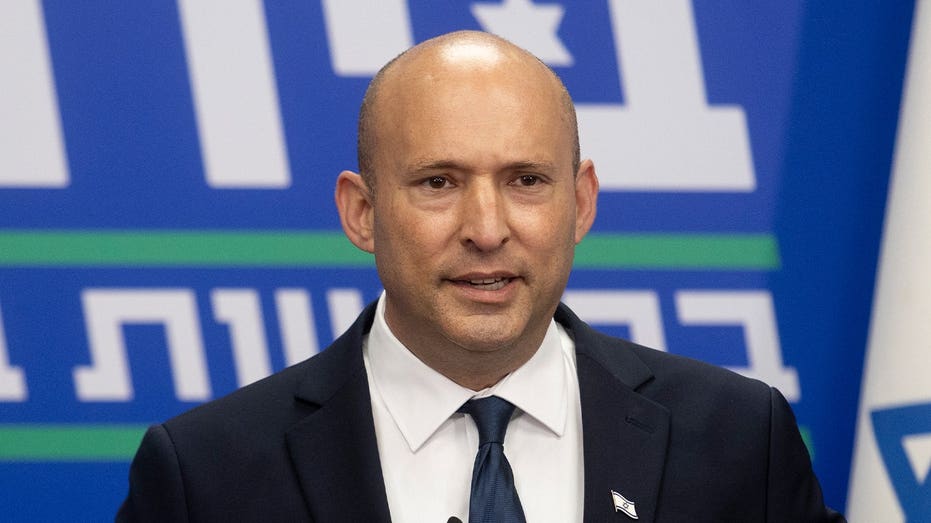
Former Israeli Prime Minister Naftali Bennett is seeking a political comeback with an ambitious vision for the Middle East: expanding the Abraham Accords, building economic partnerships with Arab nations and rebuilding Israel's strained international relationships, particularly with the United States.

For Bennett, whose American parents moved to Israel from San Francisco, the U.S. connection is both personal and political. The 54-year-old former technology entrepreneur, a familiar face on American television, believes his business background could help him work with President Donald Trump to advance regional diplomacy.

"Naftali Bennett is the right leader to strengthen Israel’s global standing, including among the American people, thanks to his proven track record of working with world leaders and bringing people together, both as prime minister and as a successful businessman," Bennett’s campaign told Fox News Digital.

"We are confident that our great friend in the White House, President Trump, and Israel’s allies around the world will welcome the opportunity to work with Bennett and the new government he intends to form. Together, we will revive the Negev Forum and expand the Abraham Accords, strengthening regional security and stability. That is why so many leaders across the Middle East and beyond who share a vision of a more secure, prosperous and stable region are eager to see Bennett lead Israel’s next government."

TRUMP CALLS ON ARAB NATIONS TO SIGN ABRAHAM ACCORDS

"He was a businessman, not a career politician, same as me," Bennett told The Times of Israel in June, referring to Trump. "His worldview is, let's get stuff done. Let's look at results, not process. And that's precisely my view."

Bennett said he would aggressively pursue regional agreements through economic cooperation, seeking to build on the U.S.-brokered Abraham Accords. But while his ambitions overlap with Trump's regional agenda, the president endorsed Prime Minister Benjamin Netanyahu for re-election on Oct. 18.

Bennett also faces an unusual political challenge at home. His joint Beyachad, or Together, party with former Prime Minister Yair Lapid is polling behind both Netanyahu's Likud and former military chief Gadi Eisenkot's Yashar party.

A Channel 12 poll published Oct. 23 projected 23 Knesset seats for Eisenkot, 21 for Netanyahu and 15 for Bennett and Lapid.

Yet Bennett knows better than most Israeli politicians that leading the largest party is not necessary to become prime minister. In 2021, he took office despite his Yamina party winning just seven of the Knesset's 120 seats, demonstrating the power of coalition negotiations in Israel's parliamentary system.

FORMER ISRAELI ARMY CHIEF GADI EISENKOT EMERGES AS NETANYAHU’S LEADING ELECTION CHALLENGER

How a seven-seat leader became prime minister

Born in Haifa to American immigrants, Bennett served in Israel's elite Sayeret Matkal and Maglan military units before co-founding cybersecurity company Cyota, which was sold for $145 million in 2005.

He entered politics as Netanyahu's chief of staff, later led the Yesha Council representing West Bank settlements and served as economy, education and defense minister.

A religious Zionist and longtime opponent of Palestinian statehood, Bennett stunned Israel's political establishment in 2021 when he formed a coalition spanning right-wing, centrist, left-wing and Arab parties, ending Netanyahu's 12 consecutive years in power.

The coalition collapsed in 2022, leaving many former supporters accusing him of betraying his electoral promises.

WHO IS ITAMAR BEN-GVIR, THE ISRAELI FIREBRAND RISING WITH THE POPULIST RIGHT ACROSS THE GLOBE?

Einat Halevy Levin, a strategic advisor who has known Bennett for years, described a politician who has spent his time outside office preparing for a second opportunity.

"In 2021, he wasn't prepared. He hadn't built a governing party; he had built another election campaign," Halevy Levin told Fox News Digital.

She said she met Bennett at his home in November 2023, following the Oct. 7 Hamas attack, when he had decided to return to politics.

This time, according to Halevy Levin, Bennett spent years building a political organization, carefully screening candidates and developing the infrastructure needed to govern.

"I've known him since he was economy minister. He was always daring and full of creative ideas, but was more inclined to stick to his own views," she said. "He has undergone a transformation."

IS ISRAEL REALLY ISOLATED? POLLS AND DIPLOMACY POINT IN OPPOSITE DIRECTIONS

A new Middle East vision meets old divisions

Bennett's regional ambitions reflect an approach to diplomacy shaped by his business experience, according to Halevy Levin.

She recalled attending a meeting with a senior official from a neighboring country who appeared astonished by Bennett's detailed knowledge of its economy and priorities.

"He wasn't looking at the country through a military lens," she said, describing Bennett's focus on identifying shared economic interests rather than approaching every regional relationship primarily as a security challenge.

In an interview with Israel's Channel 13 on Sunday, two days before the election, Bennett pointed to his meetings as prime minister with Egyptian President Abdel Fattah el-Sisi, Jordan's King Abdullah II and UAE President Mohammed bin Zayed as examples of the diplomacy he hopes to revive.

He argued that Israel needs to present a new vision of a Middle Eastern renaissance and identified extremist settler violence in the West Bank as a major source of damage to its international standing.

"We need to eliminate Jewish terrorism in Judea and Samaria, and I say this precisely as a supporter of the settlement movement," Bennett said. "They do not represent the overwhelming majority of settlers, but right now this is the problem causing us the greatest damage internationally."

Bennett said he would direct Israel's senior police, military and intelligence officials to produce a plan within three days to crack down on extremist violence.

His foreign policy, however, remains firmly on the Israeli right.

On Iran, Bennett has promoted his "Octopus Doctrine," advocating direct action against Tehran rather than focusing exclusively on Iranian-backed groups.

"If Hezbollah fires at us, we strike Iran," he declared at an Aug. 19 policy conference.

On Gaza, Bennett opposes Palestinian statehood and supports maintaining Israeli security control until Hamas is disarmed. He has also proposed excluding Qatar and Turkey from Gaza's future arrangements while involving Egypt.

TRUMP SAYS NETANYAHU NEEDS TO BE RE-ELECTED, OR ELSE US WILL HAVE TO 'FINISH THE JOB’ AGAINST IRAN ALONE

Those positions raise questions about how significantly his government would depart from Netanyahu's policies.

Danny Citrinowicz, a senior researcher at Israel's Institute for National Security Studies and former head of the Iran branch in Israeli military intelligence, argued that restoring Israel's diplomatic standing requires more than a change in leadership.

"If Bennett thinks he can support annexing E1 (an area east of Jerusalem where planned Israeli settlement construction could further fragment the West Bank), oppose a Palestinian state, continue the occupation of Gaza and simultaneously meet with Sisi and Abdullah and attract investment to Israel, he simply doesn't understand the depth of the international crisis," Citrinowicz said.

Citrinowicz argued that without a fundamental change in Israeli policy toward the Palestinians, replacing Netanyahu would not be sufficient to restore the country's international standing.

His warning comes amid changing American public attitudes toward Israel. A February 2026 Gallup survey found 36% of Americans sympathized more with Israelis, compared with 41% who sympathized more with Palestinians, a statistically insignificant five-point difference but a significant shift from the long-standing pro-Israel advantage.

A comeback built on lessons from 2021

Beyond foreign policy, Bennett is promising a sweeping domestic overhaul.

In an Oct. 25 manifesto, he pledged to redirect 30 billion shekels in government benefits toward families who work and serve in the military, reduce food prices by 30%, establish a state commission of inquiry into Oct. 7 and introduce an eight-year term limit for prime ministers.

His alliance with Lapid gives him an established political organization, but he faces competition from Eisenkot and continuing attacks from Netanyahu, who has warned that a future opposition coalition could depend on left-wing and Arab parties.

With Israel's fragmented parliamentary system requiring at least 61 seats to govern, coalition negotiations could prove as consequential as the election results themselves.

Bennett has already demonstrated that political reality once.

CLICK HERE TO DOWNLOAD THE FOX NEWS APP

Now, four years after his first government collapsed, he is seeking to convince Israelis that the unconventional politician who became prime minister with seven seats has returned better prepared — and with a vision that could reshape Israel's place in the Middle East.

  •  

Conservative wave hits roadblock in Brazil as Lula holds off Bolsonaro challenge

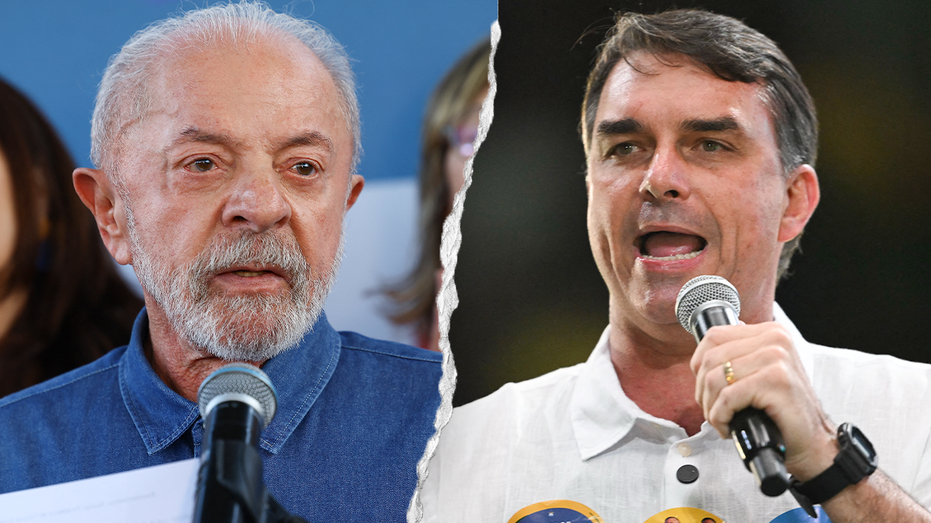
Incumbent leftist President Luiz Inácio Lula da Silva defeated right-wing challenger Sen. Flávio Bolsonaro in Sunday's presidential second-round runoff, according to Brazil’s electoral court and The Associated Press. The deeply polarized nation returned to the polls for a second round of voting on Sunday.

With 100% of the vote counted, Lula won 51.8% of the vote, defeating Bolsonaro by nearly 4.4 million votes.

Despite trailing by nearly 4.4 million votes, Bolsonaro has refused to concede and has called for the election results to be annulled.

Lula addressed supporters after winning re-election to a fourth, nonconsecutive term, expressing gratitude to the Brazilian people.

"No one is required to like the president-elect, but he must govern for everyone," Lula said.

Referring to his opponent, Lula said, "This was a defeat for denialism and lies."

BRAZIL BECOMES NEXT TEST FOR LATIN AMERICA’S SURGING CONSERVATIVE MOVEMENT

Lula’s victory followed confusion at polling places after Brazilian Supreme Court Justice Cristiano Zanin ordered a last-minute, two-hour extension of voting nationwide. The order came three minutes before polls were scheduled to close, and some polling places reportedly received word only after they had already closed.

Both the Lula and Bolsonaro campaigns had requested that voting remain open longer, citing transportation problems and severe weather in different parts of the country. Lula’s campaign pointed to problems with buses in São Paulo and Salvador, while Bolsonaro’s campaign cited heavy rain in southern Brazil.

"I've never complained about anything in any election before. Whether I won or lost, I'd just accept it and get ready for the next one. But this time, something abominable is happening," Lula argued.

Bolsonaro called the extension unprecedented and argued that it changed "the rules of the game in the middle of the game." He later asked that the election results be annulled.

Brazil’s electoral court president, Kassio Nunes Marques, said the extension did not affect the results. Legal experts also said Bolsonaro would face a high legal bar to invalidate the election.

Bolsonaro defeated Lula by more than 2.2 million votes in the first round on Oct. 4, with 47% of the vote to Lula’s 45%, but fell short of the 50% majority required to win the election outright.

Lula’s victory marked the first time since Brazil’s military dictatorship ended in 1985 that the second-place finisher in the first round went on to win the presidency.

The victory marks an unprecedented fourth presidential term for Lula and a remarkable comeback victory. The result is even more surprising given that Bolsonaro had led, albeit by tight margins, in recent polling, and Brazil had recently elected a center-right and right-leaning Congress.

BRAZIL’S RAPID ELECTION COUNT PUTS SPOTLIGHT ON VOTING SECURITY AHEAD OF US MIDTERMS

Earlier in the day, Lula voted in São Bernardo do Campo, in São Paulo state, while Bolsonaro voted in northern Rio de Janeiro state, which he represents in the Senate.

The first vote tallies came in from Brazilians living overseas, where Lula won a decisive victory in Germany, and Bolsonaro won an overwhelming victory in Japan.

While Bolsonaro performed well in his southern electoral strongholds, winning by comfortable margins in Rio de Janeiro, São Paulo, Paraná and Rio Grande do Sul, he won those states by smaller margins than in the first round.

His turnout in the south was not enough to overcome Lula's strong support in the North and Northeast, a reflection of the Workers’ Party’s strength in the country's populous "Nordeste" region.

Bolsonaro also turned in a disappointing performance in Minas Gerais, which geographically and politically straddles the Brazilian north-south divide. Often referred to as the nation's quintessential bellwether state, Minas Gerais has historically been viewed as an important indicator of national election results.

While Bolsonaro won Minas Gerais by 5% in the first round, in the second round, it was essentially tied.

Bolsonaro had received endorsements from other first-round candidates: best-selling author Augusto Cury, former Minas Gerais Governor Romeu Zema, and former Goiás Governor Ronaldo Caiado.

LATIN AMERICA’S CONSERVATIVE SHIFT FACES ITS BIGGEST TEST YET IN BRAZIL ELECTION

However, they were not enough to overcome the Workers’ Party’s established political organization. Lula has now appeared on the presidential ballot seven times, winning four of those elections.

Heading into the first round, Flávio Bolsonaro was effectively able to make the case to working-class and middle-class voters that Lula’s economic policies were driving up living costs.

He painted the Lula administration as bloated, tax-heavy and given to racking up debt, tying those issues to inflation and household finances.

Additionally, his message of hardline law and order appealed to a Brazilian public where voters routinely suggest that violence is the most pressing issue.

Nonetheless, these economic and security concerns were not enough to overcome Lula’s support among voters in the North and Northeast, where he won by wide margins.

While Lula will be riding high heading into a historic fourth term in office, he will face a Congress with a center-right and right-wing majority that analysts have described as among the most conservative in Brazilian history.

While Flávio Bolsonaro lost the 2026 election by a narrow margin, the Bolsonaro movement is certainly not going away and arguably remains an influential force in modern Brazilian politics.

The Lula victory also brings to an end a long string of victories for Trump-backed, right-wing candidates across the region. While Trump had not officially endorsed Flávio Bolsonaro, he made no secret of his preference, and enjoyed a close relationship with the Bolsonaro family.

Looking forward to 2030, all eyes will turn to Bolsonaro clan ally Tarcísio de Freitas, who did not enter the presidential race and instead supported Flávio Bolsonaro. The São Paulo governor is likely to remain a leading figure on the Brazilian right.

CLICK HERE TO DOWNLOAD THE FOX NEWS APP

In addition to the presidential election, voters in five states, as well as the federal district of Brasília, were also selecting governors in runoff elections.

Fox News Digital's Bradford Betz and The Associated Press contributed to this report.

  •  

Who is Itamar Ben-Gvir, the Israeli firebrand rising with the populist right across the globe?

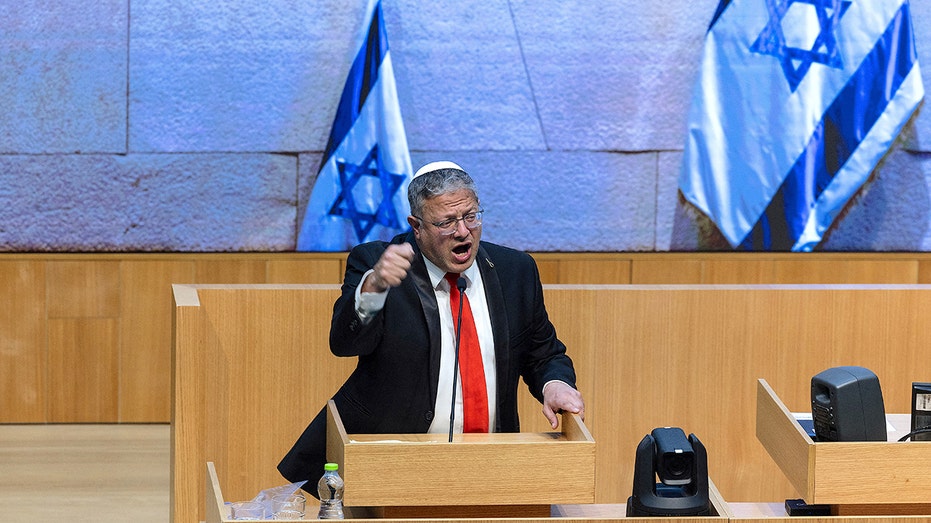
Polling ahead of Israel’s Oct. 27 election projects that National Security Minister Itamar Ben-Gvir’s Otzma Yehudit Party will win between seven and ten seats in the 120-member Knesset, potentially making any future government led by Benjamin Netanyahu’s Likud Party contingent on his support and positioning him to secure senior ministerial portfolios.

His political rise mirrors a broader trend across Europe and the West, where parties such as Marine Le Pen and Jordan Bardella's National Rally in France, Geert Wilders’ Party for Freedom in the Netherlands, Australia's One Nation leader, Pauline Hanson, Italy’s Matteo Salvini and Germany's Alice Weidel of the AfD have all gained ground on traditional conservative political parties.

The highly controversial Ben-Gvir, as national security minister, oversees the ministry responsible for internal security, including the Israel Police, Israel Prison Service and civilian firearms licensing.

"I always say that Minister Ben-Gvir, if he were in America, he would just be called a Texan," Yishai Fleisher, international spokesman for the Jewish community of Hebron and a candidate ranked No. 12 on the Otzma Yehudit list, told Fox News Digital.

NETANYAHU PRAISES TRUMP'S 'WICKED SENSE OF HUMOR,' DEFENDS IRONCLAD ALLIANCE AHEAD OF HISTORIC ISRAEL VOTE

In a video interview with Fox News Digital, Fleisher continued, "Meaning law and order, the death penalty for murderers, tough conditions for jihadists in our prisons and gun rights for the average Jewish person to be able to defend themselves in our national state. That’s what Itamar Ben-Gvir stands for," he added.

Fleisher said that mass immigration had fueled Islamist extremism and unrest in parts of Europe, saying Israelis want to avoid similar developments.

"There is a jihadist takeover that has come in through immigration, and now the streets of Paris are burning, and the people of Belgium and the U.K. want their countries back," Fleisher said. "In Israel, we don’t want to see Tel Aviv burning," prompting politicians to embrace what are known in the United States as "law-and-order" and "tough-on-crime" candidates.

FORMER IDF CHIEF GADI EISENKOT EMERGES AS NETANYAHU’S LEADING ELECTION CHALLENGER
Former Israeli Ambassador to Washington Danny Ayalon said that Ben-Gvir had missed an opportunity to change course despite his lack of military service and past conviction, arguing that his tenure had instead had a damaging impact, including on Israel’s diplomatic standing.

"Ben-Gvir spoke in a way that turned the entire world against Israel, portraying it as a racist country by making statements that made Israel a pariah state," Ayalon said.

Fleisher praised Ben-Gvir, who he said has cracked down on protection rackets in southern Israel and made significant progress toward what he described as greater equality for Jews on the Temple Mount in Jerusalem, Judaism’s holiest site.

"Minister Ben-Gvir was an activist from a very young age. He saw the dangers and evils of the Oslo process with the Palestinians and tried to stop it. He was arrested and stopped many times because of that, and he faced the court many times. It was then-Chief Justice Aharon Barak who once told him, ‘Why don’t you go study to be a lawyer?’" Fleisher said.

Ben-Gvir, who studied law, became active in public and political affairs and was first elected to the Knesset in 2021. Following the 2022 elections, he was appointed minister of national security by Prime Minister Benjamin Netanyahu.

His many critics have taken issue with his firebrand style and what many view as a lack of political correctness.  Ambassador Ayalon, a former deputy foreign minister, told Fox News Digital that he also viewed Ben-Gvir’s performance as national security minister negatively.

EUROPEAN PARLIAMENT VOTES TO CONFRONT MUSLIM BROTHERHOOD, 'ISLAMIST ENTRYISM' IN OVERWHELMING VOTE

"During his tenure, Israel has become less secure internally because crime is rising. Many young people believed in the last election that he would bring governability and authority to areas such as the Negev and the Galilee, on the outskirts of the country, where there is almost no law," Ayalon said.

In 2007, Ben-Gvir was convicted of supporting a terrorist organization and inciting racism.

His campaign told Fox News Digital that the conviction stemmed from displaying a sticker of the late Rabbi Meir Kahane, whose Kach party was outlawed in 1994, and reflected his support for a Jewish nationalist movement.

"As a young man, Minister Ben-Gvir was an intense Jewish nationalist. He has said many times, publicly, that he has matured since then and moved on from those positions."

ABBAS DELAYS PALESTINIAN ELECTIONS AGAIN, MAKING MORE THAN TWO DECADES WITHOUT VOTE

Recent posts on Ben-Gvir’s social media accounts, along with statements issued through Netanyahu’s and Likud’s official channels, have raised questions about whether the two remain fully aligned.

On Oct. 15, Ben-Gvir shared a Hebrew-language media report quoting Netanyahu as saying that he would not serve again as national security minister. In response, Ben-Gvir wrote: "Dear Prime Minister, only the people will decide. Ben Gvir is strong, Israel is strong!"

TRUMP SAYS NETANYAHU NEEDS TO BE RE-ELECTED, OR ELSE US WILL HAVE TO 'FINISH THE JOB’ AGAINST IRAN ALONE

Last Wednesday, Netanyahu's Likud party appeared to reverse course, posting a message on its official WhatsApp channel stating: "Ben-Gvir is a senior minister in our government, and he will remain so in the next government — provided that the bloc consisting of the Left and Arab parties does not win."

Despite the public statements, Ayalon said Netanyahu could opt not to include Ben-Gvir in the next government, even if it meant forming an alliance with opposition parties such as Gadi Eisenkot’s Yashar.

"Netanyahu is brilliant. He kept Ben-Gvir because it suited him. If he could, he would get rid of him in a minute. Bibi is capable of changing his mind on a dime," Ayalon said.

Fleisher credited Ben-Gvir with tripling the number of personal firearms and firearms licenses issued to Israelis over four years, establishing 1,000 rapid-response teams, overhauling the prison system and demolishing 9,000 illegally built homes, particularly in the Negev.

In March, the Knesset approved a death-penalty law sponsored by Otzma Yehudit and other lawmakers, a measure Ben-Gvir has strongly championed.

"No more hotel-like conditions in our prisons. You’ll know you are being punished for your crime, and these simple policies ultimately deter jihadism," Fleisher told Fox News Digital.

CLICK HERE TO DOWNLOAD THE FOX NEWS APP

"They understand that he represents a full-throated pushback against the jihadist takeover of our land. Ben-Gvir also represents a strong Jewish identity, strong policies and strong laws to ensure that we don’t lose control of our country," he said.

The latest polls show Netanyahu’s bloc slightly behind the opposition, led by Yashar party chief Gadi Eisenkot, but neither side has a clear path to the 61 seats needed for a governing majority.

  •  
❌