❌

Reading view

Russia replaces its missiles as fast as it fires them, Ukrainian intelligence says. Its drone order this year tops 100,000
russian drones

As of October, Russia has up to 700 ballistic and several thousand cruise missiles in reserve, and its 2026 state order for Geran-type drones and decoys such as the Gerbera exceeded 100,000 units, Ukraine’s military intelligence (HUR) told NV in figures the outlet published on 20 October. The missile stocks are roughly the same as HUR reported to NV in July, the outlet found.

Ukraine enters the heating season facing what it says is a Russian plan to hit 60 infrastructure sites this winter. HUR’s figures suggest Russia has the weapons for it, even after its fall mass strikes. In June, HUR said Russia could fire up to 100 ballistic missiles a month while keeping its stocks steady. Its drone output, meanwhile, is shifting to jets that are harder to shoot down.

Russia produces 110 ballistic missiles a month

Russia can make more than 200 missiles a month, 110 of them ballistic, HUR said. About 115 of its ballistic missiles are Iskander-Ms, with production of up to 65 a month. A modernized Iskander with a projected range of 550 to 700 km is in development.

At the same time, Russia holds up to 400 S-300PM and S-400 air defense missiles adapted to strike ground targets, and makes about 40 a month. Meanwhile, Kinzhal production has been temporarily paused over poor accuracy, and the capacity has gone to conventional ballistic missiles.

Most new Kalibrs go into reserve

Russia plans to make more than 80 Kh-101 cruise missiles a month and is exceeding that, though defects in releasing them from aircraft have sent some batches back to the factories.

Russia has more than 450 Kalibrs and makes about 29 a month. Because Ukrainian air defense downs them effectively, Russia sends most new ones to its strategic reserve and to equip its fleets, HUR said. It also holds more than 600 Oniks anti-ship missiles, upgraded for ground strikes, and more than 120 Zircons.

ukraine recovers russia's undamaged geran-3 jet kamikaze drone carrying camera live-link equipment (video) · post russian jet-powered lying cornfield after being recovered intact 16 2025 реактивний дрон-камікадзе герань-3 вересня року
Explore further

Ukraine recovers Russia’s undamaged Geran-3 jet kamikaze drone carrying camera and live-link equipment (VIDEO)

Russia now assembles 4,000 jet drones a month

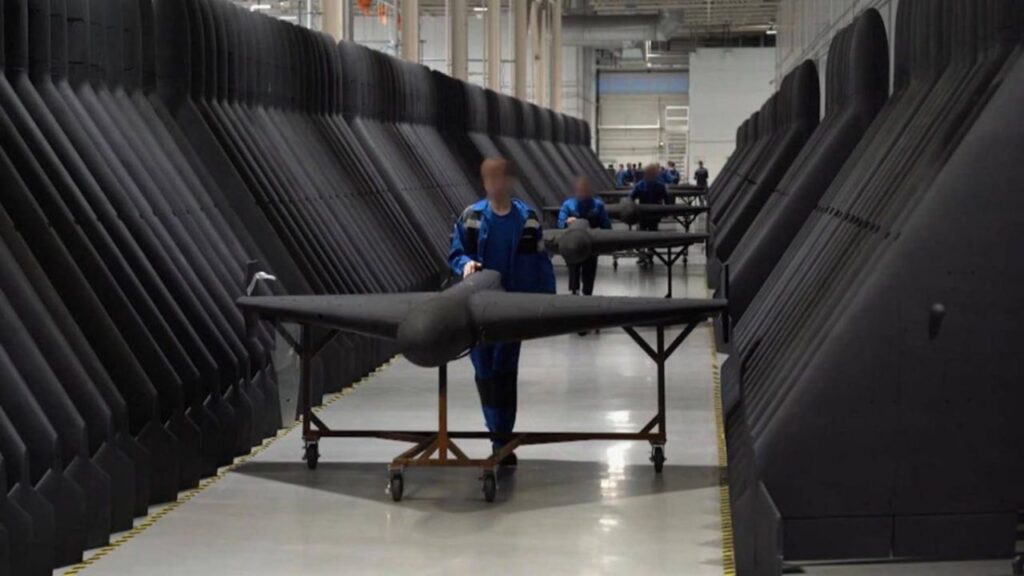
Russia holds a reserve of about 6,200 Gerans and makes about 10,000 drones a month. Its main production hub is the Alabuga special economic zone in Tatarstan.

Since summer, Russia has shifted toward turbojet drones. “The reason is the saturation of Ukraine’s Air Force with mobile fire groups that shoot down low-speed targets en masse,” HUR said. Russia now assembles about 4,000 jet drones a month, mostly Geran-4s and Geran-5s, which fly at 400 to 500 km/h. It also makes about 2,000 cheaper propeller-driven Geran-2s, which HUR said are used to wear down air defense and locate air defense positions.

  •  

Ukraine’s interceptor crews destroyed thousands of Russian aerial targets during Vivaldi. Jet-powered Shaheds remain a challenge

Betsyk, commander of an interceptor battalion in Ukraine’s 3rd Army Corps.

The commander of an interceptor battalion in Ukraine’s 3rd Army Corps said his unit destroyed several thousand Russian aerial targets during Operation Vivaldi, ArmyInform, the Defense Ministry’s news agency, reported on 21 October.

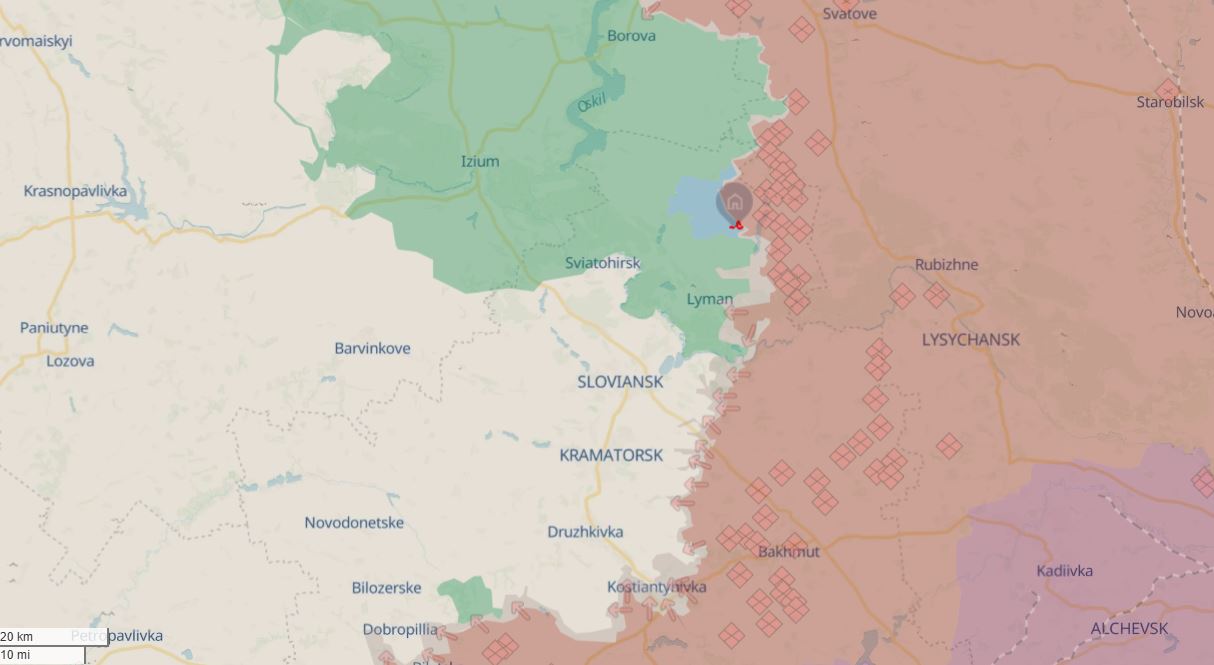
Operation Vivaldi is a Ukrainian counteroffensive north of Lyman in Donetsk Oblast, where the 3rd Army Corps has reported liberating settlements. In its third phase, Ukrainian forces reclaimed five settlements and expanded their gains to 176 square kilometers. Strikes on Russian logistics and electronic warfare likely neutralized Russia’s drone defenses before Ukraine sent in armor, the Institute for the Study of War assessed.

The commander, who uses the callsign “Betsyk,” leads the interceptor battalion of the 1030th Anti-Aircraft Missile-Artillery Regiment “Aquila,” part of the 3rd Army Corps. He said Russian forces deployed large numbers of reconnaissance drones to locate Ukrainian positions after the corps began advancing.

Betsyk named Zala, Orlan, Supercam, Merlin, and Knyaz Veshchiy Oleg among the reconnaissance drones used by Russian forces.

Russia also brought in reinforcements and units operating strike drones, including first-person-view (FPV) quadcopters, Molniya fixed-wing FPV drones, and Lancet crews, he said. At one stage, Russian forces deployed crews from their Rubicon drone unit to disrupt the advance, but the move did not change the situation.

ukraine retook kolodiazi north lyman its drones hit 200-plus russian vehicles operation vivaldi’s last phase commander says · post northern donetsk oblast neighboring areas territory during vivaldi blue 2022 green
Explore further

Ukraine retook Kolodiazi north of Lyman as its drones hit 200-plus Russian vehicles in Operation Vivaldi’s last phase, Ukrainian drone officer says

Betsyk said his battalion’s work deprived Russian forces of the ability to strike Ukrainian troops and track their movements.

Jet-powered Shaheds: speed is the main challenge

The regiment also works against Russian strike drones heading for targets behind the front line. Betsyk said interceptor crews had destroyed some jet-powered drones, but not in significant numbers.

The main difficulty is speed, he said. Interceptor drones need to reach 500–600 km/h to intercept Russian jet-powered attack drones, according to Betsyk.

For now, the regiment mainly uses conventional air-defense systems against these targets: self-propelled anti-aircraft systems, surface-to-air missile systems, and portable surface-to-air missile systems. Betsyk said these systems were historically designed to engage jet-powered targets.

He compared the current challenge with the early use of piston-powered Shaheds. Those drones initially posed a serious threat but later became easier for Ukrainian air defenses to counter. Russia has largely stopped using piston-powered Shaheds on most fronts since summer, he said, but continues to use piston-powered Gerbera drones, which are relatively cheap and can partly exhaust Ukrainian air defenses. The main drones Russian forces use now are jet-powered Shaheds, he said.

Betsyk expects Russian forces to adapt if Ukraine fields effective interceptors against jet-powered drones. They will seek ways to evade the interceptors, increase speed, improve navigation, and change their tactics, he said. However, he added that the battalion had not observed a major evolution so far and did not expect the drones’ speed to double.

What the corps says Vivaldi achieved

Separately, 3rd Army Corps commander Andrii Biletskyi said Ukrainian forces retook 277 square kilometers and 16 settlements during Operation Vivaldi, Ukrainska Pravda reported. Biletskyi also said Russian losses exceeded 8,000 personnel, according to ArmyInform. These figures are Ukrainian claims and have not been independently verified.

  •  

Who capped Ukraine’s Starlink? “Ultimately POTUS,” Musk said. Ultimately Musk, reports now say

musk, trump

Elon Musk ordered the speed cap on Starshield, the military version of SpaceX’s Starlink network that Ukraine’s drones rely on, The Wall Street Journal reported on 20 October. Earlier, Musk said that such limits are decided by the US military and “ultimately POTUS.” Speaking to reporters in Eau Claire, Wisconsin, on 20 October, according to WSJ, US Defense Secretary Pete Hegseth said, “We haven’t made any directives or anything like that,” CBS News reported.

For a week, no one with a hand on the system said the decision was theirs. Musk pointed to the US military and the president, and Trump said he did not know who it was. Meanwhile, Ukrainian officials said the cap has hampered the drones they use to intercept Russian Shaheds and to strike Russian forces in occupied territory. Kyiv says the cap remains in place, and at about 160 km/h it makes intercepting jet-powered drones and missiles that fly about twice as fast virtually impossible.

Musk spoke with administration officials, including Trump, before the cap, a source says

Musk capped the speeds at which Ukrainian hardware could stay connected to the network, people familiar with the matter told WSJ. The slowdown, which began on 14 October, left some of Ukraine’s strike and interceptor drones virtually useless, WSJ said.

WSJ’s sources differ on Trump’s role. Some US officials said Musk acted on his own and that Trump did not specifically order any retribution against Ukraine. One person said Musk spoke with several senior administration officials, Trump among them, before imposing the cap. Two people said Musk and Trump discussed the decision by phone soon after the slowdown became public.

During the uproar, SpaceX representatives called White House counterparts. They asked for a shared message that the company and the administration had coordinated before Musk’s directive, the people said. The White House ran an informal inquiry into who ordered the slowdown, WSJ said.

Musk held several conversations with administration officials before the order to understand the president’s thinking, CBS reported, citing sources. He dislikes his company being seen as profiting from the war, and it is unclear how his order was carried out, CBS said.

Hegseth points to Starlink’s terms of service

Hegseth said the US had not pulled anything back. He said Starlink “has the option” to make decisions under its terms of service, and that from the Pentagon’s view nothing had changed, CBS reported.

Speaking to reporters as he left the White House on 16 October, Trump said he did not think either he or Musk was responsible, The Telegraph reported. On 19 October, he said, “I don’t know who it was, but I’d like to find out.”

Last week, a bipartisan group of senators asked the Pentagon’s inspector general to investigate whether officials “directed” or “authorized” changes to Starlink and Starshield services and intelligence sharing affecting Ukraine.

Earlier reports pointed at the White House

On 15 October, Reuters reported that the order came from inside the White House. The officials said Pentagon leaders received a message that the Starshield service for Ukraine’s military needed to be slowed, but did not say who made the decision or who carried it out. A senior US official said “No such request was ever made by the president.”

On 16 October, The Telegraph reported, citing four sources, that Musk approached Trump with the idea of the speed limits. One of the sources said Trump agreed.

Analysts and Kyiv say the cap is still in place

Michael Kofman, a war analyst at the Carnegie Endowment, said, according to WSJ, that Ukrainian strike and interceptor drones remain limited to 160 km/h. He said actual connections run below 130 km/h, which still hampers strikes and air defense.

On 20 October, Ukraine’s top diplomat in Washington, Denys Sienik, said Kyiv was still waiting for answers from the Pentagon and SpaceX, WSJ reported.

  •  

Romania downs two Russian jet drones near Sulina, days before NATO allies meet on Black Sea security

romania downs two russian jet drones near sulina days before nato allies meet black sea security · post missile fired romanian f-16 during mission shoot down over 17 2026 853877788_1089835267016426_3152631372123116528_n

Two Romanian F-16s shot down two jet-powered Russian Geran attack drones over Romania’s territorial waters near Sulina on the evening of 17 October, Romania’s Defense Ministry said. The ministry released cockpit images of the mission the next day, as NATO allies prepare to discuss Black Sea security at a special session Romania requested.

This comes as Moscow continues its air attacks on Ukraine, while the US is trying to make deals with Russia over its diesel and lift sanctions. Russia keeps striking Ukraine’s energy system and cities, while its drones and suspected saboteurs keep turning up inside NATO, from tankers hit off Romania to a foiled arson attempt at a Starlink site in Lithuania.

Down within minutes

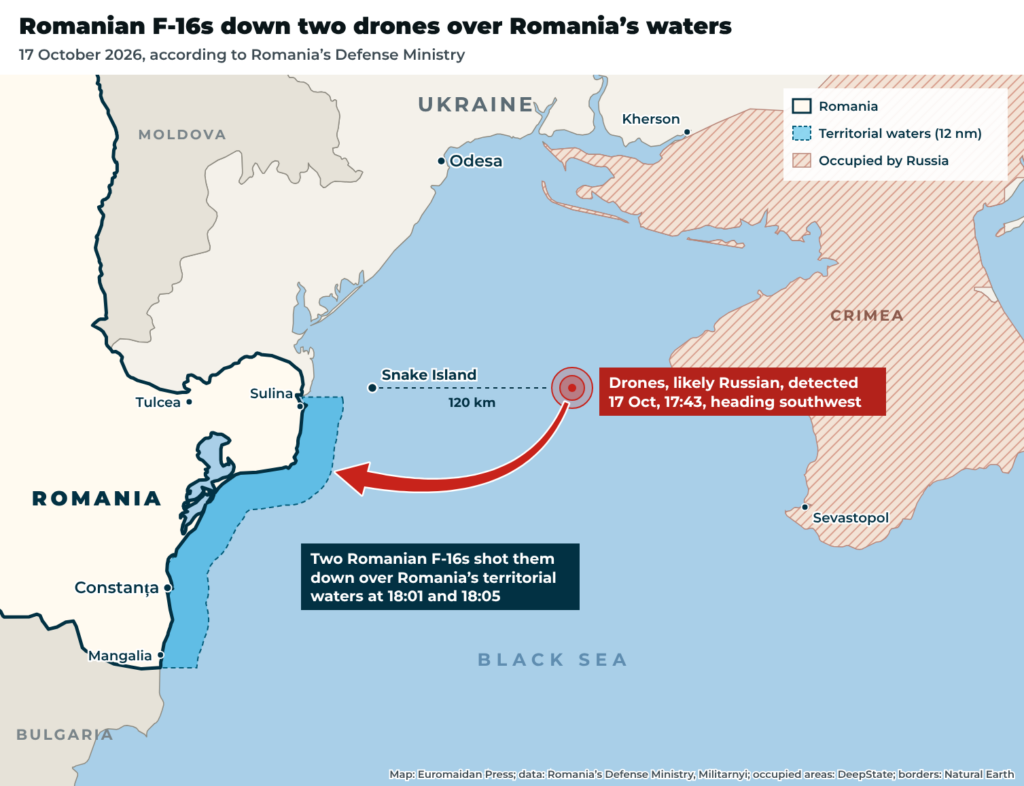
The F-16s took off from the 86th Air Base at Borcea at 17:43 after radar detected a group of air targets about 120 km east of Zmiinyi (Snake) Island, flying southwest, Ukrainian military outlet Militarnyi reported, citing the ministry. The first drone entered Romanian airspace at 17:59 and was shot down at 18:01 southeast of Sulina. The second entered at 18:01 and was downed at 18:05 east of Sulina.

romania downs two russian jet drones near sulina days before nato allies meet black sea security · post where romanian radar detected about 120 km east snake island f-16s shot
Where Romanian radar detected two drones, about 120 km east of Zmiinyi (Snake) Island, and where Romanian F-16s shot them down over Romania’s territorial waters near Sulina, 17 October 2026. Map: Euromaidan Press

Both were jet-powered attack drones of the Geran family, the ministry said. The Geran is Russia’s version of the Iranian-designed Shahed. When first detected, the drones were about 65 km from the coast of Russian-occupied Crimea and 140 km from the Ukrainian-held shore, and their southwest course may point to Russian origin, Militarnyi calculated.

The White House, seen from Lafayette Square. File photo, June 2024.
Explore further

Congress gave Trump 30 days to hit Russia’s oil buyers with 100% tariffs. He waives them two days before deadline, citing US interests. Moscow calls it historic

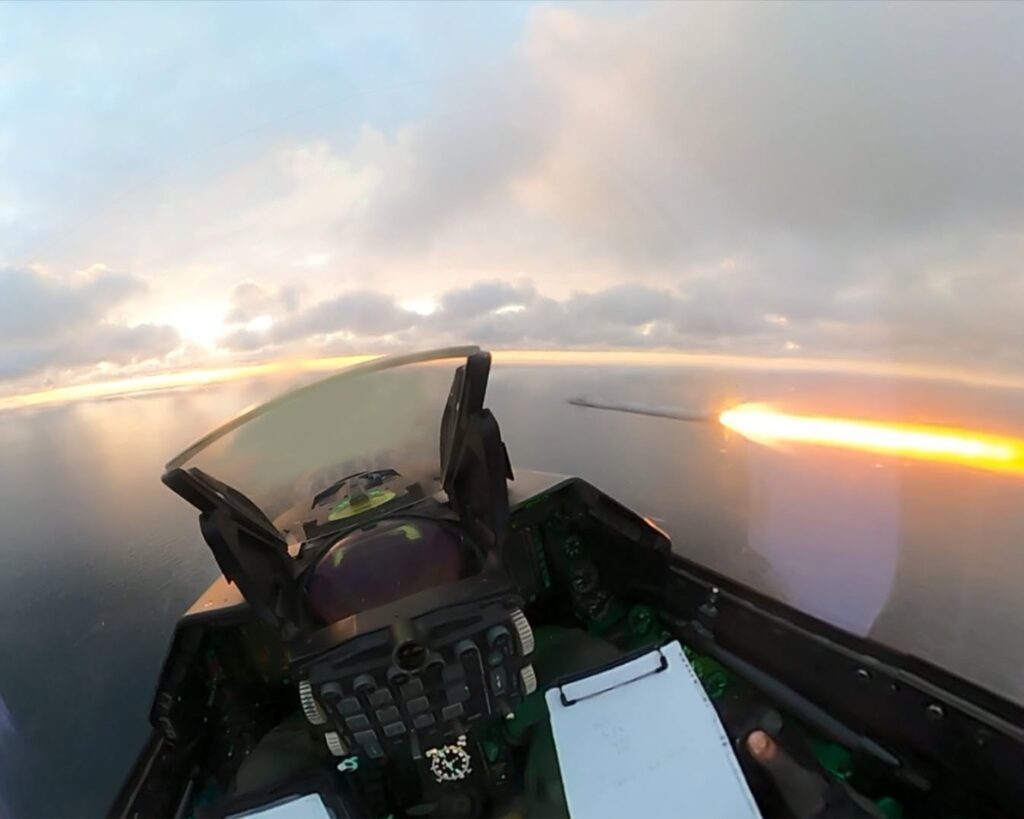
The ministry posted the cockpit images on 18 October, showing a missile launch and a fireball over the sea. “Targets spotted, identified, engaged and neutralized!” it wrote.

romania downs two russian jet drones near sulina days before nato allies meet black sea security · post fireball over seen cockpit romanian f-16 during mission shoot down 17 2026
A fireball over the Black Sea seen from the cockpit of a Romanian F-16 during the mission to shoot down two drones near Sulina, 17 October 2026. Photo: Romanian Defense Ministry/Facebook

Allies to meet on the Black Sea

A special session of the North Atlantic Council, NATO’s top decision-making body, will discuss defense and deterrence in the Black Sea on 20 October at Romania’s request. Romanian President Nicușor Dan has confirmed that the two tankers that caught fire near Sulina last week were hit by drones, and a NATO military source told Reuters they were Russian.

Romanian radar has logged 54 drone intrusions into the country’s air and sea space since Russia’s full-scale invasion, 35 of them this year, and the military has shot down six such targets in 2026, Defense Ministry data show.

romania downs two russian jet drones near sulina days before nato allies meet black sea security · post romanian air force f-16am/bm block 15 militarnyi f-16am вм повітряних сил румунії
A Romanian Air Force F-16AM/BM Block 15. Illustrative photo: via Militarnyi

Searches in Poland and Lithuania

Within hours, Poland’s Operational Command said it was checking a possible airspace violation by an unknown object overnight into 18 October. Troops, police, and military police searched for a possible crash site south of Lublin after residents reported the loud sound of a flying object around 02:00, Militarnyi reported.

On the morning of 18 October, an unknown drone entered Lithuania’s airspace and triggered air raid alerts, the country’s crisis management center said. NATO jets accompanied it but could not shoot it down because of bad weather, Defense Minister Robertas Kaunas said. Debris preliminarily identified as drone parts was later found in the village of Juodžioniai in Pasvalys district, and the army said the drone may have entered from the direction of Poland.

Romania moved from escorting Russia’s stray drones to firing on them in July, when its F-16s downed three in 72 hours.

  •  

Russia’s jet-powered drones mark a deadly evolution in Ukraine war

The air war between Russia and Ukraine has evolved constantly since the start of the conflict. The latest example is Russia’s deployment of a new type of long-range, jet-powered drone, which is having a significant effect on Ukraine’s ability to defend its cities against aerial attack. In an interview on September 14, Ukrainian Air Force […]

The post Russia’s jet-powered drones mark a deadly evolution in Ukraine war appeared first on Asia Times.

  •  
❌