❌

Reading view

Lula scores an epic victory in Brazil

Brazilian progressive leader and incumbent president Luiz Inácio Lula da Silva made history last night, defeating far-right Flávio Bolsonaro of the Liberal Party in the second round after coming in second in the first round.

The results were awaited with bated breath after a judge ordered polls to be open for two more hours following complaints from voters who claimed they had been unable to reach polling places due to transportation problems. First the Workers’ Party (PT), and then the Liberal Party (PL), requested the extension, which paused the vote count until 7:00 pm in Brasília, the capital.

With 51.79% of the valid votes, the former union leader, metalworker, and head of the Workers’ Party staged a historic comeback against Bolsonaro, who lost the initial momentum he had in the first round and barely reached 48.21%. This is the first time a candidate who finished second in Brazil’s first round has staged a comeback and won the election in the runoff.

Bolsonaro entered the runoff with a relative – though significant – lead following his victory in the first round of voting on October 4, where he received 47.03% (approximately 56,104,503 votes), while Lula, to the surprise of many, came in second with 45.16% (53,879,538 votes).

In other words, there was a gap of nearly 3 million votes between the two candidates that seemed very difficult for Lula to overcome, especially considering that the remaining votes were split among candidates who were mostly from the right and center-right – a fact that led many to believe that Bolsonaro, the son of former president and currently imprisoned Jair Bolsonaro, would win the runoff.

But Lula, a true legend of Brazilian politics (a labor leader during the dictatorship who won the presidency three times), achieved the unthinkable. Between the first and second rounds of voting, he managed to gain more than 10 million votes compared to the first round – an astronomical figure, considering that Bolsonaro barely managed to gain some 3.7 million votes.

Lula’s victory

After it was clear that Lula’s victory was irreversible, the Brazilian streets were filled with people wearing the traditional red of the Workers’ Party. However, the victory was celebrated by a sort of broad coalition that had formed to overturn the result – one that spanned the political spectrum from classical left-wing parties and movements, to progressive liberals, and even some center-right groups that saw Bolsonaro as a threat to democracy.

In his speech marking his fourth presidential victory, Lula said: “I want to thank the Brazilian people – those who have stood by me for so long – and express my gratitude for the generosity of Brazil’s young people … We are going to change the way this country is governed … we are going to involve the people more. Digital communication will play a very significant role in this administration. I will deliver the best presidential term this country has ever seen.”

“Following our victory, we will have to discuss a new way of governing this country. The people’s participation in this campaign – the students, women, and workers who took to the streets – will compel us to find a new way of governing. This country will never be the same again,” said the reelected president.

Lula also stated that the debates against Bolsonaro and the PL campaign were riddled with lies and “denialism”: “I never thought a person could lie so much in this country, with such brazenness, as if there were not a single shred of humanity within him.”

Finally, he also addressed the problems his campaign faced regarding the dissemination of its messages on social media. The PT repeatedly denounced that the major social media platforms hindered or outright prevented the spread of its political messages, while Bolsonaro’s messages faced no such issues.

Is Meta meddling in Brazil's elections? With Sunday's runoff neck and neck, new reporting raises serious questions.

The pattern is hard to ignore: Lula's campaign was blocked from boosting Instagram posts for nearly 24 hours, his ad account was previously restricted, and… pic.twitter.com/DVjDWJa7Xw

— BreakThrough News (@BTnewsroom) October 23, 2026

Hence, he suggested placing limits on the power of the major corporations behind social media platforms – a stance he has taken on other occasions and which has caused friction with tech giants: “We cannot fail to recognize that a crime in the digital world must be treated the same as a crime in real life. We cannot have monstrous companies of this size – which make billions without paying taxes to our country – trying to alter election results,” Lula said in his victory speech.

Bolsonaro’s reaction

For his part, far-right politician Flávio Bolsonaro said he “rejects” the election results and announced that he will seek to have the election annulled: “We are going to consult with our legal team; we are going to request that these elections be annulled. I will not accept that the rules of the game have been changed in the middle of the game – once again – by Lula’s friends on the Federal Supreme Court.”

Bolsonaro, who delivered his speech to his supporters, was referring to the extension of voting hours. According to his team, the extension was ordered after the polling stations had closed, which, they claimed, violates Brazilian electoral rules – even though the PL itself had also requested the extension.

This is not the first time that Bolsonaro’s supporters have rejected Lula’s victory. In 2022, it was Jair Bolsonaro who refused to acknowledge his defeat. Months later, during Lula’s inauguration, hundreds of Bolsonaro supporters violently stormed several government buildings, after which investigations were launched into an alleged attempted coup d’état. One of those found guilty in the case was Jair Bolsonaro himself, who is currently serving a sentence for that crime.

However, it will be difficult for Bolsonaro’s allegations to gain traction in Brazil’s immediate future. With the exception of Argentina’s far-right politician Milei, South American countries – through their heads of state and foreign ministries – have publicly congratulated Lula on his victory, which amounts to a de facto recognition of his win.

However, the Bolsonaros still have the Trump administration as a last resort, as it has publicly supported the PL candidate, just as it did with his father in the past. This is the first time since Trump began his second term that a candidate he supported in a Latin American country has failed to win, which still raises questions about what Washington’s stance will be regarding Lula’s historic victory – a victory in which, against all odds, he managed to defeat Washington’s candidate and thus halted a wave of far-right victories in Latin America.

  •  

Student List defeats Vučić’s Serbian Progressive Party

On October 25, an election list formed after two years of student-led protests in Serbia toppled Aleksandar Vučić and the Serbian Progressive Party (SNS). The announcement was met with street celebrations that continued throughout the night, recognizing the outcome as a chance to break with 12 years of the former president’s anti-people policies. 

Election turnout surged to almost 70% of registered voters. The Student List secured roughly 53% of the vote and the SNS came in second with close to 39%. The two options are set to be the only forces in parliament except for minority representatives.

“These results have shown that a genuinely homegrown – even if heterogeneous – movement can articulate social discontent with SNS rule, provided it makes a decisive break with the baggage of the pro-Western opposition,” the Party of the Radical Left (PRL) wrote in a reaction on Monday.

The Students List ran on a platform titled “Serbia or the Mafia,” consisting of anti-corruption promises and plans to tackle the political establishment’s capture of the media sector. It also included a call for more transparency in public procurement and recruitment in the public sector. The platform promised to limit import monopolies, lower drug prices, and make healthcare more accessible.

From the Novi Sad canopy collapse to the ballots

Sunday’s results were made possible by months of demonstrations and public assemblies triggered by the canopy collapse in Novi Sad in November 2024. Sixteen people died in the event. In the aftermath, students across the country threw their energy into a campaign demanding accountability for the tragedy. 

From the beginning, protesters insisted the Novi Sad disaster was a consequence of the SNS’s way of doing politics, marked by widespread corruption, nepotism, and disregard for the public interest. During his tenure as prime minister and president, Vučić attempted to cast himself as a supporter of multilateralism and a political figure critical of the West, yet his actions exposed this as a more rhetorical than anything else.

These actions included supporting extractive deals with British-Australian mining company Rio Tinto – which the European Union included on its strategic projects list despite risks posed to communities in Jadar and mass mobilizations against the project – as well as the launch of a drone factory in cooperation with Israeli arms producer Elbit Systems. In fact, despite the former SNS leader’s efforts to present him as neutral, Serbia’s involvement in arms trade to Israel has been such to warrant notes of particular concern by UN Special Rapporteur Francesca Albanese.

Locally, Vučić’s rule was marked by violent crackdowns on activists and campaigns, from the most recent student campaigns to Palestine solidarity. There was no substantial reaction to these reports from other European countries or the EU.

Aleksandar Vučić (center) with Bulgarian Prime Minister Rumen Radev and Albanian Prime Minister Edi Rama in June 2026. Rama is also facing a major wave of protests demanding his resignation. Source: Aleksandar Vučić/Facebook

On the other hand, while very heterogeneous in character, the student movement aligned itself clearly against the Gaza genocide. Some local groups made solidarity with Palestine a central issue in their mobilizations. They also mobilized against projects associated to US interests, including the redevelopment of the former General Staff complex – a Belgrade landmark damaged in the 1999 NATO bombardment of the city – into a luxury hotel by Jared Kushner, the son-in-law of US President Donald Trump. This project was also brokered while the SNS was in power.

Progressives within Student List face difficult task ahead

The student campaign grew in significance through decentralized plenums and consultations across the country. This approach was not abandoned even during the formation of election lists – leading to a roster of new candidates, previously largely unknown to the public. University staff and other education workers who had supported the mobilization from the early days figured prominently on this list.

The success of the Student List represents an extraordinary achievement, especially considering the movement faced obstructions at every turn. These included police violence and institutional intimidation over the past two years, as well as schedule provisions that jeopardized voting rights in the diaspora. 

“The progressive elements within the Student List and the movement now face a difficult task: to resist the forces of the establishment within their own ranks,” the PRL emphasized after the election.

Earlier on, the party and other progressive voices expressed “critical support” for the Student List, recognizing the elements of social justice incorporated in its platform – but also noting aspects belonging to a technocratic vision of governance. 

Read more: Albania’s protests show no signs of backing down

“When it comes to the published program, the measures set out in the ‘Serbia or the Mafia‘ plan are not enough to eradicate the structural injustice that has taken root in Serbia over thirty years of privatization, ‘structural adjustment’ to the Euro-Atlantic regime, and the weakening of public institutions – and their systematic incapacitation from carrying out their mandated functions and protecting the public interest against the arbitrary power of capital,” the PRL stated in September.

Despite such reservations, the hope embedded in the movement surrounding the Student List is clear. The PRL observed: “Beyond the mass politicization of students and the raising of awareness on many key social issues – and despite pressure from ‘opposition’ politicians who would rather keep all these topics quiet […] we consider the following to be progressive developments: the construction of a directly democratic movement that antagonizes both the government and the parliamentary opposition in practice […] open communication and cooperation with trade unions, which gave rise to the first mass protest-based May Day commemoration in many years […] and cooperation with informal labor and professional collectives, which gave rise to a new organization – the Social Front.”

  •  

Deteção de carraças na ULSTMAD origina transferência de doentes e desinfestação

VTM

Segundo disse a ULSTMAD, com sede em Vila Real, numa resposta por escrito, esta é uma segunda situação de deteção de carraças, sendo que foi feita uma primeira desinfestação “após a qual o problema aparentava estar resolvido”.

A primeira situação aconteceu no início do mês de outubro.

“Perante a identificação de um novo foco, de dimensão reduzida, a ULSTMAD decidiu realizar uma nova intervenção de desinfestação, acompanhada de uma nova transferência temporária dos doentes para outra ala, de forma a garantir a continuidade da prestação de cuidados em condições de segurança”, explicou.

A Unidade Local de Saúde salientou que “não foram identificados doentes afetados por esta ocorrência”.

Adiantou que estão a ser realizadas as cirurgias urgentes/emergentes e que as programadas estão com alguns constrangimentos, referindo que estas serão remarcadas com a maior brevidade possível.

Na informação divulgada, a instituição disse que mantém o acompanhamento da situação e que adotará as medidas adicionais que se revelem necessárias, tendo “como prioridade a segurança e o bem-estar dos doentes e profissionais”.

O conselho de administração da ULSTMAD reafirmou o seu “compromisso com a qualidade e a segurança dos cuidados de saúde prestados” e garantiu “a adoção das medidas necessárias à resolução da situação”.

The post Deteção de carraças na ULSTMAD origina transferência de doentes e desinfestação appeared first on A Voz de Trás-os-Montes.

  •  

Barbearia em Bragança assaltada

VTM

Frederico Pires contou que o assalto aconteceu durante a hora de almoço, pelas 13:00, quando o assaltante arrombou a porta da barbearia e furtou a caixa registadora, que tinha “50 ou 60 euros” dos cortes que tinham sido feitos de manhã.

A barbearia está situada na Rua do Loreto, próxima de outros estabelecimentos comerciais, como um restaurante e um café, mas, segundo o proprietário, “ninguém viu nada”.

No entanto, adiantou, o suspeito foi captado em imagens de videovigilância instaladas próximas do local com a caixa registadora na mão, que acabou por ser abandonada numas escadas próximas da barbearia.

À Lusa, a PSP de Bragança avançou que “foi possível localizar e recuperar a caixa registadora, já sem numerário, bem como identificar e posteriormente localizar o suspeito da prática dos factos”, que acabou por ser constituído arguido e sujeito a termo de identidade e residência.

As autoridades estiveram no local a recolher indícios de prova, de acordo com Frederico Pires, que garantiu que vai apresentar queixa.

The post Barbearia em Bragança assaltada appeared first on A Voz de Trás-os-Montes.

  •  

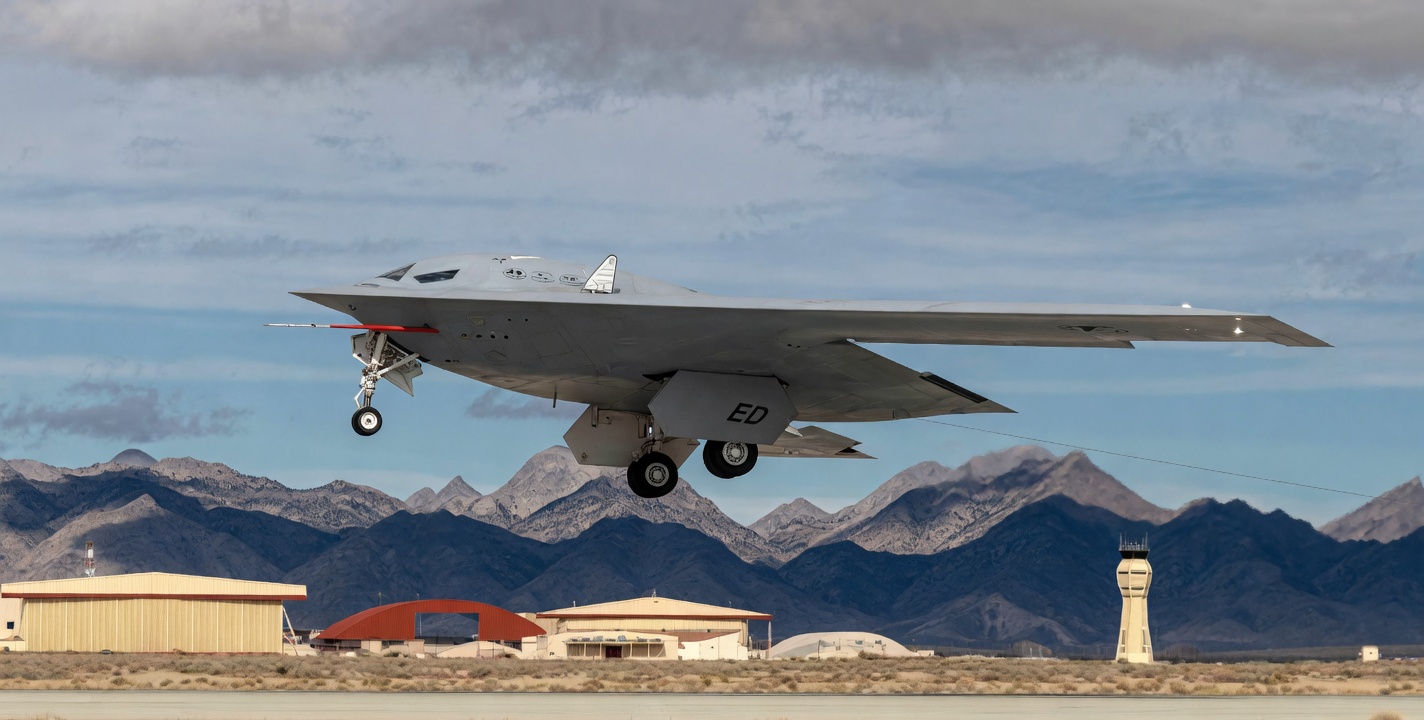
What If the B-21 Raider Could Shoot Down Enemy Fighter Jets? The U.S. Air Force Just Put the Idea on Table

The US Air Force (USAF) is evaluating its bombers, including the next-generation B-21 Raider, for potential air-to-air combat roles, and they could also operate alongside Collaborative Combat Aircraft (CCA) drones.

So far, the USAF has used its bombers, including the B-52 Stratofortress, B-1B Lancer, and B-2 Spirit, for a variety of missions, including conventional ground strikes, nuclear deterrence, maritime anti-ship operations, and close air support roles.

However, adding air-to-air missiles to bombers and pairing them with CCAs would also enable them to perform air-superiority missions in a contested environment.

The plans are part of the USAF’s latest fighter force structure report, submitted to the US Congress for approval earlier this month.

The report, titled “Long-Term USAF Fighter Force Structure,” also envisions a combat-coded fleet of 1,509 fighters by 2035, along with at least 500 CCAs.

The plan calls for adding hundreds of new fighters as the USAF increases its current fighter fleet from 1,288 aircraft, while also accounting for hundreds of F-16s, older F-15s, and F-22 Raptors due for retirement in the coming years.

The 2035 plan envisions a 60% stealth force, including 40% F-35A Joint Strike Fighters, 20% F-47s and F-22 Raptors, and 40% upgraded fourth-generation fighters, with an even mix of F-16s and F-15EXs.

The USAF will build the new fleet by procuring Lockheed Martin’s F-35s and Boeing’s F-47 and F-15EX fighters.

However, the report acknowledges that meeting its ambitious fighter procurement targets may not be achievable because of “fiscal realities and industrial production limitations.”

To meet the 2035 target, the USAF will need to add more than 70 fighters to its fleet each year for the next ten years.

The report therefore discusses other recapitalization options for the USAF, including acquiring an entirely new fighter, relying more on semi-autonomous drone fighters known as Collaborative Combat Aircraft, and giving bombers air-to-air roles and capabilities, Air & Space Force Magazine said after reviewing the report, which has not been released in the media.

“Accordingly, the USAF is also evaluating additional recapitalization options, including a new capacity fighter, increased reliance on CCAs, and developing air-to-air capabilities on bombers.”

As EurAsian Times reported last week, the new fighter could be Lockheed Martin’s upgraded F-16, termed F-16G, or Boeing’s already-in-production F-15EX variant. Lockheed Martin is also discussing adding new sixth-generation capabilities to the F-35 fighter.

However, the report’s most unusual suggestion is to add new air-combat munitions to the USAF’s bomber fleet, including the under-development B-21 Raider stealth bomber.

B-21 RAIDER

Air-To-Air Missiles For Bombers

The USAF’s fighters have long carried air-to-ground munitions, such as precision-guided JDAMs, laser-guided bombs, and Small Diameter Bombs (SDBs).

Bombers, however, have traditionally not carried air-to-air missiles, severely limiting their ability to conduct air-to-air missions.

For instance, during the recent Operation Epic Fury, the USAF employed B-2 Spirit, B-1B Lancer, and B-52H Stratofortress Bombers, but used them exclusively for long-range standoff ground strikes, penetrating stealth strikes, or stand-in ground strikes once Iranian air defenses were sufficiently suppressed.

These bombers therefore mostly flew in strike packages with F-35s and F-22s, as well as F-15s and F-16s, tackling aerial threats and conducting air superiority and SEAD/DEAD missions.

Adding air-to-air capability will allow USAF bombers to support air superiority missions.

Additionally, pairing them with CCAs will let the bombers serve as airborne nerve centers and communication nodes for a networked strike package, with a bomber aircraft at the center controlling multiple combat and reconnaissance drones.

The USAF plans to have at least 500 CCA drones in service by 2032.

The bombers, including the B-21 Raider, could therefore be programmed to launch air-to-air missiles and drones. Some of these drones could launch air-to-air missiles themselves, thereby greatly extending bombers’ combat range.

Given bombers’ size, payload capacity, and range, a single bomber could carry multiple air-to-air and air-to-ground missiles, as well as drones, a capability that could be crucial over the long distances of the Pacific theatre.

For instance, a B-2 Spirit bomber could carry over 27,000 kg of weapons payload, more than three times the F-35’s maximum payload capacity (8,200 kg).

B-2 Spirit Stealth Bomber.

Similarly, the B-2 Spirit’s unrefueled range of 6,000 nautical miles is nearly five times that of the F-35 (1,200 nautical miles).

Adding long-range air-to-air missiles and pairing combat drones with bombers will further extend their combat range.

Notably, the US is already developing several very long-range air-to-air missiles.

The US Navy has already fielded the AIM-174B air-launched version of the Standard Missile-6 (SM-6).

While the exact range of the AIM-174B is classified, widely cited estimates put it at 130 to 250 miles.

Separately, the US is also developing another very long-range AAM missile, the AIM-424 Malice, expected to reach over 250 miles.

In June, the USAF issued a call for a new anti-air missile with a range of at least 1,000 nautical miles.

Integrating such very long-range AAMs with bombers could redefine air warfare.

In addition, the Defense Advanced Research Projects Agency (DARPA) is working on the LongShot program to test the feasibility of an air-launched drone that can launch air-to-air missiles.

The air-to-air capability of the bombers could also include self-protection systems, such as carrying air-launched anti-missile interceptors. In fact, Northrop Grumman, the B-21’s prime contractor, has already patented an anti-missile defense system for stealthy aircraft that fires hard-kill interceptors.

Notably, this is not the first time the USAF has explored adding air-to-air munitions to its bomber fleet.

Former Air Force Chief of Staff Gen. David Allvin signaled in October 2024 that the B-21 Raider stealth bomber could play a greater role in the service’s air-dominance plans.

At the time, the USAF was reviewing its Next Generation Air Dominance (NGAD) fighter program, which Boeing eventually won in 2025 and named the F-47.

When asked whether the air superiority review could give the B-21 a more prominent role, Allvin said, “We have not taken that off the table.”

However, the USAF force structure report has not detailed what the bomber fleet’s potential air-to-air role would entail. Nor has it specified which USAF Bombers will be programmed for air-to-air combat roles.

However, because the B-21 Raider is still in early production, the bomber is best suited to be paired with AAM and CCA drones.

While the USAF initially planned to buy 100 B-21 Raiders, later reports suggested the force could increase that number to 140.

Besides, the USAF also has about 76 B-52 Stratofortresses, 44 B-1B Lancers, and nearly 19 B-2 Spirits.

The 2035 Force Structure Report suggests that the USAF is hedging on multiple options to maintain its dominance and fighter numbers, including buying a new aircraft (possibly F-16G), “increased reliance on CCAs,” and considering new air-to-air roles for bombers.

All these plans will compete for US funding. The US Congress will only know which programs are approved and funded when it approves the Force Structure Report.

  • Sumit Ahlawat has over a decade of experience in news media. He has worked with Press Trust of India, Times Now, Zee News, Economic Times, and Microsoft News. He holds a Master’s Degree in International Media and Modern  History from the University of Sheffield, UK. 
  • He can be reached at ahlawat.sumit85 (at) gmail.com

The post What If the B-21 Raider Could Shoot Down Enemy Fighter Jets? The U.S. Air Force Just Put the Idea on Table appeared first on EURASIAN TIMES.

  •  

Despiste de viatura ligeira faz um ferido grave

VTM

Um homem de 52 anos ficou gravemente ferido após um despiste de um veículo ligeiro de passageiros em Soutelinho da Raia, na freguesia de Calvão e Soutelinho da Raia, concelho de Chaves.

Segundo Ricardo Rebelo, 2.º comandante dos Bombeiros da Salvação Pública de Chaves, a vítima foi considerada grave e será transportada pelo helicóptero do INEM para o Porto. No momento do contacto, o helicóptero já se encontrava em Chaves.

Segundo o responsável, o acidente envolveu apenas uma viatura.

O alerta para o acidente foi dado às 17h42. No local estiveram oito operacionais dos Bombeiros Voluntários da Salvação Pública de Chaves, apoiados por três viaturas, bem como a Viatura Médica de Emergência e Reanimação (VMER) de Chaves, o INEM e a Guarda Nacional Republicana (GNR), esta última com dois elementos.

No momento do contacto, os meios de socorro permaneciam no local, onde decorriam trabalhos de limpeza da via.

As causas do acidente serão investigadas pelas autoridades competentes.

The post Despiste de viatura ligeira faz um ferido grave appeared first on A Voz de Trás-os-Montes.

  •  

Mundial de Juventude de Vela em Vilamoura reúne 450 atletas de 72 países

O Campeonato do Mundo de Juventude de Vela vai decorrer em Vilamoura, de 11 a 19 de dezembro. A competição vai reunir cerca de 450 atletas, de 72 países.

A prova foi apresentada na manhã de hoje, em conferência de imprensa, durante a qual Nuno Reis, ‘CEO’ do Vilamoura Sailing, entidade que organiza o Mundial, realçou o facto de esta ser a “segunda vez consecutiva” que Vilamoura acolhe a competição.

A organização estima que o Campeonato do Mundo de Juventude de Vela tenha um impacto económico na região de cerca de 3,5 milhões de euros, gerando perto de 12 mil dormidas.

Estarão representados jovens velejadores de Portugal, Espanha, França, Itália, mas também do Siri Lanka, Porto Rico, Bahamas ou Trindade e Tobago, sendo que este ano marcam presença 72 países, batendo o recorde de 69 do ano passado.

Em declarações à Agência Lusa, o responsável explicou que haverá seis classes a concurso, sendo elas ’29er’, Ilca 6, Nacra 15, 420, IQFoil e Formula Kite.

Desde que foi criado, em 2016, o Vilamoura Sailing, “atualmente o maior centro de vela ligeira do mundo”, já recebeu vários atletas olímpicos, como Odile van Aanholt, neerlandesa que conquistou o ouro, em Paris2024.

“Tornámo-nos a referência na vela olímpica e pré-olímpica. Estes Mundiais juniores são importantes também para o processo de renovação de atletas que passam a conhecer o espaço”, concluiu Nuno Reis.

  •  

Faro investe mais de 33 mil euros em veículo de socorro para a Culatra

O Município de Faro adquiriu um veículo de apoio ao socorro e transporte de doentes para reforçar a capacidade de resposta da Unidade de Proteção Civil do Núcleo da Culatra. O equipamento, entregue a 22 de outubro à União das Freguesias de Faro, vai substituir a antiga moto-maca, que se encontrava obsoleta, e facilitar a evacuação de pacientes em zonas de difícil acesso da ilha.

Com um investimento superior a 33 mil euros, o novo veículo ficará instalado junto ao porto de abrigo da Culatra e estará ao serviço dos três núcleos da ilha: Culatra, Farol e Hangares.

A viatura permite transportar doentes em terreno arenoso, incluindo nos percursos de acesso ao cais de embarque, contribuindo para tornar mais rápida a resposta em situações de emergência.

  •  

Está tudo “bem encaminhado” para o Algarve receber Dakar em 2027

O presidente do Turismo do Algarve disse hoje estar tudo “bem encaminhado” para a região receber, em 2027, o prólogo e a partida da primeira etapa do Rali Dakar de todo-o-terreno.

Em declarações à Agência Lusa, durante a apresentação de um Campeonato Mundial Júnior de vela, em Vilamoura, André Gomes adiantou que aguarda “nos próximos dias” a oficialização.

“Tem havido inúmeros contactos, por parte do Automóvel Clube de Portugal (ACP), com o território e com os municípios”, o que leva o responsável a dizer que “está bem encaminhado” e que, caso aconteça, será “mais uma grande realização para o Algarve”.

De acordo com o presidente, o objetivo é que a ‘caravana’ se instale no Estádio Algarve, que será “o centro nevrálgico” da passagem pela região. A isto, junta-se “um prólogo”, cuja localização ainda não é conhecida, e depois “a partida da primeira etapa, em princípio com destino a Marrocos”.

A organização do Rali Dakar de todo-o-terreno já anunciou que a prova não vai realizar-se na Arábia Saudita, em 2027, regressando depois em 2028. A decisão surge devido aos recentes conflitos na região.

Caso se concretize, a partida do Algarve representará o regresso do Dakar a Portugal, 19 anos depois do cancelamento da edição de 2008.

  •  

Owner of well-known bakery-chains arrested for big scale tax fraud

520 companies, several “straw men”, a labyrinthine network, and estimated at least 100 million euros in tax evasion. The owner of bakery chain “Horiatiko”, Angelos Giannakopoulos, and another 58 persons have been arrested since yesterday, Sunday. After Pizza Fan chain raids and arrests last week, the raids and arrests in Choriatiko is the second case […]

The post Owner of well-known bakery-chains arrested for big scale tax fraud appeared first on Keep Talking Greece.

  •  

Saab’s Gripen-E Fighter Jet Booms in Export Market as Sweden’s Iconic Draken Turns 71

After nearly a decade of struggling to win new orders, Swedish defense manufacturer SAAB reported “better than anticipated” third-quarter earnings, driven by a steady surge in orders for the JAS-39 Gripen fighter jets and the GlobalEye early-warning aircraft.

This coincides with the 71st anniversary of the first flight of one of Saab’s most distinctive earlier designs, the J-35 Draken.

Saab recently announced at a quarterly earnings call that new order intake more than tripled year on year. “It is a very strong quarter,” Saab CEO Micael Johansson said in an interaction with Reuters. “Very good order intake, quite a few large orders, strong sales growth — over 30% organic — as well as increased profitability and strong cash flow,” he added, signaling that the company would meet its financial targets.

The new orders reportedly exceeded FactSet projections of 56.4 billion kronor ($5.68 billion), coming in at 65.8 billion Swedish kronor ($6.6 billion), up from 20.9 billion kronor ($2.10 billion) a year ago. Meanwhile, the third-quarter sales exceeded FactSet’s forecast of 20 billion kronor ($2.01 billion), coming in at 20.6 billion kronor ($2.07 billion), while EBIT (earnings before interest and taxes) exceeded projections of 1.9 billion kronor ($191.3 million), coming in at 1.95 billion kronor ($196.4 million).

Saab’s operating profit rose to 1.95 billion kronor ($196.4 million) from 1.37 billion kronor ($138 million) the previous year, exceeding the mean estimate of 1.91 billion kronor ($192 million) in an LSEG analyst survey.

The largest single contributor was the SEK 24.6 billion ($2.54 billion) contract for 16 Gripen E fighters for Ukraine, signed on 30 June 2026 and booked in the third quarter. “The growing customer demand is reflected in major contract awards, including Gripen for Ukraine, GlobalEye, and an order related to Germany’s new frigates,” CEO Johansson said.

The latest sales, including the order from Ukraine, highlight a major turnaround for a company that struggled to sell its aircraft—particularly the Gripen-E/F—to exporters who kept choosing the Lockheed Martin F-35 Lightning II stealth fighter or the Dassault Rafale.

The most advanced Gripen variant made an official comeback last year, with Thailand ordering 4 of these jets and Colombia ordering 17. SAAB is now pushing the aircraft for export to countries including Canada.

If the export campaigns result in a contract, the company would see another significant surge in orders and earnings. The company has also reportedly offered the aircraft to countries like the Philippines and Peru.

“From a purely logical standpoint, I believe it would be a very good solution for Canada, and it would make for a very good partnership between Canada and Sweden,” the SAAB top boss told Reuters when asked about a potential deal with Ottawa, which placed its F-35 purchase on review last year and has been seeking a replacement ever since.

What If the B-21 Raider Could Shoot Down Enemy Fighter Jets? The U.S. Air Force Just Put the Idea on Table

Separately, Swedish Defense Minister Pål Jonson said earlier this year that the Swedish Air Force was considering purchasing the two-seat Gripen-F variant to expand training capacity, which would further boost the 4.5th-generation combat aircraft.

In addition to the Gripen-E, the GlobalEye early warning aircraft also drove profits this quarter. SAAB received a SEK 10.1 billion ($1.02 billion) order in July for two GlobalEye aircraft from a Middle Eastern country, as the EurAsian Times reported earlier.

The GlobalEye is also sweeping orders as Europe modernizes and strengthens NATO’s overall combat posture amid sustained security threats from Russia. Earlier this month, NATO Secretary General Mark Rutte announced that the alliance would begin formal negotiations with the company for up to 10 GlobalEye aircraft to replace its fleet of 14 Boeing E-3A Sentry AWACS aircraft, whereas Canada picked the aircraft in May 2026.

However, neither NATO nor Canada has placed a firm production order yet, so further sales growth from these programs remains prospective.

Further, a contract with German shipbuilder TKMS drove Saab’s profits. In July 2026, the company signed a SEK 8.7 billion ($876 million) contract with German naval defense company TKMS to deliver and integrate combat systems, composite structures, and sensors onto four of the German Navy’s new MEKO A-200 DEU-class frigates.

USS Colorado to Sail into AUKUS History as 1st U.S. Nuclear Submarine for Australia. Will Arrive Late 2027

While Saab’s recent growth has been driven primarily by the Gripen E/F and related systems, the timing of the results invites a look back at another landmark Swedish design that first flew exactly 71 years ago.

The SAAB Draken 35 Flew More Than 7 Decades Ago

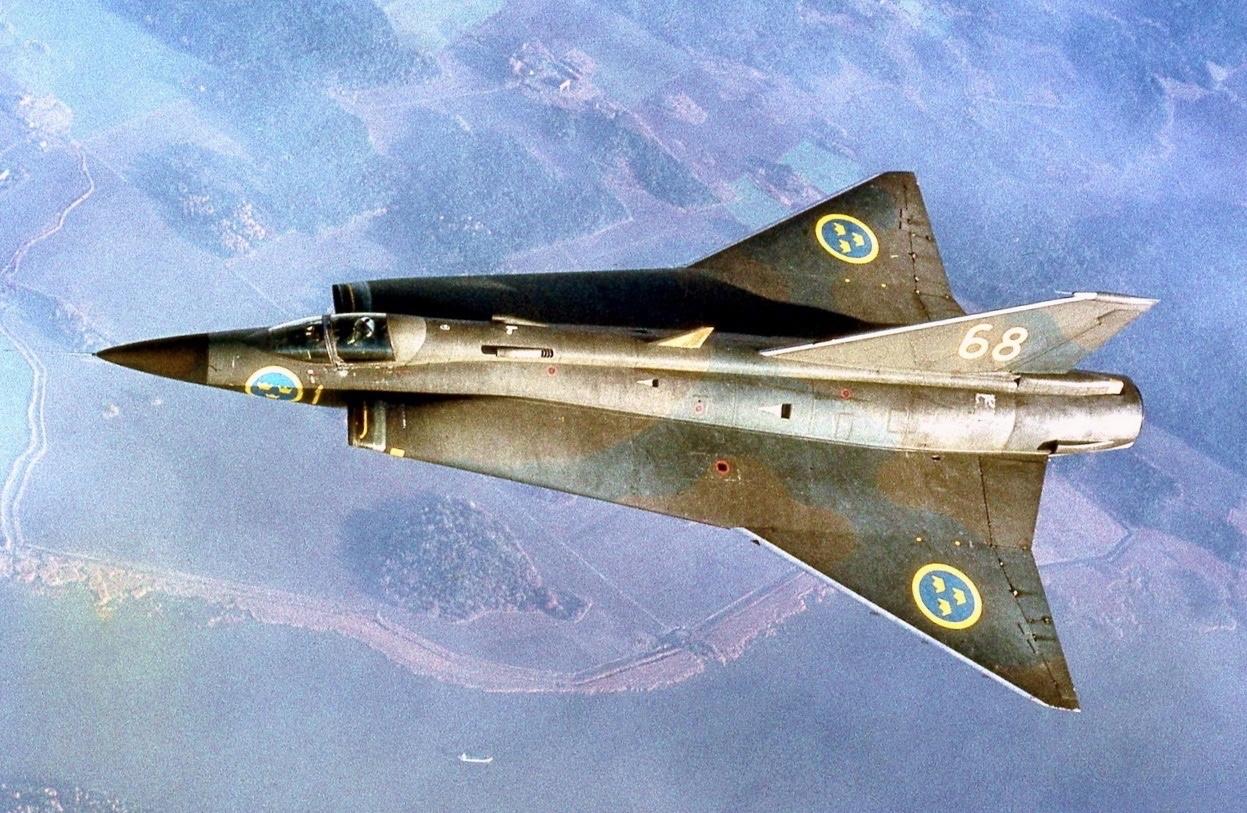
About 71 years ago, on October 25, 1955, the iconic Saab 35 Draken—whose name means “the Kite” or “the Dragon” in Swedish—made its maiden flight, marking the start of the most daring and transformative chapter in Swedish military aviation history. 

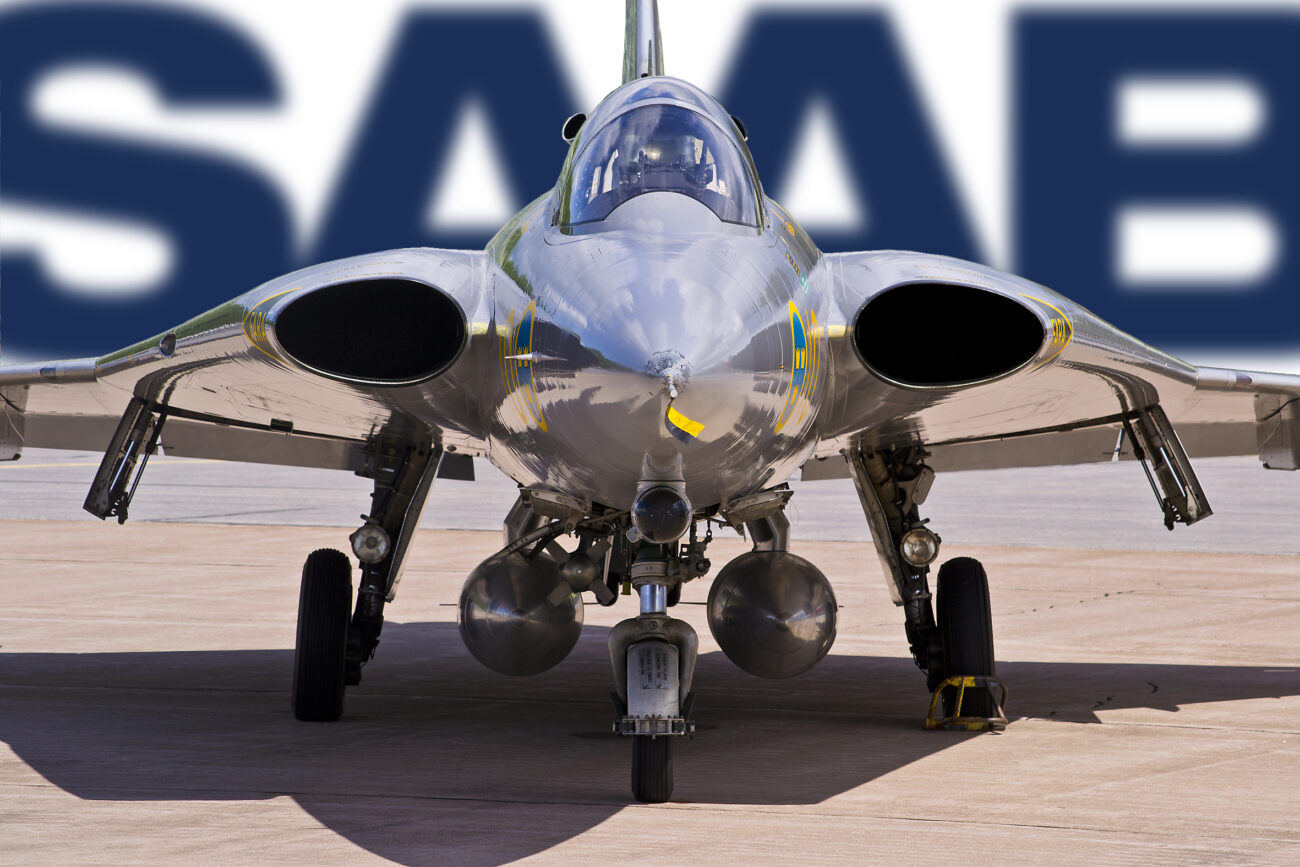
Saab 35 Draken.

Sweden developed the Saab 35 Draken during the Cold War between the Soviet Union and the United States-led Western bloc, amid concerns that the Cold War might spill over its borders and threaten its sovereignty because of its proximity to Russia.

So, the country wanted an aircraft that could combat Soviet fighters and intercept its bombers at high altitudes, which ultimately led to the development of the Saab 35 Draken.

The Swedish Air Force demanded that the new combat aircraft could operate from reinforced public highways that would serve as wartime airbases. It wanted the aircraft to operate from its unique airbase system, Bas 60, which emphasized distributing Swedish air power across several air bases to increase survival chances in the event of conflict.

More importantly, however, the requirements emphasized supersonic speed, all-weather capability, quick turnaround by conscripts, and single-pilot operation, among other things.

Led by designer Erik Bratt, the team adopted a radical double-delta wing: a sharply swept inner section of approximately 80 degrees optimized for high-speed flight, combined with a more moderately swept outer section of about 60 degrees for improved low-speed handling.

The configuration blended the wing and fuselage so thoroughly that the aircraft dispensed with a conventional horizontal stabilizer, producing a distinctive stingray-like silhouette often described as resembling a kite.

Needless to say, the Draken-35 was distinguished as the most aesthetically pleasing combat aircraft. The aircraft had a service ceiling of 66,000 feet and a maximum speed of 2,450 kilometers per hour.

To validate the concept, Saab first built a half-scale testbed, the Saab 210 “Lilldraken,” propelled by the Armstrong Siddeley Adder jet engine, which flew in 1952.

The first full-scale Draken prototype, fitted with a license-built Rolls-Royce Avon Mk 21 engine, took off on 25 October 1955 and soon achieved supersonic speed in level flight.

The second prototype, equipped with an afterburner, unintentionally exceeded the sound barrier during its first climb.

The Saab 35 Draken was a revolutionary aircraft that set multiple records. It was the first Western European combat aircraft that could fly at true supersonic speeds. Later variants reached top speeds of Mach 2.0 to 2.3 (around 2,125–2,450 kilometers/hour) at altitude, with a service ceiling of about 18,000–20,000 meters and a very high rate of climb. 

Saab J35 Draken- Wikimedia Commons

It was a single-engine aircraft that could carry the AIM-9 Sidewinder missile among other weaponry. The Swedish aircraft could also carry a payload of nearly 6,400 pounds, including internal rockets and bombs.

Most versions of this supersonic combat aircraft carried one or two 30 mm ADEN cannons, with later Swedish models often retaining only a single gun to make room for additional avionics.

Because the Draken’s fuselage was designed to split into front and rear sections, early versions of the aircraft had issues, including a tendency toward “superstall” at high angles of attack.

At times, it became uncontrollable regardless of pilot input, making ejection the only plausible option. Unfortunately, this caused several tragic accidents.

Swedish pilots developed recovery techniques, including the “kort parad” (short parry) maneuver—widely regarded as a precursor to the later “Cobra”—that allowed them to manage and even exploit the behavior.

Third 6th-Gen Fighter Program Bubbles in Europe as Germany Explores Spain-Sweden Deal

The main Swedish Draken variants progressed from the initial J 35A to the improved J 35B with better radar and integration into Sweden’s air-defense network, and onto the two-seat Sk 35C trainer, the more powerful J 35D, the S 35E reconnaissance variant, and the definitive J 35F interceptor equipped with advanced radar and missiles.

Additionally, the aircraft was built in four export variants for Sweden, Denmark, Finland, and Austria.

All Drakens were interceptors with limited air-to-ground capability except for the Danish Drakens, which served as strike aircraft and carried AGM-12 Bullpup air-to-ground missiles, electronic countermeasures, and enhanced internal and external fuel storage.

Despite early technical challenges, the Draken earned a strong reputation for performance and reliability, as shown by its about fifty-year service life. In fact, Austria (the last operator of the type) used it until 2005. 

Sweden introduced the Draken into front-line service in 1960 and retired the last examples in the late 1990s,  by which time the Saab 37 Viggen had largely replaced them and the Draken was bridging the gap until the JAS 39 Gripen arrived.

Nonetheless, a handful of aircraft have continued flying in civilian and historic roles, including with the Swedish Air Force Historic Flight and the US National Test Pilot School, according to reports.

Although the Draken never saw real combat, its striking double-delta shape, long service life, and design ingenuity secured its place as one of the most recognizable European fighters of the Cold War era.


The post Saab’s Gripen-E Fighter Jet Booms in Export Market as Sweden’s Iconic Draken Turns 71 appeared first on EURASIAN TIMES.

  •  

Miguel Figueira dá a volta ao mundo em bicicleta e é recebido em Tavira

Miguel Figueira, ciclista natural de Tavira, foi recebido nos Paços do Concelho, a 25 de outubro, após concluir uma volta ao mundo em bicicleta que iniciou a solo, a 2 de junho de 2025. O regresso foi marcado por um momento de emoção, com familiares, amigos e representantes do município a surpreenderem o ciclista à chegada.

A receção decorreu num ambiente de alegria, com Miguel Figueira a reencontrar pessoas próximas depois de vários meses dedicados a esta aventura, que o levou a percorrer milhares de quilómetros.

O Município de Tavira felicitou o ciclista pela concretização do desafio, sublinhando que o seu percurso levou o nome do concelho além-fronteiras e constitui um exemplo de superação e espírito de aventura.

A autarquia destacou ainda a coragem necessária para concretizar o projeto, considerando a viagem motivo de orgulho para Tavira.

“O seu percurso é motivo de orgulho, um exemplo inspirador de superação e liberdade. Parabéns, Miguel, pela coragem e concretização de um sonho!”, pode ler-se na nota de imprensa da autarquia.

  •  

Tavira recebe laboratório para combater pragas e reforçar citricultura algarvia

A FRUSOAL apresentou, a 23 de outubro, em Tavira, o Laboratório Frusoal InovCitrus, uma infraestrutura que representa um investimento de 515 mil euros e pretende reforçar a investigação aplicada à citricultura, com especial enfoque no combate às pragas que ameaçam os pomares algarvios. O projeto visa aproximar o conhecimento científico das necessidades dos produtores e contribuir para uma agricultura mais sustentável e competitiva.

O primeiro projeto de investigação do laboratório, com duração prevista entre 2026 e 2028, vai estudar o ciclo de vida do Scirtothrips aurantii, uma praga que representa uma ameaça para a produção de citrinos. O trabalho incidirá sobre a evolução do Scirtothrips aurantii em culturas de laranja, tangerina, limão e lima, procurando desenvolver estratégias de proteção mais eficazes e sustentáveis.

A apresentação contou com a presença do presidente da Comissão de Coordenação e Desenvolvimento Regional (CCDR) do Algarve, José Apolinário, e do vice-presidente responsável pela Agricultura e Pescas, Fernando Severino, que destacaram a importância da investigação e da transferência de conhecimento para o setor agrícola.

Na sessão de abertura, José Apolinário defendeu o reforço do investimento em investigação e desenvolvimento na região, sublinhando o contributo de iniciativas como o InovCitrus para a criação de conhecimento e a sua aplicação à economia regional. O responsável salientou ainda a importância de considerar estes projetos na definição das prioridades de financiamento do próximo Quadro Financeiro Plurianual, para o período de 2028 a 2034.

Fernando Severino considerou que “a inovação, a investigação aplicada e a transferência de conhecimento para o terreno são condições indispensáveis para garantir a sustentabilidade e a competitividade da agricultura algarvia”. O responsável destacou também a importância económica do setor dos citrinos e a necessidade de uma ação articulada entre produtores, centros de investigação e entidades públicas.

Além do combate às pragas, o laboratório pretende contribuir para o desenvolvimento de soluções relacionadas com a adaptação às alterações climáticas e a valorização da produção regional.

A cerimónia contou igualmente com a presença da presidente da Câmara Municipal de Tavira e de representantes de entidades públicas ligadas à agricultura e ao financiamento do setor, nomeadamente o Gabinete de Planeamento, Políticas e Administração Geral, a Direção-Geral de Agricultura e Desenvolvimento Rural e o Instituto de Financiamento da Agricultura e Pescas, bem como de organismos do sistema científico e tecnológico.

O InovCitrus integra o objetivo de investigação e desenvolvimento do nono Programa Operacional da FRUSOAL, para o período de 2026 a 2028, num contexto em que a inovação assume um papel estratégico para a sustentabilidade e a resiliência da citricultura algarvia.

  •  

French unrest brings EU vote on Muslim Brotherhood networks into sharper focus


France’s unrest has brought a European debate over political Islam into sharper focus. As the French authorities investigate arson, looting and attacks on public buildings, attention has also turned to organisations supporting the demonstrations and their alleged connections to the Muslim Brotherhood.

Those concerns intersect with a European Parliament resolution adopted on October 8th calling for a coordinated response to what MEPs describe as “Islamist entryism”. The connection concerns overlapping organisations and questions of influence, not an established explanation for the violence.

The chronology matters. Parliament adopted its resolution nine days before the October 17th violence described in France. The vote was therefore not a response to those events. It reflected an existing concern among a parliamentary majority that Islamist networks could use associations, educational initiatives and institutional partnerships to build political influence within Europe.

Tabled by the European People’s Party, the resolution passed by 381 votes to 167, with 15 abstentions. It calls for closer scrutiny of EU funding, stronger checks on institutional partnerships and an assessment of whether individuals or entities linked to the Muslim Brotherhood meet the legal criteria for inclusion on the EU terrorist list.

FEMYSO connects the two debates

The clearest organisational overlap is the Forum of European Muslim Youth and Student Organisations, or FEMYSO. On October 9th, the organisation publicly supported students demonstrating in France and Belgium, calling for better educational conditions, adequate funding and protection of peaceful assembly. Its statement framed the mobilisation as a campaign over education and fundamental rights.

FEMYSO also features explicitly in Parliament’s resolution. MEPs criticised its invitation to the European Parliament on September 21st by members of The Left and the Greens. They called for organisations they associate with the Council of European Muslims, including FEMYSO, to be denied access to EU institutions, removed from the EU Transparency Register and excluded from institutional events where participation could legitimise alleged Brotherhood-linked influence strategies. These are Parliament’s assessments and demands, rather than judicial findings.

In France, the Washington Examiner has reported that Étudiants Musulmans de France, or EMF, repeatedly promoted the demonstrations through social media. The newspaper describes EMF as a FEMYSO member and reports allegations of Muslim Brotherhood connections, which EMF denies. Its reporting places the organisation within the debate over mobilisation and ideological influence.

What Parliament wants Brussels to examine

The resolution’s significance lies partly in its focus on networks rather than formal membership alone. Parliament argues that political influence can operate through recurring partnerships, opaque financing, associated organisations and structures reconstituted under new names. It wants a common European methodology for identifying such patterns, rather than relying solely on whether an organisation formally declares an affiliation.

For the European Commission, the principal requests concern money and transparency. MEPs want an overview of EU funds awarded to people or entities suspected of Brotherhood or political-Islam links, alongside greater traceability through funding chains and stronger checks on partners and beneficiaries. Parliament also calls for scrutiny of foreign funding and transnational partnerships, particularly those involving actors linked to Qatar or Türkiye.

Those requests must be distinguished from decisions already taken. The non-binding resolution does not itself ban the Muslim Brotherhood, designate FEMYSO as a terrorist organisation or automatically withdraw funding. It asks the Council to assess possible terrorist listings under the applicable legal criteria and urges the Commission to use existing financial safeguards. Further action would require separate institutional decisions.

France’s policing failures remain a separate issue

The European debate does not remove the French government’s responsibility to explain its handling of the unrest. Reuters reports that Prime Minister Sébastien Lecornu acknowledged intelligence and deployment failures, while Interior Minister Laurent Nunez also accepted a share of responsibility. Authorities have assigned 200 investigators to identify those involved in the violence, and parliament is establishing an inquiry into the disorder.

Nor does scrutiny of ideological networks resolve the grievances behind peaceful mobilisation. Student demands over educational conditions and public funding remain substantive political questions. Treating all demonstrators as participants in an Islamist project would obscure the diversity of the movement and make it harder to distinguish legitimate advocacy from attempts at political exploitation.

Parliament’s own resolution draws an important boundary: it states that Islam must not be equated with political Islamism and that protecting Muslim citizens from discrimination is a democratic obligation. That distinction should guide any investigation of organisations, funding or institutional access. Scrutiny must concern identifiable conduct and demonstrable relationships, not religious identity.

A test of evidence and institutional judgment

France’s unrest and Parliament’s vote meet at a question of accountability: how should democratic institutions examine organisations seeking influence within legitimate social movements, and what evidence should justify restrictions on funding or access?

The answer cannot rest on association alone. Investigators must establish who committed or directed violence; EU institutions must examine funding and partnerships against clear legal standards; and governments must address the public-service grievances that brought peaceful demonstrators onto the streets.

The October 8th vote gives political weight to closer European scrutiny of alleged Brotherhood-linked networks. France’s unrest makes careful scrutiny more urgent—but also makes precision more important. A credible response must distinguish political advocacy from covert influence, and both from criminal responsibility.

Main Image: Genevieve ENGEL © European Union 2018 – Source : EP

  •  

Castro Marim assinala São Martinho com iniciativas em várias localidades do concelho

O concelho de Castro Marim celebra o São Martinho entre 7 e 15 de novembro, com um programa de iniciativas em várias localidades, que inclui magustos, convívios e feiras, promovendo o convívio entre a população e a preservação das tradições associadas à época.

As comemorações arrancam a 7 de novembro, no Monte Francisco, com uma iniciativa na sede do Campesino FC, a partir das 17h00. No mesmo dia, a partir das 20h00, a programação prossegue com uma merenda-convívio na Junqueira, no clube local.

A 11 de novembro, Dia de São Martinho, as celebrações decorrem em Castro Marim, na Praça 1.º de Maio, a partir das 16h00. Também na Alta Mora, está previsto um momento de convívio no Centro de Convívio da Cumeada da Alta Mora, com início às 16h00.

O programa continua a 13 de novembro, com um magusto no Azinhal, no Largo do Mercado, a partir das 21h00.

No dia 14, as atividades incluem a Festa de São Martinho, em Odeleite, no clube local, a partir das 15h00, e a Feirinha da Castanha, em Altura, junto ao Mercado Municipal, com início marcado para as 16h00.

As comemorações terminam a 15 de novembro, com o XXI Convívio de São Martinho, na Alta Mora, a partir das 9h00.

Com iniciativas distribuídas por diferentes localidades do concelho, o programa pretende assinalar uma das tradições populares mais enraizadas no país, proporcionando momentos de encontro e confraternização entre residentes e visitantes.

  •  

Alunos da escola Tomás Cabreira saem à rua contra os Exames Nacionais

Os alunos da Escola Secundária Tomás Cabreira, em Faro, realizam amanhã, 27 de outubro, pelas 13h30, uma tribuna de estudantes junto ao portão da escola, para reivindicar mais investimento na Educação, maior democracia nas escolas e o fim dos Exames Nacionais. A iniciativa integra a semana de luta convocada pelo Movimento Voz aos Estudantes, que decorre entre 26 e 30 de outubro.

A ação contará com intervenções e testemunhos dos alunos, num protesto que pretende chamar a atenção para aquilo que o movimento considera ser a “degradação das condições das escolas e da vida dos estudantes”.

Entre as principais reivindicações está o reforço do investimento na Escola Pública. O movimento aponta para a existência de cerca de 600 escolas no país com necessidade de obras e critica a redução do investimento na Educação prevista na proposta de Orçamento do Estado para 2027.

Os estudantes contestam também o papel dos Exames Nacionais no acesso ao Ensino Superior, considerando que contribuem para a “elitização” deste nível de ensino. A defesa da democracia nas escolas e do direito à manifestação constitui outra das preocupações que motivam o protesto.

A tribuna em Faro insere-se numa semana de mobilização nacional, durante a qual estão previstos vários protestos promovidos pelo Movimento Voz aos Estudantes. “Os estudantes do Ensino Secundário em todo o mundo lutam, em Portugal não pode ser diferente!”, defende a organização.

  •  

EU Parliament Investigates Foreign Interference in Bosnia as Accession Process Stalls

A delegation from the European Parliament has begun a three-day mission to Bosnia and Herzegovina to examine foreign interference in the country’s political institutions, electoral processes and public information environment.

The visit, taking place from 26th to 28th October, comes three weeks after parliamentary elections exposed persistent divisions over Bosnia’s political direction and its prospects of joining the European Union.

The mission is being conducted by Parliament’s Special Committee on the European Democracy Shield, chaired by French MEP Nathalie Loiseau. Its purpose is to assess vulnerabilities to disinformation, cyberattacks, economic pressure and other forms of hybrid interference, and to identify measures that could strengthen Bosnia’s institutional resilience.

According to the European Parliament’s announcement, the delegation will meet government officials, parliamentary representatives, civil society organisations, journalists and researchers. Joining Loiseau are Finnish MEP Mika Aaltola, Portugal’s Ana Catarina Mendes and Romania’s Cristian Terheş.

The investigation comes at a politically sensitive moment. Bosnia’s general election on 4th October confirmed the persistence of competing political priorities between the country’s constituent entities, with pro-Russian politician Milorad Dodik’s Alliance of Independent Social Democrats retaining considerable support in Republika Srpska.

As EU Today reported following the election, parties favouring closer European integration also performed strongly, particularly in the Bosniak-Croat Federation. The resulting political balance will influence the formation of new administrations and their ability to implement reforms demanded by Brussels.

From electoral interference to institutional security

The European Parliament’s investigation extends beyond conventional disinformation campaigns.

MEPs intend to examine how foreign actors may exploit weaknesses in electoral administration, cybersecurity, political financing and the country’s wider economic relationships. They will also consider the role of digital platforms in distributing manipulated information and the legislative gaps that could make interference difficult to identify or prosecute.

The distinction matters in Bosnia, where political influence cannot be separated from the country’s complicated constitutional arrangements.

Under the Dayton peace settlement, the state operates through institutions that distribute authority between the Federation of Bosnia and Herzegovina, Republika Srpska and the central government. Political disagreements can therefore obstruct decisions requiring cooperation between different levels of administration.

External actors seeking influence may exploit those divisions, although identifying a political relationship with a foreign government is not, by itself, evidence of unlawful interference.

The European Union has repeatedly expressed concern about Russia’s activities in the Western Balkans, particularly its relationships with political forces opposing closer integration with European institutions. Chinese investment and economic relationships also raise questions about strategic dependence, although legitimate commercial activity must be distinguished from coercion or covert political operations.

The delegation’s task is to establish which vulnerabilities can be substantiated and whether existing safeguards are adequate.

Accession negotiations remain incomplete

Bosnia received EU candidate status in December 2022. In March 2024, European leaders agreed in principle to open accession negotiations, but progress has remained conditional on institutional and legal reforms.

Following the October election, EU foreign policy chief Kaja Kallas and Enlargement Commissioner Marta Kos issued a joint statement calling for the prompt formation of new administrations and progress on judicial reform.

The Commission also highlighted shortcomings identified by international election observers, including technical difficulties, complicated voting procedures and concerns about ballot secrecy.

Those findings do not automatically establish foreign interference. They do, however, demonstrate why the integrity of electoral institutions remains central to Bosnia’s relationship with Brussels.

A test for the European Democracy Shield

The Sarajevo mission follows the EU’s decision on 13th October to include enlargement partners in the European Centre for Democratic Resilience.

The initiative is intended to improve cooperation on election security, information manipulation, crisis management and institutional protection before candidate countries enter the Union.

EU Today has previously examined the European Democracy Shield’s proposed mechanisms, including closer coordination with technology companies and improved systems for identifying foreign information operations.

Bosnia now offers a practical opportunity to examine whether those instruments can operate effectively in a country where political authority is fragmented and accession remains incomplete.

The delegation’s findings could inform recommendations on institutional cooperation, election safeguards and support for independent media. Any substantial improvement, however, will depend on the willingness of Bosnia’s authorities to implement reforms and enforce existing legislation.

For Brussels, the immediate issue is whether its emerging framework for democratic resilience can provide practical protection to candidate countries while respecting their political sovereignty and the freedoms it is intended to defend.

  •  

Brussels Targets Electricity Network Charges as EU Seeks to Bring Down Energy Bills

European Union energy ministers will meet in Luxembourg on Thursday, 29th October, to discuss proposed changes to electricity network charges that could alter how households and businesses pay for the operation and expansion of Europe’s power grids.

The European Commission wants to revise the rules governing network tariffs, encourage more efficient electricity consumption and accelerate the introduction of smart meters and digital grid technologies. The measures form part of a wider effort to reduce electricity costs, which remain a significant concern for European households and industrial competitiveness.

According to the Council’s published agenda, ministers will examine legislation presented on 17th July alongside the European Commission’s Electrification Action Plan.

The proposals come as Europe faces continued energy-market volatility, with the war in Ukraine and instability in the Middle East affecting supply expectations and prices. Ministers will also assess energy security ahead of the 2026–27 winter.

Why electricity network charges matter

Electricity bills contain several distinct components. Consumers pay for the electricity itself, the operation and maintenance of transmission and distribution networks, and applicable taxes and levies.

Network charges finance the infrastructure needed to deliver electricity from generating facilities to homes and businesses. They also contribute towards grid maintenance, balancing and new investment.

Unlike wholesale electricity prices, which fluctuate according to supply and demand, these charges are generally determined through regulated national tariff systems.

The Commission argues that existing arrangements do not always encourage efficient use of infrastructure or reflect the costs created by electricity consumption at different times and locations.

Its proposed regulation would amend Regulation 2019/943 to strengthen incentives for network operators to control costs and use existing capacity more effectively.

The legislation would also encourage tariffs that reflect when electricity is consumed and the demands placed on local networks.

For example, consumers who can move electricity-intensive activities away from periods of peak demand could face lower charges under certain tariff arrangements.

However, the financial benefits would depend on national implementation, available technology and individual consumption patterns.

Industry presses for lower energy costs

The Commission’s proposal recognises that electricity prices have become a major issue for European industrial competitiveness.

Energy-intensive manufacturers, including steel, chemicals and other industrial producers, face particular difficulties when electricity costs are substantially higher than those of international competitors.

The proposed legislation would allow specific categories of users, including energy-intensive businesses and data centres, to benefit from differentiated network charges where justified by their consumption patterns.

Such arrangements would be subject to safeguards intended to prevent disproportionate costs being transferred to households and smaller businesses.

The proposal also addresses energy taxation. Brussels wants the minimum taxation level for electricity to remain below that of natural gas, reducing a financial disincentive to replacing fossil-fuel equipment with electric alternatives.

As EU Today previously reported, the Commission has been examining changes to electricity taxation as part of its response to Europe’s exposure to imported energy and volatile international markets.

However, reducing charges for one category of consumer does not automatically reduce the overall cost of maintaining a national grid. Regulators must still determine how those costs are recovered.

A growing problem of grid congestion

Europe’s electricity networks require considerable investment to accommodate renewable generation, electric vehicles, heat pumps and expanding industrial demand.

The Commission estimates that approximately €600 billion in electricity-grid investment will be needed by 2030, rising to around €1.2 trillion by 2040.

These figures, outlined in its accompanying assessment, illustrate the difficulty of pursuing lower consumer charges while simultaneously financing substantial infrastructure expansion.

Grid congestion is already delaying connections for renewable-energy projects, industrial facilities and other electricity users.

As EU Today examined in its coverage of Europe’s grid bottlenecks, limited transmission capacity can prevent relatively inexpensive electricity from reaching regions where demand is greatest.

The latest proposal therefore places greater emphasis on making better use of existing infrastructure before committing to conventional network expansion.

It would encourage regulators and operators to consider digital technologies, flexible connection arrangements and improved network planning.

Smart meters and the distribution of costs

The Commission is also seeking faster deployment of smart meters, which can provide consumers and network operators with more detailed information about electricity consumption.

In principle, such systems allow households and businesses to adjust demand in response to changing prices and network conditions.

Industrial consumers may have greater flexibility to shift production schedules or invest in electricity storage. Households, however, may have fewer opportunities to change when they use energy, particularly where consumption is linked to heating or essential daily activities.

This raises questions about how tariff reforms would affect different consumers.

A system that rewards flexible consumption could reduce costs for households with smart appliances, batteries or electric vehicles, while offering fewer benefits to people unable to alter their electricity usage.

National regulators would therefore have to balance economic efficiency against the risk of unevenly distributing network costs.

Ministers face difficult choices

The 29th October meeting will not itself introduce new electricity charges or establish binding national tariff rates.

The Commission’s proposal remains subject to negotiations through the EU legislative process, involving the Council and European Parliament.

Governments will need to consider how much discretion national regulators should retain, whether tariff structures can be made more consistent across the single market and how vulnerable consumers should be protected.

The meeting will also examine longer-term energy security and possible targets for the period after 2030.

For Brussels, the difficulty is that electricity must become sufficiently competitive to encourage industrial investment and electrification, while the infrastructure required to support increased consumption must still be financed.

Whether the proposed reforms eventually reduce electricity bills will depend on their final legislative form, national implementation and the extent to which more efficient grid management produces measurable savings.

  •  
❌