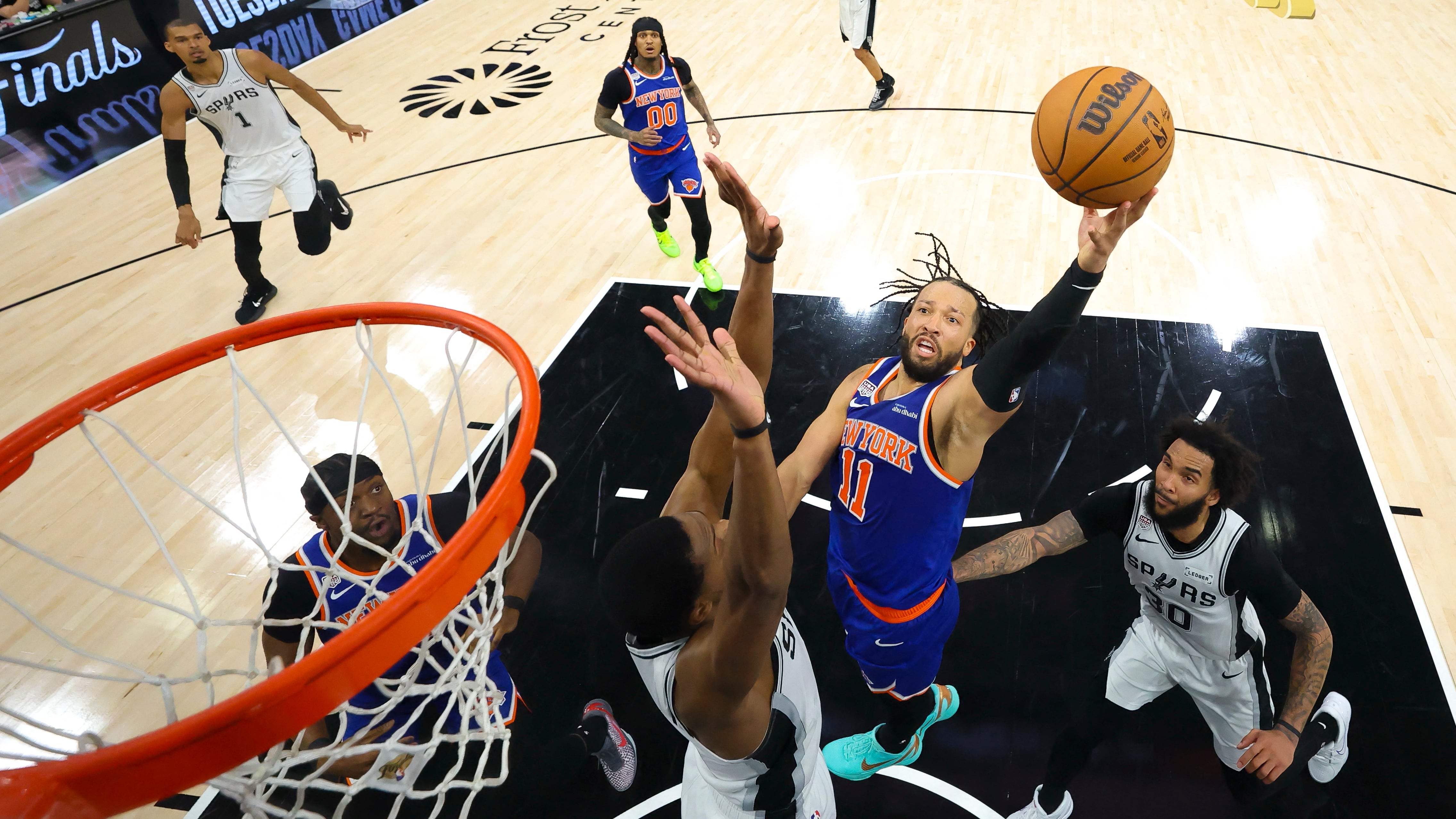
The NBA announced Monday it is partnering with prediction markets Kalshi and Polymarket, as multiple states have sued those companies in an attempt to establish their regulatory authority over them. The league said in a release it entered into a memorandum of understanding with the Commodity Futures Trading Commission (CFTC) to designate Kalshi and Polymarket…
Un gravissimo infortunio ha sconvolto la NBA: si tratta di Jalen Williams, stella degli Oklahoma City Thunder. A poco più di un minuto dalla fine della partita contro i Los Angeles Clipper (vinta poi per 108 a 101) il giocatore è atterrato male dopo una schiacciata e la gamba sinistra si è piegata con una torsione totalmente innaturale. Lo staff medico ha subito coperto con un telo l’arto infortunato; nonostante ciò, lo choc per compagni e avversari è stato forte.
Uscito in barella, Jalen Williams ha rivolto al pubblico due pollici alzati; purtroppo, però, il trauma che ha subito – ancora senza diagnosi – si preannuncia particolarmente grave. Probabile stagione finita per il secondo violino di OKC, il cui apporto nelle Finals del 2025 è stato determinante con i suoi 23.6 punti di media nel corso delle 7 gare che portarono i Thunder al titolo.
È un brutto colpo per la squadra; non tanto perché Jalen Williams era un perno del quintetto, quanto più per l’impatto emotivo sul collettivo. Shai Gilgeous-Alexander, leader degli Oklahoma City Thunder e 2 volte MVP della Lega NBA, ha a stento trattenuto le lacrime nel post partita: “Dispiace davvero tantissimo per lui, nient’altro da aggiungere”.
“Non lo stiamo affrontandobenissimo“, ha confermato coach Marc Daigneault, che poi però ha affermato che il calendario impone di voltarepagina molto velocemente. I Thunder torneranno in campo stanotte, in casa, contro i Phoneix Suns. Parole di conforto e incoraggiamento sono arrivate anche dal sindaco di Oklahoma City David Holt: “L’intera città avrà JDub (soprannome di Williams, ndr) nei propri pensieri e nelle proprie preghiere mentre affronta questa avversità e lungo tutto il suo percorso di recupero”.
LeBron James' multimillion-dollar real estate portfolio is as impressive as his NBA career.
His portfolio includes a $36.75 million Beverly Hills property where he's building a compound.
He also purchased a home in Coconut Grove. Take a look at the homes he's owned over the years.
LeBron James has had a legendary run on the court. The four-time NBA champion has played for the Cleveland Cavaliers, Miami Heat, Los Angeles Lakers, and now the Philadelphia 76ers, winning titles with his first three teams.
His real estate portfolio has grown alongside his career. James has bought homes near most of the cities where he has played, building a multimillion-dollar collection of properties in the process.
Forbes estimates James' net worth to be $1.4 billion as of publication. Over the years, he has secured lucrative endorsement deals and business ventures with brands including Nike, Beats by Dre, PepsiCo, and Fanatics.
Now, James is reportedly living in a luxury building in New York City and commuting by helicopter to Philadelphia for 76ers games and to the team's practice facility in Camden, New Jersey (the flights are covered through his partnership with Fanatics) — a routine that has drawn criticism from some fans.
Take a look at some of the properties James has purchased over the years, from a custom-built home in Akron, Ohio, to a 13,000-square-foot mansion in Beverly Hills.
The NBA star's first real estate purchase was a home worth more than $ 2.1 million outside Akron, Ohio.
In 2018, LeBron James, in partnership with Akron Public Schools, opened the I Promise School.
Allison Farrand/NBAE via Getty Images
James was born and raised in Akron, Ohio, and the city remains a big part of his life.
In 2003, after the Cleveland Cavaliers drafted him at age 18, he purchased an almost seven-acre property in Bath Township, a community just outside Akron, for more than $2.1 million.
After tearing down the property's existing home, he built a 30,000-square-foot house in its place. The six-bedroom, fourteen-bathroom home includes a recording studio, a full barbershop, a home theater, a sports bar, and a two-lane bowling alley, Robb Report reported.
While James spends much of his time outside of Ohio these days, he's still very connected to Akron.
In 2018, through the LeBron James Family Foundation, he opened the I PROMISE School in partnership with Akron Public Schools. The public elementary and middle school serves at-risk kids, providing them with free meals and transportation. Eligible students also receive free tuition to the University of Akron.
James bought a $9 million home in Coconut Grove before it was cool.
James briefly owned this home in Miami.
Courtesy of Opulence International Realty
In 2010, after seven years with the Cavaliers, James announced during a live, hourlong ESPN special that he would be joining the Miami Heat. The move became one of the most controversial moments in NBA history.
While many Cleveland fans saw it as a betrayal, Miami welcomed James with open arms. That year, he purchased a 13,930-square-foot, six-bedroom home in Coconut Grove for $9 million.
After four years with the Heat, during which James helped bring home two championships along with fellow superstars Dwyane Wade and Chris Bosh, he listed his Miami home for $17 million. After returning to Ohio, the home eventually sold for $13.4 million, Realtor.com reported.
A Realtor.com listing shows the home was last sold for 18.5 million in 2023. It's no surprise its value has climbed. Over the years, Coconut Grove has become one of Miami's hottest and wealthiest neighborhoods, attracting high-profile residents including Citadel CEO Ken Griffin and Google's cofounder and former CEO Larry Page.
James liked Brentwood so much that he bought two mansions in the neighborhood.
Brentwood, a neighborhood in California.
Adam Mustafa/Getty Images
James returned to his hometown to play for the Cavaliers in 2014. But when he bought a $21 million, six-bedroom mansion in Brentwood the following year, it sparked rumors that he could eventually move to the Lakers.
The 9,440-square-foot colonial-style home had eight bathrooms and amenities, including a basketball court, a home gym, and an infinity pool. James eventually sold the home for $19.6 million in 2021, Robb Report reported.
In 2017, James purchased a second Brentwood property for $23 million. The newly built mansion had eight bedrooms, marble floors, 14-foot ceilings, and a rooftop terrace overlooking Los Angeles.
The speculation about James joining the Lakers proved right in 2018, when he signed a four-year, $153.3 million deal with the team. In 2020, he led the team to an NBA title and became the first player in league history to win Finals MVP with three different teams.
James bought a Beverly Hills mansion for $36.75 million and is building a compound in its place.
Lerbonn James bought a $TK home in Beverely Hills.
Alexis Gonzalez/Getty Images
In 2020, James made his biggest real estate purchase to date when he bought a 13,000-square-foot mansion in Beverly Hills for $36.75 million.
The mansion, which sat on 2.5 acres, was built in the 1930s and once belonged to Lee Phillip Bell, the co-creator of the soap operas "The Young and the Restless" and "The Bold and the Beautiful," Realtor.com reported.
In 2023, he demolished the existing home and began building a new compound from the ground up. According to Robb Report, the plans call for two homes: a roughly 16,000-square-foot, two-story main house with a 7,700-square-foot basement garage, pool, spa, and outdoor kitchen; and a 6,550-square-foot, one-story guesthouse with a basement theater and hot-and-cold plunge pools.
James is living in New York during the basketball season, while his wife, Savannah, and their daughter remain on the property as construction continues.
In October, the couple gave Vogue a look inside the property. Among their most treasured features in the home is an OxyHealth hyperbaric chamber, the Vitaeris 320 model, which, according to the health website Regenerated, can cost between $ 18,000 and $23,000.
Solo due partite, tanto basta per capire che LeBronJames non ha voglia di scherzare a Philadelphia. Una media di oltre 15punti, quasi 10 rimbalzi e 6 assist. Andate a vedervi le cifre a fine carriera di alcune tra le più longeve star del passato. Si, gente di “poco conto” tipo KarlMalone, VinceCarter o PatrickEwing. Il Prescelto sta in universo a parte, non solo per le cifre. Anche per condizione atletica e intensità di gioco. Anche JaylenBrown non è partito male, nonostante incastri e gerarchie abbiano ancora bisogno di tempo per acquisire fluidità e automatismi. Joel Embiid? È sembrato rassicurantemente in forma. A rimbalzo può dare sicuramente di più (come cantava qualcuno…), ma le ginocchia sono quelle che sono. Tuttavia, al momento, non sembra esserci discussione alcuna, la stella della squadra è un certo TyresMaxey. E da queste fasi iniziali, i compagni di squadra sembrano anche averlo accettato di buon grado.
Talento irreale, guardia tiratrice “elettrica e veloce”. Fate conto un RobertPack (esplosivo playmaker di Denver degli anni ’90) che corre alla velocità del suono palla in mano per tutto il campo, solo che Maxey ha una completezza offensiva degna di un MitchRichmond nel picco di carriera. Nel ha messi 32 nella rimonta di stanotte contro Cleveland. Ne aveva segnati 28 nella serata di apertura contro NewYork. Sempre il miglior marcatore dei suoi. Somiglia sinistramente ad Allen “The Answer” Iverson per velocità sul primopasso, capacità di superare il difensore dal palleggio, abilità nel segnare in traffico. Fisico scolpito nel granito, grande esplosività, pazzesca velocità di base, eccezionale palleggio. Una superstarfatta e finita. Tyrese “The Second Answer” Maxey?
Ottimo esordio, ma con sconfitta, per Paul George
I Celtics hanno perso contro i DetroitPistons nella prima gara di stagione. Ma PaulGeorge, dopo anni in cui ha spesso arrancato (causa anche frequenti guai fisici), è parso davvero tirato a lucido. Ed è un’ottima notizia per Boston, anche perché sopperire alla dipartita di uno del calibro di JaylenBrown non è certo la cosa più semplice del mondo. Nella serata di apertura, George ha segnato ben 38punti, record per un esordio in maglia bianco verde, con un’interpretazione del gioco dal perimetro di livello “RayAllen”. Per lui 7 su 12 da tre e la sensazione di poter trovare la retina tutte le volte che alzava il braccio dopo uno scarico di un compagno.
Le primavere, ben 36, non sono più cosìpoche e non si può certo sperare che ritornil’iradiddio che era in maglia IndianaPacers. Tuttavia, se rimane sano, PaulGeorge può essere particolarmente efficace nella filosofiaoffensiva di coach Mazulla, alleggerire le spalle di Tatum e White in attacco, garantire un altro punto di riferimento che può essere decisivo quando conta per davvero. Sarà in grado di far dimenticare ciò che Brown faceva in campo? No, quello no. Intanto, dovrebbe iniziare a non farlo rimpiangere. Compito complesso.
Cunningham: il ritorno di Gran Hill?
Ricorda molto GrantHill per il modo in cui attacca il canestro dal palleggio, con (molto) meno stacco da terra, ma più visione di gioco rispetto all’ex stella dei Pistons. Ha letteralmente diretto l’orchestra di Detroit come se fossero alla prima de La Scala, portando la squadra alla vittoria proprio contro i BostonCeltics. Ha chiuso con 22punti e 8 assist. Certo, ha tirato maluccio sia dal campo (8 su 18) che da tre (1 su 6). Mani fredde, cuore caldo. Ha giocato una gara sempre in controllo, ha organizzato l’attacco, messo in ritmo i compagni (Jalen Duren dovrebbe fagli una statua…), leggendo in modoappropriatoritmi e spaziature.
Cade Cunningham non ha bisogno di segnare per incidere, è quel tipo di giocatore davvero poco egoista, che fa rispendere i compagni. All-aroud dalla tecnica sopraffina, tratta bene la palla, può agire in modonaturale come portatore primario, ma sa anche muoversi lontano dalla palla. Il tirodafuori, appunto, continua a essere altalenante. Anche nella sua miglior stagione dal perimetro, non è andato mai oltre il 35%. Se migliora anche in questo fondamentale, può puntare all’MVP, se non come premio in sé stesso (qualcuno tra SanAntonio, OklahomaCity e Denver potrebbe avere qualcosa da ridire), almeno come livello di gioco. Ma Detroit deve continuare a far bene.
New York Knicks fizeram nova festa do título no Madison Square Garden com adeptos a gritarem "Não te queríamos aqui". Querendo ou não, LeBron ainda faz diferença aos 41 anos – e foi de novo o "vilão".
LeBron James pegou-se na primeira parte com um adepto dos Knicks na primeira fila, numa zona próxima da habitual cadeira do realizar Spike Lee
Hello and welcome to another edition of Free Agent! Be careful when you're behind the wheel this week.
College football is great! Surely you want even more of it, right? We'll get into the problems with a 24-team College Football Playoff (CFP), then talk about the NBA's new betting restrictions, and close with thoughts about President Donald Trump's new government golf course plans. And just in case you don't make it to the end, here's a shortcut to our survey on who you're rooting for in the World Series.
But first, many congratulations to "Gary's 1st Entry" on outlasting everyone else in our NFL Survivor group. There's no prize other than this shoutout, so be sure to print out today's newsletter, highlight this paragraph, and frame it in gold. Perhaps Gary can keep going and challenge Primetime Paulie Rothrock's 13-game winning streak from last season.
Locker Room Links
Both teams in the WNBA Finals left the court for the National Anthem—unclear if this was a protest or just part of the pregame routine. WNBA policy doesn't require teams to be on the court for the anthem, but does require a "dignified posture" if they are.
In the thick of a playoff race, three Zambian women's soccer players are separated from their National Women's Soccer League teams because they played in Uganda, and the Centers for Disease Control and Prevention has a three-week restriction on reentry due to Ebola. (There are zero active Ebola cases in Uganda and Zambia.)
This is the kind of excessively nerdy fantasy football content I live for. (Yahoo remains the best fantasy sports system. ESPN's is trash, relying on name recognition to get by.)
I figured out how ESPN calculates fantasy football win percentage, it's bad!
ESPN made a stats 101 error when calculating their win percentage which leads to horribly miscalibrated numbers. ( thread) pic.twitter.com/bDypgjelKj
Saturday was one of the best days of college football ever—or perhaps it could have been, if we thought any of the five top-10 teams who took a loss were now certainly out of playoff contention. Instead, Georgia, Notre Dame, Indiana, Alabama, and Texas are all still very much alive in the championship hunt.
Today was one of the craziest days in college football history:
- First time ever five teams ranked in the top 7 lose in a single week - First time the No. 1-ranked team loses to an unranked team in consecutive weeks since 1990 - First time Texas, Alabama, and Georgia all lose… pic.twitter.com/psVRoM5s5b
With two losses, Alabama and Texas are at least on the edge of the playoff bubble with perhaps no more room for error. But that's only true under this year's CFP format. Next year, the playoff is almost officially set to balloon to 24 teams, making the chaos of a day like Saturday matter even less.
Fans will always celebrate a huge upset or major rivalry win, of course—Tennessee fans don't need playoff stakes as an excuse to get drunk when they beat Alabama. But the joy of a rivalry win in the past was always bigger because of the off-field stakes, too—the first loss for your rival meant they probably wouldn't be national champions, the second meant they'd be out of the Rose Bowl, a third meant you could be proud your team sent them packing for the Alamo Bowl. Winning is great; ruining your rival's season is even better.
With 24 teams in the playoff, the joy is a bit diminished because it will take four or possibly five losses to knock a powerhouse program out of the CFP (Iowa, at 8–4, was ranked 23rd by the committee before last year's playoffs). It'll be a bit like a rivalry win in college basketball—we win, you suck, congrats on getting a slightly worse NCAA Tournament seed.
In the business of sports, more inventory for TV is king, and the powers that be think more teams playing more playoff games will make more money. At Free Agent, we don't begrudge institutions for trying to make more money—we all do the same every day. But it's not clear abandoning conference championship games will be the answer, especially when the Big Ten and SEC championships apparently outdraw many playoff games.
ESPN and the power conferences know fans aren't happy about it—just look at allthechatteronline, and how the crowd at BYU reacted when College GameDay discussed expansion on Saturday (especially when BYU would probably benefit from expansion!). They're betting enough people will watch to make the expansion profitable anyway. The last hope is that fans get loud enough to bully them into abandoning expansion—which only occasionally works, sometimes on things small (putting the trophy logo on the court for the NBA Finals) and large (soccer's European Super League). If any powerhouse considers going independent, that might shock leaders into a rethink too.
Almost every sport I know is adding more: more teams, bigger playoffs, more for TV. As fans, we still eat it up, of course—much to the excitement of the TV executives who are selling commercial time to the people trying to reach us, the viewing public. (The only counterexample is the MLB proposal to cut eight games from the regular season—I'd love to see each sport I follow cut its season by about 25 percent to make regular season games matter more, so I'm interested to see how this goes.)
Perhaps I'm biased because my favorite team, Michigan State, is a dumpster fire—they could expand the playoff to 64 teams and the Spartans still wouldn't deserve a bid. I personally don't have a whole lot at stake in the playoff format now or anytime soon. But as a neutral, the chaos of Saturday might have been viewed with my full attention in the past—instead, this year I just had it on in the background while I played video games.
Sports Are Regulating Bets Without Politicians, Part 3
After last year's major betting scandal, the NBA asked sportsbooks late last week to stop offering certain types of potentially problematic bets. The sportsbooks, which the NBA says handle roughly 99 percent of the U.S. betting market, agreed. No politician or regulation was necessary to solve the problem.
No longer can bettors bet on unders for a bit player who likely won't get more than 12 minutes of playtime. Bettors also can't wager on the opening tip or on players to miss specific shots. Parlays that string together under bets on the same player's statistics are also out (this one seems a bit harsh—if you just want to bet on a certain major player to have an off night, you can bet on stats separately, but not in a big multiplier parlay). Bets on players who have two-way contracts between the NBA and G League were already banned.
This all comes on the heels of similar developments last year in the NFL and MLB. While some people want to ban prop bets altogether, the NFL asked sportsbooks to eliminate bets in four different categories. Sportsbooks largely agreed or weren't offering those bets anyway. MLB, in light of some pitching-related scandals, asked for a $200 limit on pitch-specific bets and to keep them out of parlays—sportsbooks agreed to that too.
As I wrote last year, "Ideally, this is how the regulation of the sports betting industry should go….These approaches are catching the nuances of what works for both the leagues and for sportsbooks without the heavy-handed approaches of politicians who would use an axe to ban all prop bets instead of a scalpel to limit problematic bets."
It's important to note leagues are able to do this because they have commercial partnerships with the sportsbooks. Otherwise, the leagues would have no direct leverage over a sportsbook offering a bet the league doesn't like. Keep that in mind the next time you see people bemoaning a league partnership with a sportsbook or a prediction market.
Trump's Golf Course Plans Have People Teed Off
President Donald Trump has new plans for the National Park Service golf course at East Potomac—again. Last time new plans were announced, the site plan still had its historic miniature golf course, a par-3 course, and the existing road still ringing the property for bicycling, running, etc. Much of the public didn't like that plan anyway—now, none of that remains in the latest plans, just 18 holes of golf and a driving range.
What's really going on here seems quite clear to me: Like so many other things going on in the second Trump administration, this is a scheme to enrich the Trump family. The plan?
Step 2: Use taxpayer dollars to pay for renovation of the course into, allegedly, a championship-level course capable of hosting major golf tournaments (no matter that the area has next to zero parking, is a mile from the nearest Metro station, and only accessible by narrow roads not meant to handle tens of thousands of spectators).
Step 3: Have the federal government sign a sweetheart deal with, who else, the golf division of the Trump Organization to operate the course on extremely favorable and profitable terms.
If you're wondering why the Trump administration is doing something, corruption is usually a good guess.
The arguments for the course don't make much sense. There are plenty of adequate, competitively priced golf courses in the broader Washington, D.C., area. Several of them are already capable of hosting professional golf tournaments. Between LIV Golf and the PGA Tour, there were three tournaments at three different courses in the last couple years. The 2030 PGA Championship and 2037 Ryder Cup will happen just over the D.C. line in Bethesda, Maryland.
East Potomac is not the nicest course around, no thanks to the legal limbo it's been in for the past year. But if the National Park Service is going to, for some reason, be in the business of running a golf course, it should be a course that emphasizes and teaches its history instead of the pipe dream of a corrupt madman.
Who Ya Got? 2026 World Series Edition
For the first time in 46 years, we've got a World Series contested by two teams that have never won it before. Brewers against Rays is also a rare instance of the top seeds from each league outlasting the randomness of the MLB playoffs to make the World Series. And before you trot out the tired line that "TV executives must be seething about the small market teams" remember that they care much more about getting a playoff series that goes seven games with close results in each game (What did I say above? Inventory rules all!).
A new NBA season tips off this Tuesday, bringing with it the league’s galaxy of stars, from Jalen Brunson, Victor Wembanyama, Shai Gilgeous-Alexander, Giannis Antetokounmpo and Luka Dončić to veterans LeBron James and Stephen Curry.
For more than four years, Ukraine has been living through a war that destroys homes, businesses, and infrastructure. People need compensation for the damage and regularly file claims with the authorities. This raises a question: how can citizens exercise their right to compensation, and who can act as the go-between connecting Ukrainians with national and international bodies?
Compensation goes to those whose damage has been documented, properly filed, and accepted by an international mechanism. One person working on this problem is Andriy Yermak, Chair of the UNBA Committee for the Protection of Victims of Armed Aggression against Ukraine, Compensation Mechanisms and European Integration Legal Support for Recovery. He is also the initiator of “Advokat+”, a nationwide legal support initiative for Ukrainian service members and their families. His position rests on a simple premise: an unproven right doesn’t pay, and proving it takes lawyers.
Compensation starts with documents
Individuals and companies follow roughly the same process. The claimant must attach proof of ownership and confirmation of value, gather photo and video evidence of the damage, and prove that the military aggression specifically caused it. The required documents depend on the claim category, and, as Andriy Yermak points out from his professional experience, this is where people most often make mistakes. In such matters, a lawyer’s help is often more than necessary.
Businesses face the same questions on a larger scale. Kyiv’s first McDonald’s, opened in 1997, has been damaged by Russian strikes, and the Coca-Cola plant near Kyiv, in operation since 1998, was recently hit by a Russian drone. A company in this position must decide what was lost, how to prove it, and which mechanism to use: the international register, a national program, or a court.
Which mechanisms exist and which are being developed
The international and national Ukrainian compensation system has several components.
The Register of Damage for Ukraine (RD4U). It has accepted claims since April 2024 and operates under the Council of Europe, headquartered in The Hague. As of 30 September 2026, all 43 claim categories are open: 21 for individuals, 11 for legal entities and 11 for the State of Ukraine. By early September, the register had received almost 190,000 claims: about 58,000 were recorded, while the rest were under review. Claims can be submitted through the Diia portal. Yermak stresses that the register records damage but does not pay compensation.
The International Claims Commission.About 40 states and the EU signed the convention establishing it in The Hague in December 2025, and ten have ratified it. Twenty-five ratifications are needed for the commission to begin work. The Verkhovna Rada ratified the convention on 30 April 2026. The commission will review the claims from the register on their merits and determine the amount of compensation in each case.
National programs. Individuals have eRecovery (єВідновлення), which covers owners of homes damaged or destroyed in hostilities after 24 February 2022. Owners of damaged homes get money for repairs, minor or major. Owners of destroyed homes get a housing certificate to buy a new one. Applications go through Diia, an administrative services centre, or a notary, and a commission decides within 30 calendar days. As of 10 October 2026, 273,169 families had received UAH 160.9 billion in total, according to the Ministry for Communities and Territories Development.
Businesses have had a war risk insurance program since 1 January 2026. It rests on Government Resolution No. 1541 and is run by the Export Credit Agency (ECA), whose mandate has already been expanded to cover insurance for domestic investments against war risks. Enterprises in high-risk regions can receive direct compensation for destroyed or damaged assets, such as buildings and equipment, up to UAH 10 million at launch. Businesses that buy war risk policies in Ukraine get part of their premiums back, up to UAH 1 million a year. Only property already enrolled in the program on the date of damage qualifies.
The courts. The Supreme Court has established a practice that allows Ukrainian courts to hear individual claims against Russia for damage caused by armed aggression, without applying state immunity. However, enforcing such judgments is difficult, so victims often turn to state and international mechanisms.
What the system lacks
Yermak says:
“We need lawyers who can work across several levels of law at once: Ukrainian legislation, European regulation and international procedures. And this is where we run into the reform of the legal profession. Under the Rule of Law Roadmap, the Law on the Bar and Legal Practice must be adopted by the end of 2026. How it is written will determine whether the profession gets the independence, legal privilege, and training standards it needs to do this work. At the same time, in a government working group of 27 people, the UNBA holds only one seat.”
Independence plays an important role here: in compensation cases, individuals or companies face official bodies. The lawyer’s role is to challenge a decision without fearing for their own position. In Yermak’s view, this requires upholding legal privilege and adherence to credible professional standards.
The register contains around 190,000 claims, each with supporting documents. Andriy Yermak notes that at this scale, legal practice can be transformed by modern technology. AI, which is now spreading into almost every area of life, can reshape legal analysis and the review of large volumes of data. Today’s lawyers are expected to work properly with data summaries, protect their clients’ confidential information, and keep professional judgment in their own hands. Looking ahead, Yermak believes this raises questions about training the next generation of lawyers: for them, professional standards will cover this practice in both compensation cases and other areas of legal work.
The experience of “Advokat+”
The “Advokat+” initiative, created by Yermak, shows that the profession can scale up quickly. Ukrainian attorneys, often pro bono, help service members and their families with procedures, applications, and complaints. Yermak is convinced that if the profession could organize mass assistance for service members, it can do the same for those affected by destruction. All it needs is training and clear rules.
In the lawyer’s view, several steps are worth taking in this direction:
Create training programs for lawyers on working with international compensation mechanisms, including filing claims with the register and working with the future commission.
Develop standards for handling evidence: how to document damage, store materials, and prepare a document package that meets international bodies’ requirements.
Ensure the UNBA participates in drafting the bar law so the profession’s institutional experience is reflected in the final text.
Enshrine legal privilege and the lawyer’s independence in law. A claimant gives a lawyer information about their property, income, and the circumstances of the loss. Without a guarantee of confidentiality, this kind of trusting work is impossible.
The result would be a system in which the scale of damage has been measured, the register accepts claims, and the commission is created. But between an entry in the register and an actual payout lies a path every claimant must walk. Without a trained, independent, and protected profession, the right to compensation will remain formal.
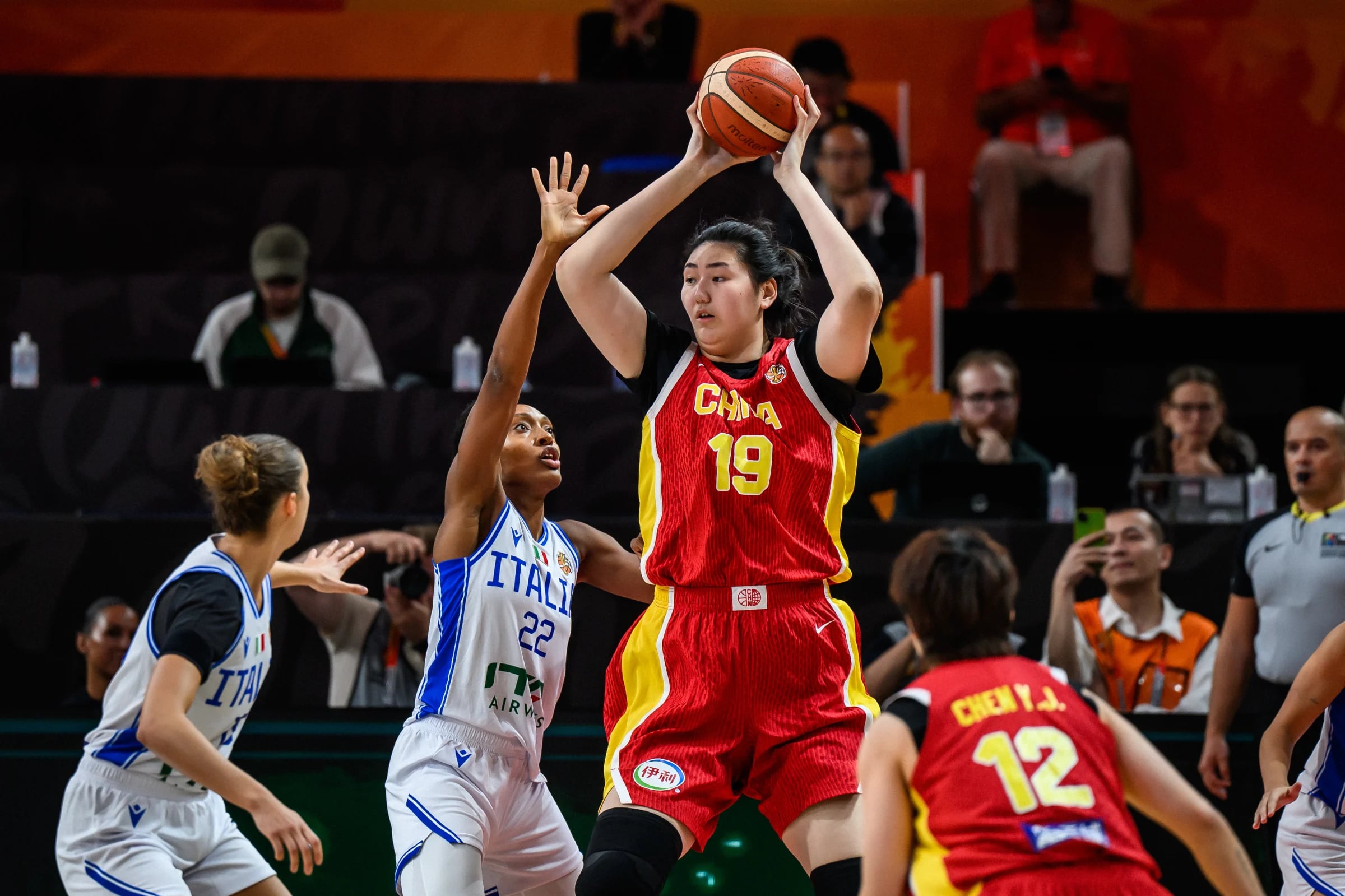
Seeing her seated is striking. When she stands, all you can do is look up. Zhang Ziyu is 19 and stands 2.23 meters tall (seven feet and three inches). She is the tallest professional women’s basketball player in history and the main attraction at the World Cup in Berlin, where she is competing with China’s national team, but as she herself points out, she’s still almost a child. “Everyone thinks I’m tough because I’m very tall, but I’m still a young girl, sometimes quite childish,” Zhang says in a FIBA documentary. It shows in her youthful face, in the jokes with her teammates and in the laughter as she runs through the mixed zone. And in her hobby of crocheting handicrafts that she gives to friends, like a stuffed elephant she spent two weeks sewing with yarn. When she recalls how she became a star, she says she misses her childhood bed full of rag dolls.

 Login



 thread)



 The fifth Rapid Damage and Needs Assessment
 Individuals and companies follow roughly the same process. The claimant must attach proof of ownership and confirmation of value, gather photo and video evidence of the damage, and prove that the military aggression specifically caused it. The required documents depend on the claim category, and, as Andriy Yermak points out from his professional experience, this is where people most often make mistakes. In such matters, a lawyer’s help is often more than necessary.

 “We need lawyers who can work across several levels of law at once: Ukrainian legislation, European regulation and international procedures. And this is where we run into the reform of the legal profession. Under the Rule of Law Roadmap, the Law on the Bar and Legal Practice must be adopted by the end of 2026. How it is written will determine whether the profession gets the independence, legal privilege, and training standards it needs to do this work. At the same time, in a government working group of 27 people, the UNBA holds only one seat.”
 Create training programs for lawyers on working with international compensation mechanisms, including filing claims with the register and working with the future commission.