When Americans cast their ballots in this year's midterm elections, they'll not only be picking who represents them in Congress, but also weighing in on a range of topics that could change their state laws and constitutions.
You don't need to live by a data center to hear the noise they emit.
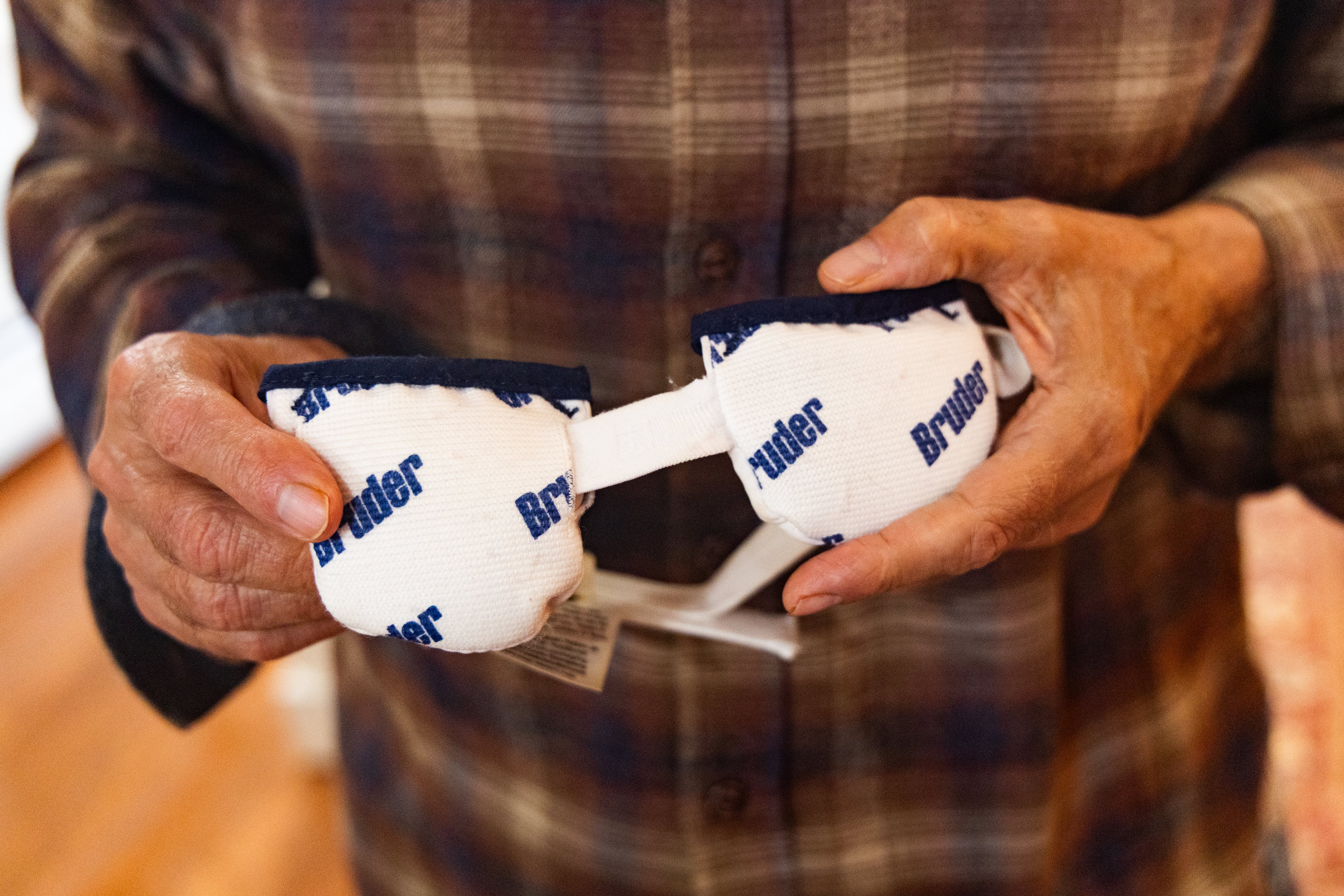
There's a plushie that emits the hum of a real-life data center in Virginia when it's hugged.
The doll is part of a satirical art project called "Adopt a Data Center."
Plushies are getting weirder every day.
Bezzy is a gray handmade plushie with round eyes, a disarming smile, and a server-rack abdomen that plays the grating, mind-numbing hum of a data center when you squeeze it.
The sound is actually a recording made outside a real-life data center in Virginia.
"We actually got quite a few different recordings. It's a weird process to have to go through," Rajeev Basu, the artist behind the toy, told Business Insider. "I had to sit there listening to various screeching sounds on my computer, and we picked the one that would be most well-suited for the toy."
"It's terrifying. I wouldn't wish it upon anyone," he added.
Basu is the founder of New York-based creative studio, Basura. The studio worked alongside Big Data, a musical project by Alan Wilkis, to create a satirical art project called "Adopt a Data Center." The project highlights the realities of living near one.
"We're both inspired by this relationship between humans and machines," Basu said.
Basura collaborated with Big Data to create the Adopt a Data Center project.
Basura
After OpenAI launched ChatGPT in 2022, major players and new startups in the tech industry entered a global race to develop advanced AI systems. Companies like Microsoft, Meta, Google, and Anthropic need massive new data centers to power their ambitious products.
As they began to sprout all over the country, Americans living near them began to bristle.
Critics say the benefits — like the potential for economic growth and new jobs — don't outweigh the risks. They worry data centers can worsen the environment, strain electrical grids, deplete water resources, and disrupt daily life. It's led to nationwide protests against them and to some towns and cities banning them altogether.
Americans living near data centers have also complained that the facilities can emit a constant hum akin to a loud drone or an airplane engine. Basu said data centers have become a regular topic in the news, but reading reports about the facilities is much different from having one in your backyard.
"You might not have a data center in your backyard right now, but with what some of these maps show with proposed plans, one could be in your backyard sooner than you think," Basu said.
Basura interviewed dozens of people across the US who live near data centers for the project, which took about six months to complete.
"Although our project is satirical, we wanted to make sure that everything was rooted in true research," Basu said.
In addition to the Bezzy dolls, the artists madestickers featuring phrases such as "Open your heart and your power grid" and "Please adopt me, I love GPU." A series of bumper stickers features tongue-in-cheek messages such as "Honk if you love computational infrastructure."
The Adopt a Data Center website has hyperlinks to reporting and research about AI data centers.
Basura
Basu said they wanted "Adopt a Data Center" to have an educational aspect, so the campaign's website has hyperlinks to research and reporting about AI and data centers.
"With a lot of my work over the years, it often uses human irreverence as a hook to invite people who might not necessarily be paying attention or have given it a second look to try and learn a bit more," Basu said.
Launched in September, the 20 limited-edition Bezzy dolls are already sold out.
Although the toy industry has struggled in recent years, millennials and zoomers have been softening the blow by driving up plushie sales. Market research company Circana said that people 18 and older accounted for over $1.5 billion in toy sales during the last three months of 2024.
"It's something that is so timely," Basu said. "It's quite a heavy and serious subject, so we're trying to find a way to help more folks learn about it."
After visiting all 50 US states, I'm often asked which ones I'd recommend to travelers.
Emily Hart
Over the past decade, I've traveled solo to all 50 US states and most major US national parks.
Although I've found beauty in every state, there are some that I want to visit over and over again.
I love traveling to places like New Mexico, Montana, New Hampshire, and Arizona.
Over the past decade, I've successfully visited all 50 US states solo, and have even made it to most of the major US national parks along the way. Because of this journey, I'm often asked which states I'd recommend to travelers.
Although most international travelers gravitate toward states like Florida and New York, I've found fantastic beauty and history in every state.
However, these are the 10 I always return to.
New Mexico boasts a surprising variety of stunning landscapes.
Emily Hart
New Mexico is always at the top of my list of recommendations. Nicknamed "the land of enchantment," it lives up to its moniker — and then some.
Those who haven't visited New Mexico may think of the state as a mostly barren desert, but it's actually the diverse landscapes that keep me coming back.
From the otherworldly dunes of White Sands National Park to the snow-capped Sangre de Cristo Mountains, there's beauty to be found around every corner.
Outside the natural beauty, the state is chock full of history, art, food, wine, and culture.
California is full of diverse landscapes and experiences.
Emily Hart
Every time I visit California, I feel like I'm entering a completely different reality.
The sheer size and diversity of the state are impressive, and it has gorgeous beaches, cities, forests, deserts, mountains, and even volcanoes.
I love road-tripping up the coast, visiting Yosemite National Park, taking a boat to the Channel Islands, and wine tasting in places like Napa and Sonoma.
Montana is a must-visit state for any outdoor enthusiast.
Emily Hart
With its vast open spaces, majestic mountains, and endless opportunities for outdoor adventure, Montana is a must-visit state for any outdoor enthusiast.
The state is home to the breathtaking Glacier National Park and parts of Yellowstone National Park. The sky is vast and open, the mountains are towering, and the lack of development makes me feel like I'm entering another world entirely.
I've returned to West Virginia multiple times.
Emily Hart
Although it may not get as much attention as some of the other states on this list, I've returned to West Virginia multiple times since my first visit.
The state's natural beauty is stunning, from New River Gorge National Park to ample lush forests, underground caverns, historic small towns, and over 200 waterfalls.
Wisconsin is home to beautiful scenery and great dining options.
Emily Hart
Wisconsin has so much more than first meets the eye, from the natural beauty of the Apostle Islands and the 15,000 lakes in the state to the classic cheese curds, breweries, and wineries that dot the landscape.
I love spending time along the shores of Lake Michigan and Lake Superior, dining at one of the state's famous supper clubs, and exploring the many Wisconsin state parks.
There's no place quite like the Maine coast.
Emily Hart
There's so much to love about Maine, but my favorite part of the state is the coast. With jagged and dramatic cliffs, lighthouses, and lobster shacks, visiting the Maine coast is an unforgettable experience.
It's easy to find peace in the state that sees the first sunrise of the year and is home to Acadia National Park, which is one of the country's most-popular national parks.
I love to road trip up the coast, stopping in beautiful towns like Kennebunkport, Bar Harbour, and Lubec.
As my home state, Colorado will always hold a special place in my heart.
Emily Hart
I couldn't write a list like this without including my home state of Colorado. The state has so much to offer, from beautiful views to fun activities.
On the Front Range, I enjoy hiking in Boulder and exploring Cheyenne Cañon. I like to spend the night at the The Broadmoor hotel in Colorado Springs before heading over to Great Sand Dunes National Park.
In the Rockies, I love driving Independence Pass to Aspen, as well as exploring the underrated Grand Mesa, which is the biggest flat-top mountain in the world. I also enjoy taking road trips to the charming mountain towns of Telluride, Buena Vista, and Steamboat Springs.
No matter where you find yourself in Colorado, there's no shortage of incredible natural beauty and outdoor adventure.
New Hampshire boasts some of the best skiing and hiking in the Northeast.
Emily Hart
The Northeast is famous for its fall foliage, but I can't help but think that New Hampshire is sometimes overshadowed by its neighbors, Maine and Vermont.
I was stunned by its natural beauty during my first trip to the state. From the White Mountains to Franconia Notch State Park, the state boasts some of the best skiing and hiking in the Northeast.
Utah is home to five major national parks.
Emily Hart
Utah is a state that you have to see to believe. With five major national parks, 46 state parks, 15 ski resorts, and hidden gems at every turn — you'll never get bored here.
I love visiting Moab to hike in Arches National Park, Canyonlands National Park, and Dead Horse Point State Park before heading south to Bryce Canyon National Park, Kodachrome Basin State Park, and Zion National Park.
I also like making stops in Park City and Grand Staircase Escalante National Monument.
Arizona is the perfect escape for adventure and relaxation.
Emily Hart
Arizona is well known for the Grand Canyon, but the state has much more to offer. From Flagstaff's high-altitude forests to Sedona's iconic red rocks, Arizona's diversity is surprising and worth a trip.
I love hiking among the cacti in Sedona or Scottsdale before heading to one of the many resorts to jump in a pool or hit the spa — the perfect escape for adventure and relaxation.
This story was originally published on April 5, 2024, and most recently updated on October 23, 2026.
If you're reading this, then the internet still works. But that's something that we shouldn't necessarily take for granted after this week's global cybersecurity meltdown.
"Think of it this way: someone discovered that millions of buildings in the country have the same broken lock, and now everyone knows how to open it," writes Matt Shumer in a lengthy post on X about the situation. "The lock maker has sent out a fix, but every building owner has to install it themselves, and many haven't yet."
This is the world we live in now. In August, more than 100 tech companies signed a letter warning about exactly this possibility. On Thursday, one of Anthropic's top information security officers wrote that cybersecurity threats "are going to get a lot worse before they get better." Major banks are rushing to secure themselves after reports of autonomous agents operating inside accounts (though many of them may have been authorized by account holders).
This is unlikely to be the last incident like this. Cybersecurity firm CrowdStrike says it saw twice as many "agentic intrusions" (hacking done by an autonomous or semiautonomous AI) in August as in July, and then the number doubled again in September.
Scary stuff, for sure. As is usually the case, however, prevention is better than panic.
Shumer's post contains many helpful suggestions for better online security—it is particularly important to secure your email accounts, since that is the gateway to so much of what we do online. Here's a 15-step plan to stay more digitally secure in the AI age. (And if you're really worried about everything falling to bits, Reason's got you covered there too.) If your devices and browsers have updates available, install them. And for the love of digital gods, don't click on random links in strange emails!
The man who (maybe) saved the internet? There is an old XKCD webcomic—and I'm dating myself as a very specific type of millennial by even referencing that—that seems to perfectly sum up what happened this week. Here it is:
Source: https://xkcd.com/2347
Here's the craziest part: That's basically true! Except the one random person lives in Czechia instead of Nebraska. His name is Ondřej Surý, and TheAtlantic's Charlie Warzel found him:
Surý, who lives in Czechia, does not work for the PHP Foundation. But alongside his day job as director of domain-name-system engineering at the nonprofit Internet Systems Consortium, in a volunteer capacity, he maintains and helps automate patches for the coding language. His work, with that of just a handful of others, has allowed countless websites and organizations to fix these vulnerabilities quickly. Over the past 48 hours, he's become arguably the unsung hero of the entire internet—despite the fact that the only compensation he receives is from modest donations. "Ondřej will save the internet today," a user in the PHP Subreddit wrote.
In the war between AI hackers and AI defenders, it's still humans who are the heroes. At least for now.
Art of the steal. Yesterday, in this space, I detailed how voters are fed up with the Trump administration's seemingly endless stream of corruption. But it's been a whole 24 hours, which means there is yet another scandal in the news—thanks to a Vanity Fairarticle about President Donald Trump's son-in-law Jared Kushner.
The article is an excerpt from a forthcoming book. In it, author Matthew Cole claims that Dutch investigators gained access to Kushner's phone with the help of Russian hackers. The evidence from the phone and other sources shows that Kushner has been taking money from the governments of Saudi Arabia and the United Arab Emirates to "push their agenda with Trump."
Kushner says the article's claims are "outrageous and categorically false."
But wait, there's yet another corruption story. The Justice Department is reportedly probing whether Trump ally Corey Lewandowski profited from his role as a top adviser at the Department of Homeland Security (DHS). The Washington Post reports that the investigation is based on a referral from the DHS inspector general and is focused on "contracting fraud."
It may or may not be connected to other allegations that surfaced in September, when The Wall Street Journalreported that Lewandowski approached officials in Qatar and the UAE about being hired to help with "visa issues" and other matters.
In both matters, Lewandowski has denied the allegations. He's no longer working for the department, having been fired earlier this yearamid a messy scandal involving then–DHS Secretary Kristi Noem, who was also canned.
Scenes from Virginia: Federal prosecutors indicted state Sen. L. Louise Lucas (D–Portsmouth), one of the most powerful Democrats in Virginia, on charges of racketeering and money laundering in connection with illegal marijuana sales. (Don't get me started on how dumb it is that recreational marijuana use has been legal here since 2021, but commercial sales are still forbidden. If it's legal to use something, it should be legal to sell it!)
Lucas pushed the failed Virginia redistricting effort and has been an outspoken critic of Trump. She plans to fight the charges. Virginia Gov. Abigail Spanberger, also a Democrat, said in a statement that the timing of the indictment, just days before the midterm elections, "further erodes the trust the American people deserve to have in the Department of Justice."
QUICK HITS
"The last thing José García-Sorto remembers after being shot in the chest is being pulled from his car, pinned to the pavement and handcuffed, his blood pooling around him on a Phoenix interstate. All he could think about was what would happen to his two young children if he died." The New York Times has a harrowing account of a Honduran immigrant who was shot by immigration officers last year. He's never been charged with a crime in connection with the incident, which suggests "the authorities did not find evidence that he had put anyone in danger."
The Cato Institute's annual ranking of "Freedom in the 50 States" is out. Arizona takes the top spot. How did your state do?
Is alchemy real now? A California company claims it has successfully turned mercury into gold.
The World Series begins tonight, and it ought to be terrific. Despite low payrolls, Tampa Bay and Milwaukee were the top teams in their respective leagues this year. They are deep, talented teams full of characters worth cheering—Brewers' star pitcher Jacob Misiorowski is a huge Pokémon nerd; Rays' star hitter Yandy Diaz escaped from Cuba after being imprisoned there. And this is the first World Series since 1980 to match two franchises that have never won a championship.
Virginia state Sen. L. Louise Lucas, one of the state's most powerful Democrats, was charged on Thursday in connection with what federal authorities alleged was a role leading a wide-ranging criminal enterprise that acquired and distributed large quantities of marijuana and laundered the proceeds.
When I wake up each morning, the most important thing is that I avoid setting foot anywhere that is not American in Name Only (AINO). This, as a native Virginian, presents a problem. The state was named after England's Queen Elizabeth I, known as the "virgin queen" for her lack of a husband. How am I supposed to go back to Virginia until it is named Americaginia? I have principles.
Thankfully, President Donald Trump is on this, having made the AINO cause a top priority. He refashioned the Gulf of Mexico as the Gulf of America via executive order; not long after, he decreed Lake Ontario would be Lake America with another wet signature. Naturally, New Mexico is the next target. The state "should immediately change its name to New America," Trump posted this week on Truth Social. "We are not Mexico, we are the United States of America!"
So true. New Mexico lawmakers would have to initiate the transition, and the public would have to approve it—the president cannot do so with an executive order here. But it is vitally important that, when he can, he continue changing the names of geographic landmarks to maximize the use of those four beautiful syllables. And when he cannot, he must raise awareness of the AINO spirit.
I should know. I'm surrounded. Though I am no longer living in ***ginia, I reside in the District of Columbia, a name that strikes fear and loathing into the hearts of any AINO patriot. Columbia is derived from Christopher Columbus, who in 1492 sailed that ocean blue—presently called the Atlantic, we'll return to that momentarily—to what is now America. But are we really going to let our nation's capital conjure up visions of a country in South America, give or take an o? Perhaps a better question: Do we want it dedicated to an Italian? Rechristening it the District of America would be a win for AINO, a win for Trump, and a win for the progressives who hate Columbus Day. Boom.
To the north we have Maryland—named after Queen Henrietta Maria, the wife of England's King Charles I—which will need to be Americaland if I am to cross that line again. (I also ask that Americaland's drivers stop learning their technique from Grand Theft Auto.) Looking southward, I'm trapped as well: The Carolinas bear the title of Charles himself. If there is any justice, North Carolina will be North America, and South Carolina will be South America. Yes, those technically already exist, but these are the real North and South America. The others are the fake ones. (West Virginia is easy: West Americaginia.)
The president could plausibly change the names of the seas that surround this great country. At least, he could change their names in the Geographic Names Information System. Columbus sailed the American Ocean. The Pacific, meanwhile, is properly the West American Ocean—or, given that its waves break against California, the Woke American Ocean. There's something in the water.
Many may find Trump's obsession with AINO bewildering. In reality, it is to be expected. A national-populist presidency must have the requisite packaging—whether the branding primarily promotes policy or is the main event itself is a fair question. Trump is a showman, so there must be a show.
We are approaching the intermission of the second Trump administration. The plot twists—though sometimes predictable—have consisted of higher prices for everyday goods (tariffs), higher gas prices (the war in Iran), and Apple Maps now showing Rochester's shores opening their arms to Lake America. The country may be more expensive, inflation not yet vanquished, government spending altitudinous, the swamp waterlogged, that promised golden age still elusive. But at least America is more American in Name Only.
There is virtually no way I could have resisted Sylvie McNamara’s dispatch from her journey to a disreputable McDonald’s in Stafford, Virginia. I’ve listened to my share of the Doughboys podcast, and regularly debate burger rankings with my son. What’s more, I went to high school just two miles down the road from this particular location, whose aggregated Google reviews won it dubious distinction in a nation of interchangeable fast-food franchises. Thankfully, McNamara’s lighthearted investigation, which invites readers to consider Robert Caro and teenage commitments to the social contract, will satisfy you no matter your relationship with the Golden Arches. It reminded me of tongue-in-cheek alt-weekly features, a few pleasurableParis Reviewweb essays, and that episode of Mystery Show where Starlee Kine goes deep with a Ticketmaster employee. Ba-da-ba-ba-ba, I loved it.
I asked the employee for an explanation. “I think I can give you real insight,” he said. “It be the certain workers we got.” He himself is a high schooler, but he said that “we’re starting to get more younger managers. As soon as they turn 18, they’re getting a manager spot. I think my general manager’s 20. It’s a lot of kids getting these manager titles and positions, but they’re not really managers.”
I told him that to be honest, that environment sounded kind of fun.
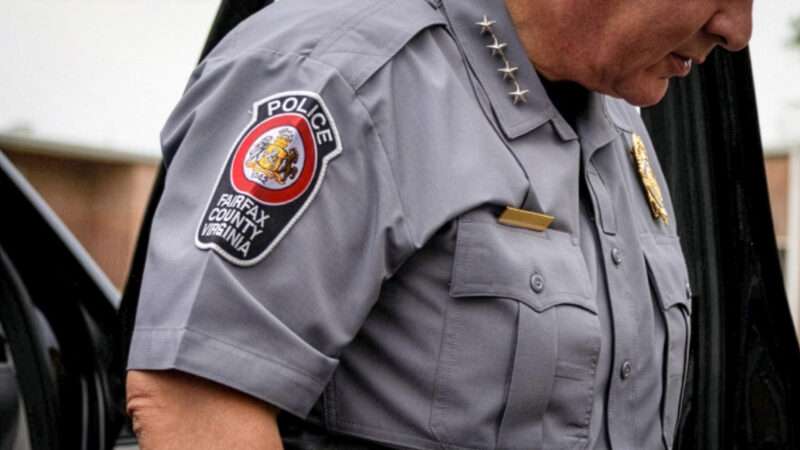
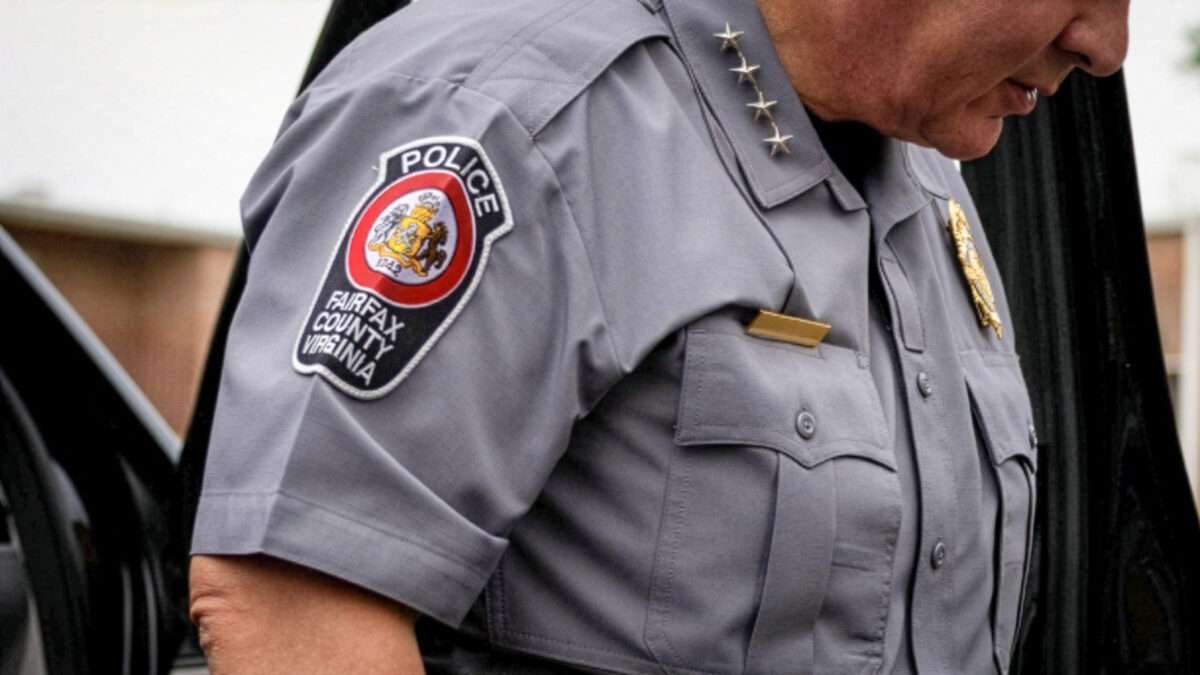
Fairfax County, Virginia, police officer Scott Abram was charged with two counts of misdemeanor shoplifting for stealing merchandise from two Target stores. Police say that while using the self-checkout at a Target in Burke, Abram scanned a cheaper item's barcode to pay less for another item, then left the store with both products despite only paying for one. Abram was in uniform and on duty at the time. Police say he had committed a similar theft at a Target in Springfield the day before, while off duty. A 23-year veteran of the Fairfax County Police Department, Abram chose to retire rather than face termination. Each charge is a misdemeanor that can carry up to 12 months in jail and a $2,500 fine if convicted.
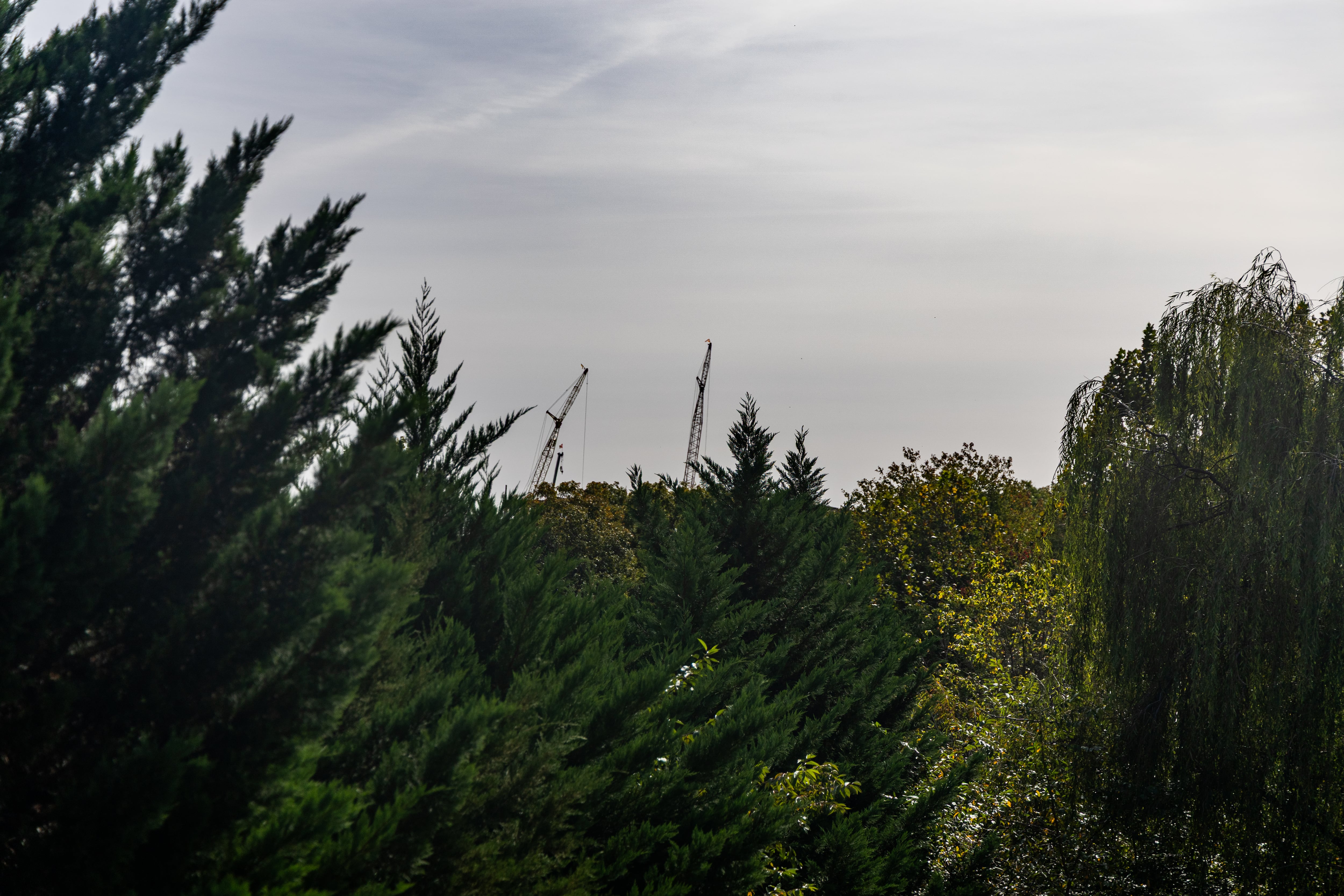
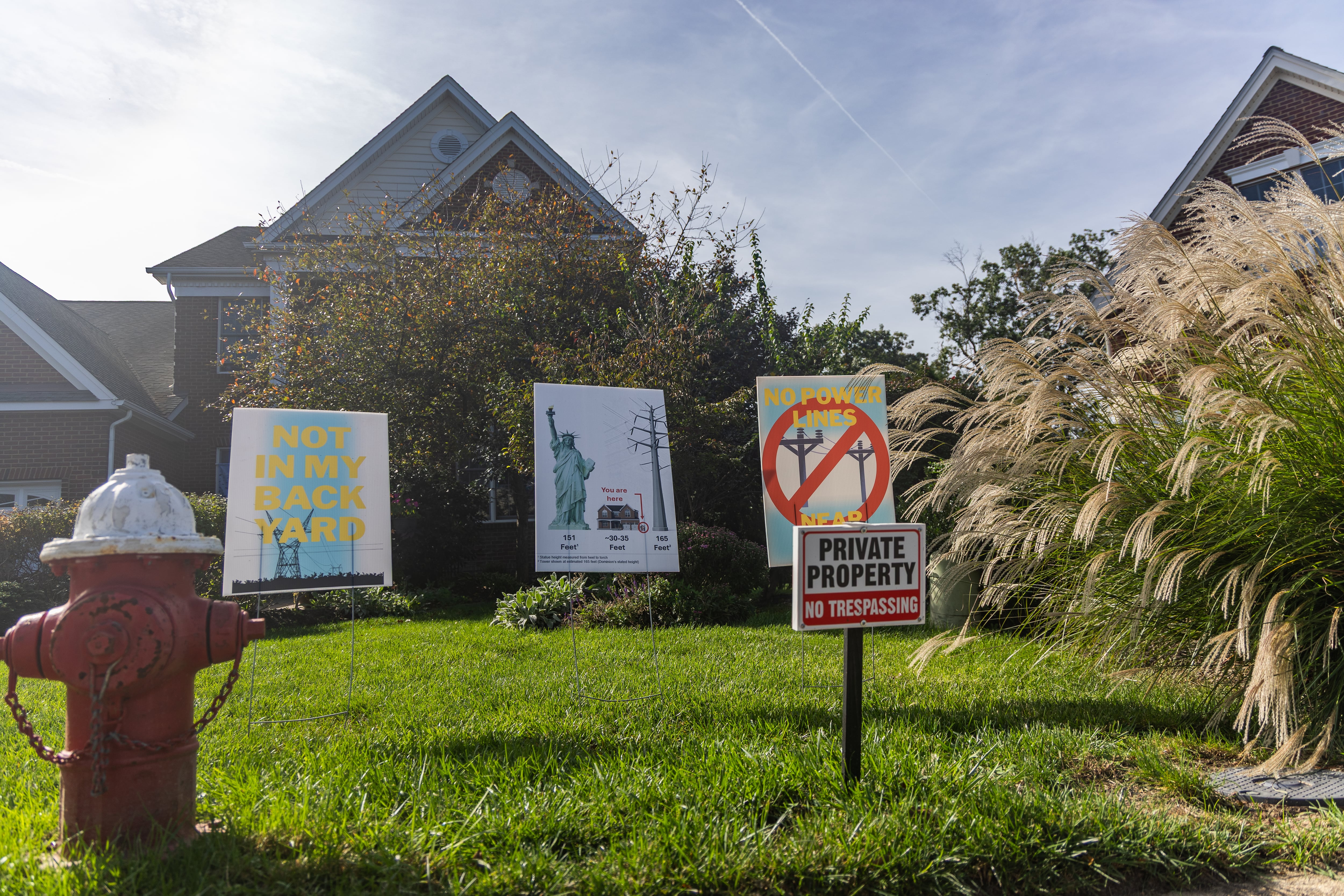
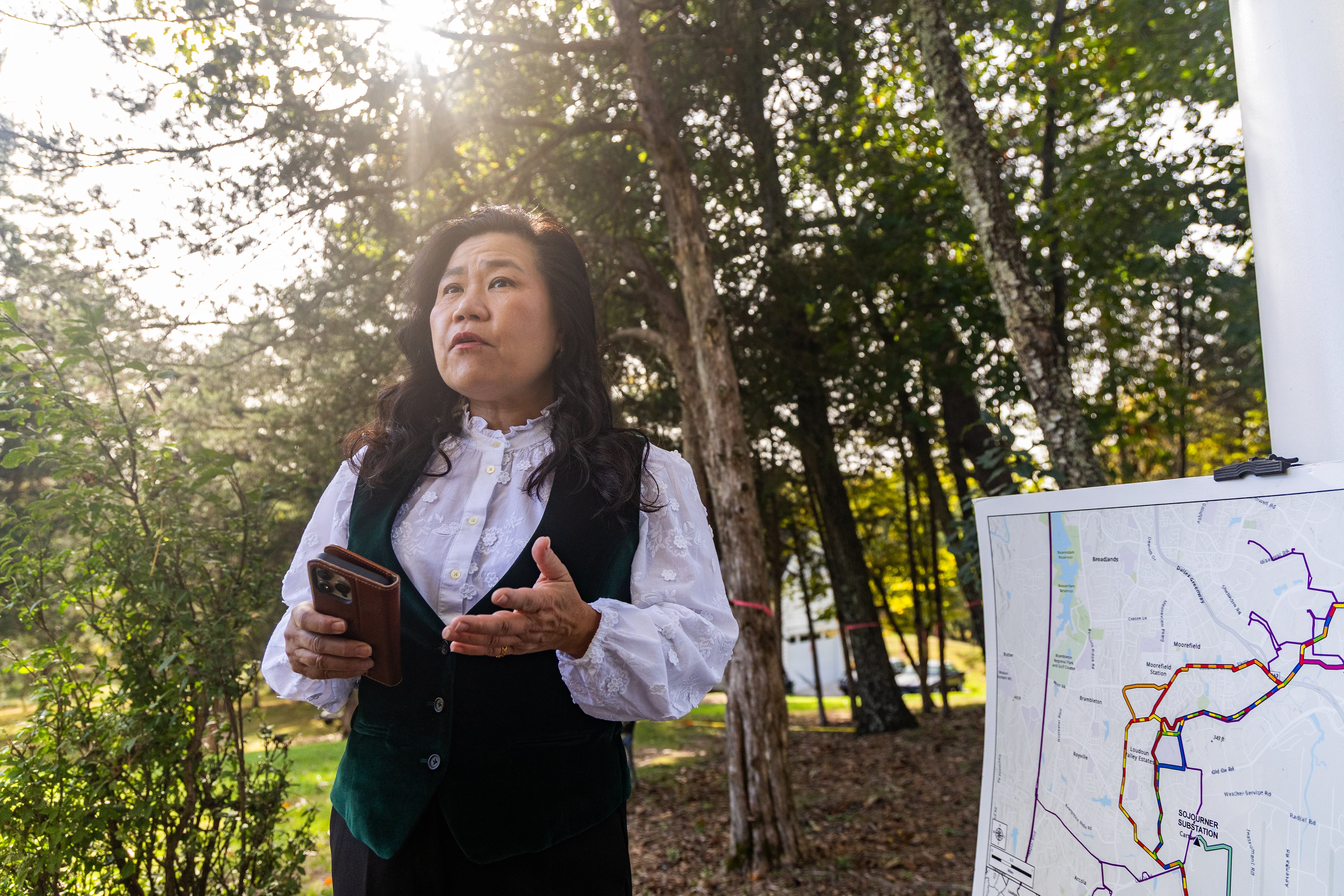
One of the factors that led Greg Pirio to buy his house in Loudoun County, in northern Virginia, 14 years ago, was the nature surrounding it. A historian specializing in Africa, he loved to take long walks with his dog and listen to the birds. Three years ago, a large data center was installed just a hundred meters from his door. Since it began operating a year and a half ago, the birdsong has been replaced by a constant buzzing together with fumes that cause headaches, conjunctivitis and respiratory problems.
Longreads has published hundreds of original stories—personal essays, reported features, reading lists, and more—and more than 14,000 editor’s picks. And they’re all funded by readers like you. Become a member today.
David Alm | Longreads | October 1, 2026 | 5,726 words (24 minutes)
I got off Interstate 81 to give my soul a break. The back roads of southwest Virginia wind, crest, and plunge through lush valleys of oak, poplar, birch, and maple trees. It’s easy to lose track of time and distance there. People drive slower. Cows graze in pastures. And there are no placards festooned with Motel 6 and Starbucks logos, flattening the American landscape into a homogeneous blur. Any signs you might see are low to the ground and handmade, protesting a data center, for instance, or thanking Jesus.
I’d gone to this rural pocket of the country for the 90th annual Old Fiddler’s Convention in Galax, an independent city of just under 7,000 near the North Carolina border whose population, for six days in early August, balloons to around four times that. They arrive in RVs and Casitas, camper vans and cars to stake out 20-by-35-foot plots in Felts Park, a 28-acre fairground in the heart of Galax, transforming it into a massive, muddy parking lot sprinkled with portable toilets and a cluster of food trucks, offering loaded potatoes, funnel cake, and blooming onions.
The Old Fiddler’s Convention—or just Galax, as the diehards call it—is the oldest and largest fiddlers’ convention in the world, a place where banjo pickers, guitar players, and other maestros of old-time strings gather to see how they stack up. Founded in 1935, Galax has been canceled only twice since then: once during World War II, due to travel restrictions, and again in 2020, due to the COVID-19 pandemic. Many Galaxers have been going every year for decades, some for as long as they’ve been alive.
There are scads of rules: If you play clawhammer-style banjo in the bluegrass band competition, you will get disqualified. Same if you play bluegrass-style banjo in the old-time competition. If you break a string while performing, you must stop immediately. Playing time during competition is limited to two minutes and 30 seconds. And, crucially, no electric instruments of any kind are allowed, either on stage or in the tightly packed fairgrounds, where self-described hillbillies, accountants, firefighters, and session musicians pick day and night in blistering, impromptu jams amid the RVs.
Credit: Photos from the Galax Old Fiddler’s Convention, 1978, by Terry Eiler, Blue Ridge Parkway Folklife Project collection (AFC 1982/009), American Folklife Center, Library of Congress
One does not merely attend Galax. It’s not a music festival. There are no headliners, and no full-set performances. There is a single stage, and over the course of six days, contestants take it one after another to play one song for a panel of judges and a smattering of spectators. There are more than a dozen categories, little changed in the past century: old-time fiddle, guitar, dulcimer, folk song. Cash prizes for individual players range from $35 to $285; a campsite and contestant pass together cost $175. “The prestige of being judged a ‘winner at Galax,’ and the respect for one’s musical talent that goes along with it, far outweighs any monetary award,” wrote Fred Burton in the March 1984 issue of Bluegrass Unlimited.
In the 1980s and ’90s, cars lined up days before the gates to Felts Park opened. The fairgrounds got so full back then that people slept in the horse stables that used to line one end of them. Once, Elizabeth Taylor made a surprise appearance with her then-husband, Virginia Senator John Warner. Rumor has it that members of Old Crow Medicine Show and Leftover Salmon have shown up at Galax, under the radar, just to jam.
And yet, despite appearing well attended to my virgin eyes, the Old Fiddler’s Convention’s numbers are down from the pre-pandemic years, and way down from peak Galax. Folks say it’s not like it was. Maybe, as one long-time attendee speculated, it’s that more kids are choosing devices and passive consumption over face-to-face activity with other humans, or that more and more young adults are fleeing southwest Virginia due to the gutted coal, tobacco, and manufacturing industries. Or maybe it’s just that people around there are dying faster than they’re being born. Glen Alexander, a 55-year-old fiddler who’s been going to Galax since he was a child, put it bluntly: “We’re all scared to death this is gonna go away.”
Tara Linhardt, a professional mandolin player from Leesburg, Virginia, with thick, curly hair and a determined gaze, has been going to Galax since she was in high school, and was happy to advise me on how to survive my first time. Buy what you need locally, she told me; it was cheaper than New York. It will probably rain, so bring mud boots. Find a high patch of ground, because rainwater pools in the low spots. Afternoon jams were open to anyone, but unless I was dead good, I should just observe the nighttime ones, where the “thoroughbreds” play so fast that a newbie like me would only drag it down.
Tara and her husband, Ian, pulled into Galax late Saturday afternoon, just in time to get a bite before parking their Four Winds RV by the dumpsters behind the Applebee’s at the edge of town. She told me to sleep in my car there, since the church parking lot was already full, and Applebee’s, unlike Hardee’s, doesn’t mind. We’d need to queue up by the gates to Felts Park before seven o’clock Sunday morning to ensure we’d get decent campsites. First-come, first-served.
Credit: David Alm
I’d arrived earlier that afternoon, hours later than Google Maps had predicted, because I forsook the interstate. The day before, I’d left my home in Brooklyn only to spend two hours driving five miles to reach the Holland Tunnel to New Jersey. I was spat out onto I-78, which at some point blended into I-81, hauling me across Pennsylvania to Staunton, Virginia, where I slept in a former sanatorium. I had recently been laid off from a job I’d held for 13 years, editing reports for a geopolitical risk advisory firm, and needed reprieve. I sought my escape on Route 11.
In the trunk were a guitar and two banjos, instruments I was determined to spend the week playing in the Blue Ridge Mountains in lieu of applying for jobs and fretting about AI in my Brooklyn apartment. It was the first long road trip I’d taken alone in a quarter-century, and I’d hoped for a reset. Call it a midlife crisis if you want, but I drove cross-country a lot before I moved to New York, always on back roads. America is best seen up close.
After chatting awhile with Tara, Ian, and a luthier named John Hamlett, who’d also parked his RV behind the Applebee’s, I folded myself into the backseat of my Chevy Trax rental and more or less slept. I awoke at 6 a.m. to a downpour, rain pelting the roof of my car like fingertips on a conga drum.
The four of us caravaned into town, where we waited until almost 9 a.m. to enter the park. We figured it was due to the rain. In fact, it was because of an issue with the gate itself. My source for this intel was none other than the Galax chief of police, DeWitt Cooper, who was directing traffic into Felts Park that day and hails from the Bronx. I’d see Chief Cooper again a couple days later, at Willie’s Food Truck inside the fairgrounds, where we chatted over catfish and collard greens about his philosophy of policing. “Don’t judge based on appearances and treat people with love,” he told me.
I chose a plot on the far side of the fairgrounds, near a fence and a row of portable toilets, with Tara, Ian, and John all nearby. Our little commune wouldn’t last; the next day, Four Winds got stuck in the mud and Tara had to summon a Moose—one of the men of Moose Lodge No. 733, a fraternal organization that’s managed the Old Fiddler’s Convention since the beginning—to drag it out with a tractor. They found higher ground by the tennis courts and I stayed put. That night it rained again, and I awoke at 5 a.m. in a half-inch of water that had pooled in my tent overnight, soaking my sleeping bag, pillow, and clothes.
It’s no fun to wake up in a puddle, but when it rains in your tent, or the fairgrounds get so muddy that you watch a young woman lose a Birkenstock forever to the muck, or you start to stink because there’s only one public shower in Felts Park, it all feels incidental to what matters more: There’s pickin’ to do. You hear it all around, all the time. A lone fiddle at dawn, guitars easing into the afternoon, jams that grow in size and volume throughout the day, until night falls and Felts Park erupts in a surround-sound jamboree of syncopated banjos, arpeggiated fiddles, and bass notes so low and driving that they cut through it all at ground level. When it’s not raining, those jam sessions continue through the night, practically until the early morning’s still air is broken anew by someone’s fiddle.
My first jam came on Day 0, after the rain abated and I’d set up camp. The Old Fiddler’s Convention wouldn’t officially start until Monday night, with the astoundingly good kids’ competitions—the reigning bluegrass fiddle champion herself, Hollace Oakes, was 14 when she won the adult contest last year—but everyone in Felts Park was eager to pick.
Jimmy Kidd (left) has attended Galax since 1969, when he won the guitar competition. Ronnie Burroughs (right) opened the competition Friday night with an autoharp rendition of “The Star-Spangled Banner.” Photo by David Alm.
Tara wanted to introduce me to Bill and Nancy Sluys, a couple in their early 70s who’ve been going to Galax every summer for some 50 years. We walked to their site, where Bill, a towering figure with a steady voice and a long, white, braided ponytail, emerged from their Airstream to invite anyone who might “wish to partake” to join Nancy and a few others inside. I told Bill I’d thought of bringing edibles to Galax, but the convention website said state laws concerning drugs and alcohol are “strictly enforced,” and Google’s AI bot, Gemini, warned that law enforcement would be crawling Felts Park with K-9 units, even though recreational cannabis is legal in Virginia for adults over 21.
Bill laughed and said that hasn’t been true in more than 40 years, though it used to be, on account of a music festival that happened once, half a century ago, about 15 miles up the road. Stompin 76 featured Bonnie Raitt, John Prine, and other big names from the time. The festival attracted a huge crowd, including a motorcycle gang that allegedly wanted to keep the party going after the festival wrapped, so they rolled into Galax on their hogs, stocked with methamphetamine, moonshine, and guns. Mayhem ensued. The authorities cracked down after that, ostensibly to maintain law and order in fiddleland. By the mid-’80s, they realized that the Old Fiddler’s Convention really was a family affair and let the fiddlers be.
A group of six or seven people had gathered outside the Airstream by this point, all brandishing instruments. Bill, who grew up on Long Island, assumed his position behind an aluminum upright bass from the 1930s, while Nancy, a fiddler and banjo player roughly half Bill’s height who grew up in Connecticut, emerged from the Airstream with her fiddle. She sat down on a folding chair, called “Soldier’s Joy” in the key of D, and kicked it off at breakneck speed. This was an old-time jam, and “soldier’s joy” was a Civil War-era euphemism for morphine. Galax had begun.
An old-time jam goes something like this: Anywhere from two to umpteen musicians gather in a circle, knee-to-knee, and someone—usually the fiddler—calls a tune. Before you know it, you’re carried away by a cyclone of fiddles, mandolins, banjos, and guitars, all locked into a swirling rhythm that can, when it’s good, take you to church.
Ted McAllister (center, on bass) has attended Galax since 1975; his son, Caleb (to McAllister’s right, on fiddle), has attended since he was a child. Joining them is Katherine Emerick (right, fiddle); Elizabeth Holdren (left, guitar); and Elizabeth’s husband, Jacob, on banjo. Photo by David Alm.
The tradition dates to the mid-1700s, when Scots-Irish immigrants first settled in Appalachia. Even then, coastal property was for the elite, forcing poorer immigrants inland and south, through the Shenandoah Valley to southwest Virginia, where land was plentiful and cheap. Their music quickly took root. “The Scots brought fiddles and liquor,” Ted McAllister, one of my neighbors in Felts Park, told me. “The Germans brought church music and beer.”
Over time, Scottish fiddle tunes evolved, as oral traditions do, and began to mix with the musical traditions of enslaved Africans, who had brought with them gourd instruments that would evolve into the American banjo, along with rhythms the Scots had never heard before. Old-time music, in other words, is the music of diasporas, fed into a blender and then worked into a froth. A lot of traditional folk songs came out of this period, too. One that I learned at Galax, “Going to the West,” tells the story of a young man who leaves the mountains of his birth, “where labor is in vain,” to seek the fertile plains out west. It’s the story of my own Scottish forebears, who settled in South Dakota before moving to what is now suburban Chicago, and later, Florida.
Bluegrass, by contrast, was born in the 1940s, when Bill Monroe and The Blue Grass Boys took those mountain sounds, combined them with Southern church music and blues, and tightened it all into something you might call an uncle of rock ’n’ roll. There’s a reason that Billy Strings plays to sold-out arenas and pickers from around the world can play classics like “Blue Ridge Cabin Home” at the drop of a one-chord.
Where bluegrass is punchy and clean, designed for the stage, old-time is ecstatic, designed for participation. Bluegrass jams attract spectators who marvel at the players’ pyrotechnics; old-time jams get people on their feet. At Galax, some folks drag big pieces of plywood around the fairgrounds looking for old-time jams, where they’ll lay the board down at the edge of the circle and dance. Flatfooters they’re called: the percussion section.
The New York bluegrass community has a Signal thread, and through it I met Harrison Corthell, a banjo player from Queens who was camping in what he called the “gayborhood” of Felts Park: two tents and a rainbow flag. Corthell offered to introduce me to Tyler Hughes, who was also camping in the gayborhood. Hughes serves as the executive director of the Crooked Road Heritage Music Trail, a nonprofit founded by the Virginia Assembly in 2004 to boost tourism through music. Alsace has the Route des Vins, and Kentucky the Bourbon Trail. Southwest Virginia has the Crooked Road.
I found Hughes Thursday afternoon as he was setting up the Crooked Road’s information booth. Musicians were streaming by for the clawhammer banjo competition, which was set to begin any minute. As we sat on a park bench, I told Hughes that I’d begun to think of its music as the region’s chief international export of the past 100 years. “I think that’s a fair assessment,” he said, but stressed that he resists thinking of Appalachia’s musical traditions like a natural resource such as iron or coal. “We really try to stray away from an over-commodified, over-commercialized vision of southwest Virginia,” Hughes said.
Musical traditions can be packaged and sold, after all. Last winter, an Appalachian folk musician named Murphy Campbell discovered that her videos on YouTube had been used to create AI clones of her voice and banjo playing. Someone then used Vydia, a music distribution platform, to share those clones via streaming services and to make copyright claims on Campbell’s own videos. Campbell described her ordeal on Instagram, including trying to address the matter with “agents” at those streaming services: “I’m telling robots to take down music robots made,” she said. Her posts went viral, causing Vydia to ultimately withdraw the copyright claims and ban the user responsible, according to reports. “It’s the wild west,” Campbell said in one of her posts. “And it can happen to anyone.”
I asked Hughes what percentage of the people in southern Appalachia play an instrument of some kind. He guessed around 70 percent. I’d heard the same number from Daniel, a 32-year-old banjo player I’d met earlier in the week, who works at a sawmill in Grayson County. “It’s kinda the only thing goin’ on around here,” Daniel said. He explained that when the cotton mill in Grayson County closed in the late 1980s, “everyone” started using meth. Then opioids. Within the next 20 years, drug overdoses had become a leading cause of death in southwest Virginia. Getting together to pick, Daniel said, “helps you through real hard stuff.”
The guitar I took to Galax is a 1989 Takamine I’ve had since I was 14, when my parents indulged my desire to learn Pink Floyd and Jimi Hendrix songs on the condition that I take classical guitar lessons. I spent my first day or two in Felts Park carrying it around like a security blanket, but I was there to play the banjo. Upon arrival, I realized that I might have been the worst banjo player in Galax.
Performers in the Youth Bluegrass Band competition. Photo by David Alm.
I picked up the instrument in 2024, at age 48, in part because my maternal grandfather played one and I was always curious about it. More than that, I wanted to build a mountain banjo, the rustic kind people in Appalachia made from whatever wood they had nearby, animal skins for heads, and guts for strings. I liked their warm, thuddy sound, totally unlike the piercing banjos of bluegrass with their steel strings and resonator backs. So I learned everything I could about how to build one and called my dad to ask if he’d help. I knew the banjo; he knew wood.
That summer, we spent a week together in his shop in Illinois, building a fretless eastern Kentucky-style mountain banjo out of walnut and ash. Most people in New York ask what it is; everyone at Galax identified it instantly. I’ve since built seven banjos and acquired three more, all different styles. This spring, I carved a neck from a piece of walnut entirely by hand, no power tools, for a 19th-century-style tackhead, the kind played by enslaved Africans on plantations and by Civil War soldiers around the campfire. It’s not just that I’m fascinated by the instrument. As my actual trades—crafting sentences and teaching others to do the same—are increasingly devalued by technology and a society that no longer reads, building banjos gives me one thing that I can hold onto.
Shortly after my banjo obsession began, I started going to old-time jams in New York City, and later, bluegrass jams. I didn’t—and still don’t—actually listen to old-time or bluegrass music; my tastes trend melancholic. But I missed playing music with other people, something I hadn’t done since college and had begun to crave during the endless, isolated days of the pandemic. In early 2025, I started going to a regular jam session at a bar in Brooklyn called Sunny’s, whose owner has turned it into an institution of roots, bluegrass, and folk music. Some of the best pickers in the tri-state area turn up there each week, along with people like me, there to learn. It took me months to lead a song without blacking out. They call it “jamnesia,” and it’s humiliating.
After one week among the pickers of southern Appalachia, I got tighter, faster, as if the place itself does some of the teaching. A fiddler friend from New York, who’d been to Galax in the 2010s, was more succinct: “It seeps from the earth.”
Galax is hardly the first fiddlers’ convention; it’s just the oldest one still left. In the days before the railroad and automobile, let alone the World Wide Web, fiddlers’ conventions brought the people of Appalachia together, allowing songs and picking styles to spread like gossip over those hills. They could get pretty wild, and early-days Galax was no exception. Women and children did not go to Galax back then. It was a place where men gathered to let loose—“outside of the eyes of their preacher and their wives,” Rex McGee, a multi-instrumentalist from North Carolina, told me.
I’d heard of the McGee jams already, where “things get weird,” according to a woman I met Monday morning while I waited in line for the shower. Their camp sits right inside Felts Park, steps from the food trucks, identifiable by a 1974 Ford school bus painted an ominous matte grey. They call it the Muddy Creek Bus, for the band that Glen Alexander’s dad formed in the 1970s and soon became the back-up band for Rex and his brother Ralph’s grandfather, Ralph McGee the First, aka the Old-Timer. The Muddy Creek Boys could party as hard as the Old-Timer; it didn’t hurt that they could pick too. By the 1980s, the real show came after hours. Dozens of people would gather outside the bus to watch the Old-Timer, then in his 80s, fiddle with just about anything he could find: a toothpick, a comb, a “coon dick”—literally a bone from a raccoon’s penis. And it was loud. (For any curious fiddlers out there, you can buy four of these on eBay for $39.95.)
Felts Park is a galaxy of legacy camps like the Muddy Creek Bus. Almost everyone I met told me they’d been going to Galax for 40, 50, even 60 years. Their stories are legion, and they love to tell them: The year it rained so hard that one group holed up in an RV for six days with eight people, an upright bass, and “a little bit of cocaine.” The year a couple of young women got into a fight over a guy, went to fisticuffs in the mud, and ripped each other’s shirts off in front of scores of onlookers—“no one wanted it to stop,” one man recalled with a chuckle. The year several people went mudsliding on the tire tracks, which, for reasons unclear, were composed of raw sewage.
Jimmy Kidd, an 86-year-old Dobro player who’s been going to Galax since he was 29, regaled me with the time he won the guitar competition, in 1969, by playing the Dobro because there was no Dobro competition then. His daughter, Vicky, told me she met Elizabeth Taylor when she came through Galax, in 1977, when Vicky was 12. Taylor was in a wheelchair, Vicky said, and she wasn’t very nice.
Leo Lindblom sat on a low stool cradling a mandolin, his sister Lucy beside him. They’d taken the stage in the kids’ mandolin competition on Monday night, and Leo was focused. With flawless timing and dexterity, the 12-year-old picker dazzled the audience, Lucy accompanying him on guitar, for roughly two minutes. Then he rose from the stool, took a bow, and, with Lucy, exited the stage.
On Thursday, I met Leo, Lucy, and the rest of the Lindbloms—Marina, Jon, and their nine kids, all but one of whose names begins with an L—at their bus in a gravel parking lot just across the road from Felts Park, where it was a little quieter than Galax Central. The Lindbloms first went to Galax in 2021, after discovering bluegrass at a gift shop in North Carolina while on a family vacation five years prior. All nine of the kids responded instantly to the “happy, upbeat” music coming out of the speakers, and mom and dad bought the CD on the spot.
The Lindblom family. Photo by David Alm.
The kids, who range in age from 12 to 28 and were all homeschooled, each chose an instrument and formed their two bands, Headin’ Home and The Brothers Five. Now, when they’re not home in Bloomingdale, Georgia, they’re on the road playing festivals and gigs across the country. I asked what makes Galax special. Libby said it gives them a rare chance to slow down, to not have to be “on” all the time, and just spend time together.
As we sat outside their bus, all 11 of them and me, I asked: Why bluegrass? After all, Marina and Jon met at the Eastman School of Music and played in the Savannah Philharmonic for 10 years. They know Tchaikovsky and Brahms just as well as Bill Monroe and the Carter Family. They could teach their kids classical music, or any other kind. “Our goal, in everything we do, is to glorify the Lord,” Marina explained. And with bluegrass, she said, they are able to give people a bit of happiness, a chance to tap their feet and forget about their troubles for a little while. It’s an act of service.
Then I turned to Leo, the youngest, who was perched on Lucy’s lap, and asked what he likes about playing music that, surely, most kids his age don’t know anything about. “Everything,” he said, before checking my presumption: All the kids he knows play bluegrass or old-time, he said. He’s met them all through places like Galax.
I’d registered for the clawhammer banjo competition a month before Galax opened its gates, but by the evening of the contest, I was so worn out from five semi-sleepless nights, as many days packed with conversation and playing, and a dubious diet of beer, bananas, and cheese sandwiches that I decided to sit it out and trekked up the hill to Main Street for some Chinese food. Besides, I don’t even play clawhammer banjo. I’ve developed a hybrid style: I use finger picks, like bluegrass, but keep rhythm by striking the strings with the back of my middle finger, like clawhammer. After five days of watching virtuosos of both styles create magic on their instruments, I wasn’t about to do my mishmash in front of a panel of judges.
As I sat in my air-conditioned booth, hovering over a plate of garlic chicken, I got a call from Tara. Was I going to compete? I told her I’d spent the whole day interviewing people and was exhausted. “You have to participate!” she countered. “I triple-dog dare ya.” I was just delirious enough to bend. Thirty minutes later I was backstage rehearsing my song with John Garrison, who has gone to Galax each of the past 46 years. After a few runs through an instrumental version of “White Freightliner Blues” by Townes Van Zandt, I checked in, slapped a number on my chest, and took the stage. Tara squatted right in front to take video, smiling wide. Our pickin’ was clean, but we landed way outside the money: I bastardized the form and played a copyrighted song. We still got a big round of applause.
The author (left) with John Garrison, his accompanist on Townes Van Zandt’s “White Freightliner Blues.”
My style served me better in the jams, where more than once people assured me that if it sounds good, ain’t no reason to change it. Some of the best sessions I went to were inside an A-frame tent adjacent to the gayborhood and maybe 100 yards from my campsite. On Monday night, I played fiddle tunes and shared a jar of moonshine in that tent with three young guys who lived just down the road, near the town of Fries, in Grayson County. One of them built a fiddle from scratch; it took him years. I did my version of “White Freightliner Blues” with them, and when we finished, one yipped, “That’s how it’s done!”
Thanks to the moonshine, I forgot about Tara’s advice to sit out the nighttime jams and hopped over to a bluegrass jam that was really crackin’. At least 10 musicians stood in a circle, and the tempo was hot. I asked a guitar player if I could join. “You’ll have to ask him,” he replied, motioning to the only banjo player in the group. They did not expand the circle to let me in, and I hung awkwardly on the periphery for a song or two before going back to my tent.
It was one of only two times I felt unwelcome at Galax. The other came after the guys from Fries learned I was a journalist from New York City. I’d gone back to their tent Tuesday afternoon to jam but ended up talking with Daniel, the sawmill worker, instead. He was without his banjo, so while the other guys picked fiddle tunes, I told Daniel I was there to write about Galax and asked if I could record our conversation. He cheerfully agreed, but after that—and I could very well be wrong about this—I sensed that the other guys looked at me sideways.
Daniel, on the other hand, remained inviting and warm. One afternoon late in the week, I was sitting by my tent when he wandered over to say hello. He wanted to give me a leaf of galax, the rubbery, low-lying evergreen from which the town takes its name. “I thought you’d like this for your story,” he said, and stayed to visit awhile.
I broke camp Saturday afternoon and packed up my car. Before I left Galax, however, I dashed over to catch the “43rd Yearly International Kazoo Championship” a few campsites down from Bill and Nancy’s Airstream, as Tara had assured me it was “not to be missed.” Reporters don’t spend much time at the Old Fiddler’s Convention, and Tara was concerned that I might focus too much on the negatives in my writing—the mud, the gastronomic limitations, the attrition. Like everyone I met in Felts Park, she wanted me to return to New York with a real sense of why they keep coming back, year after year, and of what could be lost if they stopped.
Several dozen people were gathered at the “soup kitchen,” a community tent where, two nights prior, Chief Cooper had served hundreds of Styrofoam cups filled with venison stew, made by Nancy herself, from deer she and Bill had hunted on their property. Now, the ground was muddy and more rain was imminent. The contestants were undeterred, ready to blow their hearts out on plastic kazoos.
I soon understood Tara’s insistence. The International Kazoo Championship pokes a little fun at the rigidity of the main stage. One by one, each contestant was disqualified for breaking at least one of the competition’s 12 rules, which included “No Fun Not Allowed” and “All Participants Must Be Present In Order To Attend.” They were then each invited to perform again, and one by one, each was named the winner. Then all the contestants and judges second-lined through Felts Park in the rain, led by a trumpet and trailed by a banjo, blowing “When the Saints Go Marching In” on their kazoos.
The 43rd Yearly International Kazoo Championship. Photo by David Alm.
After a quick walkabout to say my goodbyes, I drove north on Route 221, past the Applebee’s and the Walmart where, at Tara’s urging, I did most of my shopping for the week. That night I met up with a friend from New York, who’d invited me to a 40th birthday party at a 19th-century cabin deep in the woods north of Roanoke. We stayed up late, drinking bourbon and talking about music. I’d rather have been playing it.
On Sunday morning, I got in my car and continued north on Route 11. As I wound through the mountains, catching the occasional glimpse of semis and cars streaming by on I-81, I played a recording I made of “Going to the West” through the car’s stereo. Brian Muller, who placed third in this year’s mandolin contest, led us in the jam, his plaintive baritone providing the perfect soundtrack to my drive: I leave you here, in this land that you love, ’mid scenes so bright and fair, where fragrant flowers are blooming and music fills the air. I imagined bringing the song to New York jams, and wondered if it would fly.
Passing through the town of Buchanan, a few hours from Galax, I saw a familiar face. Ted McAllister and his wife, Debbie, were getting out of their car just outside the Buchanan Baptist Church. I pulled alongside them, rolled down my window, and said, “Fancy seeing you here.” Ted, guitar case in hand, told me to come inside.
A few dozen people were gathered in the Fellowship Hall for a potluck lunch to celebrate the Buchanan Baptist Church’s 190th anniversary. A preacher named Bill Hartsfield welcomed me at the door. (“Like a field of hearts,” he said with a firm handshake.) Then he walked with me to the serving counter, where I fixed a plate of fried chicken, cheese casserole, and ambrosia salad. We sat down with the McAllisters and two other local musicians, Alan Berry and Mike Lee. “Galax is a subculture of a subculture,” Ted explained as we ate. Music is woven into everything from Sunday morning church services to holiday parties and family picnics.
We finished our plates and went into the chapel, where, for the next 90 minutes or so, Ted, Alan, Mike, and a banjo player named Kim Wood played bluegrass versions of church hymns for around 20 people. Two little girls danced in the aisle, swept up by the music. Halfway through their set, as I sat in my pew, Ted walked to the pulpit and introduced me. He explained that we’d spent the week as neighbors in Galax, talking, telling stories, picking songs, and he was delighted to show me a little more of “how we do things ’round here.”
I hadn’t been to church in decades, and a couple hours of Southern hospitality won’t make a believer out of me. But hearing Ted and the others play, watching children dance, and meeting people who looked me in the eye and didn’t rush the conversation felt deeply familiar. I may have spent almost my entire adult life in New York City, but I grew up on the Illinois-Iowa border, on the banks of the Mississippi. Church backrooms, potlucks, and ambrosia salad were all part of my childhood.
By 2:30, I really had to get going. For the second time in two days, I said goodbye to Ted, got in my car, and was on my way.
A week later, I was back at Sunny’s Bar in Brooklyn, playing songs with a dozen or so people in the bar’s backroom. I called “Going to the West,” and after a quick run through the chords on my latest banjo build, a resonator back with a dragon fretboard inlay that I’d played on stage in Galax, I started singing. It was a little shaky at first, but by the second verse everyone was locked in.
When we finished, one of the musicians remarked that it was a beautiful song. I agreed and asked if he knew it already. “No,” he said. “But I’m going to learn it now.”
David Alm is a Brooklyn-based writer and editor. His work has frequently been included in Longreads‘ Weekly Top Five and annual Best Features lists. He also teaches journalism at Hunter College-CUNY, where he focuses on feature writing and creative nonfiction.

 Login