C'est l'un des secrets les mieux gardés du monde du football : le nom du vainqueur du Ballon d'Or. Pourtant, sur les réseaux sociaux, de nombreux internautes prétendent connaitre son identité, issue de prétendues fuites. Décryptage de Jules BOITEAU dans Info Intox
This week, editors Peter Suderman, Nick Gillespie, and Matt Welch are joined by Associate Editor Liz Wolfe to discuss California's proposed 5 percent wealth tax on billionaires, which a Hoover Institution study suggests could ultimately cost the state $39 billion in lost revenue. With wealthy residents already leaving California, the panel examines whether the measure will survive next week's vote, why Gov. Gavin Newsom opposes it, and how public sector unions have helped fuel the state's spending problems.
The panelists then look to France, where mounting unrest and economic stagnation raise questions about the long-term consequences of high taxes, expansive welfare programs, and pension obligations that increasingly burden younger generations. Next, they discuss Venezuelan opposition leader María Corina Machado returning home after 10 months in exile. Then, with the midterm elections next week, the editors examine whether Trump's tariffs, war with Iran, and mounting allegations of corruption will deliver Democrats control of Congress. Finally, a listener asks whether today's democratic socialist movement will ultimately be remembered like the libertarian and Tea Party movements of the early 2010s.
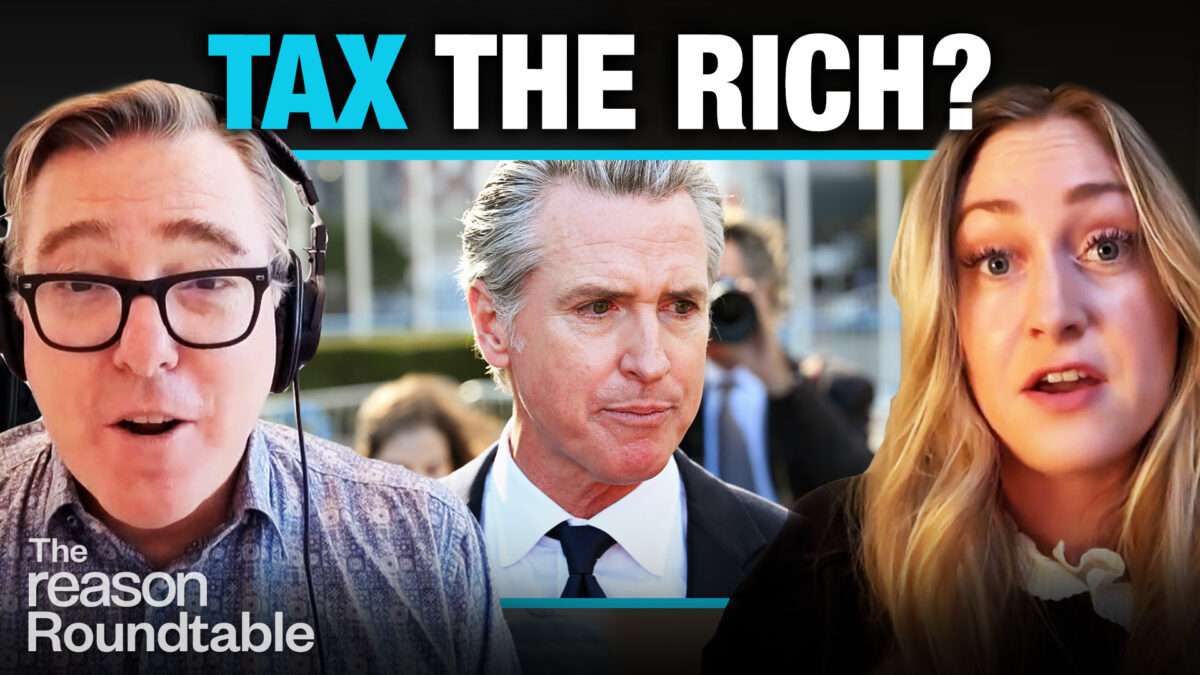
Matt Welch appears on the left. Liz Wolfe appears on the right. Behind them, an image of Governor Gavin Newsom appears looking concerned in the center. Bold text across the top of the screen reads "TAX THE RICH?"
Verizon's CEO says SpaceX's Starlink faces some significant technical and financial hurdles to compete at scale in the US.
Zamek/GVN/VIEW press/Corbis via Getty Images
Verizon's CEO says he assumes SpaceX will flawlessly execute its US ambitions — but he's not worried.
In order for Starlink to compete, it will still need a lot of land-based infrastructure.
That building could require SpaceX to spend a half trillion dollars over up to eight years, he said.
In business, as in war, the safest bet is often to avoid underestimating your competitors, even when the odds appear to be in your favor.
Verizon CEO Dan Schulman says he's a student of that philosophy when it comes to Elon Musk's ambitions to develop SpaceX's Starlink into a significant US network player.
"Clearly, the tech and the wireless landscape is rapidly evolving, and we need to rapidly evolve along with that," he said during the company's third-quarter earnings call Monday. "I also operate under the assumption that everything SpaceX says they will do, they will do, and that they will execute flawlessly."
Setting aside Musk's track record of delivering on his eyebrow-raising promises, Schulman said there are significant technical and financial hurdles that Starlink would have to clear to meaningfully compete with established networks like Verizon. But it is possible.
"If they build a terrestrial network, it will basically look and feel like every other network," he said. "I think we should take it quite seriously."
News earlier this month that Starlink had acquired a batch of mobile-friendly low-band spectrum sent the share prices of the major US mobile carriers falling by approximately 10%. Verizon is the only one of the three to partially recover from the drop.
"Their service just can't compete with a terrestrial network in suburban and urban areas, where like 98% of our revenues are," he said of the satellite-based system. "We're somewhere between 100 to 1000 times more efficient than they are."
Building a competitive US network, especially for mobile, would require building as many as 80,000 large cell towers on Earth linked with some combination of satellites and fiber optics, Schulman said.
Schulman estimates that project would cost up to a half trillion dollars over six to eight years, with a minimum of four to six years to actually build out the network.
"Then they need to build retail customer service, back office systems, et cetera., and all of that gets them basically the same network and same capabilities and same cost structure as what we have today," Schulman said.
After the call, Musk responded to the forecast with a post on X: "Will take 2 or 3 years."
The Verizon chief's remarks come less than a week after his AT&T counterpart, John Stankey, brushed off concerns that Starlink's mobile network could pose a threat to his business.
"I wouldn't over-rotate on what I would call one carrier of low band spectrum," he said.
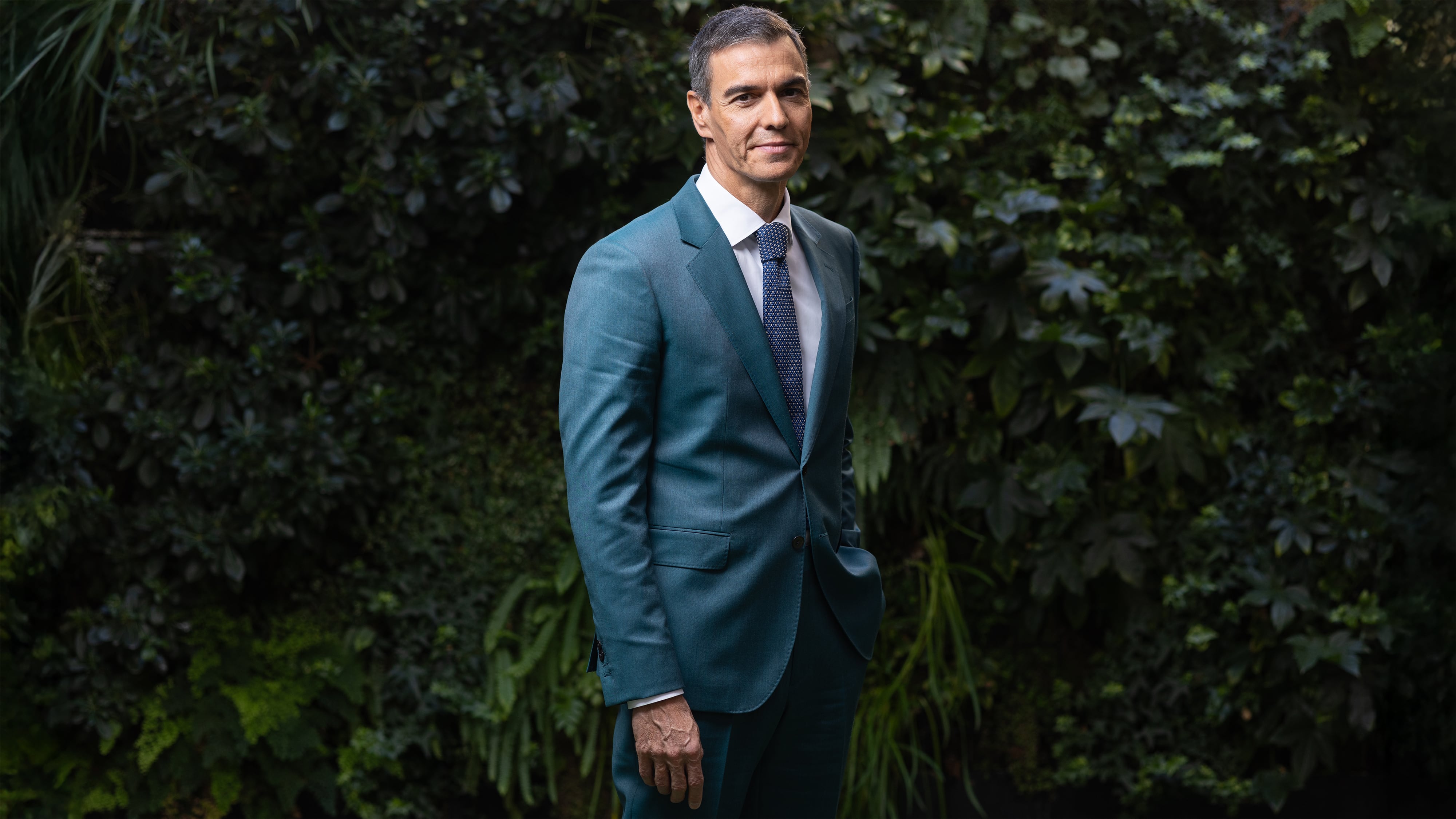
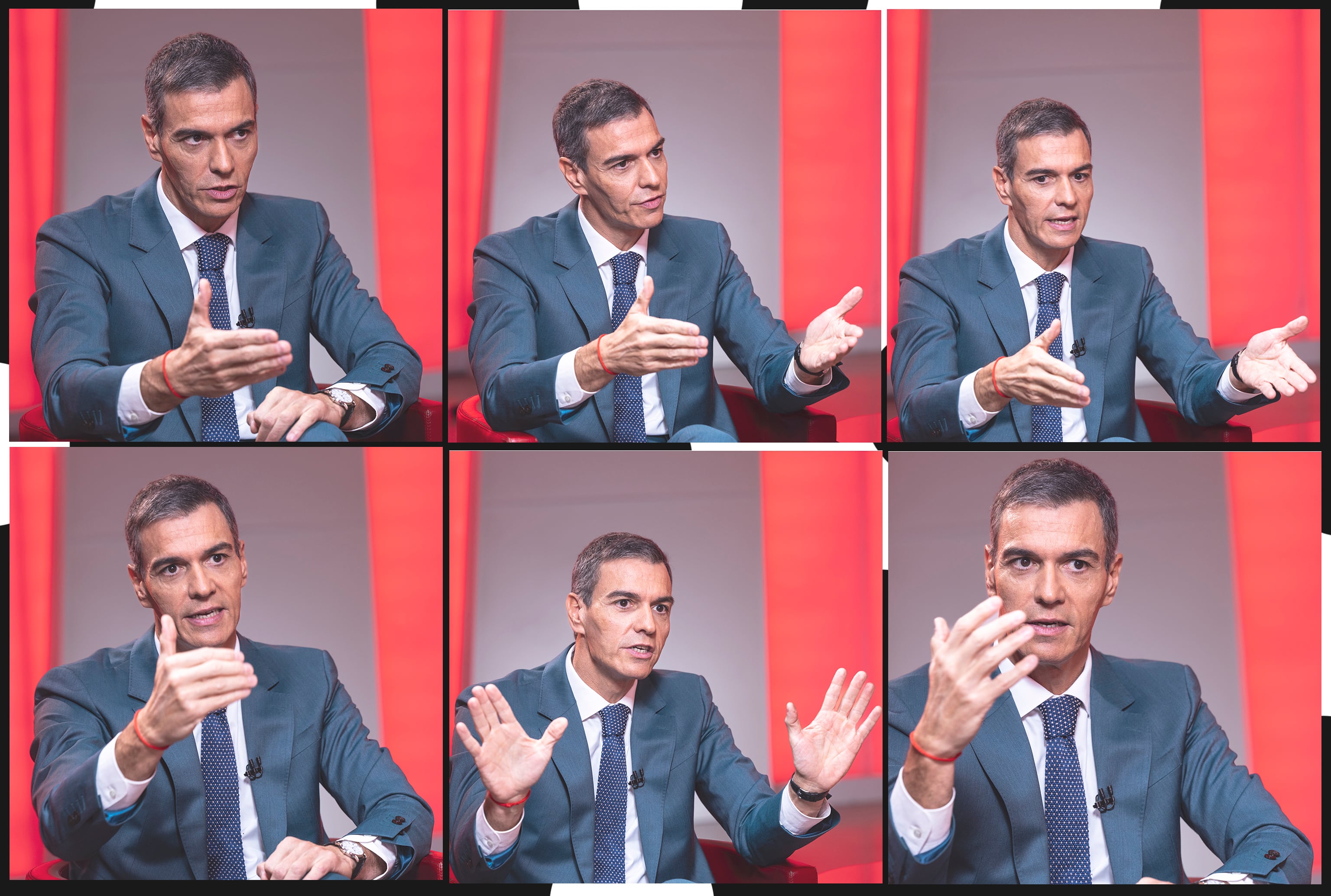
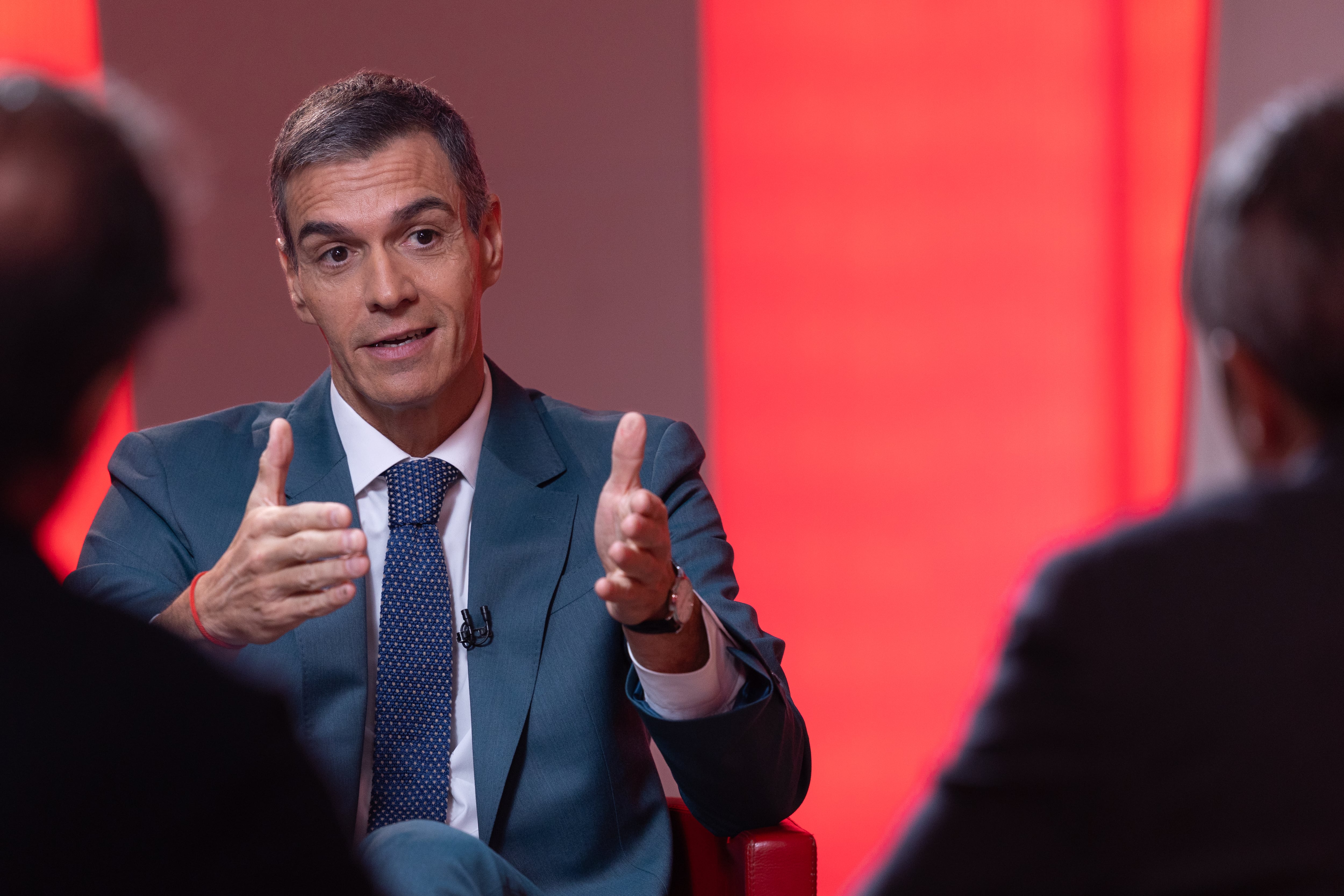
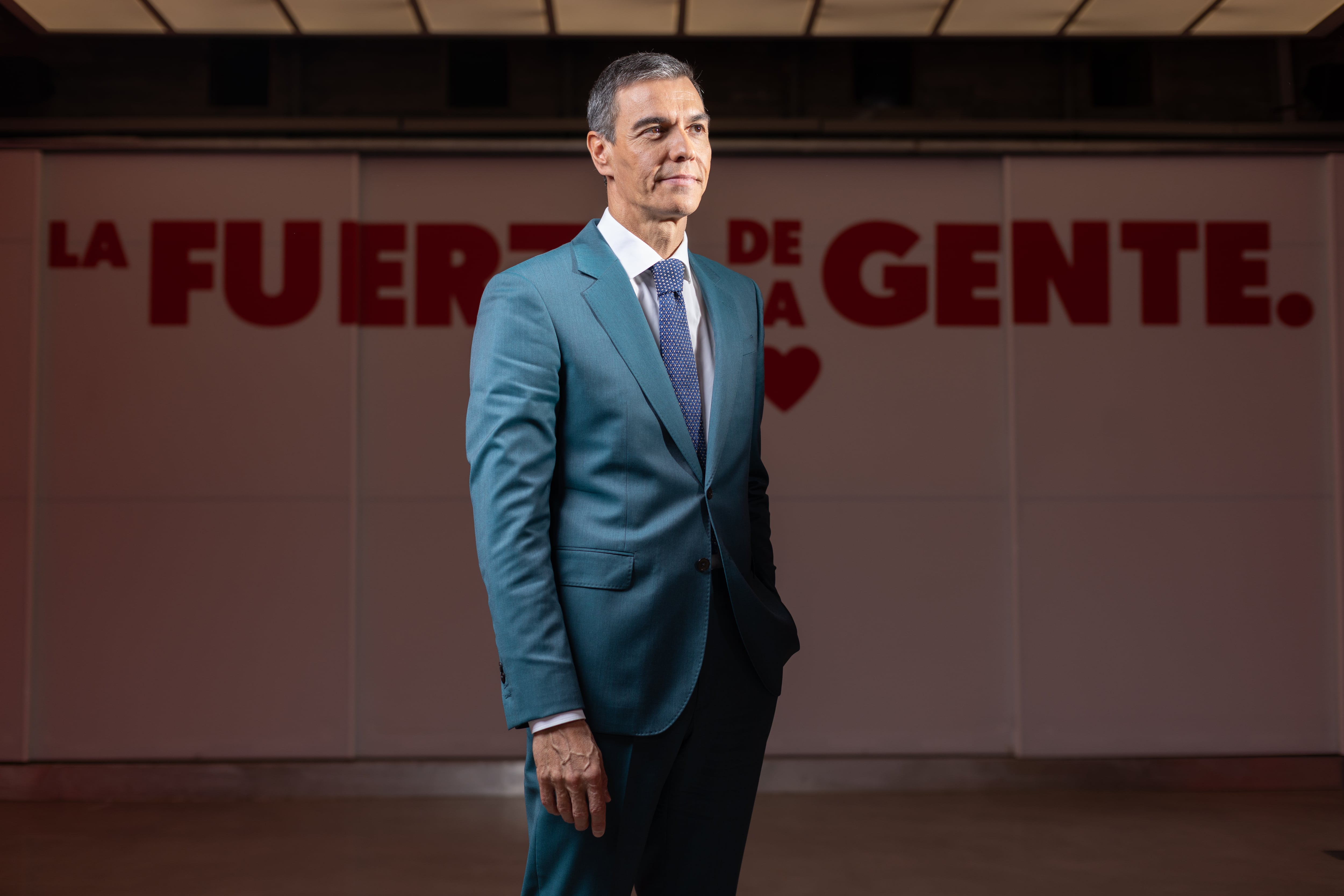
The prime minister is a candidate again. And it shows. He speaks fluidly, dodges jabs, and stands his ground with a smile. Pedro Sánchez, who seemed somewhat weakened after his brother’s conviction and the Ceuta migrant crisis, appears to have been energized by the general election of November 29, which will be his sixth. “These elections can be summed up in a very simple idea: either the past moves forward, or Spain moves forward,” he says.
But unlike other public companies, Anthropic doesn't want the public's input when it comes to major decisions.
Instead, Anthropic will be effectively controlled by CEO Dario Amodei and a group of other insiders.
In the next few weeks, public investors will get their chance to buy a piece of Anthropic.
But regular investors will never have a chance to steer the AI giant's decisions: Even though Anthropic is going public, it will essentially remain a private company, controlled by a handful of people with outsized power.
That's not unusual for giant tech companies launched in the past few decades (Larry Page and Sergey Brin have effective control of Google; Mark Zuckerberg has the same at Meta, as does Elon Musk at SpaceX.) It's also something you see at some prominent media companies (Rupert Murdoch and his son Lachlan have effective control of his two public companies; Larry and David Ellison have the same at Skydance.)
Anthropic's twist on the idea is that control is split between two different groups of insiders. There's a clique of seven founders, including CEO Dario Amodei and his sister, Daniela, who control 50.1% of shareholder voting power. And there's also a trust with the power to appoint four of the company's seven directors.
Put those two together, and you get a corporate constitution designed to keep public investors outside the real decisions. The founders control the outcome of any shareholder vote; the trust controls the board.
In theory, those two groups could end up in conflict on major issues. The trust-appointed directors might, say, vote to replace Amodei with a new CEO. Or the founder group could veto a sale approved by the board.
In reality, there's a lot of overlap between the two groups. For starters, Anthropic created and funds the trust. And Anthropic itself says it has made sure the trust is staffed with people who see the world the same way its executives do: "In practice to date, the Trustees and company executives have collaborated closely on sourcing, interviewing, and selecting Trustees," the company notes in its S-1 filing.
The main takeaway is that there's no way for an individual shareholder, or even institutional shareholders who own significant chunks of Anthropic's equity, to force it to move one way or another.
The upside of arrangements like this are pretty clear, from a founder's perspective: They insulate their founders and managers from investors who might only care about short-term goals.
The downside: These structures insulate founders and managers from investors who might have very good reasons to want the company to change.
A good counter-example to the trend is Twitter, which went public in 2013 without founder control — which is why Elon Musk was able to buy it nearly a decade later.
In Anthropic's case, that aversion to giving public investors a real voice is synced directly to the company's founding thesis — that the AI it is developing is so consequential and potentially dangerous, that it must be controlled by people who care about more than Anthropic's share price.
And for many investors clamoring to get in on Anthropic's IPO, that lack of control — disclosed up front — won't matter. They just want their shares to be worth more over time. Musk's ironclad control of SpaceX didn't put dampen demand for the biggest IPO in history.
But if investors ever want to force Anthropic to do something the Amodeis and their cofounders — or the Anthropic-created trust — don't want it to do, they'll be out of luck. Buyer beware.
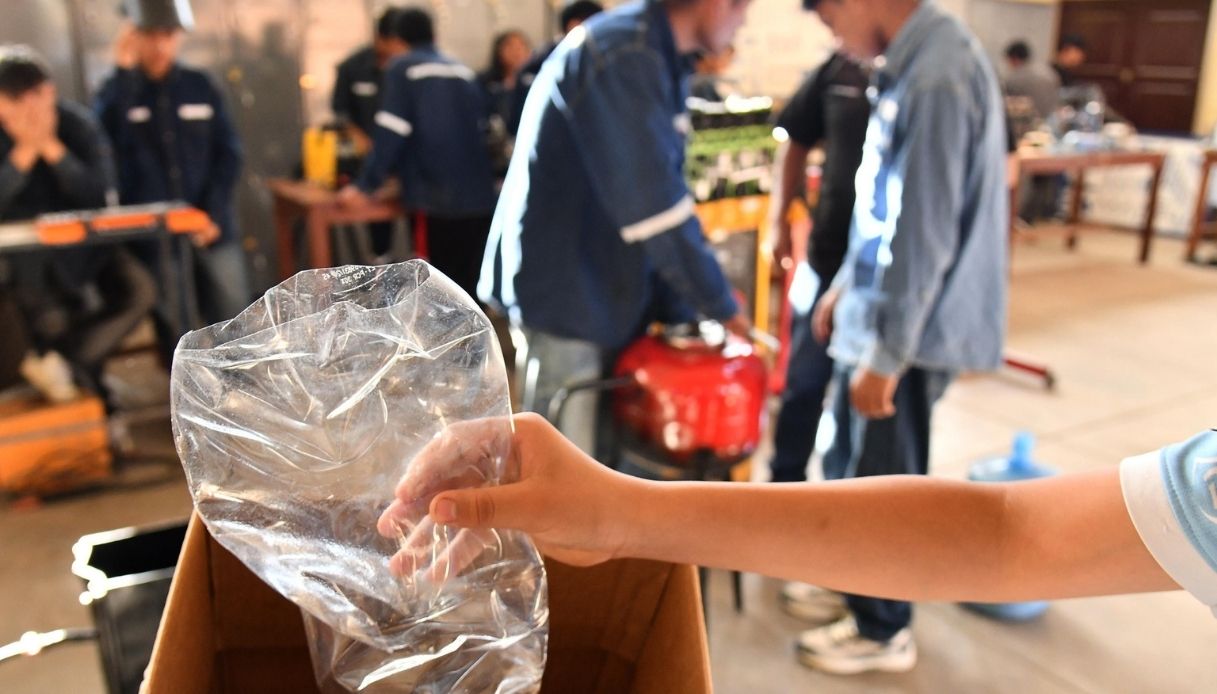
La Plastic tax e la Sugar tax potrebbero slittare ancora, con un rinvio di sei mesi che sposterebbe la loro entrata in vigore dal 1° gennaio al 1° luglio 2027. L’ipotesi è stata confermata dal vicepremier e ministro degli Affari Esteri Antonio Tajani durante l’assemblea pubblica di Federchimica a Milano, nel quadro delle misure allo studio per la prossima Legge di Bilancio.
Le due imposte, introdotte nel 2020, non sono mai state applicate a causa dei ripetuti rinvii. La nuova proroga, se confermata nel testo definitivo della manovra, rappresenterebbe un ulteriore differimento di sei mesi, mentre resta aperta la possibilità di uno slittamento più lungo.
Che cosa sono la Plastic tax e la Sugar tax
Plastic tax e Sugar tax sono due imposte con finalità ambientali e sanitarie, pensate per orientare le scelte di produzione e consumo verso comportamenti considerati più sostenibili. La Plastic tax è un’imposta sui manufatti in plastica con singolo impiego, comunemente indicati con la sigla MACSI. Rientrano in questa categoria, secondo le caratteristiche previste dalla normativa, prodotti destinati a contenere, proteggere, manipolare o consegnare merci e alimenti, come determinati imballaggi, contenitori e pellicole. L’obiettivo della tassa è ridurre l’utilizzo della plastica monouso e incentivare il ricorso a materiali alternativi o a soluzioni riutilizzabili e riciclabili. La misura mira quindi a rendere meno conveniente, dal punto di vista economico, l’impiego di determinati prodotti in plastica, favorendo una riduzione dei rifiuti e dell’impatto ambientale.
La Sugar tax, invece, riguarda le bevande analcoliche edulcorate, cioè quelle che contengono sostanze utilizzate per conferire un sapore dolce, nei limiti e secondo le condizioni stabilite dalla legge. La misura è stata concepita per disincentivare il consumo di bevande con un elevato contenuto di zuccheri e contribuire alla prevenzione di problemi di salute legati a un’alimentazione eccessivamente ricca di zuccheri, tra cui l’obesità.
A quanto potrebbero ammontare
La normativa originaria prevede per la Plastic tax un’aliquota pari a 0,45 euro per chilogrammo di materia plastica contenuta nei manufatti monouso soggetti all’imposta. Per la Sugar tax, l’importo previsto dalla disciplina istitutiva è invece pari a 10 euro per ettolitro per i prodotti finiti e a 0,25 euro per chilogrammo per i prodotti predisposti a essere utilizzati previa diluizione.
Si tratta degli importi previsti in origine, la cui effettiva applicazione resta subordinata alle disposizioni e alle scadenze vigenti, comprese le eventuali modifiche introdotte dalla Legge di Bilancio.
Plastic e sugar tax: cosa chiedono le imprese
Le associazioni di categoria non considerano sufficiente un ulteriore rinvio di sei mesi. Assobibe, che rappresenta le imprese produttrici e venditrici di bevande analcoliche, e Unionplast, che rappresenta l’industria italiana della trasformazione delle materie plastiche, hanno chiesto lo stralcio definitivo delle due imposte dalla prossima manovra.
Secondo le organizzazioni, una proroga limitata nel tempo non risolve il problema dell’incertezza normativa. Le aziende devono infatti programmare gli investimenti, organizzare la produzione, definire i prezzi e pianificare le strategie commerciali con un orizzonte temporale sufficientemente stabile. Il rischio, secondo le associazioni, è che l’assenza di certezze freni gli investimenti e renda più difficile la gestione delle attività industriali.
O Circuito Internacional de Montalegre destacou-se como um importante palco do ralicross mundial ao receber o RallyX Global Final, que teve lugar durante o fim de semana. A competição reuniu um total de 77 pilotos provenientes de 20 países, atraindo mais de 10 mil adeptos. Timmy Hansen, campeão mundial anterior, foi o vencedor da categoria-rainha FC1 Hypercar, terminando à frente do finlandês Niclas Grönholm e do sueco Kevin Eriksson.
A prova também marcou a estreia no ralicross do espanhol Dani Sordo, que após mais de duas décadas no Campeonato do Mundo de Ralis (WRC), conseguiu vencer uma manga de qualificação e terminou a final na sétima posição. A representação portuguesa foi notável, com José Oliveira a vencer na categoria 4WD+FC2 Am ao volante de um Peugeot 208 e Leonel Sampaio a alcançar o terceiro lugar. Joaquim Machado também se destacou na competição de domingo, garantindo um lugar no pódio com uma terceira posição.
Um dos momentos mais memoráveis da edição deste ano foi a realização da primeira corrida noturna nos 27 anos do Circuito Internacional de Montalegre. Sob iluminação artificial, os pilotos proporcionaram um espetáculo inédito aos milhares de adeptos presentes.
Após ter recebido em 2025 a estreia do RallyX no sul da Europa, Montalegre acolheu agora a grande final mundial da competição, reforçando assim a sua projeção internacional e capacidade para organizar eventos desportivos significativos. Este evento não só promoveu a modalidade como também dinamizou a economia local, beneficiando setores como hotelaria e restauração.
Fátima Fernandes, presidente da Câmara Municipal de Montalegre, sublinhou a importância desta prova para o concelho no panorama internacional do automobilismo. A autarca expressou orgulho pela presença dos melhores pilotos dos campeonatos europeus e americanos e agradeceu à equipa do Município e ao Clube Automóvel de Vila Real (CAVR) pelo seu profissionalismo na organização. Fátima Fernandes afirmou que “um concelho do interior profundo, tantas vezes esquecido pelo centralismo, conseguir manter uma agenda tão diversificada e atrair milhares de visitantes é um caso de estudo”.
California's experiment: Will California's proposed wealth tax, Prop 40, pass next week? And if it gets passed, will it end up actually costing the state money instead of generating revenue?
The basics: The proposal features a one-time 5 percent tax on people with net worths over $1 billion who lived in the state on January 1, 2026 (with the net worth amount calculated as of December 31, 2026). The idea for the snapshot date is presumably to prevent capital flight once the tax passes. The tax's supporters say the tax's revenues will amount to $100 billion and will fund California's health care system, which need to make up for federal Medicaid cuts.
Seven billionaires, representing 30 percent of the total billionaire wealth in the state, left California before January 1, 2026, when news of the possible tax broke. Peter Thiel, Larry Page, and Sergey Brin are among the deserters. The French economist Gabriel Zucman—an intense defender of the wealth tax—seems committed to the idea that this flight won't matter too much. He argues that while removing those seven brings down revenue estimates to $89 billion, adding in less-prominent small-time billionaires raises revenue to $115 billion.
This is silly. As The Washington Post's Megan McArdle points out, there's no reason to believe those less-famous billionaires would stay put. We have a hard time estimating what the total preemptive flight looks like, and how many billionaires have successfully taken up residency elsewhere.
"Either the tax is annual—and in that case it generates revenue annually, and some billionaires leave," claims Zucman. "Or the tax is one-time—in that case it generates revenue in just one year, and there is no incentive to leave. It can't be both at the same time." Zucman doesn't seem to consider that billionaires have already left, as soon as the idea was seriously floated, thus taking early steps to shield their wealth from the state.
Will it pass? "Likely voters are essentially where they were a month ago," reportsPolitico, based on recent polling data, "with 46% in favor of Proposition 40 and 43% opposed—despite a recent push by backers of the measure, including Sen. Bernie Sanders, to rally support." Interestingly, "a strikingly high share of registered voters (84%) said they'd been exposed to advertisements or messages about the tax, but a 45% plurality said the communications had not swayed them, and those whose views had shifted were just as likely to be more opposed as more supportive."
There's another complication: On that very same ballot, voters will decide on Propositions 41 and 42, competing measures that could keep Prop 40 from taking effect. Prop 40 will be nullified if either one gets more votes; but Prop 40 will nullify both of them if it gets more votes. Prop 42 would bar new taxes on personal property such as businesses, investments, retirement accounts, trusts, and art collections—things Prop 40 targets. It also bans retroactive taxes, thus making Prop 40 impossible to pull off.
Back in January, Pirate Wires' Mike Solana spoke with a bunch of billionaires who were worried about the tax and making plans to flee, partially out of distrust that the tax would be one-and-done. "Three men I spoke with in the largest billionaire Signal chat said they ran an informal poll, and seventy percent of the chat (around sixty people, not all of whom were billionaires) indicated they would leave the state if the ballot proposition passes," reports Solana. "According to that same poll, around 15% have already left the state."
"There is now real danger in appearing successful in the state of California," writes Solana, "as the far left, imbued with a great deal of power, and benefiting now from several years of wealth scapegoating throughout the mainstream press, attempts to liquidate its perceived enemies in business."
Scenes from New York: I'm fully aboard this train these days, though open to being convinced why I'm wrong:
If you truly *love* American cities, you MUST support strict enforcement of laws against anti-social behavior. Paying bus fares, red light cameras, camping on sidewalks, smoking on trains, off-leash dogs, etc etc
"Brazilian markets are heading for a major rout when local trading begins after President Luiz Inácio Lula da Silva pulled off a stunning comeback to defeat Flávio Bolsonaro, the right-wing candidate that many investors preferred," reportsBloomberg. This will be da Silva's fourth term.
Is dynamic pricing on the rise? Customers say yes, but most companies say they're wrong. My thought: Even if it's not currently happening to the degree angry customers claim, it certainly will be big in the future, as online shopping takes over and AI makes implementation easier. Consider the upside, though, noted in this Wall Street Journal piece: "Much current angst is focused on electronic shelf labels, which have replaced the printed labels that dotted shelves at groceries and other stores. Research on digital shelf labels in the U.S. and Europe, where grocers have widely used the technology for more than a decade, found the labels don't lead to surge pricing, in part because price changes are obvious to anyone walking by. Rather, research found, grocers have used the labels to discount goods that are about to expire, reducing food waste."
Great Washington Post headline: "Europe is running out of other people's money."
President Donald Trump claims the ships passing past Cuba on their way home from Iran will just, uh, handle the situation there. Sure.
Interesting:
Striking detail in the big NYT piece on Taiwanese families adjusting to working at the huge new TSMC chip plant in Arizona: their surprise at the lack of rigor in US schools. pic.twitter.com/YkSPzbHCuE
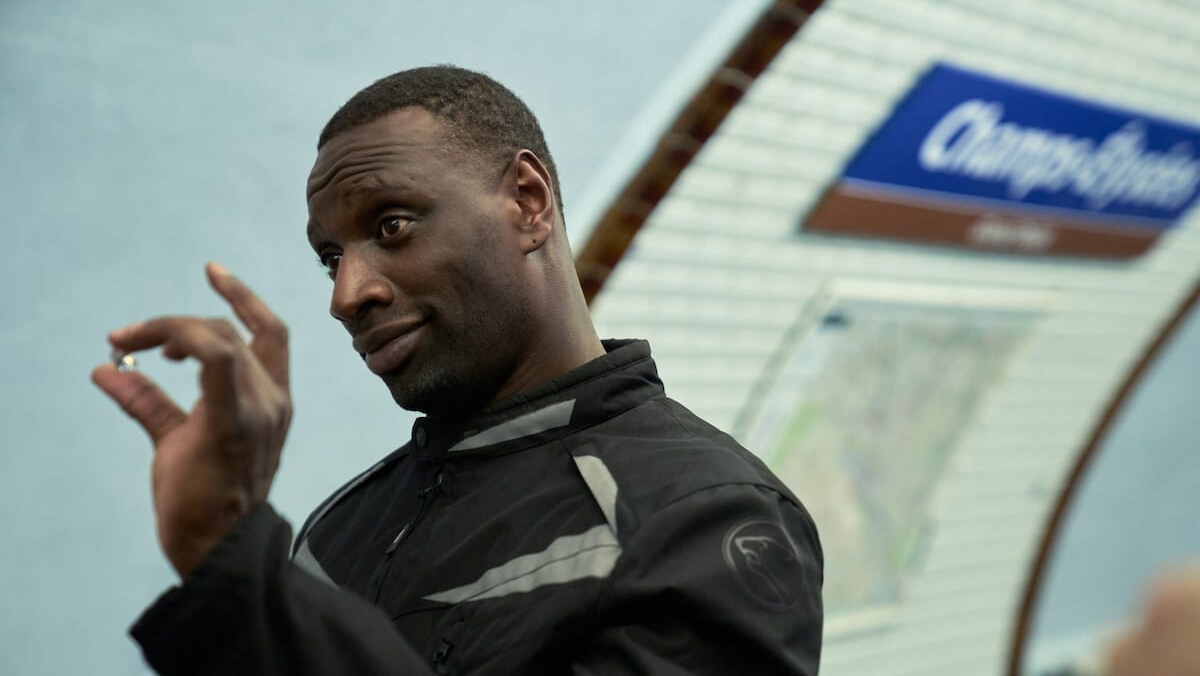
Tras un largo silencio que hizo dudar a muchos sobre el rumbo de la ficción, la cuarta tanda de episodios deLupin ha aterrizado en Netflix con ocho capítulos (su entrega más extensa hasta la fecha). La nueva temporada, estrenada tres años después de la tercera, ha dejado un salto temporal en la historia de cuatro años y un desenlace que se ha metido de lleno en la tragedia familiar.
De la venganza del Louvre a la cárcel: resumen de las temporadas anteriores
La serie nunca buscó calcar los relatos de Maurice Leblanc, autor de los libros en los que se basa, sino usarlos como el manual personal de Assane (Omar Sy). Su cruzada comenzó por justicia. Quería limpiar el nombre de su padre, Babakar, quien se suicidó en prisión tras ser acusado falsamente por el empresario Hubert Pellegrini de robar el collar de María Antonieta.
En las dos primeras partes, Assane jugó al despiste con la policía y el clan Pellegrini hasta lograr desenmascarar al comisario corrupto Dumont. Esa victoria pública le convirtió en el hombre más buscado de Francia y puso en el punto de mira a Claire y a su hijo Raoul.
La tercera temporada complicó la situación con la reaparición de su madre, Mariama, y la irrupción de Jean-Luc Keller, su antiguo instructor de boxeo que buscaba venganza por un atraco fallido cometido 25 años atrás. Tras resolver el caso de la Perla Negra, rescatar a Manon y neutralizar a Keller, Assane dio un paso inesperado. Decidió entregarse a la policía con el inspector Youssef Guédira para liberar a su socio Benjamin y apartar a su familia del acoso mediático.
La calma duró poco. Ya entre rejas, Assane recibió un sobre con una fotografía de su infancia y un ejemplar de La venganza de Cagliostro. Su vecino de celda no era otro que Hubert Pellegrini, quien dejaba la duda de si Mariama pudo haber actuado como su cómplice desde el principio, utilizando el amor de su hijo como trampa.
De qué trata la cuarta temporada: salto de cuatro años, el imitador del ladrón y la fuga
La historia arranca cuatro años después de aquel ingreso en prisión. Assane cumple condena con perfil bajo, decidido a saldar su deuda penal para mudarse definitivamente con los suyos a Senegal y dejar atrás su alter ego.
Ese plan salta por los aires cuando un criminal anuncia asaltos simultáneos en museos de París y Aviñón bajo la firma de Lupin. Los robos se ejecutan con precisión y una cámara de seguridad capta a un individuo idéntico a Assane en el lugar de los hechos, donde además la inspectora Sofia Belkacem resulta gravemente herida. Ante una acusación que pretende mantenerlo entre rejas, el ladrón se ve obligado a fugarse para limpiar su reputación y descubrir quién está suplantando su identidad.
Final explicado de la temporada 4: quién es el impostor y qué pasa con Assane tras el disparo
El imitador resulta ser Adèle (Laïka Blanc-Francard), la hija biológica secreta que Assane tuvo con Juliette Pellegrini. Hubert Pellegrini la apartó de su madre nada más nacer haciéndole creer a Juliette que la pequeña había fallecido, y la envió a un orfanato en Inglaterra.
Al crecer y rastrear su árbol genealógico, Adèle utilizó la tecnología y los métodos de Lupin para llamar la atención de su padre. Su objetivo definitivo fue el asalto a las Joyas de la Corona francesa, un tesoro histórico vigilado en la sombra por cuatro influyentes familias conocidas como "Los Guardianes".
La aparición de Adèle provoca un terremoto emocional en Raoul (Théo Christine). Quemado por años de ausencias, promesas rotas y el temor constante a verse relegado frente a su nueva hermana, el joven cae en la manipulación de Hubert Pellegrini. Raoul finge su propio secuestro junto a Adèle para obligar a Assane a robar las joyas y entregárselas a su enemigo.
El descubrimiento de la verdad desata una confrontación familiar múltiple, especialmente cuando Juliette descubre que su propio padre le arrebató a su hija durante décadas.
El clímax estalla en una pista de aterrizaje. Cuando Raoul y Pellegrini intentan huir en un helicóptero, Assane se lanza para escudar a su hijo con su propio cuerpo y recibe un disparo en el pecho por parte de la policía. La aeronave despega con Raoul en shock mientras Claire, Benjamin, Juliette y Adèle corren desesperadas a ayudarle. El capítulo corta a negro sin mostrar si Assane sobrevive o si recurrió a algún truco de protección, cerrando la temporada con el mayor cliffhanger (final en suspenso) de la serie.
Omar Sy al mando: reparto y novedades en el equipo tras las cámaras
Omar Sy ejerce en esta tanda como coproductor ejecutivo y co-showrunner, asumiendo peso en las decisiones creativas junto a George Kay y François Uzan. En el reparto repiten los rostros habituales como Ludivine Sagnier (Claire), Antoine Gouy (Benjamin Férel), Soufiane Guerrab (Guédira) o Hervé Pierre en la piel de Pellegrini.
Cartel promocional de la cuarta temporada de 'Lupin' | Netflix
La evolución dramática la lideran Théo Christine, con un Raoul mucho más sombrío y vulnerable a la manipulación, y Laïka Blanc-Francard, cuyo debut como Adèle aporta dinamismo y frescura a las secuencias de acción.
El impacto en audiencias y la opinión de la crítica
Con 217,6 millones de visualizaciones acumuladas entre sus tres primeras etapas (casi 100 millones en la primera, 68 en la segunda y 50 en la tercera), Lupin se mantiene como la tercera serie de habla no inglesa más vista en la historia de Netflix. Se sitúa así solo por detrás de El juego del calamar yLa casa de papel.
La respuesta de la prensa especializada no se ha quedado atrás. En Rotten Tomatoes ha debutado con un 100% de valoraciones positivas, igualando la marca perfecta de la anterior tanda.
Otros medios nacionales e internacionales han destacado el tono cinematográfico y los recursos tecnológicos que Sy ha sumado a las secuencias de acción. Mientras, algunos portales alaban que la trama apueste por el conflicto íntimo antes que por la repetición de la fórmula habitual de atracos.
¿Tendrá quinta temporada 'Lupin' en Netflix? Las claves de la continuación
Por el momento, Netflix no ha anunciado la renovación oficial, un trámite que suele demorarse varias semanas mientras la plataforma calcula el volumen global de horas vistas y los índices de finalización de la temporada.
No obstante, las opciones de continuidad podrían ser bastante altas. La compañía no ha promocionado esta tanda como el desenlace definitivo y el equipo planteó los episodios como un reinicio cargado de frentes abiertos (confirmar la supervivencia de Assane, ver si Raoul despierta de la manipulación de Pellegrini tras ver caer a su padre y descubrir las represalias de "Los Guardianes" tras el robo de las Joyas de la Corona).
El propio Omar Sy ya ha alimentado la expectativa sobre esa posible temporada 5 en declaraciones recientes a SensaCine: "En esta temporada hemos descubierto que todavía tenemos más cosas que contar. Assane sigue siendo una fuente inagotable de inspiración. Quizá sea el final, quizá no".
La miniserie Bajo la superficie es uno de los fenómenos recientes de Netflix que ha alcanzado el número uno del ranking global de la plataforma. Este thriller de terror, que gira en torno a una misteriosa criatura marina que amenaza a una pequeña localidad costera, combina suspense, secretos familiares y una amenaza relacionada con el calentamiento de los océanos. Pero ¿Qué ocurre realmente al final y qué esconde el monstruo que emerge de las profundidades?
Quién estaba detrás de la amenaza: atención spoilers
La criatura marina no era el único peligro para Snook's Arm. Calvin descubre que la poderosa familia Crocker, encabezada por Jim Crocker, llevaba tiempo intentando que los habitantes abandonaran sus propiedades para explotar los importantes yacimientos de cobre y cobalto que había bajo la localidad. Desplazar a los vecinos resultaba más barato que compensarlos por el valor de esos recursos.
La familia había impulsado una votación para reubicar a la población y estaba aprovechando el terror provocado por Mudder para acelerar el proceso. Jan, la mujer encargada de supervisar la votación y pareja de Jay, resulta ser hija de Jim Crocker. Su presencia formaba parte de la estrategia para manipular la decisión de los habitantes, lo que revela que la amenaza humana era tan importante como la criatura marina.
El viaje de Calvin a Little Pot Rock también le permite afrontar el trauma que arrastra desde la infancia. Cuando su familia intentaba trasladar su casa en barco, una fuerza submarina comenzó a arrastrarla hacia el fondo. Para salvar a su madre y a su hermana, Calvin cortó la cuerda que unía la vivienda con la embarcación, pero su padre desapareció en el mar.
Décadas después, Walton Budgell, un antiguo amigo, le muestra su tumba y le explica que el cuerpo fue recuperado. Calvin comprende así que su decisión fue necesaria para salvar al resto de su familia y comienza a liberarse de la culpa que lo ha acompañado durante años.
Qué significa la escena final
Una vez que la amenaza inmediata desaparece, los habitantes regresan a Snook's Arm. La votación para abandonar el pueblo queda anulada y la familia Penney abre un establecimiento llamado Big Squid Distillery. La vida parece recuperar cierta normalidad y también queda abierta la posibilidad de una relación entre Calvin y Fonda, aunque la serie no confirma que ambos comiencen una historia sentimental.
Pero el desenlace introduce una última inquietud. En los segundos finales aparecen varios icebergs más en el horizonte. La imagen recuerda que el hielo había ocultado secretos relacionados con Mudder y plantea la posibilidad de que todavía existan otras amenazas desconocidas bajo la superficie. La serie no confirma que esos nuevos bloques contengan criaturas como ella, por lo que su significado permanece abierto.
La escena también refuerza uno de los mensajes centrales de la ficción, el cambio climático está alterando el entorno y puede sacar a la luz fenómenos que permanecían ocultos. El creador de la serie, Jesse McKeown, explicó a Netflix Tudum que el final apunta a un futuro en el que las consecuencias del calentamiento global pueden volverse más extrañas y aterradoras. Por eso, aunque Calvin consigue salvar su hogar y recuperar a su familia, el último plano deja claro que la tranquilidad de Snook's Arm podría ser temporal.
Qué ocurre con Mudder al final de la serie
La clave del desenlace está en el origen de la agresividad de Mudder, el gigantesco cefalópodo que vive bajo el hielo. Una vez descubierto que el animal no ataca por una maldad inexplicable, sino que intenta proteger a sus crías, cuyos huevos se encuentran atrapados en un iceberg, se entiende que la criatura está desesperada porque el agua es demasiado cálida para que puedan sobrevivir.
Cuando el ejército prepara un ataque para acabar con Mudder, Calvin comprende que destruirla también supondría arrasar el puerto y dejar a los habitantes sin posibilidad de regresar a sus hogares. Con la ayuda de su hijo Wade y del resto de su familia, decide actuar antes del bombardeo.
La operación consigue alejar a Mudder de la costa y evitar que el ejército la destruya. Sin embargo, Fonda explica que el agua sigue siendo demasiado cálida para que las crías sobrevivan. La serie no ofrece un desenlace feliz para la descendencia de Mudder, aunque el protagonista logra salvar al animal del ataque militar.
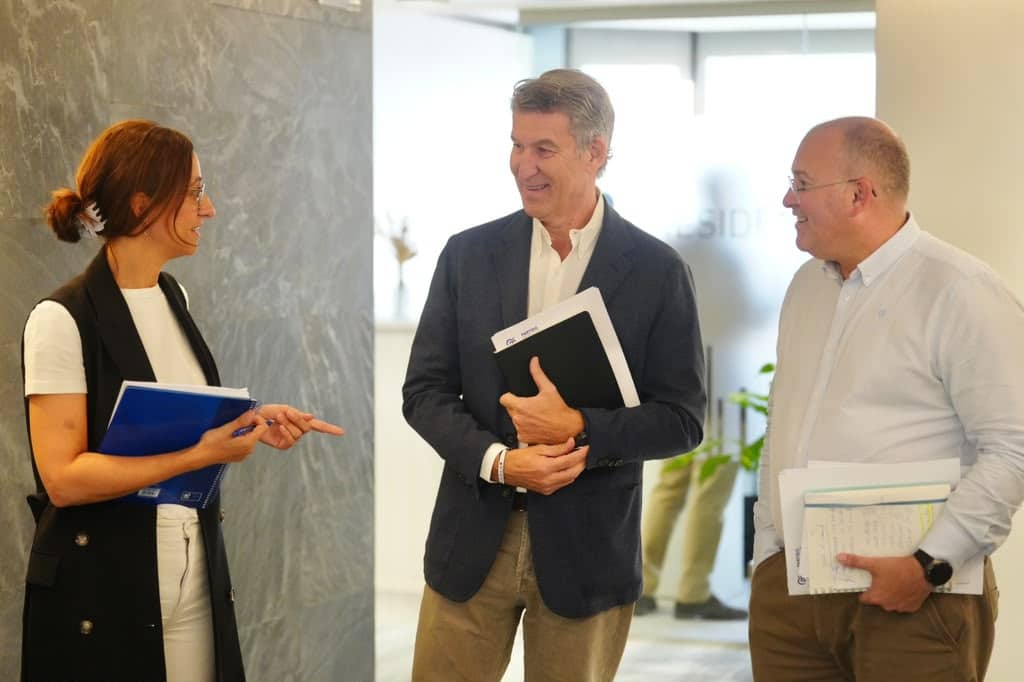
PP y Vox llegan a un acuerdo para concurrir juntos al Senado. Vox no presentará candidatura propia en seis provincias, esto es, Las Palmas, Santa Cruz de Tenerife, Cádiz, Valencia, Castellón y Baleares, aunque incorporará un nombre en la lista del PP. Además, los voxistas, irán con un único candidato en catorce (Sevilla, Huelva, Asturias, Badajoz, Álava, Navarra, Cáceres, Huesca, Zaragoza, Alicante, Granada, Cuenca, Pontevedra y Jaén) y en las 23 provincias restantes concurrirá con normalidad. Por su parte, el PP no presentará listas al Senado en Guipúzcoa, Gerona y Tarragona donde nunca han obtenido senadores.
El secretario general del PP y responsable de la campaña electoral popular, Miguel Tellado, se ha felicitado de un pacto que contrapone al de las izquierdas en el Senado. Ha agradecido la "generosidad" del partido de Santiago Abascal.
El pacto busca "frenar en seco a la extrema izquierda en el Senado"
Esta colaboración, circunscrita al Senado, "se basa en la convicción de que es lo mejor en España y no en los intereses de una sola persona. No hay dos partidos que se diluyen ni renuncian a sus siglas. No somos el PSOE, ni en Frente Amplio", ha agregado Tellado. El pacto con Vox busca "frenar en seco a la extrema izquierda en el Senado".
La comparecencia de Tellado se alargó más allá de las 13.00 horas. Salió después de que Vox comunicase a través de un comunicado a la vez la decisión de llegar a puntos de acuerdo. Además de aportar esos datos electorales y con precisión dónde concurrirá, Vox compartió una declaración grabada de Ignacio Garriga, secretario general y vicepresidente de la formación. Su segunda, Montserrat Lluís, secretaria general adjunta, ha negociado esos acuerdos con Tellado durante la última semana. "Vox estará a la altura siempre. Nos jugamos más que unas elecciones", sintentizó Garriga.
En ese vídeo y sin rueda de prensa desde Bambú este lunes, concretó que "ante el intento" del presidente del Gobierno, Pedro Sánchez, "de asaltar todas las instituciones de la mano de extremistas y radicales desde el Senado", en referencia a sus socios de izquierdas y a Frente Amplio, indicó que Vox estará a "la altura de miras de todo el mundo. España está en juego". "España y nuestra democracia están en juego, gesto que consideramos útil". El segundo de Abascal, además, aclaró que esto no aplica al Congreso: "Nuestros votantes podrán apoyar a Vox al Congreso con plena normalidad".
"Somos muy diferentes, con discursos distintos, lo hemos dicho siempre. No es ningún secreto que compartimos la responsabilidad de echar a la organización criminal de Sánchez de todas las instituciones", justificó Garriga la decisión de Vox.
Clave para alcanzar una mayoría supercapacitada de 3/5
De este modo han alcanzado un acuerdo para maximizar los votos en el Senado. Este lunes a las 12 de la noche vence el plazo para la presentación de candidaturas a las elecciones generales del 29 de noviembre. Populares y voxistas han negociado las condiciones de un modelo de colaboración preelectoral para el Senado en réplica a la de PSOE y Frente Amplio. La intención de las izquierdas es impedir que PP y Vox lleguen a dominar tres quintos de la Cámara Baja, esto es, 162 senadores, lo que les permitiría tener mayoría reforzada para abordar la renovación de cuatro asientos del Tribunal Constitucional y la mitad de los vocales del Consejo del Poder General (CGPJ).
FS Logistix, le nuove EffiShunter 1000 rafforzano la flotta di Mercitalia Shunting & Terminal e il piano di rinnovo dei mezzi
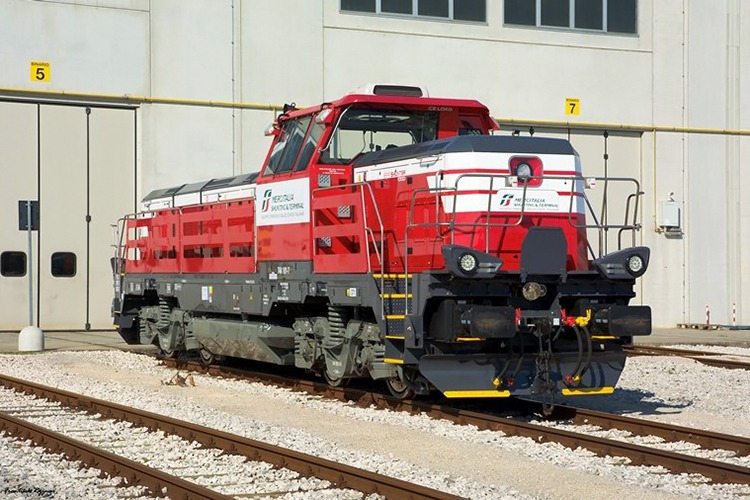
FS Logistix potenzia la propria capacità operativa nel trasporto ferroviario delle merci con l’acquisto, attraverso Mercitalia Shunting & Terminal, di sei nuove locomotive EffiShunter 1000 prodotte da CZ LOKO. I nuovi mezzi saranno destinati sia ai servizi merci sia alle attività di manovra, anche sulle linee non elettrificate.
L’operazione si inserisce nel Piano Strategico della società e rafforza il percorso di rinnovo e potenziamento della flotta, con l’obiettivo di aumentare flessibilità, affidabilità ed efficienza dei servizi. Versatili e progettate per rispondere a diverse esigenze operative, le nuove locomotive contribuiranno a migliorare la qualità dei servizi, con benefici attesi anche sul fronte dei consumi, delle emissioni e dei costi di esercizio.
Si tratta del quarto ordine di questa tipologia in dieci anni da parte delle società di FS Logistix, a conferma di una collaborazione consolidata con il costruttore ceco CZ LOKO.“La rinnovata fiducia di FS Logistix rappresenta per CZ LOKO un importante riconoscimento della qualità e dell’affidabilità delle nostre soluzioni”, ha dichiarato Josef Gulyas, CEO di CZ LOKO.
“Questo nuovo ordine si inserisce nel percorso di progressivo rinnovo e potenziamento della nostra flotta”, ha dichiarato Sabrina De Filippis, Amministratore Delegato di FS Logistix.“L’obiettivo è rendere la mobilità delle merci sempre più efficiente, affidabile e sostenibile, valorizzando le economie di scala nella gestione dei rotabili e la qualità dei servizi offerti ai clienti”, ha aggiunto De Filippis.
“Le locomotive di CZ LOKO garantiscono elevata versatilità e rispondono alle esigenze operative dei nostri servizi. Le sei nuove unità contribuiranno a migliorare ulteriormente la qualità dell’offerta, con benefici in termini di consumi ed emissioni”, ha concluso Livio Ravera, Amministratore Delegato e Direttore Generale di Mercitalia Shunting & Terminal.
Le EffiShunter 1000 sono progettate per operare in diversi contesti, dalle manovre nei terminal e nei porti al soccorso in linea, dai servizi di tradotta fino alla trazione di convogli merci pesanti in doppia trazione. Le locomotive dispongono di una potenza di 895 kW e di uno sforzo massimo di trazione pari a 267 kN, caratteristiche che consentono di coniugare prestazioni e affidabilità con costi operativi contenuti, consumi ridotti e minori livelli di rumorosità.
I mezzi sono autorizzati a circolare sulla rete ferroviaria nazionale gestita da RFI e sulle principali reti regionali. A livello internazionale, il modello è stato commercializzato in oltre 100 esemplari, attualmente operativi in otto Paesi europei. La collaborazione tra le società di FS Logistix e CZ LOKO è iniziata nel 2017, quando Mercitalia Shunting & Terminal ha acquistato le prime cinque locomotive 744.1, consegnate nel 2018 e oggi impiegate nei servizi di manovra a Ravenna, Padova e Milano Smistamento.
Nel 2021 sono entrate in esercizio altre cinque locomotive 744.1 in livrea Mercitalia Rail, operative in Veneto, Emilia-Romagna, Lombardia e Piemonte. Nel 2022, Mercitalia Shunting & Terminal ha acquisito ulteriori due unità, impiegate nei servizi di manovra anche da Terminali Italia. La manutenzione delle locomotive CZ LOKO in dotazione alle società di FS Logistix è assicurata da CZ LOKO Italia.
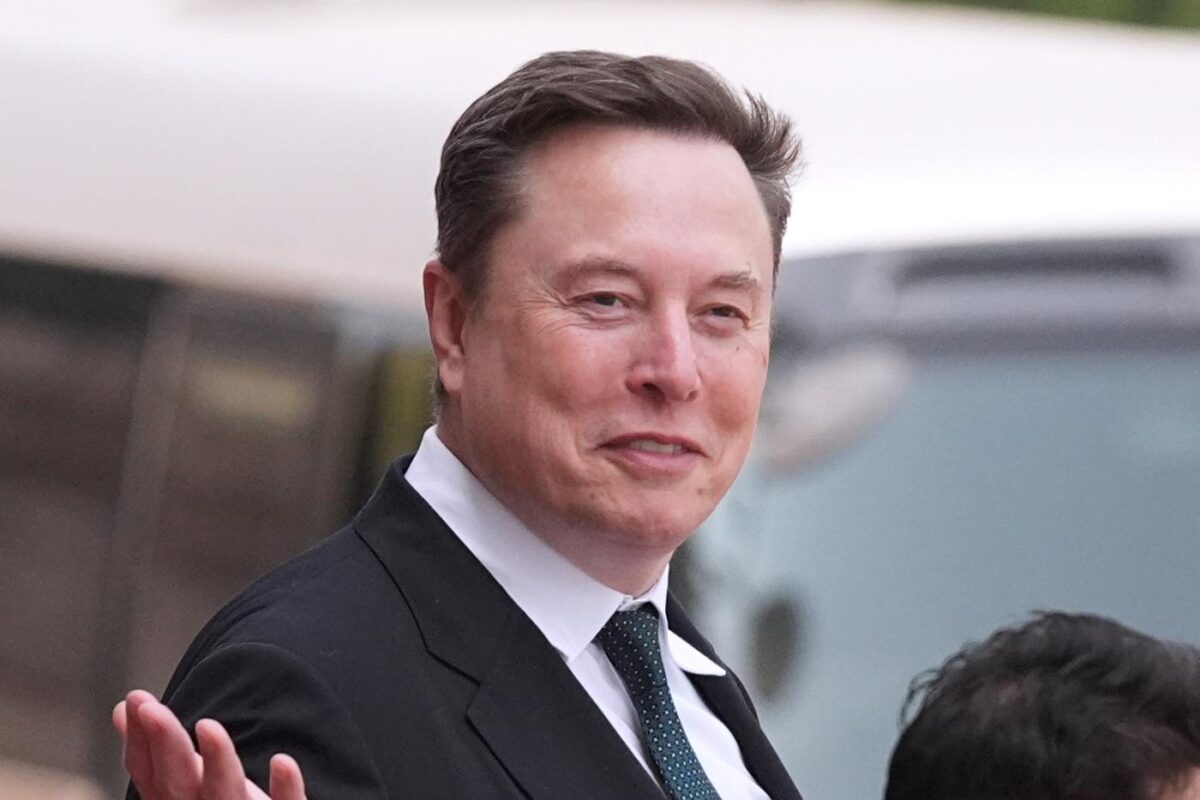
SpaceX ha raccolto 40 miliardi di dollari in prestiti destinati all’acquisto di nuovi chip per l’intelligenza artificiale. Lo ha annunciato Elon Musk attraverso un messaggio pubblicato sul suo social X, spiegando che le risorse serviranno principalmente a finanziare l’acquisto di GPU, le unità di elaborazione grafica fondamentali per lo sviluppo dei sistemi di intelligenza artificiale, la cui consegna è prevista tra il primo e il secondo trimestre del 2027. “Si tratta principalmente del rimborso del debito contratto per l’acquisto di GPU che arriveranno nel primo e nel secondo trimestre”, ha scritto Musk rispondendo a un investitore, senza precisare né la scadenza né il tasso di interesse del finanziamento.
La notizia arriva dopo che il gruppo, presentando i risultati finanziari martedì scorso, aveva annunciato investimenti compresi tra 35 e 40 miliardi di dollari nell’ultimo trimestre dell’anno, una cifra doppia rispetto a quella del trimestre precedente. I nuovi fondi, attesi all’inizio del 2027, confermano la volontà di mantenere elevato il ritmo degli investimenti nel settore dell’intelligenza artificiale.
Dopo la fusione con xAI all’inizio dell’anno, SpaceX, con sede a Starbase, in Texas, ha rafforzato la propria presenza nel comparto dell’intelligenza artificiale. Nel terzo trimestre, secondo quanto riportato, il gruppo ha registrato il primo utile netto della sua storia, grazie soprattutto ai ricavi derivanti dall’affitto della capacità dei propri data center a clienti esterni, tra cui Anthropic.
Prosegue intanto l’ampliamento del data center Colossus II, al confine tra Mississippi e Tennessee, mentre Musk punta a trasformare SpaceX in un conglomerato tecnologico, valutando anche l’acquisizione di Tesla, l’altra grande azienda da lui guidata.
New footage shows Likud minister and Haredi leader accused of sex crimes, with Netanyahu on the line, reach agreement on Achi party's withdrawal in exchange for deputy minister role
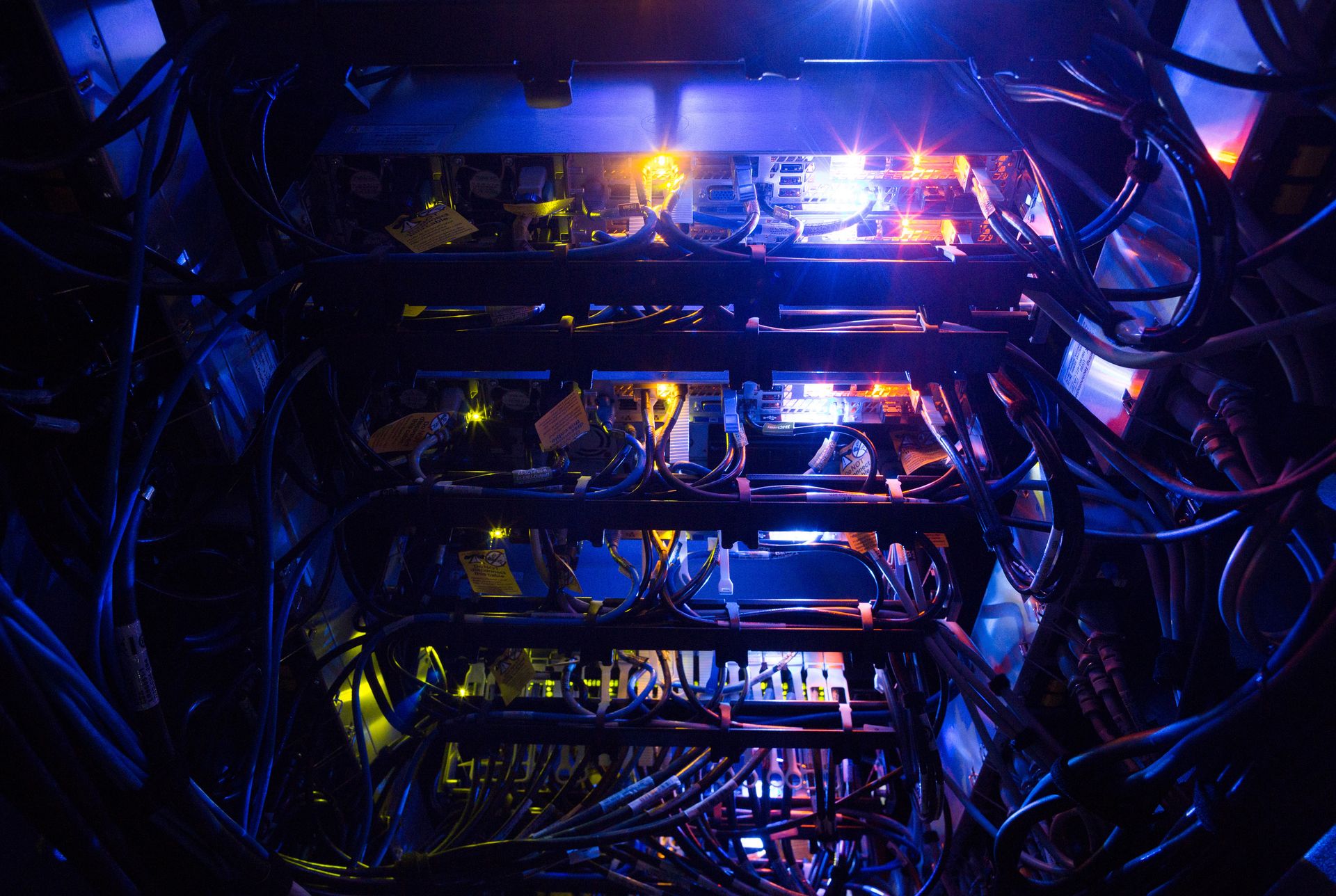
Existing data centers should be protected by reducing their visibility from the air, and through layered defense systems including reinforced structures, electronic warfare measures, and drone defense systems.
Officials say three men were wounded in the dawn shootout in Karak; authorities have not publicly identified any possible ties to Islamist terror groups
La fintech Weltix (ex ClubDeal Digital), di cui Antonio Chiarello è socio di controllo tramite AC72 con oltre il 55% e amministratore delegato, che svolge la gestione digitale integrata dei private assets, permettendo a aziende e investitori di gestire online l’emissione di equity e debito, la tokenizzazione di strumenti finanziari su blockchain, è ancora in rosso, anche se i ricavi segnano un lieve miglioramento. Lo attesta il bilancio del 2025 che s’è chiuso con una perdita di 555mila euro, superiore a quella di 420mila euro del precedente esercizio a fronte di un valore della produzione che anno su anno è salito da 217mila euro a 677mila euro.
C’è da osservare peraltro che Weltix lo scorso anno ha ricevuto a vario titolo diversi importanti contributi pubblici, tutti erogati dalla Regione Lombardia. Chiarello nella relazione sulla gestione ricorda che nel 2025 Weltix ha ricevuto l’autorizzazione della Consob per il registro DLT, che agisce con la propria Weltix Fiduciaria e offre anche una suite di servizi post-trade. Sempre Chiarello sottolinea che Weltix ha in programma l’anno prossimo di rafforzarsi dal punto di vista patrimoniale anche grazie a investitori istituzionali internazionali.
Ukrainian troops deploy a Starlink terminal on the battlefield. Kyiv is allowed to use the civilian service for communications needs, but not for drone strikes, for which it relies on Starshield.
Dmytro Smolienko/ Ukrinform/Future Publishing via Getty Images
Elon Musk has accused Ukrainian forces of using commercial Starlink in drone strikes.
But two Ukrainian drone figures say the claim is impossible because of limits imposed on the terminals.
It comes after Ukraine was hit by a 10-day slowdown on Starshield, the military version of Starlink.
Ukraine said its access to Starshield was restored this weekend, but Elon Musk isn't finished with Kyiv yet.
In an X post on Sunday, Musk accused Ukrainian forces of breaching Starlink's terms of service by using the civilian platform in drone attacks.
"Ukraine military violated Starlink terms of service and used it for offensive drone strikes to kill people. That loophole was closed last week," wrote the SpaceX owner.
"Using Starlink, a civilian commercial service, for offensive drone strikes to kill people has never been allowed, nor should it be," he added.
Musk made it clear he was talking about the commercial platform and not Starshield, the military version of the satellite communications service owned and controlled by the US government.
"Were Starlink to be turned off, the Ukrainian front line would collapse immediately. This is NOT a threat, it is simply a statement of fact," Musk added.
Ukrainian drone advisors hit back
Two prominent Ukrainian drone figures, however, disputed Musk's statement, saying that it was technically impossible for any of Kyiv's troops to have independently used Starlink in drone strikes.
"As someone who was inside the process at the Ministry of Defense, I can say for sure that this is not true," wrote Serhii Sternenko, a former advisor for drones to Ukraine's defense ministry, on his Telegram channel.
"It is very strange that Elon Musk does not know about the restrictions on Starlink operation in Ukraine," wrote Serhii "Flash" Beskrestnov, another former advisor.
Ukrainian troops are allowed to use Starlink for communication and piloting non-combat systems, such as this demining drone.
Anastasiia Sheviakova/Gwara Media/Global Images Ukraine via Getty Images
Both worked in the ministry in early 2026, when it negotiated with SpaceX to prevent Russia from using black-market Starlink terminals in the war. SpaceX agreed in February to block Starlink over Ukraine and Russia, allowing access only to whitelisted Ukrainian terminals.
Sternenko said that Ukrainian civilians and troops could register their terminals on the whitelist, but that these would only work while subject to a speed requirement.
For one to connect while moving, it would have to be put on a special list that uses Starshield instead, he said.
"That is, it was technically impossible to use civilian Starlink to perform missions on drones. All drone missions that required satellite communication could only be carried out using Starshield," Sternenko added.
Beskrestnov said the Ukrainian Starlink terminals were subject to a speed limit of 90 kmph, or about 55 mph. The civilian service is also completely cut off over Russia, he added.
"Thus, we physically cannot use commercial Starlink for deep strikes and middle strikes," Beskrestnov wrote.
Starshield vs Starlink
Tactical drones operating on the Ukrainian battlefield at speeds below 55 mph, such as first-person-view attack drones, typically use radio-frequency signals rather than satellite communication to maintain contact with an operator. These are also often too small and lack enough onboard power to reliably carry even a Starlink Mini terminal.
What Ukraine usually uses satellite internet for — hence its reliance on Starshield — is mid-range and deep strikes on Russia's rear or Russian territory, with larger, more powerful drones that fly much faster.
An example of a mid-range drone is the Hornet, a winged drone that's about the size of a human being.
Carlo Bravo/Anadolu via Getty Images
Kyiv also relies on satellite communications for its small interceptor drones, which fly at up to 265 mph to catch incoming attack drones.
Musk followed up on his Sunday X post with a screenshot of Ukrainian President Volodymyr Zelenskyy writing on social media in mid-October that Kyiv's forces "also use Starlink for mid-range strikes" against Russian targets.
However, Zelenskyy's post was describing Ukraine's recent troubles with Starshield, and he repeatedly used the term "Starlink" to refer broadly to the military satellite service instead.
Musk and SpaceX did not respond to requests for comment sent outside regular business hours by Business Insider.
Earlier this month, Ukraine raised the alarm that its access to Starshield was being throttled at high speeds, reducing its ability to conduct deeper strikes and to control interceptor drones.
The crisis lasted 10 days and came as President Donald Trump and Musk openly criticized Ukraine for targeting Russian oil facilities at a time when the White House was trying to ease fuel prices.
The Wall Street Journal reported, citing unnamed US officials and sources, that Musk had personally ordered the speed cap. Musk and Trump have separately said they were not responsible for the slowdown.
On Saturday, Zelenskyy said Starshield services were running normally again.
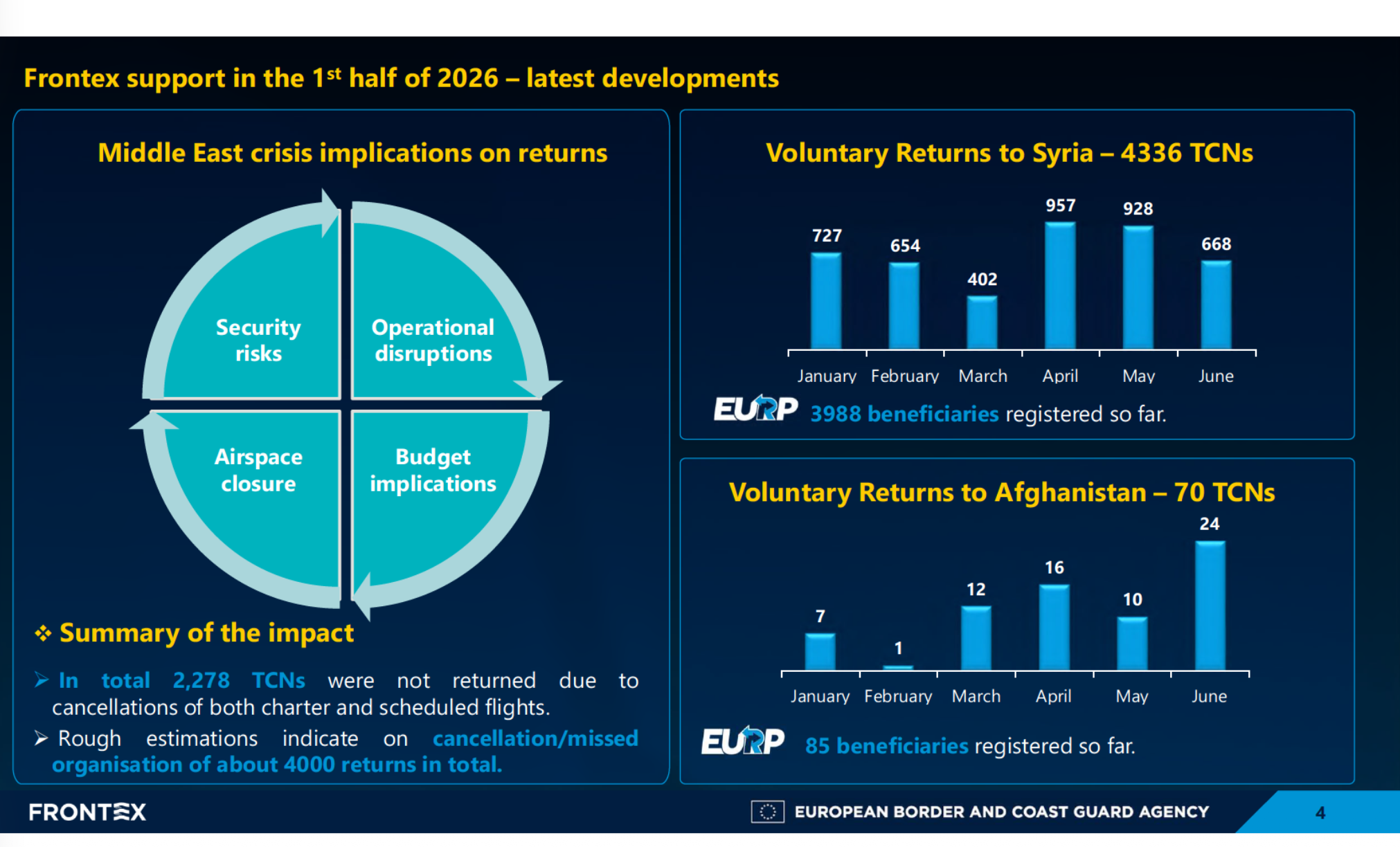
The US and Israeli-led war with Iran, launched in late February, and other military campaigns in the region have disrupted flights, leaving around 5,500 deportations that would normally receive support from the EU’s border agency Frontex unexecuted.
The disruption comes despite the Warsaw-based agency’s recent announcement that returns rose in the first half of 2026, with Syrians and Iraqis among the 10 nationalities most frequently deported.
Internally, however, Frontex appears concerned.
In July, it highlighted return problems because of the Middle East crisis, a broad swathe of conflicts that has seen various airspace closures over Bahrain, Iran, Iraq, Kuwait, Lebanon, Israel, Qatar, Syria, and the UAE.
It said roughly 4,000 returns had not been carried out because of direct cancellations or broader operational standstills, with member states halting the organisation or scheduling of Frontex-supported returns due to the Middle East conflicts.
By 30 September, that figure had climbed to 5,500.
Frontex document WK 9599/2026 INIT, made partially public on 2 July. Cites disruptions due to Middle East conflicts and returns to Syria and Afghanistan (Source: Frontex)
Although now open (as of publication), airspace restrictions, route availability and operational measures may be introduced, amended or lifted rapidly, sometimes with little notice.
European deportation setbacks typically involve everything from fragmented national systems, to people absconding, and to foreign states refusing to accept their own nationals. But war and conflict are now adding another layer of complications.
This article continues, but the full version is available only to EUobserver.com subscribers. Visit account.euobserver.com/membership

 Login