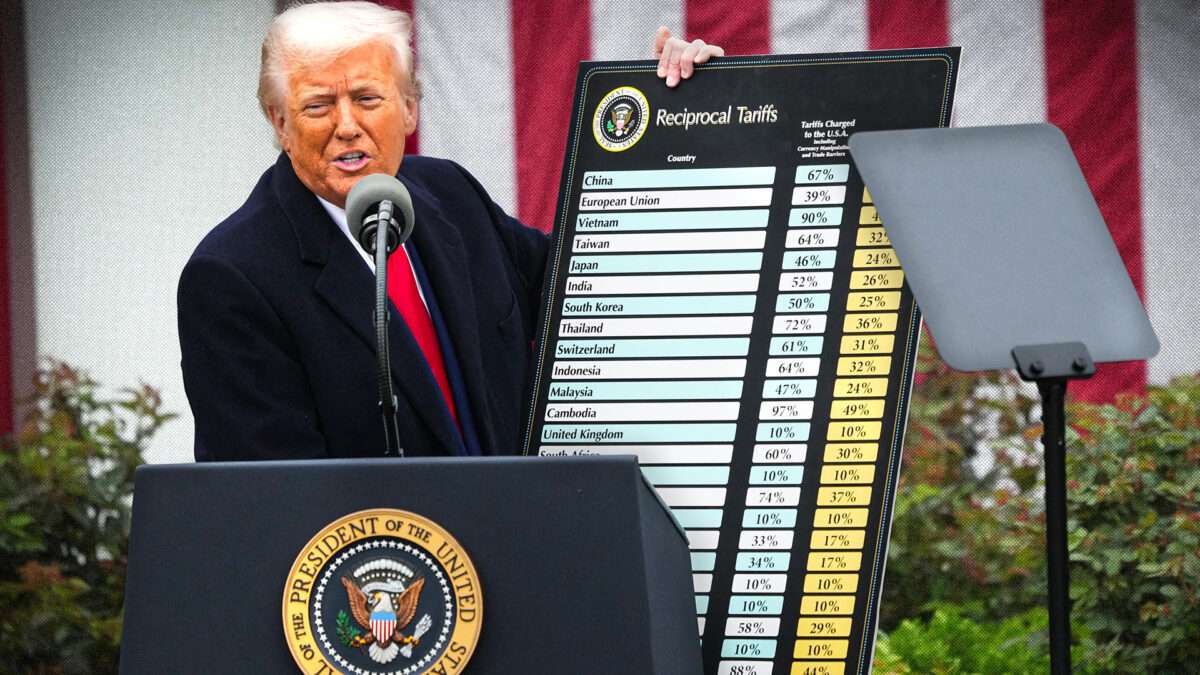
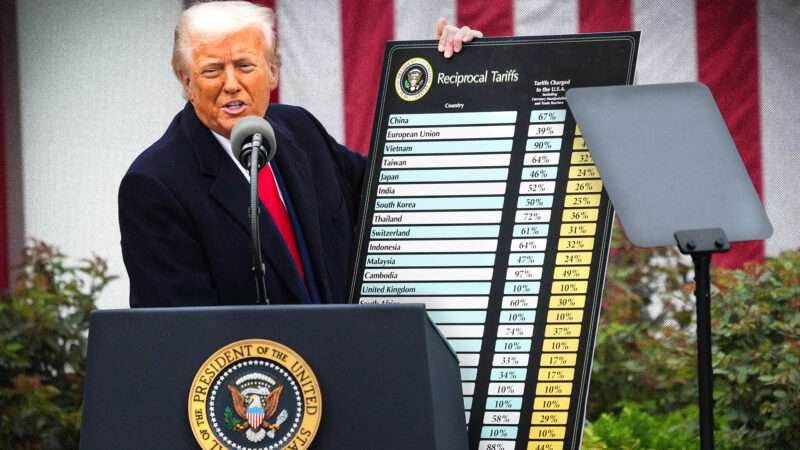
When the White House rolled back tariffs on coffee, fruit, beef, and farm equipment, it was effectively an admission that the tariffs were raising prices—and that Americans, not foreigners, had been paying for them.
Now, in the closing stages of the midterm campaign, the White House is once again rolling back some of those import taxes—and once again making an awkward implicit admission.
President Donald Trump's tariffs have become politically toxic.
The administration announced late last week that it would lift the 50 percent tariffs on some Canadian imports, apparently in an attempt to help Sen. Susan Collins (R–Maine) survive a tough reelection campaign in which the tariffs have played a significant role.
If this is indeed an attempt to sway voters in Maine, it is not a very convincing one. The Trump administration is removing tariffs on some agricultural and mechanical goods, as well as packaging and plywood, The Wall Street Journalreports. But Trump is also imposing new 50 percent tariffs on "other Canadian goods, including carpet, certain valves, and waste products."
Collins issued a statement thanking the White House for the changes. This is what members of the U.S. Senate have been reduced to—begging the president to cast his capricious, tariff-happy eyes toward products that will hurt people in other states more than in your own. (In fairness to Collons, she has voted repeatedly to roll back Trump's tariffs, but not enough of her fellow Republicans went along with it.)
Still, it's worth asking: What exactly is the pitch to voters here? Here's a tariff cut, now vote for Republicans so the president can continue to arbitrarily tax imports whenever the mood strikes?
It's easy to see why Trump's tariffs have become so unpopular. They are a huge and broad tax increase—the Tax Foundation estimates that 54 percent of imports are subject to Trump's tariffs, which are costing the average household about $1,000 annually—that was imposed without congressional authorization or popular support. They create more losers than winners, as downstream businesses and consumers pay the price for the protectionism offered to American manufacturers. Even the supposed "winners" of the tariff policy tend also to be "losers," since so much manufacturing depends on importing raw materials and intermediate goods.
Perhaps more surprising is how unwilling Republicans are to defend the president's signature economic policy. Or to even talk about it.
The Wall Street Journal's Greg Ip crunched the numbers and found that House GOP candidates have not run a single ad talking about the tariffs during this election cycle.
That silence speaks volumes. Trump says "tariff" is "the most beautiful word in the dictionary." But it is now "one of the most hated words in politics," writes Ip.
The only Republicans to mention trade or tariffs in a campaign ad, as far as I've seen, is former Rep. Mike Rogers, who is now running for the Senate seat in Michigan (and thus was not included in Ip's analysis). And he's calling for an end to the "tariff war."
There is a lesson here that hopefully will linger beyond the next week: If you support a policy that deliberately and unlawfully raises taxes and prices, voters will not reward you for it.
It's a lesson that the Republican Party learned long ago, but apparently forgot.
Against economists' advice, a Republican-led government in 1930 implemented a huge tariff hike intended to protect American farms and factories at the start of the Great Depression. Instead, those tariffs worsened economic conditions and triggered foreign retaliation.
When voters went to the polls in 1930, the first midterm after the Smoot-Hawley tariffs were passed, they registered their displeasure. The GOP lost 52 seats in the House that year. Two years later, an even larger landslide would sweep Democrats into power in Congress and the White House, ushering in the New Deal era that reshaped the federal government forever. The two lawmakers who lent their names to the legislation were among those who lost their seats, fittingly.
The most notable difference this time around is that Congress didn't actually pass a tariff bill. The trade barriers were instead imposed directly by the executive. Voters don't seem to care. Republicans were too cowardly to stand up to Trump's unilateral power grab, and now they seem too ashamed to try to defend that policy (and their largely complicit response) on the campaign trail.
As they say, those who don't learn from history are doomed to repeat it. And "doomed" may be a fitting way to describe the Republican majority in Congress right now, thanks in no small part to Trump's tariffs.
Ukraine's defense minister raised the urgent need for Patriot interceptors with Sweden on 22 October, the Defense Ministry reported. The same day, President Volodymyr Zelenskyy warned of more Russian ballistic strikes and blamed US supply cuts.
Patriots are Ukraine's main defense against Russian ballistic missiles, and their deliveries keep shrinking. Figures Zelenskyy released in August showed Patriot interceptor deliveries falling from 675 in 2023 to 364 in 2025, with 264 projected for 2026. Europe holds enough PAC-2 and PAC-3 interceptors for Ukraine's minimum winter needs, Zelenskyy told journalists on 16 October, but he did not yet know how many Europe would hand over, Ukrainska Pravda reported.
Partners' stocks now, Ukraine's missiles later
Russia fired 21 ballistic missiles at Kyiv overnight on 22 October, Zelenskyy said. Defense Minister Yevhenii Khmara told his Swedish counterpart, Pål Jonson, that Ukraine must counter ballistic threats as fast as possible, in particular with Patriot interceptors.
Explore further
1,000 Patriot missiles arrive too late for this winter, so Ukraine asked the Ramstein arms coalition to open its warehouses
The ministry's readout says Ukraine has Patriot missiles under contract. It also says Kyiv asks partners to transfer interceptors from their stocks in exchange for future deliveries allocated to Ukraine.
Khmara made the same request at the Ukraine Defense Contact Group meeting on 8 September. He said then that Ukraine was contracting about 1,000 Patriot missiles with partners' help and an EU loan, but they would arrive only in the coming years, LB reported. He asked allies for missiles from their stocks now, in exchange for future upgraded missiles under Ukraine's contracts.
"Only when the American side approves it"
Zelenskyy spoke to journalists before meeting Finnish Prime Minister Petteri Orpo, Ukrinform reported. He said the Americans had reduced supplies and Russia would step up ballistic attacks.
"Europeans can provide the missiles only when the American side approves it," Zelenskyy said.
He said the US had sent most of its interceptors to the Middle East.
On 19 October, Zelenskyy told US senators that US Defense Secretary Pete Hegseth was not signing off on Patriot deliveries allies had already paid for. Axios obtained the call transcript from Ukrainian officials. A US government official told the Kyiv Independent that Ukrainian officials' claims that Hegseth was holding up the missiles were "not true."
Washington says nothing has changed. "We have our own needs, too," Secretary of State Marco Rubio said on 20 October, but there is "nothing being deliberately denied to Ukraine." Hegseth told reporters in Eau Claire, Wisconsin, that the US had not changed its posture toward Ukraine, "but certainly with things like interceptors, we want to make sure our guys have the most possible as well."
Roman Spain had a network of official roadside stops for officials, soldiers and couriers, yet archaeologists know very few of them for certain. A new study may have added one. The building lies on the edge of Mellaria, a Roman town in the south of the country, on the road between the provincial capitals of […]
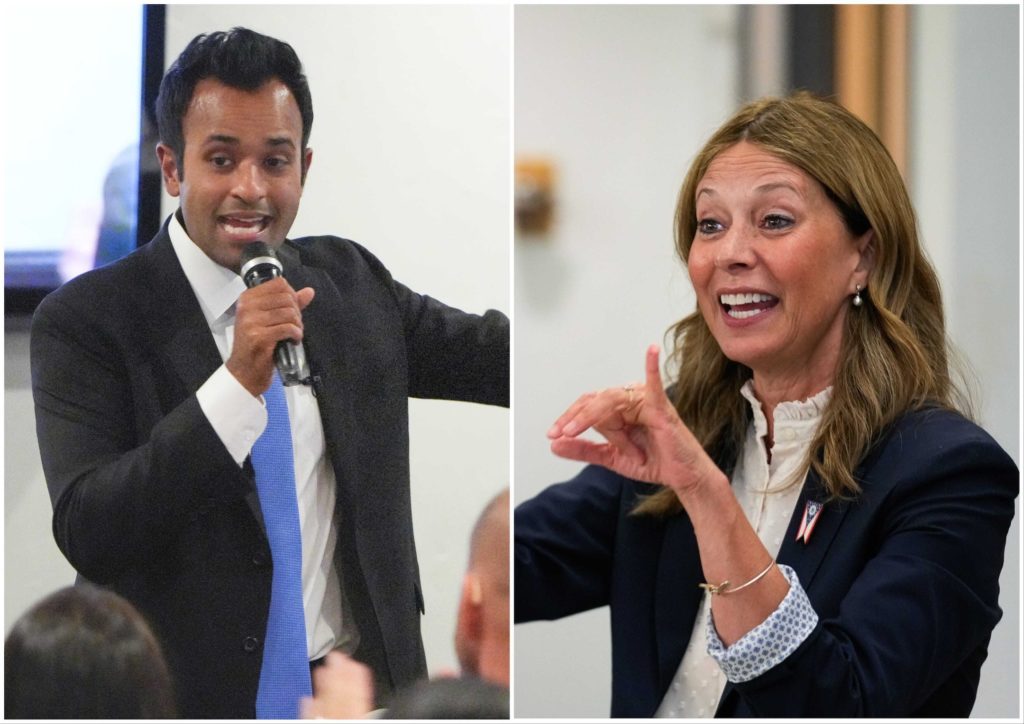
The campaign is in its final stretch and the attacks are getting increasingly personal. In Ohio, Republican gubernatorial candidate Vivek Ramaswamy's campaign is behind an ad featuring the estranged mother of his Democratic opponent, Amy Acton, disputing Acton's account of her childhood. For analysis, Geoff Bennett spoke with Democratic strategist Faiz Shakir and Republican strategist Whit Ayres.
In this segment of Free Media, Reason Senior Editor Robby Soave and Daily Caller Editor in Chief Amber Duke discuss Vivek Ramaswamy's controversial attack ad against his opponent Amy Acton in Ohio's gubernatorial race.
If you enjoy Free Media, come watch Robby debate at our upcoming Reason Versus in Washington, D.C. Tickets are available here.
Since transitioning, Lane Michael Stanley has struggled with his interactions with straight men—especially the classic ‘man-hug’: brief, side-angled, all back slaps and no stomach touching. As he navigates this new territory, he reflects on his other relationships and forms of physical intimacy, examining his life and gender norms from both sides of his transition.
Straight men are generally more standoffish with me than I remember them being before. They make less eye contact, they touch less, they smile less. Do I not know how to read their friendship cues? Maybe straight men befriend other men differently from how they befriend women: no more touch of the arm that they swear is innocent, no more questions they feel entitled to ask or basic facts they appoint themselves to explain. Maybe I should learn to read a curt nod as a sign of camaraderie from men now, replacing whatever a straight man’s sly smile was supposed to convey before.
Or are they more standoffish because they can tell I’m gay? Maybe straight men want to keep me at a distance. Maybe there is a reality to the coldness I read from them, a hostility they throw my way unconsciously. Most of the gay men I know are friends with other gay men, so I’m not sure how gay/straight male friendships function, or if they really exist. My partner (a cis gay man) did have a close straight male friend, but they went barhopping and ended up trading blow jobs, so that doesn’t really count anymore.
Questions about the video will likely shadow Republican Vivek Ramaswamy, a biotech billionaire who previously ran for president but has never before held public office, in the final two weeks of the contest.
In Cincinnati, the vice president said it was "not really my concern" whether the controversial 60-second spot was appropriate, and said he was focused on supporting Republican candidates in their midterm races.
When Americans vote in the midterm elections next month, it seems likely that Democrats will see decisive victories across the country.
This trend seems likely to affect Georgia's two most high-profile races differently. Sen. Jon Ossoff, a Democrat, is running for reelection against Rep. Mike Collins, a Republican who represents the state's 10th congressional district, while in the race to replace Gov. Brian Kemp, former Atlanta Mayor Keisha Lance Bottoms faces Republican billionaire Rick Jackson.
Ossoff and Bottoms may both be Democrats, but their prospects look very different: A recent poll put Ossoff nearly seven points ahead of Collins, but Bottoms was a point and a half behind Jackson, trailing the senator from her own party by more than five points.
Democrats hope that if Ossoff does well enough, it will boost their other candidates. But it's worth asking why Bottoms, who was feted as a possible vice presidential candidate, is struggling to break even against someone with no prior name recognition, in a year expected to be a boon for her party.
It's possible that the crime and protests of 2020 could be weighing down Bottoms' candidacy in an otherwise auspicious year for Democrats.
Mayor Bottoms and the 'COVID Crime Wave'
Bottoms' single term as mayor of Georgia's capital city would be defined by summer 2020. Amid the COVID-19 pandemic, violent crime rose across the country, but it was worse in Atlanta—homicides were up 59 percent, while most other cities averaged 33 percent. Bottoms herself later called it the "COVID crime wave."
Then on May 25 in Minneapolis, a police officer killed George Floyd, an unarmed black man accused of passing a counterfeit $20 bill. Footage went viral, and protesters across the country took to the streets.
In some places, including Atlanta, protests turned destructive, and the police responded in kind.
Bottoms called for peace. "If you care about this city, then go home," she exhorted rioters in a news conference. "When you burn down this city, you're burning down our community."
She won bipartisan praise. "Your passion, your composure, your balance, has been really incredible," then-presidential candidate Joe Biden told her.
But just days later, Atlanta police officers shot and killed a black man, Rayshard Brooks, in a Wendy's parking lot. Protesters gathered the next day and burned the restaurant to the ground.
Meanwhile, after the district attorney announced charges against the cops involved in Brooks' shooting, more than 170 officers called out sick in protest. Bottoms admitted that officer morale "is down tenfold."
Then on July 4, less than half a mile away from the site of Brooks' death, protesters shot into a car, killing 8-year-old Secoriea Turner.
The crime spike persisted into 2021, and in May of that year, Bottoms announced that she would not run for a second term.
Officially, she said, it was "time to pass the baton on to someone else," though her announcement "came as the city faces a homicide rate topping that of this time last year—a historically deadly one in Atlanta," Henri Hollis wrote at the Atlanta Journal-Constitution.
Indeed, it seems the "COVID crime wave" had caught up with her: A September 2021 poll found that while 57 percent of city residents approved of the job she was doing, 53 percent also felt the city was on the wrong track, including 48 percent of Democrats. The top issue was crime, which 70 percent of respondents felt was headed in the wrong direction.
She later told New York that by stepping down, she was "putting my emotional and mental health first"—a worthy reason, though a bit odd since she now seeks an even higher office.
Then again, she also had higher aspirations. Bottoms was one of the first officeholders to endorse Biden for president in 2020, and she later made his shortlist of potential running mates. After the end of her term, she joined Biden's White House as director of the Office of Public Engagement, after which she moved over to the President's Export Council for the remainder of his term.
Bottoms announced her run for governor just four months after leaving Washington. And while she locked up the Democratic nomination easily, winning 56 percent of the vote among seven candidates, she didn't exactly fire up the base, and it seems like she just expected to coast to victory.
"It feels a lot like she gained the nomination…largely from name identification," progressive journalist Zaid Jilani tells Reason. "She really wasn't raising that much money or spending that much on television….It should be a high-profile race in many ways, but the ideas she's putting forward are fairly rehashed," and "she doesn't have that much creative advertising."
Rick Jackson's Deep Pockets and Shallow Record
Rick Jackson, meanwhile, seemed to come out of nowhere.
President Donald Trump endorsed Lt. Gov. Burt Jones in August 2025, and Jones led the Republican primary field at the end of that year.
While Kemp famously resisted Trump's efforts to subvert Georgia's presidential election results in 2020, Jones was a willing participant in the scheme.
"I've been the Trump guy since 2015, not '16," Jones bragged. "I've taken all the battle scars and everything else. I know who ran and hid during 2020 and everything else."
Then in February 2026, just three months before the primary, Jackson entered the race. He was a septuagenarian with no name recognition, but he was also quite wealthy, so he blanketed the state with ads to introduce himself to voters.
In six weeks, he spent over $30 million—"more than any candidate has ever spent in a primary race for Georgia governor, with more than two months before the May 19 election," wrote Jeff Amy of the Associated Press.
It worked: Jackson beat Jones in a primary runoff with 53 percent of the vote. By then, he had spent $108 million on his campaign while raising less than $400,000 from donors.
Jackson has made much of his background, as a child of poverty who entered the foster system at age 13 to escape a dysfunctional household. As an adult, he started in sales and worked his way up to entrepreneurship, starting Jackson Healthcare in 2000 and growing it to more than $1 billion in annual revenues. He is also a generous donor to charitable causes, particularly those relating to foster care.
But with no political record, Jackson can be hard to pin down on certain issues.
For example, one Jackson ad criticizes Bottoms for the rise of data centers in Atlanta, even though he has also spoken positively of their economic potential.
Georgia Democrats have tarred Jackson as a Trumpian election denier, singling out a comment he made at a campaign event: When asked if the 2020 election was stolen, Jackson replied, "That was totally ridiculous what happened in 2020 and our people really let us down." ("Just as Governor Kemp did, Rick acknowledges both Biden's win and that there were issues in the 2020 election that needed to be resolved in order to ensure Georgians have faith in our electoral system," a campaign spokesperson told CNN.)
During the primaries, he even took heat from both sides on abortion: Jones accused Jackson's company of working with Planned Parenthood, while Jackson himself seemed to suggest he wanted to change the state's abortion ban to remove exceptions for rape or incest. ("Rick believes we have a strong pro-life law in place and he wants to keep it as it is," his campaign said in a statement.)
And while he made Trump-like pledges, like to "make Georgia No. 1 in the nation for criminal deportations" and keep "the religion of woke ideology" out of schools, his platform calls for an "intelligent Medicaid expansion" in the state.
Jackson has also pivoted just over the course of the campaign.
He bragged in his campaign announcement video that he "donated a million bucks to Trump," and he's said that if elected, he would be "just like" Trump but "with a southern tone."
He said Trump had "no bigger supporter" than himself, and he could not name a single Trump policy he disagreed with. When Trump endorsed Jackson at a campaign rally in July, the candidate pointed to the president and said, "I'm going to be this man's favorite governor."
But like many other Republicans, Jackson has distanced himself from the president, whose approval rating is at an all-time low. The Atlanta Journal-Constitution reports that in campaign appearances, Jackson has stopped mentioning Trump directly, preferring to compare himself to Kemp, the sitting governor who remains popular.
He apparently also scrubbed all mentions of the president from his campaign website.
But one thing that has remained consistent in Jackson's campaign strategy is criticizing Bottoms' record as mayor.
Will the 'COVID Crime Wave' Sink Bottoms?
Some of Jackson's campaign ads feature grateful children who grew up in foster care and benefited from his philanthropy, but for the most part, they have targeted Bottoms over her record.
One ad, titled "Disaster," paints Bottoms' tenure as exactly that, with the city becoming practically unlivable during summer 2020.
"Keisha ended cash bail, gutted the corrections budget, let Atlanta burn, and unleashed a crime wave," Jackson wrote on X to accompany another ad. "Then she walked away."
"If Keisha wants to run from her record," according to a campaign email, "we're going to make sure Georgia remembers exactly what that record was."
Many Jackson ads, flyers, and mailers have featured images of Secoriea Turner, the 8-year-old girl killed by gunfire. (Turner's parents have asked Jackson's campaign to stop.)
But is it fair to blame everything on Bottoms? While Atlanta was worse than most, many major cities saw large homicide spikes: Chicago's murder rate climbed more than 50 percent that year, while New York City's went up nearly 40 percent. Murders in Columbus, Ohio, rose a staggering 67 percent.
Regardless, Bottoms was in charge at the time. And the attacks do seem to have an effect, as she's locked in a dead heat against Jackson.
Granted, Bottoms was never a particularly strong candidate. When she ran for mayor in 2017, she won the runoff election by fewer than 800 votes, even with the endorsement of the outgoing mayor.
Georgia also has not elected a Democratic governor in nearly three decades, though it has elected Democrats to the U.S. Senate three times since 2020 and seems poised to reelect one this year.
There's also the fact of Jackson's money, saturating the state with eight-figure ad buys while Democrats were spending only a fraction of that.
Of course, money alone can't buy a victory: Kemp defeated Stacey Abrams in each of the last two races for governor, despite being comfortably outraised and outspent each time.
But Bottoms currently trails Ossoff by five points in an election cycle expected to be quite beneficial to their party.
It seems the race will serve as an indicator of how fresh the summer of COVID-19 still feels for Georgians.
"To the kind of voter that Jackson is courting, it probably is true that had Democrats [instead] nominated the mayor of Macon [a smaller Georgia city], they would be in a stronger position than nominating the mayor of Atlanta, especially one who was in power during those years," Jilani tells Reason. "If he wins, it demonstrates that that is still a fairly potent line of attack."
Thousands of small, often obsolete dams are blocking fish migrations across the United States. In this piece, Ben Goldfarb explores the growing movement to remove these barriers—despite political, economic, and emotional obstacles. He asks, “Can government agencies and conservation groups pick up the pace of dam removal while fish are still around to benefit?”
The Eastern Seaboard’s most enthusiastic purger of dams has long been Plymouth, Massachusetts, and one weekend I visited during its Herring Festival, a celebration of the resurgent alewife population that annually runs up Town Brook, the stream at Plymouth’s heart. The day was cool and damp, and I followed a posse of dads in Red Sox sweatshirts and kids in rainboots up the path that paralleled the creek. Someone had chalked “LOOK FISH” on the asphalt, and I glanced streamward to find alewives holding in small pods, weaving around each other in their effortless way.
On a patch of bare rock in western Malta, roughly 80 by 100 metres (260 by 330 feet), dozens of parallel grooves cross, overlap and merge into one another. The spot, Misraħ Għar il-Kbir, is popularly known as Clapham Junction, after the busy railway junction in London. It is far from the only place like […]
Eve Livingston sensitively draws us into the worlds of two women who share a similar past: abusive partners who committed suicide. Through powerful scene‑setting, we’re there when each woman hears the news, and we feel the complex emotions these deaths provoke. This is a difficult, complicated subject—not often tackled. Livingston bravely shines a light on how, in these particular circumstances, suicide can bring both grief and relief.
Things started as they so often do: he was older, professionally successful in a similar field to Siri’s, and there was something “magnetic” about him. There was also, she came to realise, a darkness beneath the surface. A tragic bereavement in his past had left him struggling with his mental health, something which immediately evoked sympathy in Siri and made him seem a deeper and more sensitive person, qualities she was drawn to. At the beginning of their relationship, he would often turn up uninvited to her home or events she was attending, or bombard her with messages — behaviour she now views as stalking, but found flattering in those hazy early days of a new relationship.
Steve Rose investigates a catastrophic pollution incident at Furnace Brook, a fishing lake in East Sussex, where thousands of fish suddenly died and the local ecosystem collapsed. Neighbours suspect pollution from nearby Morgans Farm, and Rose examines whether their concerns are justified. In doing so, he uncovers broader national problems with water pollution, illegal waste dumping, and the limited power and resources councils and regulators have to tackle them.
He headed about half a mile up the valley to a tributary joining the stream from a neighbouring property named Morgans Farm. “You could clearly see the water upstream [of the tributary] was totally normal, a sandy colour with clay silt in it, and what was below it had gone a blue-black colour. You could see dead brook trout, wild eels, and there was a dead crow or raven, which may well have eaten something poisonous from the river.” In some places, he says, there was a thick layer of blue-grey scum on the water, which he later learned is sometimes called “bacterial cheese”. “There’s so much nutrient [sic] in the water that it allows for a bacterial colonisation explosion.” The bacteria take up all the oxygen, which causes most of the fish, especially the older, larger ones, to die.
Kate Manne, a philosophy professor at Cornell University, situates the lawsuit from a former student alleging she was gang-raped at the Chi Phi fraternity in 2024 within a broader, deeply troubling campus “rape culture.” The specific details of Jane Doe’s case are horrific, but Manne also points to shocking statistics and examples showing that sexual misconduct is rife and often taken less seriously than other student infractions. She is critical of Cornell’s response and culture, but emphasizes that, tragically, this normalization of misogyny is widespread across many American campuses. A disturbing, important read.
In a deeply misogynistic society, groups of boys and men routinely bond over humiliating and exploiting women, as Soraya Chemaly has written. And the victim is not only physically and emotionally traumatized following one of the most fundamental imaginable violations: They are likely to be doubted and undermined at every subsequent step of the process. In Jane Doe’s case, the district attorney did not bring any charges after relying on the investigation done by campus police; they didn’t even speak with the men involved. The district attorney just announced that they are reopening the case on the basis of new information contained in the civil lawsuit, and in recognition of the fact that “it can take years of therapy and healing for victims of sexual assaults to fully process and understand what happened to them.”
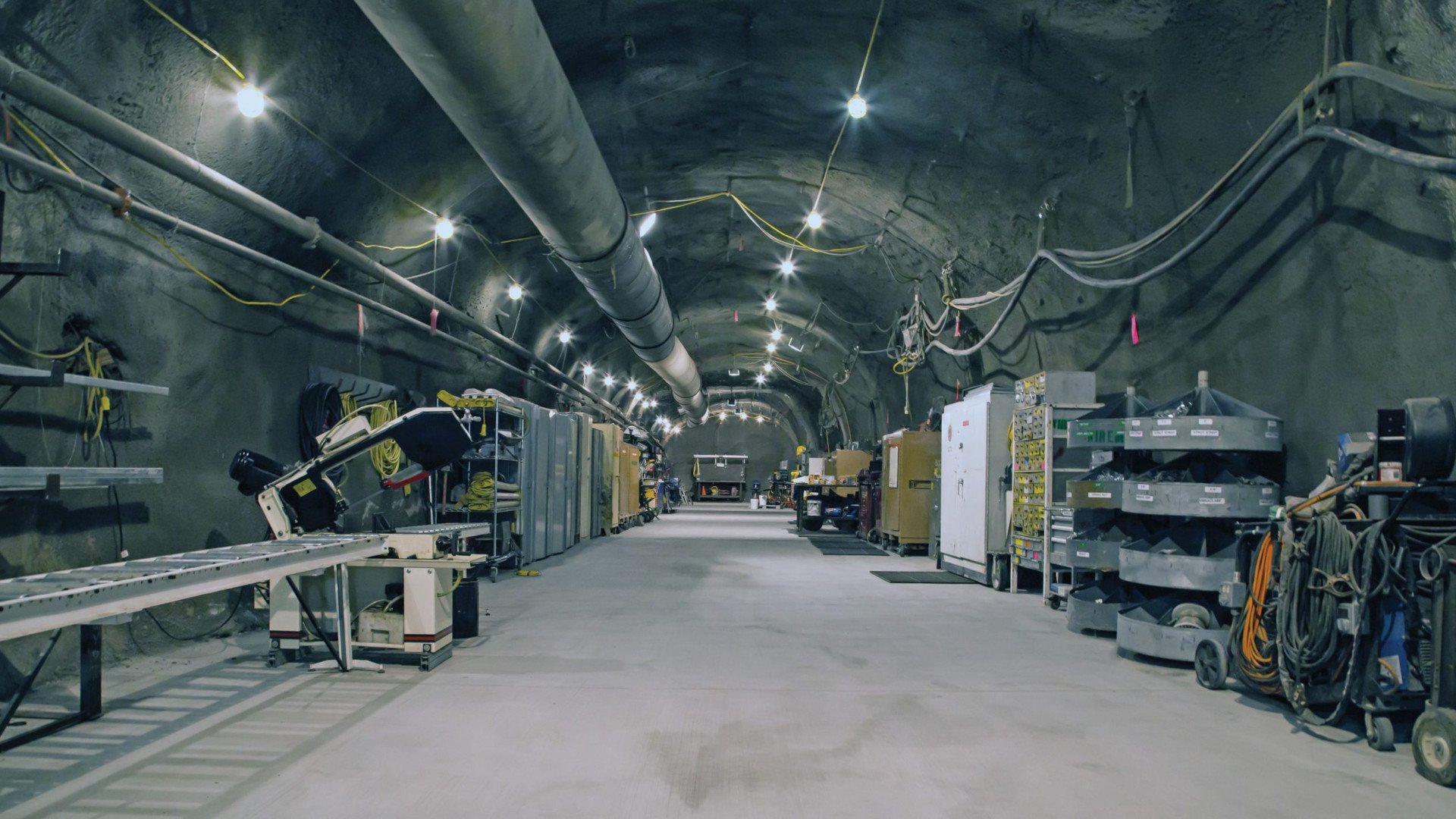
The U.S. government set off conventional explosives inside a tunnel deep in the Nevada desert this week in a test designed to replicate a so-called “decoupled” nuclear detonation. Data collected is now being used to help improve methods for detecting this kind of nuclear testing. Just earlier this year, American authorities accused China of using decoupling to conceal new nuclear tests despite the country’s stated moratorium on such activities.
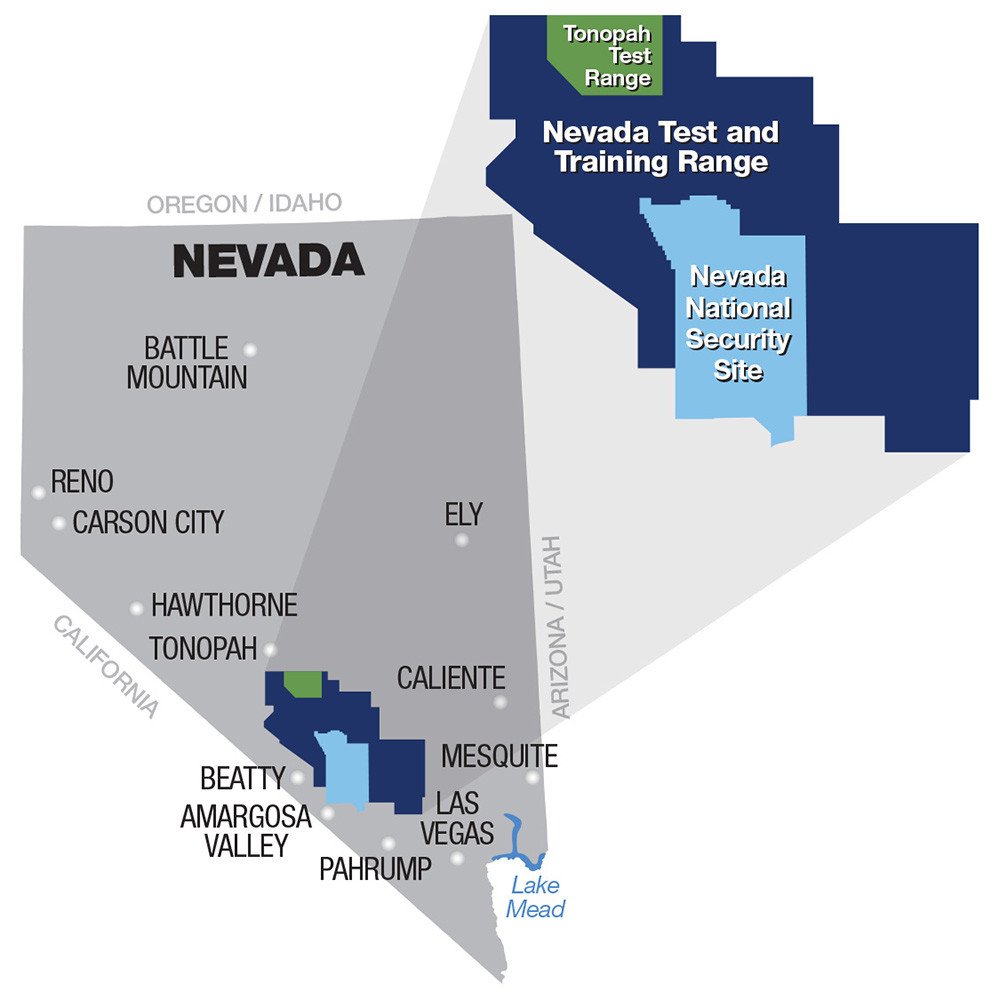
The test, which involved the use of chemical high-explosives and radiotracers, was conducted yesterday inside P Tunnel in Area 12 of the Nevada National Security Site (NNSA), according to a press release from the National Nuclear Security Administration (NNSA). The NNSS, which is situated within the boundaries of the U.S. Air Force’s Nevada Test and Training Range (NTTR), is used for a wide variety of testing purposes today. An agency under the Department of Energy, NNSA’s main jobs are to oversee the development and production of nuclear weapons, as well as manage America’s nuclear deterrent stockpile.
A map giving the general sense of the location of the NNSS with the NTTR. Center for Radiological Nuclear TrainingAnother map showing the specific testing areas within the NNSS. Area 12 is at the northern end of the complex. United States Geological Survey
“This experiment is especially focused on further enhancing the U.S. capabilities to detect a ‘decoupled’ explosion,” per NNSA’s release. “Data collected from the experiment will be used to validate scientific models and refine algorithms that are critical to U.S. nuclear explosion detection efforts.”
“Just as a stealth aircraft looks smaller on radar, decoupling can greatly muffle the signals detected by nuclear detection sensors, making a large explosion appear smaller,” the release explains. “In a conventional, or ‘coupled,’ underground nuclear test, a device is placed deep in a hole in close contact with the rock, allowing much of the explosion’s shockwave to reach sensors. In a decoupled test, by contrast, the device is detonated inside a large underground chamber, substantially reducing the explosion’s seismic signature.”
“In this experiment, researchers gathered measurements using a broad suite of advanced sensors, including accelerometers, seismometers, infrasound sensors, electromagnetic sensors, chemical and radiotracer samplers, and meteorological sensors,” it adds. ”Together, these measurements will improve scientists’ understanding of the signatures produced by underground explosions and strengthen the United States’ ability to detect and characterize nuclear explosive events.”
The U.S. already maintains a U.S. Atomic Energy Detection Systems (USAEDS) network, which is overseen by the U.S. Air Force Technical Applications Center (AFTAC). USAEDS is made up of more than 3,600 sensors positioned around the world. USAEDS is also tied in with the International Monitoring System (IMS), which is managed by the organization responsible for overseeing the Comprehensive Nuclear-Test-Ban Treaty (CTBT). AFTAC also supports the mission to monitor for potential nuclear testing globally using a fleet of specially configured WC-135R Constant Phoenix aircraft. In addition, those planes are used to help keep watch for unusual spikes in atmospheric radiation that could point to nuclear or radiological accidents or other incidents leading to the spread of potentially dangerous radioactive material.
With regard to the USAEDS network specifically, “once a disturbance is detected underground, underwater, in the atmosphere or in space, the event is analyzed for nuclear identification, and the findings are reported to command authorities,” according to AFTAC’s website.
As mentioned, the U.S. government has accused its Chinese counterparts of using decoupling to conceal new nuclear testing, and NNSA’s press release draws explicit attention to these allegations. At the annual Conference on Disarmament in Geneva, Switzerland, in February, Thomas DiNanno, Under Secretary of State for Arms Control and International Security, said that China had conducted at least one such test at Lop Nur on June 22, 2020. The Comprehensive Nuclear-Test-Ban Treaty Organization (CTBTO) subsequently said the IMS had not detected an event matching that description at that location on that date. For its part, the Chinese government has denied the accusation.
The social media posts below include satellite imagery showing activity at Lop Nur that could point to new nuclear testing activities in recent years.
参考 Satellite Imagery Analysis of China’s Alleged 2020 Nuclear Test at Lop Nurhttps://t.co/aafvU5Szh7 CSIS 20260213 ROLES SAT ANALYSIS No.7 中国に核実験実施の動き ー Lop Nur核実験場の画像分析 ーhttps://t.co/n66yYk0hLg ROLES 20250522
While China is a signatory to the CTBT, the country has never ratified it. The Chinese government last acknowledged a critical-level nuclear test in 1996, after which a self-imposed moratorium was put in place, at least publicly. As an aside, the United States has also signed, but never ratified, the CTBT, and has a similar self-imposed moratorium on nuclear testing since 1992. It is worth noting that the treaty does not ban so-called sub-critical testing, which involves fissile material, but does not result in a full-fledged nuclear reaction.
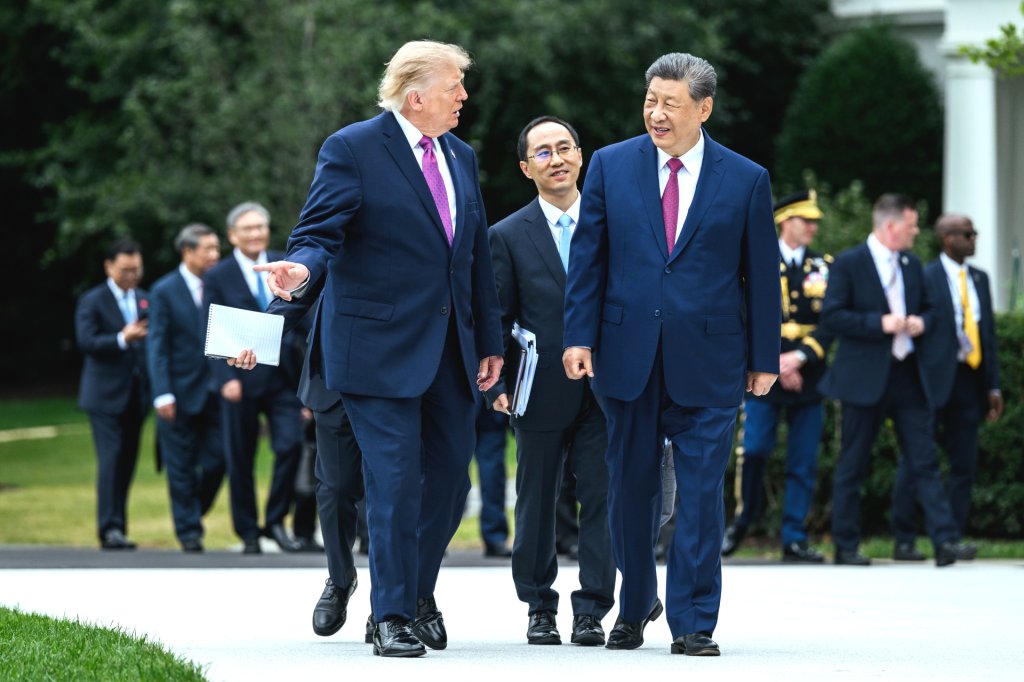
Last week, The Wall Street Journal reported that the Trump administration has been holding new talks with the Chinese government regarding various aspects of the country’s massively and rapidly expanding nuclear arsenal, including the testing allegations. That story immediately preceded a state visit by China’s President Xi Jinping to Washington, D.C., to meet with Trump.
President Donald Trump (at left) and President Xi Jinping (at right) walk together at the White House last week. White House/Joyce N. Boghosian
“The discussions between American and Chinese officials have centered on measures to reduce nuclear risks and haven’t been aimed at negotiating a formal arms-control pact, an effort Beijing has sharply rebuffed in the past,” according to that report. “The Trump administration has begun to highlight the possibility of implementing new verification measures.”
“Independent experts say seismic instruments might be placed on or near test sites,” The Journal‘s story also noted. “Another possibility, which was floated during the Biden administration, is to install radiation-detection equipment at test sites.”
NNSA’s announcement about the test at the Nevada National Security Site is certainly an example of the development underway already of new means of verification that could be deployed at sites around the world.
The Russian government has said it is ready to conduct new nuclear tests if the United States pursues this course of action. The last official nuclear test in Russia came in 1990 right before the fall of the Soviet Union.
“It takes nuclear expertise to detect nuclear activities and experiments like these [to] ensure America remains unmatched in detection,” NNSA Administrator Brandon Williams said in a statement yesterday in light of the test in Nevada. “The Trump Administration has made it clear that the United States will lead from a position of strength. You cannot evade American innovation. With this experiment, we are sending a clear message: under this administration, America will never be outmatched.”
In this tense, riveting first-person excerpt from his new book This Cursed Beautiful Land: A Russian Story, Evan Gershkovich recounts the harrowing months he spent as a prisoner in Russia, leading up to his eventual release in a complex, multi-country prisoner exchange. Even in the darkness, Gershkovich offers rays of light: care packages from friends, letters by the hundred, and a cautiously blossoming love with a friend in Berlin. We may know the ending, but the details of these days reveal what it takes to get there.
A few hours after my arrival, I heard a cart rolling down the hallway. A guard opened a kormushka — a feeder window in the door about the size of a human head. A man in a chef’s uniform filled my bowl with porridge, placed a piece of rancid-smelling boiled fish on my plate and gave me some weak tea. The reality of my new surroundings slammed into me.
Thoughts ricocheted inside my head. Earlier in the day I’d had a comforting one: they’ve taken me for a swap, I told myself. That’s all this is.
Now, curled up on the bed in my 12ft by 8ft cell, knees pulled to my chest, I thought, what if the FSB really does think I’m a spy and wants to make an example out of me? Maybe they don’t want to swap me at all. Maybe I really will spend 20 years here.
A powerful reflection on the pull of nostalgia, on learning to accept that a past life is gone even as you tentatively reach back for it. Tiffany Huang captures the ache of lost opportunities and regretted paths, of staying a course out of duty and responsibility even as your sense of home erodes. It’s a gorgeous, bittersweet read about what it means to move on long before you’ve fully let go.
You unmasked for the first time, revealing smooth cheeks, a sharp chin, and a long nose. You talked about your book, in progress for several years now, about a Hong Kong man drifting aimlessly around the world. I asked you how you felt about the protests and noted the resignation in your tone. You wanted to write a book about what it meant to be a man from Hong Kong; if Hong Kong disappeared, what would happen to the man? You told me about your family, and it was clear we were not meeting to talk about writing anymore. When you spoke, you chose your words carefully. You didn’t ask me about my boyfriend, only how I felt about returning to America. When I hesitated, you did not ask why, and when I spoke, you listened instead of interrupting me. I didn’t want to leave.
Duncan is a longtime friend of Max Daly, and a drug addict caught up in “cuckooing,” where dealers take over people’s homes as drug bases in exchange for product. Daly offers a sympathetic portrait of Duncan’s spiralling life, while opening a window onto a bizarre world where the most vulnerable exploit each other—and sometimes even form bonds.
Over the 2000s and 2010s, wave after wave of gangs fanned out from Britain’s drug supply hubs – London, Liverpool and Birmingham – to set up shop in smaller towns and cities across the country. They took over the homes of drug users and young women who had been groomed by older male gang members. As early as 2008 Suffolk constabulary reported that more than a third of Class A drug dealers arrested in Suffolk were under 21, and the majority were from London. (Before this period, most crack and heroin dealers in towns and smaller cities were “user-dealers”, addicted heroin users in their 30s or older, who were not as “professionalised” as the big city drug gangs.) Gangs often used sex workers, who targeted male tenants and moved in, bringing the young dealers with them. Community safety teams, who rescued 80 tenants in London in 2005, were the first to call the tactic “cuckooing”.
For a brief time, Sacha Jafri was both the creator of the world’s largest painting and one of the world’s most expensive living artists, after his 17,000‑square‑foot work The Journey of Humanity was theatrically “sold” for $62 million at a Dubai charity auction. The buyer, French “crypto billionaire” André Abdoune, never paid a cent and, given his history as a serial fraudster, almost certainly never will—meaning no money ever reached the charities that were promised the proceeds. So what was the real story: a giant painting, or a giant scam?
Many of Jafri’s other claims do not stand up to scrutiny. He is often touted as an artist whose work sells in the millions, but publicly available commercial auction records are more modest. His most expensive painting before The Journey Of Humanity was a piece called Dance of the Midnight Samurai, which sold in 2019 for approximately $70,000. The previous year, another work, Dreamscape II, went unsold at two auctions, before eventually being acquired for $893. Newspaper articles document purchases by Kevin Spacey and Guy Ritchie, but there are no reports of sales to Bill Gates, Leonardo DiCaprio, Barack Obama or Bill Clinton. No pictures exist of their red-printed hands.

 Login

pic.twitter.com/1X4AWcWQMV