Health and Human Services (HHS) Secretary Robert F. Kennedy Jr. announced Monday that more than 250 hospitals have signed a pledge to serve healthier meals to patients, advancing his “Make America Healthy Again” (MAHA) agenda’s focus on treating food as medicine. Speaking at a press conference hosted at the Corewell Health Lifestyle and Culinary Medicine…
A Platner superfan’s reluctance to support the Democrat now running against Senator Susan Collins reflects the party’s challenges navigating left-wing passions.
Democrats across battleground districts are holding Republicans’ feet to the fire over the Medicaid cuts in their signature One Big Beautiful Bill law. In advertisements and on debate stages, the Democrats are hammering their opponents over their support for a law that will reduce Medicaid funding by nearly $1 trillion to pay for tax cuts primarily…
Dr. Ben Hagopian sees patients through Direct Primary Care. He also made the switch for his family of four, combining DPC with a cost-share group.
Courtesy of Ben Hagopian.
I've been a doctor for more than a decade and have a family of four.
I've traded traditional health insurance for direct primary care and a medical cost-sharing group.
For the first time, I feel like I'm truly in control of our healthcare.
I've spent more than a decade navigating the labyrinth of American healthcare. I've worn the white coat, spent sleepless nights on call, signed the charts, and cared for thousands of patients.
A few years ago, I realized I couldn't keep participating in a system that felt like it was designed to fail the very people it was meant to serve.
Today, my family and I are uninsured in the traditional sense — and I'm confident that it's the best financial and medical decision I've ever made.
I hit my breaking point
For years, I worked in a traditional, insurance-based primary care practice. My days were a blur of 15-minute appointments, dictated not by medical necessity, but by billing codes and insurance reimbursements. I felt completely beholden to the behemoth of corporate medicine. Patients were waiting months to see me and were almost always shortchanged on the time I was able to spend with them.
I felt like the insurance companies were the invisible third party in every exam room, deciding which tests I could order and which medications my patients deserved. I wasn't just a doctor anymore; I was a data-entry clerk for multibillion-dollar payers. The result was a total, soul-crushing burnout that followed me home every night.
On the other side of it, some of my patients were forgoing necessary care because the costs presented to them were simply too high. Did it make sense to spend $300 to check a thyroid test to ensure the $10 per month medication I prescribed was working as it was supposed to? Many patients, rightfully so, decided to spend their money elsewhere.
I knew I had to get out — not just for my own sanity, but to actually provide the type of care I believed in.
Direct primary care offered something different
I eventually traded the treadmill for Direct Primary Care (DPC). In this model, my patients (or their employers or an insurance company) pay a flat monthly membership fee directly to me (around $100 per month). This type of care is affordable— my current patient panel includes attorneys, electricians, teachers, and retirees. There are no co-pays, no deductibles, and most importantly, no insurance companies breathing down my neck.
The difference was night and day. Without the administrative bloat of insurance billing, I finally became the doctor I trained to be:
Time: I went from seeing 20 patients a day to seeing six or eight.
Access: My patients can text me directly. We have hour-long conversations instead of 10-minute sprints.
Cost: By cutting out the intermediary, I'm able to offer wholesale pricing on labs and imaging that are often 90% cheaper than hospital rates. That $300 thyroid test from my previous job? I now offer that for $8.
I took my own family off the grid
Once I saw how much better medicine functioned without traditional insurance interference, I took the ultimate leap. I took my wife and children, now 9 and 6, off our health insurance plan.
Instead, we joined a medical cost-sharing community. It isn't insurance; it's a community of members who share each other's large, unexpected medical expenses. When I combined a DPC membership for our routine care with a health share for the big stuff, I realized I had found a better way to protect my family — and was paying far, far less for it.
The math backs up my decision
To understand why we left, look at the cost of childbirth. When our first child was born under a supposedly high-end traditional insurance plan, we still walked away owing about $10,000 after paying our insurance premiums. We were paying twice: once for the premium and again for the actual care.
My wife spent hours of her precious maternity leave arguing with insurance companies about the services we received in the hospital. When our infant son was hospitalized a few months later, she was back on the phone again, having to advocate for his coverage during the time of a family crisis. We spent years paying off the cost of the birth and his illness.
With our second child, we looked at the numbers through the lens of a cost-share program. On a plan like ours, the Initial Unshareable Amount (IUA) — the part we pay before the community kicks in — was only $1,500.
Beyond that $1,500, the community shared the rest. We didn't have to spend my wife's recovery time fighting with a claims adjuster or waiting for pre-authorizations. We knew exactly what our responsibility was, and more importantly, we knew our family was covered by a community, not a corporation.
I feel like I took back control
As a physician, I've seen the insurance trap from both sides. We've been conditioned to believe that without a blue or green plastic card in our wallets, we are unsafe.
The reality is that for some, traditional insurance has become a barrier to care rather than a bridge. By opting out and pairing Direct Primary Care with a health share, I've reclaimed my time as a doctor and my peace of mind as a father. I'm no longer waiting for an insurance company to tell me how to care for my kids or my patients. As a doctor and as a father, for the first time in my career, I feel truly secure.
Vinay Prasad has been on both sides of the public health establishment. A physician, author, and professor at the University of California, San Francisco, he went from prominent COVID-era critic to Food and Drug Administration (FDA) insider when he was tapped to lead the agency's Center for Biologics Evaluation and Research in May 2025. His tenure there included an abrupt resignation in July 2025, a return a few weeks later, and his final departure in April 2026.
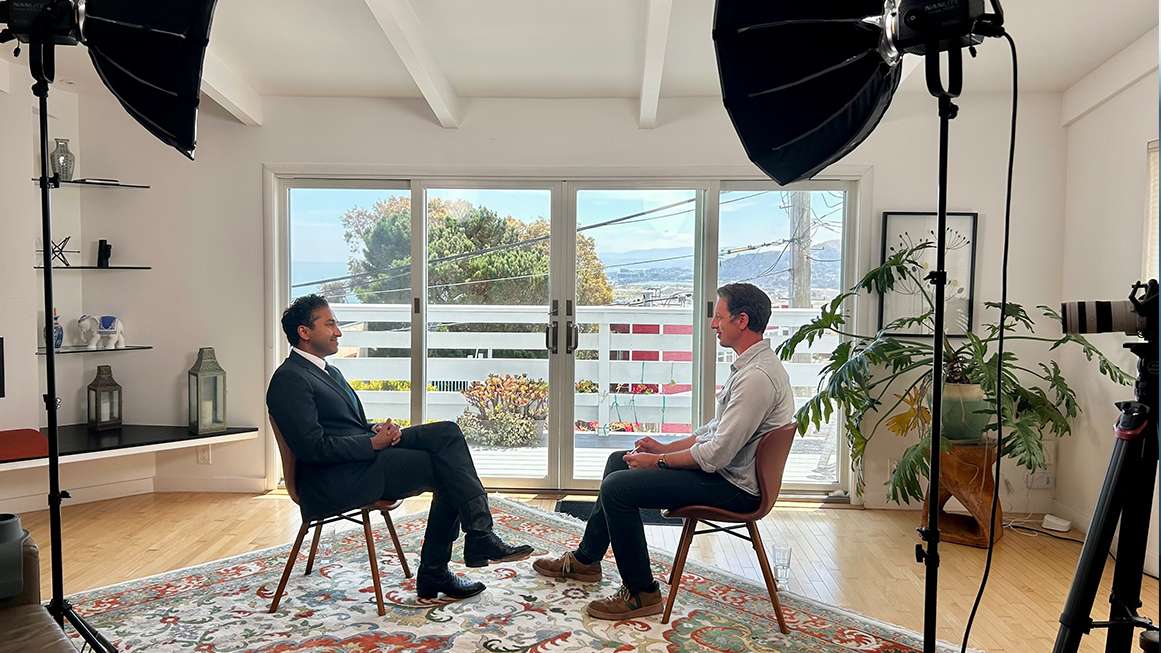
Prasad joined Reason's Zach Weissmueller in August to discuss what he learned from his time inside the FDA, what he was able—and unable—to change, and whether the agency can ever regain public trust. Their conversation ranges from Anthony Fauci and the origins of COVID-19 to vaccine policy, plus regulatory barriers, his growing sympathy for libertarian critiques of the FDA, and whether the agency is ready for an era of AI-driven medicine.
Reason: The FDA saw a clearing out of the old guard and a replacement with a new one—COVID dissidents such as yourself, former FDA Commissioner Marty Makary, and National Institutes of Health Director Jay Bhattacharya. What was that like? Did you have any misgivings about stepping away from academia and your role as an outside critic to join the public health bureaucracy?
Prasad: Maybe we changed 4 percent, 2 percent of the FDA. The FDA is an 18,000-person agency. There's tens of thousands of people still there. Before Marty, the commissioner, and I got there, DOGE [the Department of Government Efficiency] had just struck and they got rid of a couple thousand people. But the system is largely the same as it's always been.
There are critics of the COVID pandemic response and then there are critics. Although Marty, Jay, and I are critics of many aspects of the response, we don't go as far as some of the most extreme critics out there.
Am I glad I did it? Yes, I'm glad I did it. It was an adventure. It was a learning experience. I learned more in one year than I'd learned in the prior decade about how the world works. I'm glad to have improved some aspects of government, which I think will be enduring, and at least tried to improve other aspects of government, which may not be enduring.
Anthony Fauci personified the old guard. He's recently been in the news because he appeared before Congress and pleaded the Fifth after Sen. Rand Paul (R–Ky.) published his diary. What did those diary entries reveal to you about Fauci's character and about the way he operated?
Probably the greatest news story is that the mainstream media refuses to be honest about his legacy. Fauci was in his late 70s when the pandemic began. Had he retired at a ripe old age of 75, he'd be leaving behind a stellar legacy. But he continued. He pushed it. He stayed through the whole pandemic. He was the face of many things that his diaries get into, what he privately thought while he was publicly saying different things.
Fauci has not only been a proponent that the only answer to where the virus came from is a natural spillover event. He's gone further than that. He orchestrated a paper published in Nature Medicine called the "Proximal Origin" paper, written by a bunch of people who bolstered that point of view. He edited that paper before it was published. Then in public, he pretended like he didn't know those people; it was an independent group that validated what he was saying. Whereas in many respects, he puppeted that paper. The people who wrote that paper—Rand Paul has released their Slack channel messages showing they didn't really even believe what they were writing. Their messages reveal considerable ambiguity about lab leak vs. natural spillover event.
Photo: Paul Alexander
In terms of the origin, he also funded EcoHealth Alliance, which had a subcontract to Wuhan. He had a huge role in the origins and trying to frame the narrative, making lab leak—you couldn't even discuss it. Facebook put a ban on even talking about the topic. Then masking 2-year-olds. He played a huge role in that. Lockdowns, school closure. He said he didn't close any schools. In his own diary, he says, "I told [Mayor] Bill de Blasio, you need to close schools in New York City."
At some point, the man's got to take ownership over the decisions he did make and advocated for. When [Gov. Ron] DeSantis in Florida reopened schools in 2020, he went on every television show to say what a bad idea that was. Now, it's very clear—many of us said so at the time—school reopening was always the right decision. Maybe it could have been closed for a week or two, but certainly not beyond that. Fauci kept it closed much longer.
Vaccines make a lot of sense for elderly people who had not yet had COVID. But do they need to be given to a 4-year-old, a 7-year-old, a 12-year-old, a 22-year-old who'd already had COVID? This is where considerable ambiguity exists. But for Fauci, the answer was clear: You need all the shots. You need the initial series. You need a yearly booster. It doesn't matter how young you are or how many times you've had COVID. Fauci was wrong about almost every single pandemic policy he advanced.
Some of his defenders say to me, "At least he didn't tell people to drink bleach." And I said, "Is that the bar for a guy who's a doctor and a scientist?" Drinking bleach is not a good idea, but that's not the bar for a Fauci-level figure. He should be saying things that are correct. If they're not correct, he should be collecting evidence to weigh in. He did none of that.
Fauci's pardon stretches back to 2014, when he was authorizing funding in contravention of U.S. policy on gain-of-function research. Do you think he actually committed a crime?
Yes. The other thing about it is people will say, did that money go directly for this research? The money went for viral genomic research at a Chinese institute, very similar to the sorts of things we would be worried about. That was a crime for which he's been pardoned. It's not just my assessment. That's what Joe Biden's autopen thought, or whoever signed that pardon, that he committed a crime. That's why he has a pardon that goes that far back. It was a crime. Now that he's been pardoned for it, I don't know what you can do about it.
You rode in on this wave of anti-Faucism. What was your biggest hope for what a new version of public health might look like, or for the kinds of changes that could be made?
I had a very narrow mandate because I was just in charge of biologics at the FDA. The hope continues, which is that public health could aspire to be honest, to use its powers proportionately and judiciously, to exercise humility. Public health is far from these things. Public health could actually aspire to be bipartisan. Public health is not. It's becoming an increasingly entrenched left-wing discipline run by left-wing ideologues, reaching even more and more absurd conclusions. What public health can be and what it is are still light-years apart.
You don't think that has changed very much?
Not much at all. Changing an entrenched organization with tens of thousands of people is very difficult. There have been some changes. The pandemic has been a catalyst. But I don't think a real reform is possible. I suspect it'll splinter into different public health groups.
Your role was at the part of the FDA that oversees biologics, such as vaccines and gene therapies. Vaccines became an increasingly polarized and politicized issue during COVID. What was your goal specifically pertaining to vaccines when you took over after the pandemic?
The right drug given to the right person at the right time is lifesaving, but the wrong drug given to the wrong person at the wrong time can be harmful. Vaccines are the same way. You can't say anything about all vaccines, just like you can't say anything about Tylenol, aspirin, and Plavix all in the same breath. They're all very different drugs.
Is this the same phenomenon we observed during COVID, where you're either for the vaccine or you're against it, for a medicine or against it, without breaking things down by age, health, or other individual factors? Everything has to be flattened or compressed.
Same phenomenon. One-size-fits-all public health—where the shoe doesn't fit the guy with the big foot or the person with the small foot—is a completely wrong view of public health. COVID is a great example. An 80-year-old who's never had COVID, and we're talking about February of 2021, should they get a vaccine? Absolutely. A 7-year-old who's had COVID and we're talking about 2022? No, a healthy 7-year-old makes no sense. Public health is, in this country, so broken. It cannot appreciate these distinctions.
Something you've been writing about for a long time is poor experimental design in drug trials. Was that something you wanted to change when you came into the FDA? Do you feel like you made any progress toward that goal?
In one year, we did more than what our predecessors have done in a decade. You can look at just the sheer number of announcements and policy changes we made. We're talking a lot about one side of the coin, which is where the companies are not doing the right study to inform the American public. We're not talking about the other side of the coin, where the FDA is asking them to do things that don't make any sense at all, that burden them, that cost money, and that are wasteful. We did a lot of work in that space too. The FDA makes both errors. They also do a lot of things right, but they make both errors and they can get better.
You mentioned there were two sides of this FDA reform. One was raising standards for things like vaccines. The other was acknowledging how expensive and cumbersome it can be to get something approved in the United States. What were the biggest barriers you saw at the FDA on that side of the equation?
So many. During my time at the FDA, I was often sympathetic to the people who work at companies who told me about the hurdles they were forced to jump through. The FDA does two things: We regulate what's approved and can be marketed and sold on the U.S. market, but also what you can study.
Imagine you're a researcher and you want to study something. We're not talking about approving. You want to gather people together who may be interested in trying something new, have an informed consent, get them to volunteer, but they know that we don't know for sure it's going to work. We do so many things in that space, regulating what you can study and how you can study it, that I think are sensible. You don't want to let people sign up for something that's going to blind them or maim them. But some things that aren't sensible, that are overly burdensome, that are quality controls that don't make sense for small companies and super-rare diseases that don't have a huge budget to study these things. The regulation in this early side of research is tremendous in the United States. A lot of it is well-intentioned, but not all of it is fit for purpose.
You said that your time within the FDA made you somewhat more sympathetic to the libertarian critiques of the FDA.
I'm really sympathetic in one way: We tax people a lot of money to pay for healthcare in America—trillions of dollars. We're taking trillions of dollars from people's paychecks, from taxation, and we're taking it for this thing that we think is a benefit to people, which is we're going to offer a service that's maybe a human right, a societal good. Surely, the service we offer, we do have some of that stuff in there. If you have a heart attack, you go to the doctor here with or without insurance, they're going to open up that blockage. That's a great thing. But along with that package deal, we're going to insert a few things that may or may not work, that cost a lot of money. All that's doing is taking lots of money from taxpayers and redistributing it to the shareholders of those companies.
It's a huge financial system with the rare adverse event of helping someone's health. The libertarian comes along and says, "I'd rather not pay the tax—have more skin in the game, decide what's right for me. I'm the best person to decide how to use my own money." I do feel a sympathy to that point of view, because this system has so many places where it can be taken advantage of, where people get something that doesn't help that much, that only may kill without any possibility of benefit. And we take a lot of other people's money to pay for that.
Dario Amodei, the CEO of Anthropic, recently called out the FDA, and I'm wondering what you think of this. He wrote, "Regulatory systems were designed for a slower pace of innovation and we are not prepared for the deluge of new products and advances that AI will bring. AI may also make these downstream technologies safer and more predictable in a way that violates the skeptical assumptions of regulatory agencies like the FDA."
If Amodei is right about the effect AI is going to have on the field, do you think the FDA will be able to adapt?
I see kernels of truth in what he's saying, but maybe I don't go all the way he goes. Where I see the big core truth is the FDA tries to regulate AI itself, medical AI. You wear a watch that's supposed to give you information and the FDA wants to do a lot of that regulation. That's a very tough thing to regulate, because this technology is changing so much faster than our ability to judge it. I do agree with Marty and others who think that that's probably not the best role for regulating all the potential aspects of digital health and health AI. For instance, you can imagine the absurdity where I'm a doctor, I'm seeing a patient later this afternoon, should government regulate the apps I can use to learn about the disease or ask questions? Should it regulate open evidence? I don't think it should.
I spoke to a company called Doctronic that is acting as an AI prescriber in Utah, where AI is being allowed to refill prescriptions. That's another example of where these questions are going to have to be answered: Where does the government step in, and where does it step back?
Government is much more likely to get in the way of these kinds of innovations. It's changing so quickly. It's going to be very difficult for government to regulate that. You talk about drug discovery and drug science and those kinds of aspects of AI. If I was a pharmaceutical firm, I would definitely invest in AI. There's so many things around running clinical trials that we can do better with AI, help us run them cheaper and faster and more efficiently.
But when it comes to molecule discovery and basic science, I'm not as optimistic as Dario for a couple of reasons. One, a lot of the information that is fed into models about cancer biology is basically as close to fraudulent research as you can imagine. We're talking about like the Stanford president whose Western blots look Photoshopped kind of research. You got research that's not reproducible. It's not just my opinion. Many companies have taken samples of the literature and they tried to replicate it in their own labs and they have massive strikeout rates. If you train AI on garbage, what can it learn? It's only trained on inaccurate information. That's a challenge it faces.
The second challenge is AI will be happy to give you hypotheses to study, but you'll still need to run it with a few people to validate those hypotheses. I suspect the limiting reactant is not coming up with ideas; we have more ideas than we can study with people. The limiting reactant is getting the people to consent and manufacturing the products and those kinds of things.
I hope he's right. If he is right, it sounds like a great future. But I'm a little bit skeptical that he's totally right, because I think the biology of it is a lot harder.
Do you think enough has happened for people to start regaining trust in public health?
No way. I wouldn't trust it at all.
What still needs to happen for public health to legitimately earn back the trust of the public?
I don't know if it's even possible. It's so fragmented now. People tell you with a straight face, people I know, "Anthony Fauci, he made no mistakes. Literally, did the best job he could with the information he had." Then I said, let's just focus on one tiny thing. He did say you should take your 24-month-old kid and put a cloth mask on that kid all day in daycare. He said that. You don't think he had any clues at the time that that was a dumb idea? It's so obviously dumb, right? That's their position on every issue.
Public health is so myopic. It doesn't understand that you have to look at the whole issue. Isn't that a perfect analogy for COVID? Don't go outside. Just stay in your house all day. As if human beings don't need contact with other people and see face to face as if that doesn't matter at all.
Public health has not learned its lesson. The problem with public health is that they're completely politically captured now. Public health and the far left wing of the Democratic Party are synonyms. There's no political balance there. A little balance would go a long way. A little bit of open-mindedness would go a long way in public health. A little bit of humility to just admit a few things we got wrong in the pandemic.
The federal public health apparatus is still staffed with Robert F. Kennedy Jr. at the top and Jay Bhattacharya is still head of the National Institutes of Health. Is that not having some sort of trickle-down effect or creating a countercurrent within the system?
I don't know.
Don't get me wrong, I love Jay and I think Jay's heart's in the right place. He's already made some really important changes. I agree a lot with the kernel of Bobby's ideas. I agree with the kernel. I always say the kernel because I can think of a way that makes sense and I can sometimes think of ways it doesn't make sense.
But before I went to government, people told me that there is a fourth branch of government and it's the career state employees. I never believed that to be true, but now I'm certain that it's true. You have a lot of people who are in government. They tend to be in just three or four counties in one area, the blue pocket of America. They have strong views, and they really do a lot of the governance of this country. They make the decisions that regulate all of us in a way that's unaccountable to Congress and unaccountable to the president. I suspect they'll continue to stay. The COVID pandemic revealed to so many people that we made mistakes and that distrust in medicine and public health will just continue to grow and that there will continue to be more of these reckonings in the years to come.
How did working at the FDA affect your own confidence as a consumer in the regulatory system?
It gives me a little bit of pause sometimes. I like to trust but verify. I am cautious always with new therapies and particularly cautious that some safety information is being missed. It also makes me a bit more libertarian. I can imagine a system where we give people in America greater flexibility in what kind of products they can try. Maybe there's some third-party agencies, Consumer Reports–style agencies, that give different levels of quality and seals of approval of different products, and people can choose what they want and also have a little bit more skin in the game and use their own money. The moment you start to use your own money, suddenly tiny changes in surrogate biomarkers and elevated liver enzymes take on greater importance in a way that might not exist if you're using commercial insurance to pay for it.
Is it that you saw something inherent to the process that creates problems, holes, or gaps?
The fundamental idea that there's this one-size-fits-all balance where safety and efficacy is acceptable. What might be acceptable to you and acceptable to me might be different. I might want a little bit more efficacy information, a little bit more safety validation, and you might be willing to try more. The idea that a single monolithic government agency in the suburbs of D.C. can set that bar for every single person in America, that to me is a tougher pill to swallow now.
This interview has been condensed and edited for style and clarity.
Dozens of medical professionals are running for Congress and top state offices this midterm season, a direct Democrat-led counteraction to the Make America Healthy Again (MAHA) agenda’s outsized influence on national health policy. There are seven physicians running for congressional office in this election, including Democrats Abdul El-Sayed of Michigan, Annie Andrews of South Carolina, Amish Shah…
It's the only drug that can shrink oil glands, potentially clearing pimples for good. But it comes with serious risks — primarily: a high rate of birth defects if you take it and become pregnant. Other side effects include sun sensitivity, high cholesterol, mood changes, and joint pain.
Parents are scared to put their teens on it. Dermatologists often reserve it for stubborn acne, after other creams, cleansers, antibiotics, and pills have been exhausted. And strict pregnancy-prevention rules mean monthly check-ins, tests, and blood work.
But in recent years, some of the stigma around the retinoid drug, generically called isotretinoin, has started to fade, as people have gravitated to a smaller, more strategic "Hollywood dose" of Accutane. By taking small amounts of the drug, maybe just a few days per week, many patients find they can maintain a dewy, glass-like complexion on camera while avoiding painful side effects like ultra dry skin, and the initial acne breakout purge that comes with heftier prescriptions.
"I love the Accutane glow-up," Honeydew dermatology founder David Futoran, 29, said. For him, it includes hair that's less oily, and baby-soft cheeks.
Futoran is partly responsible for turning Accutane from a maligned prescription of last resort into a buzzy internet sensation. He's found new ways to streamline and digitize paperwork, turning most of the required monthly doctor's office visits and testing for the drug into something people can do at home. Honeydew is now growing 3x year over year, Futoran said, and interest in low-dose prescriptions is increasing.
Dermatologists are divided on the trend of microdosed Accutane. Yes, it is a very effective drug, and it can clear up most breakouts. But there are tradeoffs to taking an intermittent or low-dose approach, and some doctors say why bother dancing around side effects when you could get on and off the potent drug in months, and have clear skin for life?
Founder mode for skin
David Futoran started Honeydew because he was so frustrated by monthslong wait times for dermatology appointments.
Honeydew
Futoran founded Honeydew in 2022 after spending years on various antibiotics and multi-step cleansing and cream routines, with his acne constantly coming back.
His vision was to make prescription acne care faster and more accessible. He partnered with his longtime dermatologist, Dr. Joel Spitz, to build a telemedicine platform connecting patients with providers and treatments for acne, rosacea, eczema, and psoriasis.
Yet Futoran was still hesitant to take Accutane himself, partly because of the logistical headaches.
One morning, he said, he woke up with a large, painful cyst in the middle of his forehead. That was it, he said — he decided he was finally going on the low-dose form of Accutane his company had been prescribing.
Futoran says he reached a breaking point when he woke up with this painful cyst on his forehead.
David Futoran
"I should have done that from the start," he said. "My skin is way less irritated than it ever was on any of the topicals, and I just have peace because I know it works."
Accutane works because it shrinks oil glands by turning down sebum production. It triggers the death of some stem cells, which is great for clearing up overactive oil-producing glands, but very bad for developing fetuses.
In addition to making regulatory compliance digital, Honeydew offers specially formulated lip balms, cleansers, antihistamines and supplements like Omega-3 designed to replace lost oil.
Bringing a celebrity skin trick to the masses
Mikey Narine, a model and influencer, was prescribed Accutane through Honeydew. He says his confidence has skyrocketed, and his face is totally clear.
Mikey Narine
Celebrities including Chris Pine, Pete Davidson, Emma Stone, and Kendall Jenner have all been open about using this powerful oral retinoid to help clear up persistent acne. The shadow business of microdosing Accutane, though, using it as a glow up drug even for minor, isolated breakouts, happens more through a whisper system between doctors and patients.
26-year-old marketing manager and social media influencer Kennedy Faris started microdosing Accutane with Honeydew in the spring. About a decade ago, she watched her little brother suffer some of the rarer mental health side effects of Accutane, and she was worried about the possibility the drug could lead to depression.
"My brother's a very happy person, so it was really scary," Faris told Business Insider. "I was really hesitant about starting."
After struggling to get a prescription from an in-person dermatologist, Faris heard about Honeydew from a follower and partnered with the brand. She started on a low dose of 10 milligrams, working her way up to a standard 40 mg dose over the course of a few months.
After years of trying different skincare products, antibiotics, and medications, she feels like she's finally found a more permanent solution to cystic acne. There are drawbacks to being on the drug, she said, including sensitivity to alcohol, sunlight, and some nightmares. But the real benefit has been her renewed confidence, optimism, and joy, with friends noticing she's "more bubbly and happy," she said. "I was like, 'wow, I was kind of depressed.'"
Because the drug shrinks pores, Faris has also noticed her face and nose appear slimmer.
"Everyone talks about the fake nose job," she said.
Some patients recovering from real nose jobs even use the drug to lower surgery-related inflammation and shrink pores on the nose while their face heals. As testosterone therapy booms, more men are taking Accutane to deal with oilier skin. And increasingly, patients are lining up for low-dose Accutane for minor breakouts, just to be in the clear. People are gravitating to skin treatments that will give them the edge at work and on screen, Spitz said.
"Everyone's on Zoom or Google Meets or they're on TikTok or they're on Insta, and they want to look good," he added.
The potential drawbacks of microdosing
Microdosing can ease side effects, but the results may not last as long.
Honeydew
Some doctors worry that microdosing Accutane could lead to more health complications if people stay on the medication for years at a time.
"In my practice, I just basically put people on the standard dose and then they're done at five months, and then they feel much better, Dr. Ariel Ostad, a dermatologist in Manhattan who is not affiliated with Honeydew, said. "Patients, once they go on it, their skin clears up really quickly, and they're happy, and they realize it's not as bad as they thought."
A shorter treatment course means less time worrying about drug interactions, liver or heart health, pregnancy, sun sensitivity, or bone issues.
Futoran said traditional dosing can be "absolutely the right answer for some patients," and roughly 40% of Honeydew prescriptions are at standard dosages. Still, he cites studies showing patient satisfaction is higher with low-dose Accutane, and said Honeydew patients on smaller dosages have "materially better retention."
"The best clinical outcome is when patients complete their course, but faster is not always better," he said.
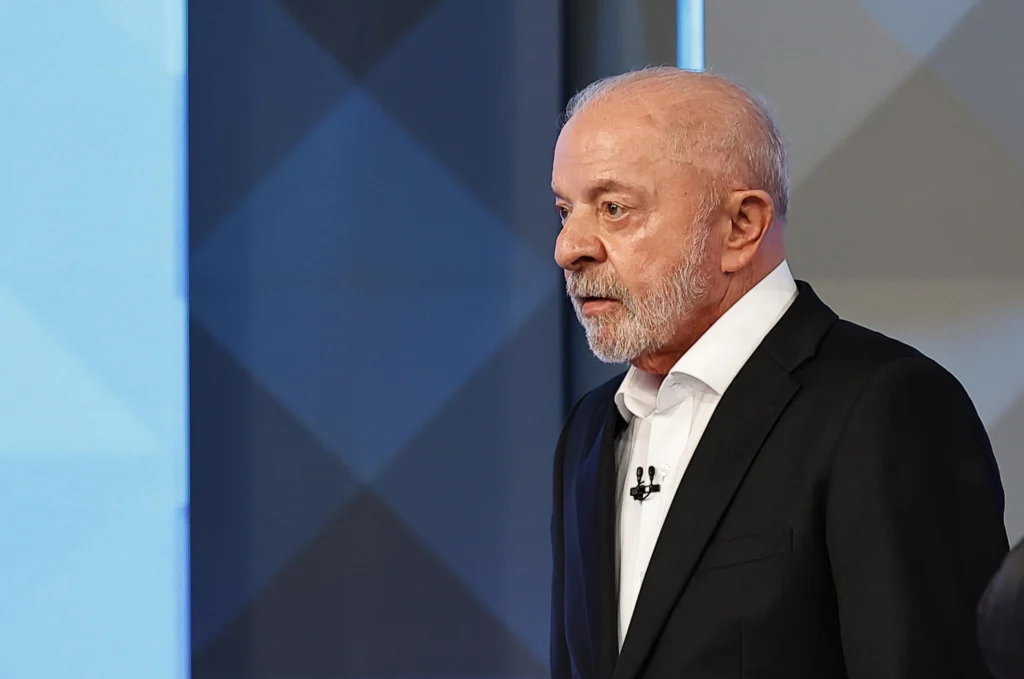
Lula promises to expand full-day schooling and student aid as Flávio Bolsonaro challenges his education record and attacks his family.
Brazilian President Luiz Inácio Lula da Silva pledged to bring full-day schooling to every school through the secondary level if re-elected, while opposition candidate Flávio Bolsonaro accused his government of cutting education funding and attacked the president’s family over online gambling.
The exchange during an education segment of the presidential debate centered on extended school hours, student assistance and childcare before turning into a personal confrontation over jogo do tigrinho, an online gambling game.
Lula, of the Workers’ Party (PT), challenged Bolsonaro to explain his plans for full-day schooling. Bolsonaro, of the Liberal Party (PL), responded that he would deliver what the current government had failed to achieve, accusing Lula’s administration of cutting federal funding for the program and attempting to conceal the reductions.
Enseñanza de tiempo integral enfrenta a Lula y Bolsonaro en el debate
🏫 Lula se comprometió a "concluir en el próximo mandato el 100% de las escuelas de tiempo integral en este país hasta la enseñanza media".
Text Reads: Full-Day Schooling Pits Lula Against Bolsonaro in Debate Lula committed to “concluding in the next term 100% of full-day schools in this country up to secondary education.” He defended his administration and highlighted the creation of ProUni. He also denounced the conditions in which he received the presidency regarding education.
Bolsonaro then shifted the discussion to online gambling, accusing Lula of being responsible for the rise of jogo do tigrinho. He claimed the game was created and authorized in 2022 by those now in government and alleged that its cancellation was being pursued only as the election approached. He also invoked the nicknames Lulinha and Tigrinho in referring to the president’s sons.
Lula responded by pointing to his party’s record on education since it first took office in 2003. He credited former education ministers Fernando Haddad and Camilo Santana with leading what he described as a transformation of Brazil’s education system. If re-elected, he said, he would ensure that all schools offered full-day schooling through the secondary level.
He also pledged to expand Pé de Meia, a financial assistance program designed to keep students in school, making it available to all secondary students and extending it to university students. Lula said the program had helped prevent 66% of participating students from dropping out, arguing that no young person should have to abandon their education.
“Não existe nenhum país do mundo que conseguiu se desenvolver sem antes investir na Educação. A gente tem mais universidades, IFs e escola em tempo integral. A gente cuidou da educação como jamais tinha sido cuidada na história desse país"
– Lula no debate da Globo…
— União Brasileira das/dos Estudantes Secundaristas (@ubesoficial) October 24, 2026
Text Reads: “There is no country in the world that managed to develop without first investing in Education. We have more universities, IFs, and full-time schools. We took care of education like it had never been taken care of in the history of this country” – Lula in the Globo debate
The president further recalled that his administration had inherited 5,600 stalled projects involving daycare centers, schools and federal institutes from the previous government. He contrasted those unfinished projects with the civic-military school model promoted by his predecessors, which he also described as incomplete.
Bolsonaro rejected claims that he intended to abolish Pé de Meia, calling the allegation a falsehood spread by his opponent’s campaign. He pledged to maintain the program and cited measures taken under the administration of his father, former President Jair Bolsonaro, including the cancellation of nearly 99% of the debt owed by students who had completed higher education and a 33% teacher salary increase, which he described as the largest in history.
The opposition candidate also proposed a childcare subsidy for mothers unable to work because they lacked access to daycare. He said more than one million children had no place in the public childcare system and pledged to allow families to enroll them in private facilities where public places were unavailable.
On full-day schooling, Bolsonaro proposed using the additional hours for vocational training and instruction in technology, artificial intelligence and application development. He argued that keeping children closer to school would put them farther from crime.
The candidates presented contrasting approaches to education, with Lula emphasizing universal full-day schooling and expanded financial support for students, while Bolsonaro focused on childcare subsidies and vocational training alongside accusations over education funding and the president’s family.
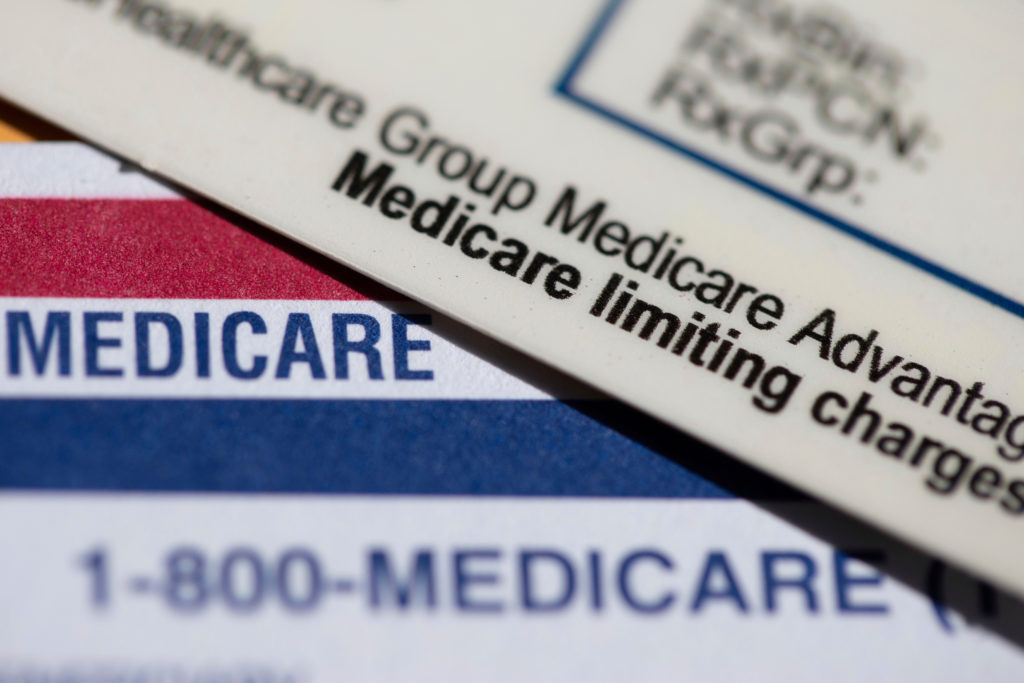
Health care costs are climbing, putting new pressure on millions of Americans and raising questions about the coverage they can afford. The challenges extend to Medicare Advantage. In some parts of the country, insurers are pulling out of markets or eliminating plans that many rely on. We hear from seniors struggling to navigate those changes, and Geoff Bennett discusses more with Dan Weissmann.
Who could have predicted that age-gating large sections of the internet in a crusade to shield children's eyeballs from vaguely defined "harmful content" would have disastrous consequences and wouldn't ultimately protect kids? Apparently, the United Kingdom's online regulator, Ofcom, couldn't.
On Thursday, Ofcom released a report assessing whether the government should make changes to the content categories of the 2023 Online Safety Act, a set of laws which require companies operating in the U.K. to prevent children from "accessing harmful and age-inappropriate content and provide parents and children with clear and accessible ways to report problems online when they do arise." The act's "child safety regime" (Ofcom's words) went fully into effect in 2025, when porn websites in the country began checking IDs. Unfortunately, as Reason's Elizabeth Nolan Brown has pointed out, the age-verification rule has impacted far more than adult websites. Already, the Online Safety Act has age-gated a wide range of content, including war news, the "NoFap" subreddit, and a historic art image, creating a mass chilling effect online.
Ofcom's report, however, says little about these age-gating concerns for adults, and its own findings highlight the act's underwhelming results. In the report, Ofcom notes that "Most children in the UK say they have encountered at least one piece of harmful content online in a four-week period." It adds that "at a total level there was no significant change in the proportion of children encountering harmful content over the first nine months after the children's safety duties came into force in July 2025." So, it appears the act is requiring adults to fork over their IDs to access a wide range of content, some of which is innocuous, while playing a never-ending and unsuccessful game of whack-a-mole trying to eliminate "harmful" online content from kids' feeds.
Instead of suggesting to repeal the Online Safety Act because it does not seem to be working or because it imperils online freedom, Ofcom's report proposes to broaden the law's scope. The regulator recommends adding "body stigma content and depression content, currently identified by Ofcom as kinds of non-designated content, to the category of priority content that is harmful to children." Priority content is defined as "content that services must protect/minimise the risk of children in age groups judged to be at risk of harm from encountering." In other words, online platforms could have more reasons to potentially age-gate, block, or avoid publishing out of fear of violating the law.
The report does not address the U.K. government's plans to ban children under the age of 16 from accessing social media, and Ofcom says it will soon publish an assessment of "what highly effective age assurance looks like" for determining whether someone is 16 or older. But if the social media ban unfolds anything like it did in Australia, where kids are easily circumventing it, it is likely to flop, just as the Online Safety Act has.
These products, which promise to reduce signs of aging, are projected to generate $75 million in sales this year in South Korea.
Business Insider traced the supply chain to understand how donor tissue from, say, San Antonio can end up in products for sale at a clinic in Seoul — and how much money is being made along the way.
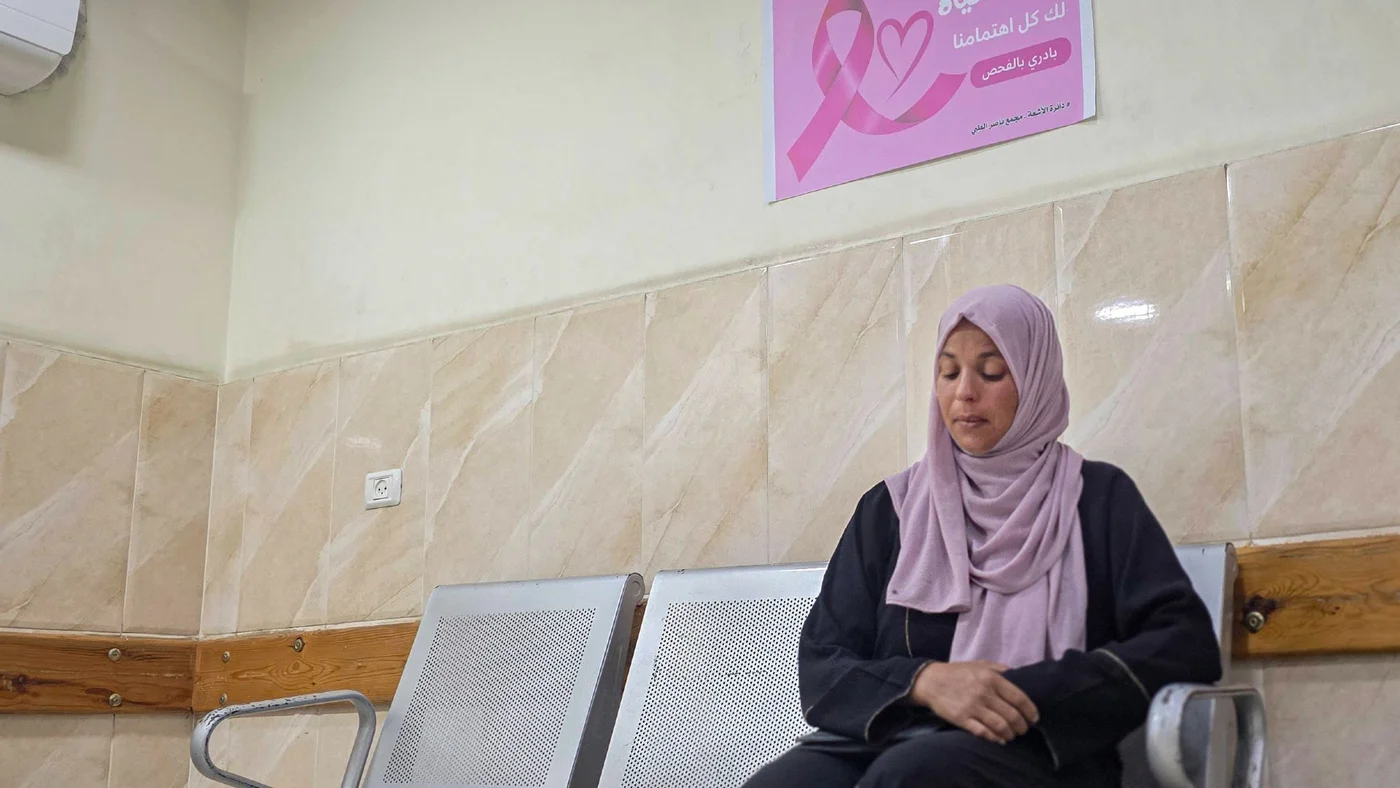
Israel’s war has disrupted every stage of breast cancer care, from early diagnosis and identifying tumour characteristics to treatment and follow-up. Only a handful of hospitals can still provide these services.
Patients who still need a medicine after taking part in a clinical trial must continue receiving it free from the trial’s sponsor, under rules published today. The protection applies when

 Login