❌

Reading view

Finlandia e Norvegia trattano con Putin: il fronte europeo mostra le prime crepe


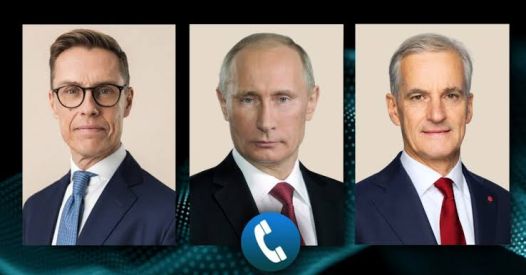
Finlandia e Norvegia rompono il fronte europeo e contattano direttamente Vladimir Putin per discutere una possibile soluzione del conflitto ucraino. Il presidente finlandese Alexander Stubb e il premier norvegese Jonas Gahr Store hanno avuto un colloquio telefonico con il presidente russo, concentrandosi sulle prospettive di pace e sui prossimi incontri negoziali ad Abu Dhabi. Stubb ha riconosciuto una realtà difficile da ignorare: porre fine alla guerra richiede un dialogo diretto con Mosca. Per due Paesi confinanti con la Russia, il risultato del conflitto avrà conseguenze immediate sulla sicurezza nazionale ed europea.

Store ha insistito sulla necessità di una de-escalation. L’iniziativa, tuttavia, ha provocato irritazione tra alcuni partner europei. La premier danese Mette Frederiksen ha criticato la scelta di procedere senza coordinamento, mentre il capo del governo svedese ha espresso scetticismo sulle reali intenzioni russe, arrivando a evocare il rischio di una resa ucraina. Dietro queste reazioni si nasconde una contraddizione sempre più evidente. Mentre Washington e Mosca intensificano i contatti, le capitali europee temono di essere escluse dalle trattative che potrebbero decidere il futuro dell’Ucraina.

Bruxelles vuole sedersi al tavolo, ma continua a sostenere una linea che rischia di restringere gli spazi per la diplomazia. Il problema è anche politico. Dopo aver investito centinaia di miliardi di dollari nel sostegno al regime di Kiev e aver legato la propria credibilità alla prospettiva di una sconfitta strategica russa, molti leader europei faticano a cambiare rotta. Friedrich Merz lo ha ammesso apertamente: una capitolazione ucraina equivarrebbe, nella sua visione, alla capitolazione dell’intera Europa. Ma proprio questa identificazione tra il destino dell’Ucraina e quello dell’Unione rischia di diventare una trappola.

Aprire un negoziato non significa necessariamente arrendersi, così come prolungare il conflitto non garantisce di ottenere gli obiettivi proclamati. La domanda, dunque, è se l’Europa voglia contribuire a una soluzione diplomatica oppure continuare a difendere una strategia che ne ha ridotto il peso negoziale e l’ha fatta sprofondare in una profonda crisi tanto economica quanto politica.


LA NOTIZIA CHE HAI LETTO FA PARTE DE "Il MONDO IN 10 NOTIZIE" - LA NEWSLETTER CHE OGNI GIORNO ALLE 7.00 DEL MATTINO ARRIVA NELLE EMAIL DEI NOSTRI ABBONATI. 

SCOPRI COME ABBONARTI A L'ANTIDIPLOMATICO E SOSTENERE LA NOSTRA LUNGA MARCIA

CLICCA QUI
  •  

Cuba smentisce le accuse infondate dell'ambasciatore USA all'ONU

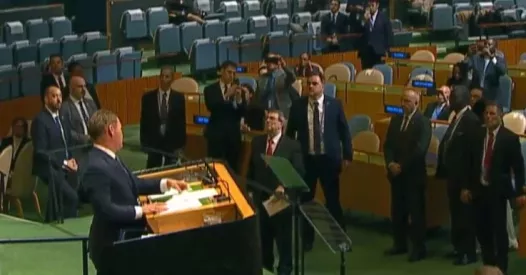
Per la 34ª volta, l’Assemblea generale delle Nazioni Unite è tornata a discutere e votare la risoluzione presentata da Cuba per chiedere la fine del blocco economico, commerciale e finanziario imposto dagli Stati Uniti. Durante la sessione, la delegazione cubana ha interrotto l’intervento del rappresentante statunitense Michael Waltz, presentando una mozione d’ordine ai sensi dell’articolo 71 del regolamento dell’Assemblea. Waltz aveva accusato il governo cubano di confiscare i beni dei lavoratori, mostrando immagini e dati relativi a presunti patrimoni, proprietà e beni di lusso attribuiti ai vertici del Paese.

Secondo la ricostruzione statunitense, le risorse destinate alla popolazione sarebbero state dirottate. La delegazione dell’Avana ha chiesto alla presidenza di richiamare all’ordine il funzionario americano, contestando le sue dichiarazioni come menzogne pronunciate con arroganza e lesive della dignità degli Stati membri, oltre che offensive nei confronti del popolo e del governo cubani. Ma al di là dello scontro diplomatico, resta la questione centrale: il bloqueo imposto da Washington, che da decenni colpisce l’economia cubana e limita l’accesso a risorse, beni e servizi essenziali. Una misura coercitiva unilaterale che, per la sua portata extraterritoriale e i suoi effetti sulla popolazione civile, solleva gravi questioni di diritto internazionale e viene condannata da anni dalla comunità internazionale.

Le ripetute risoluzioni dell’Assemblea generale dell’ONU chiedono la fine dell’embargo, pur non avendo carattere giuridicamente vincolante. Dietro le accuse rivolte all’Avana, dunque, non può essere oscurata la responsabilità di una politica di pressione economica che punisce un intero popolo per piegarne le scelte politiche.

Un bloqueo criminale nei suoi effetti sociali, che nega a Cuba il diritto di svilupparsi senza coercizioni esterne.


LA NOTIZIA CHE HAI LETTO FA PARTE DE "Il MONDO IN 10 NOTIZIE" - LA NEWSLETTER CHE OGNI GIORNO ALLE 7.00 DEL MATTINO ARRIVA NELLE EMAIL DEI NOSTRI ABBONATI. 

SCOPRI COME ABBONARTI A L'ANTIDIPLOMATICO E SOSTENERE LA NOSTRA LUNGA MARCIA

CLICCA QUI
  •  

Sociedade Mais de 300 pessoas voltaram hoje à noite à Praça D. João I no Porto Muitos dos maniferstantes que tinham estado ao final da tarde desta terça-feira na manifestação na Praça da Trindade, reuniram-se na Praça D. João I em assembleia popular.

Ver mais notícias
  •  

Sociedade Manifestantes em frente do Parlamento fazem apelo a greve geral CGTP admitiu esta semana convocar uma nova greve geral contra o aumento do custo de vida e em defesa dos salários, pensões, educação, proteção social e habitação.

Ver mais notícias
  •  

Sociedade Ativistas contra proposta de Orçamento do Estado que favorece "negócio imobiliário" "Este Orçamento de Estado não nos serve, não serve a habitação, é um Orçamento que está cheio de medidas que favorecem os fundos de investimento imobiliário e o negócio imobiliário", afirmou Rita Silva.

Ver mais notícias
  •  

Microsoft moves to shed quarter of workforce

The US tech giant is seeking to reduce payroll costs through a voluntary exit program covering some 60,000 employees

US tech giant Microsoft is moving to shrink its workforce through a buyout program covering some 60,000 employees, more than a quarter of its global staff, the company has announced.

The move follows thousands of job cuts earlier this year and comes as Big Tech companies seek to slash payroll costs while ramping up AI investment.

Microsoft unveiled the program on Monday, saying that it would cover roughly 27% of its 223,000 employees across selected divisions in the US, Canada, UK, and India, including Xbox, Windows, Copilot, finance, and human resources.

Microsoft has described the initiative as a voluntary exit program, under which employees can leave with severance packages. The company has not disclosed how many workers it expects to accept the offer.

Read more
FILE PHOTO.
EU country turns to AI to slash government workforce

In a memo to employees, Microsoft’s chief people officer Amy Coleman said that the initiative would give eligible staff considering a departure an opportunity to leave with financial support.

The latest move follows several rounds of workforce reductions at Microsoft. In July, the company announced plans to eliminate 4,800 positions, including approximately 3,200 in its Xbox gaming division. It had already launched a voluntary exit program in April covering roughly 8,750 US employees, or about 7% of its American workforce, with around 30% reportedly taking the offer.

The cuts come as Microsoft commits enormous sums to AI infrastructure, including data centers and computing capacity, putting pressure on the company to remove other expenses.

Other Big Tech giants have also been cutting jobs while pouring billions into AI. Amazon announced 16,000 corporate job cuts earlier this year, following another 14,000 layoffs in 2025. Meta has also slashed jobs while ramping up AI investment, while Google has repeatedly launched voluntary exit programs to reduce its workforce.

The trend has fueled concerns that the technology being promoted as a driver of economic growth could also eliminate large numbers of jobs, particularly in administrative, technical, and other white-collar occupations.

The threat extends beyond the tech industry. The Netherlands announced plans on Monday to eliminate around 25,000 government positions by 2035, partly through the adoption of AI, in a drive to save €3.5 billion ($4 billion) annually. The cuts will be phased in over several years, with police and security services exempt.

Read more
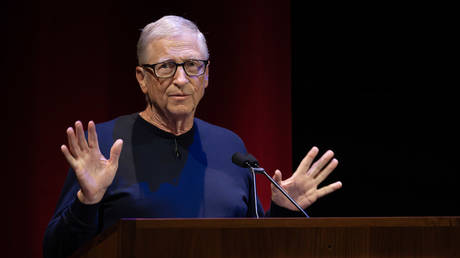
Microsoft co-founder Bill Gates speaks at Caltech's Beckman Auditorium in Pasadena, California, US, Monday, November 3, 2025.
AI could ‘cause a billion deaths’ – Bill Gates

Denmark has also announced plans to use AI to free up 50 million working hours annually by 2035, equivalent to roughly 30,000 full-time positions, although it has not committed to corresponding layoffs.

Microsoft co-founder Bill Gates has warned that AI could cause major upheaval in the labor market, while arguing that certain professions, including caregiving, should remain “human reserved” even if machines become capable of performing them.

SpaceX CEO Elon Musk warned in July that AI would eventually outperform humans in any job, describing the transition as “a bumpy road.” His warning comes amid growing fears of AI spiraling out of human control following incidents involving systems defying instructions. Musk, whose company xAI develops advanced AI models, also predicted that the technology could surpass humanity’s combined intelligence within five years, potentially escaping human control within a decade.

  •  

Russia replaces Ukrainians with Russian settlers in occupied Kherson Oblast; only 10–20% of pre-war population remains, Ukraine says

A street in Oleshky, Kherson Oblast, in 2007. Under Russian occupation since 2022, the settlement has since descended into a severe humanitarian crisis amid Russian restrictions and attacks. Photo via Wikimedia Commons

Ukraine’s military intelligence estimates that only 10–20% of the prewar population may remain in the Russian-occupied left bank of Kherson Oblast, accusing Moscow of forcing Ukrainians from their homes while relocating Russian citizens to the area.

Russia’s efforts to displace Ukrainians and bring Russian citizens into occupied Kherson Oblast are part of Moscow’s broader campaign to consolidate control over occupied territory, impose Russian institutions, and erode Ukrainian national identity. Similar practices have been documented in other occupied Ukrainian territories, including the resettlement of Russians into homes in Mariupol and efforts to replace Ukrainian education with Russian curricula.

The Main Intelligence Directorate of Ukraine’s Defense Ministry (HUR) said Russia was creating intolerable living conditions for Ukrainian residents and unlawfully seizing private property to displace them. The agency said Moscow was simultaneously using financial incentives to recruit Russian teachers, doctors, and other professionals to work in occupied areas.

Russia brings in Russian workers as Ukrainians are pushed out

Before Russia’s full-scale invasion in February 2022, around 500,000 people lived on the left bank of Kherson Oblast, according to HUR. The agency estimates that only 10–20% of that population may remain.

Moscow is using state-backed recruitment programs, including “Zemsky Teacher,” “Zemsky Doctor,” “Zemsky Feldsher,” “Zemsky Cultural Worker,” and “Zemsky Coach,” to attract Russian citizens to occupied Ukrainian territory, HUR said.

Under these programs, Russian teachers and doctors who agree to work in occupied areas are offered one-time payments of 2 million rubles, while junior medical staff can receive 1 million rubles. The incentives also include higher salaries and other benefits, with contracts lasting at least five years.

HUR said hundreds of Russian teachers and doctors had already been brought to occupied Ukrainian territories from regions across Russia, including Krasnodar, Khabarovsk, Stavropol, and Perm Krais, as well as Rostov, Kursk, and Leningrad oblasts.

According to Ukrainian intelligence, Russian medical personnel are needed primarily to serve occupying forces, while Russian teachers are being brought in to undermine Ukrainian children’s national identity.

Ukraine accuses Russia of war crimes and genocidal practices

HUR said Russia’s efforts to displace Ukrainian residents and bring in Russian citizens bore signs of war crimes and genocidal practices against the Ukrainian population.

The agency’s allegations concern both the coercive removal of Ukrainians from occupied territory and the replacement of local residents with people brought from Russia. Ukrainian authorities say these policies are part of Moscow’s broader effort to consolidate control over occupied Ukrainian land and impose Russian identity and institutions.

Kherson Oblast faces displacement, attacks, and a humanitarian crisis

Russian forces occupied much of Kherson Oblast in the early months of the full-scale invasion in 2022. Ukrainian forces liberated the oblast’s right-bank areas, including the regional capital, in November that year, but Russia continues to occupy the left bank of the Dnipro River.

Russian forces regularly attack Ukrainian-controlled areas of Kherson Oblast with artillery and drones, killing and injuring civilians. Ukrainians have described repeated drone attacks on civilians as a “human safari.” In May 2025, a UN commission of inquiry concluded that Russian forces’ repeated drone attacks on civilians along the Dnipro’s right bank amounted to crimes against humanity of murder.

The occupied town of Oleshky, on the left bank, has also faced severe shortages of food, medicine, and medical care amid restrictions on movement and continued fighting.

Oleshky, Kherson Oblast, has been under Russian occupation since 2022, following Russia’s capture of the city during the initial phase of its full-scale invasion of Ukraine.
Explore further

Thousands are starving in occupied Oleshky. People have no food, no way out, and Russian forces bomb incoming aid

Russia’s occupation has also exposed residents of Kherson Oblast to major humanitarian disasters. The destruction of the Kakhovka Dam in June 2023 flooded settlements along the Dnipro, including Russian-occupied communities on the left bank, damaging homes and forcing residents to flee. Russian forces’ restrictions on access and evacuation further endangered civilians in the affected areas.

While Russia occupies the left bank of Kherson Oblast, its forces continue to target civilians on the Ukrainian-controlled right bank. Across the oblast, residents face the consequences of Russia’s invasion, from forced displacement and property seizures under occupation to deadly drone and artillery attacks.

  •  

Israel election: Netanyahu and Eisenkot battle to form government after deadlock

Israeli Prime Minister Benjamin Netanyahu and rival Gadi Eisenkot on Wednesday both pledged to form a government after an election left neither bloc with a parliamentary majority. Record voter turnout followed a divisive campaign dominated by the October 7, 2023 attack, while Arab Israeli parties made significant gains.

  •  
❌