Reading view
Outlook for the European Council, 18-19 June
Written by Ralf Drachenberg, Annastiina Papunen and Rebecca Zamponi.
General
The European Council will be preceded by pre-summit meetings of European political parties with their respective affiliated EU leaders. Additionally, a group of ‘like-minded’ countries on migration will also meet prior to the start of the meeting. Following a similar pattern, a new group of 17 leaders, including Germany, Belgium and Italy, met by videoconference on 8 June to discuss competitiveness issues.
As usual, the European Council meeting will start with an address by the President of the European Parliament, Roberta Metsola. For the first time, the report of the rotating Council Presidency on the follow-up to the previous European Council conclusions will be given in the presence of the European Parliament President. This report by Cypriot President Nikos Christodoulides will include an overview of the implementation of the ‘One Europe, One Market’ roadmap signed in the margins of the informal meeting of Heads of State or Government in Cyprus in April 2026.
The membership of the European Council has evolved since the last European Council meeting. With the departure of Viktor Orbán, Emmanuel Macron is now the longest serving European Council member continuously in office (since 2017).
European Council meeting
Ukraine
The discussion on Ukraine will start with an exchange of views with Ukrainian President Volodymyr Zelenskyy, who on 4 June 2026 published an open letter to President Vladimir Putin, proposing to end the war through direct engagement between the two leaders. The proposed meeting would take place in a neutral location ‘with active US and European participation’ and ‘the front line today [as] the line from which diplomacy must begin.’. Three days after the letter, President Zelenskyy issued a joint statement with the leaders of France, Germany and the United Kingdom, outlining five conditions for just and lasting peace.Thus, EU leaders may express the EU’s readiness to step up its engagement in peace negotiations.
In his invitation letter to EU leaders, European Council President António Costa underlined the effectiveness of the EU’s ‘two-pronged approach – supporting Ukraine and increasing pressure on Russia’. Concerning support for Ukraine, the European Council is expected to discuss intensifying efforts to rebuild critical energy and civilian infrastructure as well as accelerating the production and delivery of military equipment, notably ammunition, drones and missiles. As regards pressure on Russia, the European Council could reiterate the importance of weakening Russia’s economy and thus its ability to wage war. Following the unveiling of the 21st package of sanctions, which targets heavily the country’s banking system and crypto networks, EU leaders may call for swift adoption of the new package. In parallel, after asking in March 2026 for ‘the potential threat posed to the EU’s internal security by Russian ex-combatants having participated in the aggression against Ukraine to be assessed, the European Council could ask for further work to be carried out to address this threat, and possibly consider banning Russian citizens having served in the country’s armed forces since 2022 from entering EU territory. In addition, the call by 11 Schengen countries for stricter visa rules for all Russian citizens – which follows a surge in visas issued to Russian tourists in 2024 and 2025 – may also be raised.
Although not formally on the agenda, the topic of enlargement could turn out to be the subject of broader discussions. First, because EU leaders are likely to welcome the holding of the Intergovernmental Conference on the accession of Ukraine, and Moldova, to the European Union, and the agreement to open the fundamentals cluster on 15 June 2026. Second, because EU leaders may wish to underline the ‘new impetus’ given to the enlargement process at the EU-Western Balkans Summit in Montenegro on 5 June and reiterate their support for the region’s path to EU membership in line with a merit-based approach. Third, because, after the Franco-German initiative of 4 June 2026 suggesting ways of gradually integrating candidate countries into the EU, the European Council may wish to discuss the ‘new ideas to streamline and accelerate the process,’ which, as President Costa stressed, are currently under consideration. German Chancellor Friedrich Merz had previously addressed a letter to Presidents Costa, von der Leyen, and Christodoulides, proposing to grant Ukraine ‘associate member status’, while offering ‘observer status’ and access to the single market to Western Balkan countries.
Middle East
The European Council is expected to discuss the constantly evolving situation in Iran and the wider Middle East region. After the announced memorandum of understanding between Iran and the United States, which envisages an ‘immediate and permanent’ end of military operations on all fronts, including in Lebanon, EU leaders may welcome the peace agreement and the toll-free reopening of the Strait of Hormuz. Due to be signed on 19 June, the agreement plans to ease sanctions and begin negotiations over nuclear issues. In a joint statement, the leaders of France, Germany, Italy, Cyprus and Greece, as well as Australia, Canada and the United Kingdom, expressed their readiness also to lift sanctions imposed on Iran and work ‘with the US, Iran and regional partners to … achieve a long-term diplomatic settlement’. Ahead of the G7 summit in Evian, President Costa signalled the EU’s willingness to contribute to a global strategy for a lasting peace in the Middle East. In that context, EU leaders are likely to discuss preparations under way aimed at guaranteeing the freedom of navigation in the Strait, and consider a possible reinforcement of the mandate of the EU maritime defensive operation, EUNAVFOR ASPIDES.
The European Council will also discuss the situation in Gaza and the West Bank. On Gaza, they may touch upon the preparation of restrictive measures against Israelis due to the treatment of activists who were bringing aid to Gaza. A number of Member States have increasingly become critical of Israel following the interception of the Global Sumud Flotilla in international waters and the mistreatment of those on board, who included a number of EU citizens. As a result of the incident, Italy, which has previously blocked attempts to suspend the EU-Israel Association Agreement, called for sanctions against the Israeli Minister of National Security, Ben-Gvir. However, it remains unlikely that EU leaders will reach a unanimous agreement on calling for sanctions against a sitting Israeli Minister ahead of upcoming Israeli elections. Additionally, in the context of the EU leaders’ reiterated condemnation of unilateral Israeli action aimed at further expanding illegal settlements, the concerns expressed by several Member States regarding products from illegal Israeli settlements entering the European market may also be raised.
Next multiannual financial framework
Following a first discussion in April 2026, EU leaders will hold an exchange of views on the 2028-2034 MFF based on a new negotiating box with figures drawn up by the current Cyprus Council Presidency.
On the MFF, the dividing lines in the European Council are normally between the net contributors and the net beneficiaries.[1]The former group includes Denmark, Germany, France, Austria, the Netherlands, Finland and Sweden; some of these Member States are known as the ‘frugals‘. The net beneficiaries meet under the name ‘friends of cohesion’ and include Bulgaria, Czechia, Estonia, Greece, Spain, Croatia, Italy,[2] Latvia, Lithuania, Hungary, Malta, Poland, Portugal, Romania, Slovenia and Slovakia.These two groups meet separately ahead of meetings in the Council, and sometimes the European Council, to coordinate their positions before the main meeting. Cyprus, as the current Council Presidency, and Ireland, which will take over on 1 July, do not formally attend these meetings, in order to remain ‘an honest broker’.
As in negotiations for previous MFFs, the usual dividing lines concern i) the size of the EU budget, ii) the balance between policy areas, iii) the existence and size of rebates, and iv) new own resources. An additional topic is the pace of repayment of the joint debt resulting from the EU recovery plan (i.e. Next Generation EU).
Regarding the size of the EU budget, the European Commission proposed a long-term budget of €1.789 trillion (in commitments over seven years in constant 2025 prices). While the European Parliament suggested in its interim report of 28 April 2026 a nominal increase of €175.11 billion (2025 constant prices) to this proposal, the frugal Member States have demanded to reduce the spending proposed by the Commission. The new negotiating box of the Cyprus Council Presidency, which only suggests an overall reduction of around 2 % of the original Commission MFF proposal, has received substantial criticism by the frugal Member States, the latter even expressing doubt over the Cyprus Presidency’s capacity to act as a ‘true honest broker’.
As regards the balance between policy areas, the friends of cohesion have, in a joint declaration of 25 May 2026, argued that the next MFF needed to provide sufficient resources for the cohesion policy, common agricultural policy and common fisheries policy. While some net contributors like Denmark, Germany, the Netherlands, Austria and Sweden have rejected this proposal, others such as France and Ireland were less opposed. In Chancellor Merz’s view, EU spending must be modernised to focus on investment in defence and competitiveness, with cuts to traditional farming and regional subsidies.
On the third point, the budget correction mechanisms – or ‘rebates’ – have been used in the EU’s long-term budget since the 1980s to compensate certain Member States for their financial contributions to the long-term EU budget. The suggestion to abolish these rebates has been put forward in several previous MFF negotiation rounds but has never been followed up on. In their joint declaration, the friends of cohesion have also called for the abolition of rebates, arguing that ‘there is no political or economic rationale for re-introducing them’.
Finally, on new own resources, the Commission submitted a proposal on 16 July 2025 suggesting new own resources on i) a corporate resource for Europe; ii) a tobacco excise duty own resource; iii) a share of the proceeds of the emissions trading system; iv) the carbon border adjustment mechanism; and v) a contribution on non-collected e-waste. At a discussion of EU finance ministers in October 2025, Ireland, Hungary, Finland and Sweden rejected outright any introduction of new own resources, while others such as Czechia and Poland criticised specific new own resources. In April 2026, the European Parliament put forward proposals on future own resources, suggesting to tax digital services, online gambling and crypto-assets. After the April 2026 informal meeting of EU leaders, President Costa signalled openness to considering the suggestions of Parliament, even if concerns have subsequently been expressed over their technical feasibility.
Closely related to discussions on the revenue side of the MFF are ideas put forward by President Macron and Greek Prime Minister Kyriakos Mitsotakis in favour of new common borrowing and a rollover of the pandemic debt to finance the bloc’s shared priorities.
No decisions are expected at this European Council meeting; President Costa’s objective is to give further guidance to the incoming Irish Council Presidency as to the type of new own resources on which a compromise could be achievable. While President Costa has insisted on EU leaders agreeing by the end of 2026 – a timeline expected to be reflected in the conclusions – many Member States have expressed doubts over the feasibility of this timetable.
Global economic challenges
In an extremely challenging geoeconomic environment, EU leaders will hold a strategic debate over dinner on the global macroeconomic imbalances and their impact on EU competitiveness. Previously, in December 2025, they held a similar discussion on ‘Geoeconomy and competitiveness’. However, in six months, the global environment has altered significantly; as President Costa underlined, the discussion will thus aim to ‘develop a common understanding of the challenges and to provide guidance to the Commission on the way forward’. On the one hand, EU leaders will look at ways of strengthening the EU’s strategic autonomy and competitiveness, but at the same time emphasise that fair competition at global level needs to be guaranteed.
In that context, without explicitly mentioning the country, Costa may intend to raise the issue of trade relations with China. Ahead of the European Council meeting, the EU foreign ministers discussed the topic in their meeting on 15 June, while ‘global imbalances’ are also likely to feature on the agenda of the G7 meeting in Evian, France on 15-17 June. The EU has defined China as a partner, a competitor and a systemic rival. China is the EU’s third largest trading partner in goods and services after the US and UK, and the EU and China together account for 29.6 % of global trade. There is a long-standing trade deficit between the EU and China; most recently, the EU has been worried about a possible ‘China Shock 2.0‘, i.e. the large influx of state-subsidised exports of Chinese products such as electric vehicles, batteries and solar panels, as well as steel and chemicals. In March, five EU Member States (France, Italy, Spain, the Netherlands and Lithuania) wrote a joint non-paper calling for tougher measures to counter abusive trade practises, without explicitly mentioning China.
Before dinner, EU leaders are expected to review progress made with the ‘One Europe, One Market’ agenda and the related roadmap, signed on the sidelines of the informal meeting in Cyprus in April. Thus, they will take stock of action aimed at strengthening the single market, enabling Europe’s industrial renewal, simplifying rules, reducing dependencies and encouraging innovation and investment. In the context of ongoing wars in Iran and Ukraine, which have disrupted global supply chains and fundamentally reshaped the EU energy markets, EU leaders envisaged in their March conclusions to return to the issues of affordable energy prices and the Energy Union 2030. They will probably review progress in ‘achieving Europe’s strategic autonomy, strengthening resilience, structurally lowering energy prices, and delivering the clean, abundant and home-grown energy needed to power the economy of the future’.
Although not officially on the agenda, the latest AI models and the challenges they may pose to EU citizens, companies and critical infrastructure may be discussed on the sidelines. US company Anthropic announced in April that it had built a new model, Claude Mythos, which was too powerful to be released to the public due to its extraordinary ability to identify security vulnerabilities in critical software, such as financial and healthcare systems and electricity networks. As a follow-up, the company created Project Glasswing with the aim of securing the most critical software by initially giving some 50 organisations access to the model so that they could identify and fix security problems. The European Commission has been in talks with the company to secure access to EU actors, and especially European banks have been vocal about the topic. On 2 June, the access was expanded to 150 new organisations, including the EU cybersecurity agency ENISA. However, on 12 June, the US administration ordered Anthropic to suspend access to Mythos 5 and Fable 5 models from all foreign nationals, citing national security concerns. This led to Anthropic shutting access to these two models from all customers. Following these developments, there were increasing calls in the EU to speed up the work on technology sovereignty.
European defence and security
Considering ‘Russia’s increasingly reckless and irresponsible behaviour towards EU Member States’, stressed by Costa in his letter to EU leaders, the latter may condemn Russia’s numerous violations of European airspace recently, such as in Romania and Latvia. They are also likely to reiterate the importance of the EU defence readiness agenda, in particular efforts to increase air defence and drone capacity. In that context, EU leaders could welcome the work in the Council on the action plan on drone and counter-drone security.
According to the defence readiness roadmap, the Commission, in cooperation with the lead nations of the capability coalitions, should expand the strategic dialogue with industry, host the first annual Defence Industrial Summit and present an overview of the industrial capacity ramp-up needed to ensure reliable supply for the agreed capability areas by mid-2026. As projects were to be launched in all priority areas within the first half of 2026, EU leaders may evaluate the progress made on these and all other aspects relevant to the defence readiness agenda.
EU leaders may call on the Parliament and Council to make further progress on creating a military mobility area, the AGILE proposal (which seeks to enhance the EU’s capacity to deliver defence innovation more rapidly and effectively), and the defence readiness omnibus.
Migration
Migration has been discussed at every European Council meeting in this institutional cycle, apart from the special European Council on defence in March 2025. EU leaders will again take stock of progress in the implementation of its previous conclusions on migration – this just a few days after the entry into force of the EU migration pact on 12 June. Likewise, EU leaders might welcome the recent provisional agreement of Parliament and Council on changes to EU policy on the return of non-EU nationals staying illegally in the EU.
Fight against illicit drugs
For the first time, the European Council will address challenges linked to the use and trafficking of drugs. While this topic was not mentioned in the European Council’s Strategic Agenda 2024-2029, it features in the European Commission’s political guidelines. EU leaders are expected to provide guidance for the implementation of the EU drugs strategy and the related EU action plan proposed in December 2025 to respond to the growing health, security and societal challenges posed by drug use and trafficking.The EU drugs strategy is based on five pillars: (1) enhancing preparedness and response; (2) protecting public health; (3) improving security and protecting society; (4) addressing risks and harms; and (5) building strong partnerships. On 5 June 2026, Justice and Home Affairs Ministers endorsed the EU drugs strategy and the action plan, adopting conclusions on jointly operationalising them to deliver on the key priorities aimed at reducing drug use and drug-related harm.
European Semester
As is usual at the June European Council meeting, EU leaders will discuss the country-specific recommendations to allow the conclusion of the European Semester cycle. Published on 3 June, the European Semester spring package includes tailored recommendations to each Member State to improve their economic performance. The Council will proceed to the formal adoption of these recommendations after the European Council has discussed them.
Notes
[1] Net contributors to the EU budget are considered to be the Member States who contribute more to the EU budget than the amount of EU funding they receive, and vice versa for net beneficiaries.
[2] While Italy is a net contributing country, it is part of the friends of cohesion.
Read the complete briefing on ‘Outlook for the European Council, 18-19 June‘ in the Think Tank pages of the European Parliament.

Aaron Sorkin After ‘The Social Reckoning’: “I’m Very Worried That the Parts of Directing That I’m Not Good at Are Those Parts That You Can’t Learn”
Defying election czar, Netanyahu talked election integrity with police chief – reports

Cambridge Analytica, 10 years on: Meta still struggles to shake off the specter of political interference
2016 was a pivotal year in the 21st century. In June, Britons voted in a referendum to leave the European Union. In November, U.S. voters elected Donald Trump as president, a figure widely regarded as a bad joke by both Democrats and establishment Republicans. Both events marked the beginning of a far-right wave that, a decade later, continues to sweep across much of the world. And both were aided, perhaps decisively, by a small London-based political consultancy: Cambridge Analytica. The company collected data from 87 million Facebook users without their consent and used it to create personalized political propaganda to boost the campaigns for Trump and Brexit, among others.

© AFP
Meta and SpaceX to Raise Billions More to Fund A.I. Ambitions

© Gabriela Bhaskar/The New York Times
How Silicon Valley Stole the Future
The 'Big Bad' theory of billionaire tech bros
Bloomberg/Getty; Jeremy Strong/Sony Pictures; Finn Gomez/Getty; Tyler Le/BI
Writing villains is supposed to be hard. No grand, world-dominating plan ever really makes sense in a story. Soon after "The Dark Knight" came out, David Goyer, its writer, told me the Joker had been a real relief. "Blessedly, because of who the Joker is, we just said, 'fuck the plan. We don't have to do it. He's the Joker. He's the anti-plan,'" Goyer said. "Trying to take over the world is such an impossible, stupid idea — as if anyone could do it with a single act, you know?"
Yet now very real people seem to try just that, on the regular. Except if you believe Hollywood, they're not insane clowns. They're billionaire tech bros. It's starting to seem like every movie and TV bad guy is a douchebag who got rich making stuff that works on your phone. Mark Zuckerberg in "The Social Reckoning," Elon Musk in "Musk," Elizabeth Holmes in "You Can See Everything," Sam Altman in the upcoming "Artificial," Sam Bankman-Fried in "The Altruists." In these stories, at varying levels of fictionality, the evil villains' megalomaniacal plans mostly make sense. Some of them even got away with it. America is eagerly consuming stories about them. "You Can See Everything" grossed $15 million on opening in just 855 theaters, twice what its producers expected.
The more interesting question is why these founders are our demons, all of a sudden. Chalk it up to the reality of the "techlash," the society-wide revulsion to Big Tech's ubiquity and power. But if you really want to understand the extent to which everyone thinks Silicon Valley is so uncanny these days, you should be watching a CBS legal procedural called "Cupertino." It's a sharp look at tech and its discontents — but more than that, it clarifies how widely the techlash is spreading.
"Cupertino" comes from the TV-making couple Michelle and Robert King, best known for the "The Good Wife" and "The Good Fight." In their new show, a slick lawyer played by Mike Colter gets iced out of the tech company he cofounded at the same time as a more junior attorney also gets ousted. The two join their wrongful-termination lawsuits against the company, eke out a big settlement, and start a firm to represent "little guys" against Silicon Valley giants. In one plotline, a drone maker tries to blame a mid-level coder for one of its bots falling out of formation during a show and killing a man — it turns out the company had changed batteries to accommodate a prospective military contract. In another, a mysterious whistleblower client asks for help to force an Anthropic-like company to put guardrails around its most powerful AI. Then the whistleblower claims to in fact be the AI.
It's all in good fun. The actors are beautiful. They banter well. Colter wears the hell out of a suit. Busy Philipps plays a Mackenzie Scott-like benefactor of the new law firm — if Scott used her incredible wealth to become a hardcore partier.
A CBS show like "Cupertino" picks bad guys that millions of people can easily recognize as deserving of comeuppance. It picked the overlords of Silicon Valley.
But thematically, there's depth. That Colter is the only Black person for miles does not go unremarked. His new partner Olivia Siffre (pronounced "cypher"), played by Rachel Keller, is a devout, cross-wearing conservative from the Midwest, an alumna of Liberty University. Their closest allies don't come from the ranks of coders, marketing, or venture capital but are instead service workers, tradespeople, and the waitstaff from a nearby TGI Fridays. (Alas, a fiction — there are no TGI Fridayses in the Valley.)
So see that class rage for what it is. The fantasy here is that the middle-American proletariat gets to stick it to bespoke-suited, arrogant C-level types and unkempt, geniuser-than-thou sex pests. Because for the last few years, those people have had all the power. "They always have a friendly audience, an accommodating interviewer who won't ask them anything controversial. And then they get into territory where the price is much higher," Robert King said in a recent interview. "They reveal who they really are: robotic, inhuman nerds who never got laid in high school and are now kind of crazy with power, self-importance, and a sense of entitlement."
The point is, the "little guys" fighting this good fight seem like they're supposed to be proxies for the viewer. "Cupertino" is a CBS procedural, the genre of shows like "NCIS" and its offspring — things that no one watches, except for 10 million people every week. That's a lot. CBS typically has the largest primetime viewership of any network, and the oldest — like, people in their 70s. It's all well and good for young coastal sophisticates to post about Elizabeth Holmes' inability to grasp the Who's-on-First routine, but "Cupertino" is aimed at America's parents and grandparents. And apparently they are excited to see the people who make their phones portrayed as the wealthy engines of every inconvenience — sources of half a billion dollars to Republicans only, builders of data centers, creators of chatbots that drive kids to death by suicide, purveyors of screens that watch you back. "Cupertino" debuted to rapturous reviews and more than 3 million viewers, beating "Grey's Anatomy" in its time slot.
A show like "Cupertino" is meant to have a low barrier to entry; it picks bad guys that millions of people can easily recognize as deserving of comeuppance. It picked the overlords of Silicon Valley.
Not so long ago it would've seemed preposterous to give a scrawny, socially awkward, brainy little guy the job of Big Bad. They're the assistant, or the butt of a particular kind of joke, like the spectrum-y heroes of the wildly popular "Big Bang Theory" — Klingon-speaking, physics-doing, Green Lantern oath-knowing clods. Still, I can think of examples of "bad guy, subtype: tech nerd" going back to the early days of science fiction. Mad scientists like Dr. Frankenstein or Dr. Jekyll, or various HP Lovecraft antiheroes, probably count. So too might the arrogant cyberneticist in Robert Heinlein's "Waldo."
A rough analog in the mid 20th century might be the rogue industrialist. After all, James Bond villains have often been tech-bro adjacent. Karl Stromberg in "The Spy Who Loved Me" wants to build independent ocean settlements; he's basically a seasteader. Hugo Drax in "Moonraker" is a eugenics-obsessed CEO who wants to build space stations, which sounds familiar. Max Zorin, played by Christopher Walken in "A View to a Kill," is an "industrialist" and the product of Nazi genetic experiments. But his megalomaniacal plan is to use a California natural disaster to gain a monopoly on silicon computer chips. That's just Jensen Huang on any given Tuesday.
The weirdest new phenomenon here is how personal it all is. Evil technology oligopolies have been representatives of oppressive capitalism in Hollywood for decades — but they were faceless. The anonymity was part of the terror. Think of the company that orders Bruce Dern to destroy the last forest in his spaceship biodome in "Silent Running," the Umbrella Corporation in "Resident Evil," or Cyberdyne Systems, creator of Skynet in the Terminator movies.
More recently, film and television have started identifying not just faceless corporations but specific tech-coded people as their worst-of-the-worst. And not just any people, but people geofenced into Silicon Valley: "Glass Onion," "Don't Look Up," "Ex Machina," "Devs," "Super Pumped" (fictionalized Uber), "WeCrashed" (fictionalized WeWork), "The Playlist" (fictionalized Spotify), and "The Dropout" (fictionalized Theranos), "Mythic Quest" — the list goes on.
Actually, Cyberdyne's a good example of one important way these depictions have changed; in 1984's "The Terminator," Cyberdyne is a Los Angeles-area heavy-industry firm. In 2015, "Terminator Genisys" moved Cyberdyne to a gleaming tech campus explicitly modeled on the headquarters of Oracle. It's an inside joke, though not the ha-ha kind. The movie's producers included Megan and David Ellison, children of Oracle CEO Larry Ellison. David now owns the merged studios of Warner Bros. and Paramount, and he just got a billion-dollar investment from Elon Musk. The new company, Skydance, includes in its holdings … CBS.
Christopher Walken's Bond villain has a megalomaniacal plan is to use a California natural disaster to gain a monopoly on silicon computer chips. That's just Jensen Huang on any given Tuesday.
"A sequence of Hollywood contemporary science-fiction movies identifies Silicon Valley capitalists as a new type of villain," write Northumbria University film studies scholars Joe Street and Russ Hunter in a 2024 paper. These new movies critique tech, they say, using an approach "in the grand tradition of cinematic science fiction touchstones such as the Cold War alien invasion films that allegorized fears of Communism in 1950s America."
In other words, movies about time-travelling killer robots and dead-eyed billionaires aren't so different, after all. Horror is about shared anxieties. Old-school mad scientists posed a threat because they dared to do experiments that contravened the laws of nature; they were evil for love of the game. The Silicon Valley bad guys are worse, because they do it for profit. "When presented with an innovation," Street and Hunter write, "the prime movers in these corporations think not of moral or ethical concerns and crucially not of the material impact of what they are doing — but only of the innovation's potential for financial gain."
Is Hollywood's techlash actually on the rise? The schlemiels of "Silicon Valley" premiered in 2014. I have tech-bro-villain articles in my files going back to 2022 at least. And the business world has always been fodder for stories filtered through the anxieties of the time—what was Ebenezer Scrooge if not a capitalist oppressor?
Mapping the full arc of technology-associated villains would be, in the words of Ted Underwood, "hard to code." Underwood's an English and information science professor at the University of Illinois at Urbana-Champaign, researching ways to identify literary trends across time, in big canons. "In addition to tracing the history of villains, you'd have to think how often these social types appear as heroes," he says. For every Max Zorin there's a Tony Stark. Ethan Hunt's nobody without tech aces Luther and Benji. "Star Trek" doesn't trek without Scotty, or Chief O'Brien. Every movie heist is basically a hack. And let me just say unto you: "MacGyver." "One hypothesis would be that what we're feeling right now with evil tech bro villains is just that the counterbalancing examples have dropped out," Underwood says.
Clearly, though, tech billionaires and their hangers on have actively tried to make themselves into main characters. Some of them seem to think they're the only real consciousnesses in a simulation, a virtual world populated with non-player characters like you and me. At minimum they evince a belief that they possess a greater depth of perception and knowledge. As the architect and tech historian Fred Scharmen once wrote, "for this particular kind of person, wealthy and powerful or not, intelligence comes paired with a certain kind of malignance. The Evil Nerd is sharp, and also mean, their big brains are oriented towards anger and destructiveness." The Thiels, Altmans, Musks, and Karps of the world turn what had been nerdy weakness into nerdy strength. They go on friendly podcasts and show up in pictures taken with presidents. We don't have to imagine them delivering what the screenwriter John Rogers, creator of the anticapitalist TV show "Leverage," calls the Evil Speech of Evil. They monologue at tech conferences! These guys embody their ideologies; l'enterprise, c'est moi.
And what happens if that kind of behavior gets depicted, week in and week out, on a popular legal procedural TV show? Even if that show airs on a network owned by one of those "evil nerds"? Hard to say. Maybe it'll be enough to turn some people into the Joker.
Before ‘Obsession’ and ‘Backrooms,’ ‘Lights Out’ Blazed the Trail From YouTube to Studio Hit
Election panel chair allows meeting of police chief, Netanyahu, Ben Gvir, over AG objection

Mikey Madison, the shy horse rider who won an Oscar and is back in a big way
Mikey Madison burst onto the scene, won an Oscar and disappeared. Just a couple of seasons ago, the 27-year-old Los Angeles actress was everywhere in Hollywood. After a long awards campaign in which Demi Moore seemed poised to triumph at every ceremony, the Oscars delivered a surprise. Madison, still virtually unknown to the wider public, took home the Academy Award for Best Actress for her role in Anora, in which she played a sex worker in a gritty portrayal far removed from Pretty Woman and other fairy tales.

© Monica Schipper (WireImage)
Mark Zuckerberg keeps coming out on top
picture alliance/Getty; Tyler Le/BI
Meta's AI gamble is suddenly looking like a win for Mark Zuckerberg.
That was far from a given. Even the Meta CEO was doubting himself. His company had poured hundreds of billions of dollars into AI investments with largely unproven results.
"Are you sure this is going to work?" he asked his 29-year-old AI chief, Alexandr Wang, at the end of last year, he recalled on a recent episode of the "Cheeky Pint" podcast.
Those risky AI bets — which one analyst compared to throwing spaghetti at the wall — as well as the massive layoffs and reorganization that came with them, are now starting to pay off. Meta beat its AI rivals to the punch with its new AI assistant, Muse, and it finally released a frontier AI model. Although Muse is bleeding cash amid high compute costs, analysts are excited by its moneymaking potential.
Zuckerberg is riding high, too. Sipping a Guinness alongside Wang during a recent podcast interview, the pair extolled Meta's AI prowess.
"You never know when you launch something how it's going to be received," the CEO said. "There's always the case where you get a home run, which in this case it was, right? And it's just like extremely well received right off the bat."
And Meta seems to believe in Zuckerberg's leadership more than ever. His latest coup: Convincing the company to issue a new class of shares after he threatened to list his Palo Alto compound and leave California as voters weigh a billionaire tax.
The big question is how long the good vibes will last. Meta is still spending gobs of money on AI without a concrete financial payoff. Some remain skeptical.
"The bill is huge," David Wagner, a portfolio manager at Aptus Capital Advisors, told Business Insider.
"He's won the narrative. He hasn't proven the return yet."
Meta's social reckoning era
Zuckerberg is no stranger to public discourse. He's undertaken multiple personas: the nerdy wunderkind in hoodies, the jacked wife guy, the unapologetically masculine Trump ally.
At the beginning of this year, it looked as if he was headed for a new reckoning, and it wasn't just because of the aptly named sequel to "The Social Network."
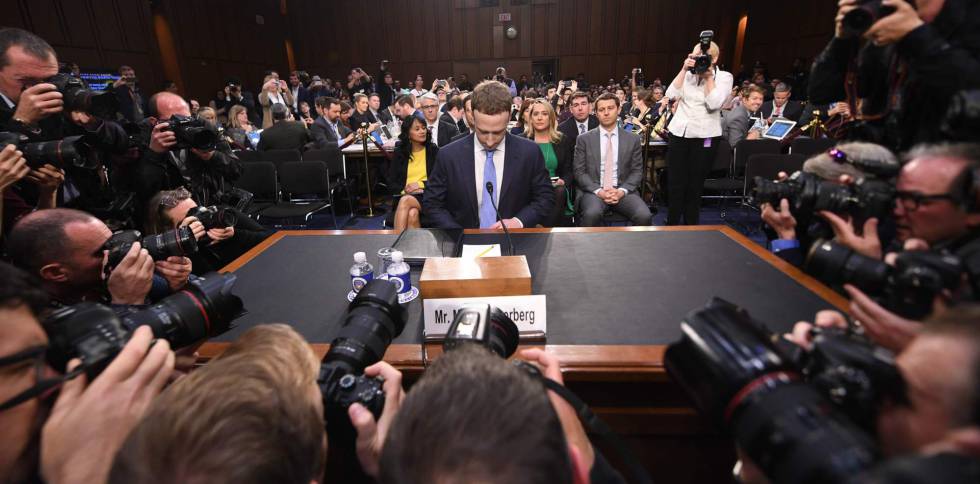
Zuckerberg was on trial, taking the stand in a landmark lawsuit that alleged Meta's platforms harmed the mental health of young people. (Meta was found negligent and is appealing.) It was one of three major lawsuits this year that put the company on the defensive against claims that its technology posed safety risks to children.
Jon Putman/Anadolu via Getty Images
And there were the more typical Zuckerberg cringe moments, too, like his front-row appearance at a Prada fashion show that raised eyebrows across the internet.
On the inside, employee morale was waning. Though the billionaire CEO had called 2026 "the year of AI," Meta had little momentum, and unpopular decisions — including a program to track employee keystrokes — amplified the discontent.
Also, Meta had one of its largest rounds of layoffs, ever. Meta began trimming staff in March, followed by a huge round in May, when it laid off about 10% of its workforce.
Separately, Meta reshuffled another 7,000 workers as part of an AI-focused reorganization of its tech and product teams. Many engineers were relegated to individual contributor status. Meta later asked some of the employees it had demoted to return to their managerial roles.
The AI push didn't seem to be paying off: In the second quarter of this year, 98% of revenue came from its traditional advertising business — not AI.
Morale was "maybe not the worst it's ever been in 20 years here, but it's probably up there," Meta's chief technology officer, Andrew "Boz" Bosworth, said during an internal call in June.
The groundwork for Meta's comeback
Amid the chaos, Zuckerberg laid the groundwork for a comeback. Wang and Meta's elite AI researchers moved their desks to sit near Zuckerberg.
Starting last year, Zuckerberg and Wang also went on a talent-hiring spree, dangling pay packages worth hundreds of millions of dollars to poach top researchers.
Zuckerberg empowered key lieutenants, including former GitHub CEO Nat Friedman, to go ham on any vision they had, including on his pet project, an AI assistant. It all fit into Zuckerberg's longtime playbook of embracing small teams and overseeing reorgs until something works — move fast and break things, as he has infamously put it.
It worked.
Muse, the long-awaited Meta AI agent, became a breakout hit. A week after it launched, it shot to the top of the app store, and has since achieved more than 10 million downloads in North America. The team was stunned to have beaten OpenAI to market, a person familiar with the matter said. OpenAI's rival product, Dots, launched three weeks later.
Bloomberg/Getty Images
Meta also threw unprecedented compute and talent at building a series of frontier AI models, called Muse Wonder, that could keep up with those from giants like OpenAI and Anthropic.
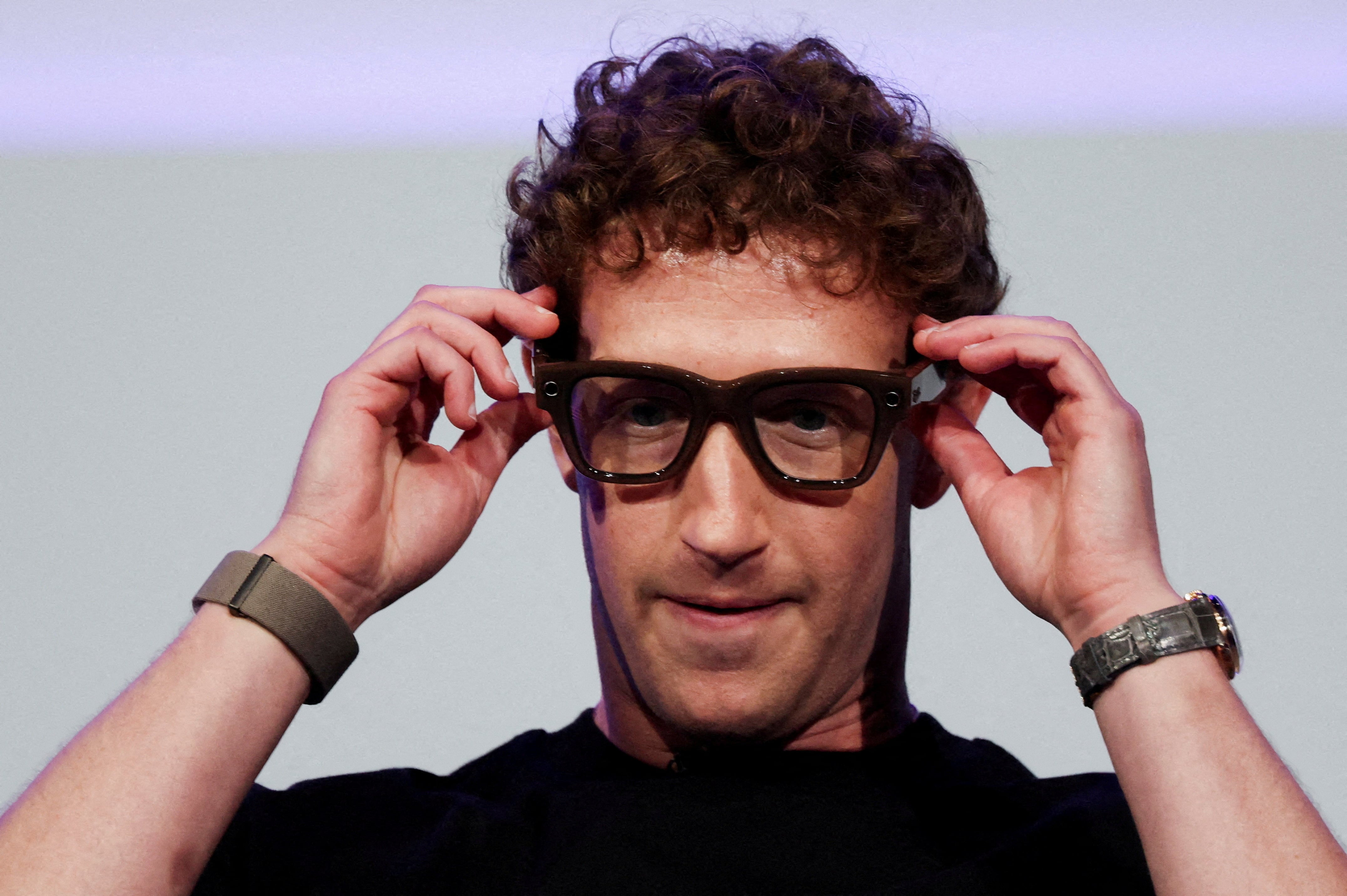
On Meta's third-quarter earnings call, Zuckerberg was optimistic that Meta's AI and hardware investments could soon become cash cows, as people shop through Muse and buy more virtual-reality glasses powered by the company's growing AI chops.
Meta, meanwhile, views Zuckerberg as more critical than ever to its long-term fortunes.
Key board members abruptly excused themselves from a dinner with Zuckerberg in September after he told them he was going to sell his Palo Alto estate in response to California's proposed billionaire tax, Meta disclosed in a filing on Wednesday.
Four days later, a special committee returned with a deal that would give Zuckerberg $20 billion in "immediate liquidity" to cover the tax — if it passes — without reducing his controlling stake in Meta. Meta also made plans to ensure that billions in fresh AI fundraising wouldn't dilute Zuckerberg's control.
"Meta's track record of significant value creation for its shareholders is in large part due to his strong leadership, unique and creative vision, and exceptional management abilities," the company said in a press release.
The personal win comes as some of his other problems have blown over. Meta settled a major lawsuit brought by attorneys general across states, Washington, DC, and US territories. As part of the settlement, the company committed to make changes to its apps, such as daily time limits and pausing notifications overnight. The agreement was part of an August settlement, a move that allowed Meta to call out its competitors such as YouTube and TikTok.
"All platforms should empower parents and support teens by putting the same measures in place, because we know that when teens are restricted on one app, they simply move to another," the company said in a blog post at the time.
Big questions still loom. The day after Meta reported strong earnings and Muse adoption, its stock fell 7% as investors absorbed the scale of the company's hundreds of billions of dollars in future spending commitments.
And the legal troubles keep on coming. This week, a New Mexico jury also ordered Meta to pay a staggering $25 billion over the Cambridge Analytica scandal, a case that Meta plans to appeal.
Whether Zuckerberg's strategy is sustainable or not, the vibe shift has been notable — and may have proven naysayers wrong, at least until the next period of chaos erupts.
"Meta is cool again," Jesse Cohen, an analyst at Investing.com, said in a note. "That's the Muse effect."
How Pat McAfee Landed His First Acting Role in ‘The Mosquito Bowl’ — With Some Help From Bradley Cooper and Tom Cruise
‘The Mosquito Bowl’ Review: Nicholas Galitzine and Bill Skarsgard in Peter Berg’s Technically Impressive, Emotionally Hollow Netflix War Drama
‘They should pay more than the poor’: The battle to make California’s richest give up 5% of their fortunes
Citadel is one of the most visited shopping centers in Los Angeles. But in these lean times, few customers browse its clothing, bag and shoe stores. On this hot October afternoon, Rocío López is here, treating herself to “a luxury” amid the cuts her family has made to blunt the impact every time they fill the car’s tank or do the grocery shopping. The pressure on her finances became clearer with her latest tax return: she and her husband were shocked to find they owed $8,000 to the IRS.

© CHRIS TORRES (EFE)
Meta’s annus horribilis: Why it was hit with the largest fine ever imposed on a tech company
2026 has not been a good year for Meta. On Wednesday, a judge in New Mexico ordered the parent company of Facebook, Instagram and WhatsApp to pay a fine of about $25 billion after finding it guilty of misleading Facebook users about its data privacy policies.

© Carlos Barria (REUTERS)
El año negro de Meta: las claves de la mayor multa a una tecnológica por cometer 43 millones de infracciones
2026 no está siendo el mejor año para Meta. Un juez de Nuevo México, EE UU, ordenó este miércoles a la empresa matriz de Facebook, Instagram o WhatsApp el pago de una multa de unos 22.000 millones de euros al considerarla culpable de engañar a los usuarios de Facebook sobre su política de privacidad de datos.

© Carlos Barria (REUTERS)
Huyan de las redes sociales: propuesta de objeción de conciencia
Las redes sociales fueron recibidas hace 20 años como un gran espacio de libertad. Hoy en día ya sabemos que se han convertido en plataformas dedicadas a encubrir a delincuentes anónimos; en espacios que favorecen la mentira, la injuria y la calumnia, los mensajes de odio; que acogen los acosos sexuales y personales, la xenofobia, el machismo y el racismo, la pederastia, la pornografía infantil, los mensajes yihadistas; en lugares donde se permiten las suplantaciones de identidad (las últimas han sido las sufridas en cuentas del PP el pasado miércoles por los socialistas Begoña Gómez, José Luis Rodríguez Zapatero y José Luis Ábalos, entre otros). Por si fuera poco, su maquinaria utiliza algoritmos con sesgos polarizadores y sus directivos aplican ingenierías fiscales para evadir impuestos en los países donde obtienen los ingresos.

© Noah Berger (AP Photo / Lapresse) (EL PAÍS)
Meta's massive deal for Zuckerberg proves execs aren't exempt from IRL work
Kent NISHIMURA / AFP via Getty Images
- Meta is offering CEO Mark Zuckerberg a $20 billion stock deal to keep him close to its headquarters.
- The move speaks to a common belief that the best work happens when everyone is together in person.
- Research suggests companies with far-flung CEOs pay a price for that distance.
Meta wants more than rank-and-file employees at the office. It wants CEO Mark Zuckerberg there, too — even if that comes at a hefty price.
The tech giant's board said in a securities filing Wednesday that it would create a new class of non-voting stock in part to keep Zuckerberg in control and give him a financial incentive to continue living near its headquarters. It described his presence at the office as "critically important" to its future success. Meta has required employees to come in at least three days a week since 2023.
Zuckerberg previously told the board he was considering moving in response to a proposed California billionaire tax. The stock deal would give the CEO $20 billion in "immediate liquidity" to cover the tax by selling stock without losing control of Meta, the filing said.
That arrangement carries particular weight at Meta, where Zuckerberg is leading the company's AI push. It also speaks to a common belief that has driven return-to-office mandates: The best work happens when people — including senior leaders — are physically together.
Staying local
Cole Rubin, cofounder of sports technology company FanFeed, said CEOs and other execs are sending a message to employees by physically working alongside them.
"You're not going to question why you're working long hours if you actually can see the leader doing the same," Rubin told Business Insider.
Having bosses in the office can also help a company move faster when unexpected opportunities arise, he said. Employees can walk into a leader's office, get an immediate answer, and act before the moment passes.
"It's not the scheduled calls where the magic happens," Rubin said. "When you have the decision-maker there, it gives people a lot of freedom to be able to feel heard."
A leader's presence is especially important during crises, said Bill George, former chairman and CEO of Medtronic, a medical-technology company. Being together lets executives quickly assess what has happened, gauge employees' reactions, and decide on a course of action.
"We've got to really feel what's going on emotionally, and we actually physically have to discuss it," he said.
George also noted that RTO demands placed on workers can ring hollow if the CEO doesn't follow them. "You've got to be there if your employees are there," he said.
Long-distance tradeoffs
Meta wouldn't have been the first company with a long-distance CEO if Zuckerberg had opted to leave the Golden State.
Brian Niccol was living in California when he was named CEO of Seattle-based Starbucks in 2024. The coffee chain had agreed as part of his hiring package not to require him to relocate. Later, it built a 4,624-square-foot satellite office five minutes from his home so he could work alongside colleagues, Business Insider first reported. Niccol has since purchased a property in Seattle.
Companies with long-distance CEOs don't perform as well on average as those with leaders on-site, according to a 2025 study by Boston College and Arizona State. They also have lower valuations and worse insider reviews, the findings show.
Meta's decision to woo Zuckerberg to stay in California was made by a special committee on its board, which said it was informed by challenges the company faced when he couldn't be physically present with management during the pandemic.
The committee said it didn't want Meta "to face similar challenges going forward."
Mark Zuckerberg si prepara a pagare la tassa californiana sui miliardari. Meta gli dà nuove azioni per blindarlo per otto anni
Il numero uno di Meta Mark Zuckerberg si prepara a pagare la tassa sui miliardari, se la California approverà la misura. E il gruppo a cui fanno capo Facebook, Instagram e Whatsapp corre ai ripari per consentirgli di farlo senza mettere a rischio il controllo della società. Meta infatti, come emerge da un documento depositato alla Securities and Exchange Commission, distribuirà ai soci nuove azioni di classe C prive di diritto di voto in aggiunta a quelle già possedute. Zuckerberg potrà vendere o trasferire immediatamente il 20% dei titoli che riceverà, una quota equivalente a circa il 10% della sua partecipazione. E potrà usare il ricavato per saldare l’eventuale imposta. In cambio si impegna a mantenere la residenza in California per i prossimi otto anni.
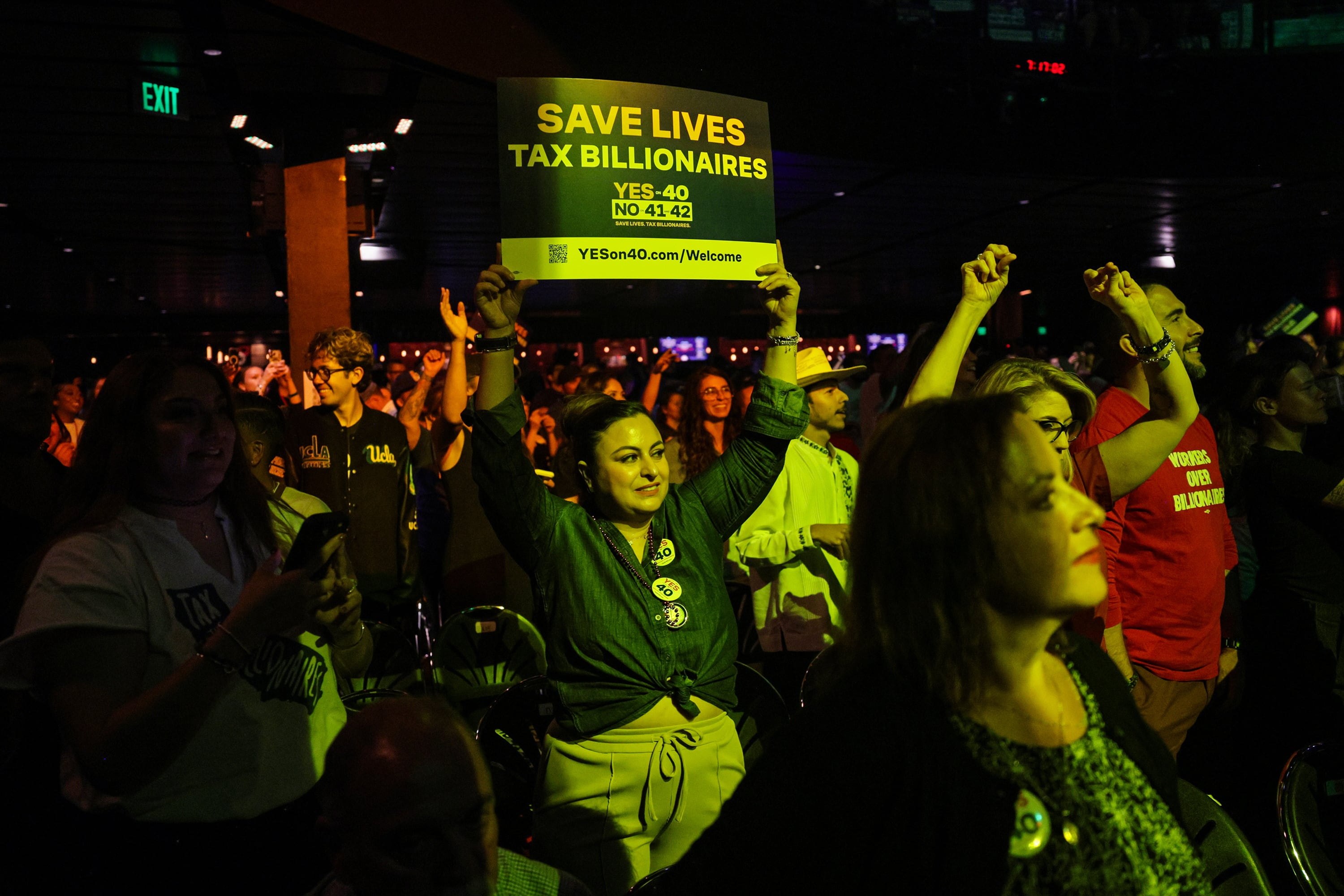
L’intesa arriva a meno di due settimane dal referendum del 3 novembre sulla Proposition 40, che propone una patrimoniale una tantum del 5% sulle fortune dei circa 250 miliardari residenti nel Golden State e l’utilizzo del gettito per finanziare la sanità depauperata dai tagli di Trump e programmi per l’istruzione e l’assistenza alimentare. In caso di successo, segnerebbe una svolta per il dibattito sulla tassazione della ricchezza.
Secondo i documenti societari Zuckerberg, il cui patrimonio è stimato intorno ai 240 miliardi di dollari, aveva comunicato a un Comitato speciale di amministratori indipendenti di star valutando il trasferimento della residenza fuori dallo Stato per cercare di dribblare un’imposta che nel suo caso varrebbe circa 10 miliardi. Per pagare il conto avrebbe infatti dovuto vendere parte delle azioni di classe B, quelle che gli garantiscono diritti di voto maggiorati: la sua quota di controllo sarebbe scesa dal 60,6% a circa il 53%. Il Comitato speciale, ritenendo “di fondamentale importanza mantenere il Sig. Zuckerberg in una posizione di leadership all’interno della nostra azienda” e far sì che “che continui a risiedere e a gestire l’Azienda dalla nostra sede centrale in California per garantire la sua continua capacità di guidare efficacemente le nostre prestazioni durante quest’era di sfide e concorrenza senza precedenti”, ha trovato giocoforza una soluzione: una riorganizzazione della struttura azionaria. Meta distribuirà appunto ai soci dal gennaio 2027 nuove azioni di classe C, prive di diritto di voto, in aggiunta a quelle già possedute.
L’economista francese Gabriel Zucman, che da anni studia la concentrazione della ricchezza e le modalità per tassare i grandi patrimoni, ha scritto su X che la decisione è la prova che “la campagna per la Proposition 40 sta funzionando”: viene meno infatti l’argomento usato da molti oppositori secondo cui i miliardari “non potrebbero” versare il dovuto pena la perdita del controllo delle loro compagnie. Se messi alle strette, evidentemente, si può fare.
Da notare, peraltro, che come ricorda il documento inviato alla Sec dal 2013 Zuckerberg riceve uno stipendio annuo simbolico di un dollaro come amministratore delegato e presidente del gruppo. La società lo utilizza come argomento per motivare la sua necessità di liquidità. Ma il punto è che la sua ricchezza deriva soprattutto dal valore delle azioni Meta, che può crescere senza tradursi in reddito imponibile. È un meccanismo comune tra i grandi miliardari: finché le azioni non vengono vendute, l’incremento di valore resta generalmente una plusvalenza non realizzata e non è tassato come reddito da capitale. Il risultato che, a fronte della impressionante concentrazione delle fortune nelle mani di pochi, quei pochi riescono a versare meno tasse rispetto a un lavoratore del ceto medio. La patrimoniale una tantum proposta da un sindacato di lavoratori della sanità punta a correggere in parte questa asimmetria.
Come da copione l’opposizione alla misura è stata però violenta: molti grandi nomi della Silicon Valley, fallito l’obiettivo di impedire che la proposta promossa arrivasse alle urne, hanno messo in campo tutto il proprio arsenale finanziario e non solo per convincere gli elettori a bocciarla. Tra campagne di disinformazione e sostegno ad altre misure referendarie che potrebbero impedirne l’entrata in vigore. Alcuni miliardari, tra cui i cofondatori di Google Larry Page e Sergey Brin, hanno valutato o annunciato di volersene andare. Anche se, come evidenziato da Zucman, sulla carta per avere successo il trasferimento fiscale avrebbe dovuto essere completato entro fine dicembre 2025: il testo infatti individua i potenziali contribuenti in base alla residenza al 1° gennaio 2026. L’eventuale trasferimento di Zuckerberg, ipotizzato per ottobre di quest’anno, sarebbe stato quindi al massimo un tentativo in extremis per tentare di contestare la propria assoggettabilità alla tassa, ma non una garanzia di esserne escluso.
L'articolo Mark Zuckerberg si prepara a pagare la tassa californiana sui miliardari. Meta gli dà nuove azioni per blindarlo per otto anni proviene da Il Fatto Quotidiano.